“Send out scouts independently or in pairs to do a “good turn” to return and report how they have done it.” (Baden-Powell, 1908)

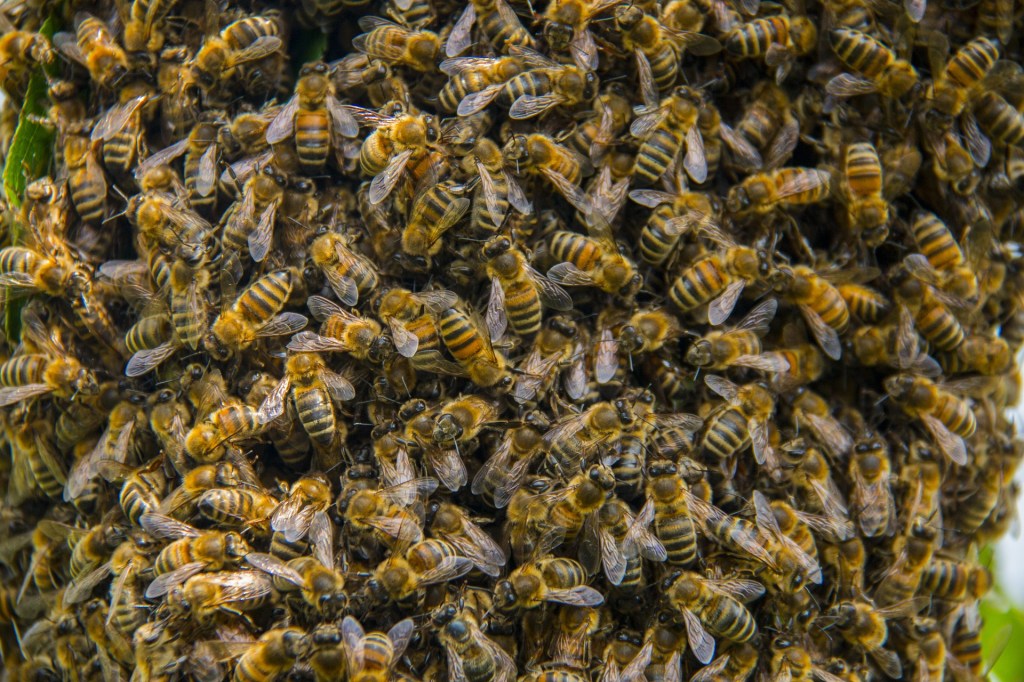
“a swarm of honeybees will hang from a tree branch in a beard- like cluster for several hours or several days while its scouts collectively choose a suitable nesting cavity” (Rittschof and Seeley, 2008).
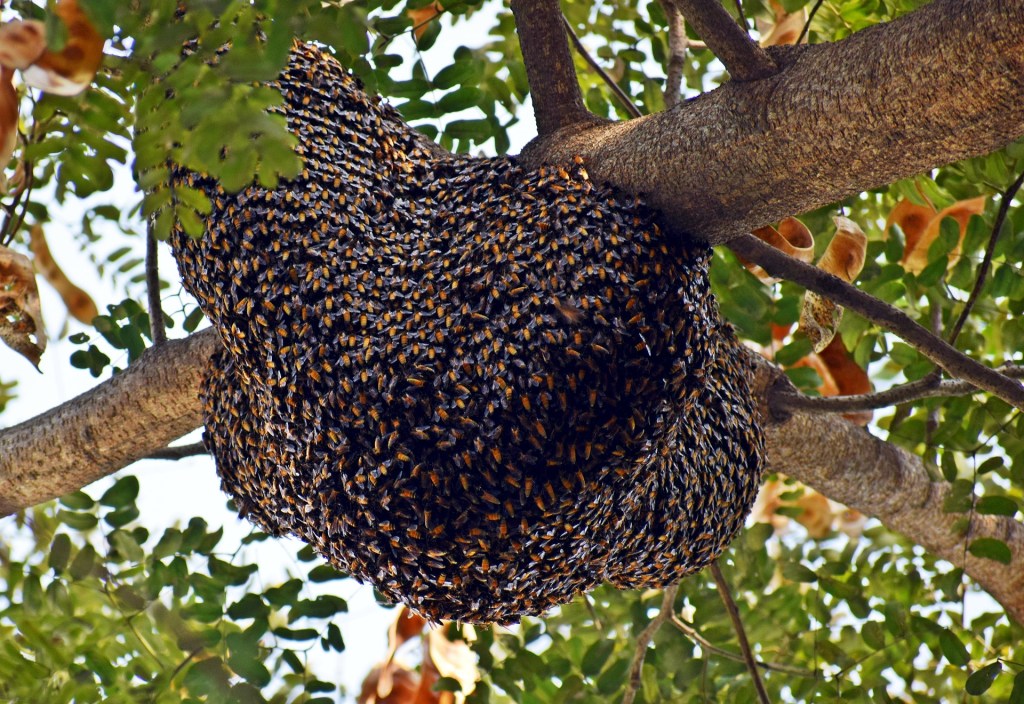
Whether you are a bee or a human scout, exploring an area to obtain information is a very useful activity! Honey bee scouts play a vital role in finding and reporting potential new nest sites. How they do this, and how the honey bee swarm reaches a decision about the best of a number of sites to relocate to, has been the subject of decades of research, which I will attempt to summarise here. As always, there is a great deal more to say about this behaviour, but hopefully this blog will whet the appetites of some readers to find out more about these incredible insects.
Under natural conditions feral honey bee swarming occurs once in the year, in the spring, or when the bees have outgrown the confines of their current hive. A thriving colony will divide by swarming: i.e. reproduction by colony division. The mother queen and about half the worker bees depart the hive to establish a new colony, leaving behind a daughter queen and the remaining worker bees, to perpetuate the old colony.
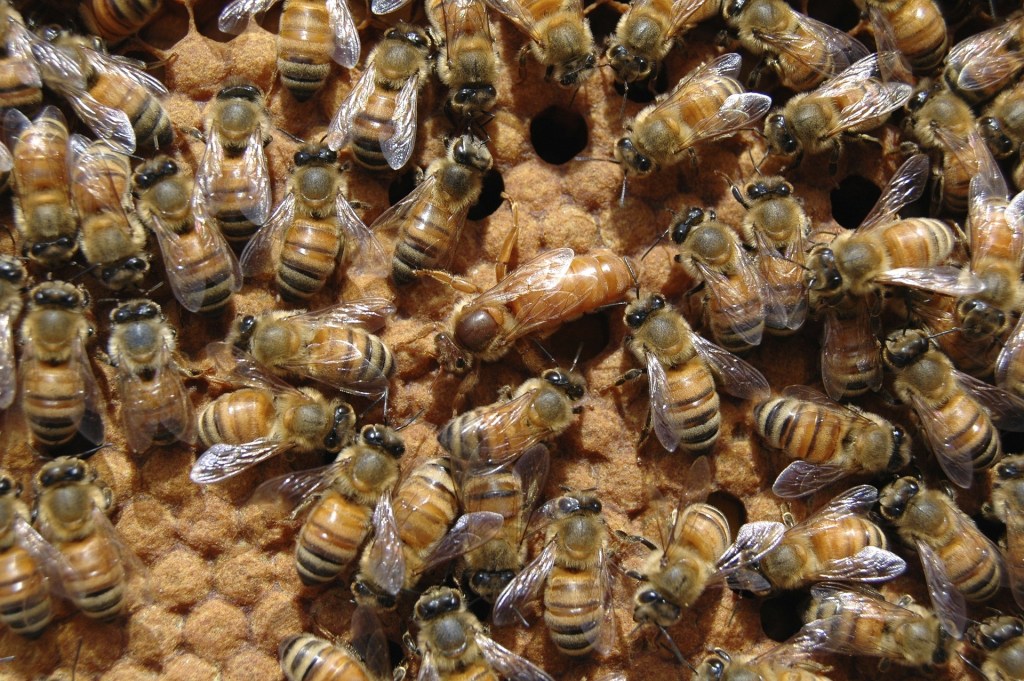
The swarming bees usually cluster together, perhaps hanging from a tree near to the parental hive for a few days while a few hundred of the oldest, most experienced bees in the swarm, the scout bees, fly off to prospect for new nest sites.
“A swarm needs to decide quickly on a new home, but not so quickly that it is likely to settle on a nest site of low quality although better sites are available.”
European honey bees (Apis mellifera) are attracted to nest sites with: i) a large cavity volume, usually greater than 10 liters (or 0.01 cubic metres), and ii) an entrance hole smaller than 30 square centimetres (or about 4.6 square inches). The nest site entrance needs to be located a few meters off the ground, facing south, and located at the floor of the cavity. So, the requirements for a new nest in the wild are quite exacting.
When a scout bee returns to the swarm after having found and inspected a high-quality hole, she perform a waggle dance, which communicates to her sisters both the distance and direction of the site (as described in a previous blog). However, there are many hundreds, if not thousands of bees out scouting for a new nest site on behalf of the swarm, and together, they may have located a number of potential nest sites. So different returning scouts start performing dances indicating the whereabouts of several different sites, simultaneously, on the surface of the swarm cluster. In time however, the swarm arrives at a consensus, and gradually, the dances indicating one particular, chosen site, start to predominate. After reaching this collective decision, which may take a couple of days, the cluster of thousands of bees disintegrates, and they all fly off towards the chosen site.
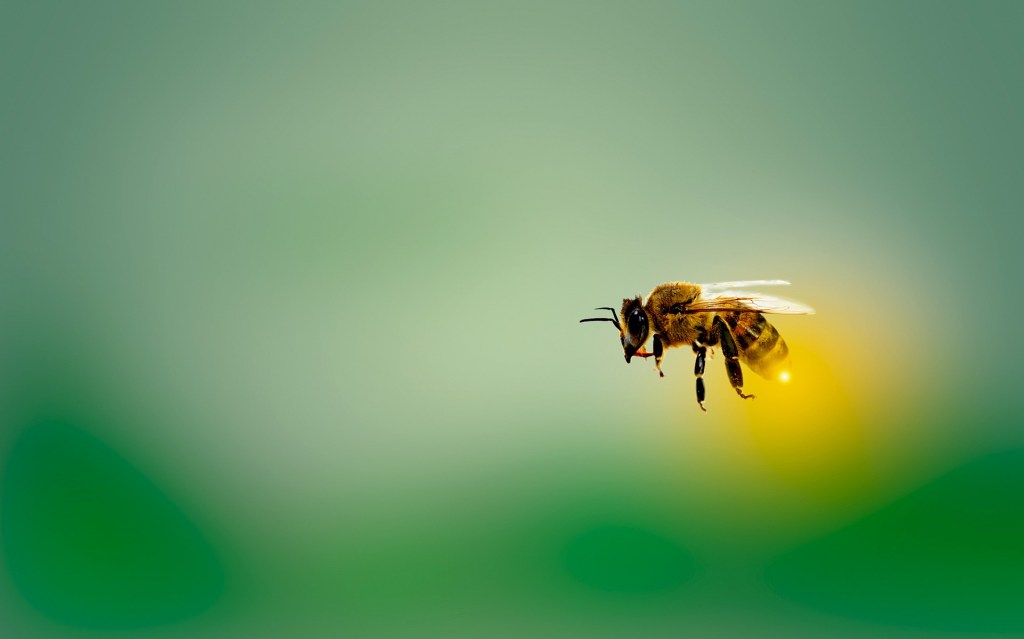
How the bees decide on which, of several potential nest sites, to migrate to, has been the subject of much research. The bees appear to use simple decision rules to select new nest-sites. For example, a bee within the swarm first tries to locate a waggle dancing bee to follow. If it succeeds, it becomes a dance follower, but if it has no dancing bee to follow, it flies off to search for a site by itself, thereby becoming a scout (Janson et al., 2007).
When scout bees return to the swarm and start advertising a potential nest site (or a good nectar-source) with a waggle dance, they adjust both the duration and the rate of waggle-run production, in relation to the quality of the site (Seeley et al., 2000). They can ‘tune’, or adjust the liveliness (or strength) of their dance to the quality of the site, so bees advertising superior sites produce more waggle runs per dance ‘by producing waggle runs both for a longer time and at a higher rate’ (Seeley and Buhrman, 2001).
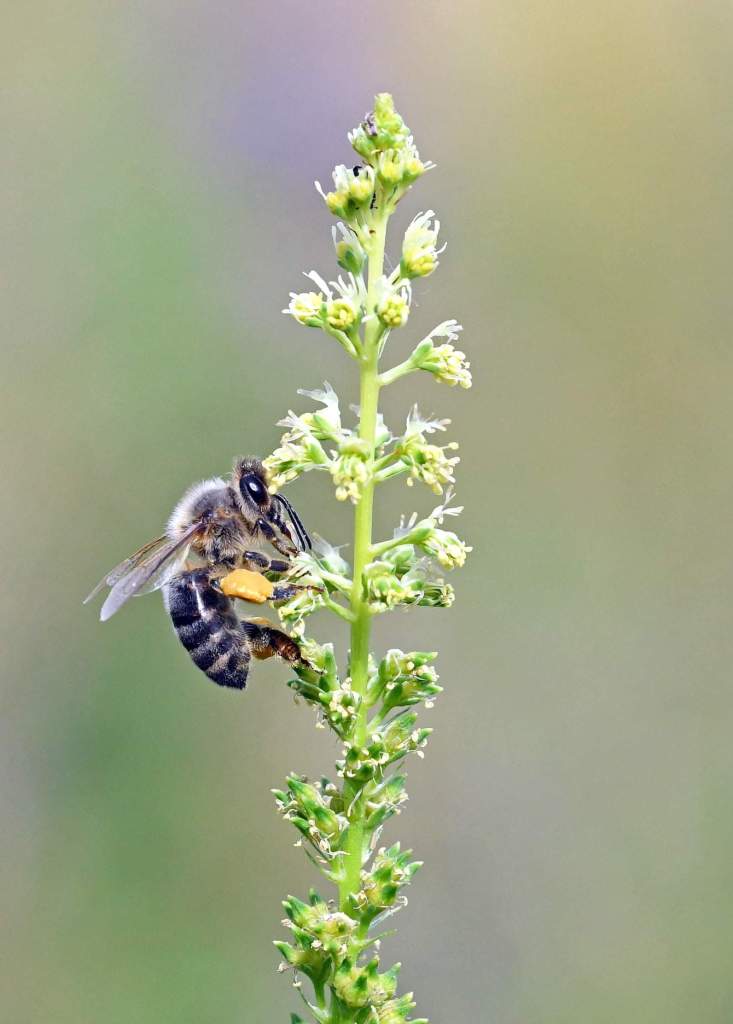
This finding goes back to pioneering work by Martin Lindauer (1955) who observed that bee scouts who had discovered the best potential sites danced with the most endurance and the most liveliness. Those who could find only poor sites, dances with a certain sluggishness! This means that the rate of recruitment of bees to poor, or mediocre sites, is much slower than that to good sites. So, gradually, more and more bees visit the profitable or high-quality sites, and a positive feedback loop becomes established.
However, rather than reaching a concensus, i.e. somehow sensing or coming to an agreement about the best site, honey bee swarms use a form of quorum sensing, where a sufficient number of scouts agree about a given site. In other words, the bees employ a form of decentralized decision-making, to choose the most suitable nest site. This process, is described in detail by leading honey bee researcher Professor Thomas D. Seeley in his 2011 book: Honeybee democracy.
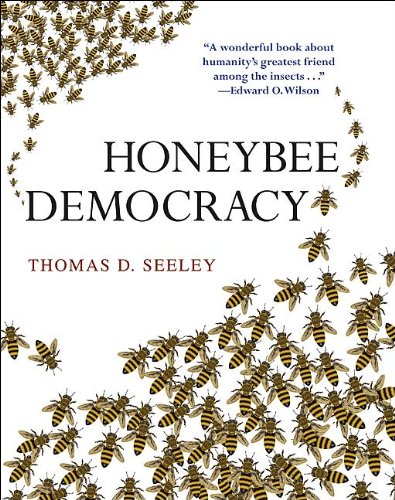
The dynamics of decision-making involve nest-site scouts sending inhibitory stop signals to other bee scouts producing waggle dances, which causes them to cease dancing, and ‘each scout targets scouts’ reporting sites other than her own’ (Seeley et al., 2012). The stop signal is a short vibrational signal that
lasts about 150 ms, with a fundamental frequency around 350 Hz. Here’s a video clip of the stop signal, which is often delivered while butting against another dancing bee. According to researchers Parry Kietzman and P. Kirk Visscher (2015), it is best understood as a counter to the waggle dance, offering negative feedback toward the advertised foraging location or nest site.
The stop signals are also very useful for inhibiting fellow bees from visiting risky sites. For example, if bees have been attacked while out foraging – or when life just gets too crowded at the food source (!), they produce stop signals when they return to the hive, preferentially targeting nestmates visiting the same location.
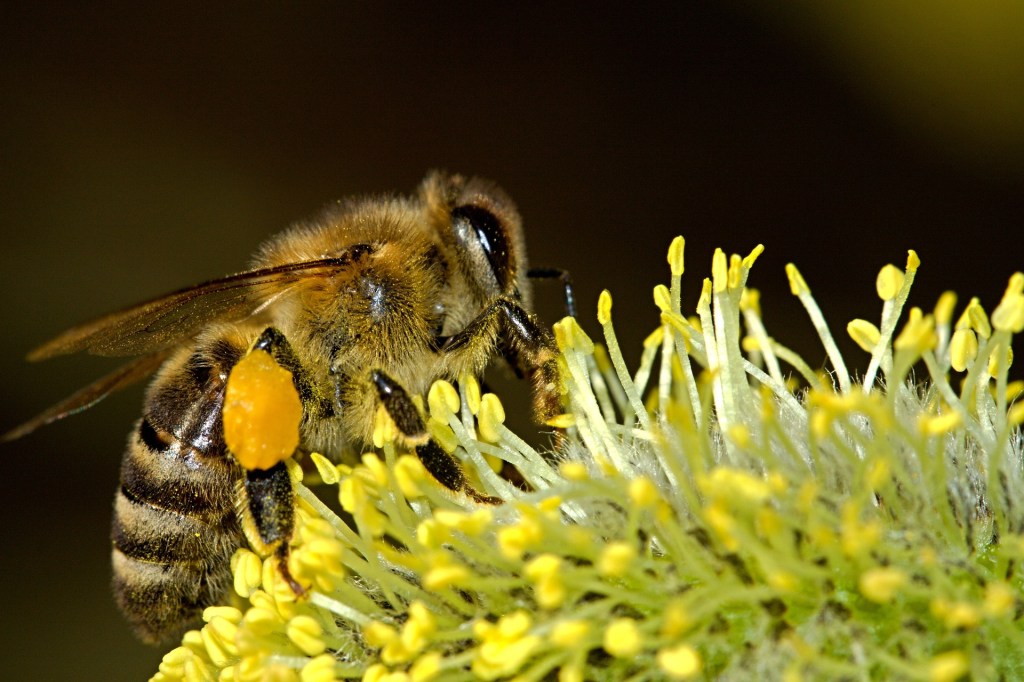
The nest-site scouts also have a remarkable behaviour, whereby they prime the other bees in the swarm for flight by producing piping signals. Professor Seeley describes how, once the quorum threshold is reached at one of the potential sites the scouts at this site return to the swarm cluster and start to produce a special, high-pitched acoustical signal that stimulates the other non-scout worker bees in the swarm to begin warming up their flight muscles. They do this by ‘shivering’ theromogenesis, heating their flight muscles up to a tempetature of 33 to 35° C, needed for flight. Whilst producing the piping signal, scouts scramble through the swarm, pausing every second or so to press their thorax against another bee and thereby activate her wing muscles. Shortly before the swarm takes off, there is a crescendo of a high-pitched, acoustic signaling: worker piping .
“this action produces an audible vibration that is reminiscent of the revving of a race car engine. The piping signal lasts about
0.8 seconds and has a fundamental frequency of about 200 hertz” (Seeley et al., 2006).
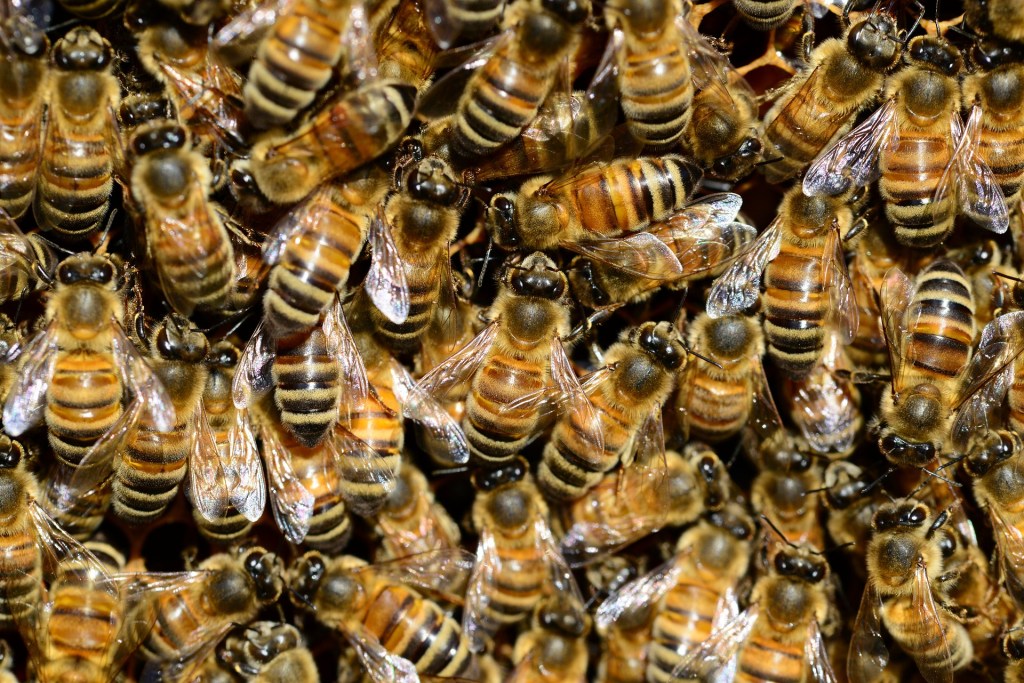
“This small minority of informed bees manages to provide guidance to the rest and the entire swarm is able to fly to the new nest intact” (Latty et al., 2009)
“During the final 10 or more minutes before liftoff, excited bees force their way through the quiet bees in the cluster, running about in a zig-zagpattern, butting into the other bees, and buzzing their wings every second or so” (Seeley & Tautz, 2001).
When honeybee, Apis mellifera, swarms eventually reach a collective decision and fly off to their new nest site, only a small proportion of individuals (<5%) know the location of the new site, and these few bees have to guide the entire swarm to the correct place.
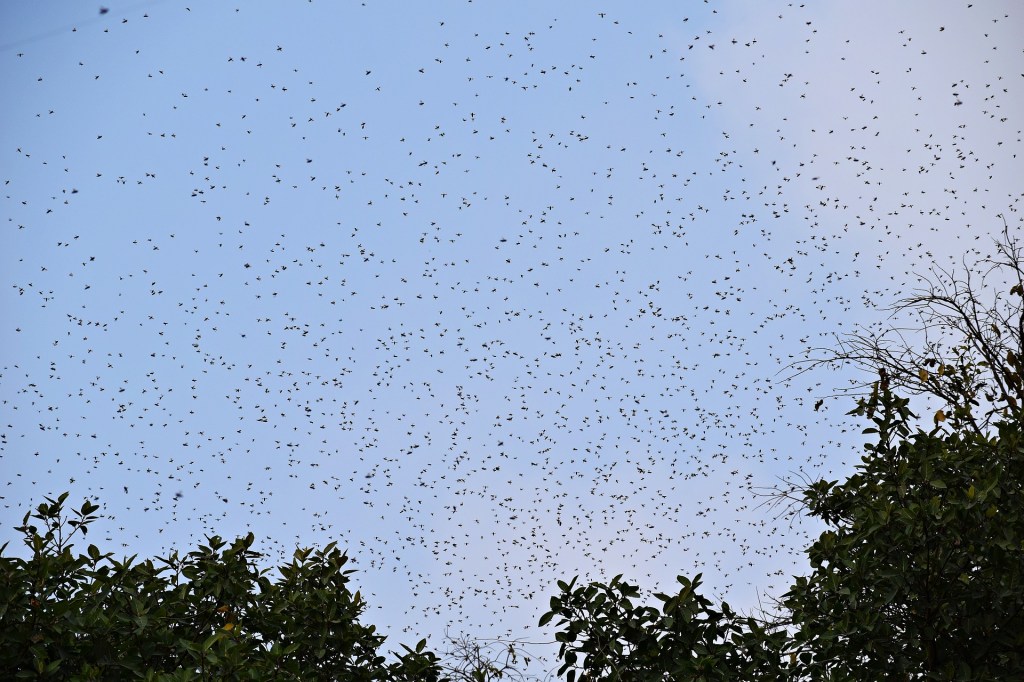
The swarm may be subtly steered towards the new home by the scouts, or more likely, they signal the correct travel direction by repeatedly carrying out high-speed flights through the airborne swarm in the direction of the new home, as originally suggested by Lindauer (1955), and confirmed by later studies. These streaker bees then return to the back of the swarm before making another fast flight, especially through the top of the swarm. The uninformed, follower bees probably ‘latch onto’ the informed, streaker bees ‘by some sort of velocity attraction to the fast-flying bees‘ (Schultz et al., 2008).
The scout bees mark the entrance of any nest sites they may have found with a pheromone, and this chemical helps the swarm locating the entrance to the cavity.
Thomas D. Seeley described a honey bee swarm as a supraorganismal entity, “shaped by natural selection to be skilled at choosing a future home site.” In other words, the swarm behaves as a collective brain and functions as a collective decision-making agent. Individual bees may, or may not, be able to make direct comparisons between different sites, but because the liveliness of their dance is adaptively tuned to the quality of the site, the colony as a whole arrives at a collective decision.
Links
https://www.livescience.com/17395-honeybees-head-butts-decisions.html
https://www.livescience.com/719-bees-form-democracy.html
https://asknature.org/strategy/quorum-determines-new-hive-site/
References
Baden-Powell, R. (2007). Scouting for Boys: The Original 1908 Edition. Courier Corporation.
Beekman, M., Fathke, R. L., & Seeley, T. D. (2006). How does an informed minority of scouts guide a honeybee swarm as it flies to its new home?. Animal behaviour, 71(1), 161-171.
Beekman, M., Gilchrist, A. L., Duncan, M., & Sumpter, D. J. (2007). What makes a honeybee scout?. Behavioral Ecology and Sociobiology, 61, 985-995.
Camazine, S., Visscher, P. K., Finley, J., & Vetter, R. S. (1999). House-hunting by honey bee swarms: collective decisions and individual behaviors. Insectes Sociaux, 46, 348-360.
Hasenjager, M. J., Hoppitt, W., & Leadbeater, E. (2020). Network-based diffusion analysis reveals context-specific dominance of dance communication in foraging honeybees. Nature communications, 11(1), 625.
Hu, Z., Miao, C., Di, N., Zhou, C., Zhang, Y., Yang, J., … & Li, Y. (2023). Decoding the dance parameters of eastern honeybee, Apis cerana. Apidologie, 54(1), 10.
Janson, S., Middendorf, M., & Beekman, M. (2007). Searching for a new home—scouting behavior of honeybee swarms. Behavioral Ecology, 18(2), 384-392.
Janson, S., Middendorf, M., & Beekman, M. (2005). Honeybee swarms: how do scouts guide a swarm of uninformed bees?. Animal behaviour, 70(2), 349-358.
Kietzman, P. M., & Visscher, P. K. (2015). The anti-waggle dance: use of the stop signal as negative feedback. Frontiers in Ecology and Evolution, 3, 14.
Kohl, P. L., Thulasi, N., Rutschmann, B., George, E. A., Steffan-Dewenter, I., & Brockmann, A. (2020). Adaptive evolution of honeybee dance dialects. Proceedings of the Royal Society B, 287(1922), 20200190.
Latty, T., Duncan, M., & Beekman, M. (2009). High bee traffic disrupts transfer of directional information in flying honeybee swarms. Animal Behaviour, 78(1), 117-121.
Lindauer, M. (1955). Swarm bees looking for a place to live. Journal of Comparative Physiology , 37 , 263-324.
Niven, J. E. (2012). How honeybees break a decision-making deadlock. Science, 335(6064), 43-44.
Pahl, M., Zhu, H., Tautz, J., & Zhang, S. (2011). Large scale homing in honeybees. PloS one, 6(5), e19669.
Rangel, J., Griffin, S. R., & Seeley, T. D. (2010). An oligarchy of nest-site scouts triggers a honeybee swarm’s departure from the hive. Behavioral Ecology and Sociobiology, 64, 979-987.
Rittschof, C. C., & Seeley, T. D. (2008). The buzz-run: how honeybees signal ‘Time to go!’. Animal Behaviour, 75(1), 189-197.
Schultz, K. M., Passino, K. M., & Seeley, T. D. (2008). The mechanism of flight guidance in honeybee swarms: subtle guides or streaker bees?. Journal of Experimental Biology, 211(20), 3287-3295.
Seeley, T. D. (2011). Honeybee democracy. Princeton University Press.
Seeley, T. D., & Buhrman, S. C. (2001). Nest-site selection in honey bees: how well do swarms implement the” best-of-N” decision rule?. Behavioral Ecology and Sociobiology, 49, 416-427.
Seeley, T. D., Mikheyev, A. S., & Pagano, G. J. (2000). Dancing bees tune both duration and rate of waggle-run production in relation to nectar-source profitability. Journal of Comparative Physiology A, 186, 813-819.
Seeley, T. D., & Visscher, P. K. (2004). Quorum sensing during nest-site selection by honeybee swarms. Behavioral Ecology and Sociobiology, 56, 594-601.
Seeley, T. D., Visscher, P. K., & Passino, K. M. (2006). Group Decision Making in Honey Bee Swarms: When 10,000 bees go house hunting, how do they cooperatively choose their new nesting site?. American scientist, 94(3), 220-229.
Seeley, T. D., Visscher, P. K., & Passino, K. M. (2006). Group Decision Making in Honey Bee Swarms: When 10,000 bees go house hunting, how do they cooperatively choose their new nesting site?. American scientist, 94(3), 220-229.
Seeley, T. D., Visscher, P. K., Schlegel, T., Hogan, P. M., Franks, N. R., & Marshall, J. A. (2012). Stop signals provide cross inhibition in collective decision-making by honeybee swarms. Science, 335(6064), 108-111.
Seeley, T. D., & Tautz, J. (2001). Worker piping in honey bee swarms and its role in preparing for liftoff. Journal of Comparative Physiology A, 187, 667-676.
 Ray Cannon's nature notes
Fascinating! Do the nest site attributes that are important to the bees include the proximity of good nectar and pollen sources in addition to the attributes of the cavity itself, I wonder?