This little red flower Salvia microphylla, is an evergreen shrub which originates from south eastern Arizona and Mexico, with numerous hybrids and cultivars. Both this, and a similar species, Salvia greggii, are highly attractive to bees and butterflies as the flowers are rich in nectar. Their fragrance is said to be reminiscent of blackcurrants.
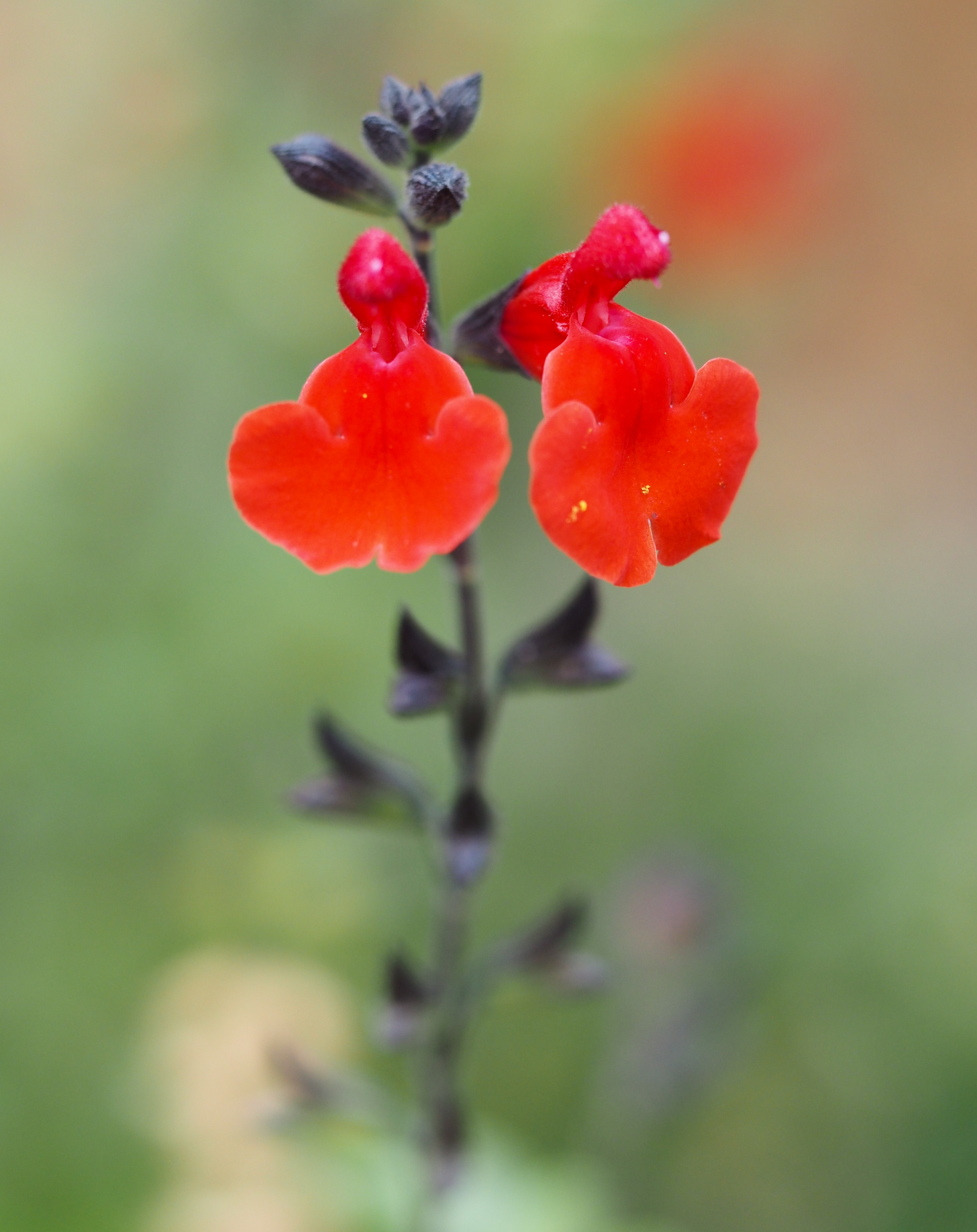
I was photographing the bright red flower of this variety, which I think is Salvia microphylla ‘Royal Bumble’, when a small worker bumblebee arrived. Based on the presence of yellow bands, including one at the rear of the thorax, it appeared to be a Garden bumblebee (Bombus hortorum), which is significant because the have they longest ‘tongue’, or proboscis, of all our bumblebees in the UK.
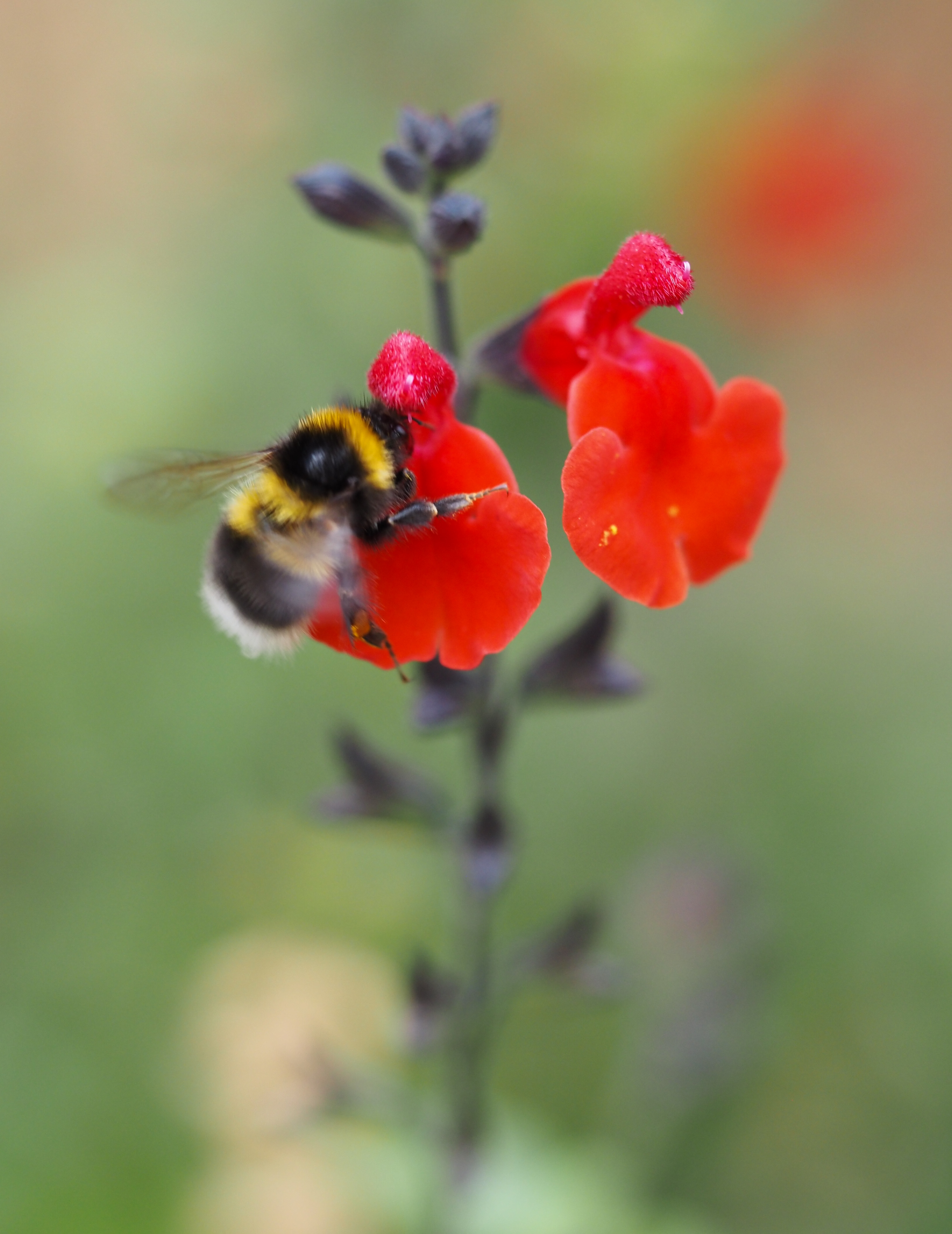
As the bumblebee landed on the tiny red flower – standing mainly on the lower lobes of the flower – the upper lip appears to cover the head and upper thorax of the bee (below).
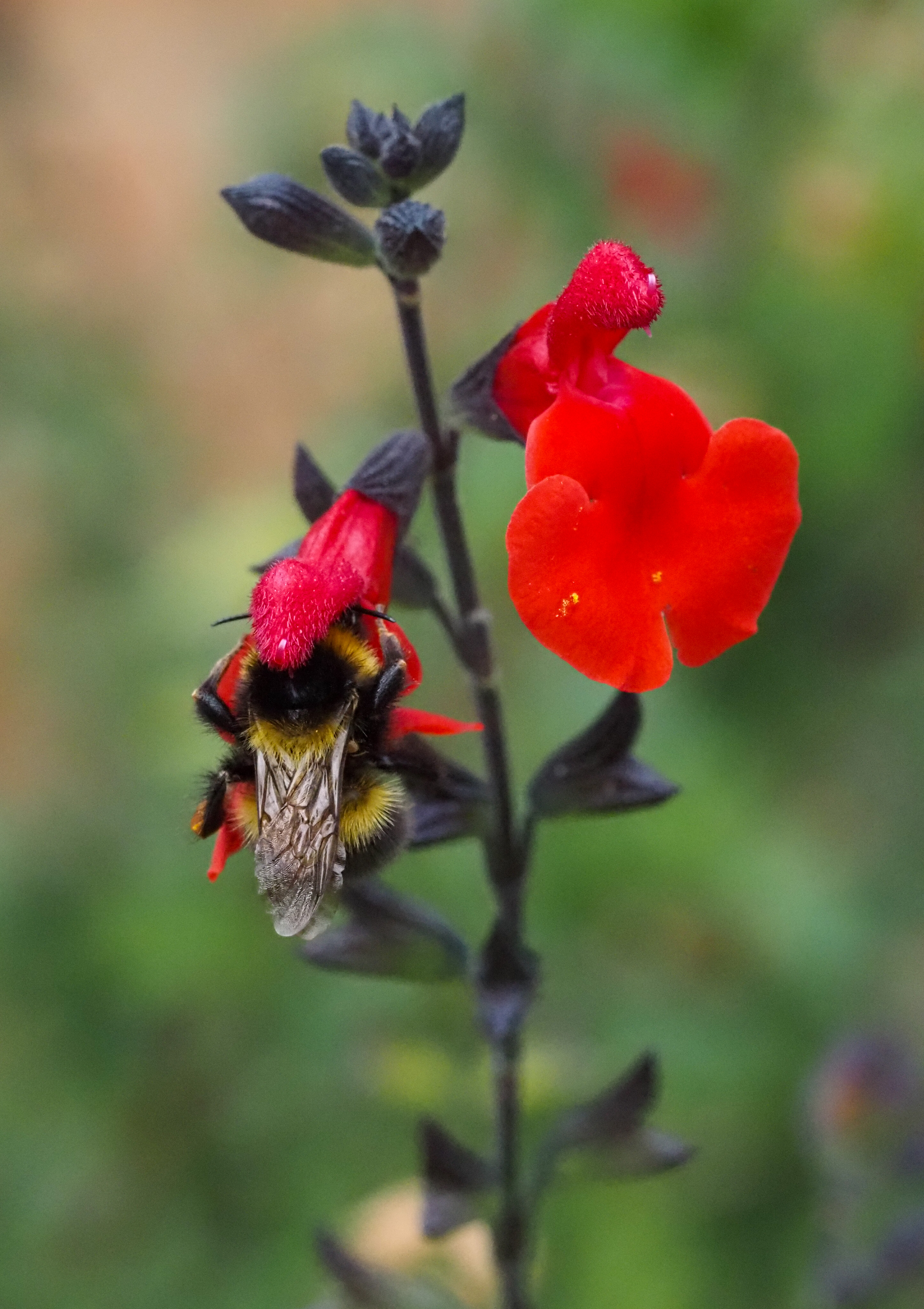
The Garden bumblebee (Bombus hortorum) is a long-tongued species, with a tongue (or proboscis) that can stretch to over 2 cm when fully extended: see below and photos in a previous blog. Long-tongued bumblebees have a more restricted range of foodplants than short-tongued species (such as B. terrestris and B. impatiens) and have declined in the wild (Goulson et al., 2005).
The bumblebee extended its proboscis deep into the corolla tube of the flower (below).
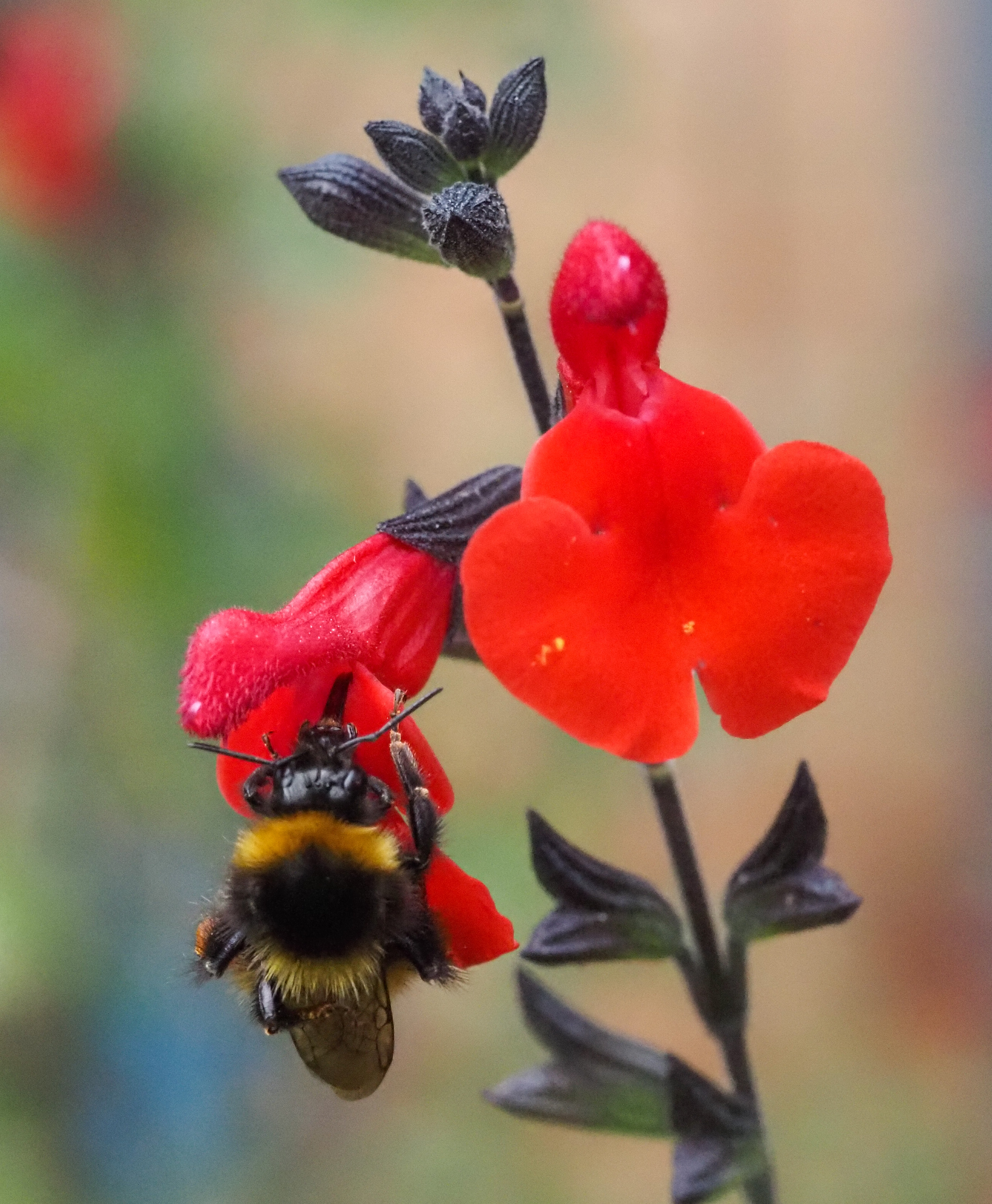
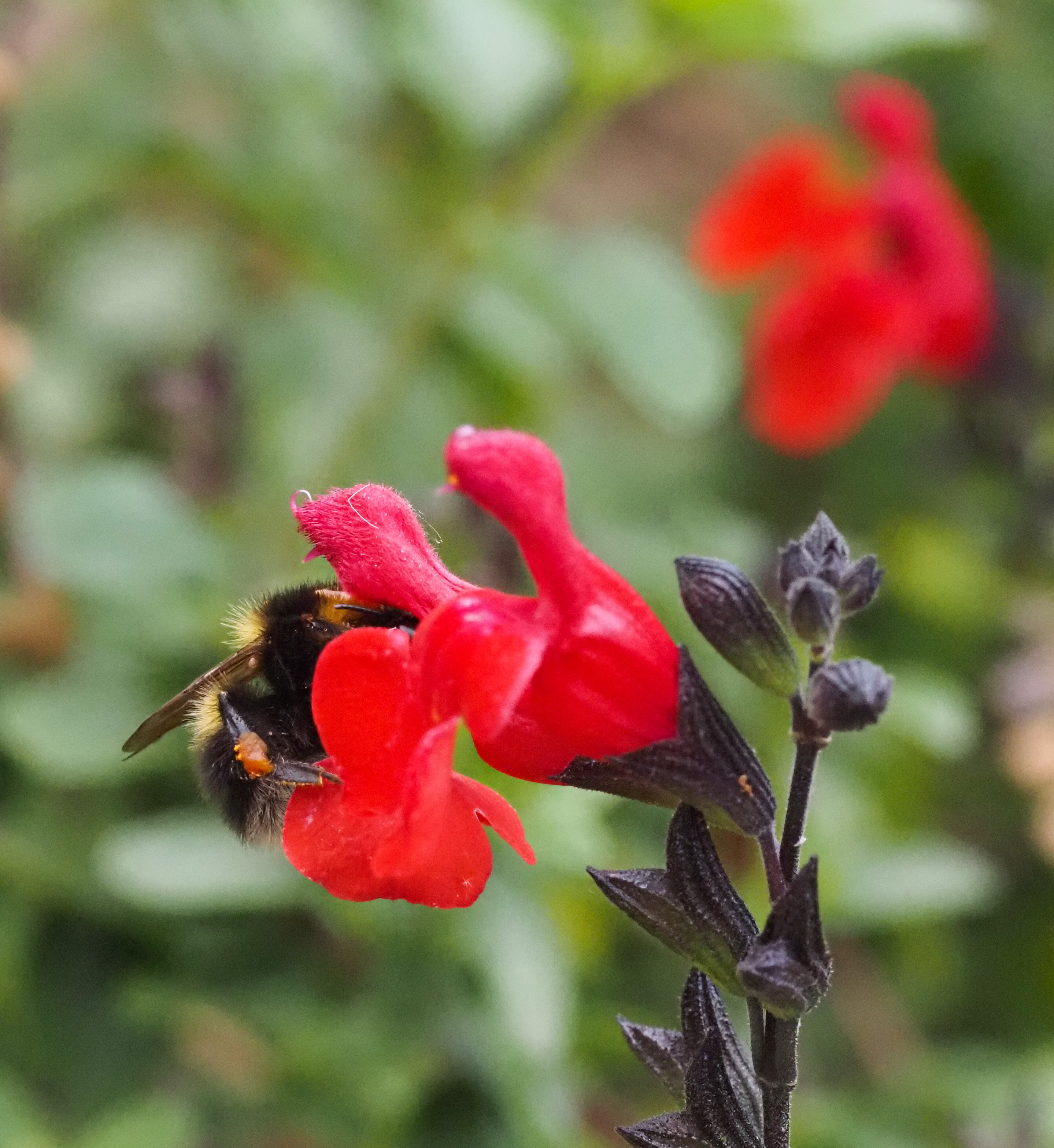
The bumblebee then moved on to the other flower in the pair (below). Again the lid appears to bend down over the bee.
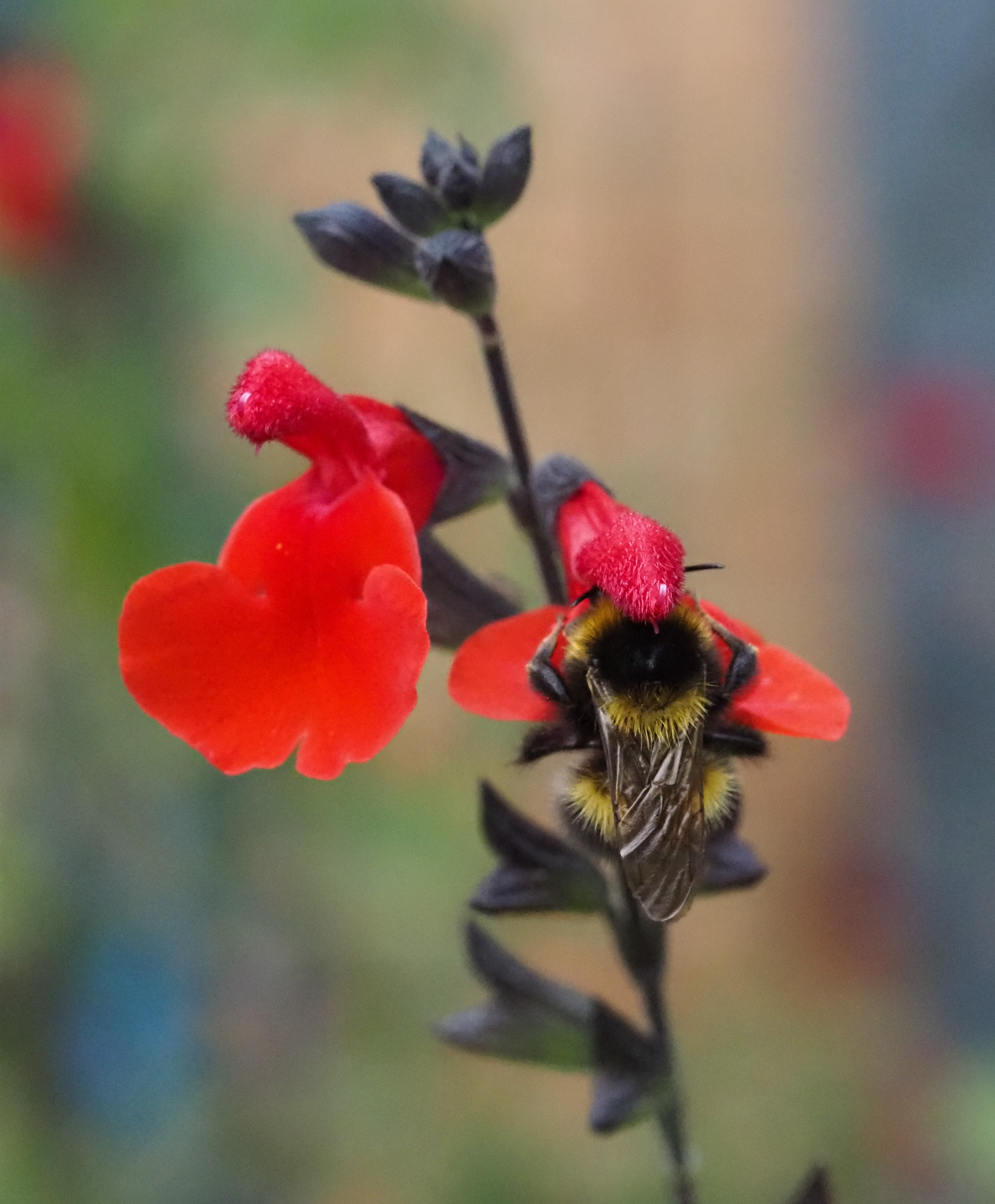
The anthers, laden with pollen, are brought into contact with the hairy dorsal surface of the bumblebee’s thorax (below).
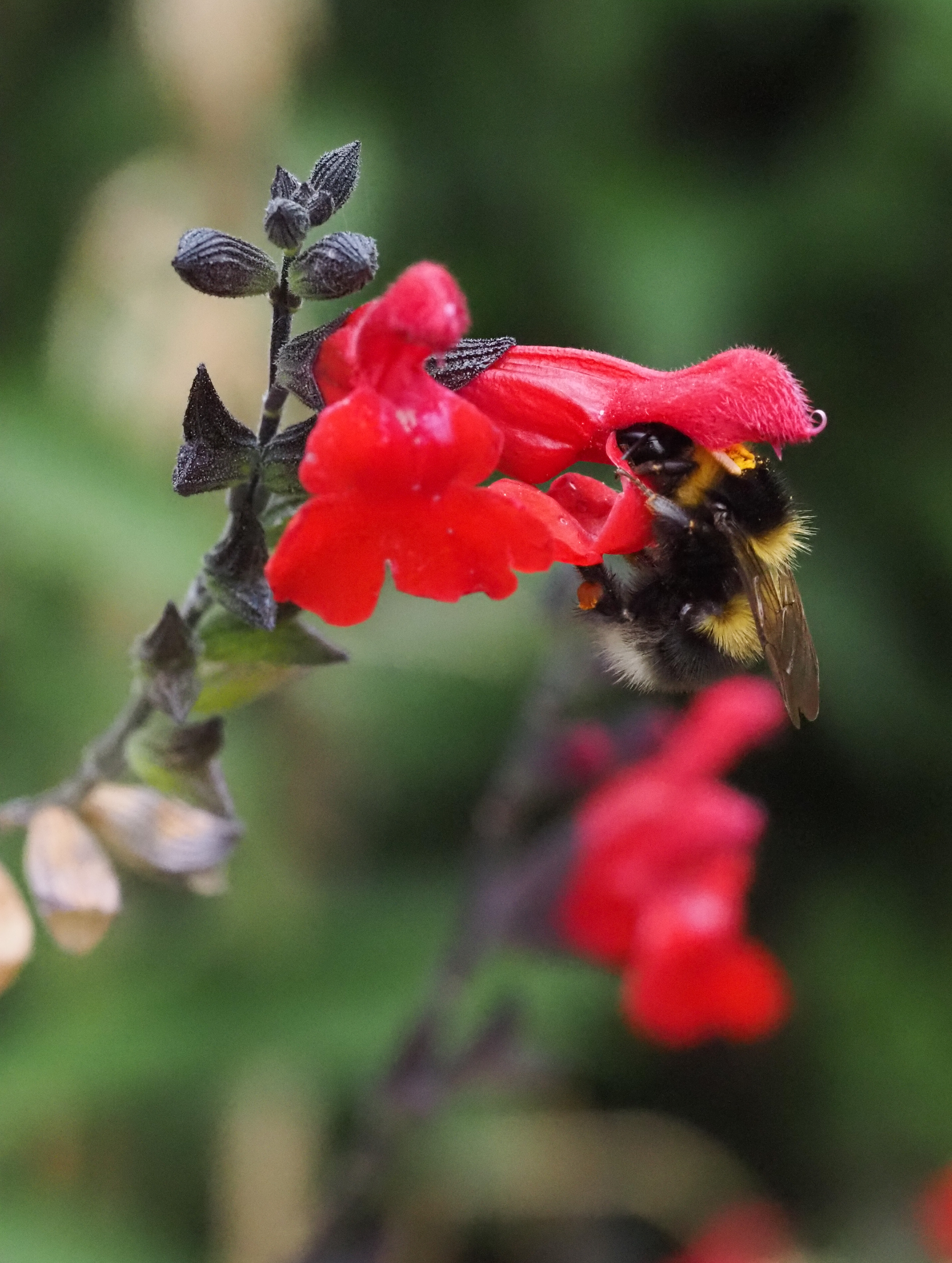
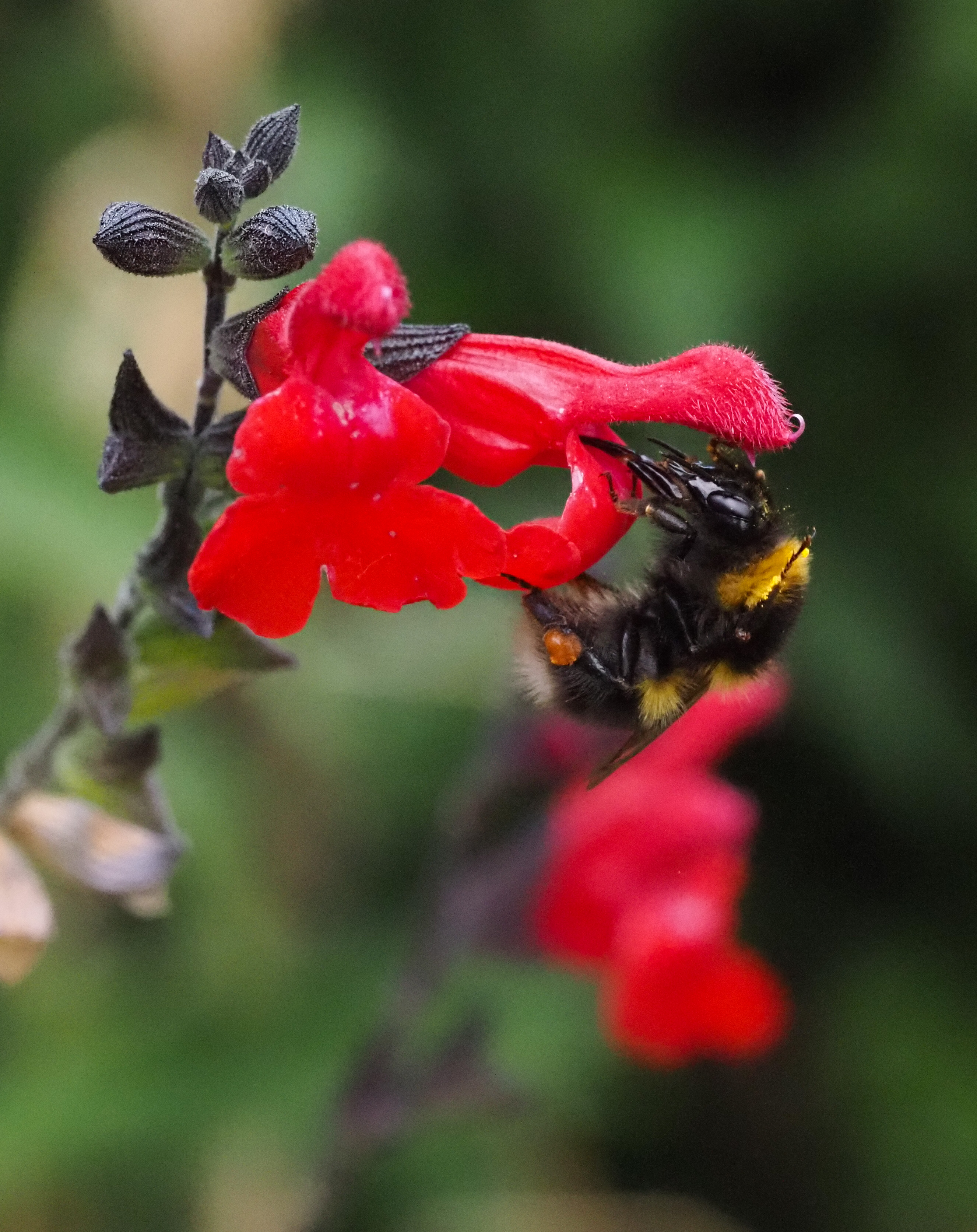
The bumblebee then started to withdraw its proboscis from the flower (below). If you look closely, the bumblebee is already starting to scrape off the yellow pollen with its middle legs, prior to transferring it to the pollen baskets on its hind legs.
Suffice to say that this process of the bumblebee gathering nectar from the two tiny flower took place over the course of a couple of minutes, at most. I shifted position and took about eight images.
There are reports of short-tonged bumblebee species resorting to nectar ‘robbing’ from the base of the flower in a variety of Salvia microphylla called ‘Hot Lips’ (below). These short-tongued bees are presumably unable to reach down the corolla tube with their proboscis, so instead, drill a little hole in the side of the flower to reach the nectar. A phenomenon called nectar robbing.
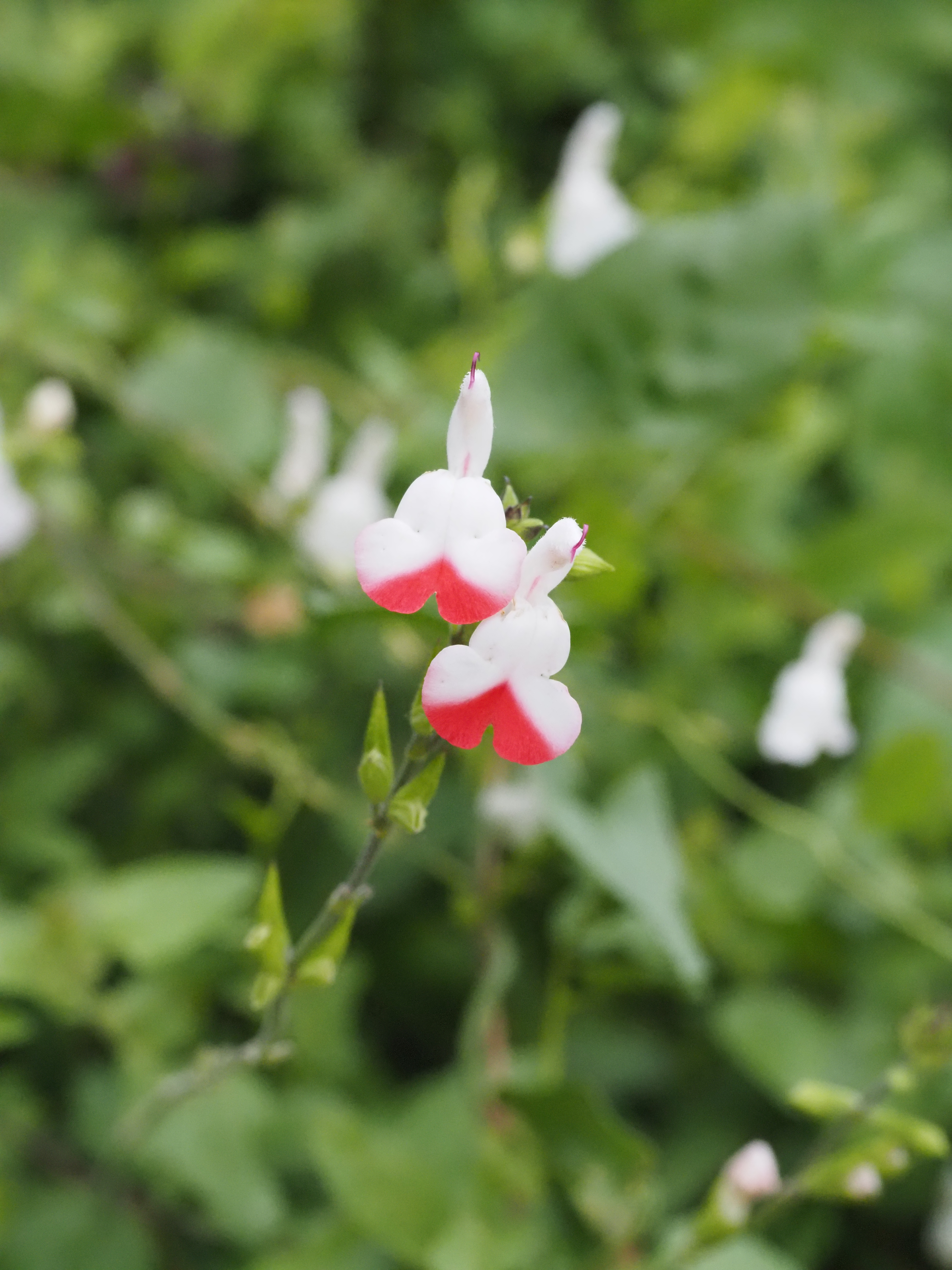
“Salvia flowers are bisexual, with both stamens and pistils; However, because these organs mature at different rates, the plants are effectively dioecious (the same plant bearing unisexual flowers at the same time).” Salvia Floral Structures
These photographs were taken outside the café in Fermyn Woods country park, Northamptonshire, England.
All photographs by Raymond JC Cannon
References
Goulson, D., Hanley, M. E., Darvill, B., Ellis, J. S., & Knight, M. E. (2005). Causes of rarity in bumblebees. Biological conservation, 122(1), 1-8.
 Ray Cannon's nature notes
What a delightful post! Your vivid imagery of red hot lips and bumblebees paints such a vibrant picture. I can’t wait to visit and experience this enchanting scene for myself!
[…] Salvia flowers in a legitimate way (see below), which I also described in a previous blog entitled Red hot lips and bumblebees. They are sucking up the nectar by poking their proboscis straight down the flower, not by biting […]
[…] tubes: a tale of two honeysuckles, Two ways to suck a Salvia! Nectar robbing bumblebees, and Red hot lips and bumblebees. It is a sort of leitmotif, or recurrent theme, in my interactions with insects, as these […]