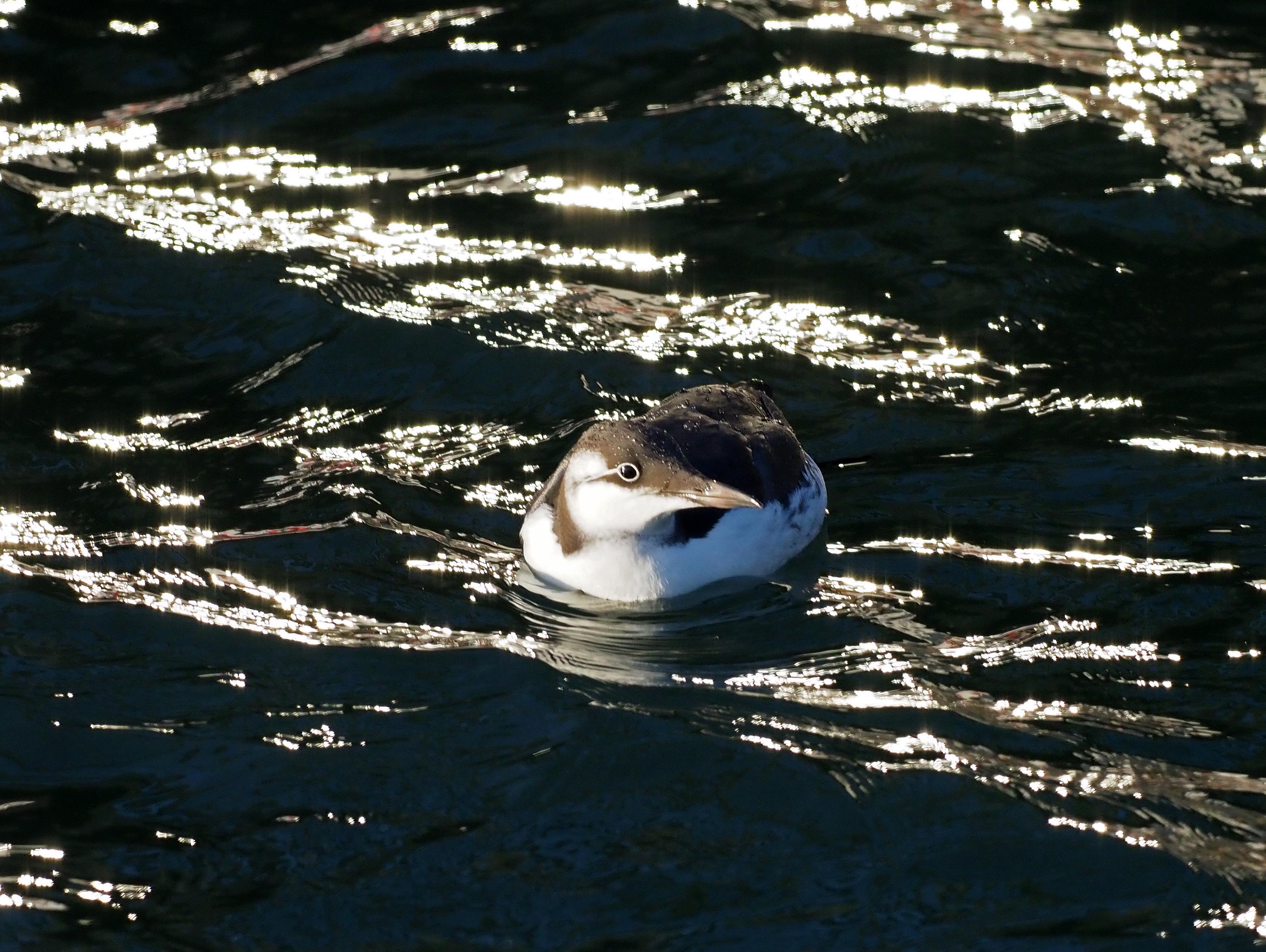
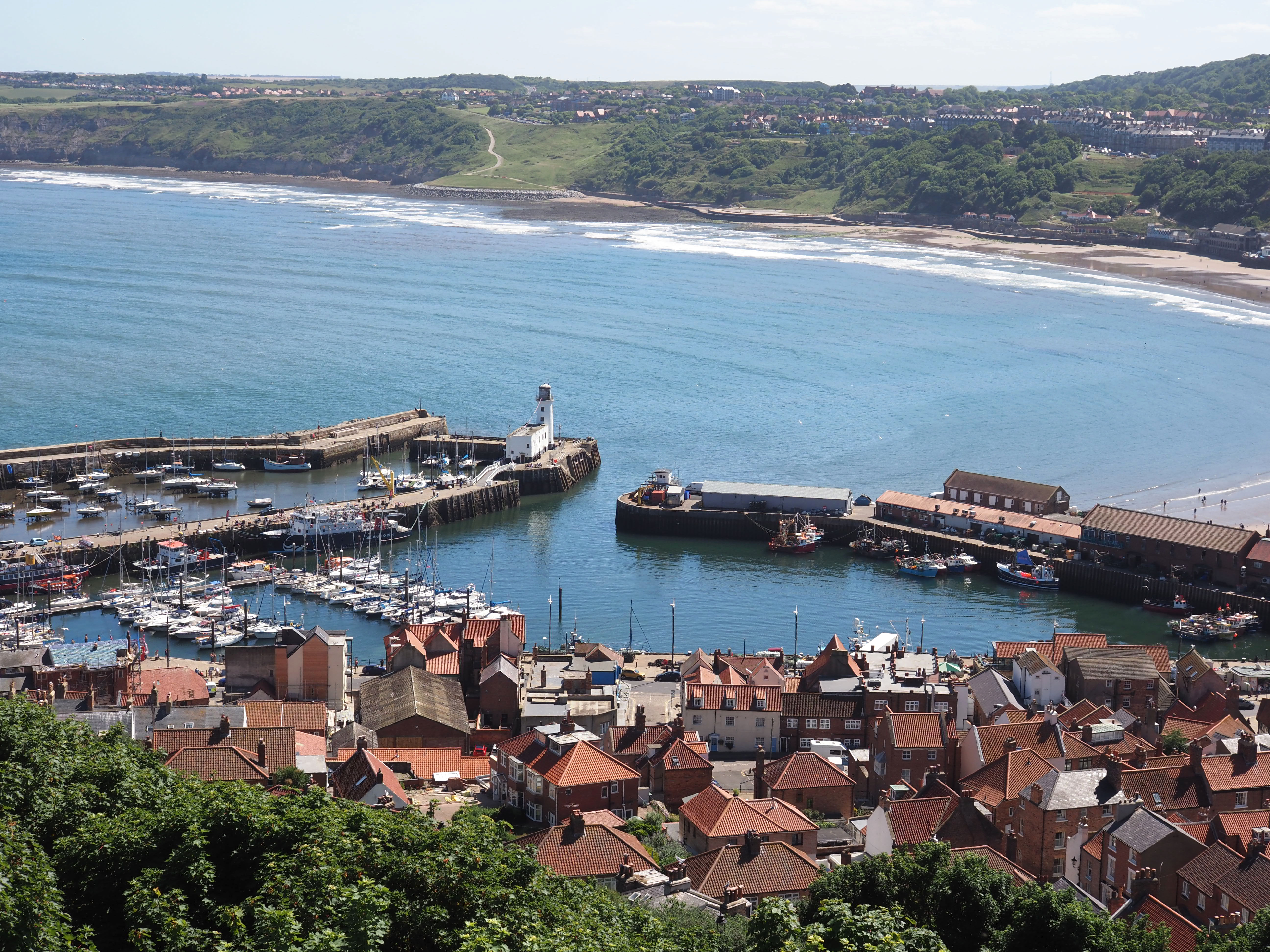
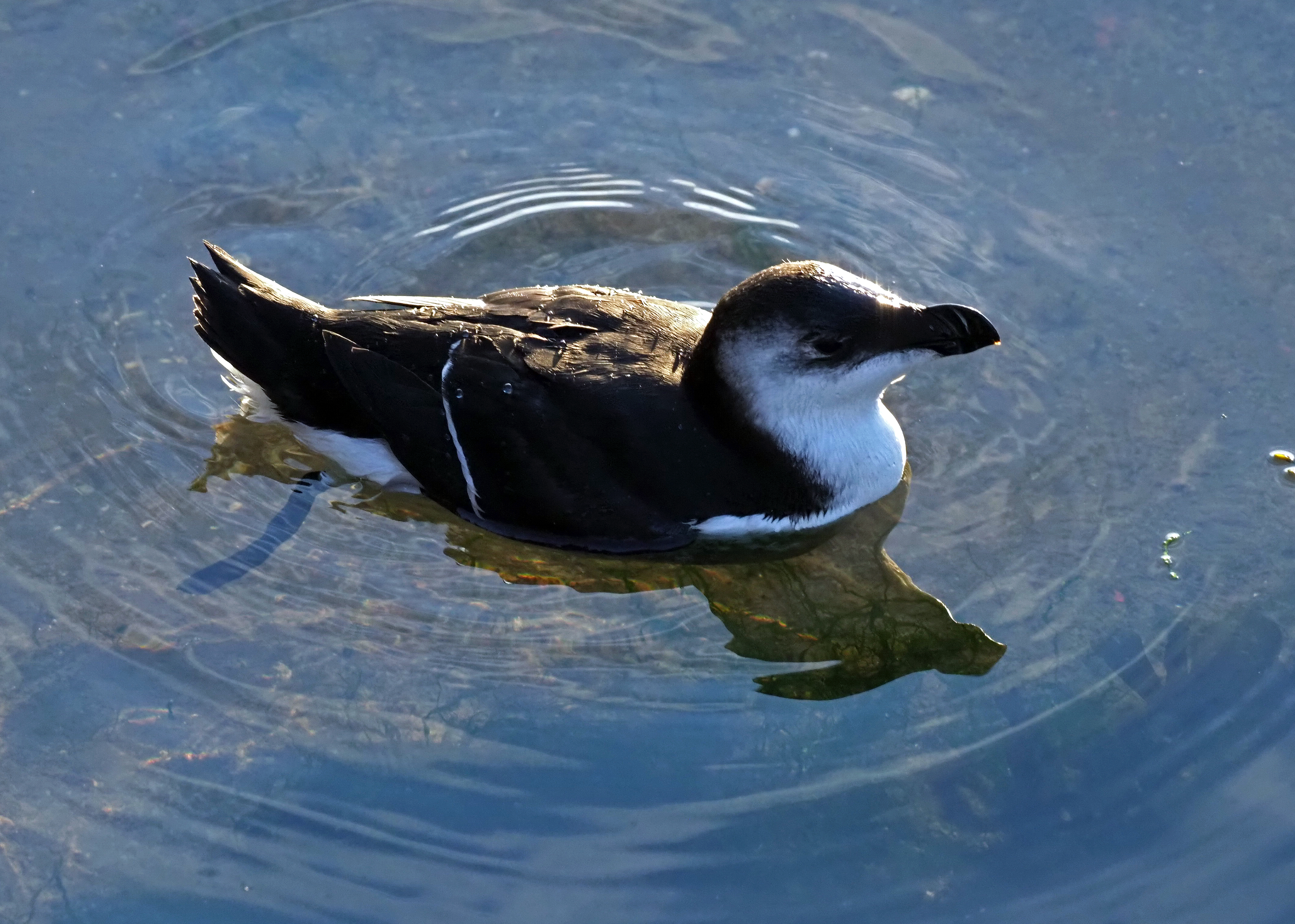
Guillemots and razorbills can be seen in the harbour at Scarborough after the end of the breeding season, from the end of July onwards, each year. At least 112,000 guillemots and 45,000 razorbills (2022 figures) nest on nearby Flamborough Head and Bempton Cliffs, along with more than 13,000 pairs of gannets. The birds, together with their newly fledged young disperse to coastal waters in the winter. A few decide to enter the sheltered waters of Scarborough harbour and stay there for a while.
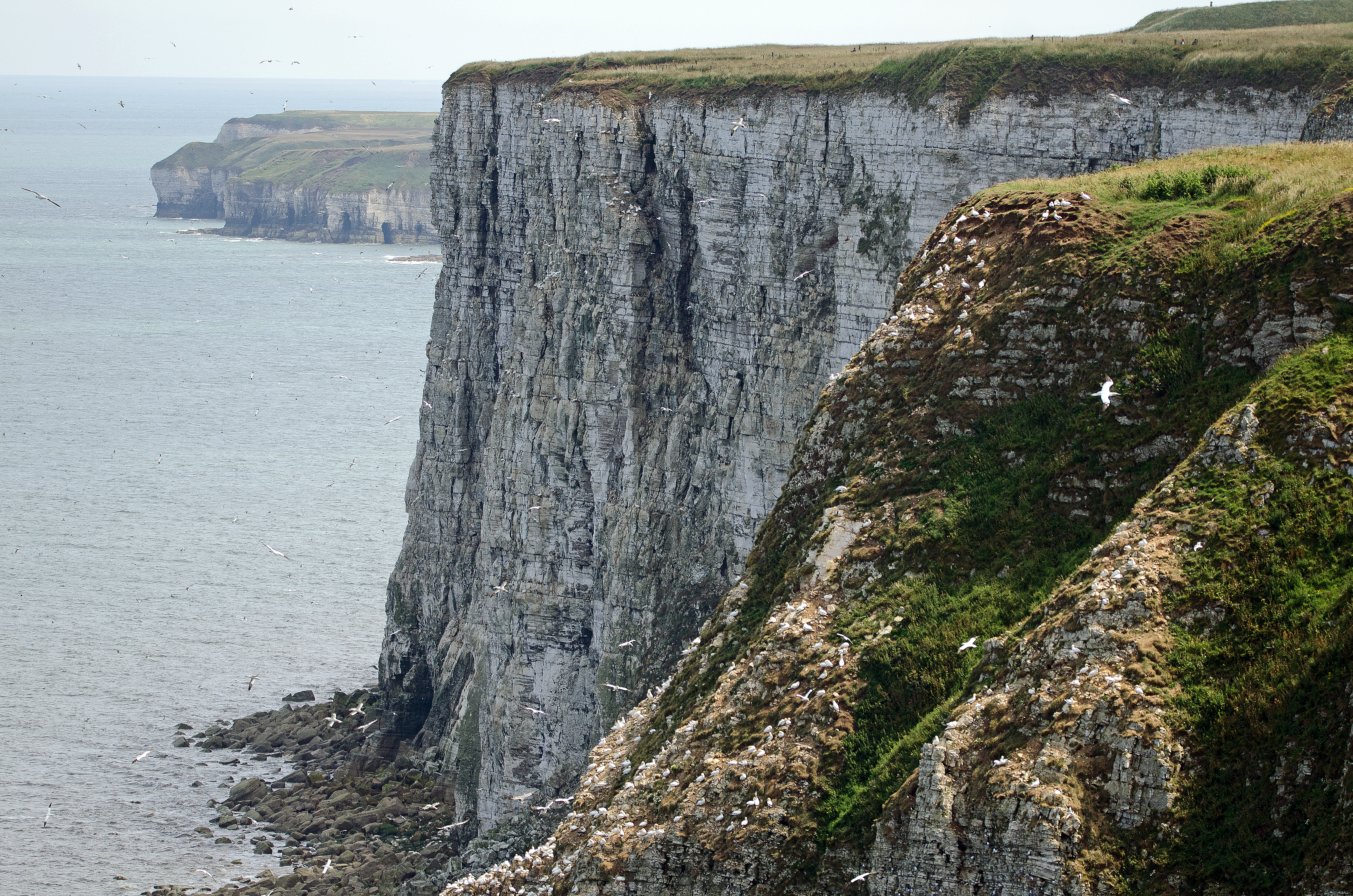
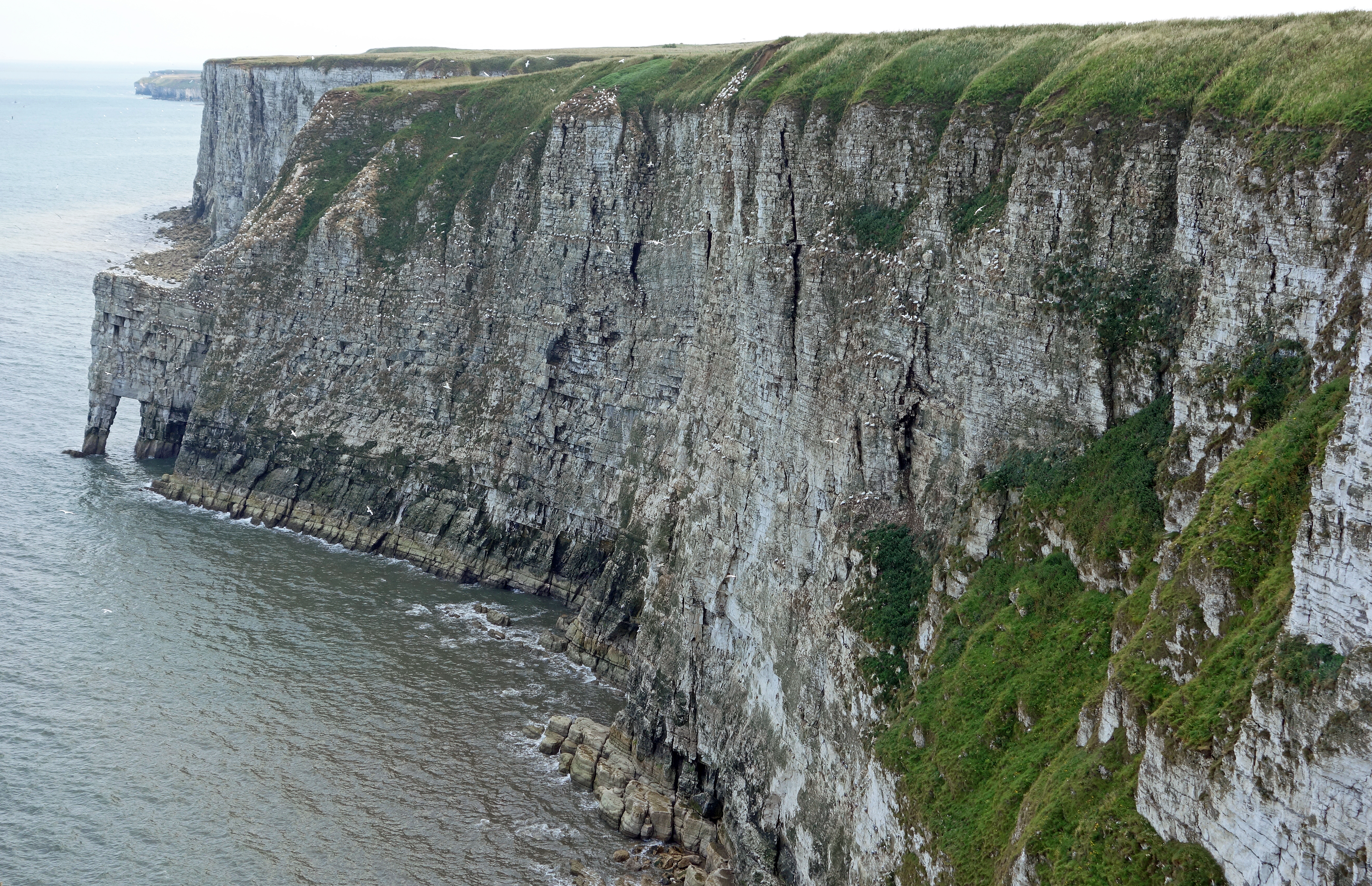
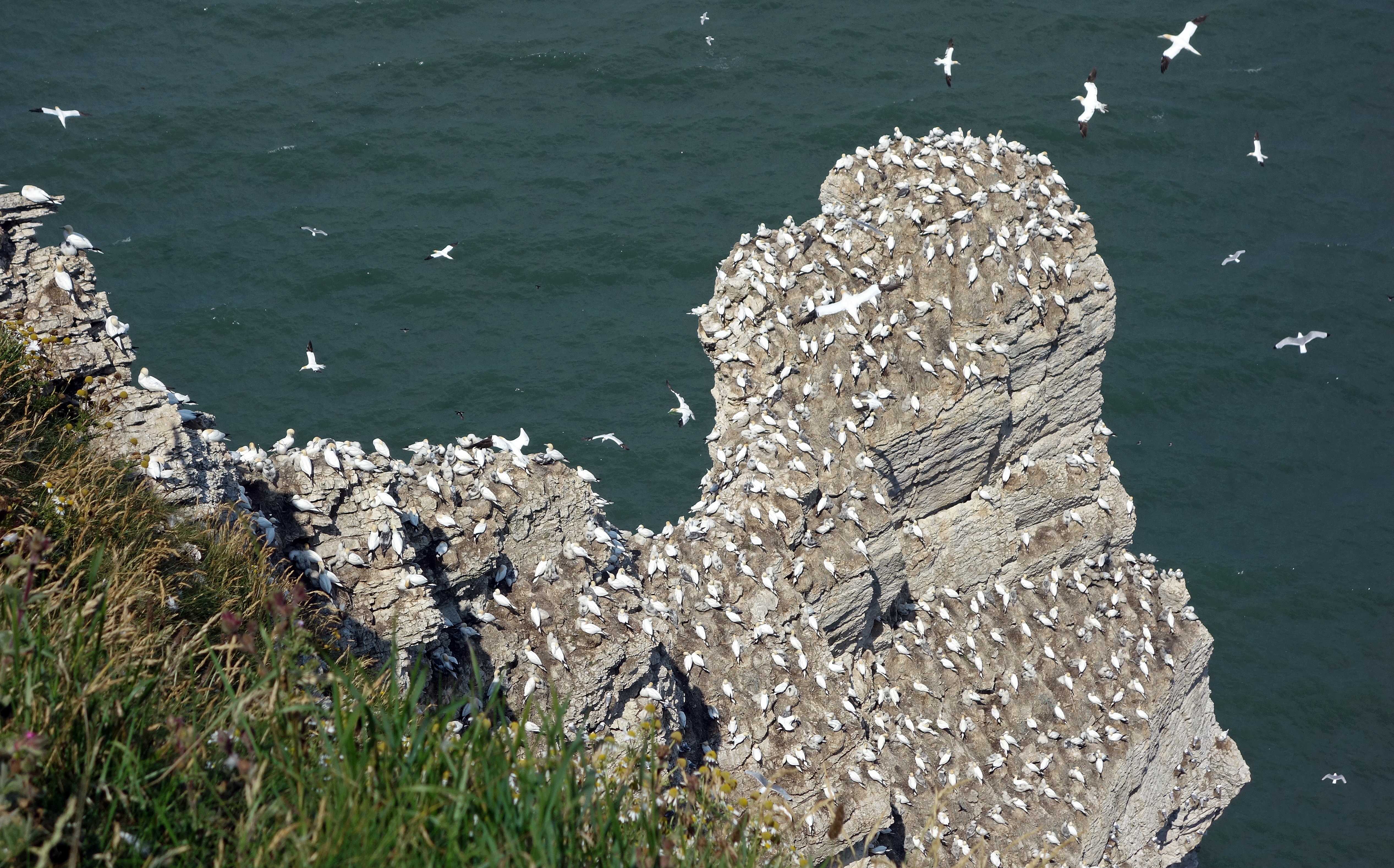
I sometimes wonder why the birds choose the harbour to live in, but there is clearly a good supply of fish and it is sheltered from the weather, although they are surely well adapted to coping with winter storms.
The common murre or common guillemot (Uria aalge) and the razorbill, razor-billed auk, or lesser auk (Alca torda) are both auks or alcids in the family Alcidae.
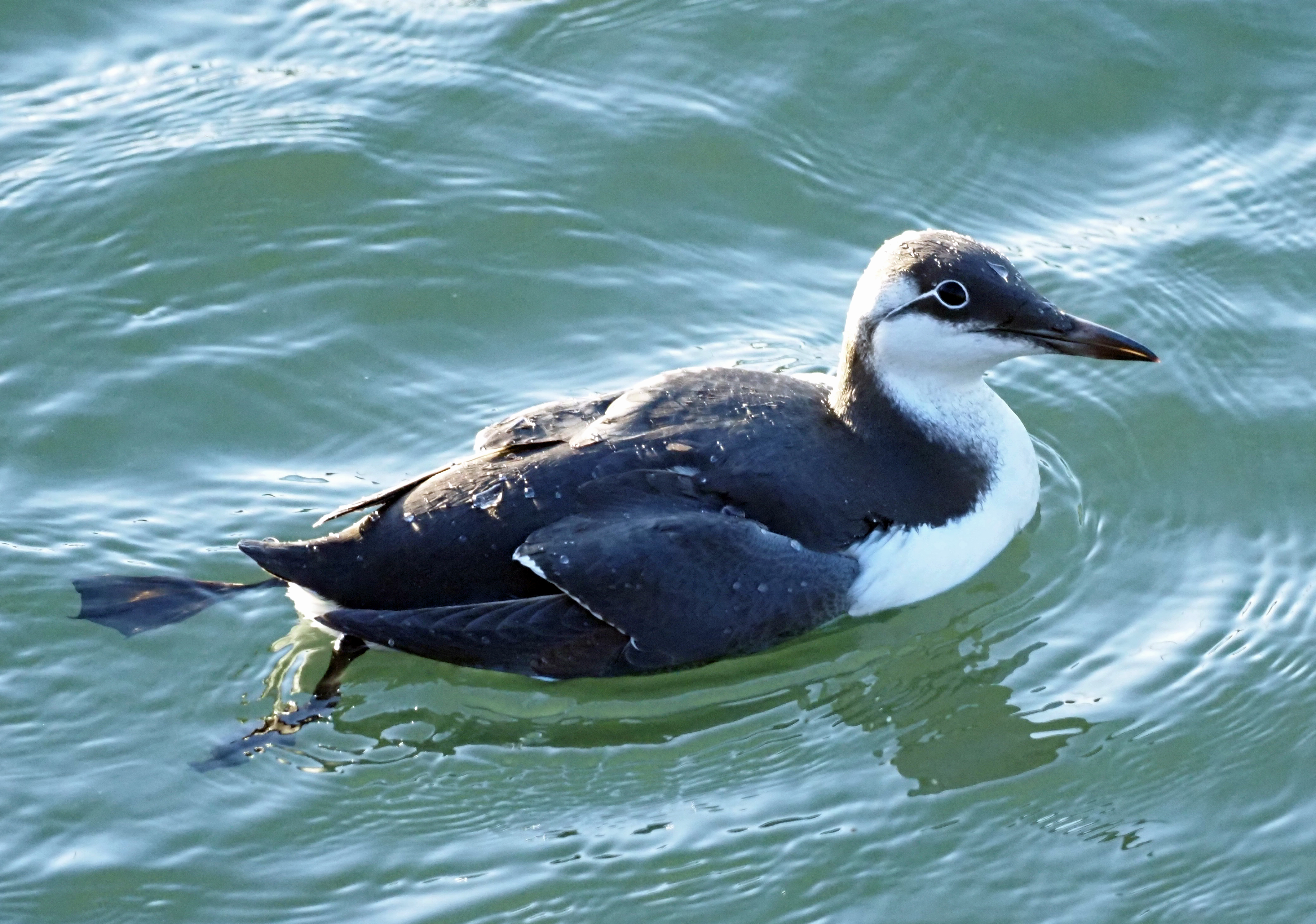
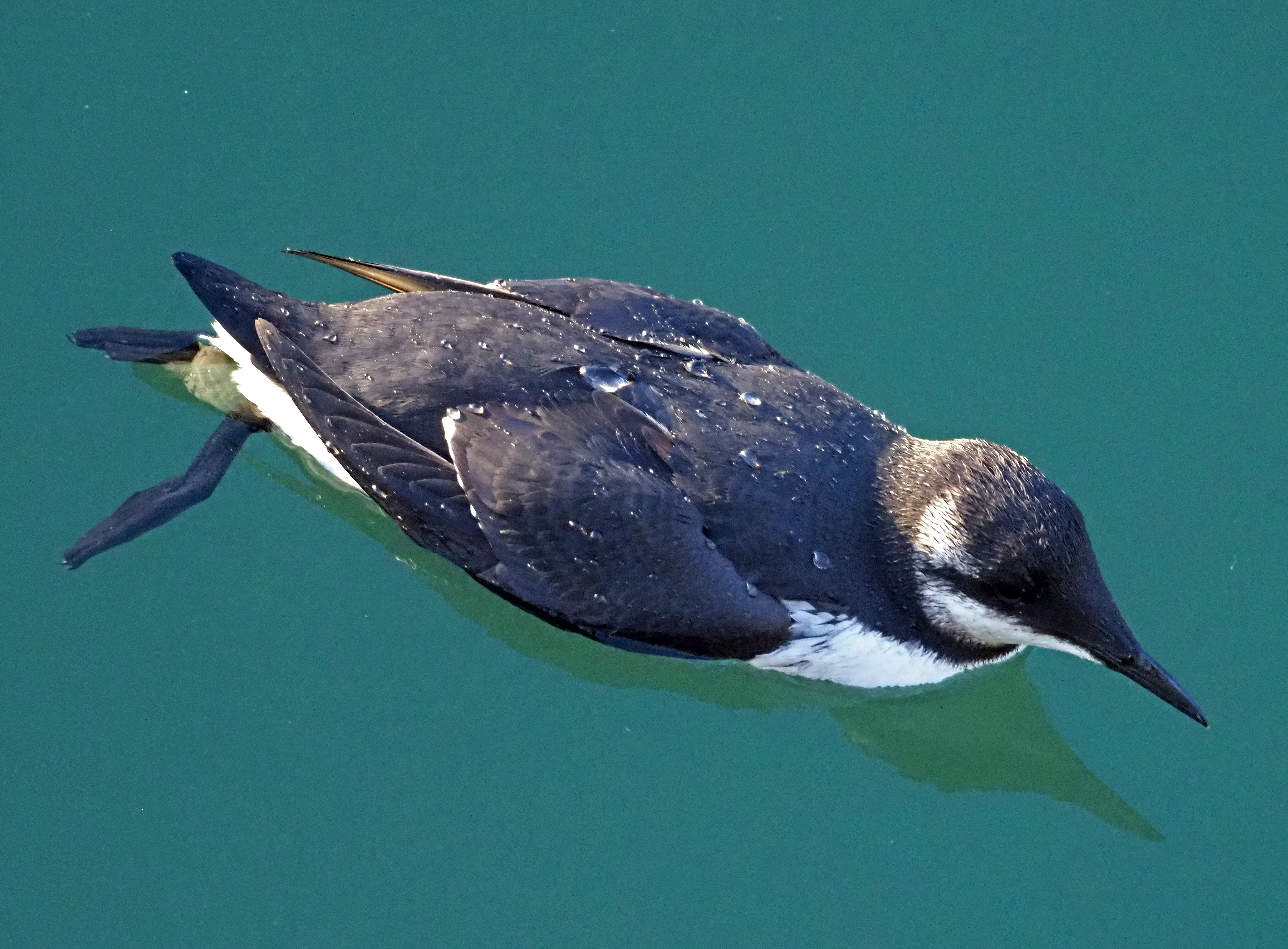
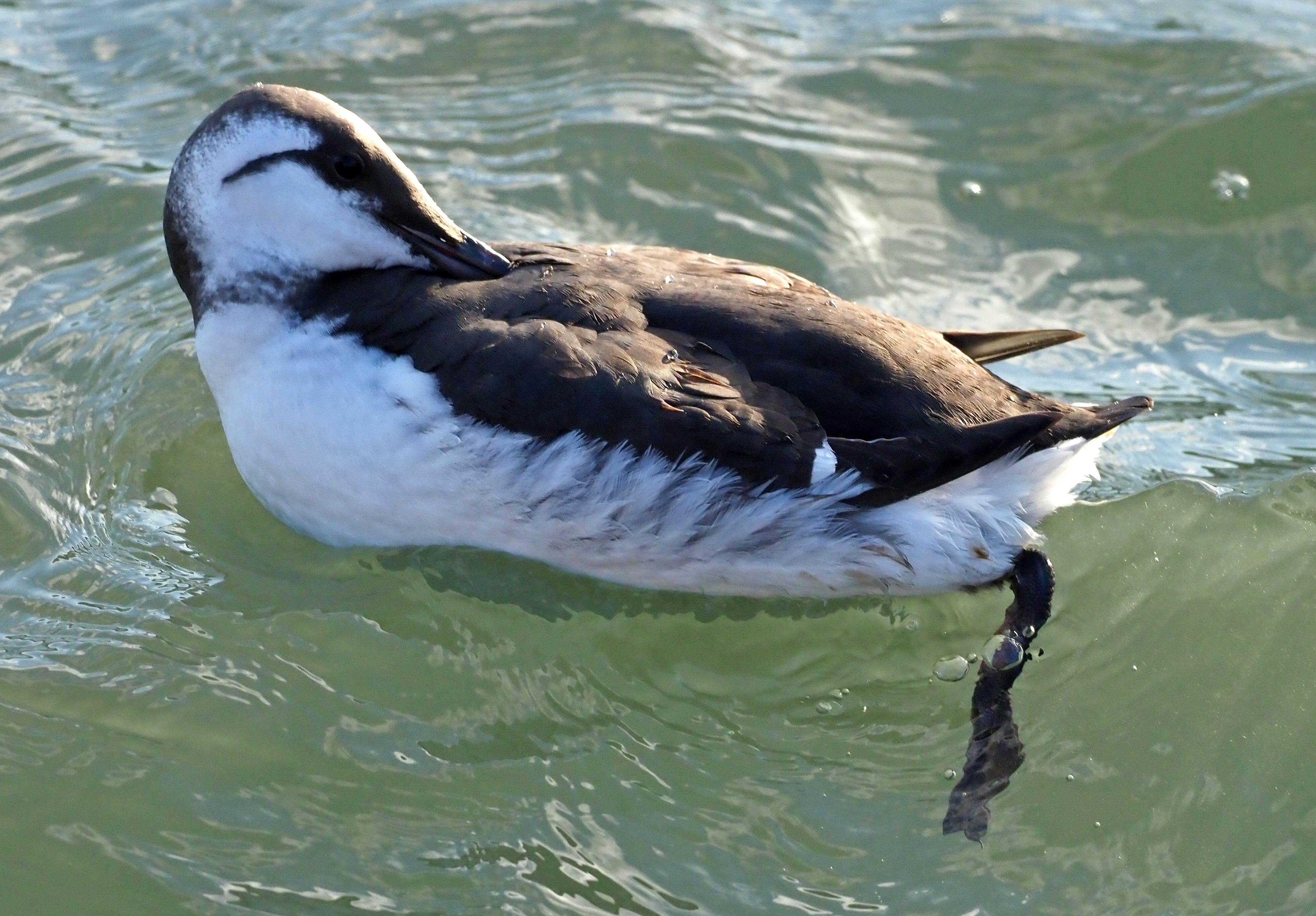
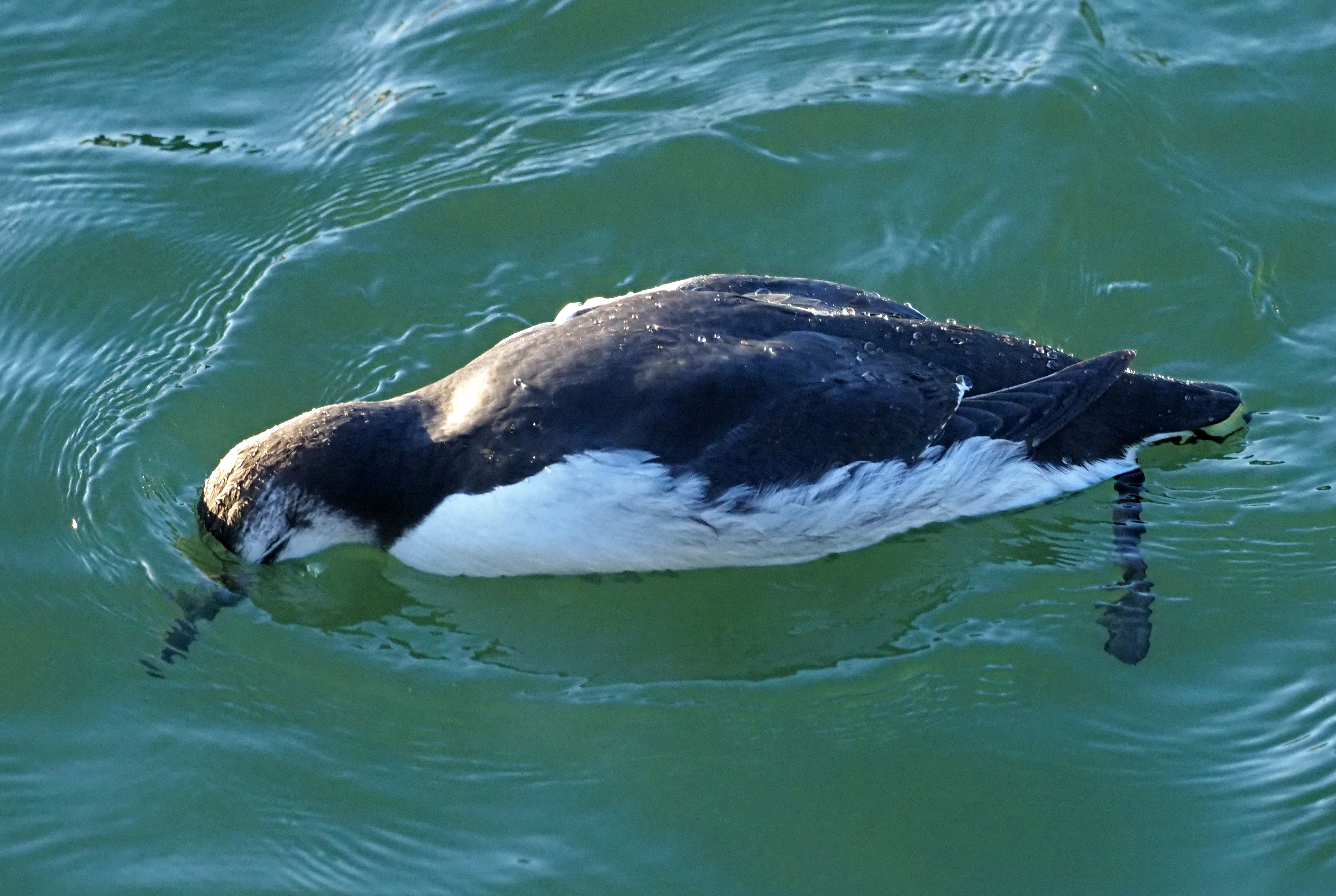
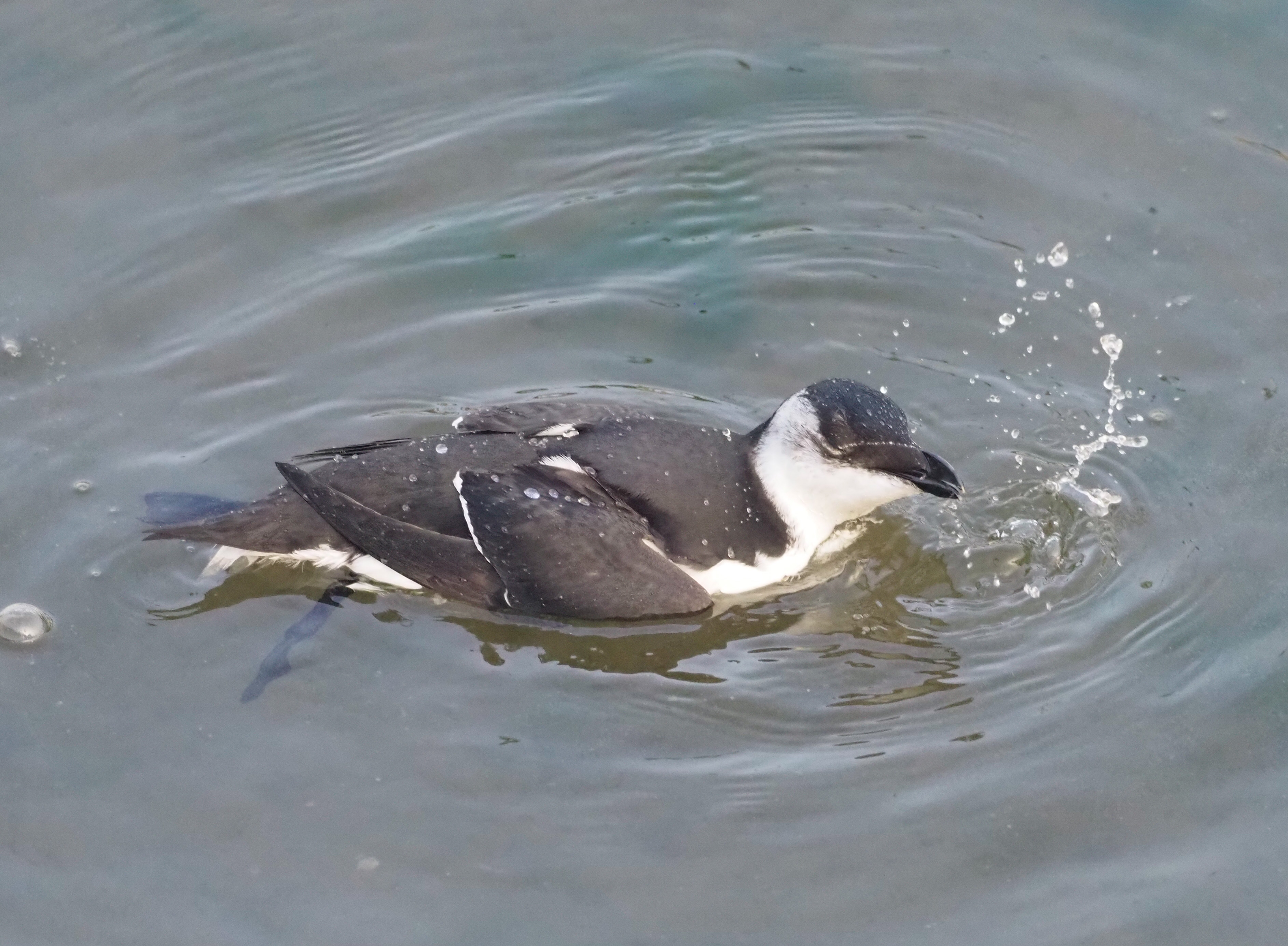
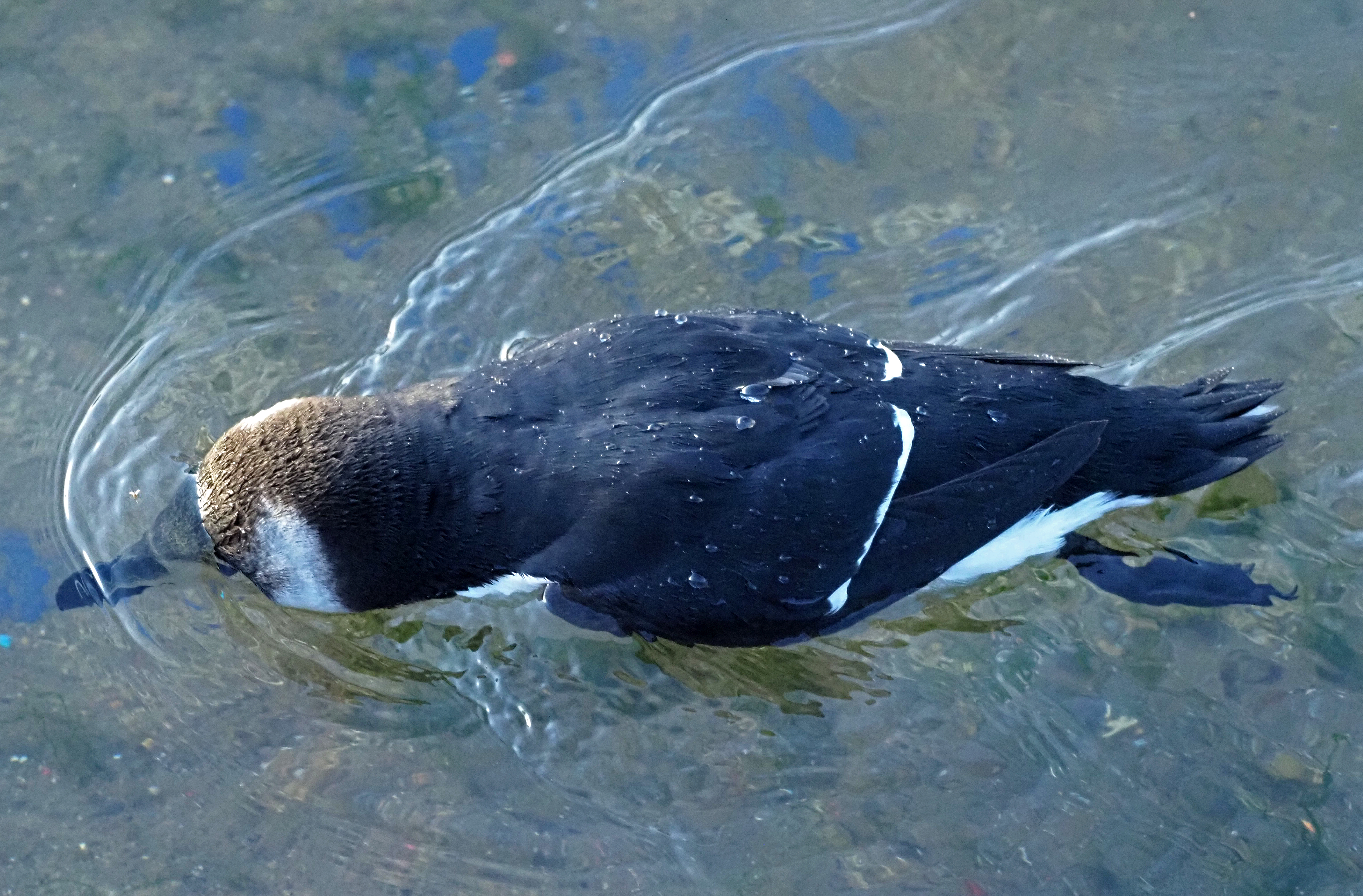
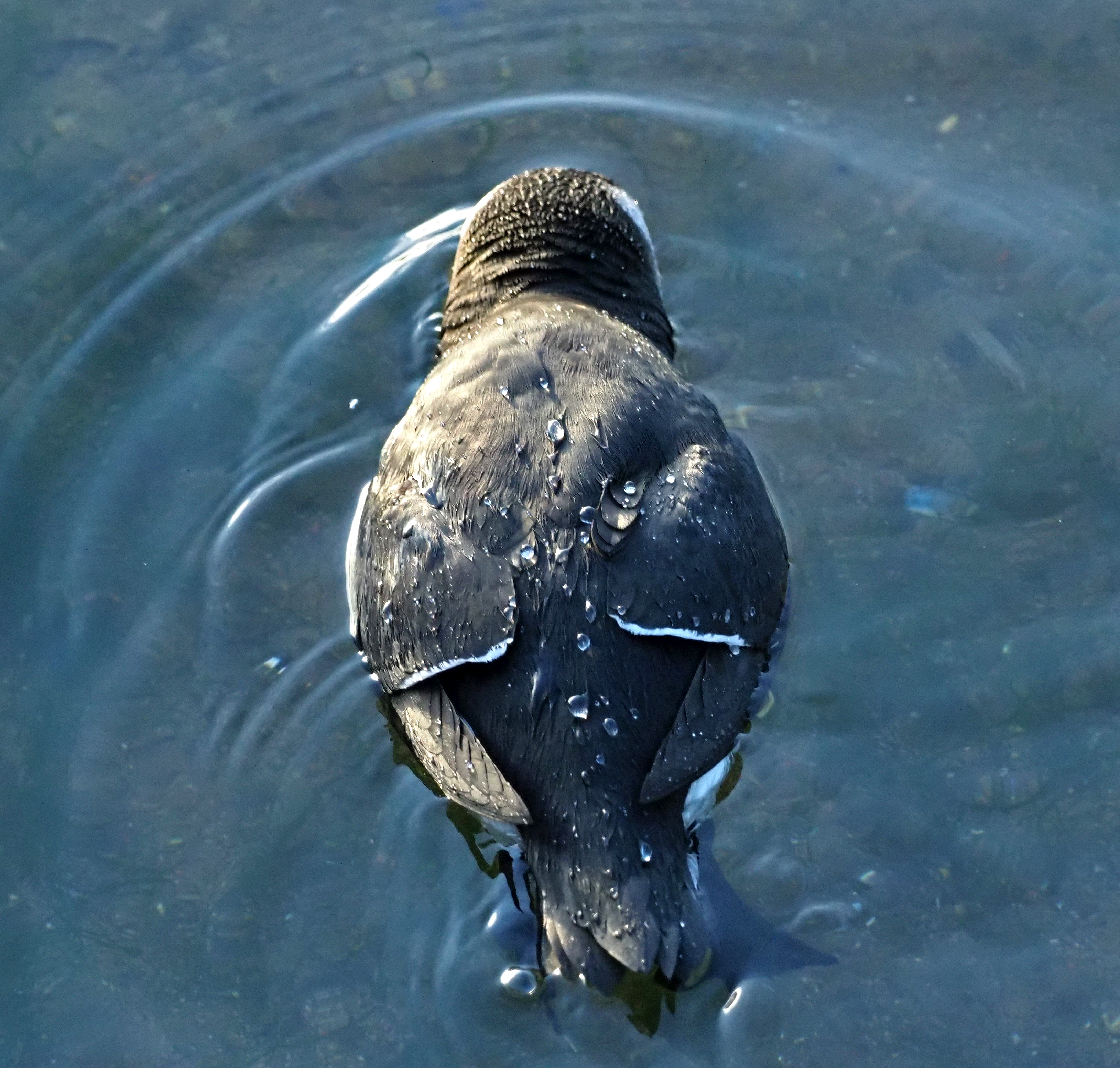
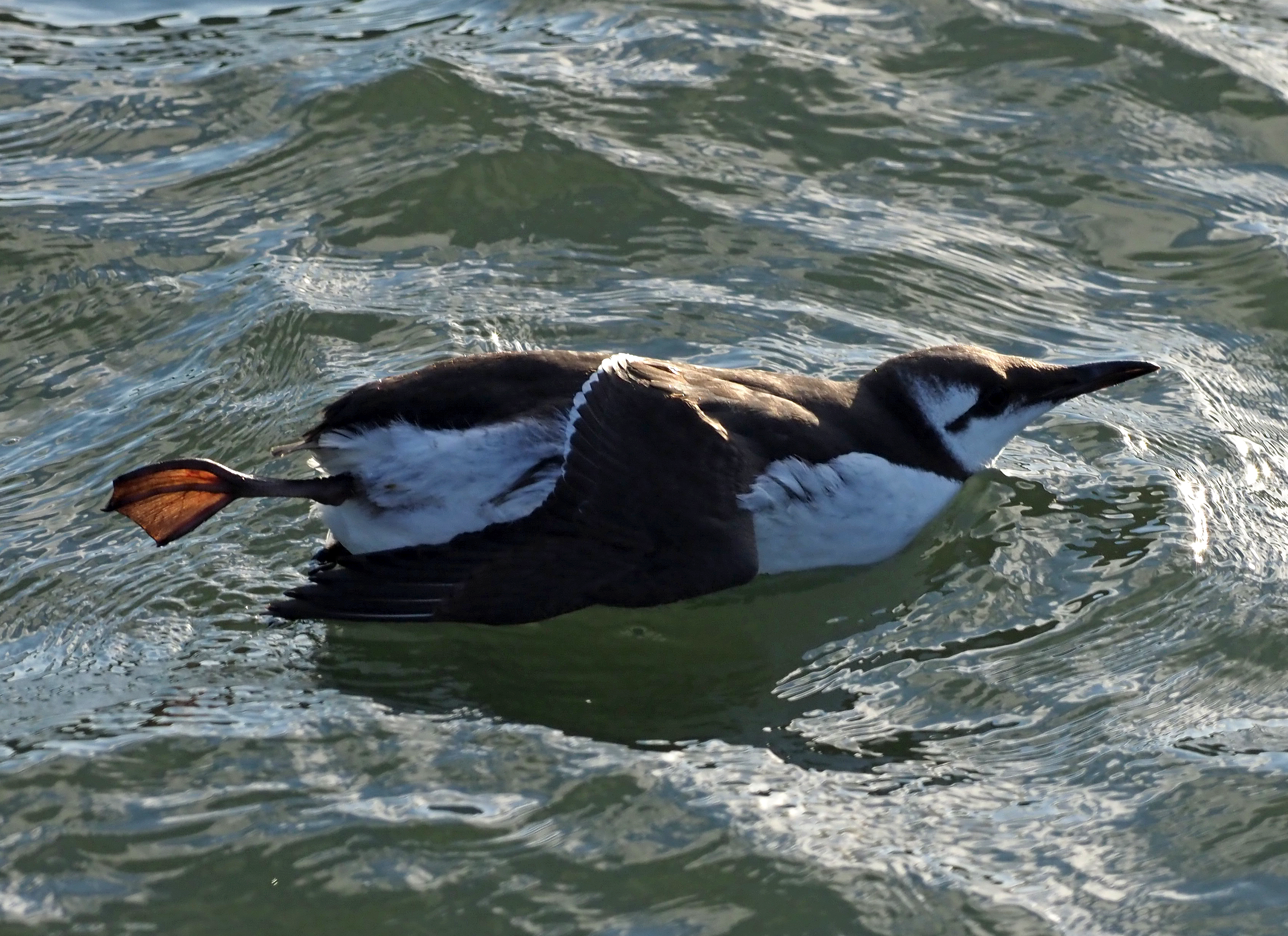
Guillemots sometimes stretch one of their legs, just one at a time, out backwards (see below), I suppose they need a rest from constantly paddling!
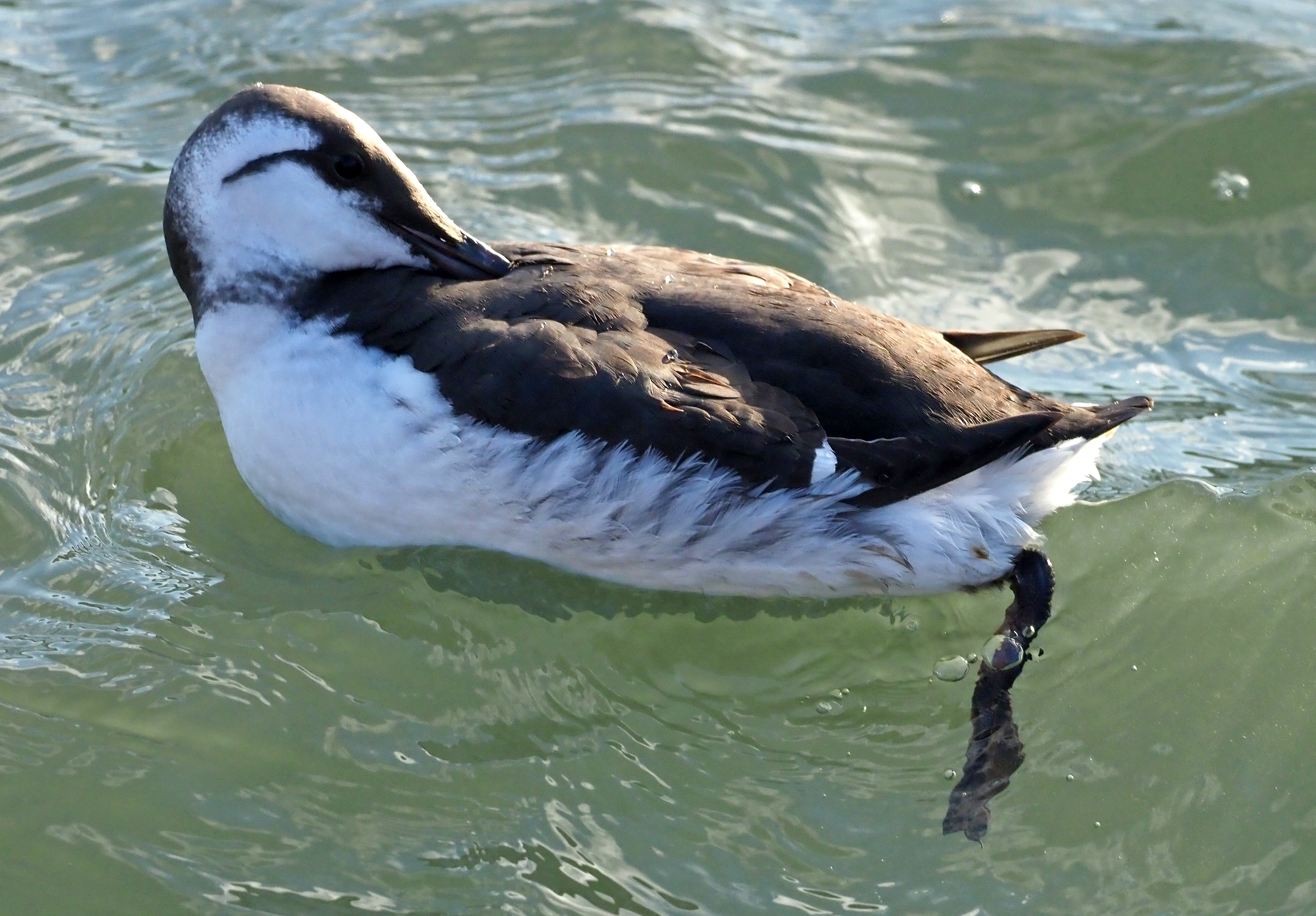
And of course, they have to preen their feathers to keep them in good shape and waterproof.
It was only this year (2023) that I realized what an attractive feeding ground the harbour could be for these seabirds. There were thousands of tiny fish near the surface, their silvery flashes sparkling just beneath the surface as their scales reflected the light. Not easy to photograph but clear to see. A fisherman with a line in the harbour told me that there were plenty of mackerel below the smaller fish, and promptly pulled out a live one!
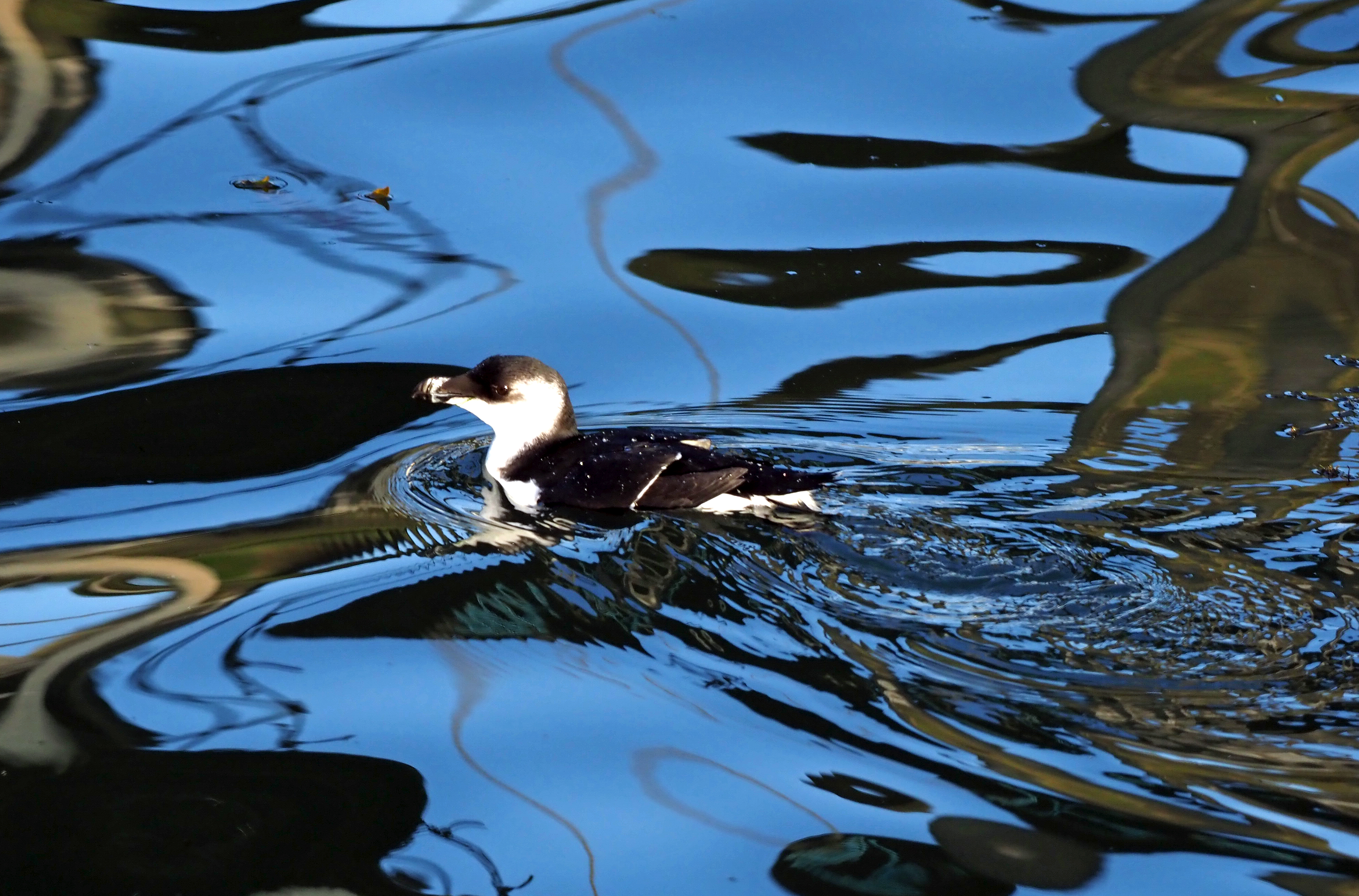
The presence of the auks in the harbour means that they are relatively easy to photograph, and sometimes made nice patterns in the water towards sunset.
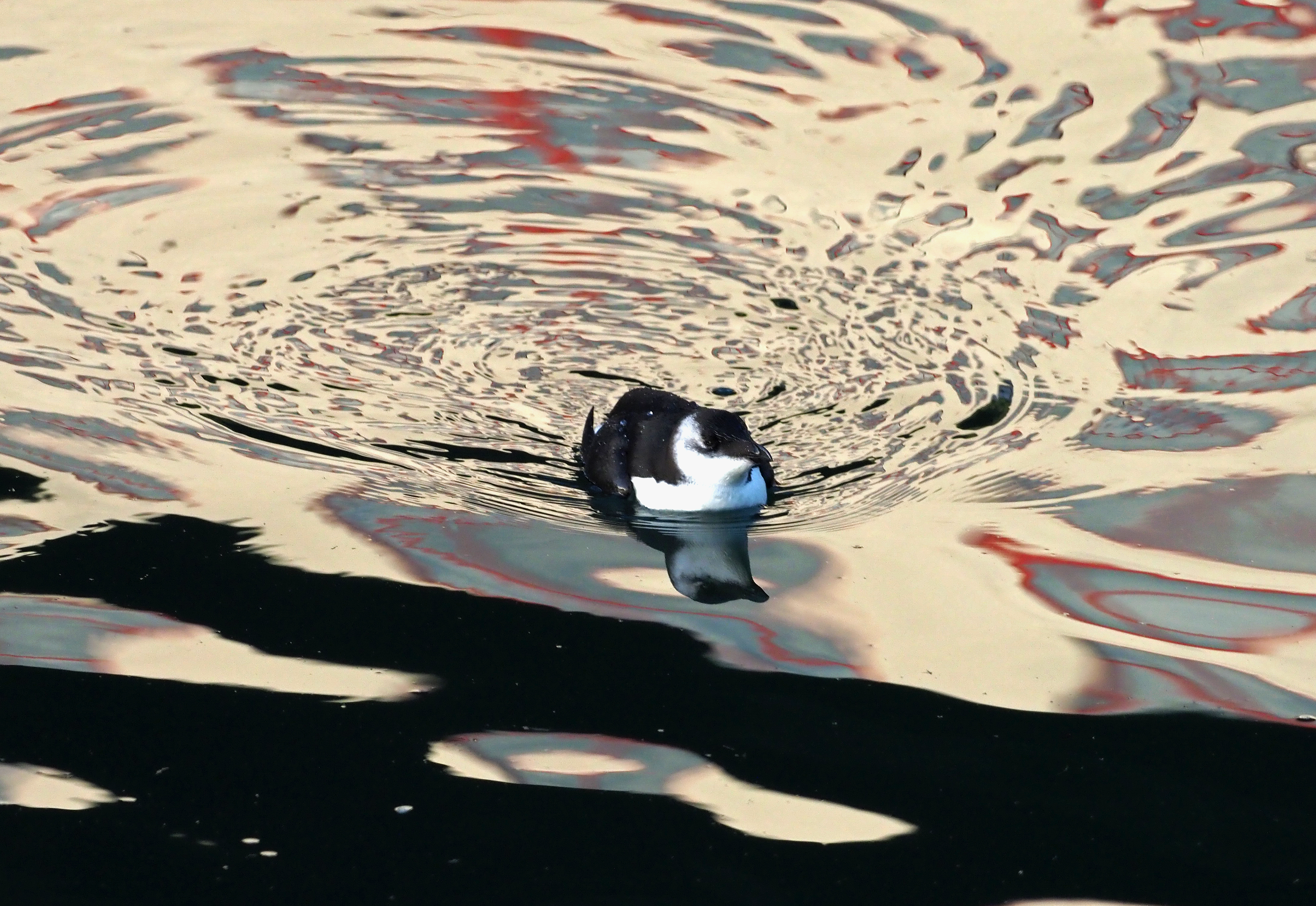
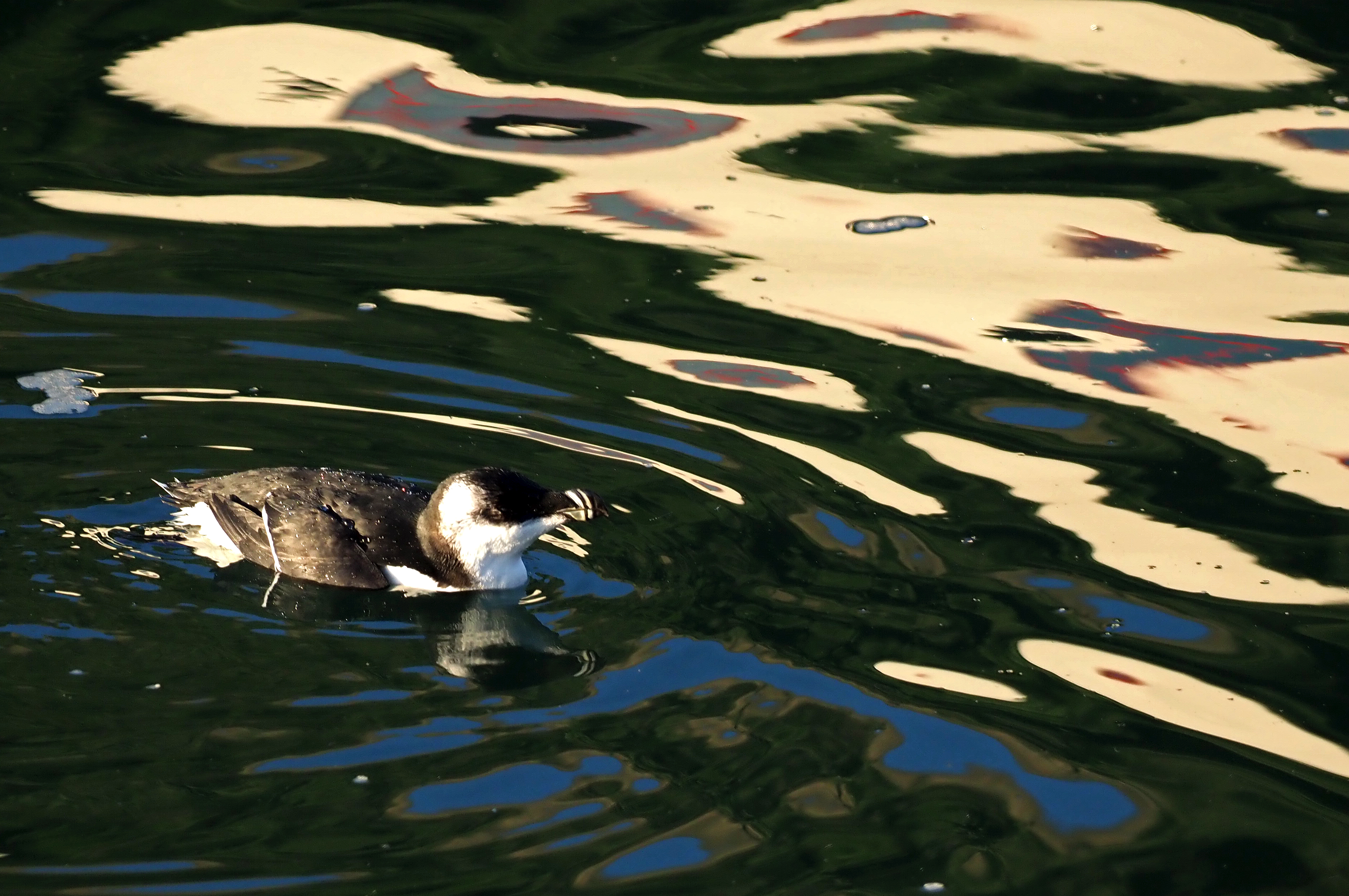
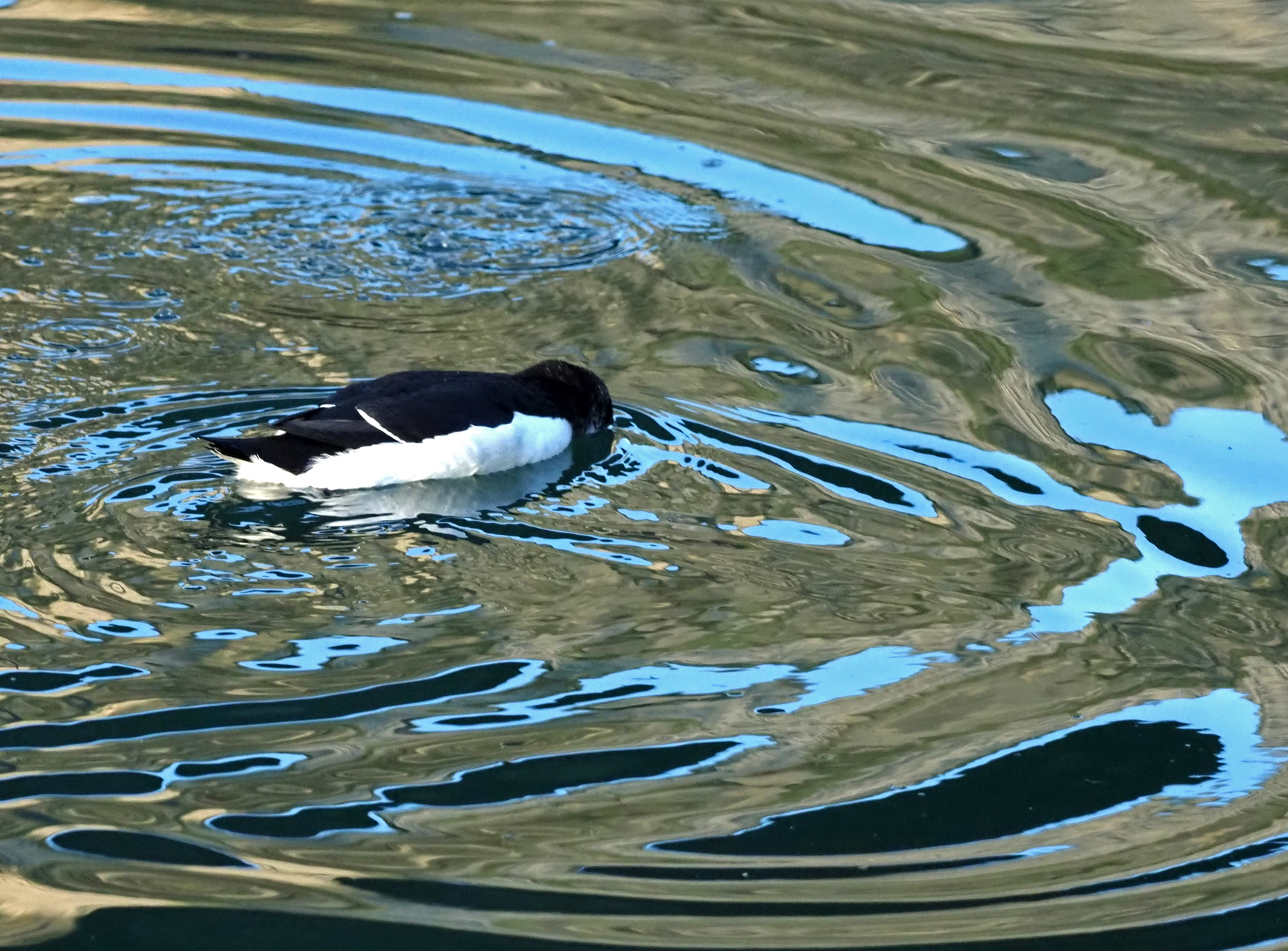
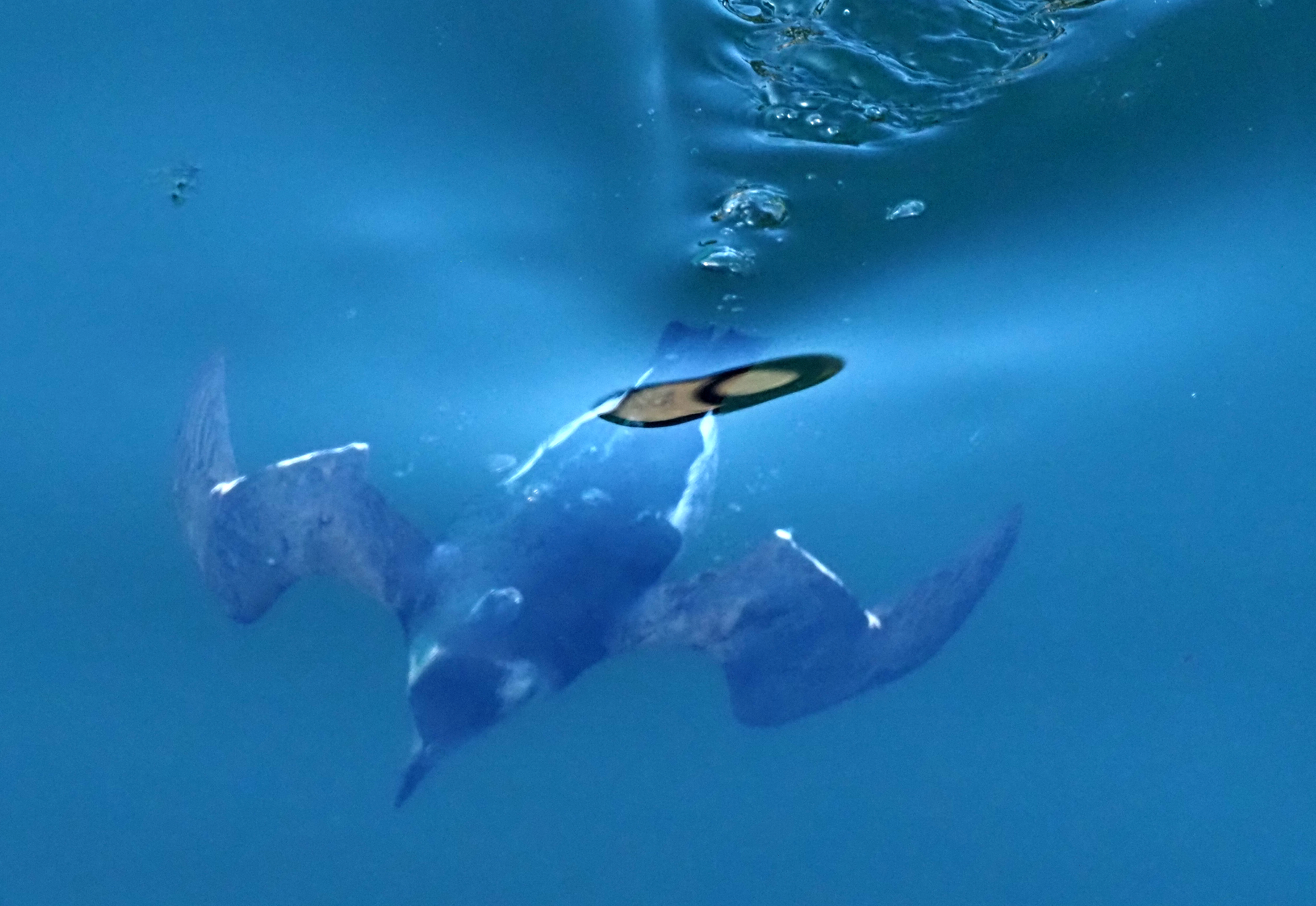
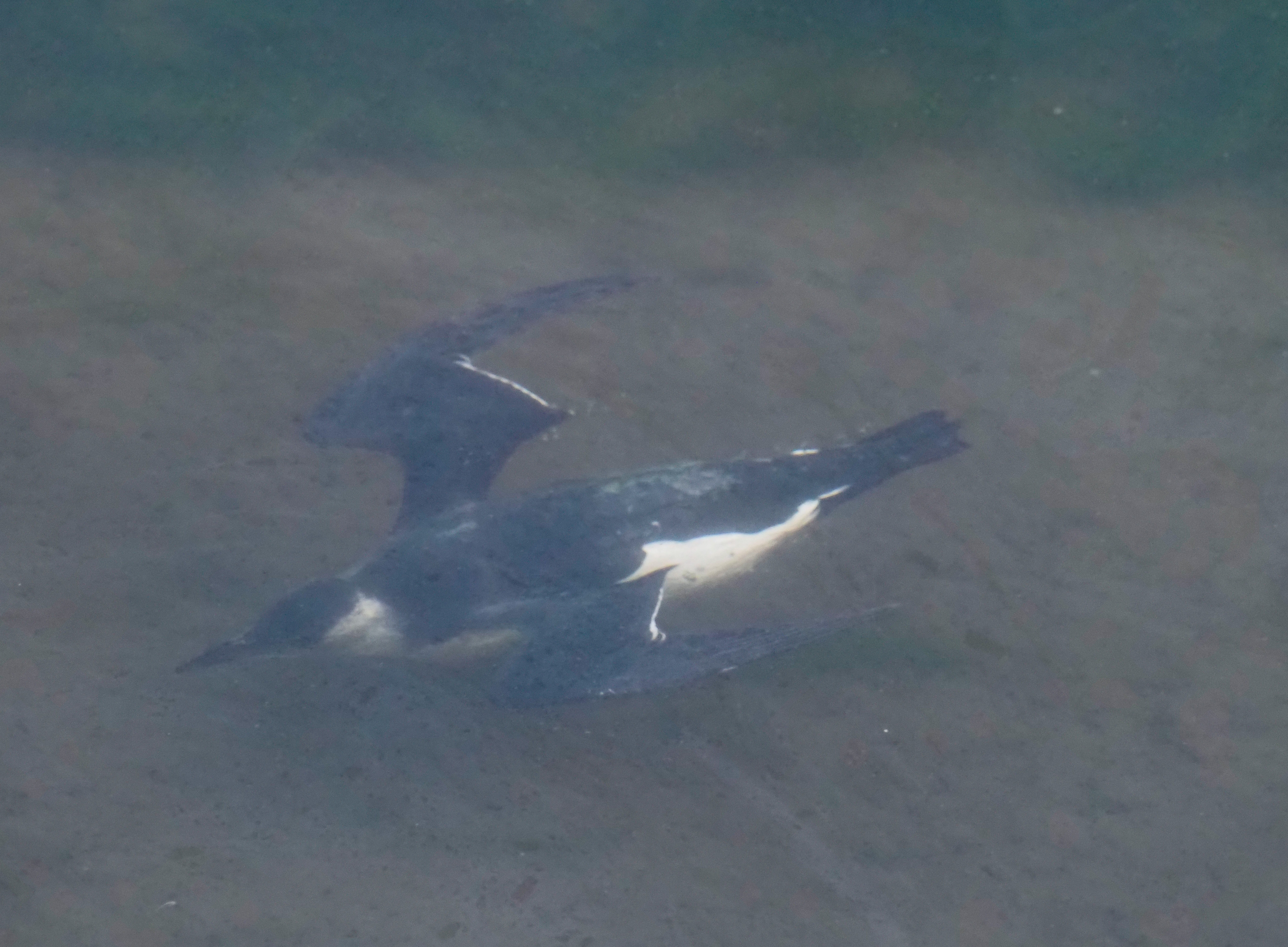
Watching these birds in the harbour, it is possible to see how they swim underwater in pursuit of fish. Something that would not be easy in the sea. They spend quite a lot of their time peering downwards into the water looking for fish (below). Often called snorkelling behaviour!
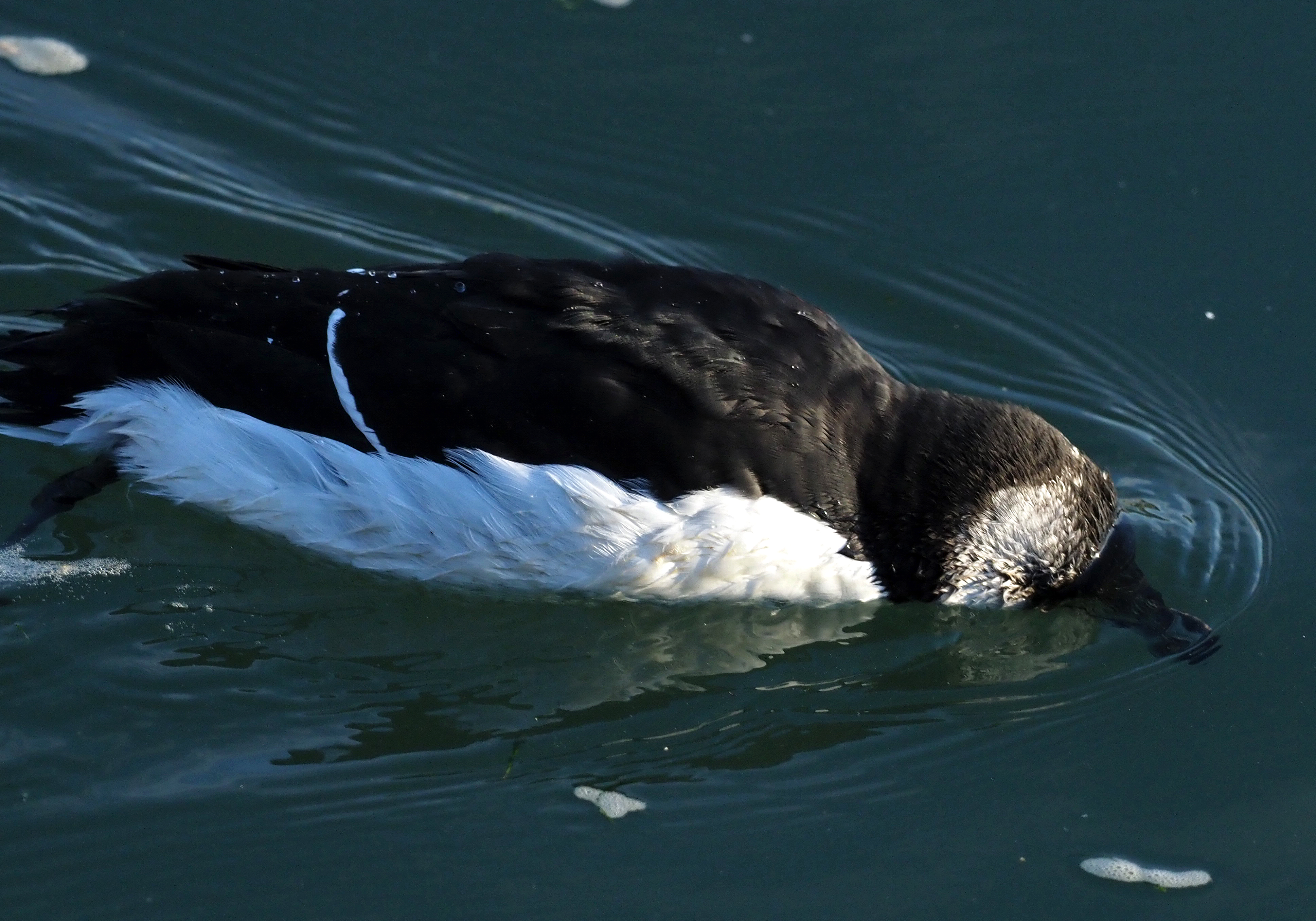
Once they spot a fish, they flip over and dive down after it.
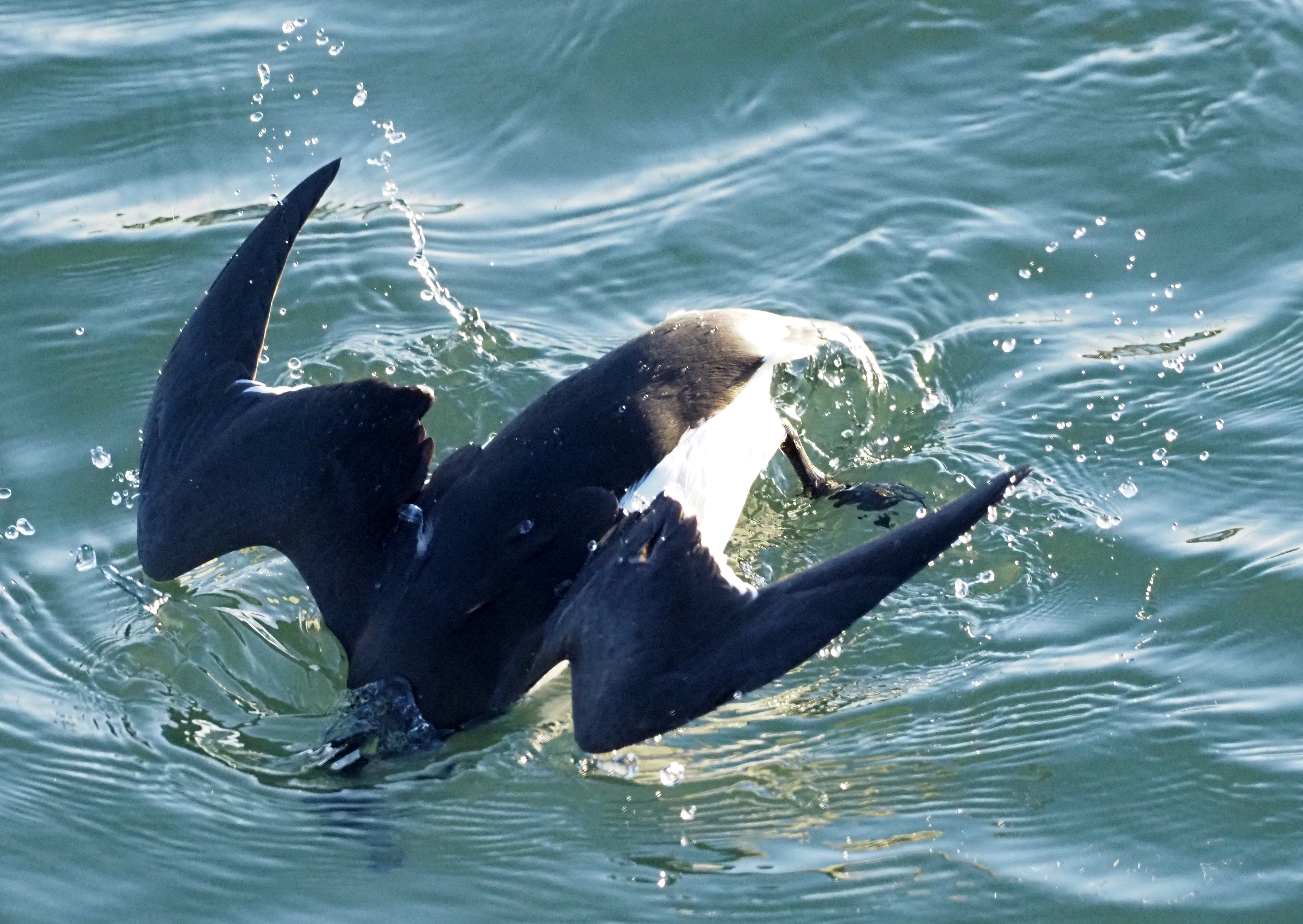
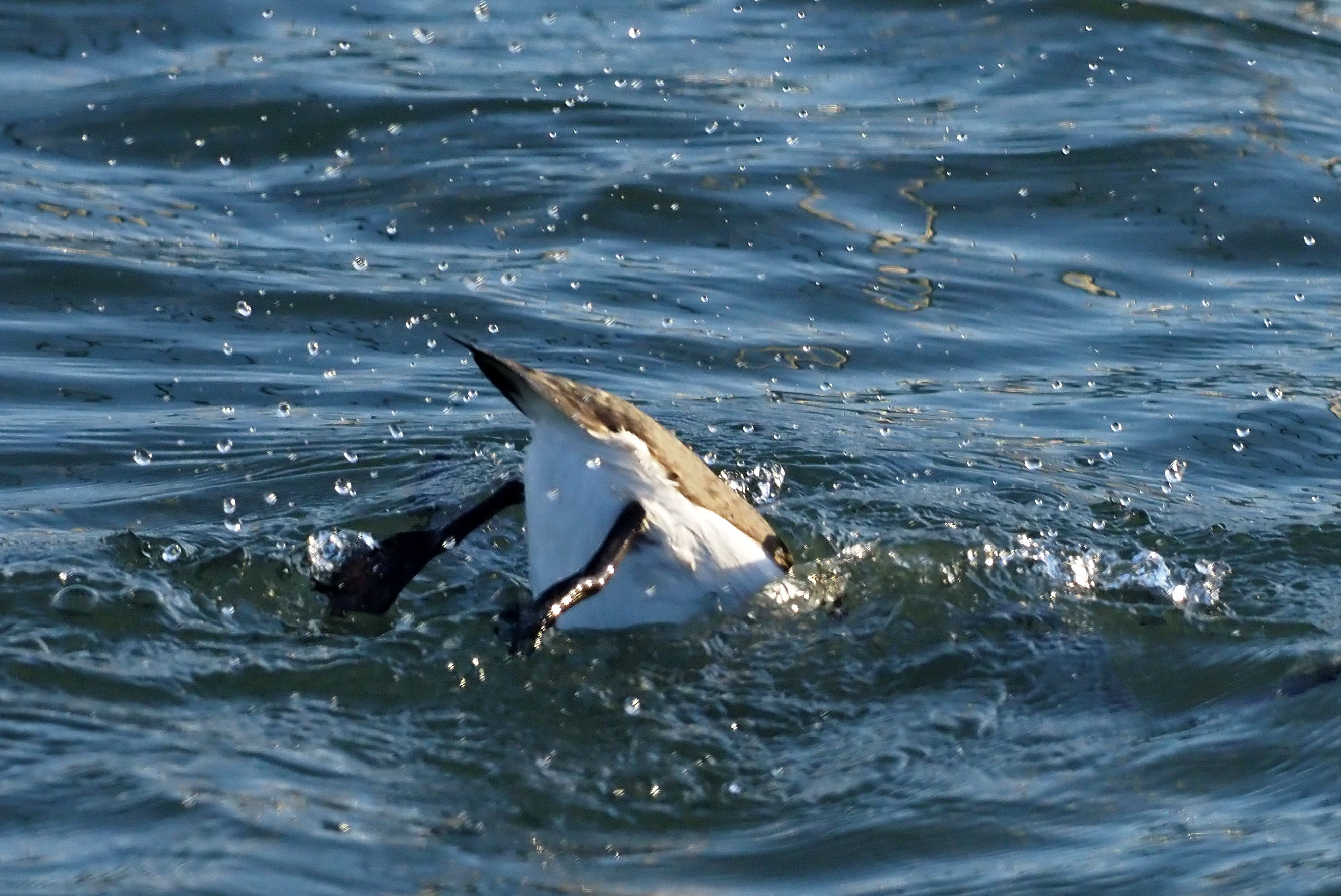
I was lucky to catch the moment of submersion in the photograph shown below.
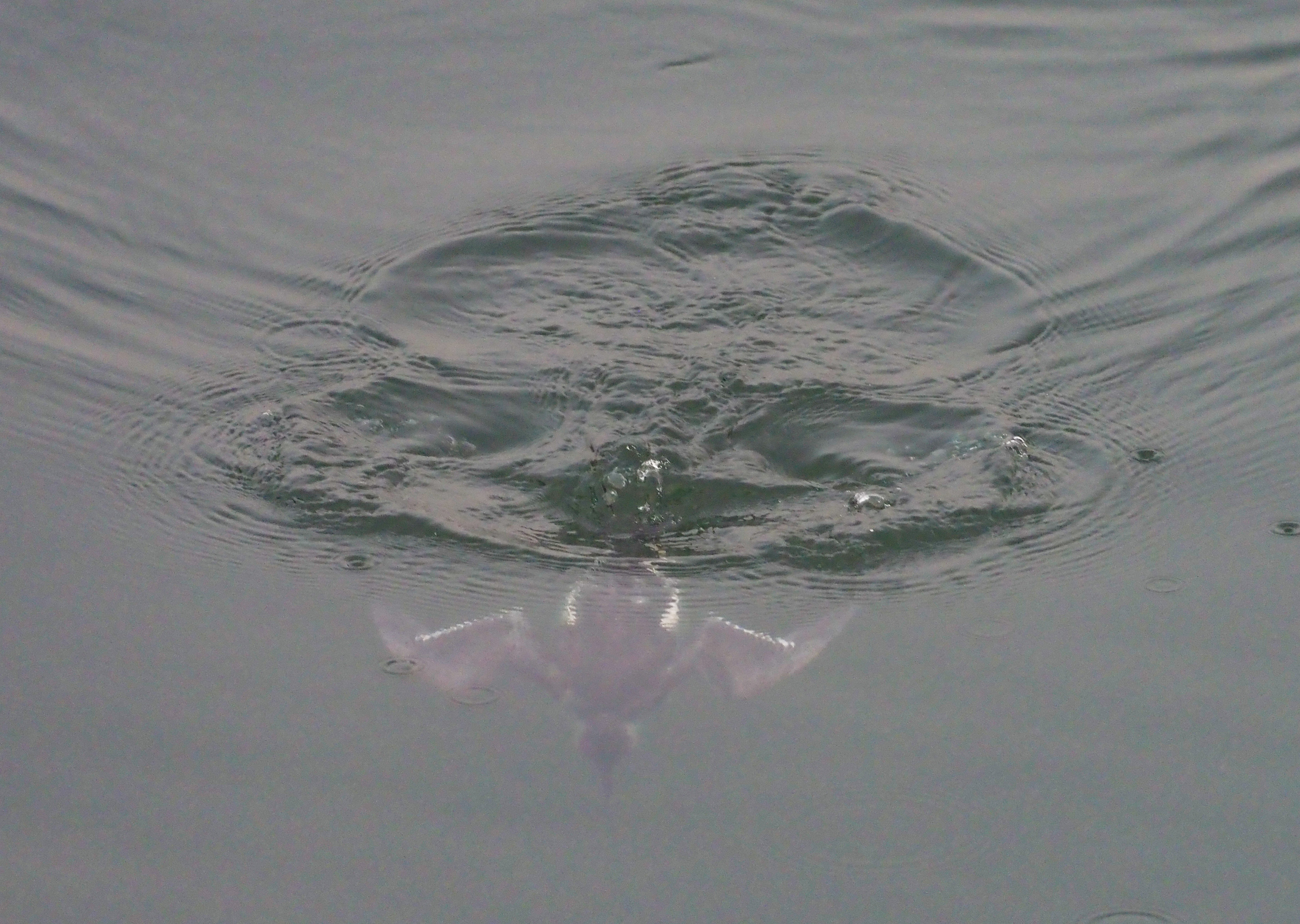
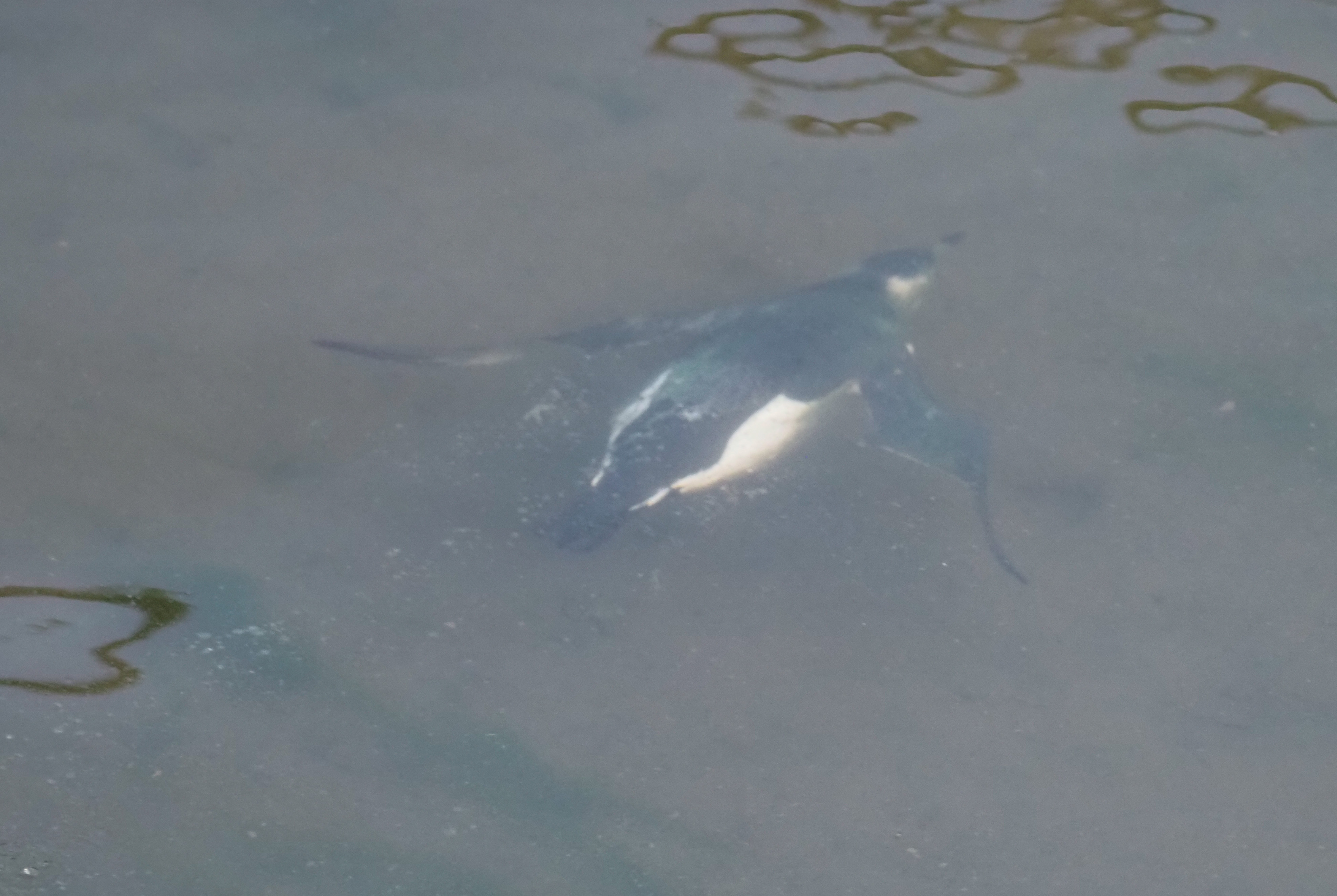
Once they are underwater, they swim surprisingly fast; after all, how else are they going to catch any fish?! I have managed to snap a few images as they flap through the water (below), looking a bit like penguins! But unlike penguins, whose flippers are adapted solely for swimming, these auks can fly, meaning that their wings have to serve a dual function.
Like all seabirds, auks face challenges from climate change, pollution and a shortage of food, but for the small number of residents that choose to spend some time in the harbour – not pollution free! – I hope that it helps them get through the autumn and winter, and that they go on to produce more auks in the new year.
 Ray Cannon's nature notes
Loved your photo of the diving auk, a perfect moment in time!
Lovely photos.
Excellent photos, Ray.
Thank you!😊