The banded demoiselle, Calopteryx splendens (Harris) (Odonata: Calopterygidae) is a common damselfly in England and Wales, and is gradually spreading north into Scotland. Researchers have discovered that it has one of the largest insect genomes sequenced to date.
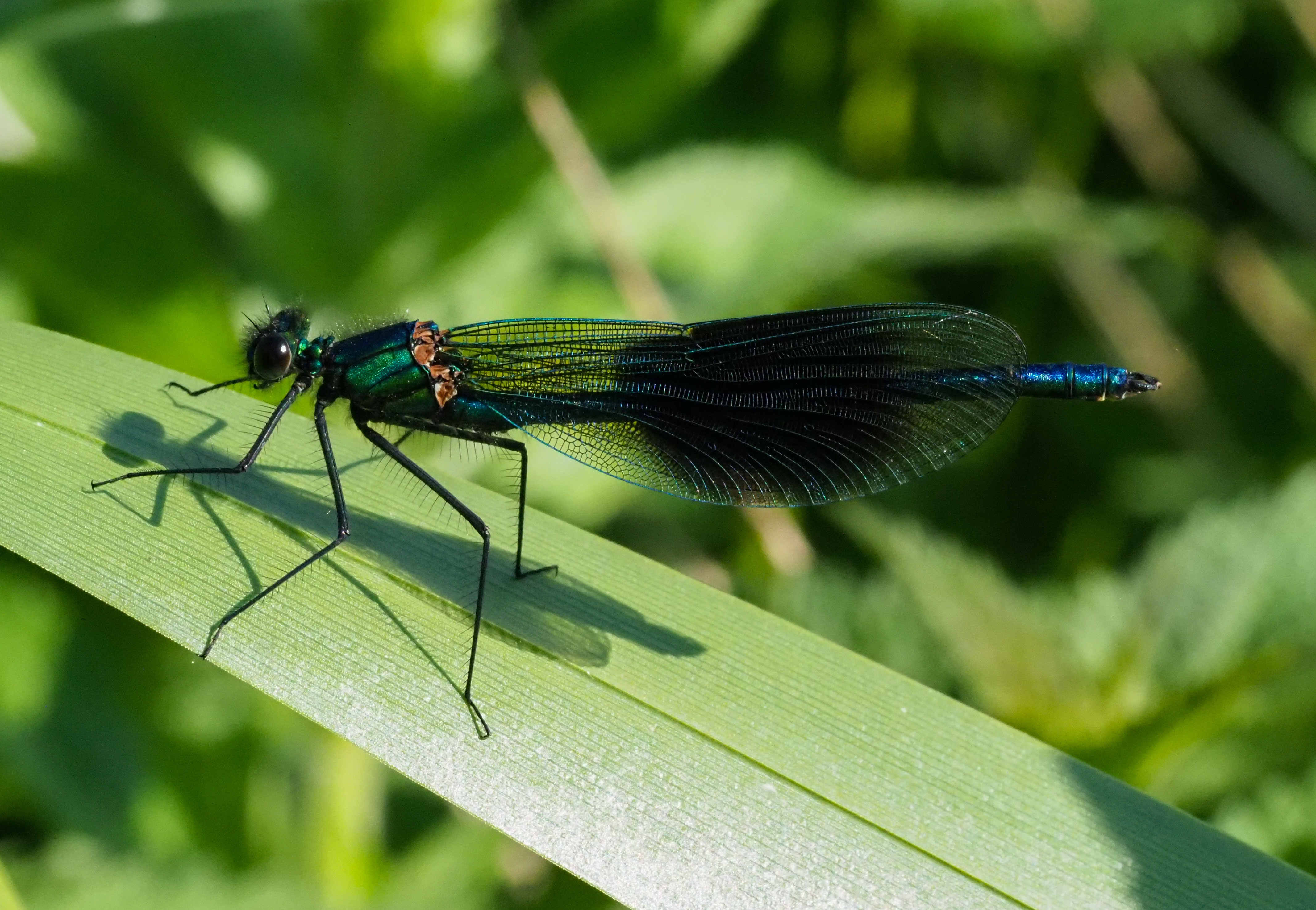
Males have a metallic blue or greenish body with broad, dark, blue-black spots across the outer parts of wings.
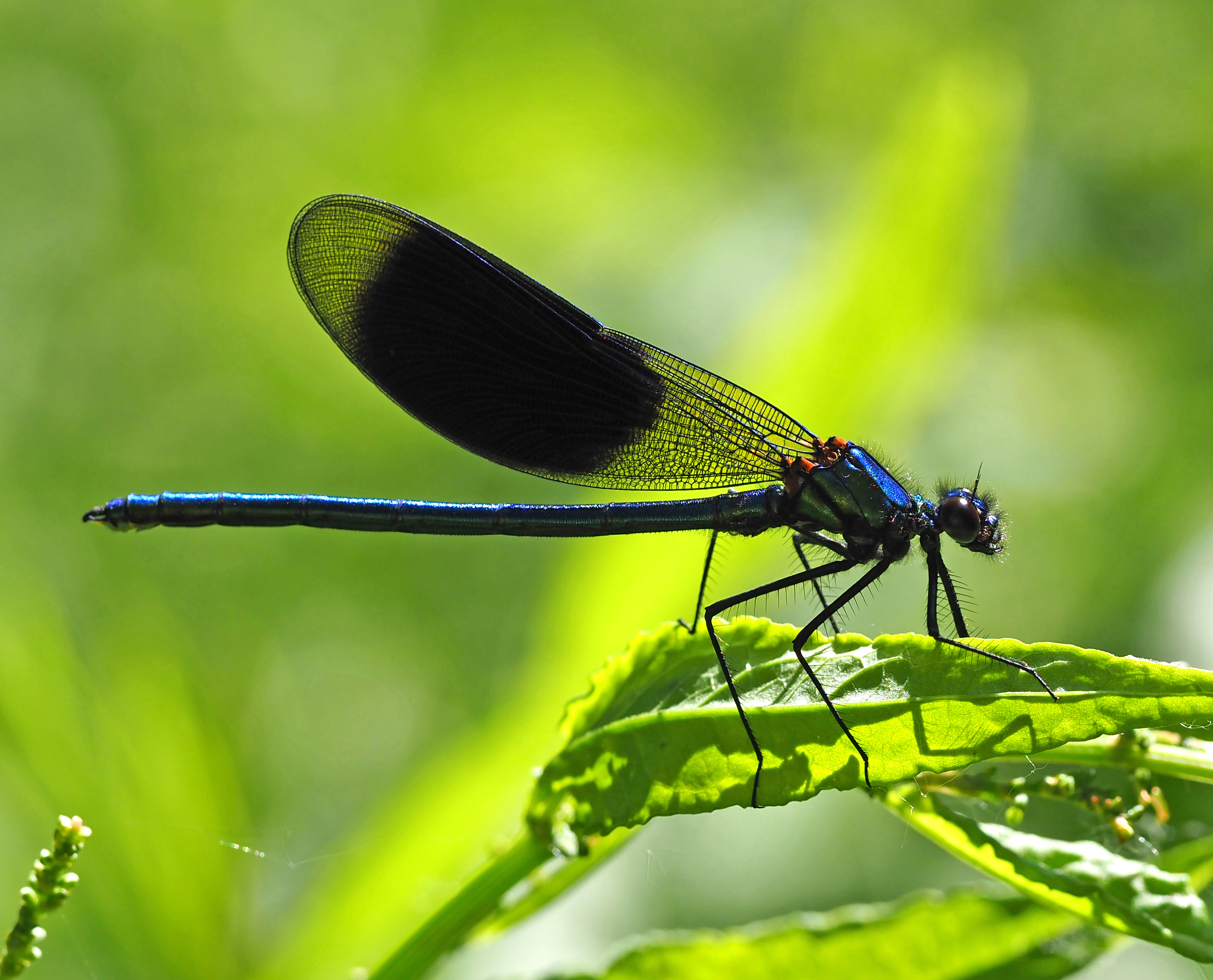
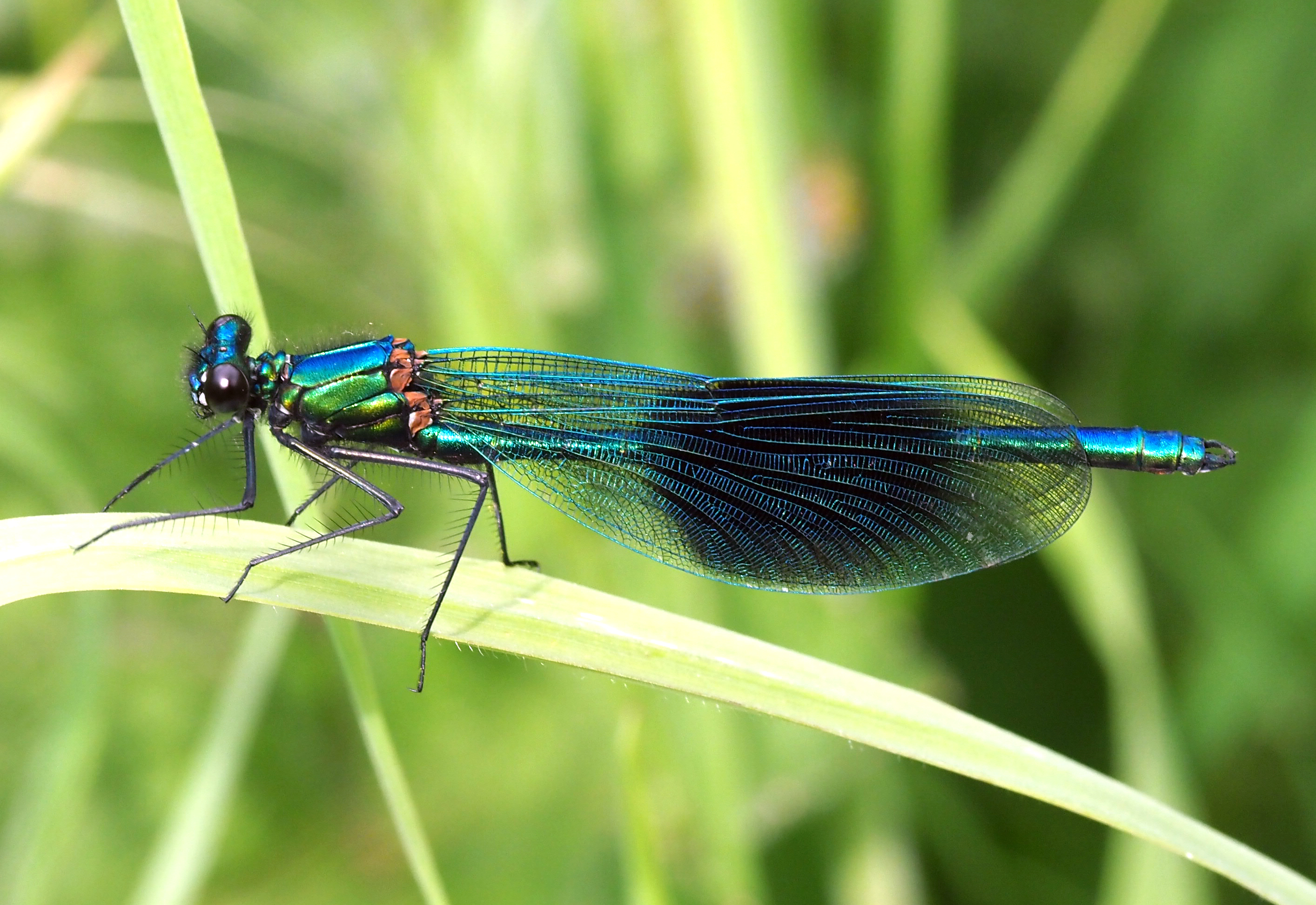
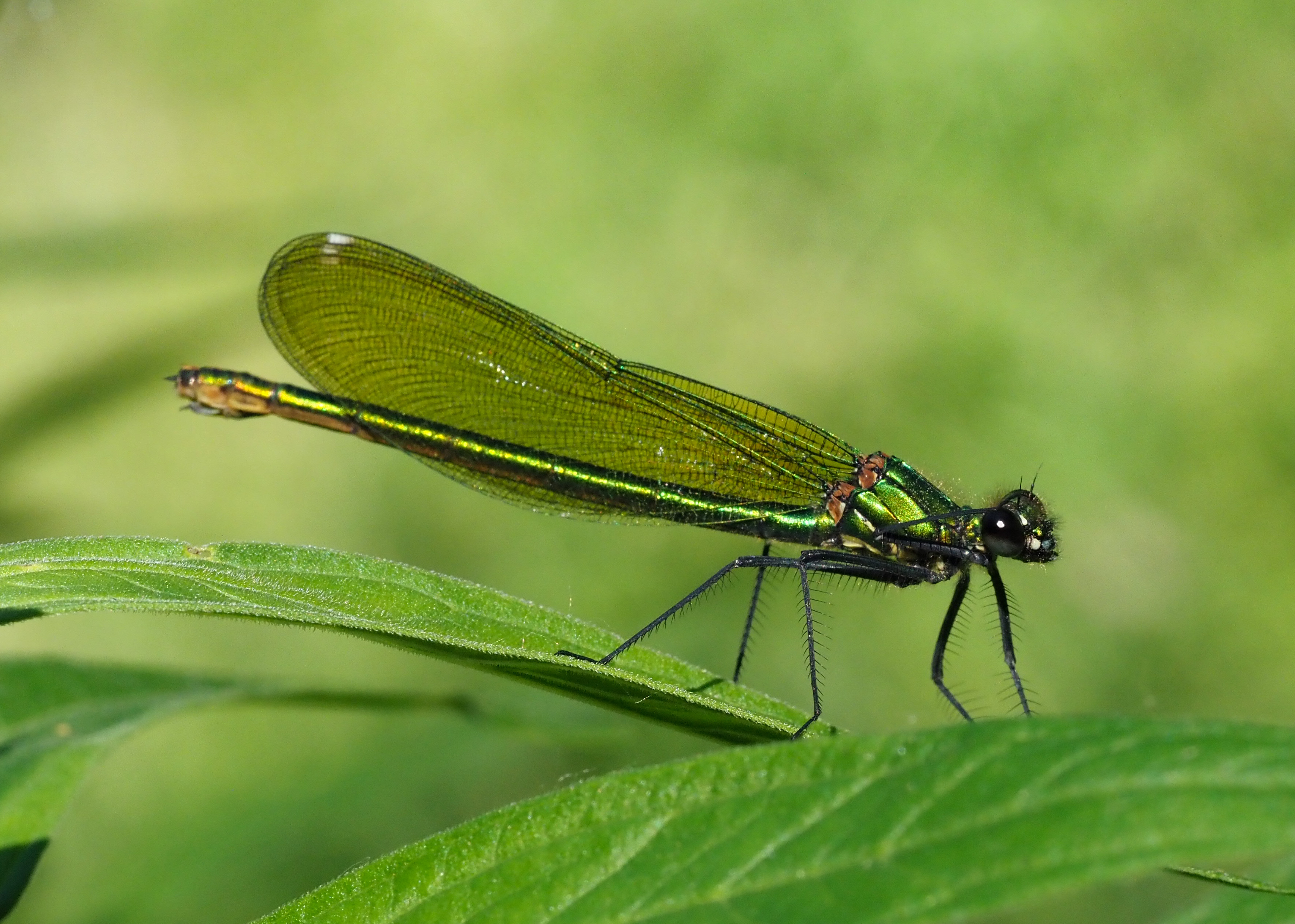
In both sexes, the body can be a metallic blue or bluish green, or a combination of both colours, depending on the time of year and location.
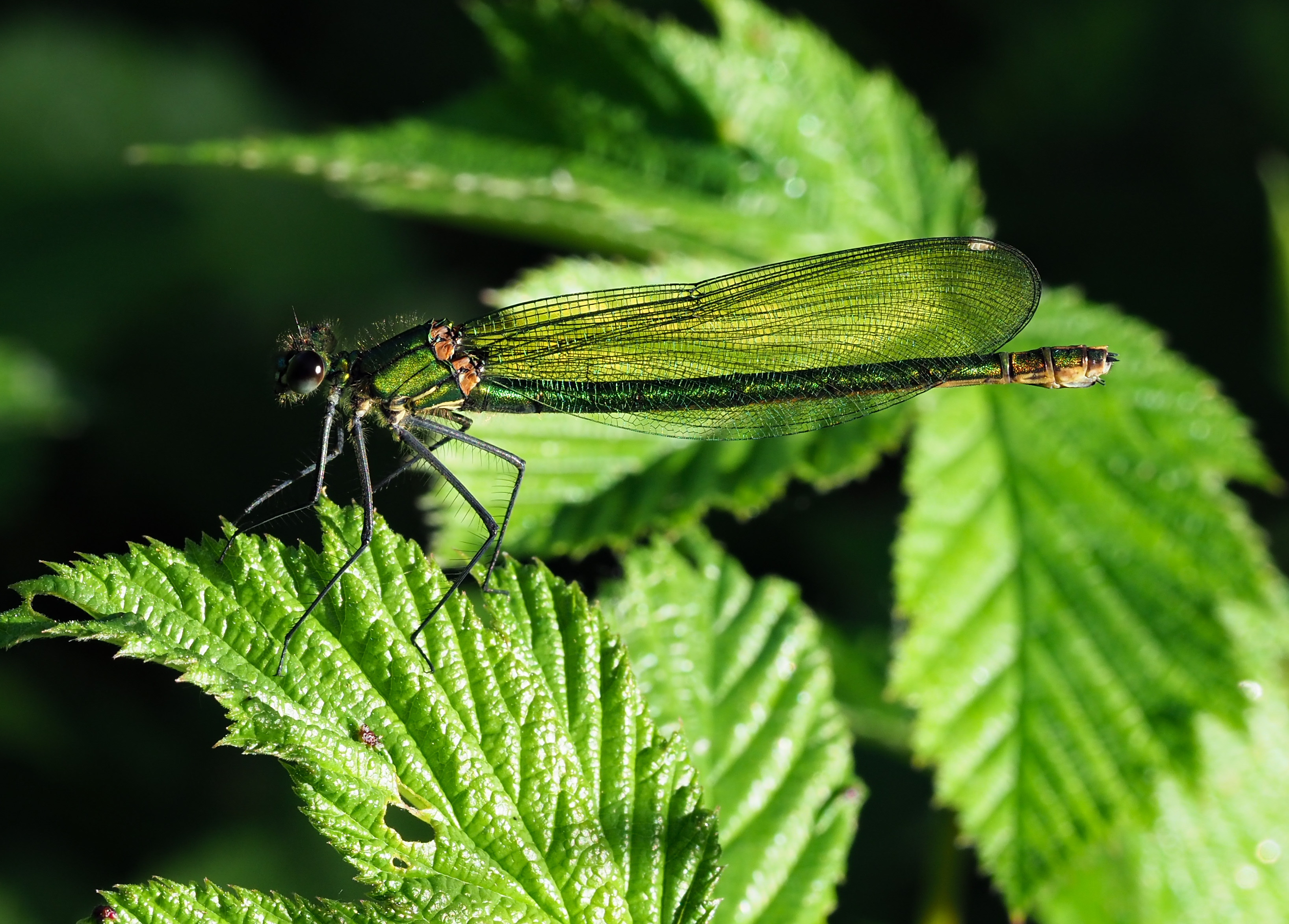
A remarkable fact about this damselfly is that it has one of the largest insect genomes sequenced to date, with some 22,523 protein-coding genes (Ioannidis, et al., 2017). In comparison, the human genome only has about 20,000 protein-coding genes. Incidentally, we still don’t yet know how many genes we humans have (!), according to Salzberg (2018), and the number has been progressively revised downwards in recent years. For more details, see the Wikipedia entry for the Human Genome.
However, it is reassuring to know that the overall size of the human genome (3.1 billion base pairs) is considerably larger than this damselfly (1.6 billion base pairs); only about ~1% of our genome is protein-coding. Don’t ask me what the rest – junk DNA – is doing!
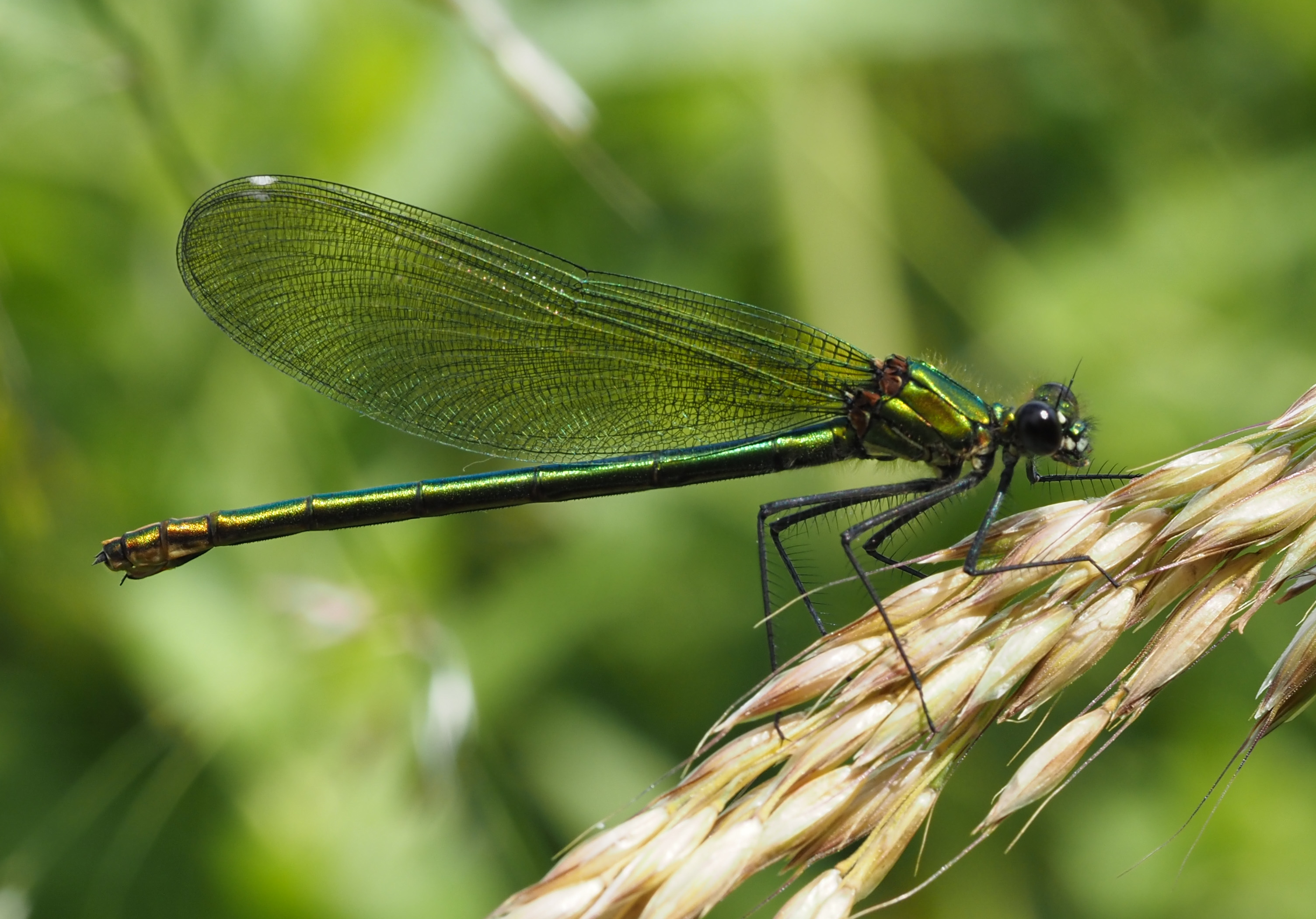
One might wonder what all of the genes are making proteins for in this damselfly? The answer, I suppose, is that this is a superbly adapted predator with an array of complex senses it uses to see, smell, hear and taste all that is going on around it. It also has a body, that like ours needs to eat and digest food, find mates, reproduce and survive in the world.
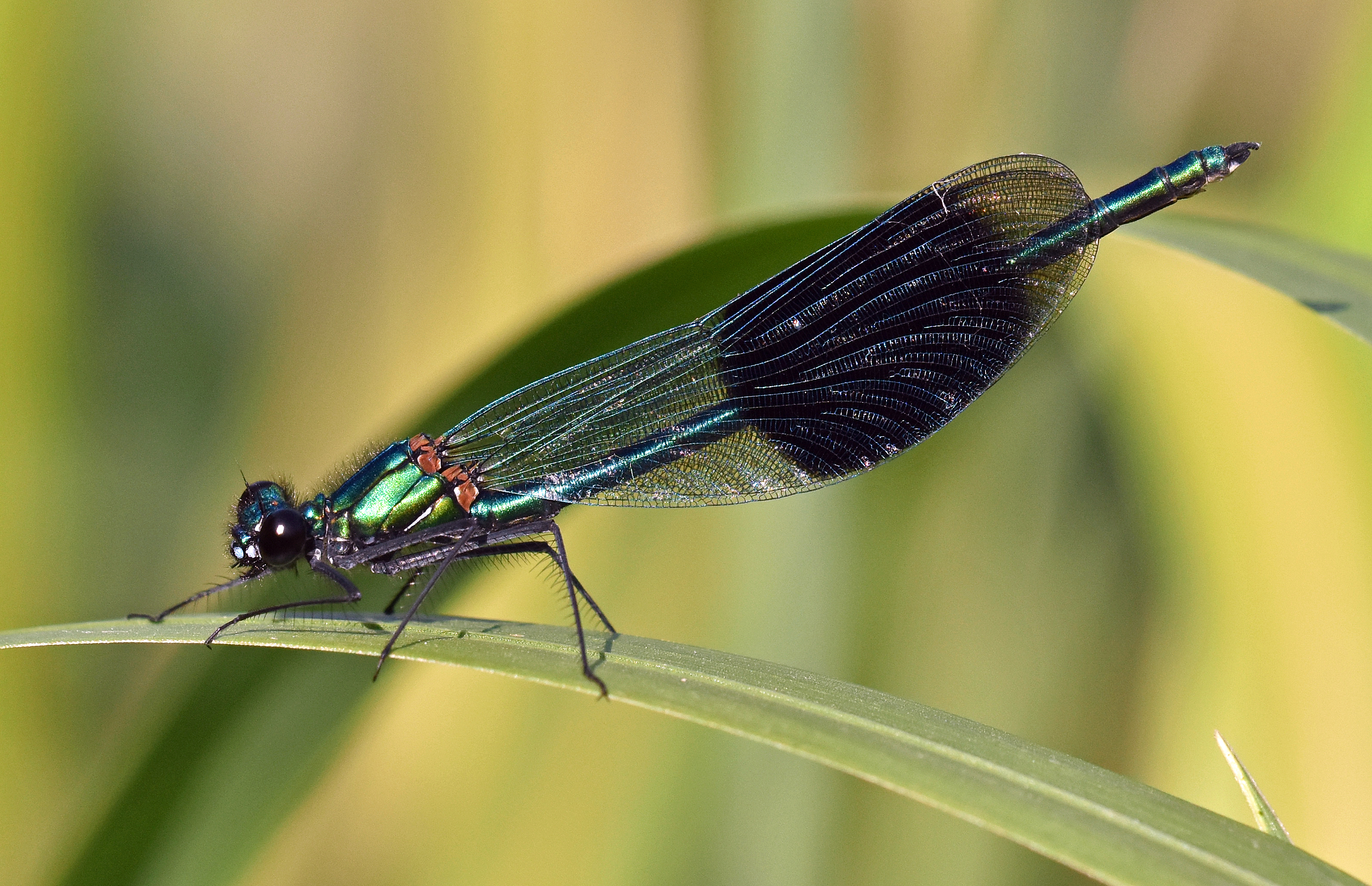
Banded demoiselle (Calopteryx splendens) male
Dragonflies and damselflies, together with mayflies, are an ancient clade of winged insects, Palaeoptera, which diverged from other winged insects roughly 406 Ma (Misof et al. 2014). These insects, or ones very similar to it, have therefore, been surviving on this planet for an amazing amount of time: 2,000 times longer than us humans! Respect winged brothers!
References
Ioannidis, P., Simao, F. A., Waterhouse, R. M., Manni, M., Seppey, M., Robertson, H. M., … & Zdobnov, E. M. (2017). Genomic features of the damselfly Calopteryx splendens representing a sister clade to most insect orders. Genome biology and evolution, 9(2), 415-430. https://academic.oup.com/gbe/article/9/2/415/2963138
Misof, B., Liu, S., Meusemann, K., Peters, R. S., Donath, A., Mayer, C., … & Zhou, X. (2014). Phylogenomics resolves the timing and pattern of insect evolution. Science, 346(6210), 763-767.
Salzberg, S. L. (2018). Open questions: How many genes do we have?. BMC biology, 16(1), 94.
 Ray Cannon's nature notes
The complexity of the banded demoiselle’s genome shows that the concept of the scala naturae is clearly misleading. 🪜🧐