Sometimes we only notice brambles (Rubus fruticosus) when they are covered in delicious blackberries, or perhaps when we get caught or scratched by their formidable thorns (below).
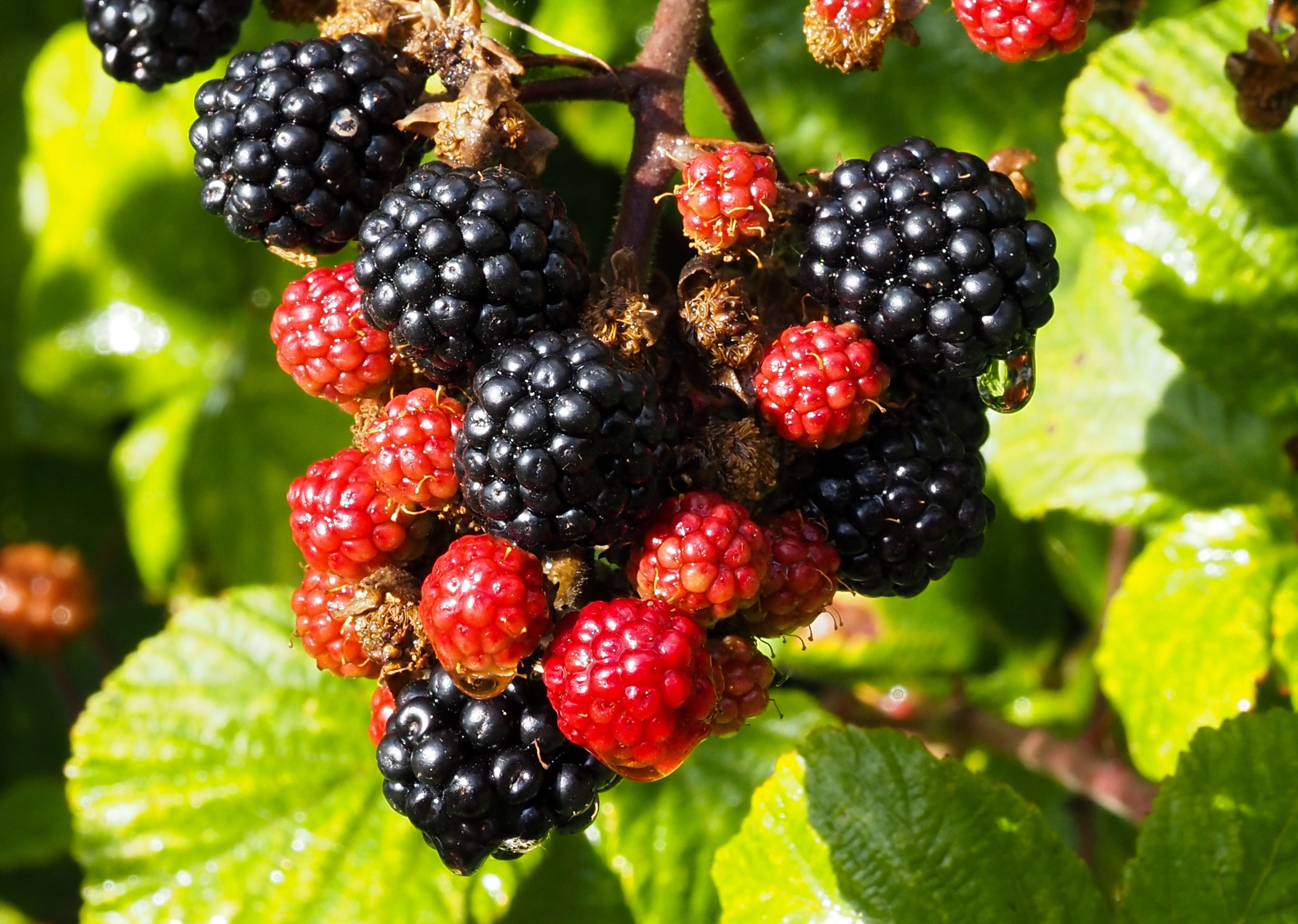
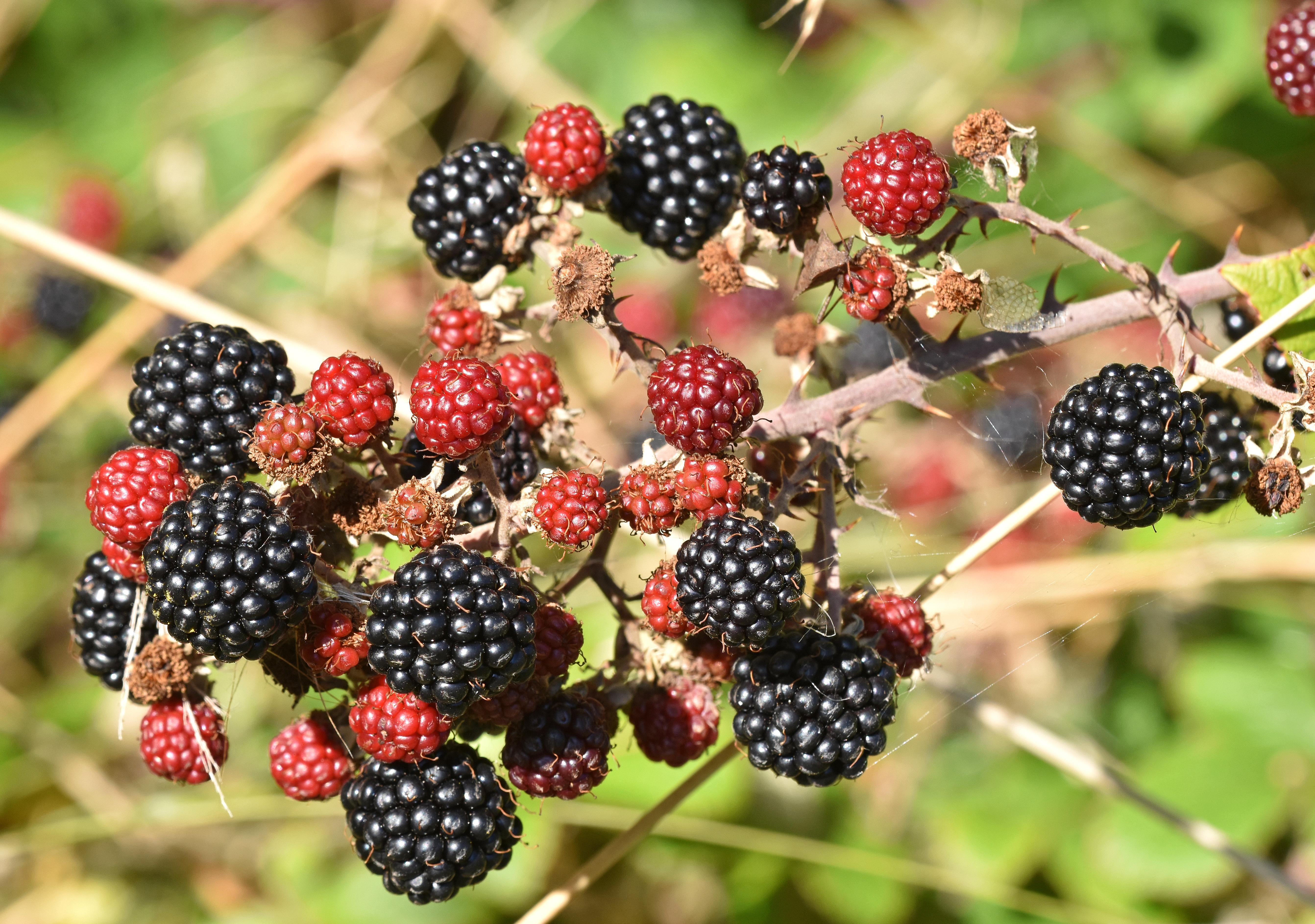
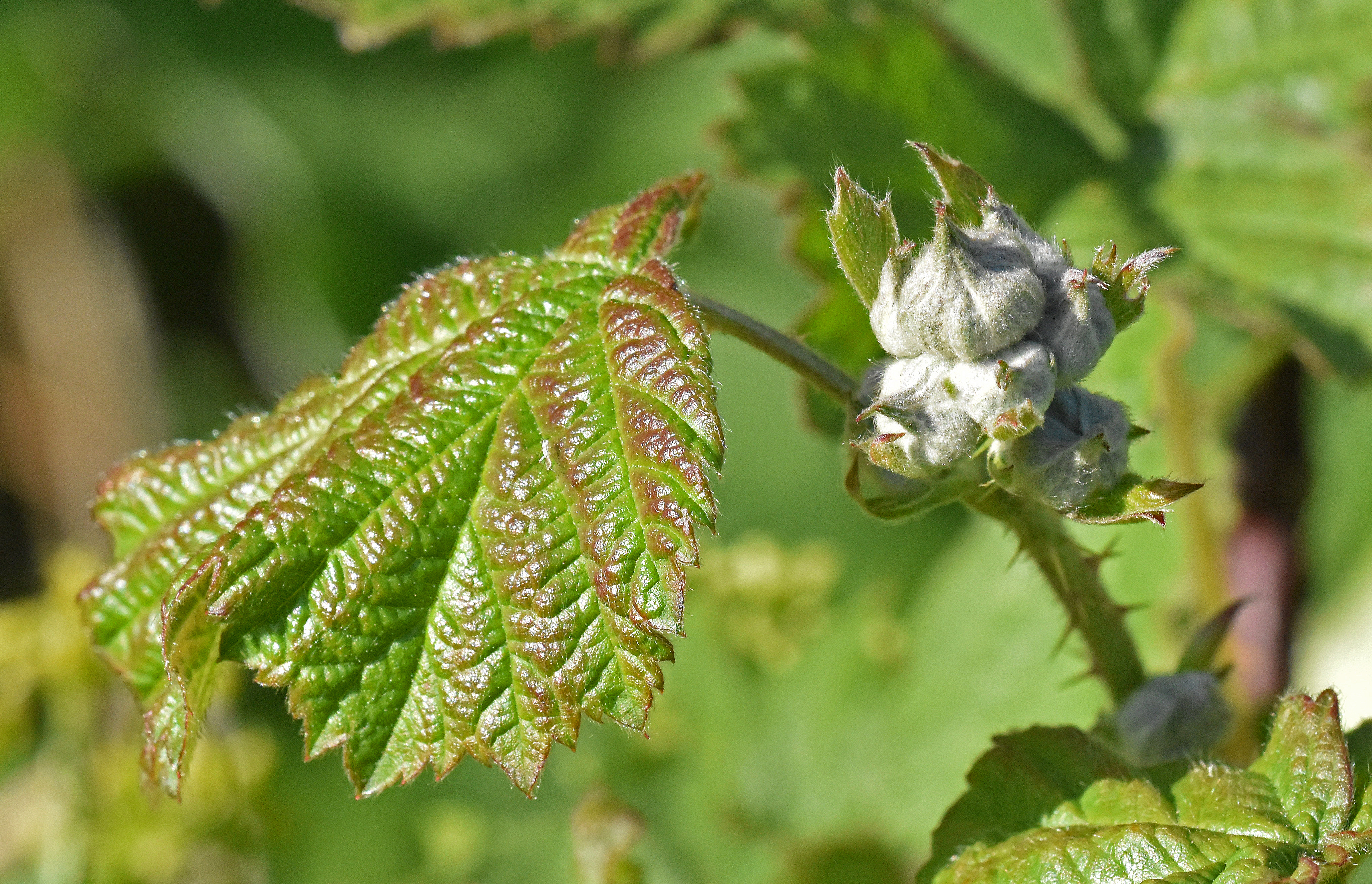
However, their flowers are I think, very beautiful in a modest sort of way, and brambles can be in flower from May until to September in the United Kingdom, making them a valuable resource for insects in search of nectar and pollen.
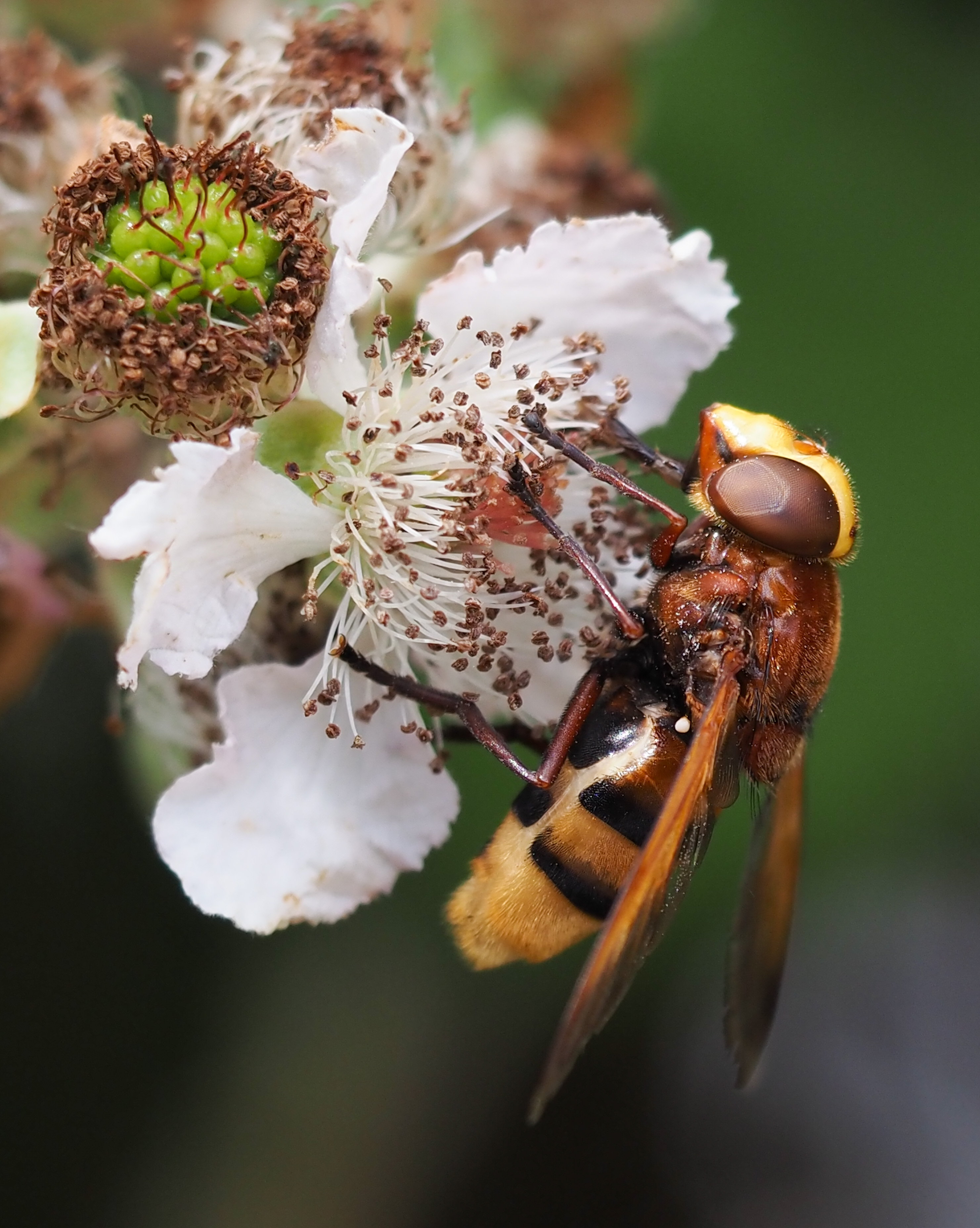
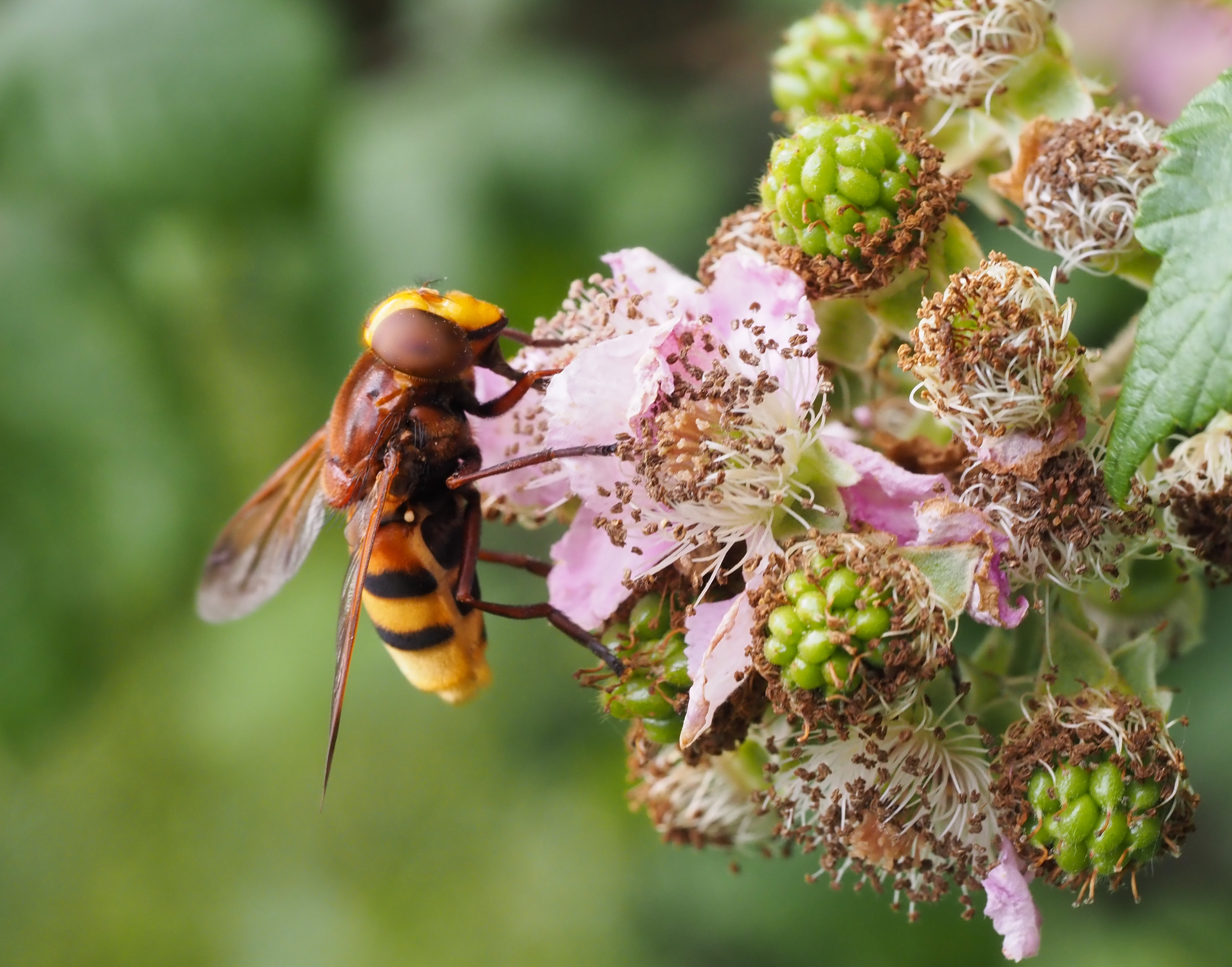
Bramble flowers are visited by a wide range of pollinators, including bees, butterflies, hoverflies and many other species of flies.
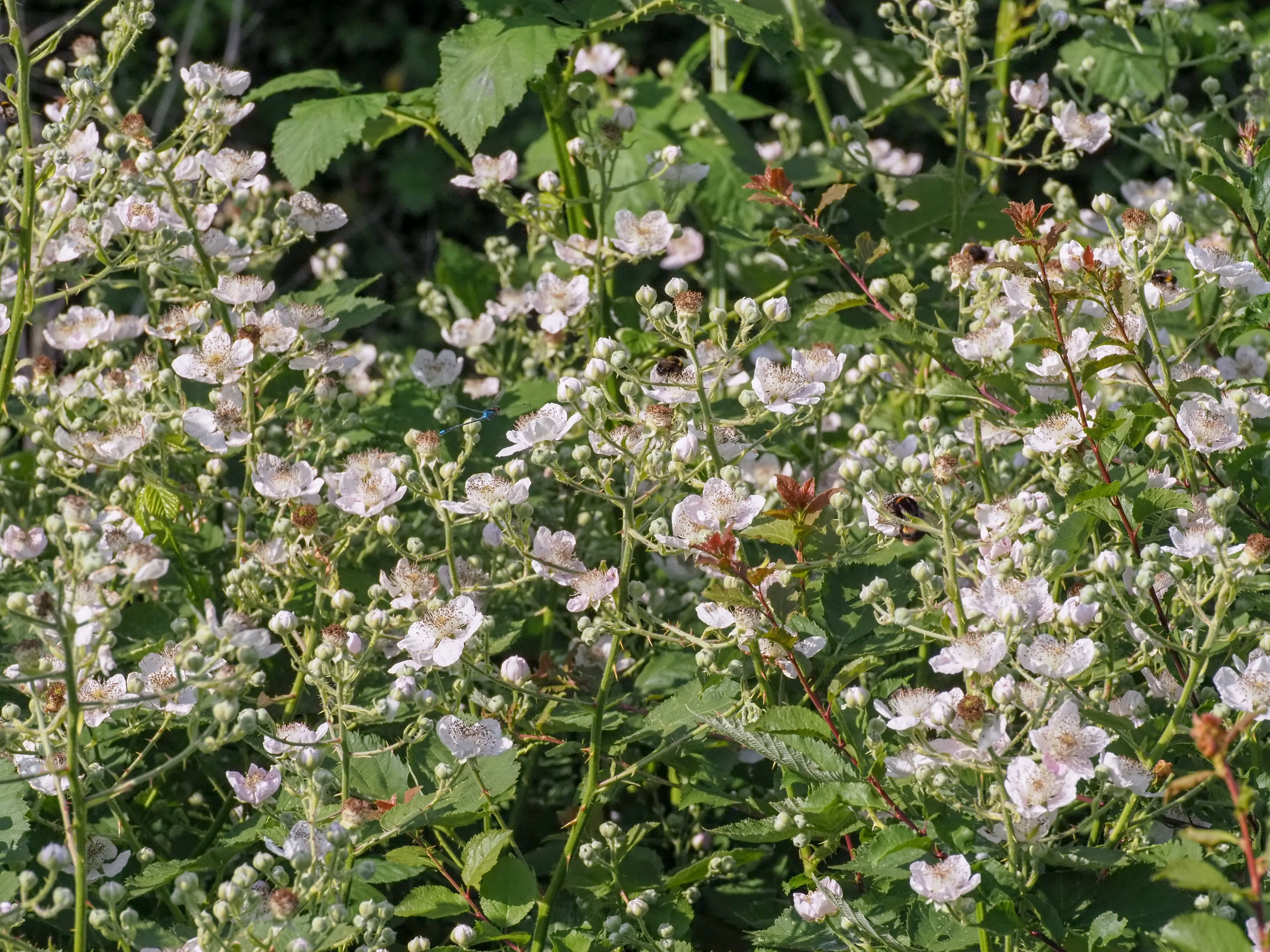
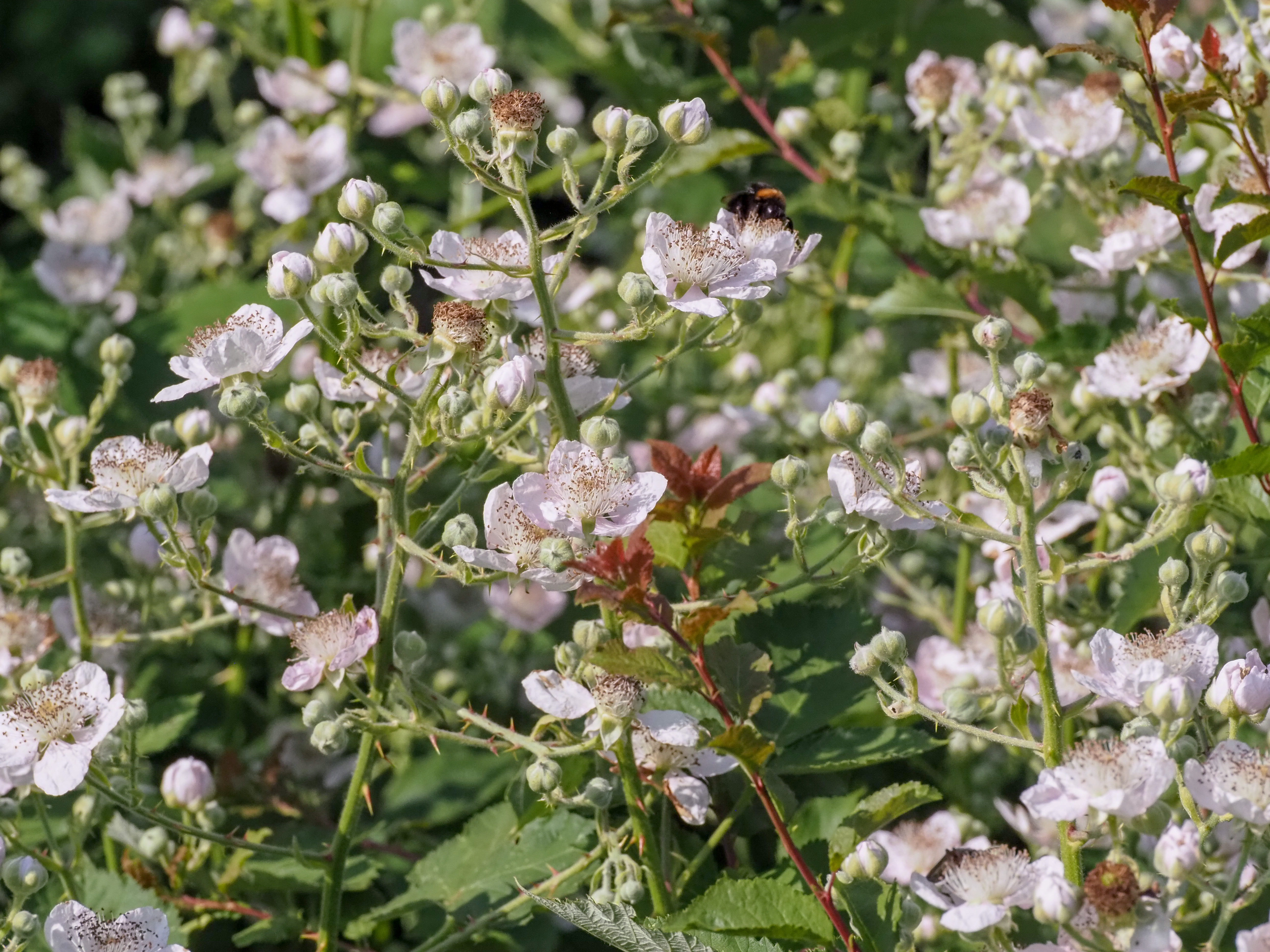
In early June this year (2024), I came across a huge dense clump of bramble covered in flowers and teeming with insects. The plants were tight up against a hedgerow, at the edge of a large meadow in an SSSI in Bedfordshire. I had to fight my way up to it, getting cut by the thorns and stung by nettles! But these abrasions were well worth it in order to photograph the many different bees and flies, nectaring on the profusion of flowers.
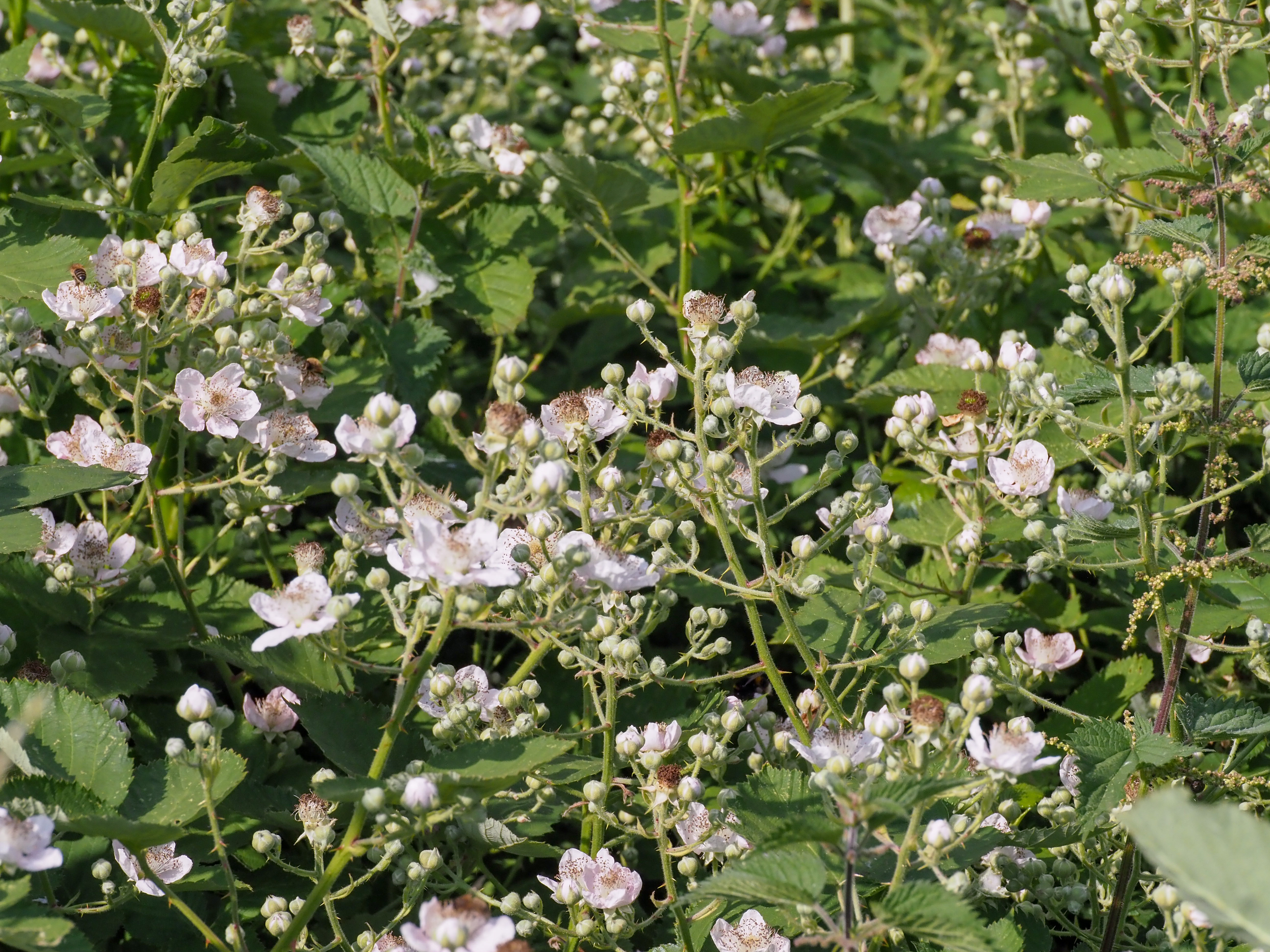
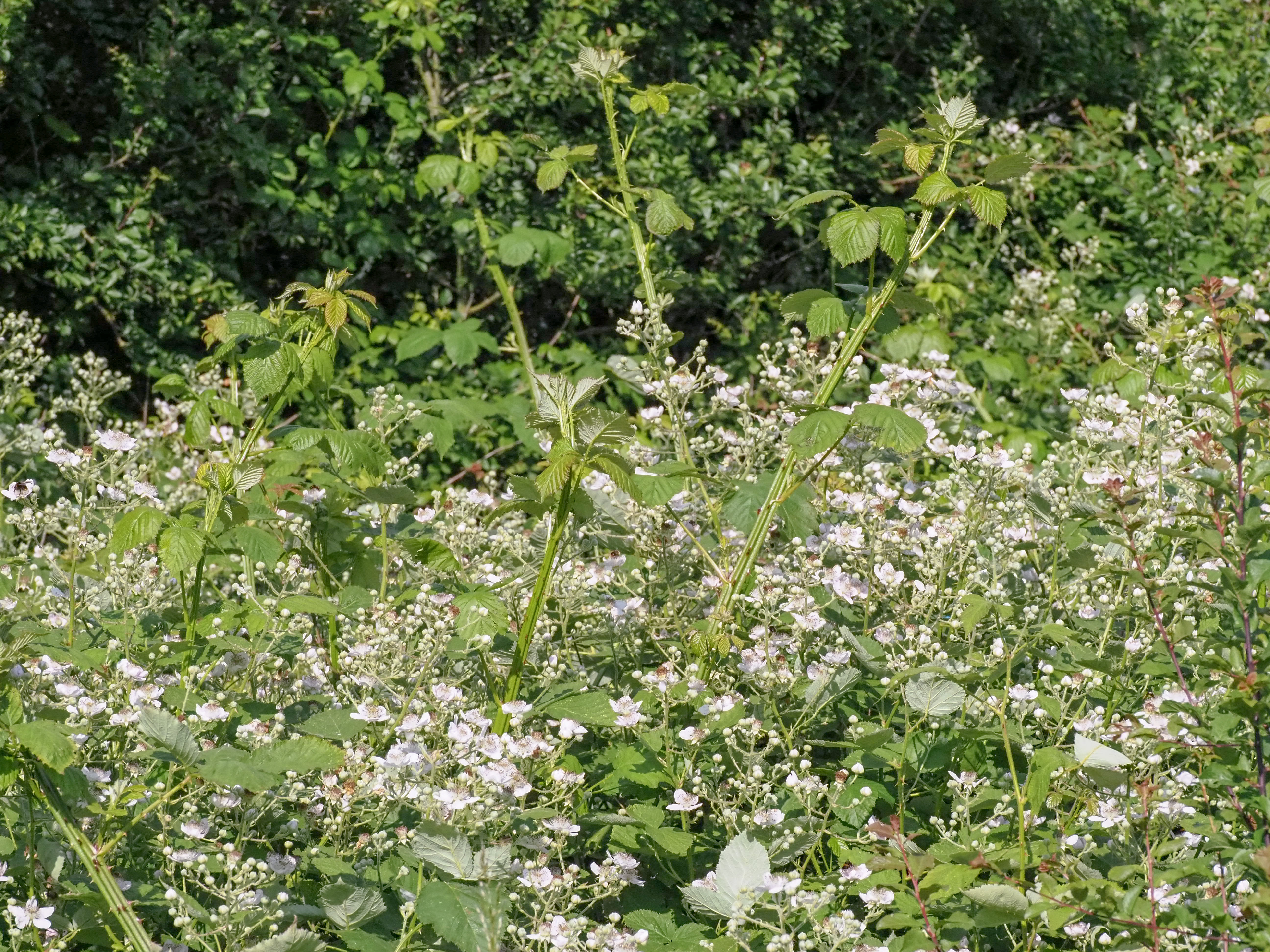
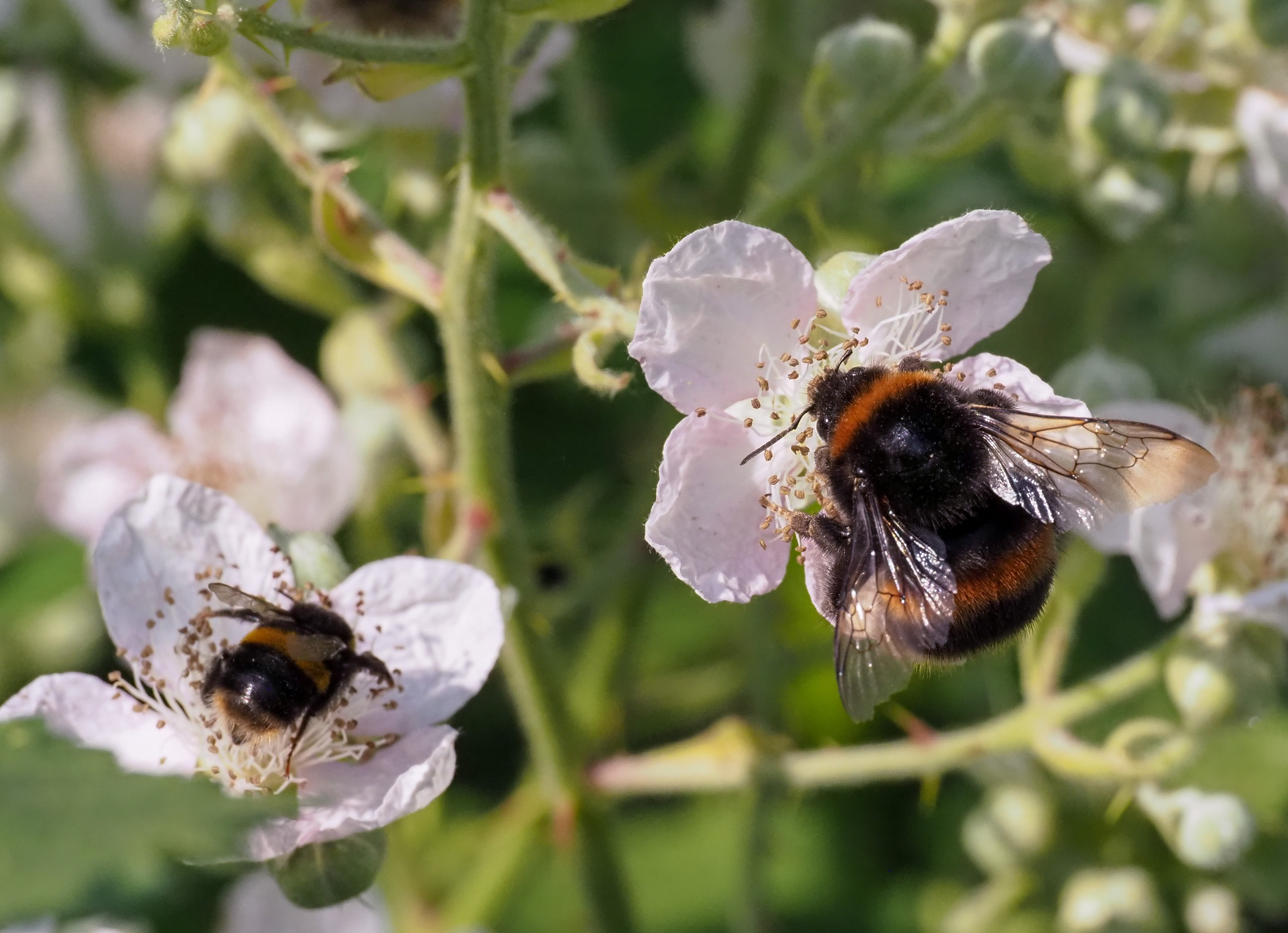
I soon started to get to work, photographing the bees with my macro lens. There were bees of all shapes and sizes, honeybees and bumblebees, workers and queens. Contrast the size of the large buff-tailed bumblebee queen with the small early bumblebee worker (below).
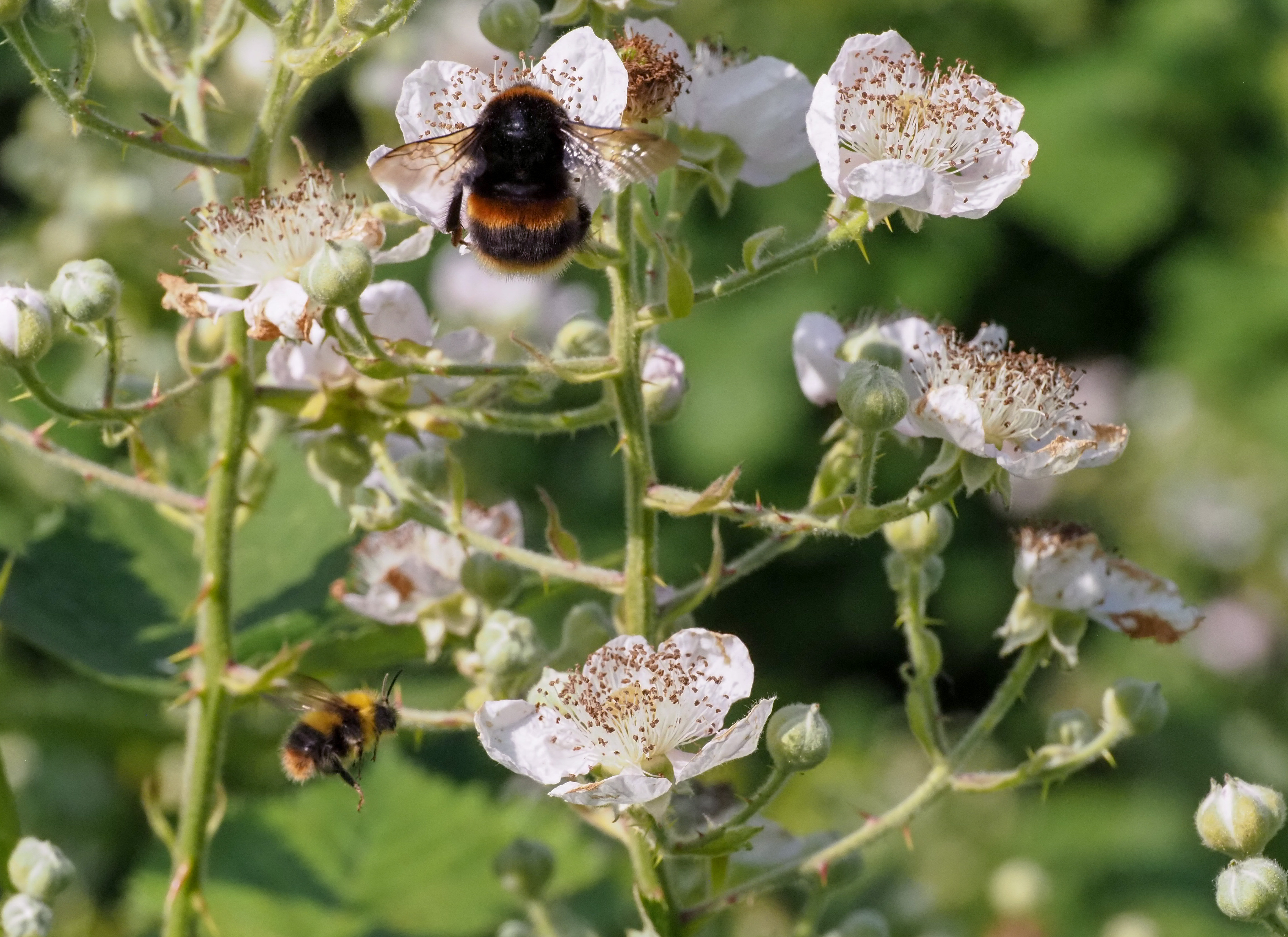
Here are a selection of the hard-working hymenopterans, together with a few dipterans (bee flies). It is not a representative sample of what species were there as I tended to focus on the biggest or slowest individuals. But I also picked out a few small worker bumblebees and honeybees.
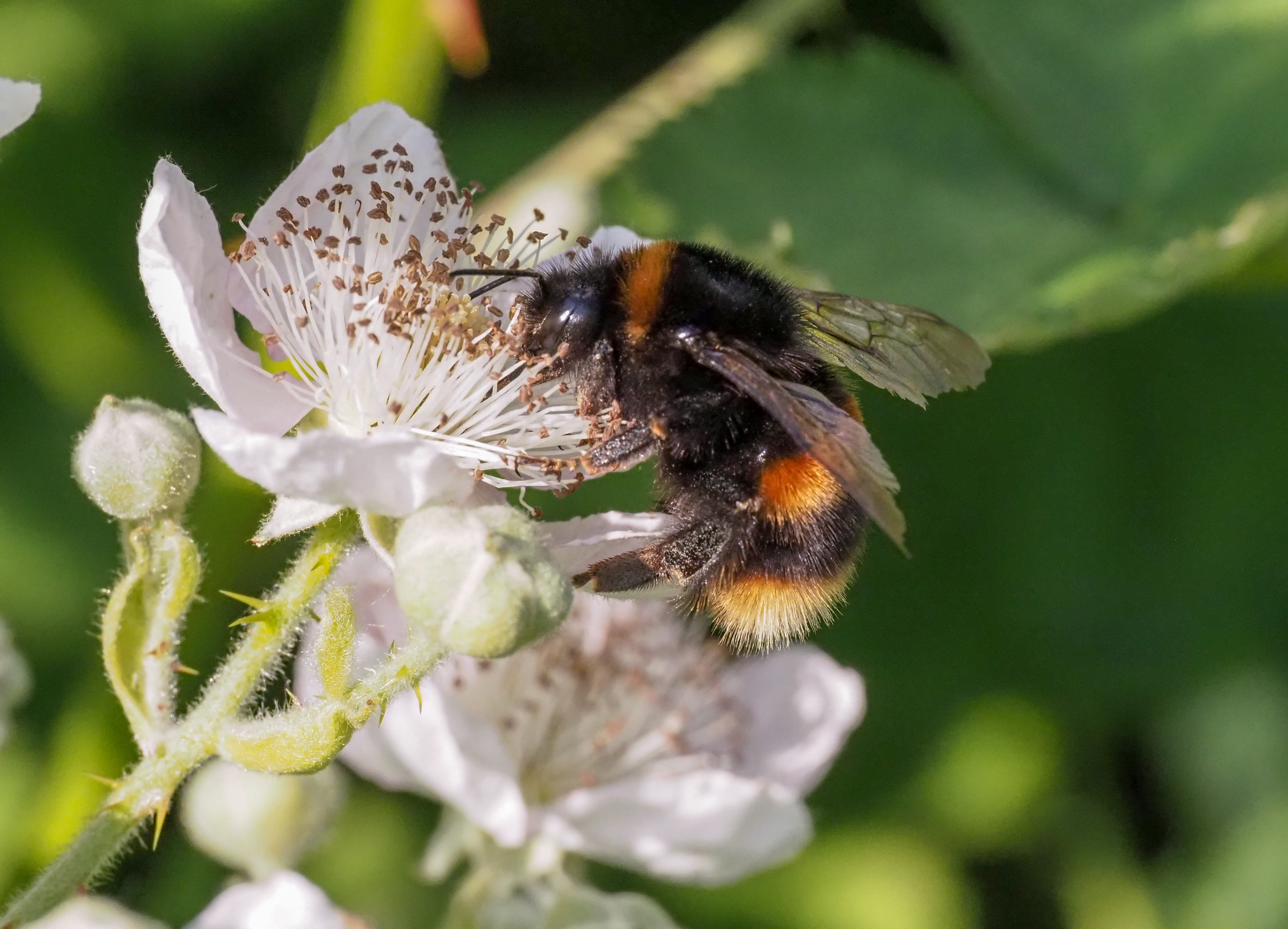
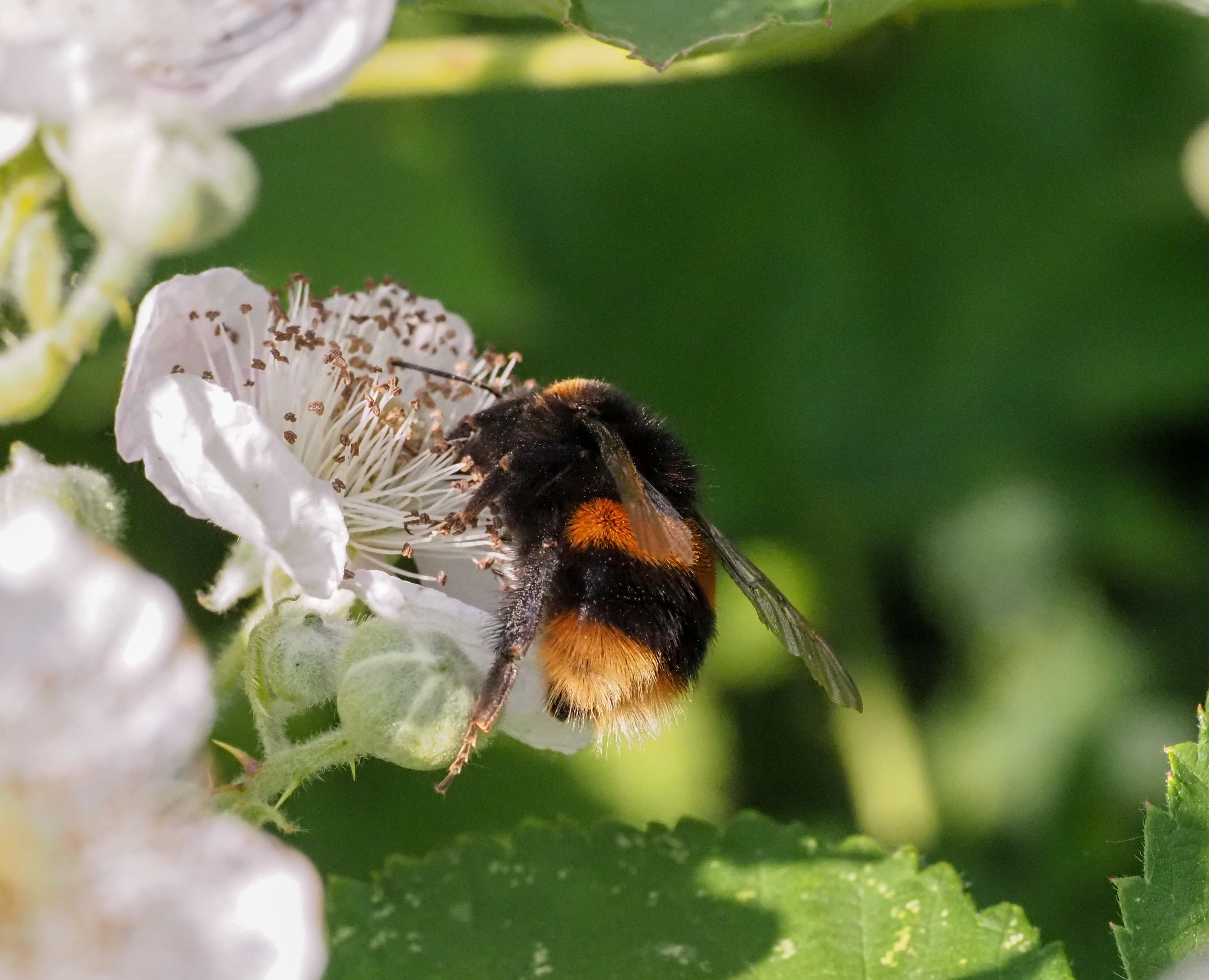
The Tree Bumblebee, B. hypnorum (below) is a recent natural colonist that has rapidly expanded its range in the UK over the past decade.
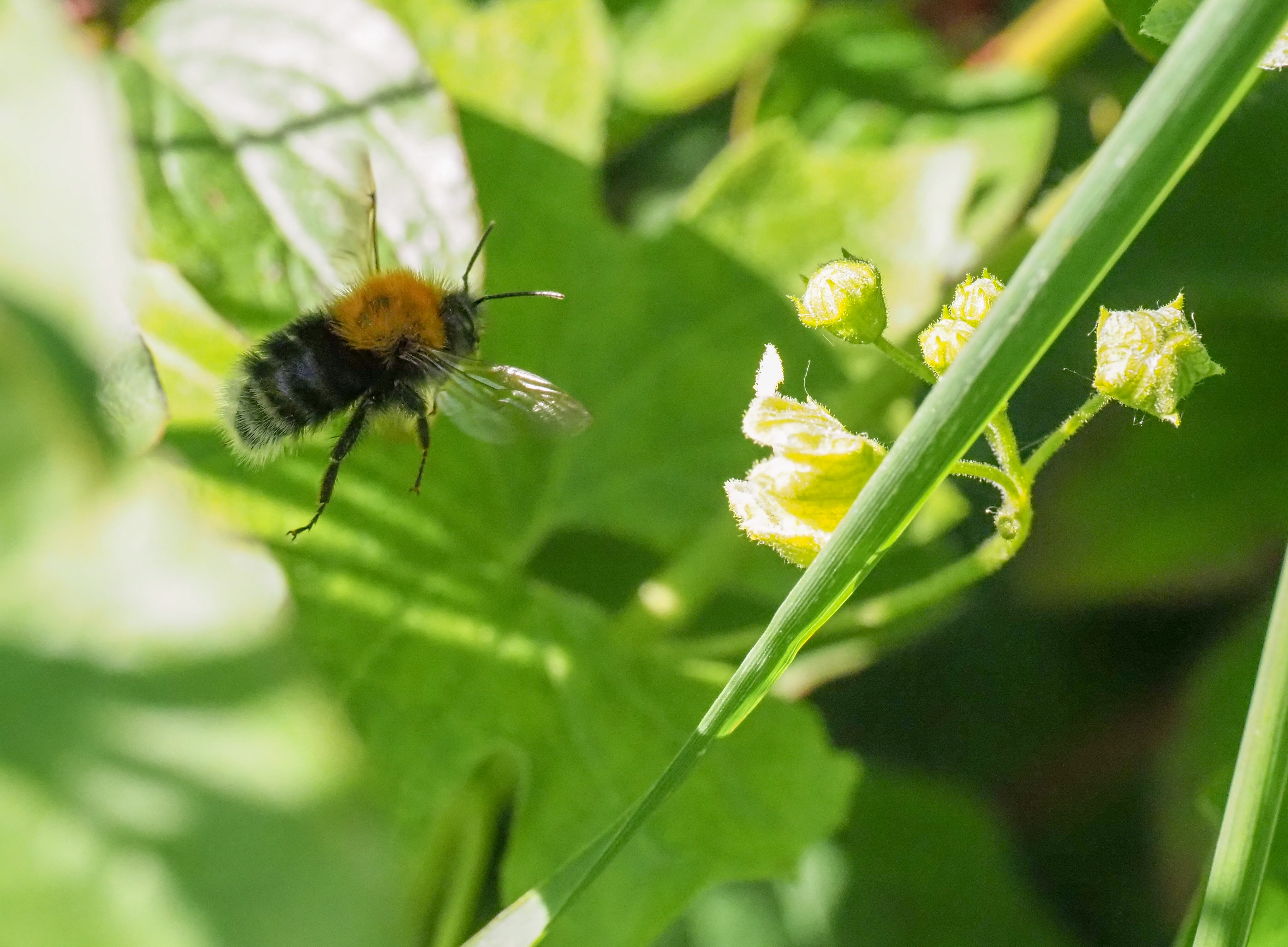
I have not attempted to identify them all; there are some cuckoos I think. N.B. Cuckoo bumblebees are generally less hairy than bone fide bumblebees and have pointier abdomens.
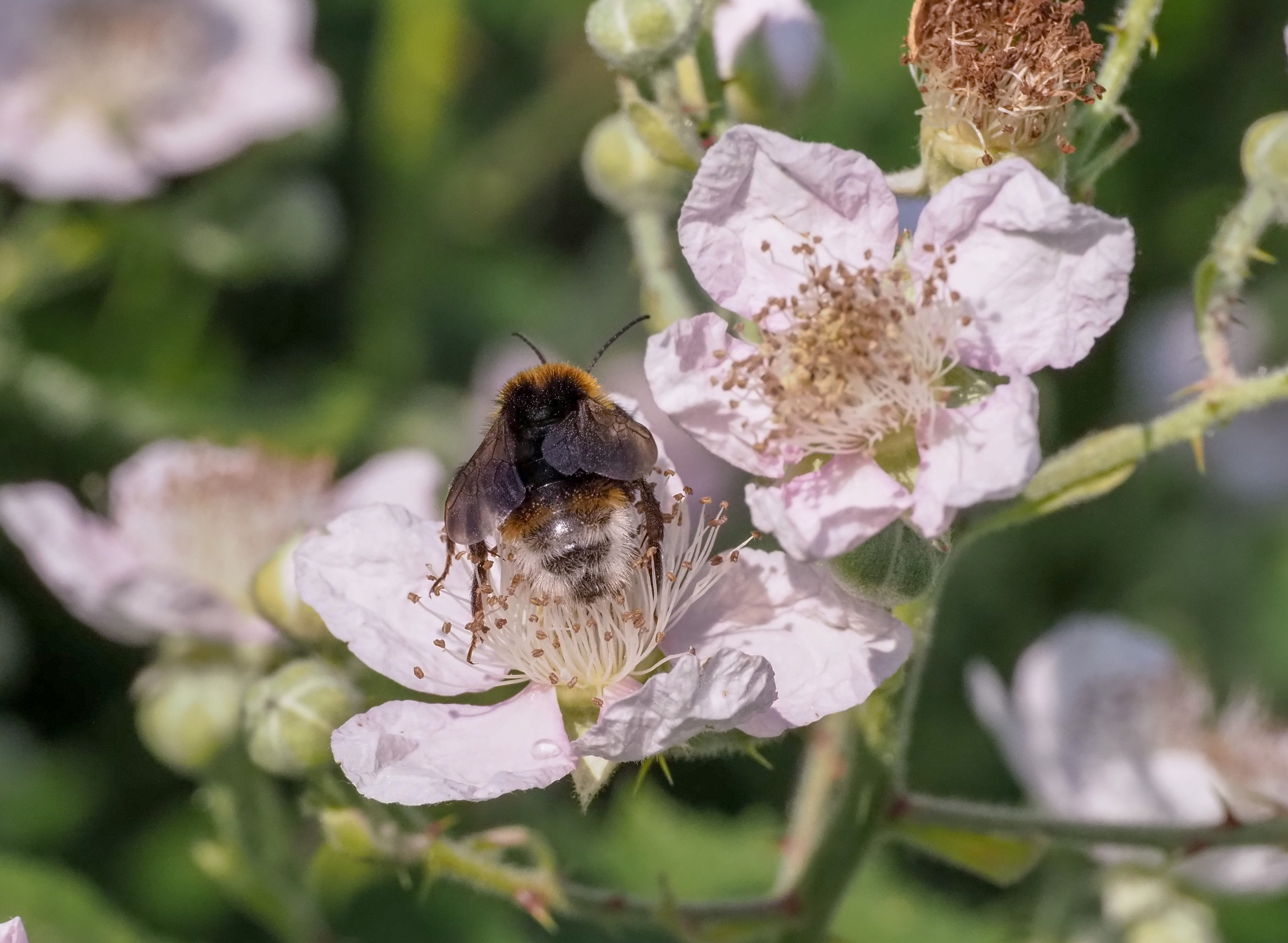
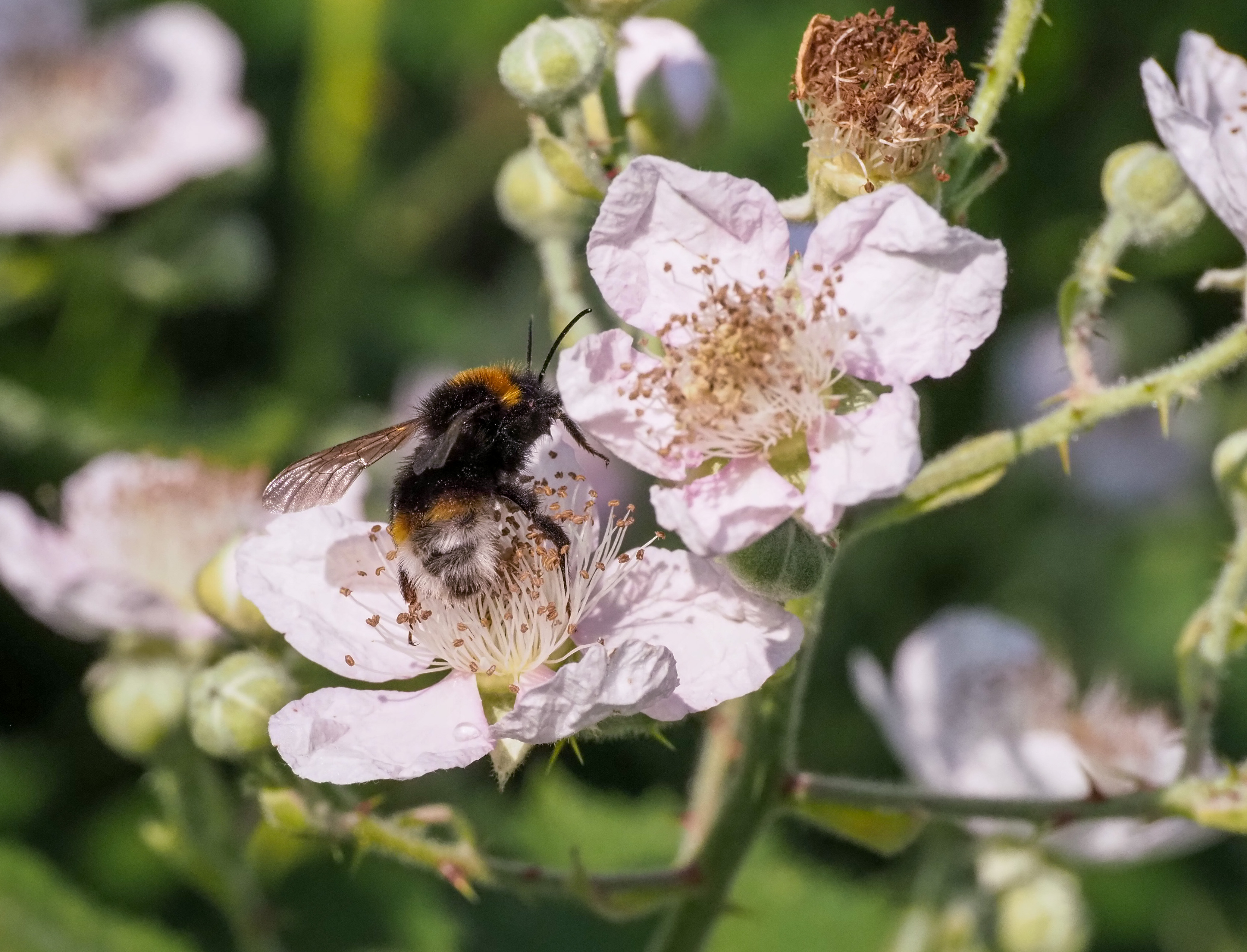
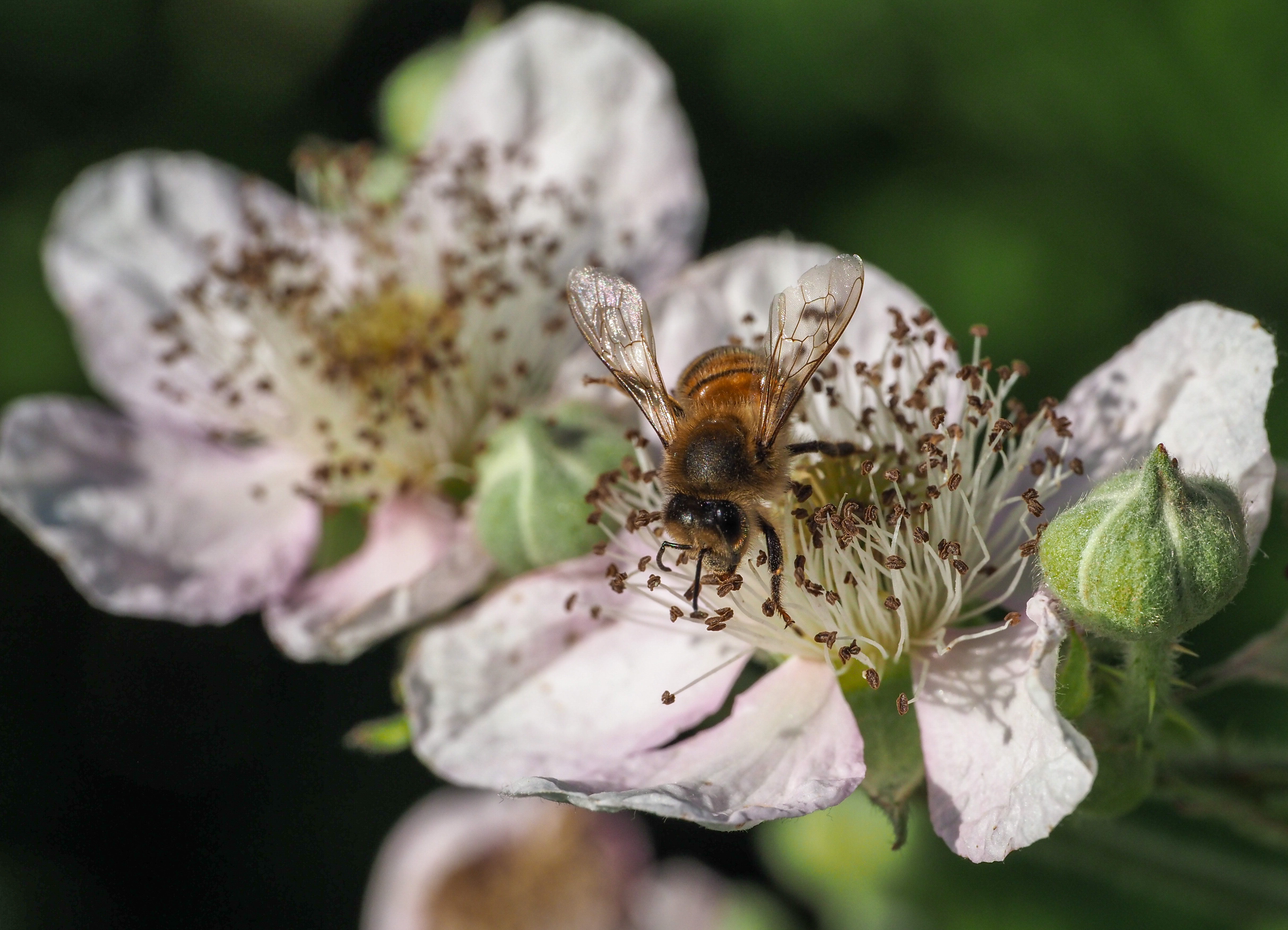
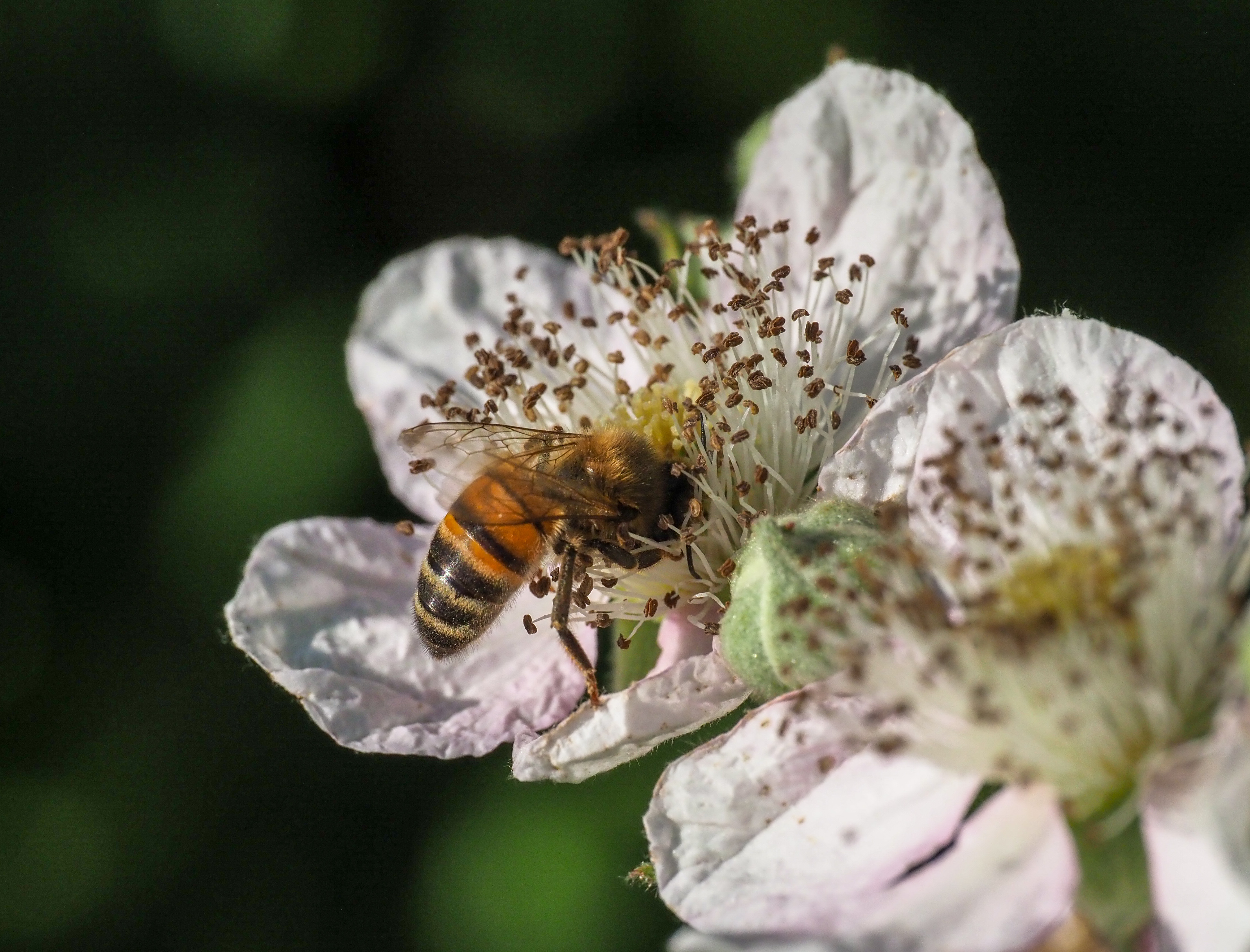
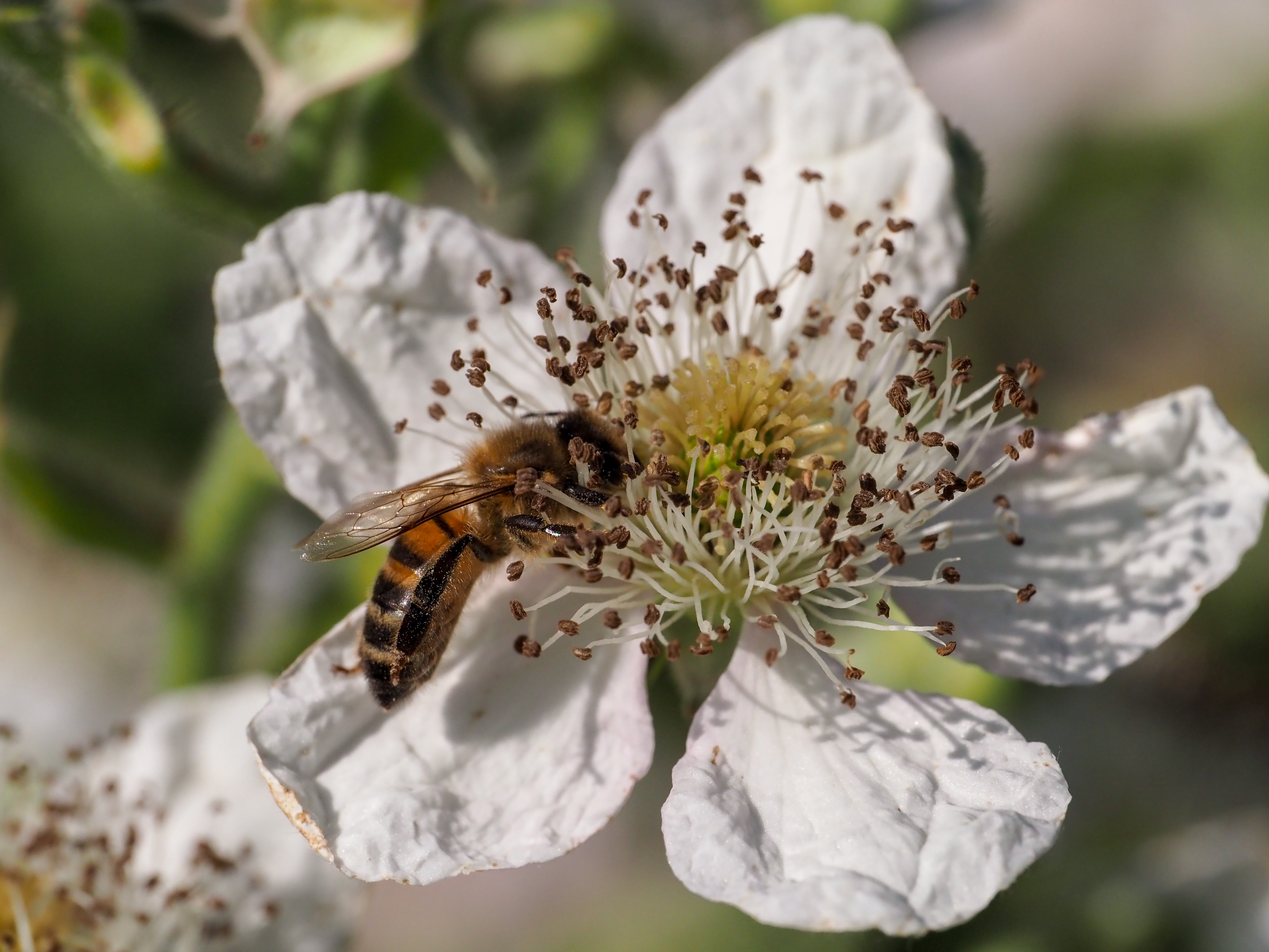
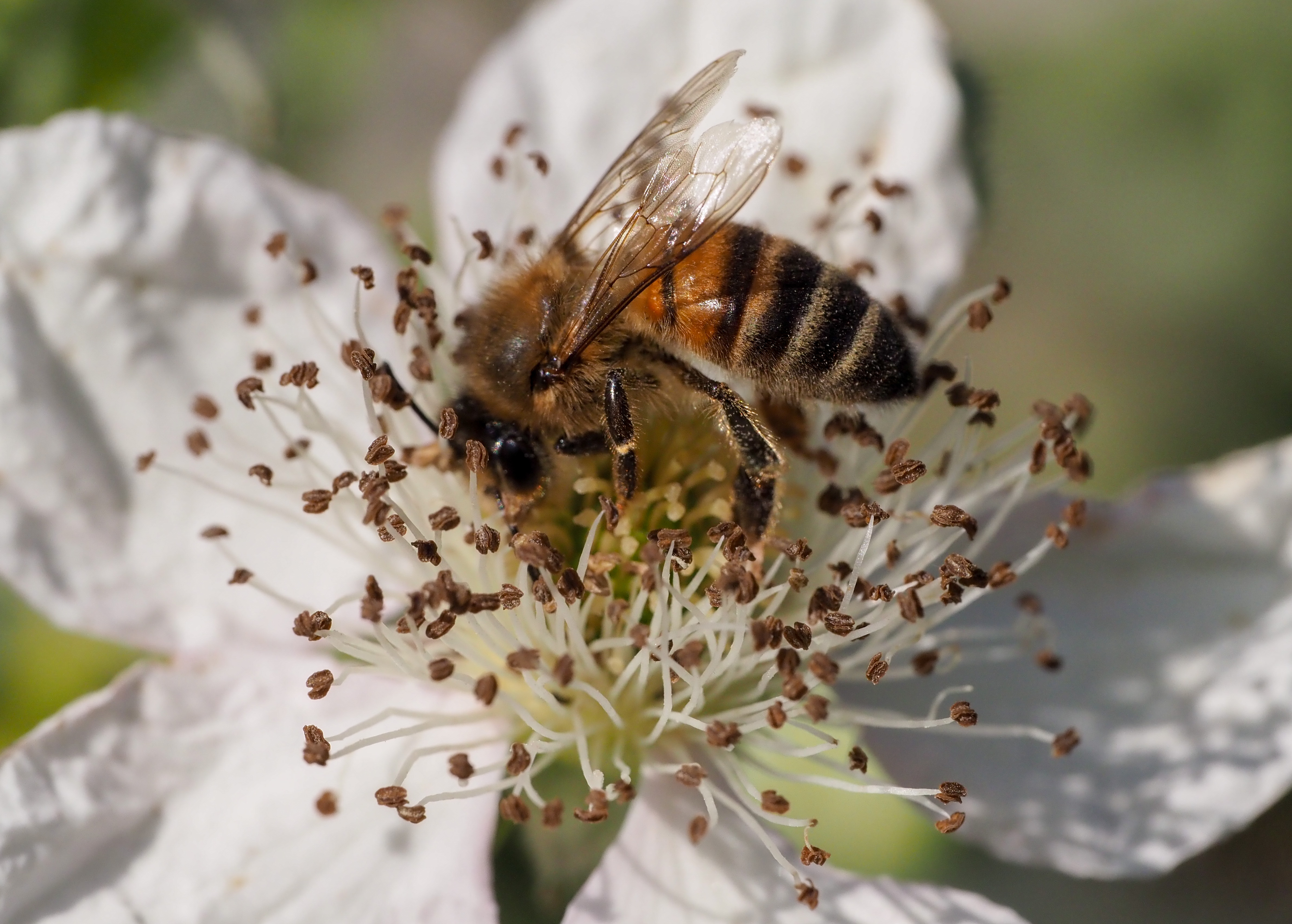
Honeybees are my favourites! Below.
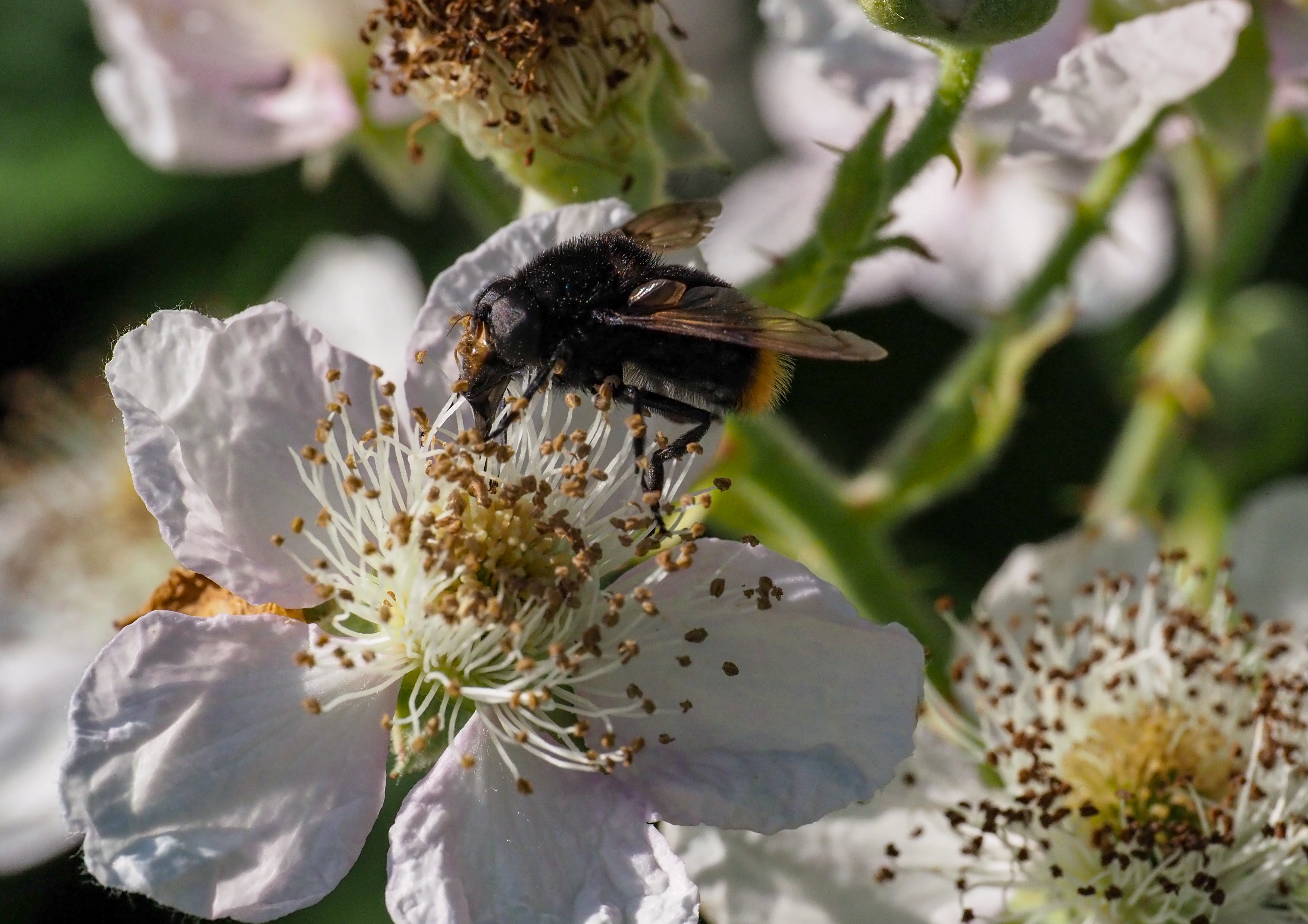
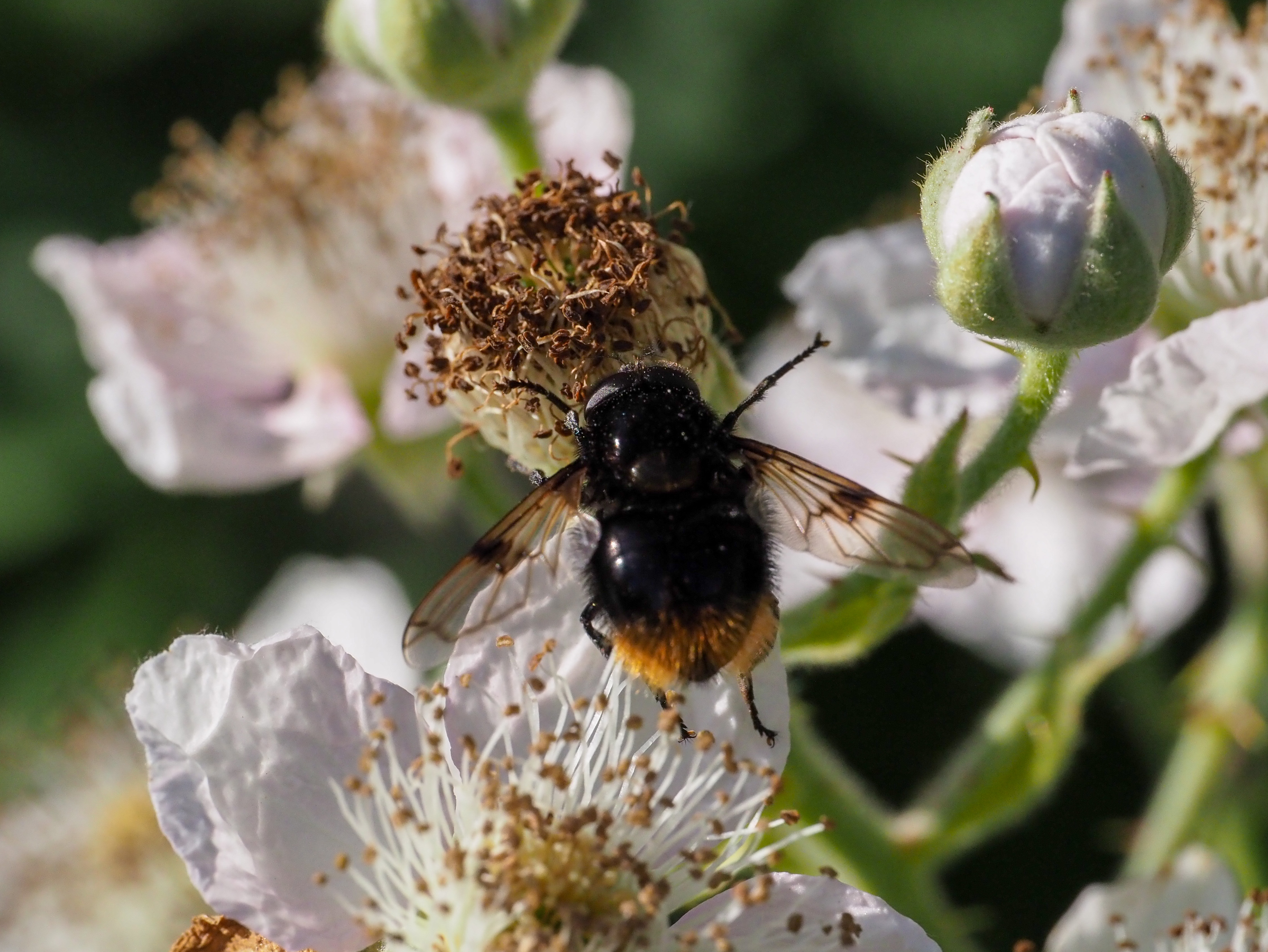
Some flies look like bees! Volucella bombylans is a large hoverfly which has evolved to look rather like a bumblebee; there are three different varieties, as I described in a previous blog: Polymorphic mimics: flies that look like bumblebees. This is Volucella bombylans var. bombylans, that has an orange-red tail (below), and tries to look a bit like the Red-tailed Bumblebee, Bombus lapidarius
Finally, I will finish with a couple of photos to try and show the abundance and diversity of the pollinators visiting this valuable plant species.
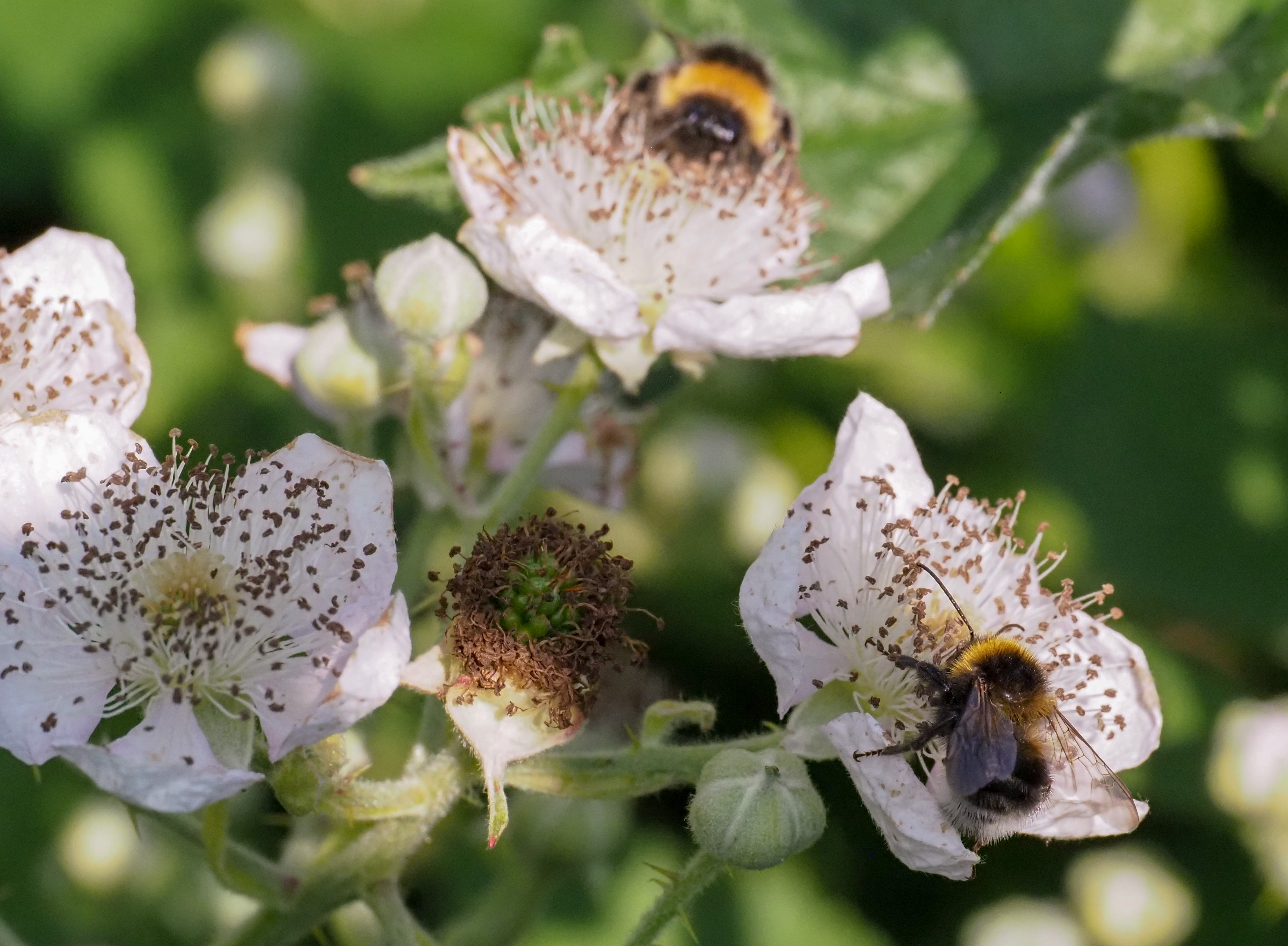
All photographs by Raymond JC Cannon, in and around Felmersham gravel pits SSSI, Bedfordshire, England.
Reference
Wignall, V. R., Arscott, N. A., Nudds, H. E., Squire, A., Green, T. O., & Ratnieks, F. L. (2020). Thug life: bramble (Rubus fruticosus L. agg.) is a valuable foraging resource for honeybees and diverse flower‐visiting insects. Insect Conservation and Diversity, 13(6), 543-557.
 Ray Cannon's nature notes
Thank you, Ray, for this long-overdue panegyric on brambles. I have to cut them out of the chain-link fence surrounding our garden 🩸✋, but there are large areas where I allow them to grow in clumps. Their flowers are beautiful indeed and attract many, many insects. 🦋🌸🐝 Furthermore, I noticed that many snails are sheltering on the underside of their leaves. 🐌🍃
What a wonderful exuberance of flowers and insects! Your Bramble (our Blackberry) is related to a real pest in our Texas pastures, the Dewberry. The Dewberry makes piles of white flowers, and smallish dark berries (sour, but with sufficient sugar, they make delicious pies, jellies and wine). I’ll have to see if I can brave the stickers to see their insect dwellers.