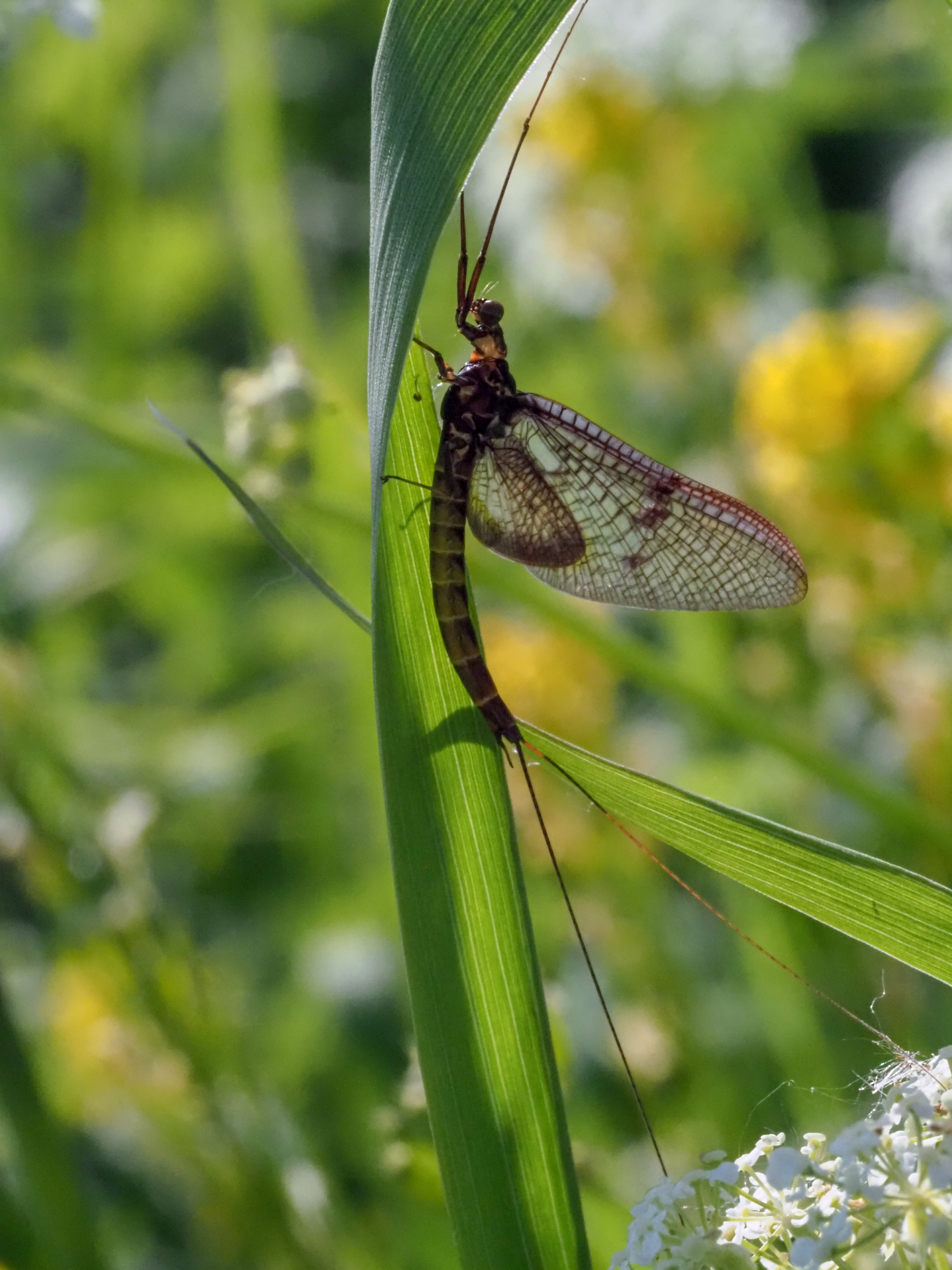
Let’s face it; mayflies get a pretty poor deal! After spending several years developing slowly under water, they only get a measly few days to live out their adult lives. Some species only last for a few hours after they emerge (!) and millions end up as dinner for a host of other creatures.
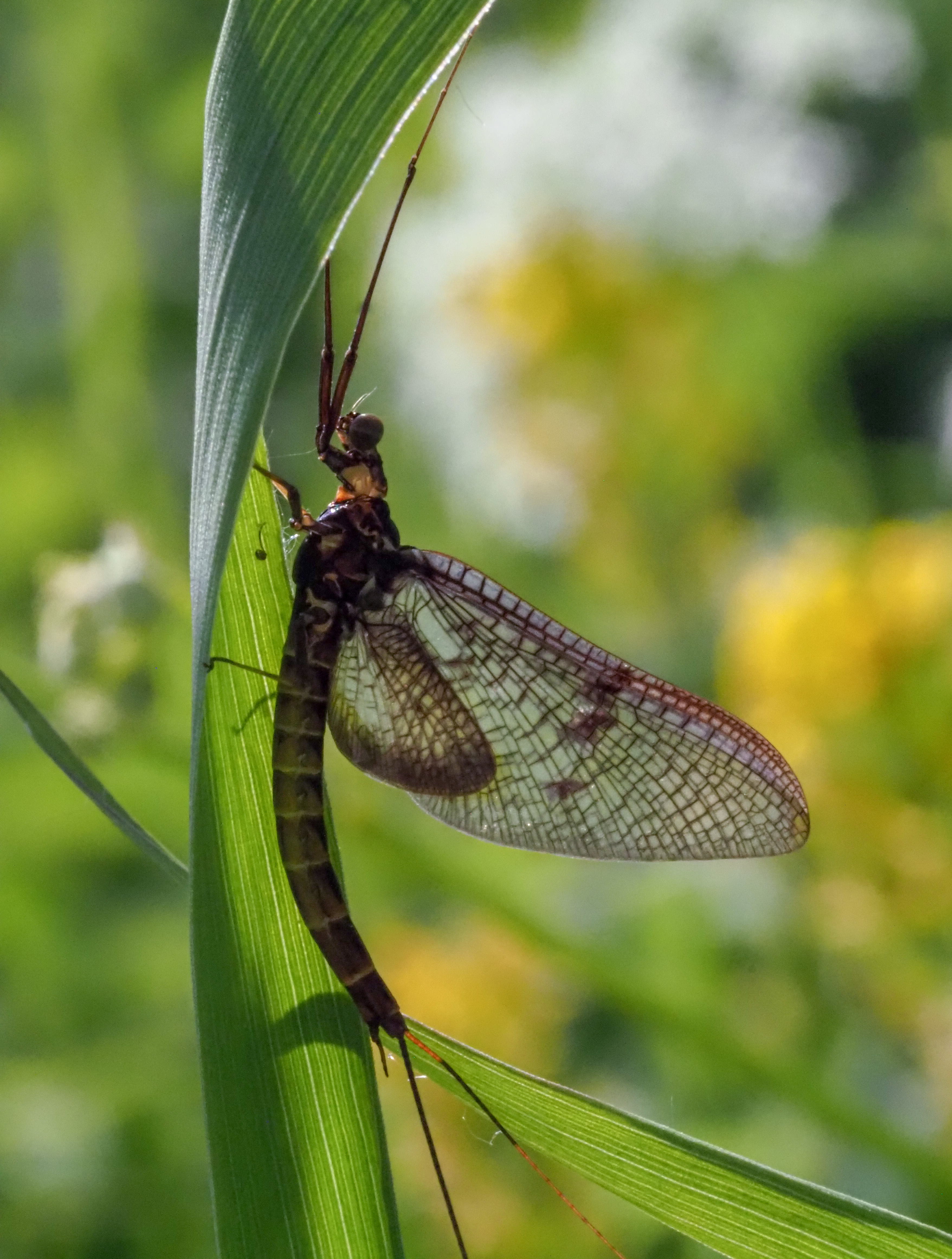
But they know how to make the best of it, as anyone who has seen mayflies dancing will testify. I love watching them bob up and down in their mating dances; a largely male affair. Females fly into these swarms and mating occurs almost immediately and usually in flight (see below).
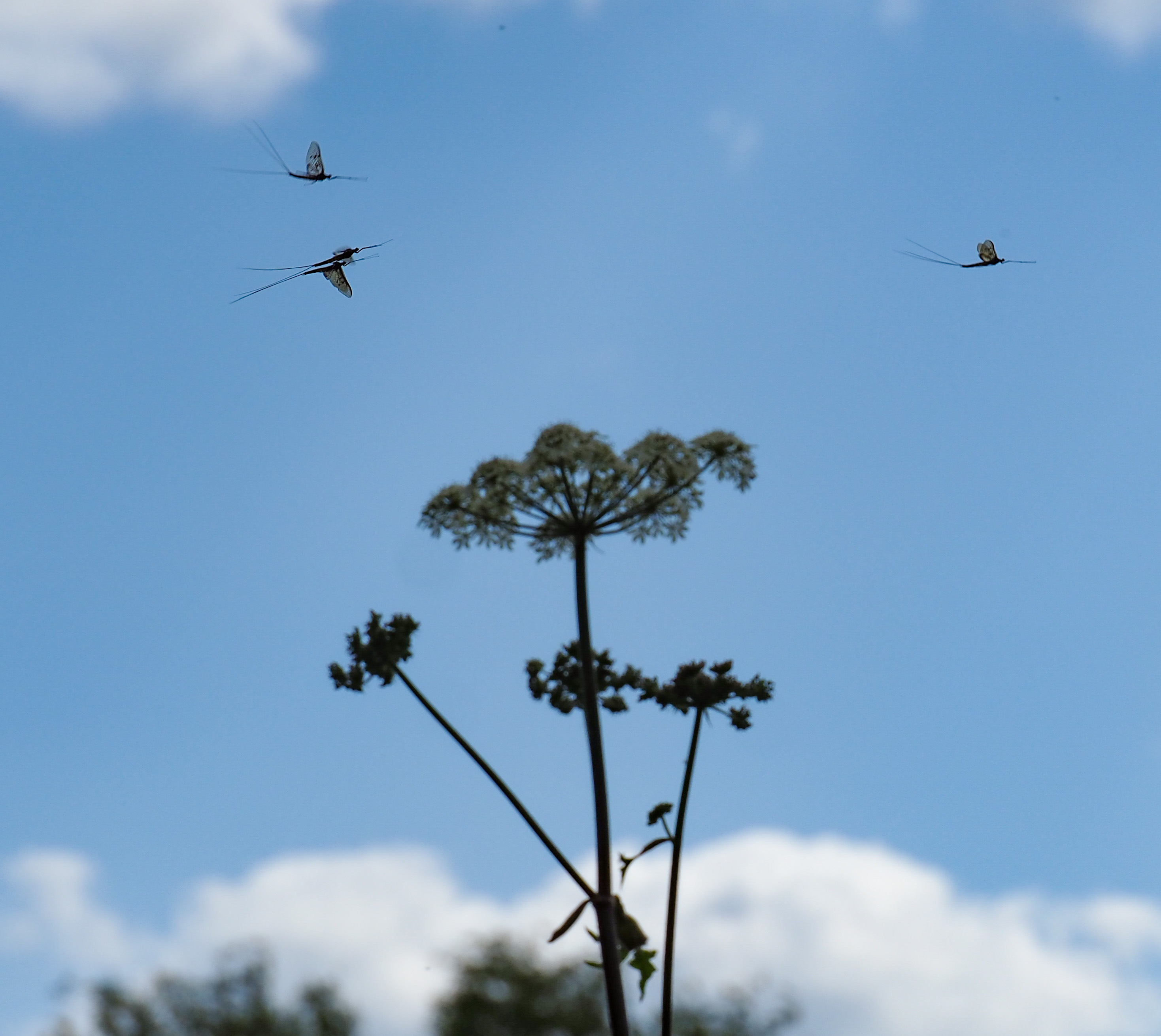
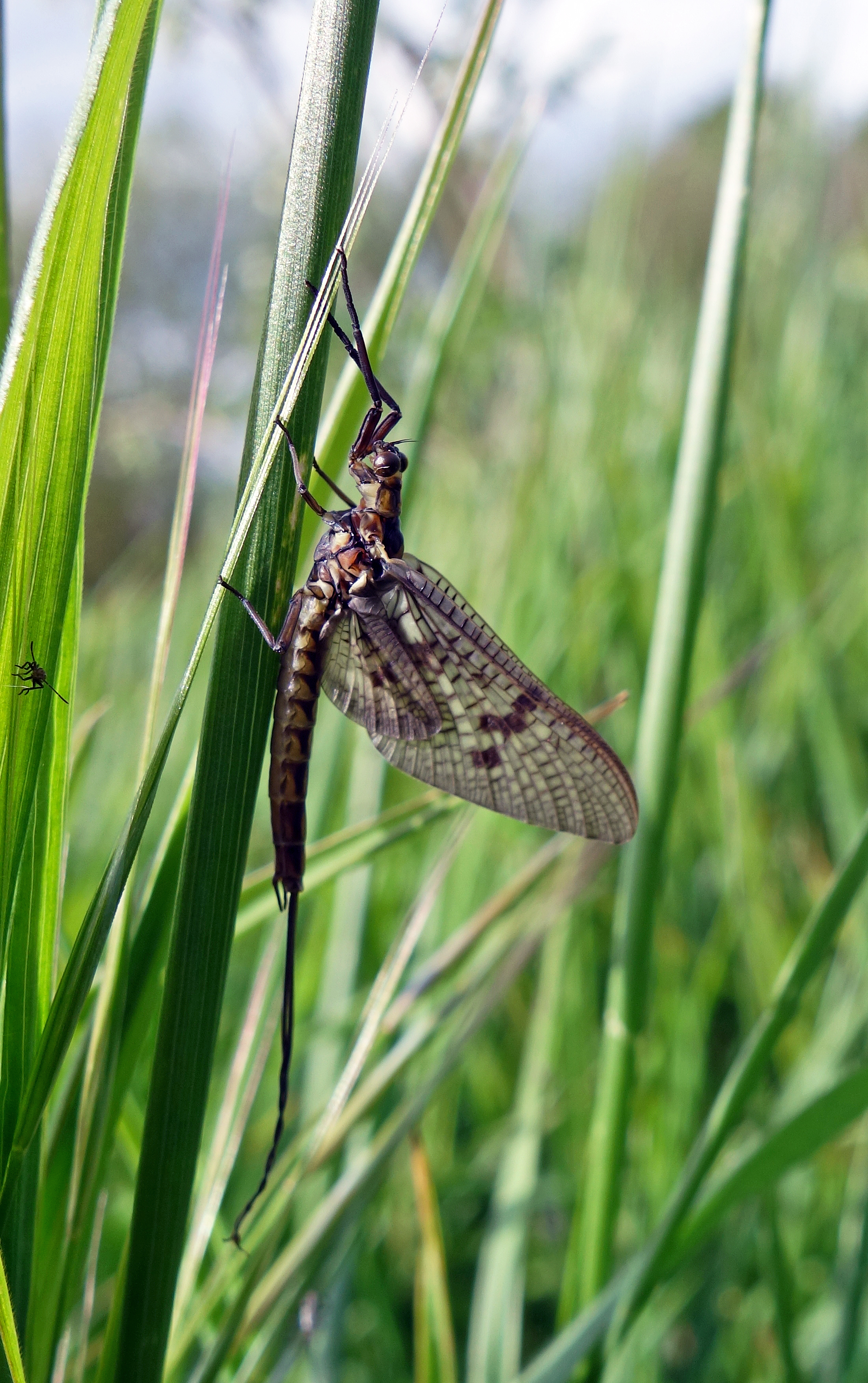
Ephemera vulgata is a species which breeds in stationary or slow moving water in rivers and ponds, in this case in the abandoned gravel pits near the river Great Ouse (below), at Felmersham in Bedfordshire.

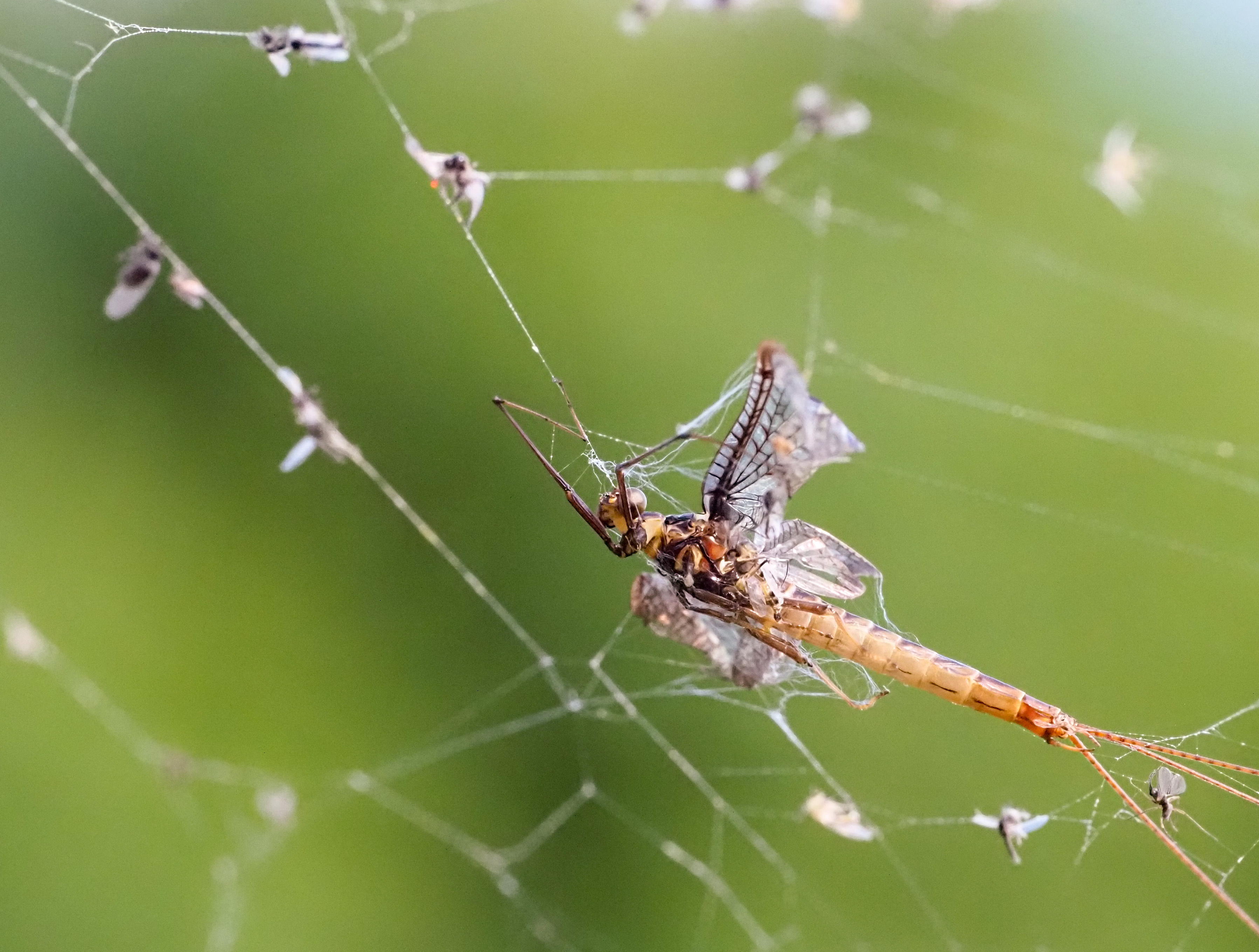
However, in the midst of all this joyful enthusiasm, a darker force lies waiting: spiders with their sticky webs. Many mayflies are caught in spider webs. How could they possibly know how to avoid them? Other than via the evolutionary selection perhaps? I.e. those that do not bob down too close to the vegetation, where the webs flex their deadly strands between plant stems, manage to survive? Are these ‘low fliers’ being weeded out by selection over time! Or is it just a game of chance? I think so.
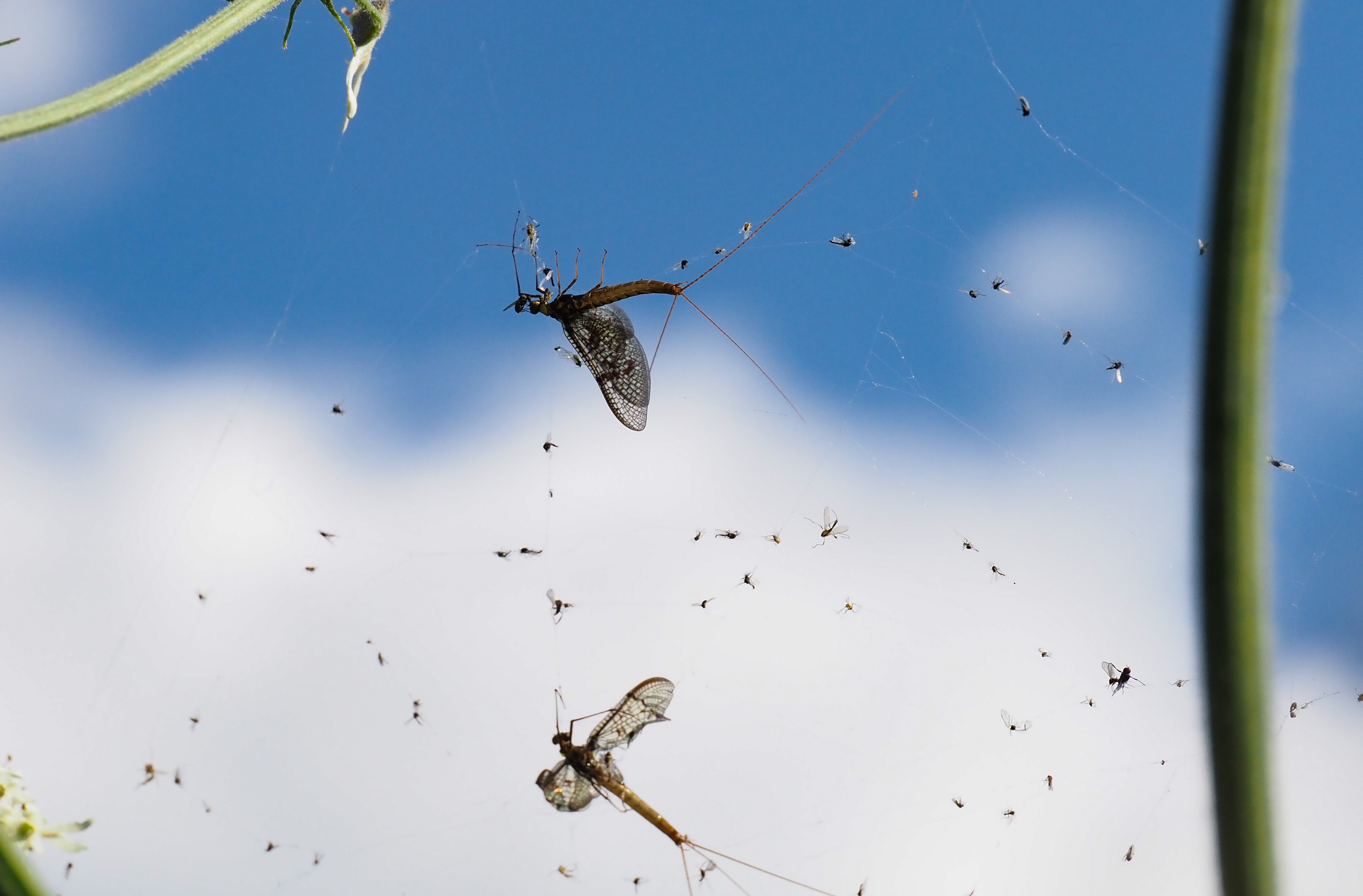
I followed the fate of one poor hapless victim which had become entangled in a orbweb spider’s web.
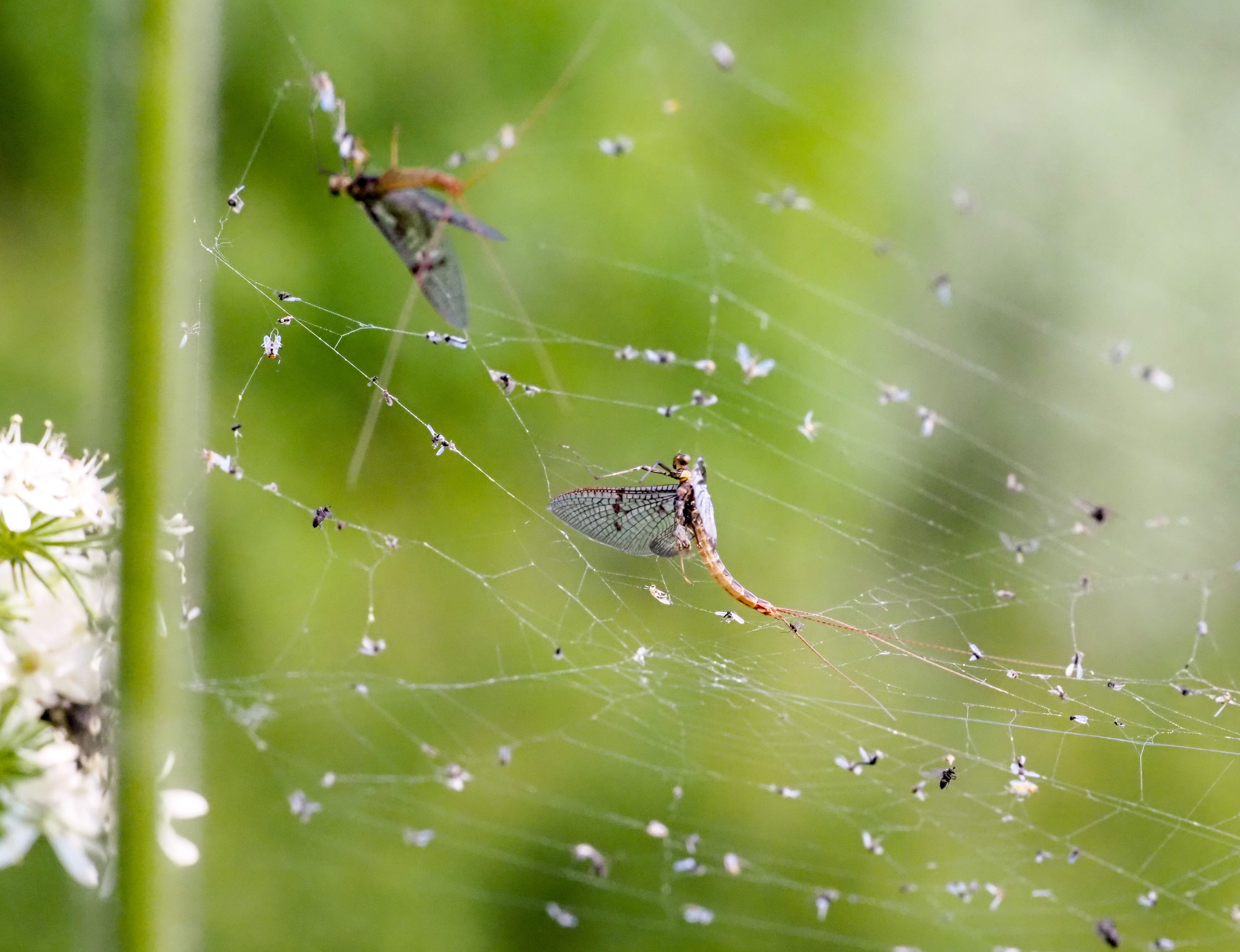
Perhaps all of the tiny flies and midges caught in the web are just after-dinner snacks?!
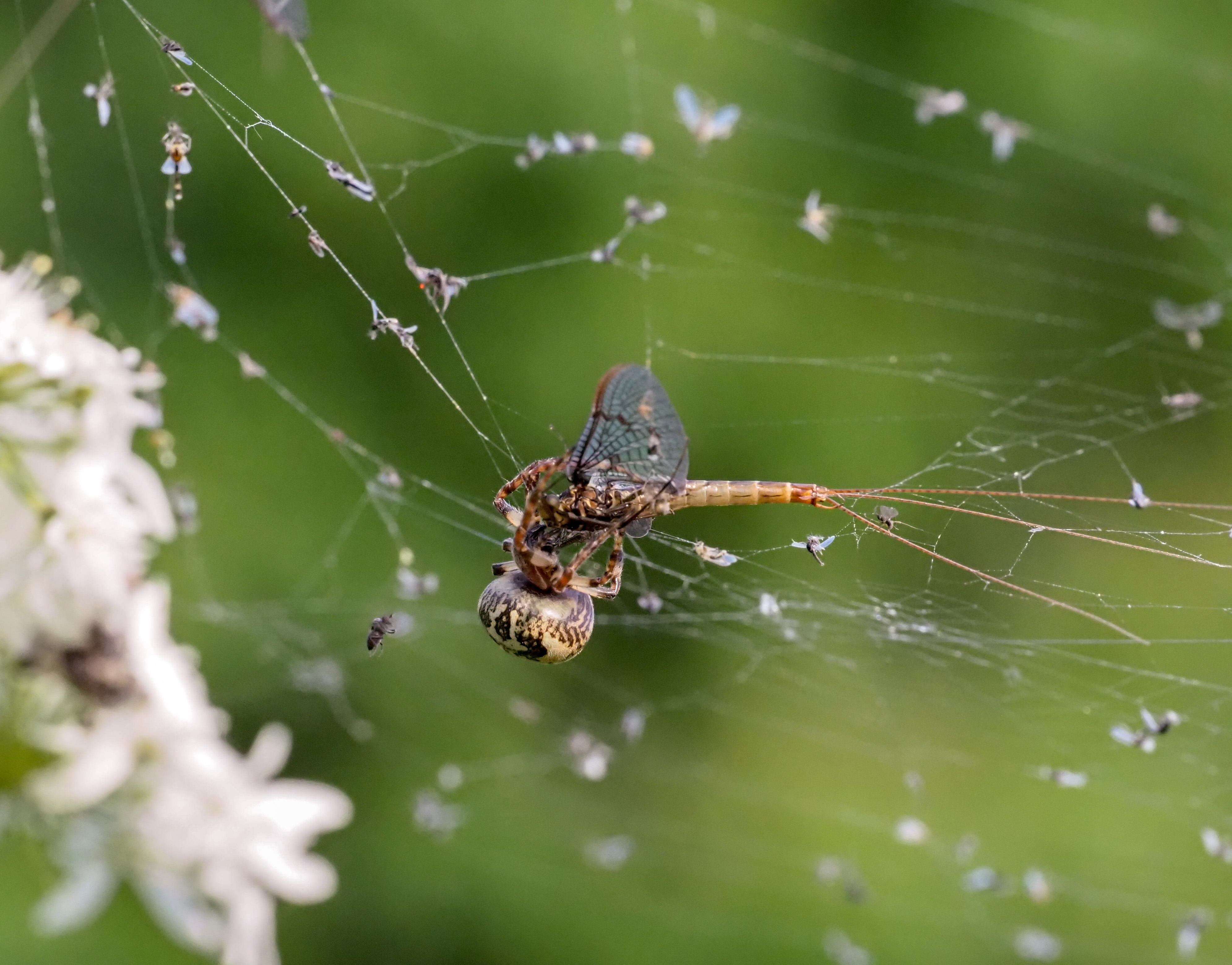
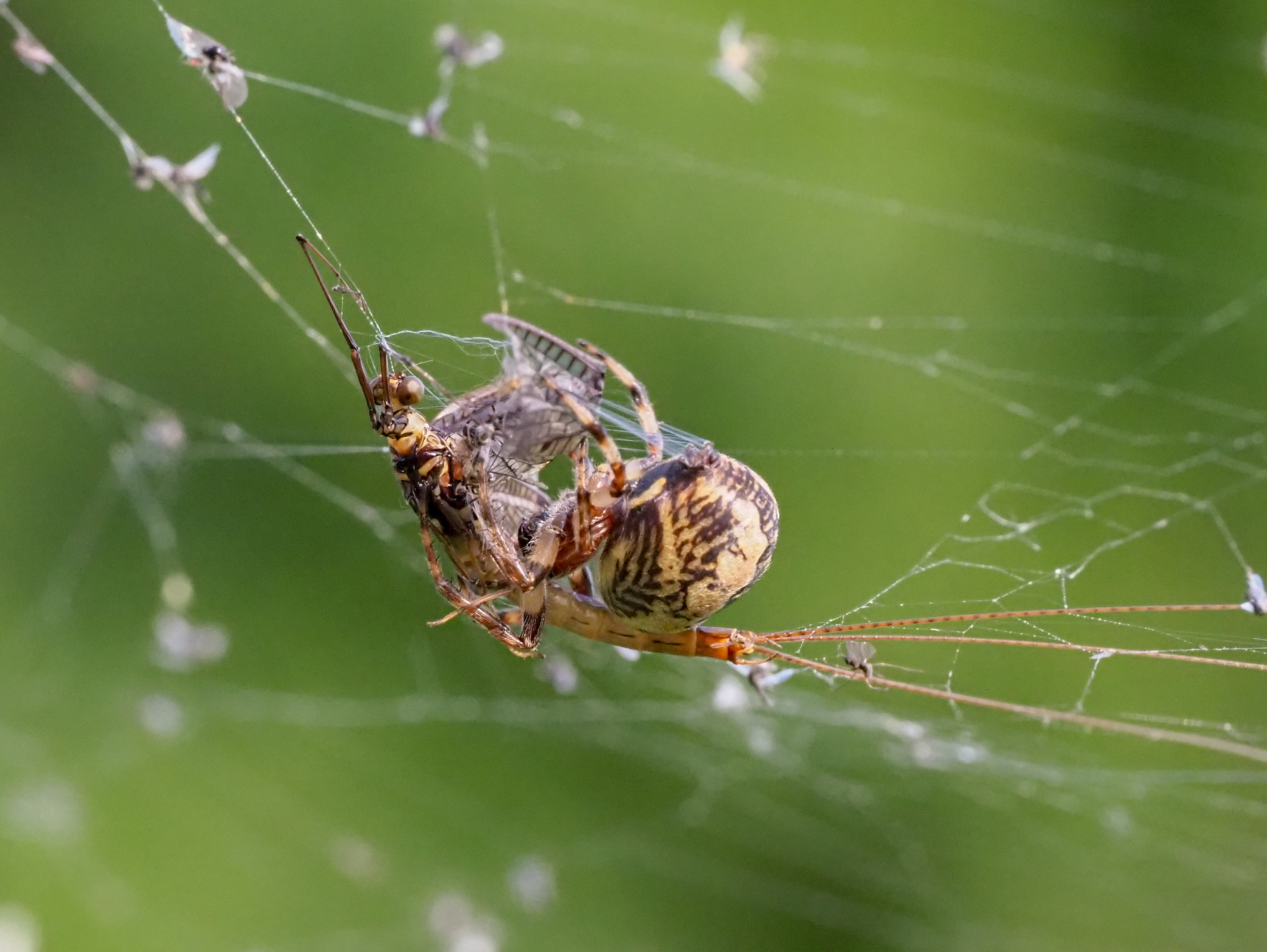
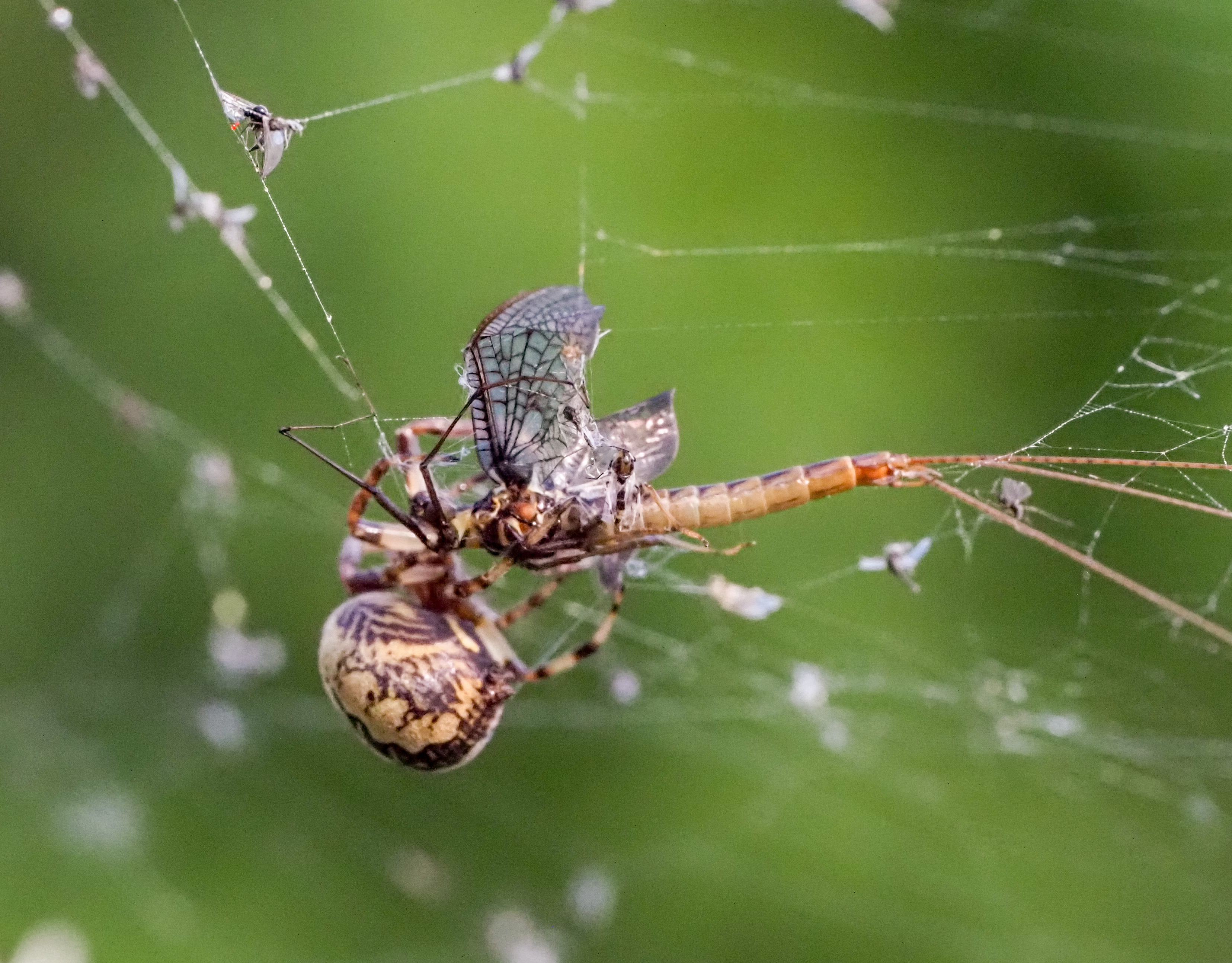
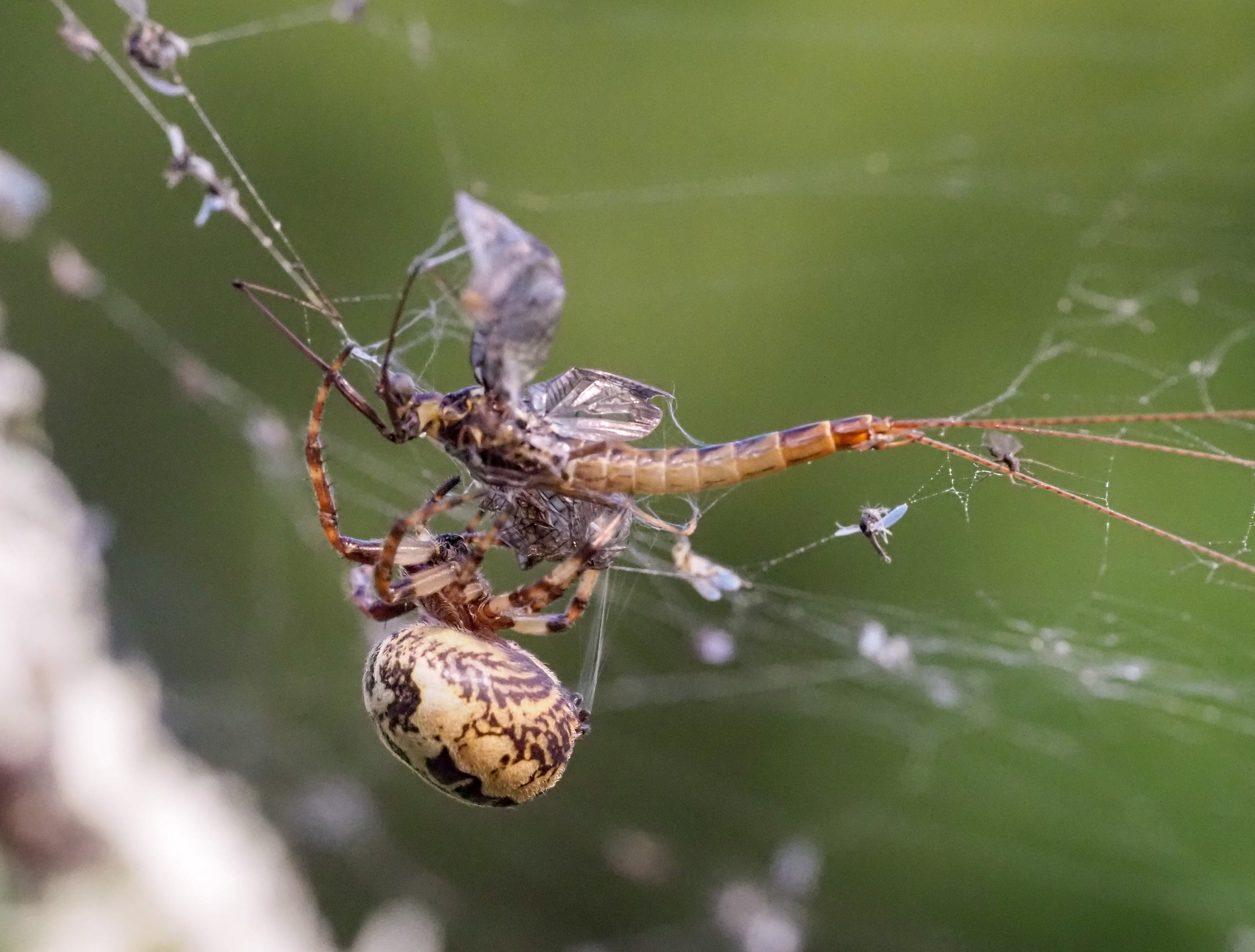
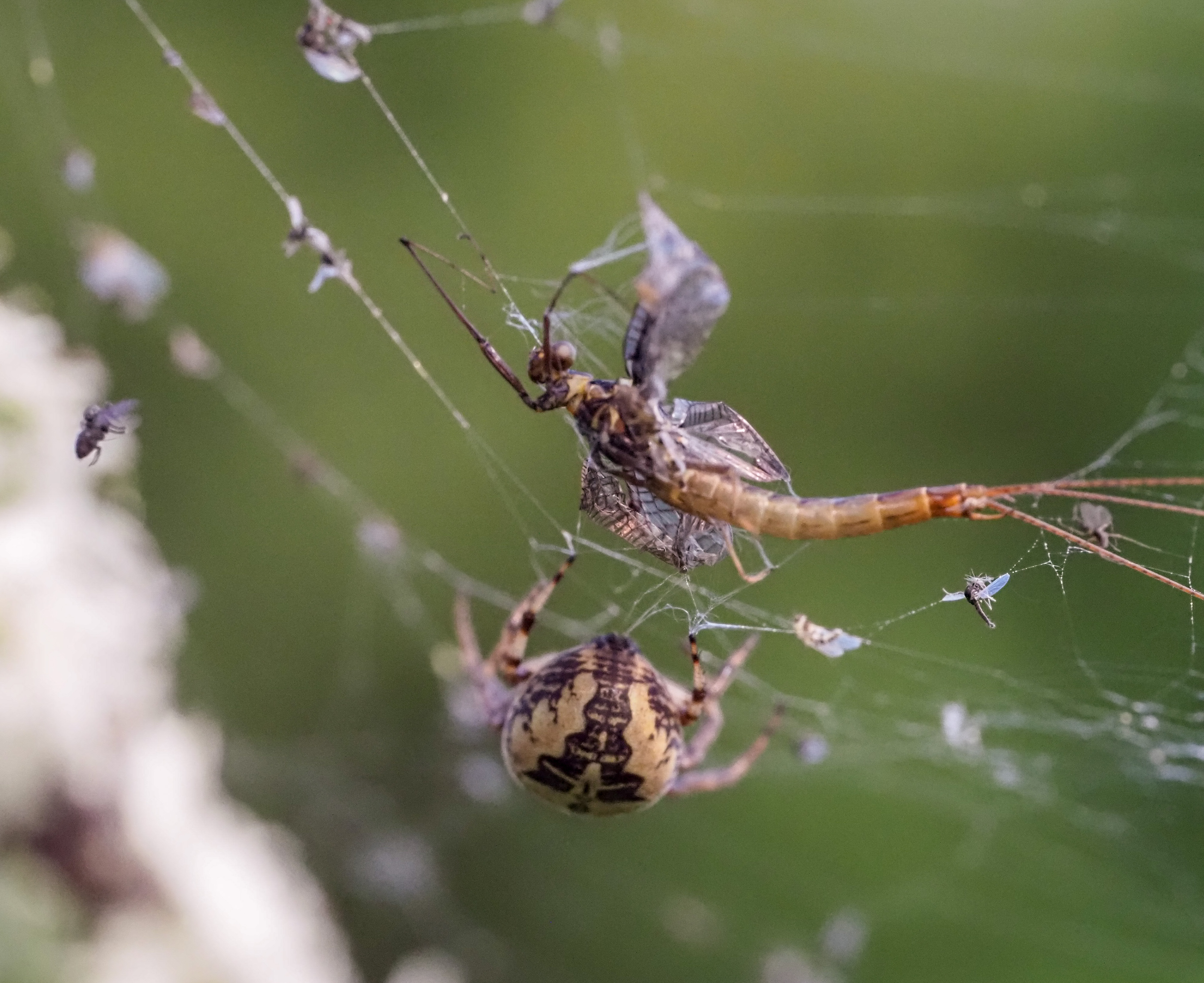
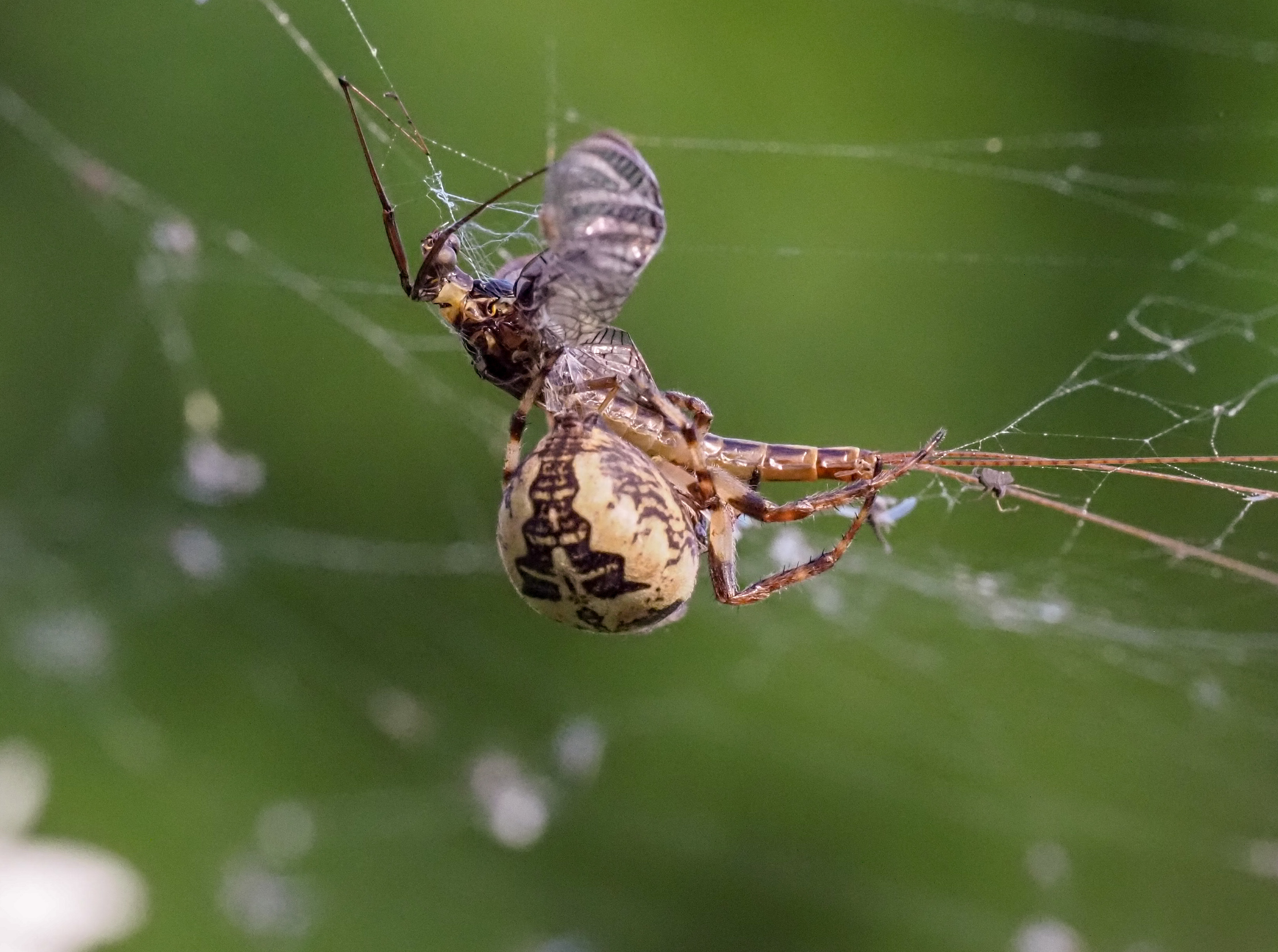
After trussing up the mayfly, the spider trundled over to another captive, near the top of her web. This insect looked to be rather old and long-since dead, because it was covered in maggots! They spider seemed to have taken so long to consume this item – maybe she just had caught more than she could consume (?) – that she was having to share it with some voracious fly larvae. Fascinating!
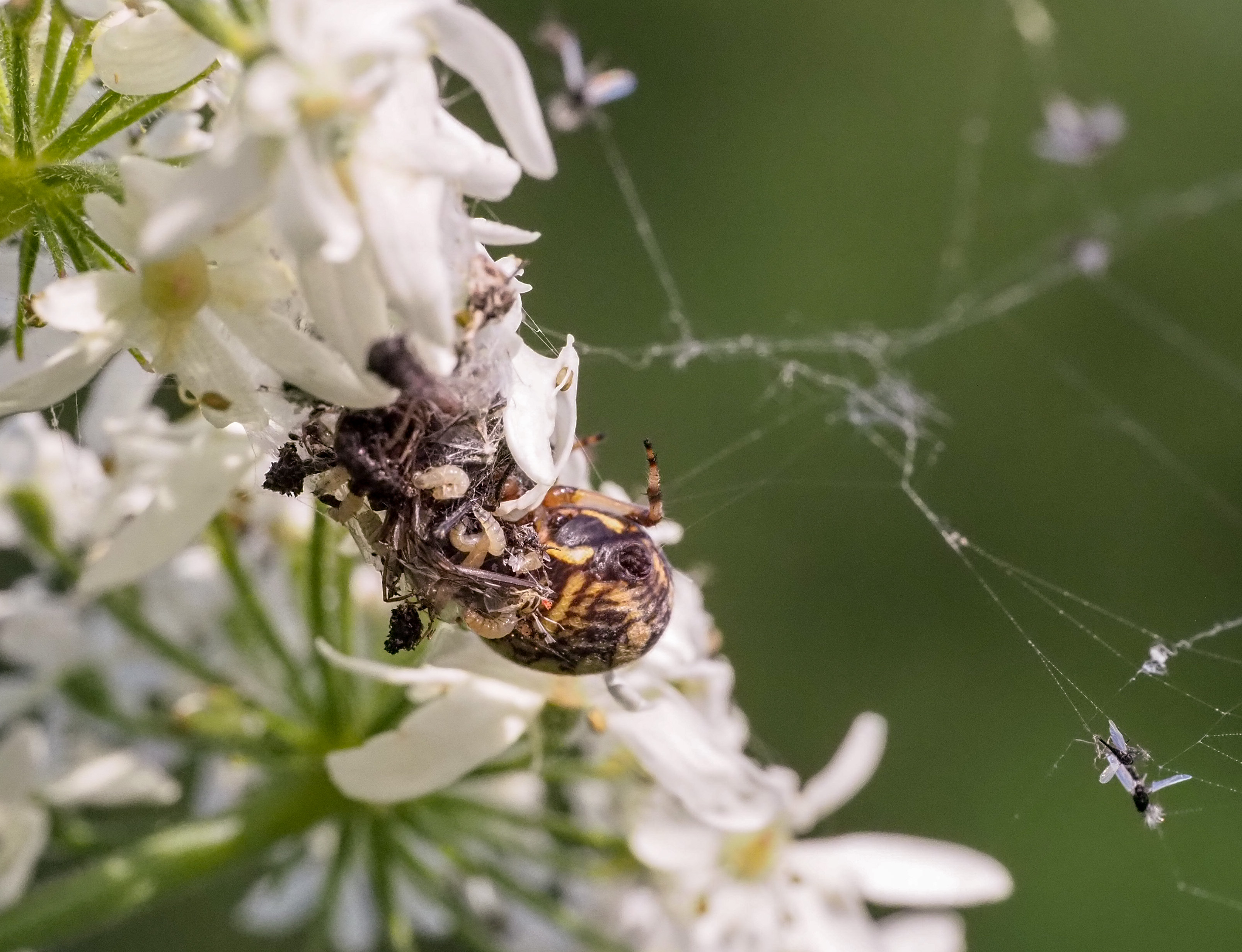
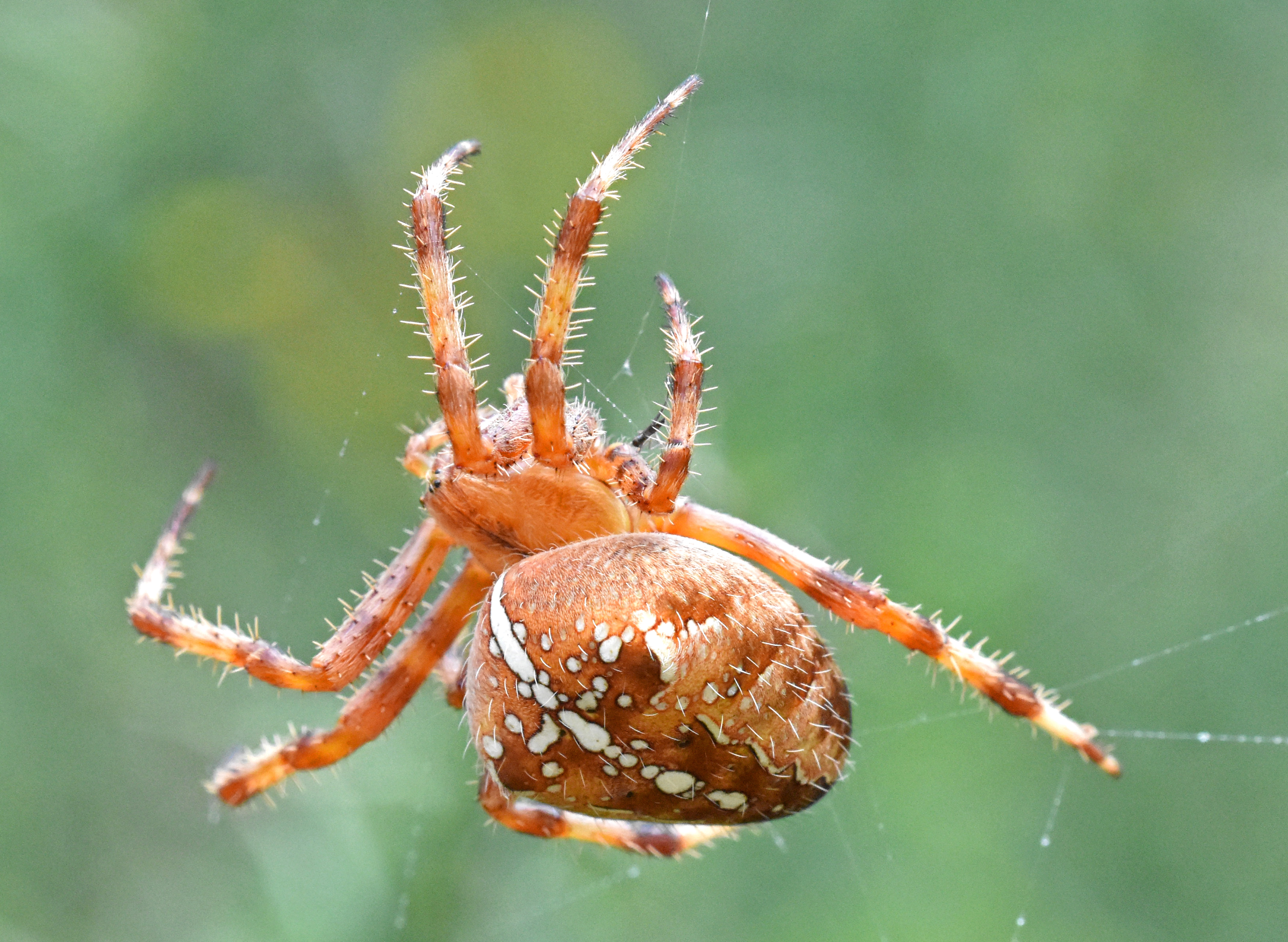
I think the spider in question here (above) is the European garden spider, Araneus diadematus, but they are hugely variable in colours and patterns. Here is a completely different looking one one I photographed in Spain (below) and described in another blog: Spiders, silk and packed lunches.
Dragonflies and damselflies also prey on mayflies, together with a host of other predators from bats to birds. So, to avoid being wiped out by their predators some species emerge en masse in synchronised life histories which effectively swamp the feeding abilities of their predators: the predator satiation hypothesis!
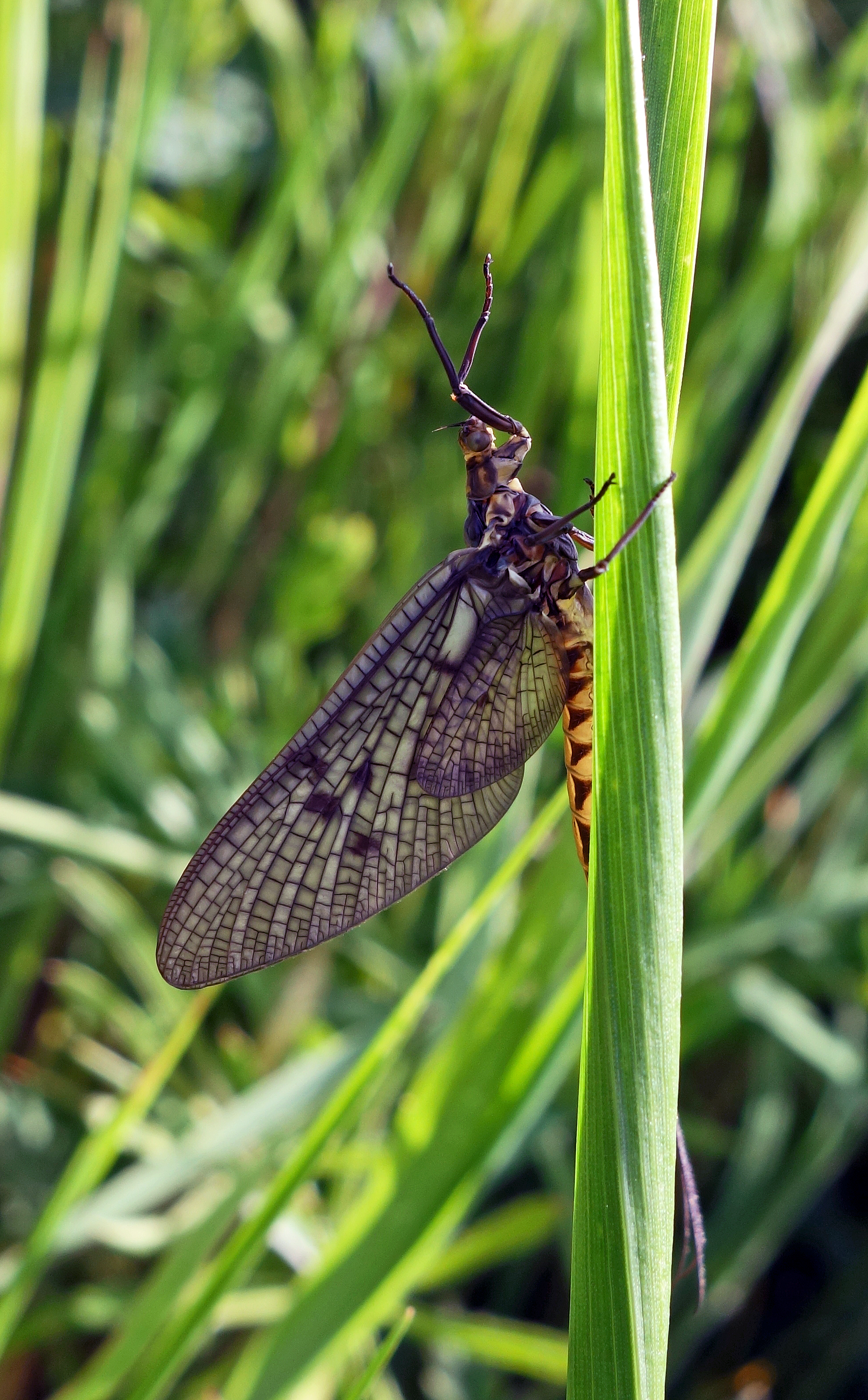
Despite having a relatively primitive reproduction system and short adult lifespans, mayflies have been around for over 300 million years (my), so they must be doing something right! Despite their brief lives and bodily contributions to the diets of so many other creatures!
All photographs by Raymond JC Cannon.
References
Brittain, J. E. (1982). Biology of mayflies. Annual review of entomology, 27(1), 119-147.
Jacobus, L. M., Macadam, C. R., & Sartori, M. (2019). Mayflies (Ephemeroptera) and their contributions to ecosystem services. Insects, 10(6), 170. https://www.mdpi.com/2075-4450/10/6/170
Links
 Ray Cannon's nature notes
Ephemeral beauty that has been very successful in the process of evolution: predator satiation seems to be a highly effective technique. 😊
Periodical Cicada also do the predator satiation technique.