When I look at an insect – be it a bee, a dragonfly, a beetle or a hoverfly – I often think: why does it look like that? Why are bee wings relatively small?; why are dragonflies eyes so large and all encompassing; why are some beetles so shiny and iridescent?; and why are those back legs so fat! Are they adaptations?
The word adaptation is a particularly slippery fish! Difficult to pin down, and with a number of different meanings. Stephen Jay Gould and Richard Lewontin famously thought (see Gould and Lewontin, 1979) that the idea that every trait of an organism was an adaptation to its environment, was simplistic and overused; there may be other factors in evolution, genetic or developmental which exert constraints. In other words:
‘we must not assume that individuals are perfectly adapted and that every trait we observe is an adaptation for something‘ (Stevens, 2013)
Nevertheless, it is extremely appealing to think that a particular feature must have an adaptive significance, and to search for a purpose for some strikingly unusual bodily feature (or unusual behaviour). In some cases, it is obvious – or seemingly so – in other cases, it is a bit of a mystery.
Here, I am using the word adaptation as a term referring to a product or modification of an organism – sometimes called an adaptive trait – that makes it more fit for existence under the conditions of its environment. The adaptation can be a physical or behavioral trait that usually has a specific function which improves the fitness or survival of all members of that species. Like a camel’s hump or an elephant’s trunk.
In reality, some features or traits will have a proven adaptive purpose; in other cases the ‘adaptive story’ may be wrong (or at least untested) and there is no adaptive function, or in many cases, we just don’t know.
In this blog, I will focus on so-called adaptions involving insect legs. For example, male orchid bees have enlarged hind tibia where they store volatile compounds – including flowers, fruits, feces, resin, sap, decaying wood and even mushrooms – in cuticular pouches (below); from which they manufacture perfumes to waft at female orchid bees!
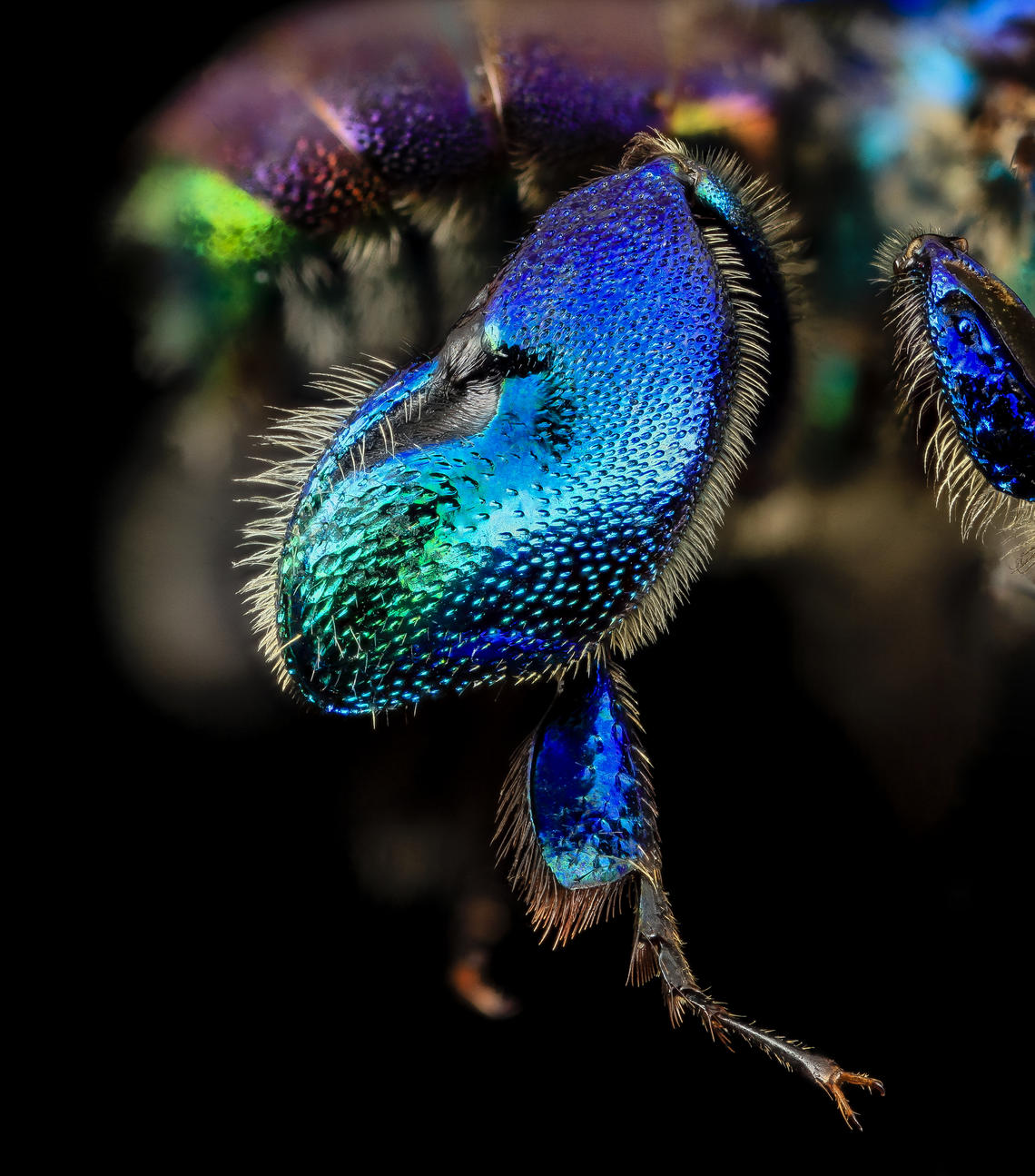
Adaptations can, of course, have evolved to have more than one use or function; for example, a shiny swollen hind leg can have both a functional and an ornamental use. In other words, things can be adaptive traits and ornaments.
Another example of an insect with enlarged hind-legs is the thick-legged flower beetle, Oedemera nobilis (Family Oedemeridae). For a long time, there was no adequate explanation for the purpose of these impressively enlarged hind-legs (see below), but recent research has provided an explanation for the function of these extraordinary adaptations.
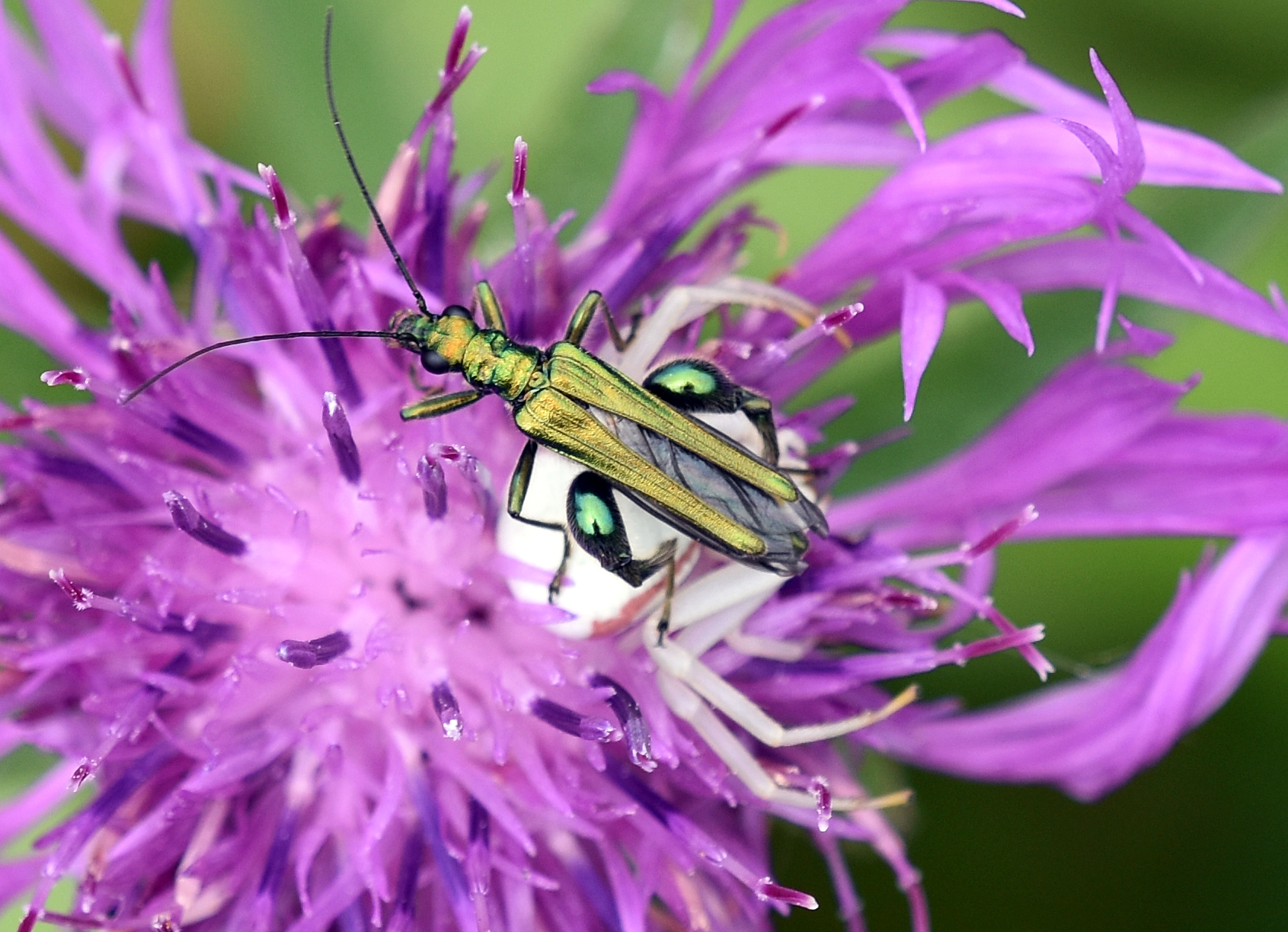
We now know, thanks to research by Professor Malcolm Burrows of the University of Cambridge, that these swollen femora have evolved “to grasp a female during mating and to ensure the stability and hence success of the process” (Burrows, 2020). See here.
So, when we come across another insect with swollen hind tibia, can we assume that is must have some special function of which we are not yet aware? Bearing in mind the warnings of Gould and Lewontin, no! We must remain cautious. It could well have a purpose; especially, for example, if the feature is only found on one sex. I wrote a book describing the vast range of adaptations and ornaments used by insects to attract and stimulate the opposite sex (Cannon, 2023). However, it might not have an obvious function, or perhaps it once did, in some distant ancestor, but it is now a useless appendage.
The feature which stimulated me to write this blog, is an enlarged femur on a species of hoverfly: the Thick-legged Hoverfly (Syritta pipiens), shown below in my photos.
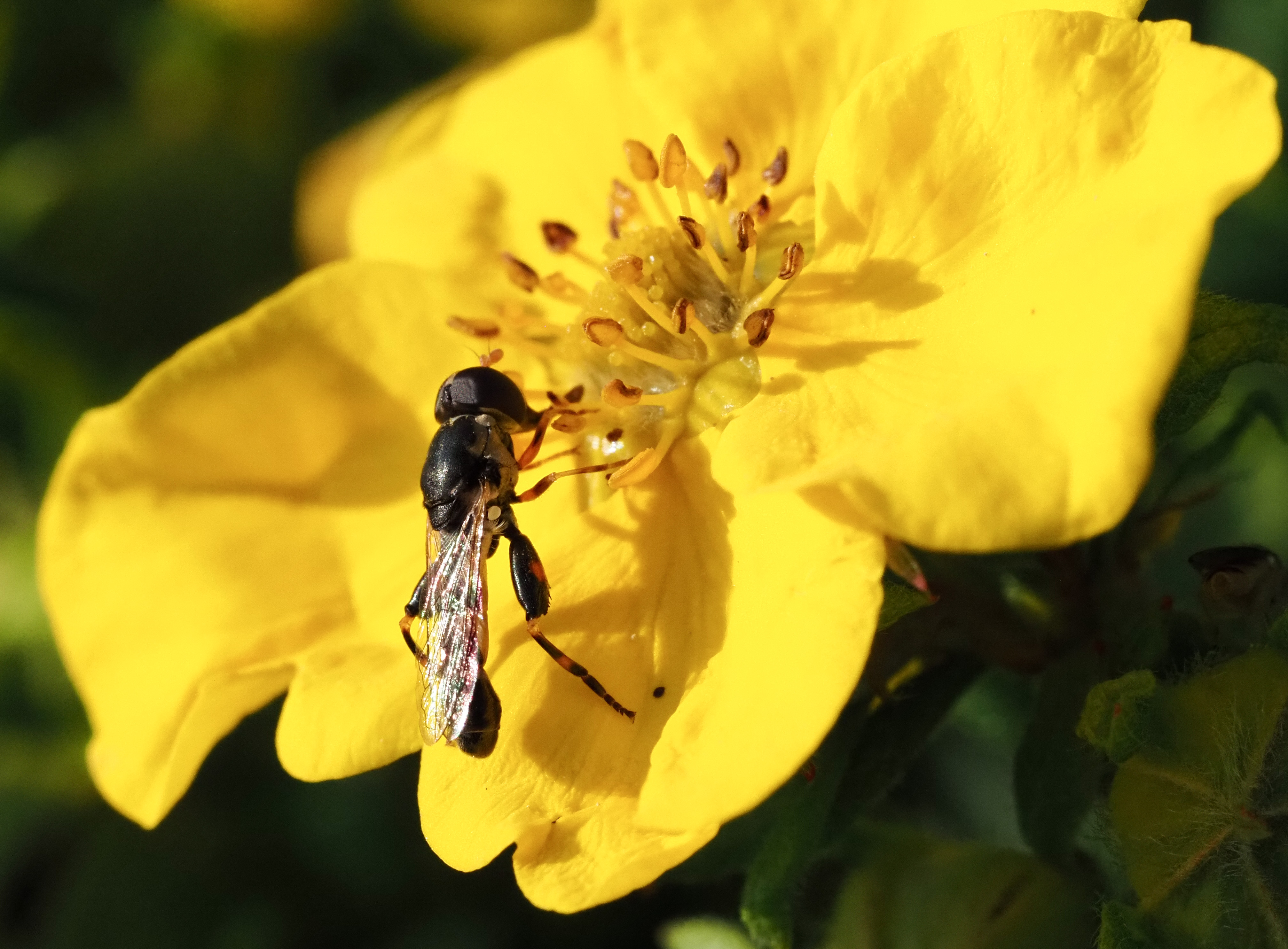
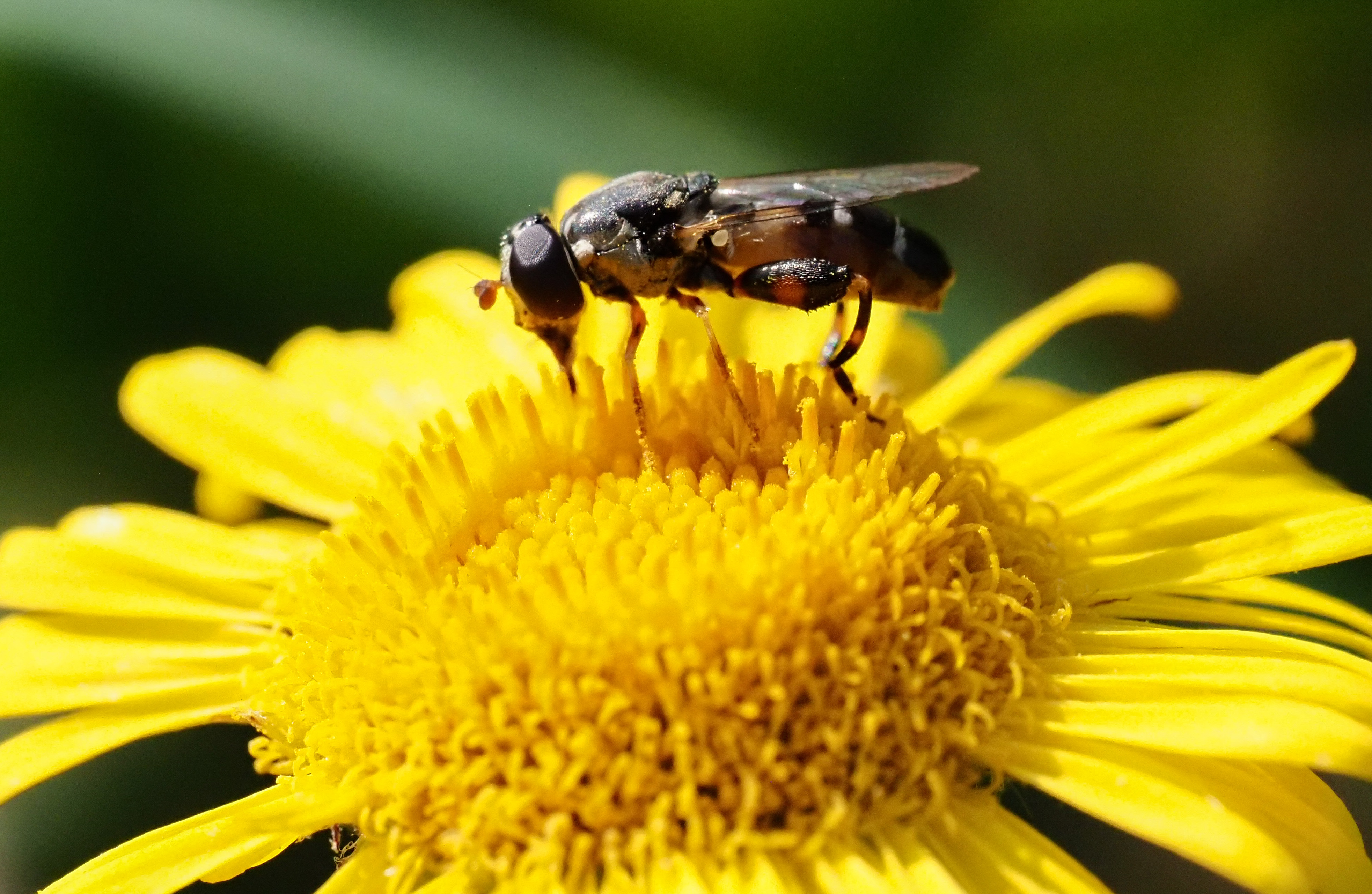
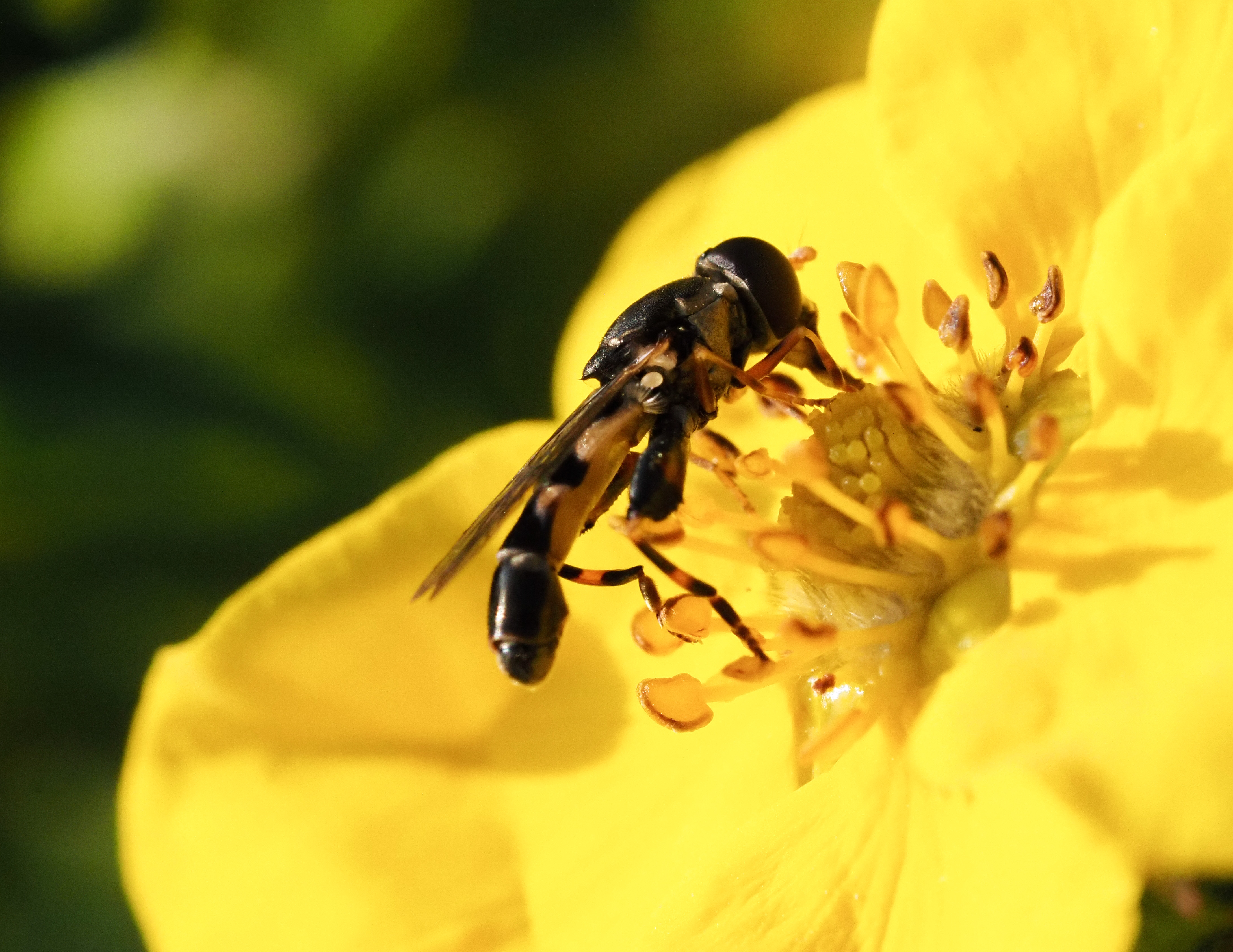
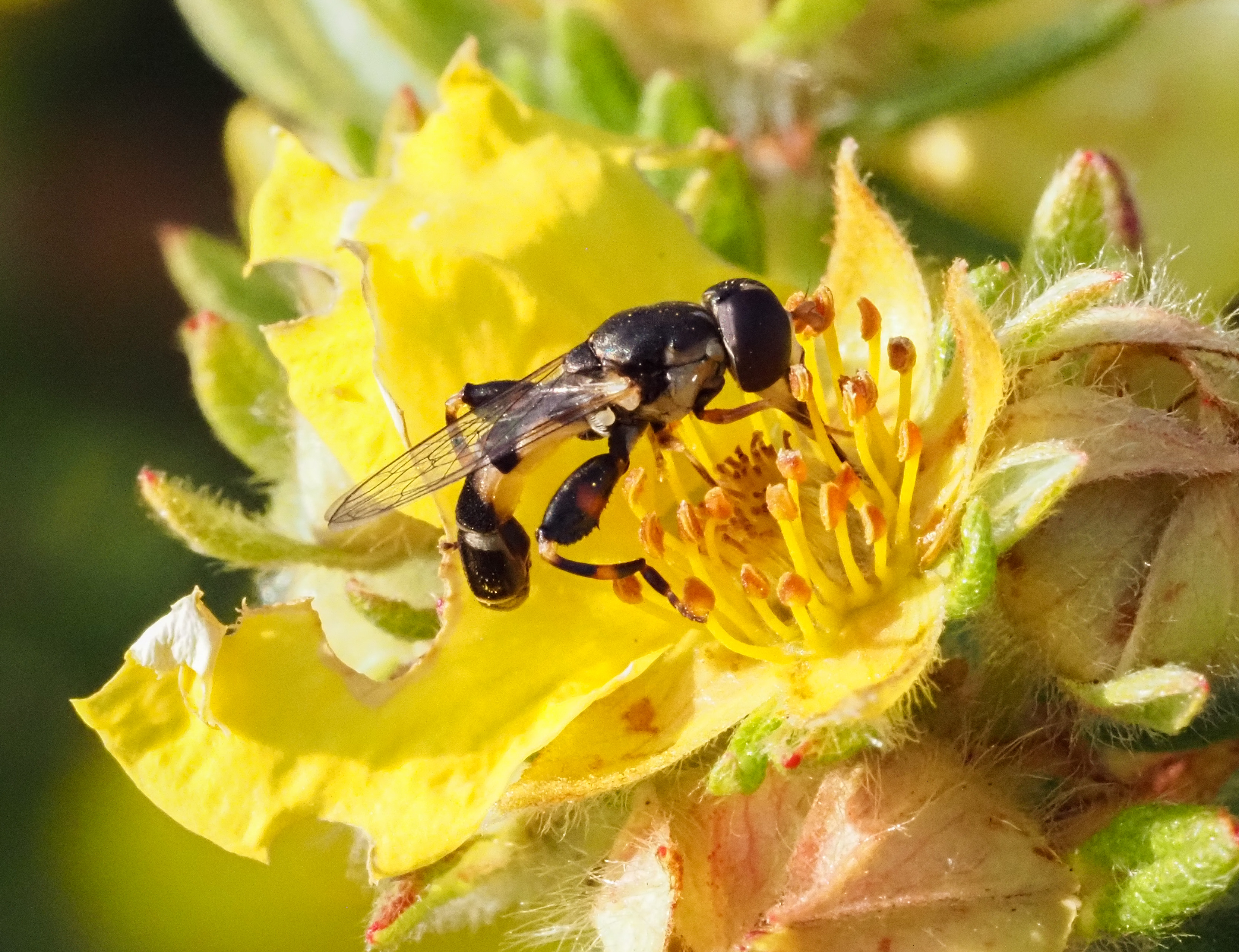
Of course, this is not the only hoverfly to have enlarged back legs, but they are fairly apparent, and with a prominent orange spot (see below).
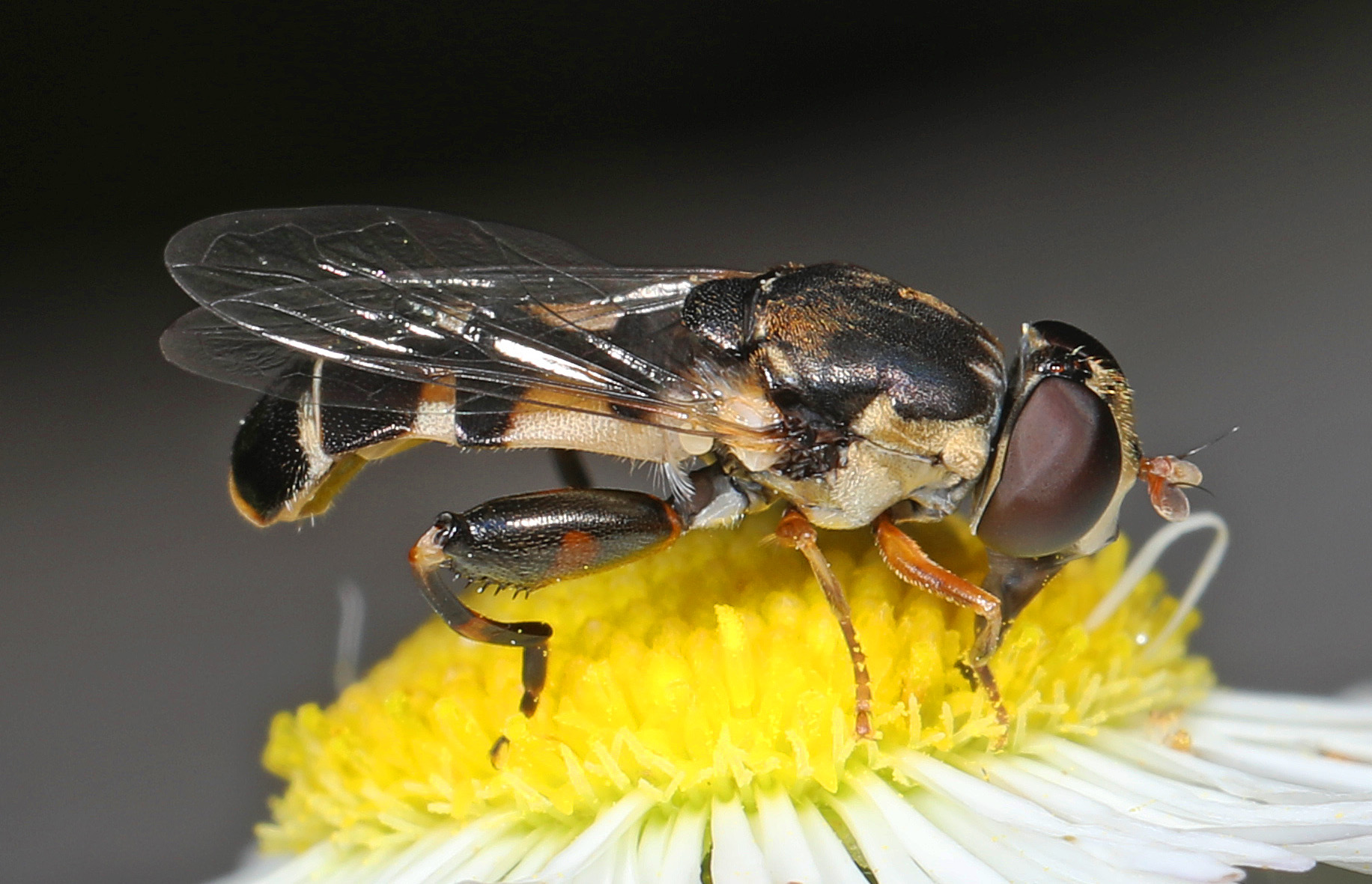
The hind femur is described by taxonomists as incrassate, a nice word meaning thickened or swollen. But why? Interestingly, both males and females have these thick back legs – see photos by Steven Falk – so it is not a sexually dimorphic feature.
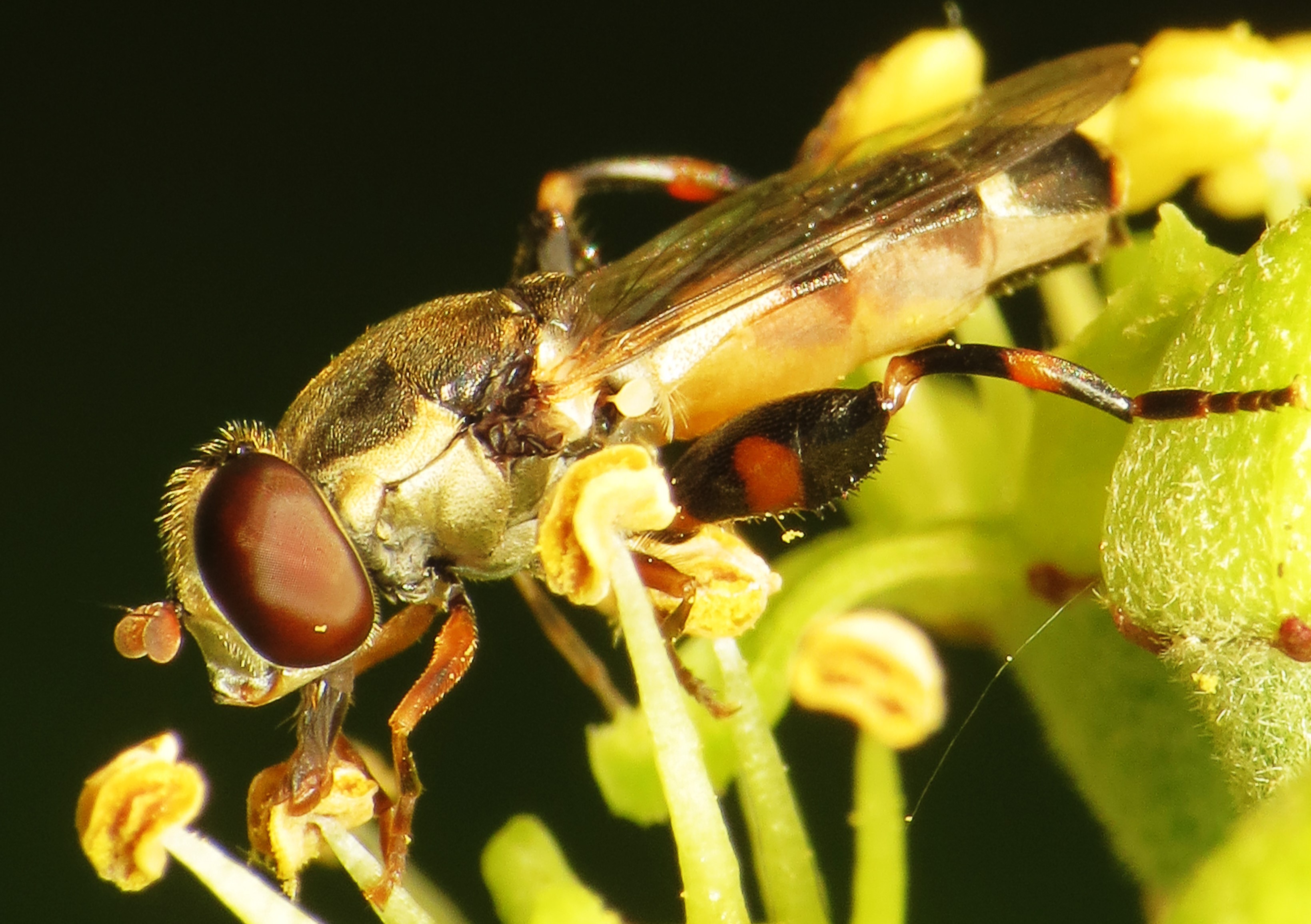
In conclusion, I’m not sure why this hoverfly has swollen back legs, but it may be a form of mimicry (see below). There are about 70 species of Syritta worldwide, and some of them (at least the ones I have found photos of, online) also have swollen back legs (see here and here), and some of them also have the same orange spot.
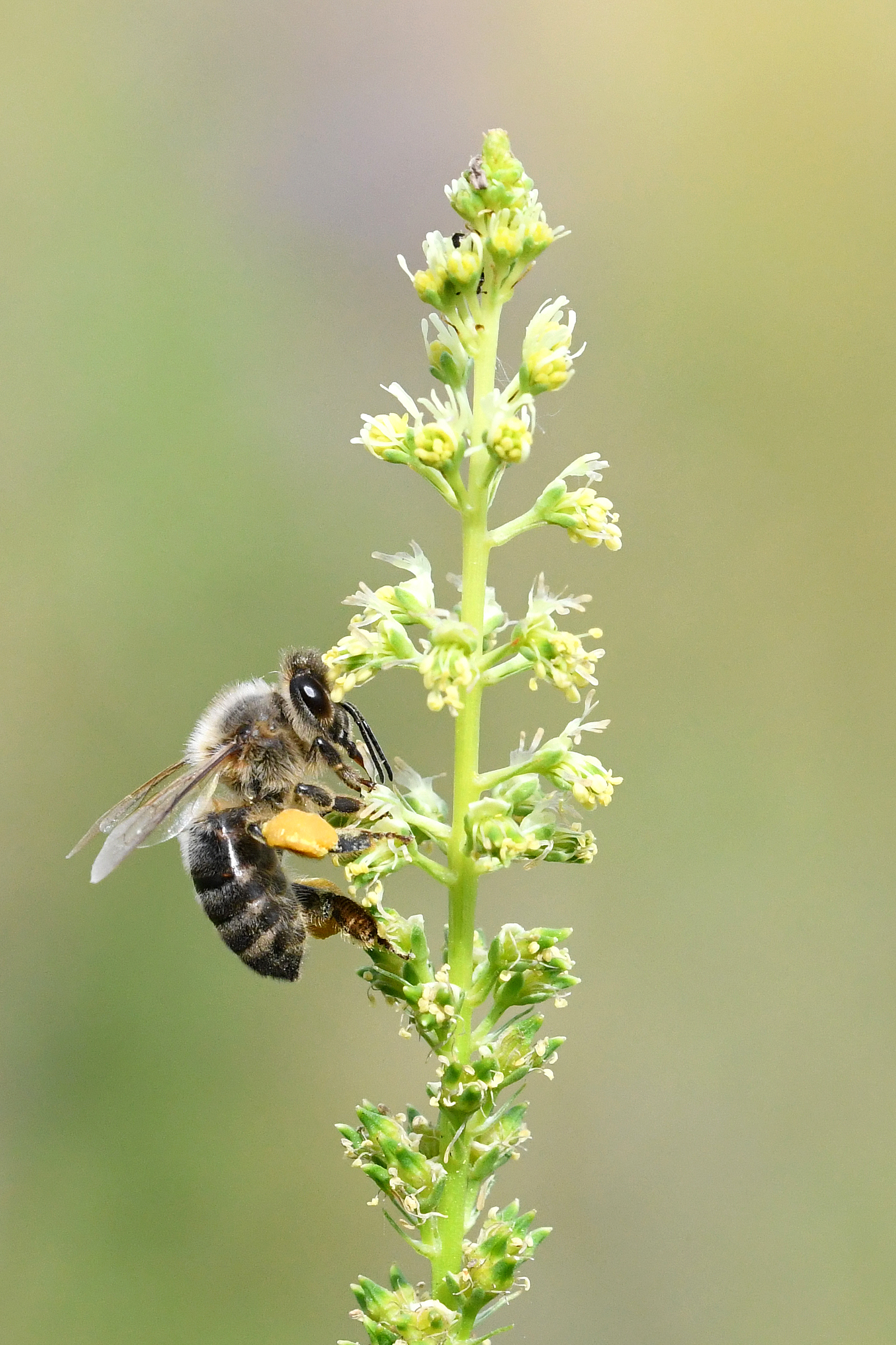
Soon after I posted this blog, Dr Africa Gomez of Hull University, commented (see below) that the thickened rear legs of Syritta species, and many other hoverfly species (including Eristalis tenax and Merodon equestris), might be a form of mimicry which evolved to increase their resemblance to bees, as many bees have rear legs modified to carry pollen. The attractiveness of this theory, is that the orange-yellow spot might also have evolved to resemble the pollen basket or corbicula of certain bees. A large number of bees, including honey bees, bumblebees, stingless bees, and orchid bees have corbiculae, Pollen baskets vary enormously in size (and colour) of course, depending on how much pollen the bee has collected and from what sort of flowers. Nevertheless, it is an appealing idea!
To sum up, what I hope this blog illustrates, is that we don’t know that much about most of the thousands (millions worldwide) of insects that live in our meadows and hedgerows; particularly, concerning their behaviour. We may know their genome sequences (Crowley et al., 2023), but that does not tell us much about their behaviour. There is an old paper by Parmenter (1944) – tantalizing because I have not read it! – on the behaviour of this species which might shed some light on the use of the legs? But, I will have to make a trip to the British Library; watch this space!
References
Buglife photos: https://bugguide.net/node/view/923449
Burrows, M. (2020). Do the enlarged hind legs of male thick-legged flower beetles contribute to take-off or mating?. Journal of Experimental Biology, 223(1),
Cannon, R. J. (2023). Courtship and Mate-finding in Insects: A Comparative Approach. CABI. https://www.cabidigitallibrary.org/doi/book/10.1079/9781789248623.0000
Crowley, L. M., Ashworth, M., Wawman, D. C., of Oxford, U., Lab, W. W. G. A., Lab, N. H. M. G. A., … & Darwin Tree of Life Consortium. (2023). The genome sequence of the Thick-legged Hoverfly, Syritta pipiens (Linnaeus, 1758). Wellcome Open Research, 8.
Gould, S. J., & Lewontin, R. C. (1979). The spandrels of san marco and the panglossian paradigm: a critique of the adaptationist programme. Conceptual Issues in Evolutionary Biology, 205, 79.
Parmenter, L. (1944). Behaviour of Syritta pipiens L.(Dipt. Syrphidae). Ent. Monthly Mag, 80, 44.
Stevens, M. (2013). Sensory ecology, behaviour, and evolution. OUP Oxford.
 Ray Cannon's nature notes
Fascinating post, Ray, thanks. I had no idea about the reason for the male Swollen-thigh beetles oversized hind legs – must remember that. 🙂
Wonderful post and photos, Ray. I was wondering if the explanation underlying Syritta’s thickened rear legs is the mimicry that many hoverflies display, the thickened rear legs might increase their resemblance to bees, as many bees have rear legs modified to carry pollen. This is the case also in Eristalis tenax and Merodon equestris, both great bee mimics.
What a great idea! I really like that explanation, and the yellow-orange patch mimics the pollen basket as well! I was going to mention the swollen legs of the Eristalis species, but decided to leave it out. It’s an idea that deserves a wider audience. Perhaps we could write a short note somewhere? I’ll start by adding the idea to my blog and attributing it to you, if that’s OK? You are presumably Dr Africa Gomez at Hull University.
Many thanks, Ray Cannon
HI Ray, no worries at all, it’s something I have vaguely thought about, I haven’t checked if this has been looked into in the literature. Other hoverflies have swollen tibia: Merodon equestris, Arctophila superbiens and Eristalis of course. Yes, I am a.gomez at hull.ac.uk for contact, best wishes, Africa
Thank you for reminding us that we know much less for sure than we believe to know. Or in the words of Socrates: ‘I know that I know nothing.’ We indeed have every reason to be humble.
Very true😁
Interesting! For some reason, I’m inclined to see “eyes” in the shapes and patterns on insects, and my first thought when seeing your thick-legged flower beetle was that he was oriented facing toward the bottom right corner of the photo – I had mistaken his glossy femurs for glistening eyes, and his “head” appeared quite threateningly large. I wonder if you see this type of “eye” or “face” mimicry in other insects (well, butterflies, of course, but others?)?
Yes, we humans are very good at detecting patterns, sometimes where none exists! Something called pareidolia. The important thing is to try and imagine how insects (and their predators) see the colours and patterns that insects display. These are often very different to how we see things, as they have UV vision and compound eyes. Nevertheless, some scientists think that there are many patterns on insects which have evolved to scare off predators, like owl eyes and pretend snakes. Professor Philip Howse has written a couple of interesting books on this. However, other scientists think that the main purpose of such patterns is a generalised ‘startle’ function, rather than an exact representation of a predator.😁