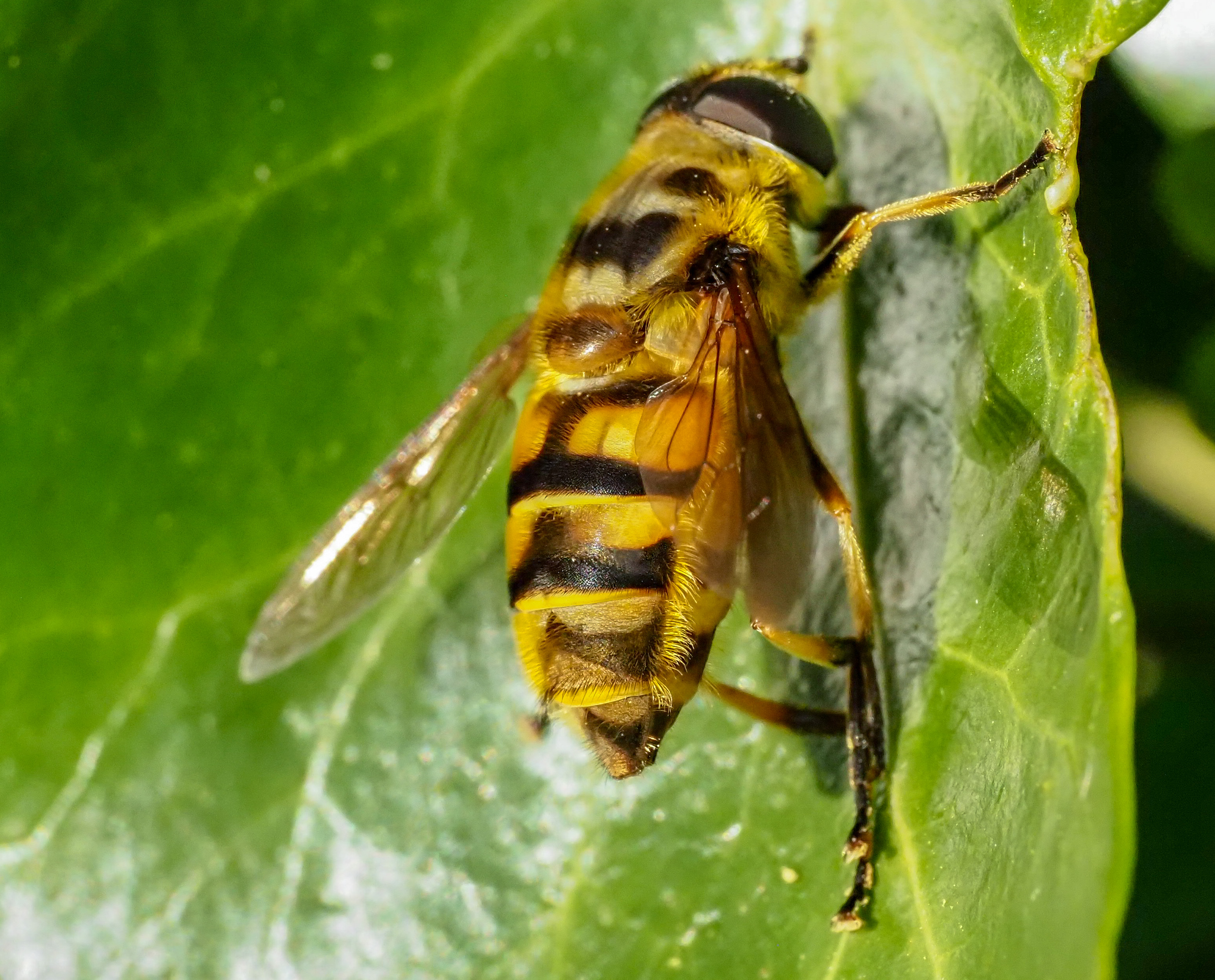
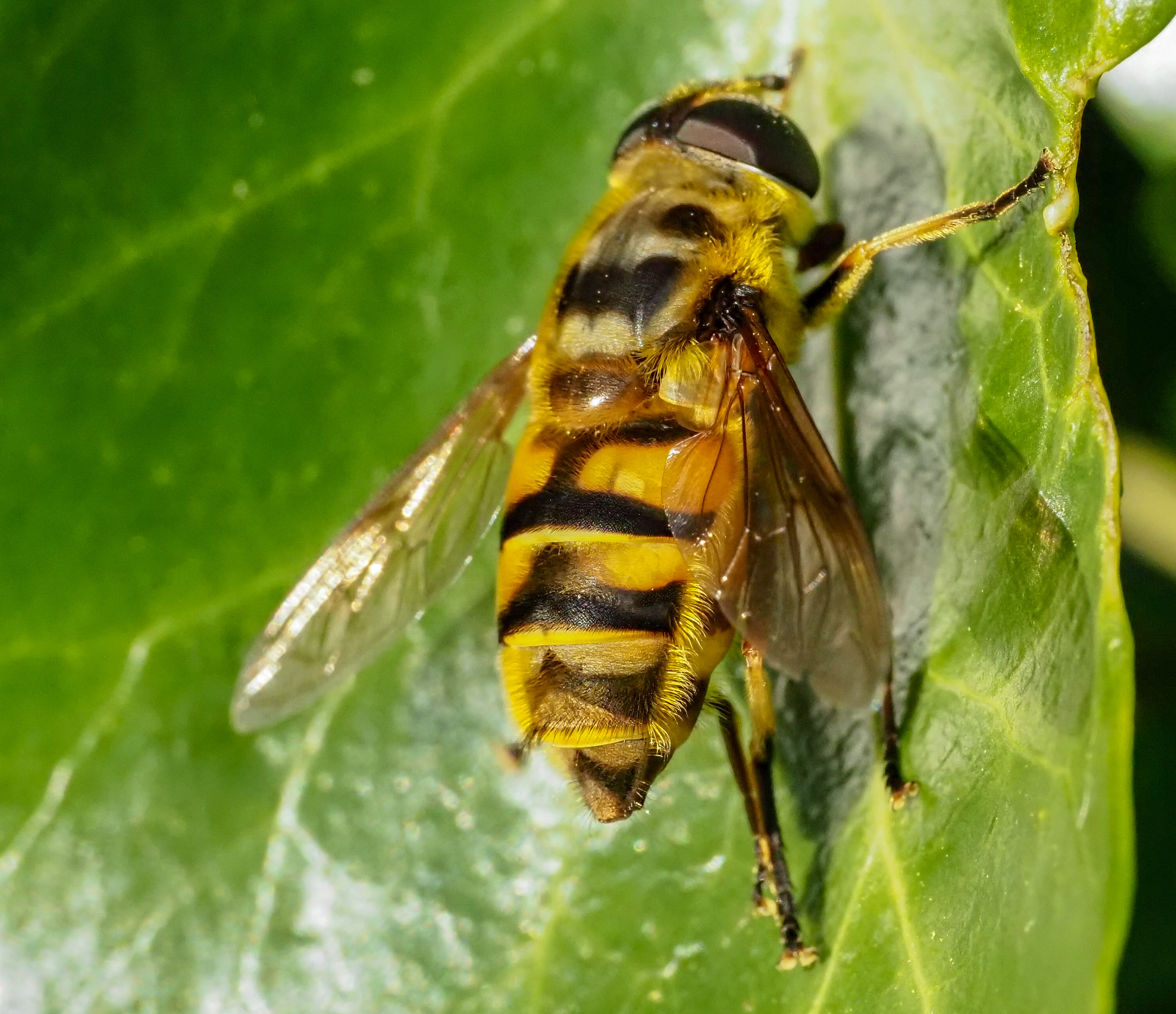
I was inspired to find out more about insect grooming after watching and photographing a hoverfly clean itself on a leaf, one sunny day in early October. It had just been feeding on ivy flowers and obviously needed a good dusting down. I took a lot of pictures, hoping to capture the grooming sequence.
The sequence of movements, which pass along the fly from the head to the wings and onto the back legs, illustrate how insects like this clean themselves.
There has been a surprising amount of research on insect grooming. Studies show that this behaviour is usually divided into two distinct clusters (Piersanti et al., 2024) or motifs (Mueller et al., 2019), focused on the front and back of the insect.
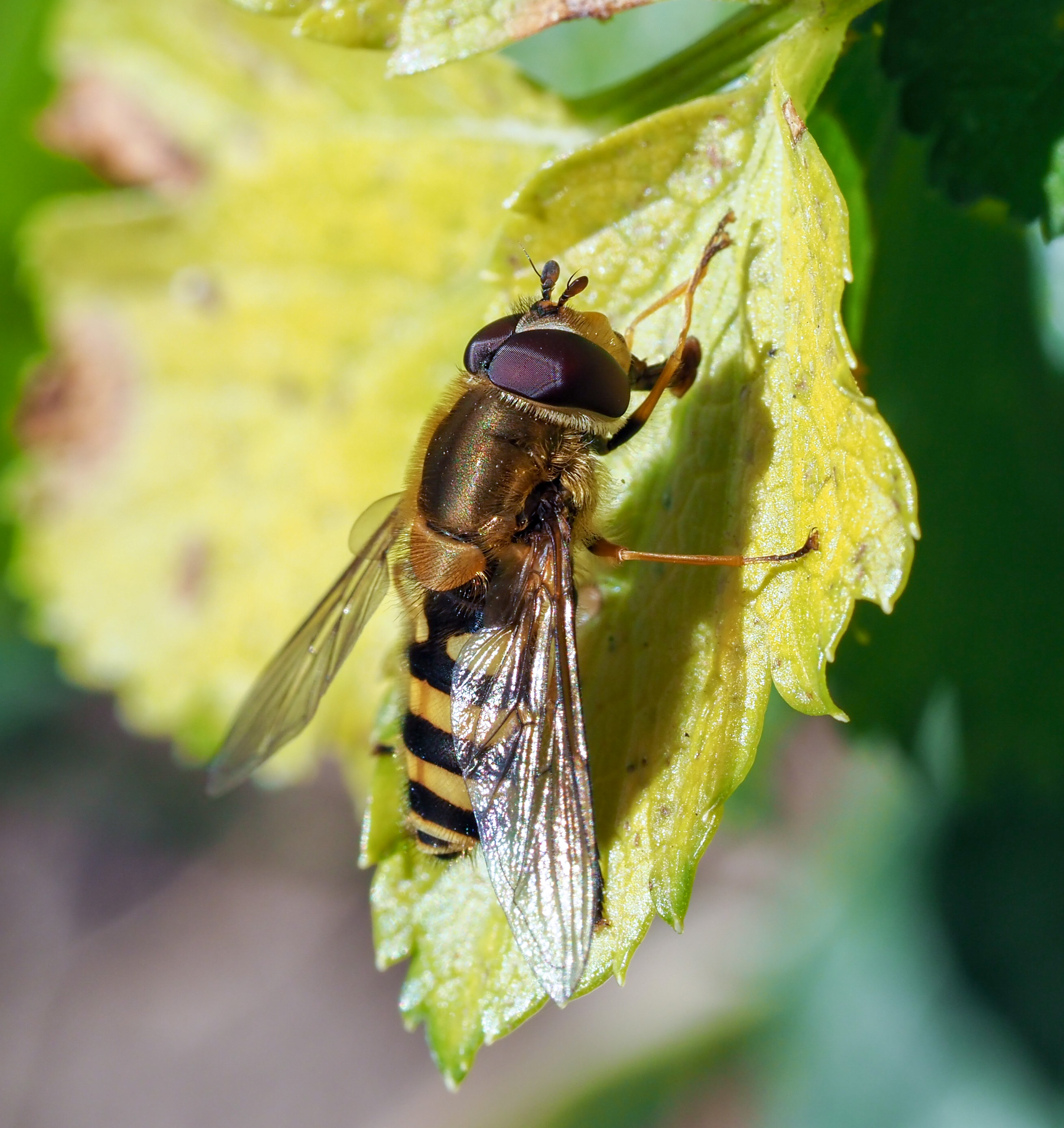
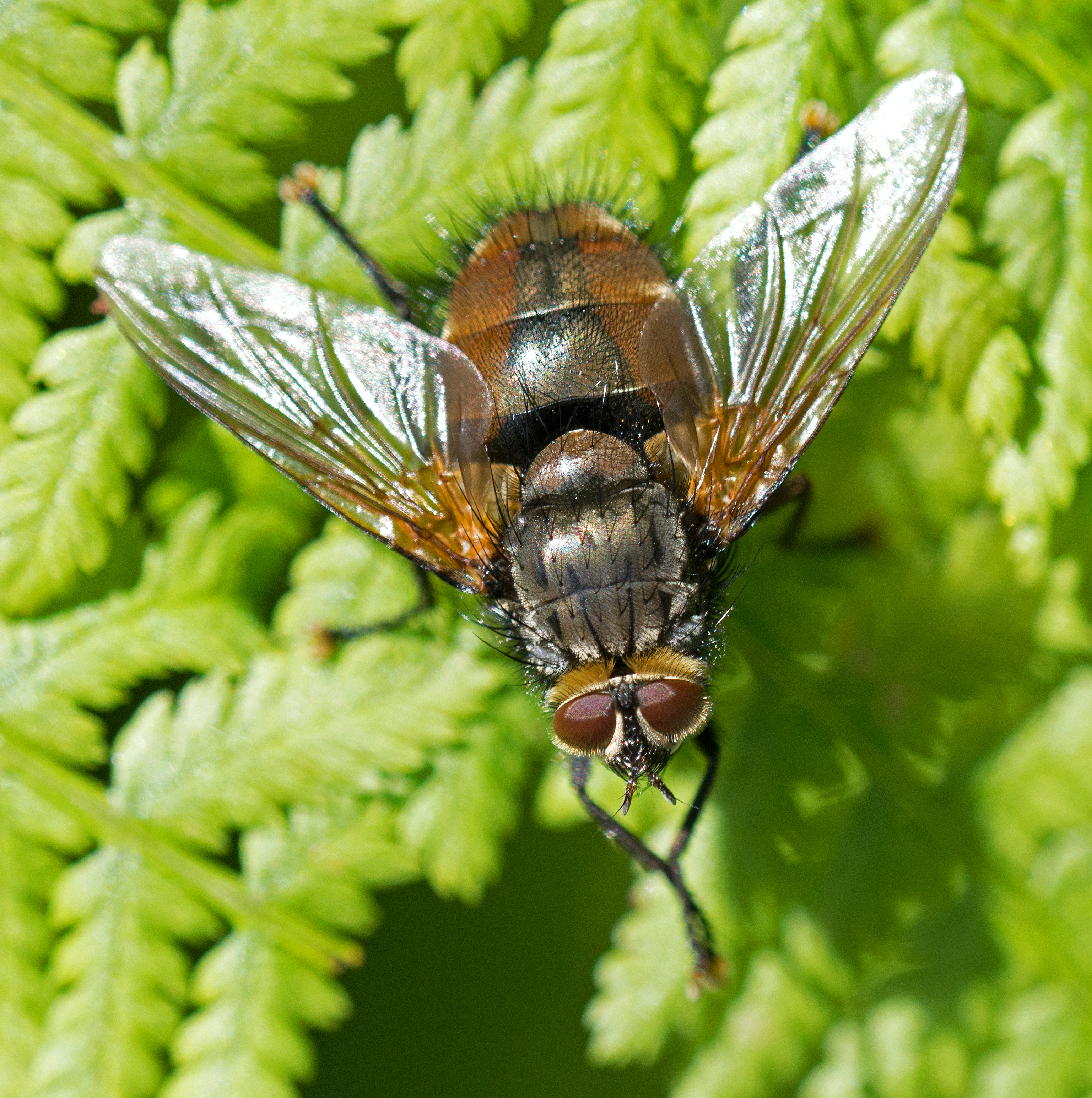
Grooming usually commences with an anterior cluster, where the insect mainly uses its fore-legs to clean the antennae, head, thorax, fore-legs, and mid-legs. This is then followed by a posterior cluster, where the insect uses its hind-legs, predominately, to clean the wings, abdomen, mid-legs, and hind-legs.
I have, however, divided the Batman hoverfly (Myathropa florea) grooming sequence I photographed into three stages, shown below, starting with the head. Each eye is cleaned by the foreleg (called the ipsilateral leg) on the same side.
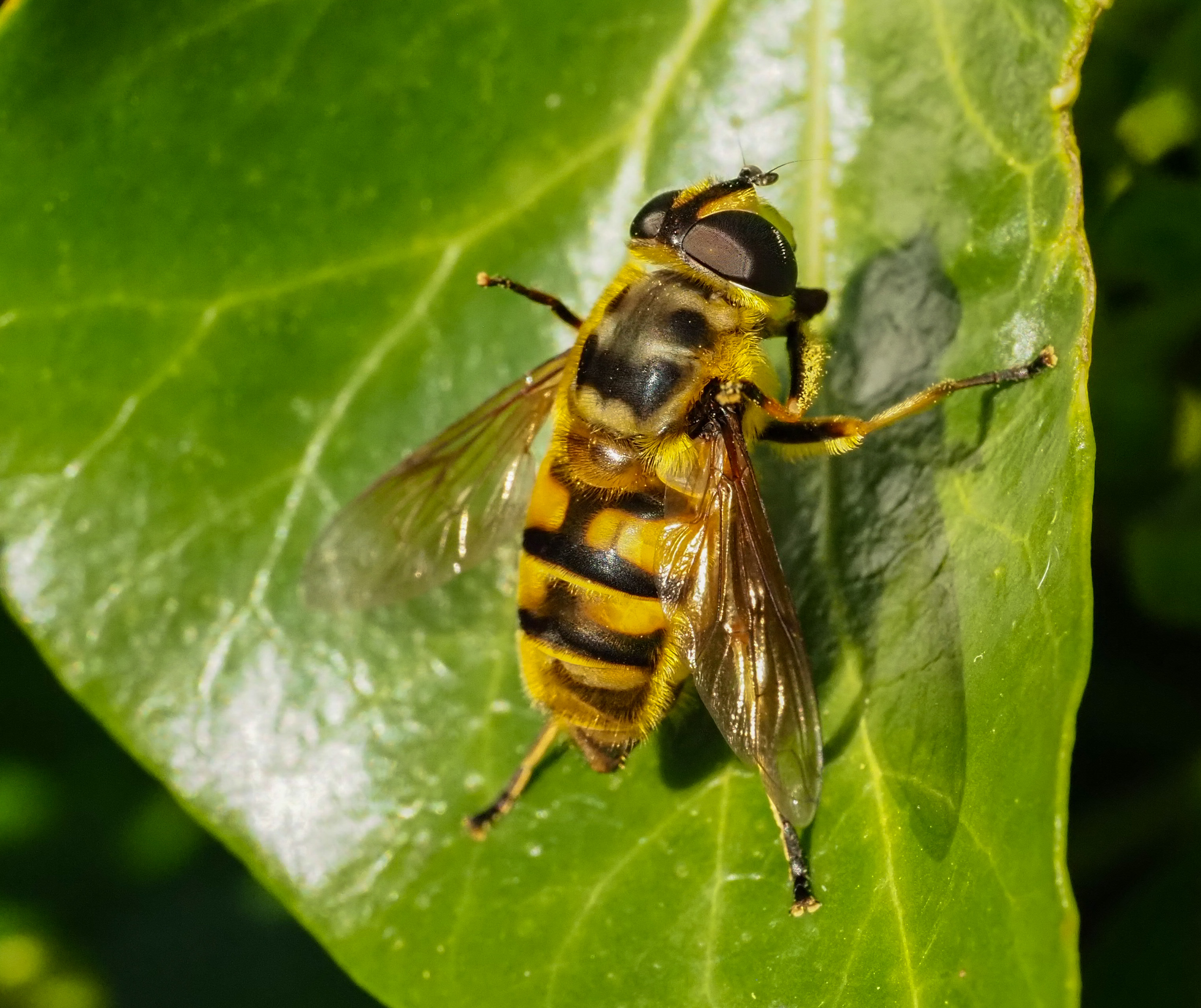
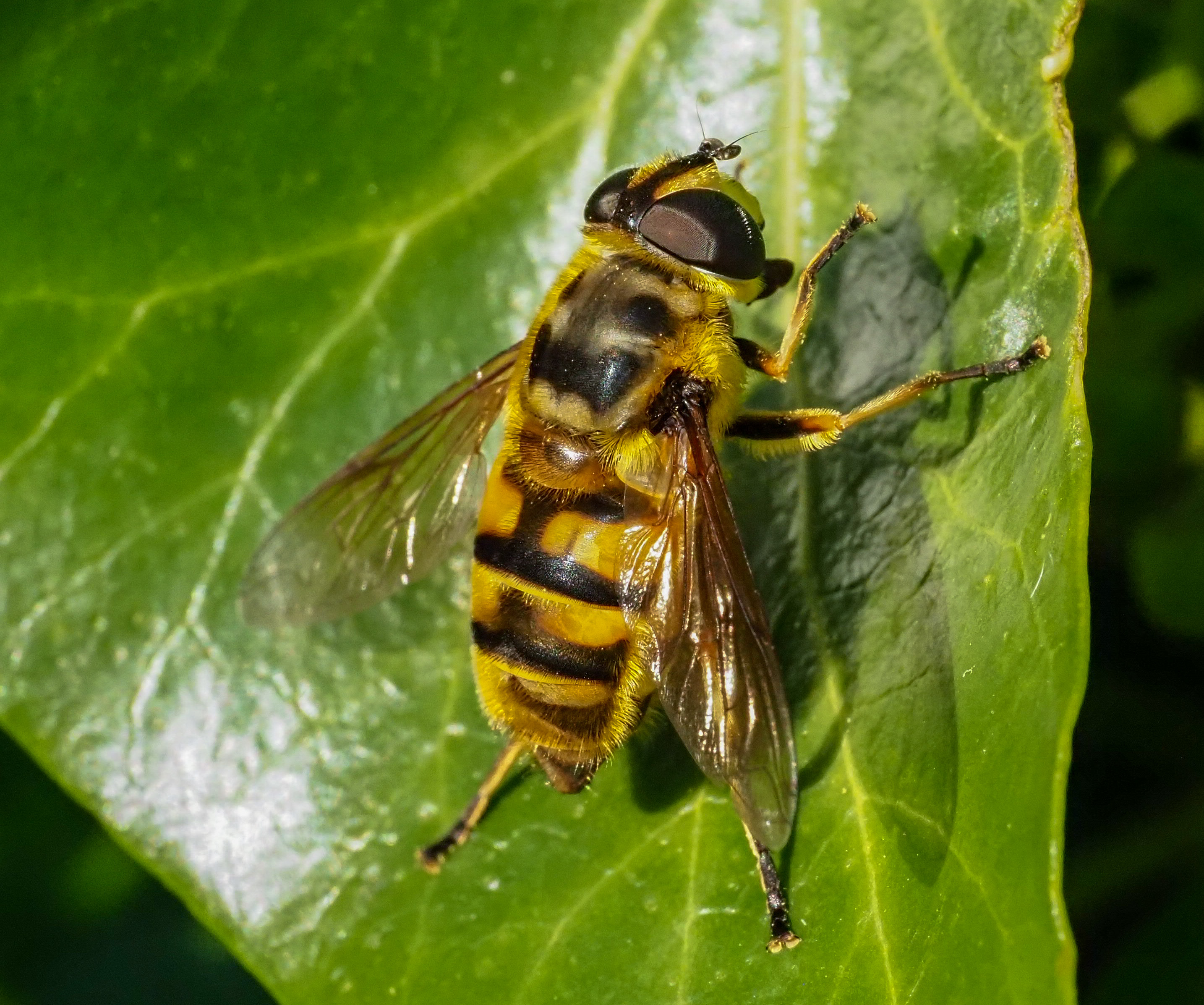
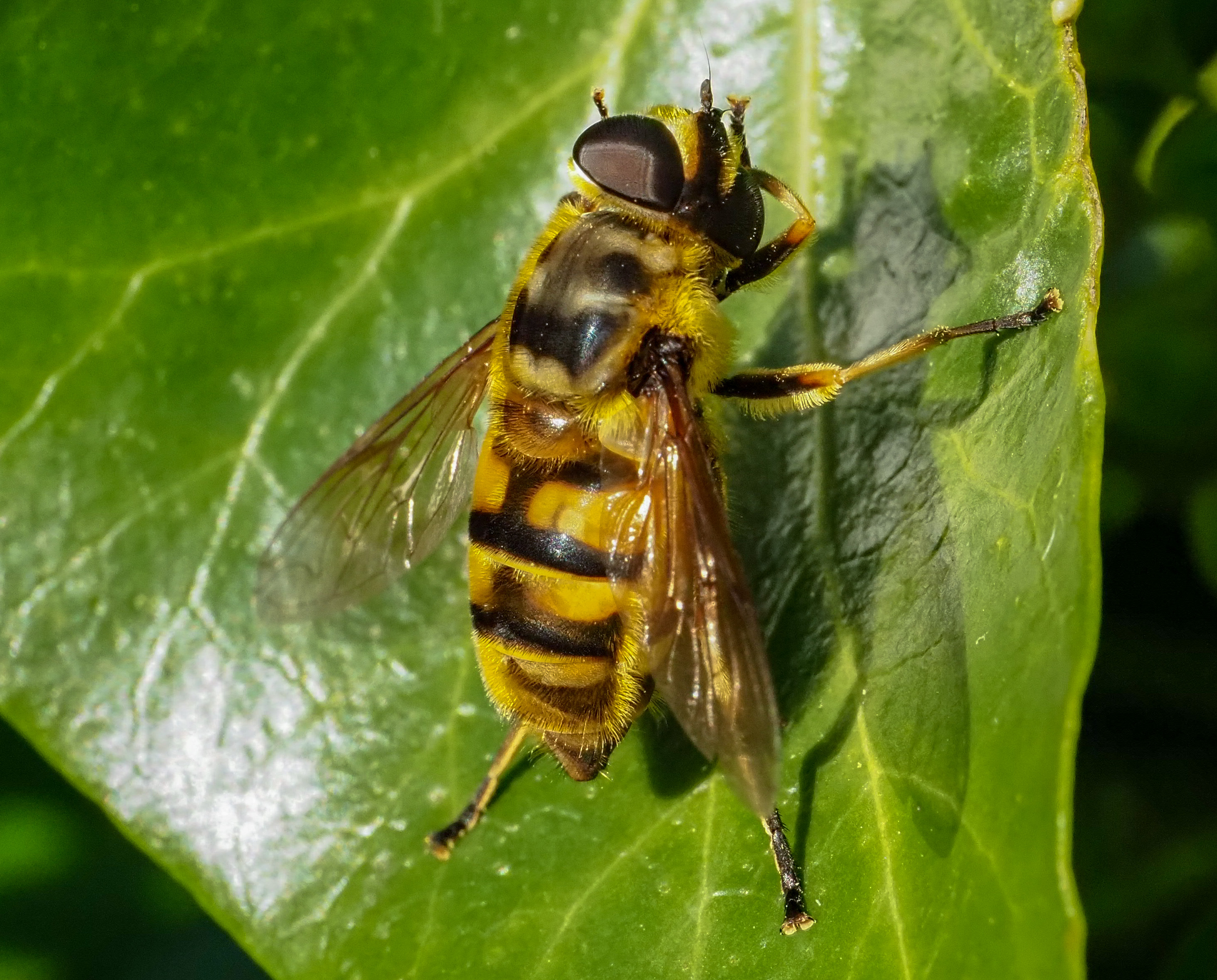
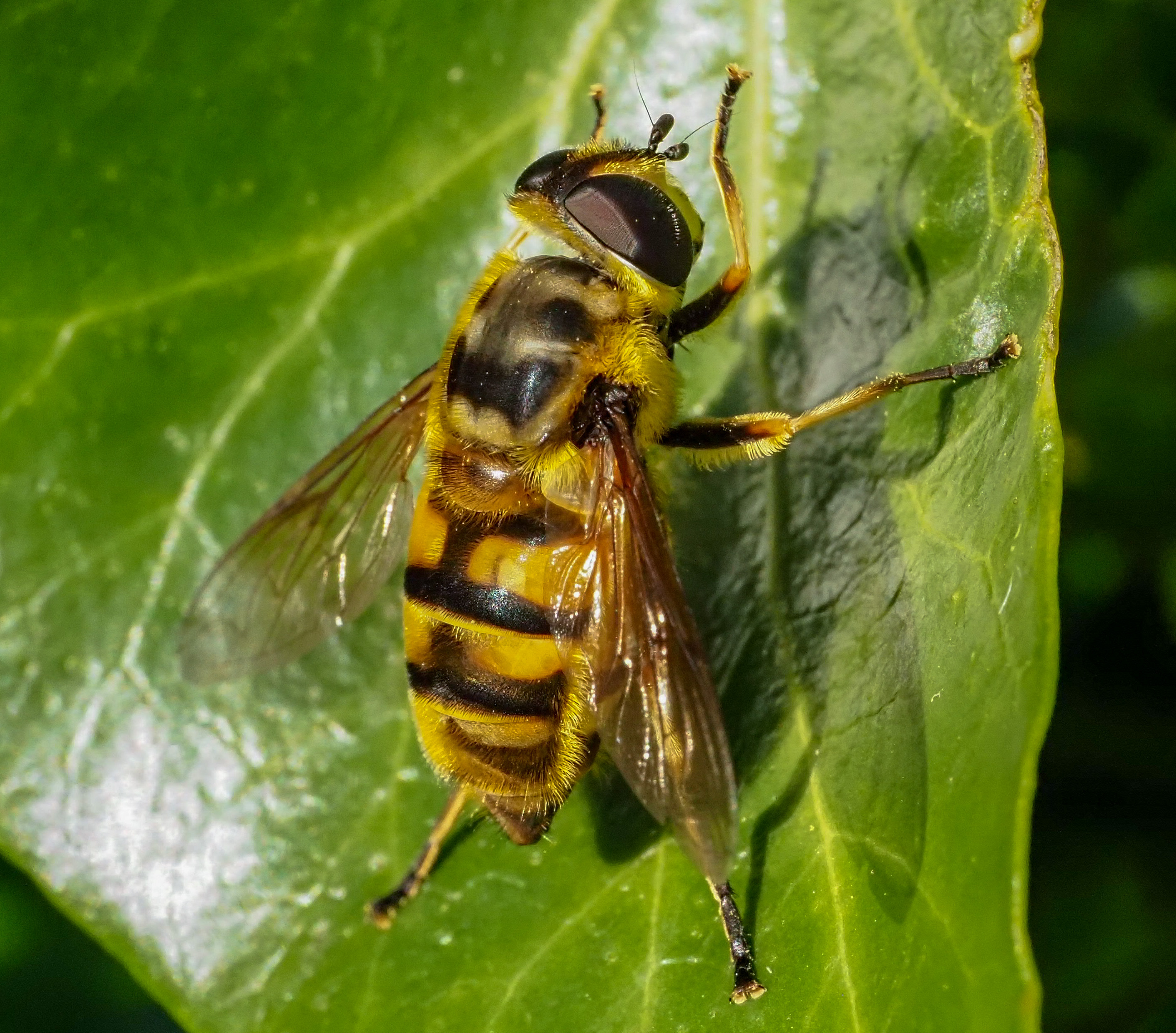
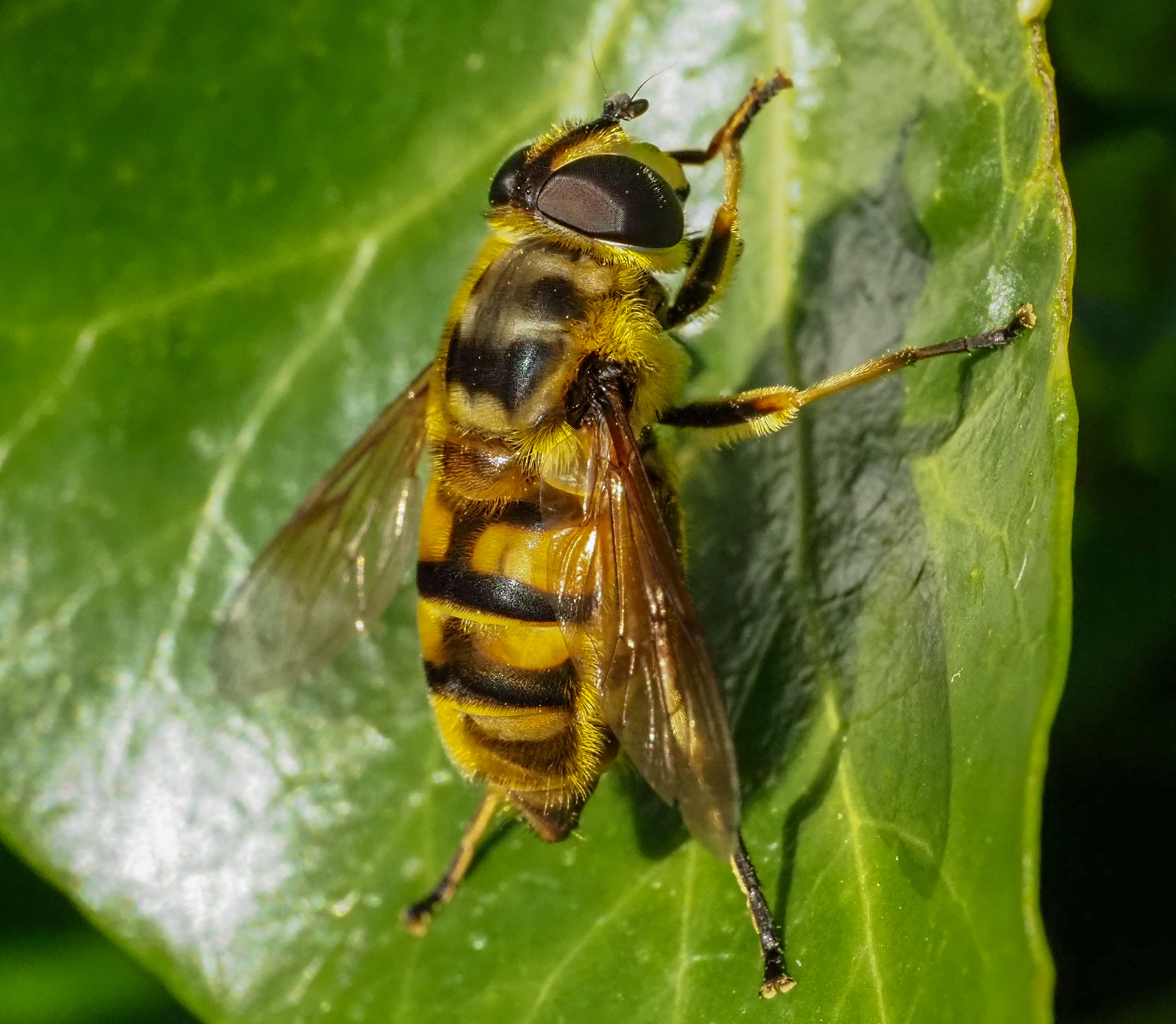
Next, the hoverfly cleans its wings using its hindlegs. Once again, the ipsilateral hind-legs are used to clean its wings, i.e., right hind-leg for the right wing, etc. Notice how the fly is able to use both hind-legs at the same time in the final photo (bottom right, below). Only possible, because the insect has six legs, so it can stand on the front four and use the hind pair for wiping the wings!
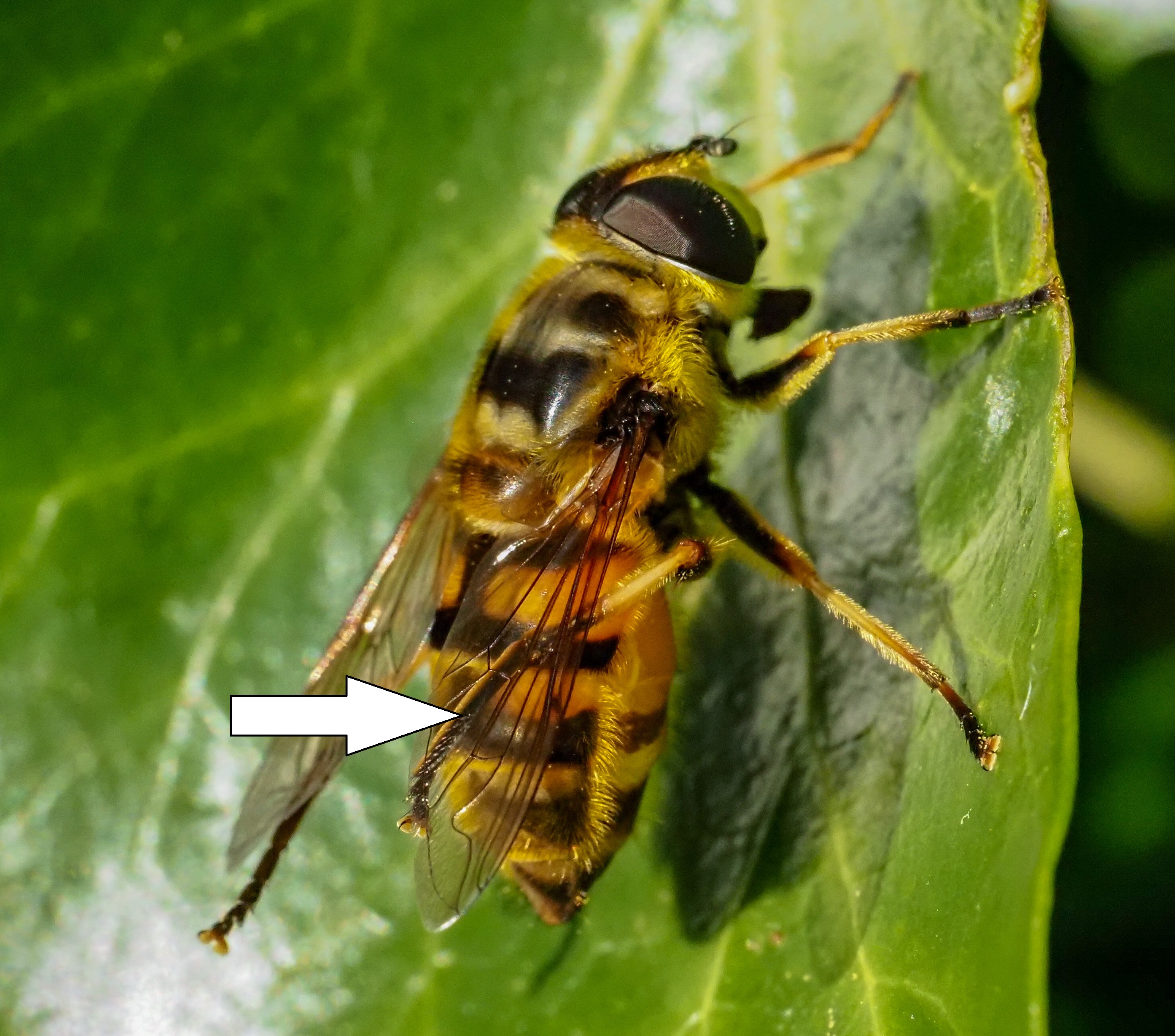
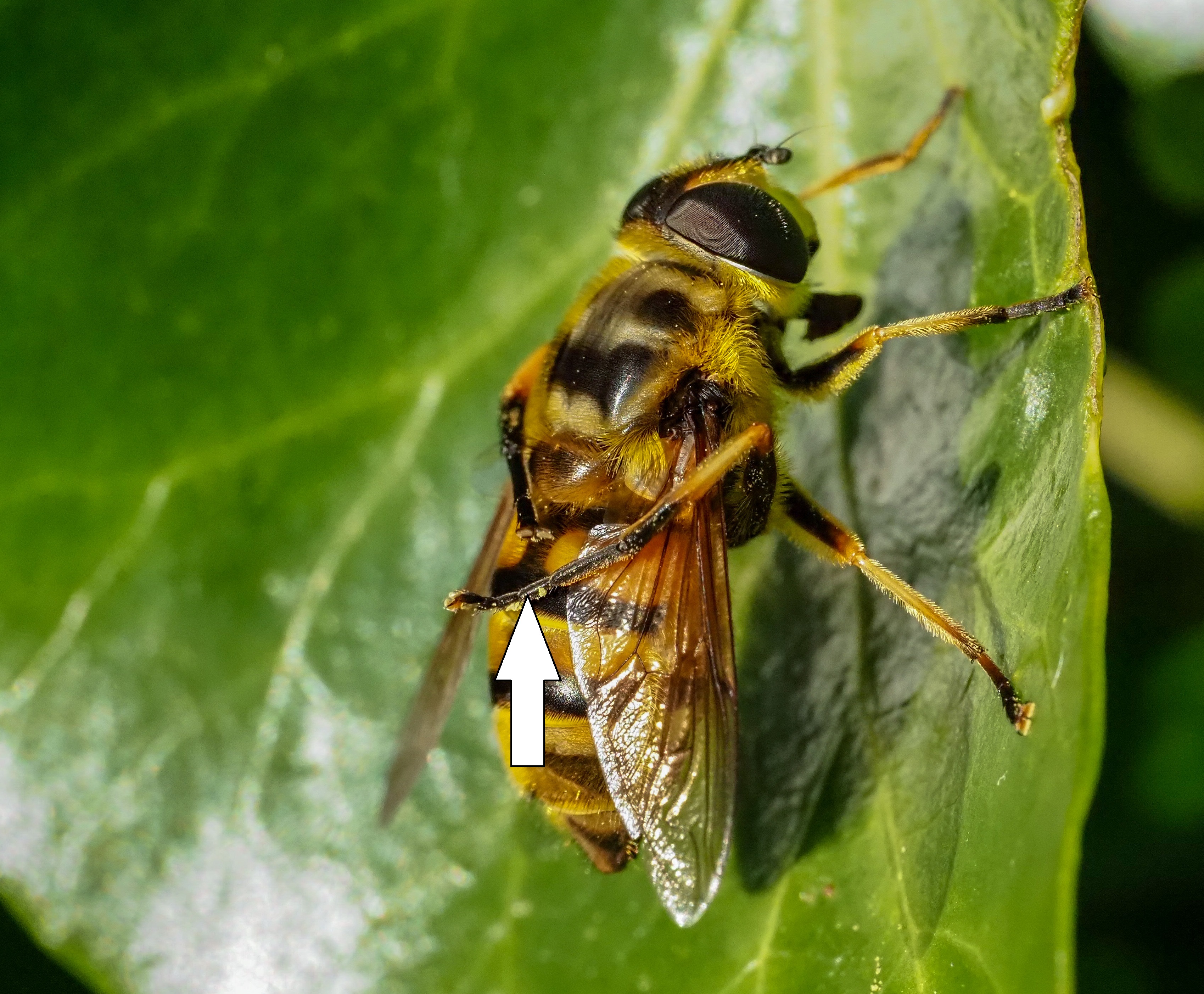
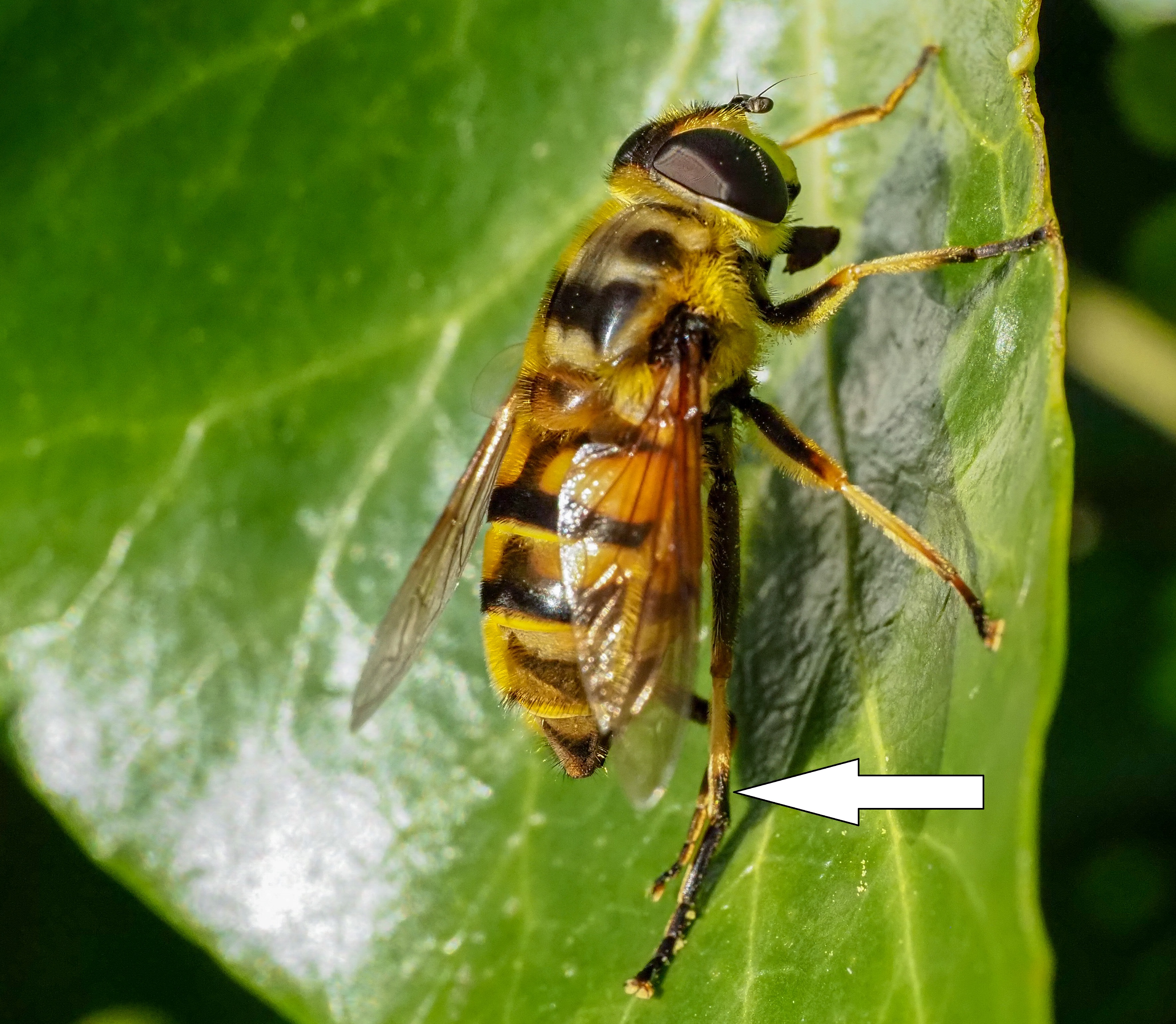
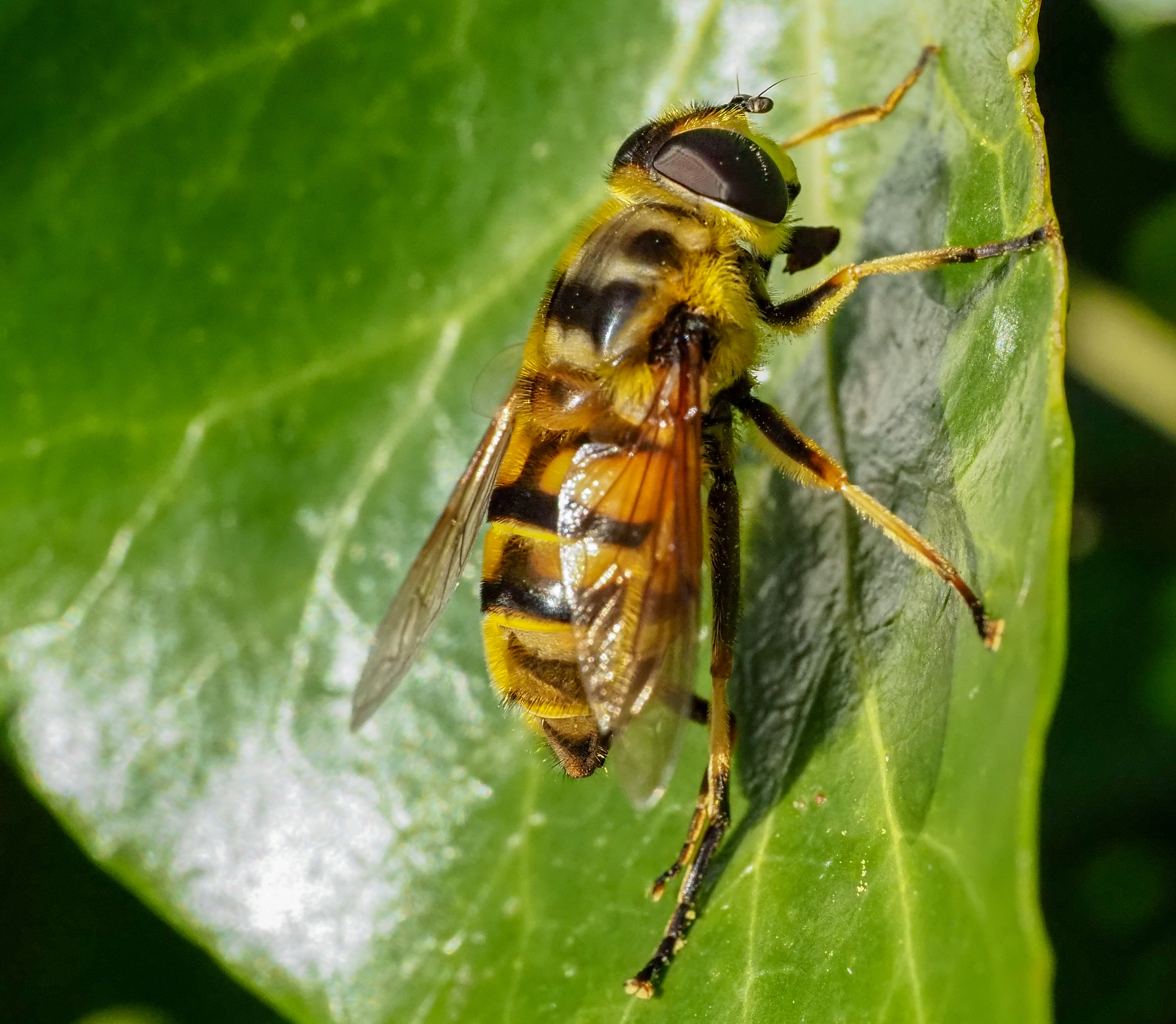
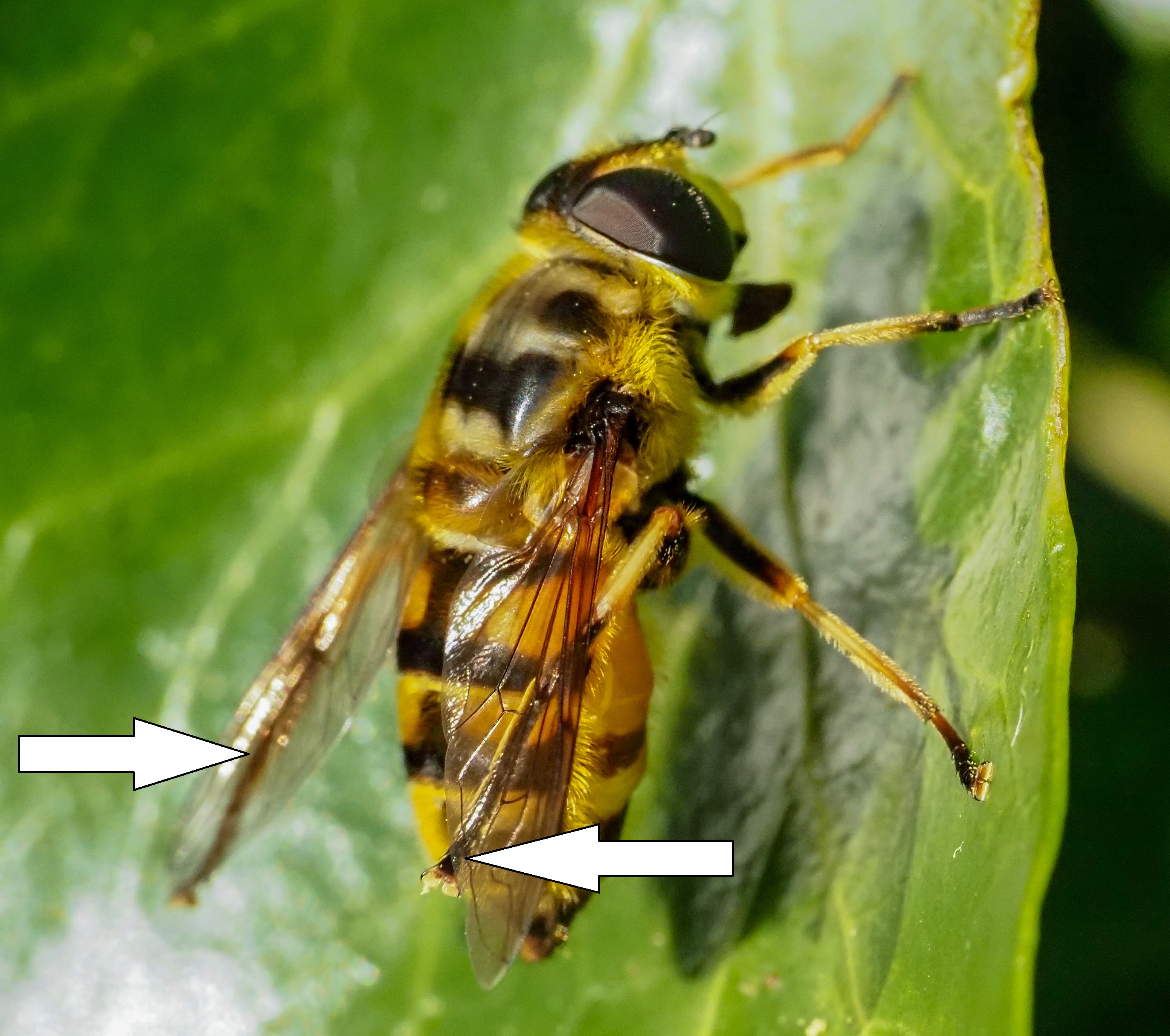
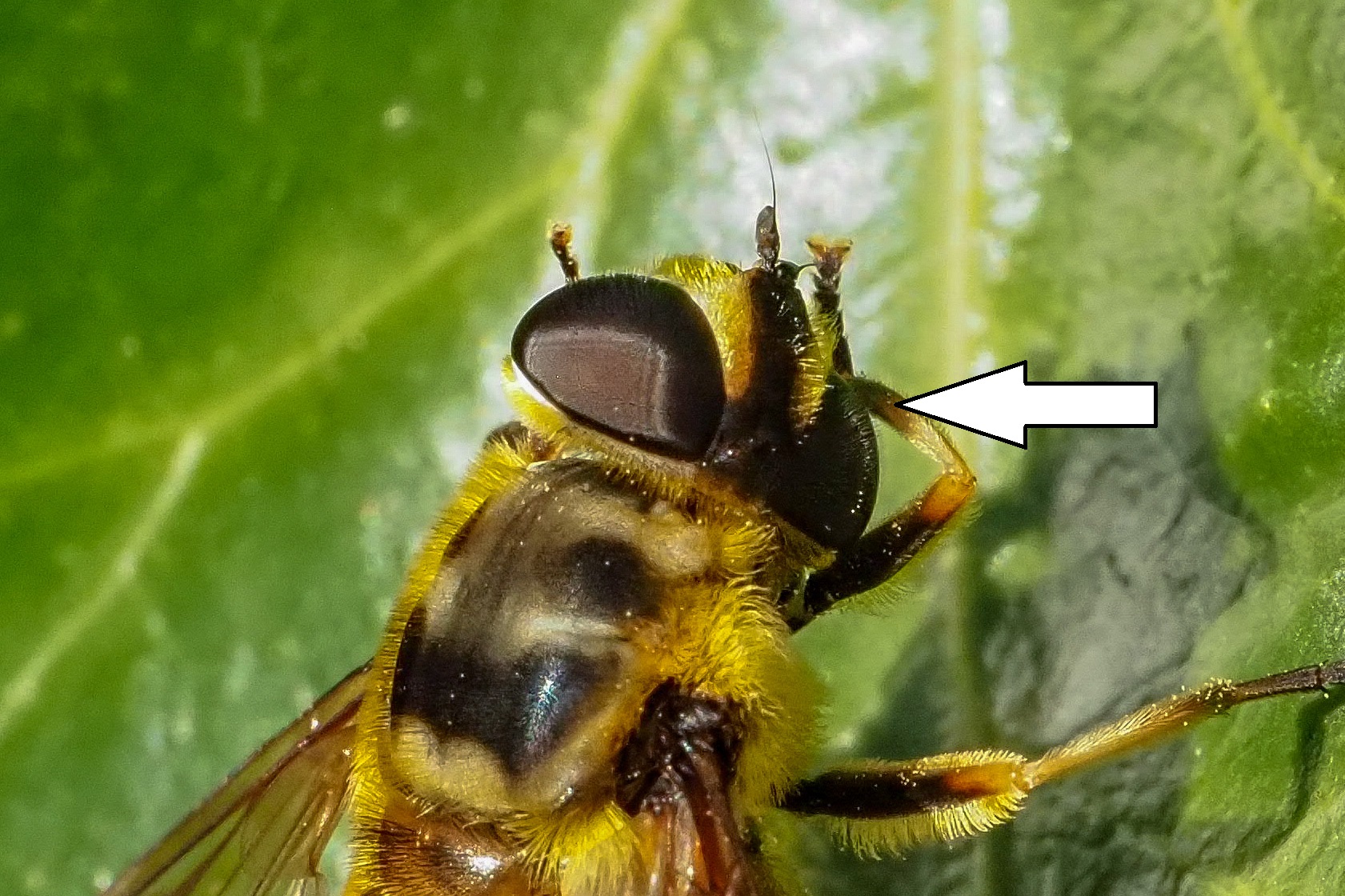
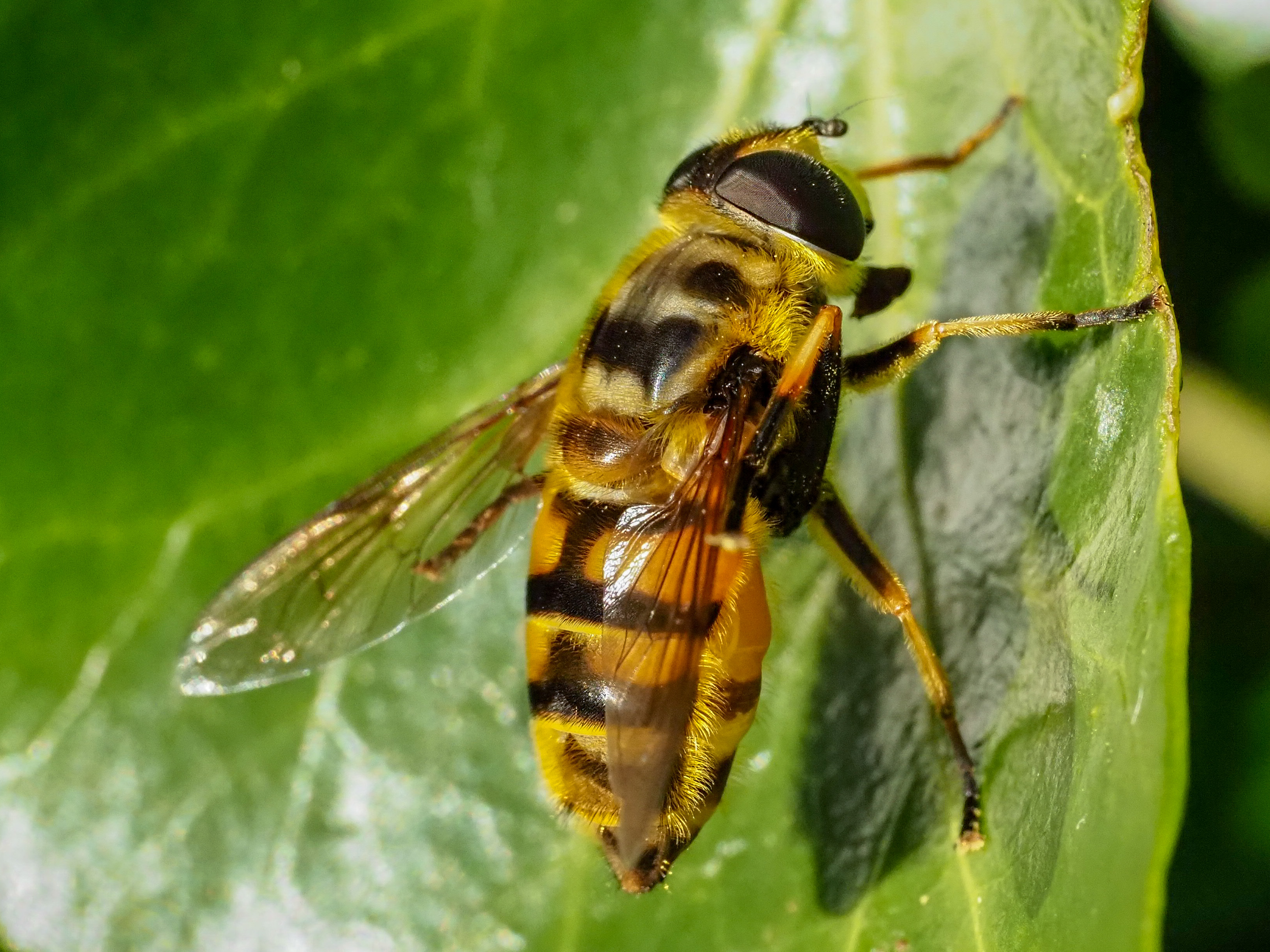
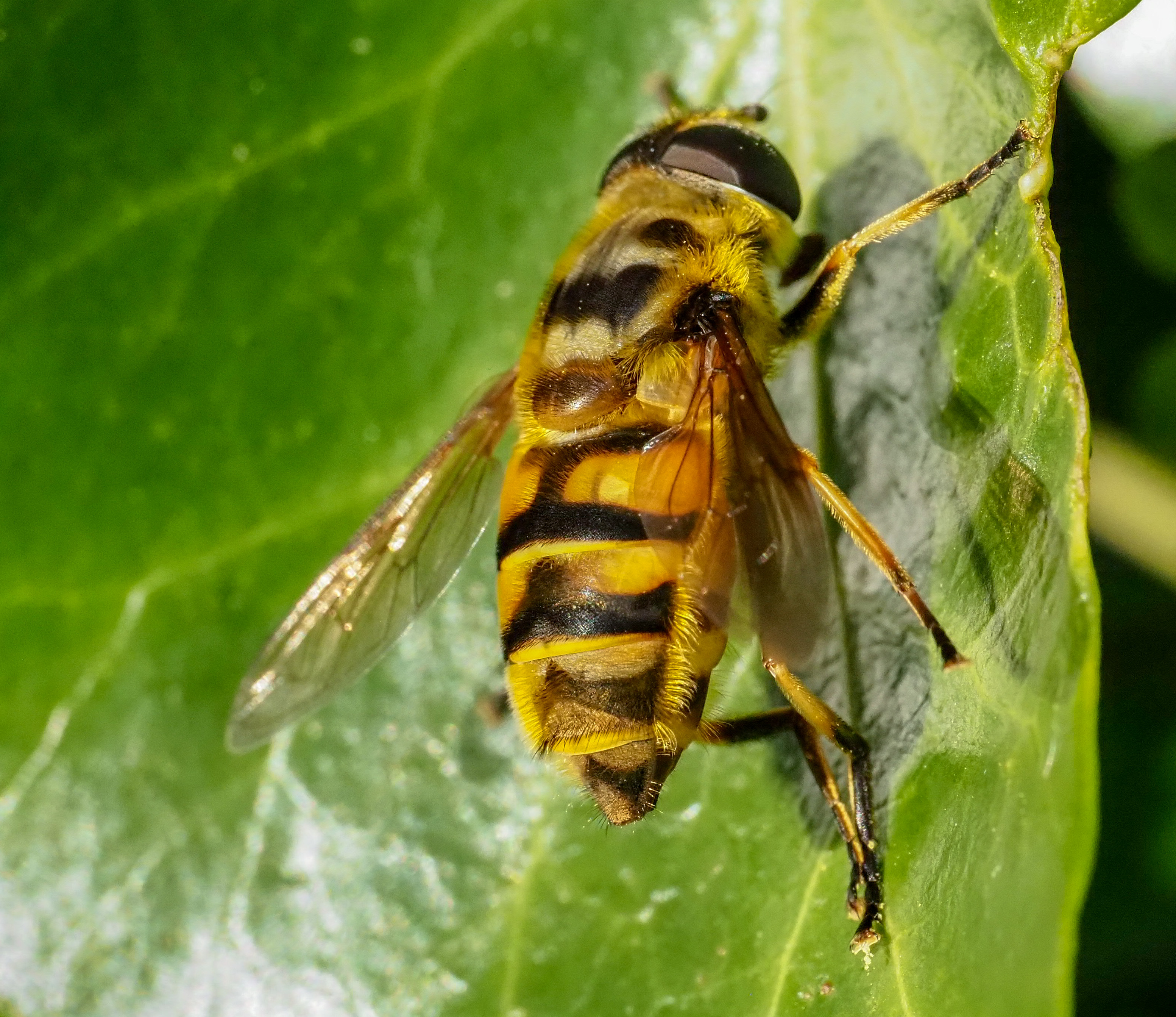
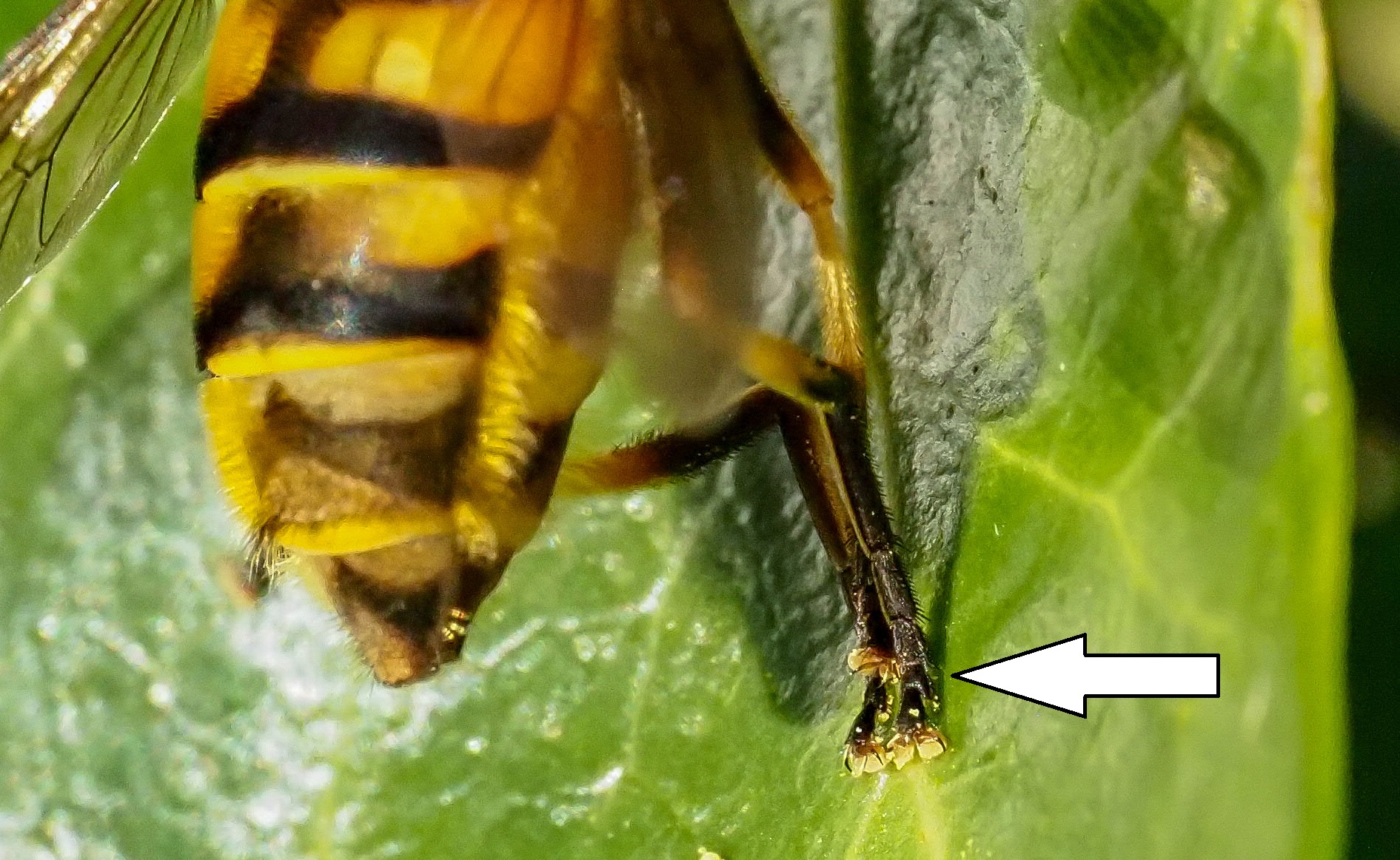
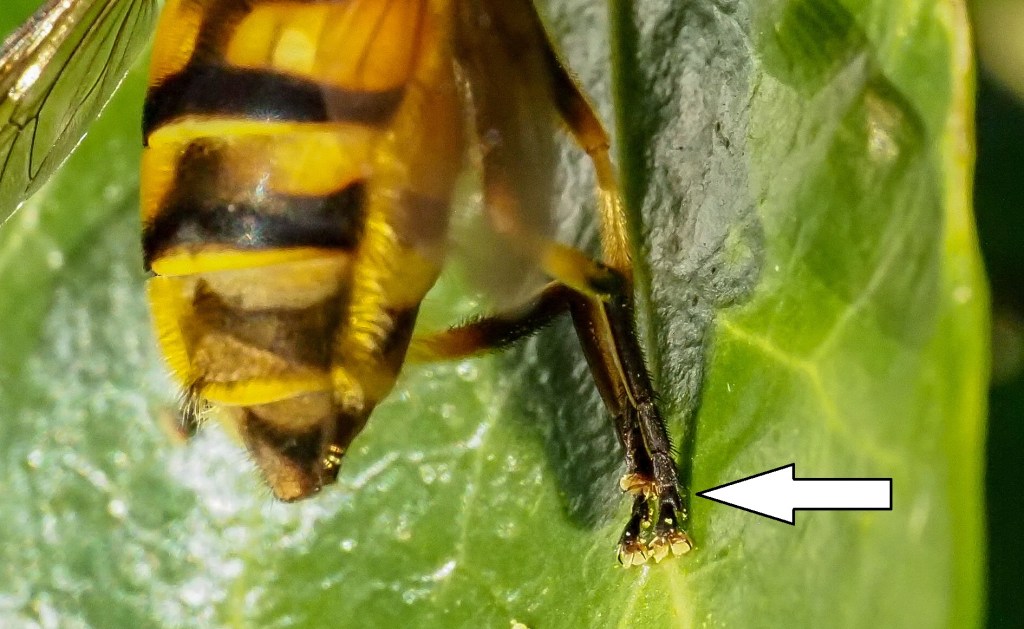
Finally, the hoverfly cleans its hind-legs, although this sequence (shown below) starts with its leg bent back over the top of the abdomen. At one point, both hind-tarsi and held neatly together, on the right-hand side, indicated by the arrow (below, top right).
Grooming prevents disease and preserves sensory function
Grooming has a number of different functions. These include: cleaning dust particles off sensory organs; smearing self-secreted cuticular lipids on the body; collecting attached pollen particles; removing ectoparasites or pathogens; and so on. Mainly, self-preservation mechanisms.
Most insects have special modifications, of one sort or another, usually located on the legs, to aid grooming. However, most use their mouthparts to groom their antennae. For example, the relatively primitive zorapterans (below) use their forelegs to pull their bead-like antenna down towards their mouth and to hold it in place while it is groomed. This basic behaviour is present in many other species, from wasps to butterflies.
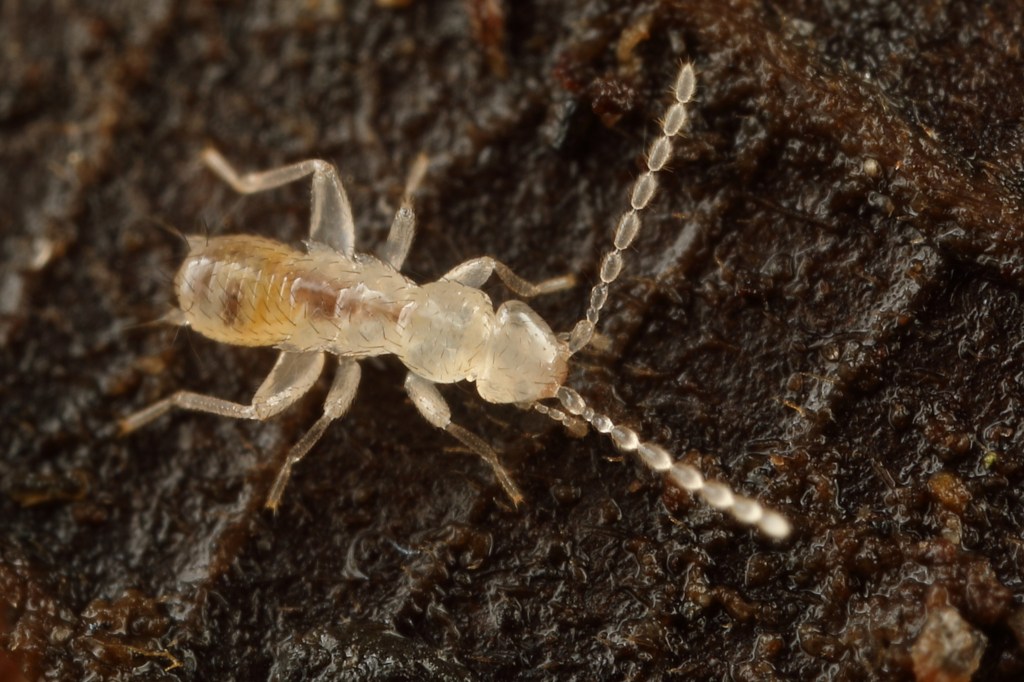
Ten separate acts of grooming – i.e. cleaning different parts of the body – were identified in a Zorapteran, Zorotypus hubbardi. Furthermore, these actions could be performed in 13 different ways! This versatility shows that whilst individual grooming elements are stereotyped, there is, nonetheless, a degree of flexibility, depending on the individual circumstances.
Grooming behaviour in flies
Flies are fastidious creatures and can often be seen rubbing their front legs together. They need to be hygienic because they often inhabit sites that are brimming with bugs; the microbial kind, that is. So, they regularly groom their bodies to remove dust, microbes, and other pathogens, which could inhibit sensory functions or challenge their immune systems.
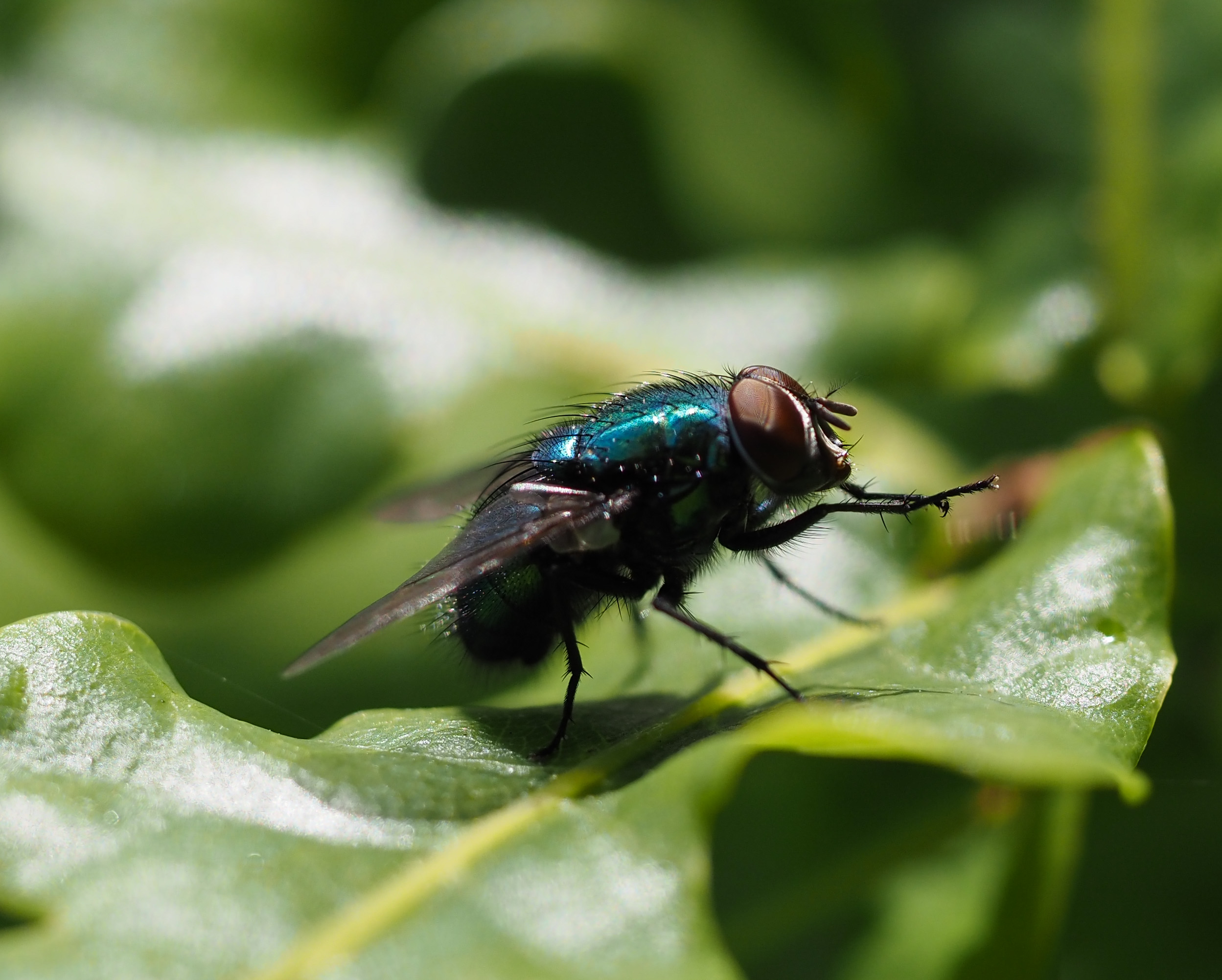
Flies generally groom themselves in distinct bouts; largely stereotypical patterns, such as repetitively rubbing their legs together or rubbing a specific region of their body. For example, flies scrape their forelegs down their antennae to brush off any debris. For some videos of flies grooming themselves, see here and here.
Zoologists Richard Dawkins and Marion Dawkins (1976) found that all grooming movements in the blowfly, Calliphora erythrocephala, involved rubbing some part of the body with, either a prothoracic leg (or legs), or a metathoracic leg (or legs). They recognised eight categories of grooming behaviour in blowflies, including: (1) front leg grooming; (2) tongue grooming; (3) head grooming; (4) middle leg groomed by front legs; (5) middle leg groomed by back legs; (6) back leg grooming; (7) abdomen grooming; and (8) wing grooming.
The grooming behaviour of the model insect, Drosophila melanogaster (below), has been intensively investigated. Grooming consists of discrete cleaning movements that occur in predictable sequences, from front-to-back. They use their front legs for grooming the antennae, head, and prothorax, and the hind legs for grooming the abdomen, thorax, and wings. Once again, the leg movements are stereotyped but with a certain degree of flexibility.
In a pioneering study, Szebenyi (1969) observed that preening movements in Drosophila were generally performed by the legs: either (i) sweeping movements over the body surface; or (ii) rubbing them together along the tarsal joints. More recent research has confirmed that the timing of head grooming in Drosophila is very precise: the forelegs move in synchrony, and the period of these cycles varies little among individuals (Ringo, 2020).
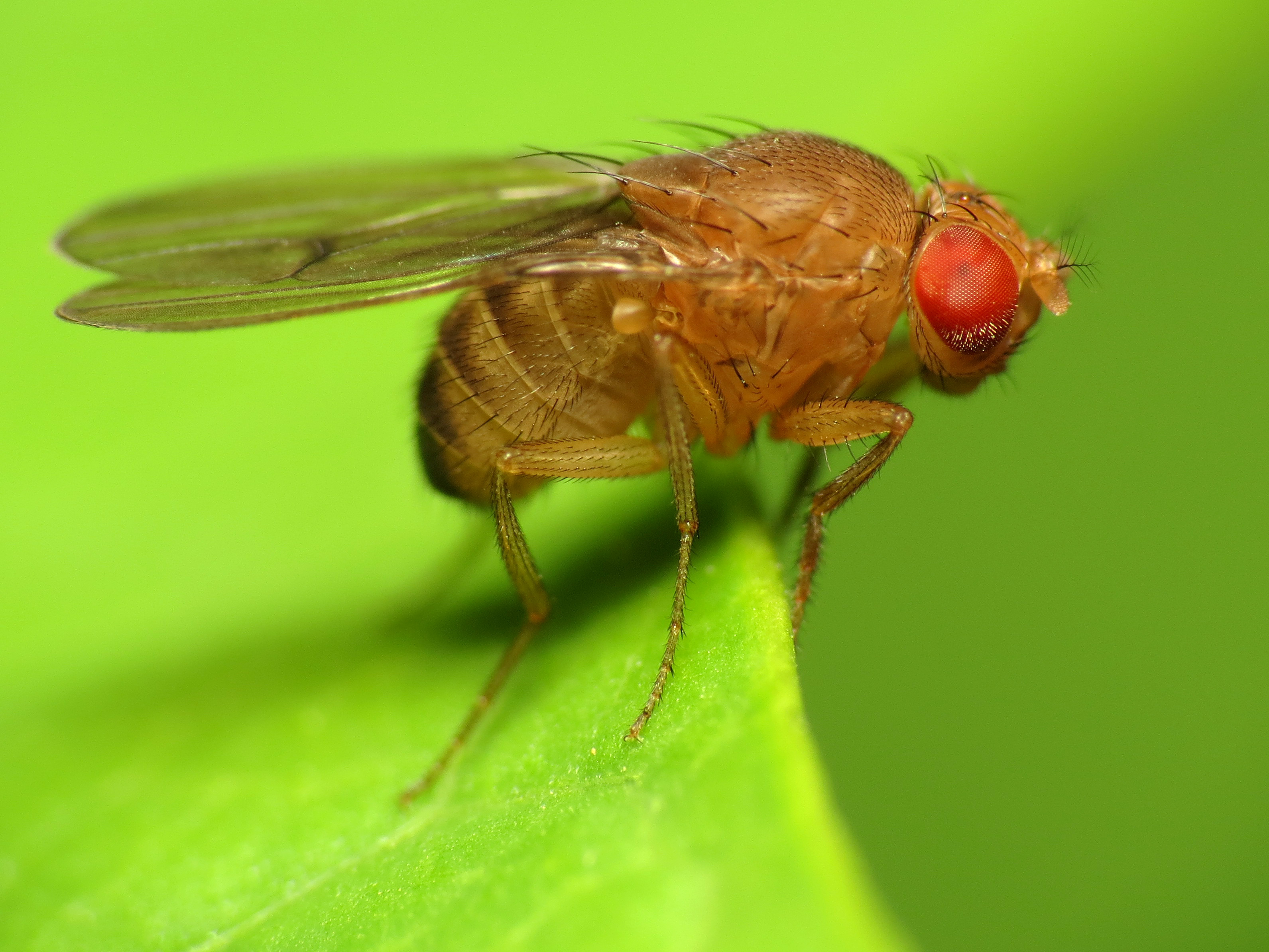
Flies clean their heads with bilateral symmetric movements of the front legs: called ‘head sweeps‘ (Guo et al., 2022). After sweeping the head several times, the fly then rubs its front legs together to remove the accumulated dust.
Video of grooming behaviour in Drosophila can be seen here.
Grooming behaviour in wasps
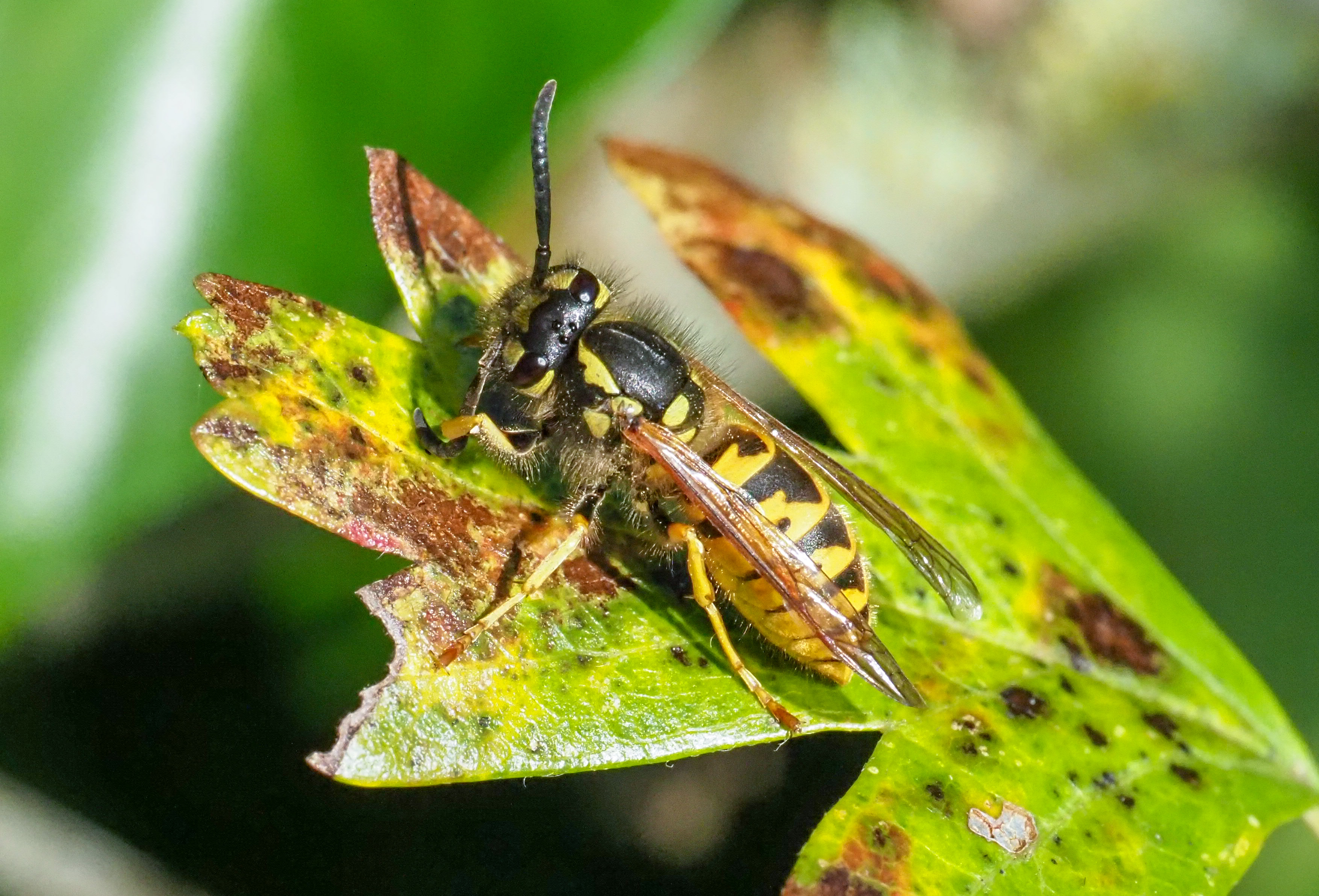
Hymenoptera typically clean their fore-legs one at a time using their mouthparts. Most higher Hymenoptera, as a rule, scrape the fore-leg between the ipsilateral maxilla (on the same side) and the labium (see below)
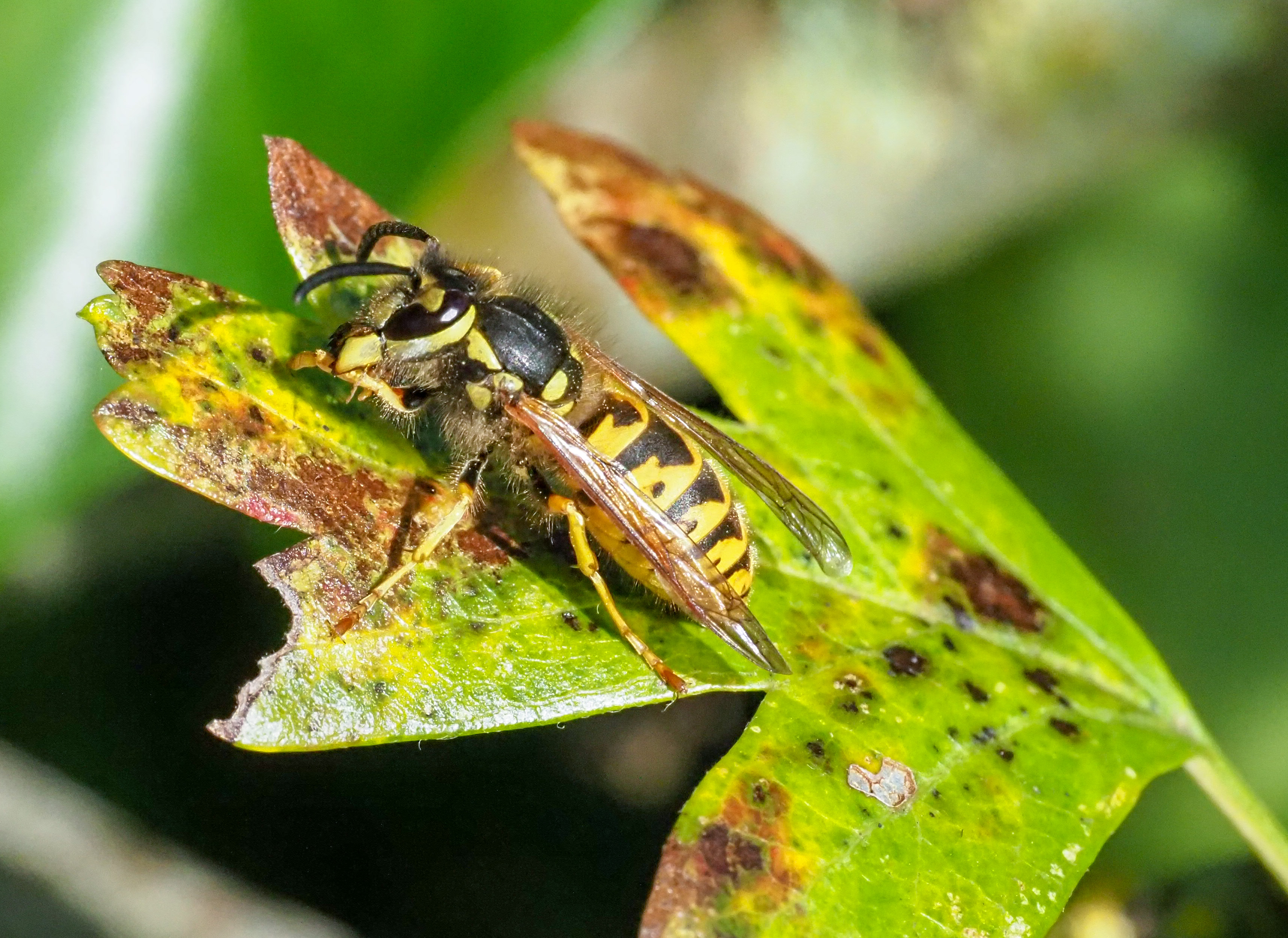
As in other insects, grooming behaviours occur in two clusters in Hymenoptera (Basibuyuk and Quicke ,1999). The anterior cluster involves grooming of the antenna, head, mesosoma, fore- and middle legs, all largely using the fore-legs; and the posterior cluster, which involves grooming of the wings, metasoma, mid- and hind-legs, mainly carried out by the hind legs.
Hymenoptera have modified leg spines for cleaning their antennae and typically pass it through a cleft formed by the apical tibial spur and the basitarsus of the foreleg. They subsequently clean the tibio-tarsal antenna cleaner with their mouthparts.
During antennal grooming, the antenna is bent downwards and clasped by the antenna cleaner (or strigil) at its proximal end, and the fore-leg is then run along the antenna from base to tip. Specialised setae scrape dirt towards the apex of the antenna (Basibuyuk & Quicke, 1994)
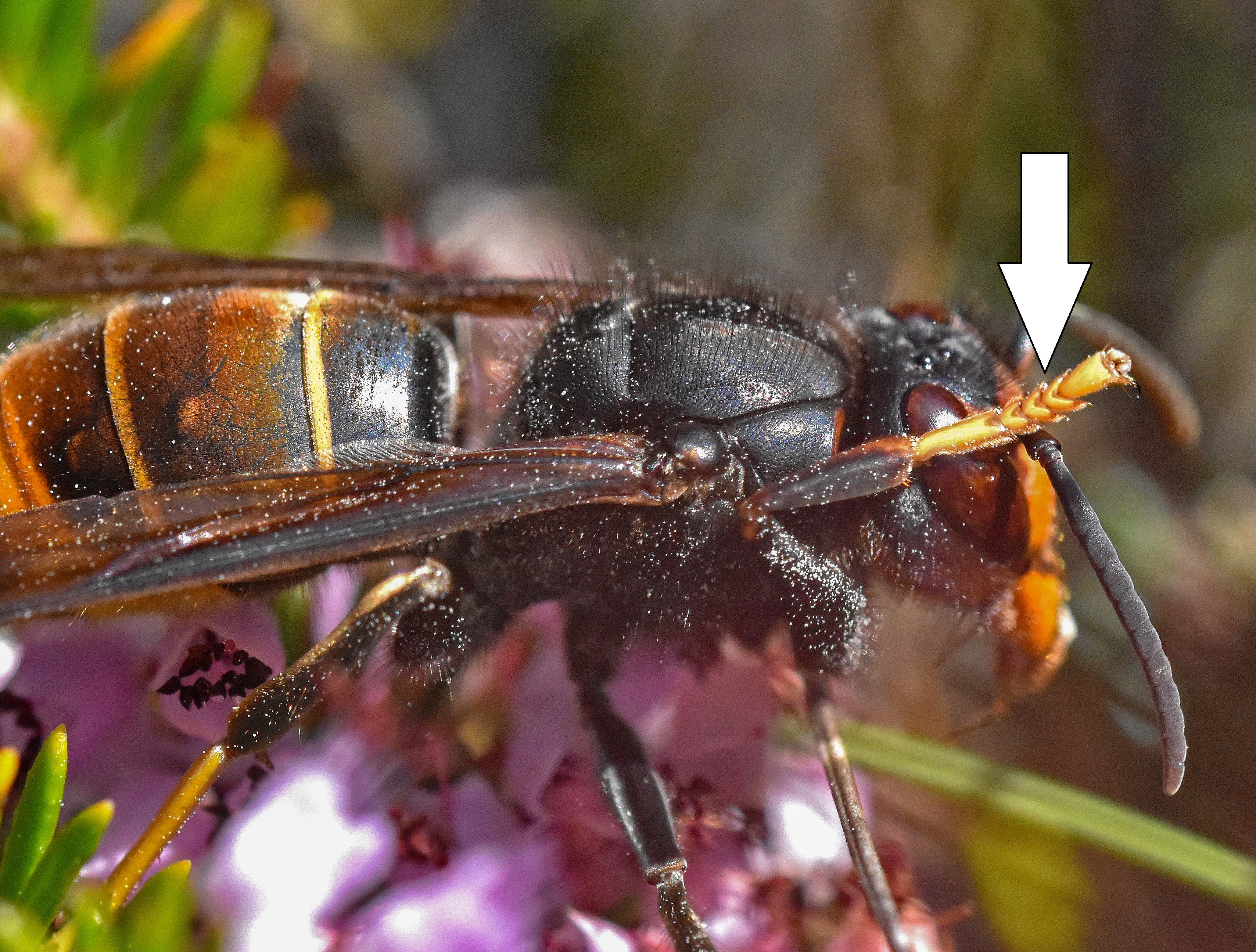
To reiterate, fore-leg cleaning is typically performed using the mouthparts in wasps. I managed to capture some images of an Asian hornet (Vespa velutina), grooming itself in this way after feeding on Heather in Galicia, Spain. Notice how it passes its foreleg through its mandibles (below, right-hand image).
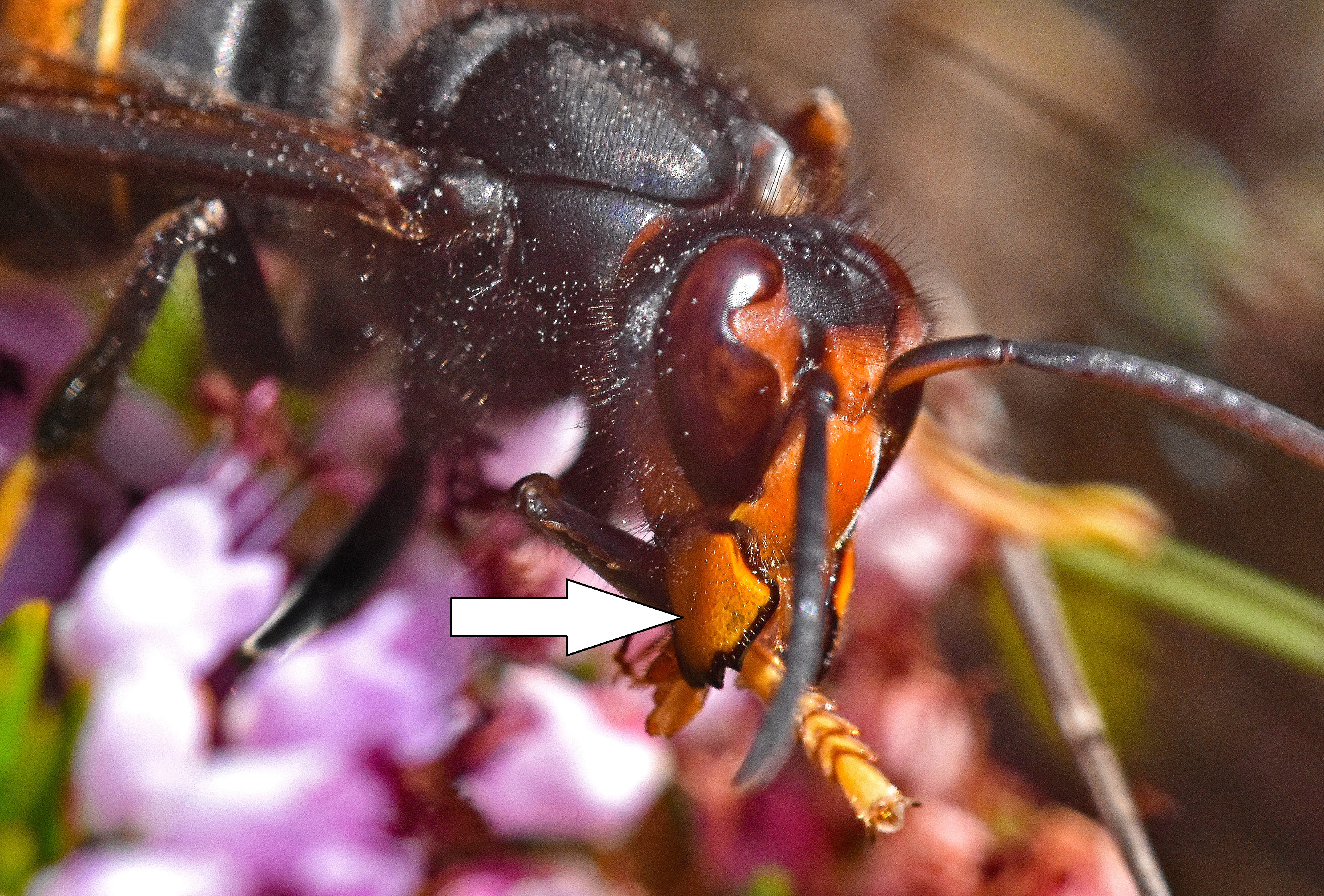
Photos by Raymond JC Cannon
Fore-tibial cleaning in Odonata
The tibia on the front legs of both sexes of the damselfly, Ischnura elegans (Odonata, Coenagrionidae), has modified setae in the form of flag-shaped structures (Piersanti et al., 2024). These concave lamina are tibial grooming devices that accumulate particles in the course of grooming the eyes and antennae (see below).
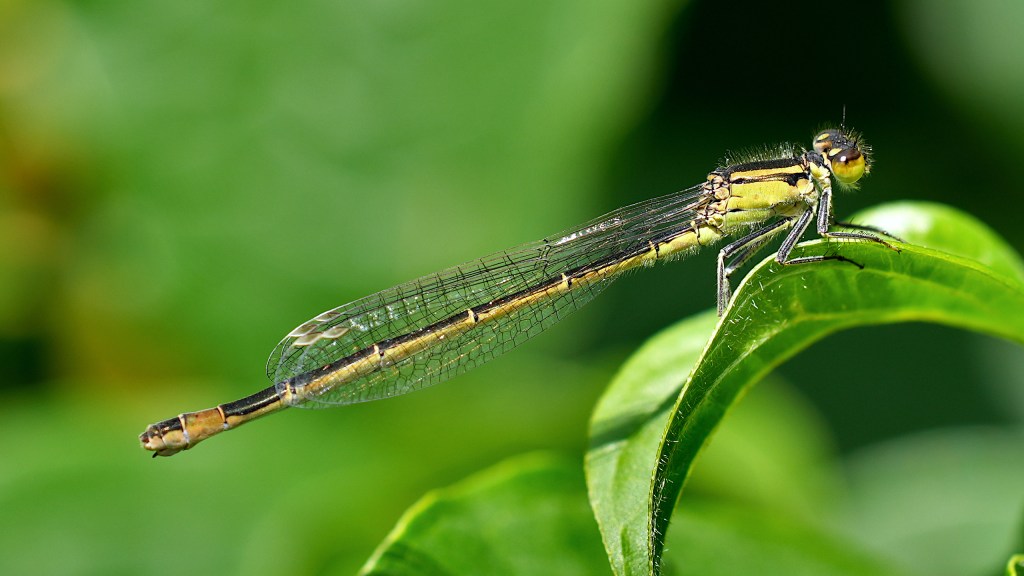
Photo by u278 Flickr CC BY-NC-ND 2.0
Damselflies groom their eyes or antennae, using one or both forelegs. After scraping dirt particles off the eyes and antennae, the insect passes the tibial grooming structures through mouthparts (Piersanti et al., 2024).
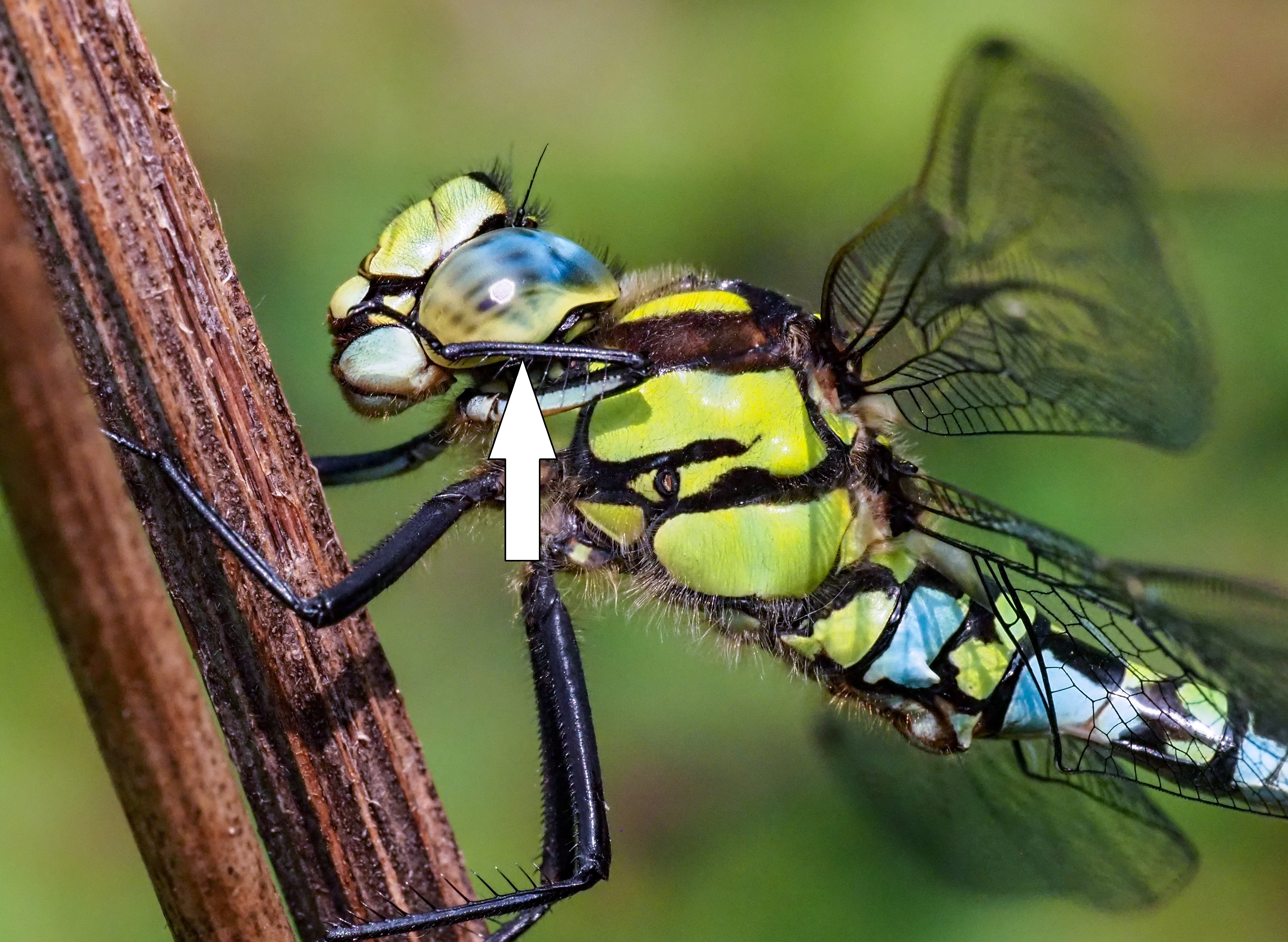
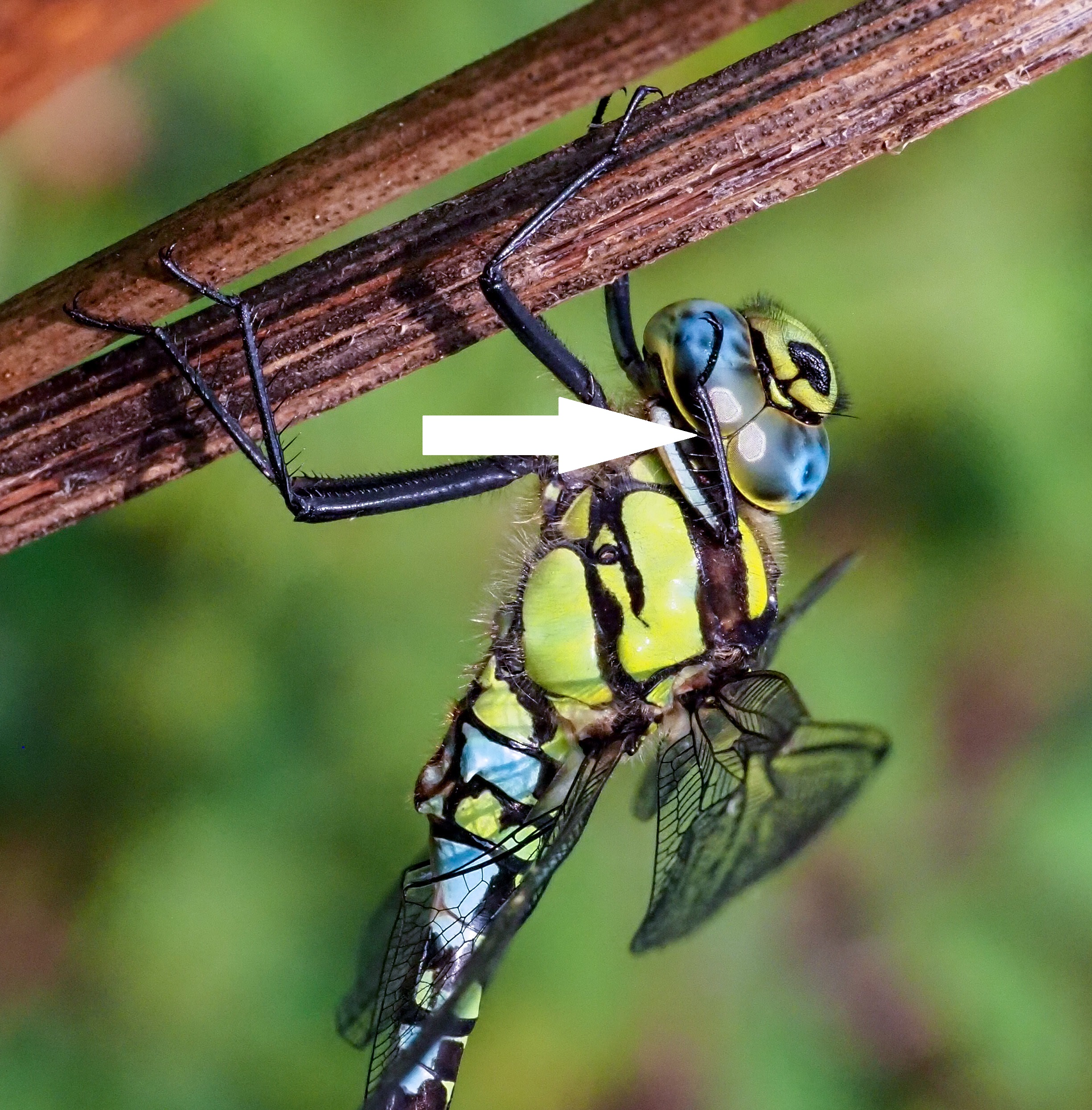
Dragonflies also use their fore-legs to keep their amazing eyes clean and dust-free (see below).
Grooming behaviour in bees
Grooming in honeybees involves a combination of biting and licking behaviours, using the mouthparts, as well as brushing movements, using the first two pairs of legs. There is also a special structure on the fore-leg in honeybees, called a strigilis. This antenna cleaner is present on each fore-leg and is composed of: i) a deep notch of fine hairs on the inner (ventral) surface of the proximal end of the basitarsus; and ii) a large, moveable spur, which is inserted at the inner angle of the distal end of the tibia (Schönitzer and Renner, 1984). See here.
See honeybee cleaning its antenna here.
Most bees groom the top of their thorax – which is often covered in pollen grains (see below) – by scraping it in a forward direction, using the middle legs. There are however, a few exceptions: some cuckoo bees in the genus Triepeoliis (Apidae), use a hind-leg instead, and digger bees in the subfamily Anthophorinae, use their fore-legs (Jander, 1976).
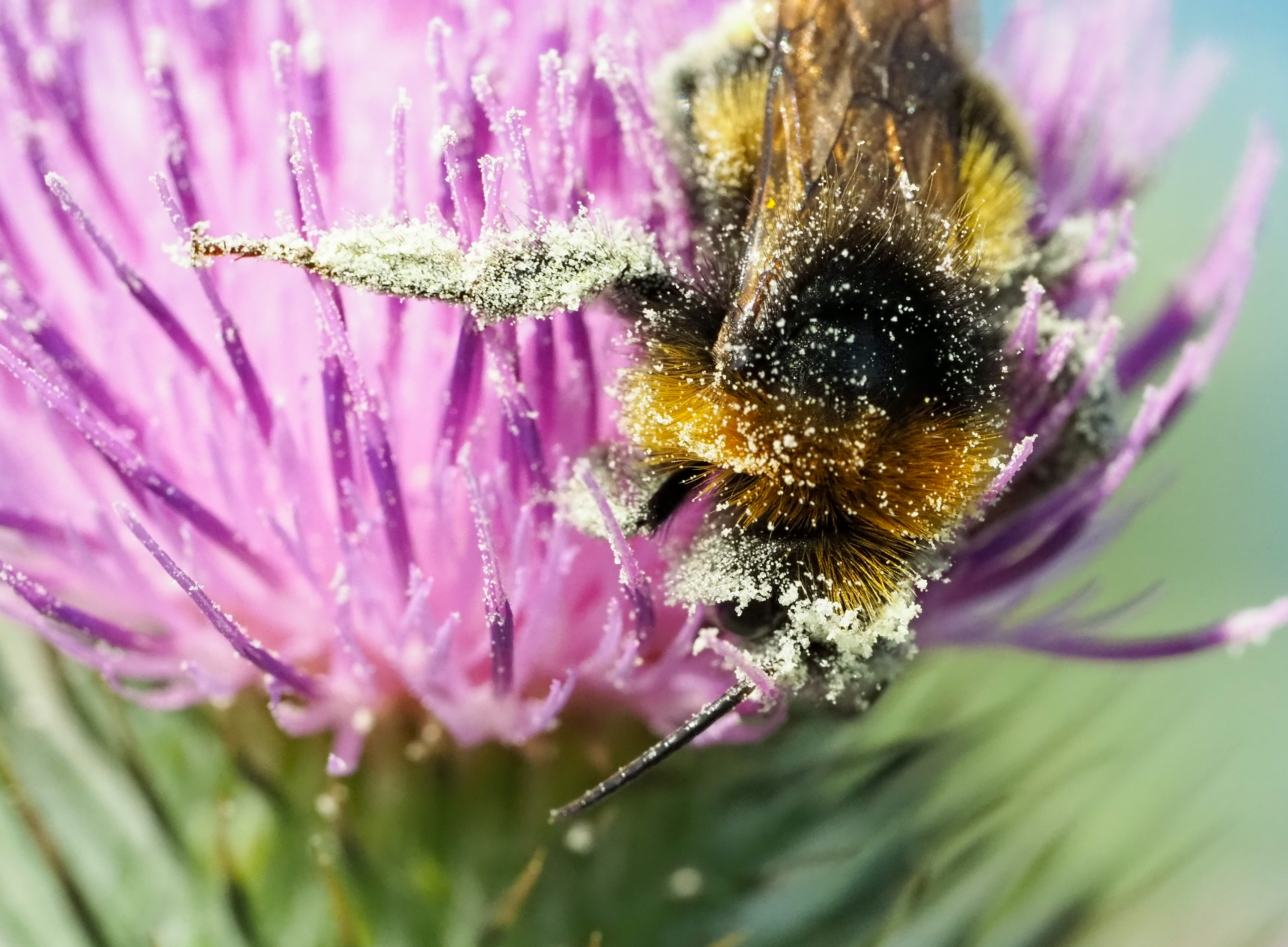
Honeybees clean their mouthparts by moving their fore-leg tarsi backwards and forwards to brush the proboscis, thereby sweeping any contaminants from the surfaces of the labial palpi, galeae, and bushy-haired tongue (glossa) (Linghu et al., 2015). Other types of bees – in the genera Andrena, Ceratina, and Bombus – pull their forelegs through the inner mouthparts (proboscis) to collect pollen.
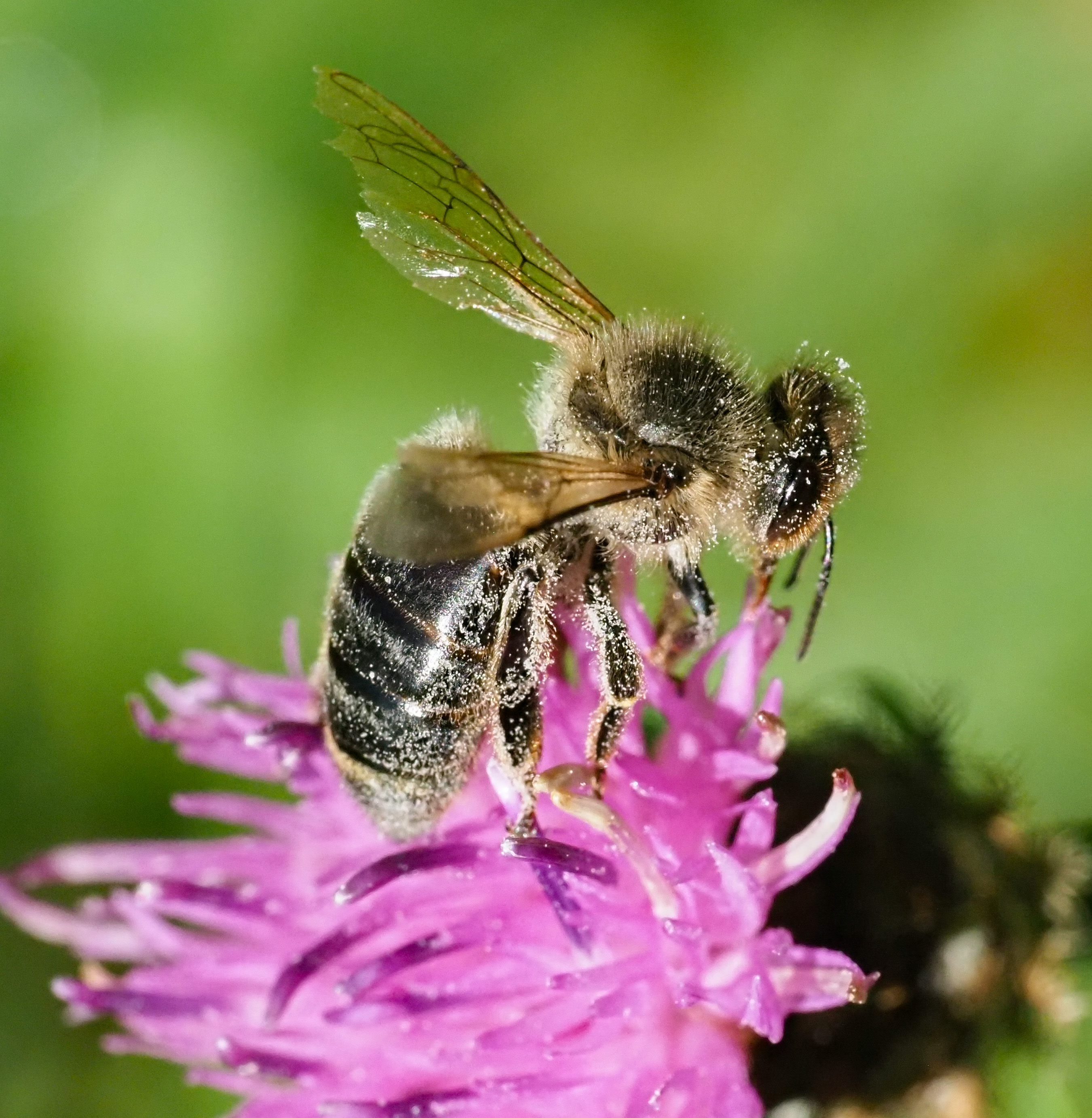
Photo by Raymond JC Canno
Worker honeybees can ask other members of the hive to groom them, via a so-called Grooming Invitation Dance. They stand on the honeycomb with their legs spread, rocking the whole body from side-to-side.
For more on grooming behaviour in honeybees see here.
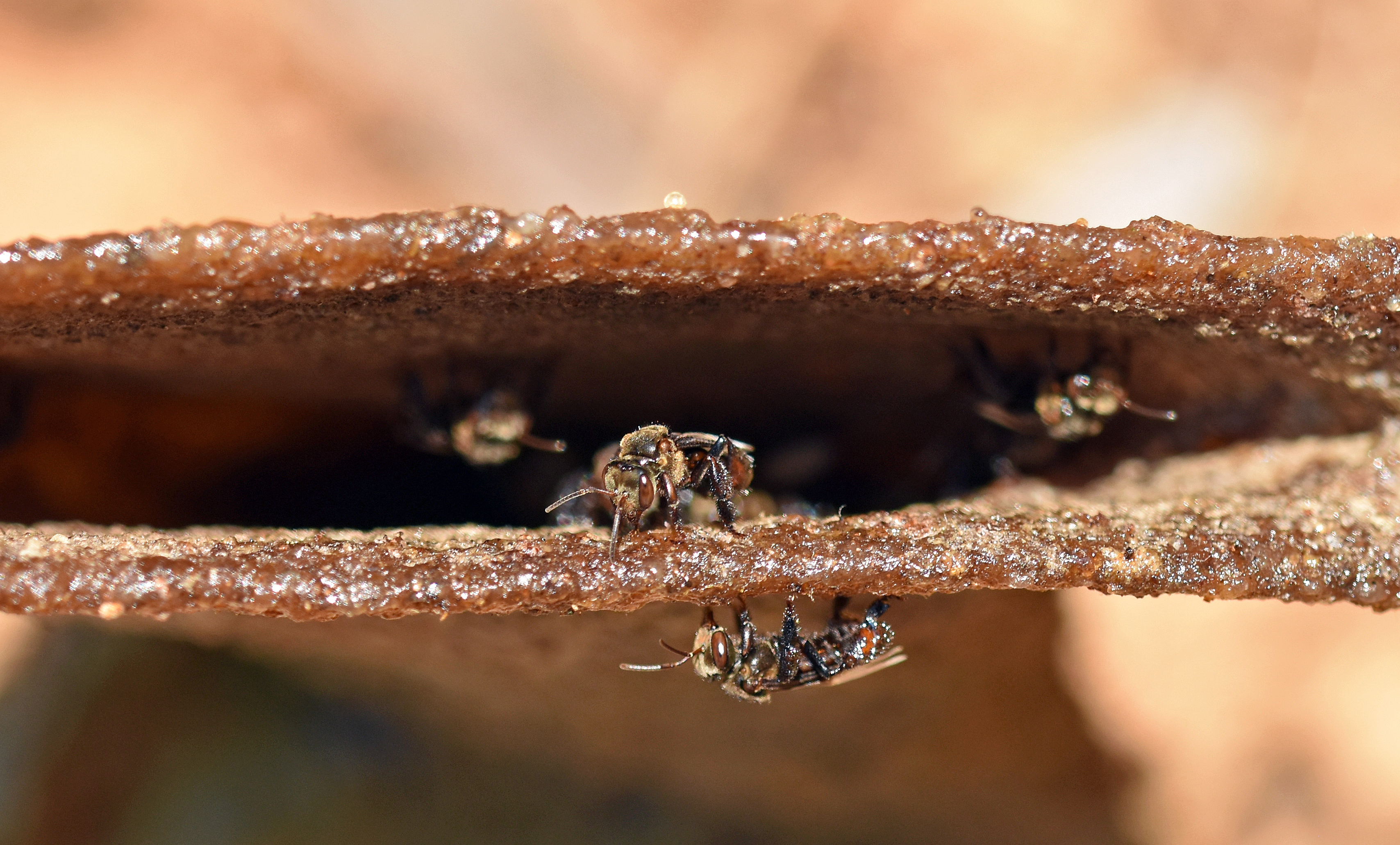
Apparently, Apis bees never clean their middle legs without cleaning their hind-legs first (de Souza Canevazzi & Noll, 2015). Stingless bees (below), on the other hand, may clean any leg independently of the other legs!
Evolution of grooming behaviour
As insects have evolved, there have been subtle transitions in the sequences or combinations of individual behavioural elements carried out whilst grooming. Of course, these changes have also occurred in combination with the evolution of morphological features. For example, euglossine bees (in the subtribe Euglossina) – which include the orchid bees – have behavioural characteristics which were probably present in an ancestral species, but which are now only present in this subtribe (what taxonomists call synapomorphies).
Orchid bees clean both their eyes and antennae at the same time, and they begin this movement on both sides simultaneously. However, other taxa in the subfamily Apinae – which includes bumblebees and honeybees – begin the grooming movement at the antenna (de Souza Canevazzi & Noll, 2015).
The frequency of cleaning actions and strokes that a bee performs per minute varies considerably from species to species and from individual to individual (Schönitzer, 1986). Most species of bees fall into one of two groups with respect to repetitive antenna cleaning: uniscrapers, which predominantly clean their antennae with one stroke, and biscrapers, which mostly use two.
Some bees (Xylocopini, Eucerini, and Euglossina) clean their antennae one at a time and rarely perform bilateral antenna grooming. Others (Bombina, Apina, and Meliponina), perform bilateral antenna cleaning more frequently than unilateral cleaning (de Souza Canevazzi & Noll, 2015).
The behavioural elements of certain grooming repertoires also appear to have become elaborated by evolution into ritualised courtship components in some species (Bastock & Manning, 1955)..
Grooming as a displacement activity
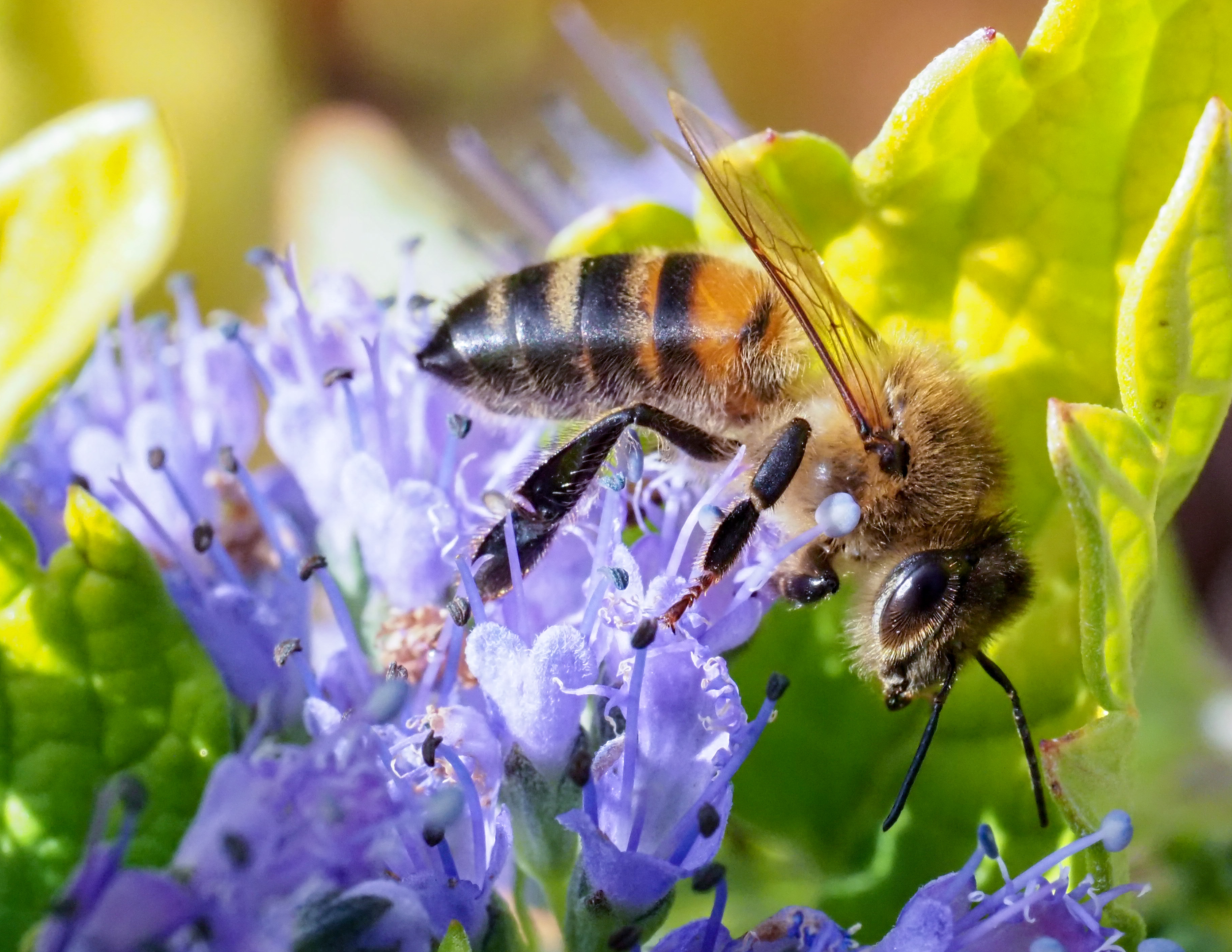
Cleaning or grooming behaviour can also be a sort of displacement activity in some situations: for example, as a prelude courtship in Drosophila melanogaster (Bastock & Manning, 1955). It often occurs when there is an interaction or conflict between two different motivational states or behavioural sequences and may be a way of reducing stress (Root-Bernstein, 2010). For example in honeybees, which often perform grooming behaviours when they return to the hive to inform their nestmates of a new nectar supply. Walking and grooming behaviours frequently occur between waggle dancing and exiting the hive to commence foraging again.
Summing up
The evolutionary divergences between different groups of insects are sometimes expressed as behavioural differences, including grooming repertoires, as well as the more obvious, morphological differences. Grooming behaviour can, therefore, be a guide to phylogenetic relationships.
Detailed investigations of grooming behaviour in different insect groups have provided valuable information on their evolution and phylogenetic relationships, and is also useful for helping to resolve inconsistencies between morphological and molecular classifications.
References
Amador, G. J., & Hu, D. L. (2015). Cleanliness is next to godliness: mechanisms for staying clean. Journal of Experimental Biology, 218(20), 3164-3174.
Amador, G. J., Matherne, M., Waller, D. A., Mathews, M., Gorb, S. N., & Hu, D. L. (2017). Honey bee hairs and pollenkitt are essential for pollen capture and removal. Bioinspiration & Biomimetics, 12(2), 026015.
Asperges, M., Tollenaers, W., & Vanstraelen, Z. (2023). A more detailed look at the Asian hornet Vespa velutina (Hymenoptera: Vespidae). Phegea, 51(3).
Basibuyuk H, Quicke D (1999) Grooming behavior in the hymenoptera (Insecta): potential phylogenetic significance. Zool J Linn Soc 125:349–382
Seeds, A. M., Ravbar, P., Chung, P., Hampel, S., Midgley Jr, F. M., Mensh, B. D., & Simpson, J. H. (2014). A suppression hierarchy among competing motor programs drives sequential grooming in Drosophila. Elife, 3, e02951.
Basibuyuk, H. H., & Quicke, D. L. J. (1994). Evolution of antennal cleaner structure in the Hymenoptera (Insecta). Norwegian journal of agricultural sciences. Supplement, (16), 199-206.
Basibuyuk, H. H., & Quicke, D. L. (1995). Morphology of the antenna cleaner in the Hymenoptera with particular reference to non‐aculeate families (Insecta). Zoologica Scripta, 24(2), 157-177.
Bastock, M., & Manning, A. (1955). The courtship of Drosophila melanogaster. Behaviour, 85-111.
Cook, A. J. (1888). Morphology of the Legs of Hymenopterous Insects. The American Naturalist, 22(255), 193-201.
de Souza Canevazzi, N. C., & Noll, F. B. (2015). Cladistic analysis of self‐grooming indicates a single origin of eusociality in corbiculate bees (H ymenoptera: A pidae). Cladistics, 31(2), 126-141.
Dawkins, R. & Dawkins, M. (1976). Hierachical organization and postural facilitation: Rules for grooming in flies. Animal Behaviour, 24(4), 739-755.
Eberhard, W. G., & Matthews, J. R. (2019). Grooming in the Fly Phormia. In Insect Behavior (pp. 203-209). CRC Press.
Guo, L., Zhang, N., & Simpson, J. H. (2022). Descending neurons coordinate anterior grooming behavior in Drosophila. Current Biology, 32(4), 823-833.
Hampel, S., Franconville, R., Simpson, J. H., & Seeds, A. M. (2015). A neural command circuit for grooming movement control. elife, 4, e08758.
Hlavac, T. F. (1975). Grooming systems of insects: structure, mechanics. Annals of the Entomological Society of America, 68(5), 823-826.
Hosoda, N., & Gorb, S. N. (2011). Friction force reduction triggers feet grooming behaviour in beetles. Proceedings of the Royal Society B: Biological Sciences, 278(1712), 1748-1752.
Jander, R. (1976). Grooming and pollen manipulation in bees (Apoidea): the nature and evolution of movements involving the foreleg. Physiological Entomology, 1(3), 179-194.
Land, B. B., & Seeley, T. D. (2004). The grooming invitation dance of the honey bee. Ethology, 110(1), 1-10.
Linghu, Z., Wu, J., Wang, C., & Yan, S. (2015). Mouthpart grooming behavior in honeybees: Kinematics and sectionalized friction between foreleg tarsi and proboscises. Journal of Insect Physiology, 82, 122-128.
Mueller, J. M., Zhang, N., Carlson, J. M., & Simpson, J. H. (2022). Variation and variability in Drosophila grooming behavior. Frontiers in behavioral neuroscience, 15, 769372.
Nadein, K., & Gorb, S. (2022). Smart joints: auto-cleaning mechanism in the legs of beetles. Communications biology, 5(1), 1030.
Piersanti, S., Salerno, G., Krings, W., Gorb, S., & Rebora, M. (2024). Functional morphology of cleaning devices in the damselfly Ischnura elegans (Odonata, Coenagrionidae). Beilstein Journal of Nanotechnology, 15(1), 1260-1272.
Rebora, M., Salerno, G., Piersanti, S., Michels, J., & Gorb, S. (2019). Structure and biomechanics of the antennal grooming mechanism in the southern green stink bug Nezara viridula. Journal of Insect Physiology, 112, 57-67.
Root-Bernstein, M. (2010). Displacement activities during the honeybee transition from waggle dance to foraging. Animal Behaviour, 79(4), 935-938.
Schönitzer, K. (1986). Quantitative aspects of antenna grooming in bees (Apoidea: Hymenoptera). Ethology, 73(1), 29-42.
Schönitzer, K., & Renner, M. (1984). The function of the antenna cleaner of the honeybee (Apis mellifica). Apidologie, 15(1), 23-32.
Siefert, P., Buling, N., & Grünewald, B. (2021). Honey bee behaviours within the hive: Insights from long-term video analysis. Plos one, 16(3), e0247323.
Valentine, B. D. (1973). Grooming behavior in Coleoptera. The Coleopterists’ Bulletin, 63-73.
Valentine, B. D. (1986). Grooming behavior in Embioptera and Zoraptera (Insecta). OHIO J. SCI. 86 (4): 150-152.
Zhukovskaya, M., Yanagawa, A., & Forschler, B. T. (2013). Grooming behavior as a mechanism of insect disease defense. Insects, 4(4), 609-630.
 Ray Cannon's nature notes
