Bumblebees differ in their abilities to forage on flowers, related, to some extent, to the length of their tongues (see previous blog on Bees knees and tongues!). The length of their proboscis (or tongue) determines how easily they can reach the nectaries inside a flower. Flowers with long corollas, or flower tubes, have evolved special relationships with long-tongued insects – including hawk-moths for example – which short-tongued species find hard to reach. However, like most things in nature, it’s not quite as simple as that!
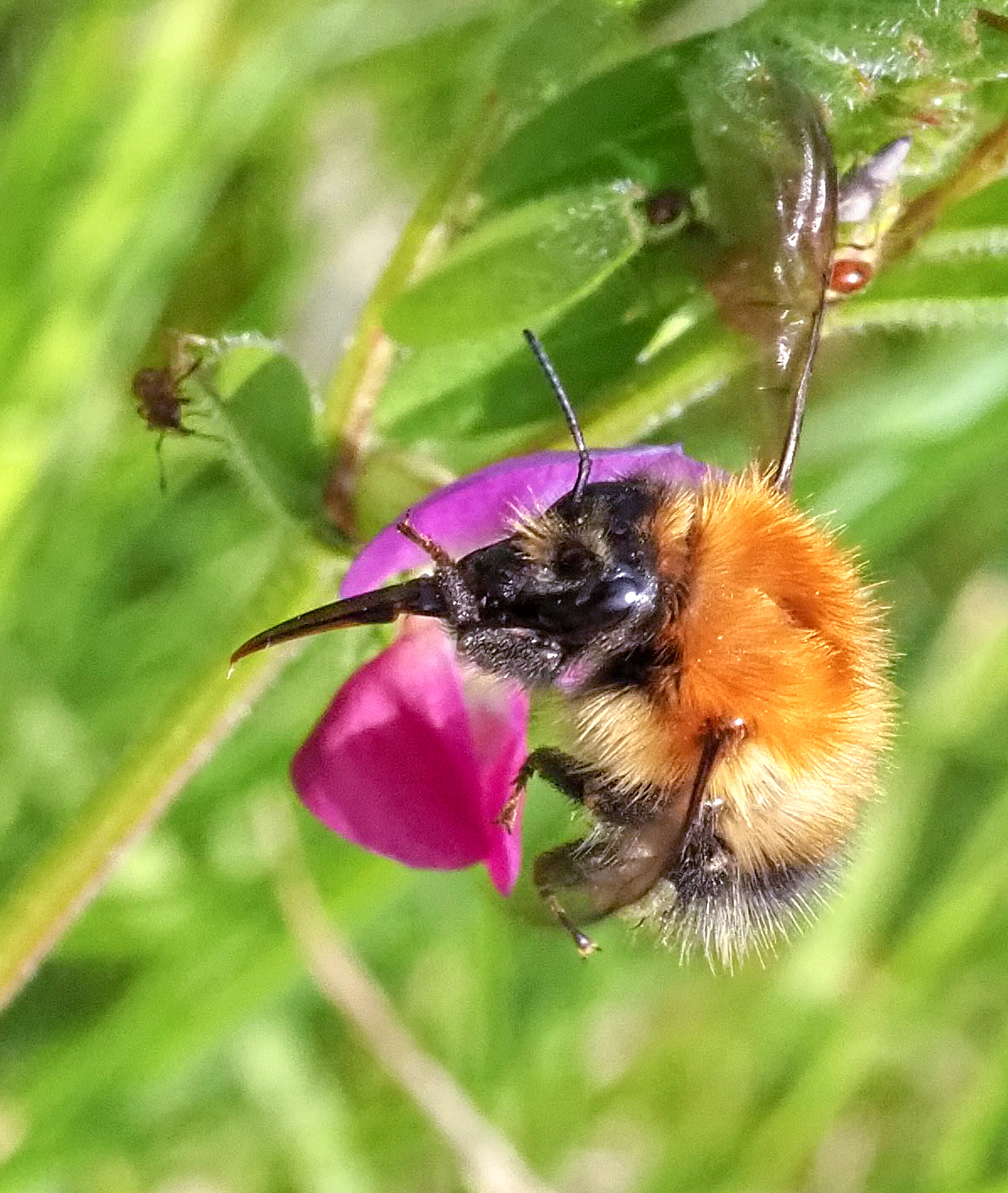
In practice, foraging bumblebees have a variety of strategies for collecting nectar, which help them to overcome the limitations of their morphology, i.e. short tongues! Some can push their tongue in between the petals at the base of the flower corolla, bypassing the reproductive structures – stamens (male) and pistil (female) – of the flower. Others access the nectar by making holes at the base of the corolla; these are called ‘nectar robbers‘ and are usually, but not always, detrimental to the plant.
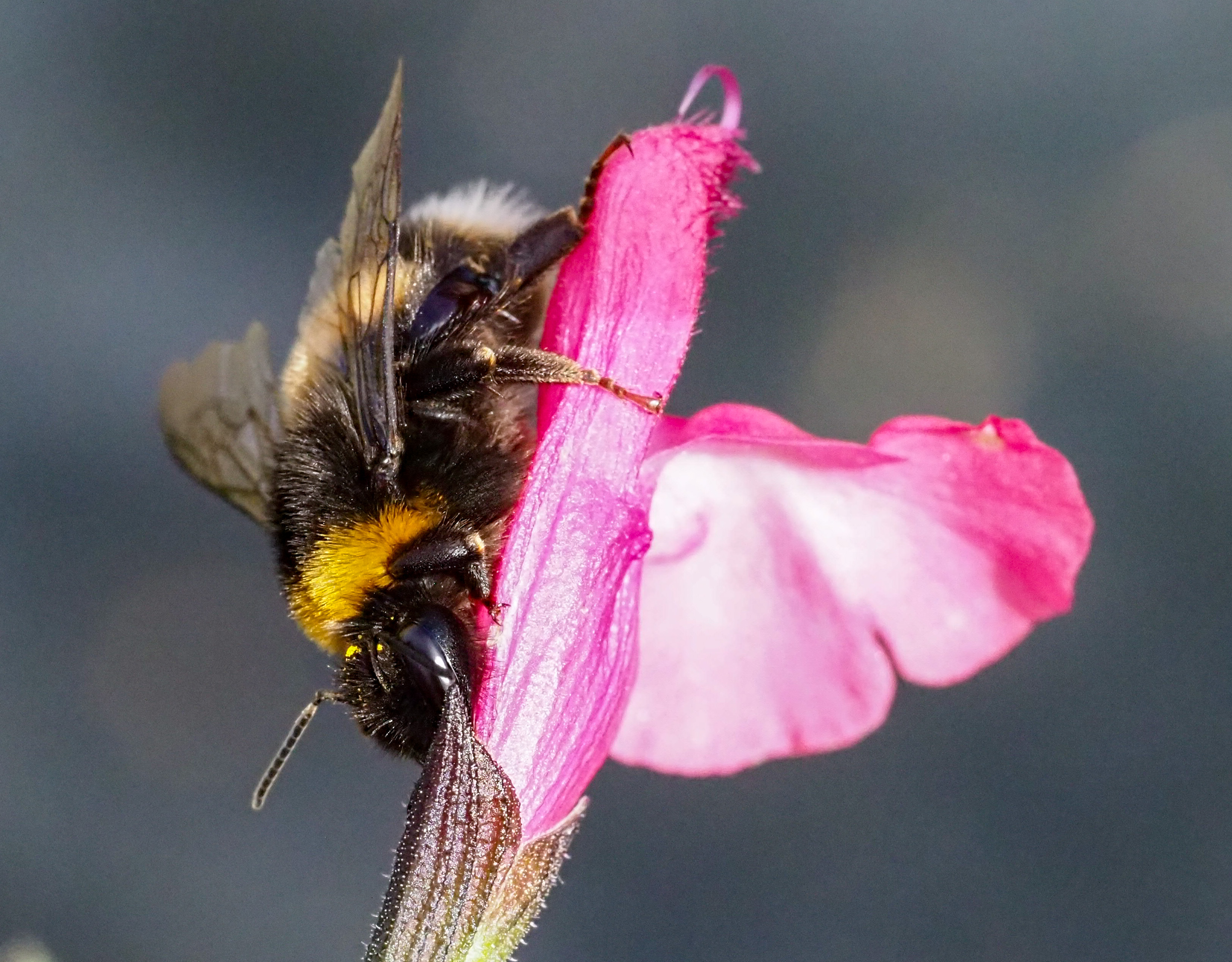
These holes are often made by other bees: i.e. there are primary and secondary nectar robbers, depending on who forms the hole.
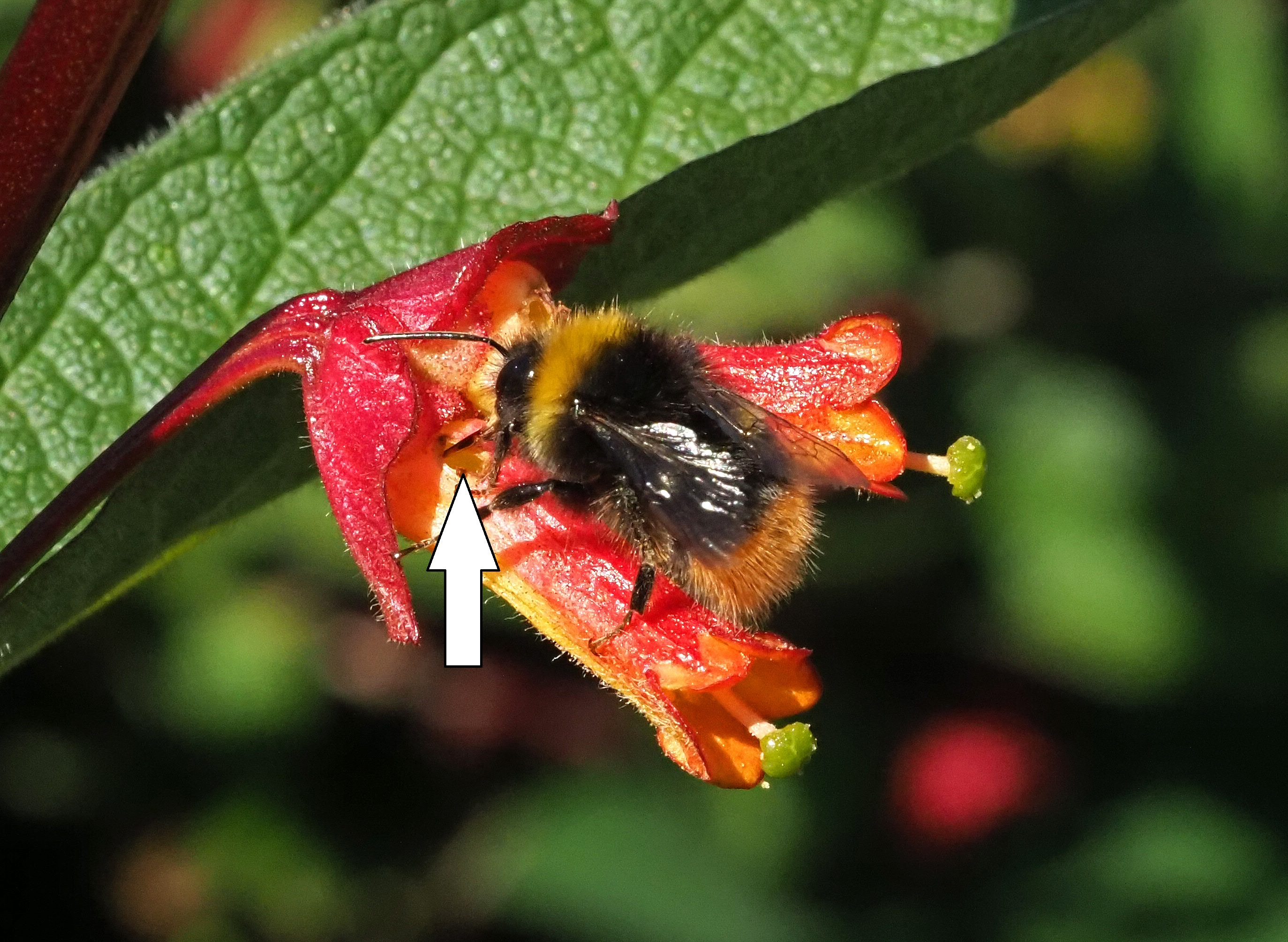
Photo by Raymond JC Cannon
Short-tongued bumblebee species – which in the UK includes species such as Bombus lapidarius, B. lucorum and B. terrestris – often engage in nectar robbing of hard-to-access flowers, whilst longer-tongued species, such as Bombus hortorum and B. pascuorum, reach down into the flower tube in what scientists refer to a ‘legitimate’ foraging.
The garden bumblebee, Bombus hortorum, has one of the longest tongues, or proboscides (pl.), which it typically uses to obtain nectar in deep-flowered plants, such as Salvias or Aquilegias (see below).
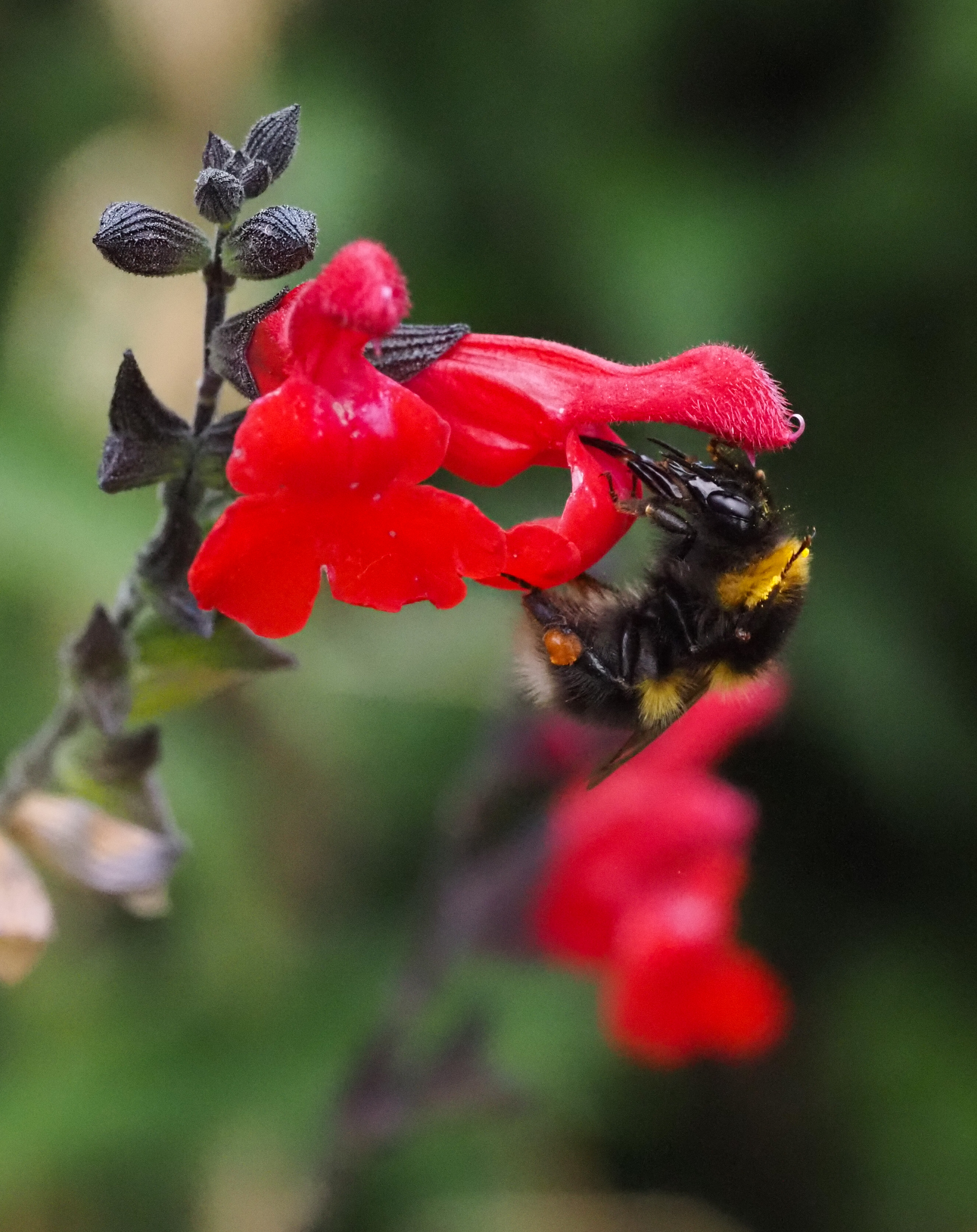
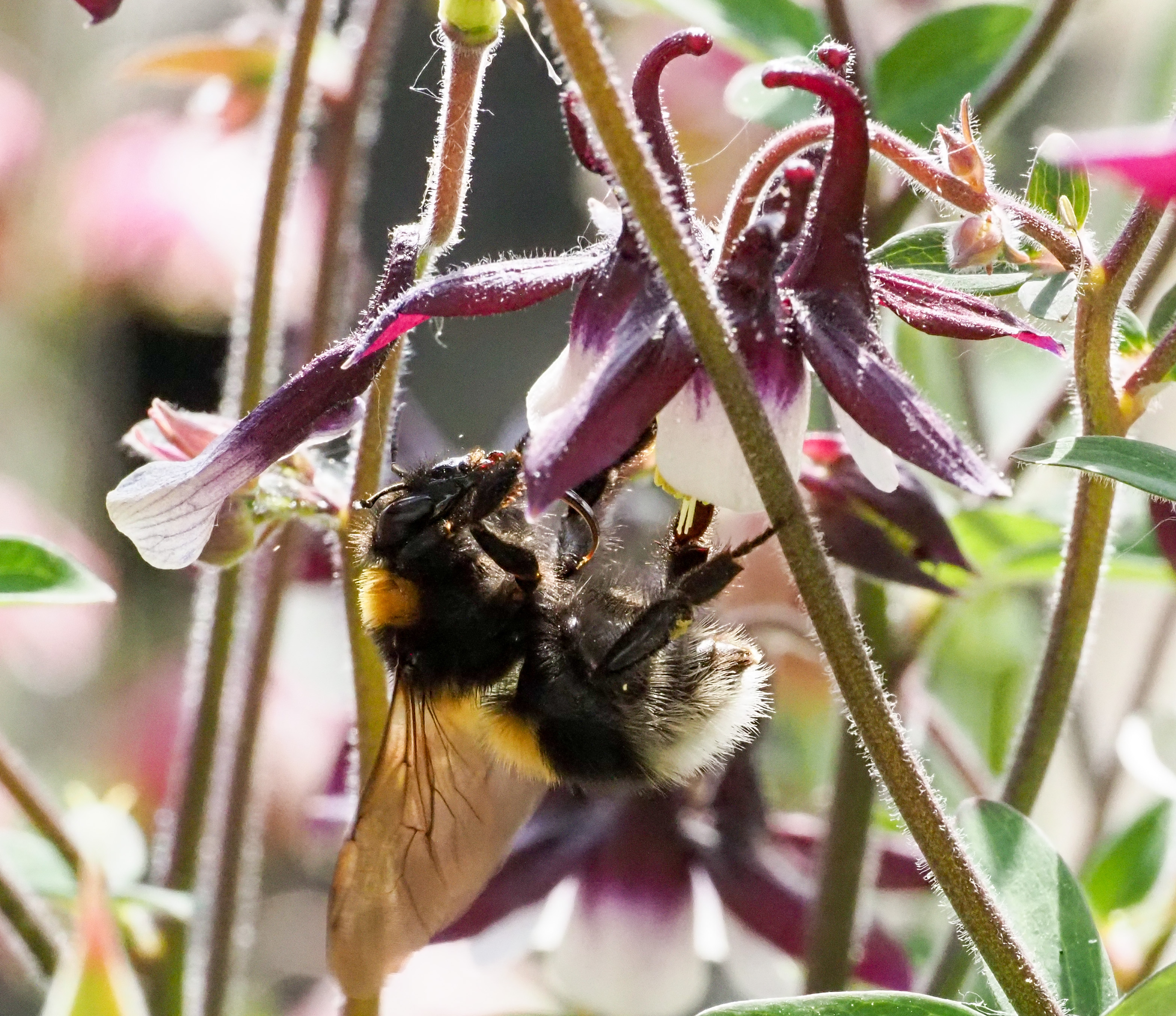
The fully extended proboscis in the garden bumblebee can reach 12.0 mm or more in length, as seen in this brilliant photograph by Will George (shown below).
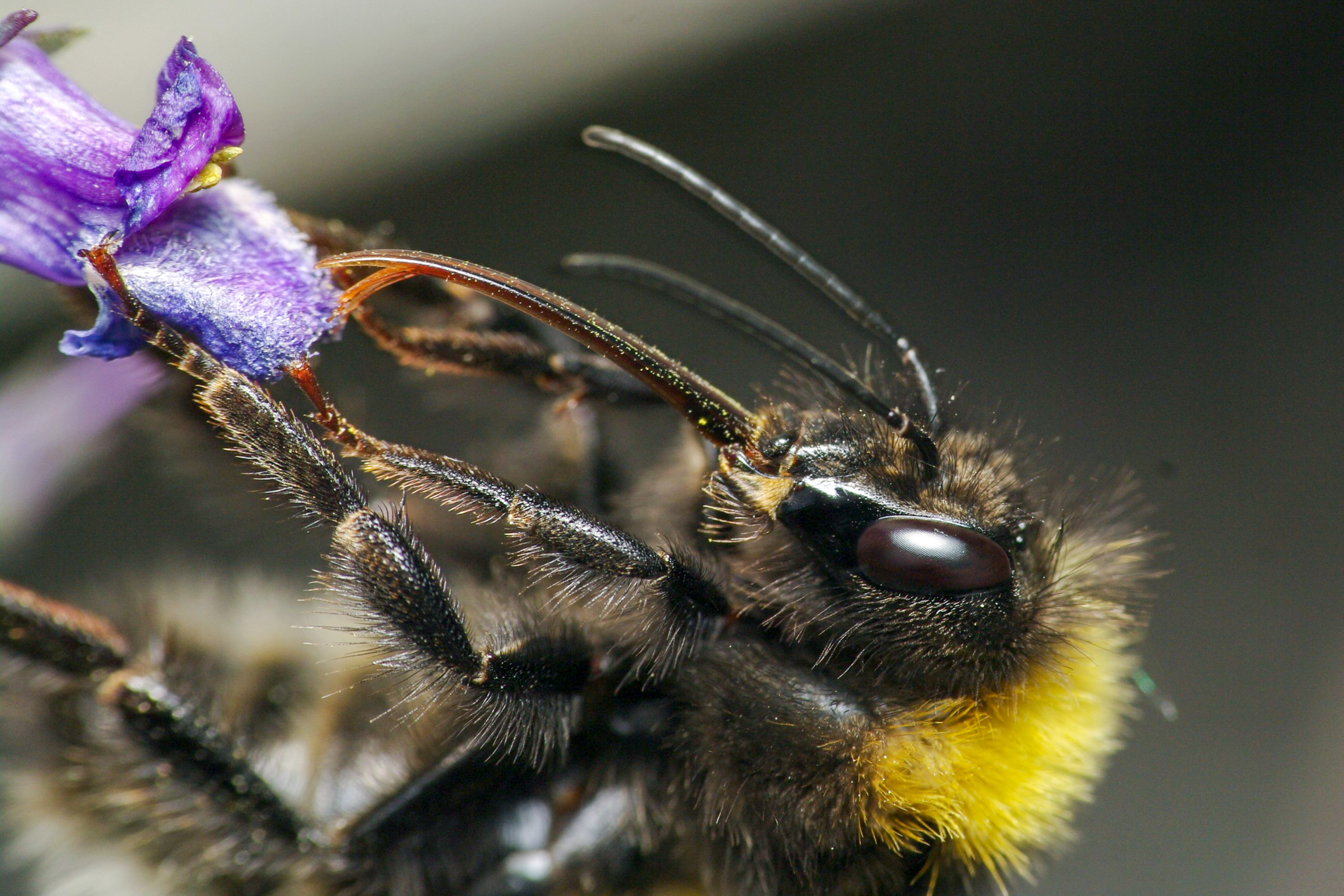
However, tongue lengths differ between castes as well as individuals. For example, the average tongue length for the queen, male, and worker in a beautiful long-tongued bumblebee from the Himalayas, Bombus haemorrhoidalis, were: 13.3, 11.1 and 10.2 mm (in a study by Rana et al., 2025).
Turning back to UK species, the tongue of the Common carder bumblebee, Bombus pascuorum is only slightly shorter than that of B. hortorum (see below in blog), and both species have fairly large bodies, depending on castes.
Bumblebees with a long proboscis can usually forage faster than bees with a shorter proboscis (like honeybees) on flowers with long corolla tubes. I.e. they are better adapted to the long-tubed flowers. Bumblebees with a short proboscis may not even be able to access these sorts of flowers and prefer to sup nectar from flowers with short corolla tubes, on which they are more efficient.
Common honeysuckle, Lonicera periclymenum
Bumblebees with long tongues prefer flowers with longer calyx tubes, and these deeper tubed flowers often produce more nectar than short-tubed ones. A good example of such a flower is common honeysuckle, Lonicera periclymenum. Not surprisingly, garden bumblebees, Bombus hortorum, are frequent visitors. Hoverflies and honeybees also visit honeysuckle flowers, but they are after pollen rather than nectar, which is readily accessible on the long, protruding stamens.
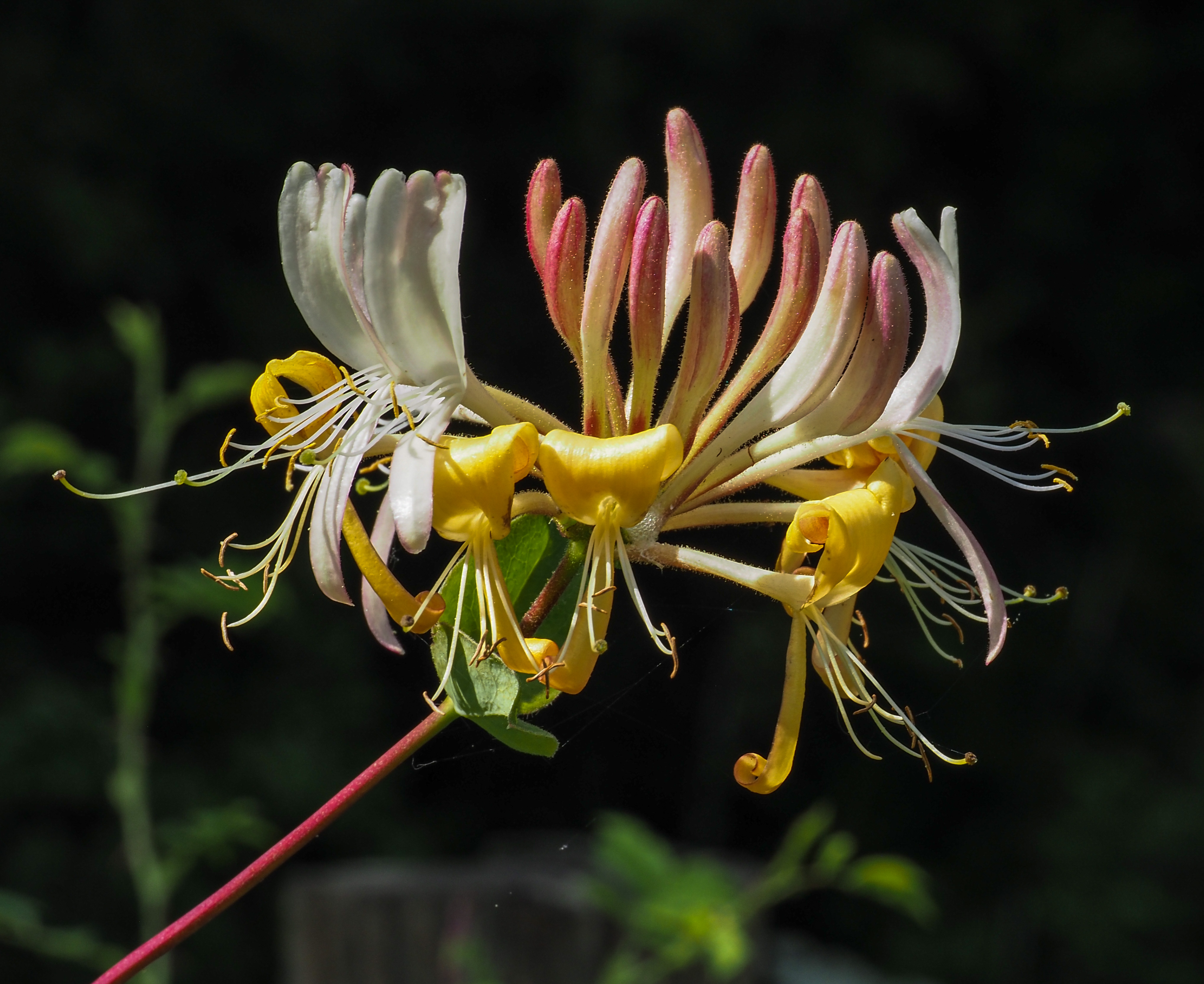
Photo by Raymond JC Cannon
The corolla of L. periclymenum is a long slender funnel-shaped tube, about 5-6cm long, and is two-lipped: the upper lip has four lobes, whilst the lower lip has just one. There are five stamens and a single, solitary style and stigma.
However, we shouldn’t get too carried away with tongue lengths though, as the correspondence between bumblebee proboscis length and flower tube length, is only one factor determining foraging efficiency. For example, bumblebees are very good at sticking their heads into flower tubes to reach the nectar, and sometimes the nectar builds up and fills the corolla tube to some extent.
Bumblebees can also lengthen their tongues considerably by extending the prementum – a fused part of a bumblebee’s labium, or lower lip – and the glossa (see diagram here).
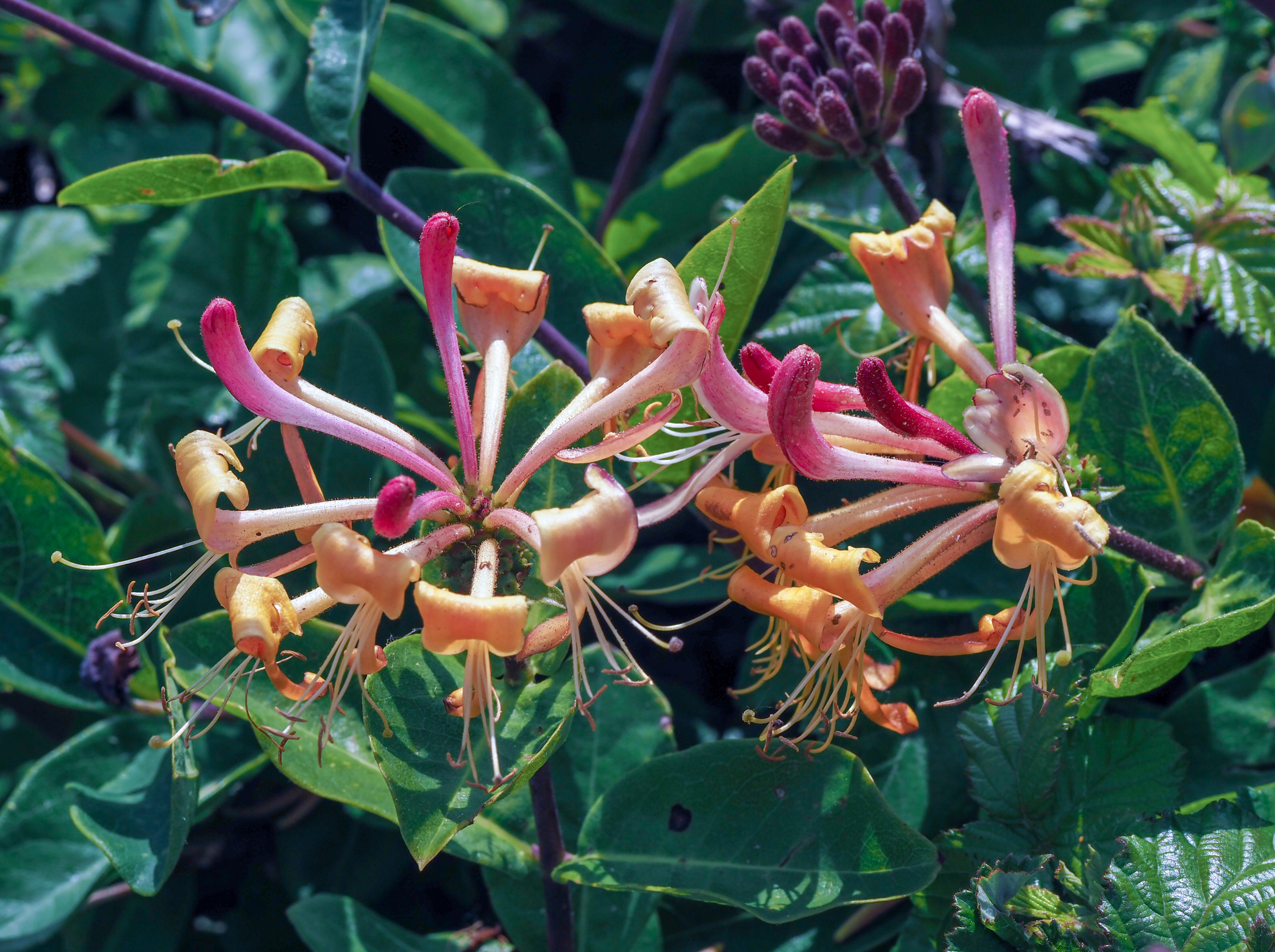
Nevertheless the long corollas of certain flowers do function as a nectar barrier for some species: they prevent ‘undesired visitors’ from consuming the nectar rewards intended for more effective pollinators. Plants with long flower tubes have usually invested in increased nectar rewards to maintain ‘loyal’ visitation by the most effective pollinators. This is evolution. As a consequence, these long-tubed flowers are more prone to nectar robbing by species excluded by the nectar barriers.
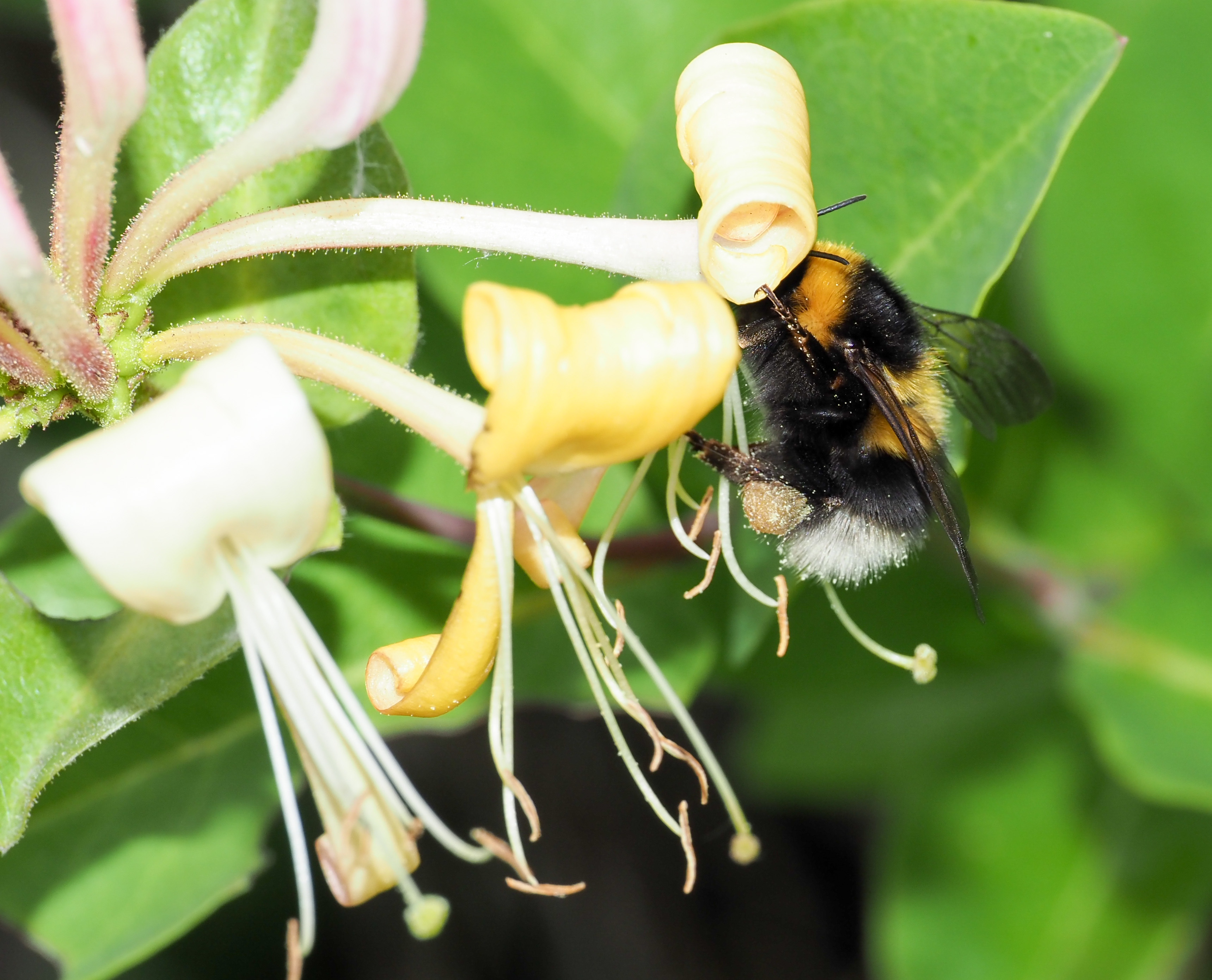
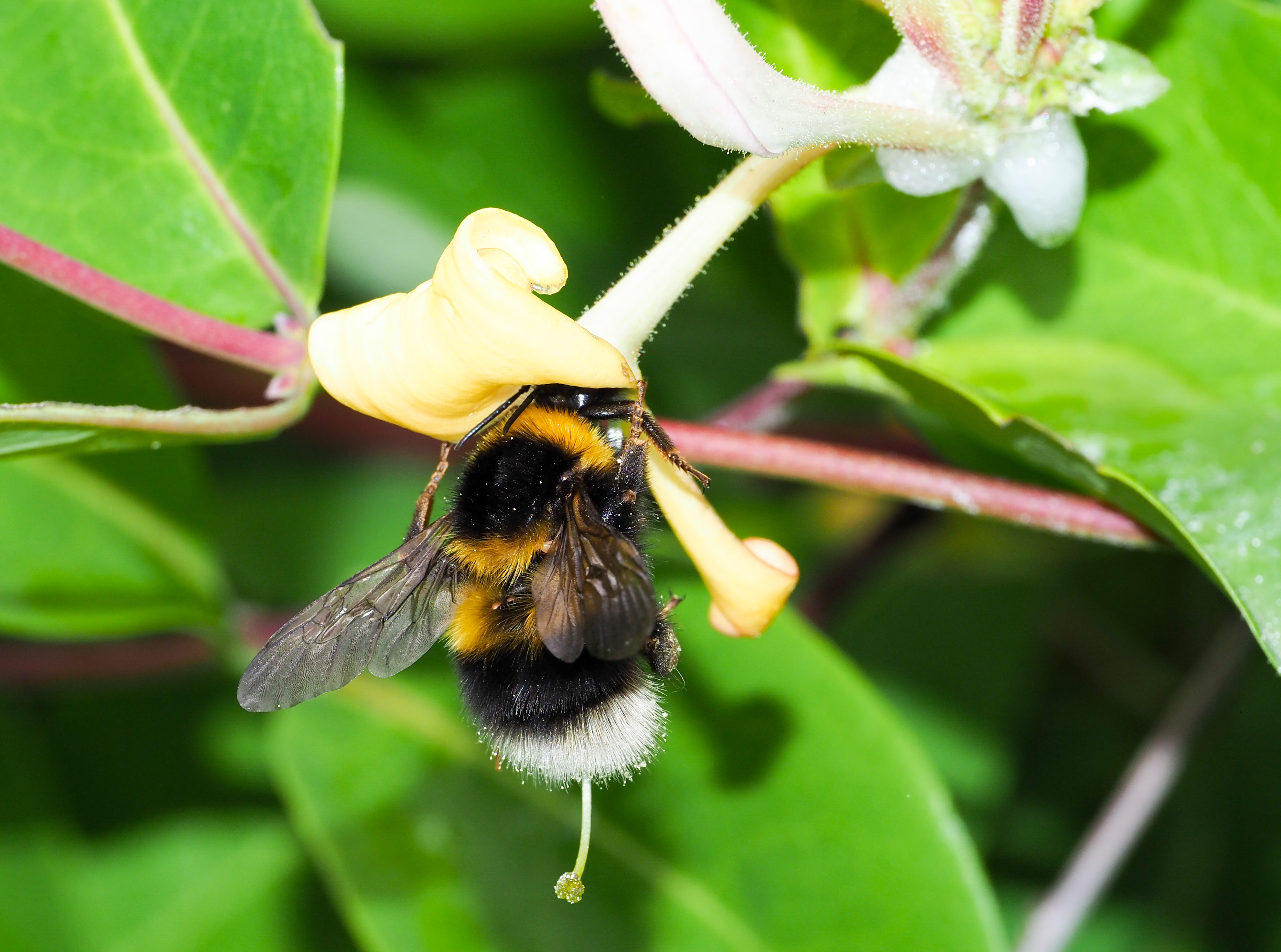
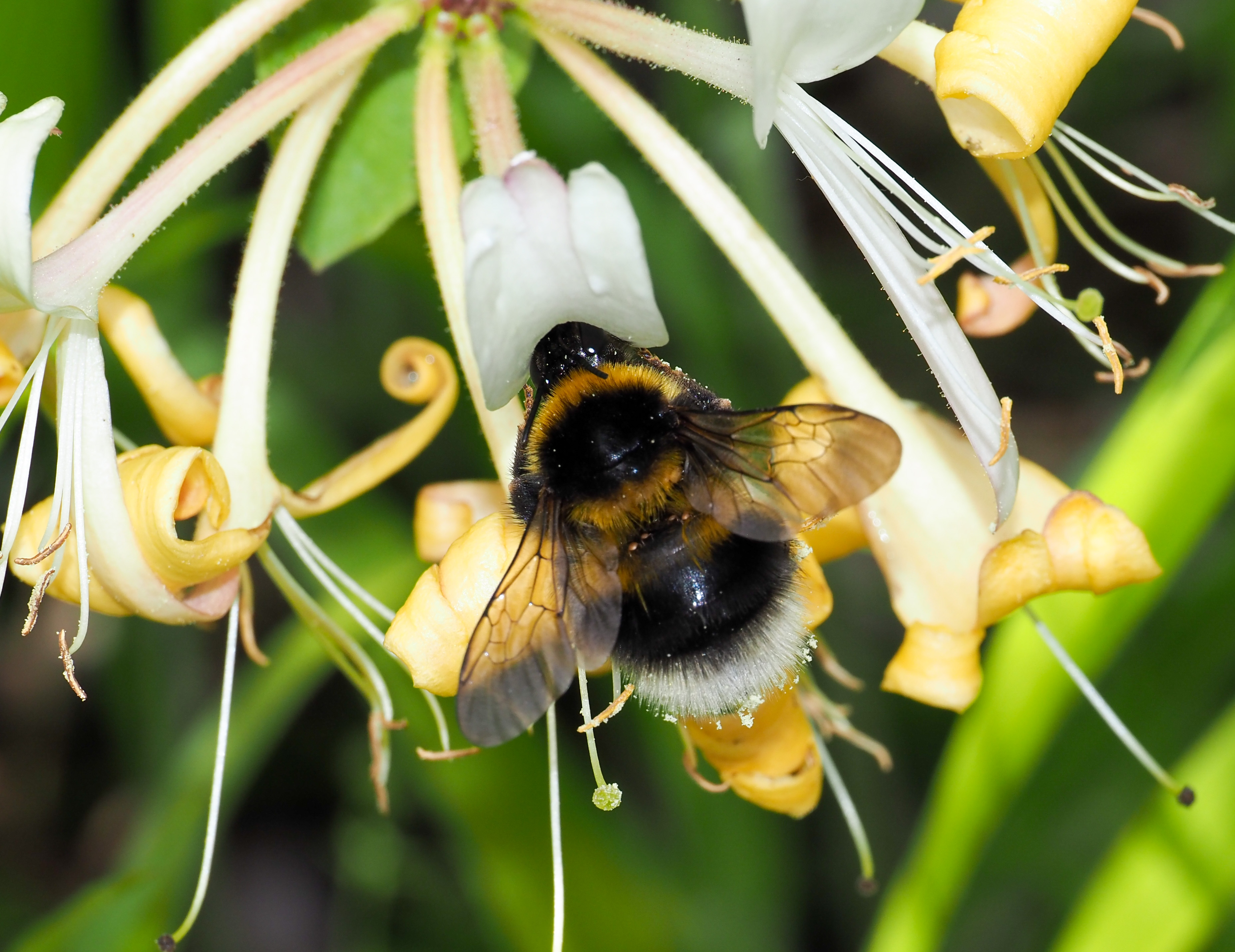
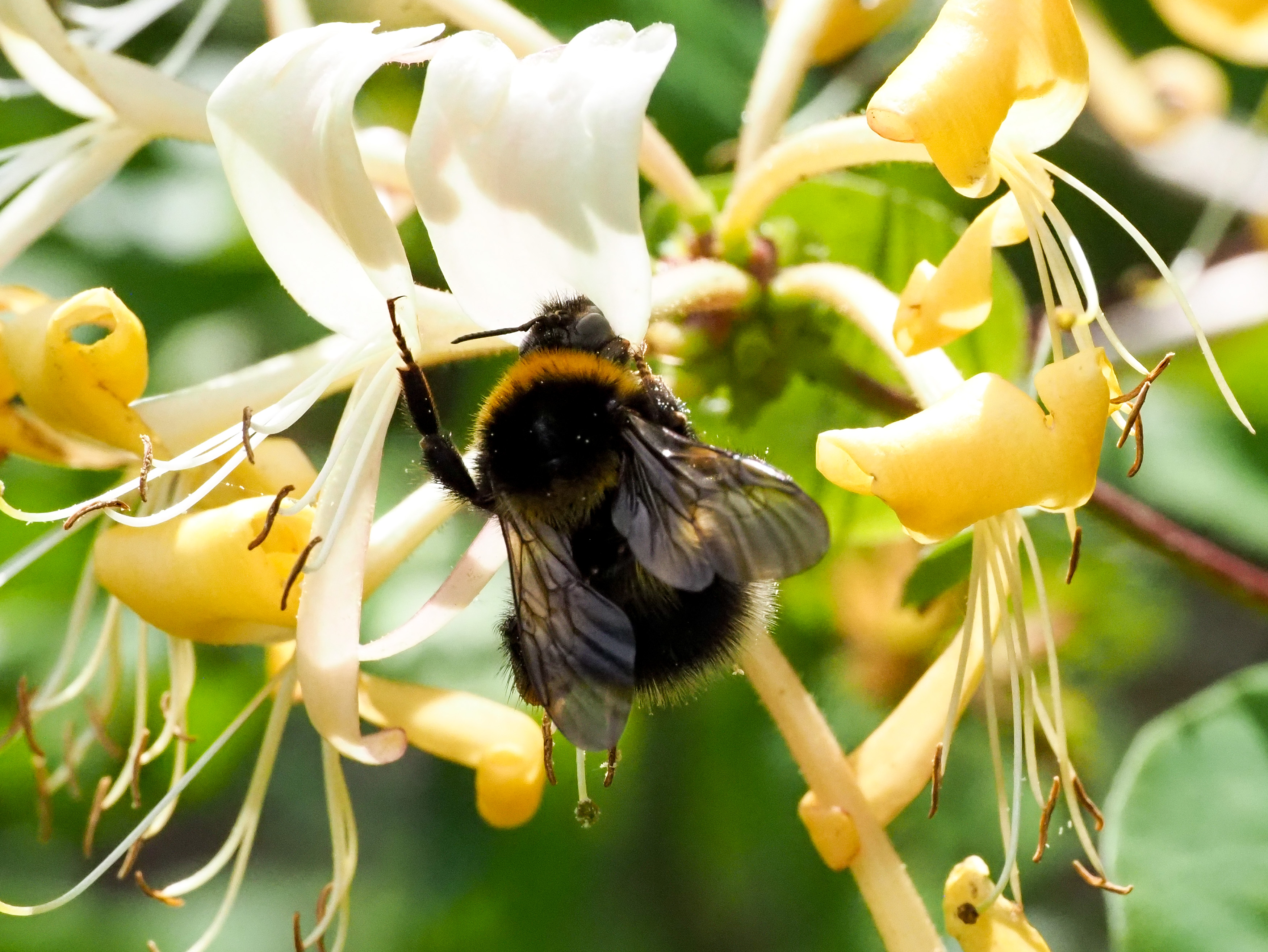
Nectar secretion reaches a peak on the second day of flower life-span in all Lonicera species, and nectar sugar accumulation reaches a peak in late evening for long-corolla ones, like honeysuckle.
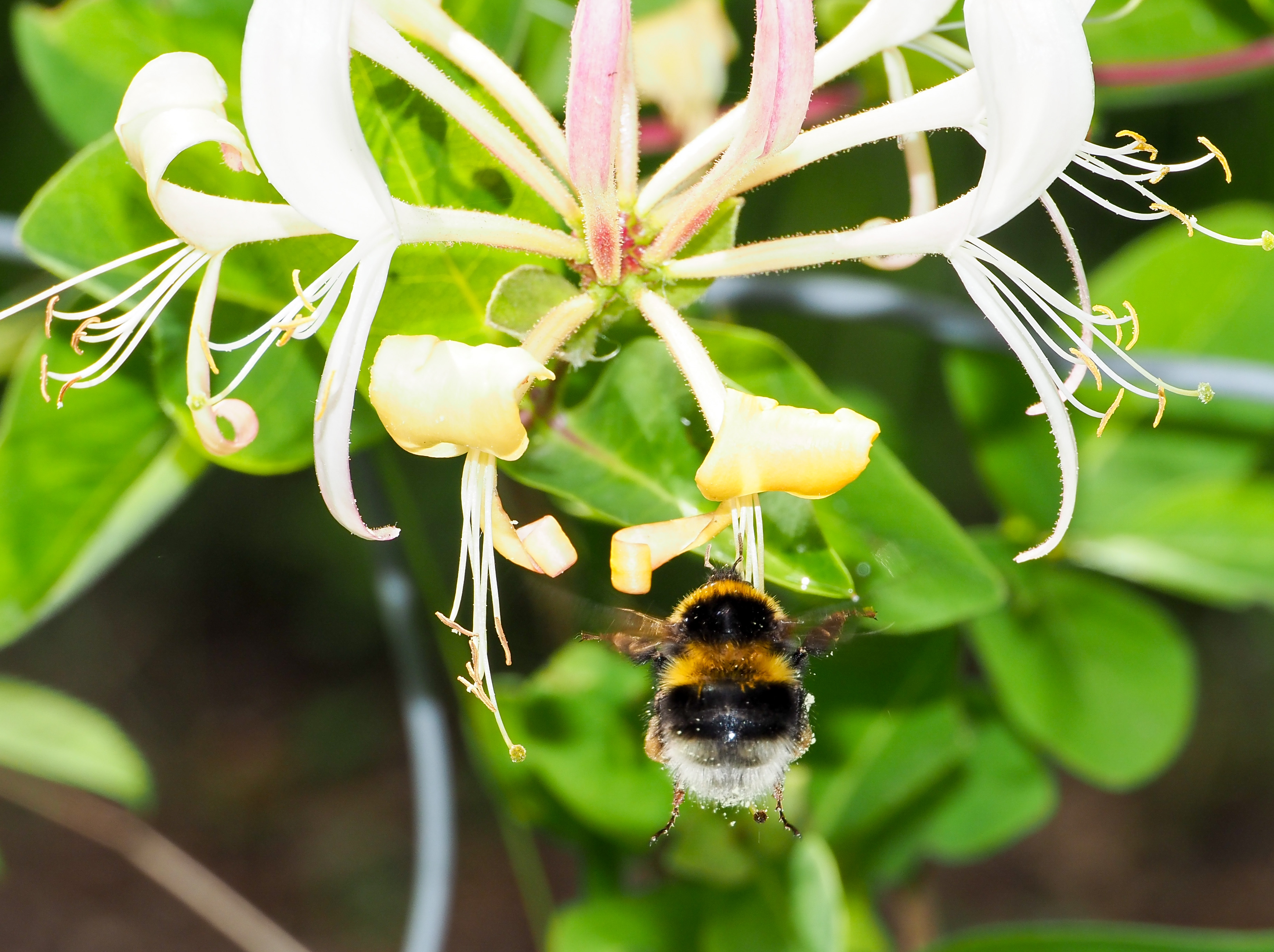
Honeysuckle flowers (L. periclymenum) remain open in the evening and are frequently visited by hawkmoths. They have a strong preference for flowers with a long corolla tube and probe the flower with the tip of their proboscis while hovering in front of it.
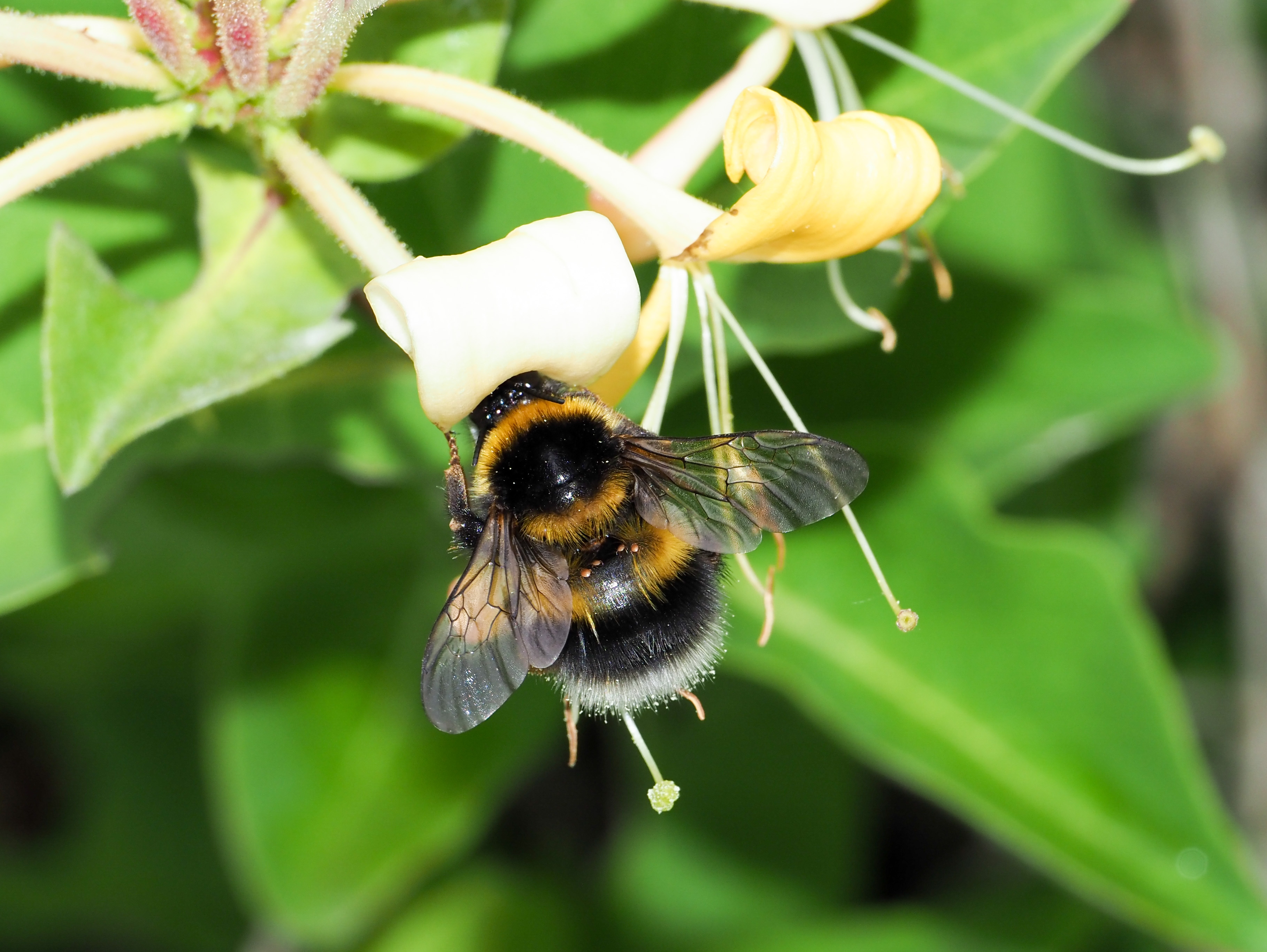
Honeysuckle flower lobes are often highly curved and the lower lip does not offer a platform to visiting bees, which appear to hang on to the upper lobes (see below) whilst nectaring.
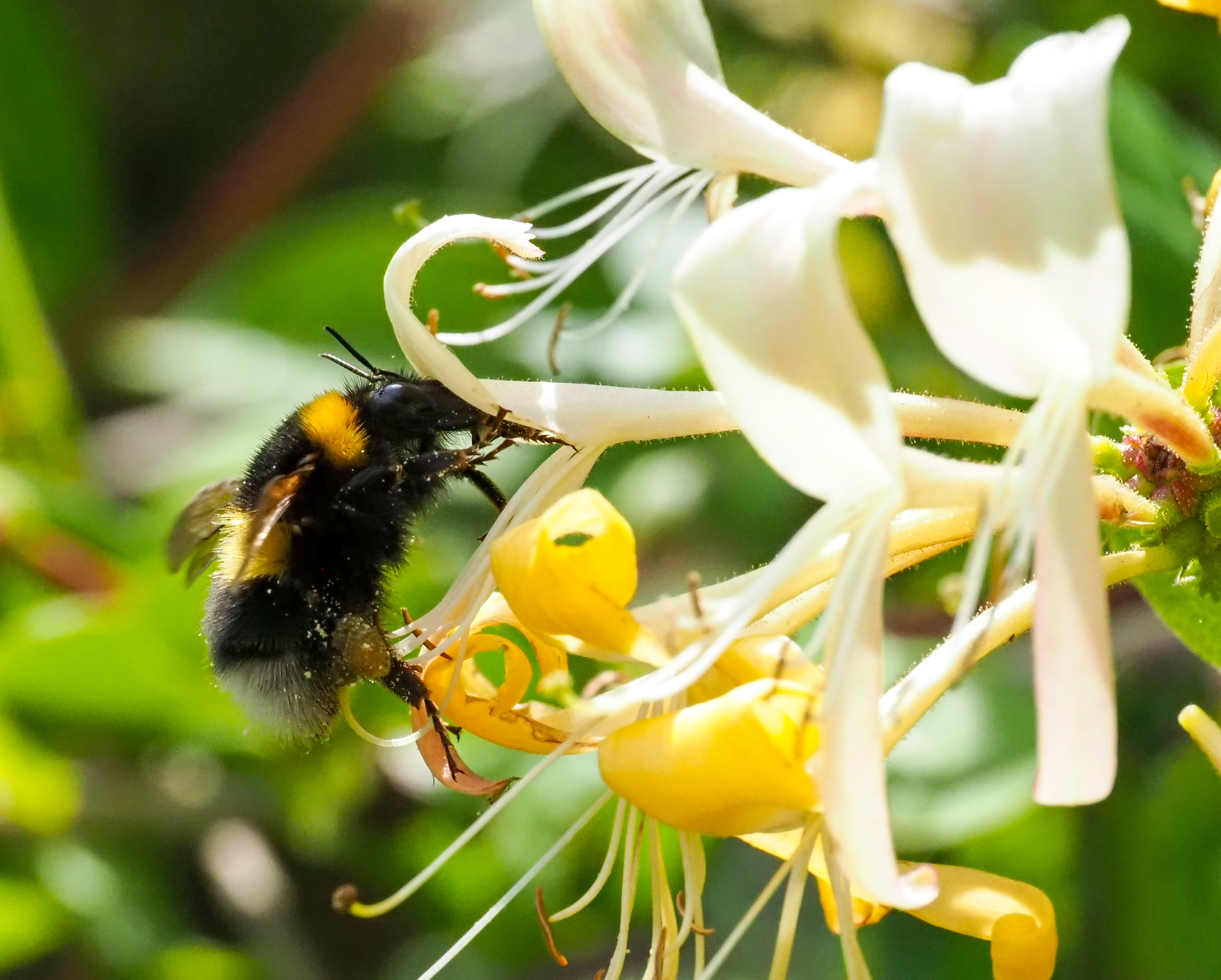
So, there is a general correlation between corolla depth and the nature and composition of insect visitors, with bumblebee species with long mouthparts (such as Bombus hortorum and B. pascuorum) mostly obtaining nectar in a ‘legitimate’ way. Legitimate, because it usually results in the pollination of the flower.
Twinberry honeysuckle (Lonicera involucrata)
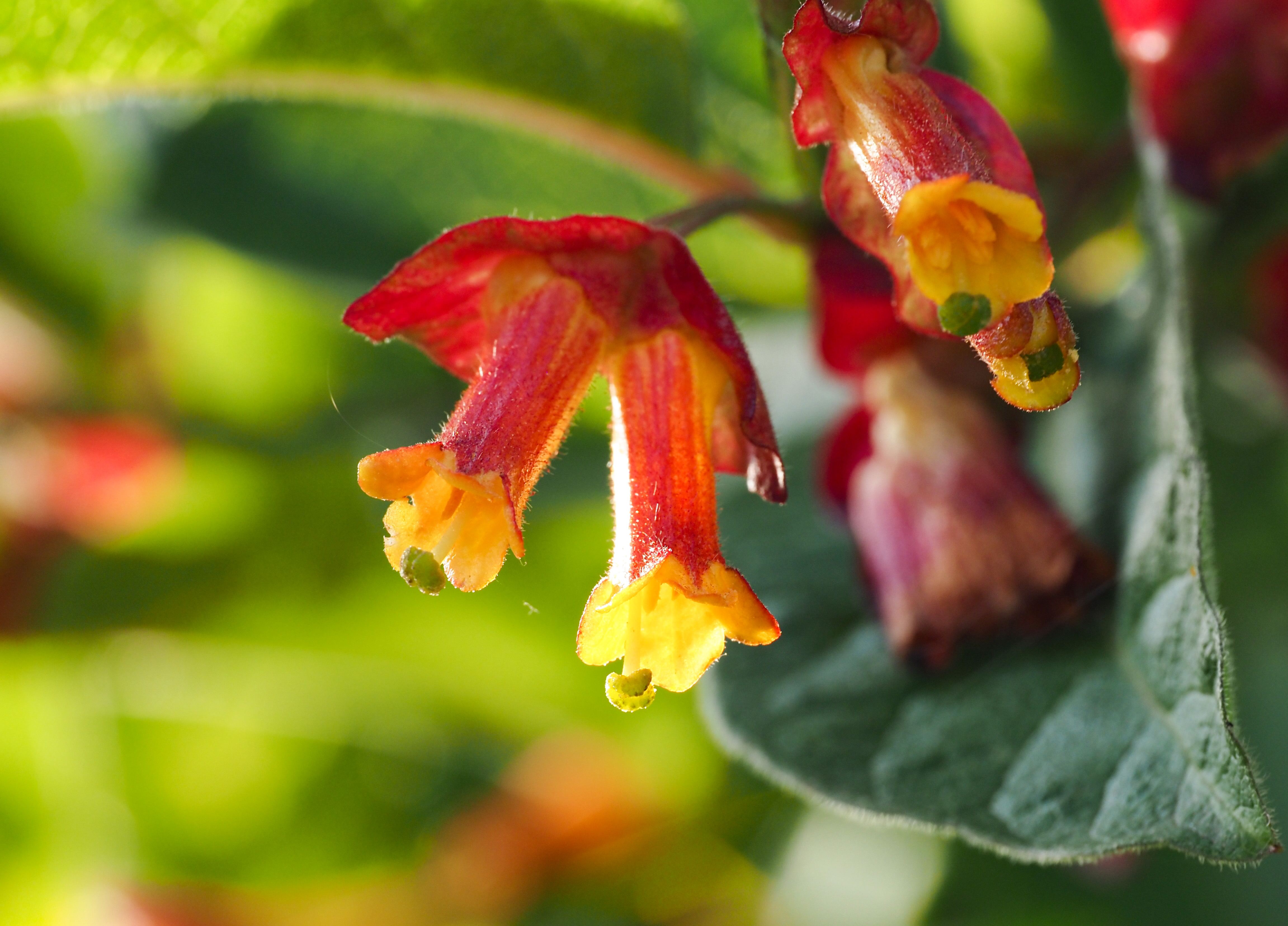
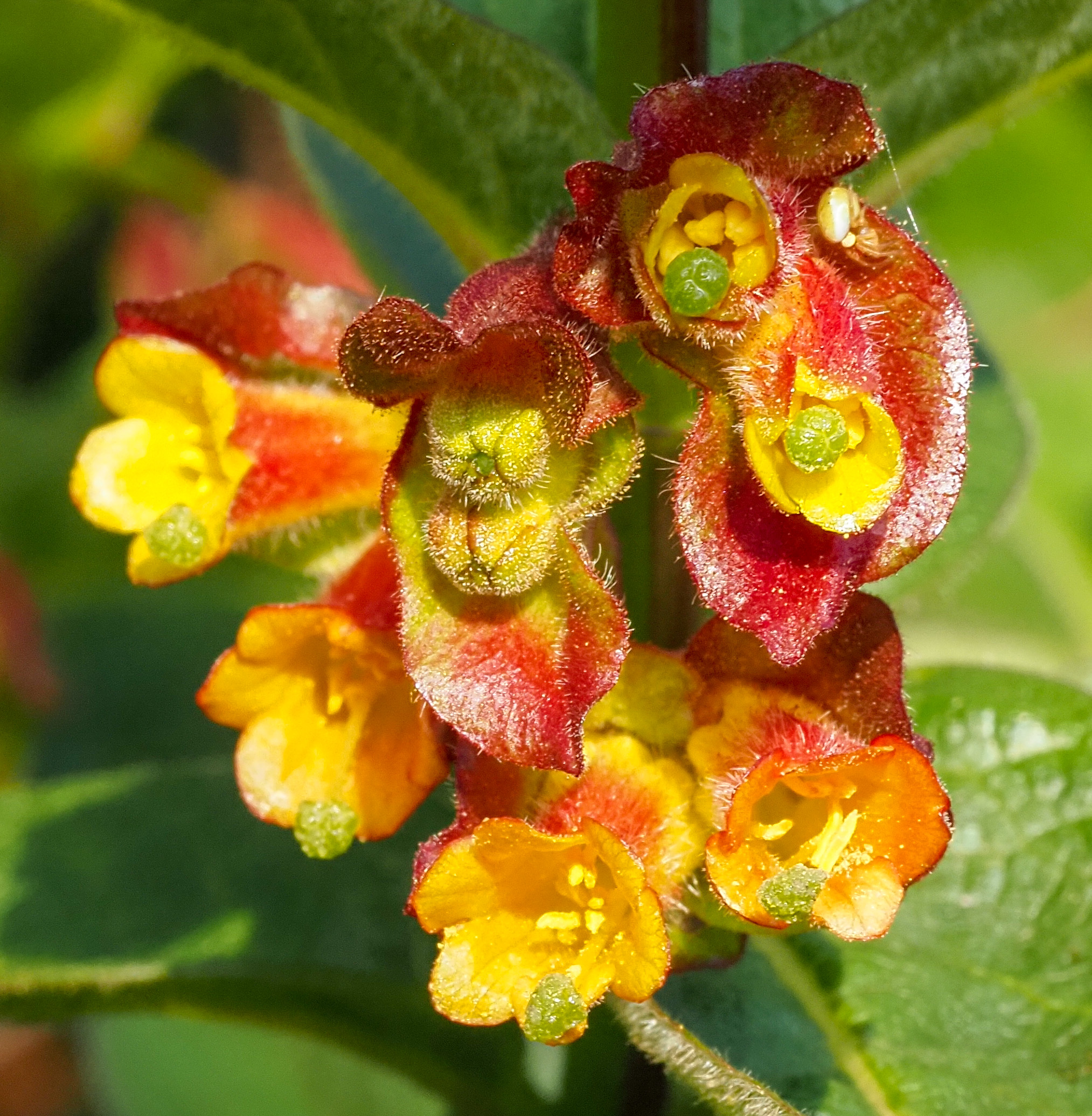
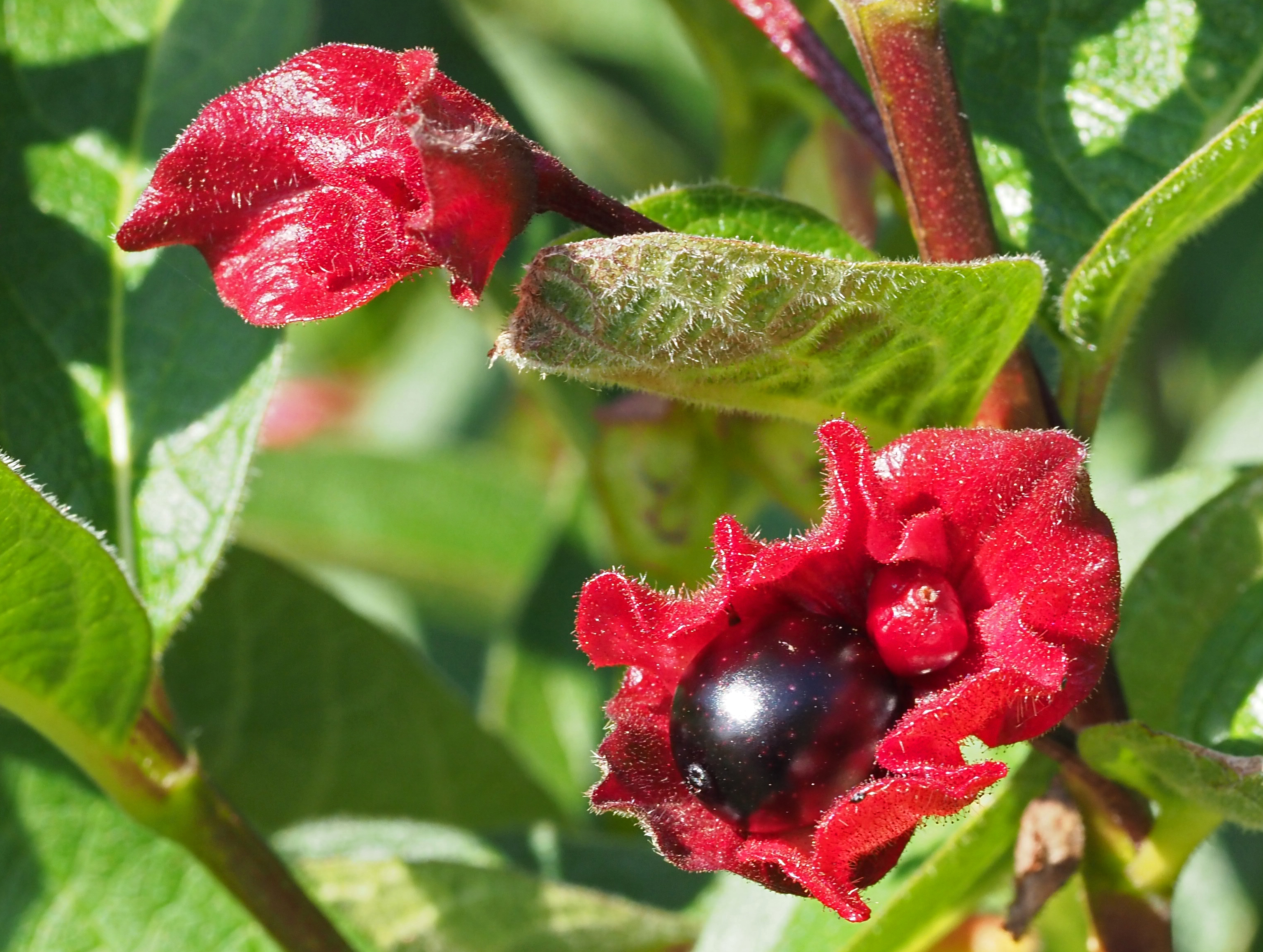
Twinberry honeysuckle, or Californian Honeysuckle (Lonicera involucrata) is a non-native, hardy shrub from North America. It is widely available in UK nurseries and garden centres and is not considered an invasive species of any concern. Native UK bumblebees seem to like it, and I regularly photograph them feeding on the flowers in June.
It eventually develops a lovely black berry.
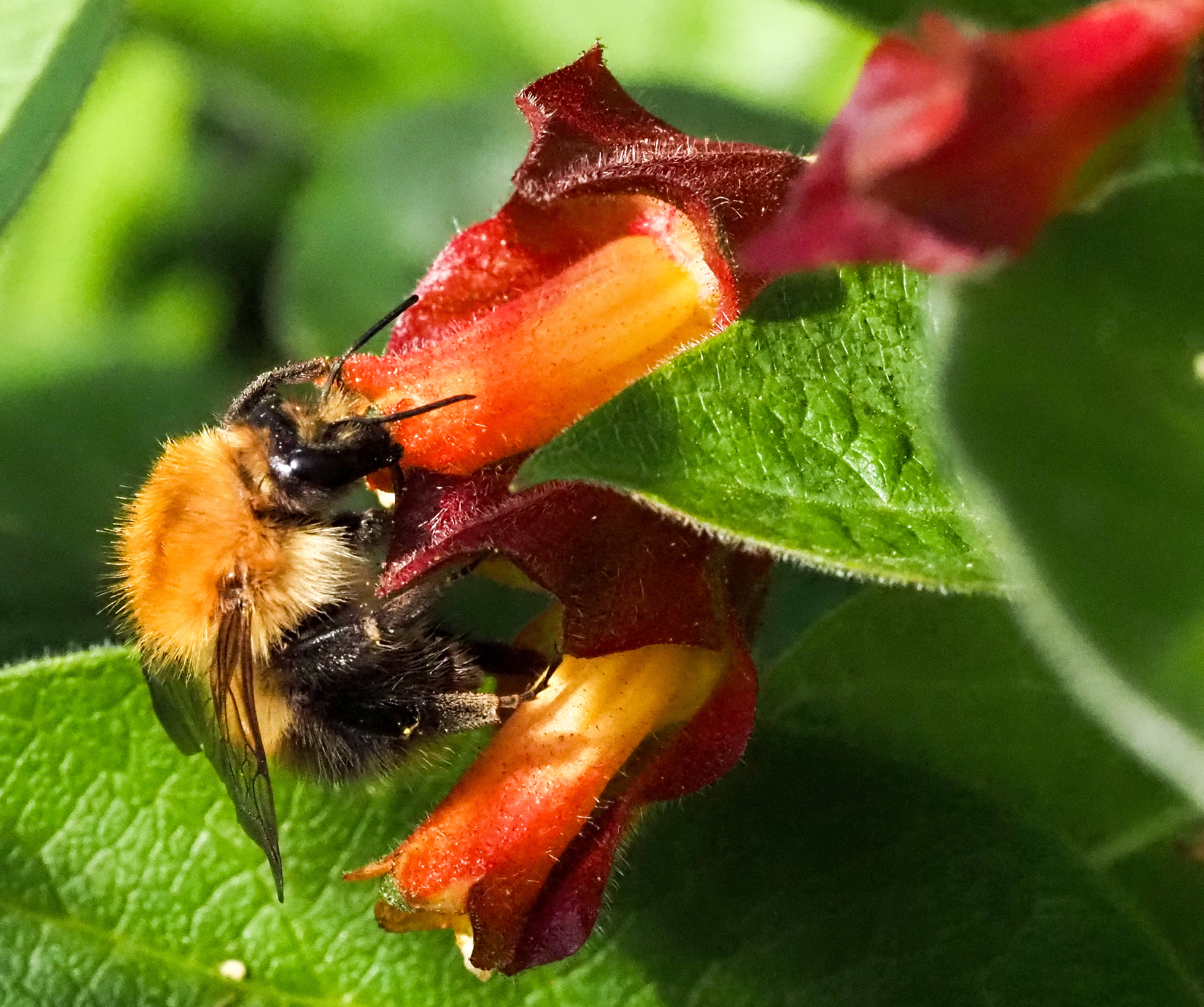
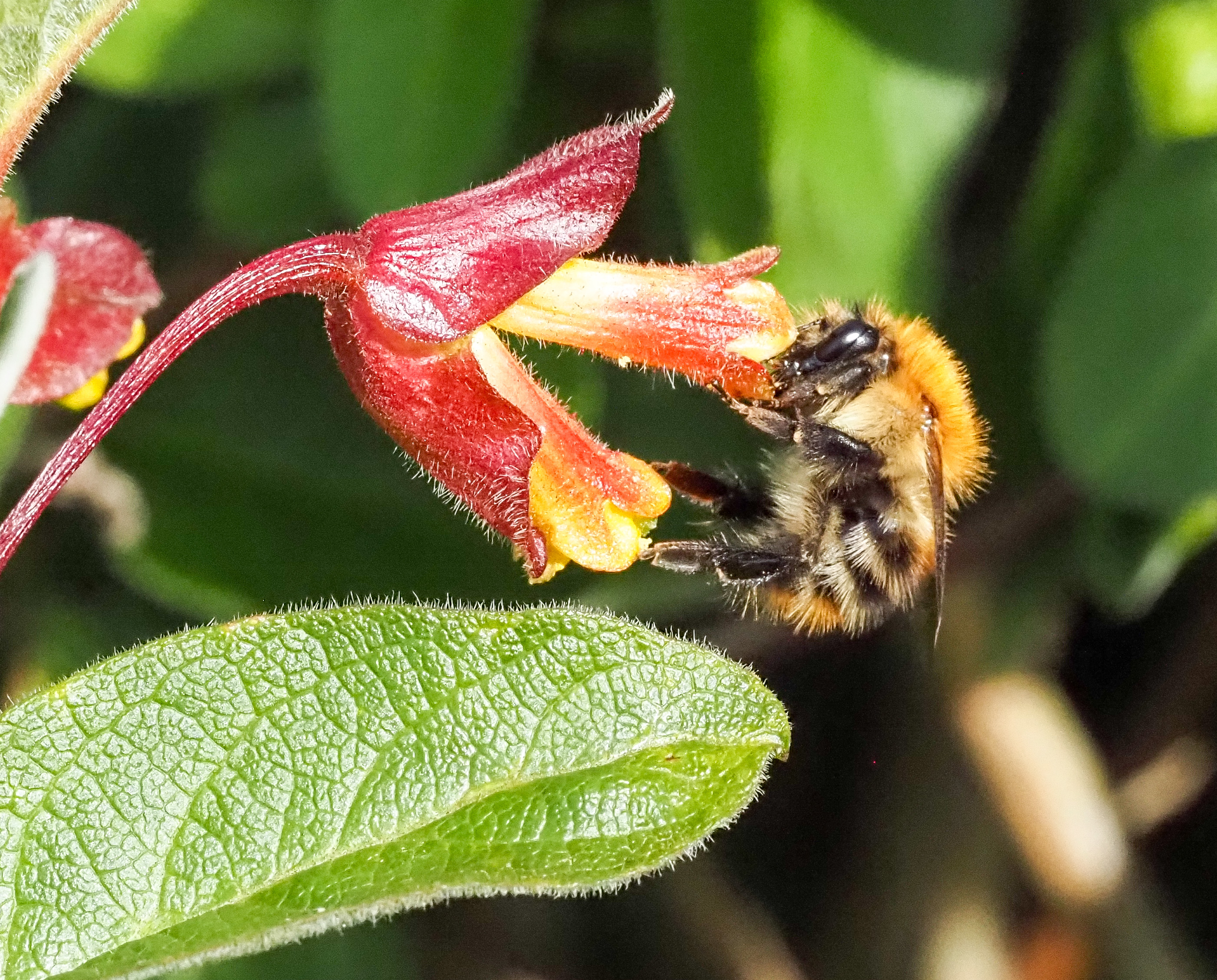
Common carder bees, Bombus pascuorum, do not seem to have any problems in accessing the nectar in the so-called ‘legitimate’ way – i.e. straight down the corolla (see below), but early bumblebees (proboscis ca. 6.4mm) clearly struggle and revert to nectar robbing.
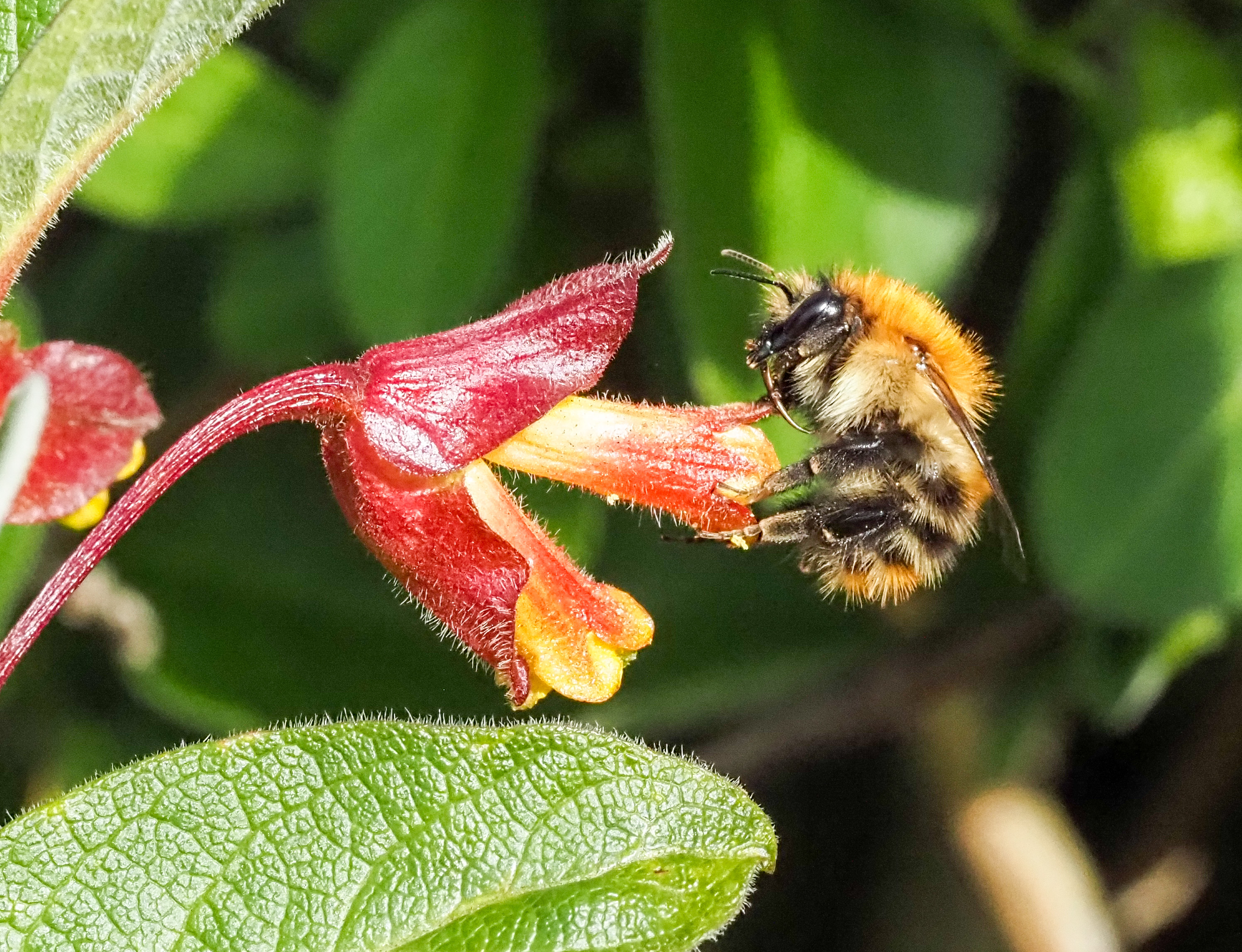
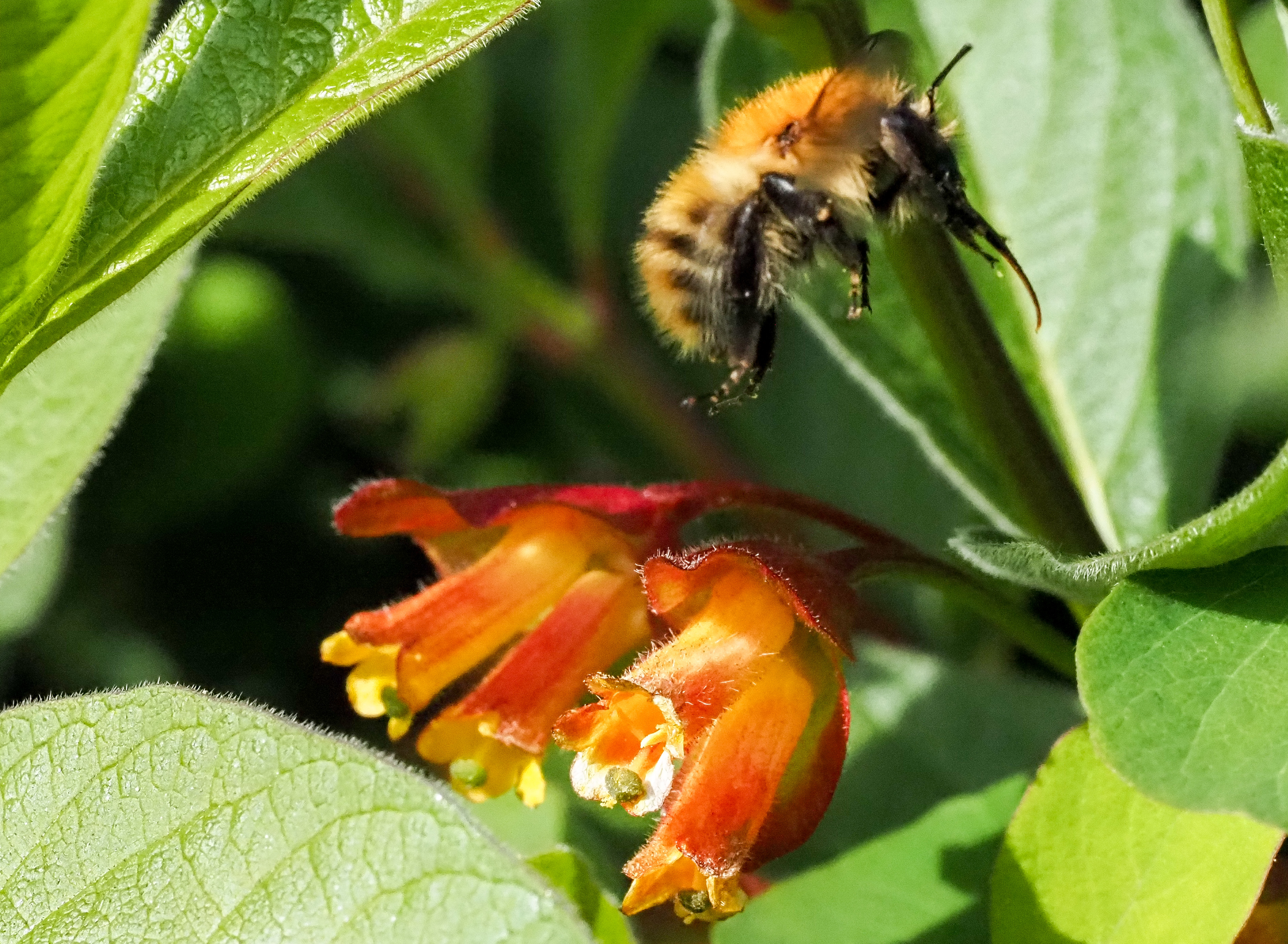
Photos by Raymond JC Cannon
The small male and worker Early bumblebees sup nectar from holes at the base of the flower (below). I’m not sure if they actually make the holes, or whether another species – such as Bombus terrestris – chews out a hole? The flower tube (corolla) of Lonicera involucrata is nowhere near as long as that of Lonicera periclymenum, but it is still an effective barrier for some species.
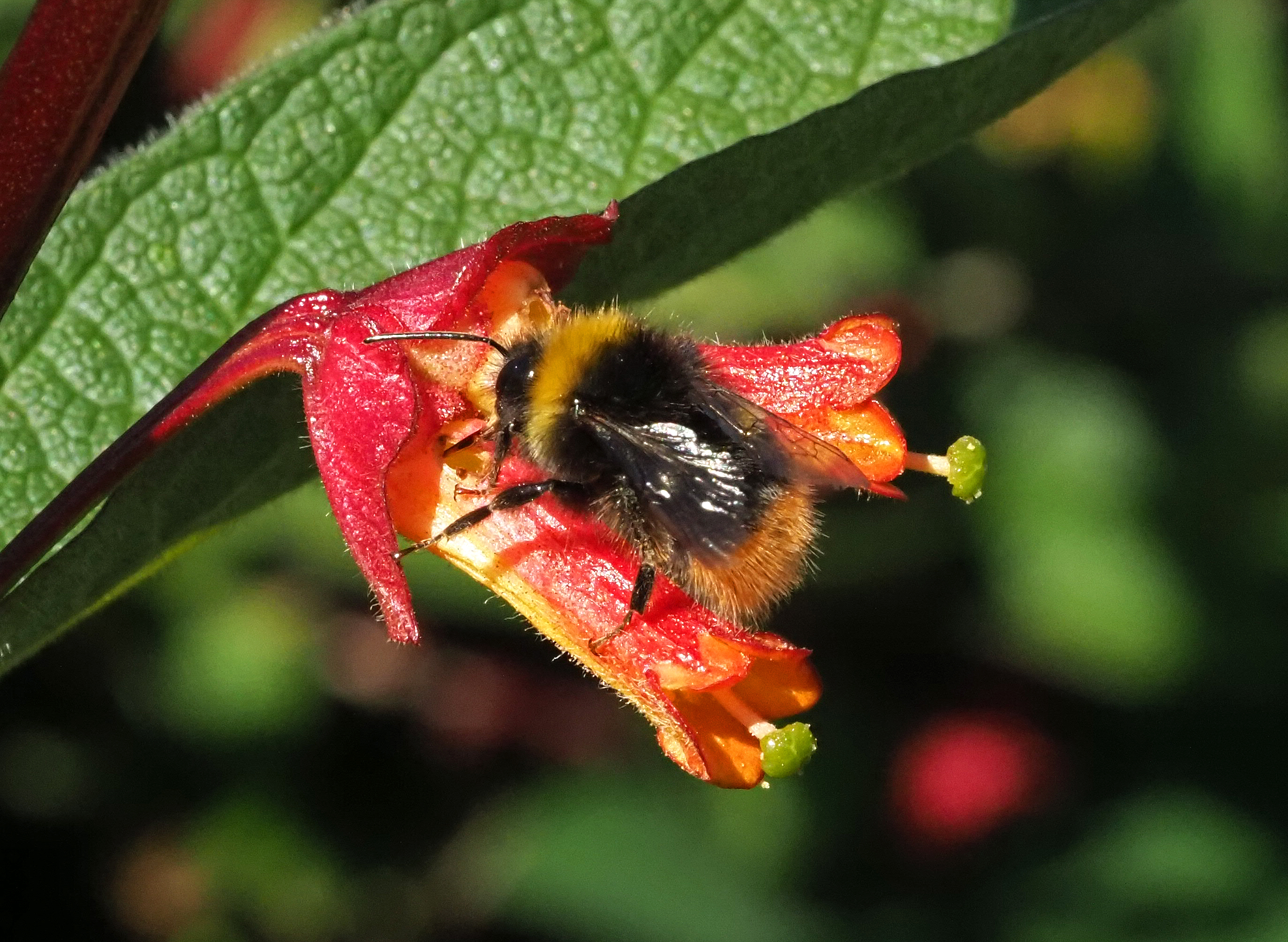
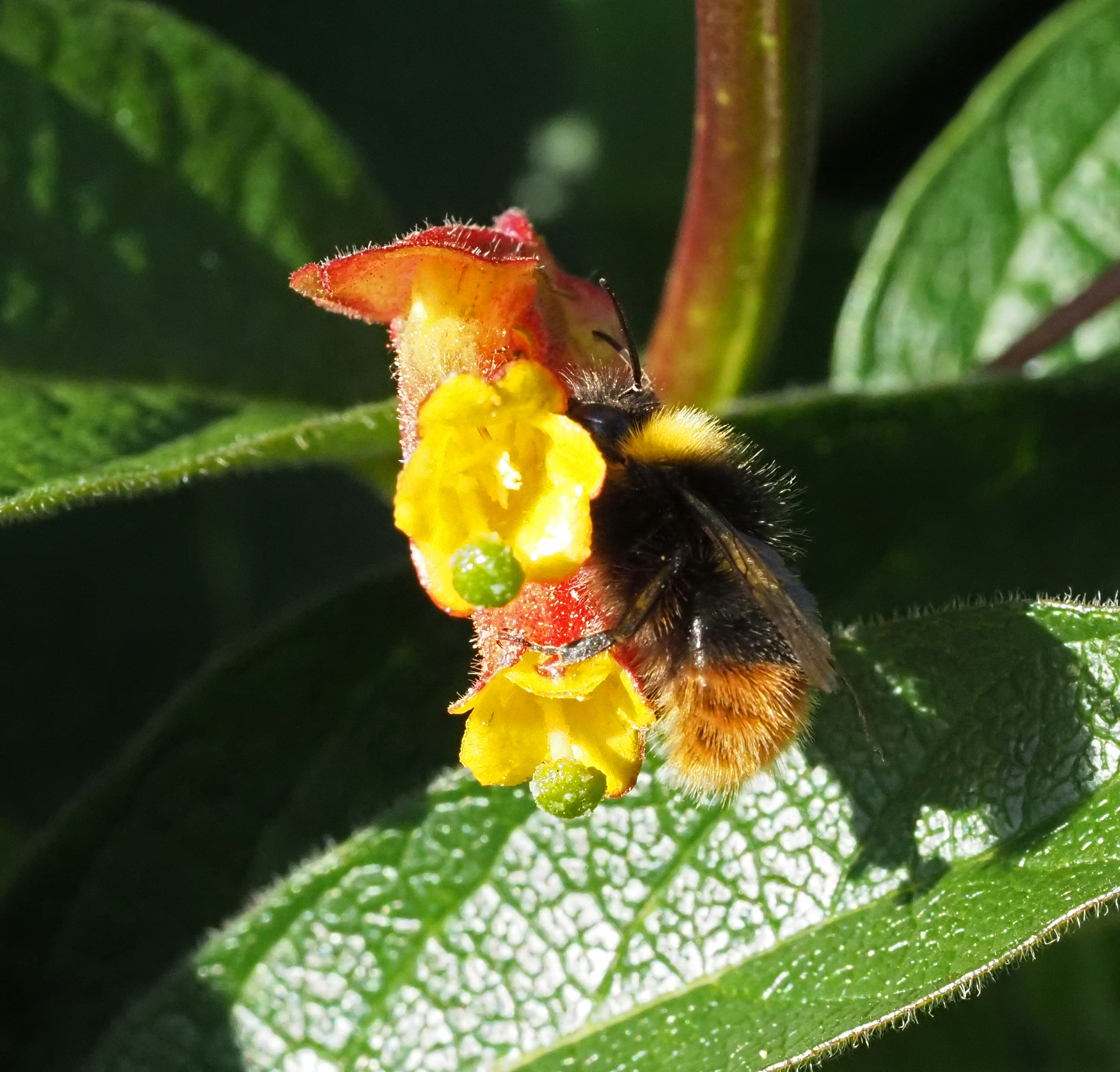
If your proboscis isn’t long enough; rob it from the bottom!
Summing up
In summary, whilst long-tubed flowers have, to some extent, co-evolved with their long-tongued bumblebee pollinators, there are a variety of other ways that an enterprising bee can get around the limitations of a poor fit! Bees can shove their heads deep inside the flower tube; they can greatly extend their proboscis; they can ‘cheat’ and cut a hole in the base of the flower; or they can wait for the nectar to gradually accumulate and creep up the flower tube via capillary forces.
Finally, it is worth stressing that words like, robbing, cheating, legitimate and illegitimate, are clearly inadequate, in my opinion, for describing well-established alternative strategies for obtaining nectar. They are useful and evocative terms for describing behaviour which does not fit the model of co-evolved relationships between plants and their pollinators. However, the situation in our constantly changing world is fluid and fuzzy, with all sorts of unexpected and unknown relationships, and positive and negative outcomes depending on the situation and the mix of pollinators visiting a given flower.
Link
References
Inouye, D. W. (1980). The effect of proboscis and corolla tube lengths on patterns and rates of flower visitation by bumblebees. Oecologia, 45(2), 197-201.
Jachuła, J., Denisow, B., & Strzałkowska-Abramek, M. (2019). Floral reward and insect visitors in six ornamental Lonicera species–Plants suitable for urban bee-friendly gardens. Urban Forestry & Urban Greening, 44, 126390.
Lázaro, A., Vignolo, C., & Santamaría, L. (2015). Long corollas as nectar barriers in Lonicera implexa: interactions between corolla tube length and nectar volume. Evolutionary Ecology, 29(3), 419-435.
Ottosen, C. O. (1987). Male bumblebees (Bombus hortorum L.) as pollinators of Lonicera periclymenum L. in NE-Zealand, Denmark. Flora (Jena) 179, no. 2 (1987): 155-161.
Stout, J. C., Allen, J. A., & Goulson, D. (2000). Nectar robbing, forager efficiency and seed set: bumblebees foraging on the self incompatible plant Linaria vulgaris (Scrophulariaceae). Acta Oecologica, 21(4-5), 277-283.
Xiang, G. J., Lázaro, A., Dai, X. K., Xia, J., & Yang, C. F. (2023). Pollinator proboscis length plays a key role in floral integration of honeysuckle flowers (Lonicera spp.). Plants, 12(8), 1629.
 Ray Cannon's nature notes
Very instructive article, and I really enjoy the interactions between species that you highlight!
Thank you Sam😁
[…] have also referred to bumblebee tongue lengths in at least three other blogs: Bumblebees and flower tubes: a tale of two honeysuckles, Two ways to suck a Salvia! Nectar robbing bumblebees, and Red hot lips and bumblebees. It is a […]