Comma butterflies (Polygonia c-album) overwinter as adults in sheltered sites, remaining in a dormant state for much of the time, then emerge from hibernation in March or April, depending on the weather. In Yorkshire for example, commas start to appear from hibernation in March and emergence peaks in late April; extending into June (see graph here). However, by the middle of June the first of a new generation appears, with the brighter hutchinsoni form (see below) reaching a peak in mid July.
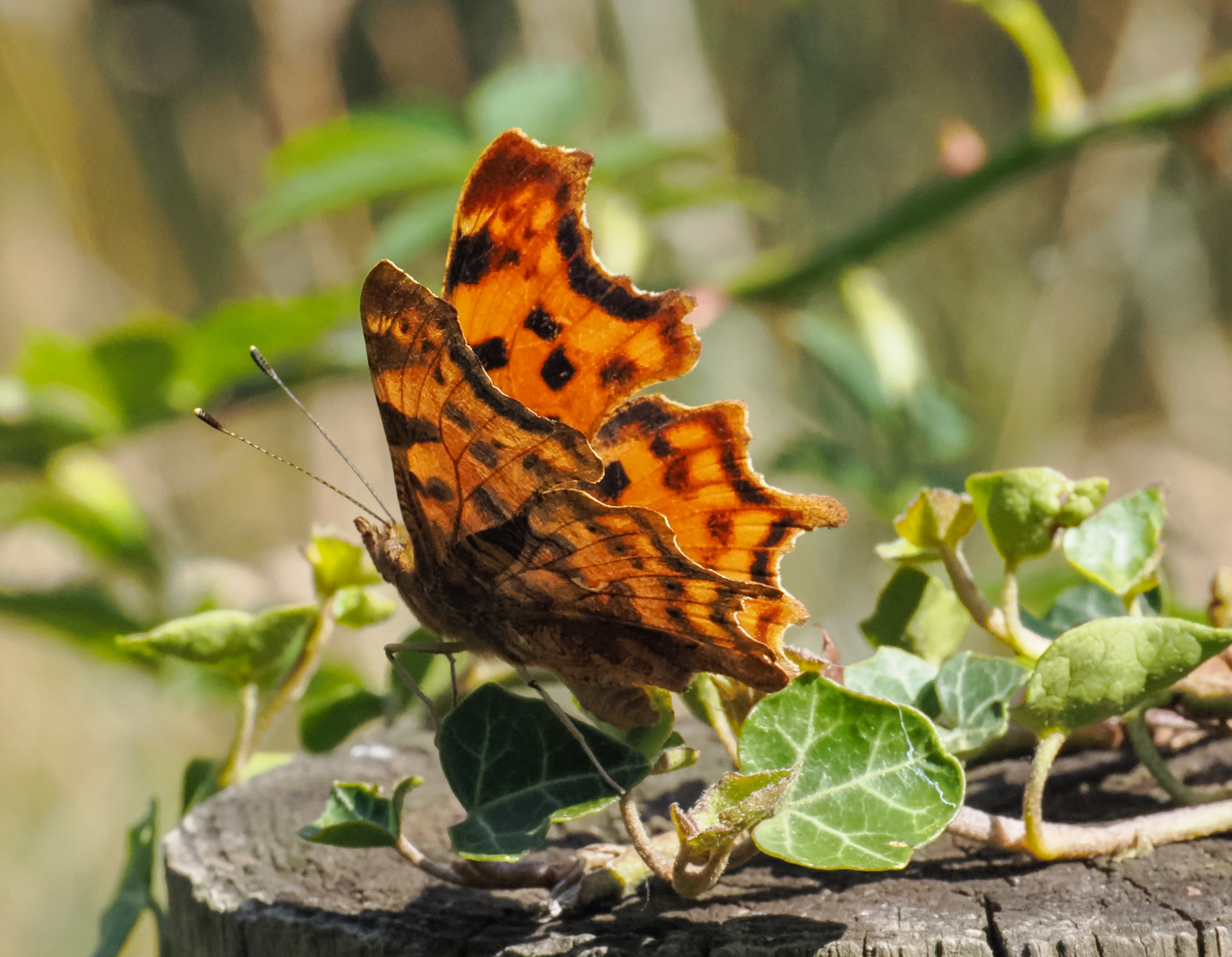
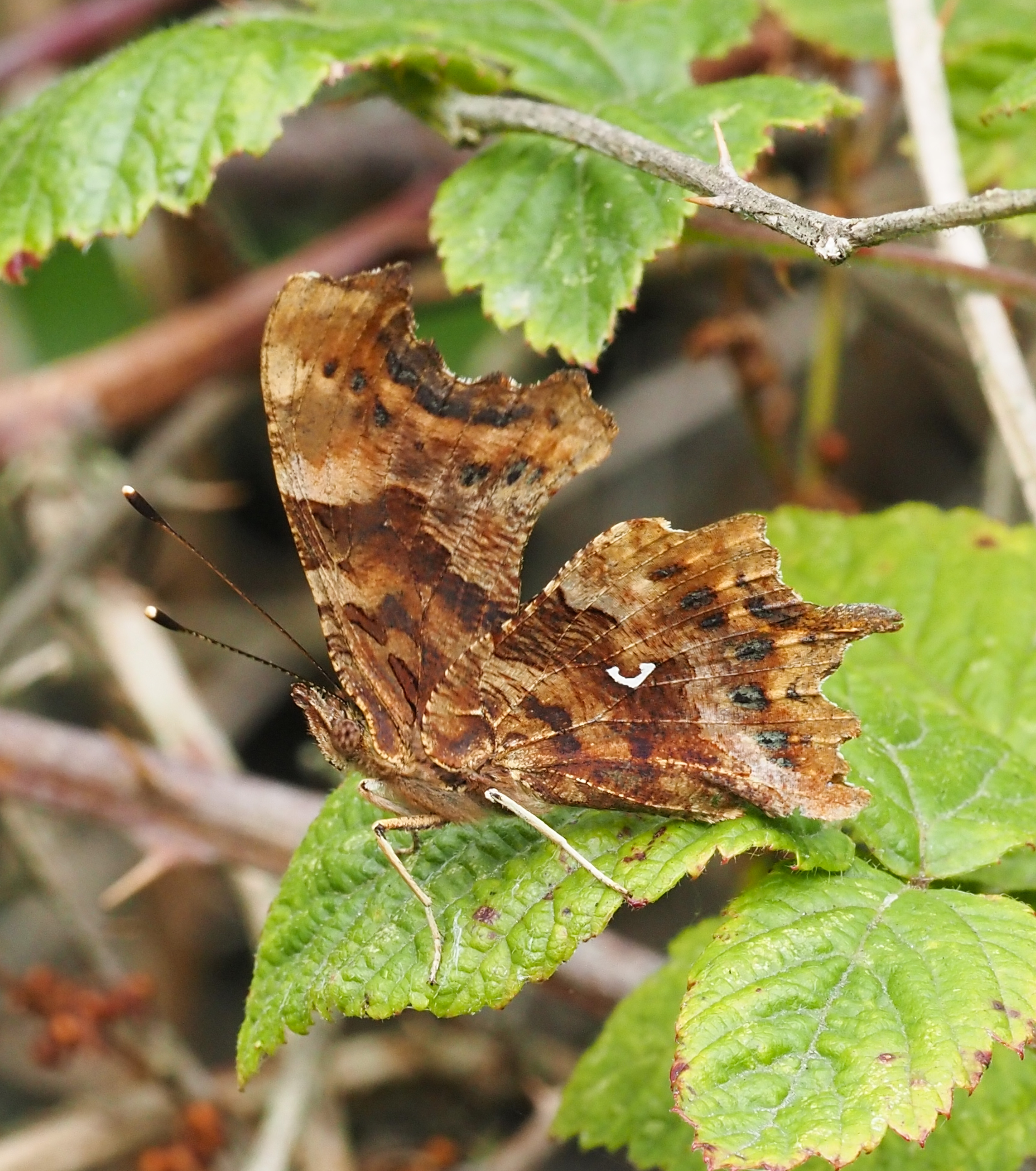
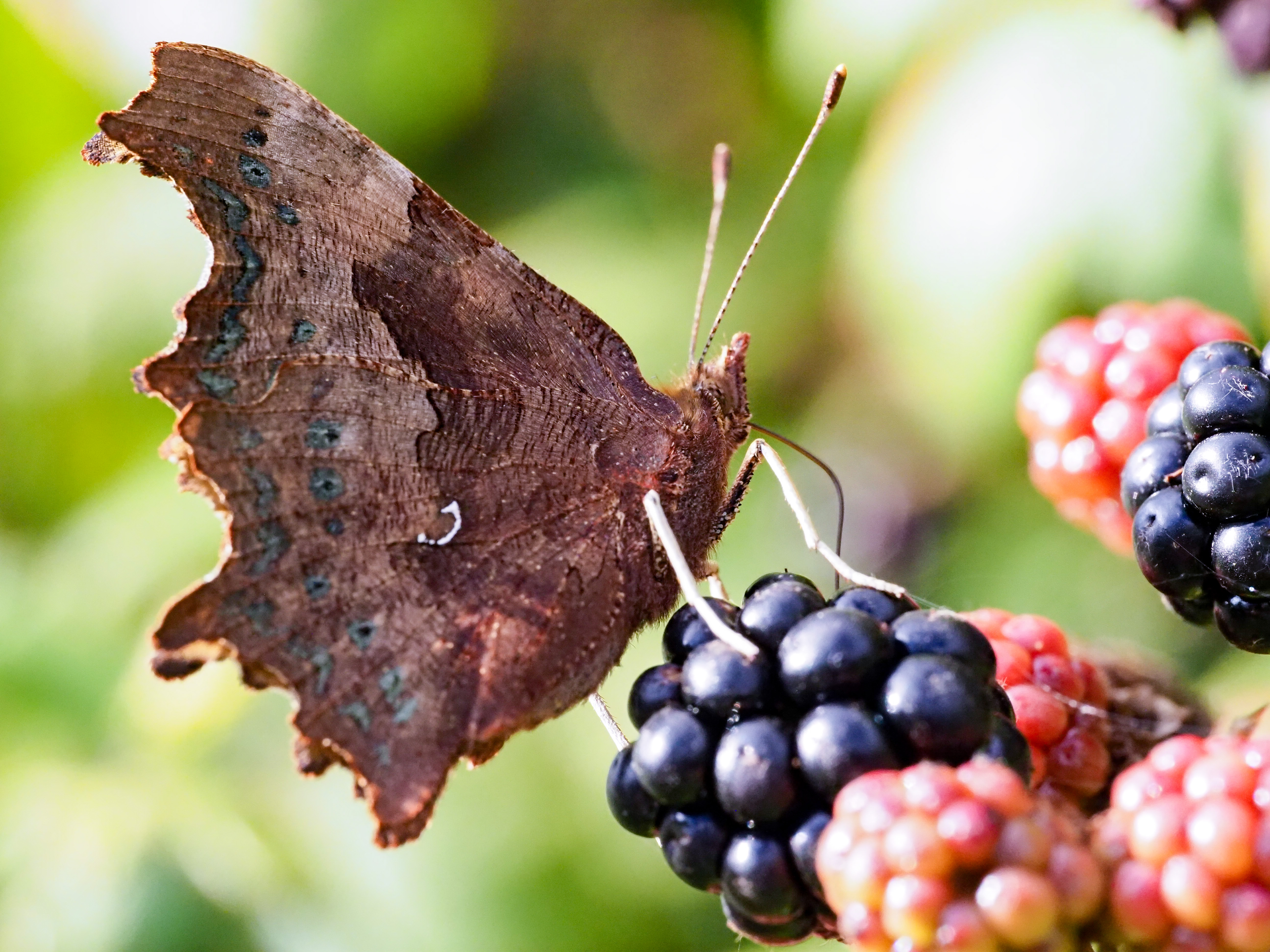
Comma butterflies are thought to be leaf-mimics, using the jagged, brown outlines of the undersides of their closed wings to appear like shriveled, dried leaves when at rest. This undoubtedly works well during its winter hibernation, but they can look very prominent to when standing on bright green leaves (below).
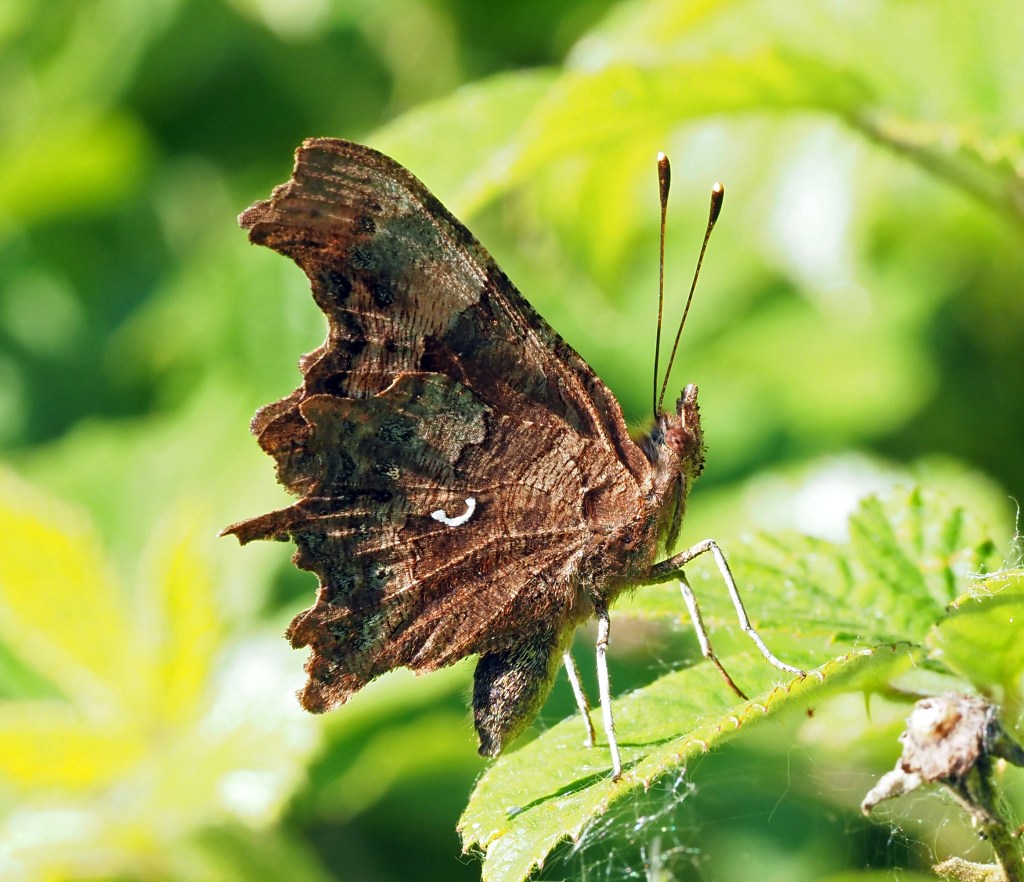
underside 13 June
The function of the white comma makings have been much discussed, including the idea that it looks very much like a bird dropping. My own favourite theory is that commas work as distractive markings; i.e. highly noticeable features, which draws the attention of would-be predators, like birds, away from the rest of the butterfly. Discussed in a previous blog: Distractive markings on lepidopteran wings.
The overwintering adults mate in the spring and produce the next generation (1st brood of the year) in mid-June to early July, again very much depending on how warm the weather is. In cool summers, more caterpillars develop into the normal, darker form, which doesn’t breed immediately but hibernates over winter as an adult (see below).
Here is a photo (below) of one I saw in April this year. It’s funny to think of them waiting out the winter – in a state of hibernation – tucked away in some deep, dark crevice, perhaps under a pile of logs, on in a dense thicket. Then gradually waking up again, warming up, and going out when the sun shines to look for a mate! They may have waited 10 months to find a partner, shivering away in their hidy holes, tiny lepidopterous bundles waiting to pass on their genes to the next generation. Bridging the year, stretching their generation into a new summer.
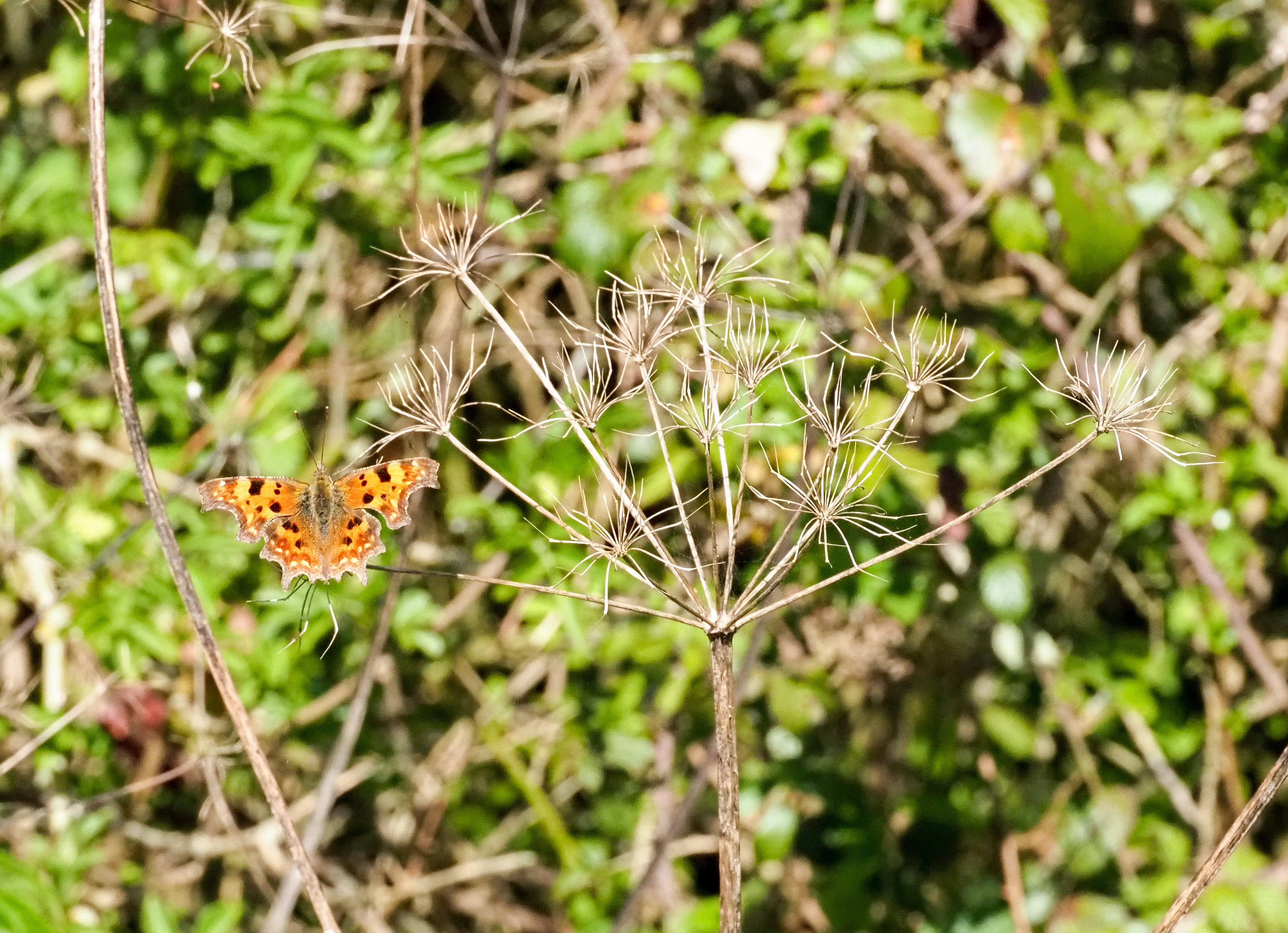
Two forms
The 1st brood caterpillars can develop into either of two forms, depending on temperature and day-length. First brood larvae, which develop before the summer solstice, are more likely to be hutchinsoni forms, although they can still develop after the solstice if the weather is very warm and the nettles the caterpillars feed on are very succulent. To summarise it: the light forms are short-lived reproducers, while the darker forms are the long-lived delayed breeders.
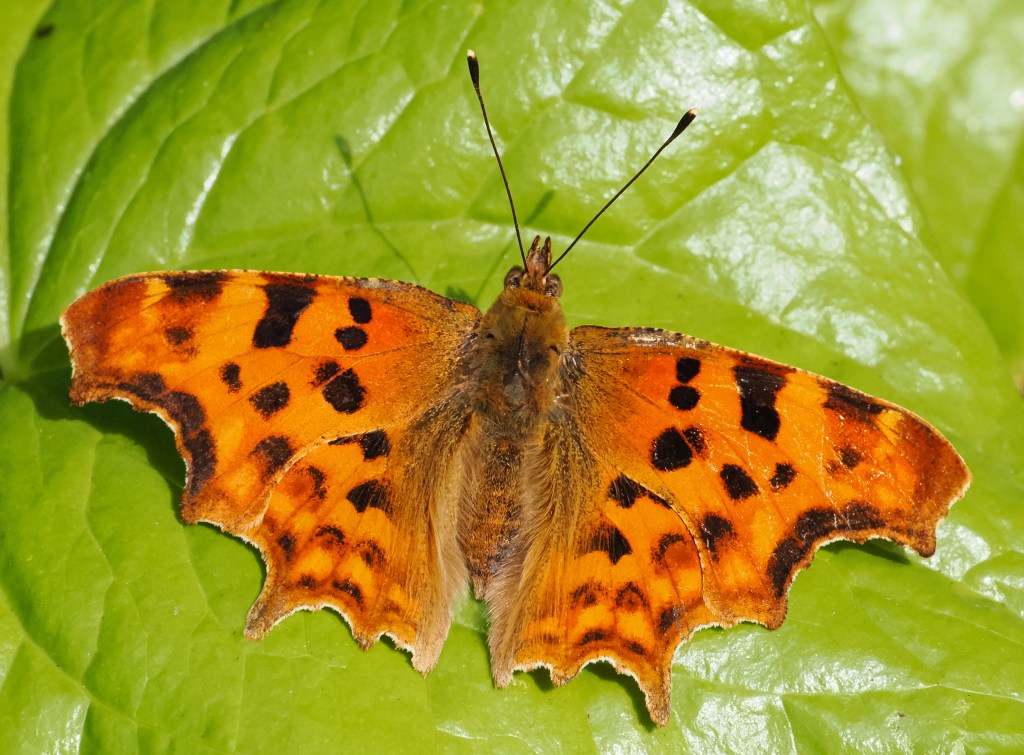
The golden-brown hutchinsoni forms shown above, produce a second generation of normal, darker looking adults that eventually go into hibernation – along with the first generation dark forms – and will not breed again until the following year.
Why change colour?
One theory is that the the lighter summer morphs (=forms) are better protected against predation on summer foliage, whereas the winter morphs are better protected on their hibernation sites, as discussed above. Another theory, is that the summer morphs are energetically less ‘expensive’ – I.e. they need less of the physiologically costly dark wing pigments – so that the butterflies can expend more resources on reproduction, rather than on synthesizing darker wing pigments. I’m not sure about this, to be honest, as the two forms are not that different, but I could be wrong.
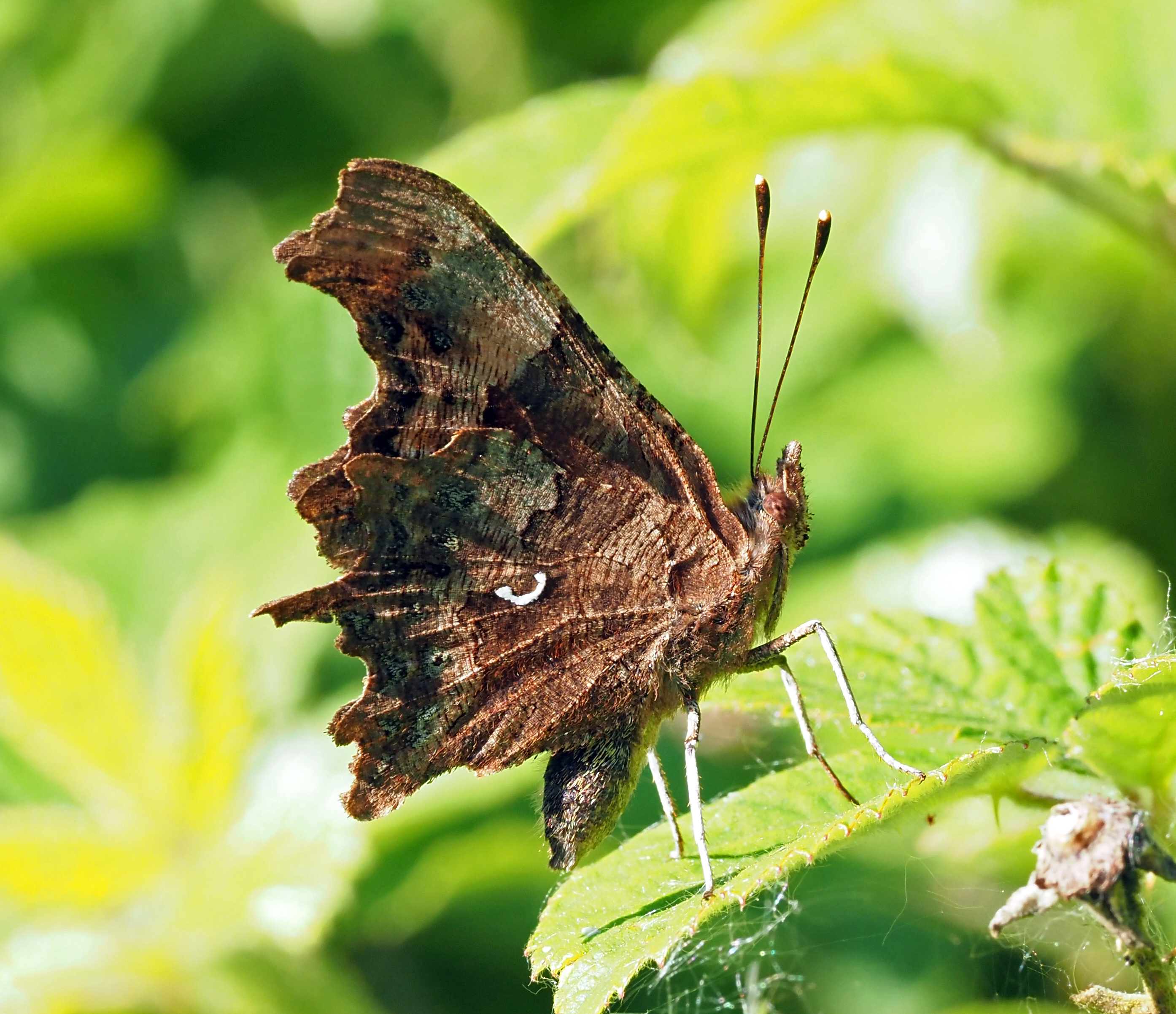
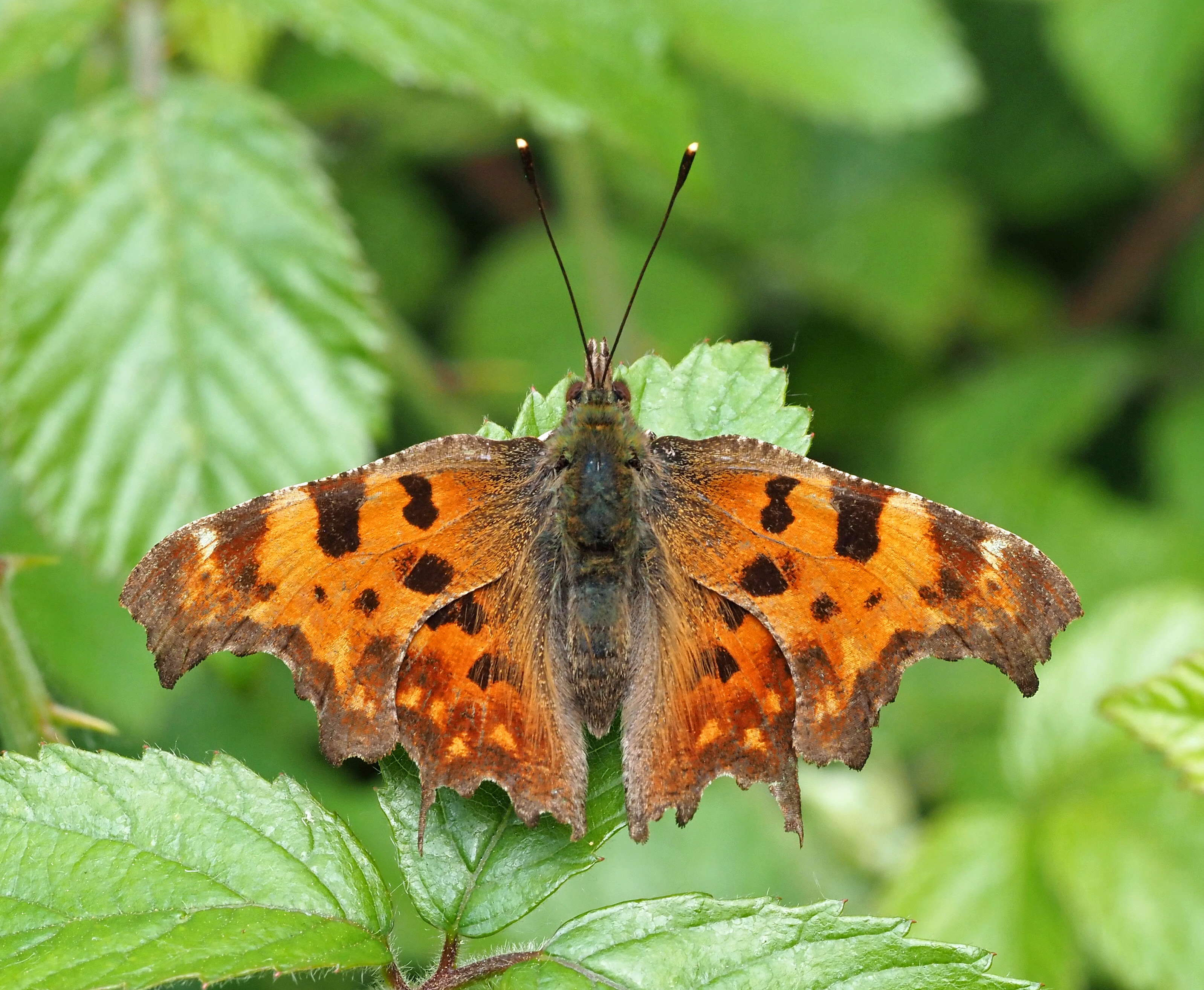
The two butterflies shown below are darker forms photographed on 13 June 2021. It just is possible that they have over-wintered the previous winter season, but more likely that they are dark forms of the new (1st brood) generation.
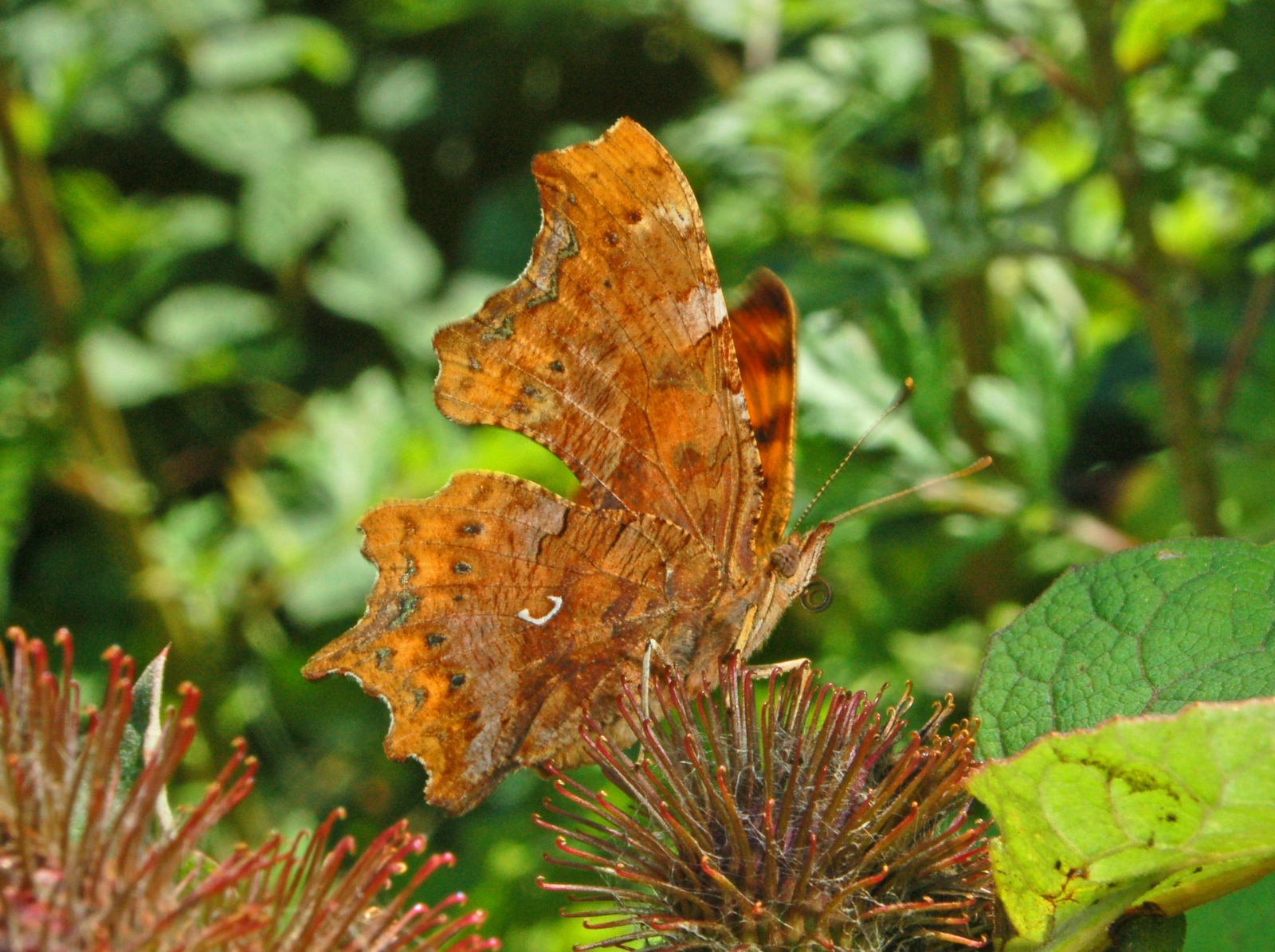
In July, the hutchinsoni summer forms appear, with their brighter, golden-orange upper wings and paler brown patterning on the underside, i.e. compared to the normal adults that go on to hibernation. They also have shorter wing tails – projections at the end of the hind wings – and a more golden underside, like this individual from Italy (see below).
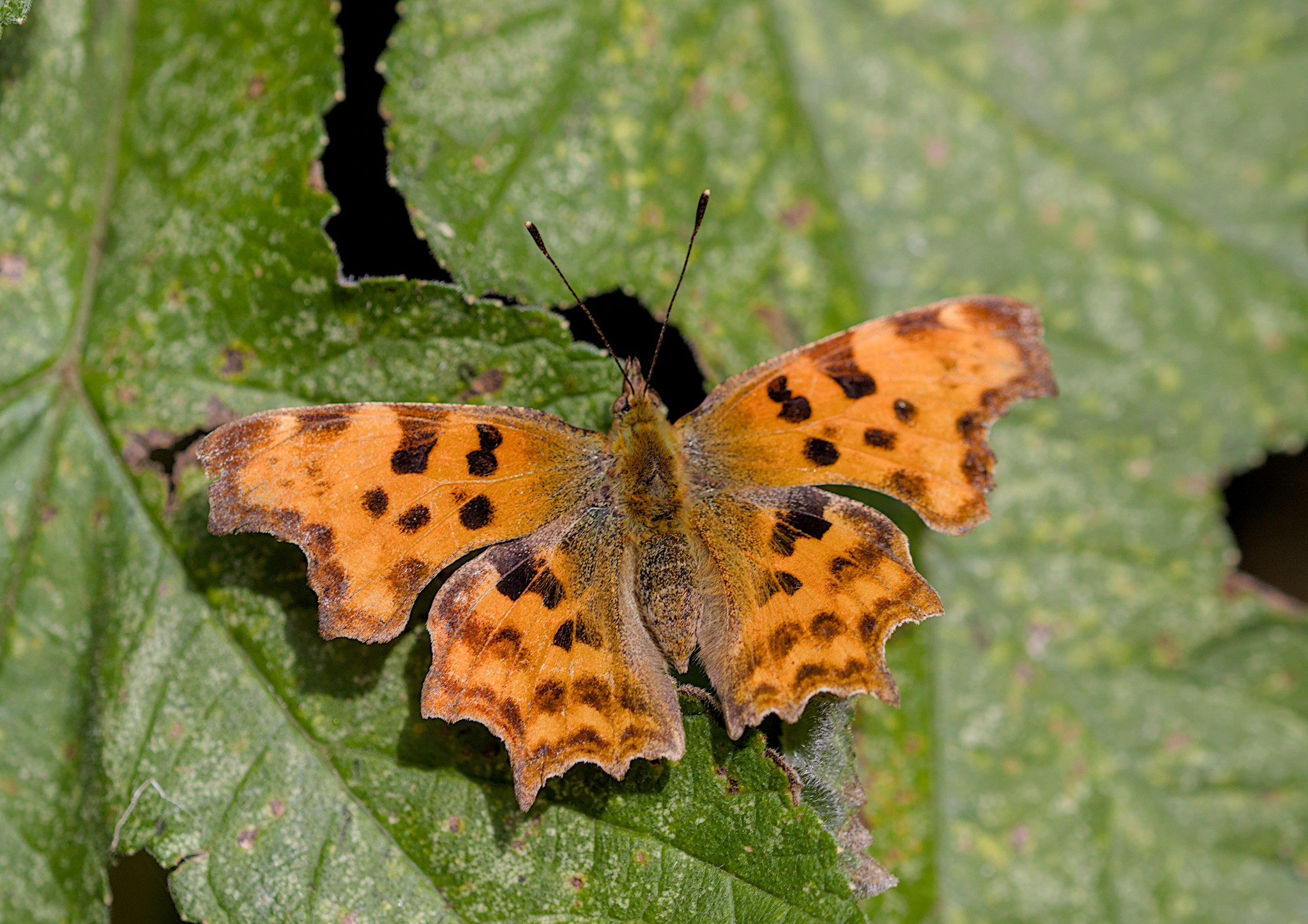
In practice, in my experience, it is often quite difficult to tell which form an individual is, as the males and females also look different; so it is best to go by the smaller protuberances (or tails) on the wings, which are noticeably shorter in hutchinsoni than in the typical form, like this individual shown below.
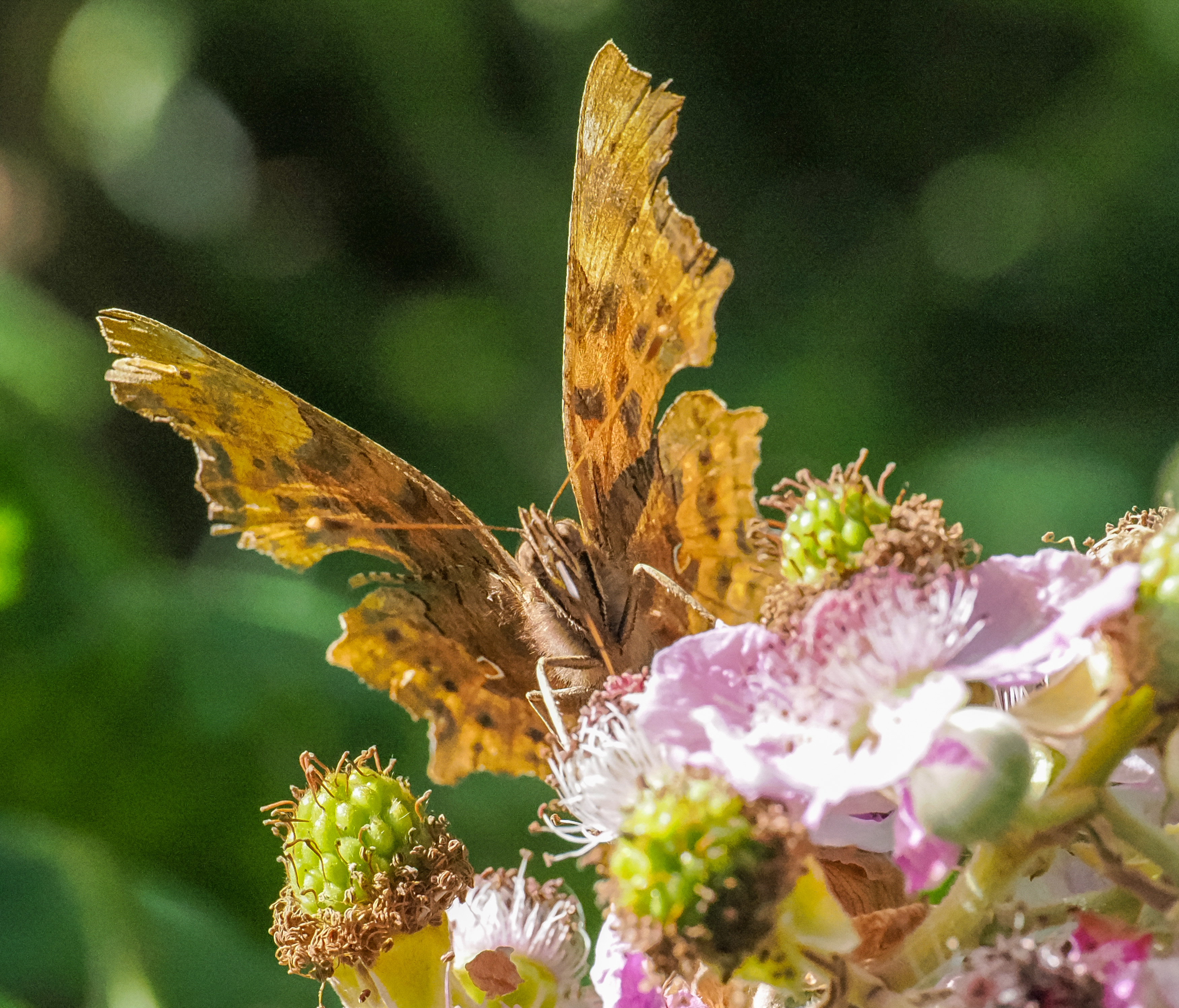
Also, when the butterfly’s wings are back-lit by sunshine, the undersides can look rather light coloured, despite being a normal form (!), as in a couple of images shown below (all taken in July). However, most of the golden butterflies shown below, taken in July, are I think, hutchinsoni forms, despite not having having very short protuberances! But I stand to be corrected!
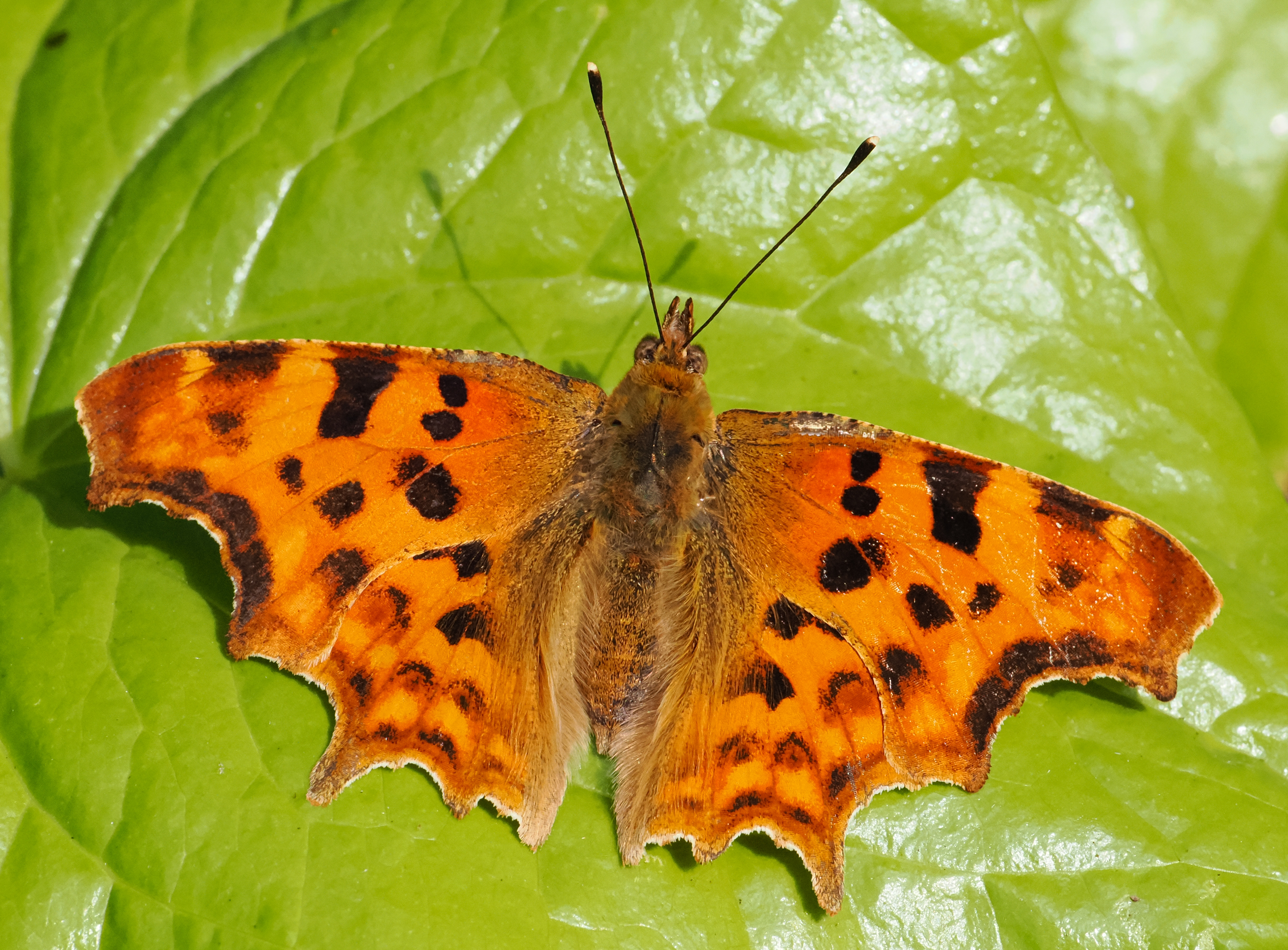

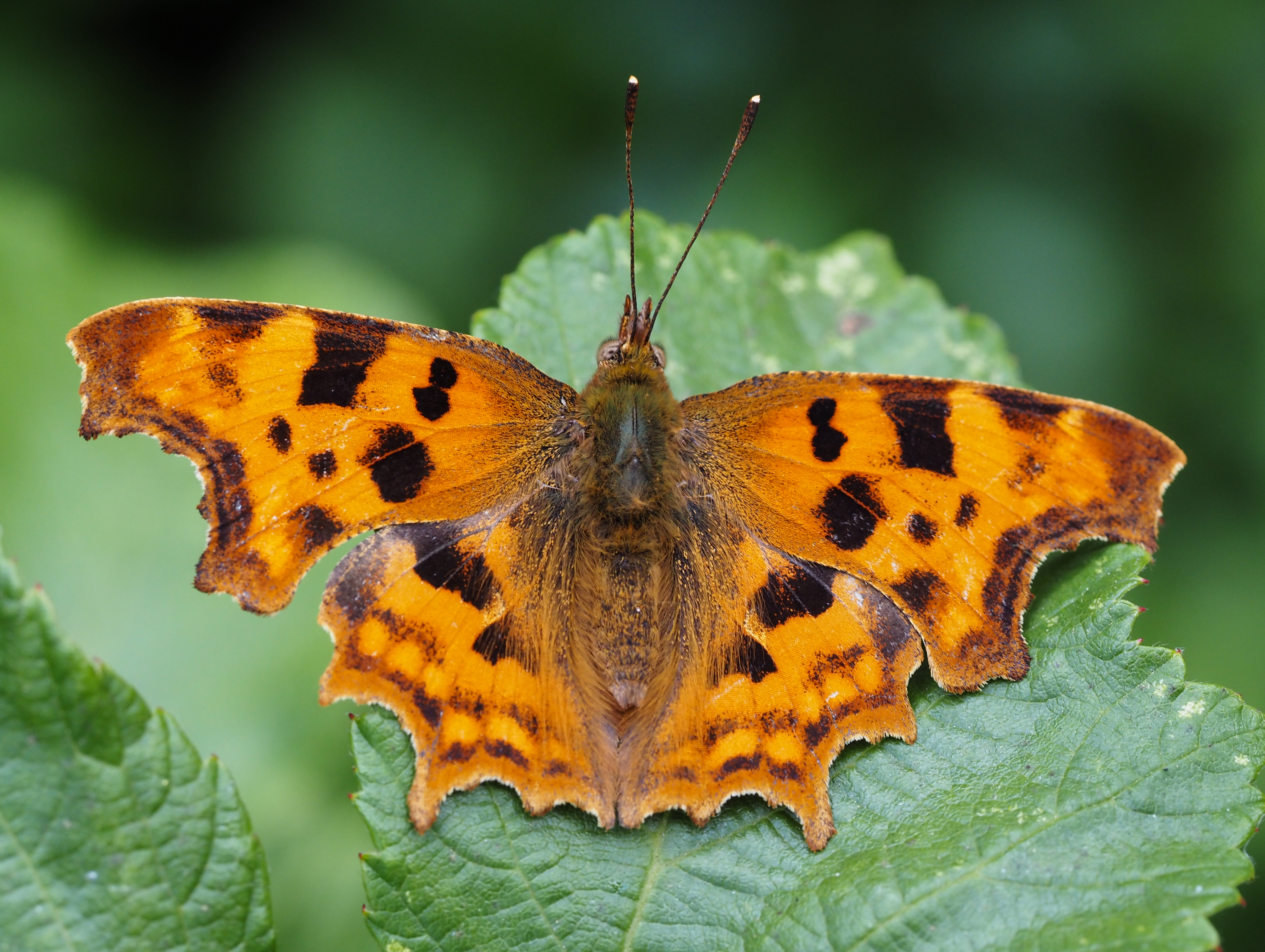

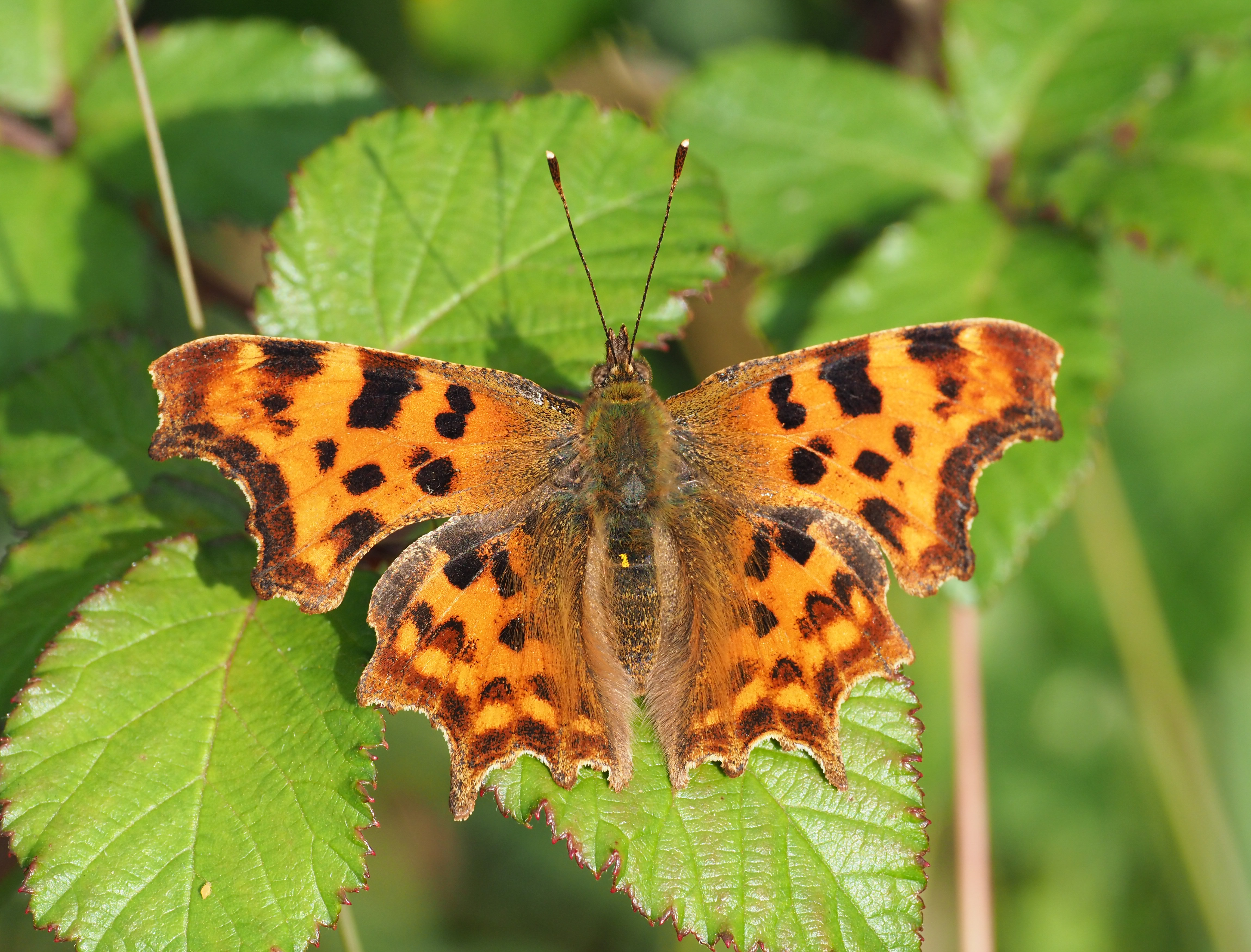
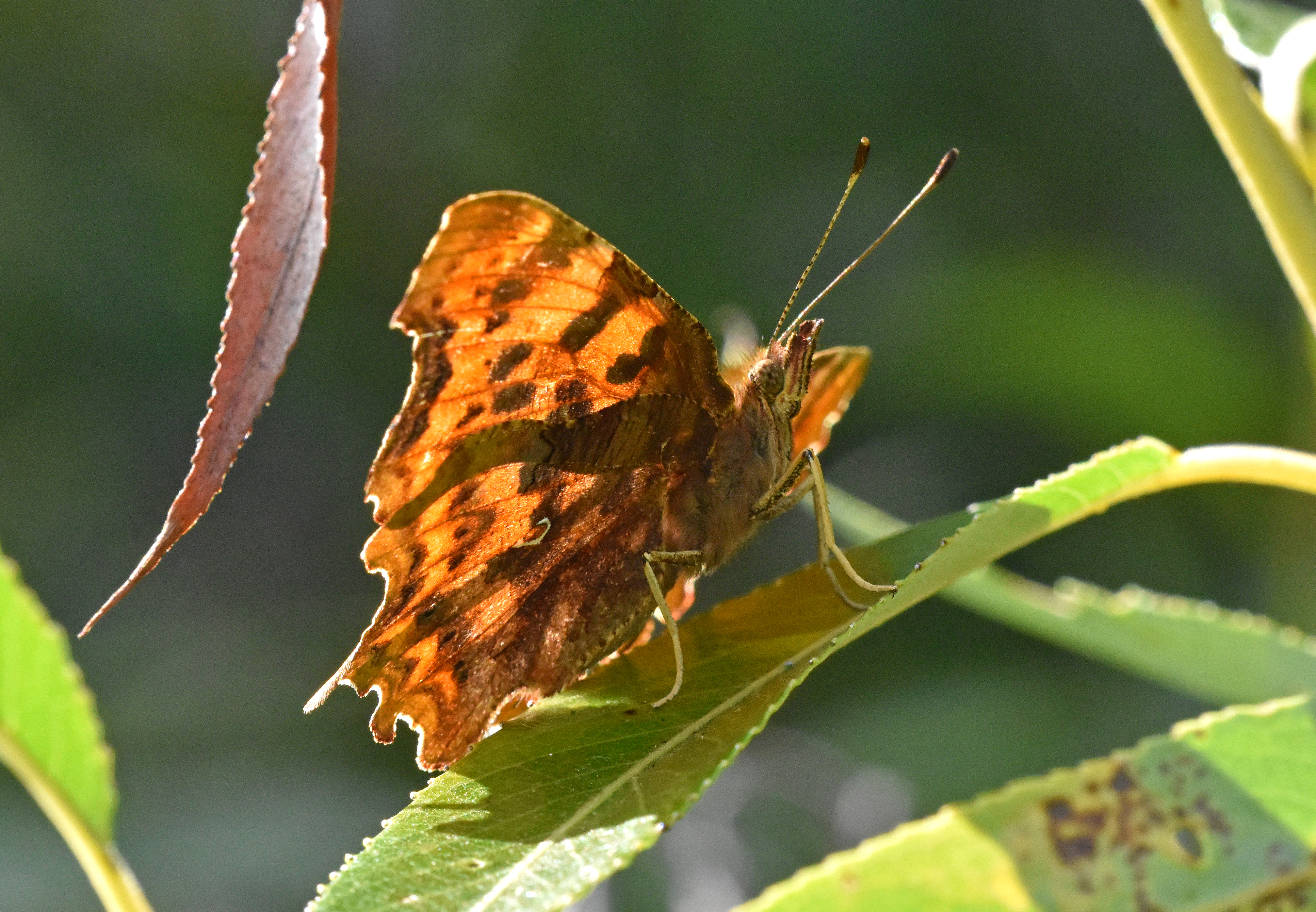
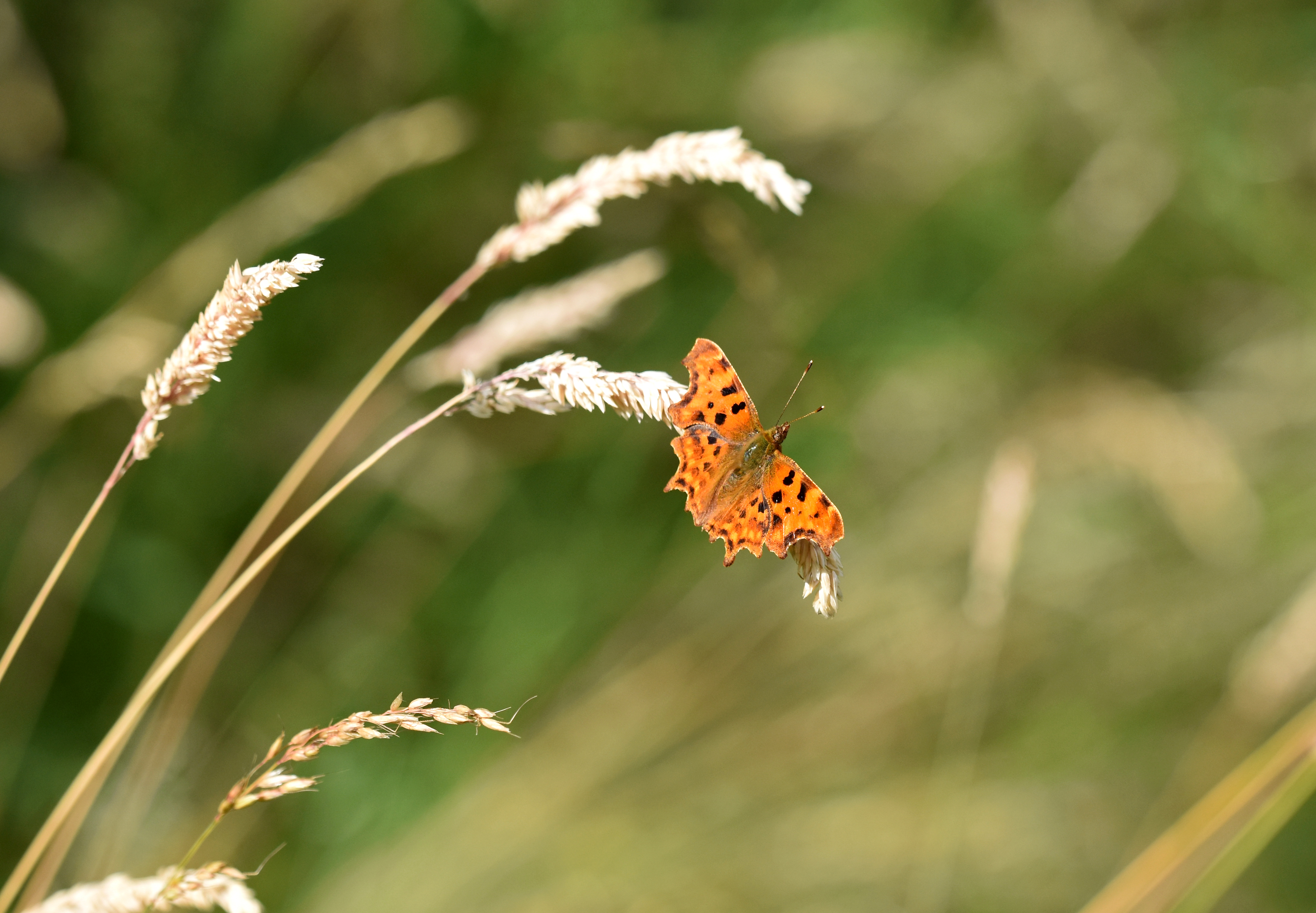
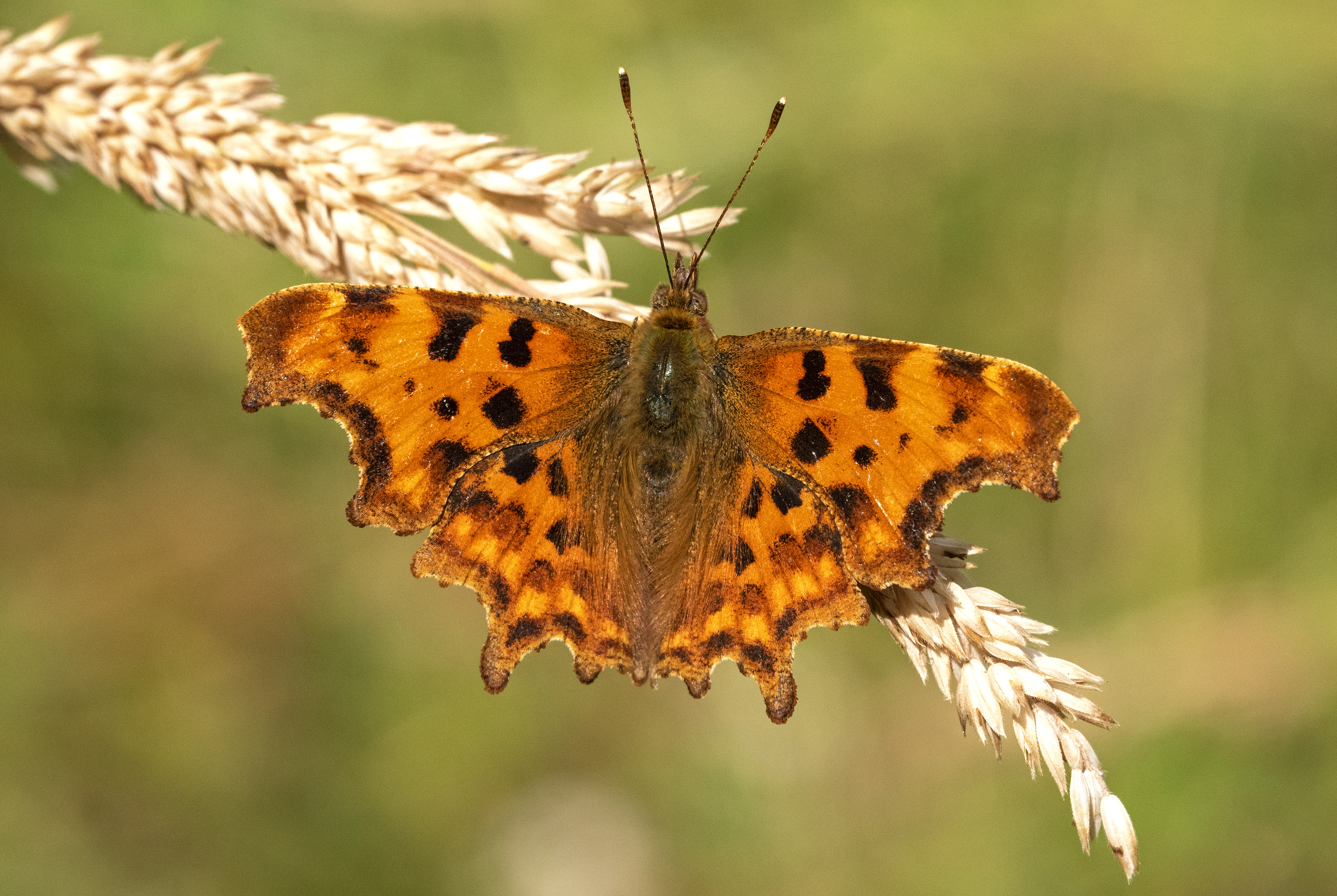
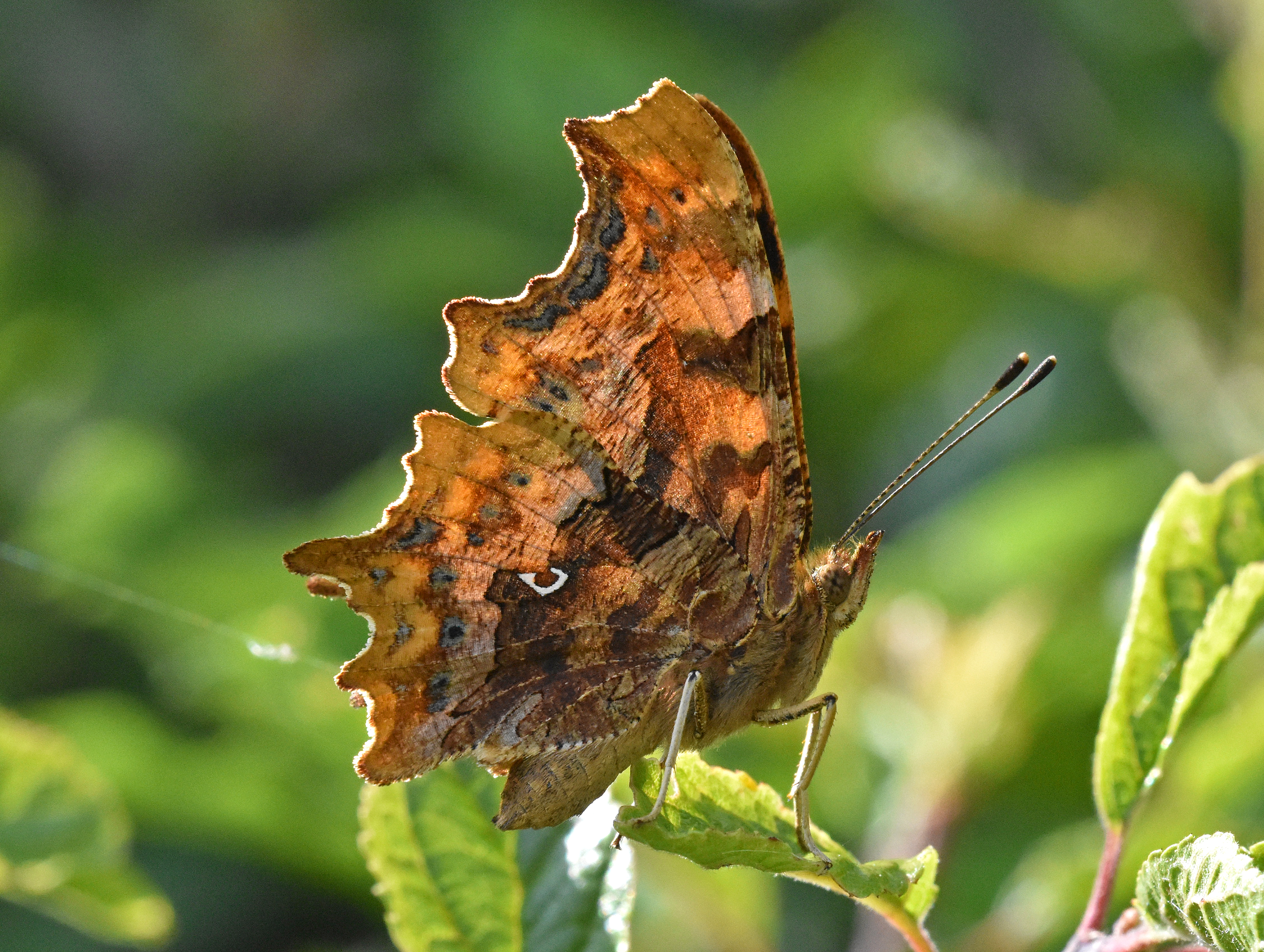
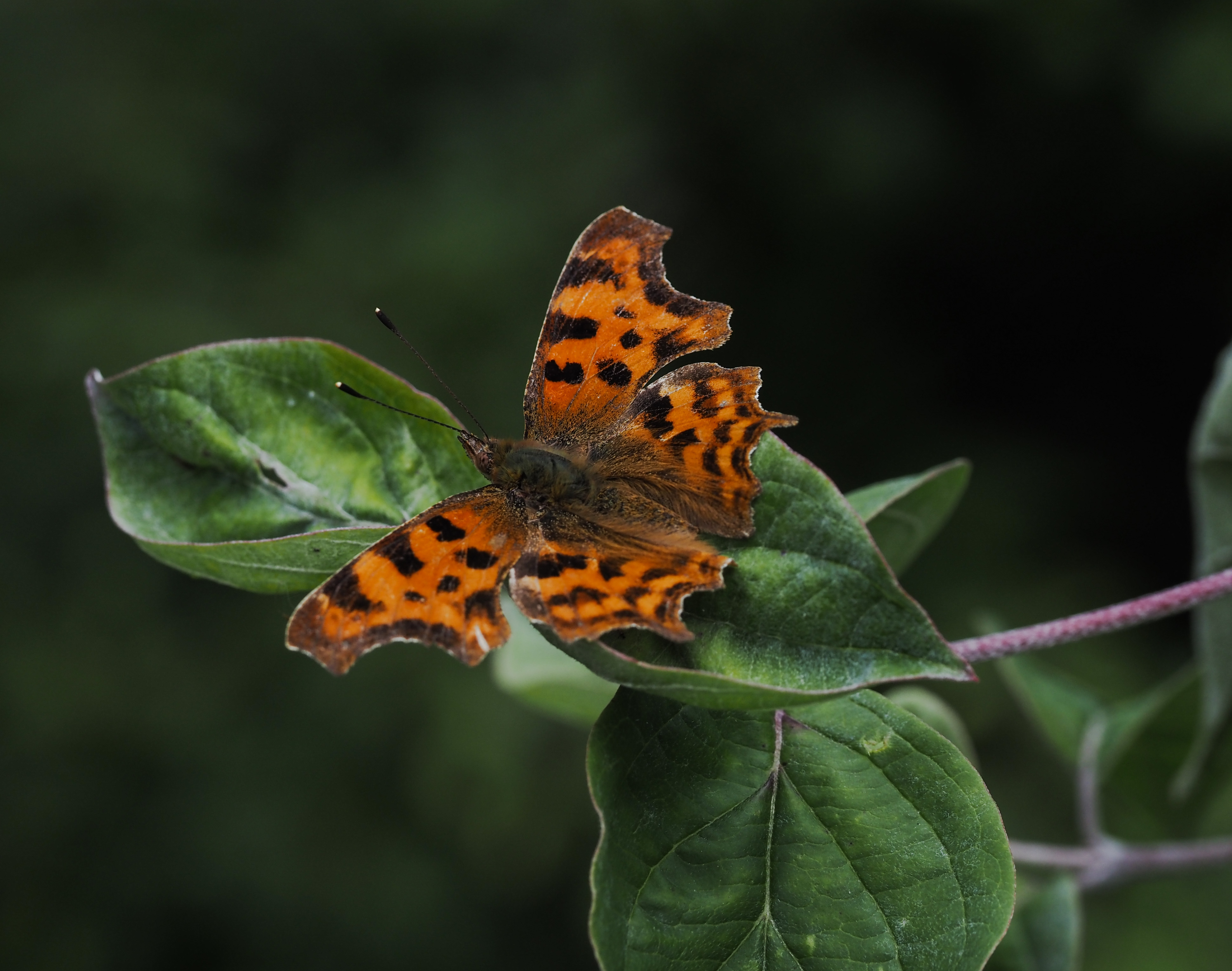
Some of the darker commas emerge in July and August (see below).
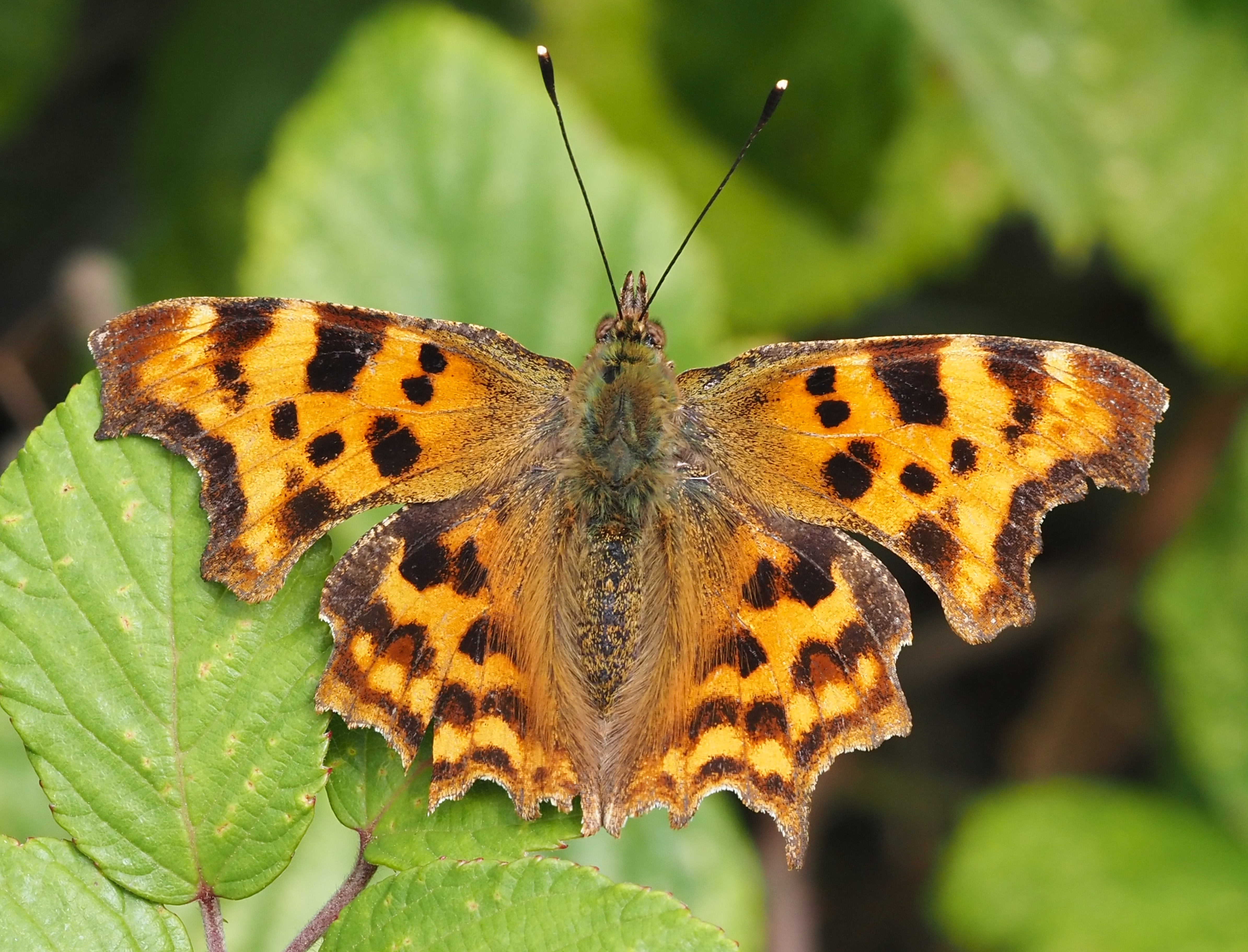
The dark forms are usually seen in September and October, as well as in the following spring. The autumn/winter generation become a much richer, darker, reddish-orange than the paler, brighter orange summer generation, helping them blend in with the ripening herbage, I suppose. But once again, they can look very prominent with their bright orange wings on dark green foliage (see below).
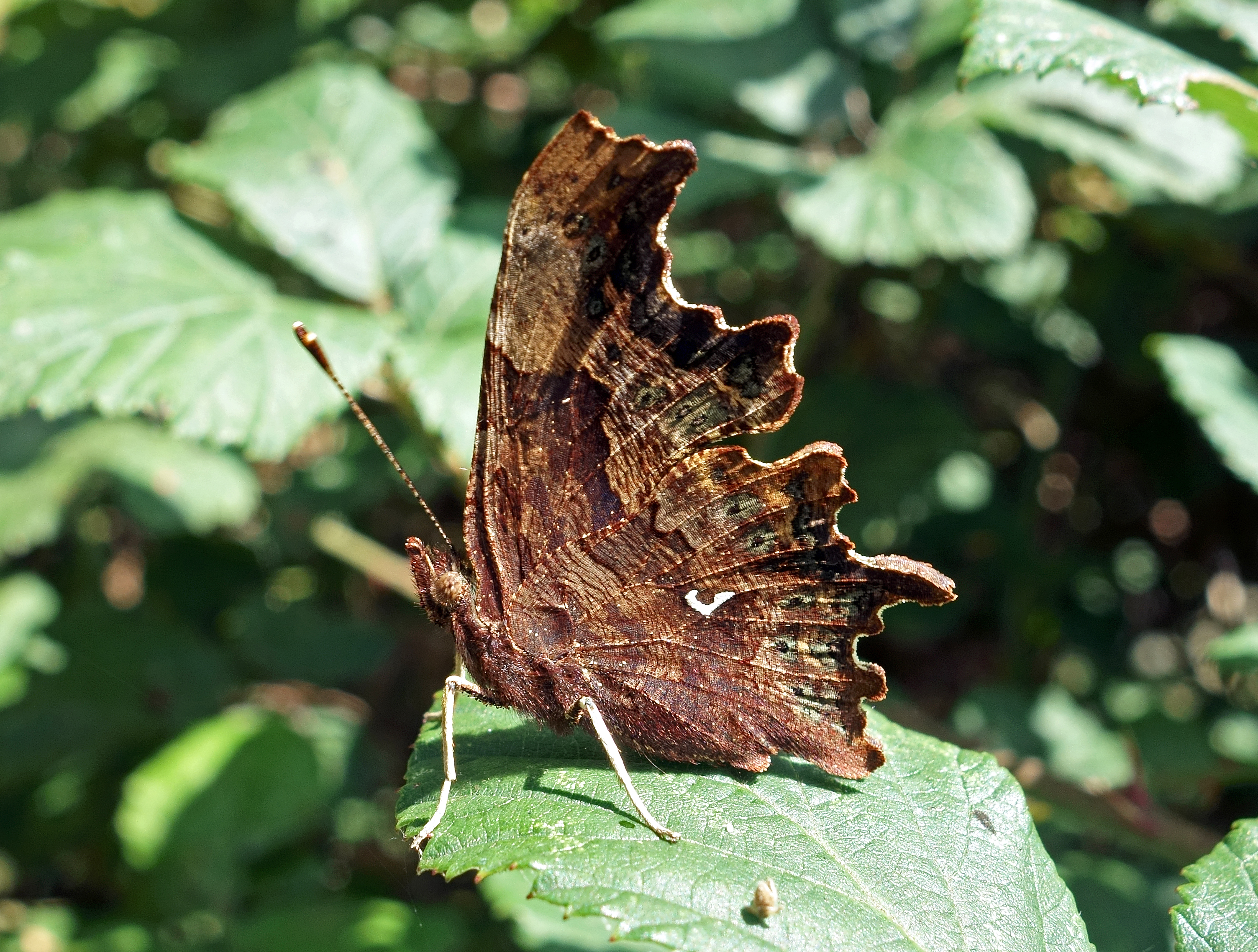
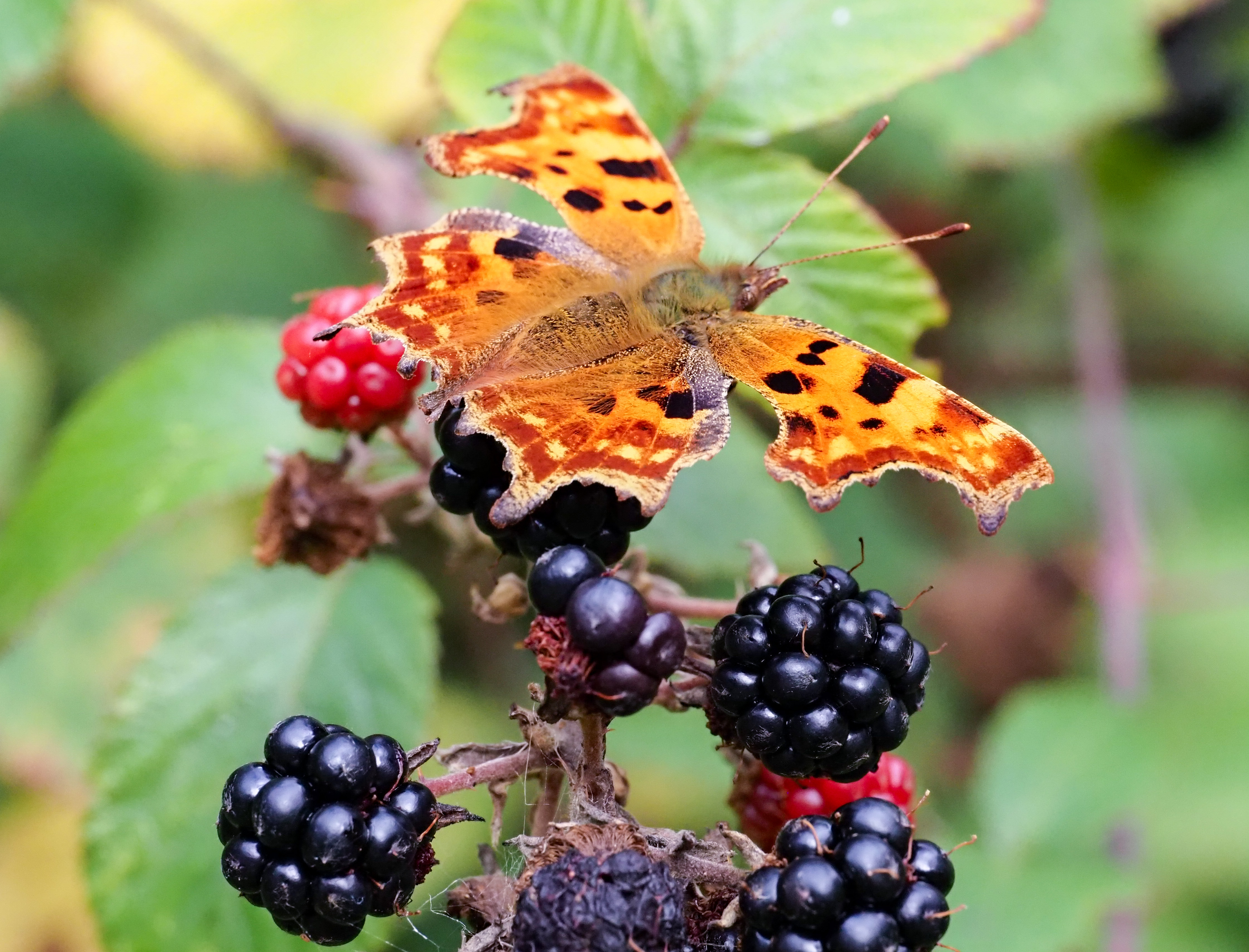
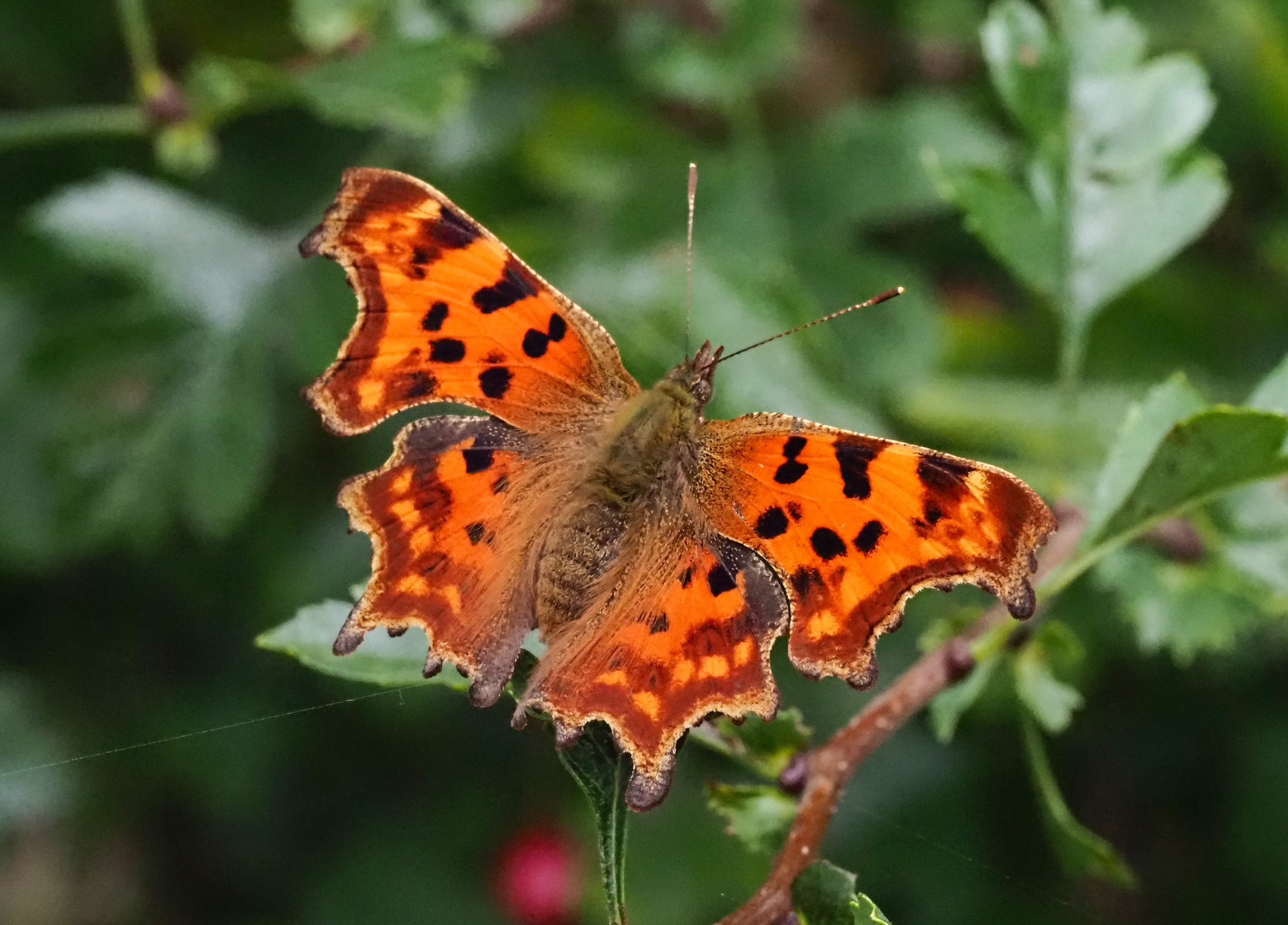
This individual (below) was still hanging around in early October!
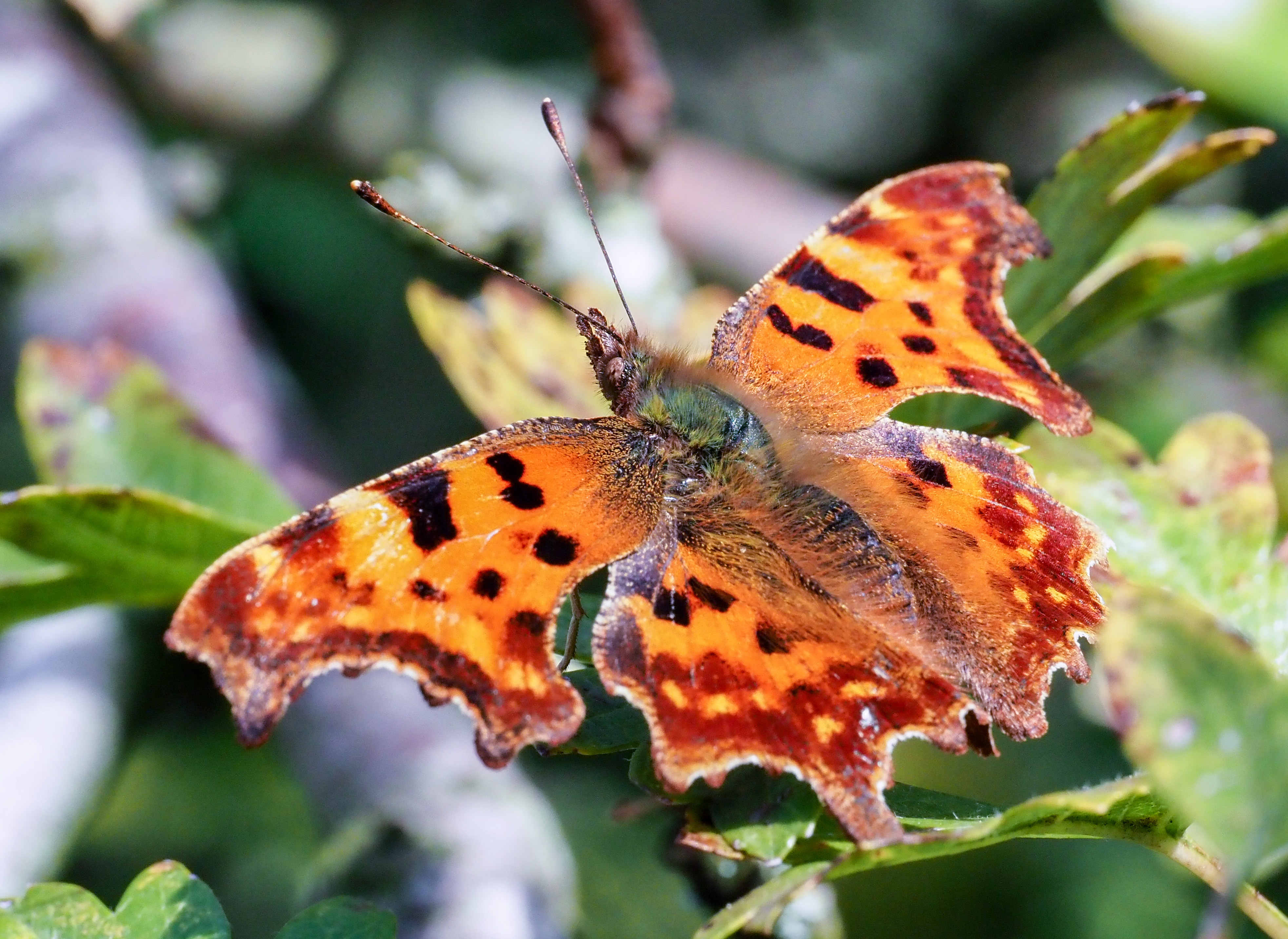
The sexes are hard to tell apart, although the normal male is slightly darker, and slightly smaller (on average), than the female (see here). The female is also darker on the under wings.
The light morphs are individuals that mature and reproduce within one season, while the dark morphs enter diapause, overwinter in the adult stage, and reproduce in the following spring. The proportion of commas that are form hutchinsoni in the summer in the UK varies from year to year depending on the weather, but can be up to half of the first brood.
The morphs are determined by a variety of factors, including photoperiod, temperature, and larval diet, so although increasing daylength during larval development will result in light morphs, it is not the only factor influencing the number of generations per year. However, as described in the The butterflies of Britain and Ireland by Thomas and Lewington, the system enables butterflies to capitalize on early springs and and warm seasons, so that the individuals which have completed their development before the longest day of the year can go on to have a second generation in the same year.
In colder countries like Sweden, commas only have one generation per year (univoltine), whereas in hotter countries like Spain, they can have three generations. The comma butterfly has increased in numbers in recent years and has likewise expanded its distribution in the UK (Fox et al., 2006).
The more I have looked at the literature, the more I think there is a need for more research on this species, particularly as things are changing quickly. The warmer springs we are experiencing as a result of climate change are leading to both the earlier emergence of overwintering adults and the faster development of eggs and larvae. This will drive up the number of direct-breeding individuals as well as the number of generations per year in many areas.
As a result of climate change, the comma butterfly – once largely confined to the southern half of Britain – has undergone a massive range expansion over the last 50 years, spreading into northern England, southern Scotland, and Ireland. A good new story featuring a very beautiful creature!
References
Fox R, Asher J, Brereton T, Roy DB, Warren M (2006) The State of Butterflies in Britain and
Ireland., Oxford, Pisces publications.
Thomas, J. and Lewington, R. (2020). The butterflies of Britain and Ireland. Bloomsbury Publishing.
Wiklund, C., & Tullberg, B. S. (2004). Seasonal polyphenism and leaf mimicry in the comma butterfly. Animal Behaviour, 68(3), 621-627.
u
 Ray Cannon's nature notes
[…] summer generation is relatively short-lived, lasting for only a month or less (see previous blog: A kaleidoscope of commas!). The two generations of the Comma also have a slightly different appearance: the summer form […]