Plants have a variety of different relationships with insects. Being static organisms, plants need help to reproduce with other, potentially distant members of the same species. As such, they have recruited a variety of different animals, including insects, to act as pollinators. The insects transact the deal – carrying pollen back and forth between flowers – and are (usually) rewarded with pollen or nectar.
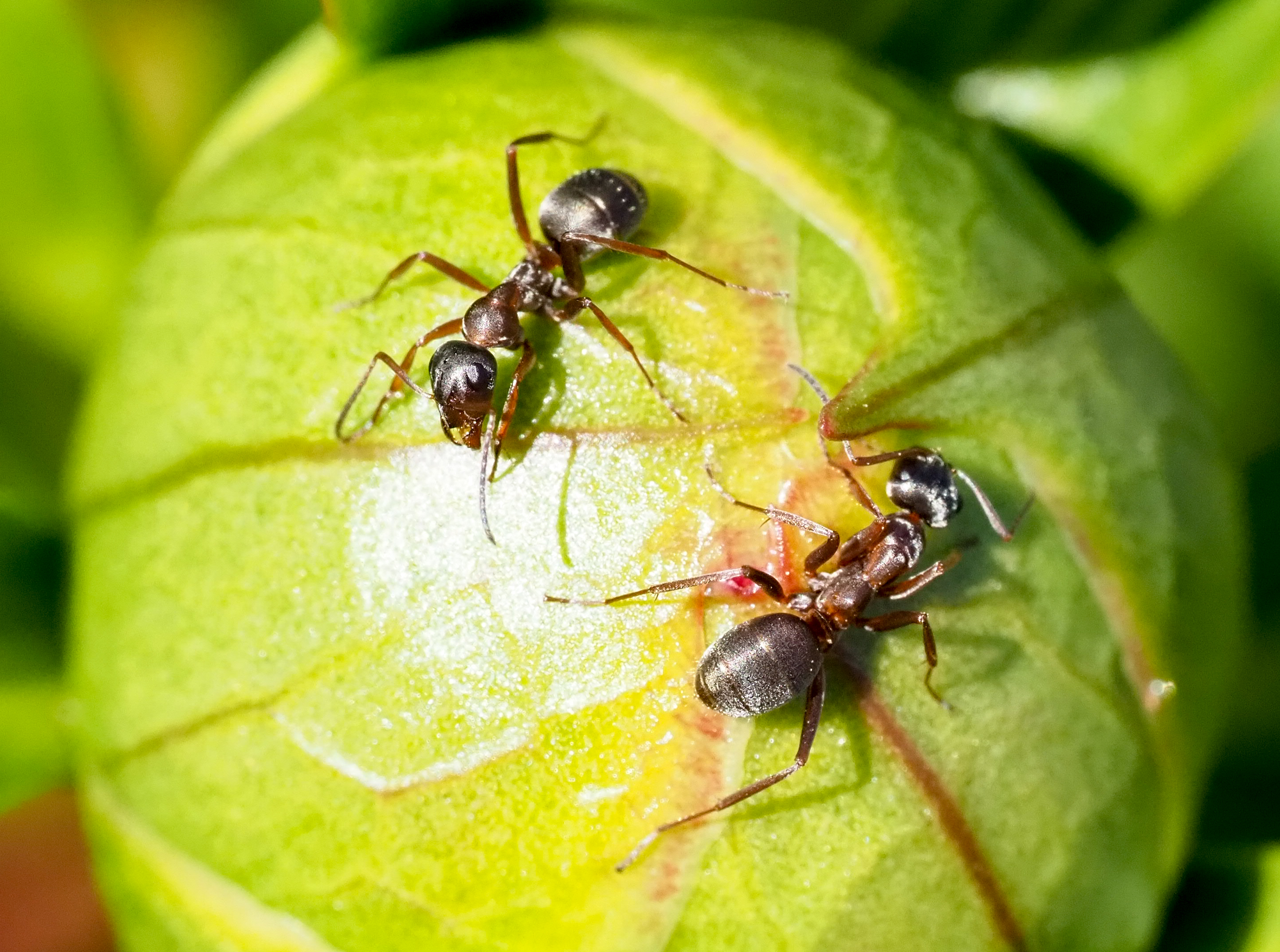
Photograph by Raymond JC Cannon
Plants and insects have also developed mutually satisfying (i.e. mutualistic) relationships, where the plants reward the insects for providing protection. By protection, we mean keeping other herbivorous insects from eating the plant; or at least from biting chunks out of it!
Ants feature prominently as ‘pugnacious’ bodyguards – a lovely description by American researcher Barbara Bentley (1977) – which patrol the tender growing plants and attack any other insects which pose a threat; like caterpillars.

To reward the ‘heavies’, plants have developed a multitudinous array of extra-floral nectaries (EFNs): sugar-producing glands sited away from the flower; as they don’t want the ants to disturb the busy flower-visiting pollinators! I have written about such relationships between plants and ants before: in Common vetch (Vicia satica) and Guelder rose (Viburnum opulus) – see here and here.
The ants may also have something of a side-hustle going on: farming their own sugar-producing insects – typically aphids – for their honeydew (see below).
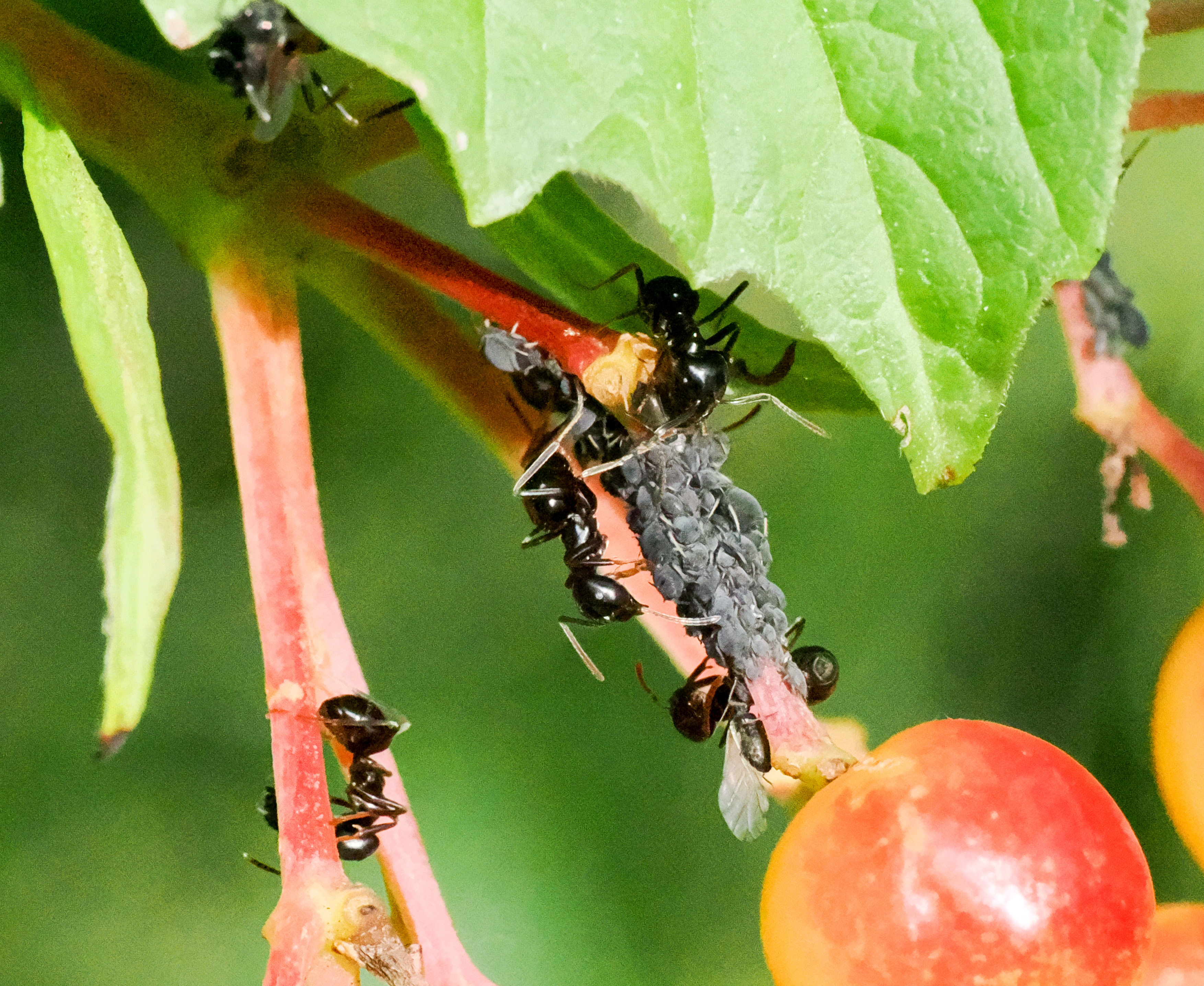
Last April (2025) I photographed another common mutualistic interaction: that between peonies (Paeonia species) and black garden ants (Lasius niger). Extra-floral nectaries can occur on a bewilderingly large number of locations, including on leaves, midribs, petioles, but in the case of peonies, the EFNs are located on the outside of the peony flower buds, specifically on the sepals and floral bracts.
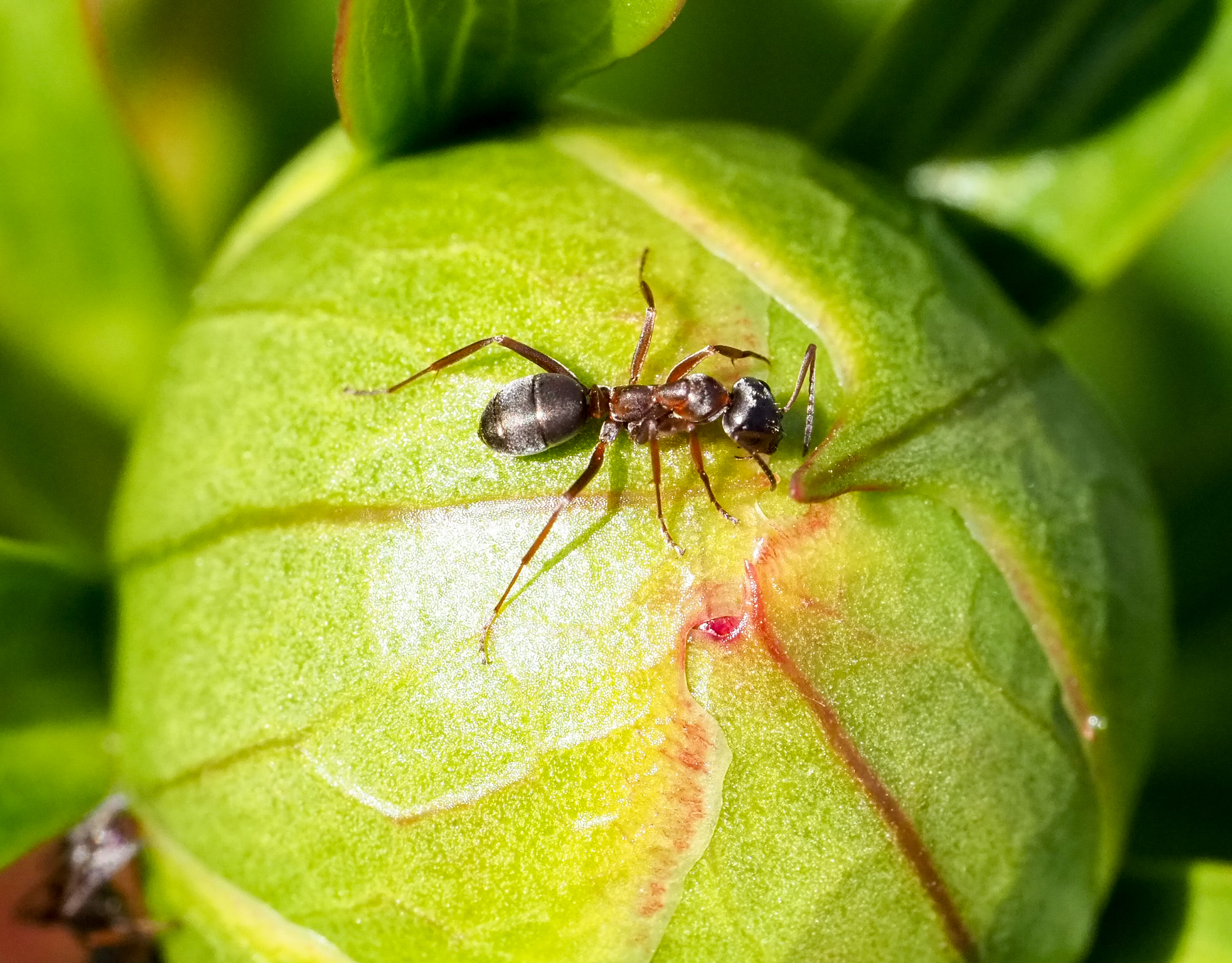
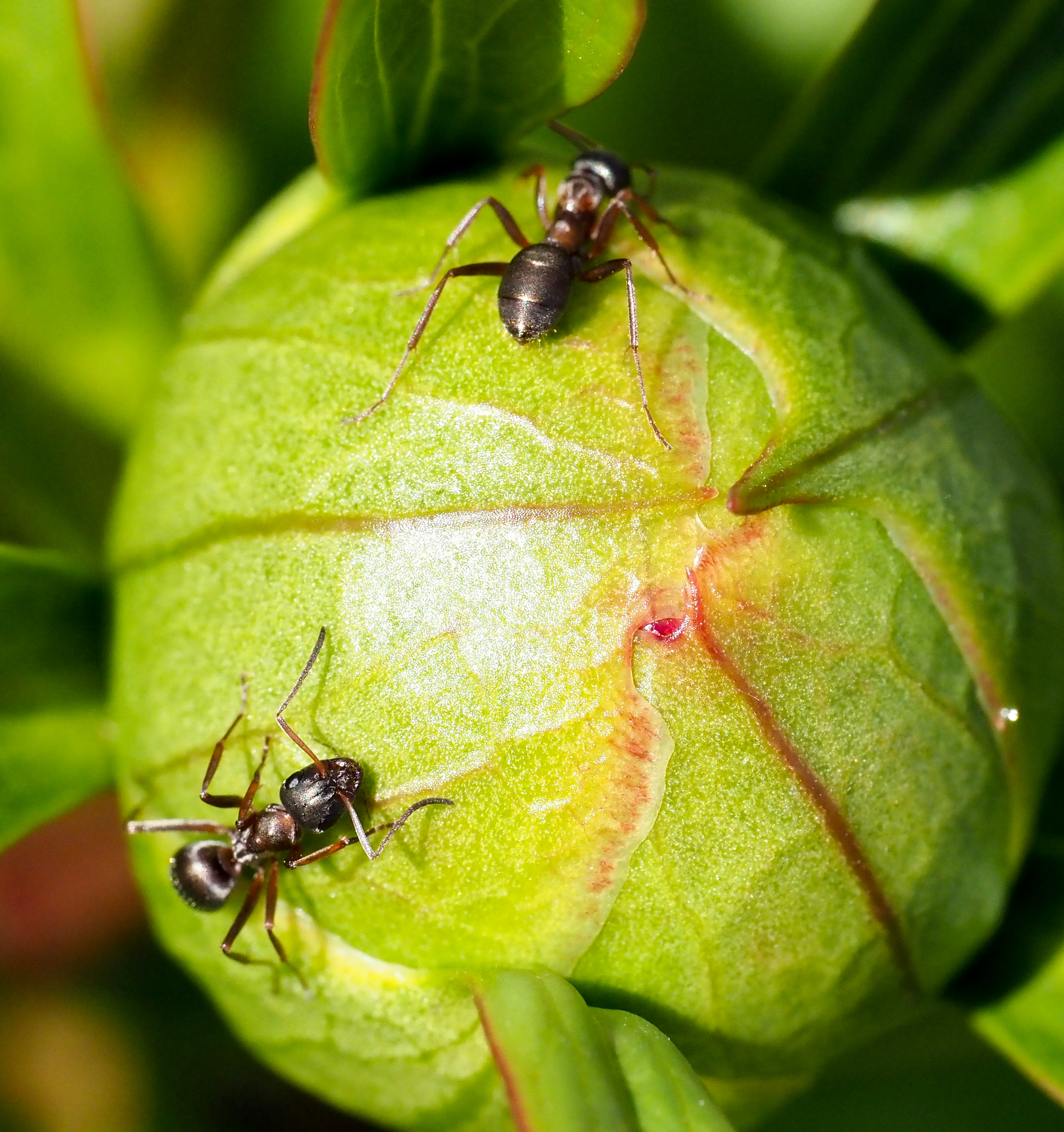

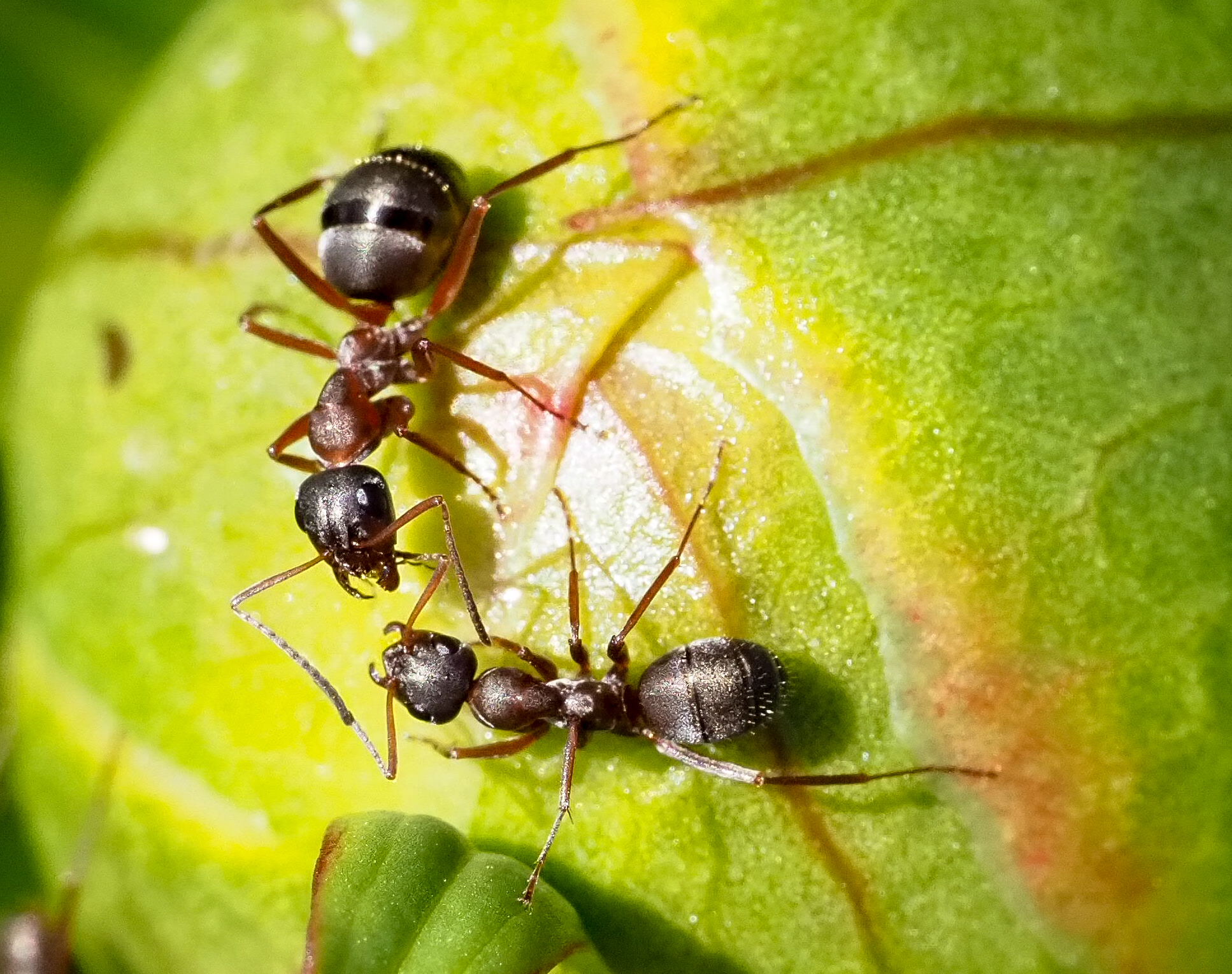
Photograph by Raymond JC Cannon
Ants are formidable predators, so their presence on the developing peony buds presumably helps keep them free of herbivores that would otherwise happily start eating the delicious flower bud: see ants getting rid of a caterpillar in this video.

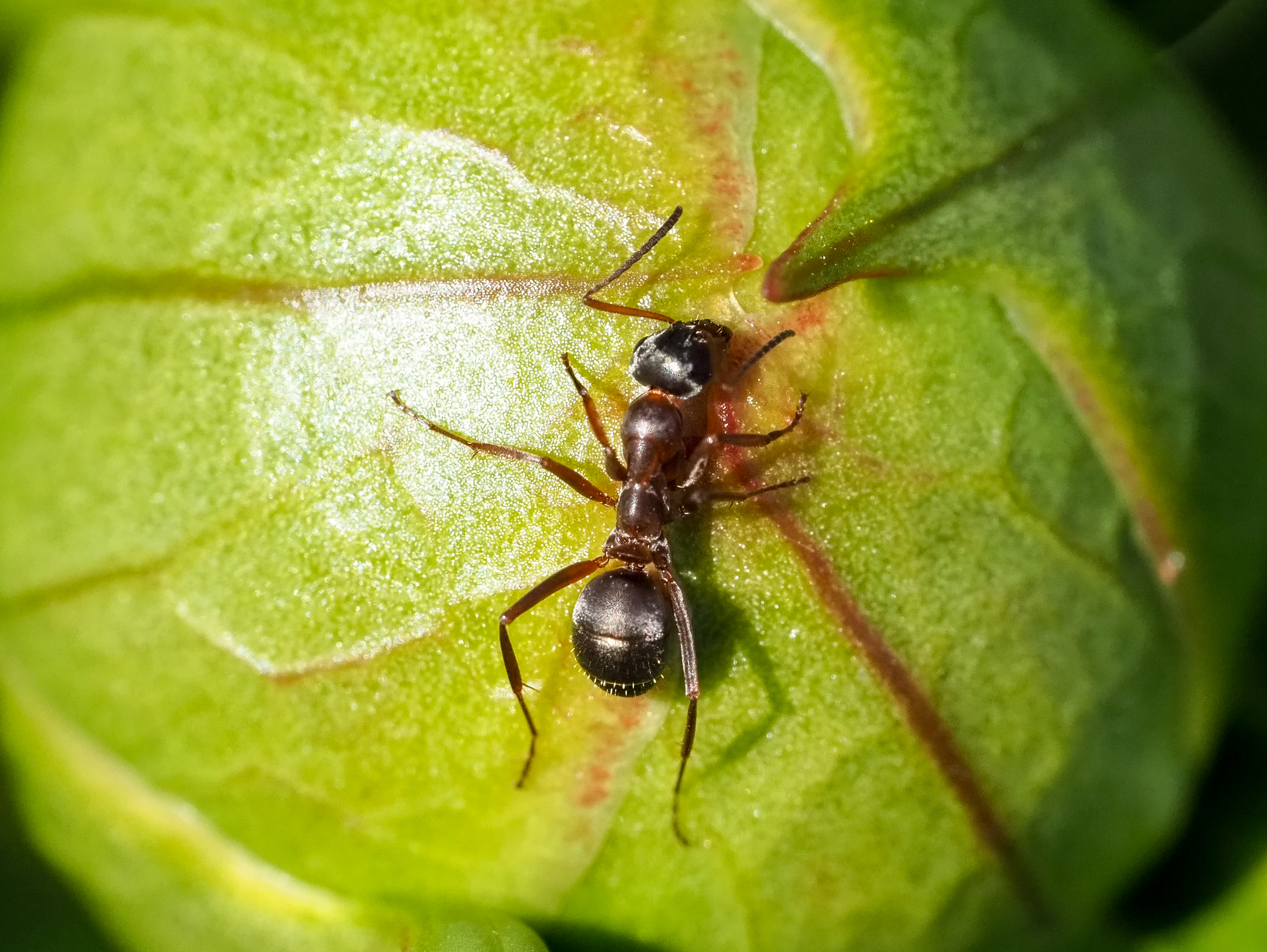
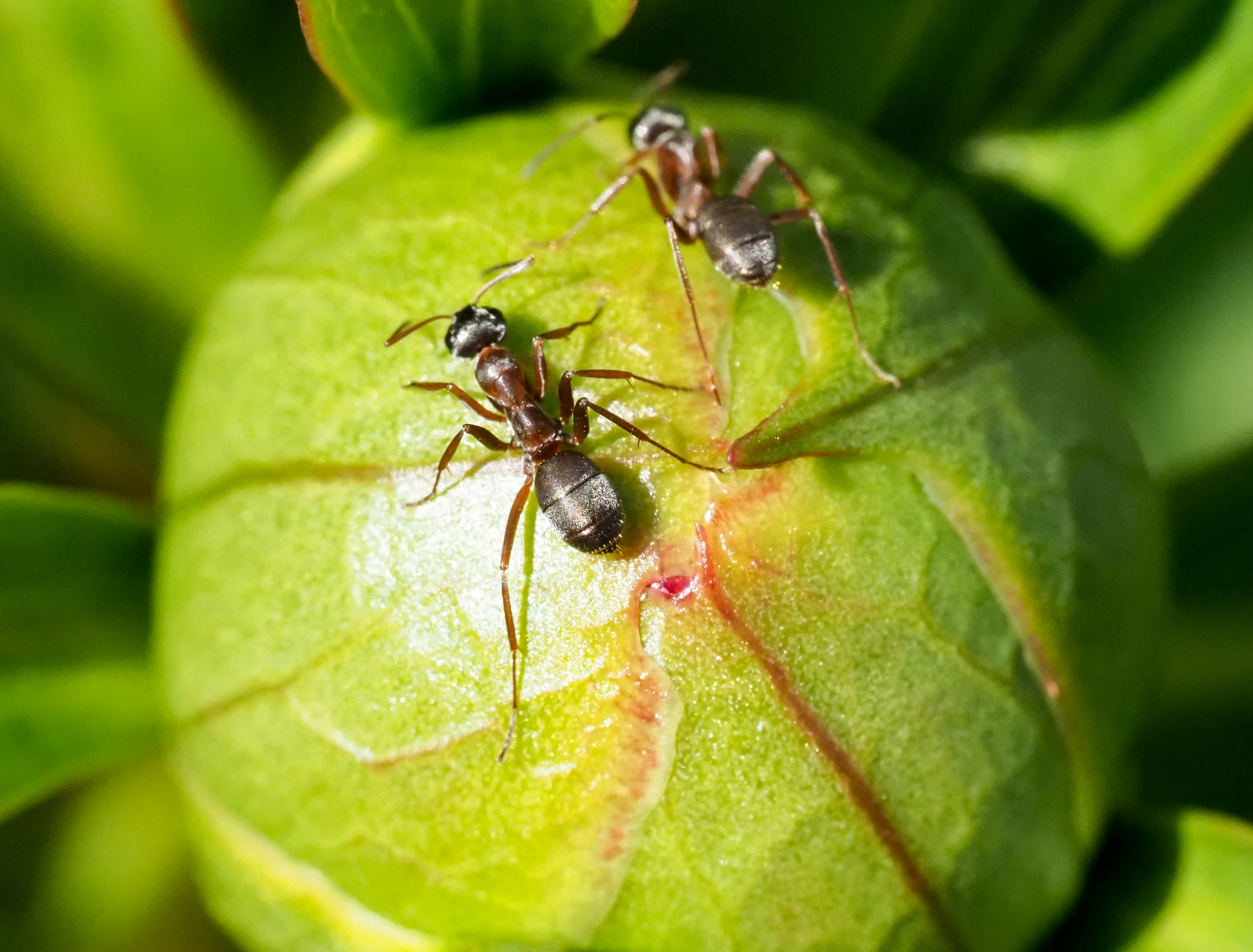
Photograph by Raymond JC Cannon
It is a a bit of a common misconception, that peonies require ants on them in order to bloom. This is not the case, but the ants do help to produce nice healthy flowers.
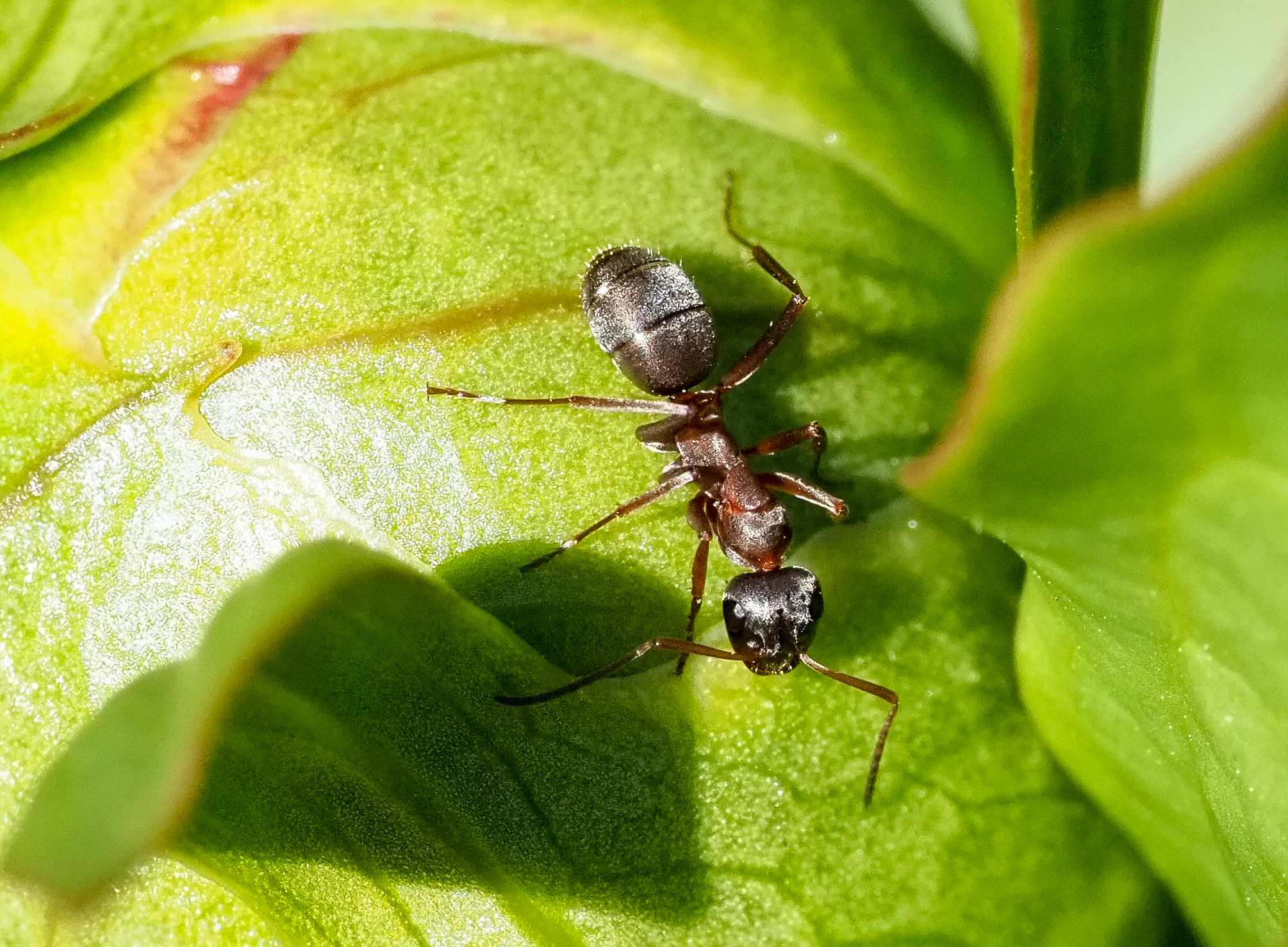
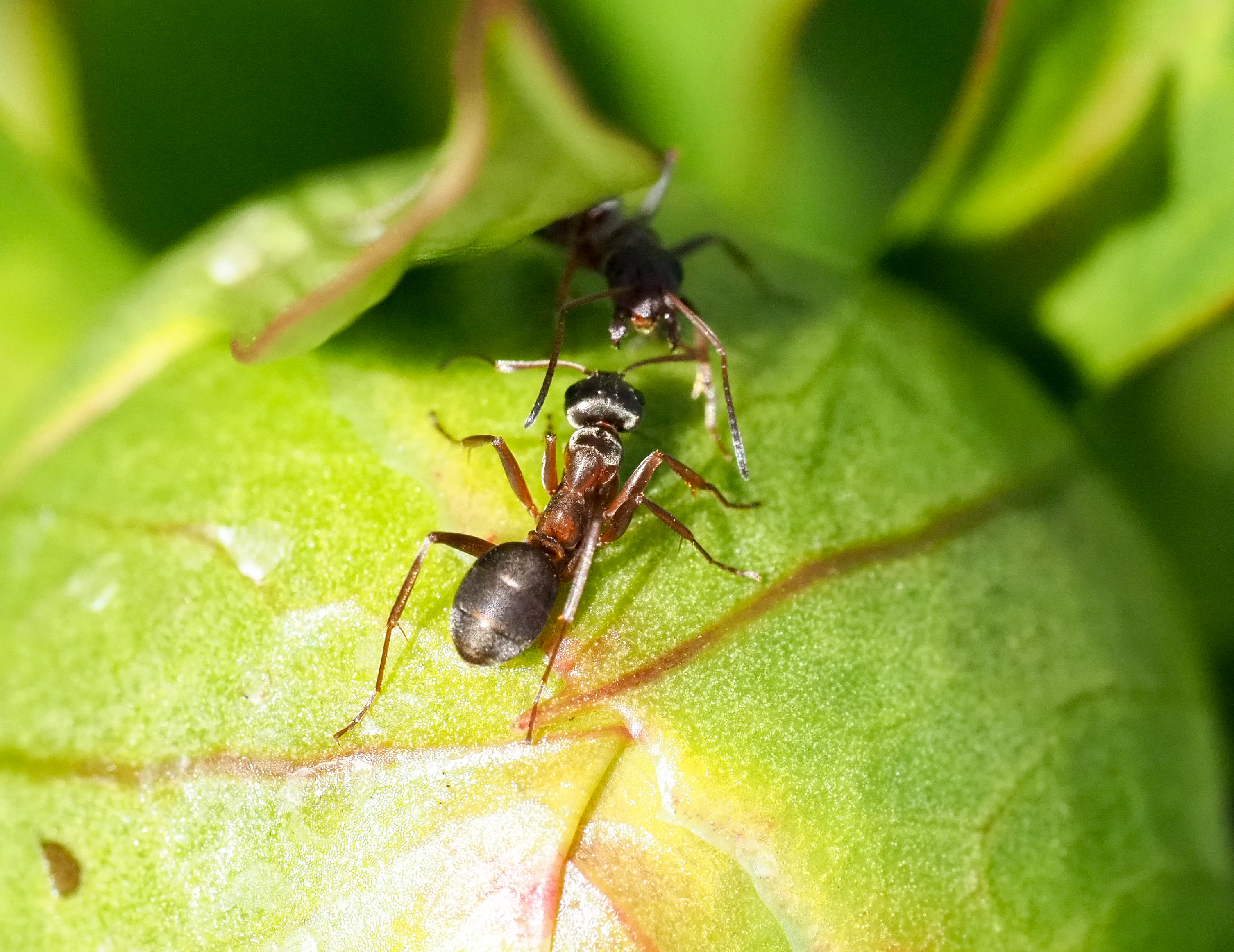
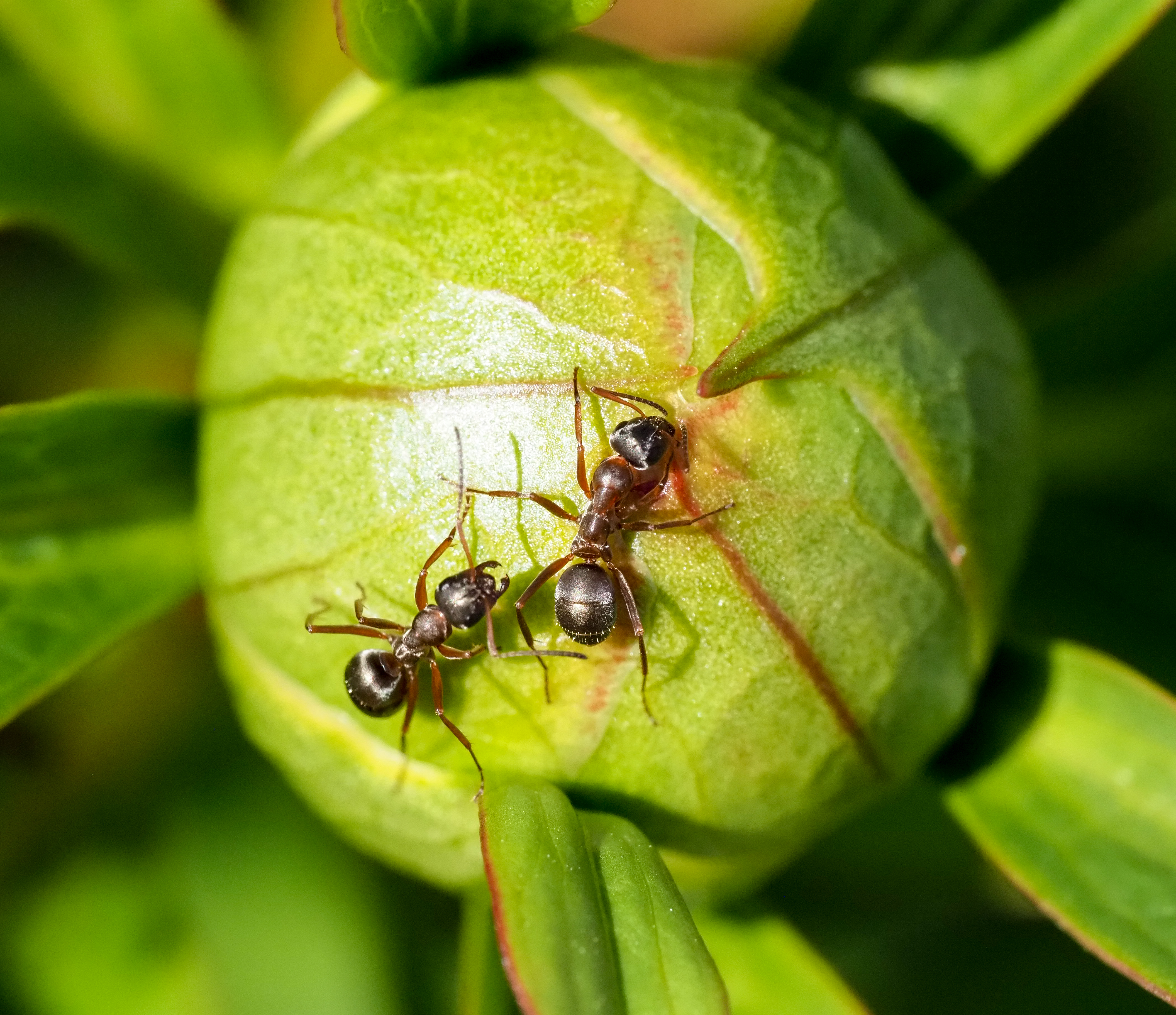
Photograph by Raymond JC Cannon
The relationship between peonies and ants is a type of mutualism in which two organisms of different species benefit from the activity of each another. Research has shown that when a foraging ant – wandering about scouting for food – comes across a nectar source on a peony, she – and it is a she, because ant colonies consist of female workers – emits an odour trail leading back to the nest. Her nestmates can then follow this pheromone track back to nectar on the peony flowers.
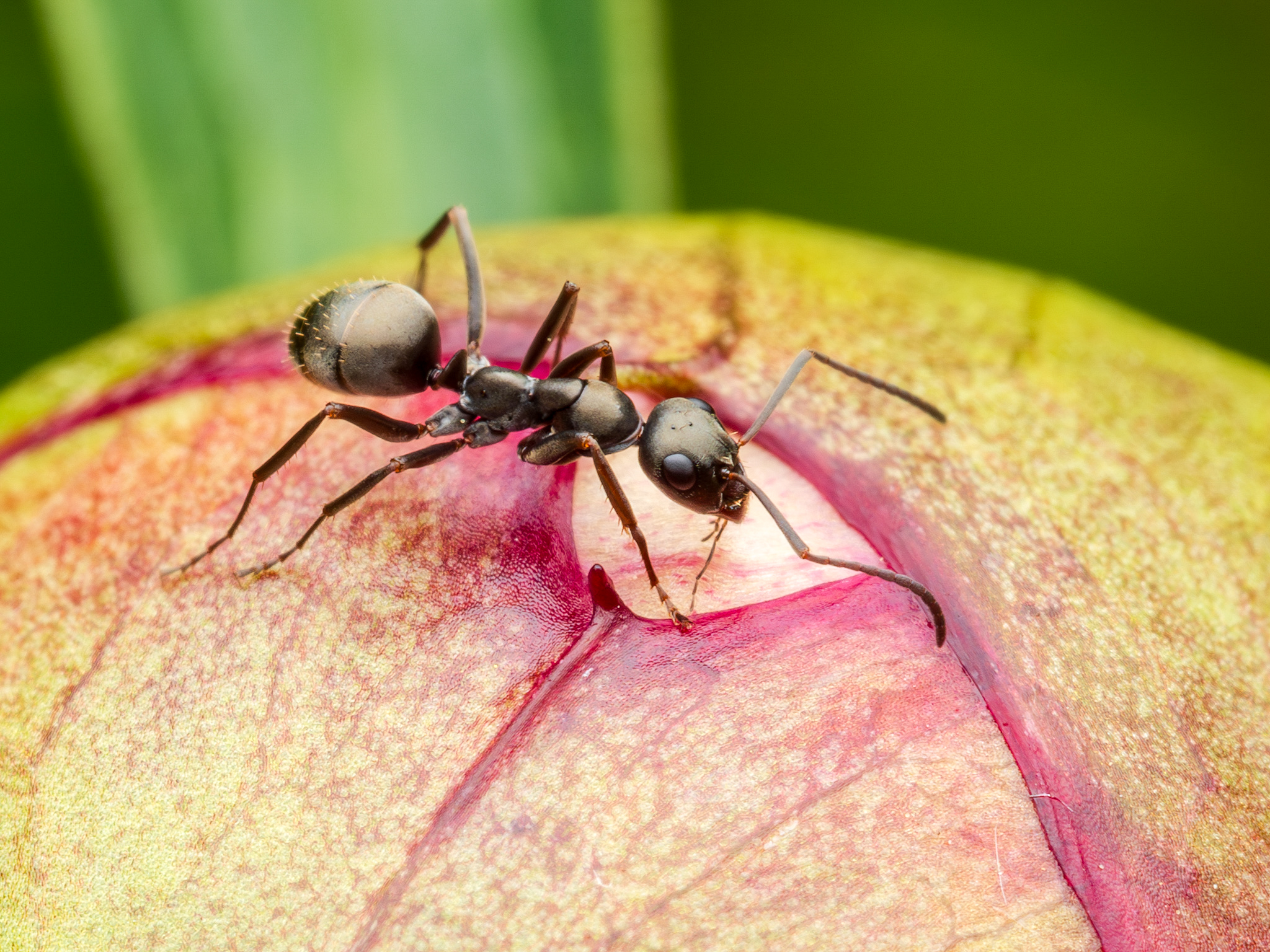
Once the peony flowers open, I think the work of the ants is done, although it is possible that they still patrol plants elsewhere.
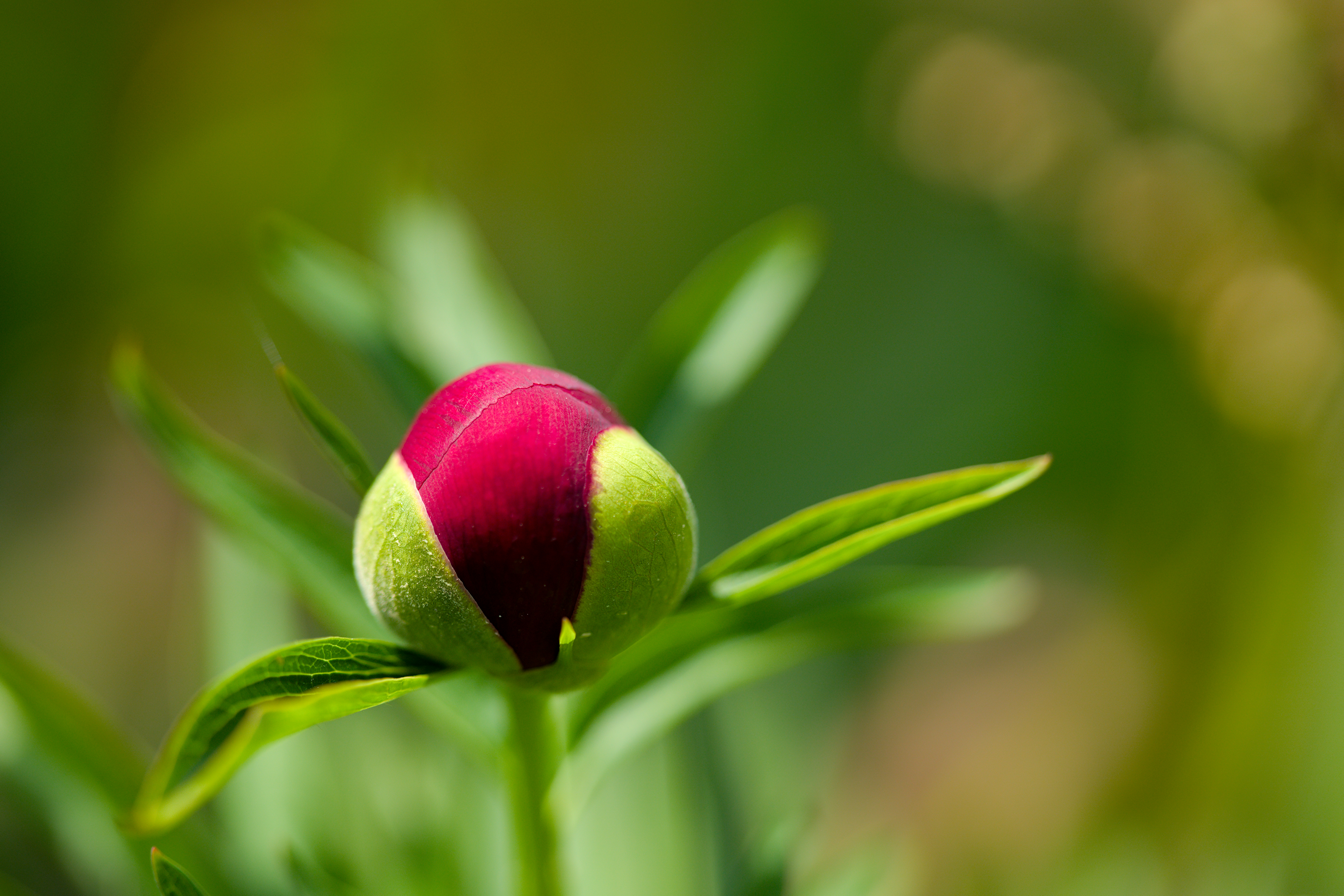
Extrafloral nectaries have been found on nearly 4,000 plant species, and can occur anywhere on the plant, but are commonly sited on the exterior of flower buds, such as in the case here. A wide variety of insects, in addition to ants, visit and feed on EFNs – see here.
The role, which this widespread provision of nectar plays within the ecosystem (or garden) in which the plant occurs, is probably more complex that we realise, because it involves so many different guilds of insects: predators, parasites, herbivores etc. The plant provides the nectar, but it cannot easily control who comes and helps themselves to it; so if it wants to reward, say ants, it has to provide an excess, which benefits all manner of other passing insects, such as wasps, ladybirds, sawflies, flies and many others.
However, many of the other insects may be indirectly benefiting the plants – for example parasitoid wasps control caterpillars, and hoverfly larvae control aphids – so the network of give and take (or cost and benefit) is complex, and to be honest, we are only just beginning to understand some of these more subtle ecological relationships.
Links
Other blogs on extra-floral nectaries
References
Bentley, B. L. (1977). Extrafloral nectaries and protection by pugnacious bodyguards. Annual Review of Ecology and Systematics, 407-427.
Calixto, E. S., de Oliveira Pimenta, I. C., Lange, D., Marquis, R. J., Torezan-Silingardi, H. M., & Del-Claro, K. (2024). Emerging trends in ant–pollinator conflict in extrafloral nectary-bearing plants. Plants, 13(5), 651.
Marazzi, B., Bronstein, J. L., & Koptur, S. (2013). The diversity, ecology and evolution of extrafloral nectaries: current perspectives and future challenges. Annals of botany, 111(6), 1243-1250.
Novais, S., Matías-Ferrer, N., Ruíz-Guerra, B., Pereira, C. C., Negreiros, D., & Aguirre-Jaimes, A. (2025). Ants and extrafloral nectary-bearing plants: A dataset of interactions and outcomes. Ecology, 106(9), e70186.
 Ray Cannon's nature notes