It is well established that bumblebees and honeybees leave chemical footprints everywhere they walk: footprints that other bees can detect, rather like a dog sniffing out the scent trail of another canine. In fact, the analogy is quite a good one, because like dogs, bees (and other insects) can tell a lot about other individuals from their scent marks.
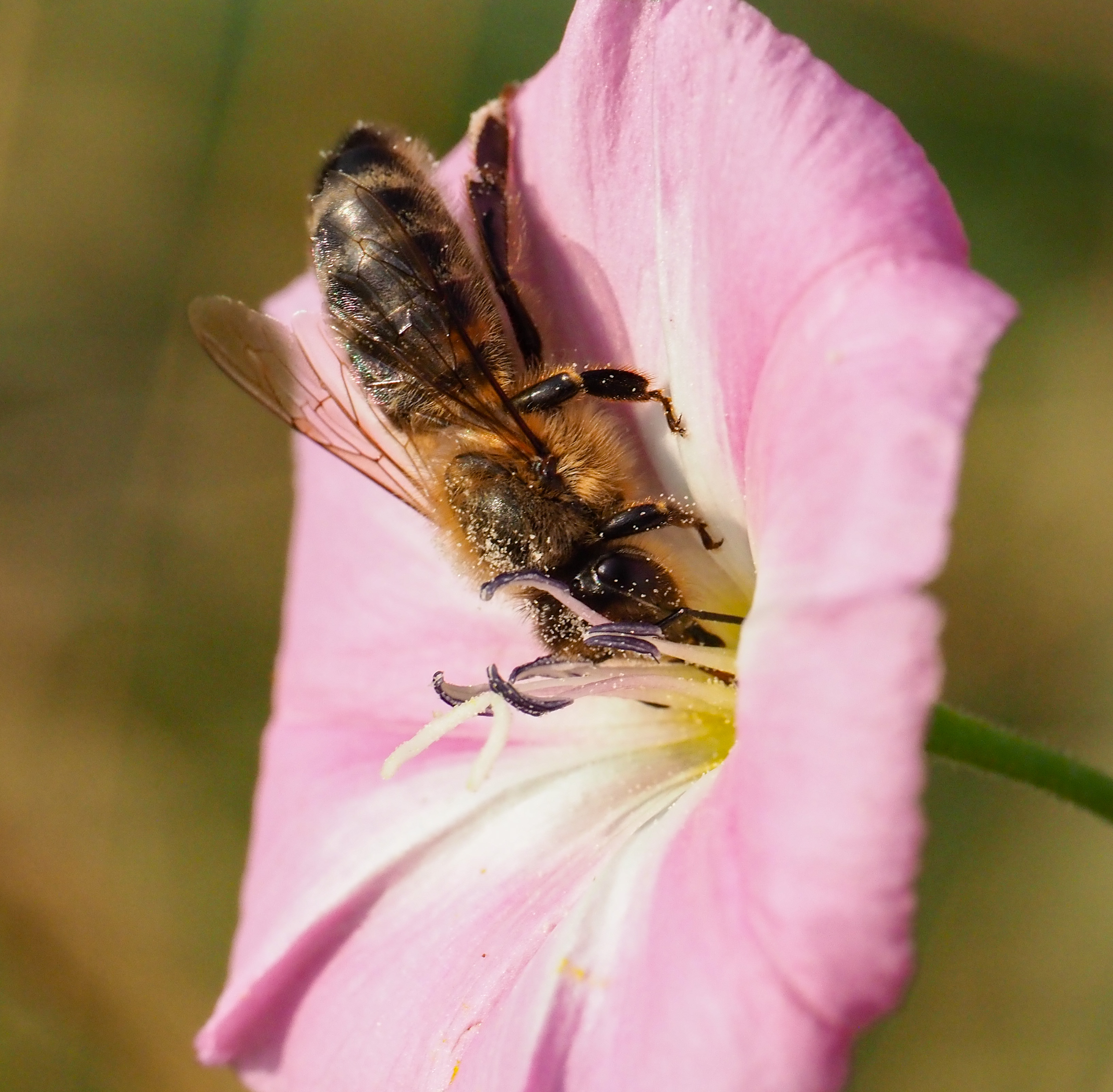
Bees secrete chemicals from their tarsi (feet), which are usually referred to as scent marks and act as a footprint. These scent marks consist of blends of fatty acids, cuticular hydrocarbons and other chemicals, which degrade within a few hours of being deposited.
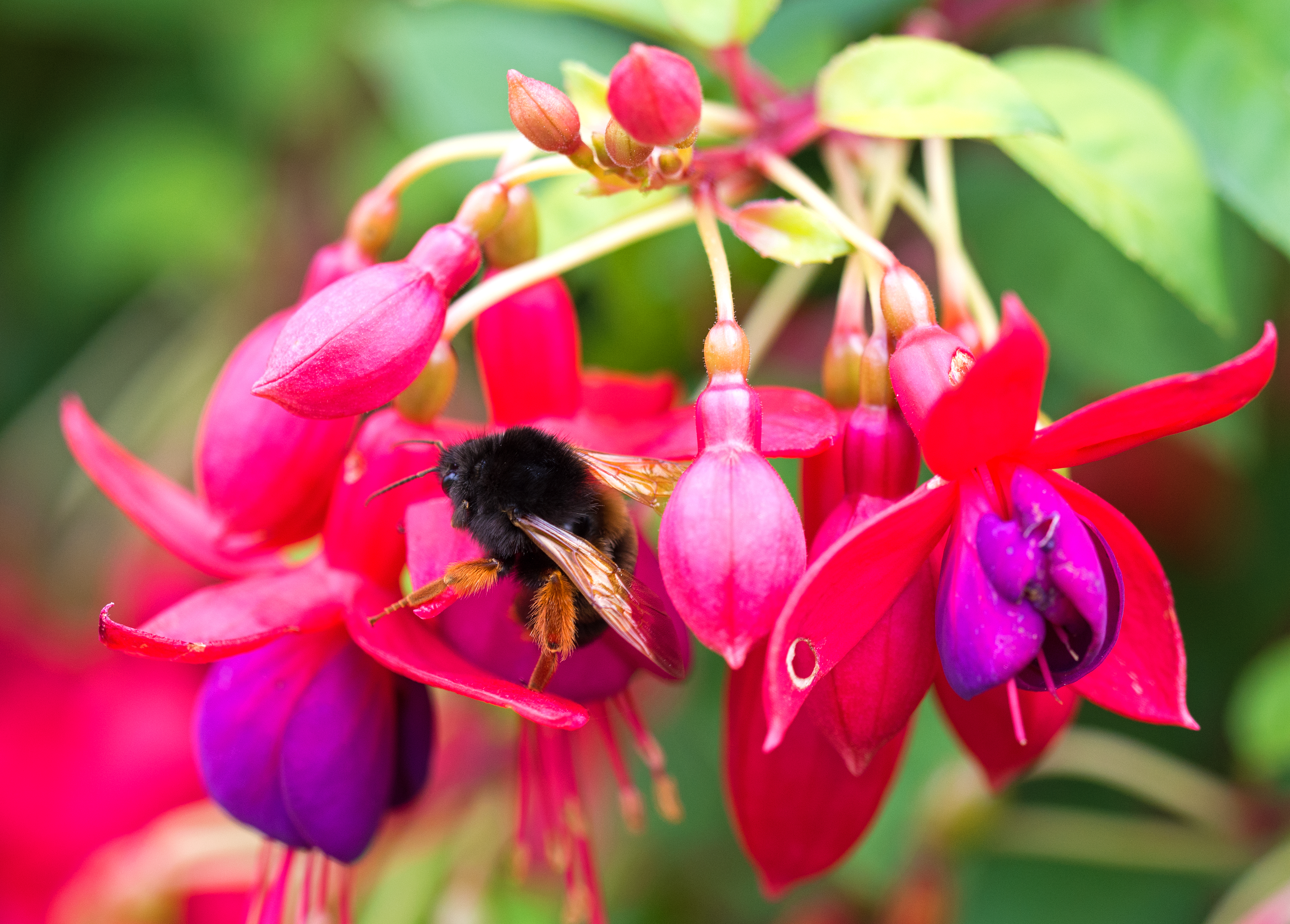
The footprints are not actively deposited by bees, they are just a record of cuticular contact. The bodies of insects are covered with insect cuticular hydrocarbons which form a waxy layer on the cuticle to maintain water balance and prevent desiccation. However they have a dual function, as they also act as signaling molecules, for activities like mate recognition and chemical communication, and they can be ‘read’ by other individuals via contact chemoreception with the antennae.
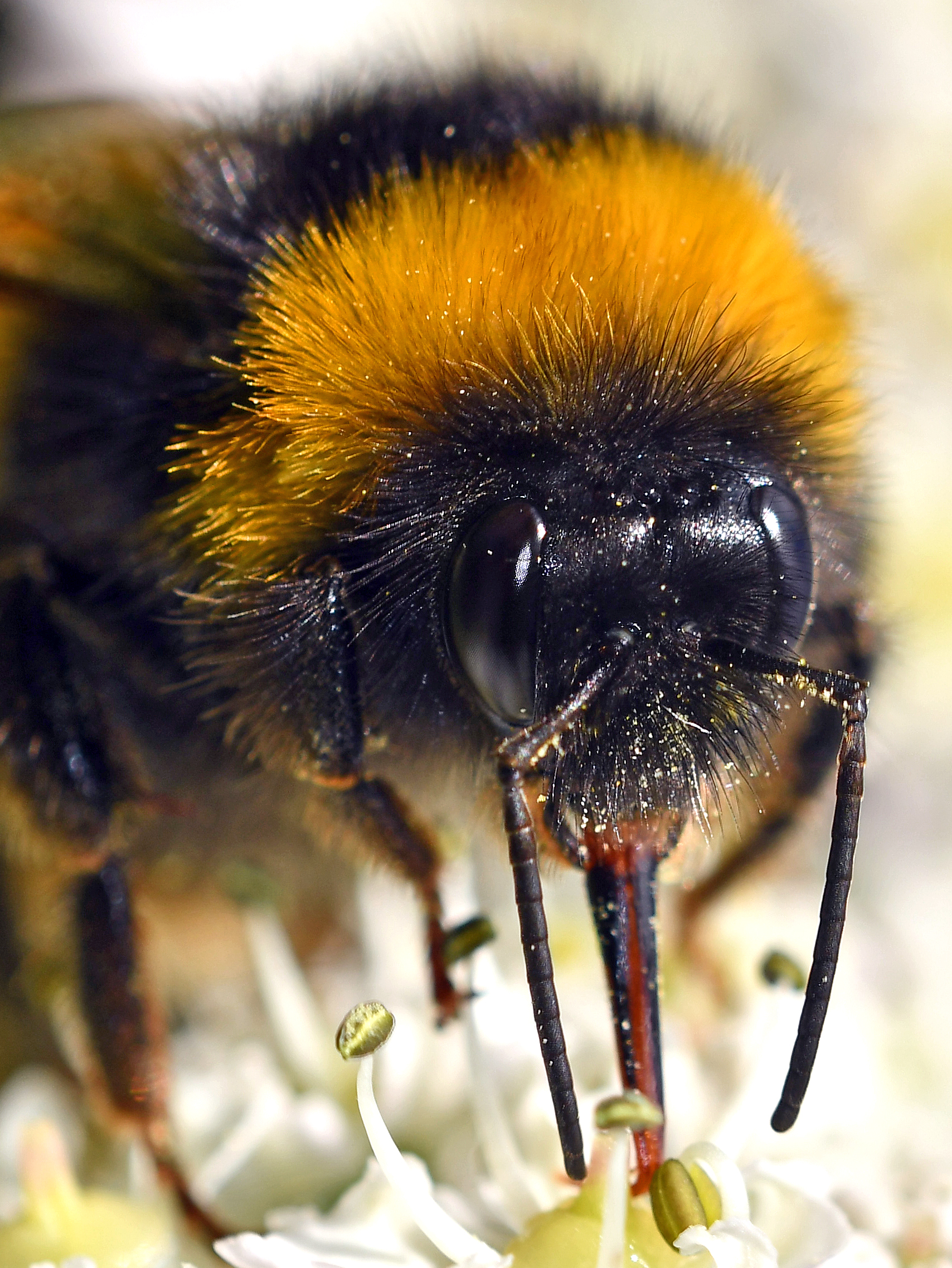
So, to summarise: bees, and other insects, can detect minute differences in both the composition and proportions (i.e. chemical profile) of cuticular lipids – complex mixtures of hydrocarbons – which enables them to determine a huge amount of information just by touching another individual with their antennae. In many species, they can taste the age, sex, species and physiological state of another individual just by sampling their epicuticular waxes! Imaging shaking hands with someone and knowing whether they are ready to mate!
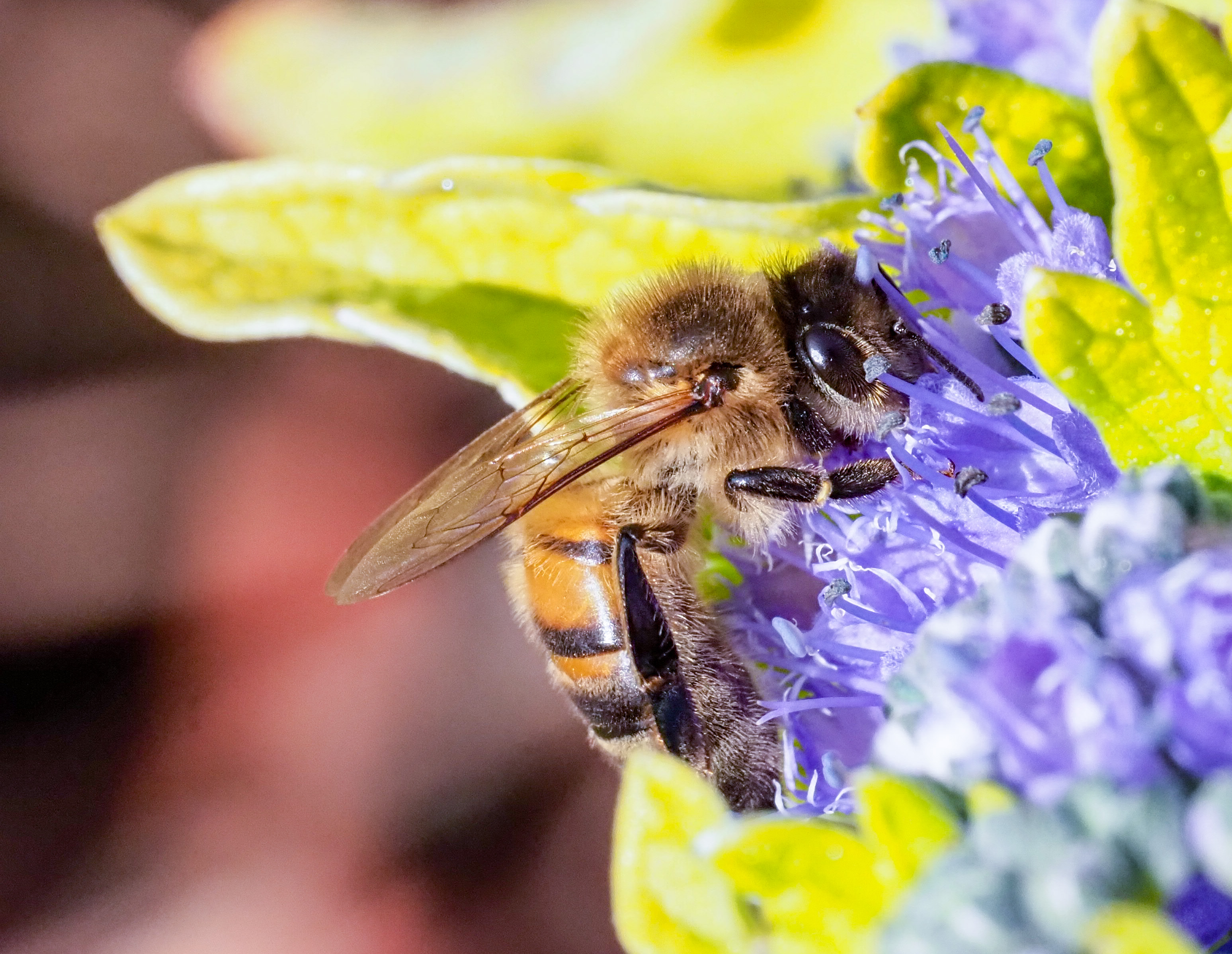
In this example, the footprints can be used simply as a way of detecting whether another bee, of the same species or another, has recently visited a flower. Because the footprints decay in concentration with time, bees can – to some extent at least – assess the time that has elapsed since the visit of another bee; i.e. the previous one that visited that flower. They can then use this information to decide whether it is worth their while stopping at that flower to probe for nectar.
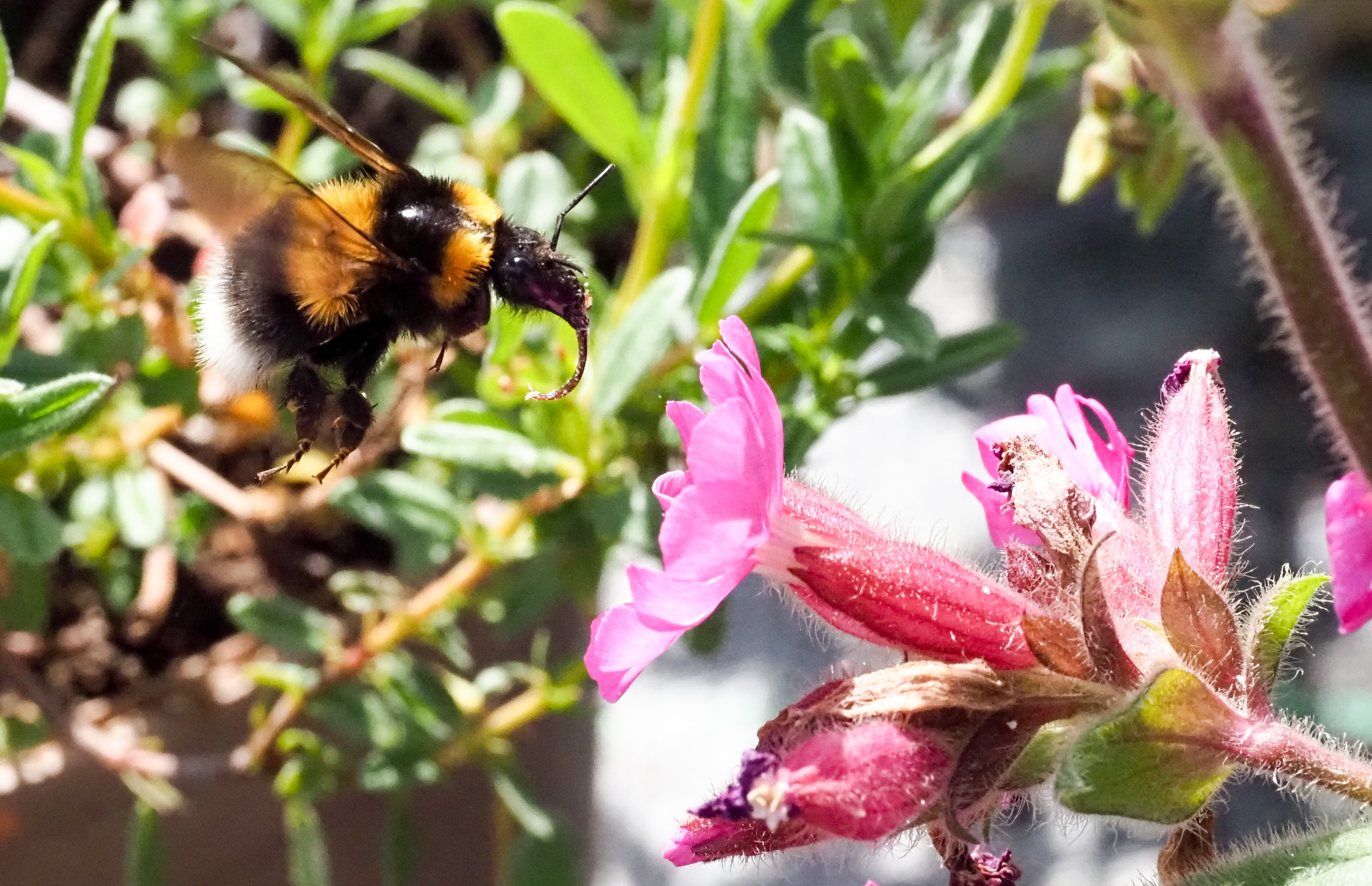
Photograph by Raymond JC Cannon
Bees of all kinds move rapidly from flower to flower, stopping for longer on those that provide the greatest rewards, be that pollen or nectar. They make hundreds, if not thousands, of quick decisions during the course of a days’ foraging: decisions, as to whether to reject or accept a given flower. These decision’s are informed by chemical odours; both those of the flower itself and the scents left by other foragers. The footprints of a recent visitor effectively repels subsequent foragers.
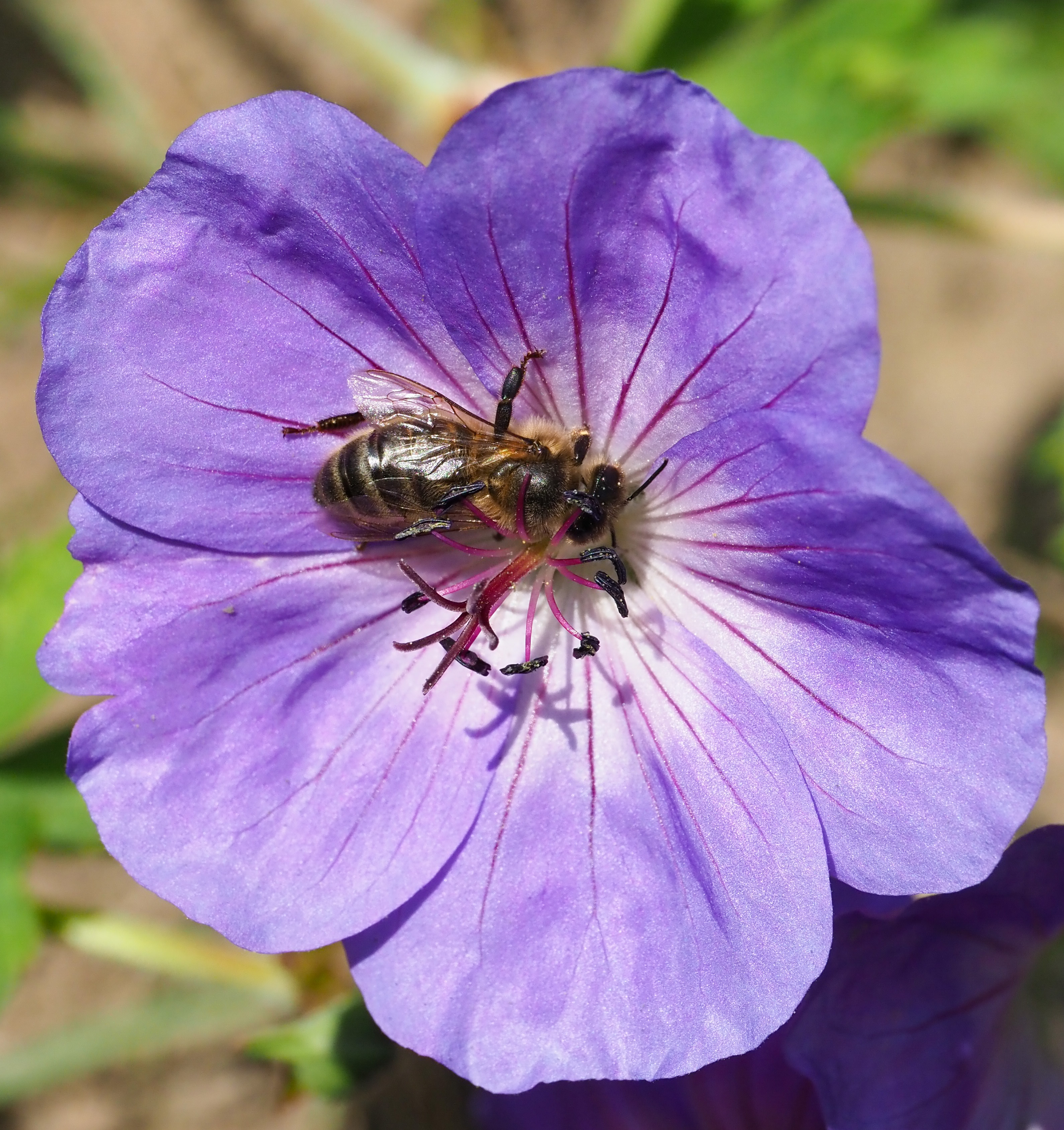
Honeybees and bumblebees both respond to the scents of other foragers, but the repellent effects only last for a short time, 20 mins or so. It seems to me rather clever that the footprints don’t last for very long. Life for your average pollinator would get very complicated if the lipid residues continued to accumulate as more and more bees left they visitation marks on flowers. There would be a mish mash of different footprints! Fortuitously, they are merely a record of recent visits. That’s probably all a bee needs to know, because fresh flowers replenish their nectar reserves relatively quickly: within hours. So, bees can forage more efficiently, just by avoiding flowers that have recently been visited, and likely still offer low rewards.
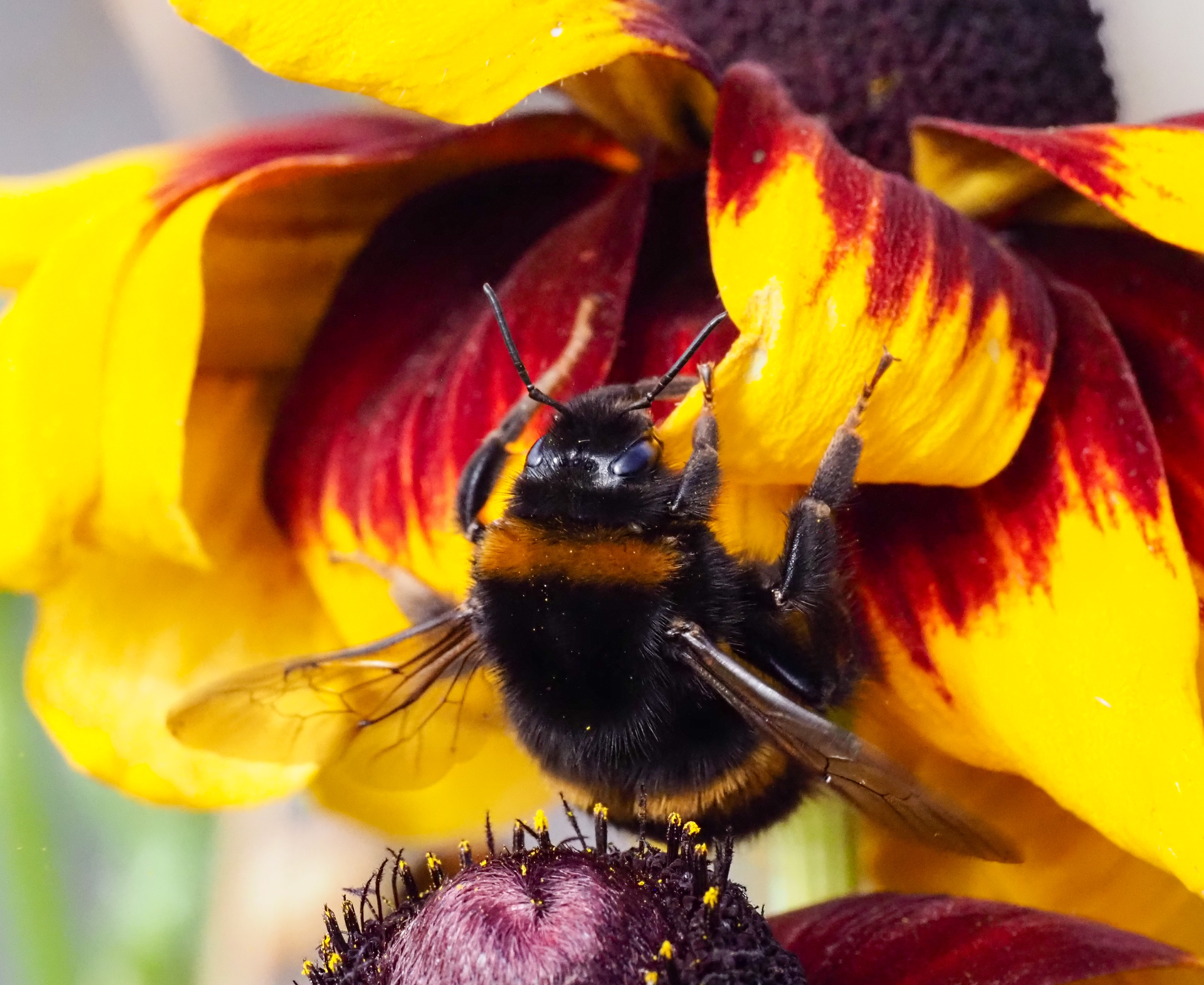
Photograph by Raymond JC Cannon
A fresh scent-mark of another bee spells “empty” (Wiltz & Eltz, 2007)
Bumblebees, and perhaps other types of bees, have the ability to discriminate between the scent-marks left by their own species, as well as those of other species, which can be very similar in their chemical composition. This is something of a ‘superpower’ as only tiny, trace quantities of footprint lipids are deposited by each bee: e.g. 65 ng of hydrocarbons per worker bumblebee (Bombus pascuorum) on flowers of Lamium maculatum (Eltz, 2006). That’s only 0.000000065g!

Learning how to use these footprints enables a pollinator to forage more efficiently and ultimately enhances their fitness. The system is considered to be very flexible, and depends to some extent on an individual bee’s experience with the footprints of other bees. It is possible that a given scent mark can mean different things in different situations, but the ability to judge how long it has been since another bee visited a flower, is a very useful way of optimising your foraging. A bee does not want to waste its time visiting empty flowers!
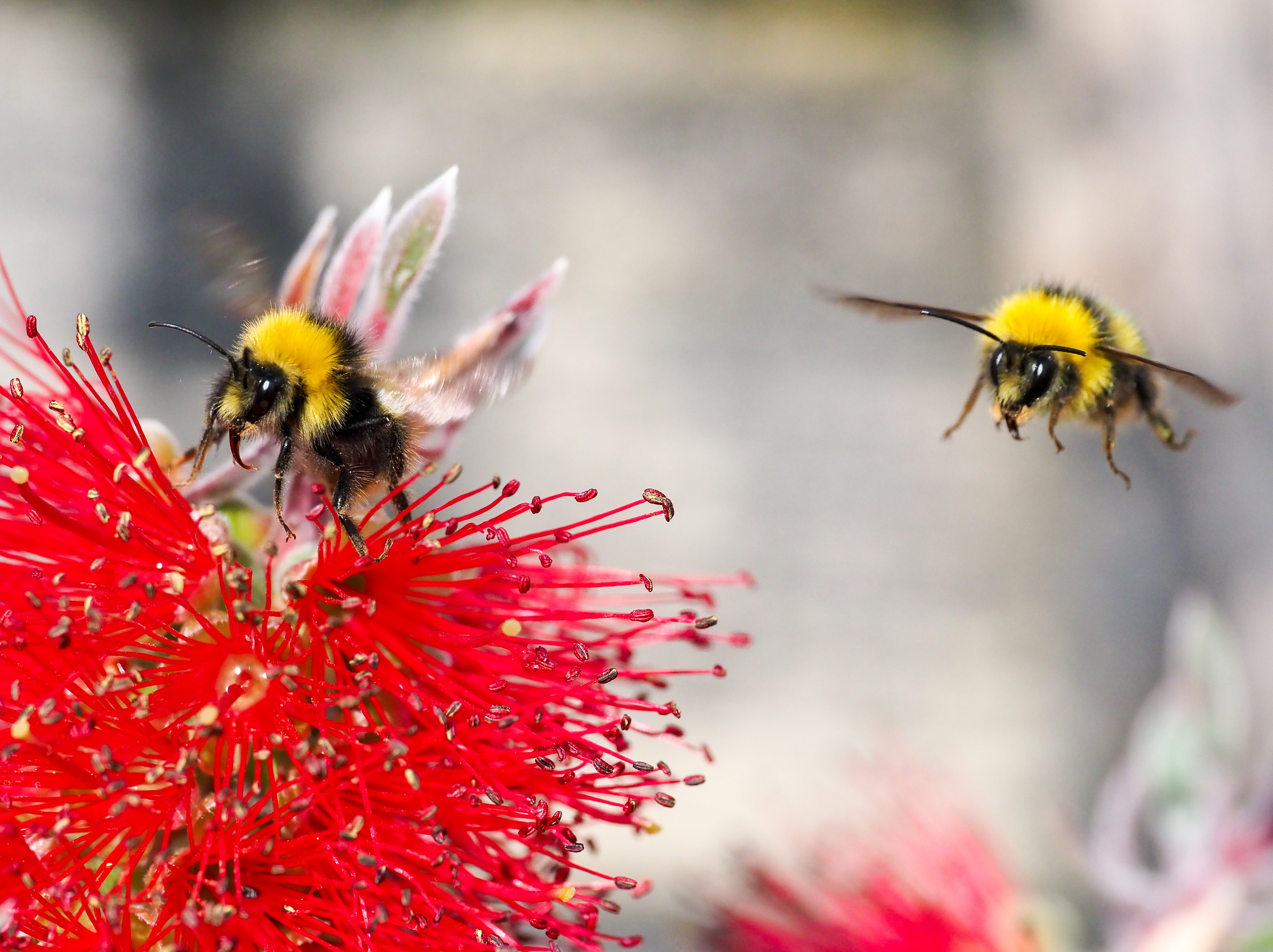
Photograph by Raymond JC Cannon
References on this subject
Chung, H., & Carroll, S. B. (2015). Wax, sex and the origin of species: dual roles of insect cuticular hydrocarbons in adaptation and mating. BioEssays, 37(7), 822-830.
Eltz, T. (2006). Tracing pollinator footprints on natural flowers. Journal of Chemical Ecology, 32(5), 907-915.
Gawleta, N., Zimmermann, Y., & Eltz, T. (2005). Repellent foraging scent recognition across bee families. Apidologie, 36(3), 325-330.
Goulson, D., Chapman, J. W., & Hughes, W. O. (2001). Discrimination of unrewarding flowers by bees; direct detection of rewards and use of repellent scent marks. Journal of Insect Behavior, 14(5), 669-678.
Goulson, D., Hawson, S. A., & Stout, J. C. (1998). Foraging bumblebees avoid flowers already visited by conspecifics or by other bumblebee species. Animal Behaviour, 55(1), 199-206.
Pearce, R. F., Giuggioli, L., & Rands, S. A. (2017). Bumblebees can discriminate between scent-marks deposited by conspecifics. Scientific reports, 7(1), 43872.
Saleh, N., & Chittka, L. (2006). The importance of experience in the interpretation of conspecific chemical signals. Behavioral Ecology and Sociobiology, 61(2), 215-220.
Saleh, N., Ohashi, K., Thomson, J. D., & Chittka, L. (2006). Facultative use of the repellent scent mark in foraging bumblebees: complex versus simple flowers. Animal Behaviour, 71(4), 847-854.
Saleh, N., Scott, A. G., Bryning, G. P., & Chittka, L. (2007). Distinguishing signals and cues: bumblebees use general footprints to generate adaptive behaviour at flowers and nest. Arthropod-Plant Interactions, 1(2), 119-127.
Stout, J. C., & Goulson, D. (2001). The use of conspecific and interspecific scent marks by foraging bumblebees and honeybees. Animal behaviour, 62(1), 183-189.
Stout, J. C., Goulson, D., & Allen, J. A. (1998). Repellent scent-marking of flowers by a guild of foraging bumblebees (Bombus spp.). Behavioral Ecology and Sociobiology, 43(4), 317-326.
Wilms, J., & Eltz, T. (2008). Foraging scent marks of bumblebees: footprint cues rather than pheromone signals. Naturwissenschaften, 95(2), 149-153.
Yokoi, T., & Fujisaki, K. (2009). Recognition of scent marks in solitary bees to avoid previously visited flowers. Ecological Research, 24(4), 803-809.
Yokoi, T., & Fujisaki, K. (2011). To forage or not: Responses of bees to the presence of other bees on flowers. Annals of the Entomological Society of America, 104(2), 353-357.
 Ray Cannon's nature notes
This is another extremely interesting and entertaining article, thanks for taking the effort to write it. The photo illustrations were very fine, providing lots of beautiful detail. The only insects that I knew of that left a chemical footprint trail were ants; I learned long ago that I not only had to remove the ants from around my sink, I also had to find and remove the trails they had left, or their progeny would return with a vengence!
Fascinating, as always, Ray! Your blog posts always provide the explanations for behaviour I’ve observed but not had the time to research, so thanks.
Thank you for this informative essay and the beautiful photos—must be a very interesting field of research. ♨️🐝