In this blog I describe how I came across a Sea Carrot flower growing in the grounds of Scarborough Castle! It appears not to have been recorded from Scarborough since the 1960s, but local botanists may have been aware of its presence.
Sea Carrot (Daucus carota subsp. gummifer) is a coastal plant usually found on cliffs and sand dunes. It is a member of the family Apiaceae (umbellifers) and mainly occurs in southwestern UK, Ireland, France and Spain.
Characteristics
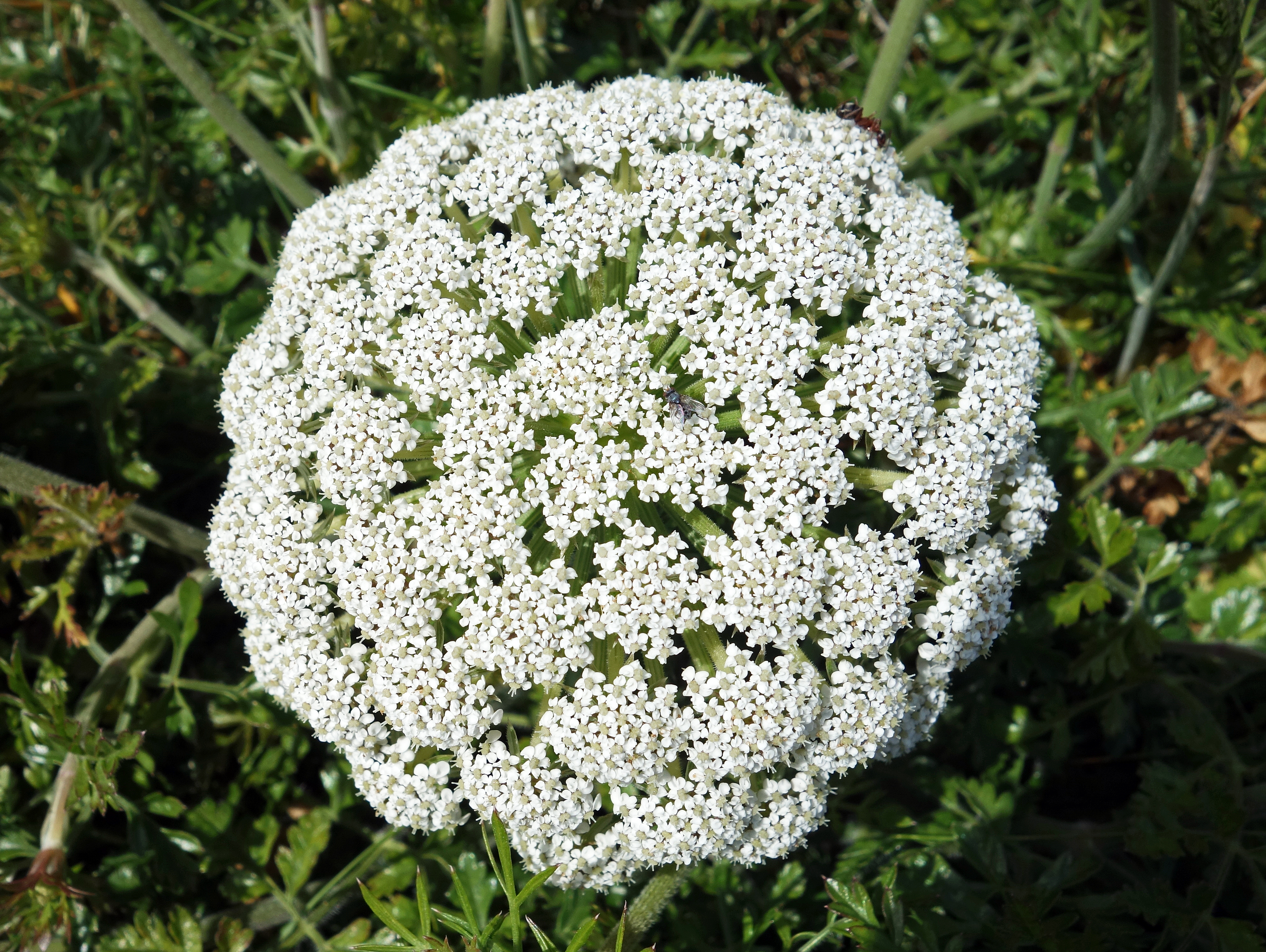
I previously wrote a short blog about Sea carrot (Daucus carota subsp. gummifer) plants came across along the coasts of Galicia, in NW Spain (below).
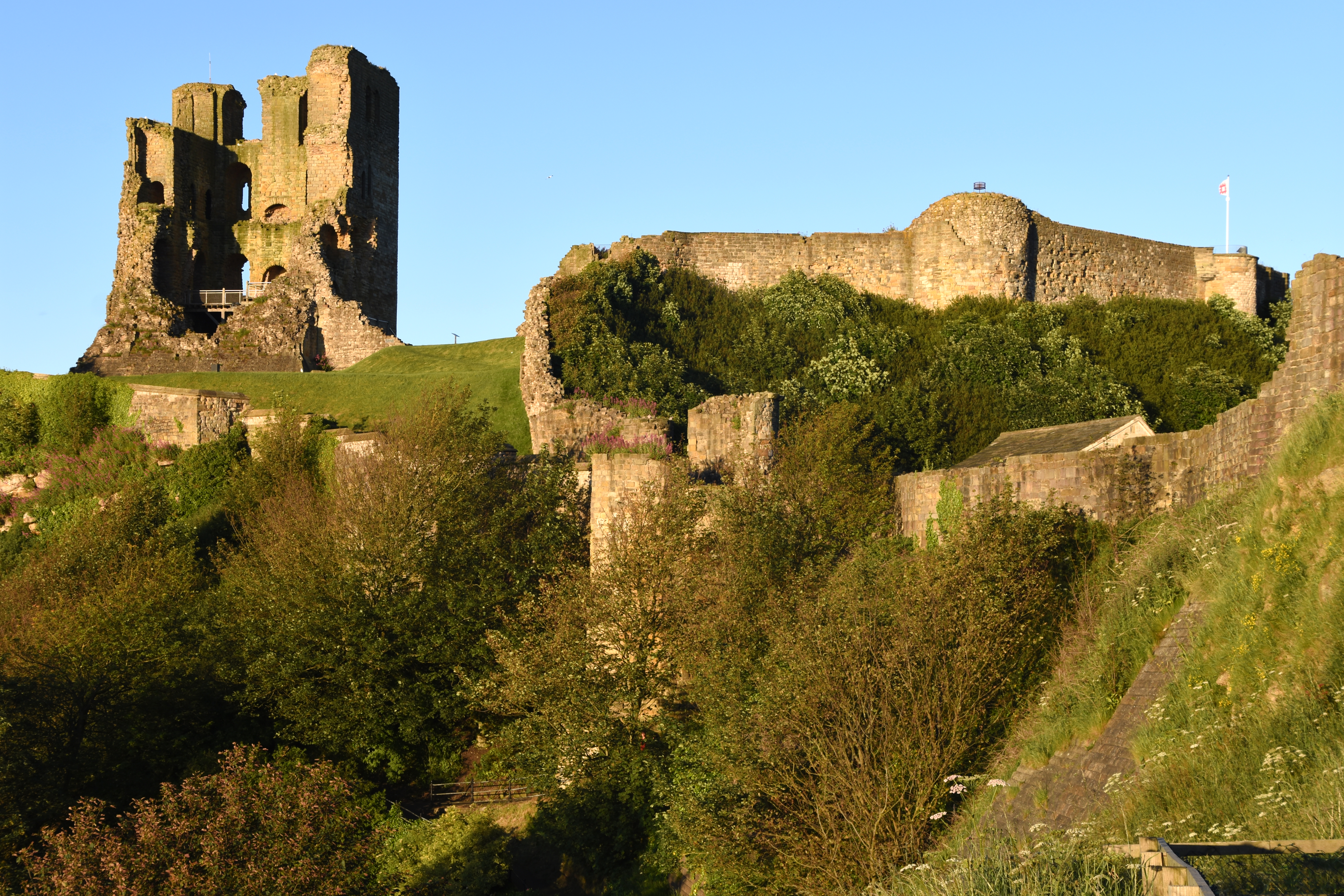
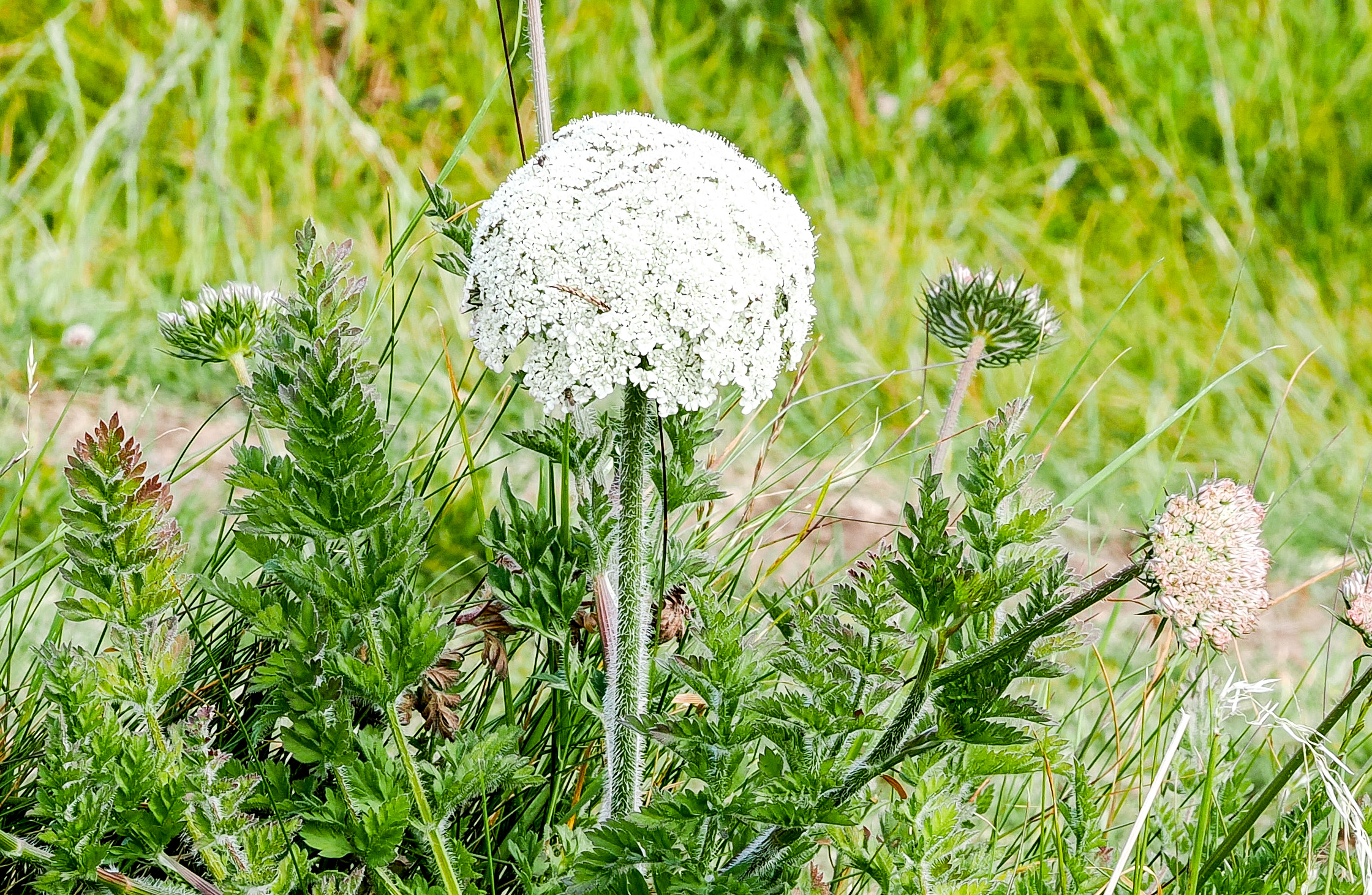
Sea Carrot is relatively rare, occurring only near western coasts in Great Britain, including a few places in Wales, much of the Cornish coast and a few places on the Kentish coast. So, I was not expecting to find it in Yorkshire. However, last year (2025), I came across a nice specimen (below) growing in the grounds of Scarborough Castle near to the cliffs, which drop away to the west side.
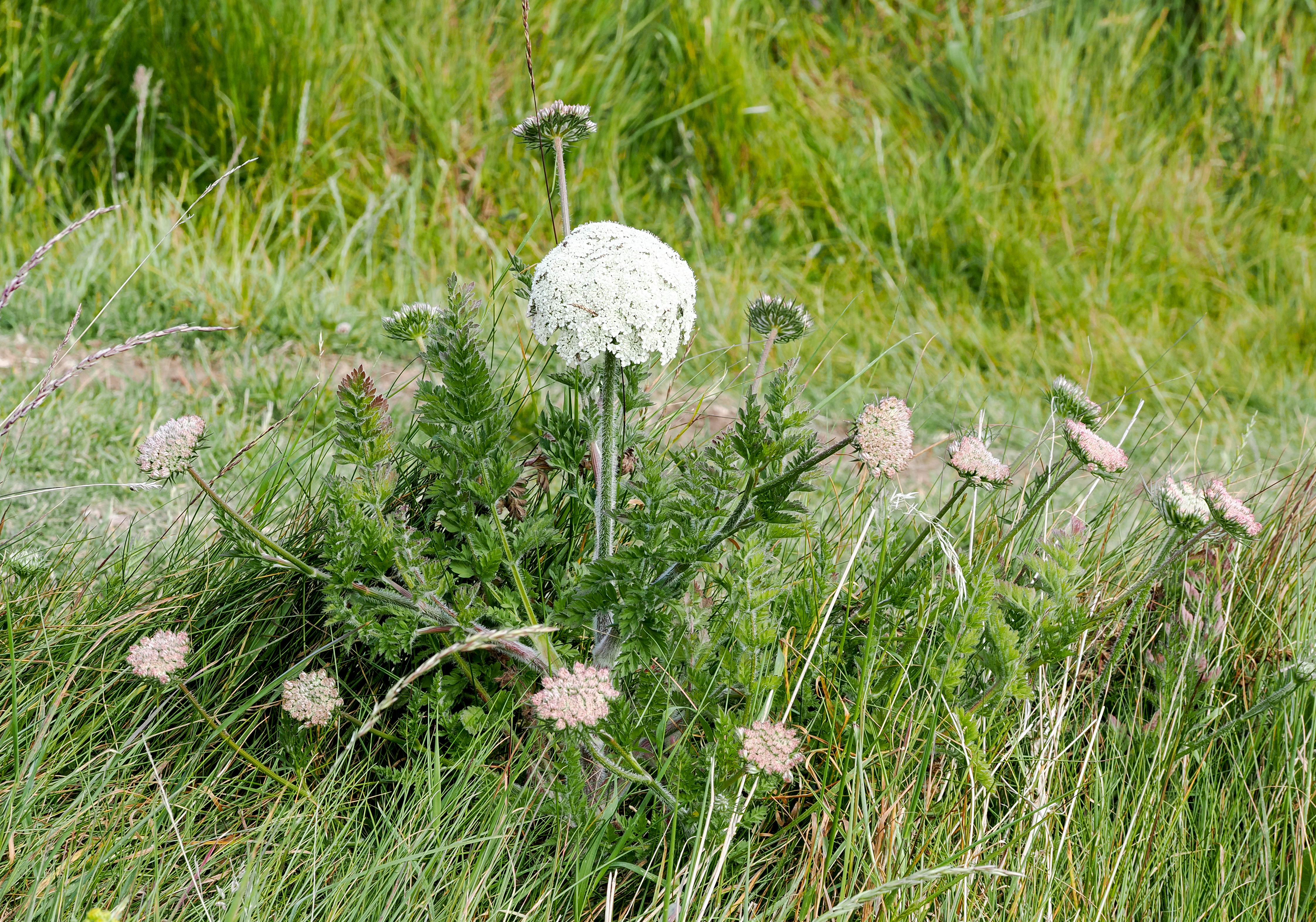
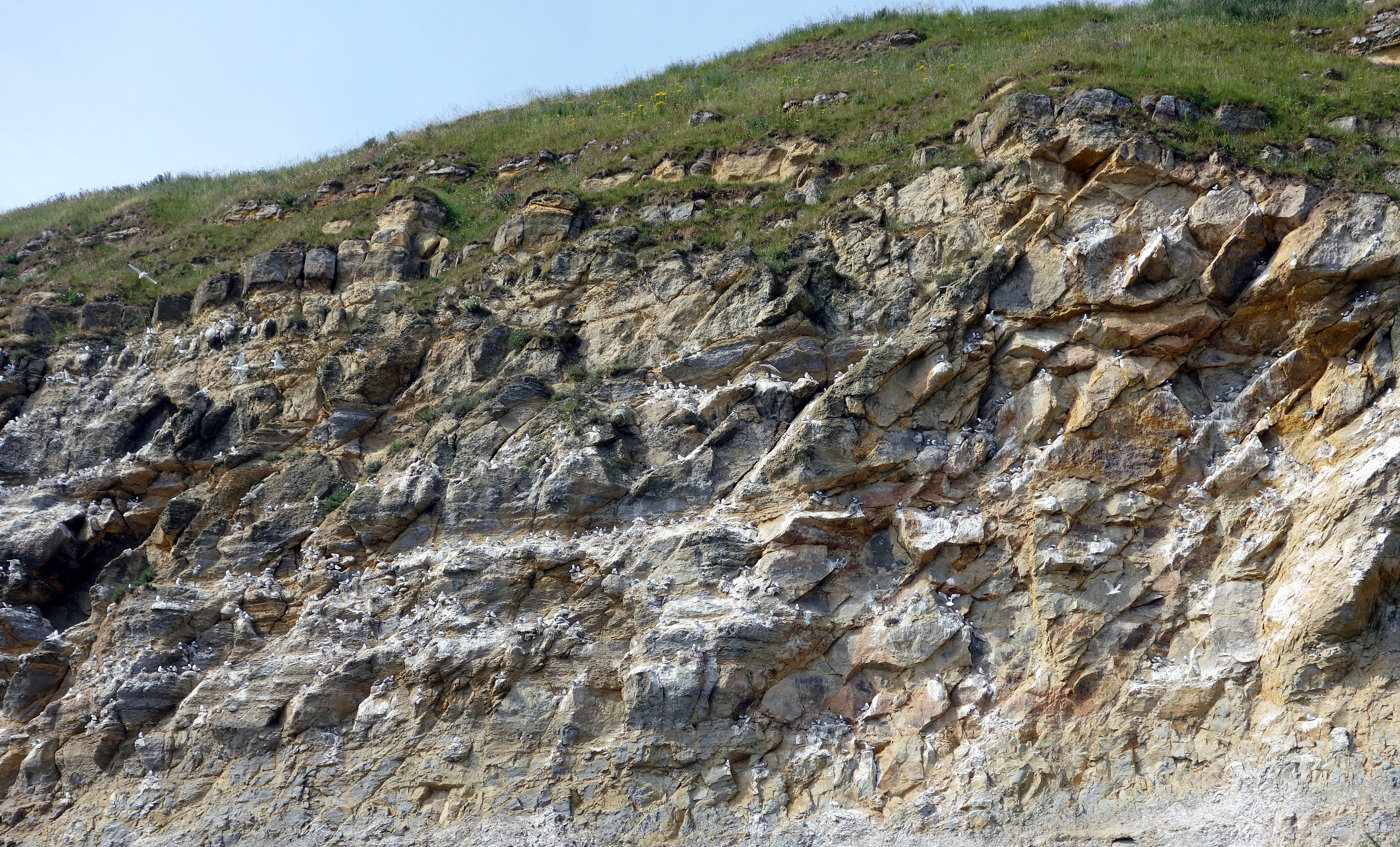
Sea Carrot is a biennial plant, which means it has a two-year lifecycle. It forms a basal rosette in the first year, and a flowering stalk in the second. The one shown above is clearly in its second year. Kittiwakes nest on the cliffs below the castle (below).
Distribution
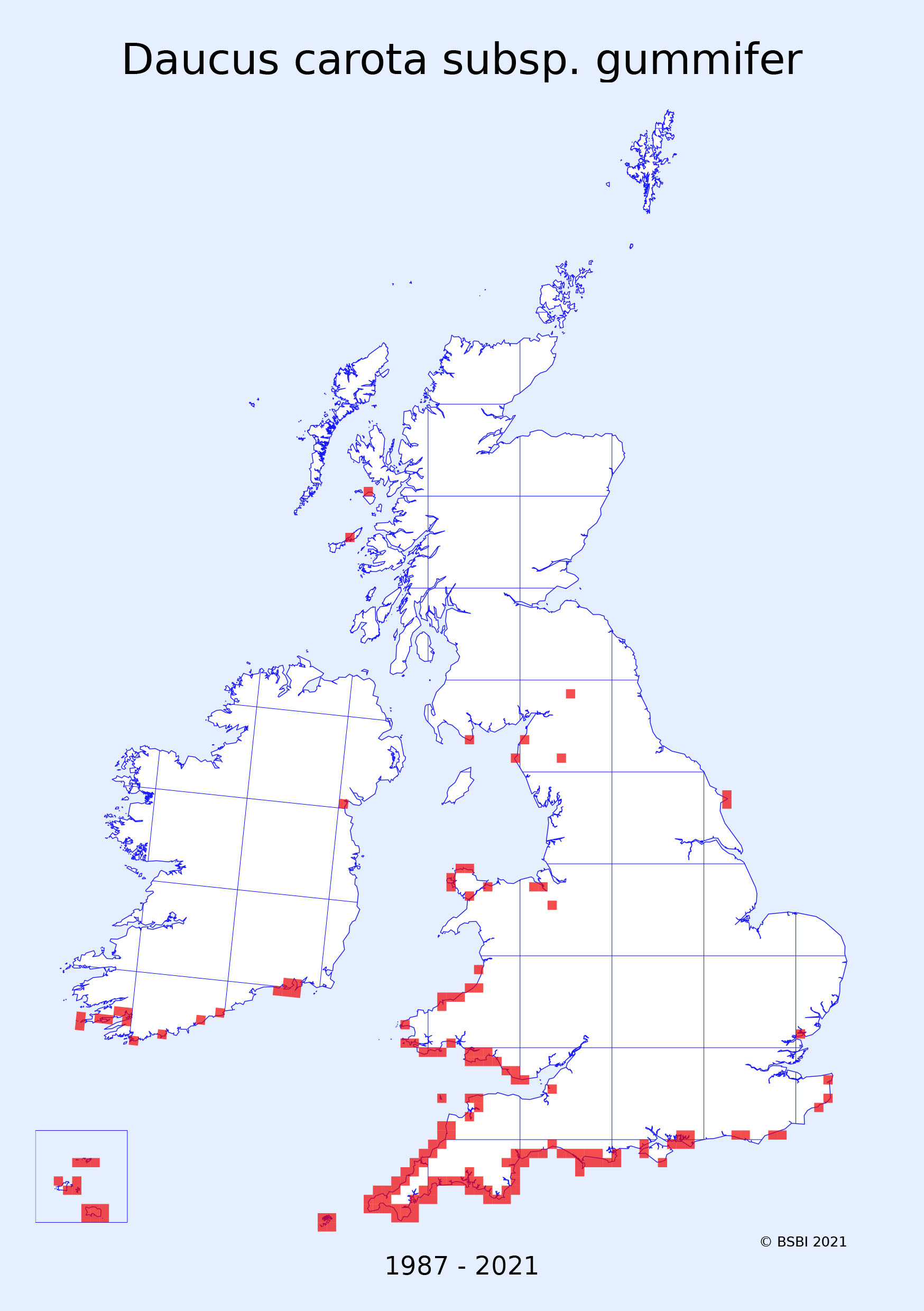
When I looked up the distribution of Sea Carrot, it turns out that it is found on a few sites on the east coast of England: a couple of grid squares centered of Flamborough Head (below), which is not very far from Scarborough (20 miles).
I found Sea Carrot growing in the grounds of Scarborough Castle (below), on the other side of this photograph, in the meadows which slope down to the top of the cliffs (they are fenced off!).
Sea Carrot is a very different looking plant from Wild carrot (Daucus carota), i.e. D. carota subsp. carota (below), which is a very common plant in the UK. Cultivated carrots are a third subspecies, sativus.
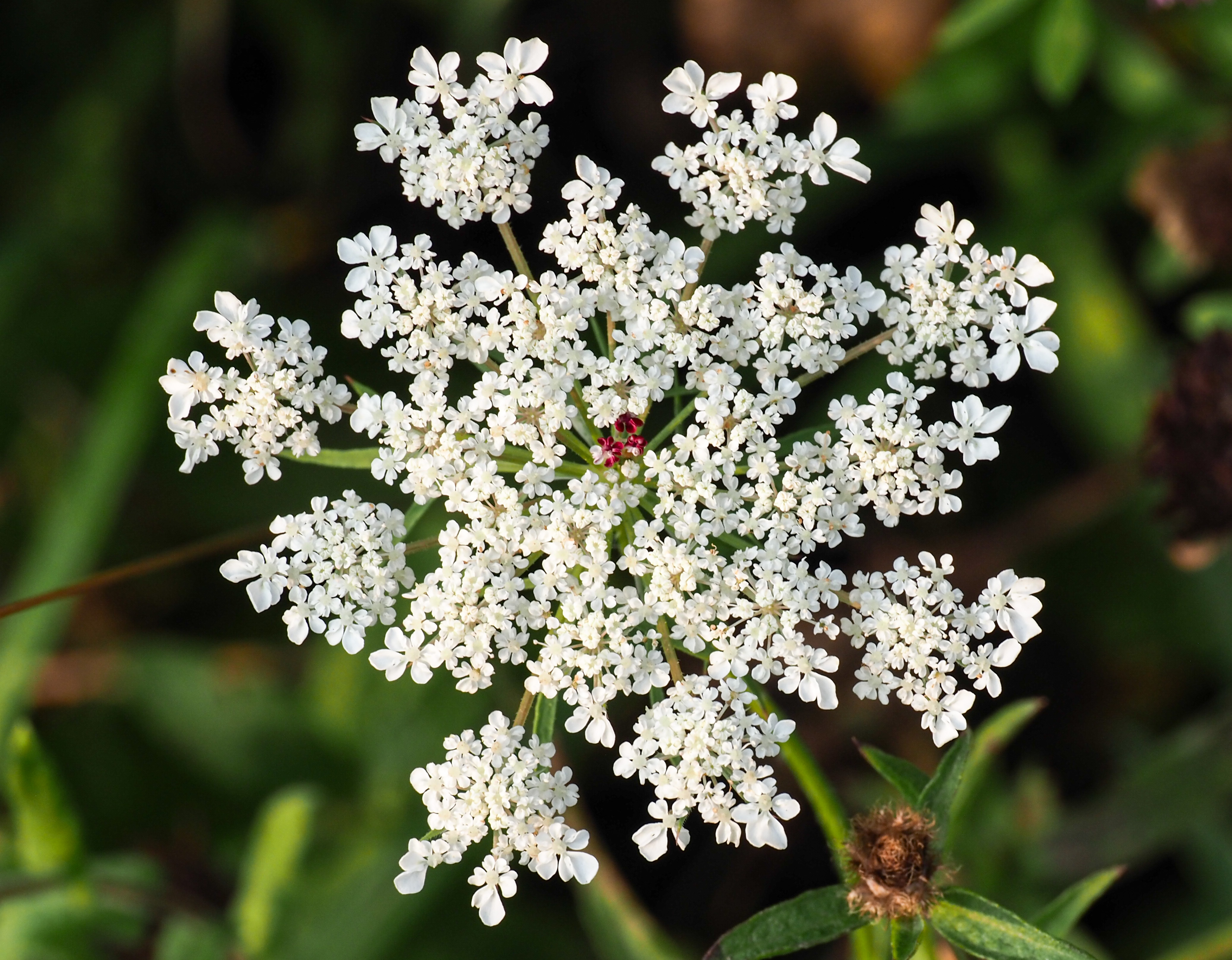
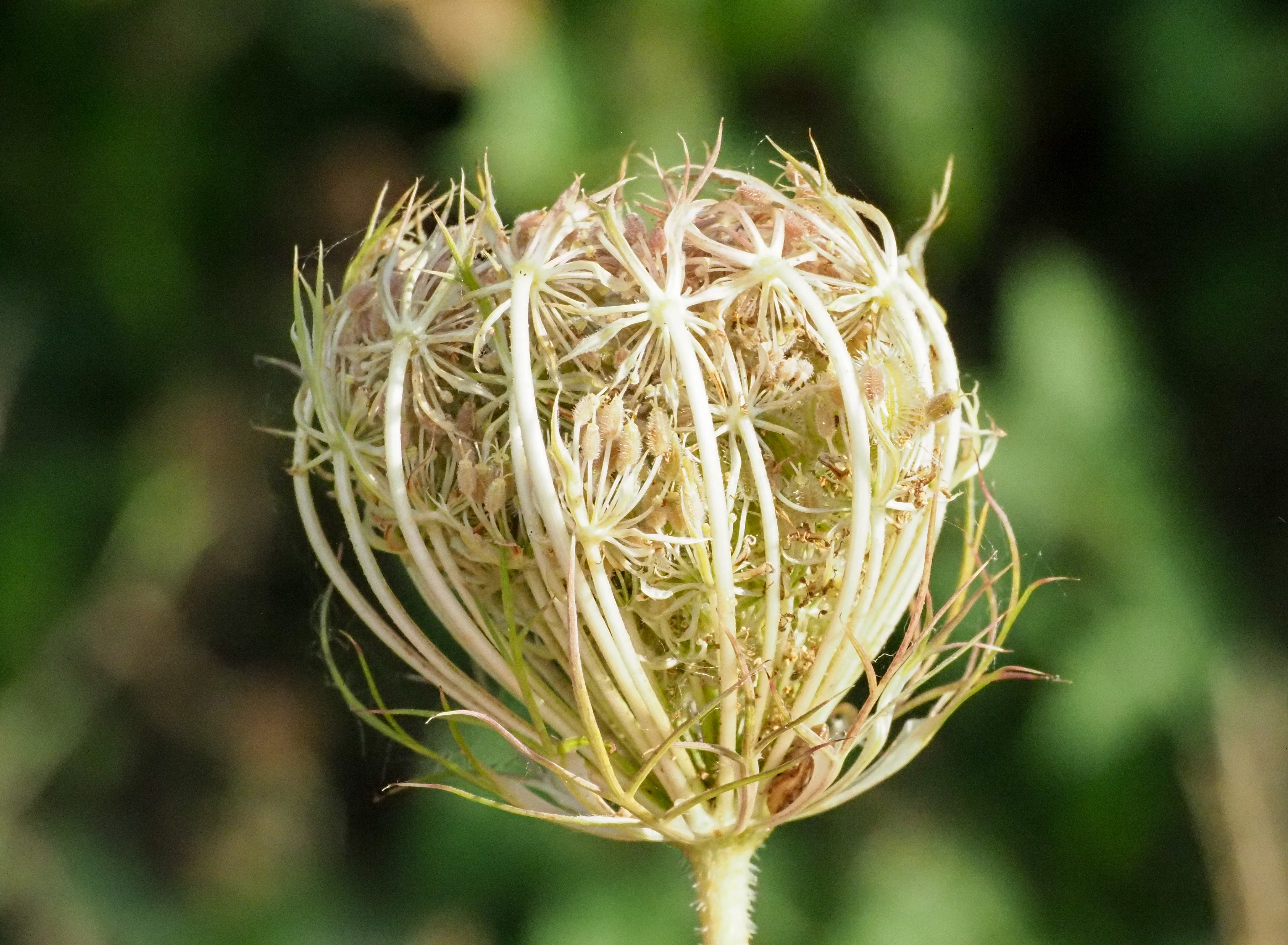
In Wild Carrot, also known as Queen Anne’s Lace, the umbels are flat or convex (above, left), when open, whereas the umbels of Sea Carrot are concave (i.e. dome-shaped), and often hemi-spherical (below). Wild Carrot can however, also look spherical, when the umbels close up at the end of the day (above, right).
Sea Carrot lacks the characteristic, single dark-red or beetroot coloured flower found in the centre of Wild Carrot umbers (above, left). The roots of Sea Carrot are said edible, but woody!
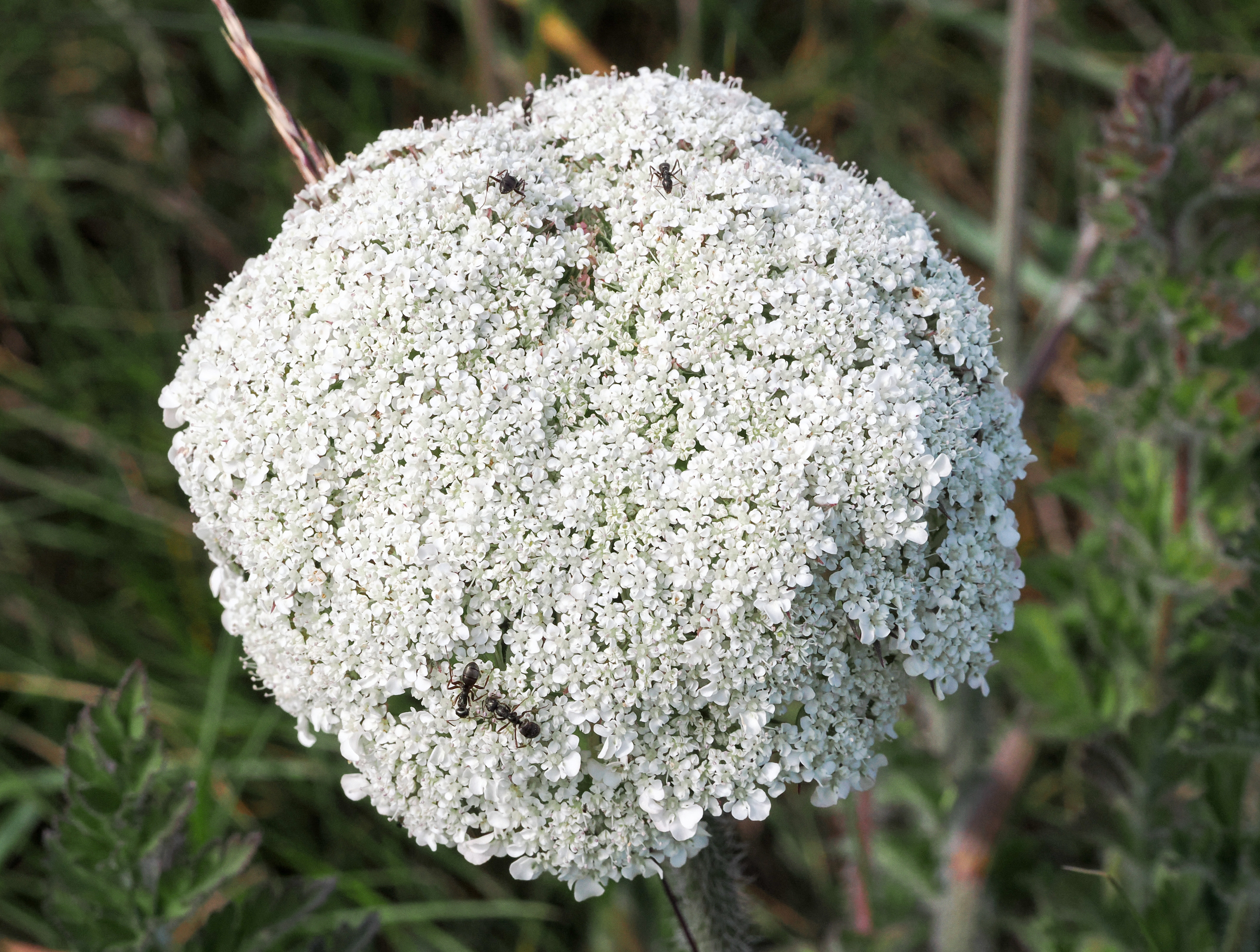
One of the distinguishing features between the Wild and Sea carrot subspecies is that the umbel rays (short stalks bearing the flower clusters) are hairy in Sea Carrot but smooth in Wild Carrot. I have blown up the photo I took of the Sea Carrot to illustrate this (below).
Look out for it!
I came across an old record for Sea Carrot from Scarborough: see here. These records were prior to 1970. I don’t know whether they have been looking for it in the meadows beside the castle, but it is good to see that it is still persisting at this location, and I will be searching for it more assiduously this summer (2026).
Visitors to Scarborough castle might like to look out for Sea Carrot plants as they walk around the perimeter path, especially on the section near to the sea.
N.B. the botanical term umbel dates from the 1590s and is derived from the Latin for umbrella or parasol.
A botanical description for Sild Carrot was provided by Martínez-Flores et al. (2020):
Daucus carota subsp. gummifer (s. l.): White to pinkish petals; fleshy and wide “leaflets” with broad lobes; spreading-ascending branches; fruiting umbel with convex to concave (“open nest-like”) shape; flowering umbel shape hemi-spherical to convex; bracts with broad, occasionally sublinear, segments; primary umbel diameter and number of rays highly variable; mericarp length less than 4.5 mm; root not fleshy.
Reference
Martínez-Flores, F., Crespo, M. B., Simon, P. W., Ruess, H., Reitsma, K., Geoffriau, E., … & Spooner, D. M. (2020). Subspecies variation of daucus carota coastal (“Gummifer”) morphotypes (Apiaceae) using genotyping-by-sequencing. Systematic Botany, 45(3), 688-702.
Link
Sea carrot: https://wildflowerfinder.org.uk/Flowers/C/Carrot(Sea)/Carrot(Sea).htm
 Ray Cannon's nature notes