Darwinism taught us to think that natural selection operates via the survival of the fittest. However, this phrase “survival of the fittest” is frequently misunderstood. It does not necessarily mean that the strongest, fastest or fittest – in an athletic sense – are more likely to survive; rather it means those individuals which are best adapted, or fitted, to their environment are more likely to survive and reproduce, and pass advantageous traits to their offspring. In a nutshell, fitness, in an evolutionary sense, means reproductive success.
Nevertheless, there are situations where the fittest individuals, in parochial terms – i.e. meaning the physically healthy, strong or fast – are at an advantage. Surely, the pronking or stotting (leaping) antelope is demonstrating to predators that they are healthy and hard to catch, making the predator less likely to attack. The gazelle which escapes the cheetah is saved by his/her speed. The laggard falls behind, as my school song had it!
We know that evolution is honed on the knife edges of such encounters, but we often forget that many such interactions between predator and prey, are shaped by blind chance. The gazelle stumbles on an ants’ nest; the predator’s stalking is foiled by a monkey’s cries, and so on.
It was these such thoughts which came to mind when I witnessed the demise of Nomad bee recently. I was following a little bee, Fabricius’ Nomad Bee (Nomada fabriciana), as she was working her way along a stone wall carefully investigating gaps and holes between the stones, when suddenly she went into one dark hole and was seized by a spider!
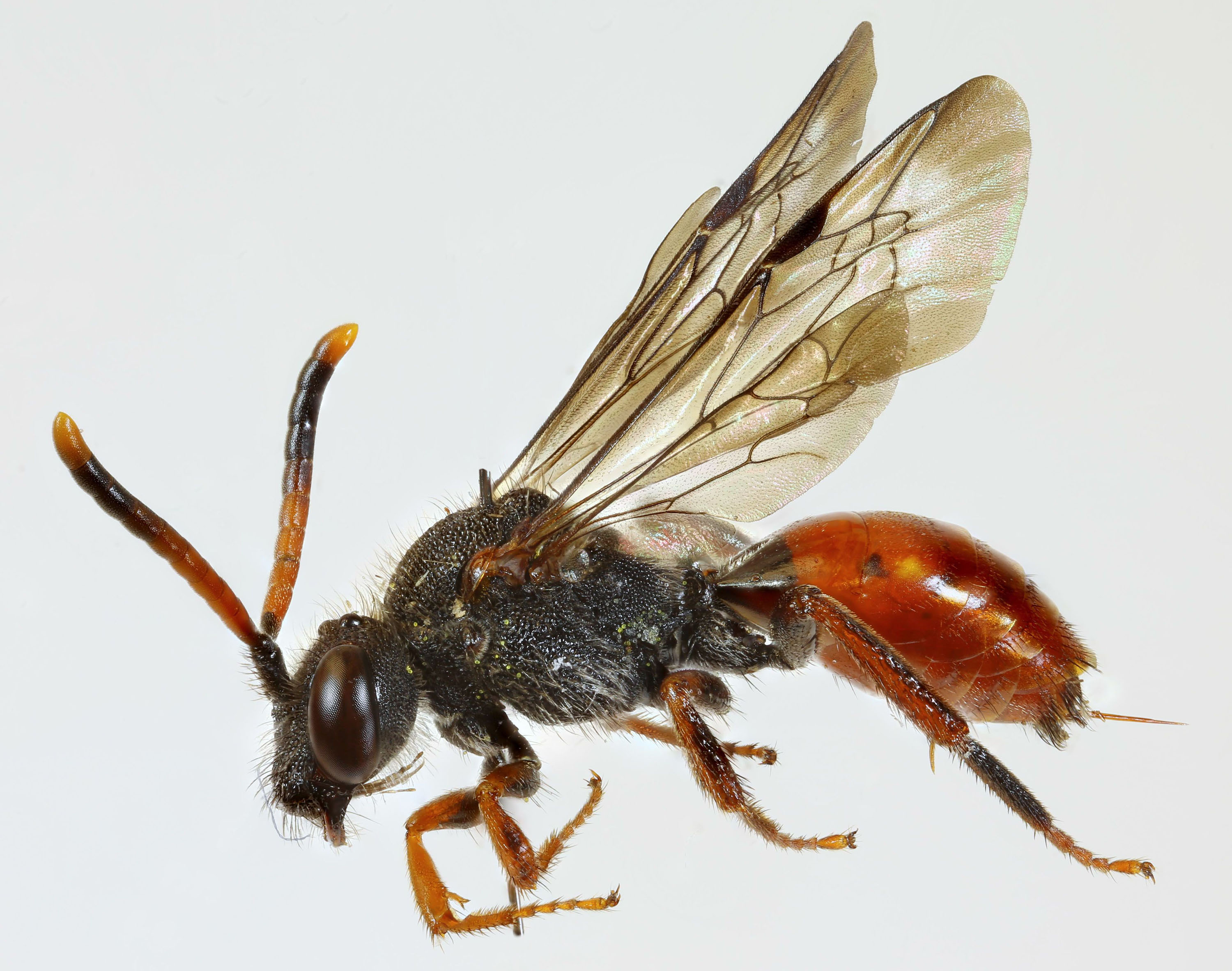
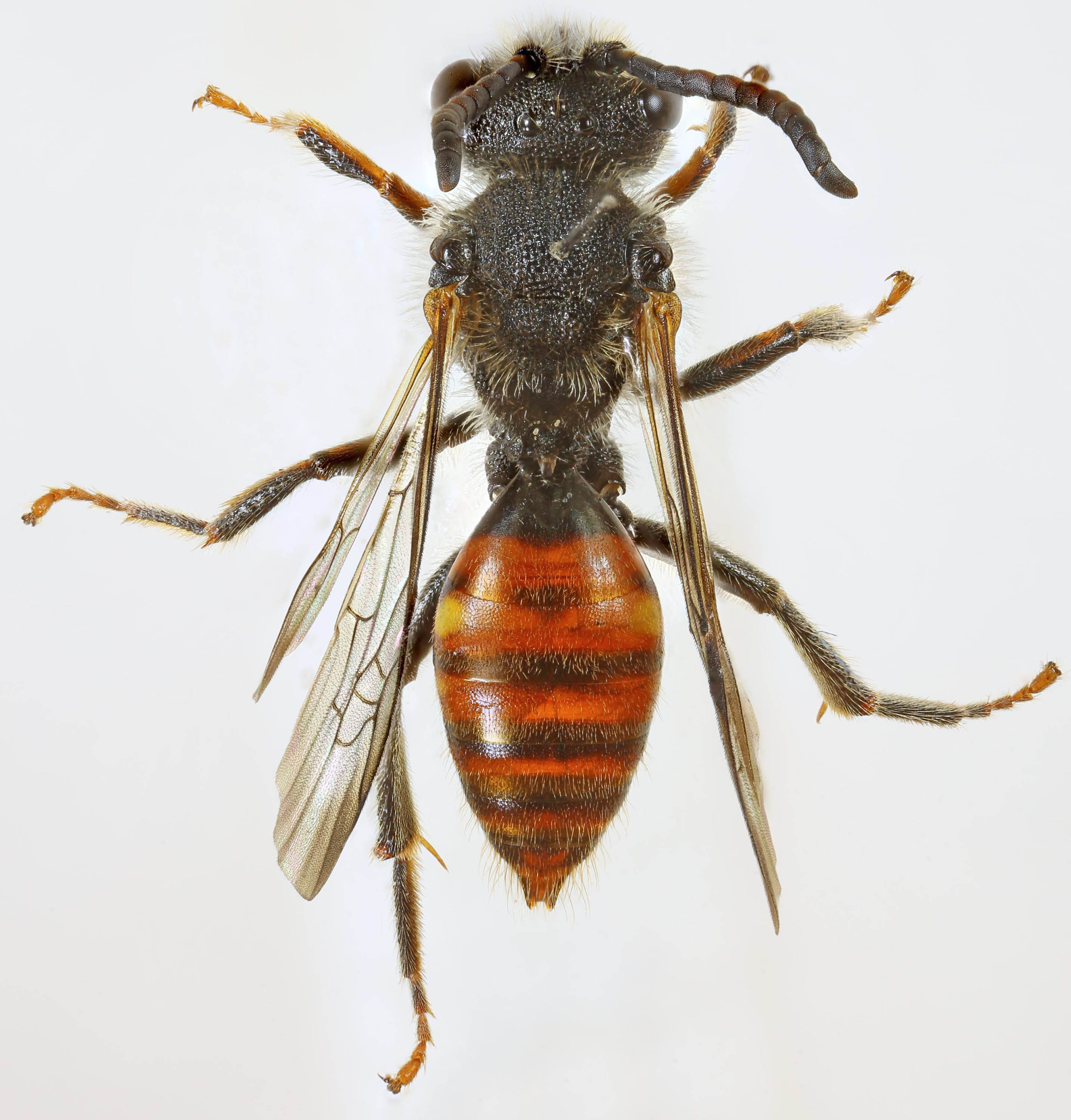
Nomada fabriciana specifically targets the nests of Mining Bees (primarily Andrena bicolor), which are solitary ground-nesting bees that often form large colonies.
A number of different species of mining and masonry bees make their nests in walls every year: for example Hairy-footed flower bees (Anthophora plumipes) often nest in old mortar joints between bricks and stones and seem to favour south-facing walls in old, stones houses (see below)
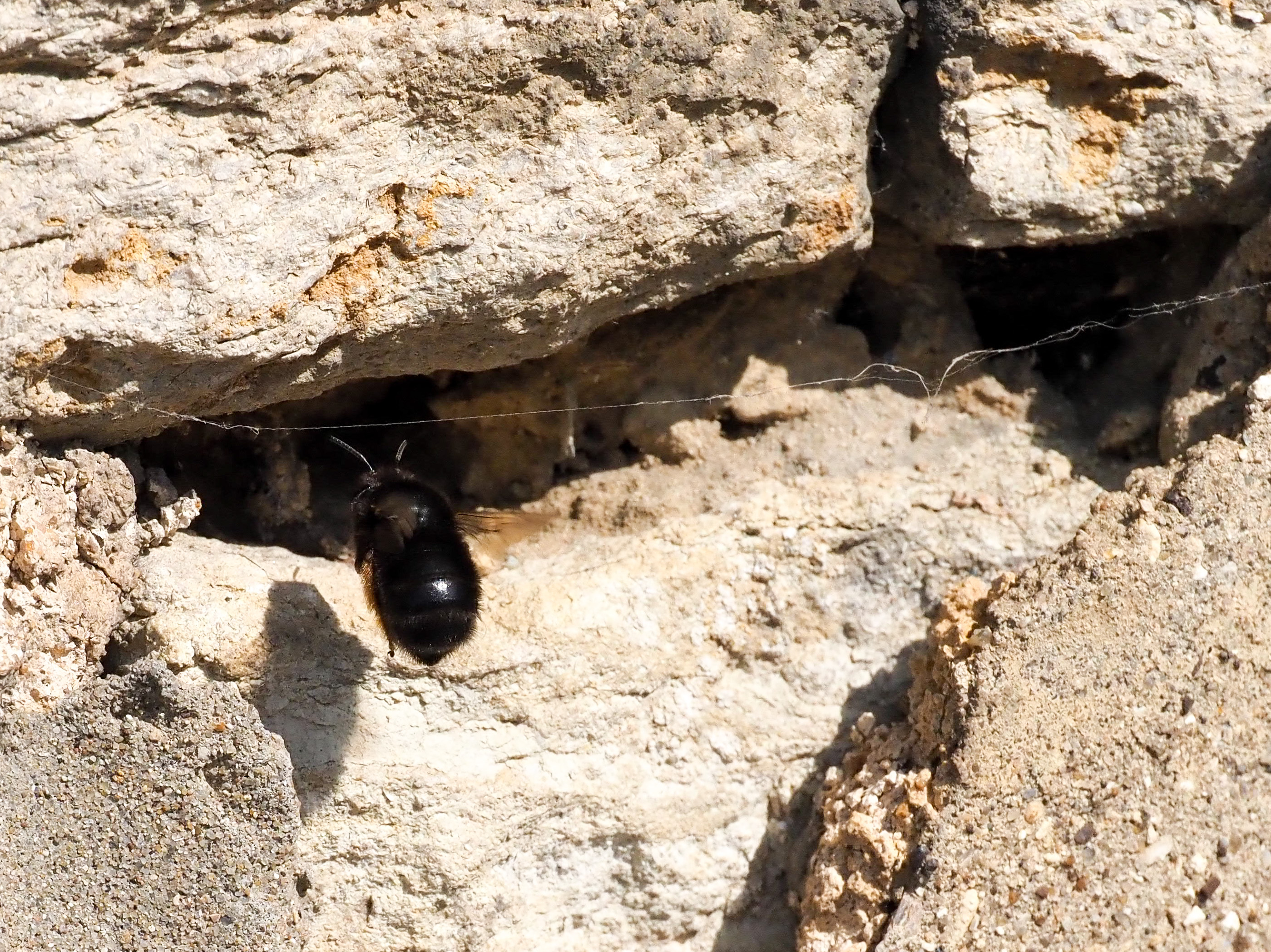
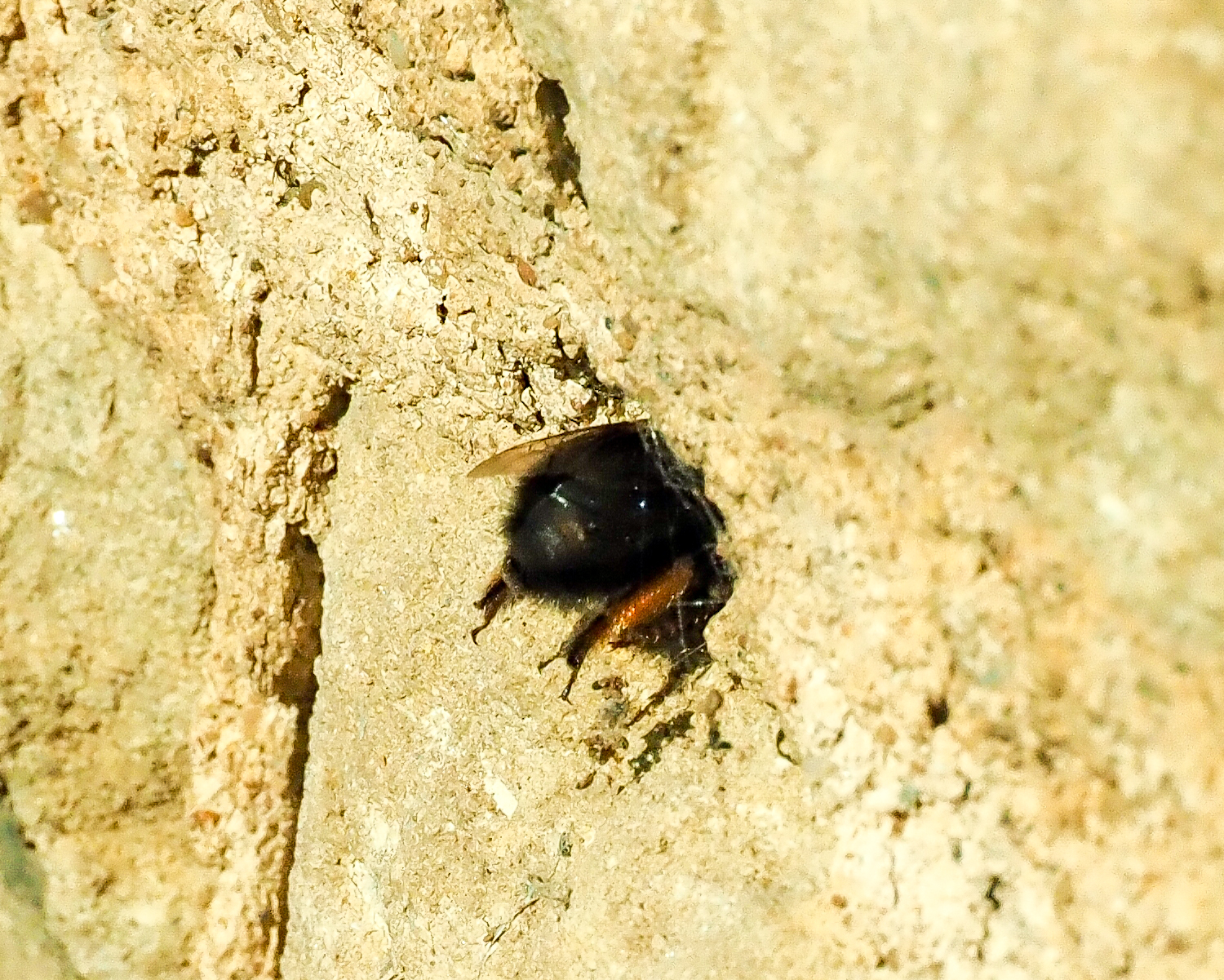
Fabricius’ Nomad Bee (Nomada fabriciana) does not however, make its own nests, nor does it usually nest within holes in walls, but it is frequently found around them as it is looking for the nests of its host. This is because it is a parasite of other bees. It is called a cleptoparasite (or cuckoo bee), because its offspring pilfer the food resources gathered by its host, bees such as Gwynne’s Mining Bee (Andrena bicolor), although this species prefers to nest in soil.
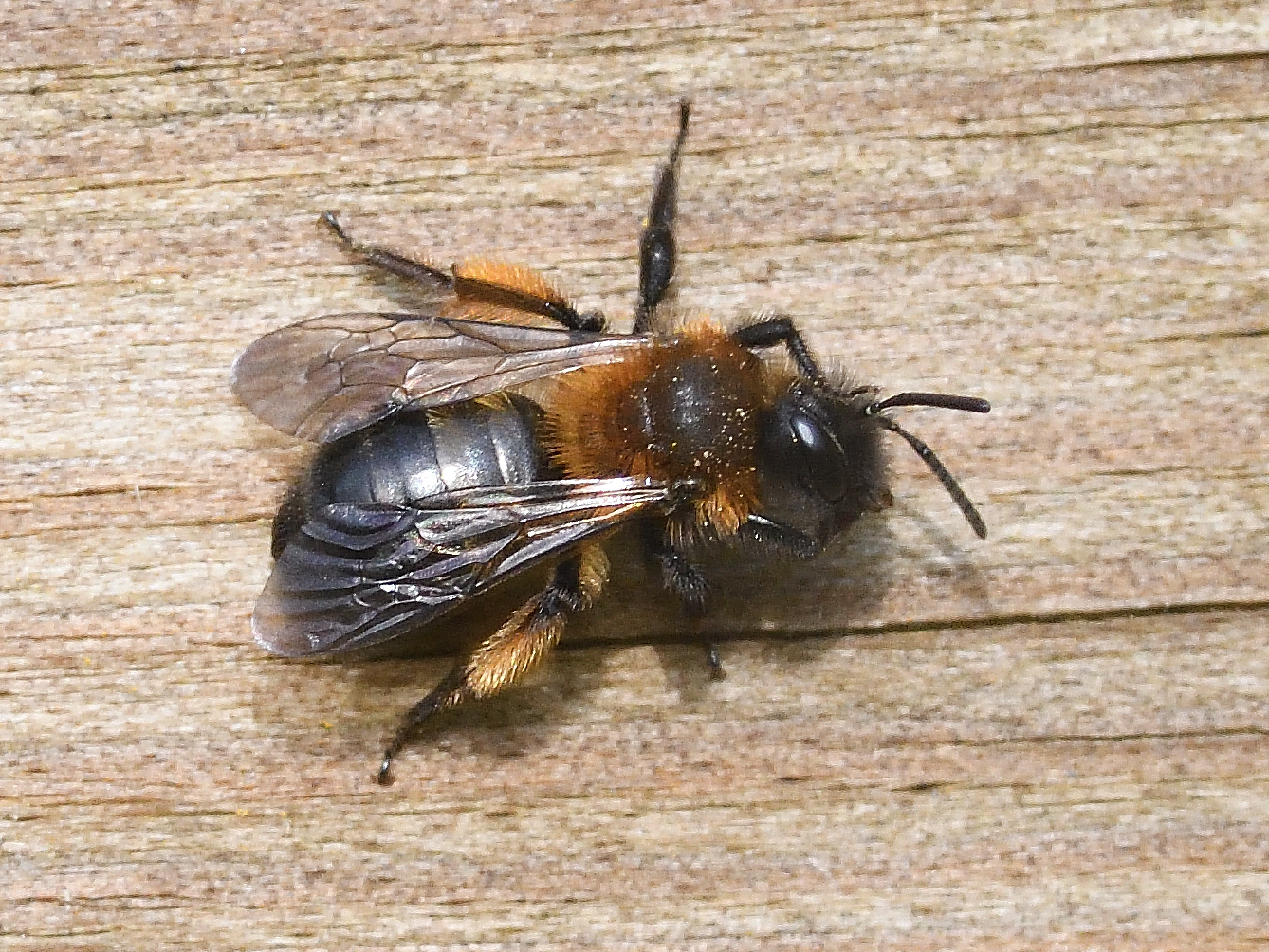
Anyway, this little Nomad Bee (Nomada fabriciana) has a variety of potential hosts, and it was making its way along the wall, stopping off to pop into gaps and holes, searching for places to lay its eggs in the nest cells of other bees. I managed to get a few photographs of it as it was searching. Needless to say perhaps, this little bee moves quickly, so some of the shots are better than others!
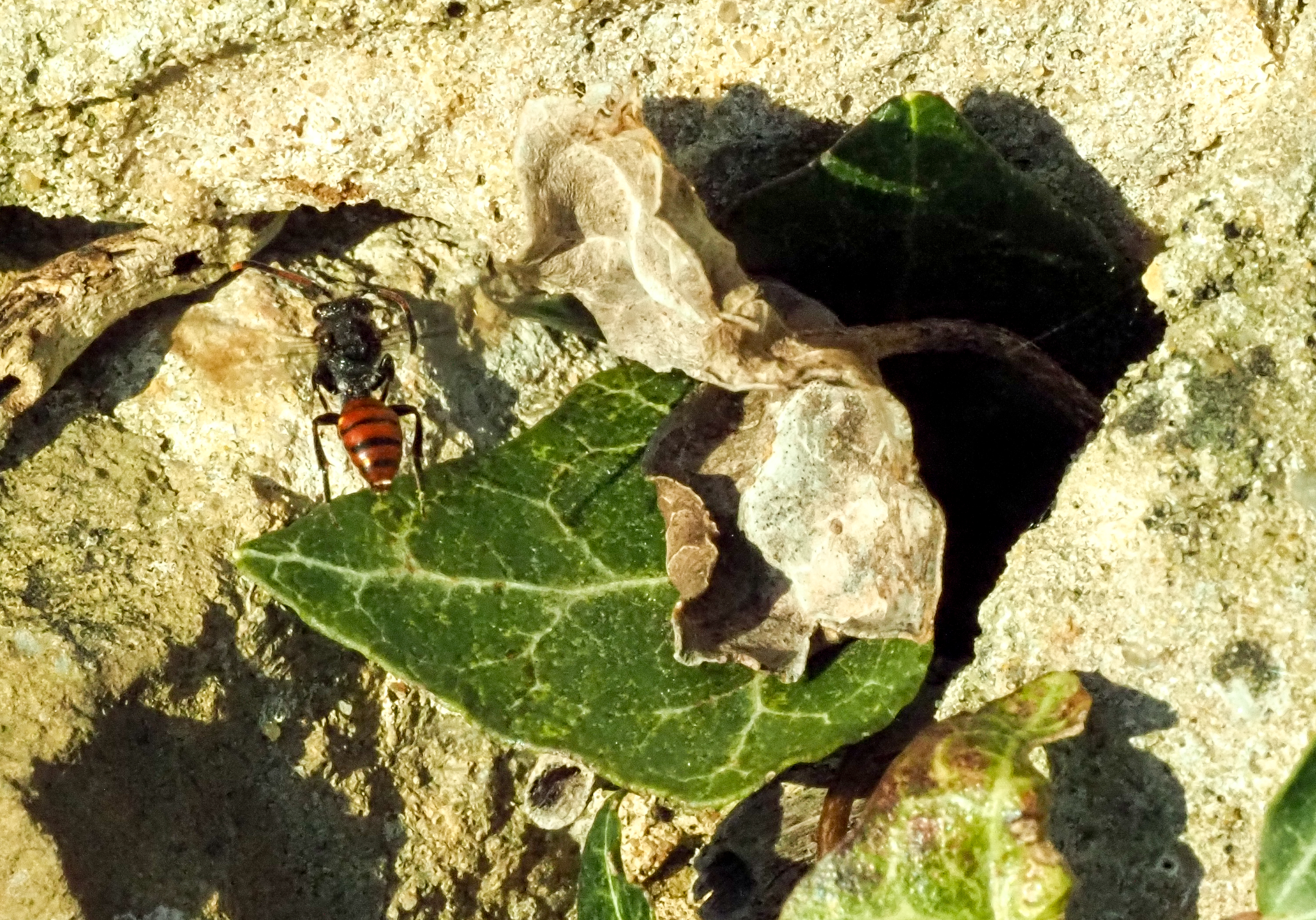
Now this is all very well, as parasitic cuckoo bees have evolved a particular life history strategy where they to exploit the labour of other bees. In an ideal world, there might not be parasites! Perhaps there is another universe in the multiverse where parasitism has not evolved? But in this universe of ours, many species have found cunning ways to save energy by living off the hard work of others; sound familiar?!
But to make matters more complicated, there are other organisms who live off such species, which are exploiting the hard-working ones. Although they are happy to grab any species which passes by! I am referring of course to spiders which inhabit holes, cracks, and crevices in stone walls. They lie in wait, waiting to ambush bees like these. Indeed, if you look carefully along stone walls, you can sometimes find the remains of victims; sucked dry and hanging down, almost as a warning to other bees passing by looking for nests. Alas, I don’t think the newly hatched bees know what these warning signs are (see below), and even if they do, they still have to find a hole. Like most of us in life, we know that they are casualties, but we have to keep on living: driving, crossing roads and so on, despite an element of risk.
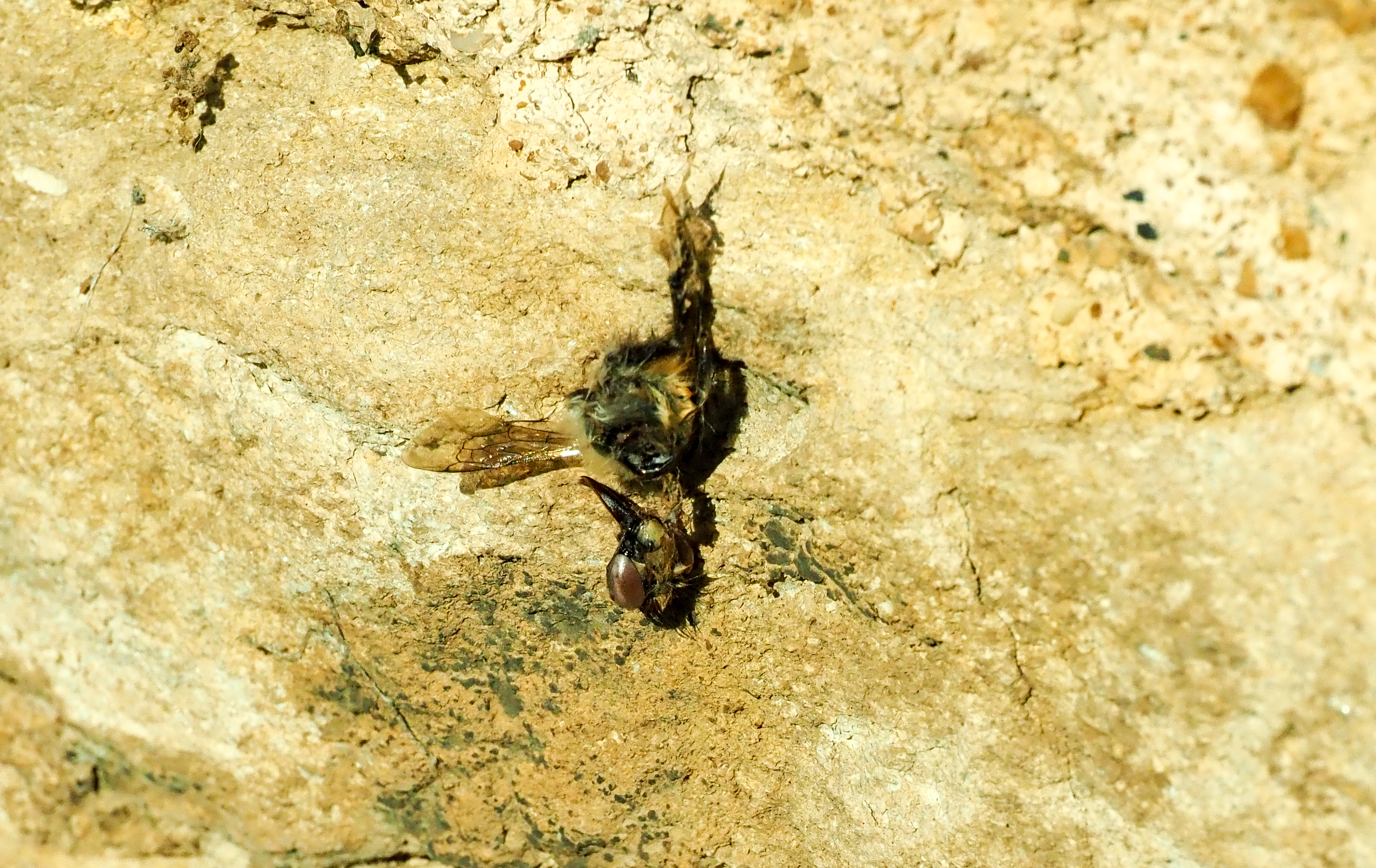
So it is with bees. I like to think that they have no idea that such terrible things as tube web spiders or lace-web spiders exist. Until the last moment that is.
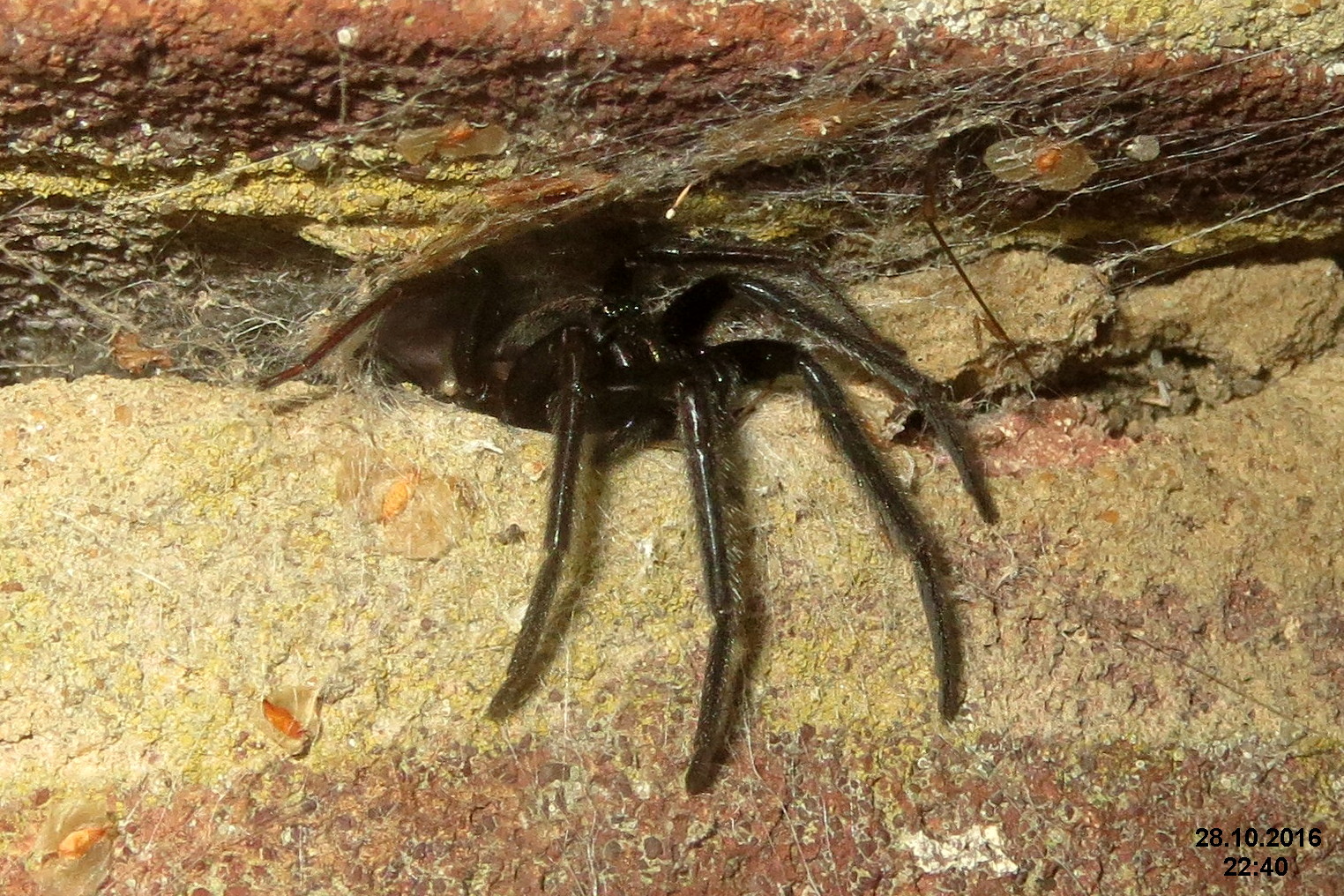
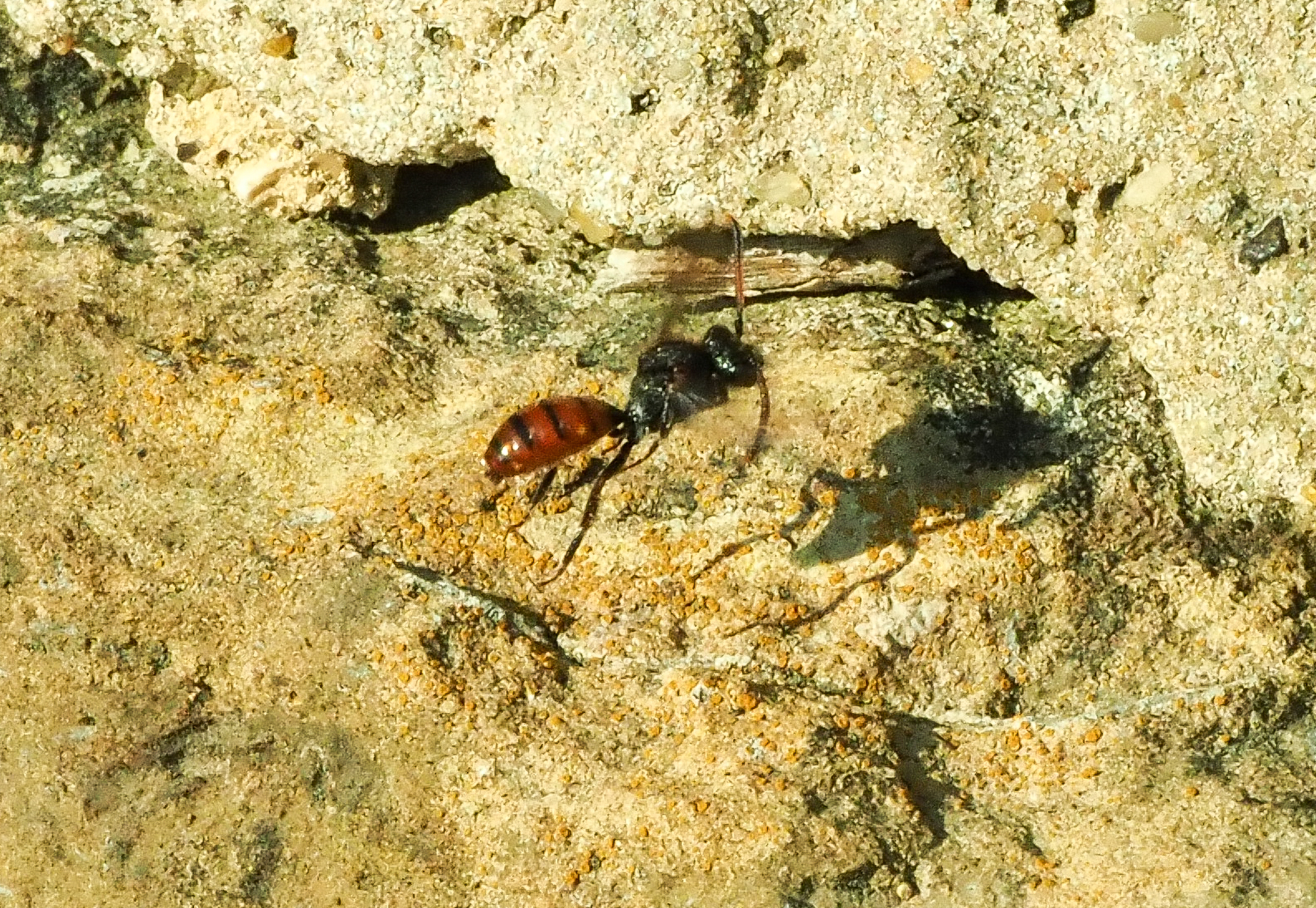
Getting back to my story, the Fabricius’ Nomad Bee was continuing its inspection of holes and had found one particular crack beside a lovely orange Xanthoria lichen (below). Perhaps it should have known that the profusion of white webbing strands spelt danger. It would surely not have learned such things in its short life? Could such knowledge be passed down via the genes? Perhaps a slight hesitancy in the face of such dangers might be selected for? But such timid behaviour might not be useful in terms of finding hosts?
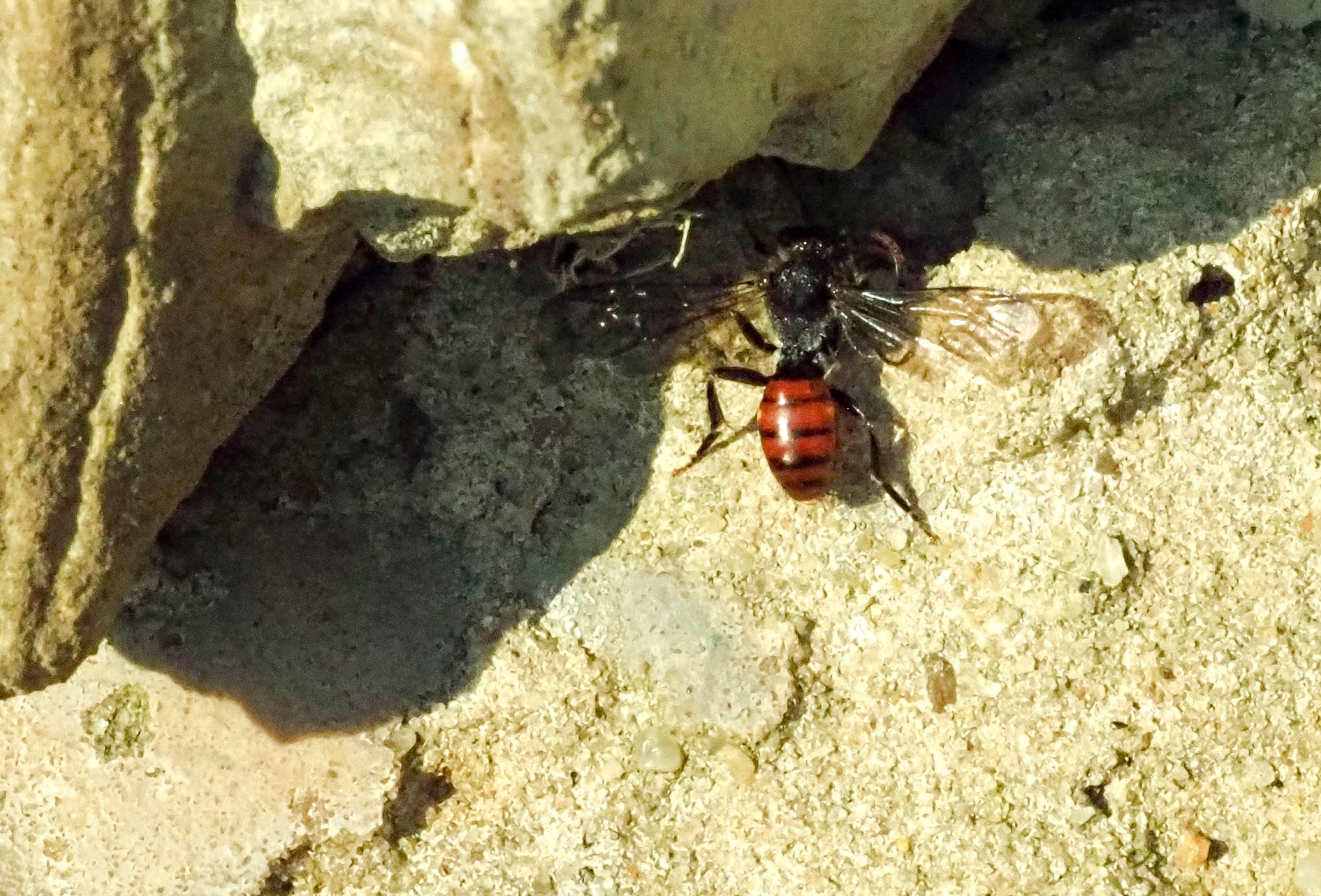
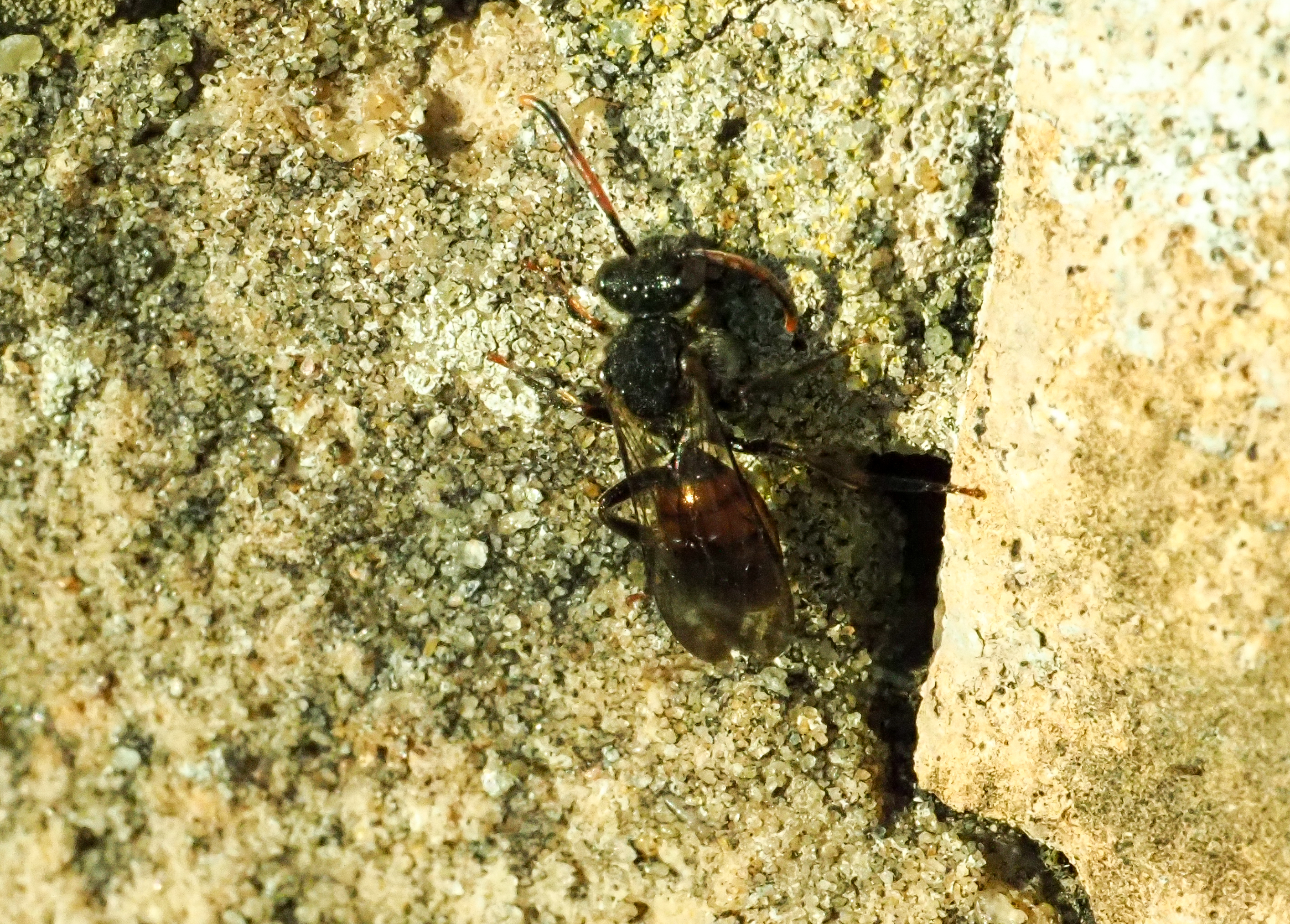
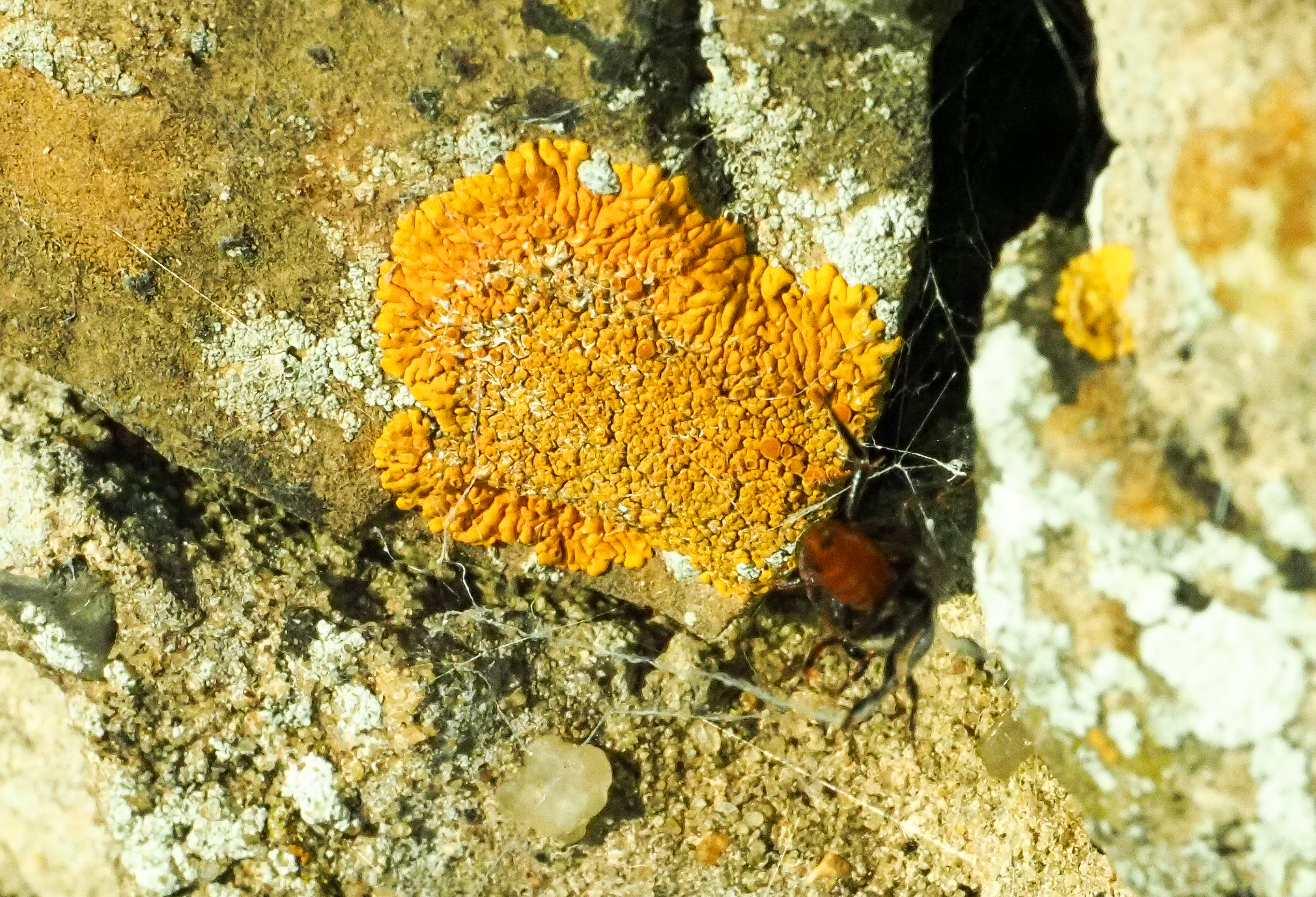
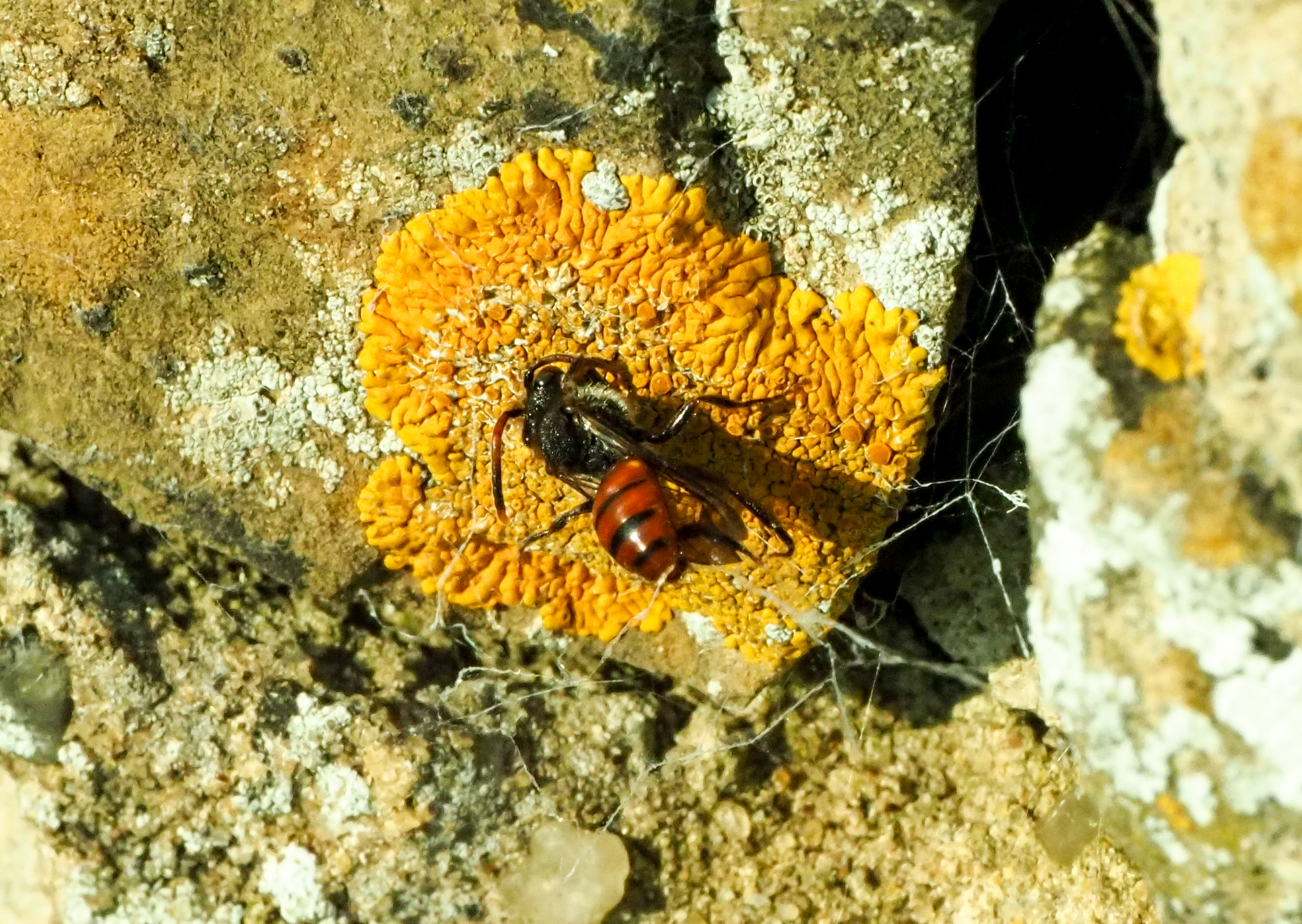
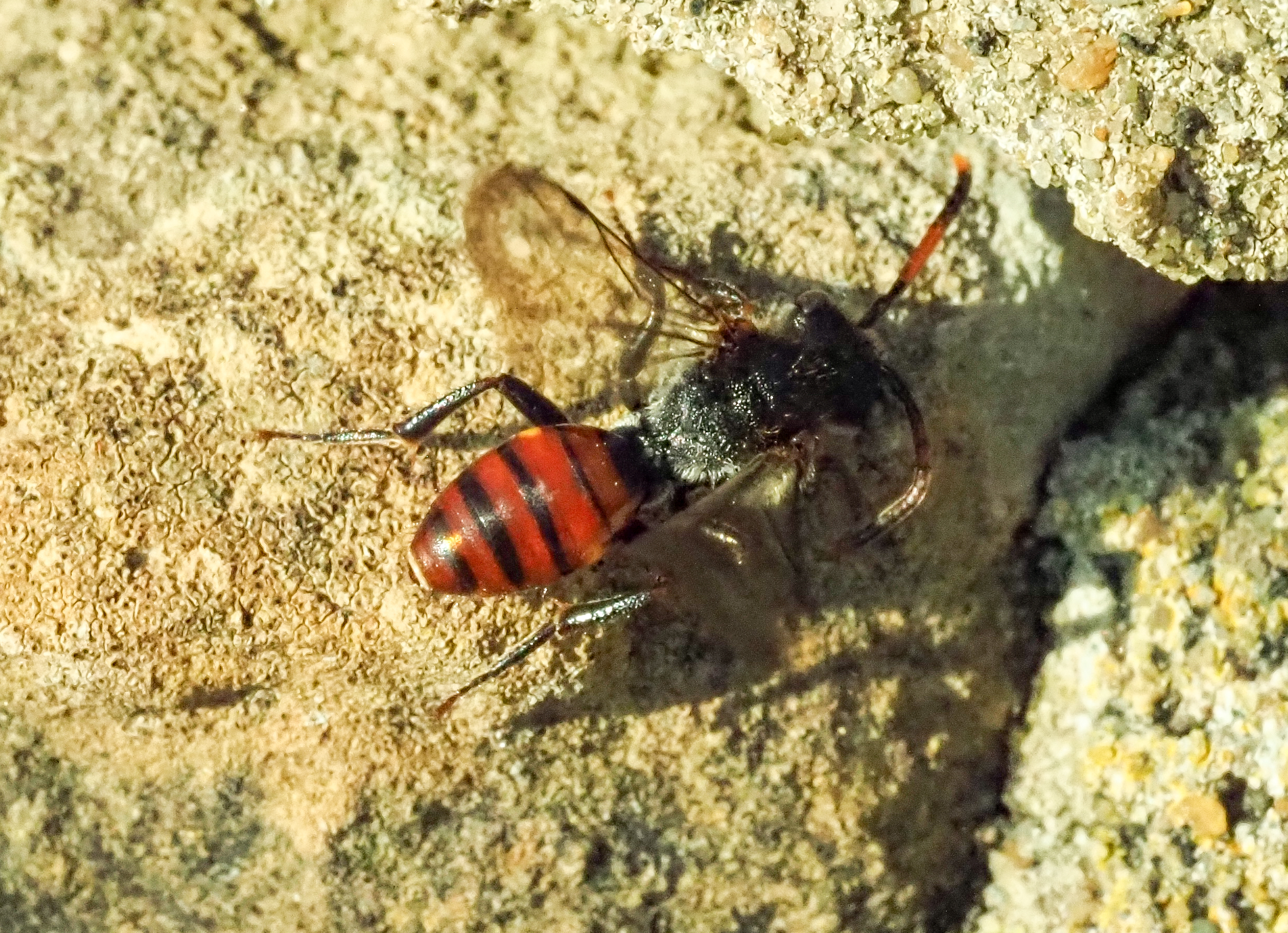
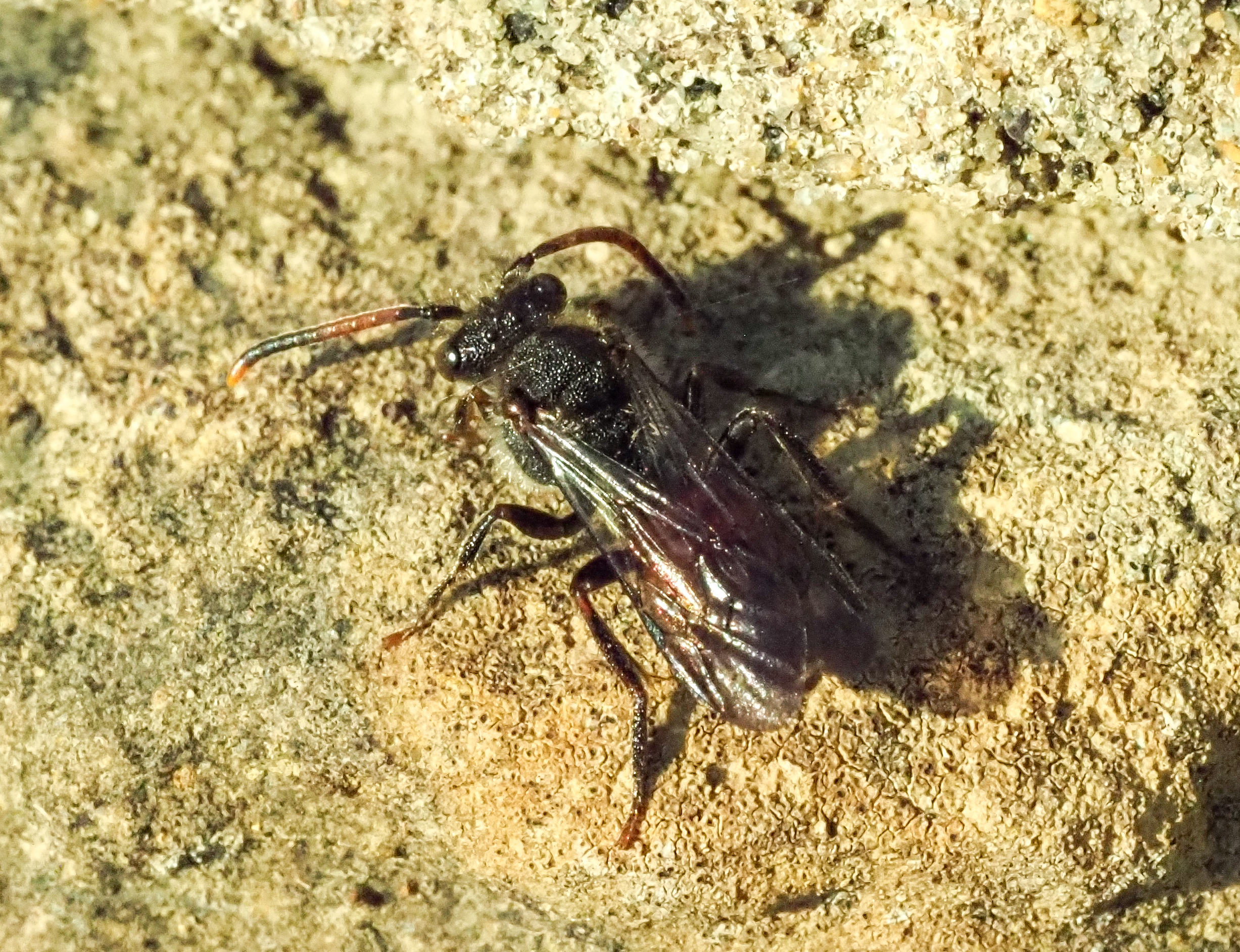
The Nomad bee managed to drag herself out of the hole (above), but was trapped by the spider’s webs. The last shot I have, is of her being dragged back into the hole by the spider (below). Alas, I did not capture the instant the spider grabbed her. It was very fast, but nevertheless, my brain registered it as a shock. Millions of years of my own evolution recognised that the little bee had suddenly been grabbed by something.
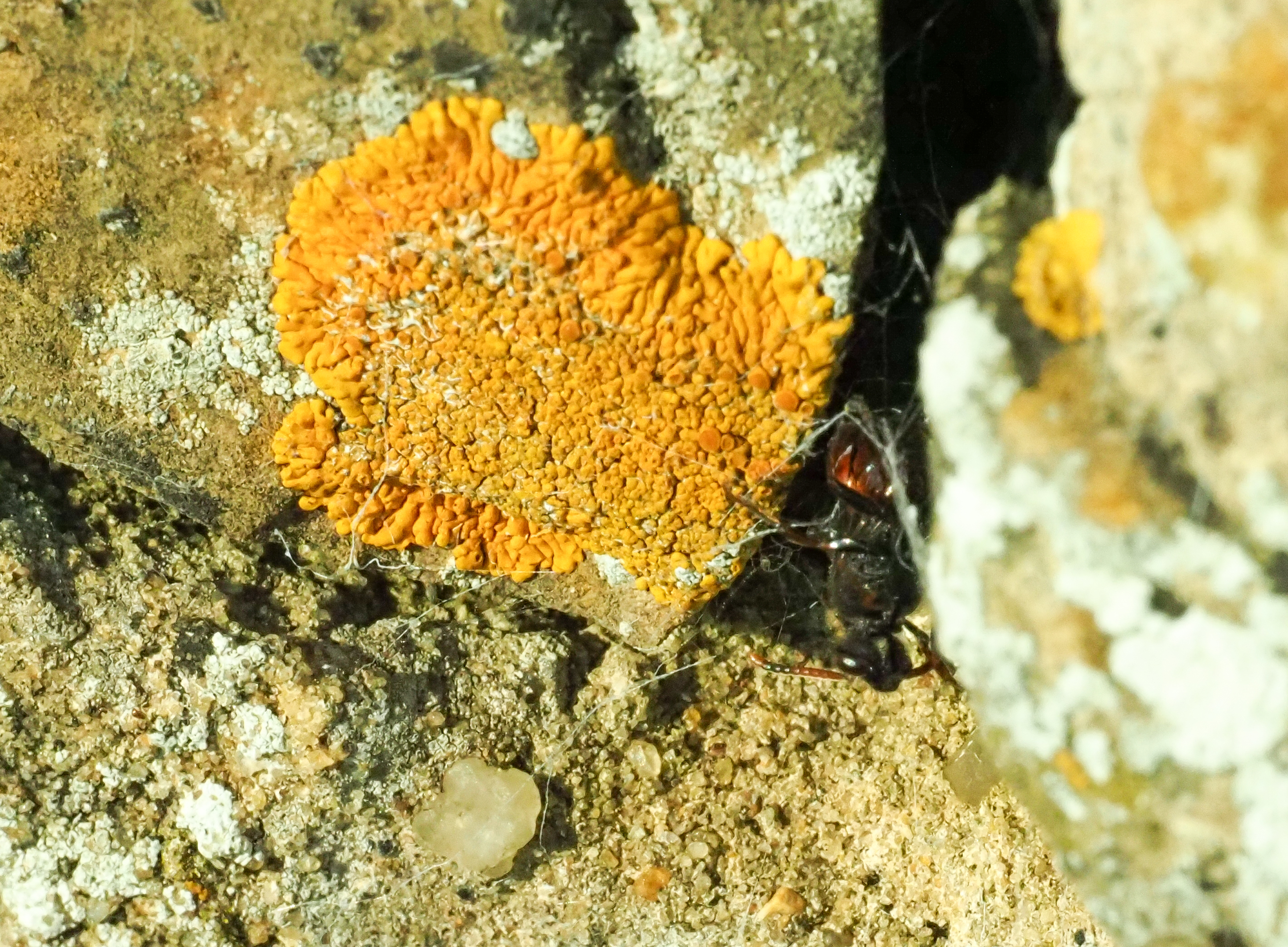
Photo by Raymond JC Cannon
Sadly, I cannot think of a moral to this story. Nature is a constant battle between predator and prey, or between parasite and would-be host, all driven by a need need to eat and the need to avoid being eaten; or to exploit and sponge off someone else. We don’t often see these interactions, and when we do they can be something of a shock. Perhaps there is a place where such things do not go on, and all species live together happily ever after, feeding on tofu and water biscuits!
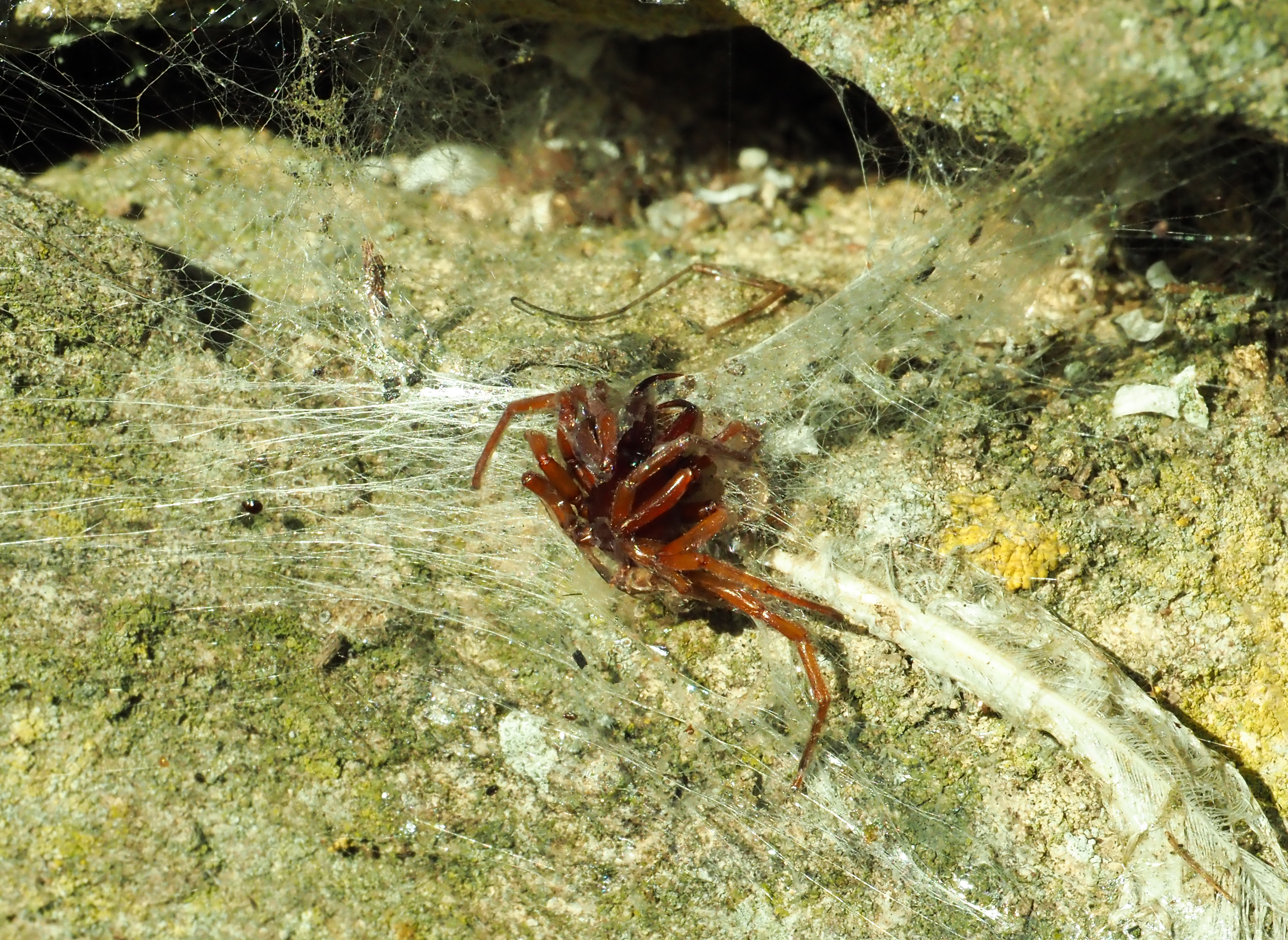
Finally, as a reminder that we all reach our demise eventually, I came across this dead lace-web spider, her remains tangled up in her own webbing. I’ve no idea if she died of hunger, old age, or something that kills spiders! But it reminds us that we all live in complex webs of life, perhaps more intricate or elaborate than we know, or can ever know?
 Ray Cannon's nature notes