I love this time of year, spring! The days are lengthening and the temperatures are rising (hopefully). Trees, which looked like strangely inert lumps of wood all winter, suddenly start to wake up and demonstrate that they are very much alive!
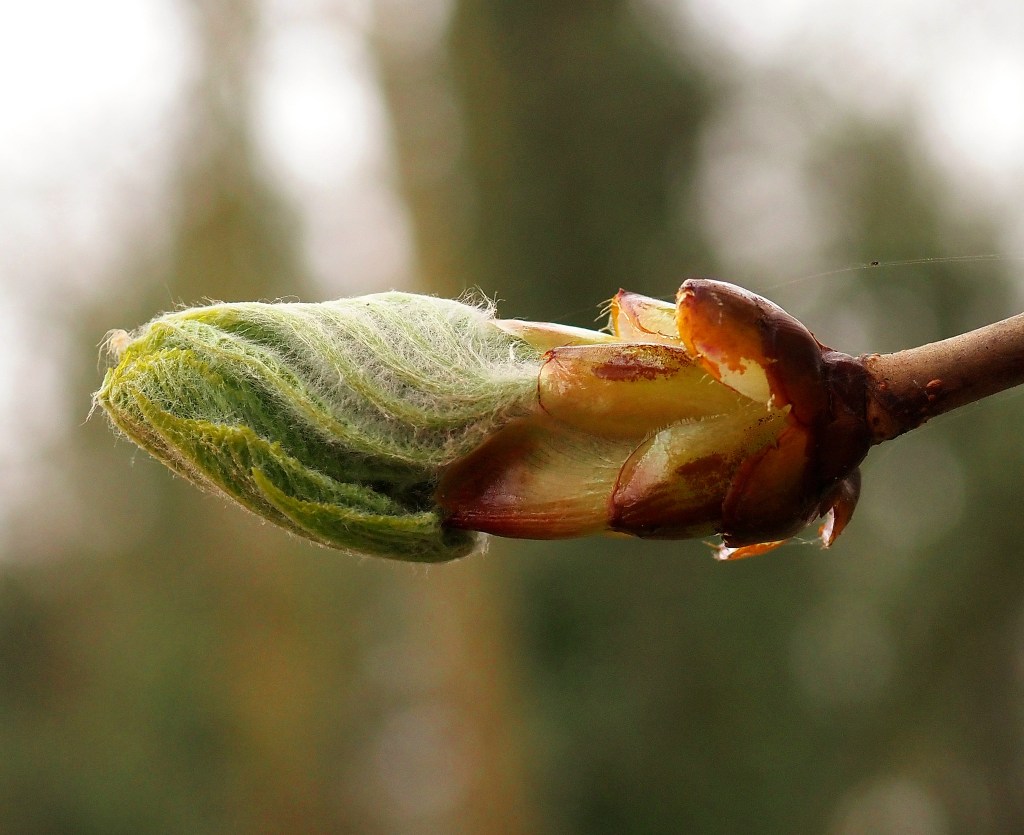
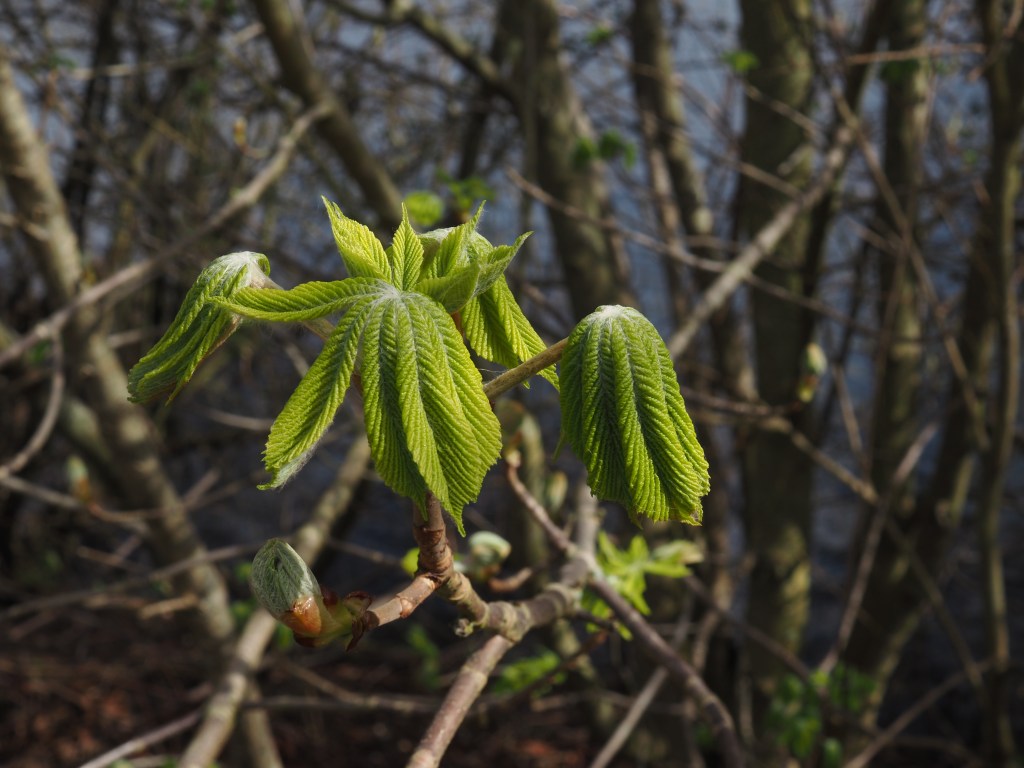
Most buds are actually produced in the preceeding year, and have remained tiny and dormant, waiting their time, experiencing the chill of winter, before breaking out and growing in a complex sequence, ultimately controlled and regulated by the tree’s DNA.
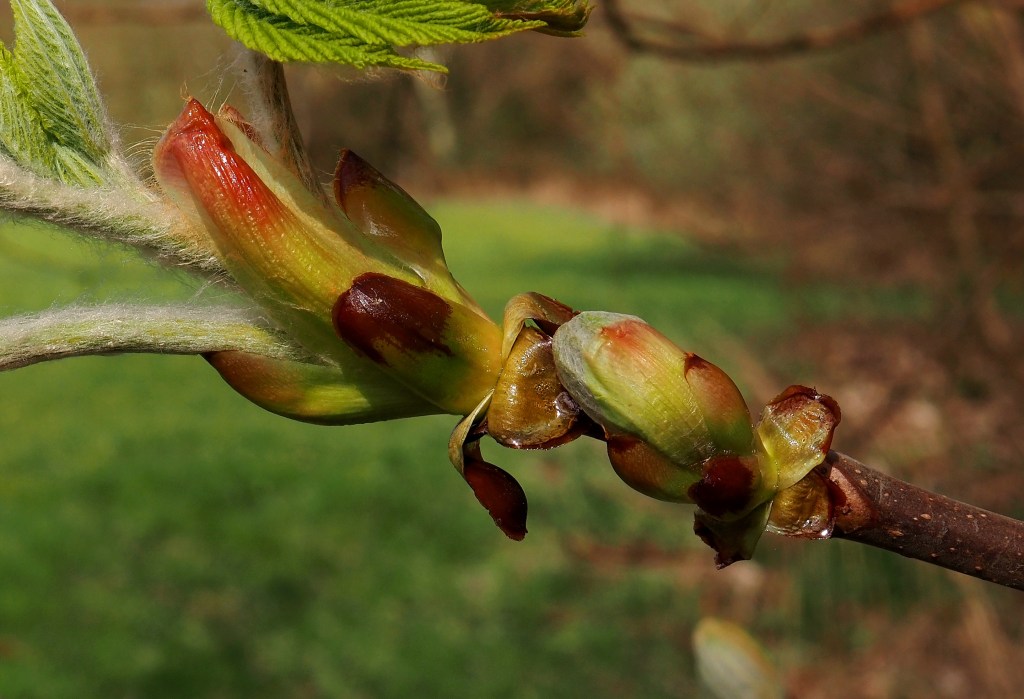
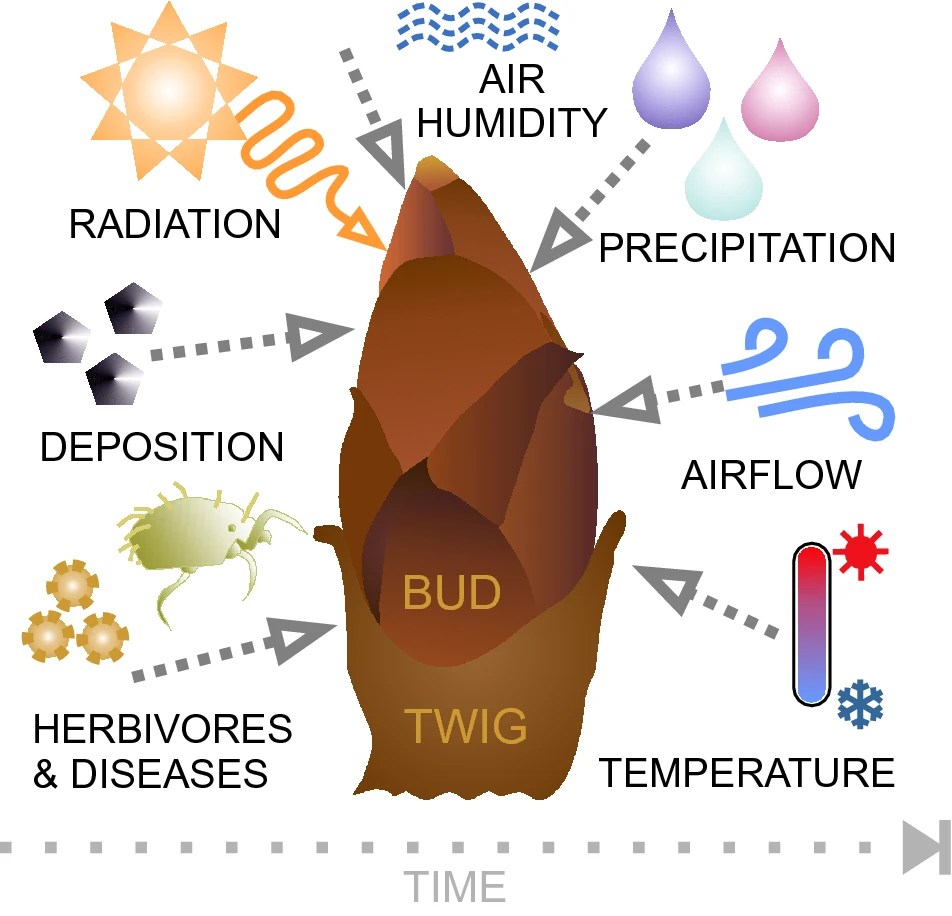
One of the materials produced by horse chestnut trees, and others, along with their buds, is a translucent, viscous secretion which forms a thick fluid layer over and between the bud scales. This amazing compound remains sticky even after long-term exposure to heat, frost, rain, deposition of aerosols and particles, attacks by microbes and arthropods! A study by scientists in Germany and the USA, showed that the secretion does not dry out under arid conditions, nor does it melt at 50 °C! And, it stays sticky!
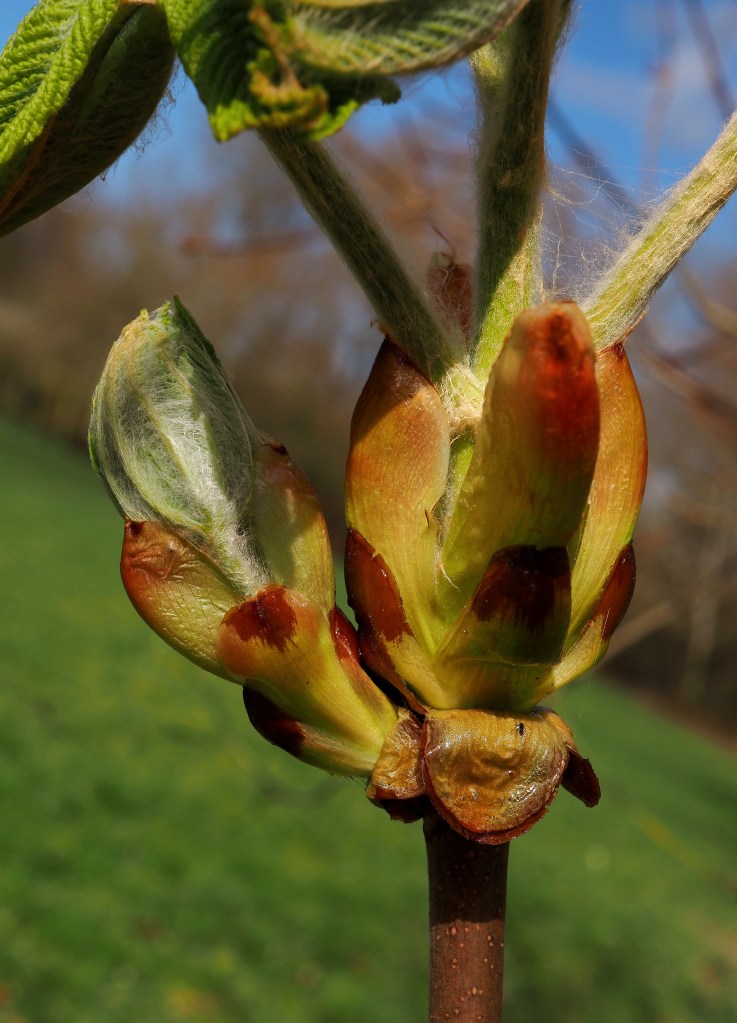
The scientists came to the conclusion that the sticky secretion of horse-chestnut buds is “a persistent, reliable, reversible, and universal pressure-sensitive adhesive”, which is able to withstand numerous abiotic and biotic environmental impacts.
https://www.nature.com/articles/s41598-020-74029-5
Saturated alkanes, free fatty acids, and fatty acid esters are the main components of the bud secretion.
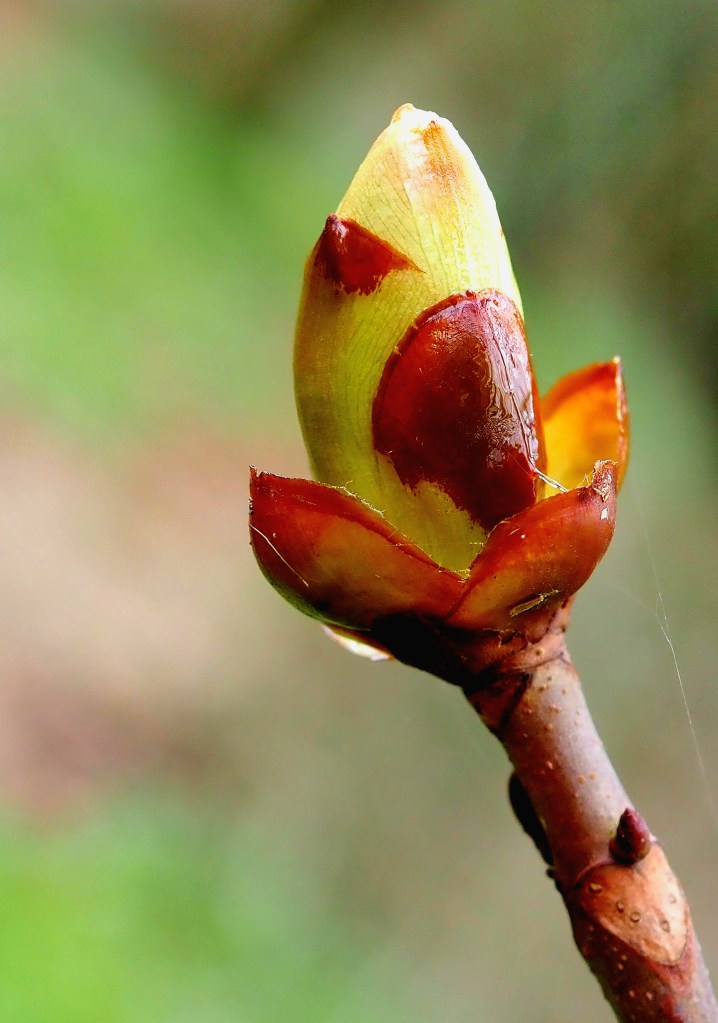
In short, this wonderful natural adhesive, protects the growing buds against water loss, high and low temperatures, microbes, insects and even radiation! The new leaves can therefore, get a head start in opening and getting on with producing food for the tree, through the miracle of photosynthesis.
Reference
Voigt, D., Kim, J., Jantschke, A., & Varenberg, M. (2020). Robust, universal, and persistent bud secretion adhesion in horse-chestnut trees. Scientific Reports, 10(1), 16925.
 Ray Cannon's nature notes
This is so wonderful – an explanation. There’s me angry cos they walk in every year and am constantly hoovering and picking them up – and they sometimes stick like glue! I never thought before to do a search on why they were sticky. I suppose you know about the stately and adored tree survivors of Japan’s bombs. I wonder if any of these had sticky buds and were saved this way. I have two huge Chestnuts and a younger one down the field. All my collected conkers in a bucket are putting out single roots. When they first leaf it is a adult leaf. They are such strong trees. Many thanks for writing this up.
Thank you for your comments.😊
[…] Why are horse chestnut buds so sticky? […]