The Willow Emerald Damselfly, Chalcolestes viridis, is a recent colonist to the UK, first recorded in Britain in 2007, but not found in significant numbers until 2009. Since then, it has rapidly expanded its range and can now be found as far north as Yorkshire (2019) and Newcastle (2022). The British Dragonfly Society has documented this spread via the ‘Willow Emerald Watch’ project, with maps illustrating the remarkable expanding distribution of this species in Britain.
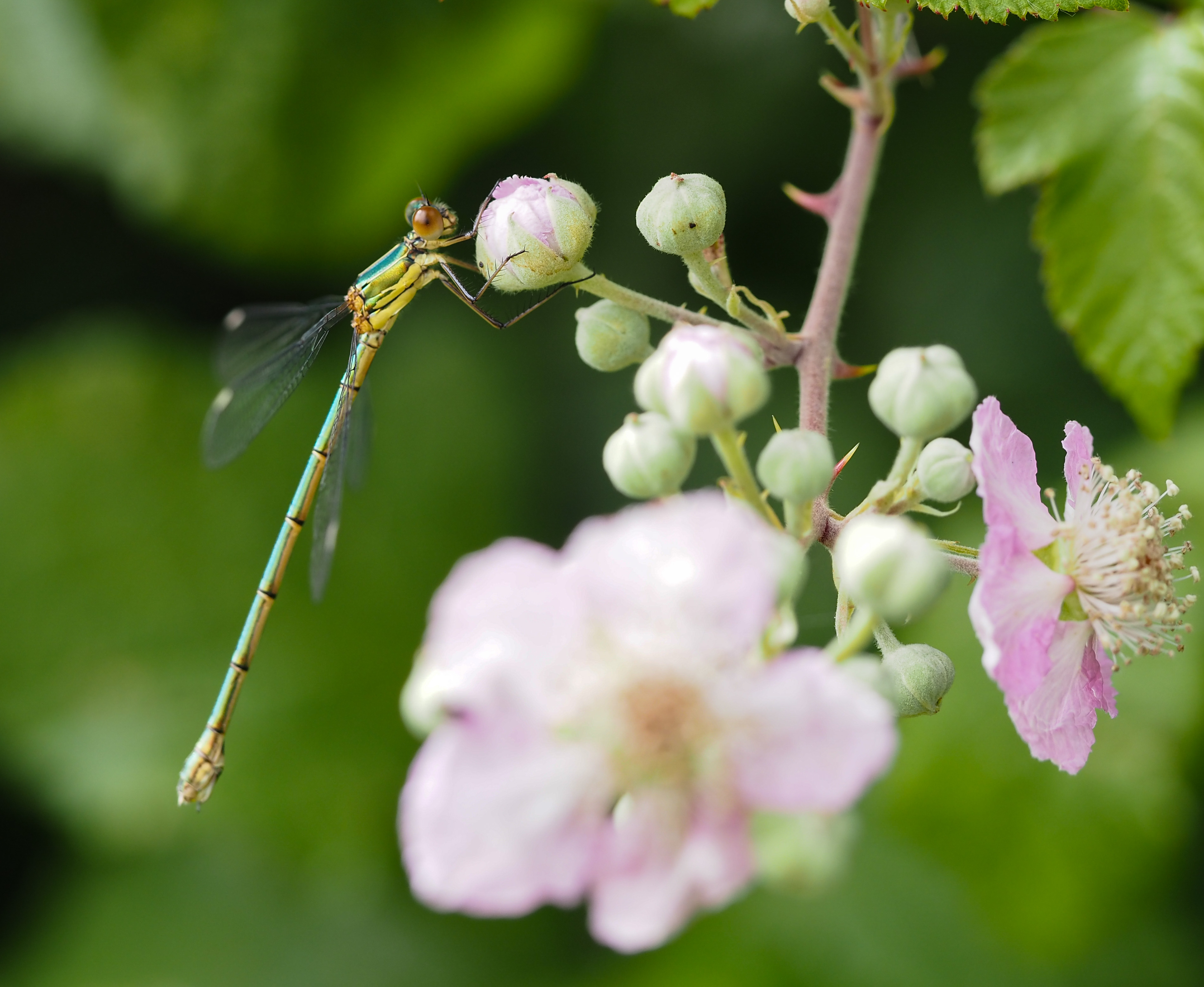
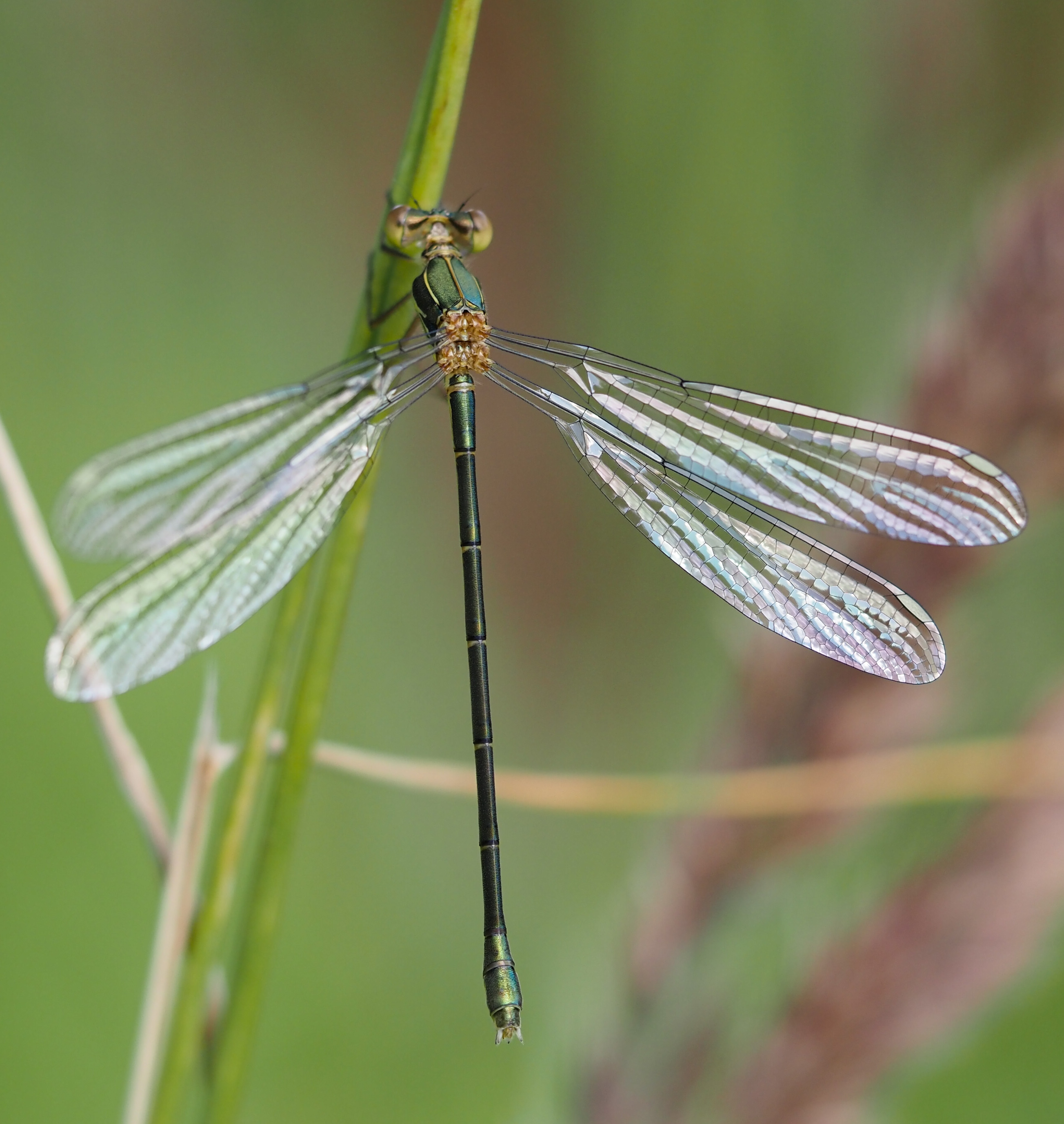
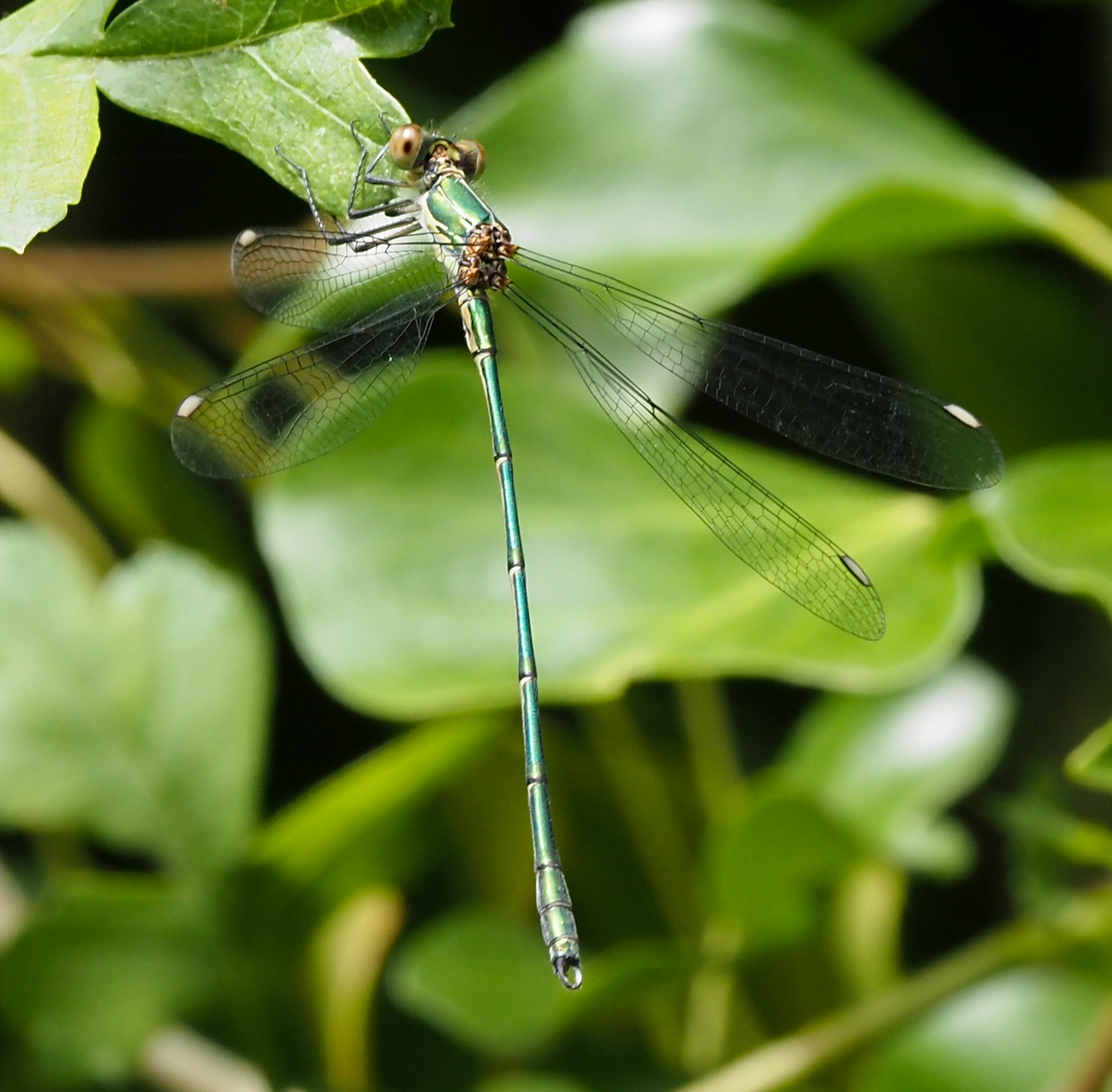
Like other members of the family Lestidae, Willow Emerald damselflies hold their narrow wings at about 45 degrees to the body when resting (see below). There are three other emerald damselflies in the UK: the Scarce Emerald Damselfly (Lestes dryas), the Emerald Damselfly (Lestes sponsa), and the Southern Emerald Damselfly (Lestes barbarus).
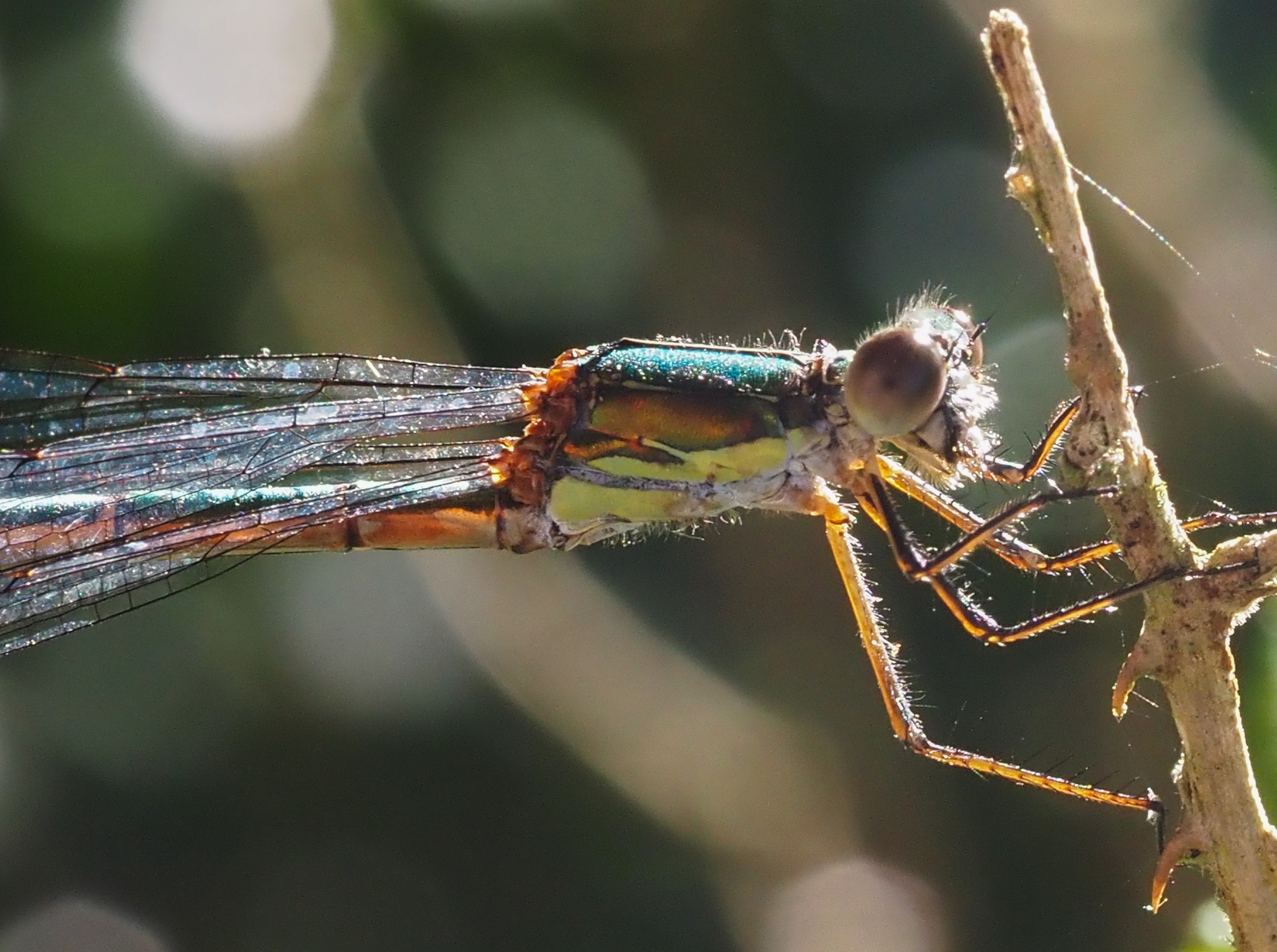
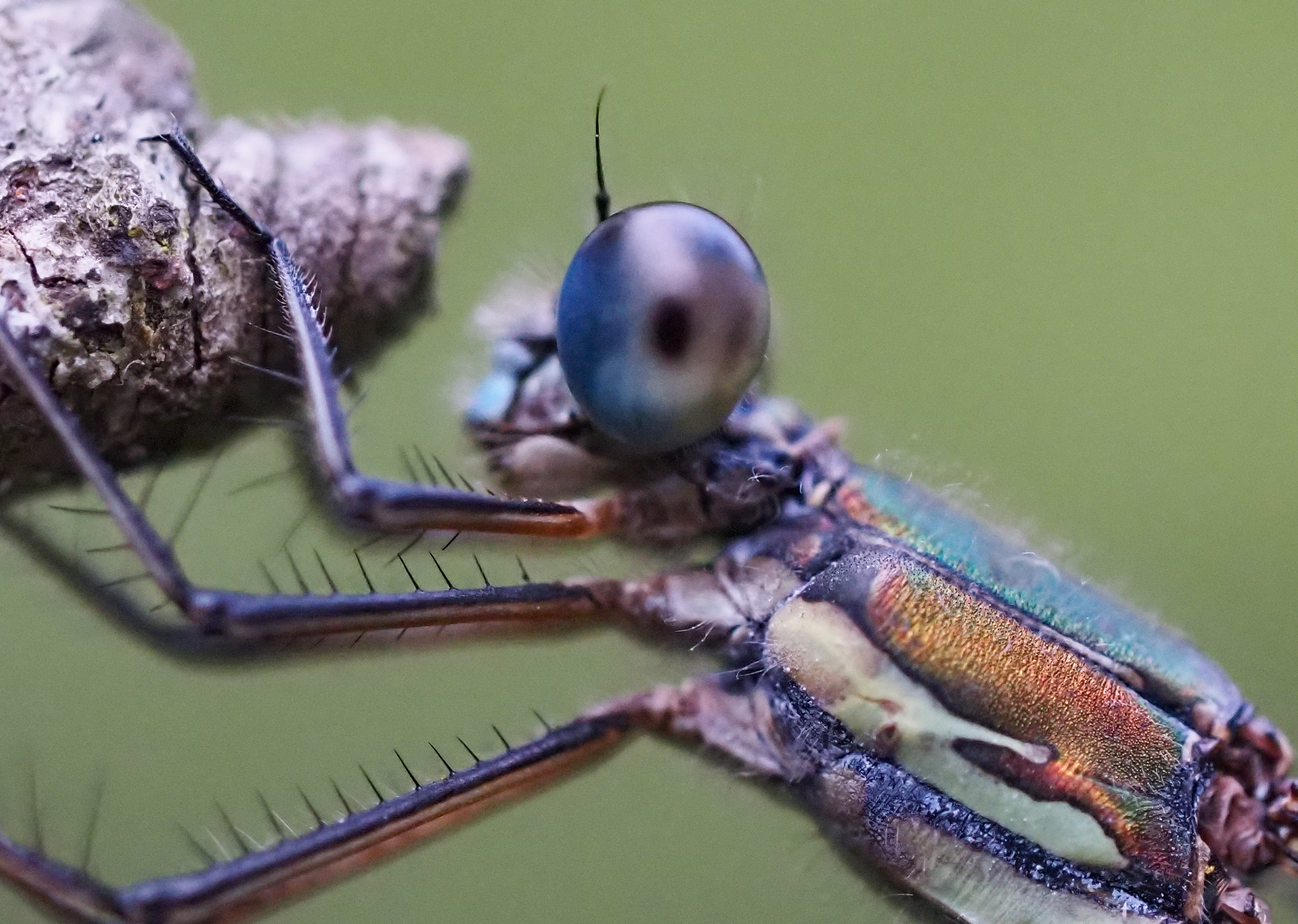
One of the easiest ways of ways of distinguishing a willow emerald is by the large spur-shaped, dark green mark on the side of the thorax (below). Both males and females have this feature.
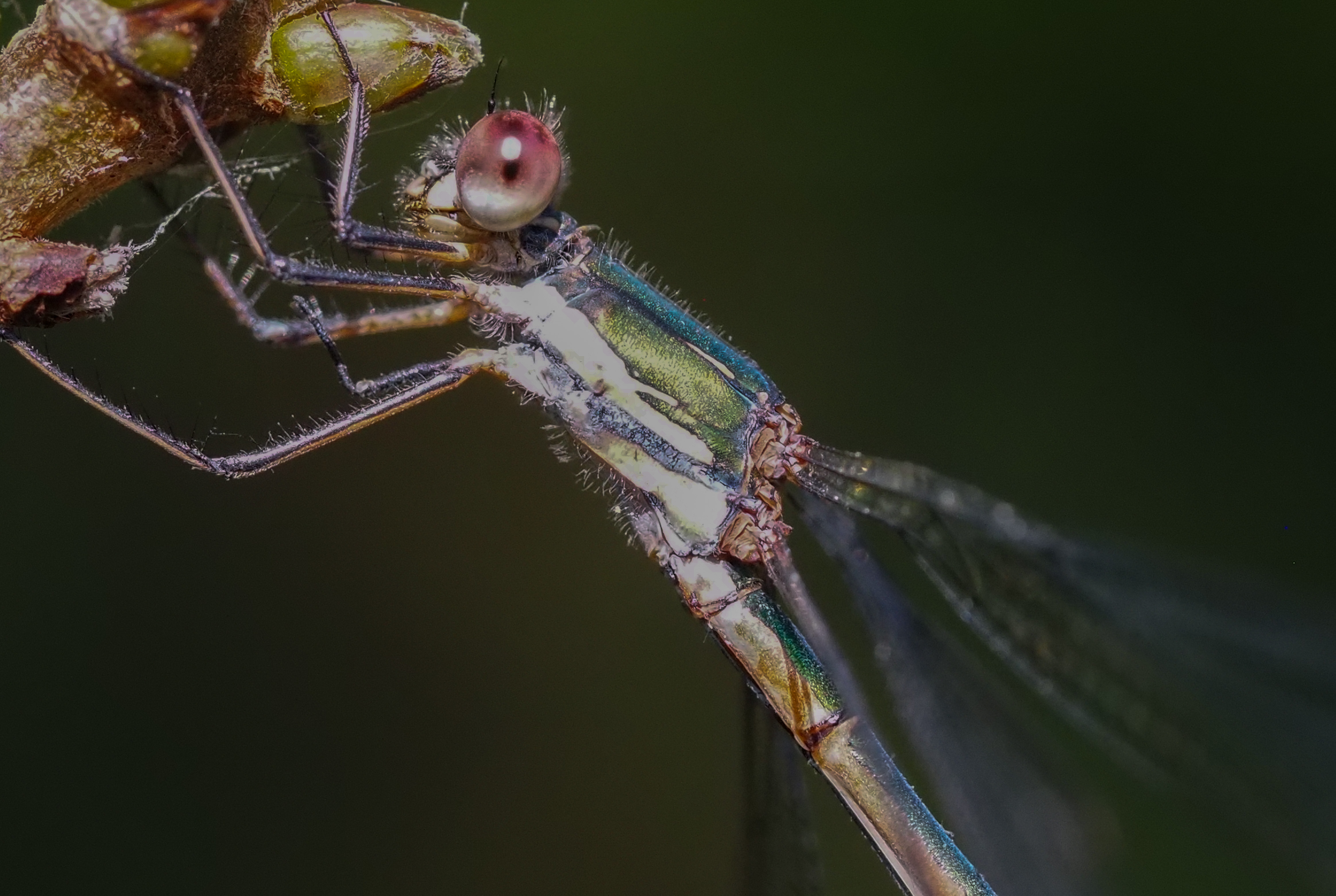
The males are territorial, typically moving from branch to branch in willows overhanging water, but they are also found away from water (below).
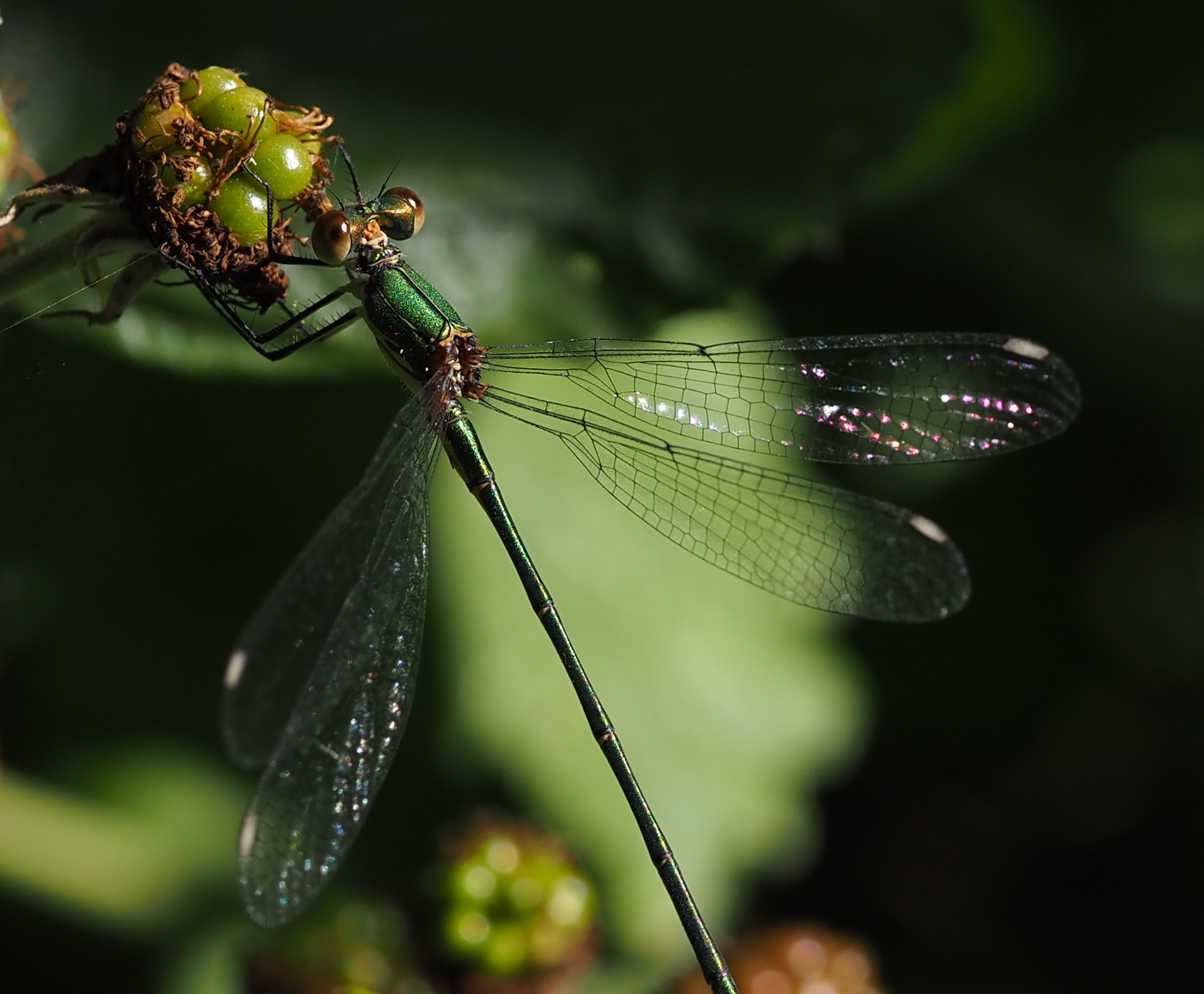
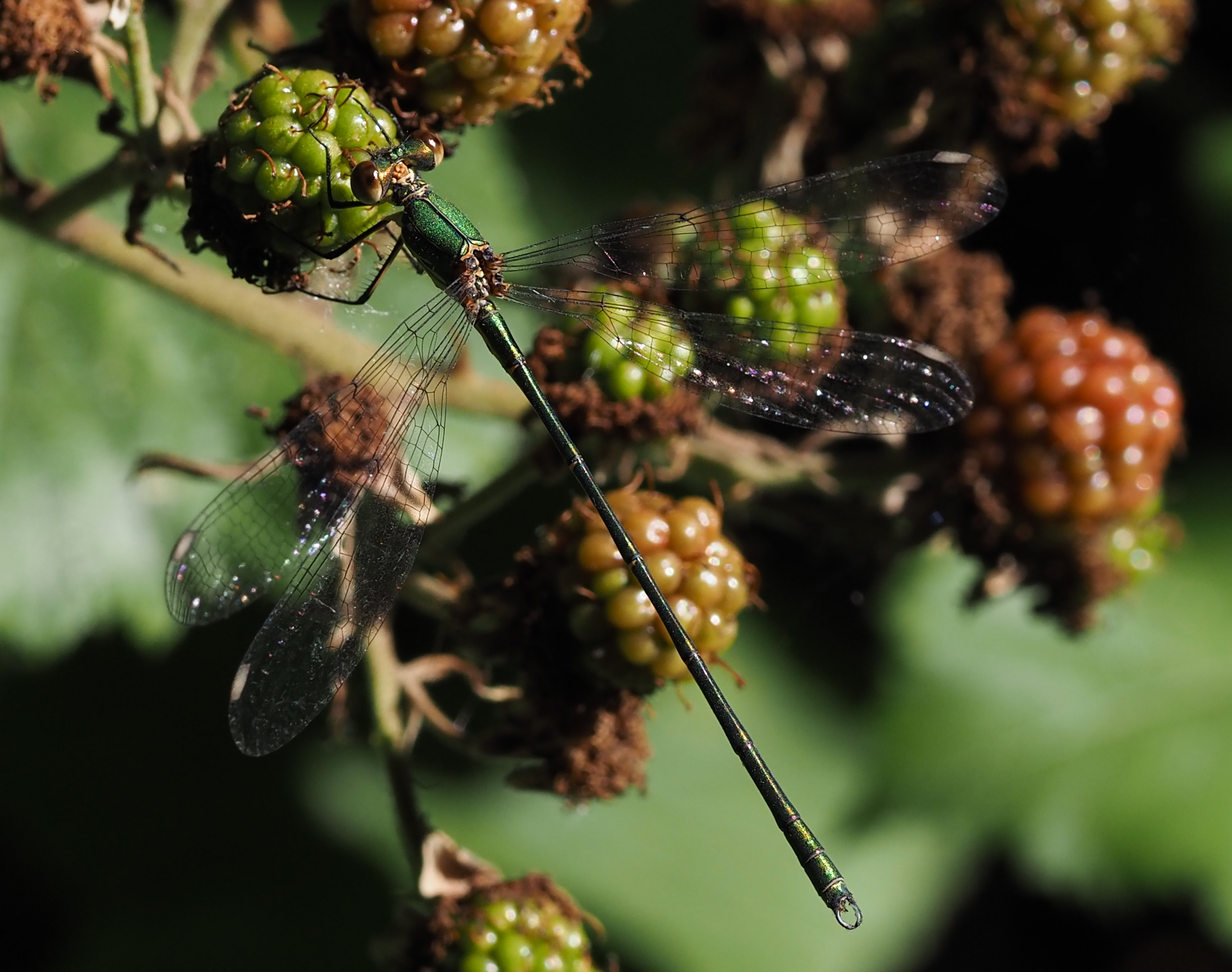
Unlike some damselflies, Willow emeralds are quite easy to get near to and photograph, not even moving when the camera lens is pushed up right next to them!
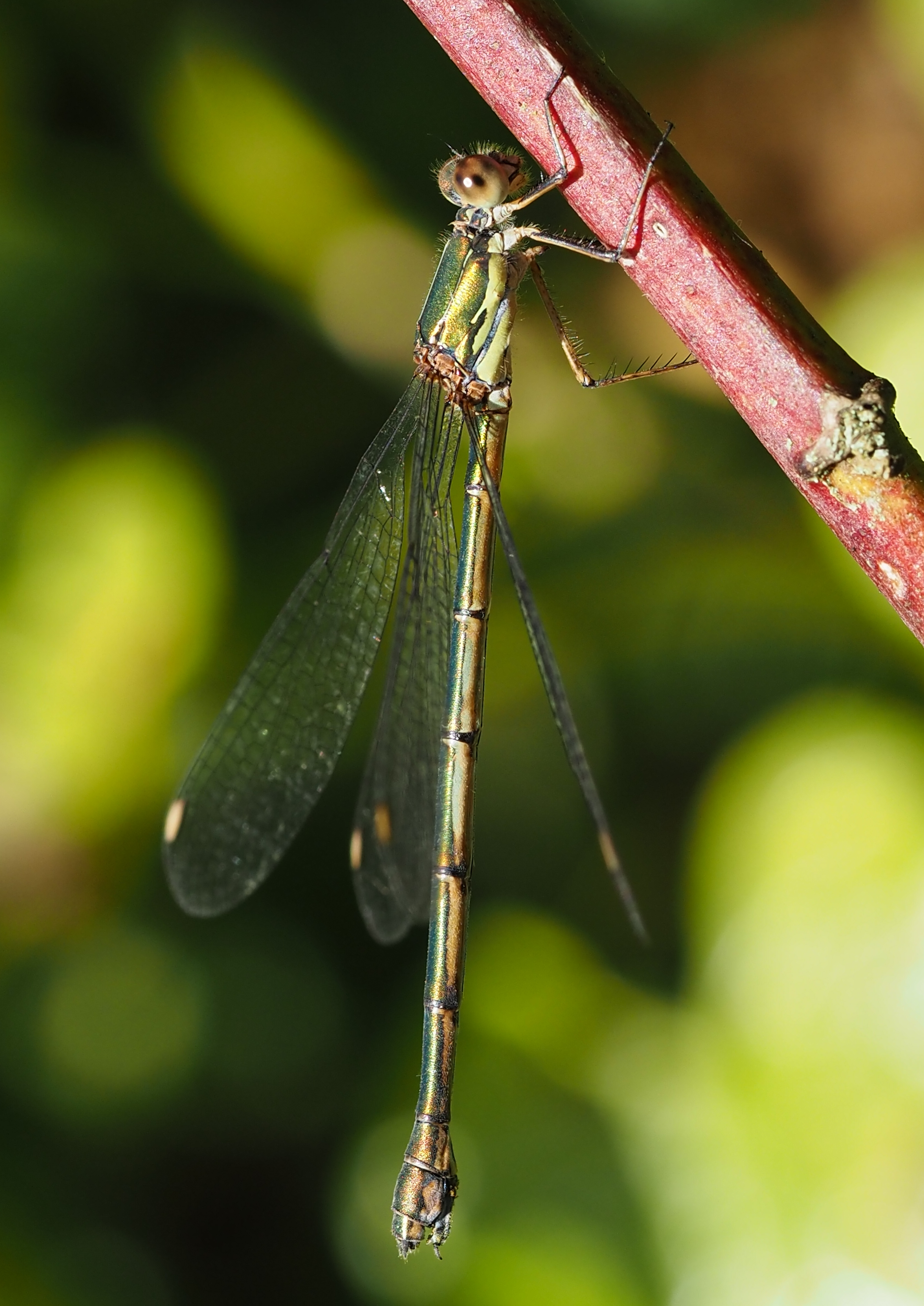
The Willow Emerald Damselfly female lays her eggs into thin, young branches of willow (Salix spp.) and other species of tree such as hawthorn (Crataegus spp.), overhanging water. The eggs overwinter in a state of diapause, then the larvae hatch out in the spring. If the female has got her oviposition right, they fall down into water below the branch where they were laid to continue their development underwater, like other damselflies. The eggs can survive and develop under water, if the tree gets flooded. The females’ ovipositor is fairly dark, with a pale patch on the underside, and is quite chunky in appearance (below). There is what looks like a cutting tool for inserting the eggs beneath the bark of trees.
Chalcolestes viridis is a very common damselfly in Europe; said to be the most common lestid (member of the family Lestidae) in Western Europe and its rapid colonisation of UK has presumably occurred as a result of climate change. At least 18 other resident and, or regular migrant species (41%) of Odonata have significantly increased their distributions since 1970.
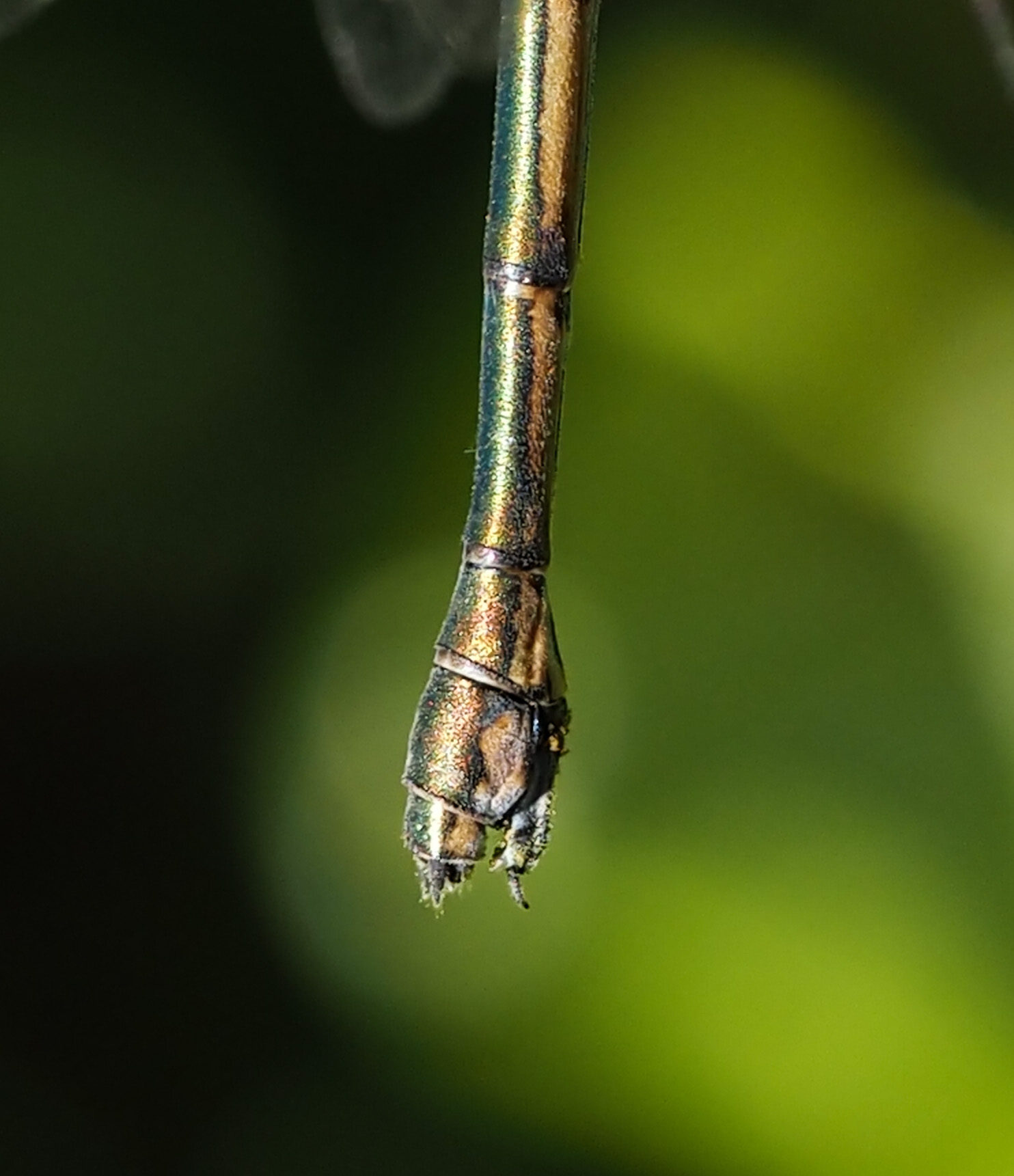
The male has a pair of claspers at the end of his abdomen (below) and after mating, continues to grasp the female by her neck as she deposits the eggs beneath the bark. See here.
All photographs by Raymond JC Cannon taken in Felmersham gravel pits SSSI, Bedfordshire, UK.
References
Cham, S. (2021). Egg hatching, prolarvae and larval development time of Chalcolestes viridis (Vander Linden)(Willow Emerald Damselfly) in Britain. Journal of the British Dragonfly Society, 37, 40-59.
Tyrrell, M. (2019). Hatching of submerged eggs of Chalcolestes viridis (Vander Linden)(Willow Emerald Damselfly). Journal of the British Dragonfly Society, 35, 39-47.
Tyrrell, M. Thoracic spur variations in Chalcolestes viridis (Vander Linden)(Willow Emerald Damselfly) and their use in identifying territorial males. Journal of the British Dragonfly Society, 36, 1-10.
Link
 Ray Cannon's nature notes
Thank you for this detailed overview. We hadn’t realised this damselfly is a recent arrival in the UK, having seen quite a few in Lincolnshire this summer.