There is something very poignant about the cast skin of an insect. It represents what went before – the submerged larval stages in the case of dragonflies – but it is also evidence of an emergence, and of a transformation.
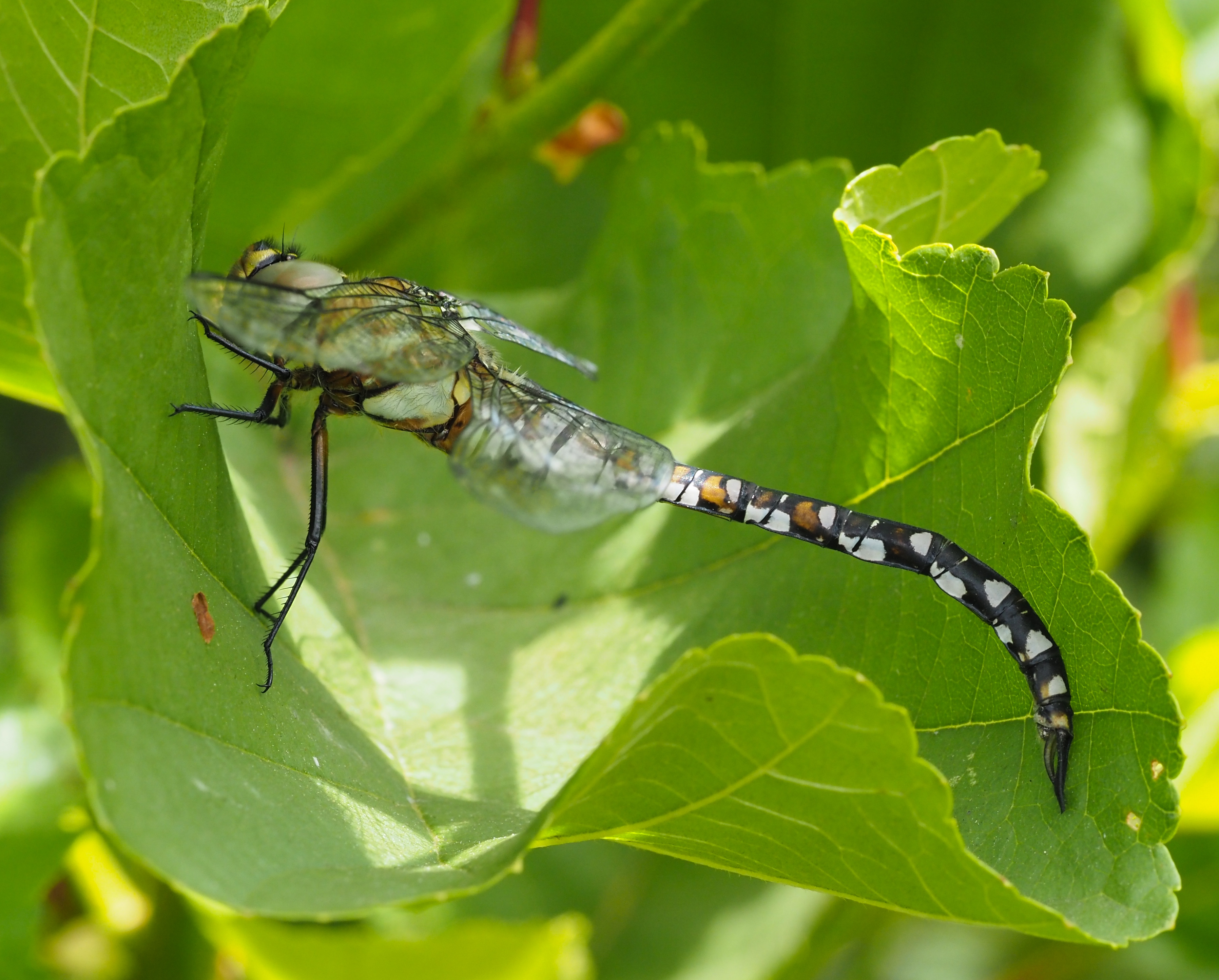
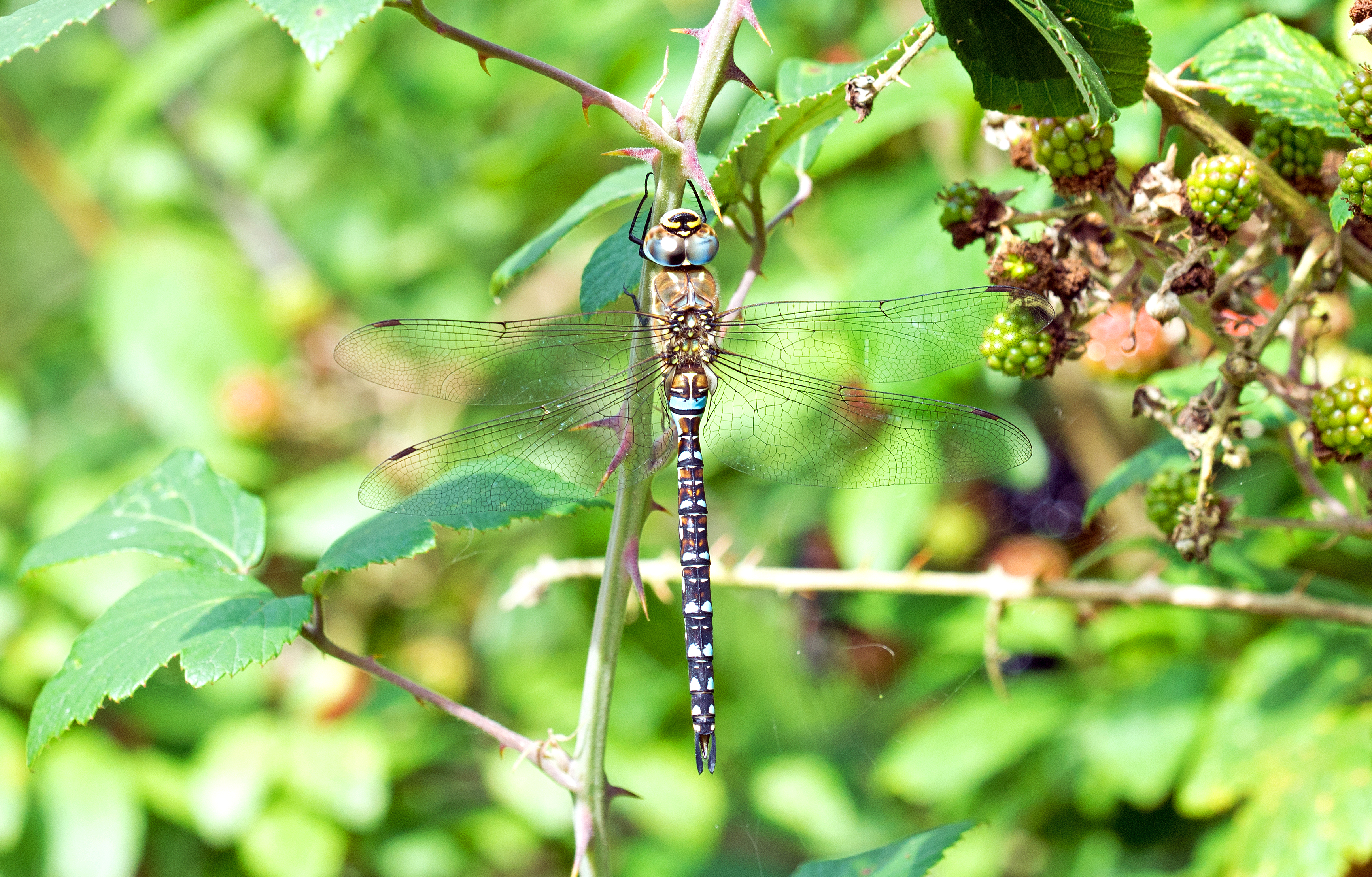
The change, from larva to adult, is profound, but is not as dramatic as that of a butterfly, where metamorphosis occurs within a pupa. In Odonata (dragonflies and damselflies) the change occurs within the active final instar larvae and is known as incomplete metamorphosis (hemimetaboly), because of the absence of a distinct pupal stage. The basic adult body plan is laid down during the embryo stage, and growth occurs in a series of nymphal instars without any drastic changes in form and structure, such as that between caterpillar and adult butterfly. Nevertheless, the changes are still marked between a dragonfly larva and adult (see below) and usually take a number of years.
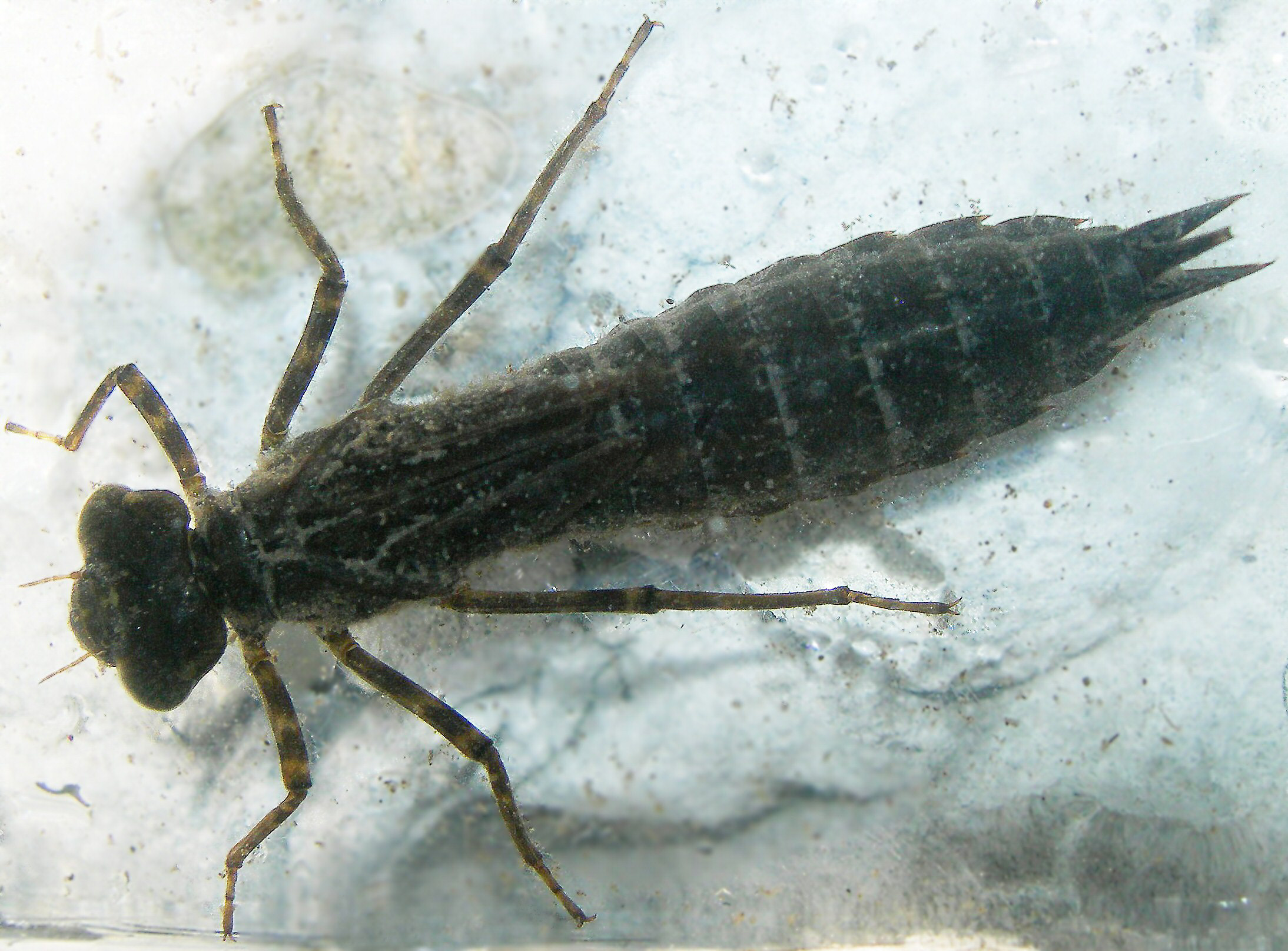
Totodu74, Public domain, via Wikimedia Commons
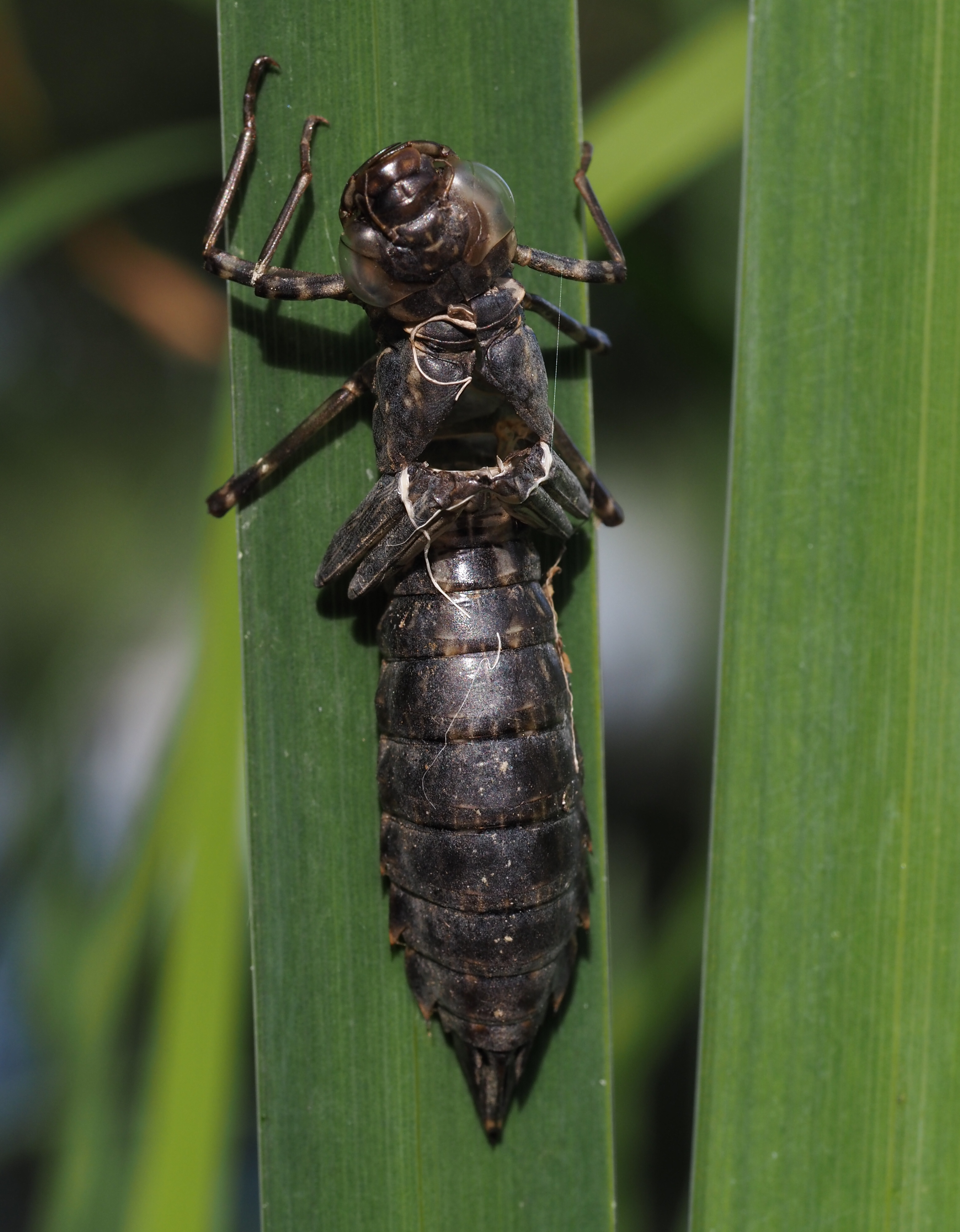
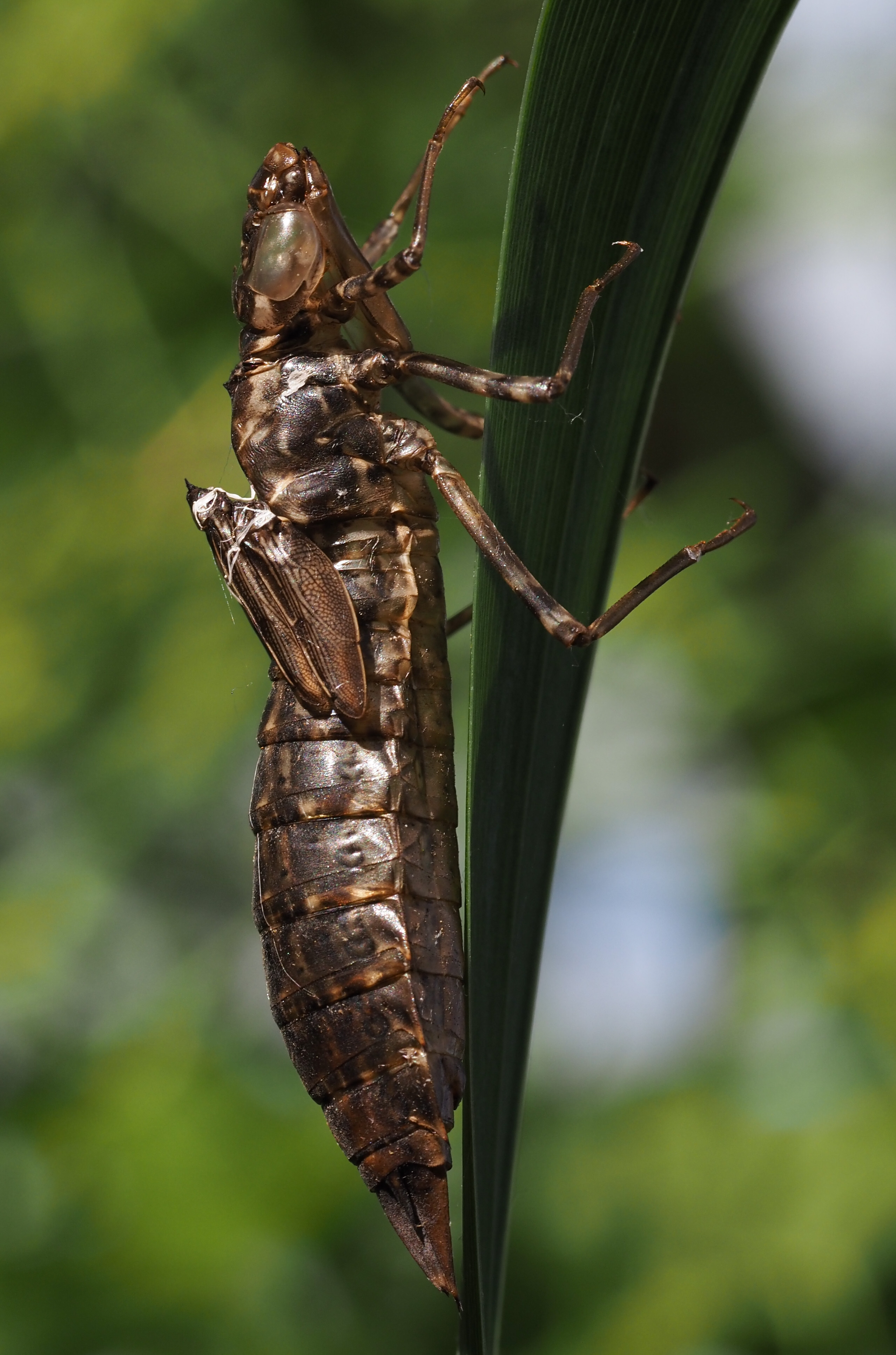
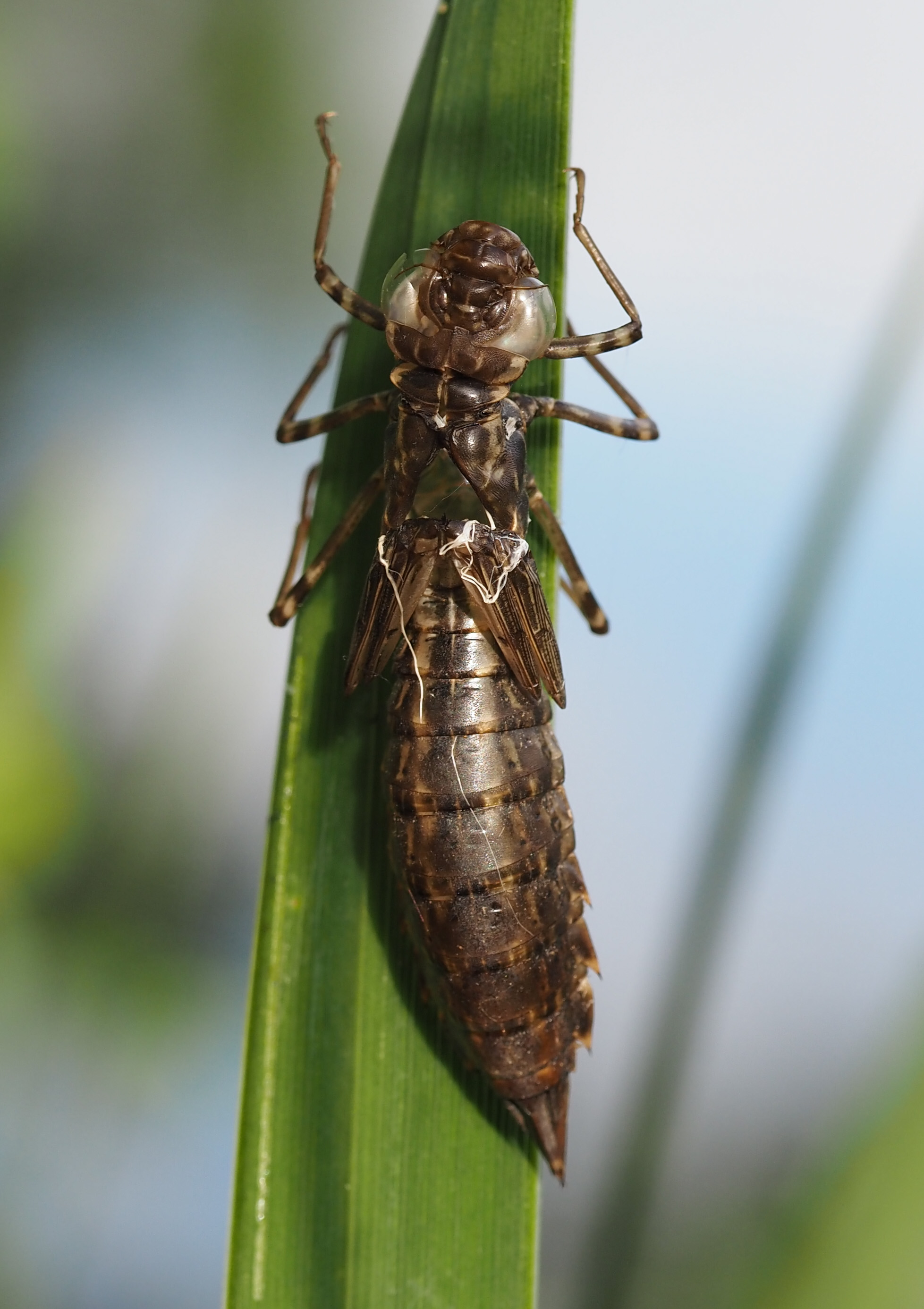
When the dragonfly is finally ready to emerge, the larva crawls out of the water and up onto a vertical substrate, such as a plant stem. There it rests for a while as the cuticle dries out and eventually splits: a process called eclosion. Dragonflies are said to emerge overnight or during the early morning. The cuticular shells that are left are called exuviae, and with care can be identified to species. In other words, an exuvia is the cast skin of the final instar larvae.
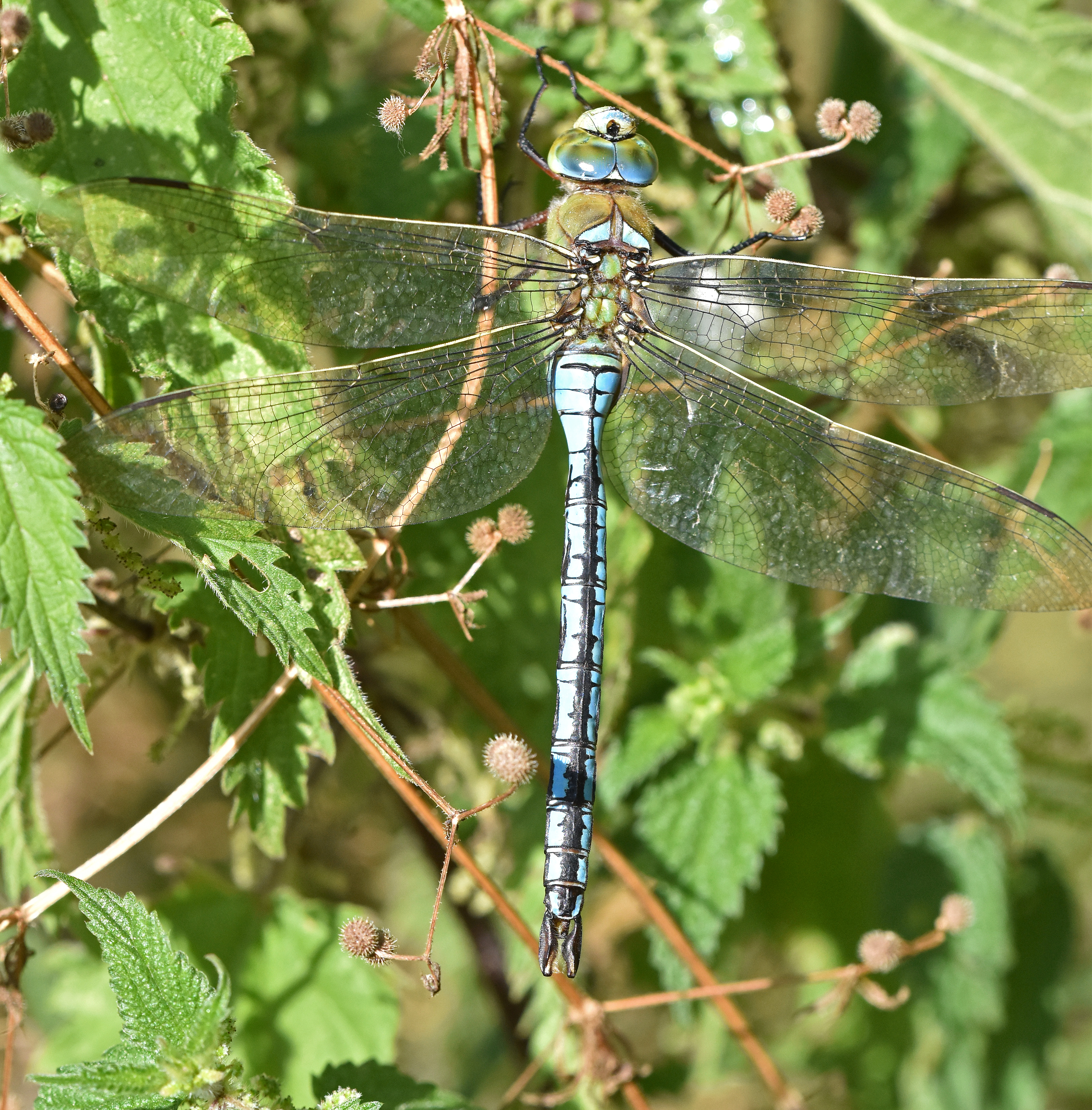
Newly emerged adult dragonflies and damselflies are termed tenerals; a period which usually lasts about a day, when the are relatively delicate and exhibit a limited amount of body colouration (see below). In many species, it takes a while, up to two weeks in some cases for the adults to develop their mature colours.
Dragonfly exuviae are nevertheless, quite difficult to tell apart, especially from photographs. Certain features may need to be measured. There are subtle differences between species in things such as the length and shape of the cast skin, the roundness of the head, the shape of the labial mask and the length of the spines on the sides of the abdomen. Some of these need a specimen in the hand to accurately diagnose a species, so I have only been able to make a guess about some the species of dragonfly which emerged from the exuviae shown here, using a very handy field guide by Steve Cham (see below).
One thing that is not useful for distinguishing the species of cast skins, is their colour. This is a highly variable feature because dragonfly larvae often reflect the colour of their surroundings, notable that of the substrate on which they developed. For example, the following photograph shows some very pale exuviae. I am not sure which species they are.
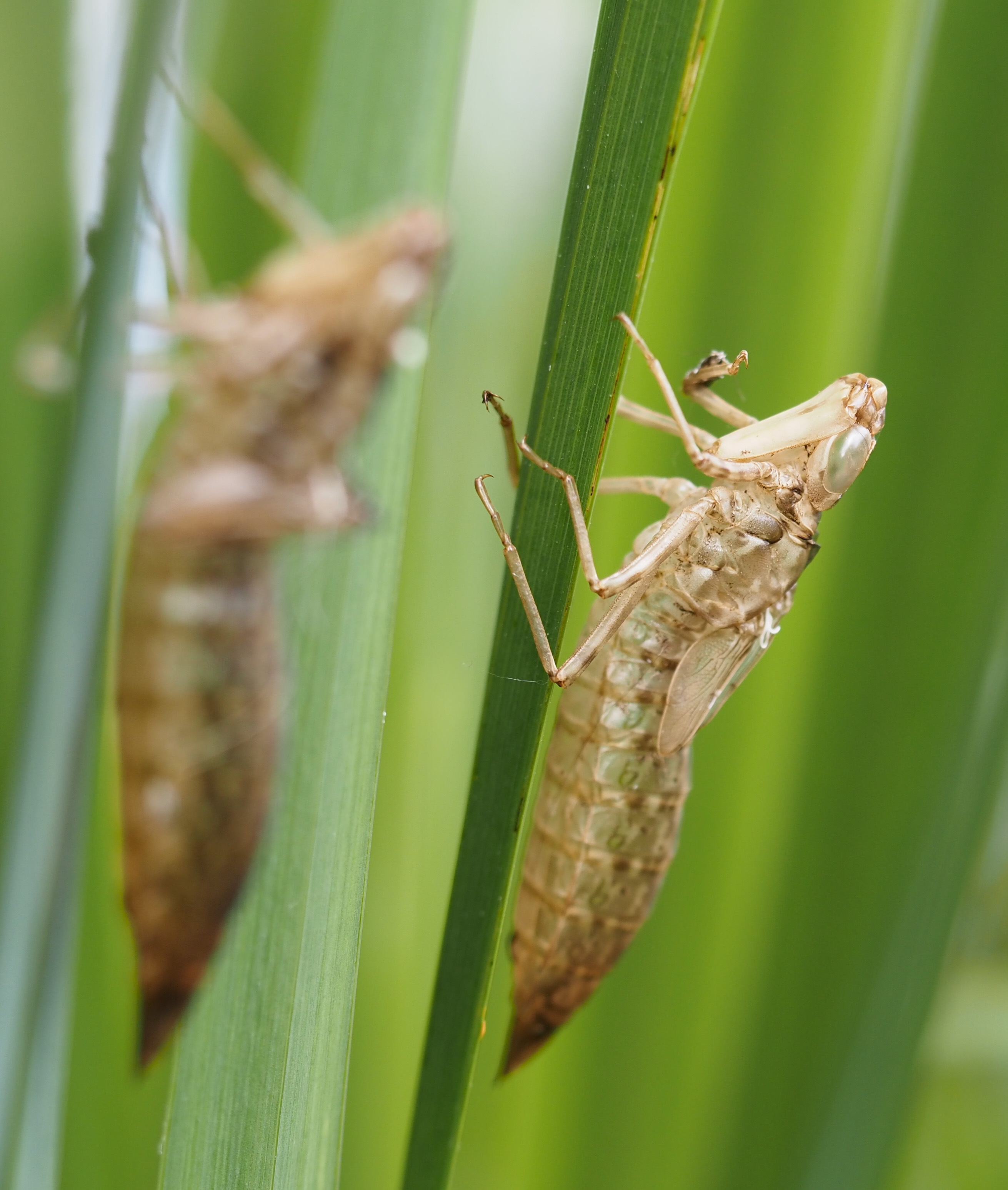
The exuviae often have bright white threads attached to their cases. These are, I think, the remains of the nymphal insects tracheal system: tubes which supply oxygen to the insects’ tissues.
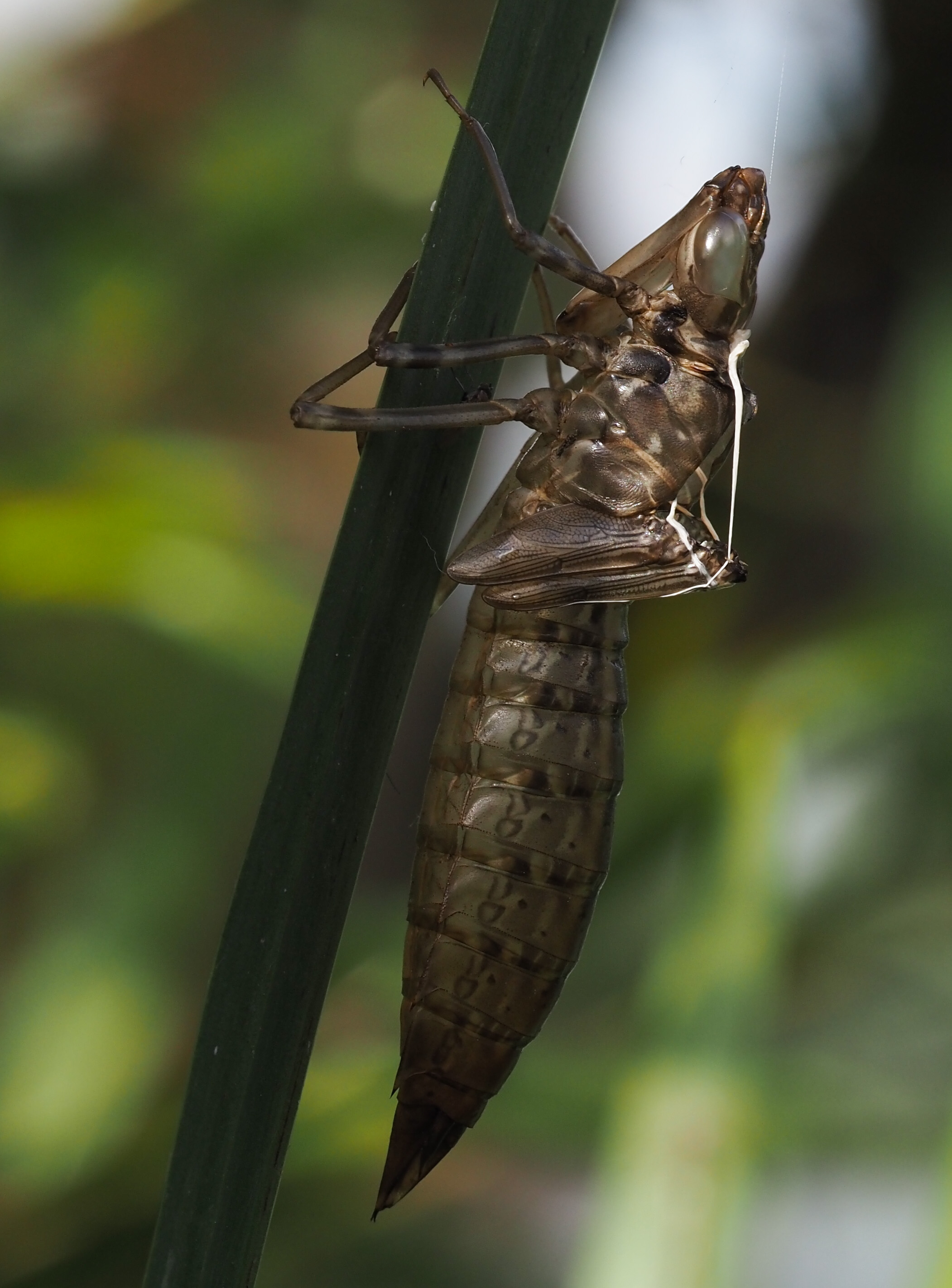
Possibly the cast skin of an Emperor Dragonfly (Anax imperator)
These cast skins, or exuviae, do have a certain degree of beauty I think, and they are also very useful for monitoring dragonfly populations, as their presence signals that the species has completed its full life cycle from egg to adult in the habitat (water body) where they occur.
Grateful for any feedback on species identification. I photographed these exuviae around the 24th June this year (2023) in Felmersham Gravel Pits SSSI, Bedfordshire, England.
Links
https://marcheath.blogspot.com/2015/06/a-study-of-emperor-dragonfly-exuvia.html
Reference
Cham, S. A. (2012). Field guide to the larvae and exuviae of British dragonflies: damselflies (Zygoptera) and dragonflies (Anisoptera). British Dragonfly Society.


Hey Ray I’m working on a youtube video(s) on conehead katydids and read through an article of yours that came up on google about eating coneheads in africa. Was wondering if it was cool if I use some screenshots from the article.
Mainly using the pics in the article which were “cc by” or whatever the license was. But may use some quotes or references to this site. (if that’s okay).
Yes, please go ahead. Thanks for asking. 😊
awesome thank you