There is an art to photographing pond skaters – also called water striders, water bugs, and a host of other common names – as they tend to skate off as soon as they catch a glimpse of a lumbering primate on the water’s edge!
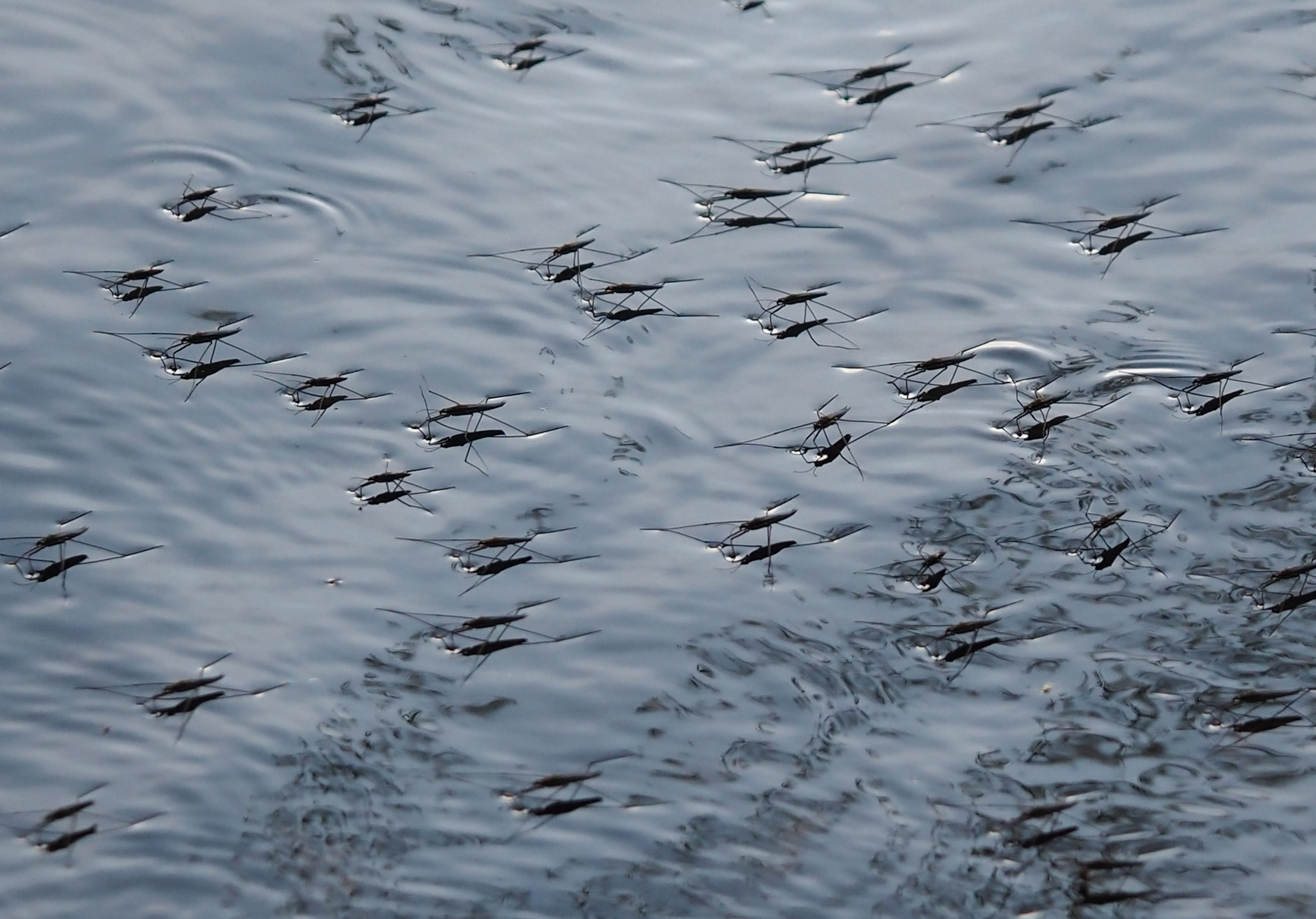
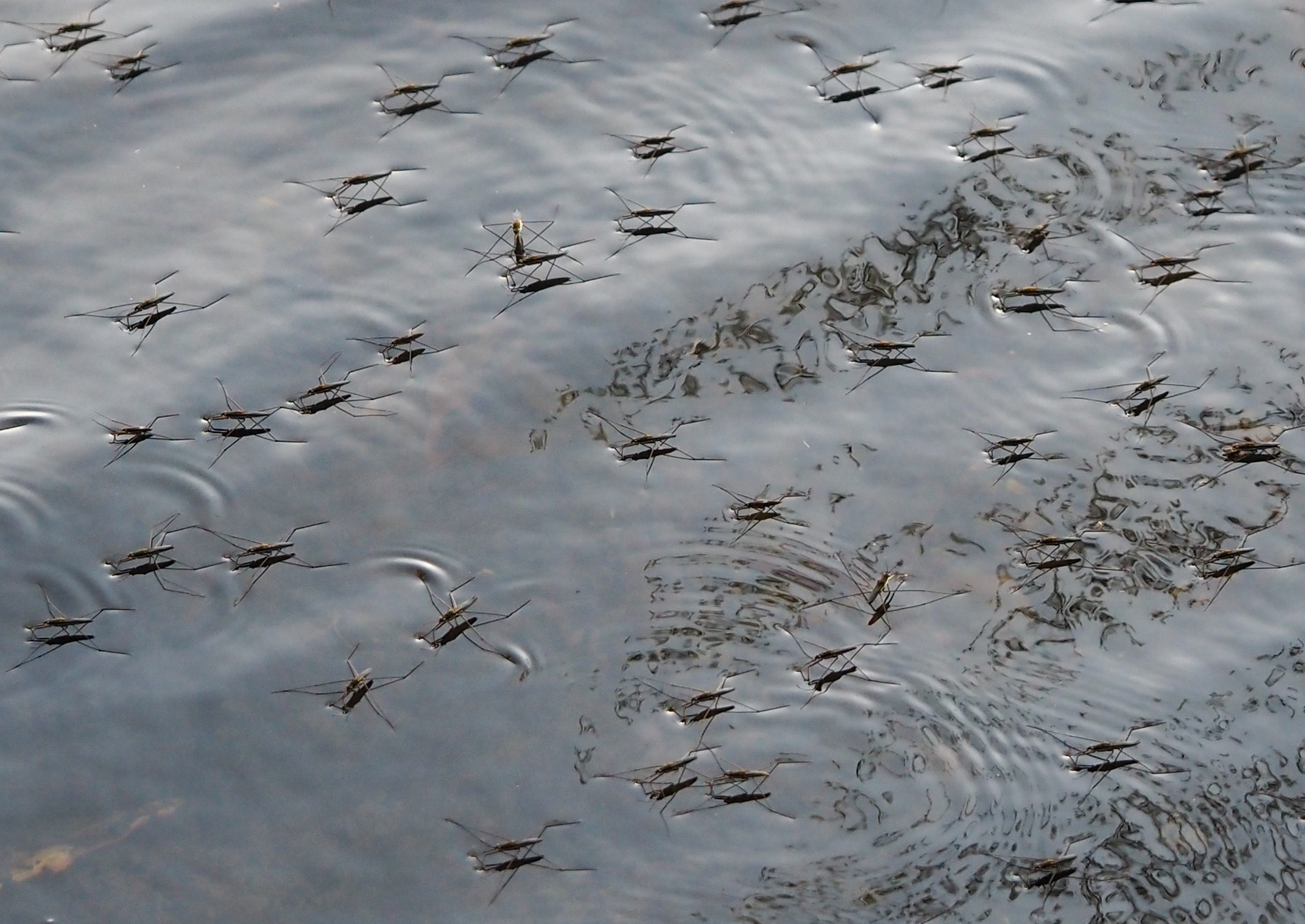
They are usually well spaced out in an ordered aggregation (above), but when they see something approaching on the water bank, they rush to move away, further out into the lake, and in the ensuing melee they often end up in a disorderly pile! As shown below.
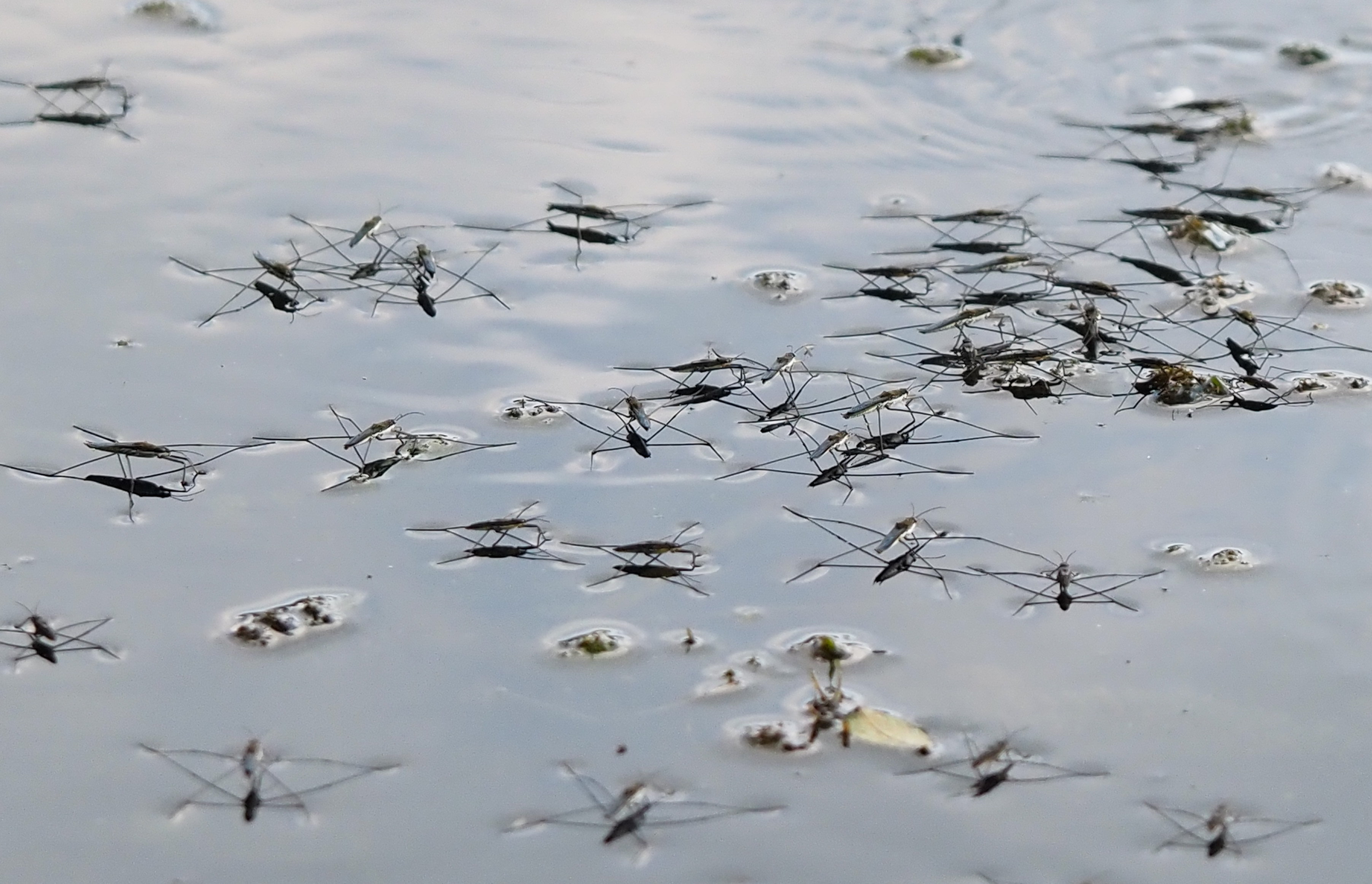
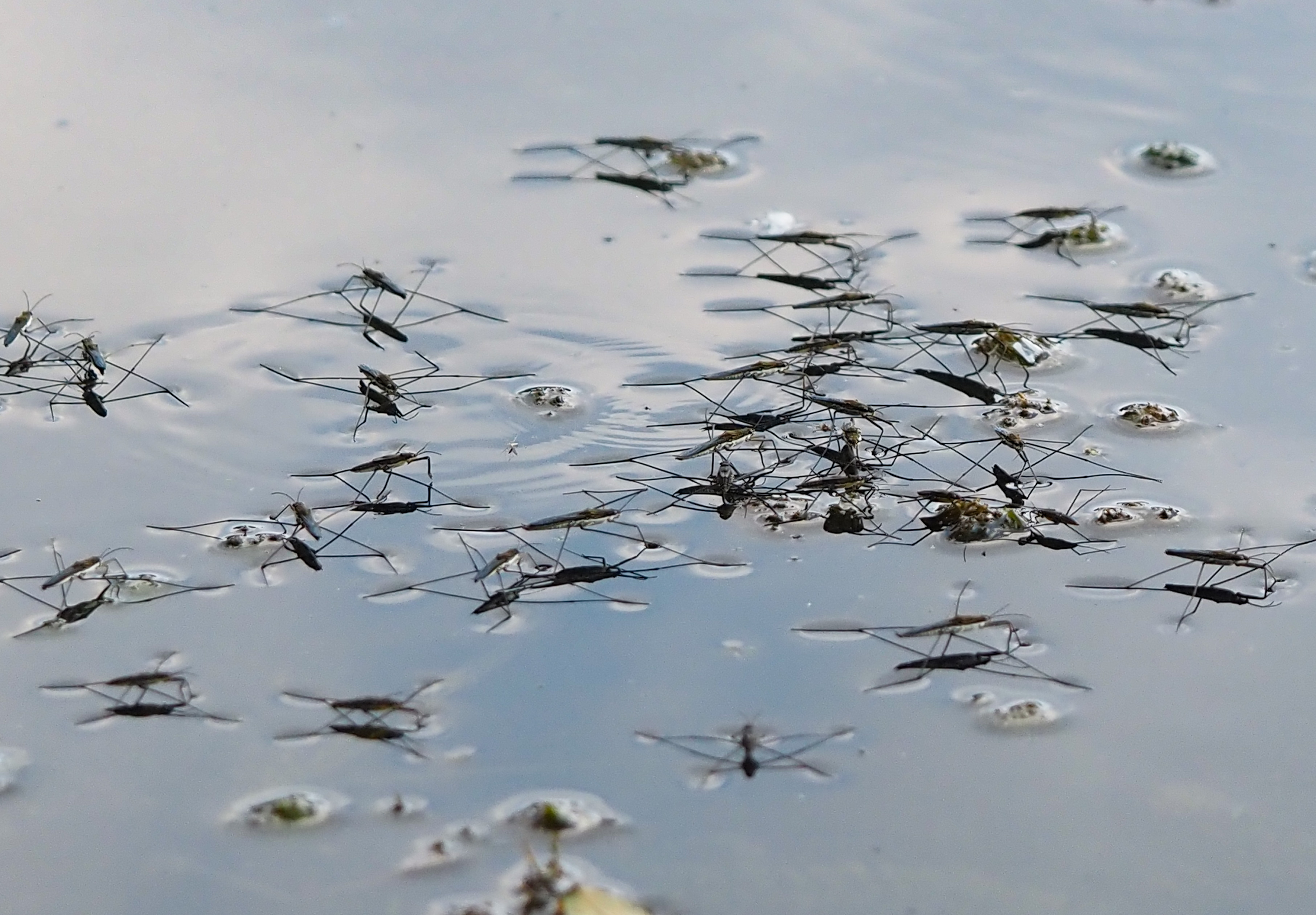
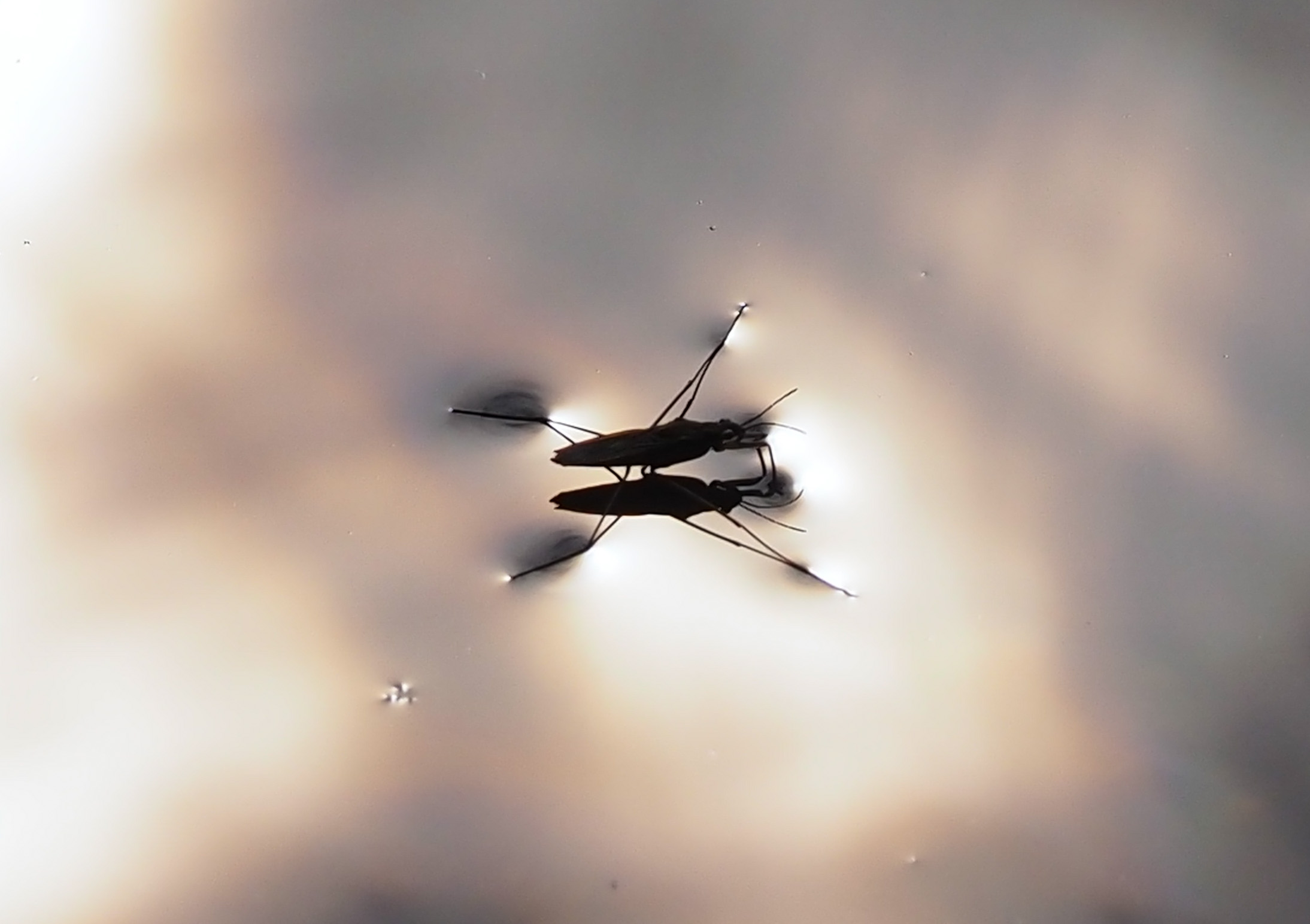
Gerrids (true bugs in the family Gerridae) are masters and mistresses of the water surface, using their long, hydrophobic legs to spread their weight, whilst taking advantage of the high surface tension of water to keep them above the surface of water.
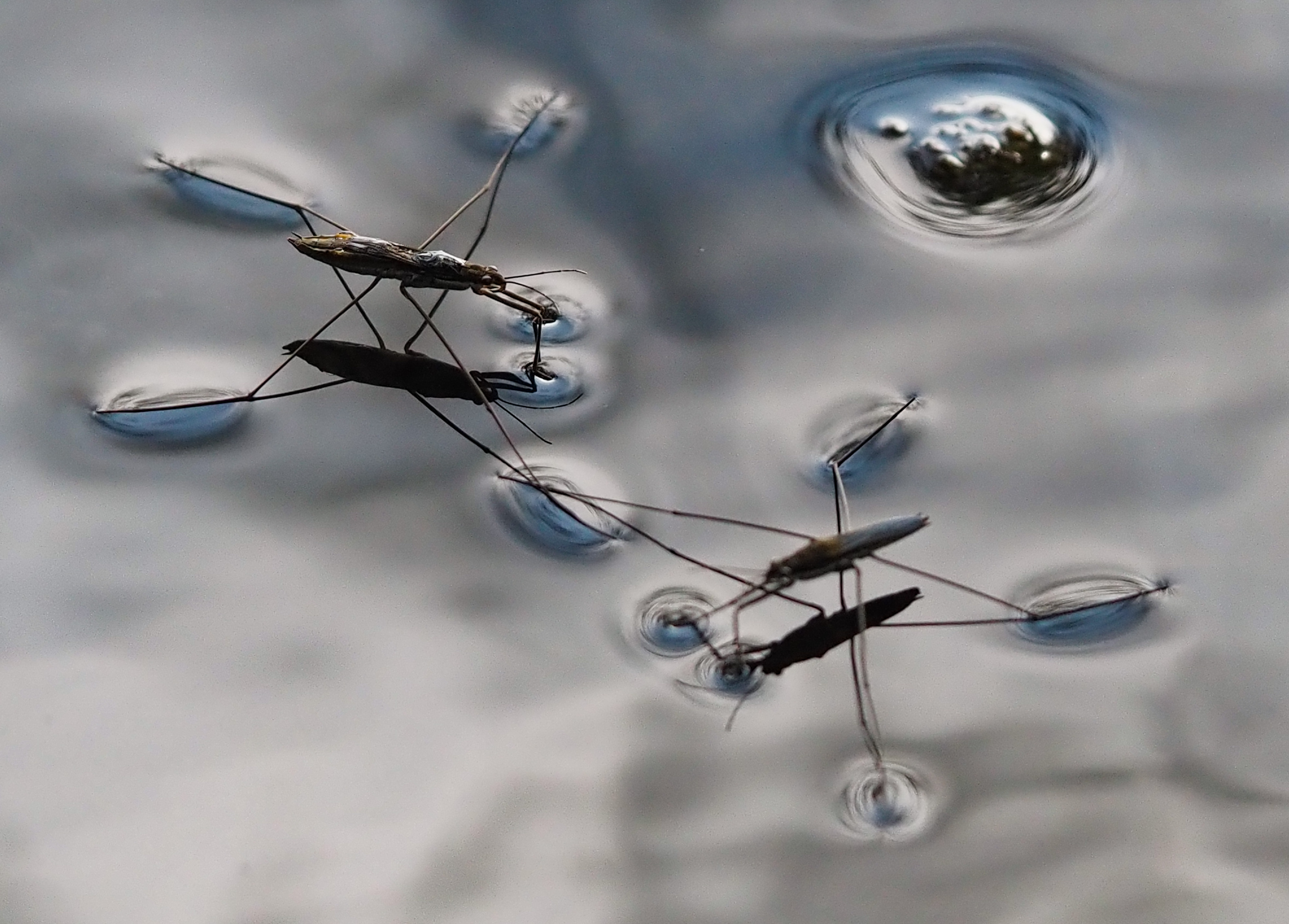
Pond skaters are quite particular about where they hang out, seeming to like quiet patches of water near the shoreline, often below over-hanging branches. They are predators, and feed on a broad range of invertebrates, mainly spiders and insects, that fall onto the water surface.
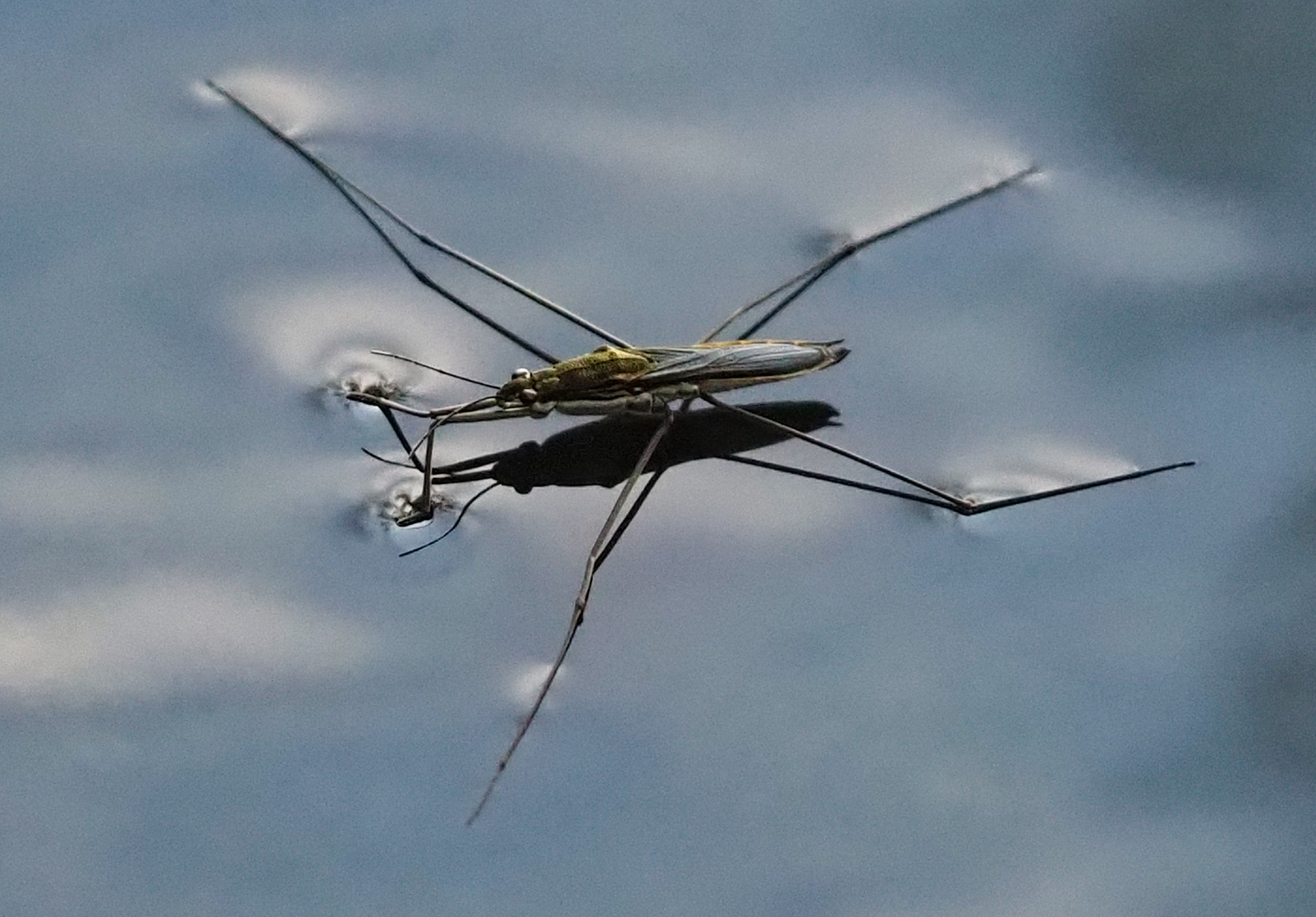
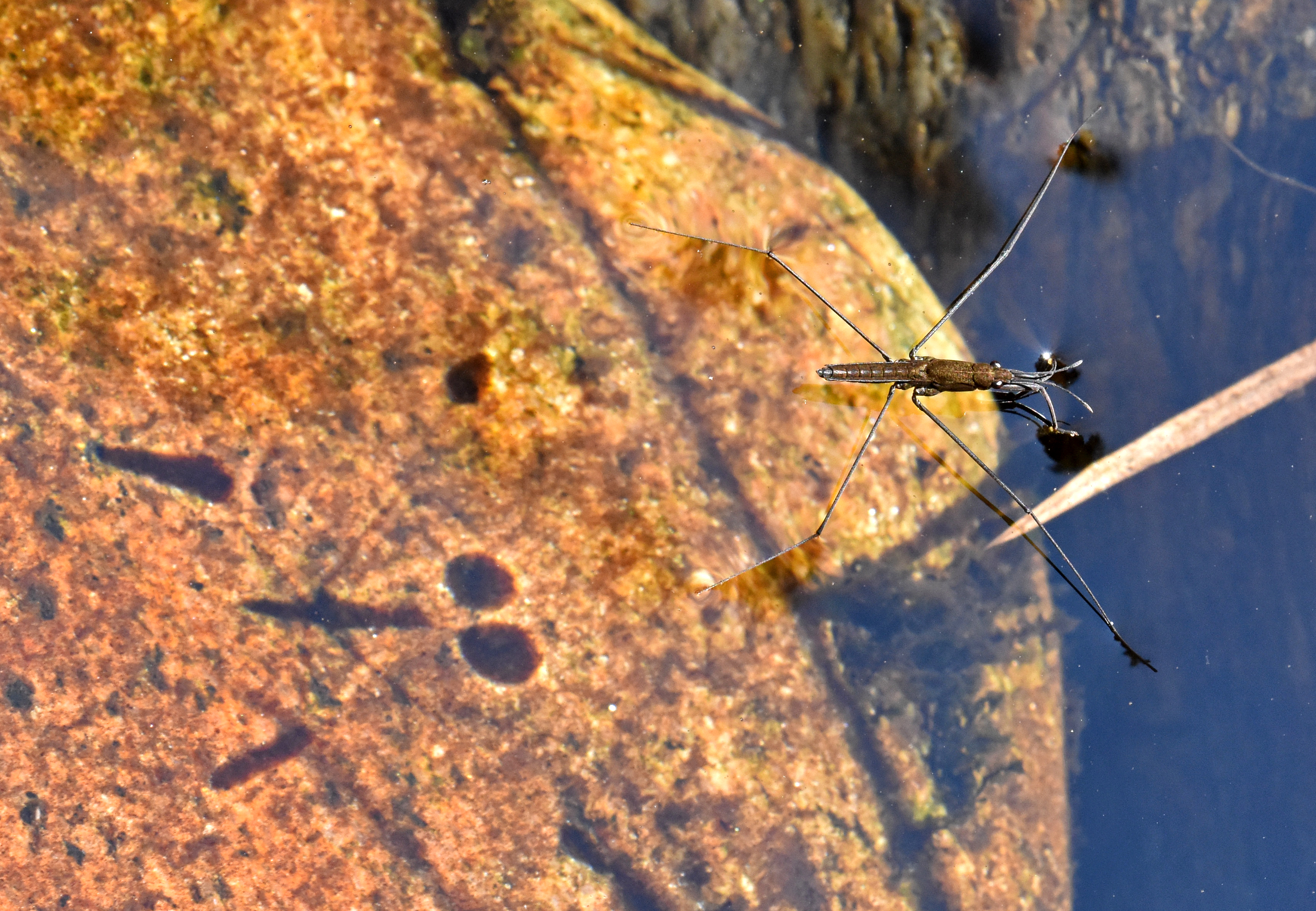
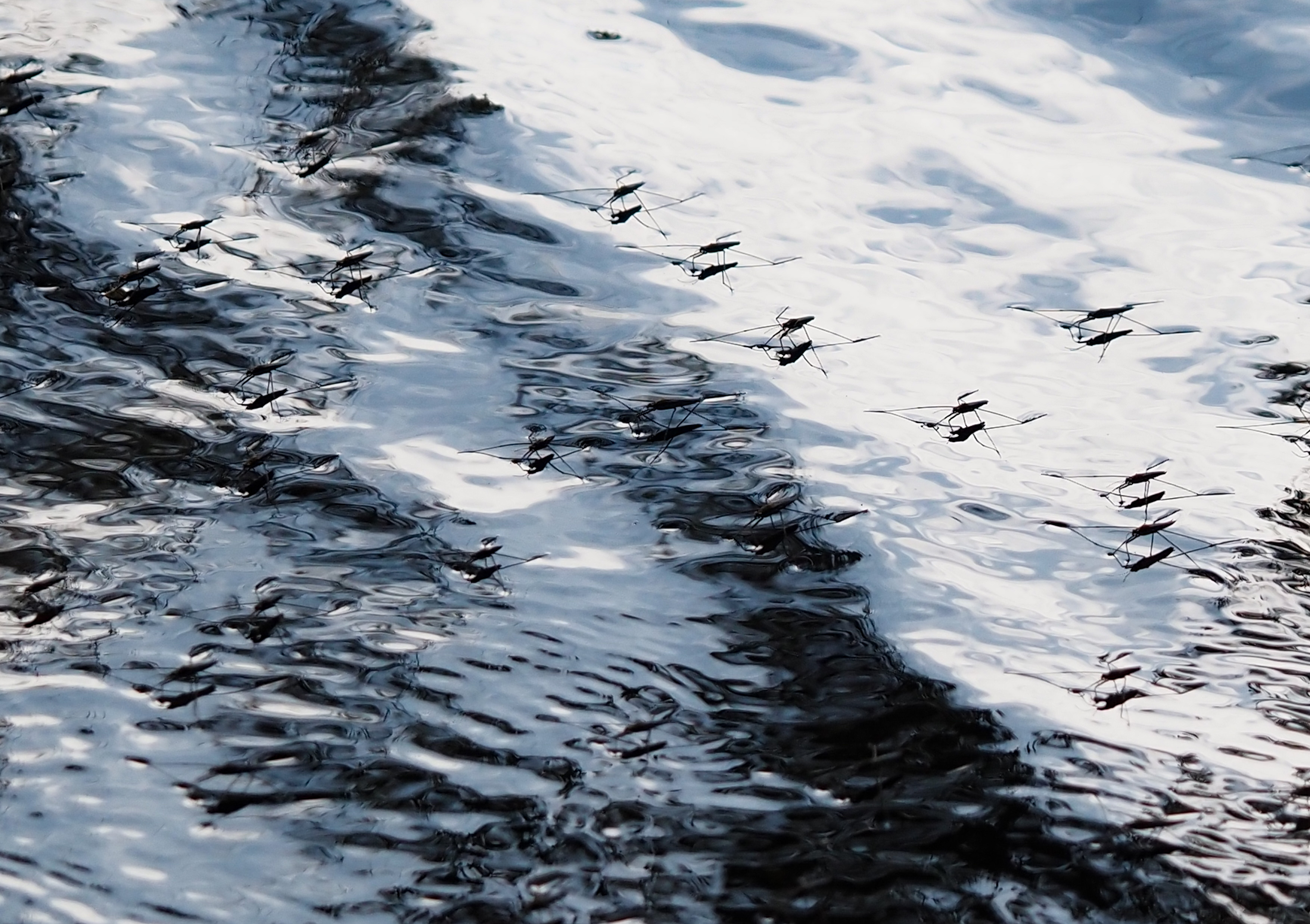
They are said to be nine or ten species of pond skater in the UK, ranging between 1-2cm in length, but they are quite difficult to tell apart without catching one and examining the extent of the black on the inside of the front femora (leg). Something I did not do! These are however, or at least I think, the Common Pond skater, Gerris lacustris, but I am not 100% sure. I have also blogged about this species in Spain: Gerrids bearing water mites. I was struck by how the meniscus – a trough shaped depression caused by the gentle pressure of their legs on the water surface – produced pleasing patterns on the rocks underwater (below). These shadow blobs darted about as the water bugs skated on the surface above.
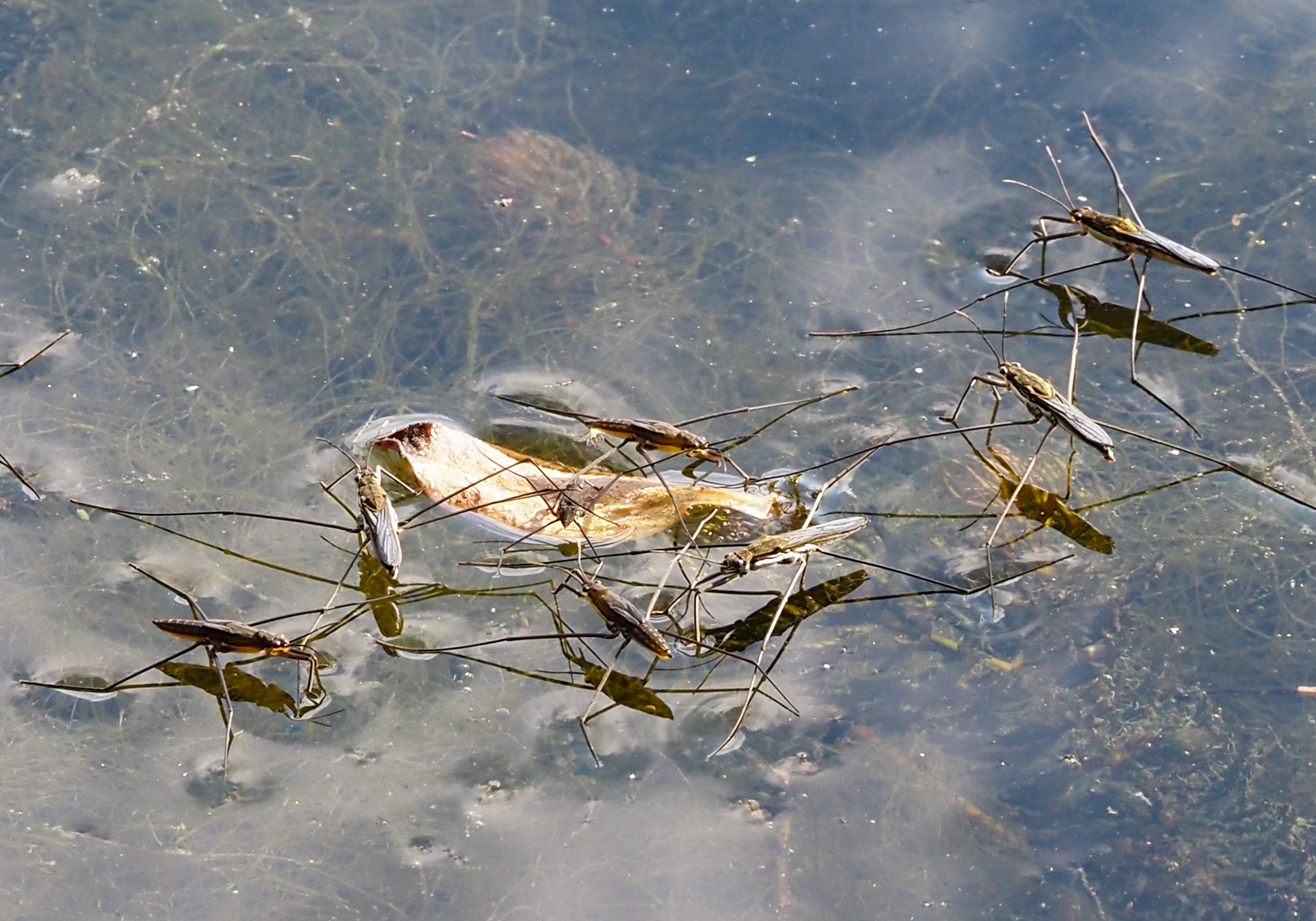
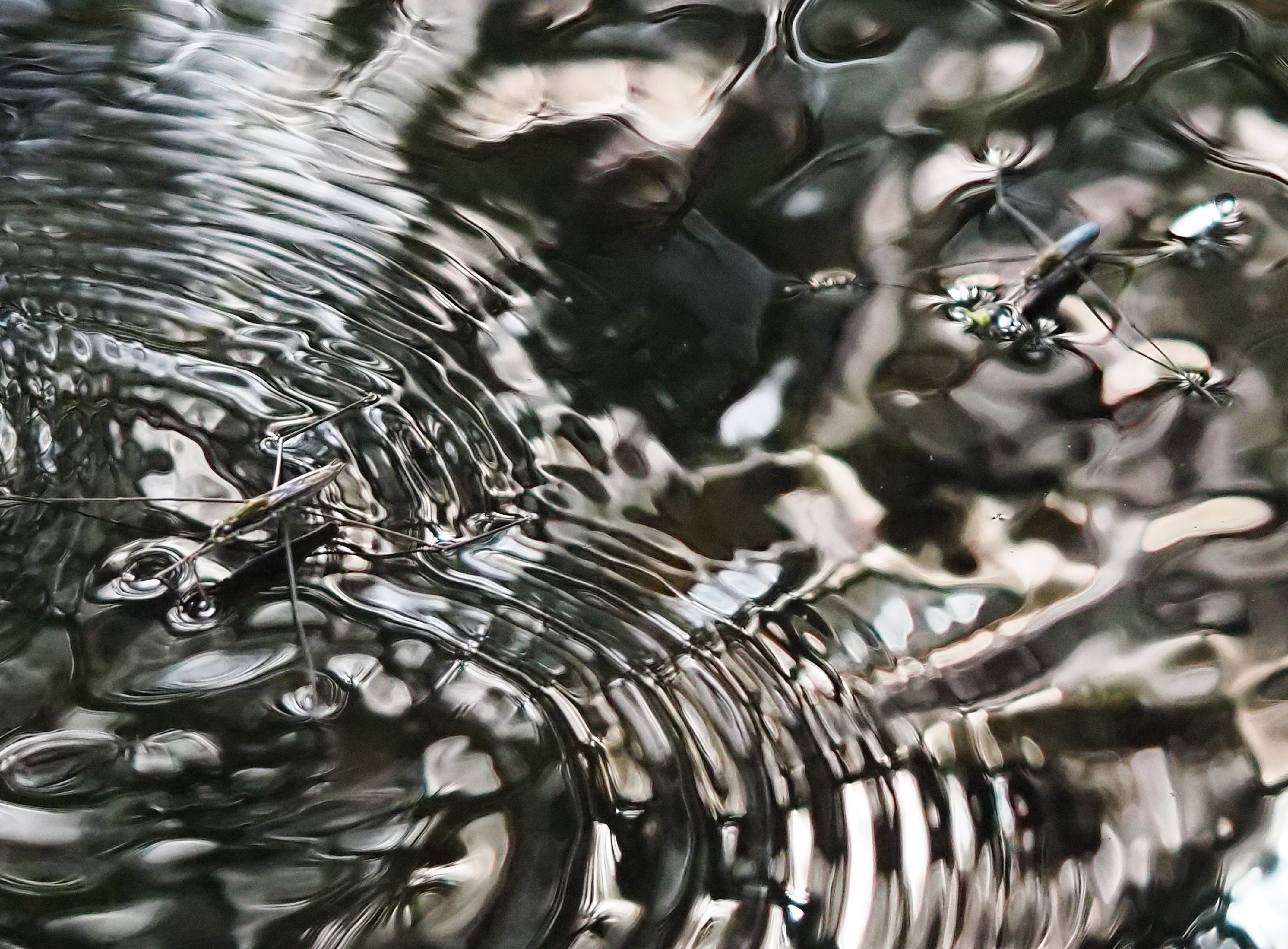
Pond skaters are a sort of water clean-up squad, carrying out a vital ecosystem service in dealing with dead and decomposing invertebrates on the water surface (below). Ponds and lakes would probably look very different without them.
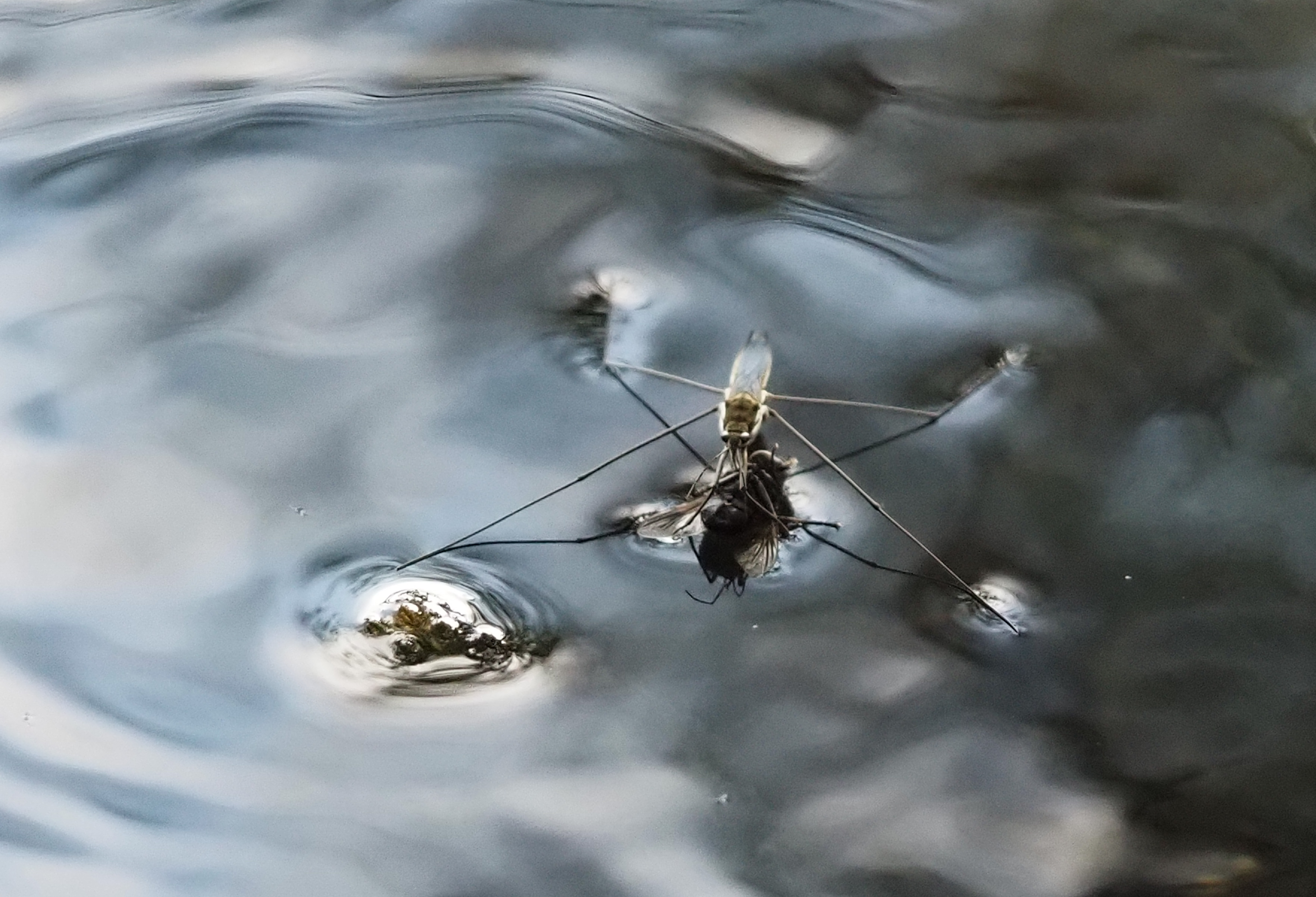
Like all heteropterans, gerrids have piercing–sucking mouth-parts (a proboscis) which are adapted for sucking up liquid foods, such as the haemolymph of other insects.
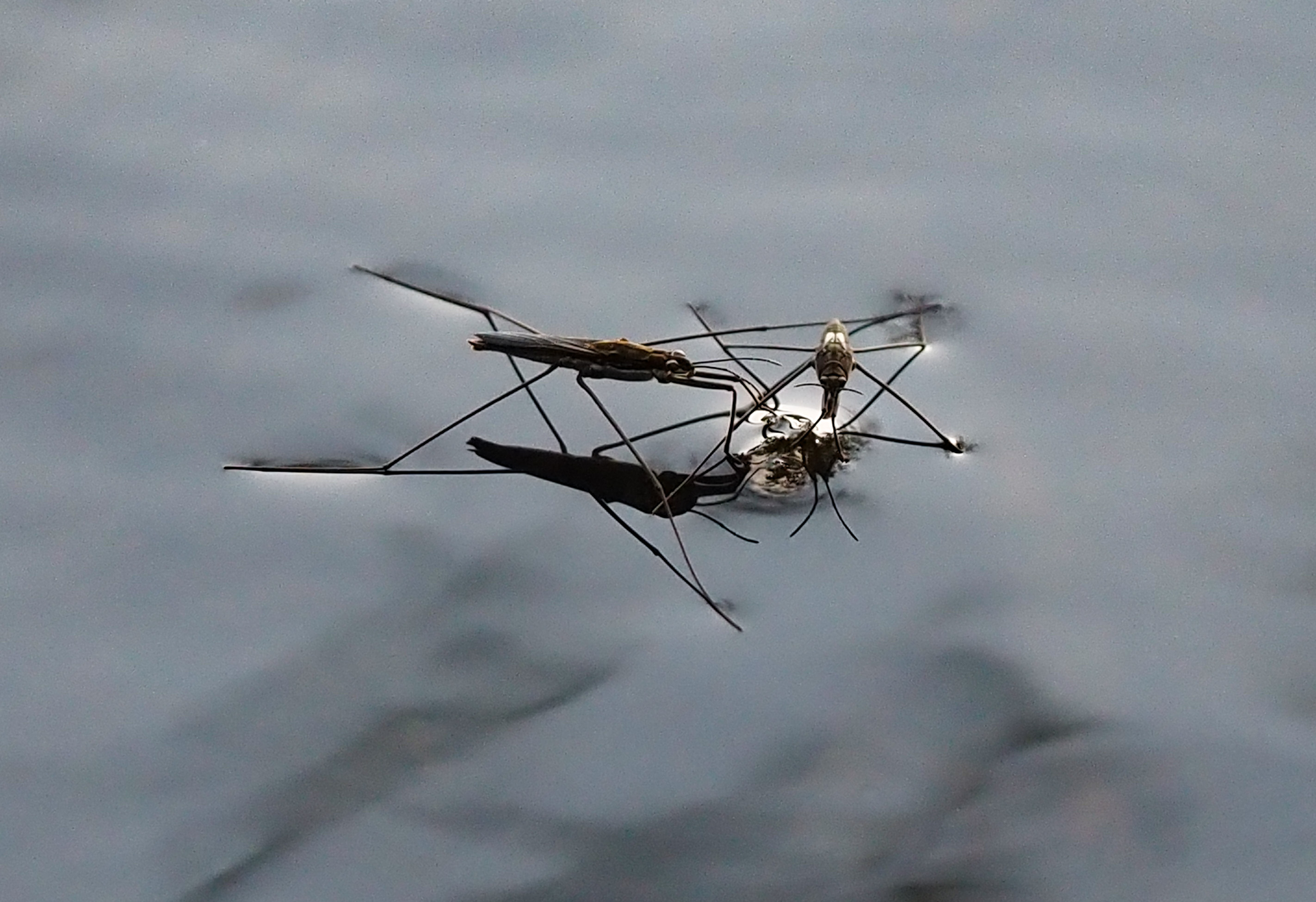
There are about 700 species in the family Gerridae – grouped in eight subfamilies with over 70 genera – around the world and their fossil record extends back into the Triassic. So they have been skating around on water surfaces for a very long time, diversifying into a range of beautiful species, like this lovely one I came across in Thailand.
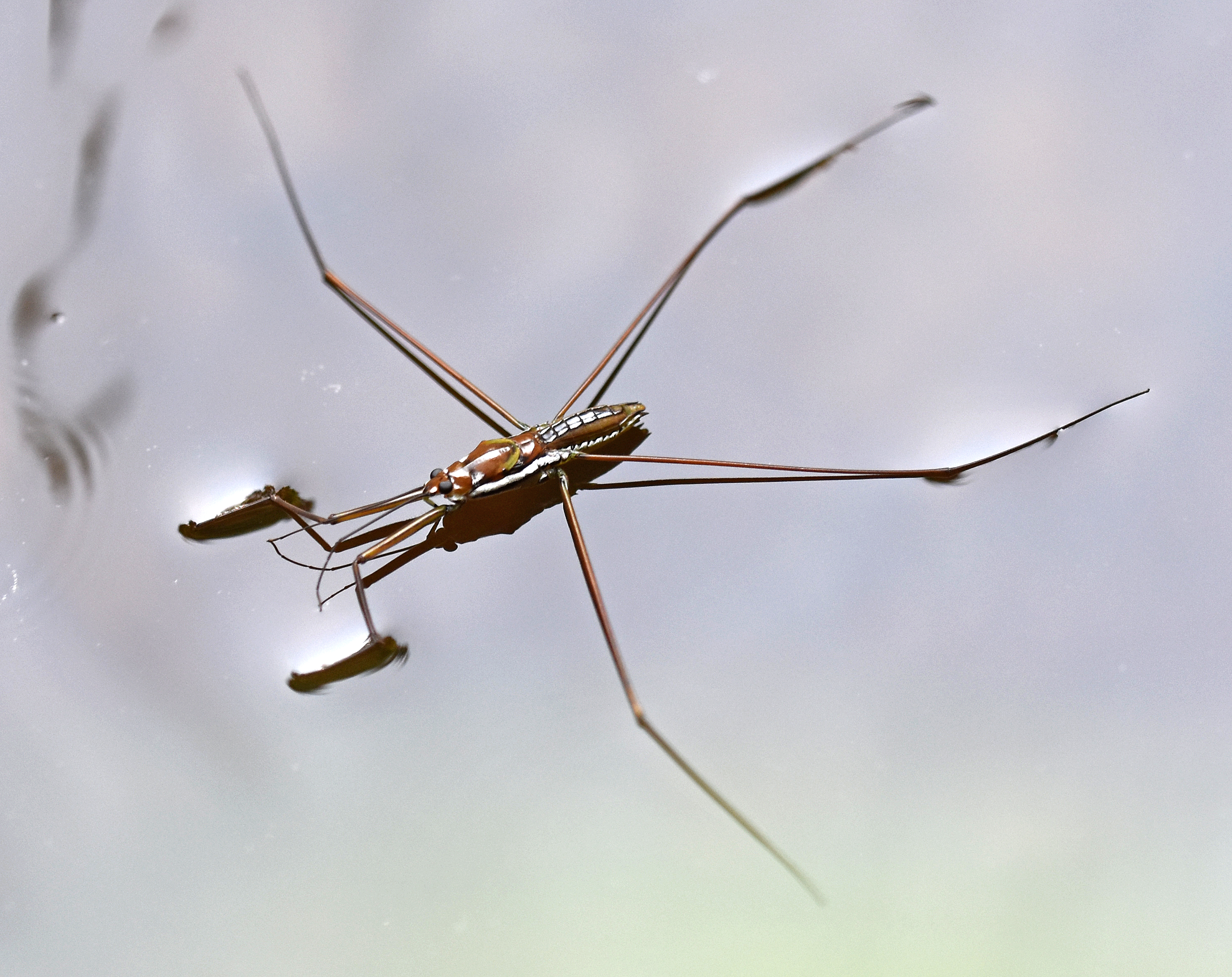
Back in the UK, we can see pond skaters on most bodies of water in the summer and it is fascinating to observe and photograph them. They seem to make use of the pond plants just poking up above the water surface, to rest on (see below).
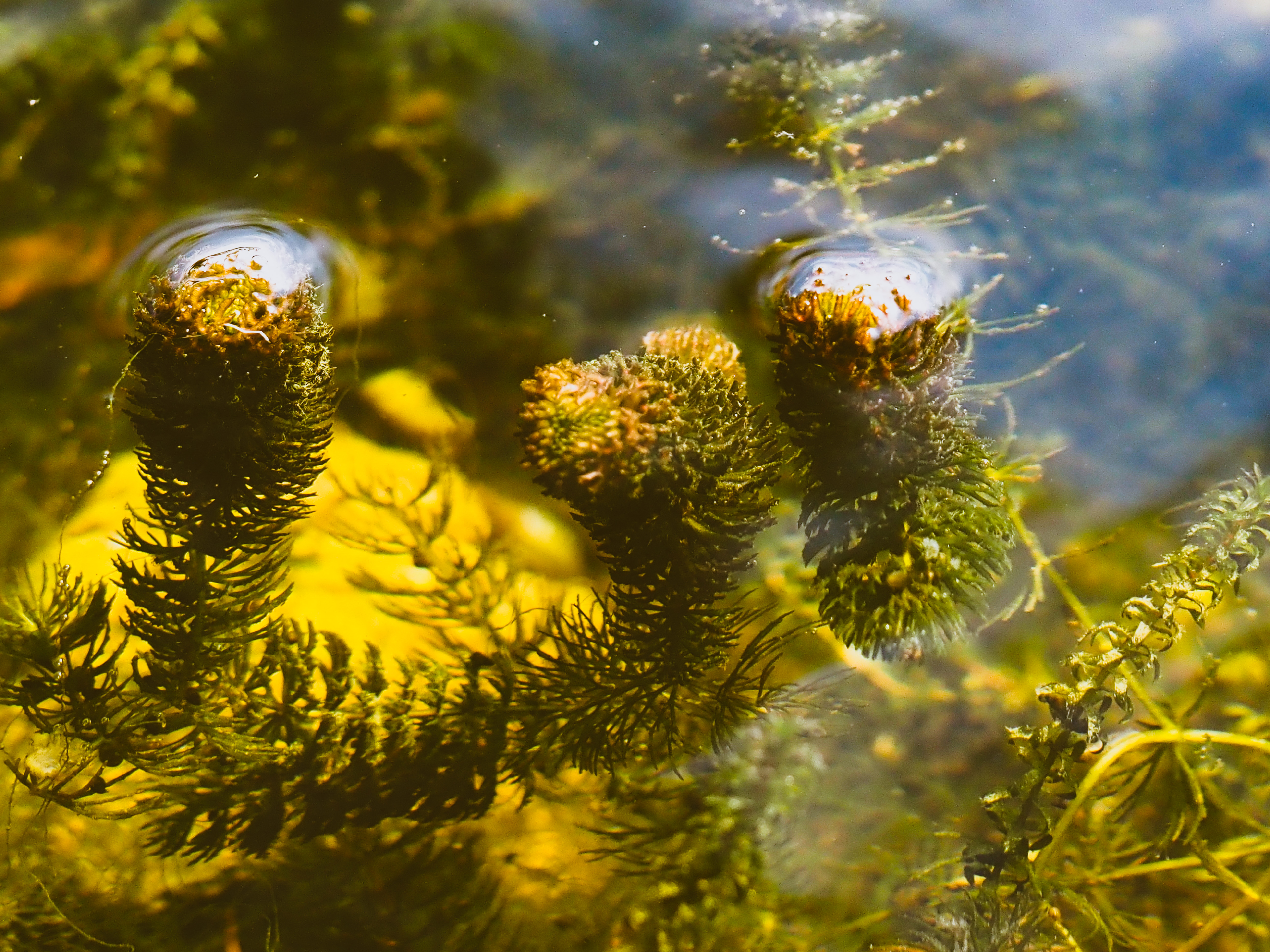
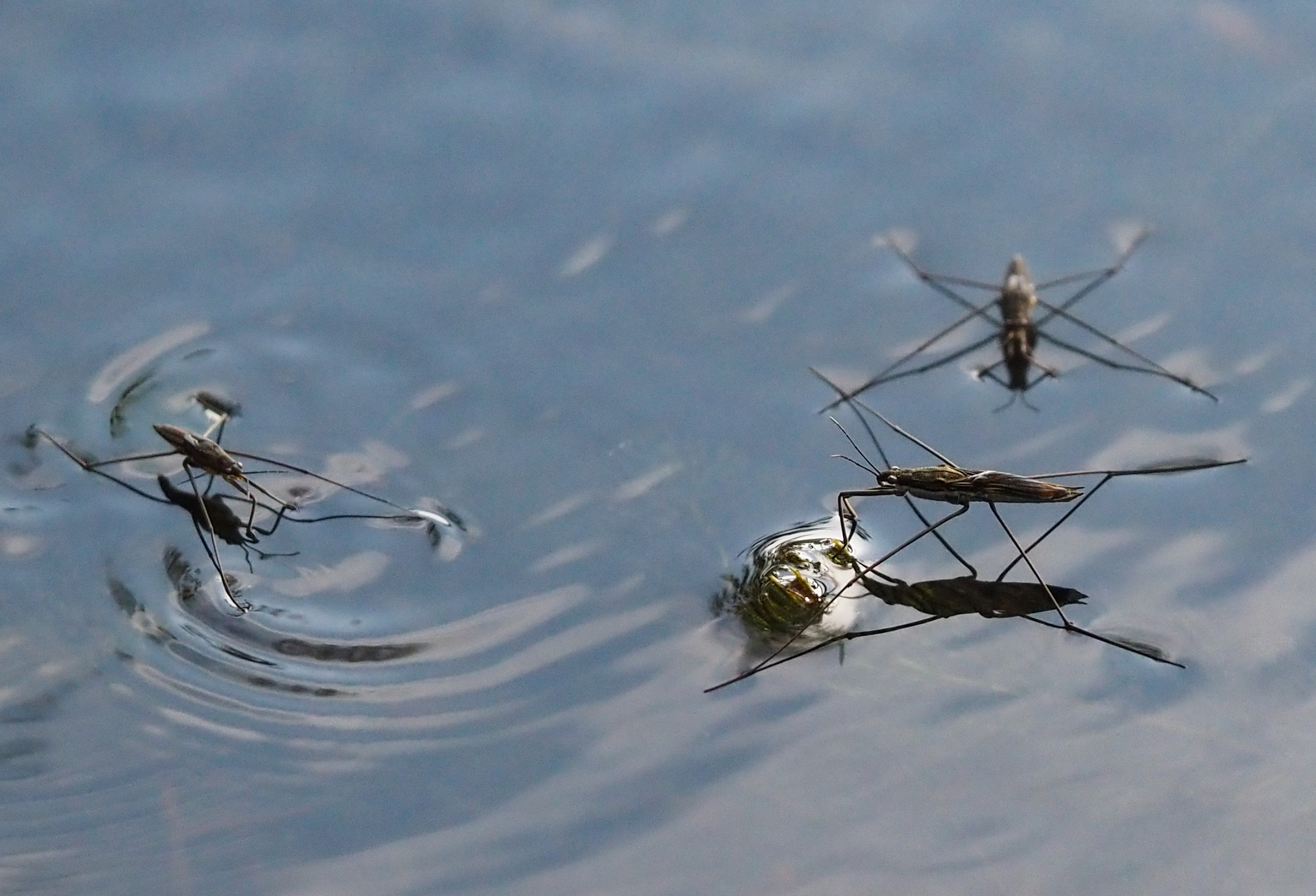
They also investigate anything that falls on the water surface, sometimes revisiting the same piece of fallen plant material or detritus, repeatedly checking to see whether it is edible I suppose!
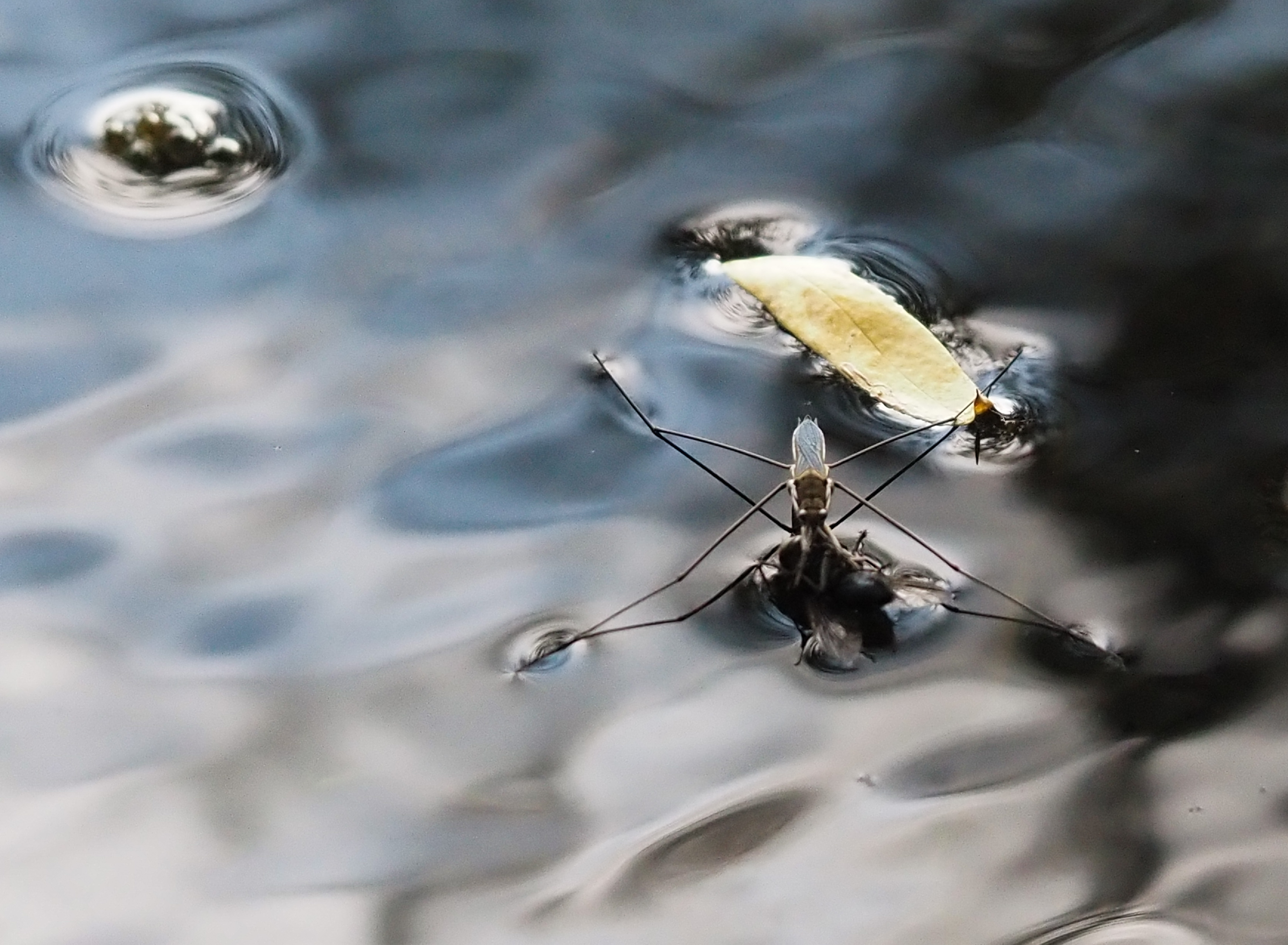
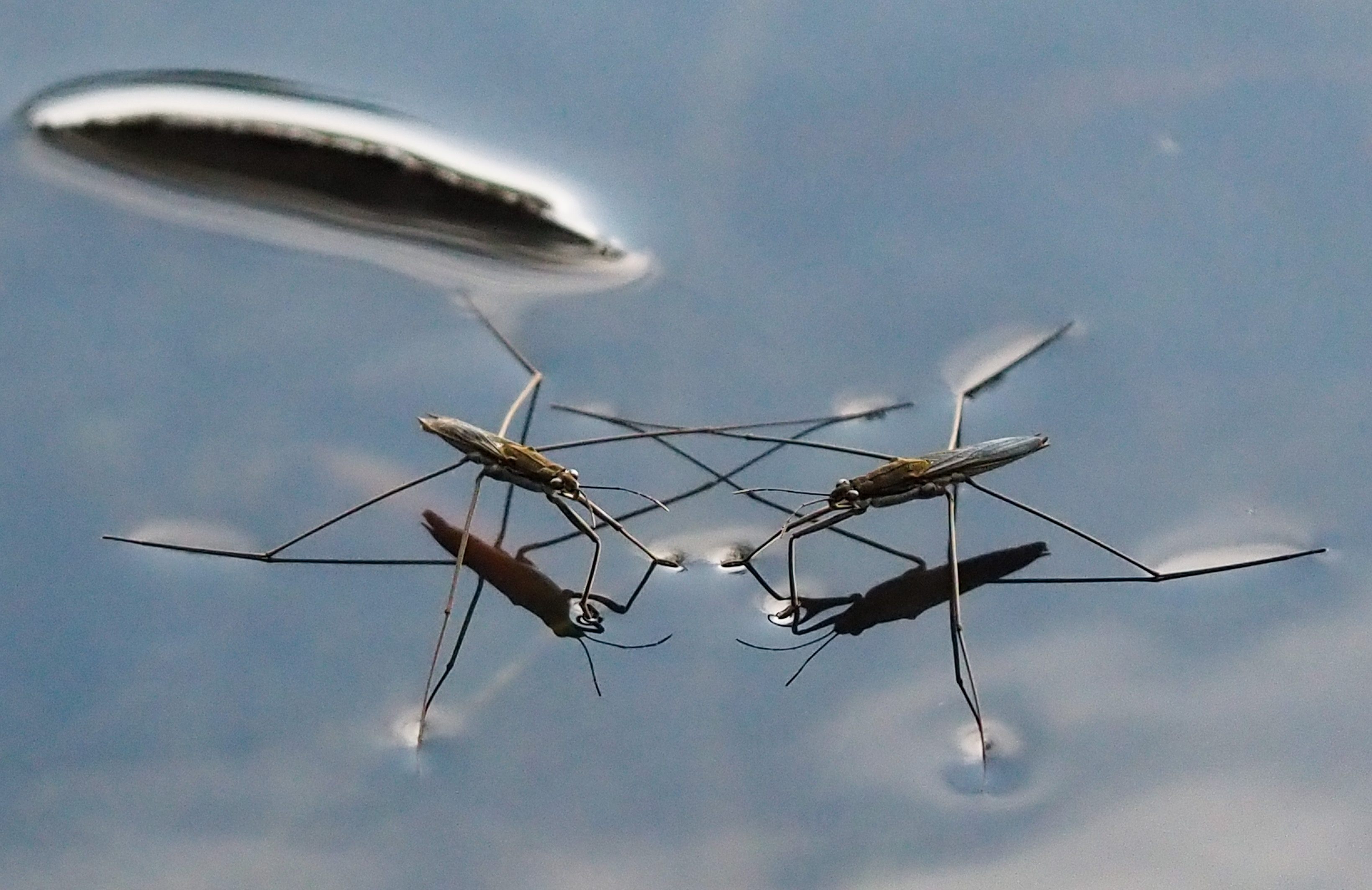
Photographing pond skaters is not very good for the knees! But with practice, one gets better at creeping up on them, and if you are lying prone on the ground – and not not casting a shadow – they gradually move closer the the edge of the pond again. I noticed that the juvenile stages (see below) were slightly less wary than the adults!
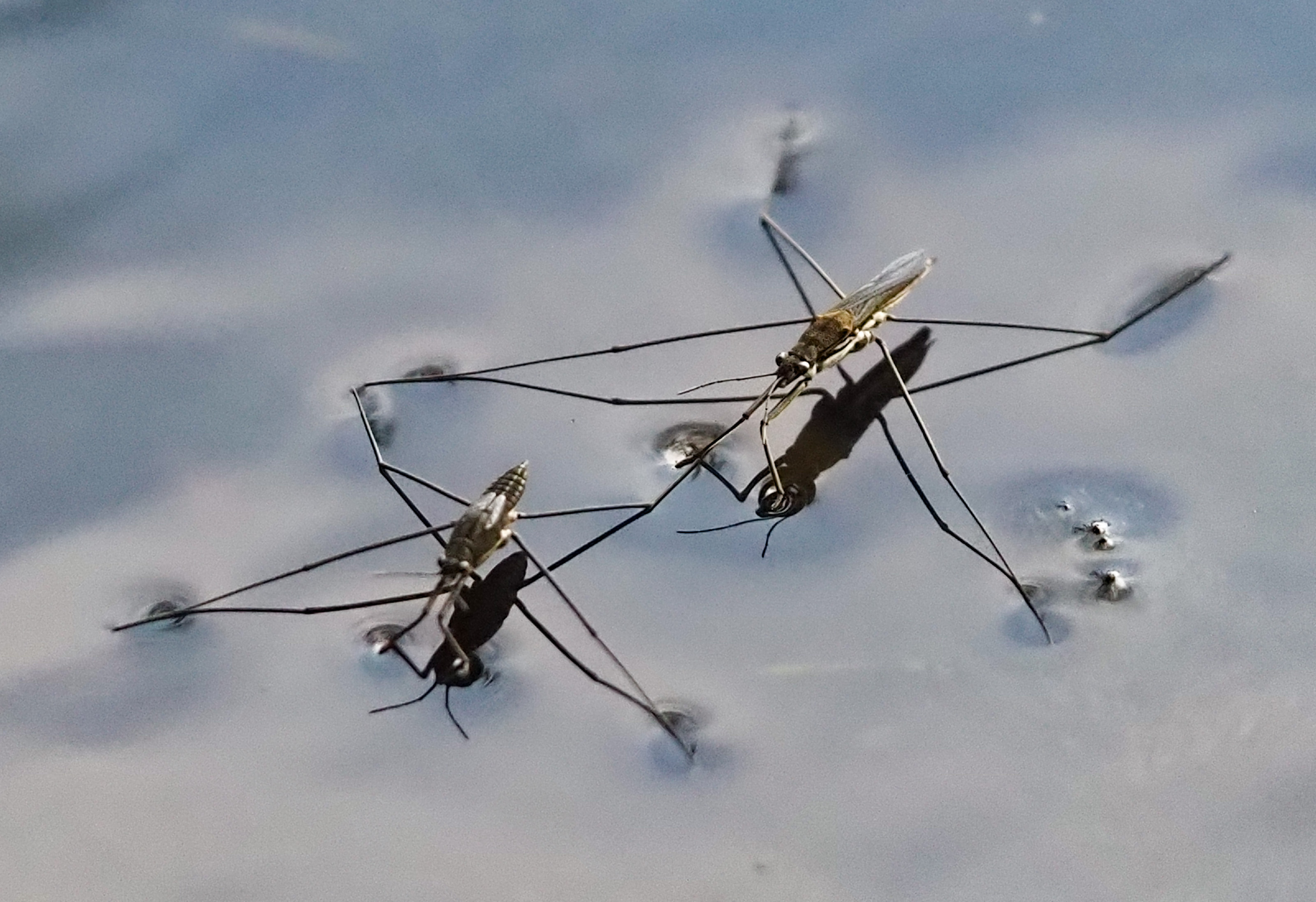
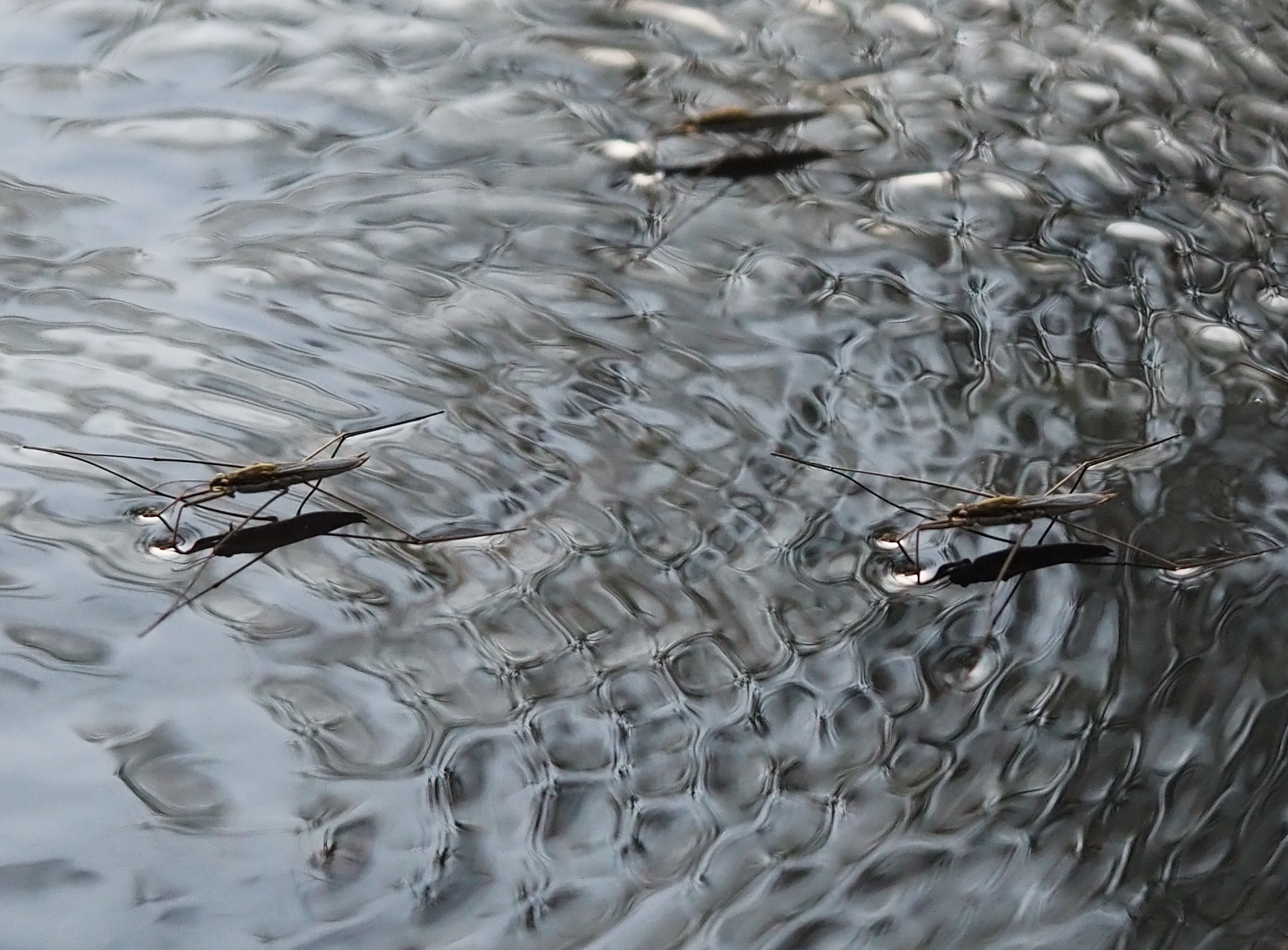
These images were taken on the 15th and 16th of September this year (2023) using an Olympus 90mm macro lens. The locations were around the edges of the lake in Harrold-Odell Country Park, Bedfordshire. I’ll finish with a few more images of pond skaters from this location (below). They also make lovely patterns on the water surface, which they must be highly sensitive to.
 Ray Cannon's nature notes
Great photos, and a very interesting essay. I’ve seen similar critters here along the Gulf Coast of Texas, but have no idea if they are the same species. Thanks!
I posted up many excerpts from you article on my Facebook and sent a copy to a friend & poet
Giles Watson. This was sent back to me today. I thought you might enjoy reading it!
Pond Skater
Look down into the water, to the algal layers,
A pincer’s nip from the grip of the dragon nymph,
Where water mites dance in miniscule,
And gold-flecked tadpoles bask and gorge:
There watch the shadowplay of mating and killing,
On a surface of spilled sun.
A film-winged skiff, the middle legs oars,
Twin rudders at the rear, poises on the brink,
Floating on the film, feeling for the tug
Of insects drowning. The water’s skin bends,
Makes a meniscus she must not pierce
With predatory claws.
Beneath where the water bends, a shadow blooms,
Like petals of a black orchid. A drowning moth
Looks like a bee, about to pollinate her, but she
Sucks him dry. Her lover skims bright waters
To her side, their shadows black orchids,
Brushing in the breeze.
Giles Watson (April 2003)
I posted a series of excerpts from your brilliant article on Pond Skaters on Facebook and I sent a copy to a friend & poet Giles Watson. This what he sent me back today. I thought you might enjoy reading it.
Pond Skater
Look down into the water, to the algal layers,
A pincer’s nip from the grip of the dragon nymph,
Where water mites dance in miniscule,
And gold-flecked tadpoles bask and gorge:
There watch the shadowplay of mating and killing,
On a surface of spilled sun.
A film-winged skiff, the middle legs oars,
Twin rudders at the rear, poises on the brink,
Floating on the film, feeling for the tug
Of insects drowning. The water’s skin bends,
Makes a meniscus she must not pierce
With predatory claws.
Beneath where the water bends, a shadow blooms,
Like petals of a black orchid. A drowning moth
Looks like a bee, about to pollinate her, but she
Sucks him dry. Her lover skims bright waters
To her side, their shadows black orchids,
Brushing in the breeze.
Giles Watson (April 2003)
That’s absolutely brilliant! Love it!😊