Group-foraging – forming large social aggregations, or colonies – is relatively rare in spiders, but where it does occur, this sort of behaviour can be highly beneficial. In colonial orb weavers (Araneidae), each individual builds its own orb web within a communal framework of other individuals but captures its own prey. In other words, they live together but cook their own supper!

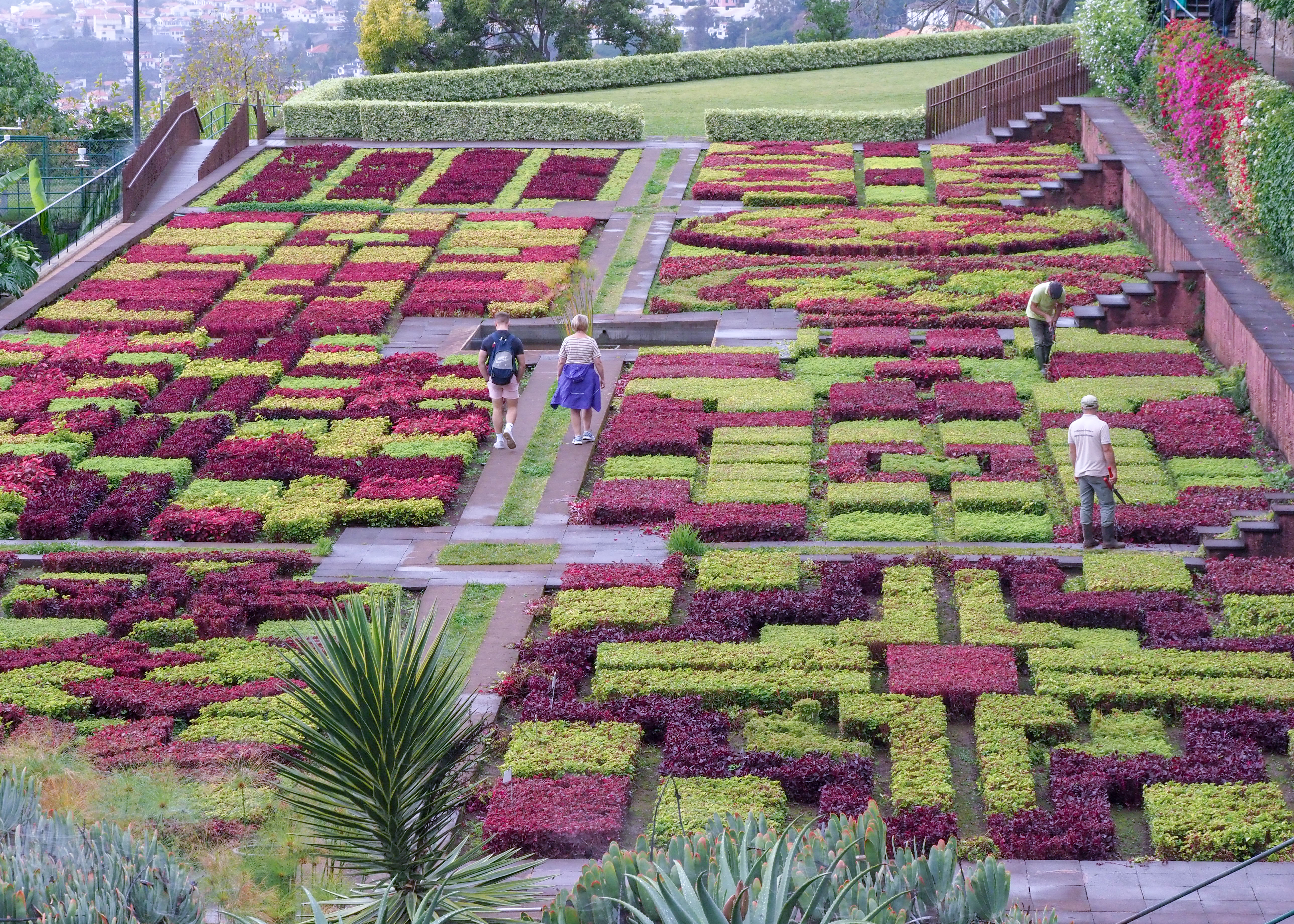
I came across colonies of one such species, the tropical tent-web spider (Cyrtophora citricola), when I visited the Botanical gardens in Funchal, Madeira, Portugal. These spiders can live both solitarily and in colonies of various sizes. I did not have time to investigate the size of the colonies at this site, but it is known that colonies of C. citricola can reach high densities and are composed of individuals at various different stages of development: from juveniles to adults.
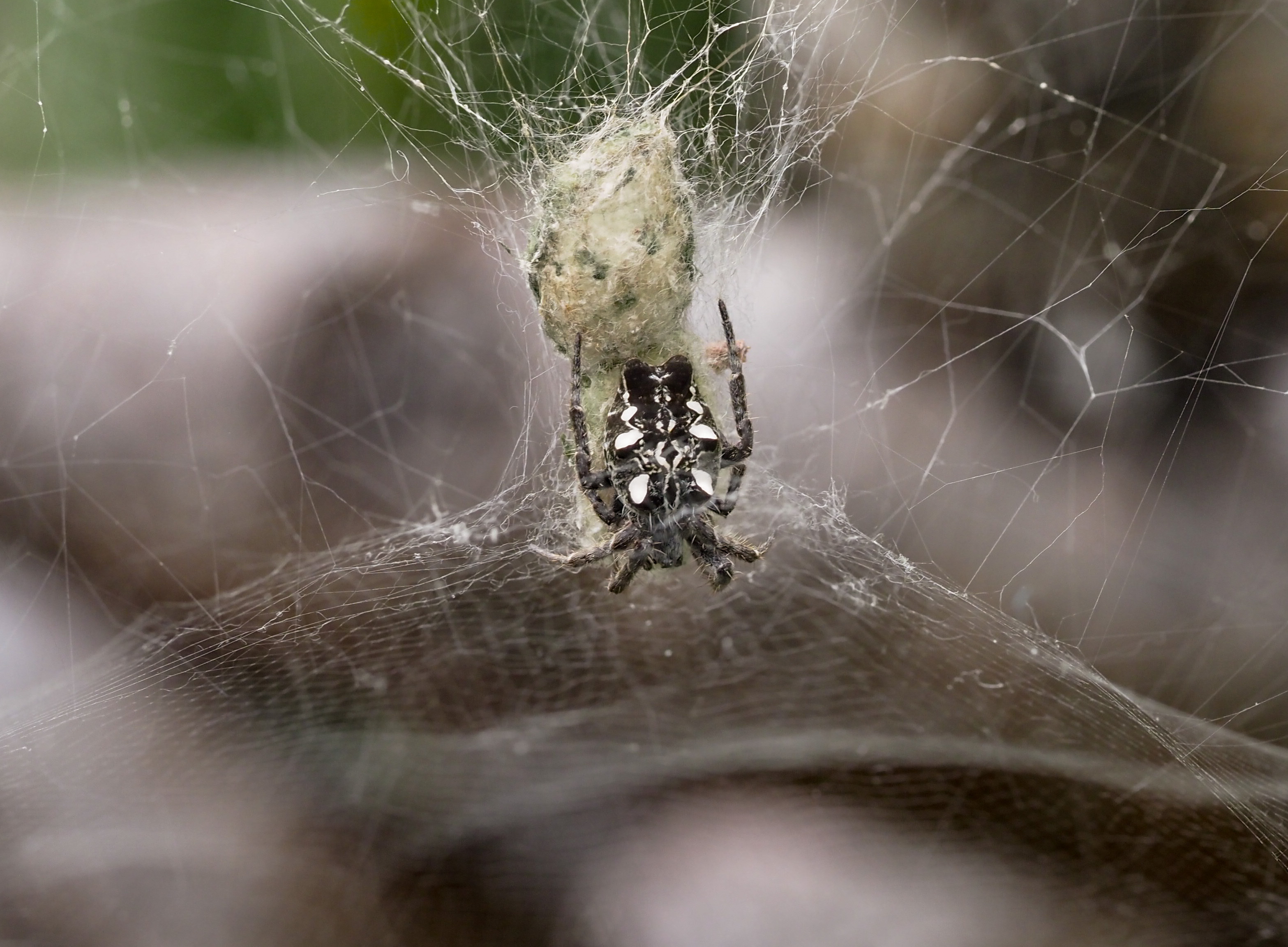
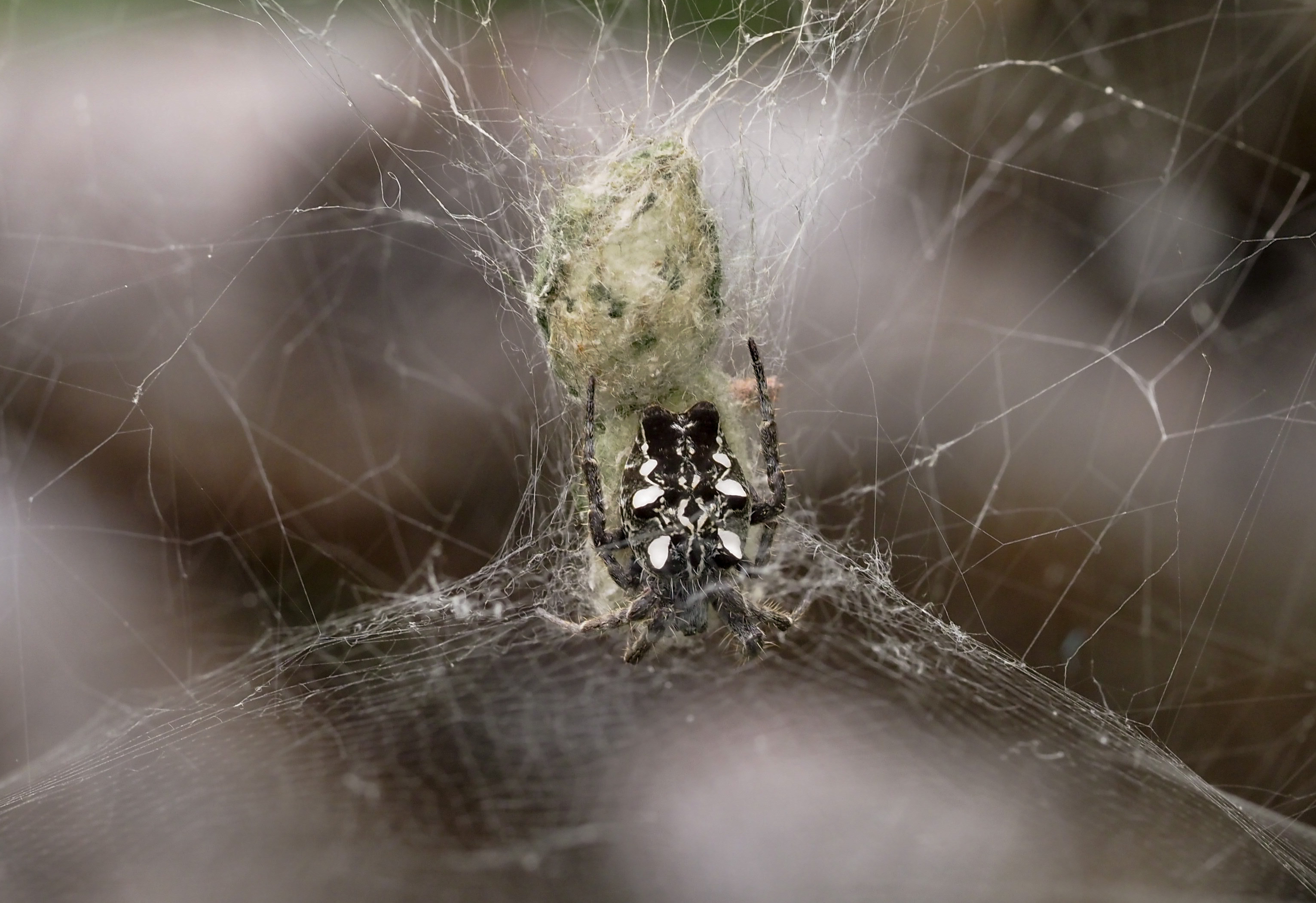
This species of spider is sexually dimorphic: the females are much the larger and may reach over 10mm in length (range 7.5–13.3 mm), whilst the smaller males are usually 3 mm long. I’m not sure whether I managed to capture the smaller male?
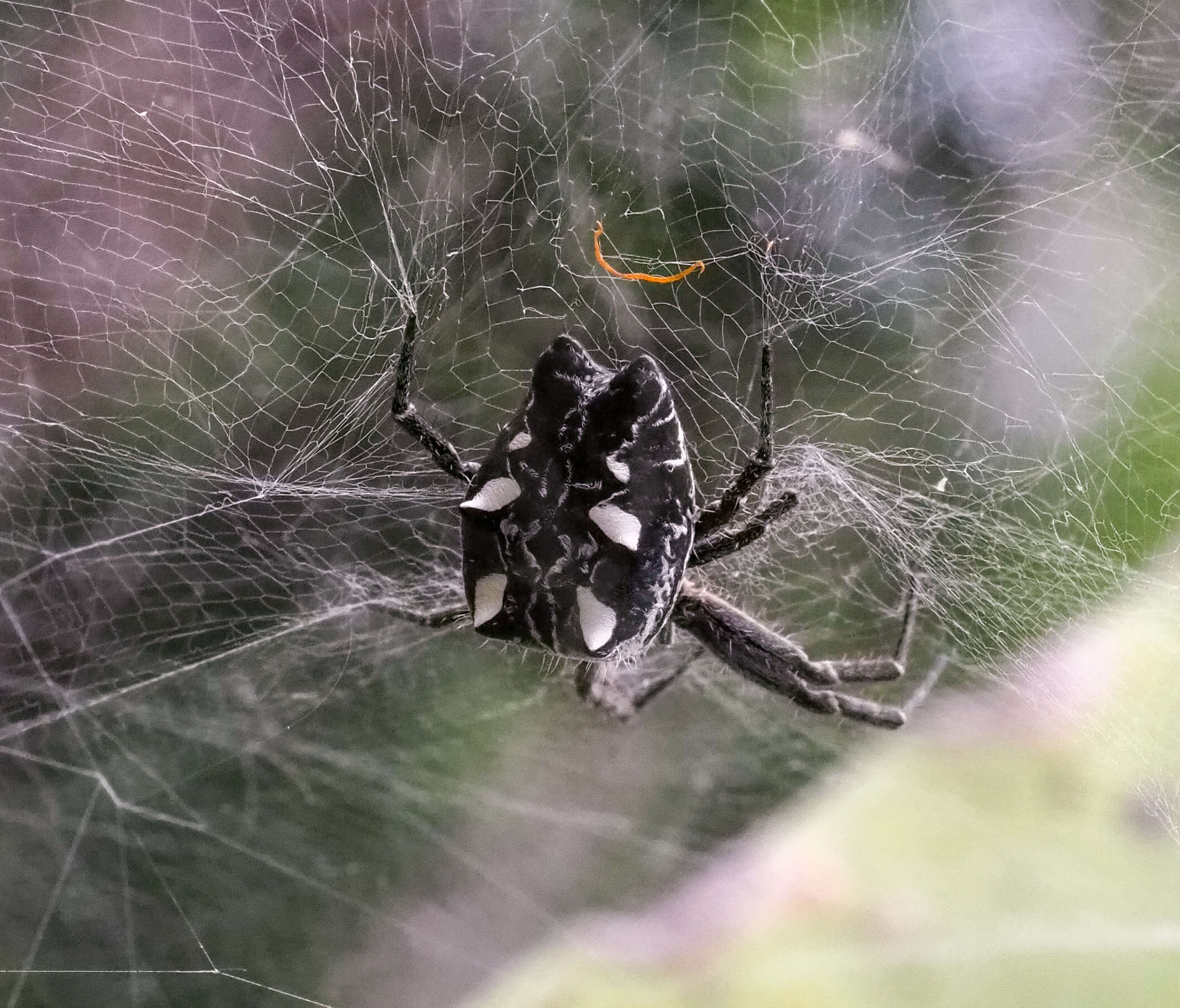
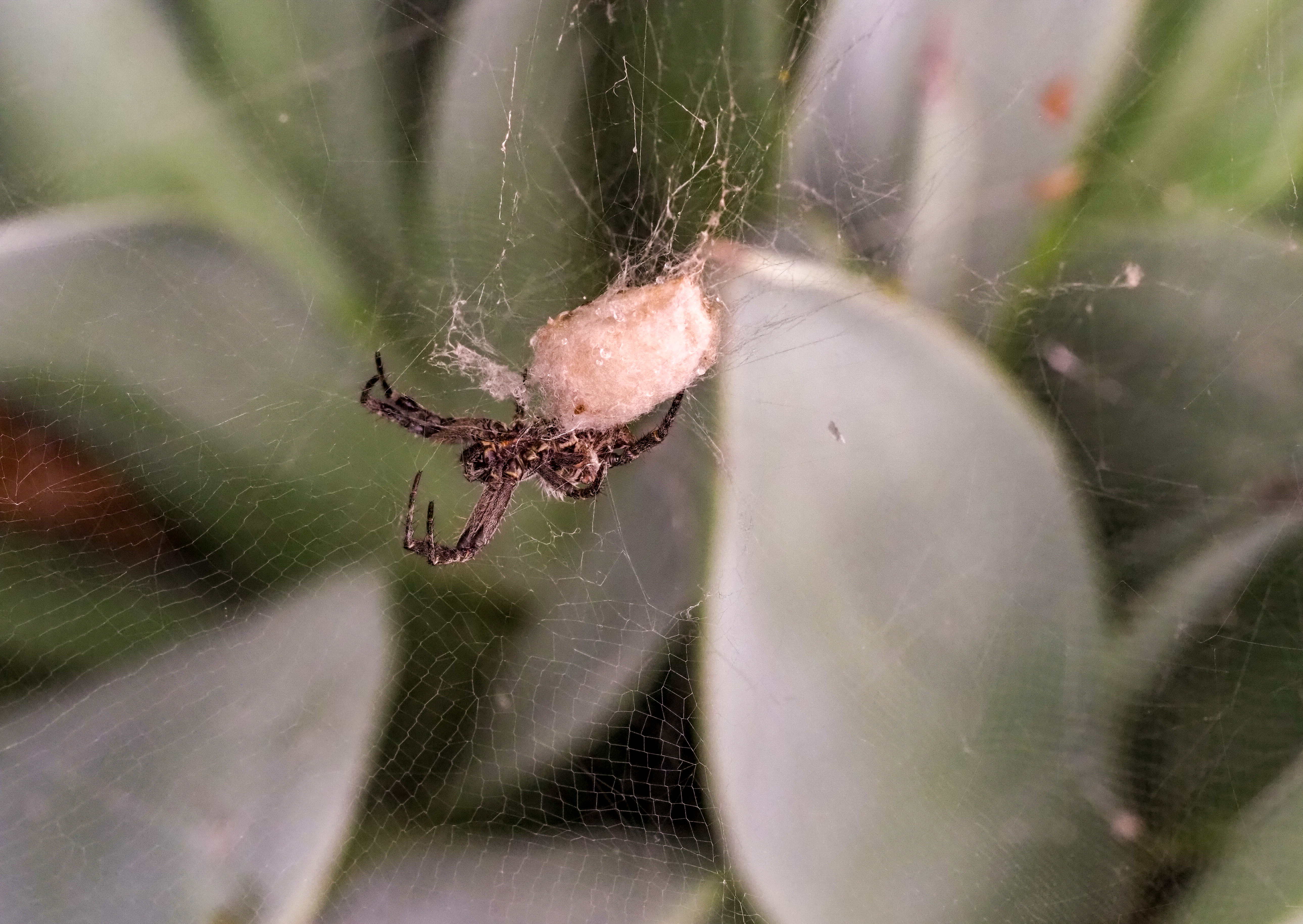
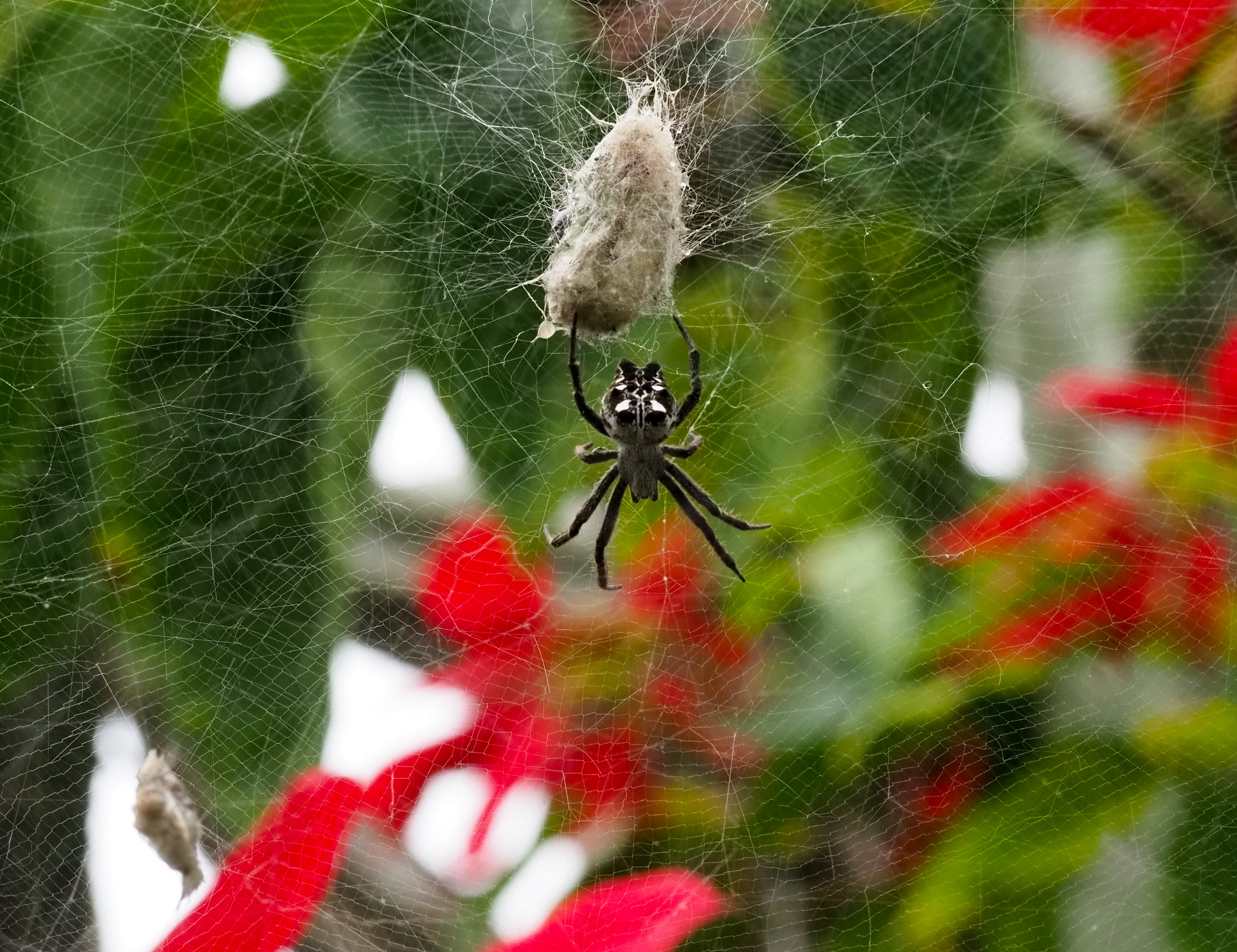
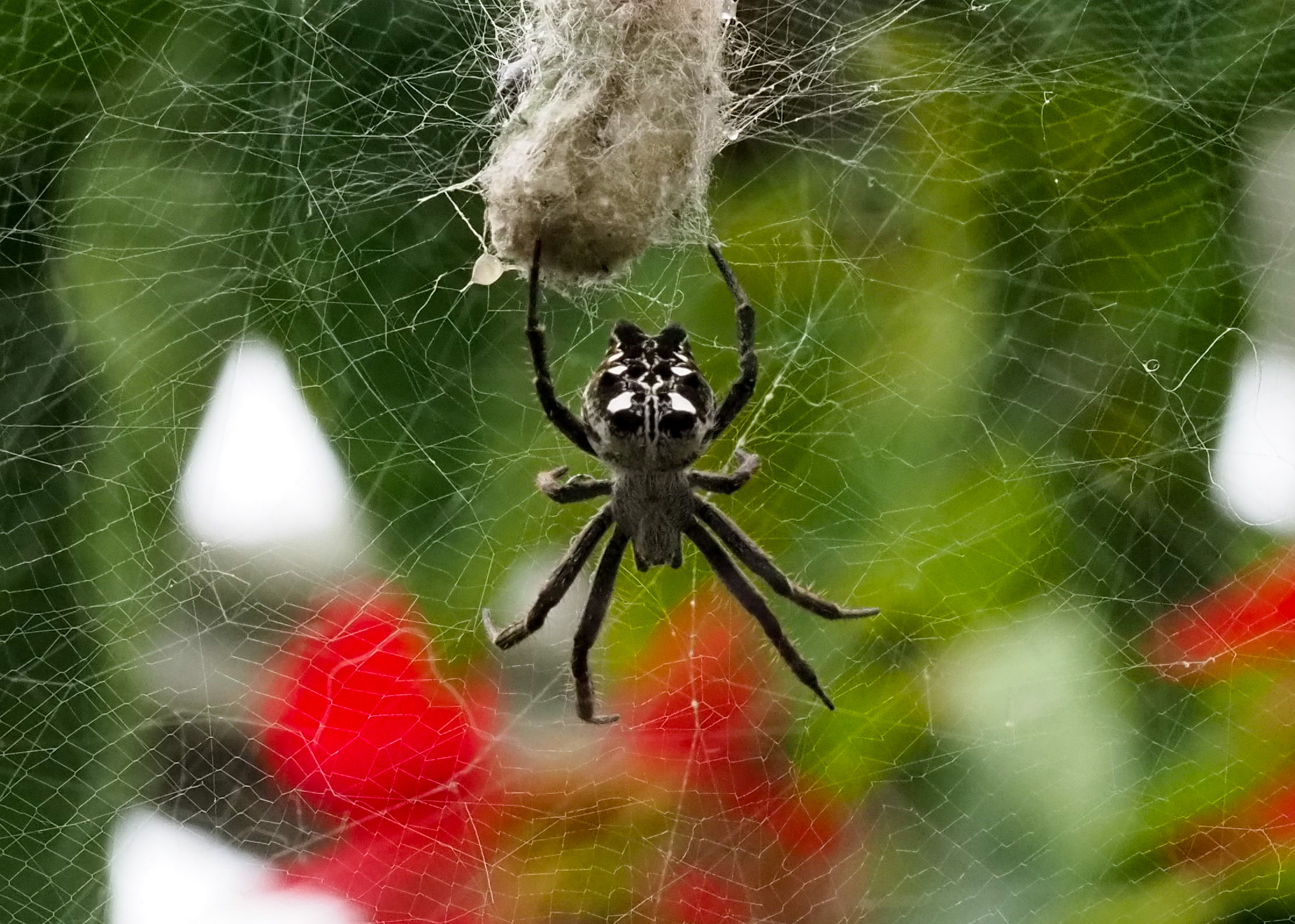
The legs of both of C. citricola are different lengths, with legs I and II being the longest (see above). The females rest with its legs underneath its body, watching over its egg sac at the hub of the web, alert to any movements of the webbing which signal the entanglement of prey and/or other intrusions.
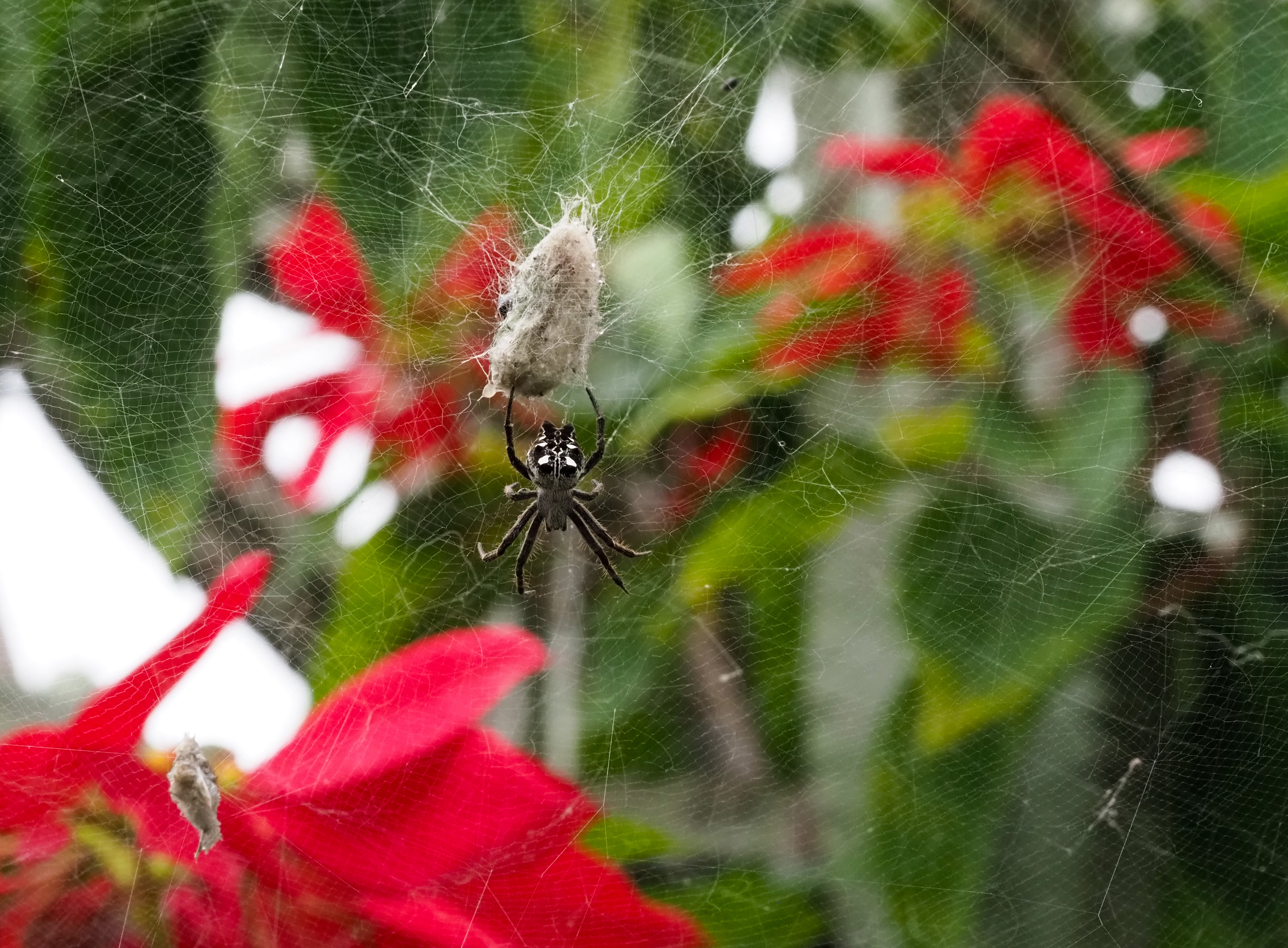
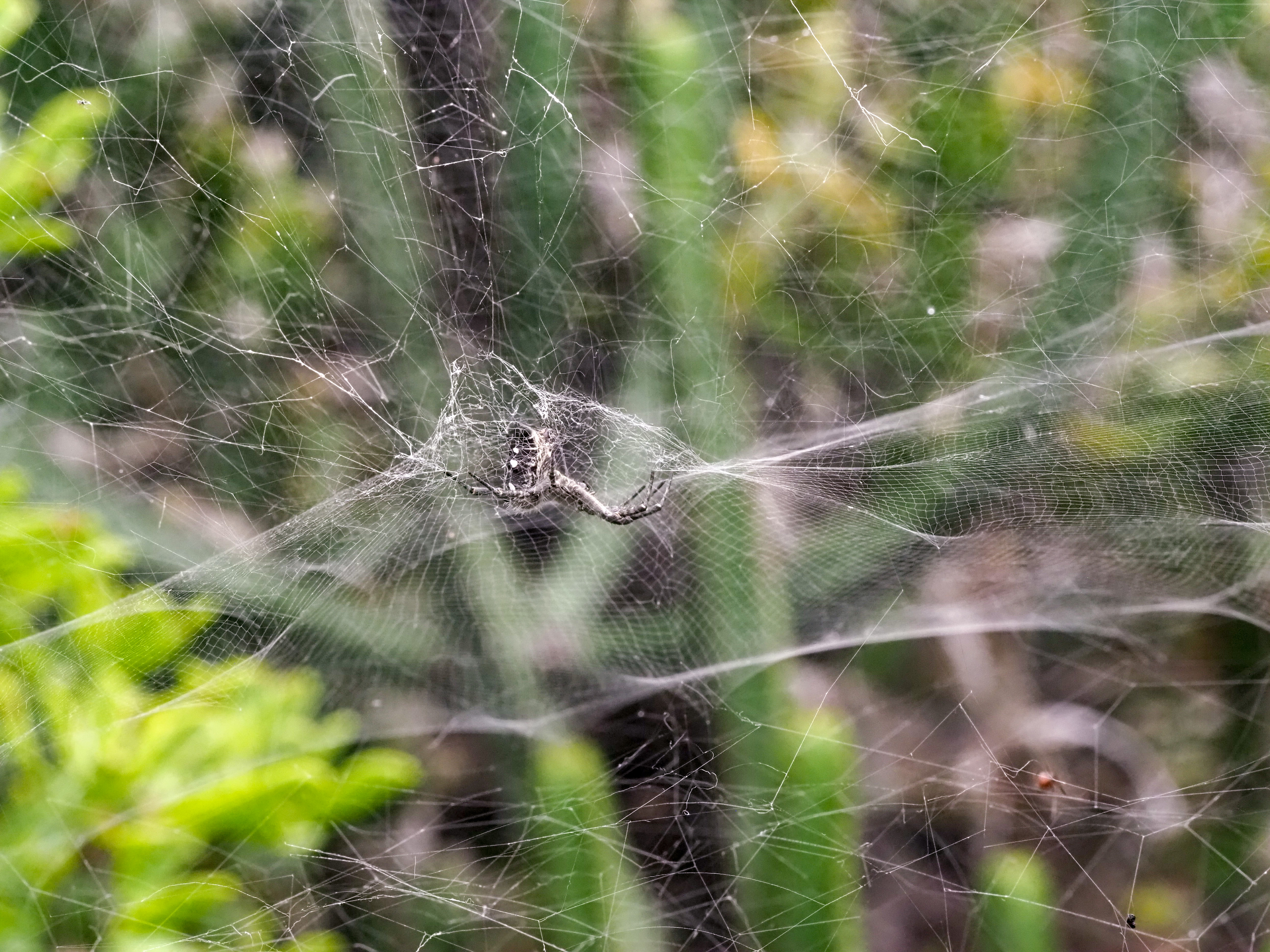
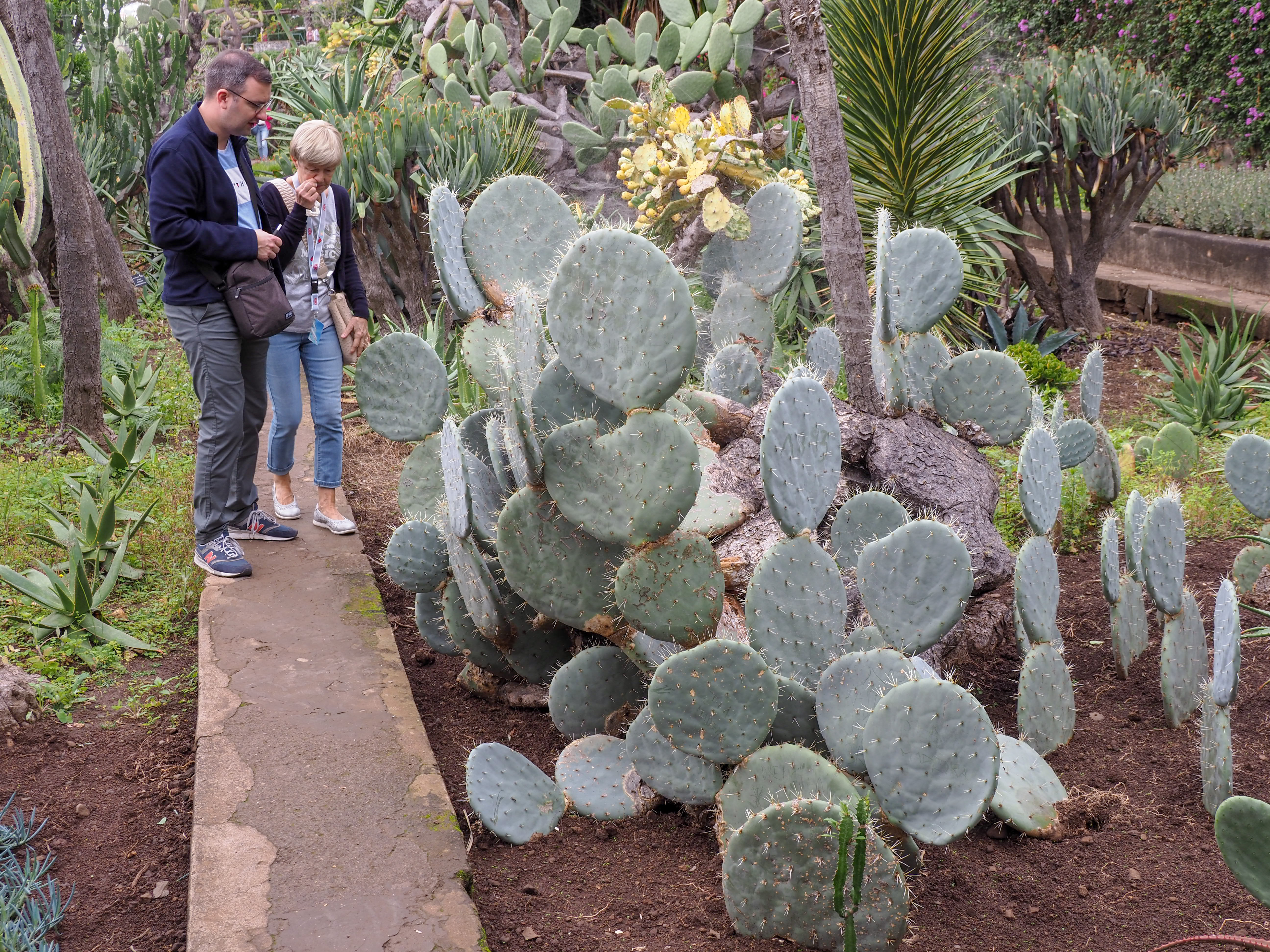
Within these colonies, each spider has its own web that is linked to other spiders through communal webbing. The spider webs are often built in large multilayered meshes of orbs which can span entire trees, or in this location, large cactus plants. The web itself is almost like a net (below).
There are, in theory, many potential benefits of group living in spiders. They can, to some extent, share the costs of web-building, for example, using the same web ‘frame threads’ or support lines. Thus, saving on silk use.
One interesting benefit of colonial living is that prey items can bounce from web to web in their desperate efforts to escape – a ricochet effect – before eventually getting trapped somewhere inside the colony, instead of escaping.
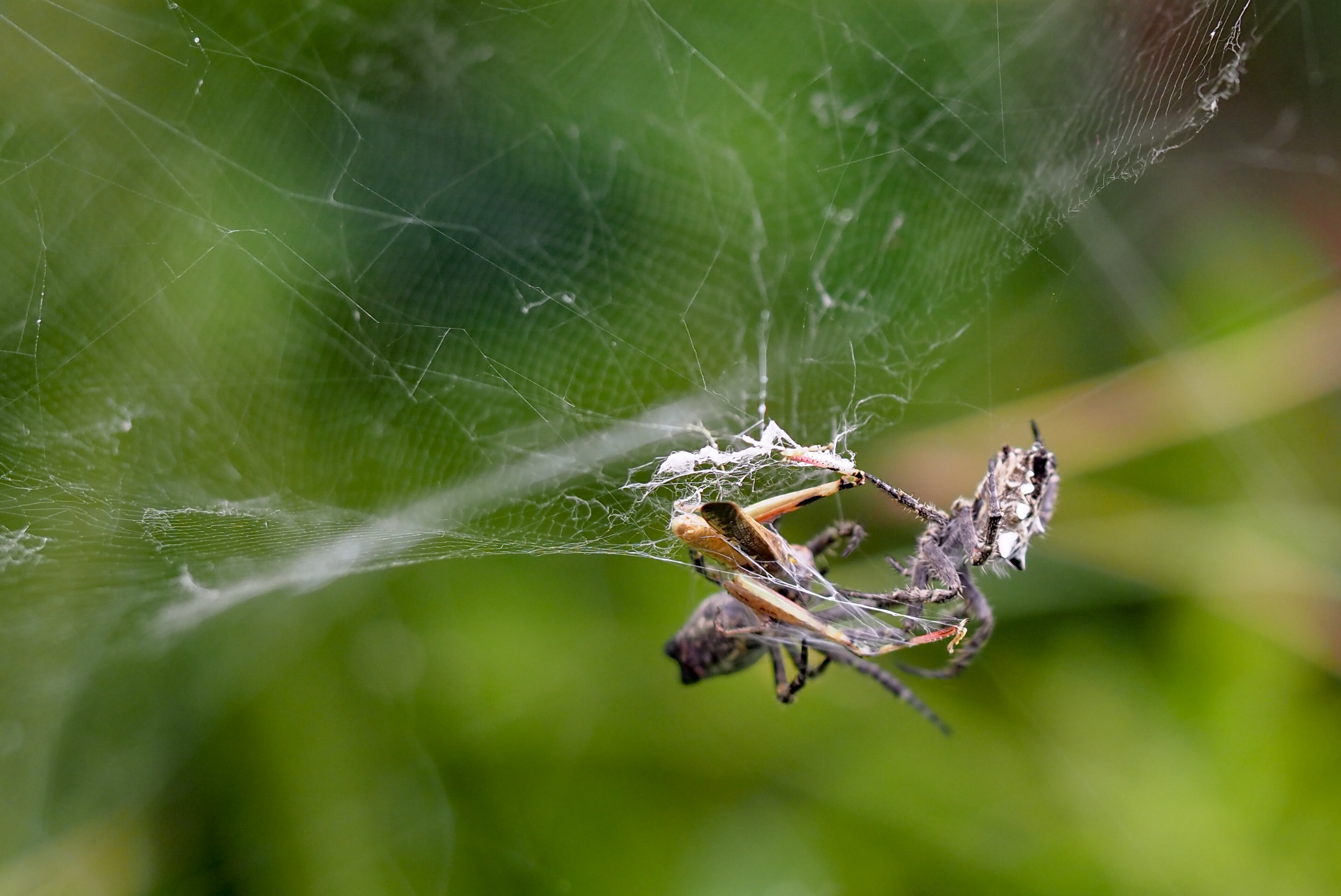
I came across a small grasshopper which had just been trapped in a spider’s web (below). In fact, I think I was to some extent responsible for his/her demise. My large foot had caused him to jump, and thereby end up in the web. I had a stab of anguish: should I try and rescue the grasshopper? Was I morally responsible for its demise? Yes, I was, but it might have ended up in a spider’s web anyway, and in any case it had been rapidly trussed up by the spider, so I would be robbing it of its prize! The pair were also protected by a very spiny cactus, which was the deciding factor in leaving it alone and photographing it instead. Perhaps the heartless scientist in me got the better of me?!
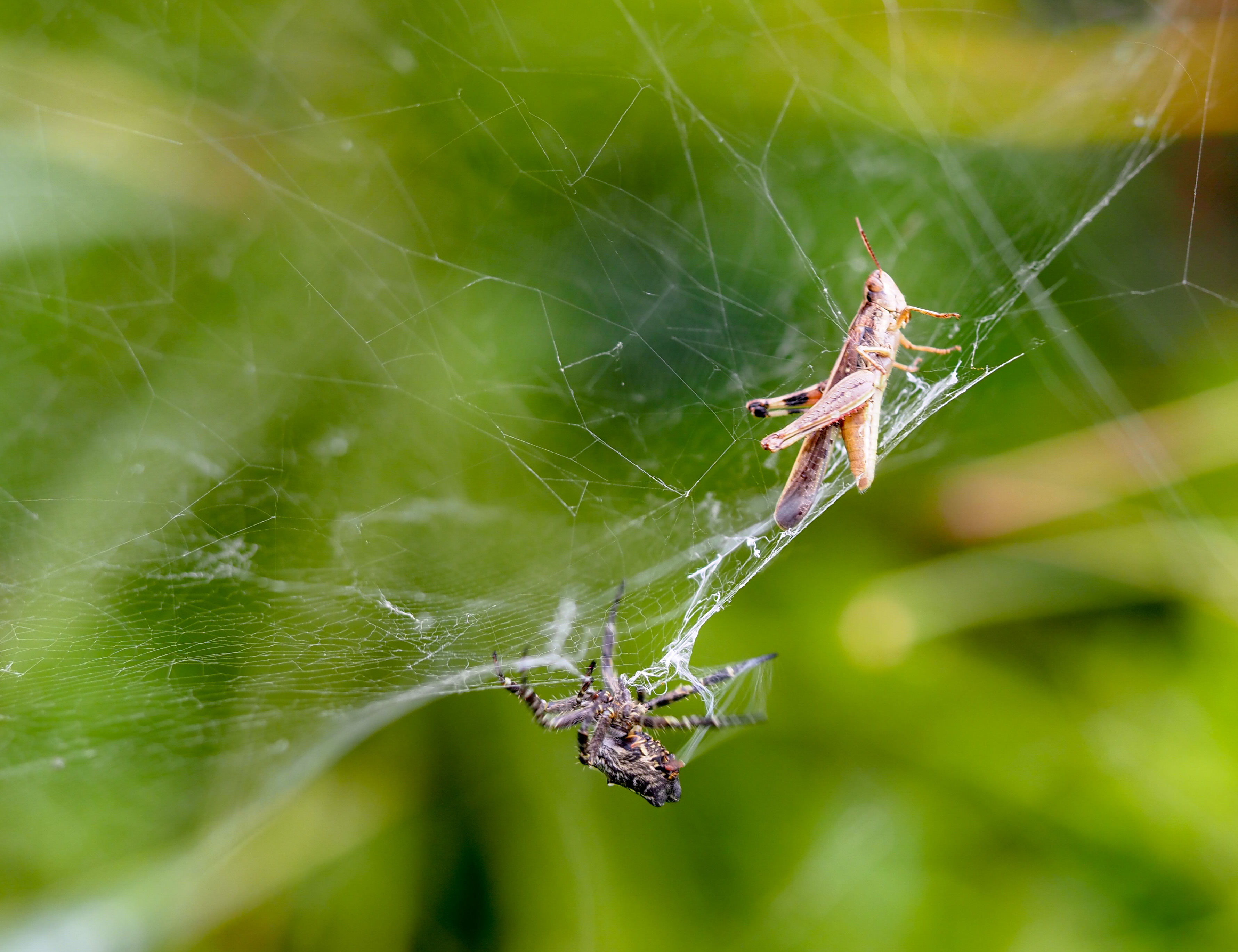
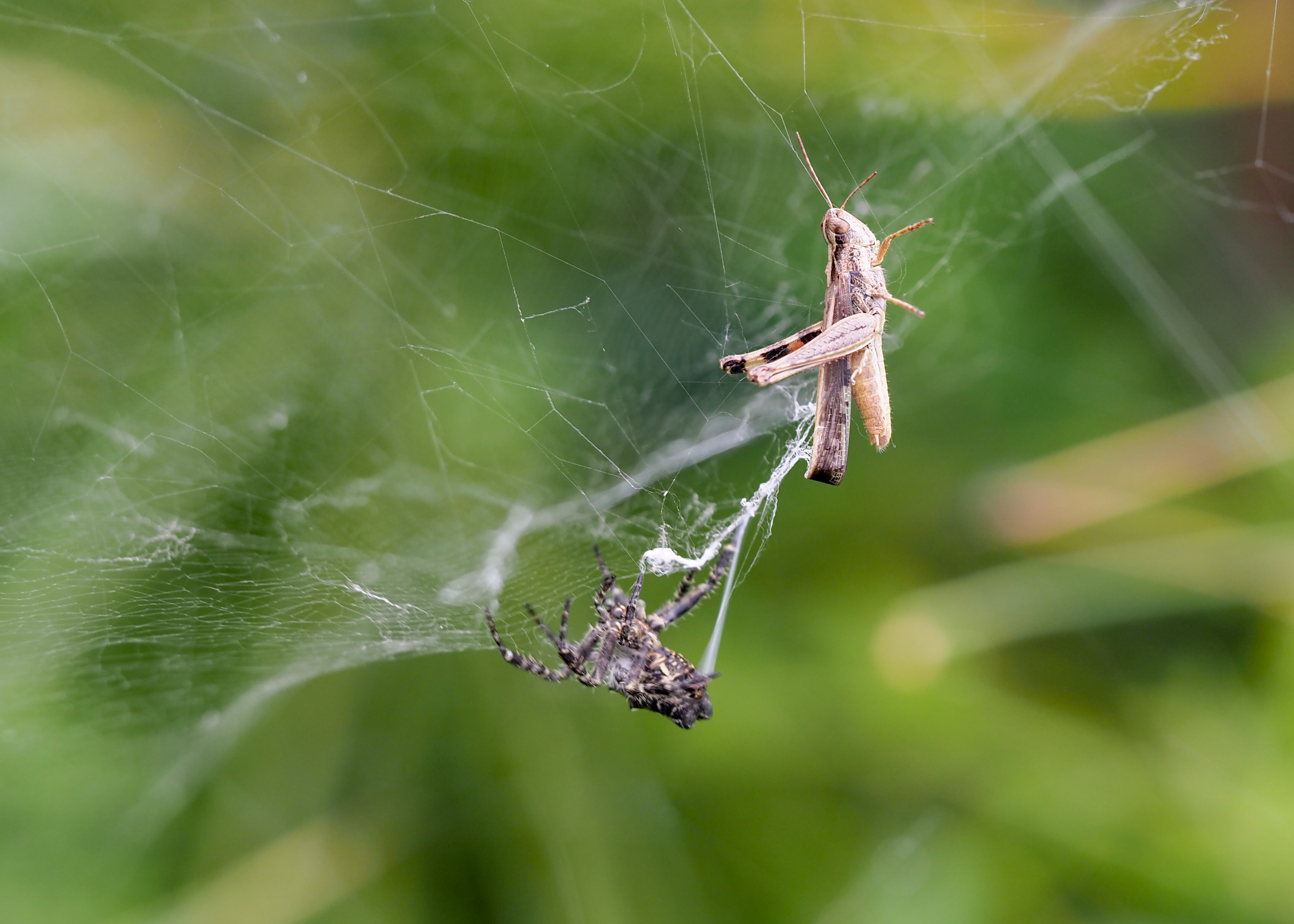
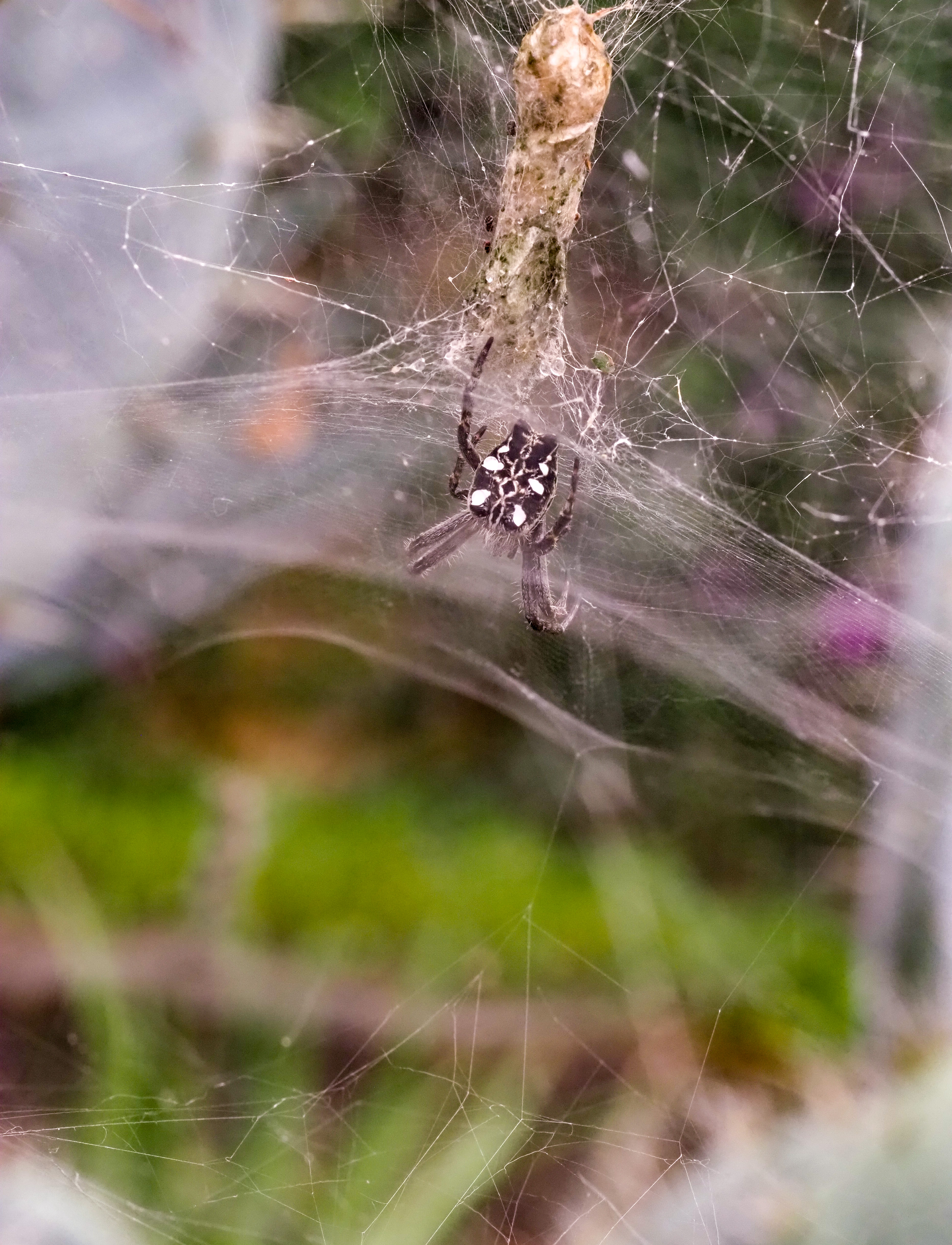
Another benefit of colonial living is that it is possible to steal food off your neighbours! When I was photographing the poor entangled grasshopper, I noticed that another spider came along to investigate (below). Was it a good neighbour, come to help with the capturing, or was it a bad neighbour, intent upon stealing the prey item? There is much to discover regarding the intraspecies behaviour of these spiders.
Group foraging almost always occurs in habitats where the abundance of prey is high. These well-maintained, semi-tropical gardens in Madeira must have a surfeit of insects (and other spiders!), which the tropical tent-web spider can feed on.
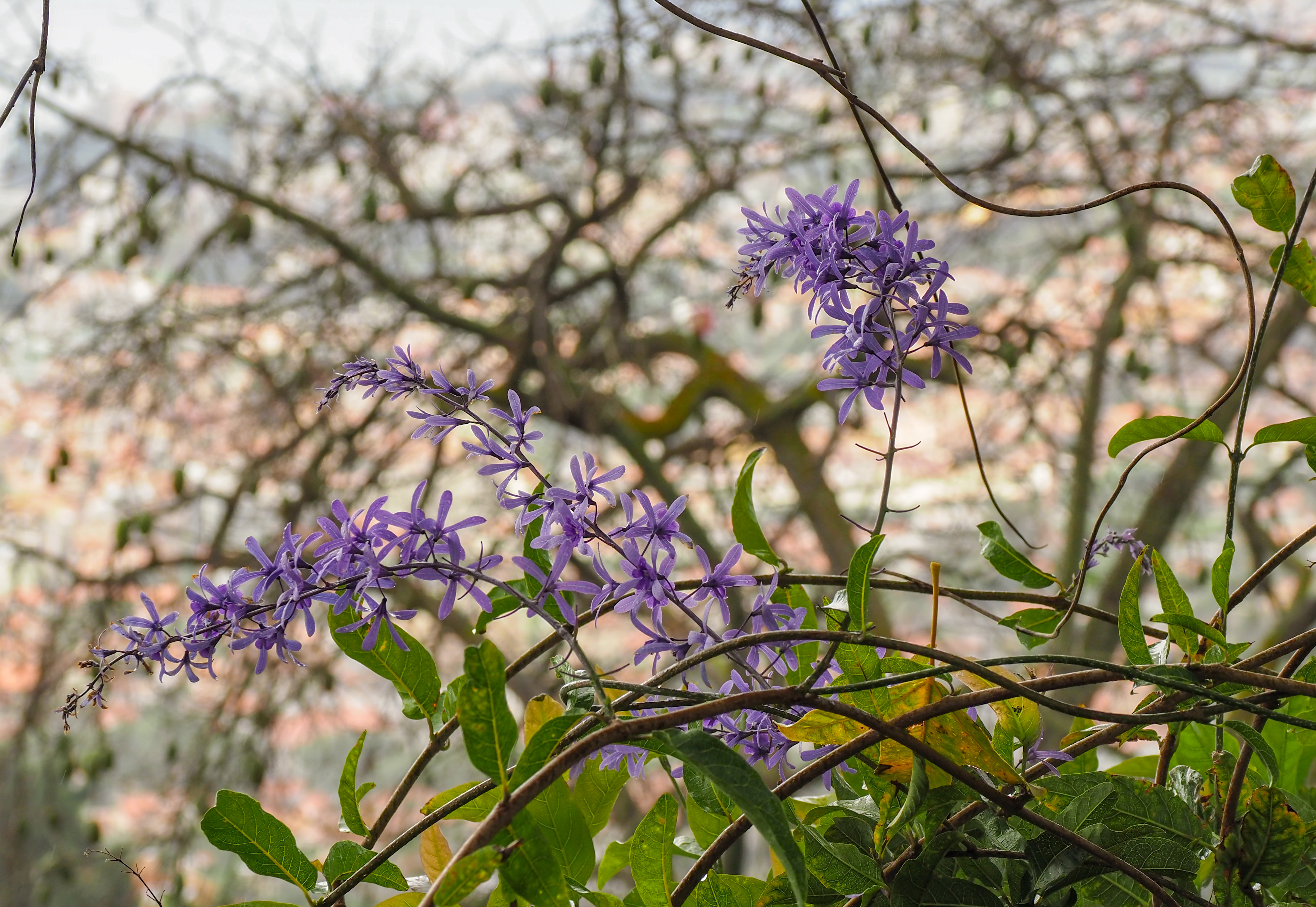
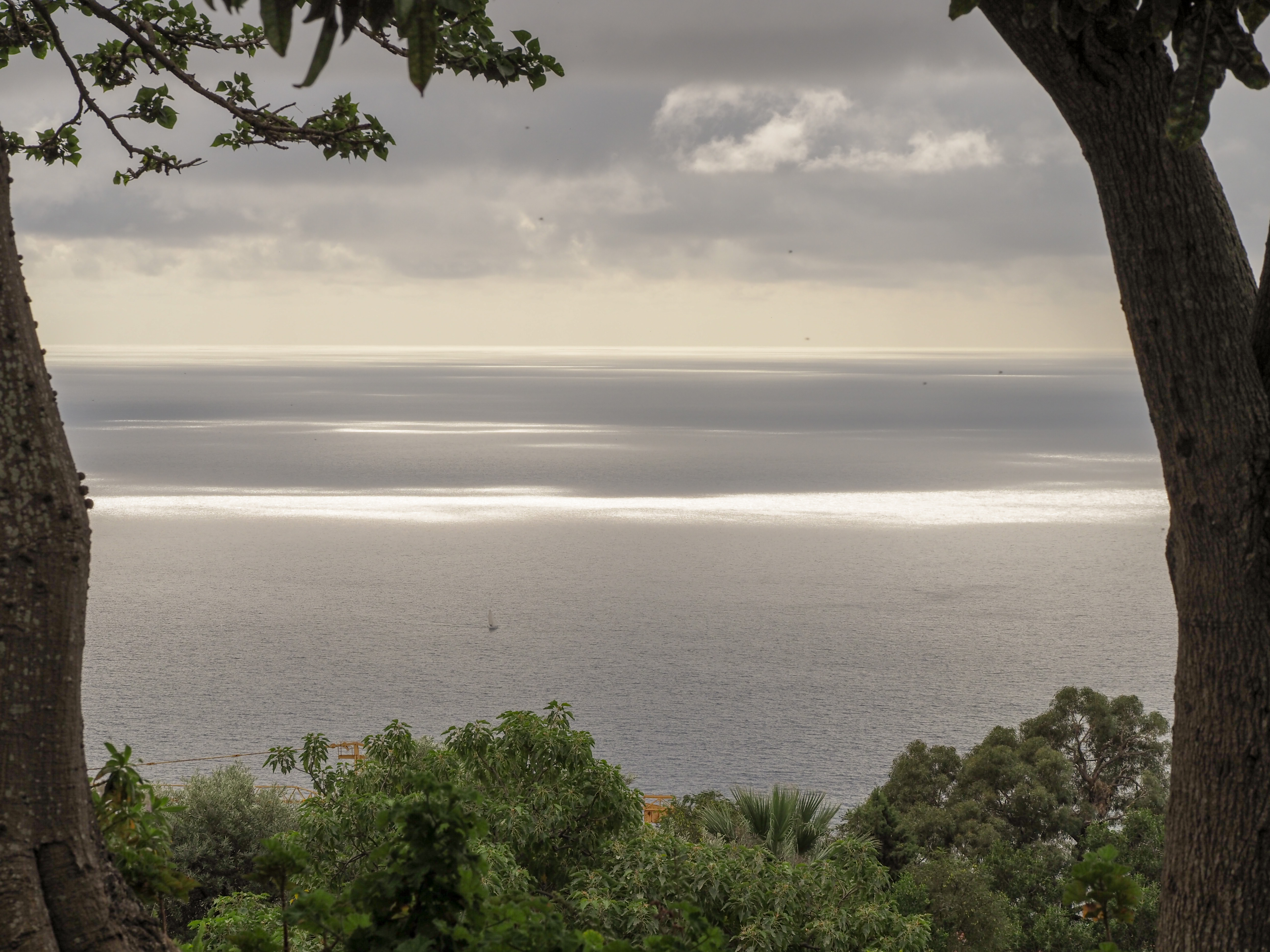
There is probably no single optimal position within the colonies, but some sites must be better than others, as larger spiders sometimes prevent smaller spiders from constructing webs near to them, and relegate them to less preferred positions within the colony! They must fight, or at least size each other up to some extent, to determine their relative spacing and placement within the colonies. Nature is a struggle for existence.
I have mused before on the plight of insects caught in spiders webs: Spiders, silk and packed lunches. What sort of world is it where a life can change so quickly? From a free-living grasshopper, perhaps not even fully developed, to a trussed-up, spider’s packed lunch! I cannot believe that an all-powerful God presides over these little tragedies. Or, at least not one I wish to know. Perhaps some infinitely powerful force set up the starting conditions for our universe to unfold, and maybe this same force exists within us all as the forces of nature spin out their effects. Feeling, or experiencing the progress of evolution as it unfolds via these tiny conflicts. But I cannot believe that natural selection, in the sense of ‘survival of the fittest’, plays a role in such encounters: it’s all too random. The direction the grasshopper jumped as my boot descended from on high, decided its fate. Survival of the lucky, fortunate ones!
All photographs taken by Raymond JC Cannon on 3 Dec 2023.
References
Buskirk, R. E. (1975). Coloniality, activity patterns and feeding in a tropical orb‐weaving spider. Ecology, 56(6), 1314-1328.
Uetz, G. W. (1996). Risk sensitivity and the paradox of colonial web-building in spiders. American Zoologist, 36(4), 459-470.
Yip, E. C., Levy, T., & Lubin, Y. (2017). Bad neighbors: hunger and dominance drive spacing and position in an orb-weaving spider colony. Behavioral Ecology and Sociobiology, 71, 1-11.
 Ray Cannon's nature notes
You faced a true moral dilemma. 😬 Poor little grasshopper. 🫣