
“It’s in his kiss” sang Cher in the Shoop Shoop song. Humans aren’t the only animals to engage in some form of kissing behaviour. Kisses, nibbles and nuzzles are a good way of sizing up mates, initiating sexual arousal and maintaining bonds with a partner, as this article in Discover magazine describes.
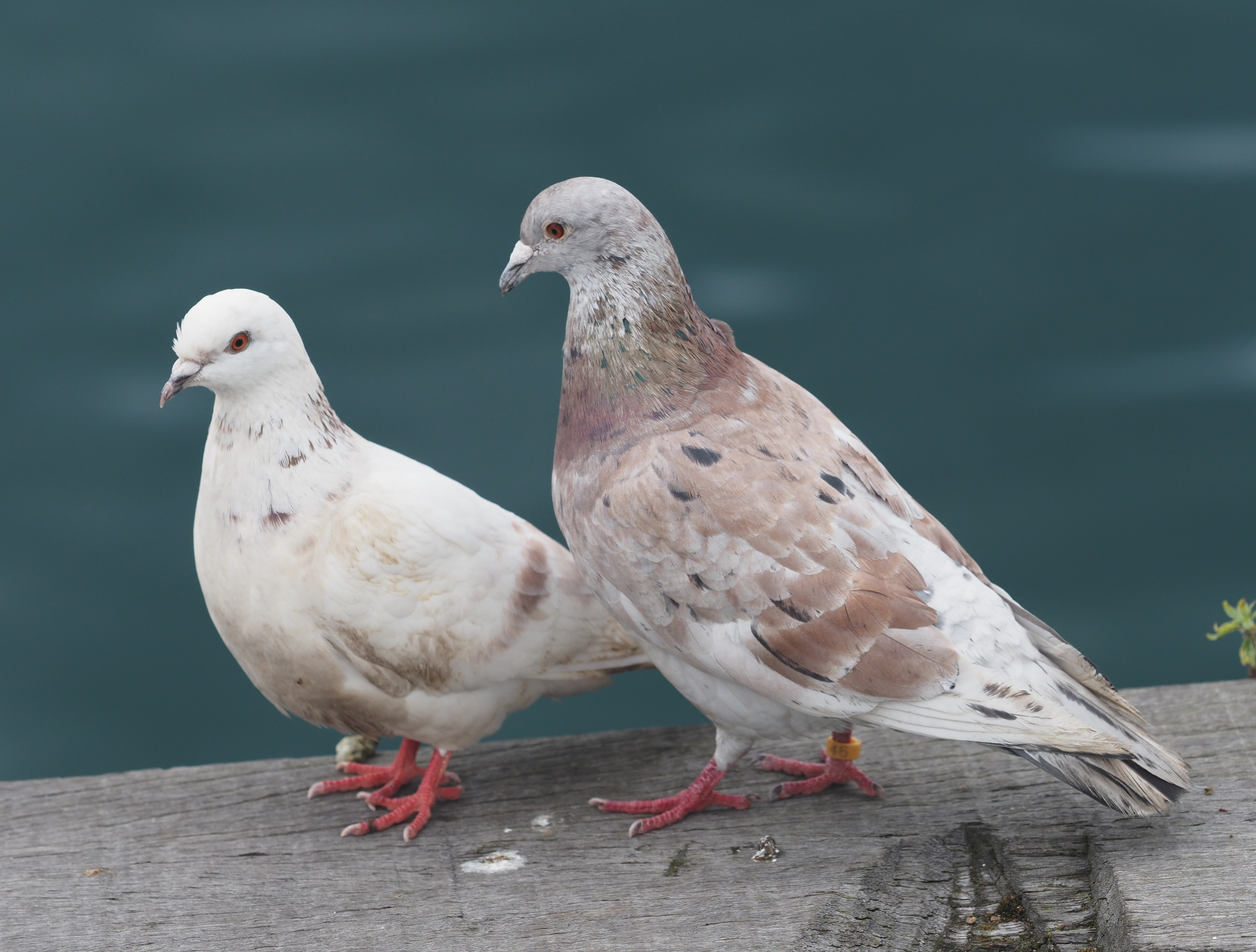
Pigeons (also called rock doves) mate for life, and according to Rosemary Mosco, who wrote A Pocket Guide to Pigeon Watching: Getting to Know the World’s Most Misunderstood Bird, they are remarkably faithful.
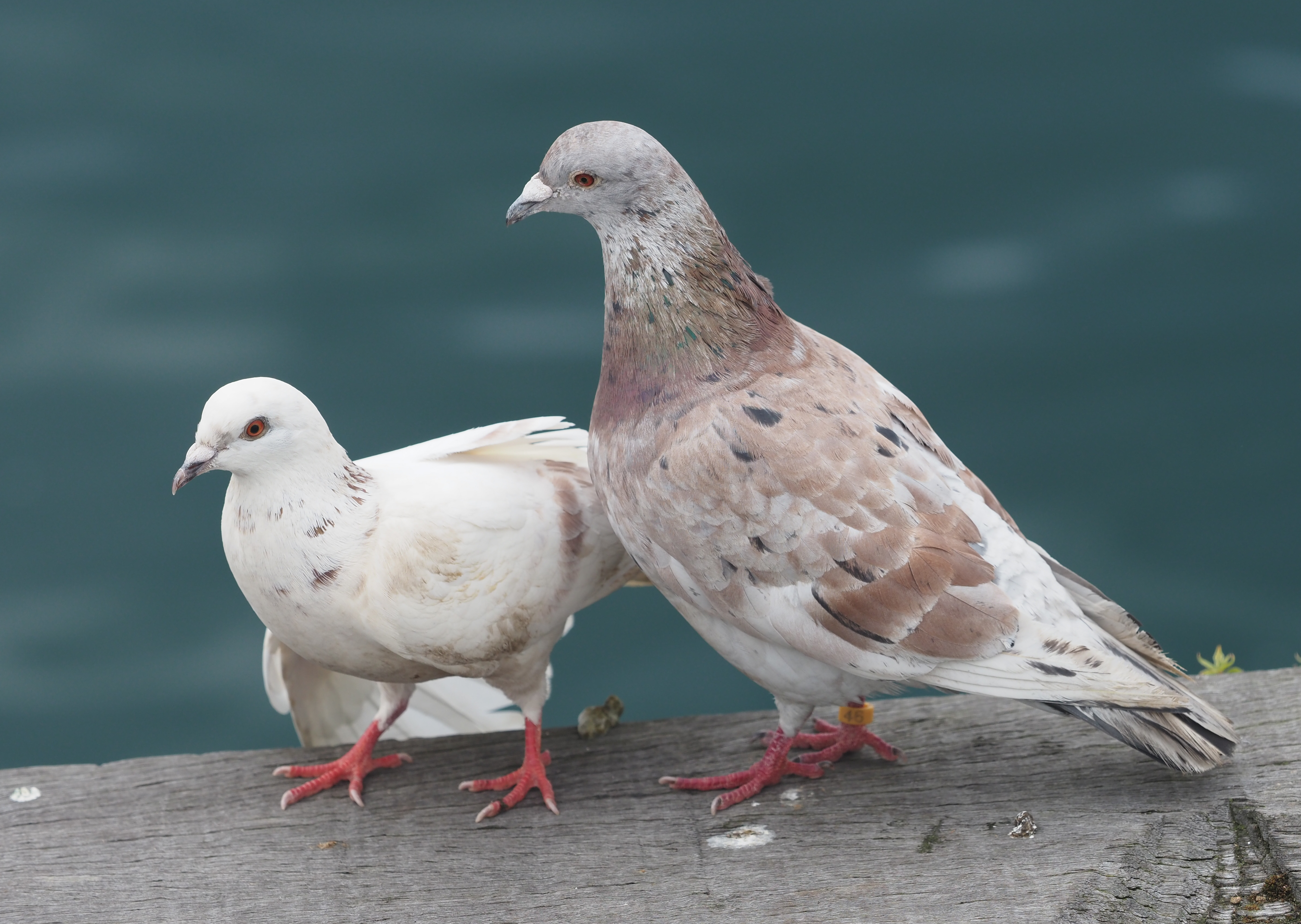
Their pair bond usually lasts for life, although this can be relatively short in feral pigeons: three years or so. During this time they frequently engage in mutual preening and kissing! This is not an exchange of saliva as in humans, but rather, is a ritualised form of feeding.
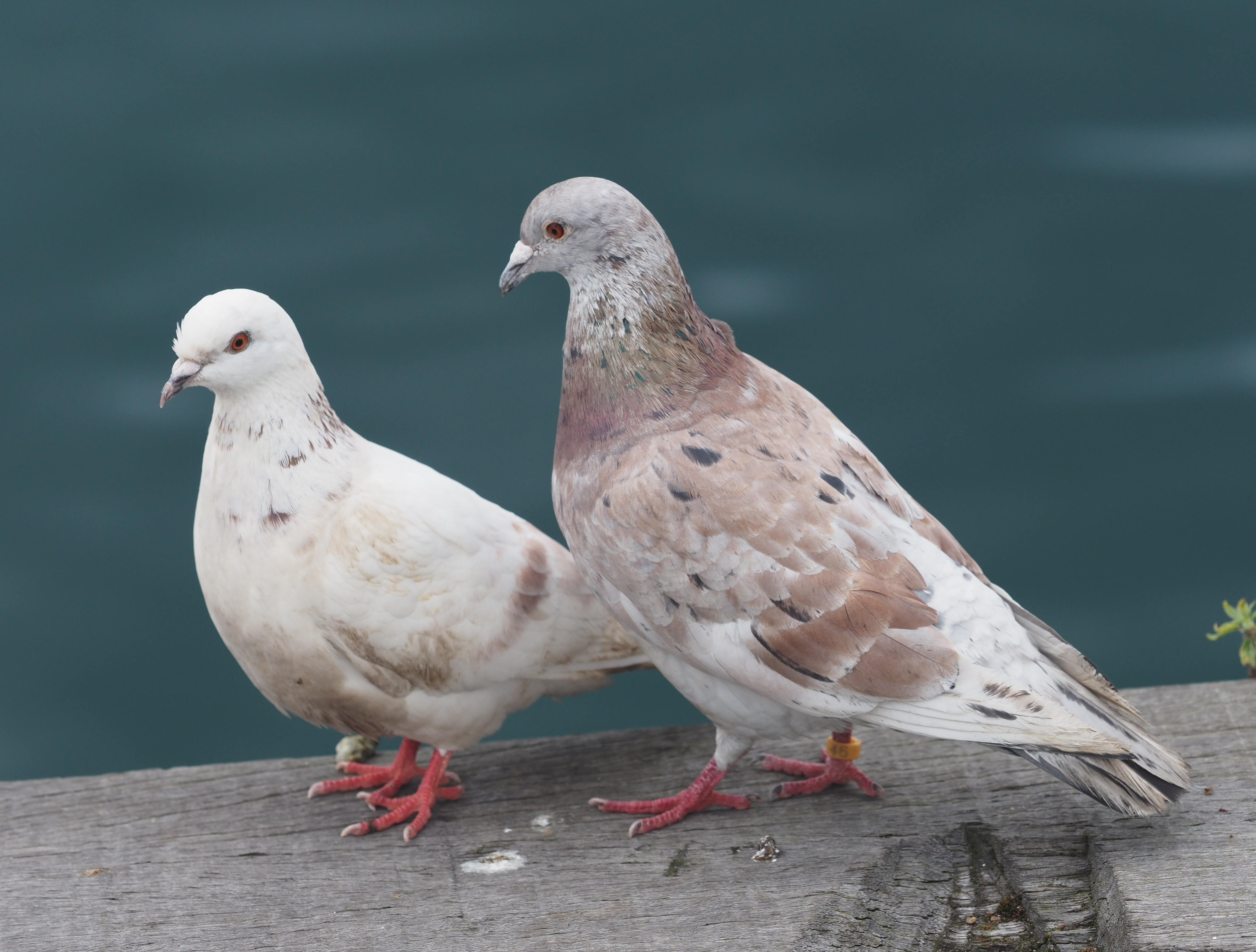
I watched (and photographed) a pair of pigeons engaging in a brief spell of ‘kissing’. They seemed to be a well-established pair as the male did not carry out the usual series of head bobs and spins. They remained close to each other and were, I suppose, just engaging in some pair-bonding. Perhaps pigeons simply enjoy kissing each other, like we do?
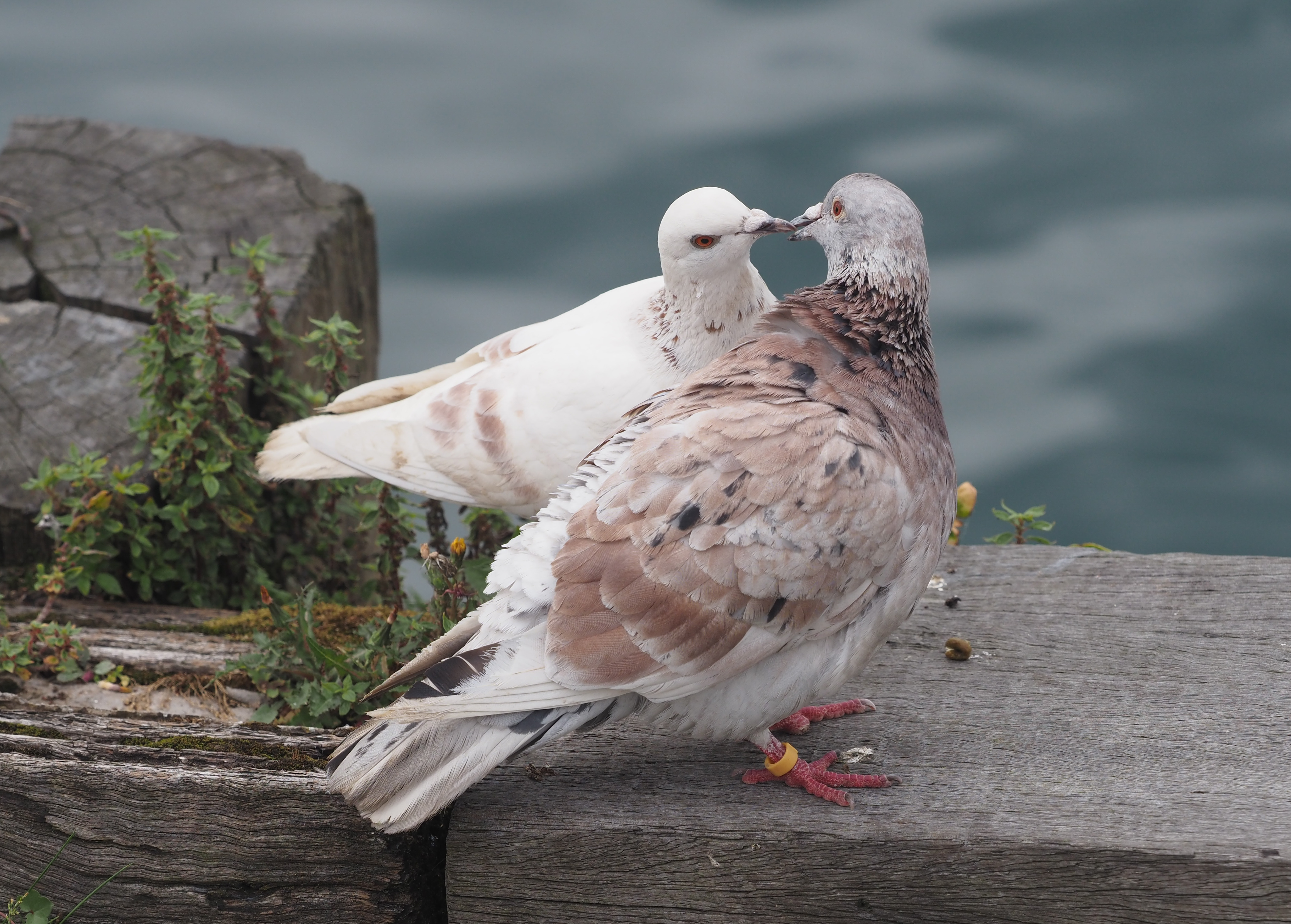
After fluttering her wings, the female pecks the side of the male’s beak (below).
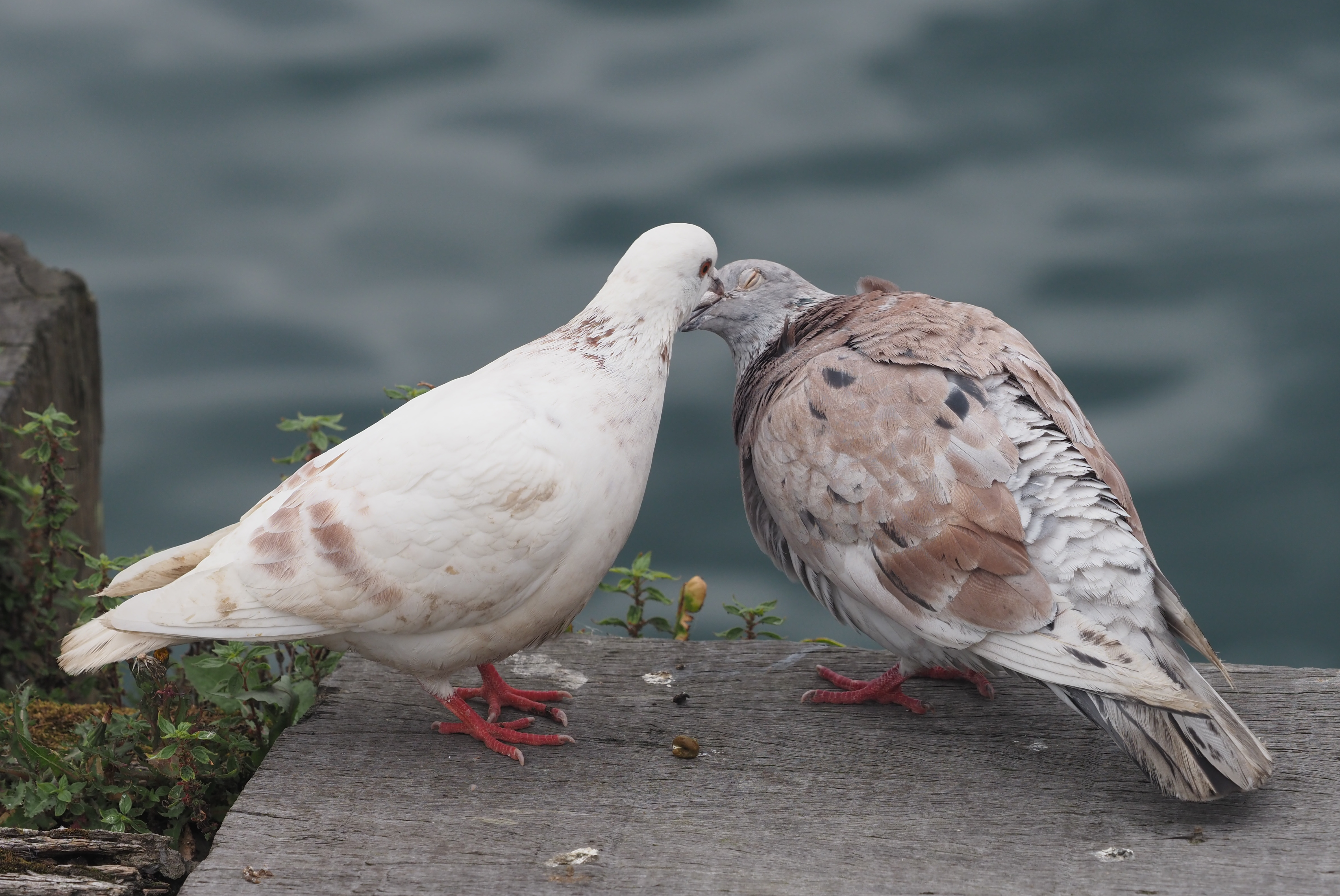
The male then presents an open beak into which the female inserts hers (below).
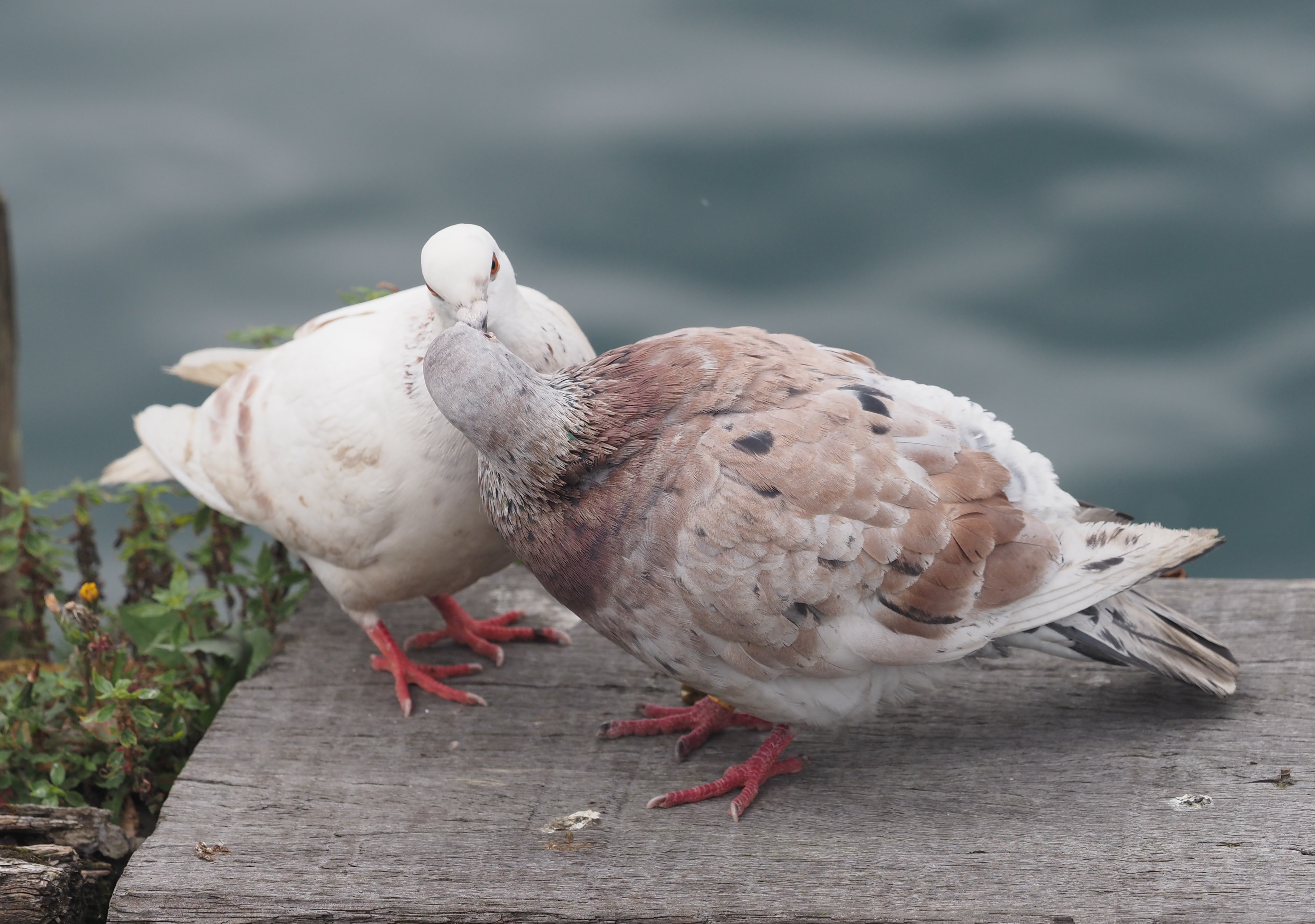
The male offers his beak and they rub their beaks together (also called ‘billing‘). Sometimes, one bird thrusts its bill deep into the gape of another (see here).
Kissing is presumably a ritualised form of feeding. The male pigeon offers food to the female – real or imaginary – as a form of pair bonding. [N.B. there are some references on the Internet to the female feeding the male, but this is not the case].
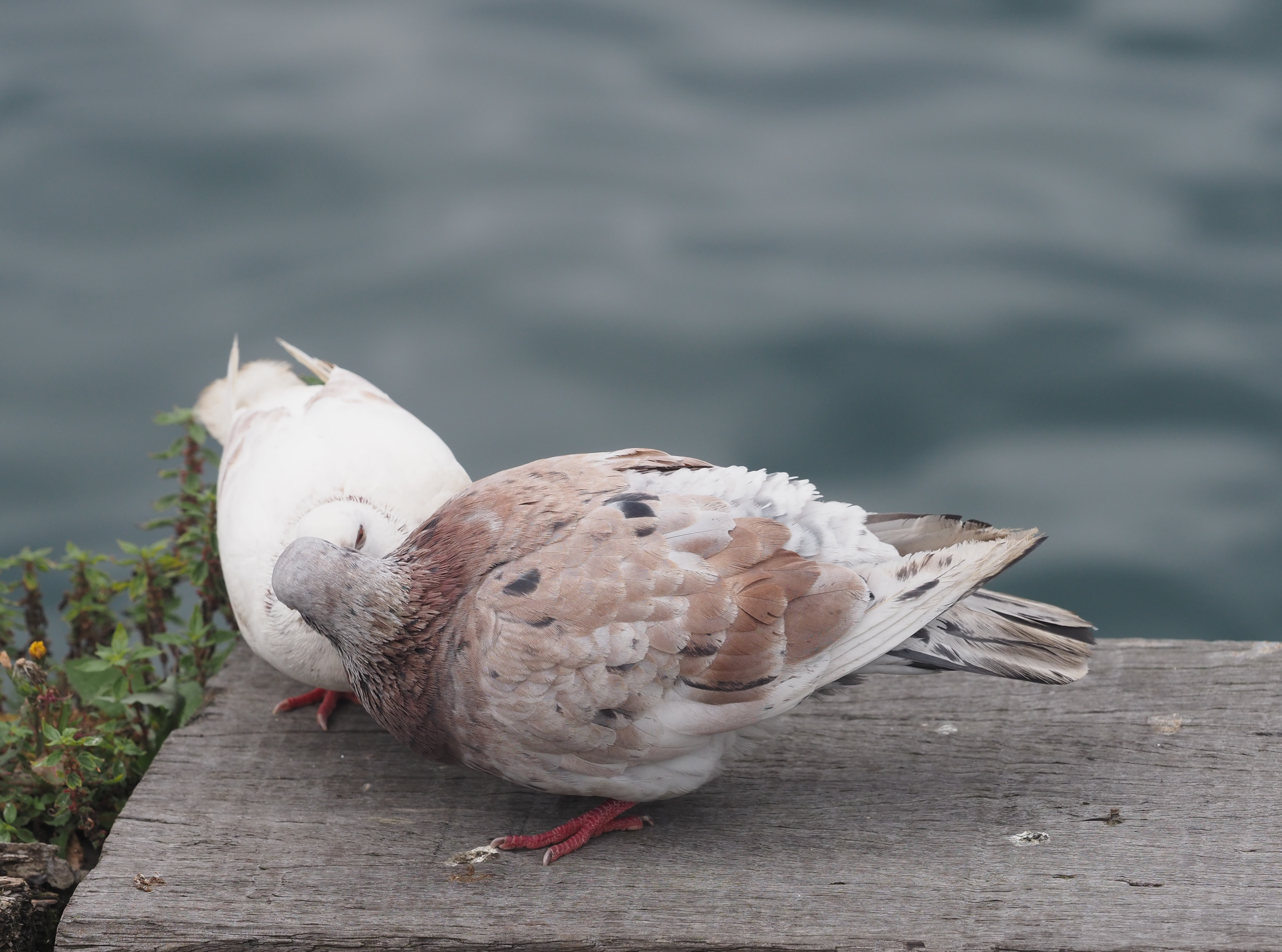
The female usually approaches the male and inserts her beak into the left side base of his beak as described here.
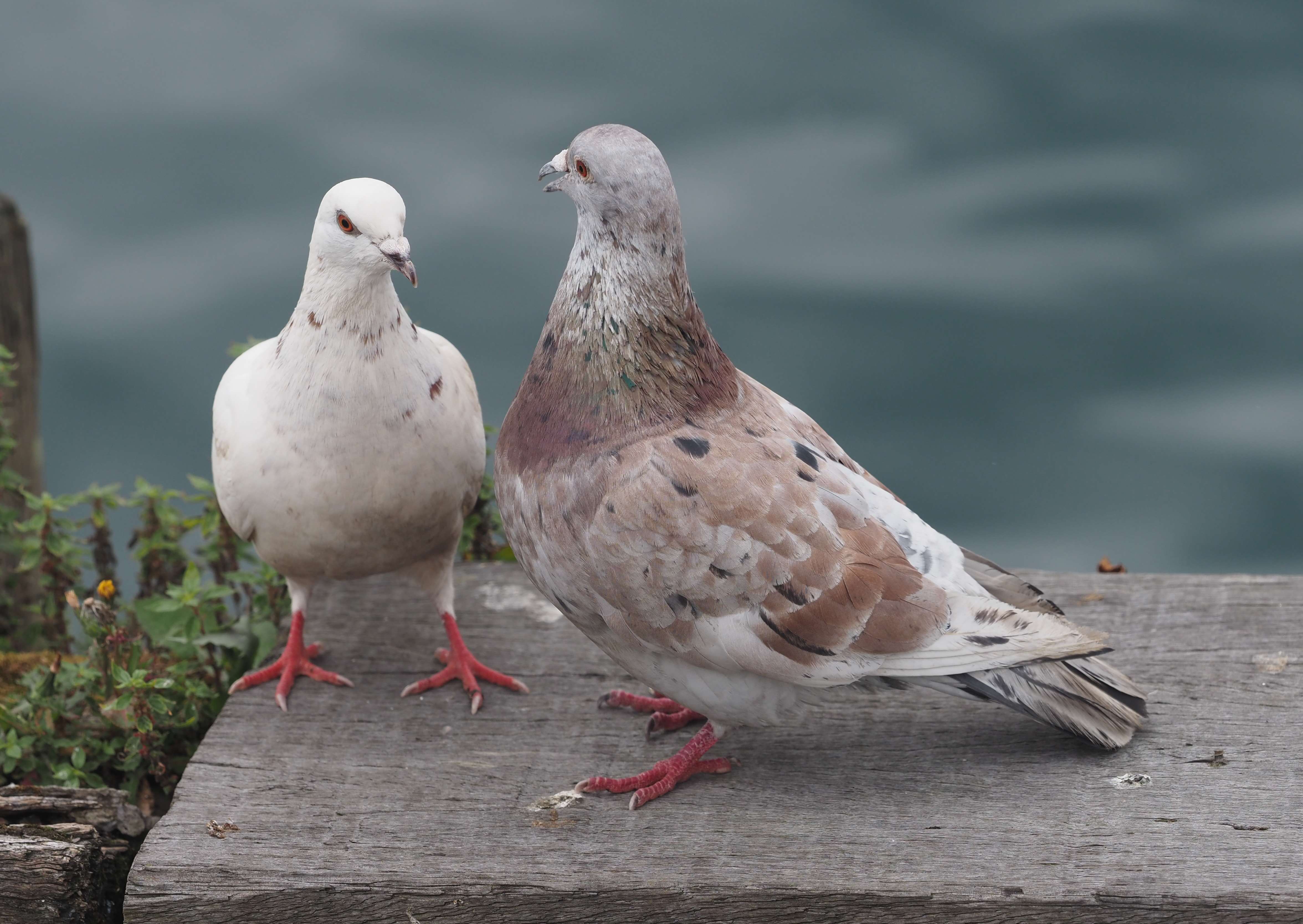
Pigeons are affectionate and social creatures that engage in a host of behaviours – bowing, strutting, cooing, preening billing (kissing) and so on – which are fun to watch. I think we are lucky to have them in and around our towns and organisations.
 Ray Cannon's nature notes
Well observed and well photographed, Ray. Thanks for sharing!
I couldn’t agree more; I can’t understand why so many people hate pigeons. 😢