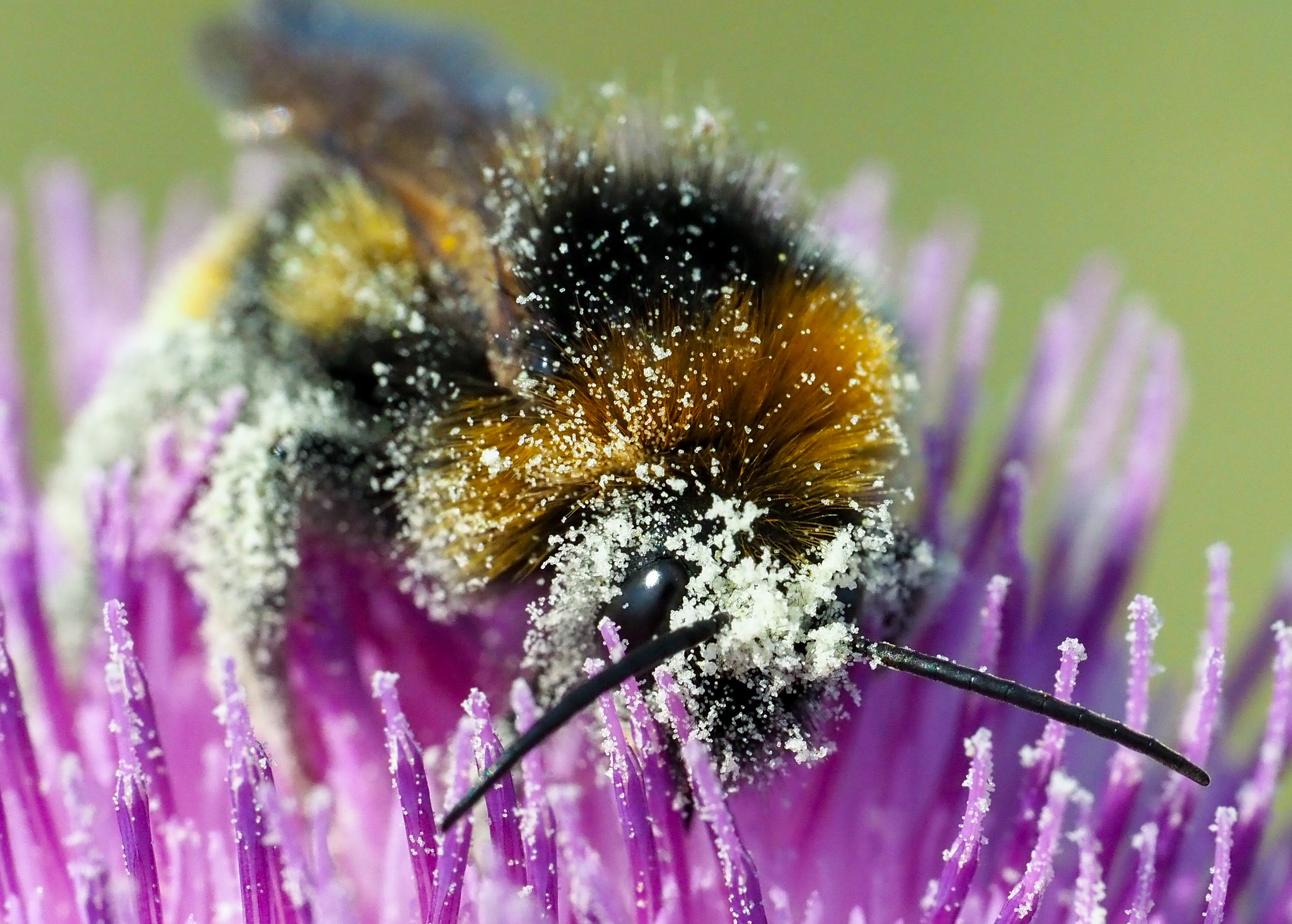
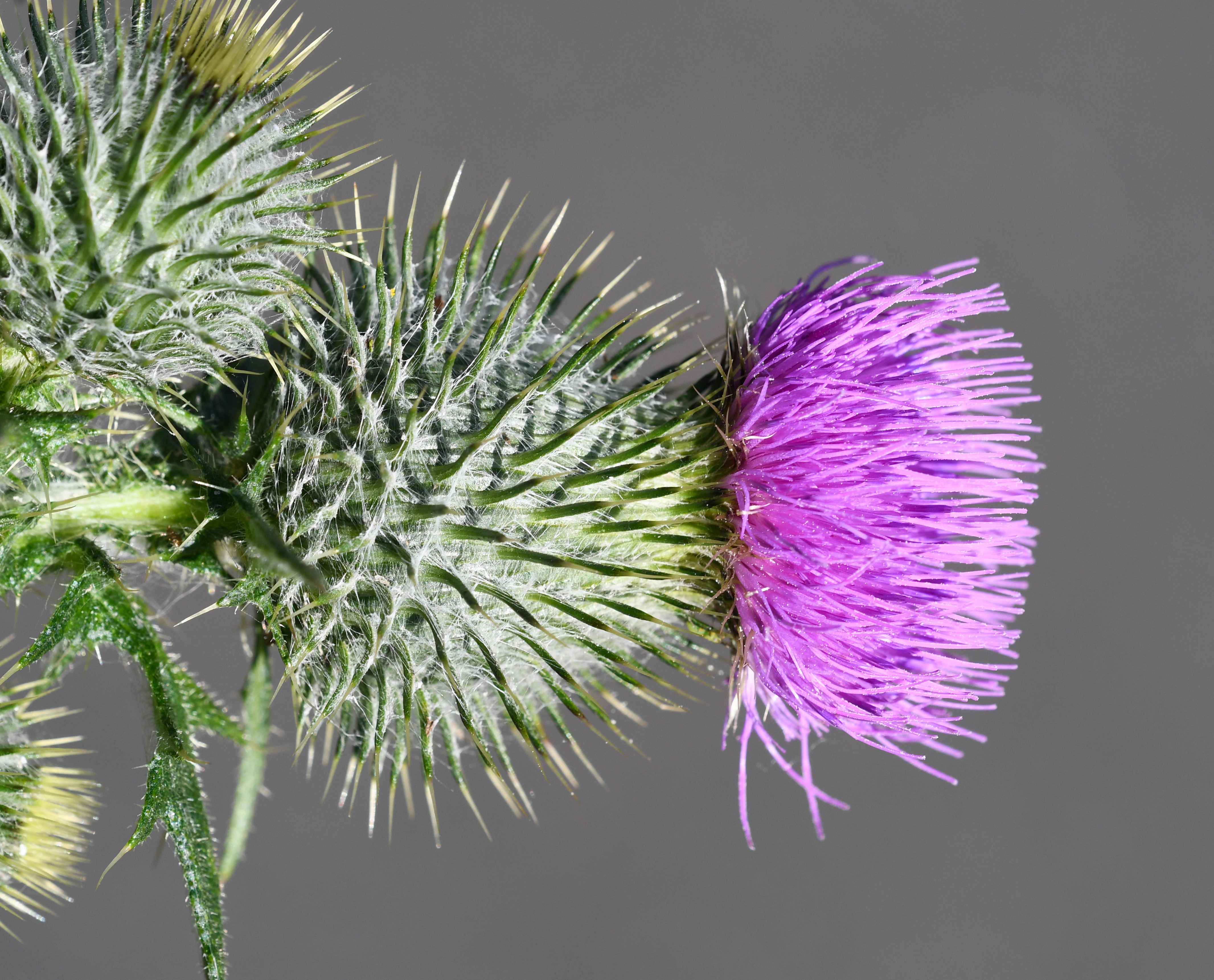
Bumblebees love thistle flowers, or rather we should say thistle inflorescences, as the thistle flower head is composed of many small, narrow tube-shaped flowers (florets) surrounded by a whorl of bracts called phyllaries.
Pollen and nectar are essential resources for bumblebees but they vary greatly between flowering plant species in terms of their quality, quantity, and availability. For example, I was surprised to learn that nectar is often scarce, on a given flower, in the middle of the day, but relatively more abundant, early in the morning or later in the evening (Prys-Jones & Corbet, 2015). Luckily, bumblebees are early risers and can tolerate lower temperatures with their woolly coats! Whether an individual bumblebee gets up early and goes to bed late, I can’t tell you!
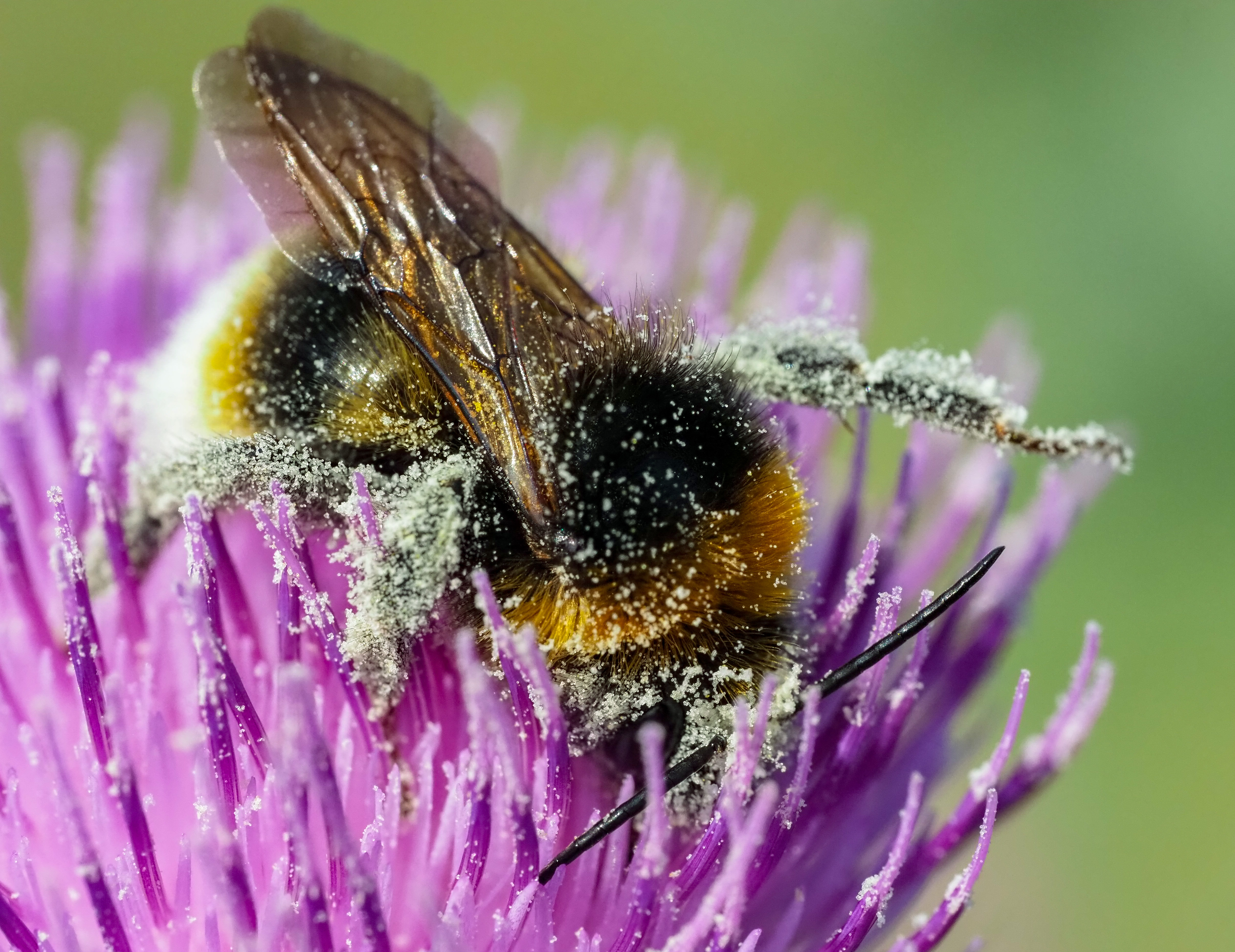
Sometimes a bumblebee will collect only pollen, but more often it collects pollen and nectar, together. Pollen is the primary source of proteins and lipids for bees, but the concentrations of these nutrients vary widely in the pollen of different plants, so bumblebees have to be relatively selective in how they collect pollen. Fortunately, they can assess the nutritional quality of pollen based on chemotactile cues: touch and taste.
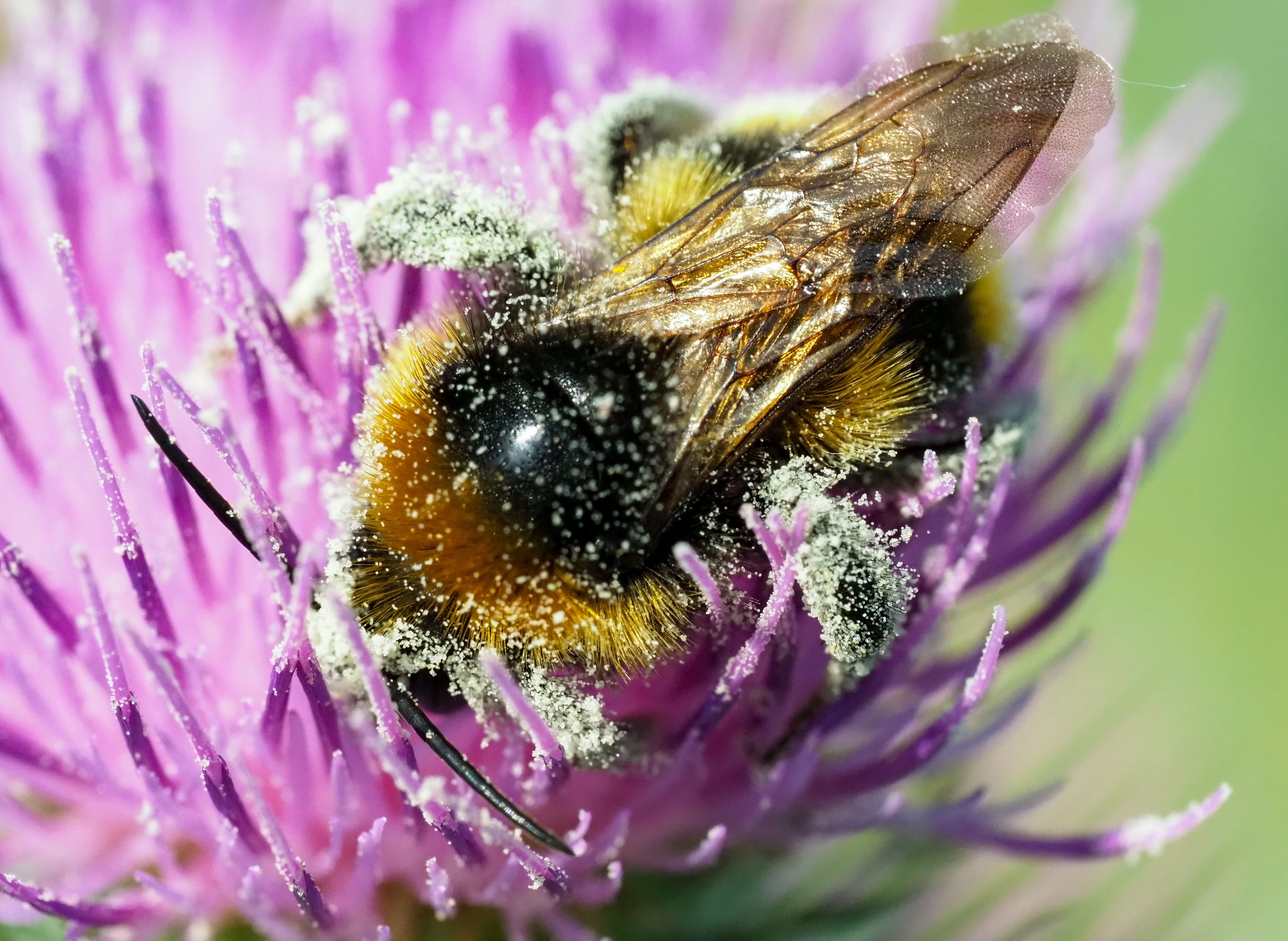
Bumblebees soon learn which are the most profitable flowers to visit, in terms of both nectar and pollen rewards. Individual bees become experienced in finding the best flowers for them and often make repeated visits to a same type of flower.
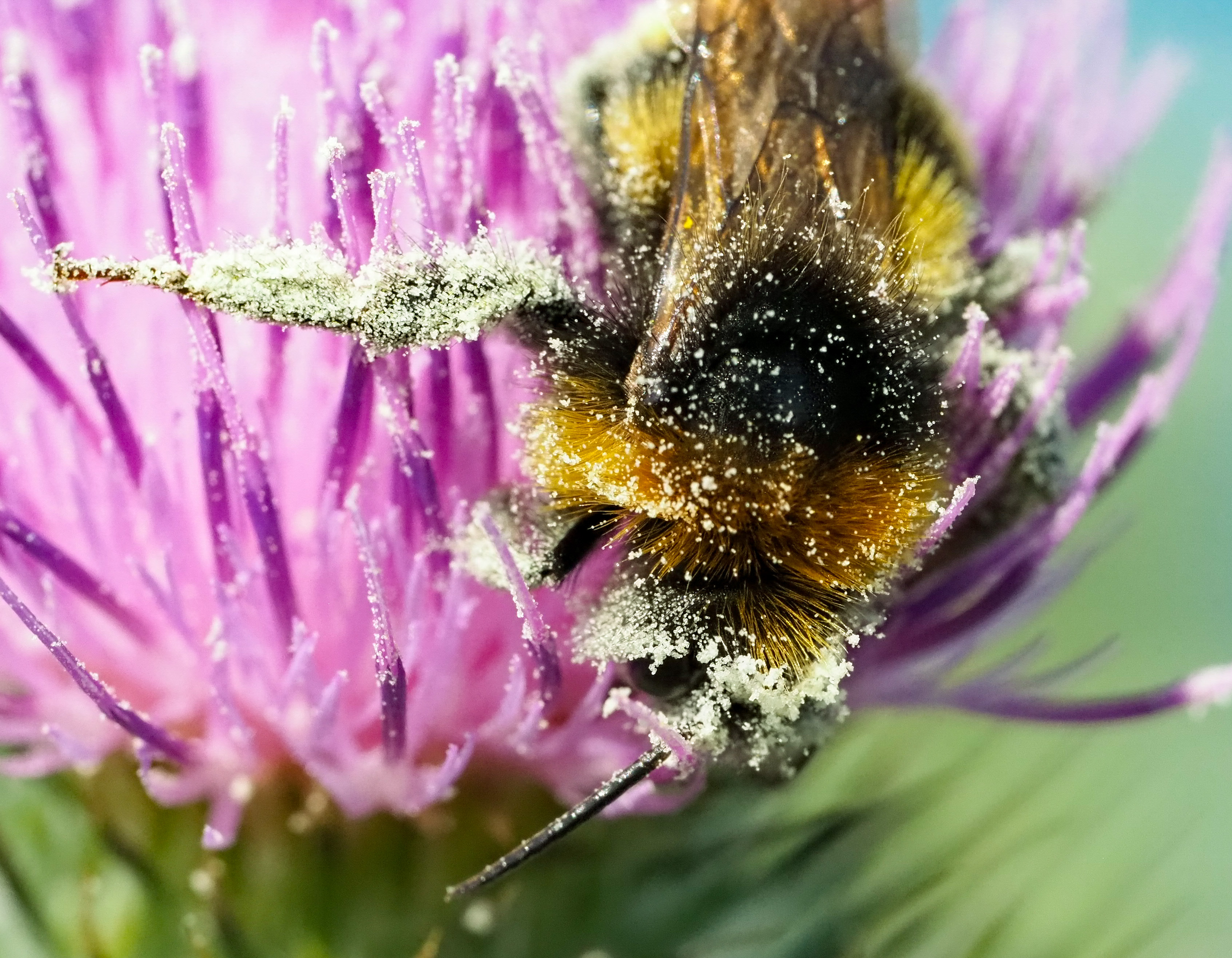
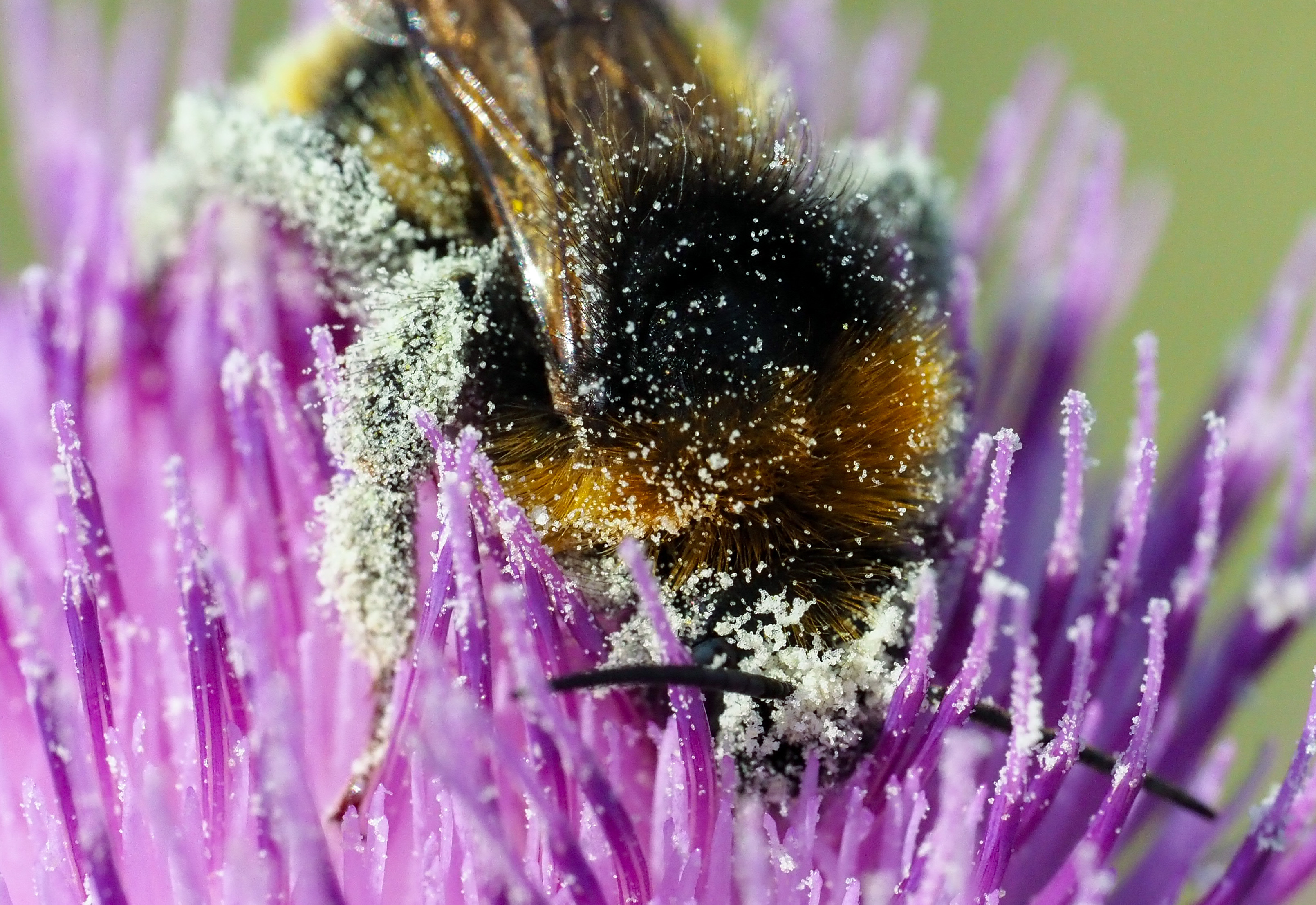
Bumblebees often exhibit a distinct preference for thistle flowers. I followed one individual bumblebee as she went about her work collecting nectar and pollen on a particular thistle head. I was surprised that she remained on the same flower head for so long: over five minutes. At first, I though that this must be because of how much nectar was available on this single inflorescence. However, after reading the excellent book on bumblebees (Naturalists Handbook #6) by Prys-Jones and Corbet, I realised that her lingering for so long on this flower head might be because there was so little nectar available? I’m not sure. Perhaps it just takes the bee a little time to probe each and every floret, and some of the florets may have been recently emptied by other bees?
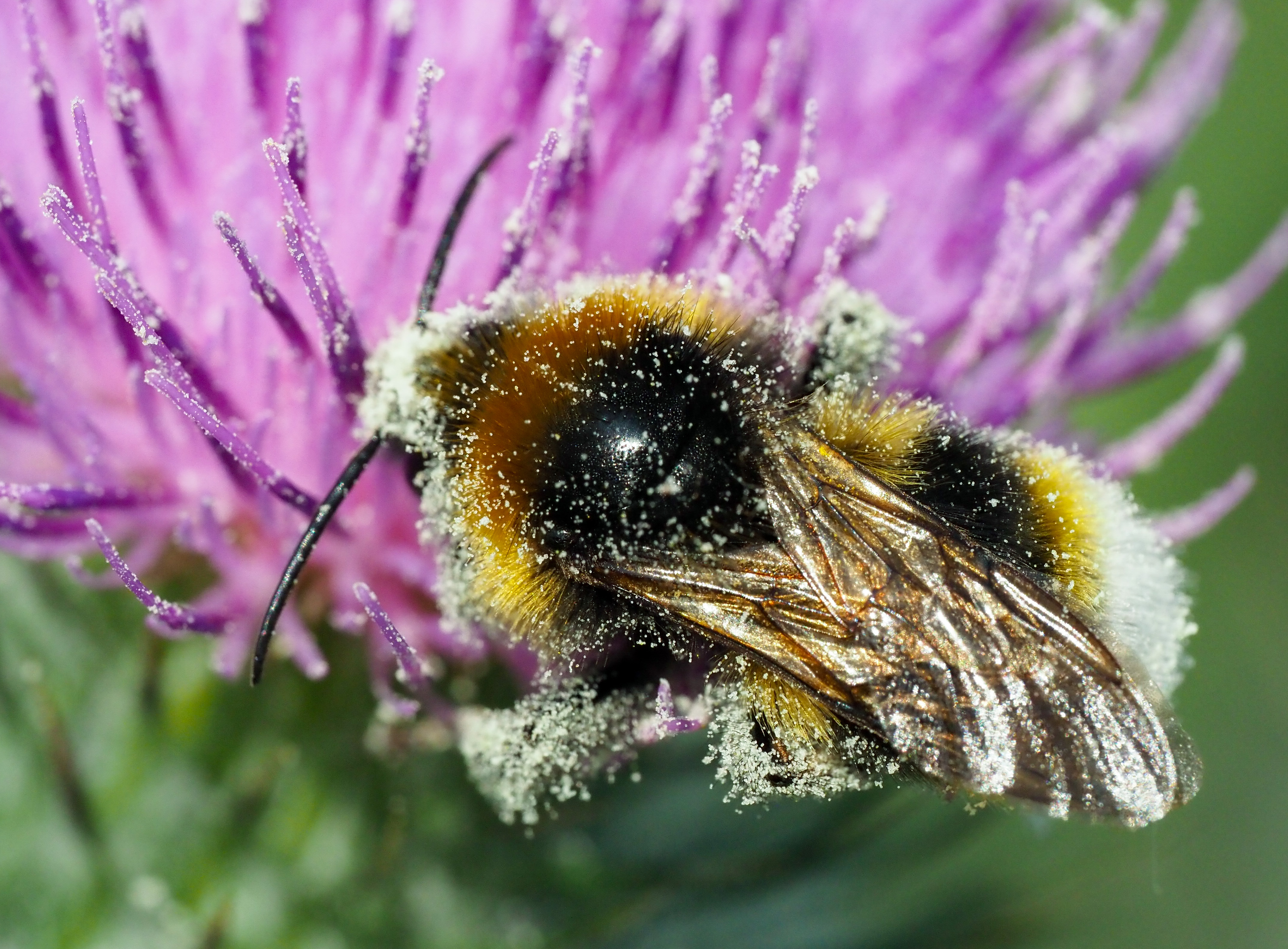
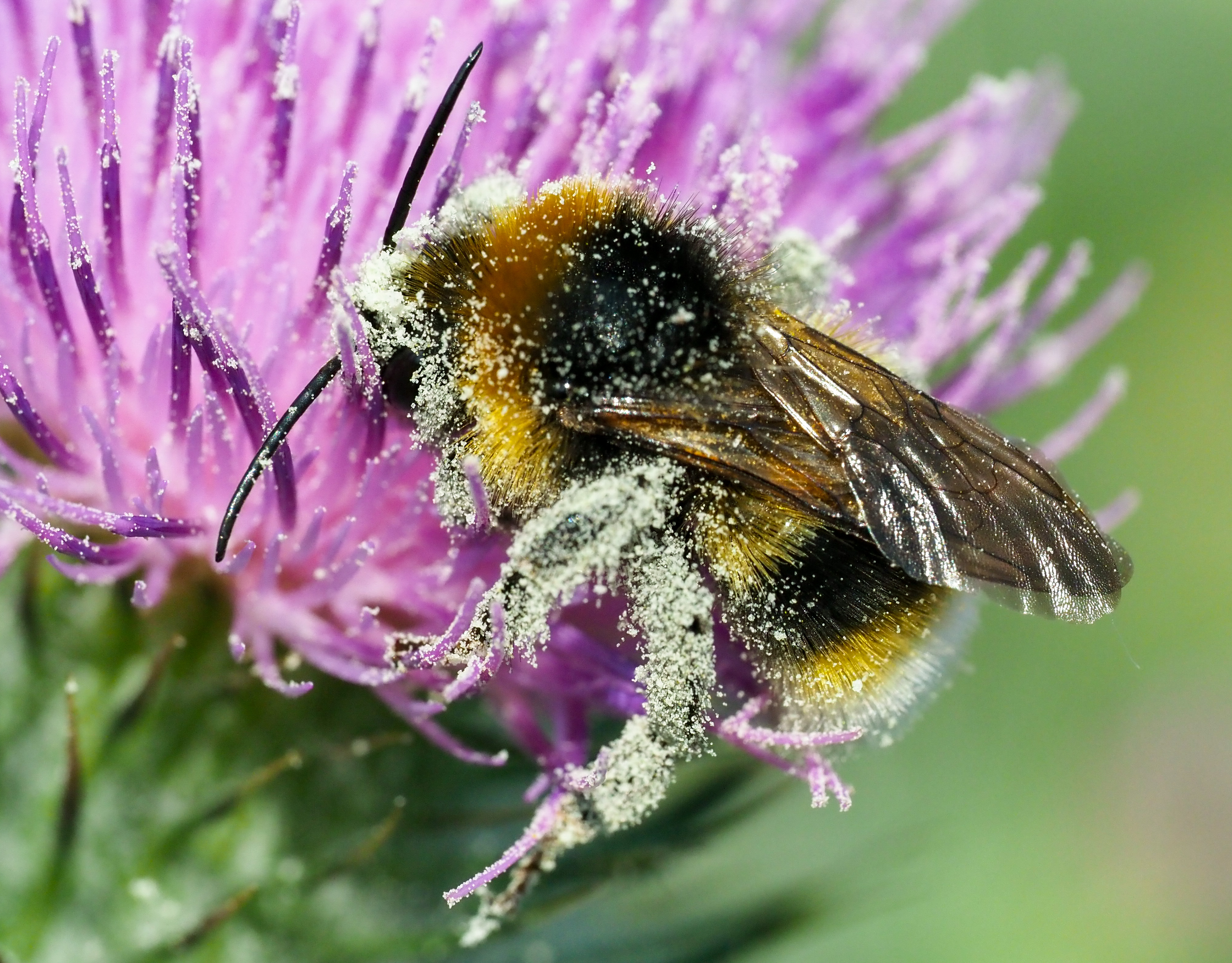
Although, bees can tell whether another bee has visited that flower, by the scents they leave, they may not know how much nectar has been taken on an inflorescence packed full of many individual florets, as is the case with thistles?
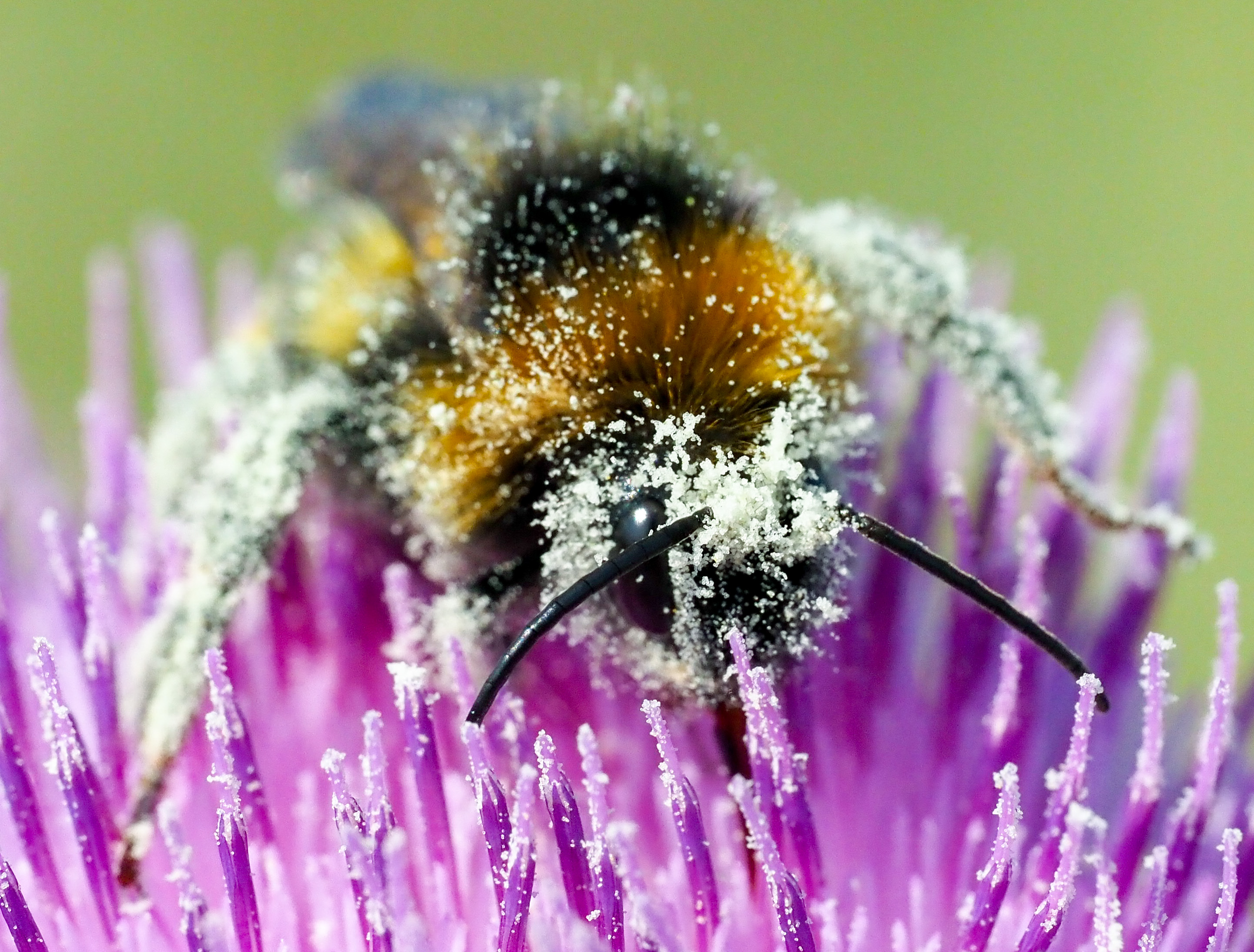
The bodies of pollen-collecting bumblebees will get coated with grains which can be groomed off later. Similarly, her honey stomach gradually gets filled up with nectar as she is foraging and when it is full she must return to the nest, which can be a considerable distance away, with her loads of pollen and nectar.
References
Muth, F., Francis, J. S., & Leonard, A. S. (2016). Bees use the taste of pollen to determine which flowers to visit. Biology Letters, 12(7), 20160356.
Prys-Jones, O. E., & Corbet, S. A. (2015). Bumblebees (Vol. 6). Pelagic Publishing Ltd.
 Ray Cannon's nature notes
Thank you for this absorbing post. I have always loved bumblebees, but your post made me realize how little I know about them. By the way, the bumblebees in our garden like thistles too—and lavender as well. 💙🐝💜
What a wonderful series of photos of this bee, covered with a wealth of pollen. Made me smile through your whole post!
How nice! Thank you very much.😁