Teasels are one of the best known and easily identifiable plants in the countryside, whether it be their pink flowering inflorescences in summer or their spiky, egg-shaped, brown seed heads in the winter (below).
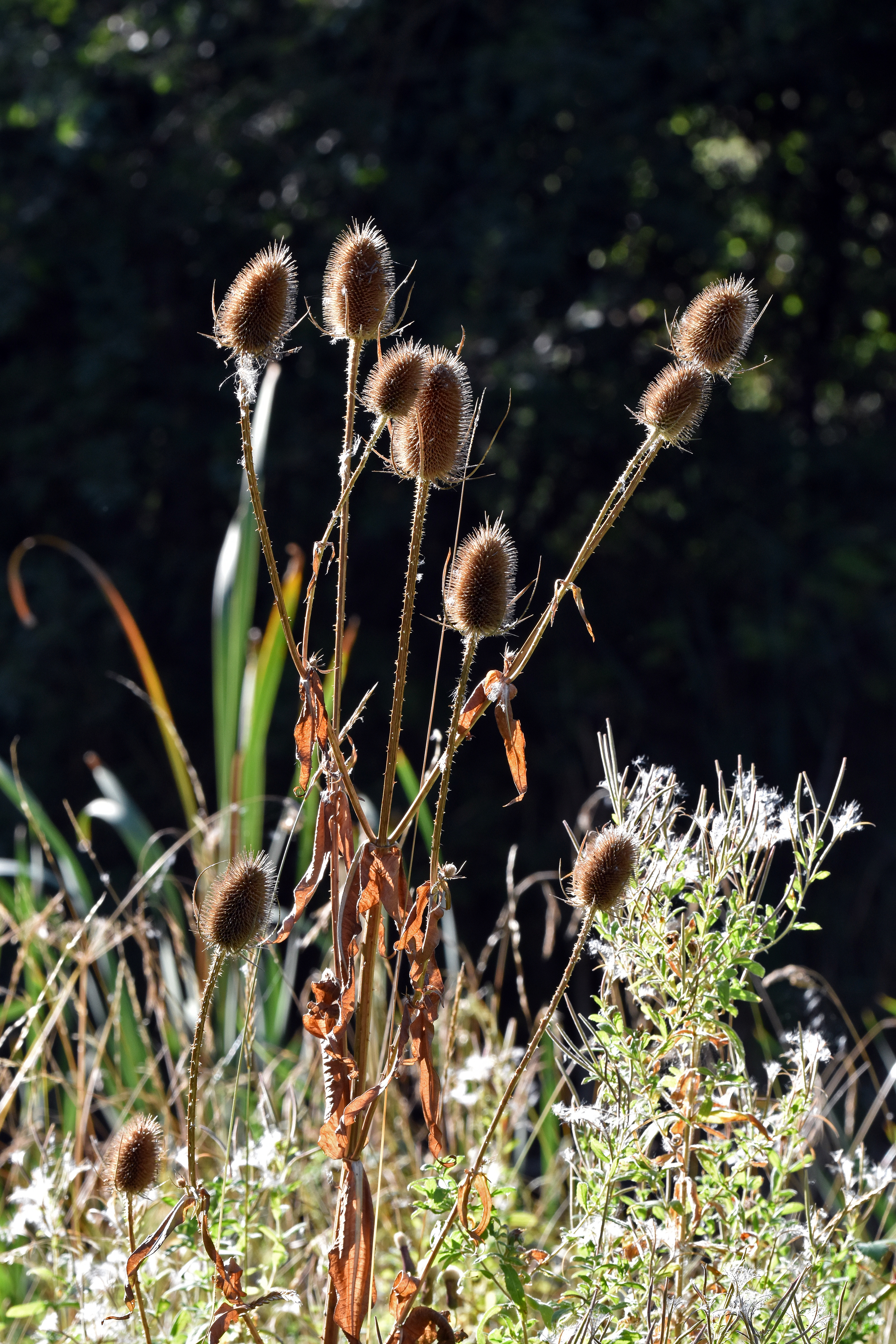
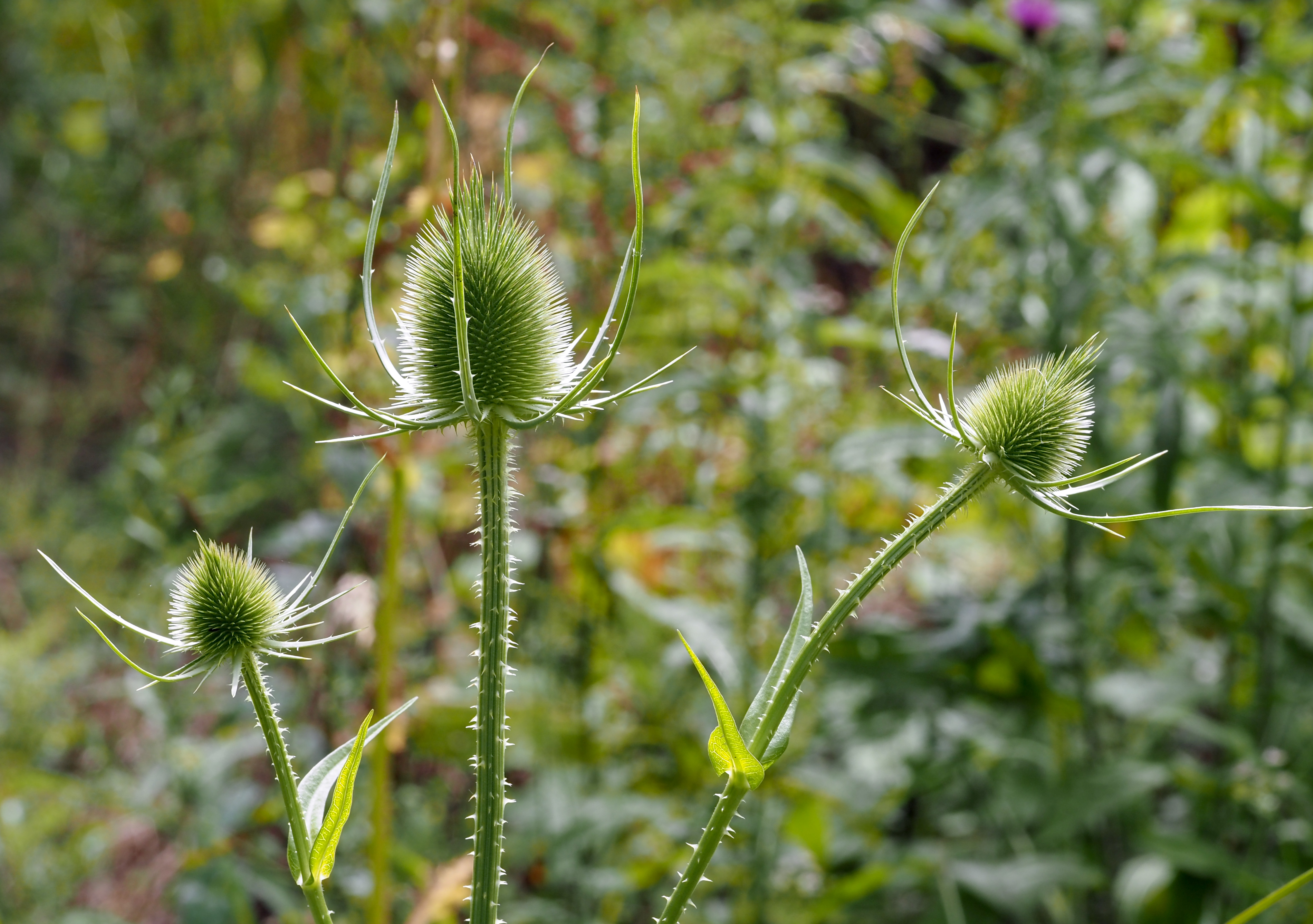
Teasels (Dipsacus fullonum L.) are biennial plants which produce a broad-leaved rosette in the first year of growth, followed by a tall flowering stalk in the second. The head is surrounded by a number of spiny bracts (see below), in these green, spiny heads before flowering.
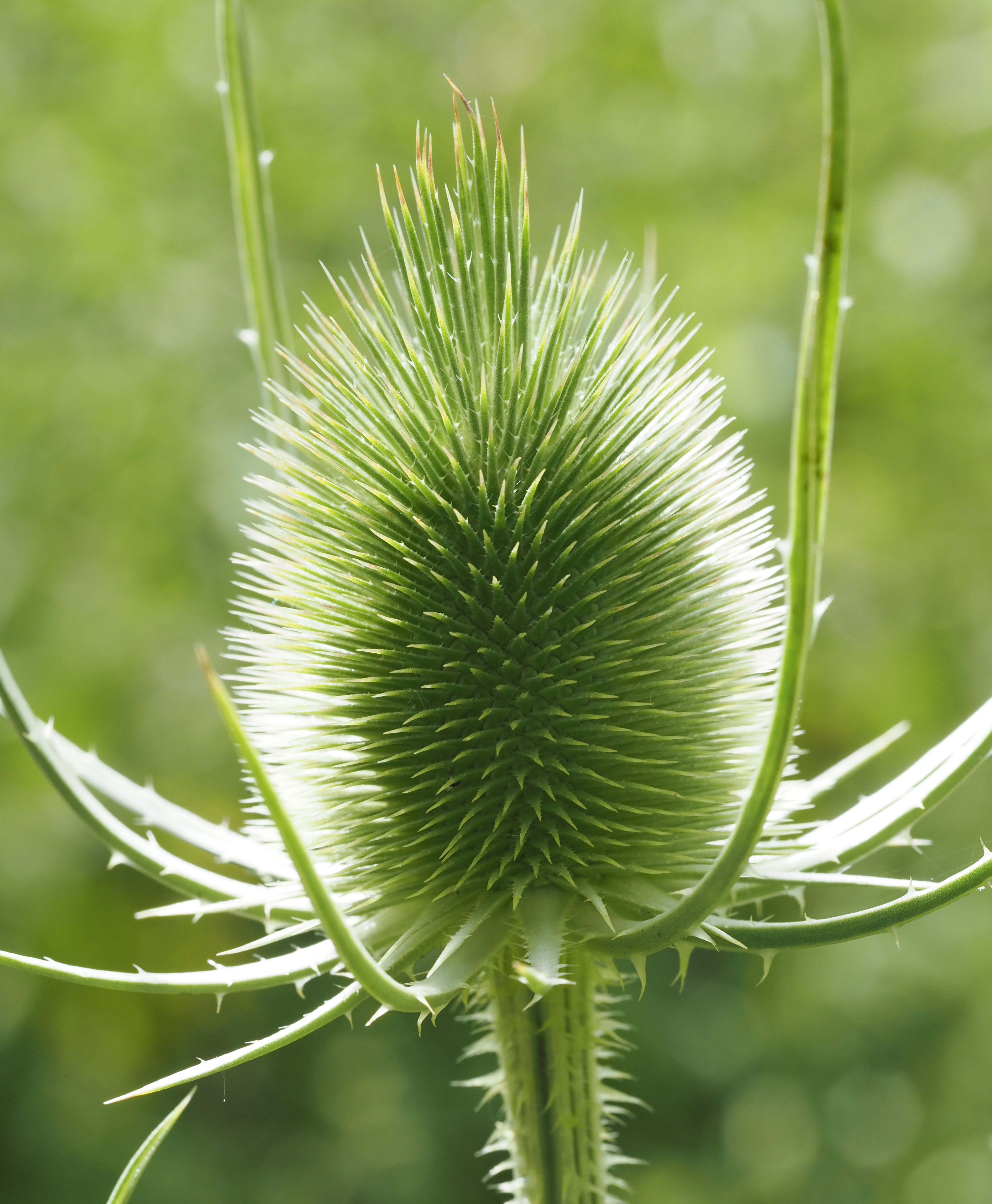
The flowers in the ‘middle’ of the head are the first to open (see below). The flowers begin to open in a belt around the middle of the inflorescence and the sequence of opening then spreads both upwards and downwards, forming two narrow belts of fresh flowers. A bidirectional flowering sequence.
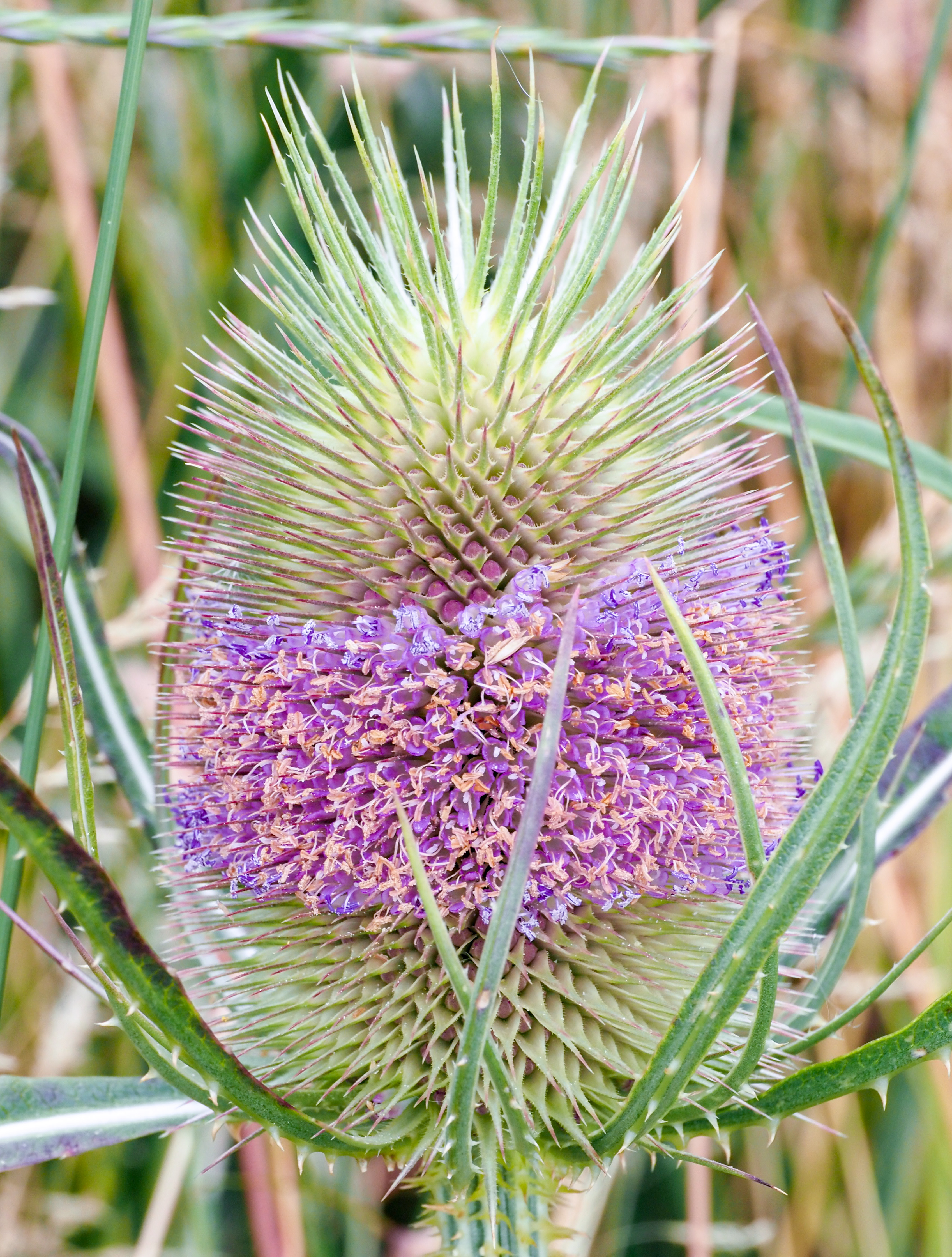
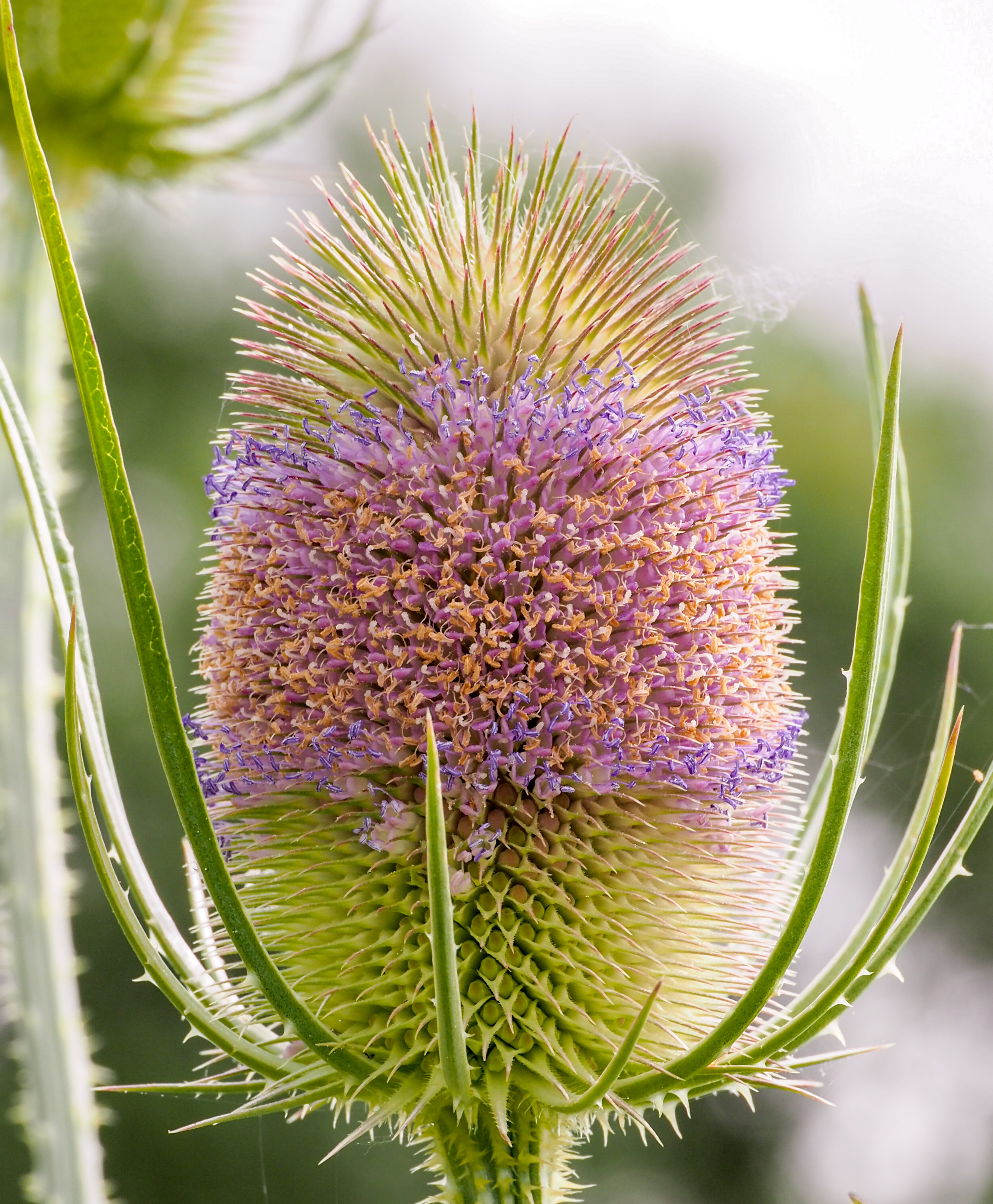
The sequence is illustrated in the following series of photos of different plants, at different stages of flowering, even though taken on the same day in July. Two rings of open flowers in effect, ‘migrate’ towards the poles – top and bottom – of the head over subsequent days.
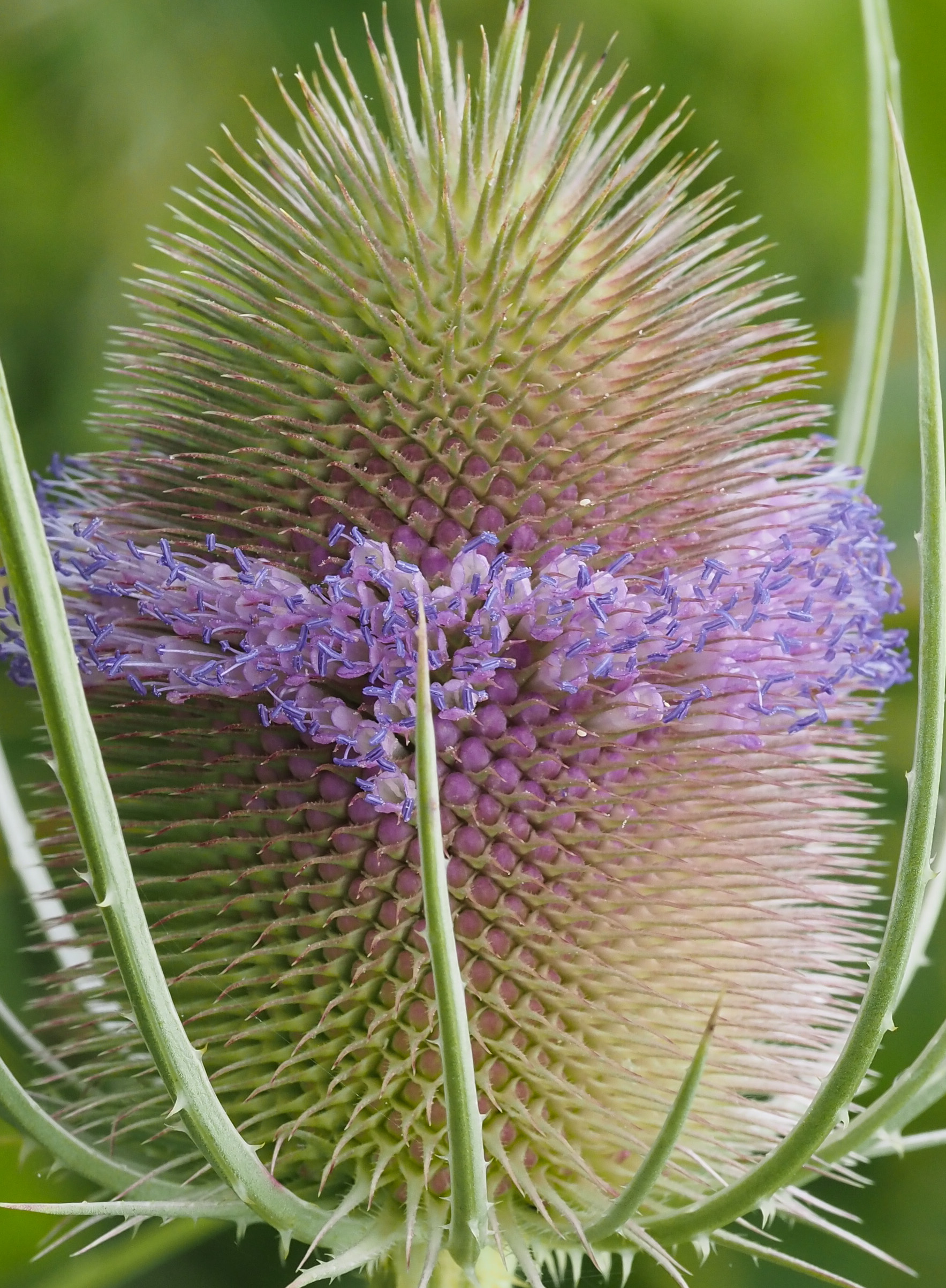
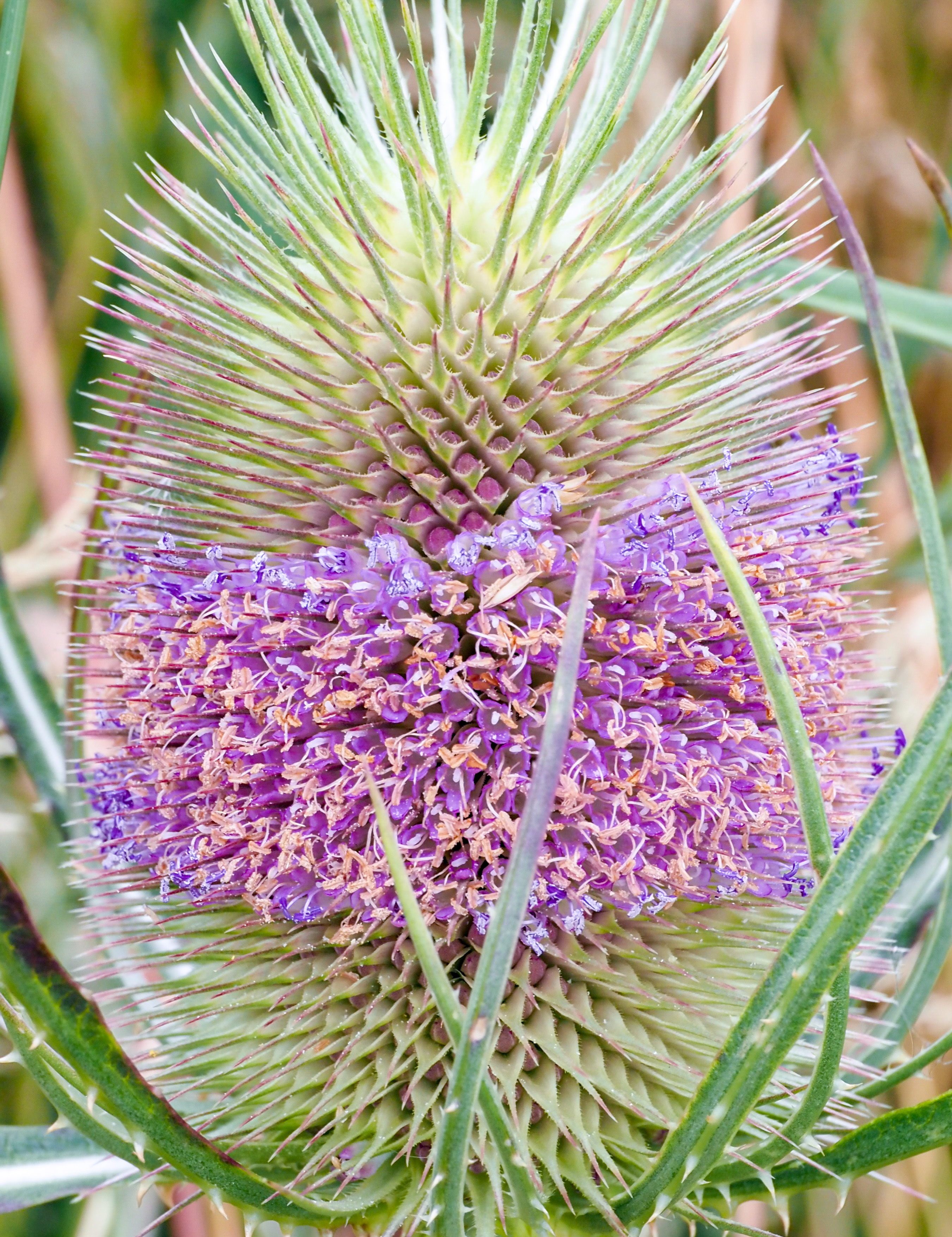
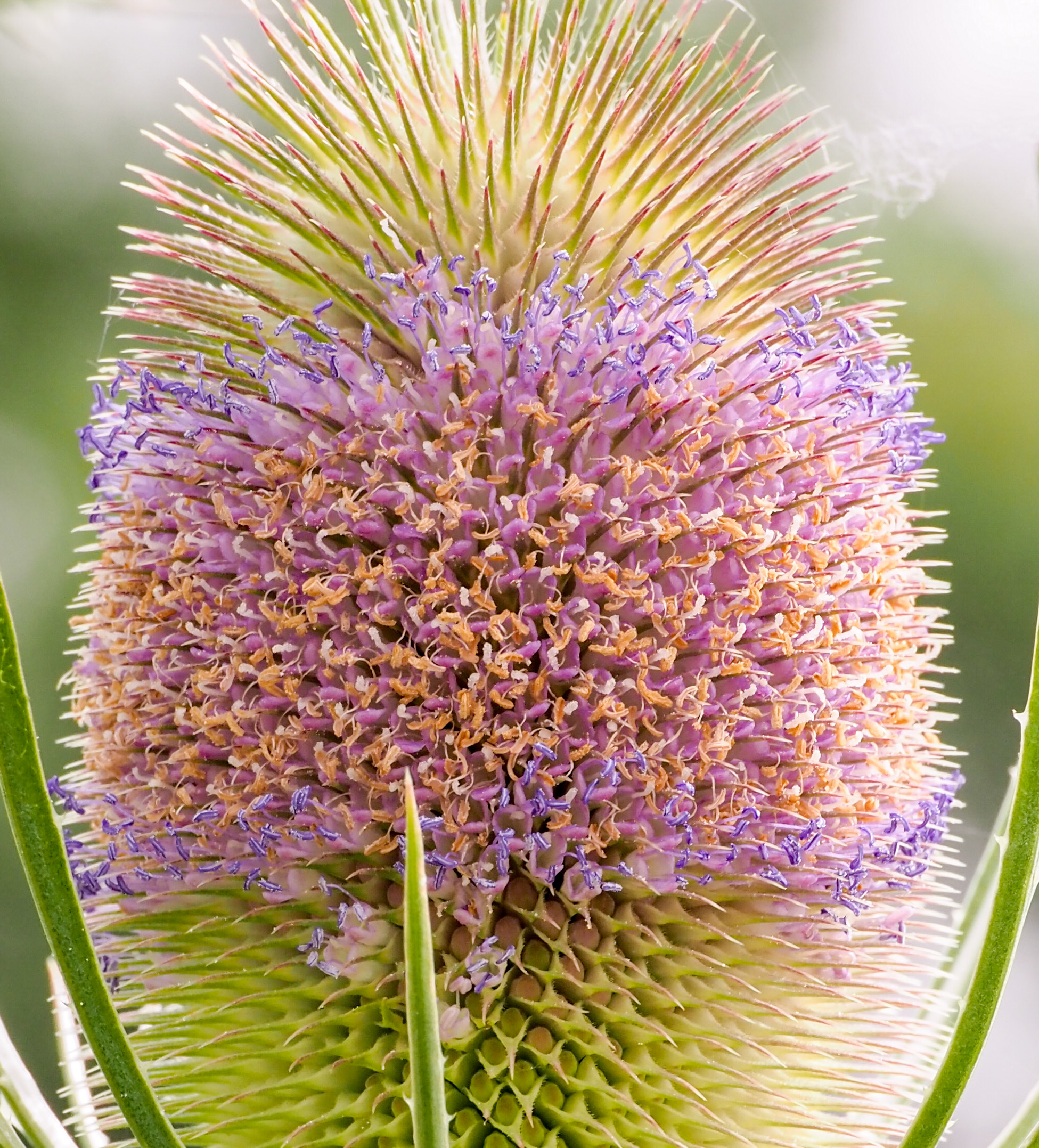
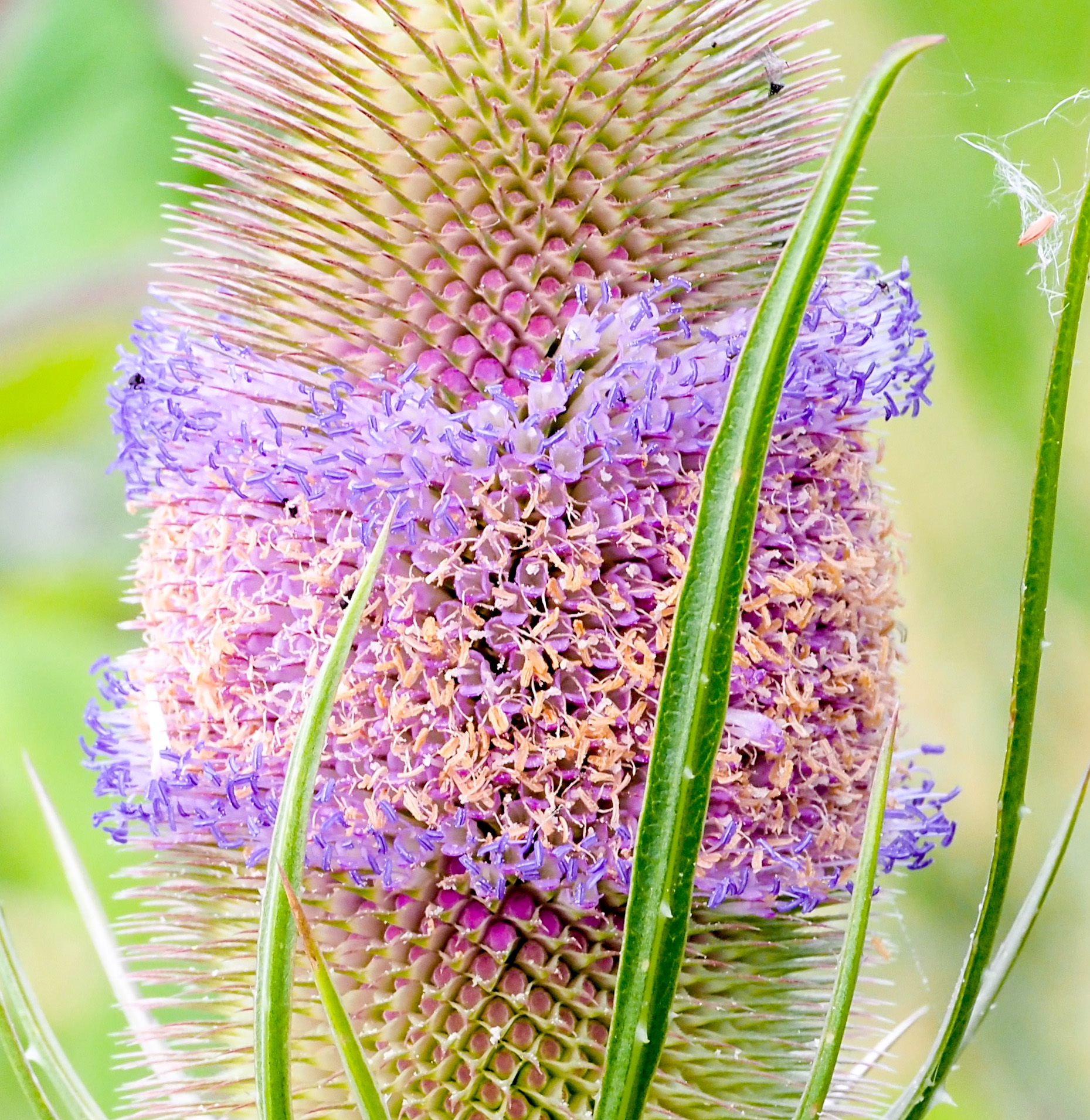
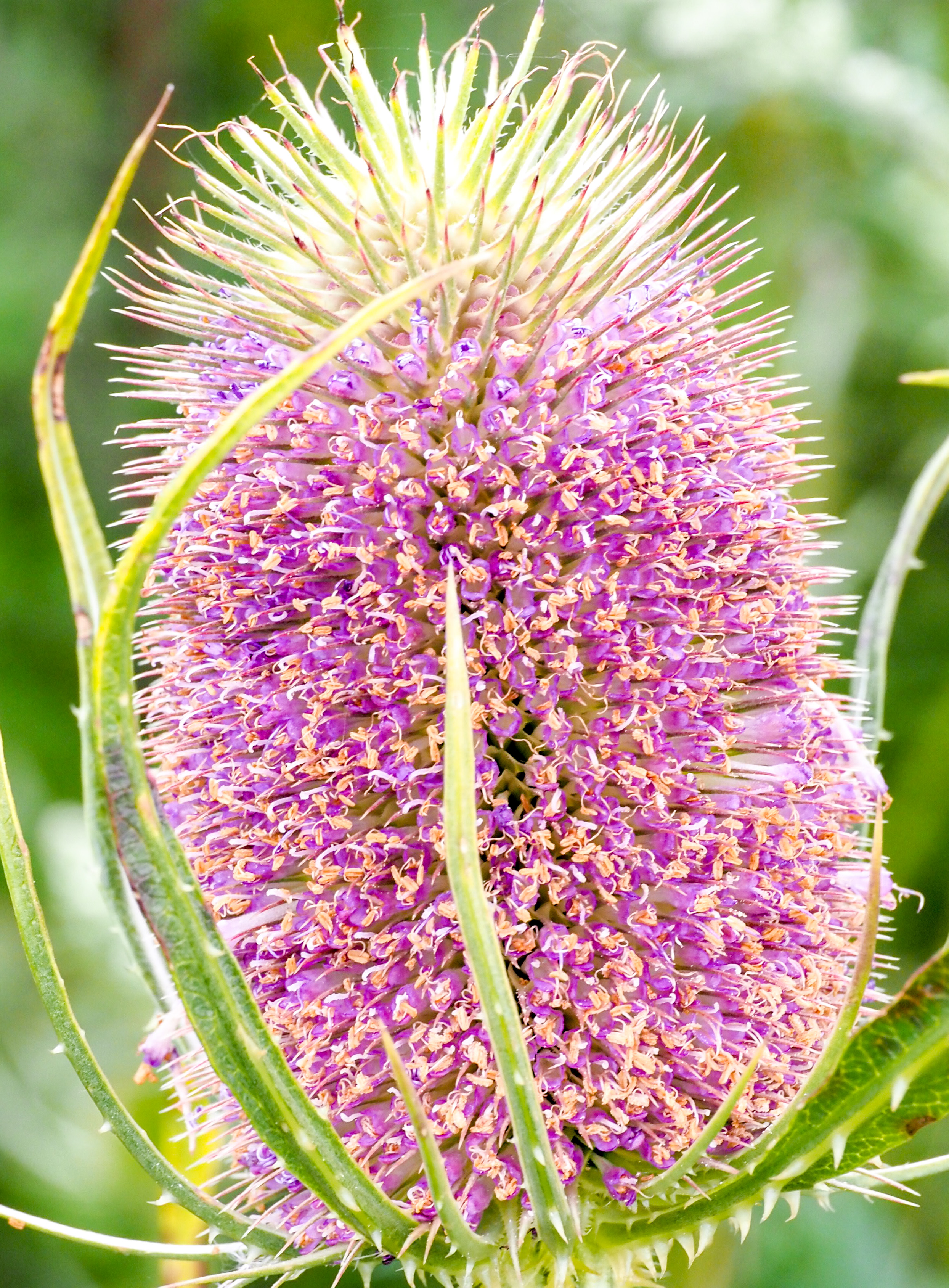
The extent to which the older flowers in the middle of the flower head get blown or rubbed off, obviously depends of the location and circumstances of each individual plant. The flowering occurs throughout July and August in England, and one can usually find a patch of flowering teasels, attended by grateful pollinators during this period.
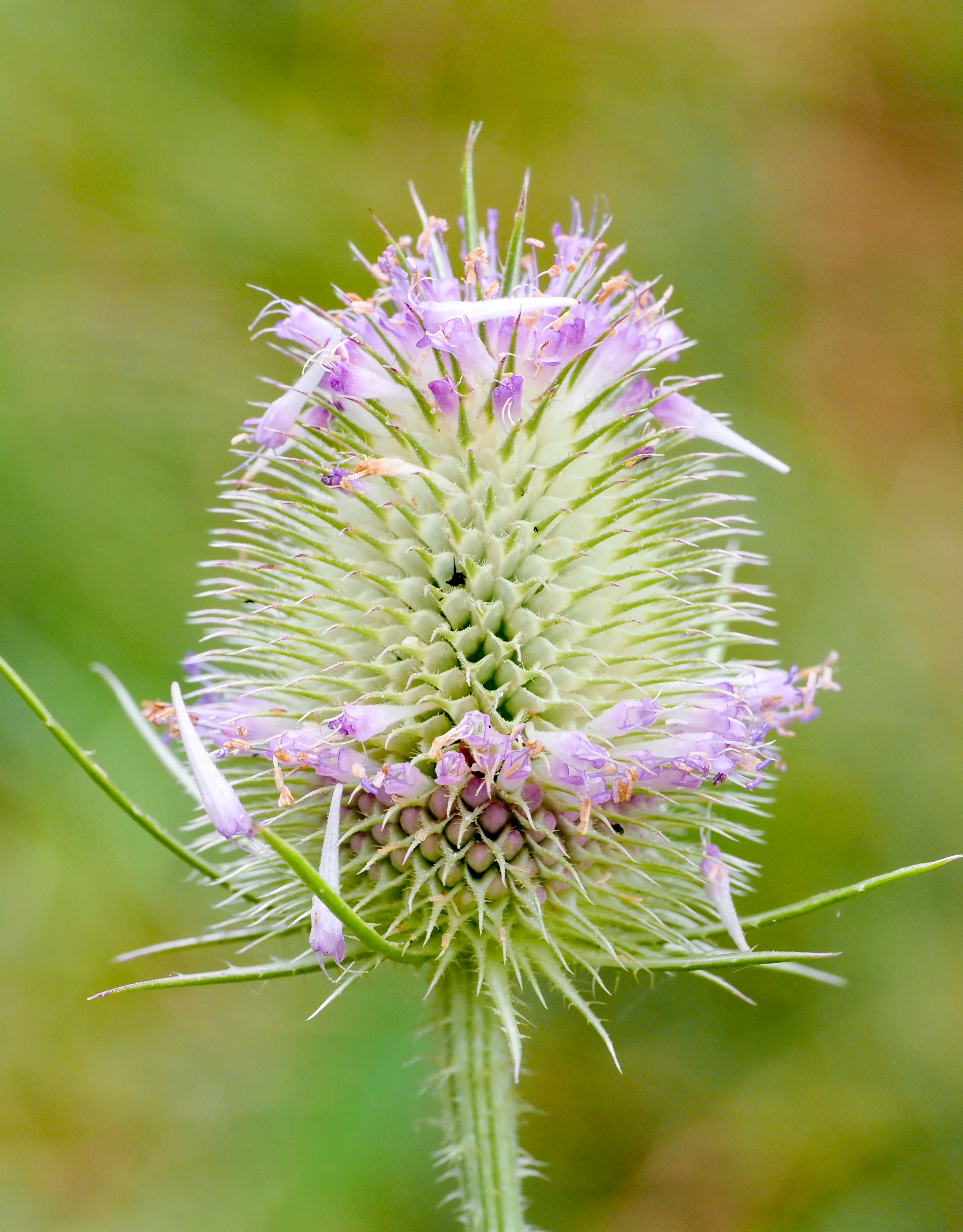
For those who might want to understand the biology behind this remarkable process, there is a paper explaining how it all unfolds during development: Naghiloo, S., & Classen-Bockhoff, R. (2017). Understanding the unique flowering sequence in Dipsacus fullonum: Evidence from geometrical changes during head development. PLoS One, 12(3), e0174091.
Link to paper:
https://journals.plos.org/plosone/article/file?id=10.1371/journal.pone.0174091&type=printable
 Ray Cannon's nature notes
Hi Ray, Very interesting – as usual! We’ve got some in the garden this year, grown from seed, very attractive and with some insects on them. Looking forward to see if the local goldfinches visit later to feed when the seeds ripe. BW Peter R
Nice to hear from you Peter.😀
Best wishes,
Ray
Fascinating, Ray. We’ve got them in our garden too. I was always wondering about the bidirectional flowering sequence. Thanks to the instructive paper I now understand the biology (and mathematics) behind this process.
Thank you Markus for commenting.😁