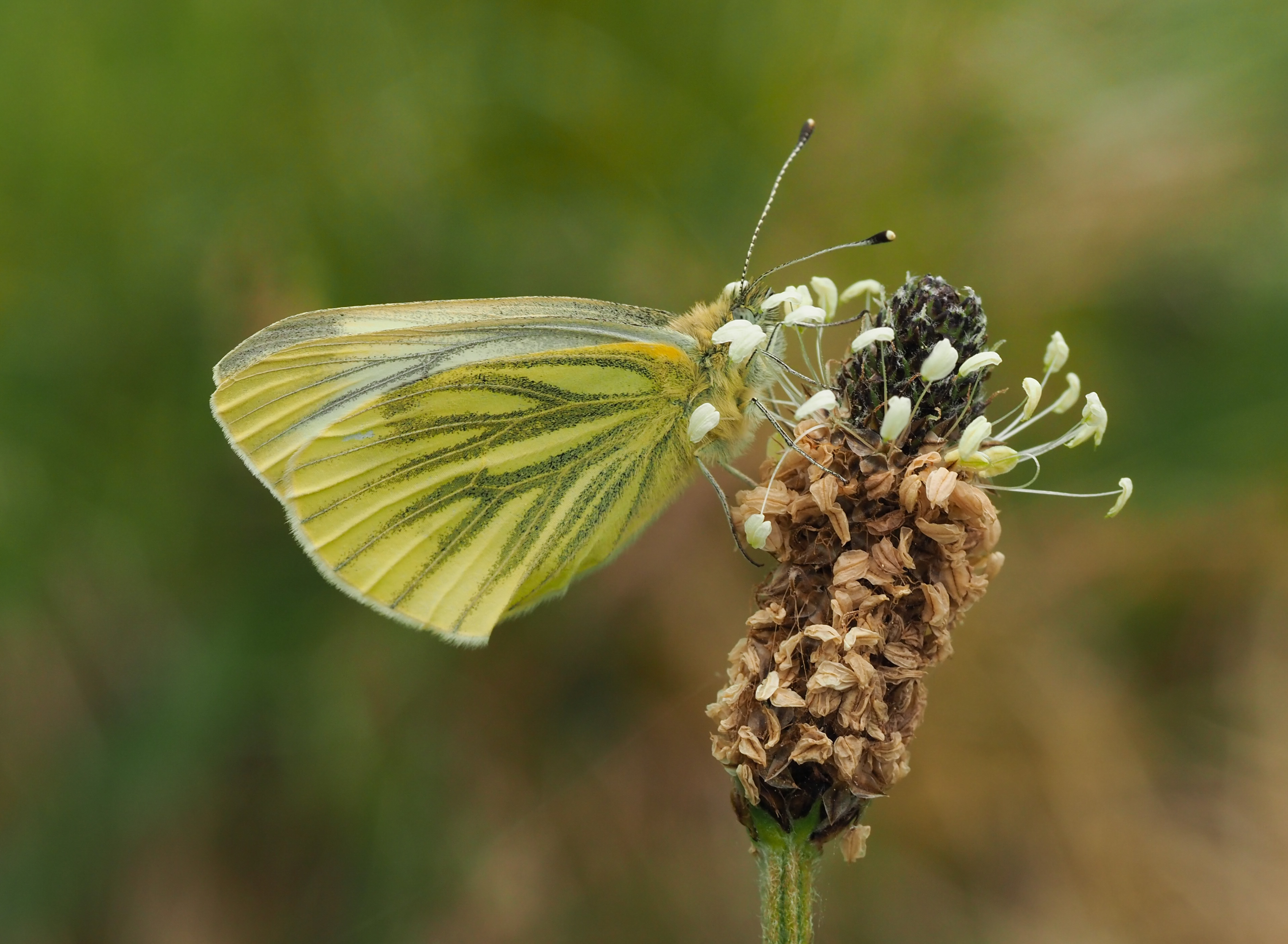
The Green-veined white (Pieris napi) is a beautiful butterfly with exquisite underwing markings, especially in newly-emerged individuals like this one I photographed in Scotland (shown below).
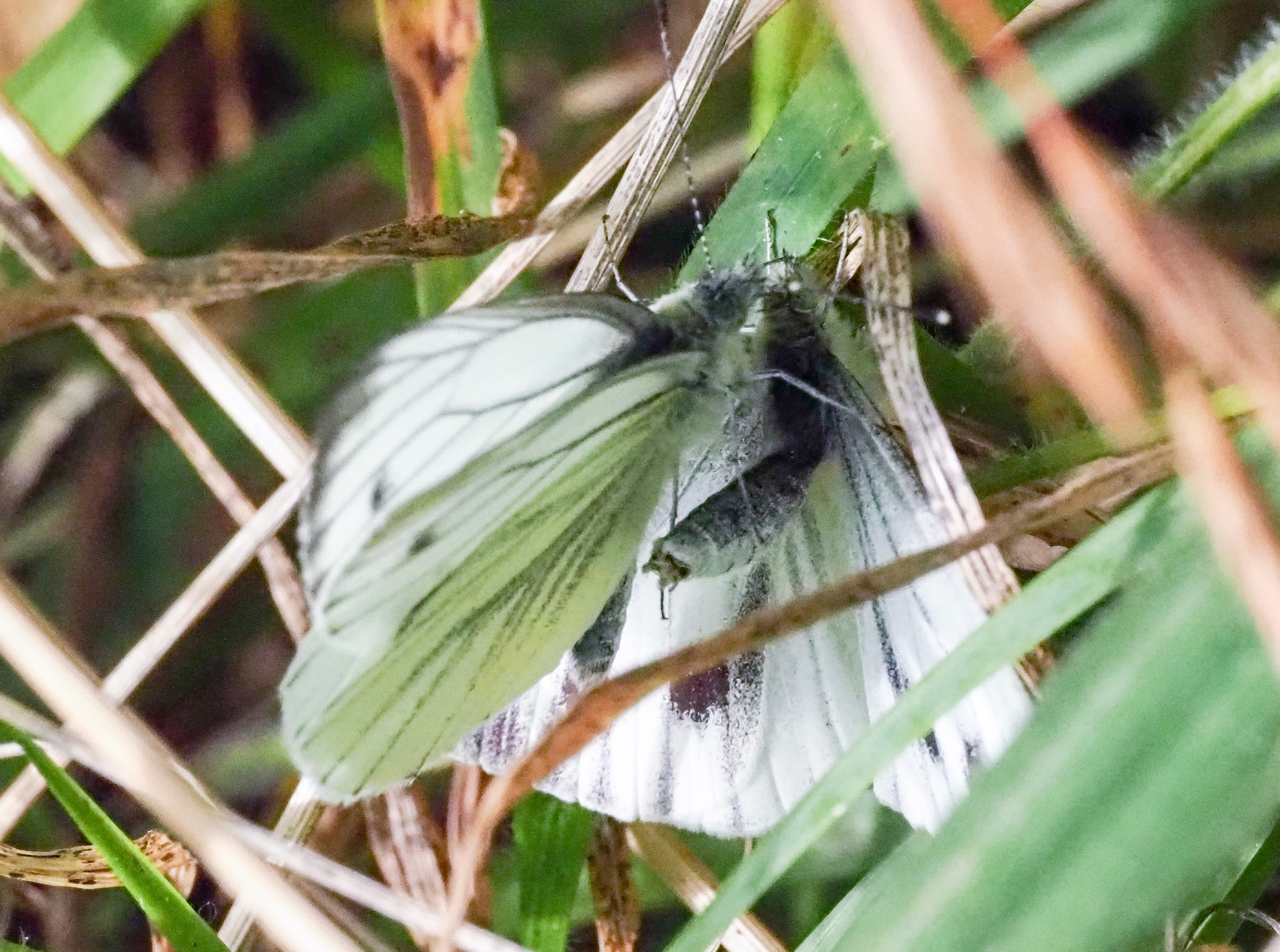
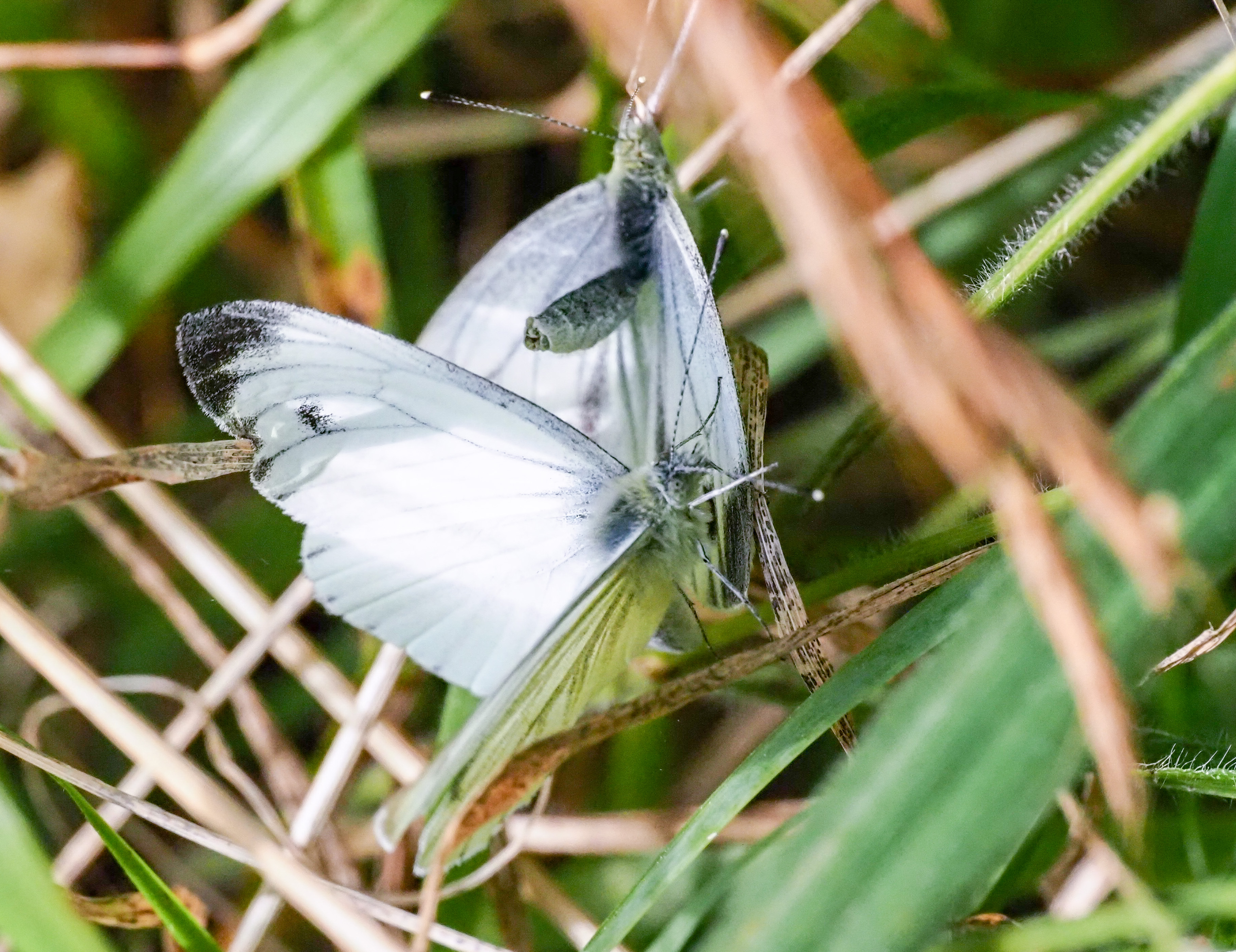
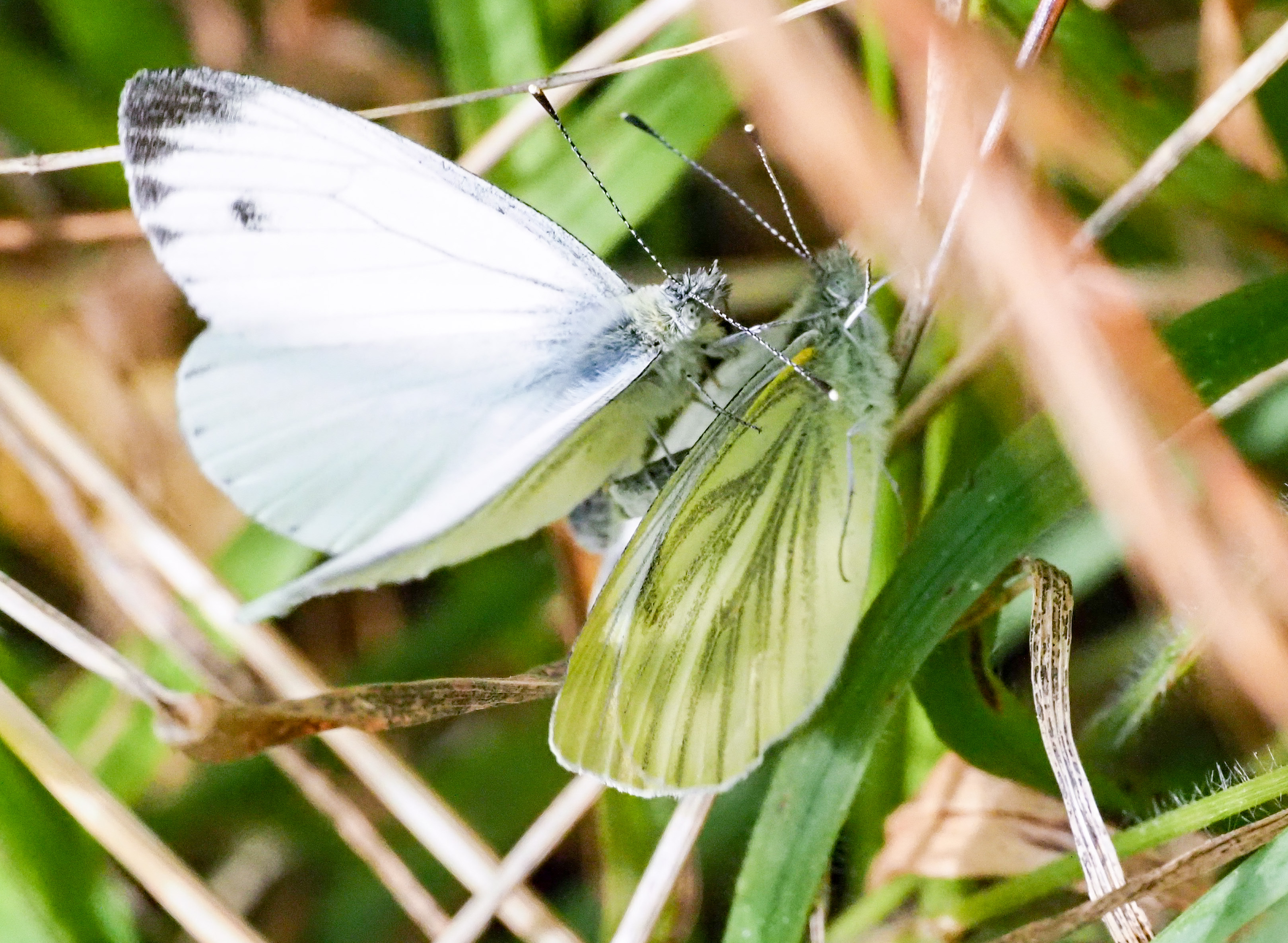
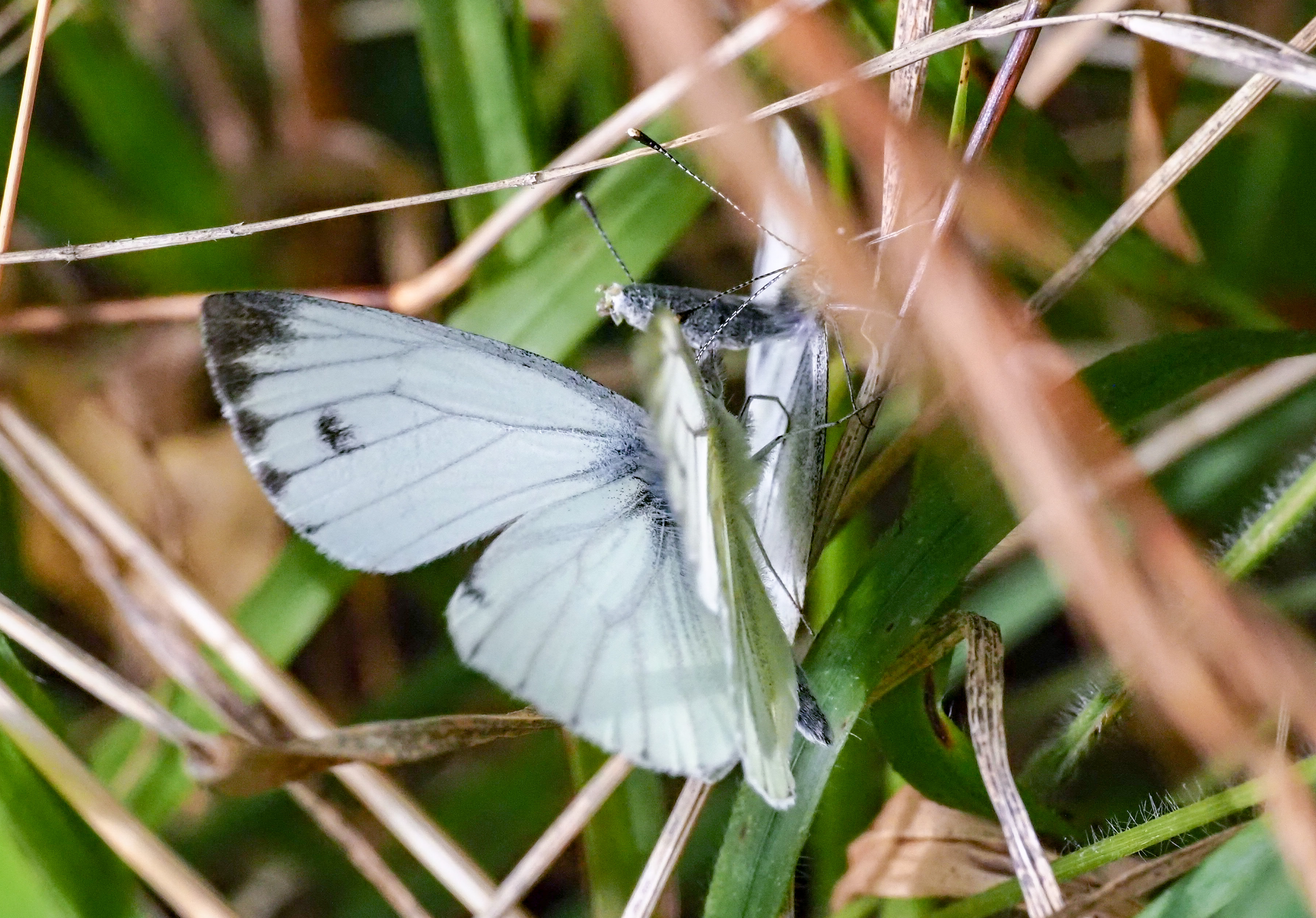
The courtship behaviour of the Green-veined white (Pieris napi) is, I think, particularly interesting because the female has a very striking way of saying no to unwanted advances from males. In the characteristic mate refusal posture (see below) – which also occurs in some other butterflies in the family Pieridae – the female spreads her wings and raises her abdomen sharply upwards.
This behaviour has the effect of sending an unmistakable signal to the male and also creates a physical barrier to prevent him from mating. The female genitalia are also extruded somewhat as she releases a volatile substance called methyl salicylate (MeS). This so-called anti-aphrodisiac was transferred by the last male she mated with, and acts as a sort of chemical ‘kill-joy’, rendering females unattractive to other males!
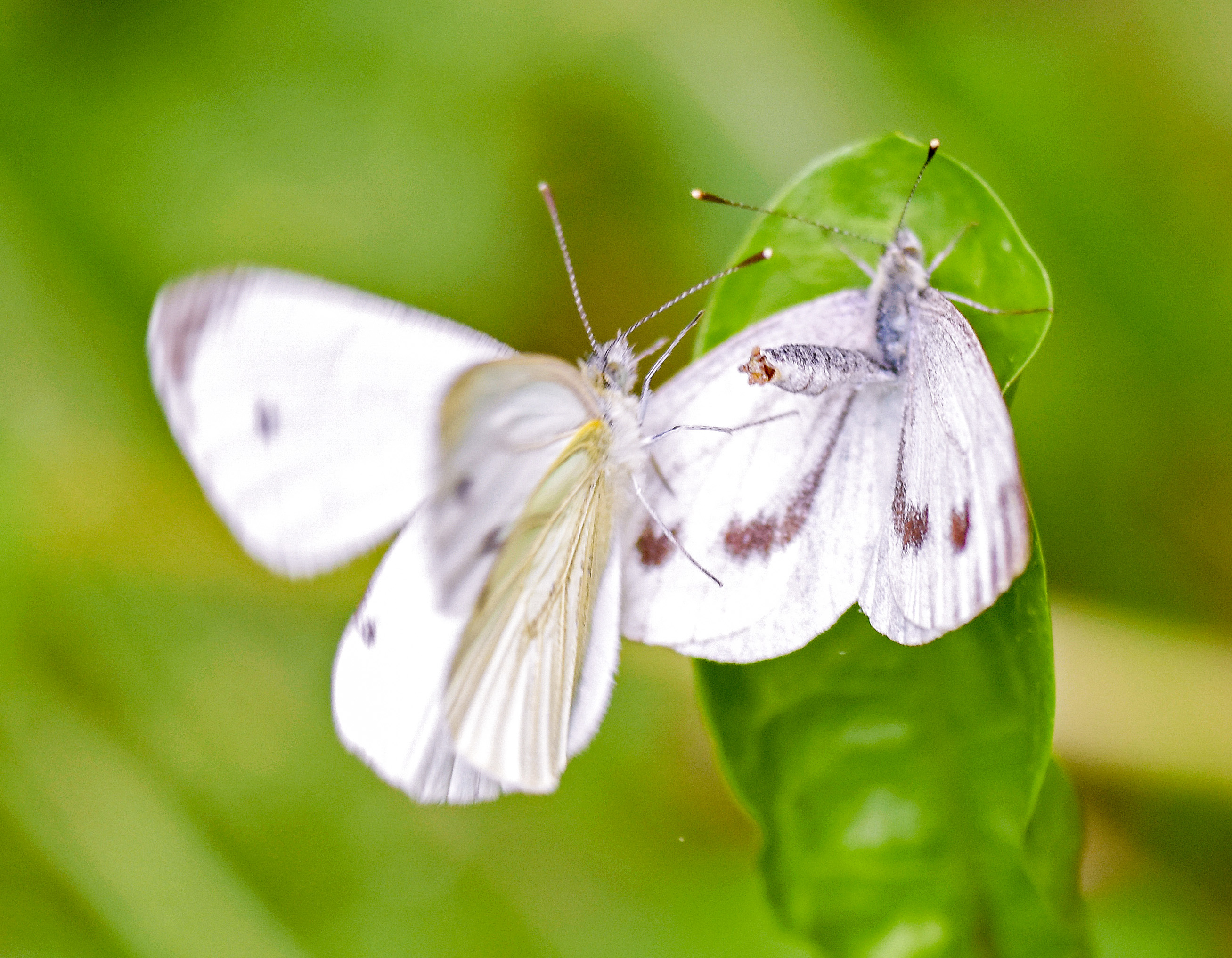
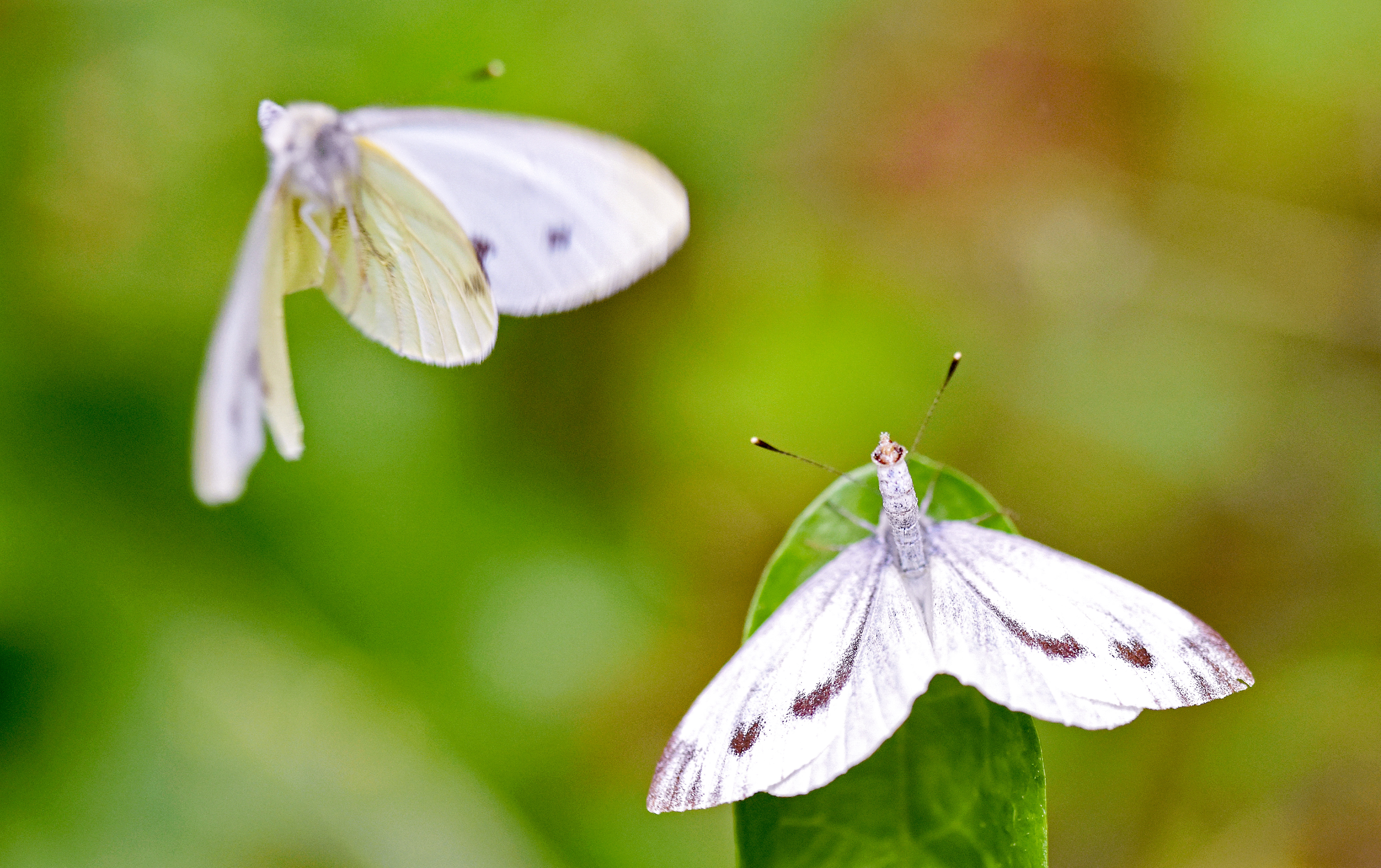
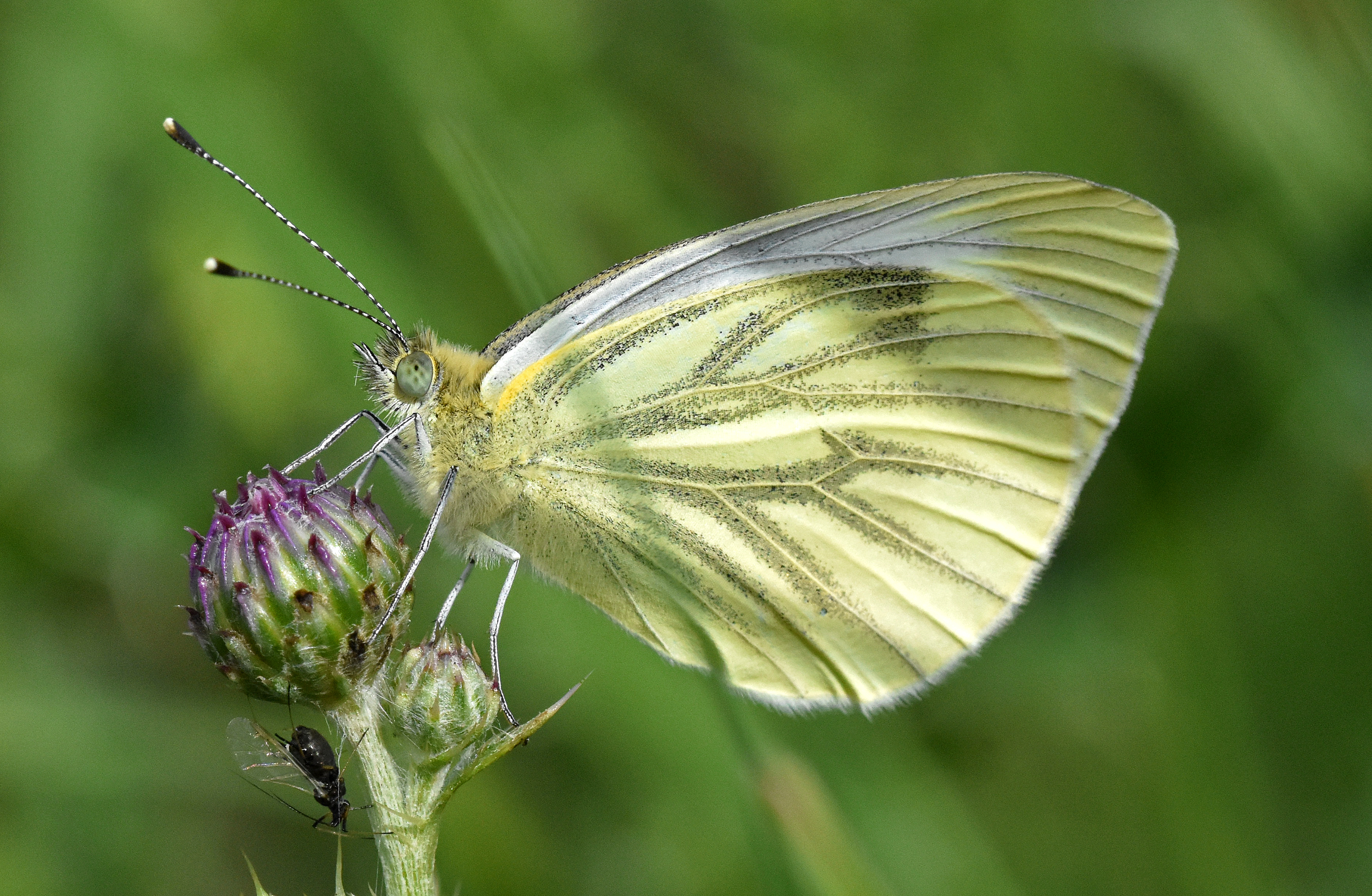
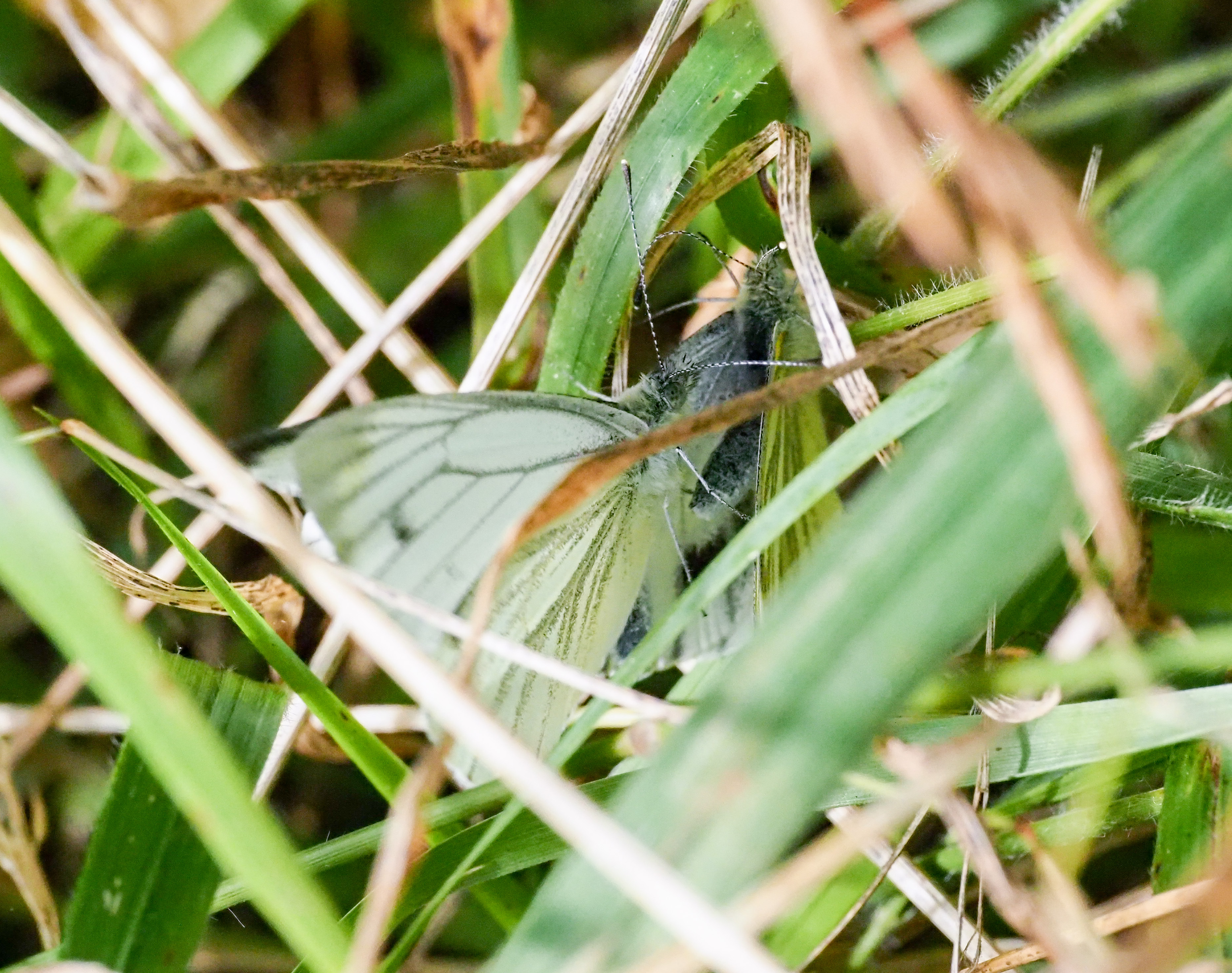
Its worth pointing out that capturing butterfly behaviour in the field is a lot more difficult than photographing stationary individuals (below). Particularly when the pair disappear into the long grass!
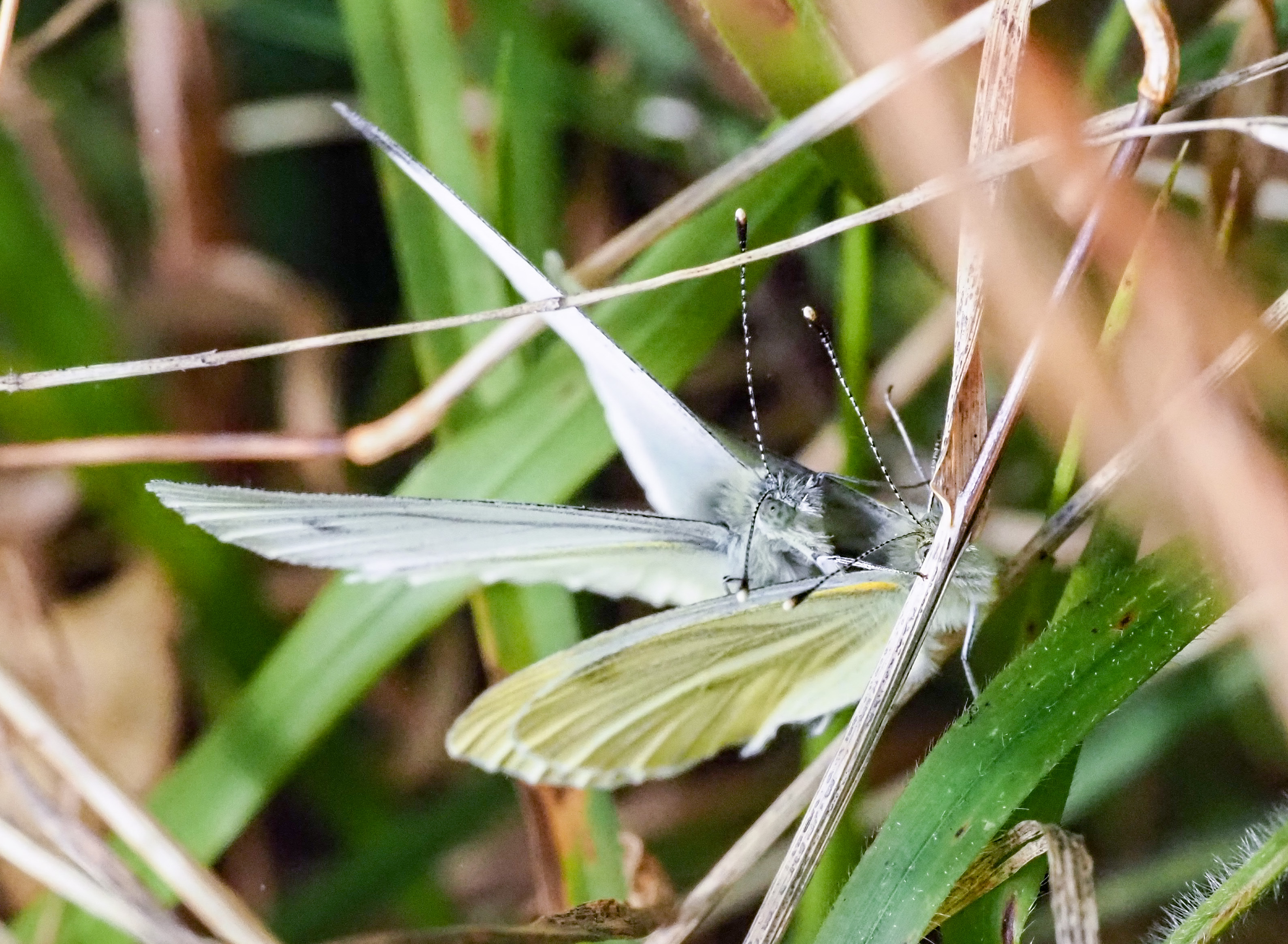
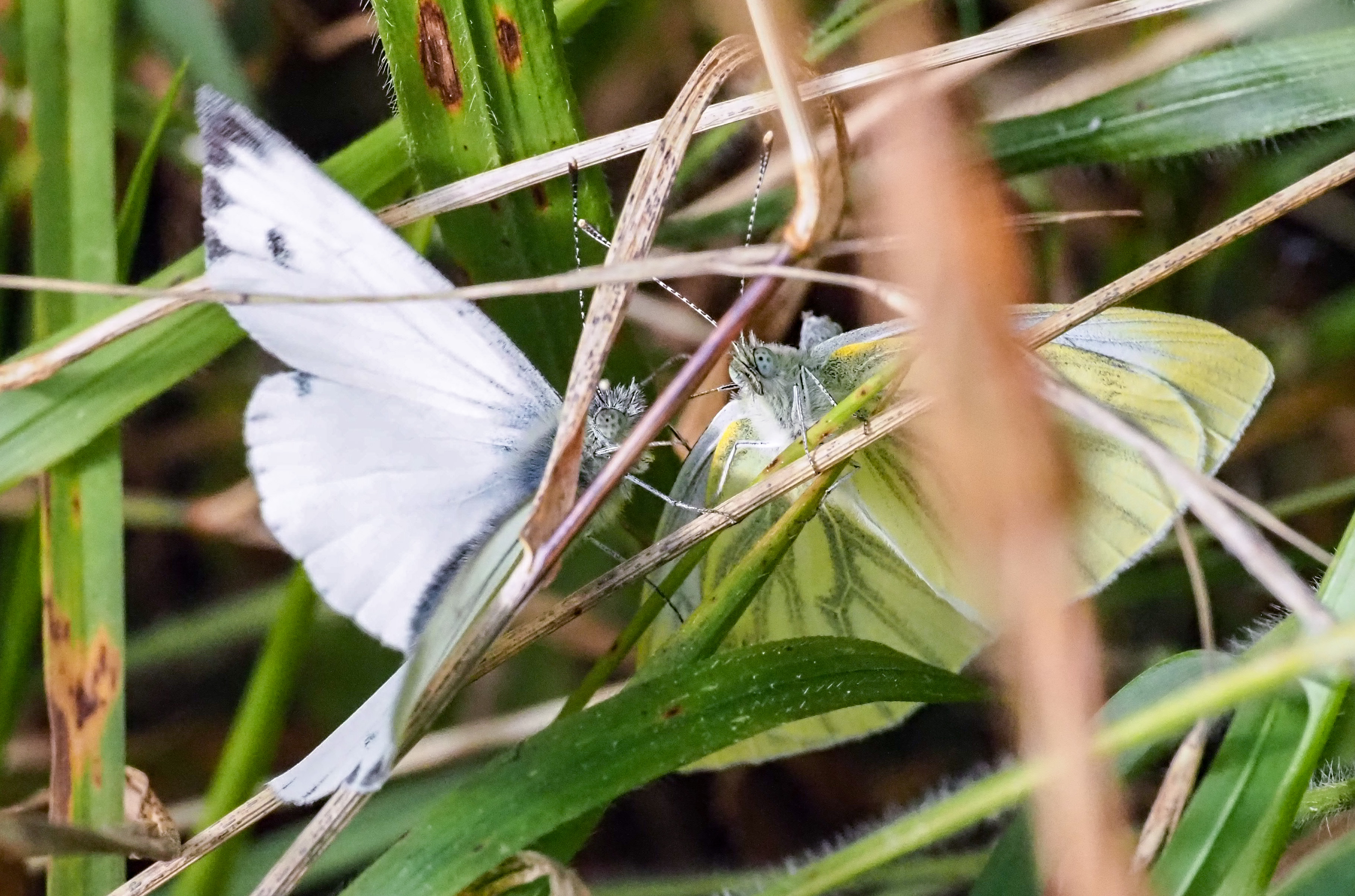
The following sequence was taken on the afternoon of 4 September this year (2024) in Bedfordshire (Felmersham gravel pits). The unmistakable ‘push-off mate’ signal (!) or mate refusal posture – where the female elevates her abdomen – is clearly visible in most of the images (below).
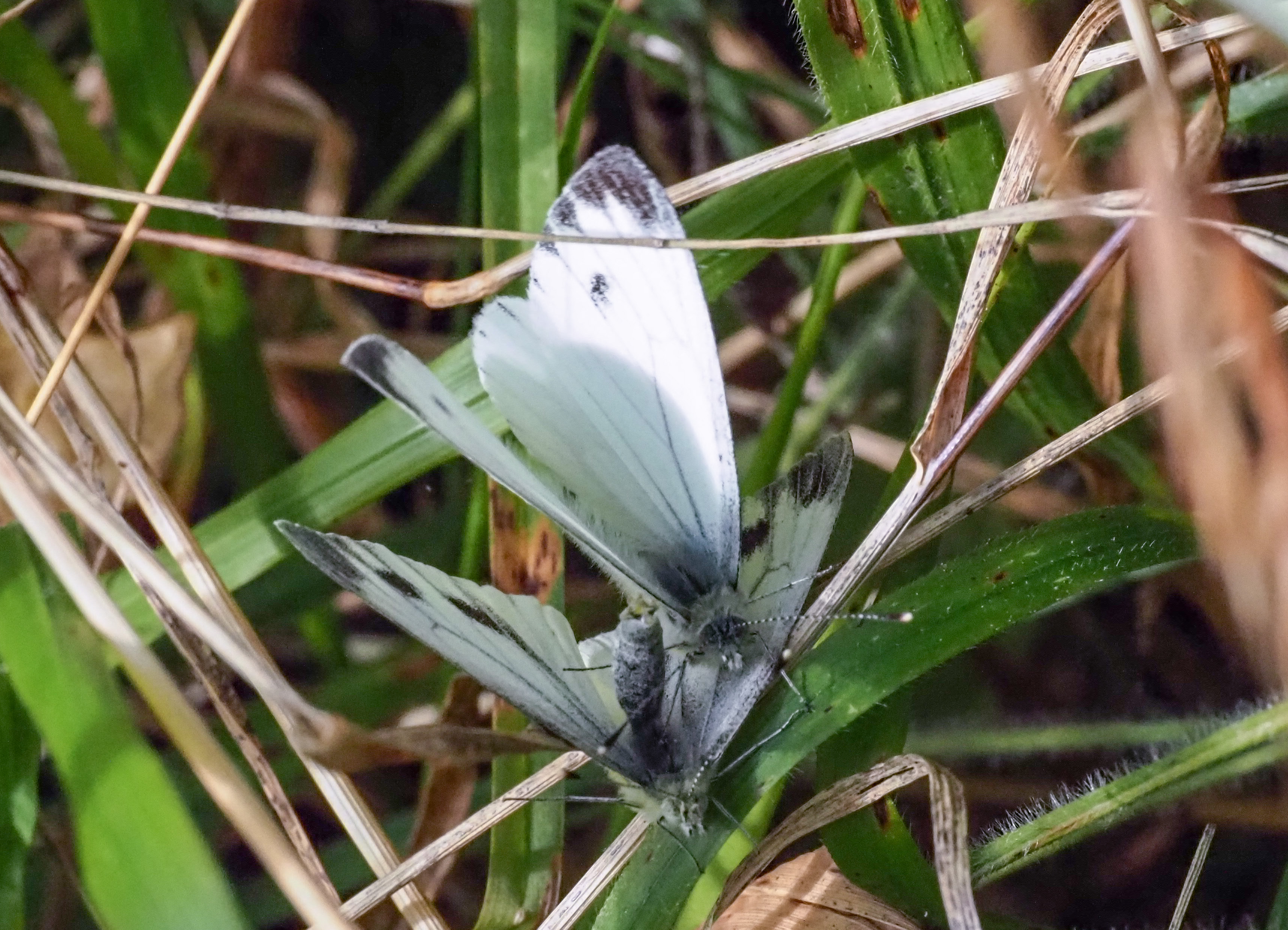
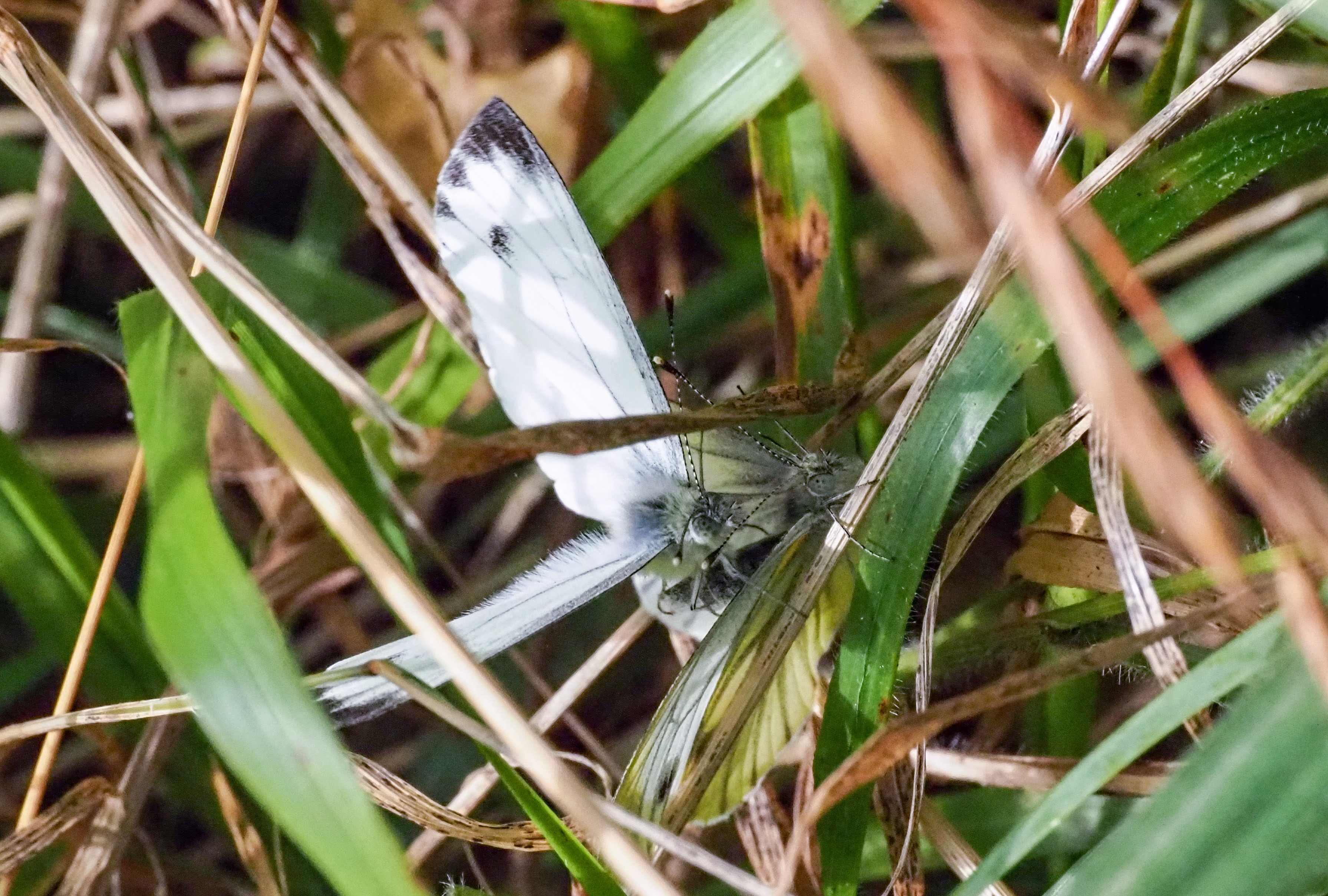
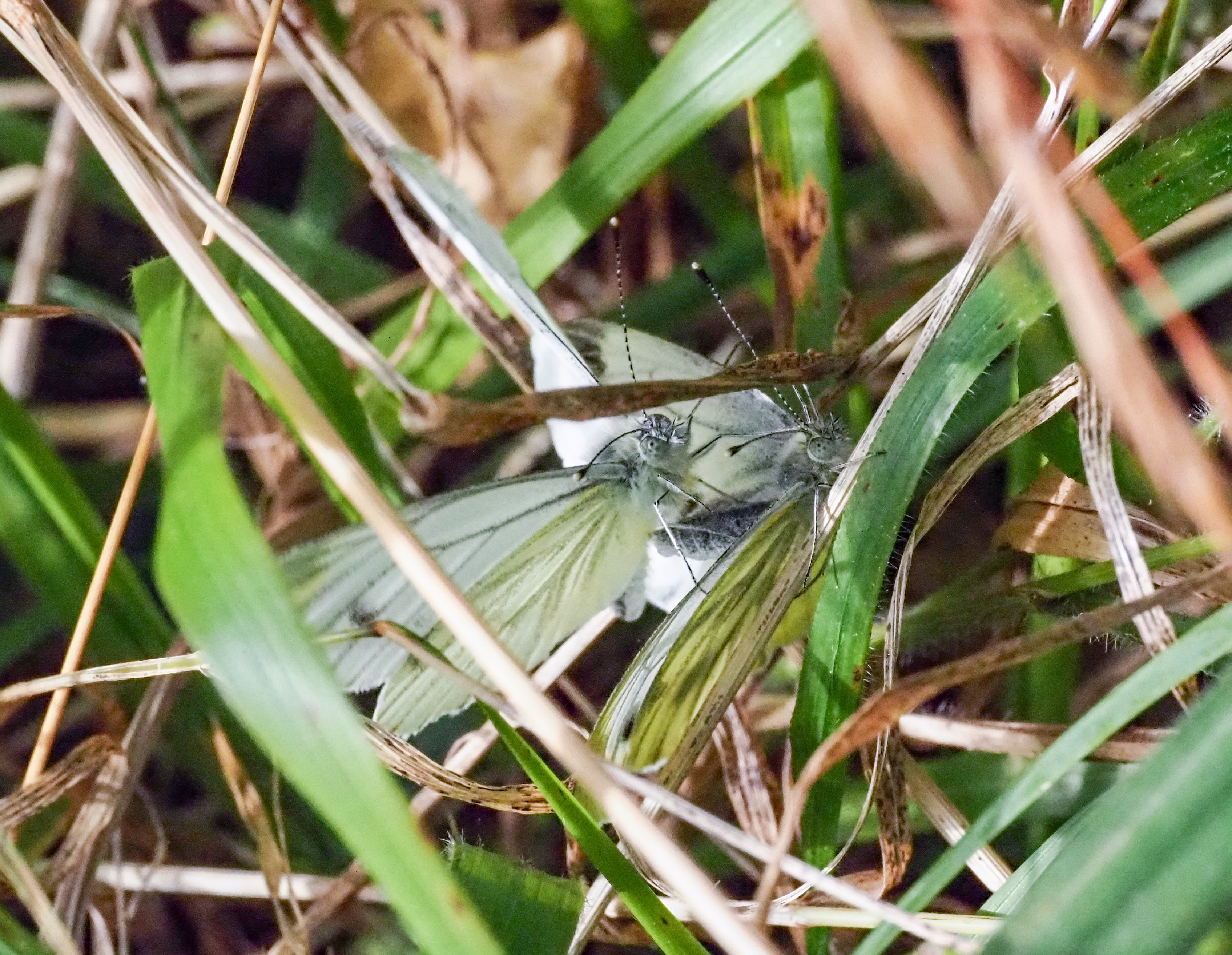
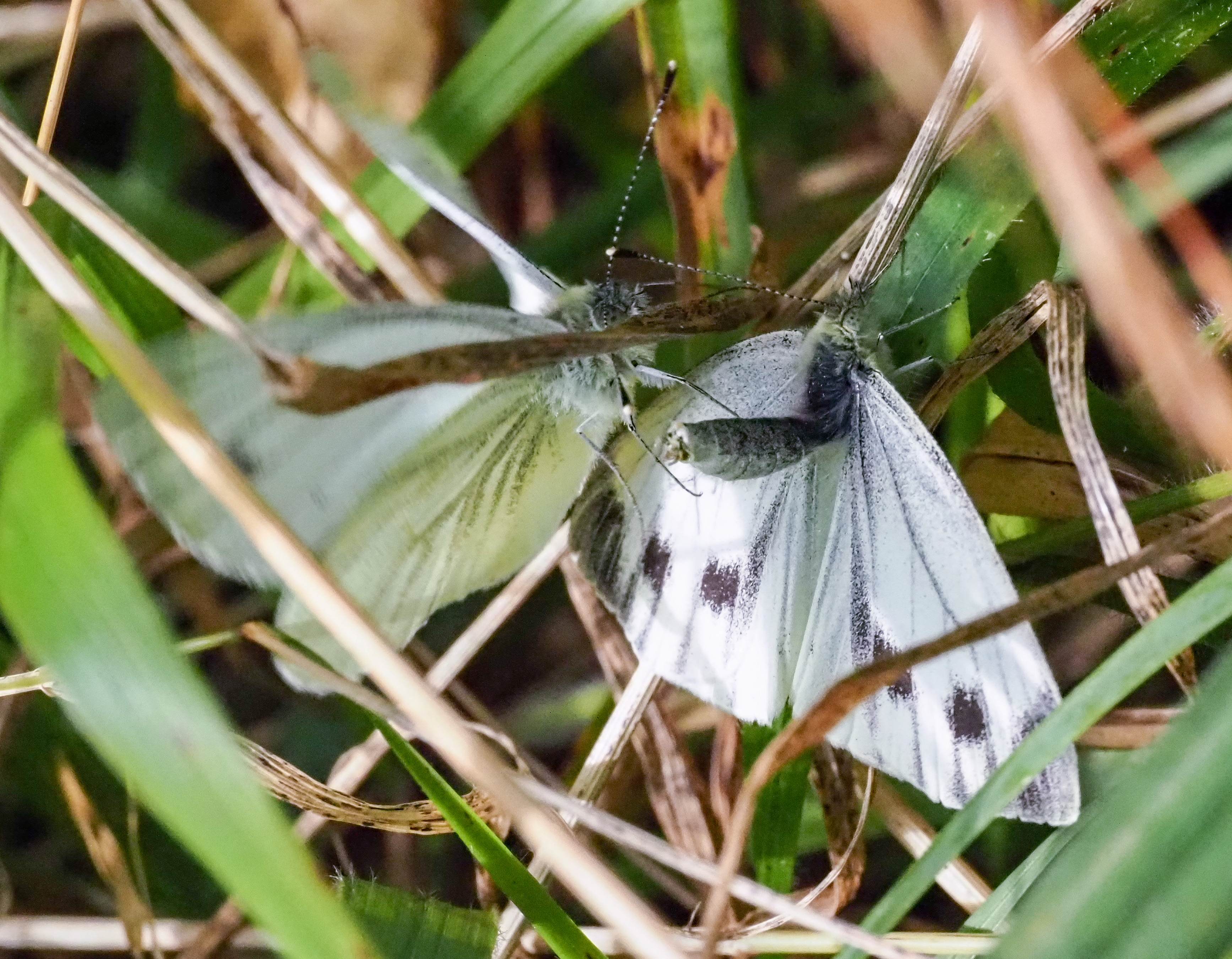
This whole sequence – shots 1 to 11 – took place in about a minute: first shot (16:07); last shot (16:08).
Discussion
We can speculate as to why the female is saying no, based on extensive research on the reproductive behaviour of this species. Firstly, the female has almost certainly mated already, perhaps more than once, and has no good reason to mate again. The extent to which female Pieris napi mate – i.e., the female mating frequency – is genetically determined in this species and varies from monandry (only once) to polyandry (two or more times). Consequently, some females refuse to mate again, regardless of how many eager, available males are attempting to court them.
So whilst we cannot know how many times this particular female has already mated, we know that that females become unreceptive to the attentions of other males for a while after they have mated and received a spermatophore. As mentioned above, the male ejaculates contain the anti-aphrodisiac MeS compounds that render females unattractive to rival males.
The length of the female refractory period – the period after mating – varies, depending on the amount of sperm which the last male transferred. Nonetheless, sperm storage of any amount inhibits females from re-mating for a while, and furthermore, it is generally harder for them to mate again, as they grow older.
Males on the other hand, can mate at a much higher rate than females, although it does take them some time to produce another spermatophore, which is physiologically costly to make. There is also something called last male sperm precedence in this species, which means that the female will use the sperms of the last male (rather than previous ones) she has mated with to fertilise her eggs.
Female Pieris napi do gain – proteins and nutrients – from mating more than once, as the males transfer a substantial nuptial gift, together with the sperm at mating. Nonetheless, there is a fairly low average female mating frequency in northern European populations of this butterfly, i.e. a high prevalence of monandry. So perhaps our female has already mated, and once is enough for her? Or, she may have mated twice or more, and that is also as much mating as she wants to do. Females have to spend a lot of time and energy laying eggs on favoured hosts – wild cruciferous – so there is less incentive to keep mating. Males on the other hand, play no role in producing the next generation, other than the contents of their ejaculates (which varies). So he may not have much to offer her anyway!
In conclusion, its not surprising we see mate refusal behaviour by females; it is a very useful device which has presumably evolved to save time and energy for both parties, and perhaps saves females from too much harassment by males.
References
Andersson, Johan, Anna-Karin Borg-Karlson, and Christer Wiklund. “Sexual conflict and anti–aphrodisiac titre in a polyandrous butterfly: Male ejaculate tailoring and absence of female control.” Proceedings of the Royal Society of London. Series B: Biological Sciences 271.1550 (2004): 1765-1770.
Bissoondath, C. J., & Wiklund, C. (1995). Protein content of spermatophores in relation to monandry/polyandry in butterflies. Behavioral Ecology and Sociobiology, 37, 365-371.
Cannon, R. J. (2019). Courtship and mating in butterflies. CABI. https://www.cabidigitallibrary.org/doi/book/10.1079/9781789242638.0000
Mellström, H. L., & Wiklund, C. (2010). What affects mating rate? Polyandry is higher in the directly developing generation of the butterfly Pieris napi. Animal Behaviour, 80(3), 413-418.
Välimäki, P., & Kaitala, A. (2010). Properties of male ejaculates do not generate geographical variation in female mating tactics in a butterfly Pieris napi. Animal Behaviour, 79(5), 1173-1179.
Välimäki, P., Kaitala, A., & Kokko, H. (2006). Temporal patterns in reproduction may explain variationin mating frequencies in the green-veined white butterfly Pieris napi. Behavioral Ecology and Sociobiology, 61, 99-107.
 Ray Cannon's nature notes
Fascinating post, Ray. I have noticed some males are very reluctant to take no for an answer, a trait shared across many other species, not only butterflies. 😉
Yes, males usually have less to lose by mating, although there are some interesting role reversals in insects, where the females do the courting and the males look after the eggs!
Mother Nature’s bag of tricks is really amazing. It contains even anti-aphrodisiacs. Phenomenal, or should I better say pheromonal. 🤭