Most people will be familiar with coneflowers, flowering plants in the daisy family (Asteraceae), popular with both gardeners and insect pollinators! We like them for their colours; insects like them for their nectar! Here, I focus on bumblebees, and how they probe the flower for its nectar.
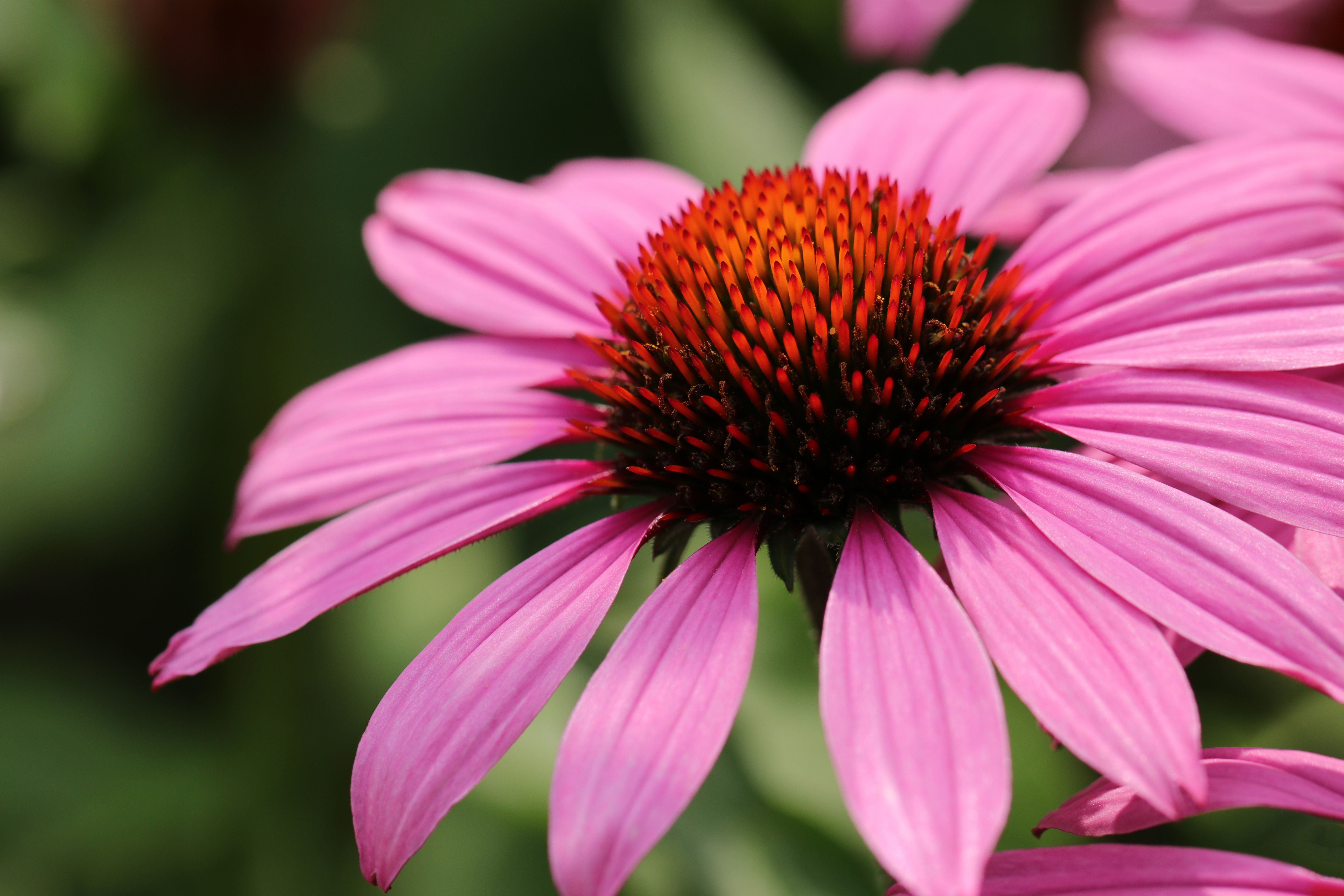
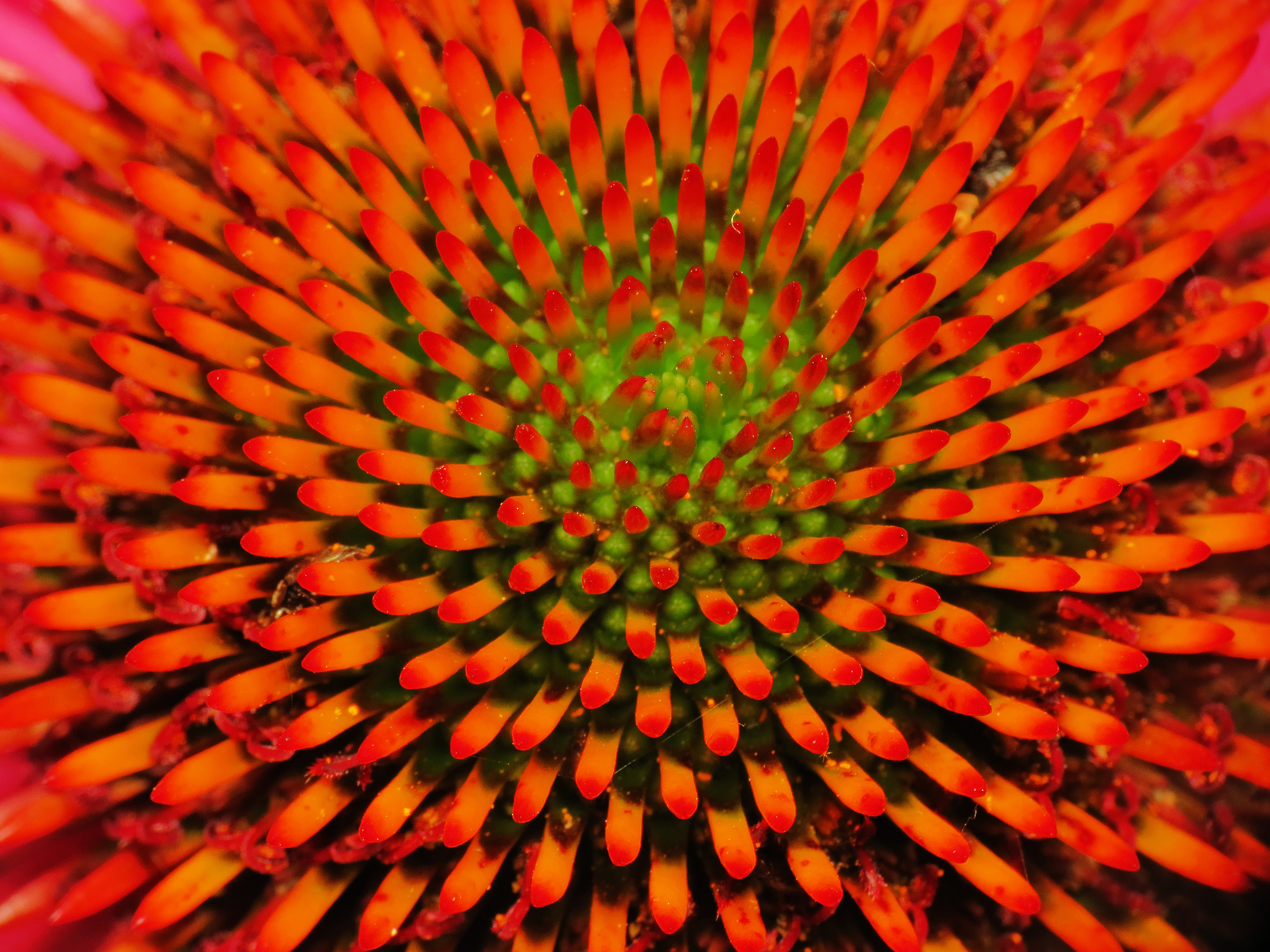
The name Echinacea is derived from the Greek word ekhinos, meaning hedgehog, due to the round spiny central disk of the coneflower. The conical, central disk is, in fact, an inflorescence, i.e. consisting of multiple small florets. One row of florets typically emerges each day and sheds pollen. Pollinating insects collect the pollen and contact the styles on each floret whilst probing the floral nectaries at the base of the styles. Florets continue producing nectar until they are pollinated, after which they shrivel (having been fertilised), within about 24 hours.
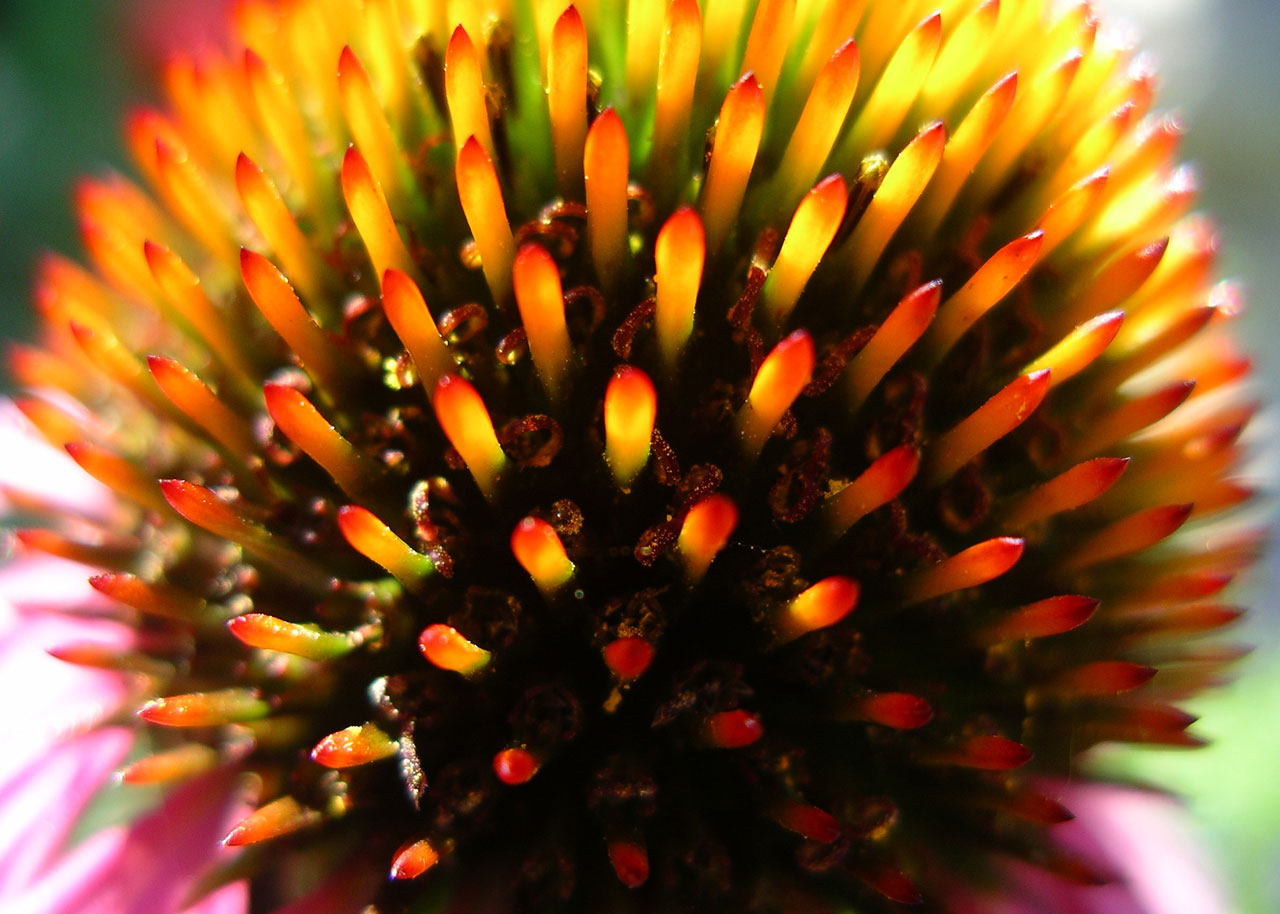
By Darrell.barrell at English Wikipedia – Transferred from en.wikipedia to Commons., Public Domain, https://commons.wikimedia.org/w/index.php?curid=39528438
Coneflowers are self-incompatible, and are therefore, reliant on cross-pollination for fruit set. Fortunately, or rather as a result of co-evolution, a wide range of insects visit these flowers for their nectar and pollen: bumblebees (Bombus spp.) and honeybees (Apis mellifera L.) are among the most common and effective pollinators, as many gardeners will know.
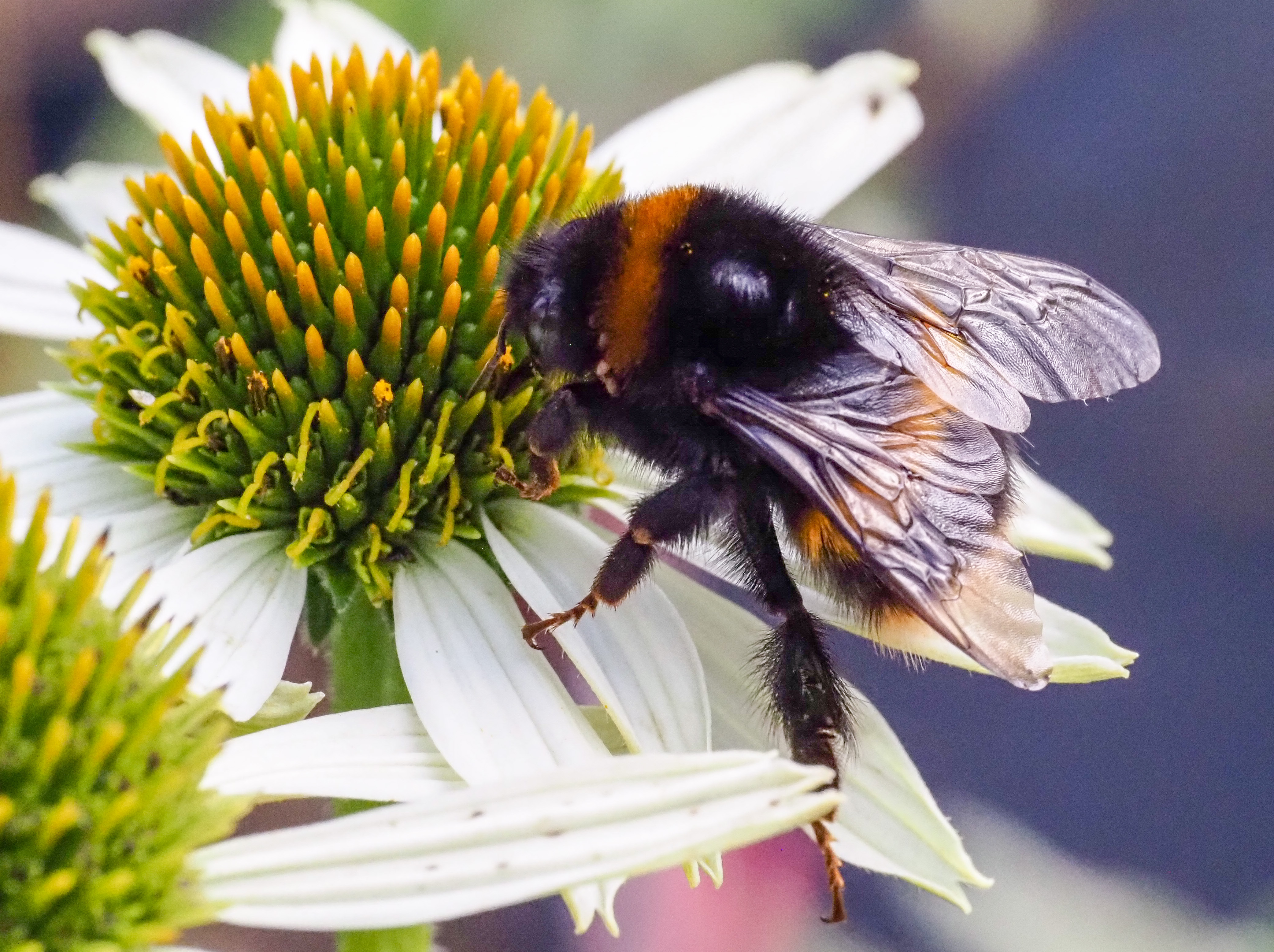
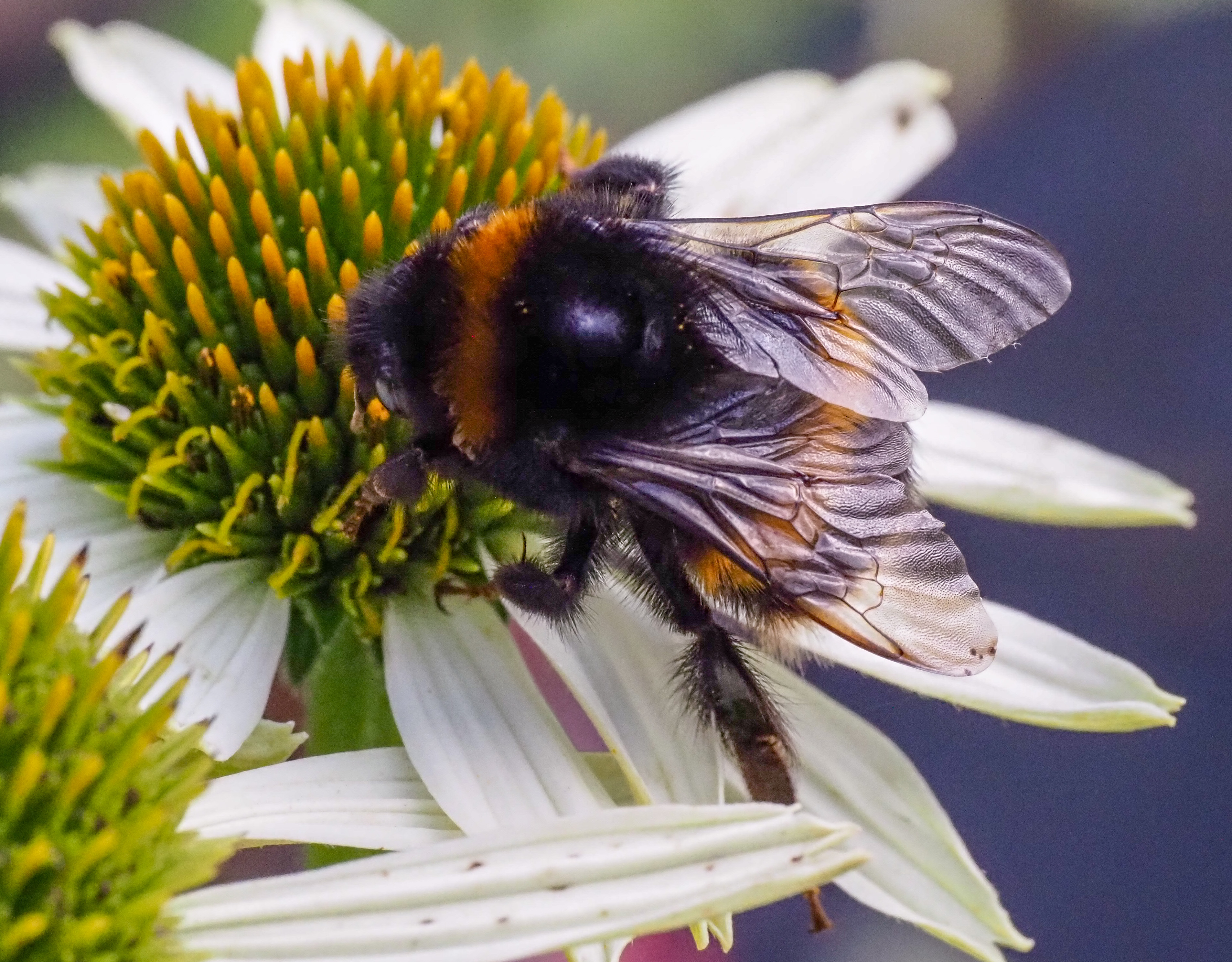
The amount of nectar produced by cone flowers is impressive. Canadian researchers Wist and Davis (2008) calculated the productivity of wild, purple coneflowers, Echinacea angustifolia (Asteraceae), and estimated that each inflorescence – comprising an average of 202 florets per capitulum – yields somewhere between 38.7 and 222 mg of nectar sugar. The difference depends on estimates of production rates, but nectar production only occurred in half of the florets for between three to five days.
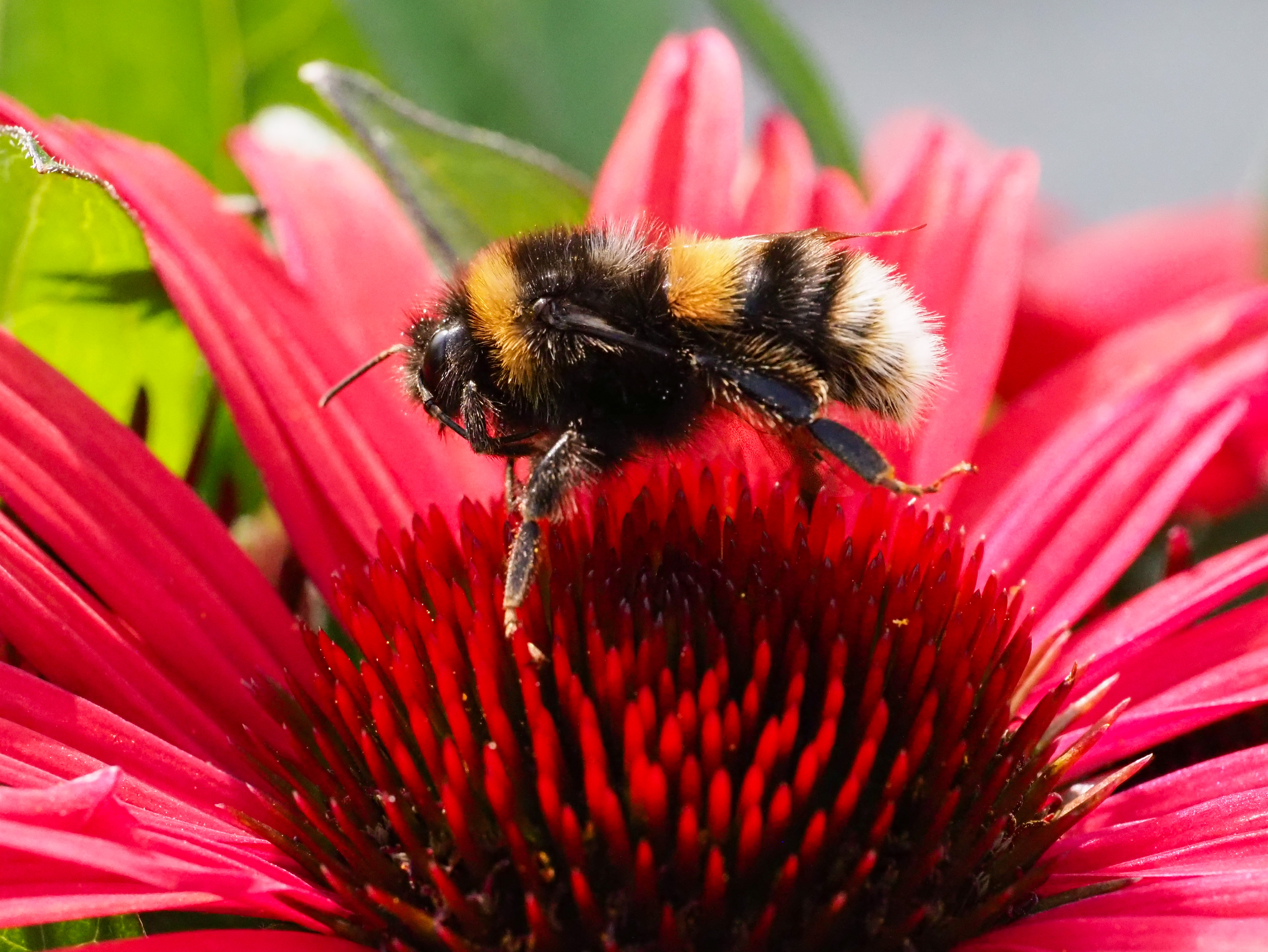
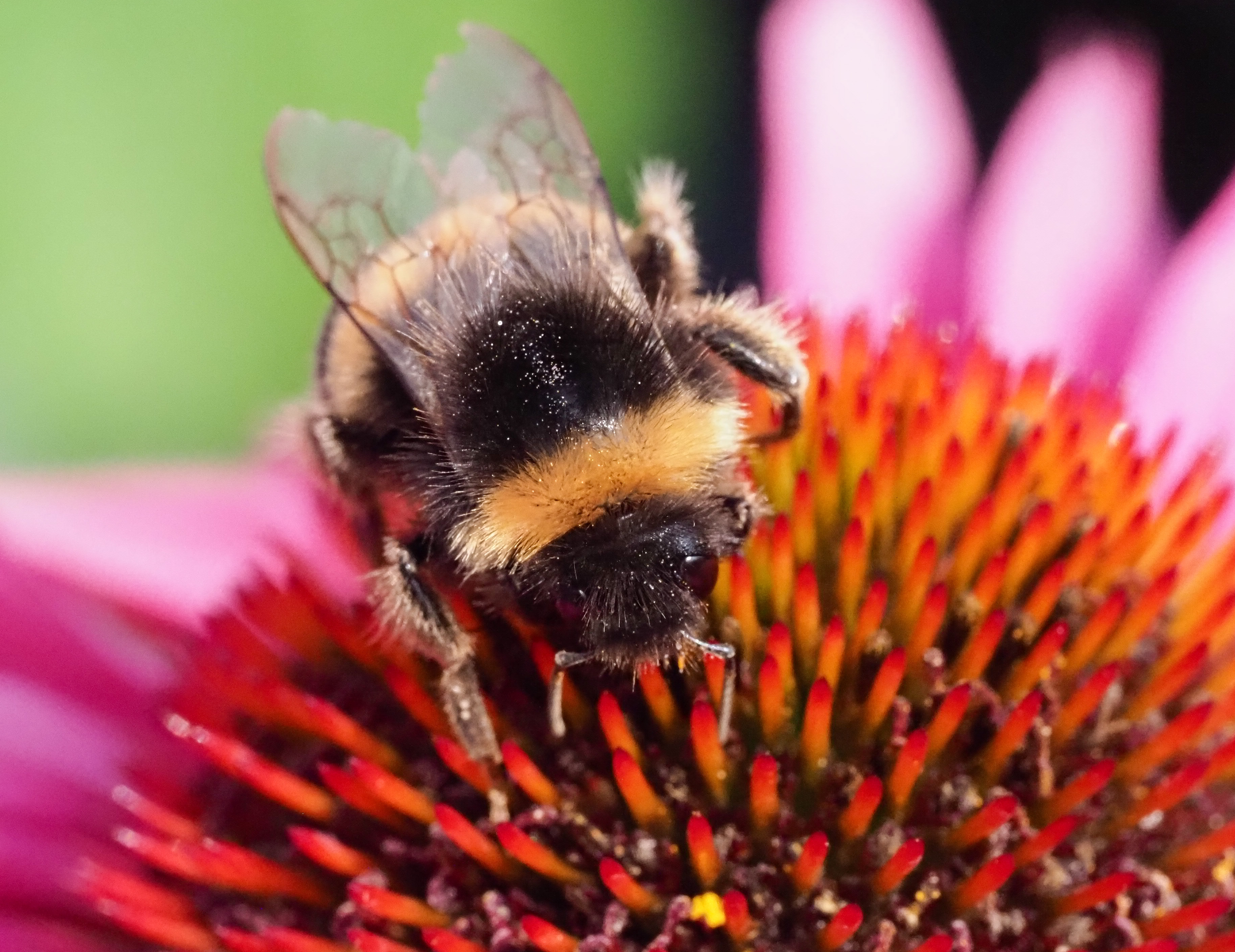
Bees have a tongue, also called a proboscis (see here) somewhat resembling a brush with a hairy or feathery end adapted for absorbing nectar. The end of the tongue is covered in elongated papillae, which are dipped into nectar during the floral visits in order to imbibe this valuable energy drink! The papillae unfold during the dipping process, i.e. when in contact with or immersed in the nectar; sometimes called ‘viscous dipping‘, because of the viscous nature of the concentrated sugar solution.
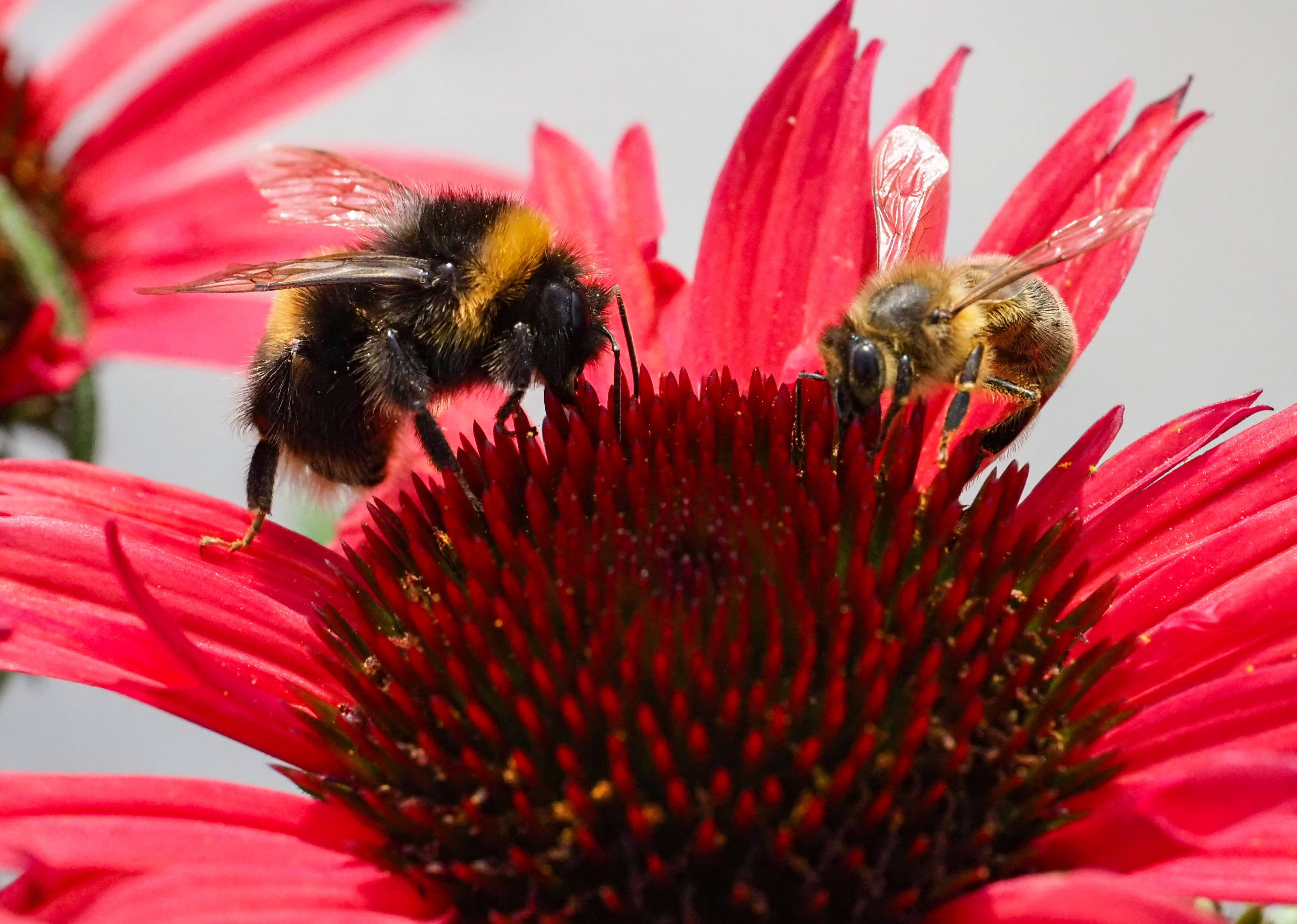
A number of factors affect the rate at which a bee will take up nectar, i.e. their drinking speed. These include: the size of the bee – queens can be very much heavier than workers – the length of their tongues (how easily they can probe the flower), and of course, the depth of the flower; how far they have to reach in with their tongues to get the nectar.
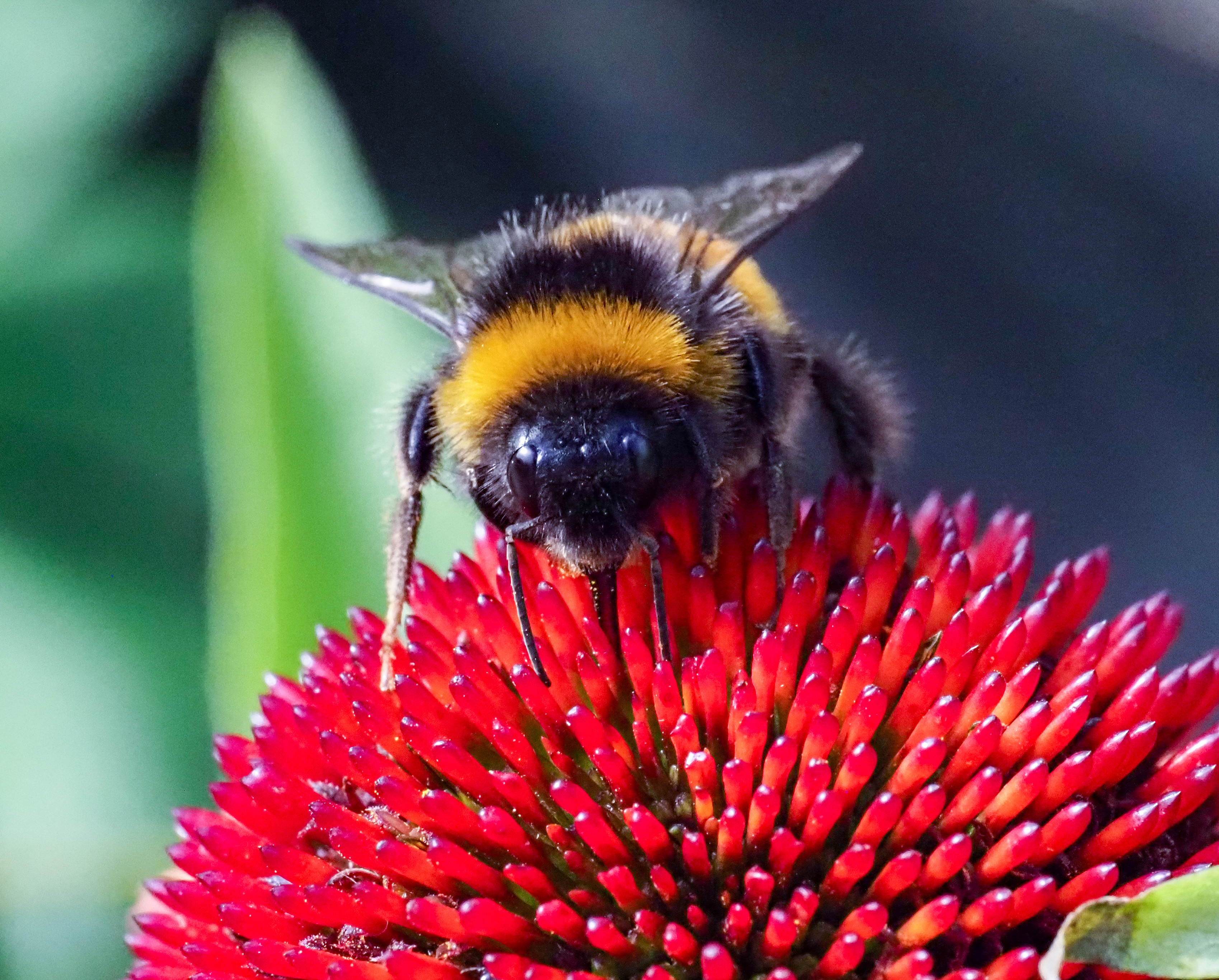
Honeybees and bumblebees store a small volume (estimates vary), in their expandable ‘honey stomachs‘ and take it back to their hives or nests. The average mass of nectar and pollen carried by bumblebees back to their nest to be stored in ‘honeypots’, is said to be somewhere between 25-80% of their body weight. It must vary widely however, depending on the time of year and the weather. Honeybees supposedly have to visit about 3,000 flowers to produce one-gram of honey! I’m not sure what the figure is for bumblebees!
In laboratory studies (Pattrick, et al., 2020), using the bumblebee Bombus terrestris, researchers found that the bees drank, on average, 105 µl of sucrose solution (within the concentration range 55% and 68% sucrose) per foraging bout. They carried, on average, 80% of their unladen body weight in sucrose, and a few (super strong!) bees occasionally managed to carry more than their body mass in sugar!
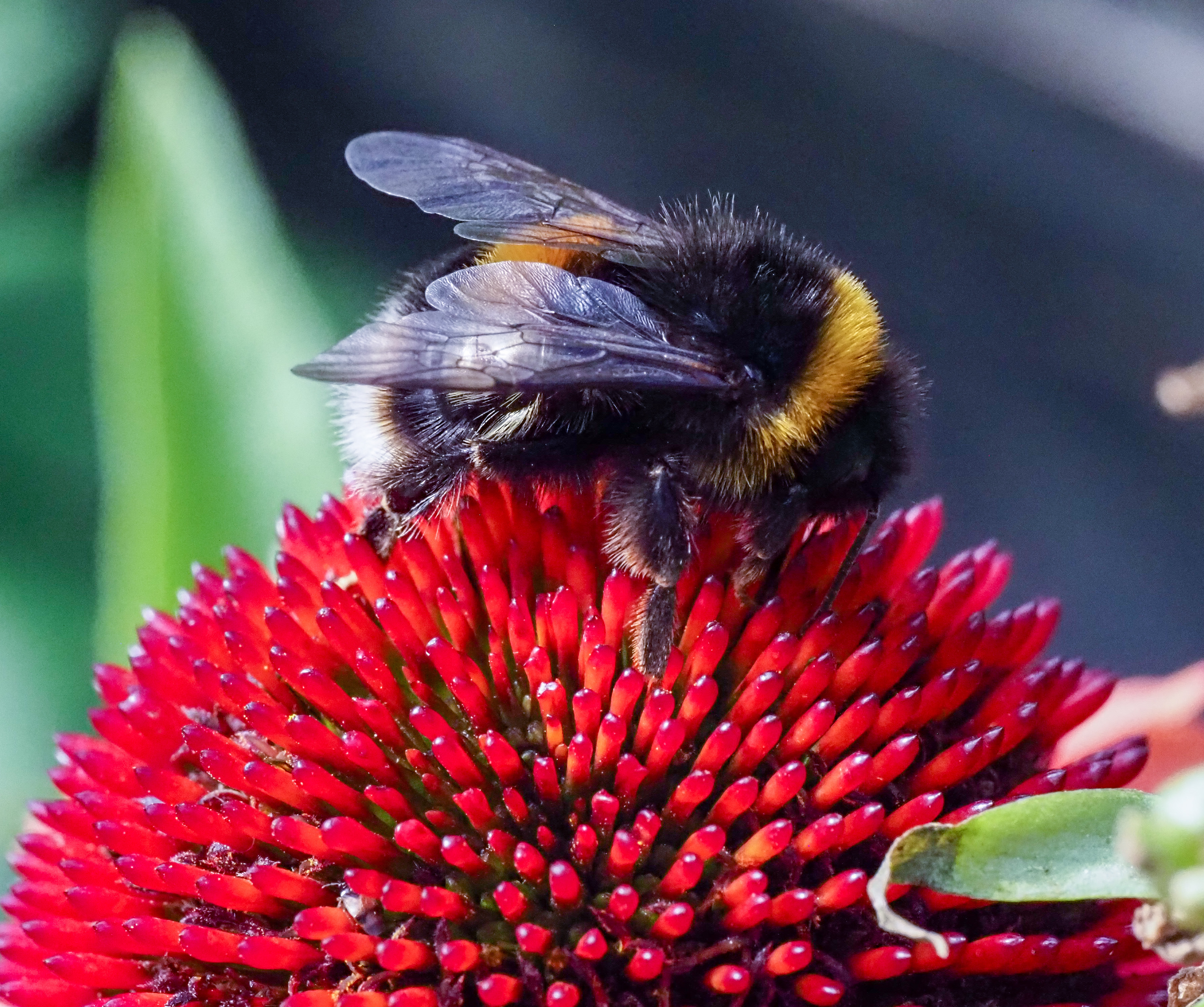
Bumblebees make multiple foraging trips (up to 32 times a day according to some references) and offload their loads of pollen and nectar each time. Of course, the amount of nectar in a given floret will vary naturally, and some will have just been emptied by another bumblebee a few moment previously! Fortunately, bees have evolved a sort of calling card system using scent marks, so foraging bumblebees tend to avoid flowers recently visited by other bumblebees. They can sense that the nectar has gone! And sometimes, when the the flower has matured, there are no more florets left (see below) and the bee has to move on to another flower!
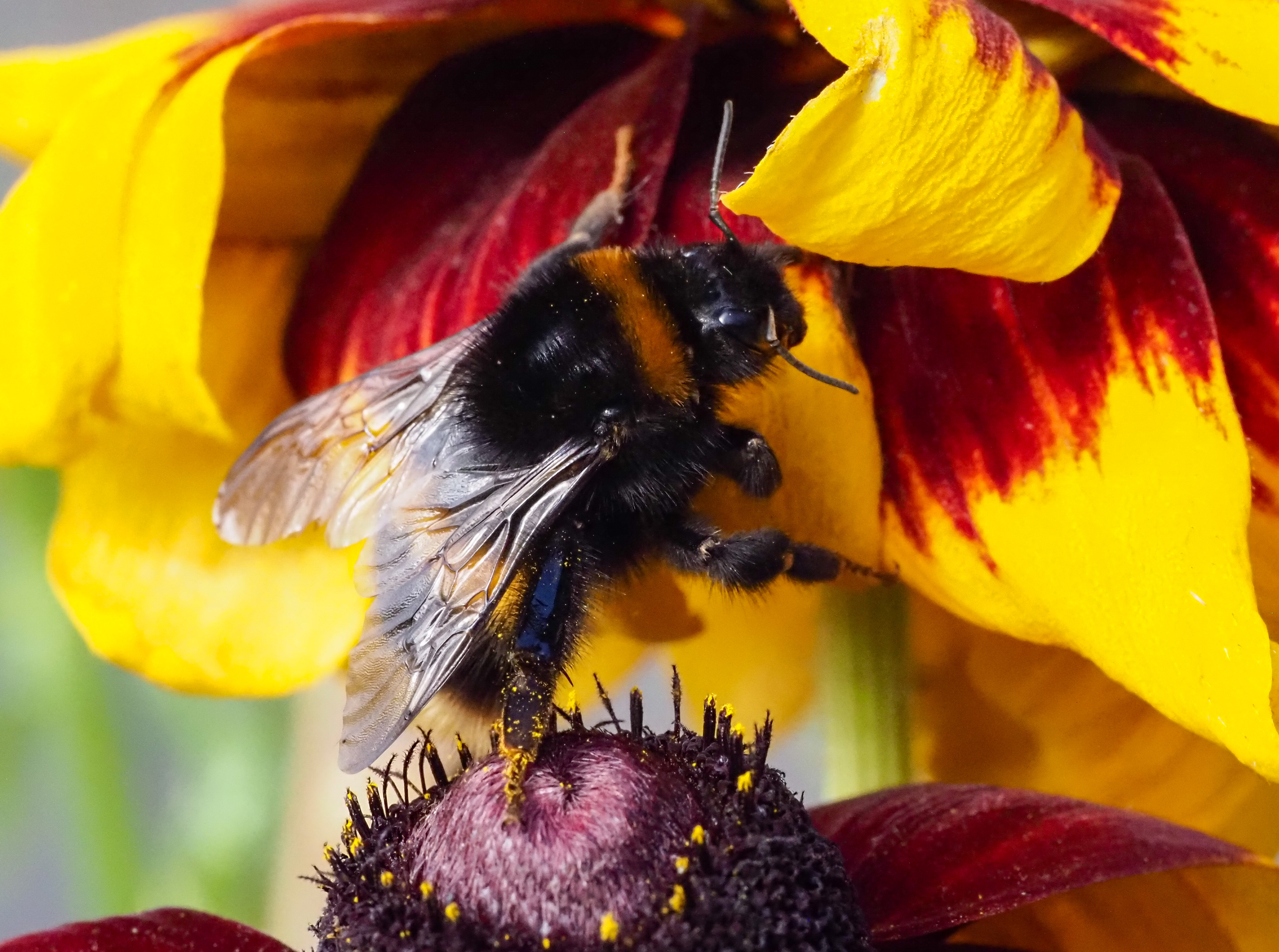
All photographs by me, apart from those indicated, from Flickr Creative Commons (below) and Pixabay (above, top).
References
Page, M. L., Ison, J. L., Bewley, A. L., Holsinger, K. M., Kaul, A. D., Koch, K. E., … & Wagenius, S. (2019). Pollinator effectiveness in a composite: a specialist bee pollinates more florets but does not move pollen farther than other visitors. American Journal of Botany, 106(11), 1487-1498.
Lechantre, A., Draux, A., Hua, H. A. B., Michez, D., Damman, P., & Brau, F. (2021). Essential role of papillae flexibility in nectar capture by bees. Proceedings of the National Academy of Sciences, 118(19), e2025513118.
Pattrick, J. G., Symington, H. A., Federle, W., & Glover, B. J. (2020). The mechanics of nectar offloading in the bumblebee Bombus terrestris and implications for optimal concentrations during nectar foraging. Journal of the Royal Society Interface, 17(162), 20190632.
Wang, B., Liu, X., Tang, G., Wu, J., & Yang, Y. (2022). Optimal kinematics of the bee tongue for viscous fluid transport. Soft Matter, 18(38), 7317-7323.
Wist, T. J., & Davis, A. R. (2008). Floral structure and dynamics of nectar production in Echinacea pallida var. angustifolia (Asteraceae). International Journal of Plant Sciences, 169(6), 708-722.
 Ray Cannon's nature notes
The amount of nectar bees can carry is really amazing. 😲 I never forget to praise the bees’ work before I eat their honey. 🙏