The woods and hedgerows are full of flowering Alexanders (Smyrnium olusatrum) at this time of year: late April.
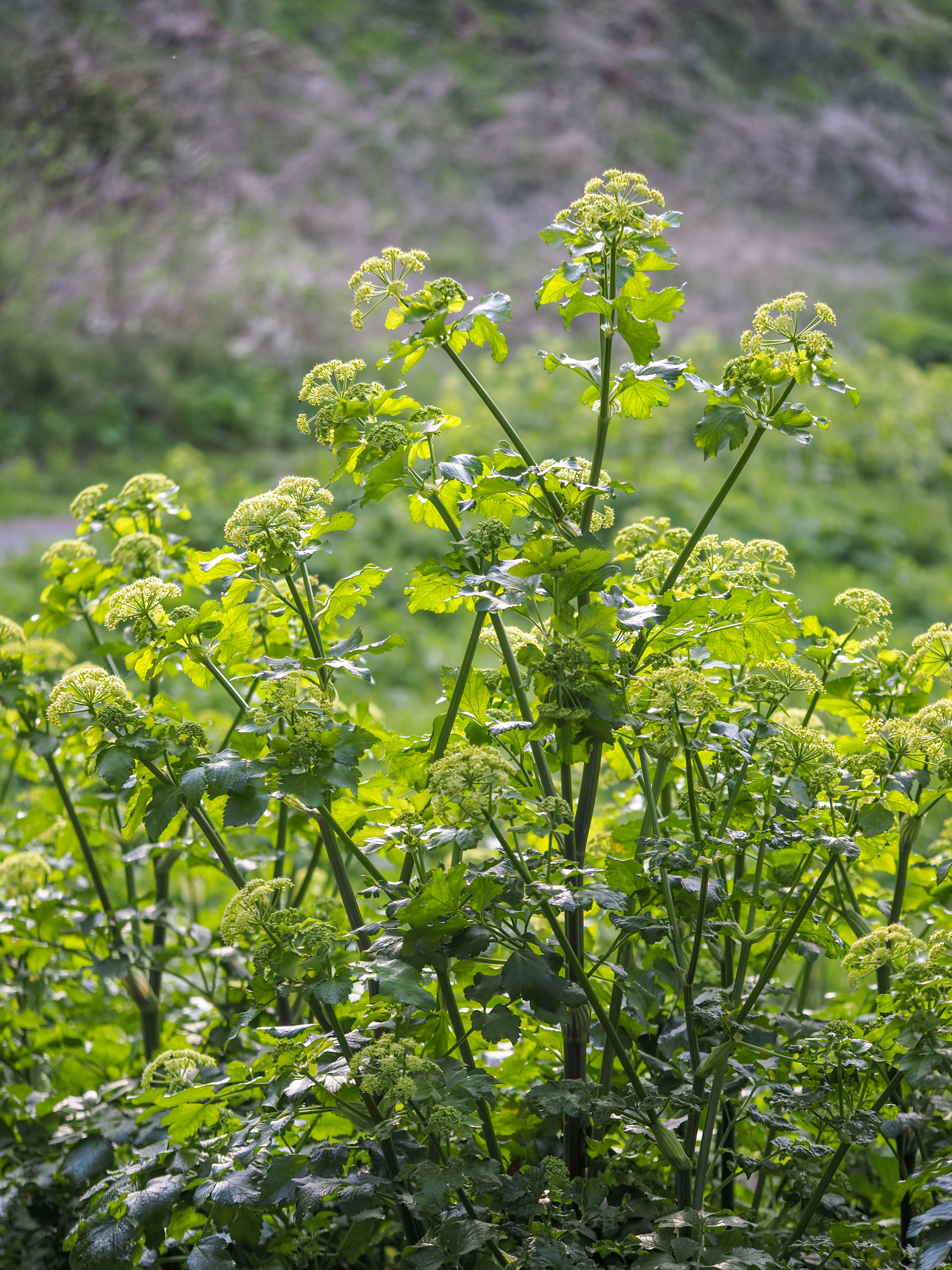
Although, very common and abundant, particularly near the coast, it is easy to overlook this celery-scented, member of the family Apiaceae (Umbelliferae). But look closely, and it has, I think, a particular beauty in the symmetrical branching umbels and the tiny, yellow-green flowers.
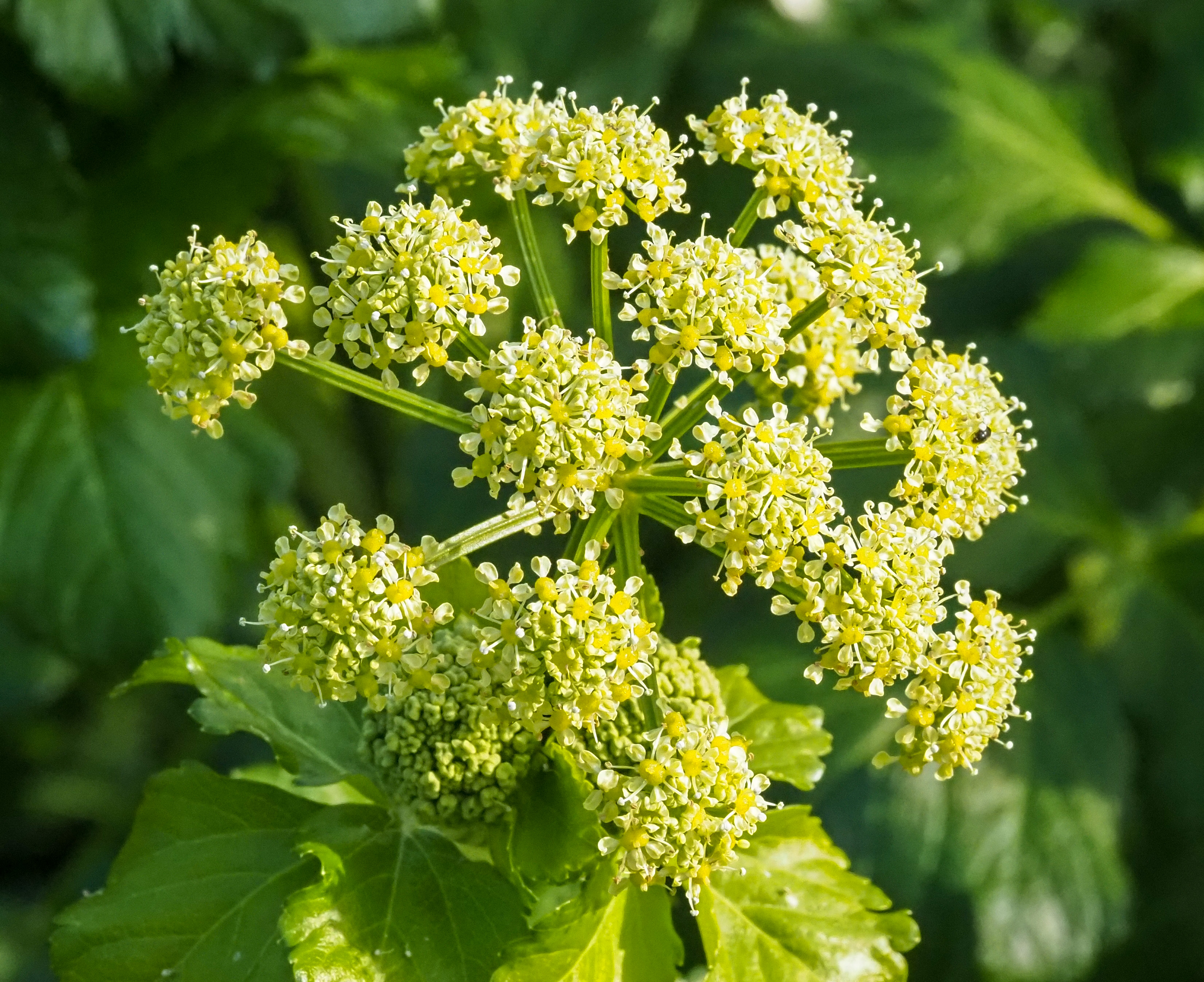
Although a relative newcomer to our shores – first definitively recorded in 1562, but perhaps brought over from mainland Europe by the Romans – it is fully naturalized in the British Isles in hedge rows, roadsides, railway embankments, waste sites and so on, particularly near the sea, such as in Scarborough, North Yorkshire, where these photographs were taken.
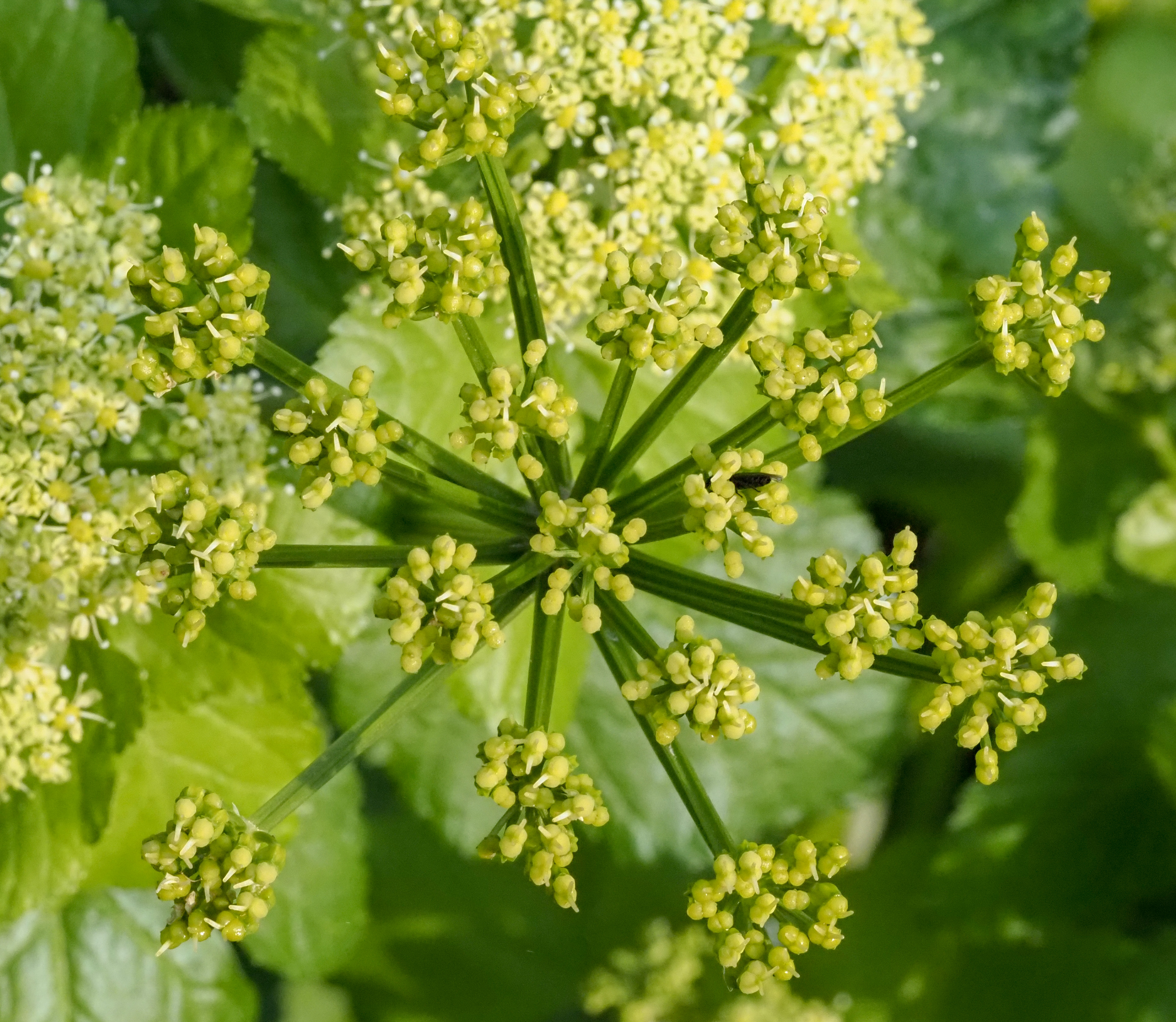
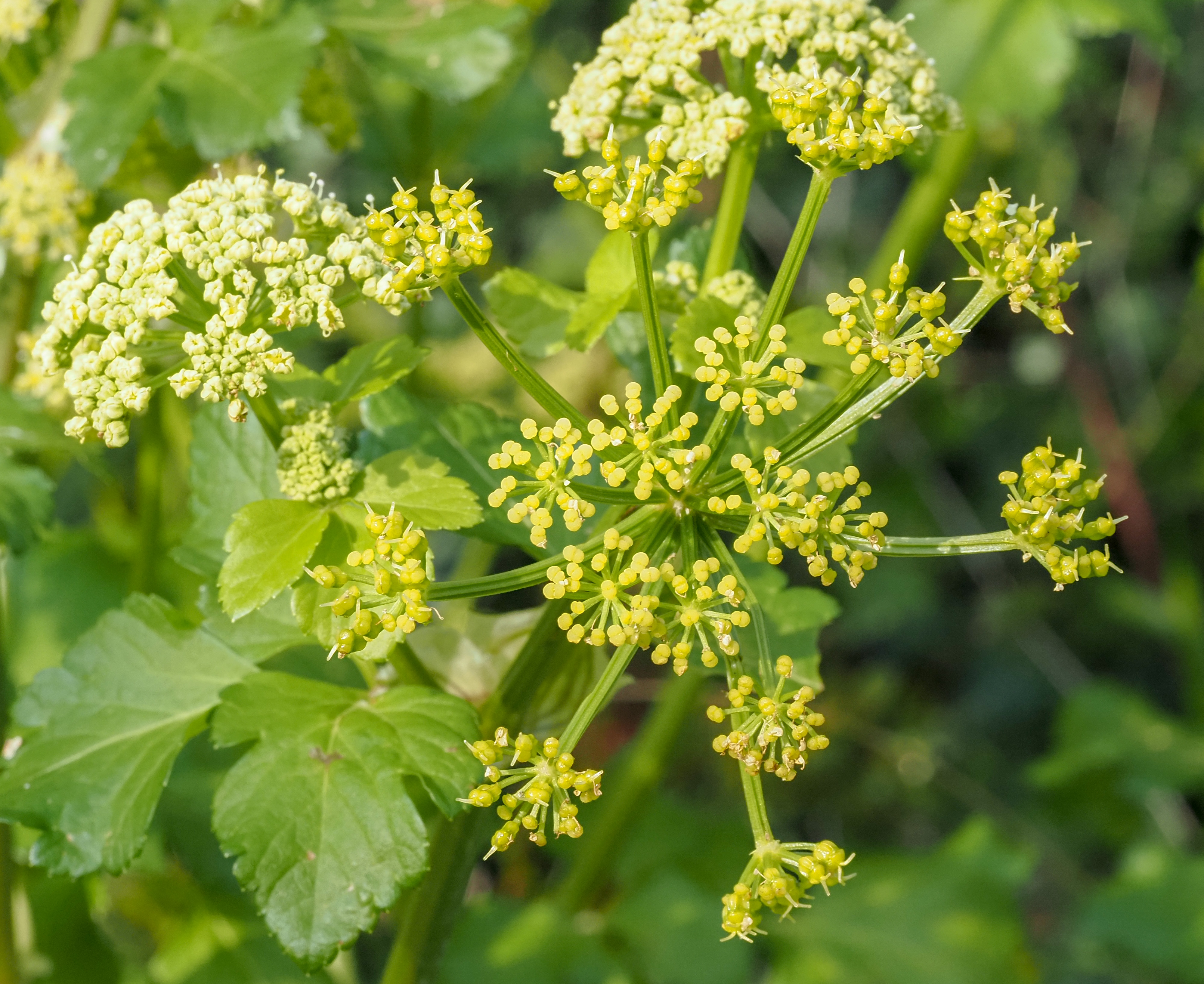
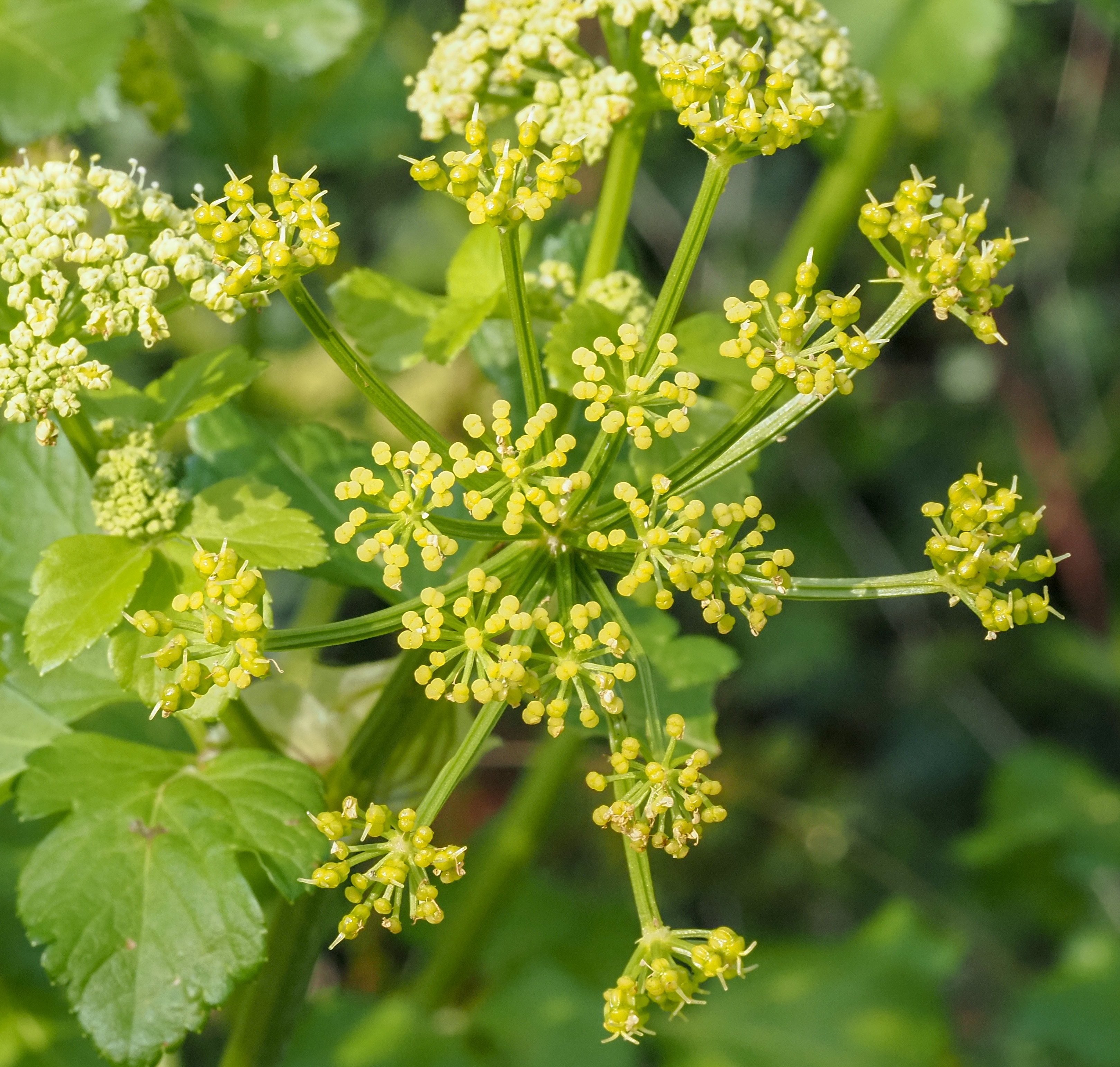
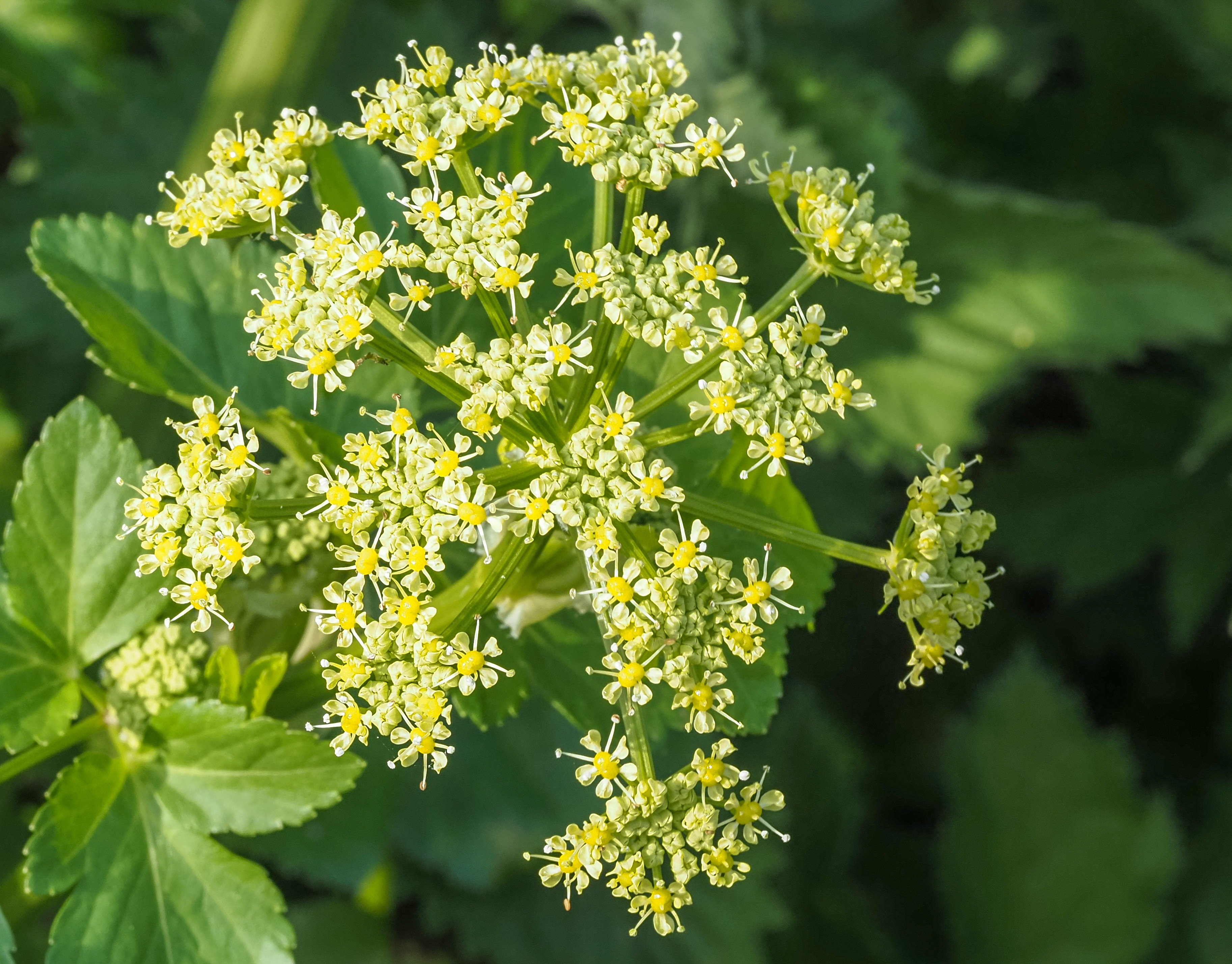
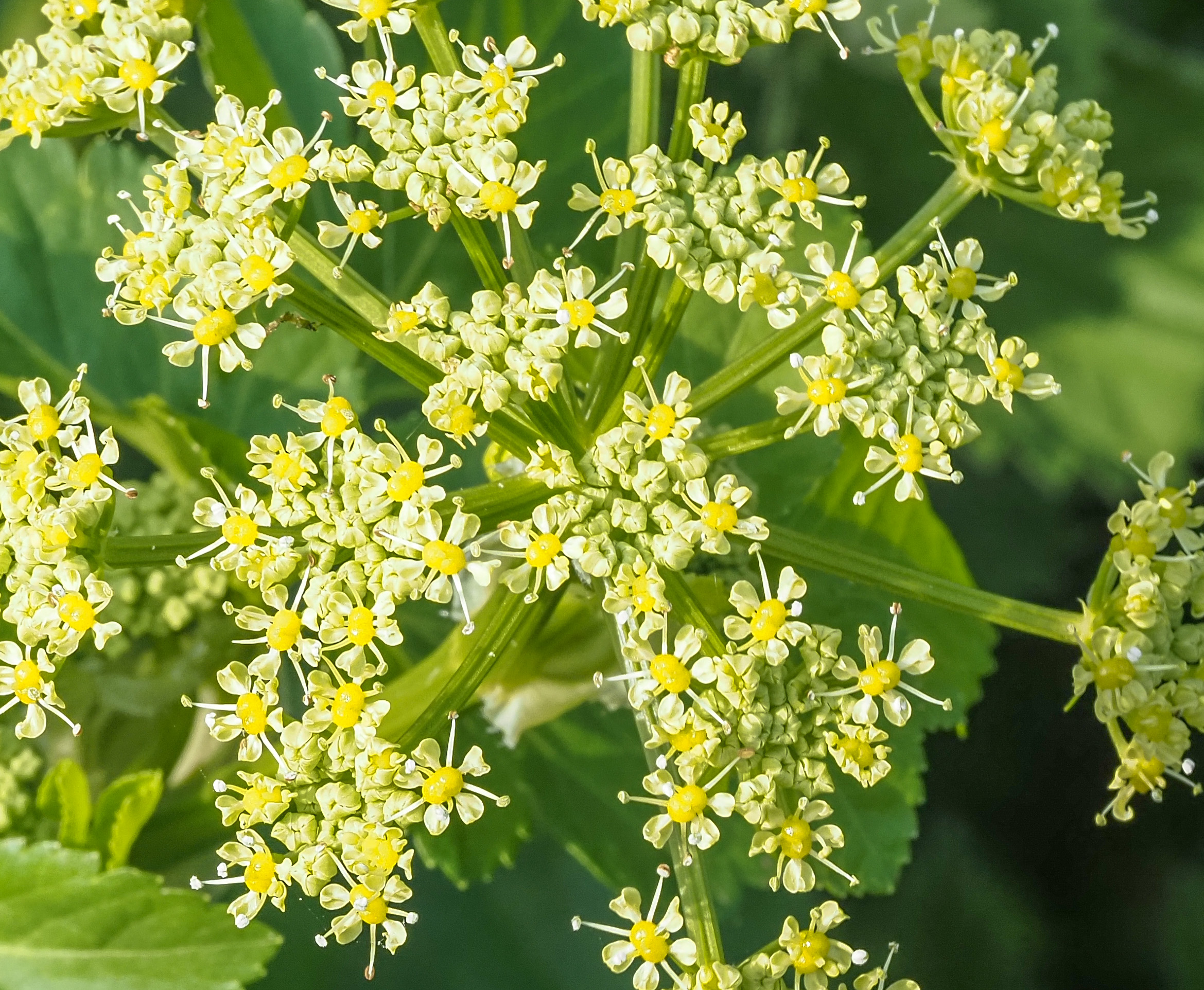
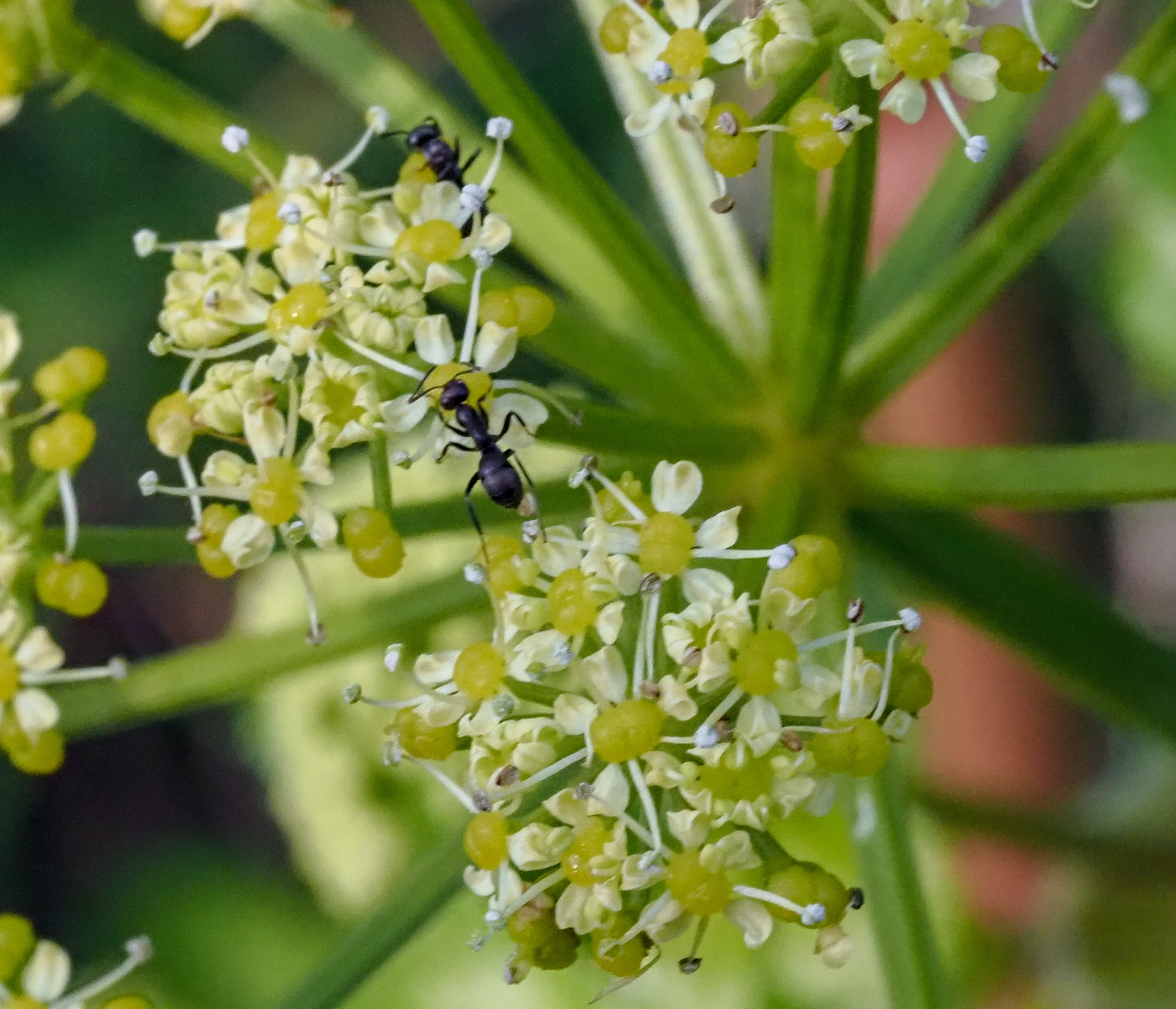
The flowers are small, with five yellowish petals and five tiny, green sepals, five stamens and if present, i.e. on bisexual flowers, two styles.
Some of the flowers are hermaphroditic, i.e. having both male and female reproductive organs (also called bisexual), but for every hermaphrodite flower in an inflorescence there are four male flowers. The terminal umbel – at the top, which usually matures first – has 100% bisexual flowers; the lateral umbels have both bisexual and male-only flowers (typically with the male umbellules in the centre), and the tertiary umbels often have only male flowers (Randall, 2003). Not all of the hermaphrodite flowers produce viable seed.
It is edible, but reportedly, best collected before the flowers open; the stems can be cooked like asparagus! It has been described as a ‘forgotten vegetable’ (Maggi et al., 2012) as it has been used since Mediaeval times as both an edible vegetable and an aromatic herbal flavoring. However, it was gradually replaced by common celery (Apium graveolens), another member of the family Apiaceae.
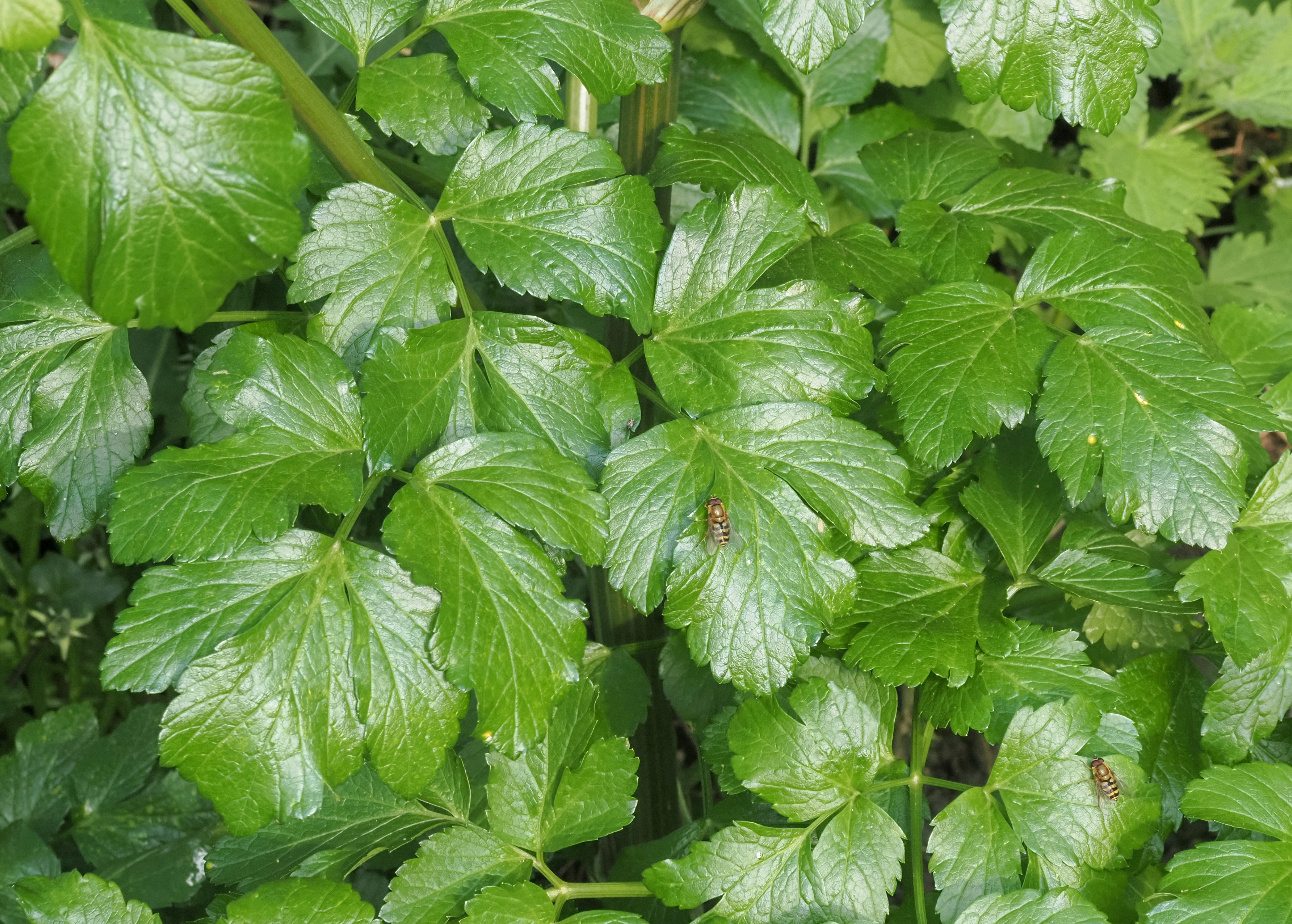
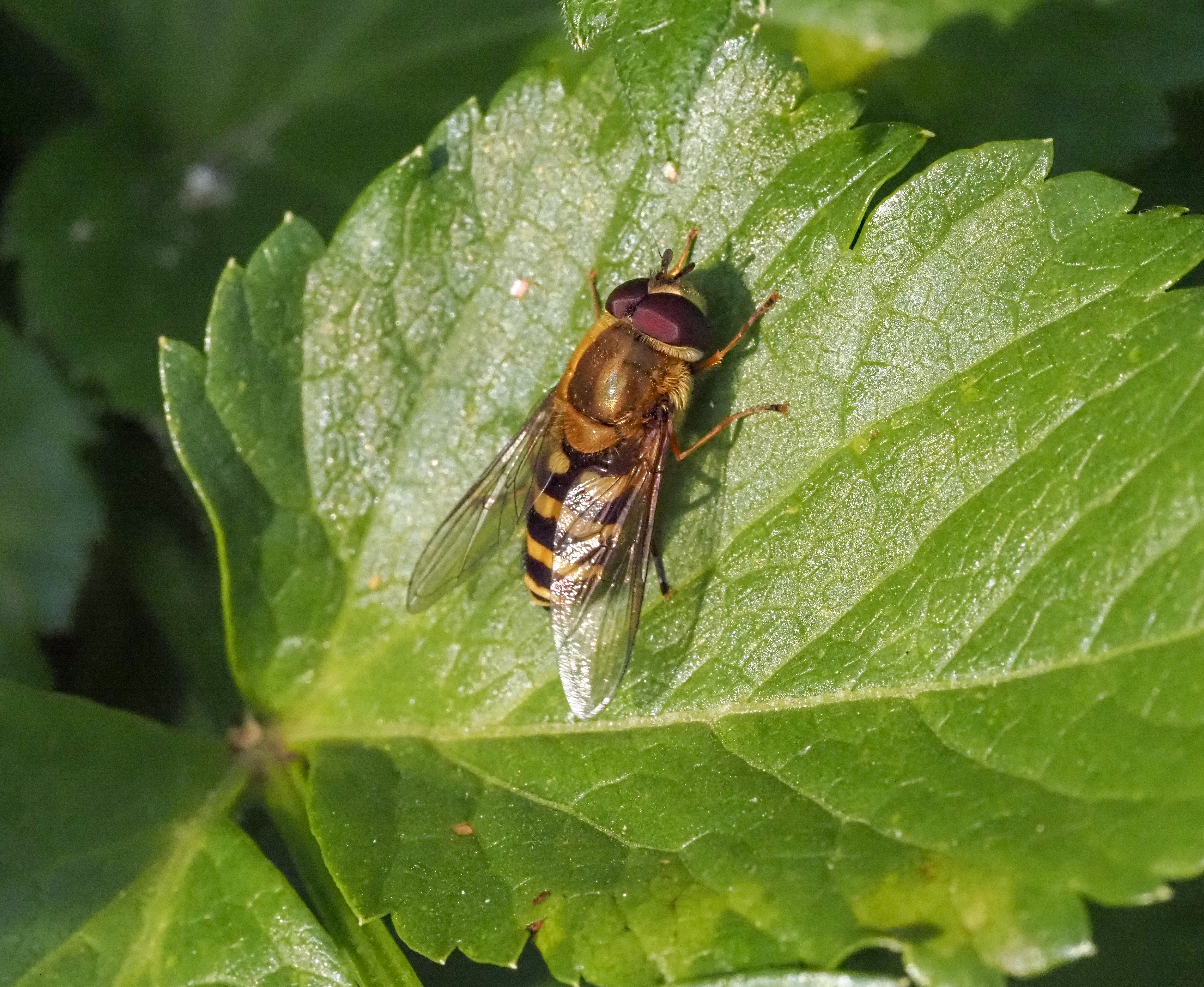
The leaves are useful resting places for insects, like these hoverflies shown below, warming up in the sunshine on an otherwise cool April day.
And the flowers attract a wide range of pollinators, including flies, bees, wasps, and even ants (see below).
References
Maggi, F., Barboni, L., Papa, F., Caprioli, G., Ricciutelli, M., Sagratini, G., & Vittori, S. (2012). A forgotten vegetable (Smyrnium olusatrum L., Apiaceae) as a rich source of isofuranodiene. Food Chemistry, 135(4), 2852-2862.
Randall, R. E. (2003). Smyrnium olusatrum L. Journal of Ecology, 91(2), 325-340.
 Ray Cannon's nature notes
So glad you brought this “antique” to our attention. It’s an attractive plant, and it’s always good to know where to look for a little extra forage 🙂
Absolutely possible—I’ll have to check my Roman cookery book. 🏛️📖👨🏻🍳😉 We have been experimenting with chard (Beta vulgaris subsp. vulgaris) and wild garlic (Allium ursinum) in our kitchen recently: really delicious. 😋
Such a beautiful plant. 💛 Did you ever taste it? 🥗
Yes, not too great! Maybe you have to cook it?