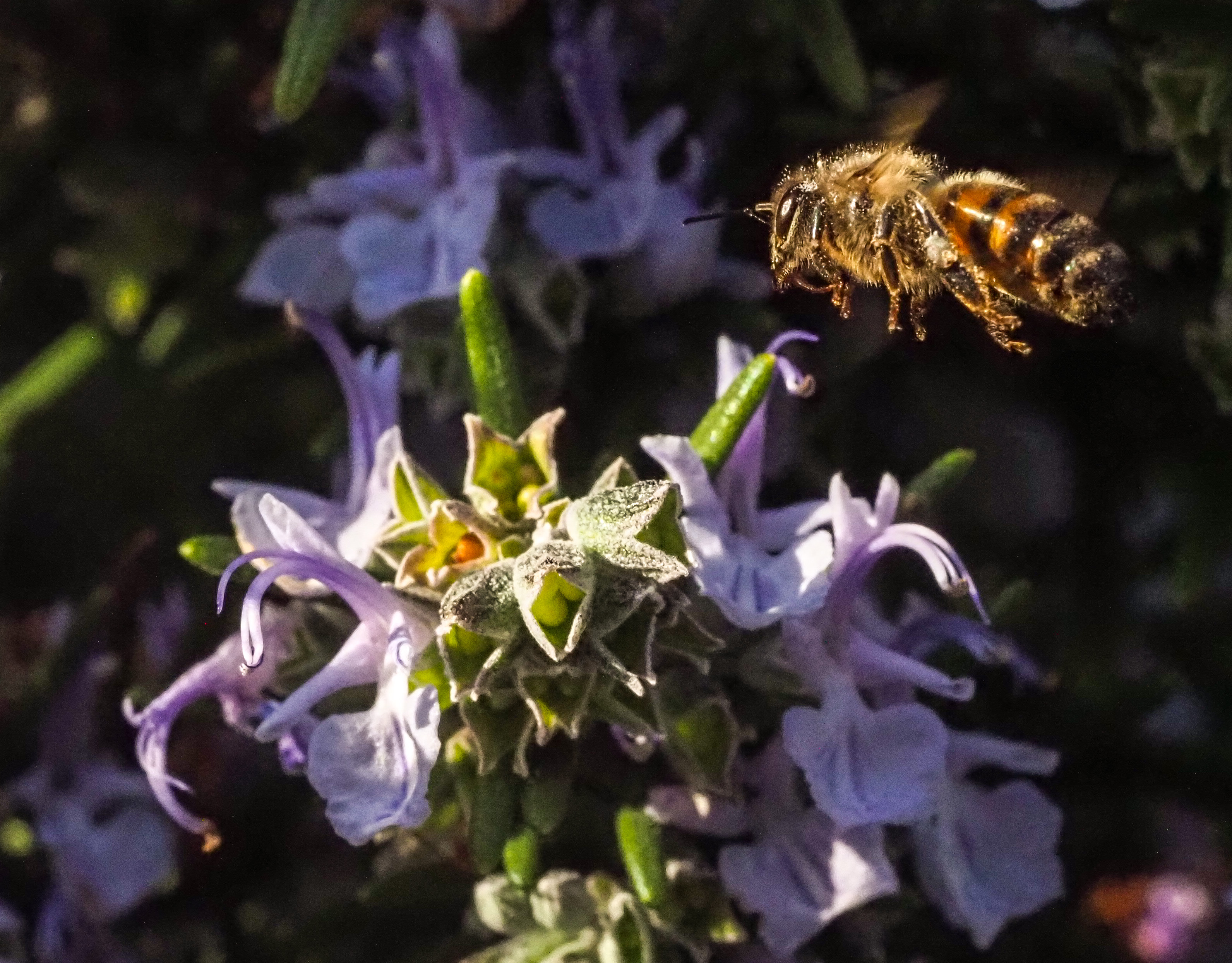
Rosemary flowers (Salvia rosmarinus, also called Rosmarinus officinalis) have two long, curved stamens, tipped by anthers, which rise up against the upper lip of the flower.
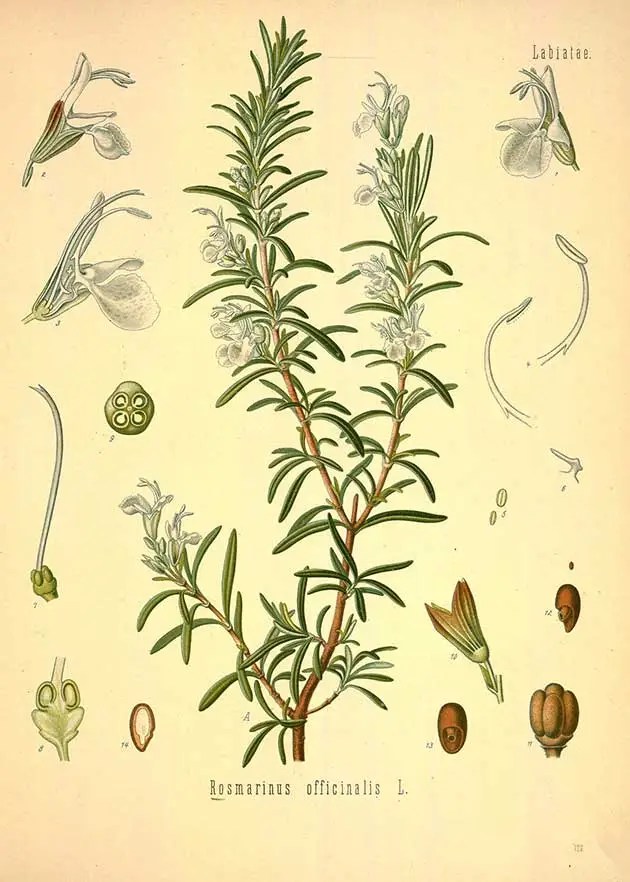
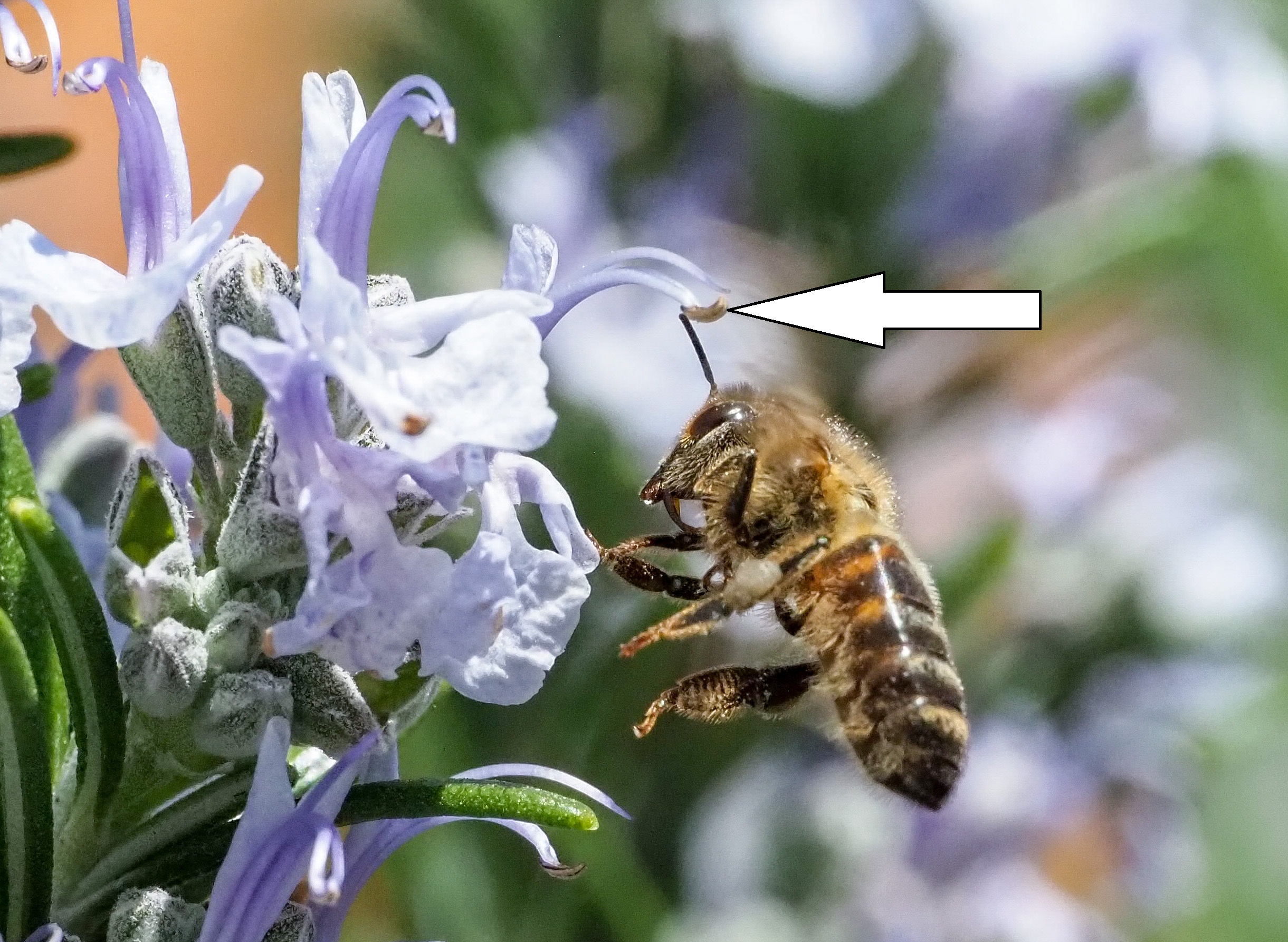
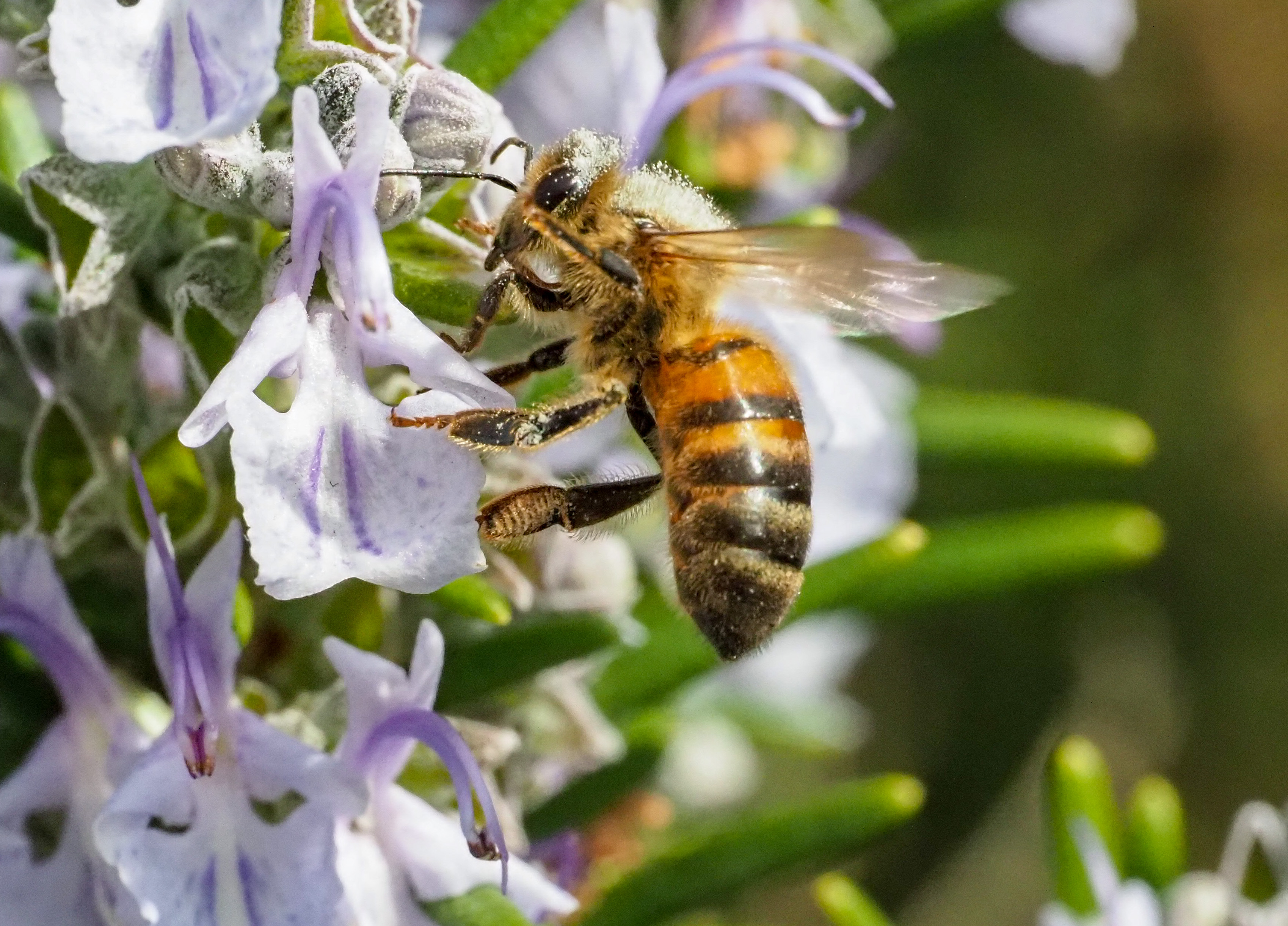
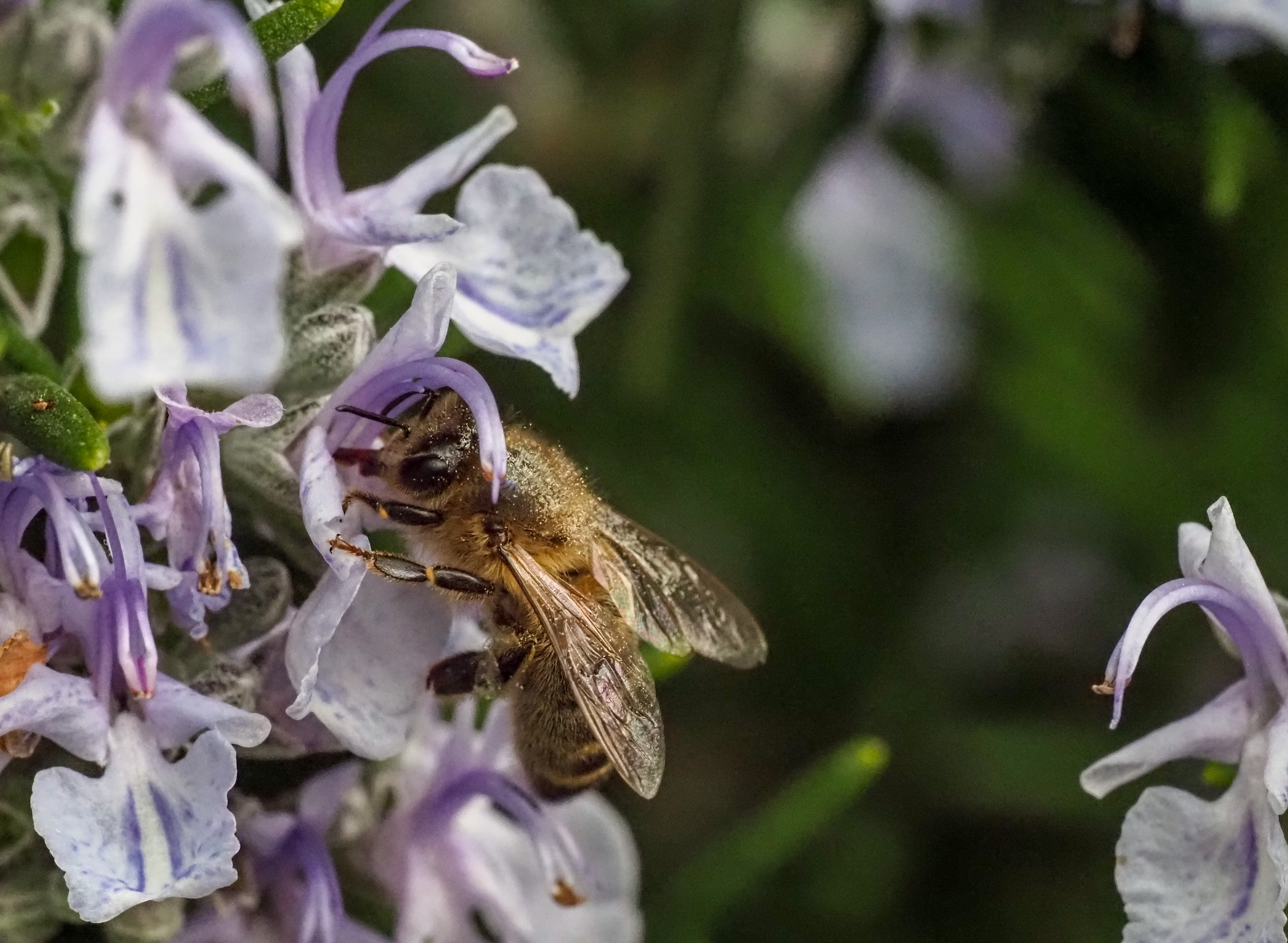
The anthers themselves are relatively small, but are beautifully positioned to bend over and dust the backs of pollinators with white pollen, as they probe for nectar at the base of the flower (see below).
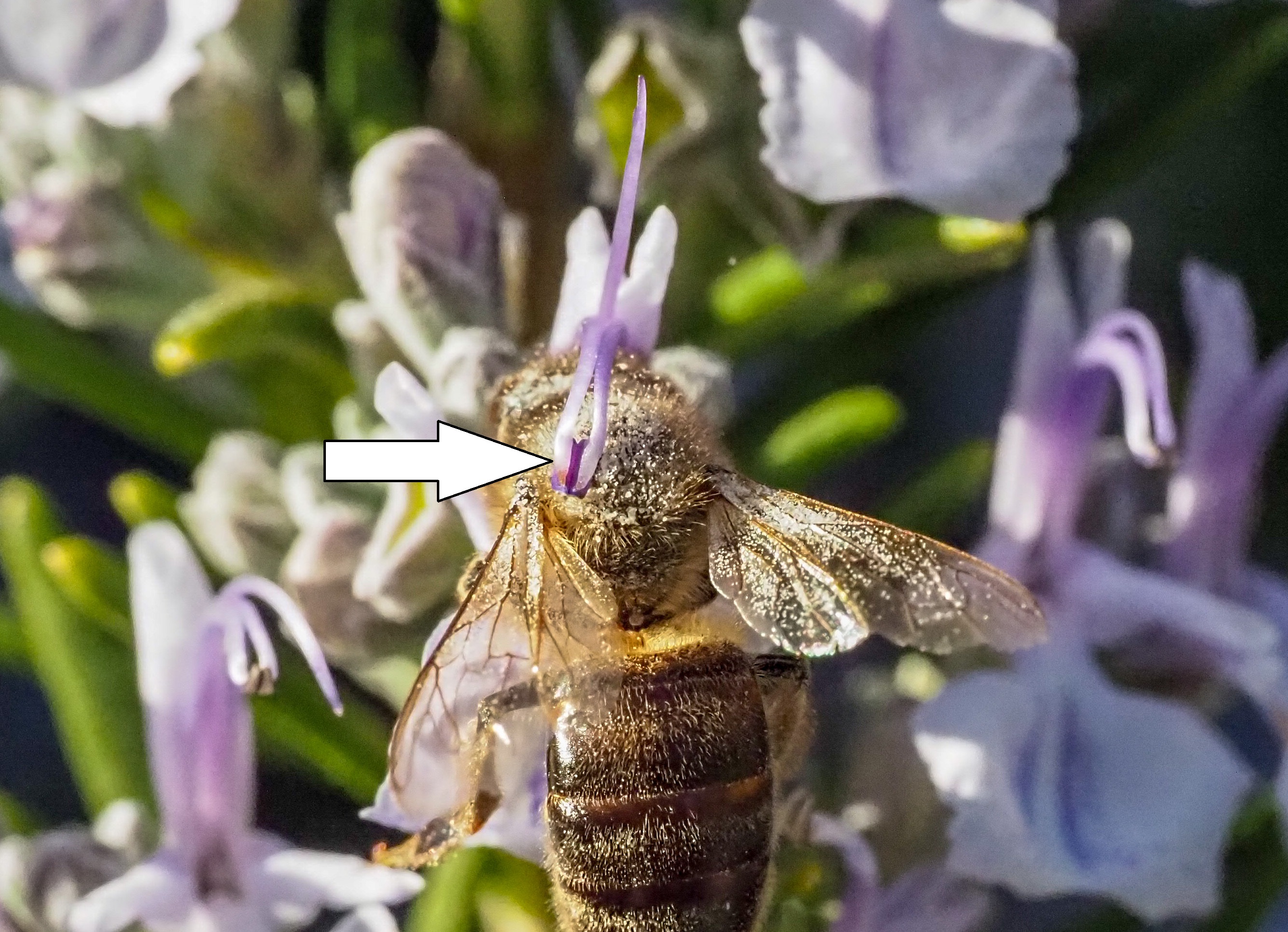
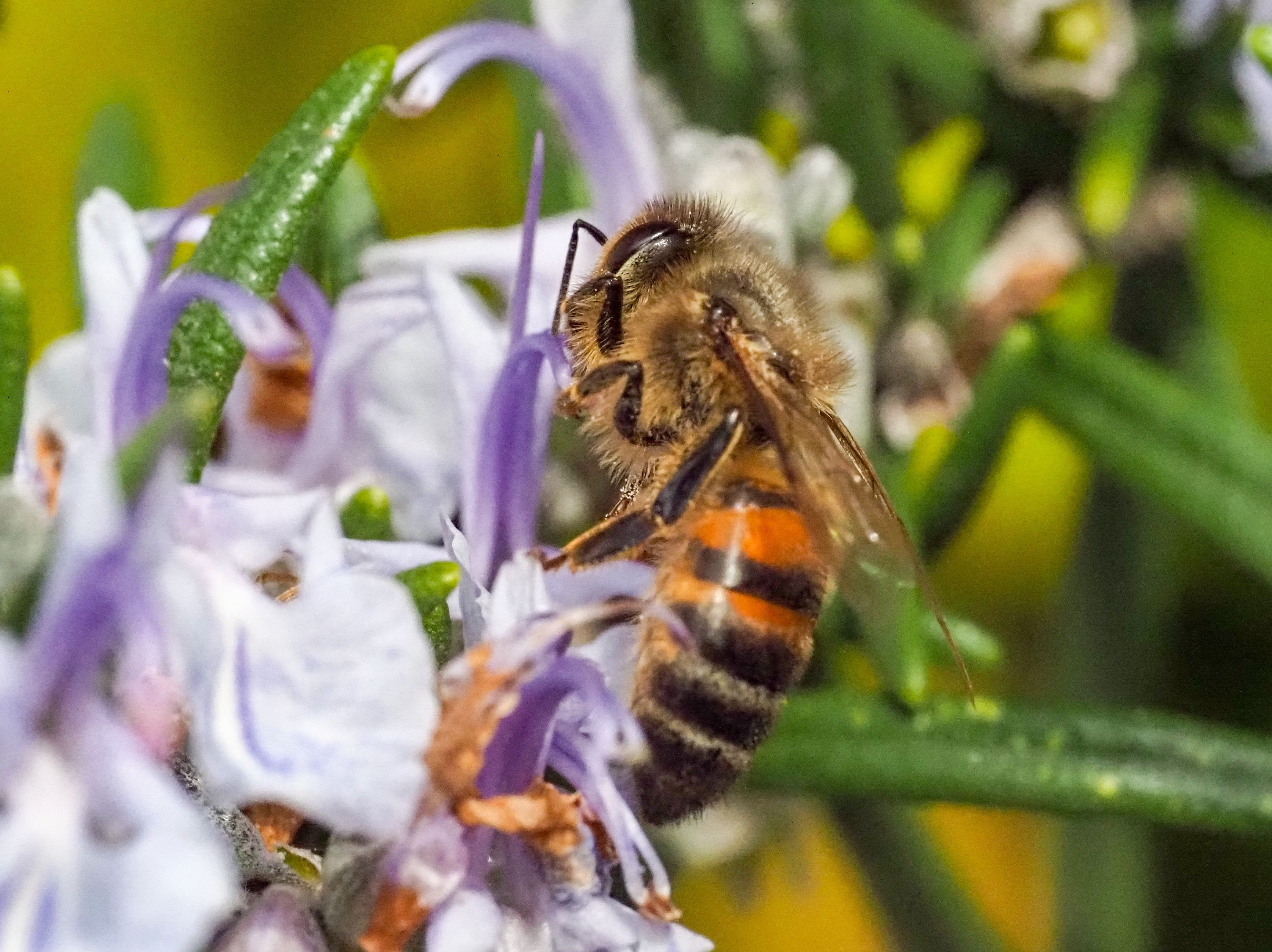
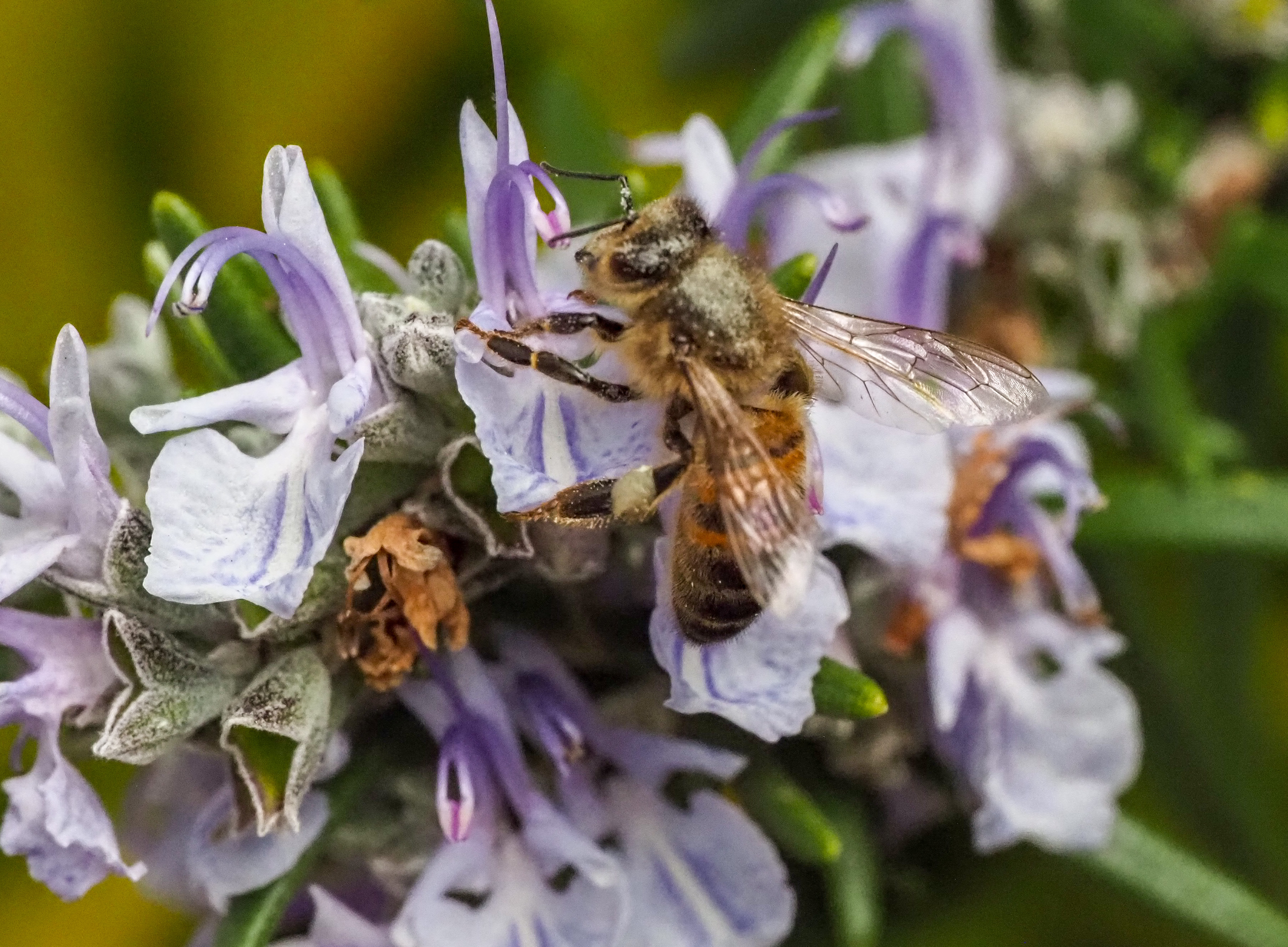
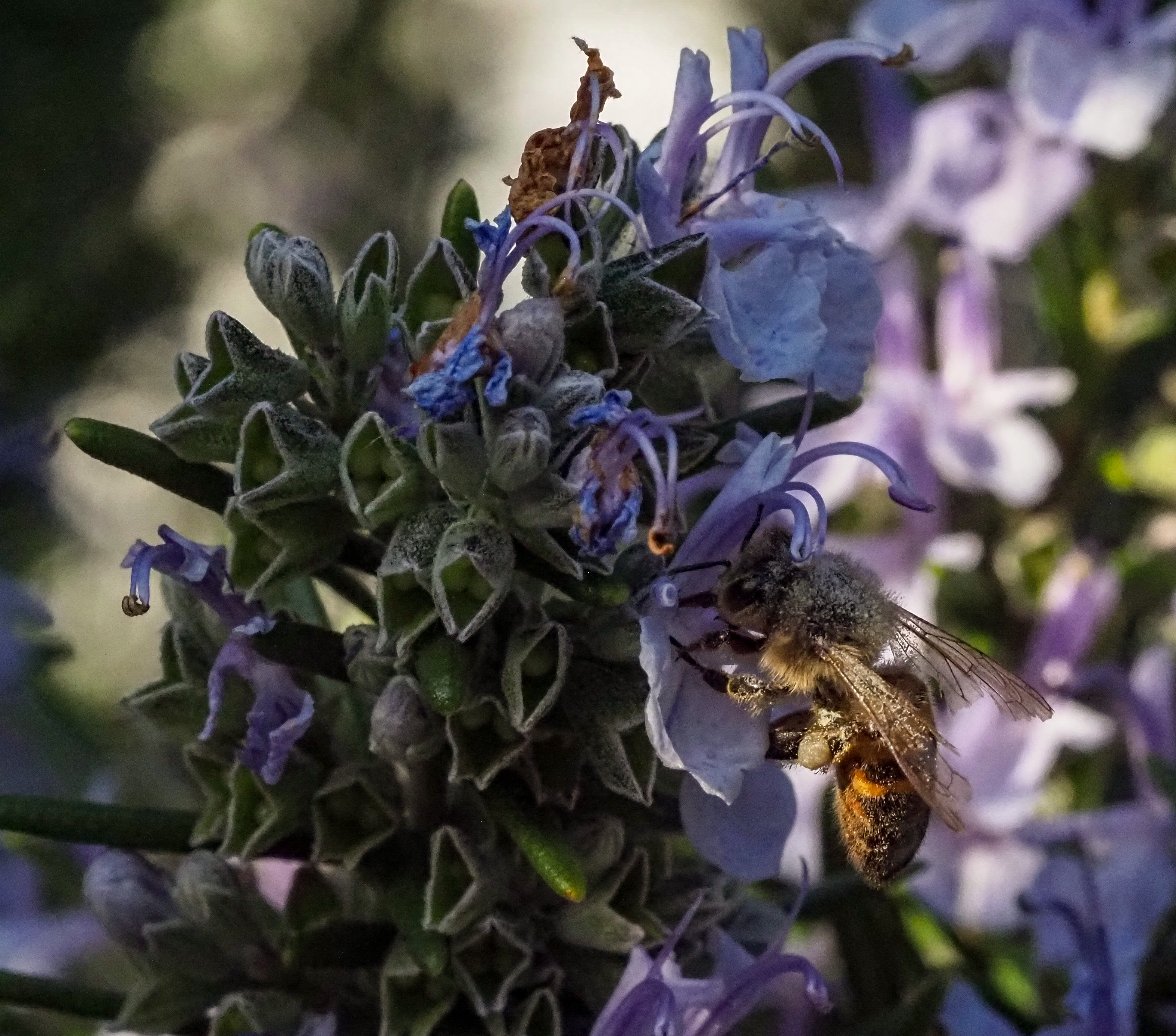
The purple stamens can be seen below, delivering a gift of pollen via the anthers, on the already, pollen-covered back (thorax) of a honey bee, Apis mellifera.
The nectar is hidden at the base of the rosemary flower, where the floral tube is relatively short at the base but wide open at the entrance to the flower, which allows honeybees to access the nectar. The nectary is a four-lobed disc surrounding the base of the ovary.
The flower is a good fit for both honey bees and bumble bees because the lower ‘lip’ provides a landing platform for the bees to hang onto while sipping nectar.
Avoiding the occurrence of inbreeding
Both self-pollination and cross-pollination can occur in rosemary flowers. So the white pollen grains can be transferred onto the pistil of the same flower (i.e. self-pollination), or onto the back of a bee, and taken away to pollinate another flower on the same, or another plant (i.e. cross-pollination).
Despite the ability to self-pollinate, it turns out that under natural conditions, most of the seed produced by rosemary plants are out-crossed: i.e. produced by cross-pollination (Garcia‐Fayos et al., 2018). This outcome occurs as a result of i) a high proportion of male-sterile flowers, and ii) because most of the seeds produced by self-pollination are aborted (empty).
Thus, rosemary plants purge most of their inbreed seeds, i.e. those produced by geitonogamy (the fertilization of a flower by pollen from another flower on the same plant) so that they can maintain high levels of genetic variation within populations and avoid inbreeding.
In conclusion, the plant is relying on pollinators to carry its pollen to different plants of the same species. Although the honey bees and other pollinators move from flower to flower on the same plant, the effects of these, within-plant fertilisation events, known as geitonogamy, are ‘weeded out’, i.e. largely eliminated by a combination of male-sterility and non-viable seeds.
Reference
Garcia‐Fayos, P., Castellanos, M. C., & Segarra‐Moragues, J. G. (2018). Seed germination and seedling allogamy in Rosmarinus officinalis: the costs of inbreeding. Plant Biology, 20(3), 627-635.

