Hoverflies are masters of mimicry, so many probably get misidentified as bees and wasps; both by humans and non-humans! There are over 280 species of hoverfly (Order Diptera; Family Syrphidae) in the UK and the average suburban garden probably supports 40 or more species during the course of the summer. Although bees, deservedly get a lot of ‘press’ as valuable pollinators, hoverflies are also vitally important, and in this blog I share some photographs and facts about these amazing insects.
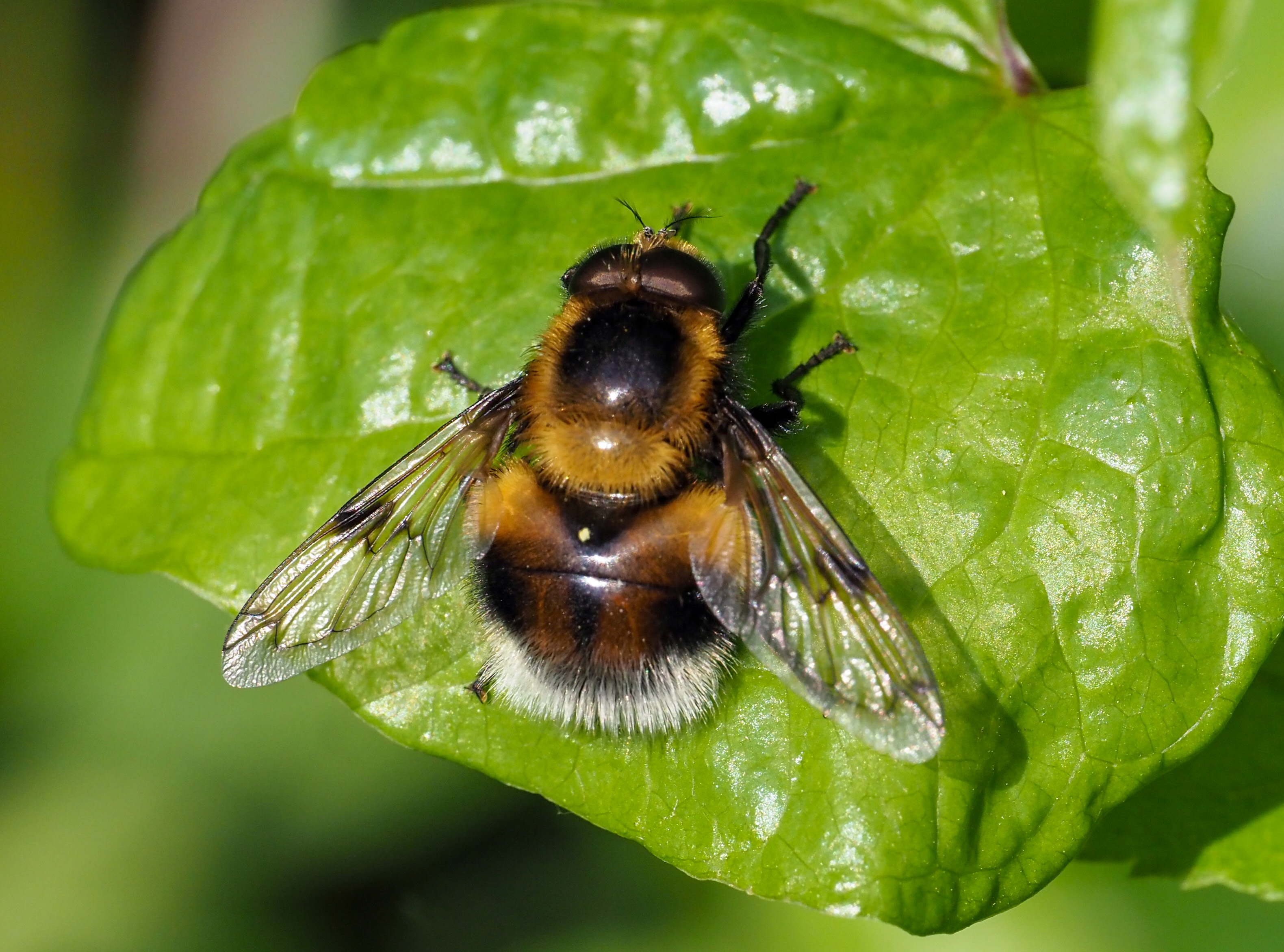
In the global league table of pollinating insects, Diptera (true flies) are ranked second – behind the Hymenoptera – visiting about 72% of crops (Radar et al., 2020). The Hymenoptera, with their star players, the bees (!), were found to visit 93% of the 105 global crop plants included in the survey. The Lepidoptera (butterflies and moths), came in a respectable, third, in the pollination rankings.

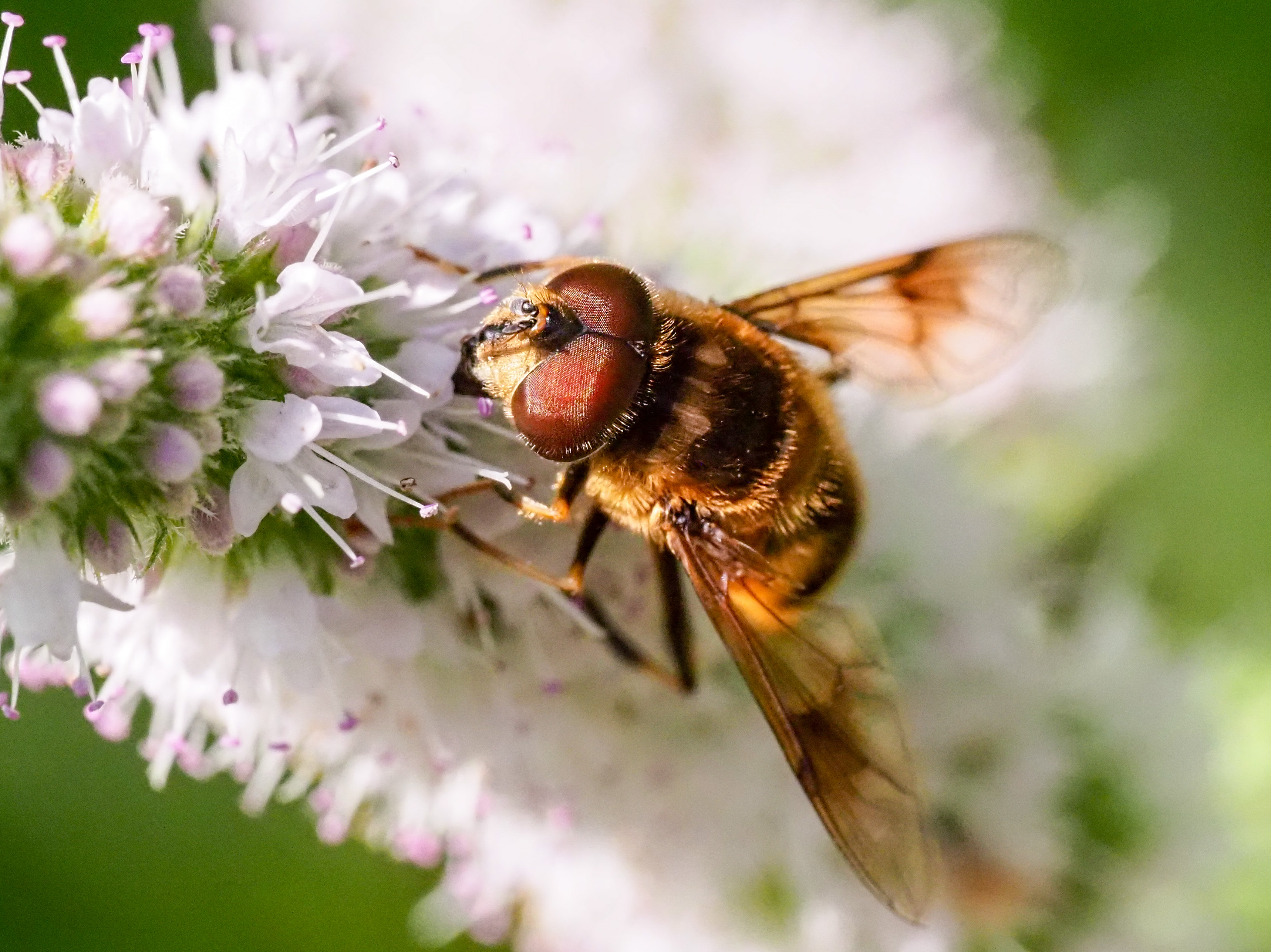
Flowers are vital to hoverflies, as they are to other insects, in that they provide both nectar – a food source – and pollen: which is required for ovarian development (Doyle al., 2020). In the process of consuming pollen and nectar, pollen grains attach to the hoverfly’s body and are thereby transferred to other plants as the fly moves around in the ecosystem.
‘Pollen, a rich protein source, is required most by females, particularly during those stages of ovarial development when yolk deposition occurs. Nectar, which is mainly carbohydrate, is required in large amounts by males, and is also required by females before and after oogenesis‘. (Haslett, 1989)
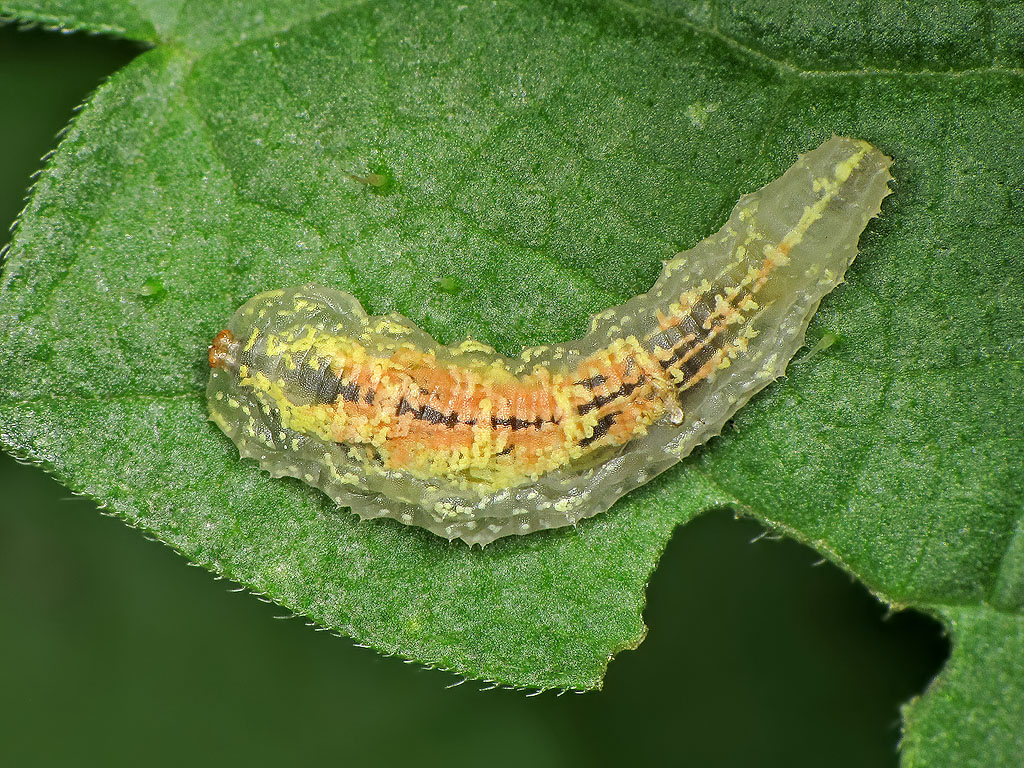
Hoverflies are however, not like bees, which collect and store pollen to feed their young. The larvae of hoverflies are predators which sustain themselves, e.g. by feeding on aphids (see below).
The hoverfly proboscis or tongue is an essential organ, or complex biological tool, for obtaining both nectar and pollen; it is generally long and slender, and is adapted for this dual role. It has long been known that syrphids consume pollen grains as well as sipping nectar from flowers (e.g. Müller, 1883).

The bodies some some hoverflies, such as the drone fly, Eristalis tenax, for example, are relatively hairy – including the region in front of the eyes (see below). Many of the hairs on the body of the drone fly are relatively long, curly-tipped, feathery and palynophilic, or pollen-attracting (Holloway, 1976). This helps them gather pollen in an indirect way.
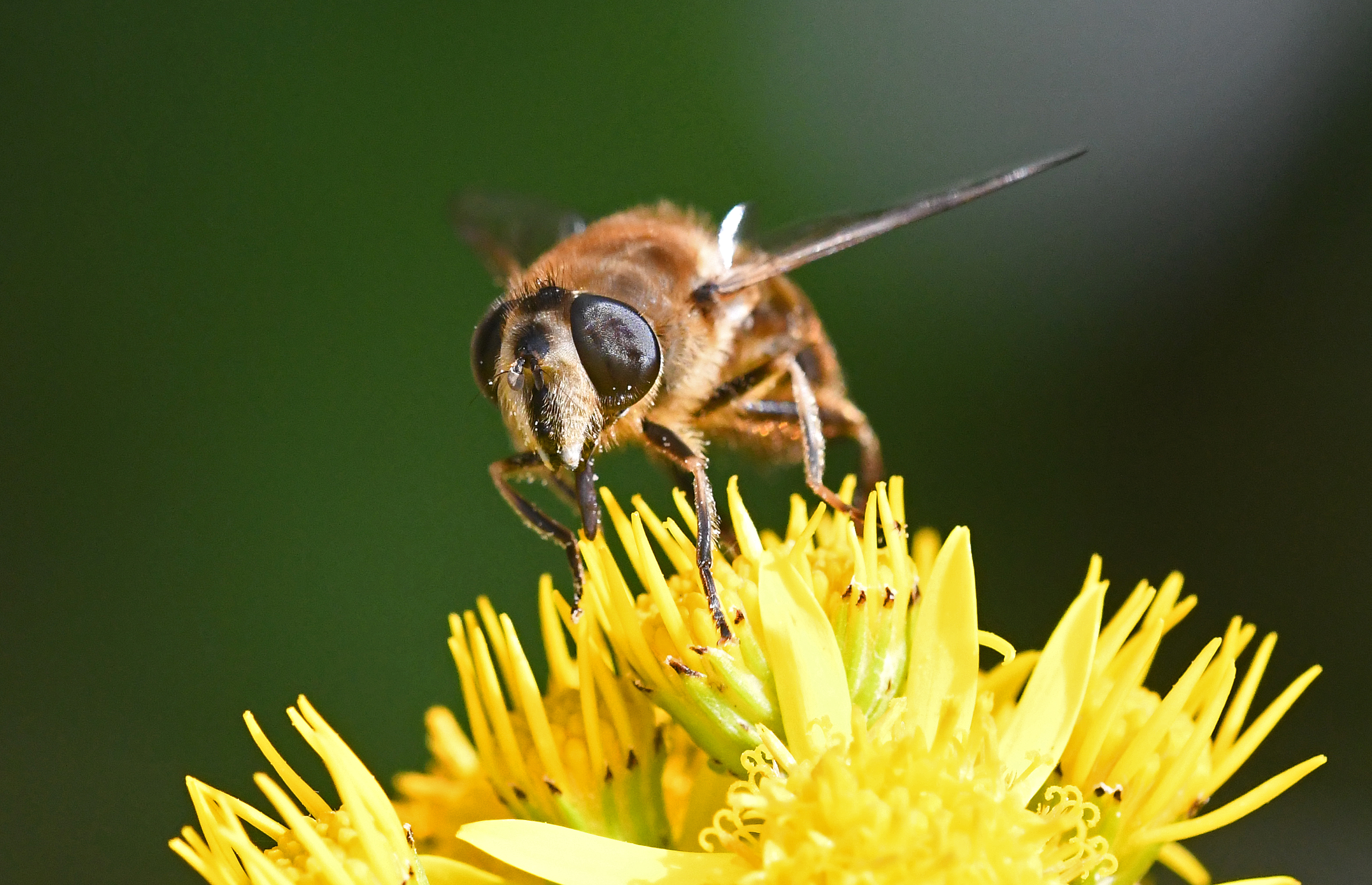
Photo by Raymond JC Cannon
The same hairy appearance is also seen on the tapered drone fly, Eristalis pertinax (below).
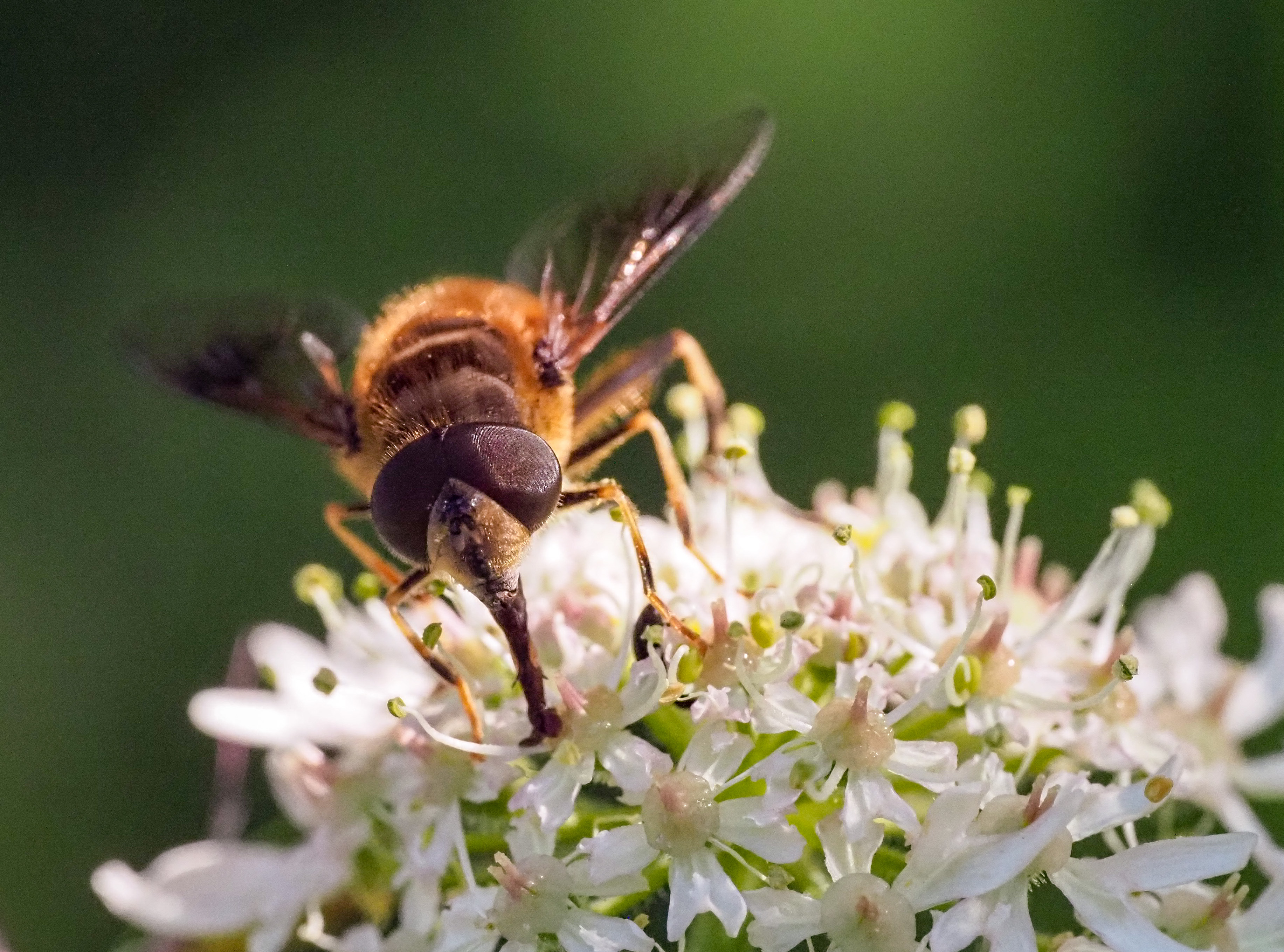
Eristalis hoverflies also have long, spirally grooved, pollen-retaining bristles on the ventral surface of their tarsi and a distinctive row of such bristles along the distal ventral edge of each tibia which forms a distinct comb (see below). They use these combs to brush pollen off their body surfaces and wings.

The pollen collecting combs on the hind tibiae (back legs) of Eristalis tenax are used for removing particles from the upper surface of the abdomen (Holloway, 1976). The hairs can be seen on the black, slightly curved hind tibiae (the fourth segment of the hind leg) on the Common Drone Fly, Eristalis tenax, shown below.

Pollen is typically transferred onto their forelegs, where it is wiped onto the mouthparts and subsequently ingested. The Furry Dronefly (below), appears to be using its proboscis to consume pollen grains directly from the tarsi (the final segments of the leg, located furthest from the body).
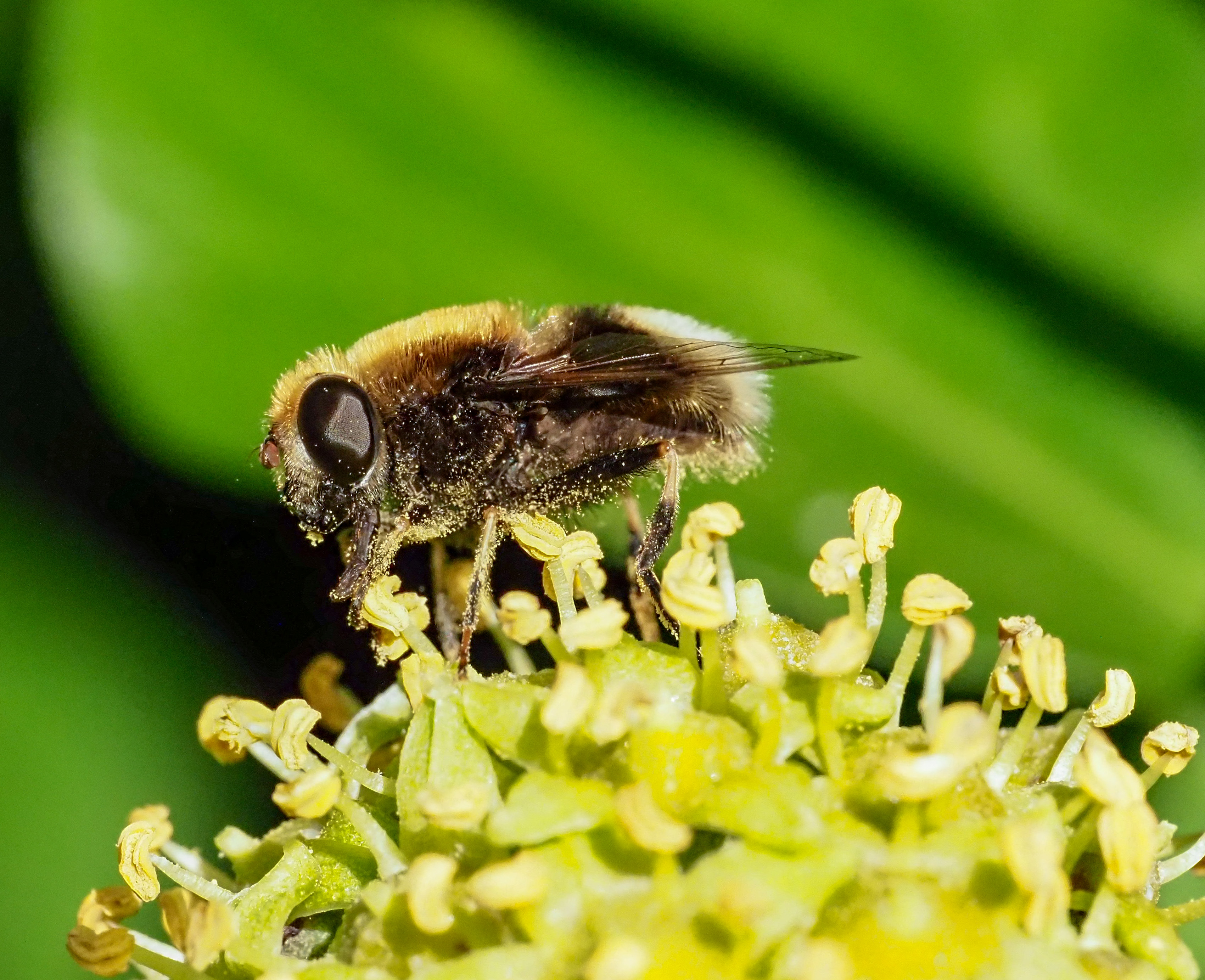
Photo by Raymond JC Cannon
There are often marked differences in proboscis lengths between hoverfly species, as well as in the size of the labellum (an oral disc at the end of the proboscis used for sponging and sucking up nectar). Hoverflies with short proboscises, generally obtain nectar from flowers such as Umbelliferae (see below) and Compositae, where the nectar wells up in the flower, or from cruciferous flowers which have separated petals (Gilbert, 1981).
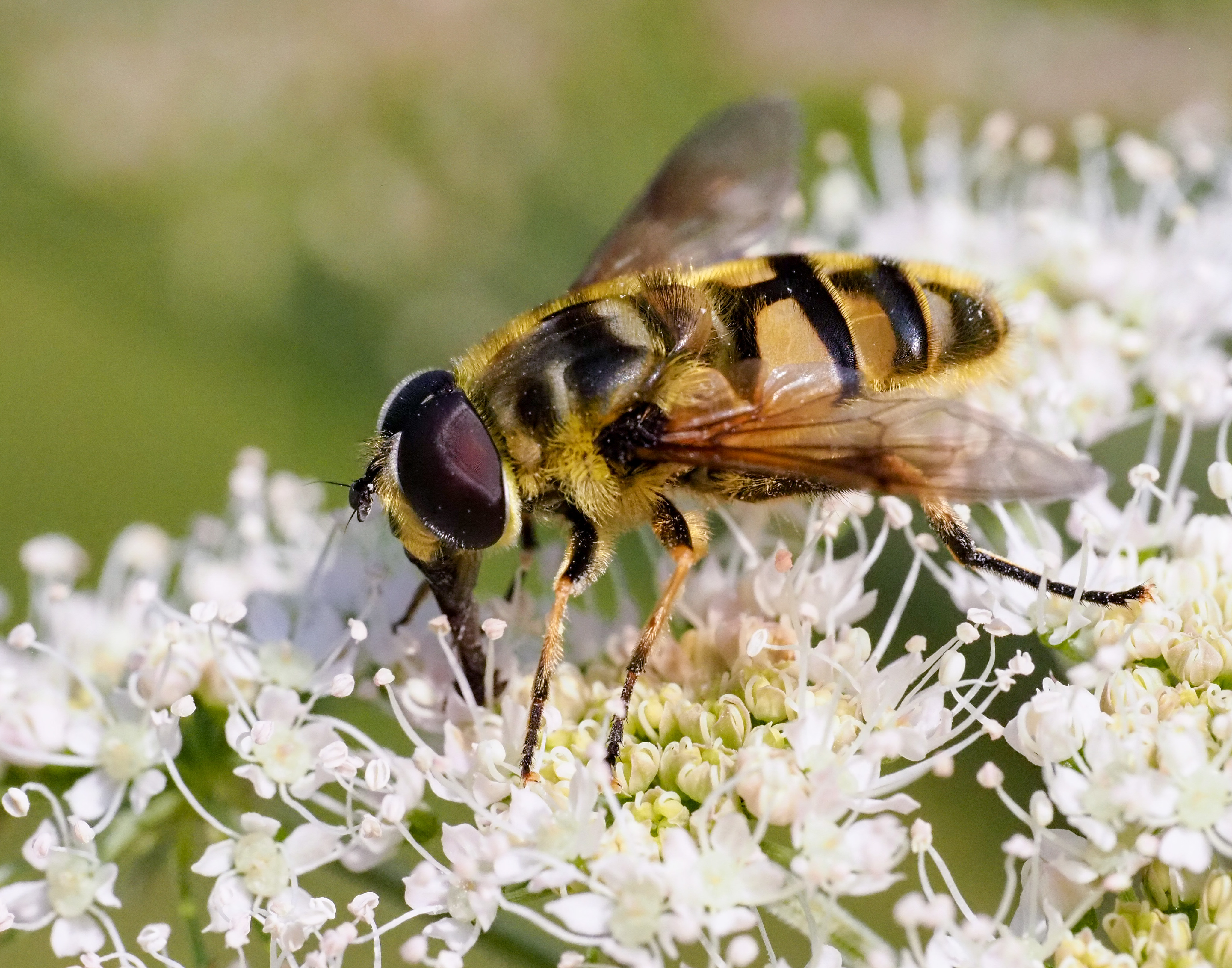
Photo by Raymond JC Cannon
Male hoverflies have consistently longer proboscises than females (Gilbert, 1985b); probably because they expend more energy, hence need more nectar, which is best obtained from flowers with deeper corollas. Species with longer tongues, tend to visit flowers with longer corolla tubes, which often contain more nectar sugar, and the proportion of pollen in their diets is generally lower than in shorter-tongued species (Gilbert, 1981).

Photo by Raymond JC Cannon
All nectar-feeding insects, including bees flies, moths, and butterflies have a proboscis extension reflex (or PER) which is elicited by contact with the sugars typically found in nectar-producing flowers. The PER is elicited by “stimulation of taste receptors on the antennae, mouthparts, or tarsi of the legs with sugars” (Luau et al., 2018).

Among the Diptera, Hoverflies (family Syrphidae), visited about half of the surveyed crop plants, which Doyle et al. (2020) estimated was worth about US$300 billion! These astronomical valuations have to be taken with a pinch of salt, but there is no doubt that syrphids, as we like to call hoverflies, are vitally important to the agricultural economy. Without them, the bees and other insects – already threatened and declining – would be completely overloaded, and we humans might well end up starving!

Photo by Raymond JC Cannon
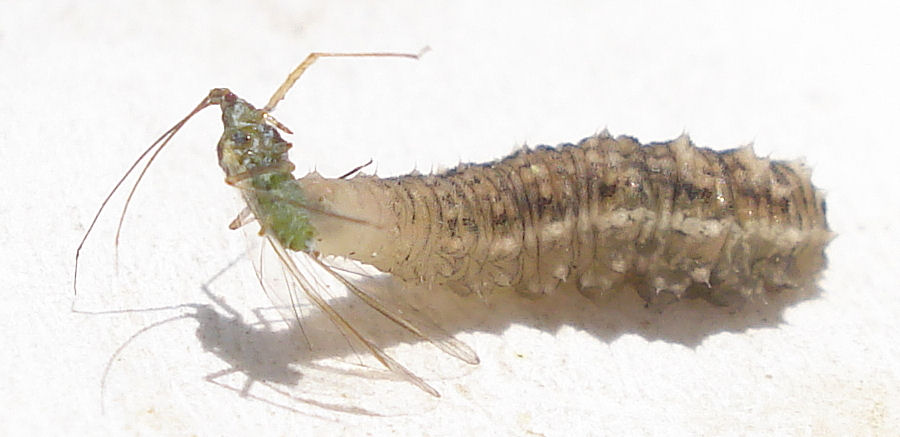
As if their pollination service was not enough(!), hoverflies also have another equally important role in our agroecosystems; perhaps I should just say, ecosystems, as they are all interconnected. That of a biocontrol agent or consumer of pests such as aphids (below).
The hoverfly proboscis is flexible and versatile, and also highly retractable, but how does it work? Well, we only have to ask Google AI now! This is what it says: The hoverfly’s proboscis is a complex, fleshy structure that consists of several key parts working in coordination:
- Labella: At the end of the proboscis are a pair of spongy, flattened lobes called labella. These lobes are covered in a network of fine grooves called pseudotracheae.
- Pseudotracheae: These narrow, channel-like canals draw liquid food, such as nectar, toward the food canal. The inner surfaces of the labella are hydrophilic (water-attracting), which aids this process through capillary action.
- Muscular pumps: Once the liquid reaches the base of the proboscis, a coordinated pumping action by specialized muscles in the head sucks the fluid up through the labral and cibarial tubes and into the fly’s gut.
- Sensory hairs: The labella are also covered with minute, backward-facing setae (hairs), which allow the hoverfly to scrape delicate surfaces and sense food, such as when it sips salty sweat from a person’s skin.
Oh well, I’ll have to throw away all my entomology text-books now! Perhaps not.
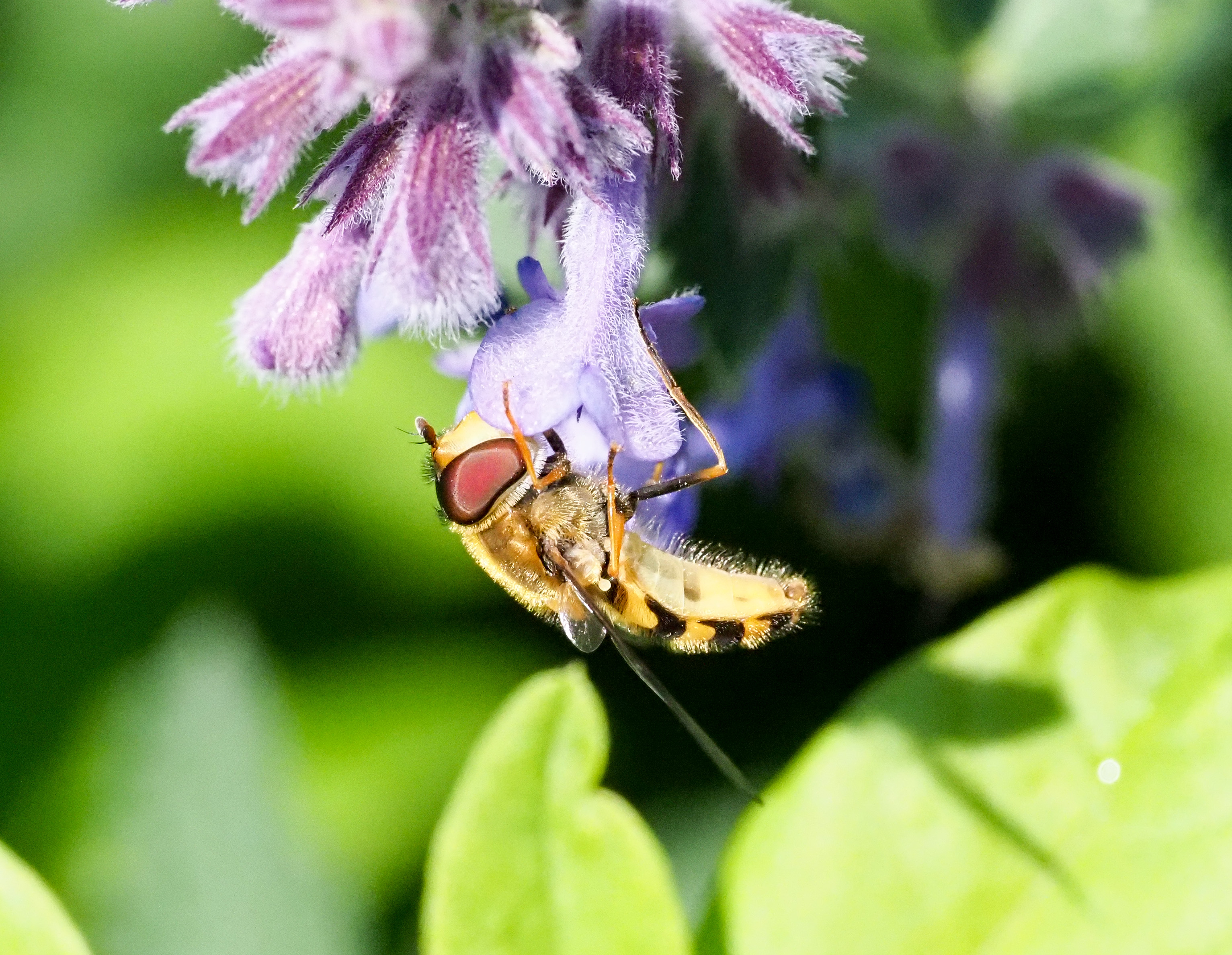
Let’s look at one particular type of hoverfly: the so-called ‘snouts‘. Rhingia spp. hoverflies, are called snouts because they have a very produced snout, or beak, at the front of the head (below).

I wondered what this snout was used for, until I saw the wonderful photograph by Will George on Flickr (see below). It clearly is a very long proboscis, over 10 mm, and as long as the rest of the body; so the beak must provide a very good stabilizer for it. Some photos of Rhingia campestris hoverflies with extended proboscises are also shown on Steven Falk’s Flickr webpage for this species: here.

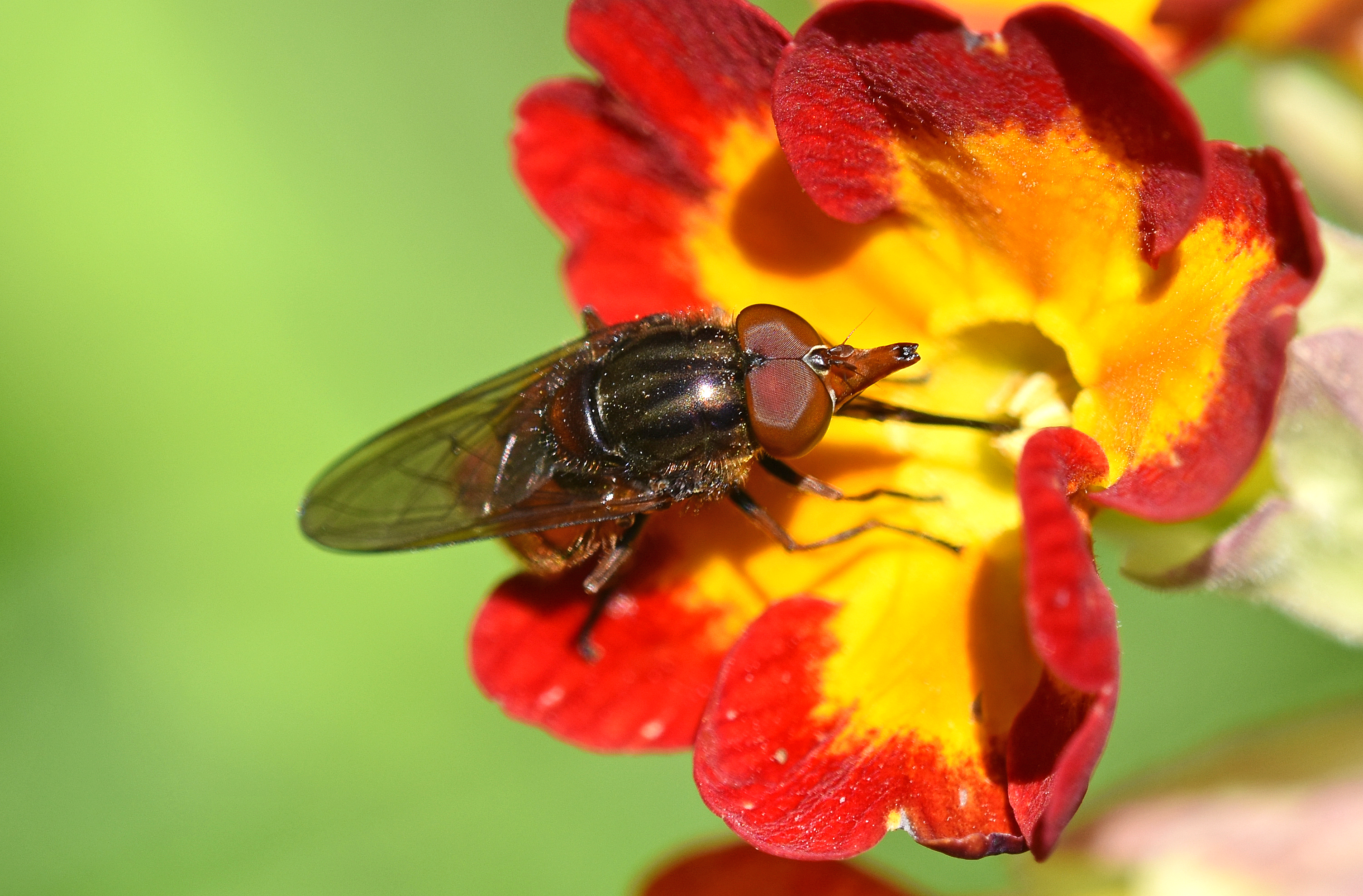
Google AI again got there straight away with this explanation for the Rhingia beak: ‘a protective beak that encloses and protects an exceptionally long proboscis, or tongue‘. It goes on to say that this ‘adaptation allows the fly to feed on nectar and pollen from deep, tubular flowers that are inaccessible to many other pollinators’. Here’s another one of my photographs showing the proboscis inserted into cowslip flower (below).
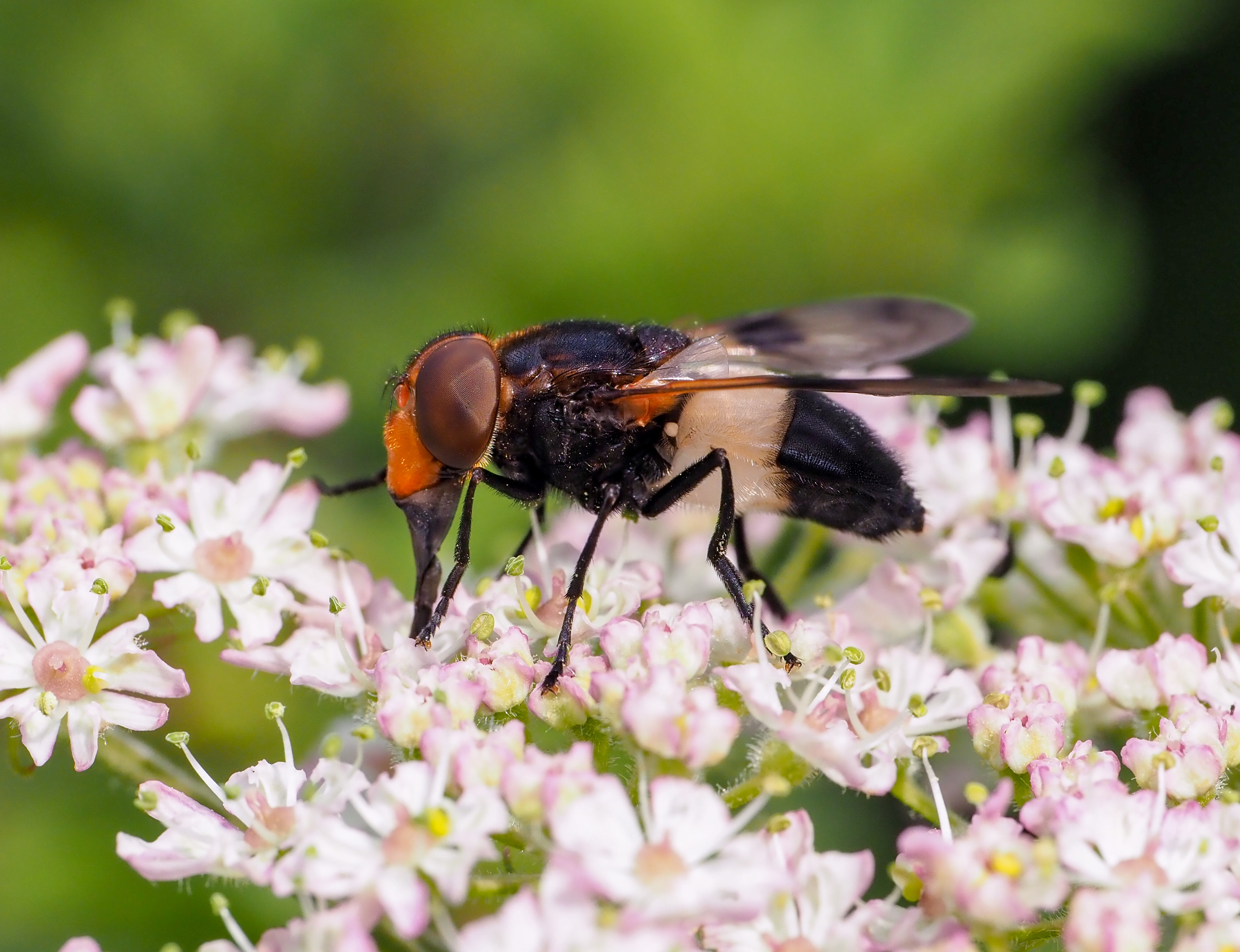
However, a pronounced beak is only one solution to the problem of manipulating a long, thin proboscis. Other hoverflies have developed the front of the head – and no doubt internal anatomy as well – to stabilise and control the proboscis. The robust face of the pellucid fly, Volucella pellucens, is shown in the photo below, with an extended proboscis.
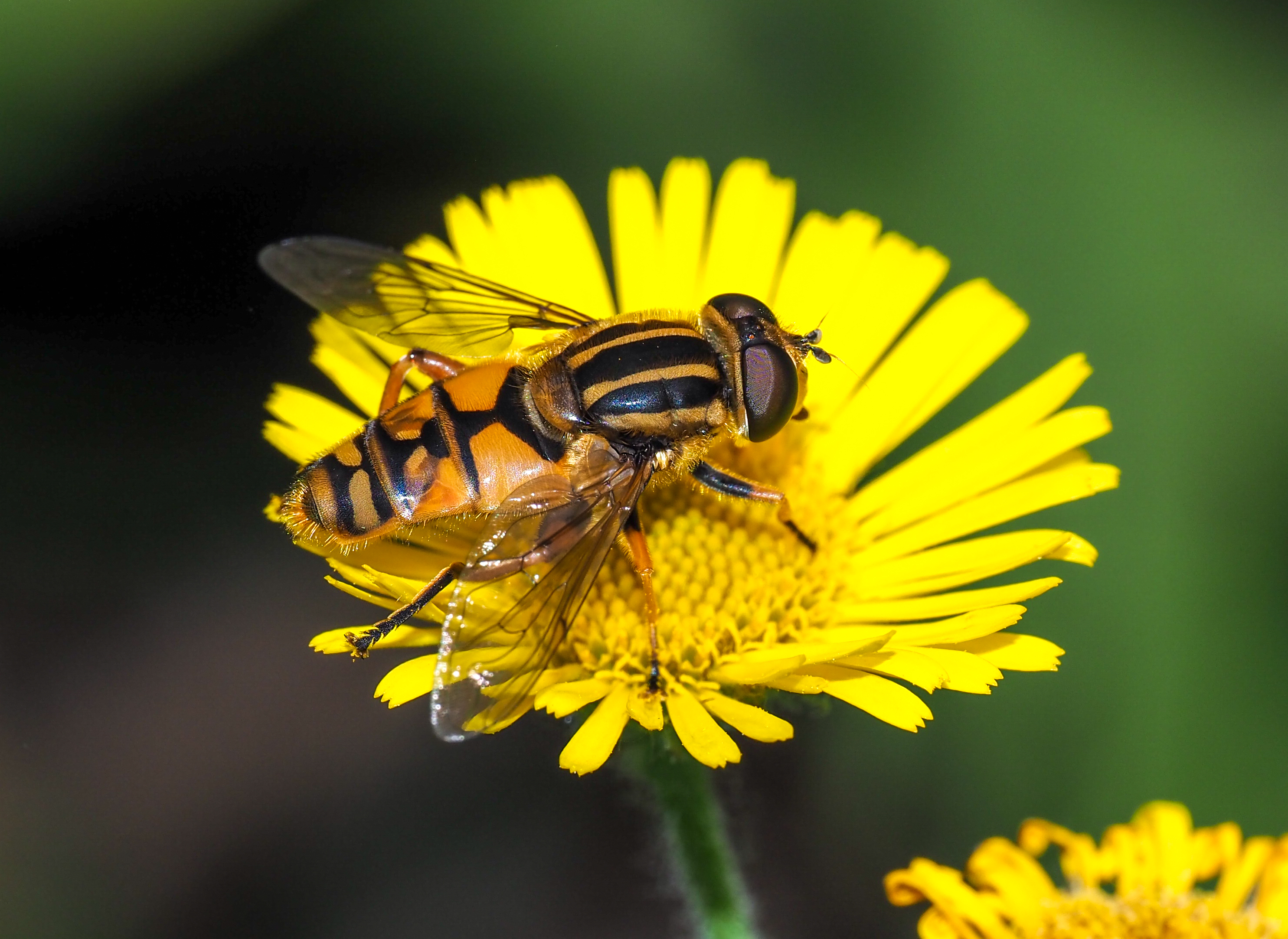
The hoverfly Eristalis tenax (Linnaeus 1758) (Syrphidae, Diptera), and probably many others, also extend their proboscis in response to yellow colours (Lunau & Wacht,1994) and many hoverflies appear to be attracted to yellow flowers.
There is some evidence to suggest that hoverflies are declining to a lesser extent than other pollinators groups, such as wild bees, for example (Doyle et al., 2020).

Many hoverfly species are long-range migrants, and are therefore, capable of transporting pollen over considerable distances, thus, facilitating gene flow between isolated plant populations. Not all members of a population migrate, but tens of billions – trillions in fact – of insects move in and out of the British Isles each spring and autumn. This gigantic ‘bioflow’ of high-flying (>150m) insects contains huge numbers of hoverflies – one to four billion according to Wotton et al. (2019) – in many species, as well as other pollinators such as beetles, bees and butterflies.

References
Borrell, B. J., & Krenn, H. W. (2006). Nectar feeding in long-proboscid insects. Ecology and biomechanics: a mechanical approach to the ecology of animals and plants, 85-212.
Doyle, T., Hawkes, W. L., Massy, R., Powney, G. D., Menz, M. H., & Wotton, K. R. (2020). Pollination by hoverflies in the Anthropocene. Proceedings of the Royal Society B, 287(1927), 20200508.
Gilbert, F. S. (1983). The foraging ecology of hoverflies (Diptera, Syrphidae): circular movements on composite flowers. Behavioral Ecology and Sociobiology, 13(4), 253-257.
Gilbert, F. S. (1985a). Ecomorphological relationships in hoverflies (Diptera, Syrphidae). Proceedings of the Royal society of London. Series B. Biological sciences, 224(1234), 91-105.
Gilbert, F. S. (1985b). Morphometric patterns in hoverflies (Diptera, Syrphidae). Proceedings of the Royal society of London. Series B. Biological sciences, 224(1234), 79-90.
Haslett, J. R. (1989). Adult feeding by holometabolous insects: pollen and nectar as complementary nutrient sources for Rhingia campestris (Diptera: Syrphidae). Oecologia, 81(3), 361-363.
Holloway, B. A. (1976). Pollen‐feeding in hover‐flies (Diptera: Syrphidae). New Zealand journal of zoology, 3(4), 339-350.
Hu, G., Lim, K. S., Horvitz, N., Clark, S. J., Reynolds, D. R., Sapir, N., & Chapman, J. W. (2016). Mass seasonal bioflows of high-flying insect migrants. Science, 354(6319), 1584-1587.
Lunau, K., An, L., Donda, M., Hohmann, M., Sermon, L., & Stegmanns, V. (2018). Limitations of learning in the proboscis reflex of the flower visiting syrphid fly Eristalis tenax. PLoS One, 13(3), e0194167. https://journals.plos.org/plosone/article?id=10.1371/journal.pone.0194167#
Lunau, K., & Wacht, S. (1994). Optical releasers of the innate proboscis extension in the hoverfly Eristalis tenax L.(Syrphidae, Diptera). Journal of Comparative Physiology A, 174(5), 575-579.
Müller, H. (1883). Diptera and Thysanoptera. The fertilization of flowers. Macmillan, London, 36-45.
Rader R, Cunningham S A, Howlett B G, Inouye D W. (2020). Non-bee insects as visitors and pollinators of crops: biology, ecology and management. Annu. Rev. Entomol. 65, 391–407
Reynolds, S. K., Clem, C. S., Fitz‐Gerald, B., & Young, A. D. (2024). A comprehensive review of long‐distance hover fly migration (Diptera: Syrphidae). Ecological Entomology, 49(6), 749-767.
Wotton, K. R., Gao, B., Menz, M. H., Morris, R. K., Ball, S. G., Lim, K. S., … & Chapman, J. W. (2019). Mass seasonal migrations of hoverflies provide extensive pollination and crop protection services. Current Biology, 29(13), 2167-2173.
 Ray Cannon's nature notes
Certainly noticed a lot of Hovers around this year but my id skills are pitiful at best.
Keep them books, AI is utter tripe!
very interesting, thank you
Are you sure that proboscis is 10cm long? Ten times the body length?
Plenty of human-created resources on the internet. No need to betray humanity by drinking the AI slop. Otherwise, an enjoyable article.
10mm. Thanks for pointing it out.😁
Great collection of critters, and very well observed details. Thanks!