Now is the time of year (March) that solitary bees start to appear. The aptly named, Hairy-footed flower bee, Anthophora plumipes Pallas (Apidae: Anthophorini) is a one of the first species to become active in the spring, and typically flies from March until May in the UK.
Hairy-footed bees have the most fascinating courtship and mate-finding behaviour, which I describe below. Briefly, after fighting off other males and hovering in front of the female, the male pounces on her, usually knocking her to the ground; then brushes his hairy mid-legs, one at a time against her antennae. Transferring his pheromone.
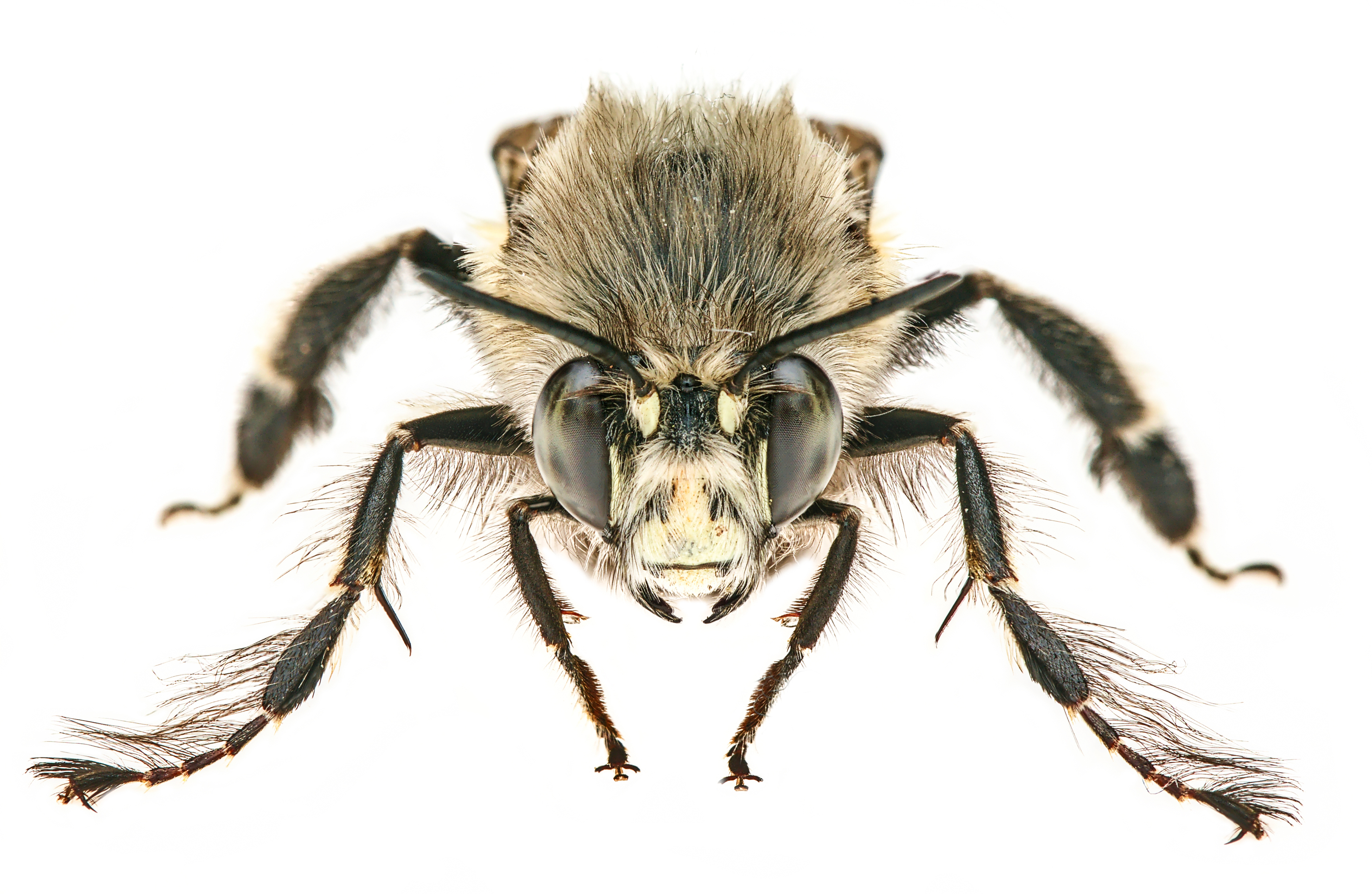
Hairy-footed flower bees appear early in the year because they are well adapted to fly on the inclement days of spring. They can warm-up their flight muscles relatively quickly, and can fly at temperatures as low as 5-10°C. They are able to do this by maintaining their thoracic flight muscles at temperatures well above air temperatures: as much as 25-30 degrees C above ambient (Stone, 1993). Females usually emerge later than males, but nevertheless can get going on cold mornings at lower temperatures, sometimes foraging before dawn at temperatures approaching 0°C (according to Stone et al., 1995).
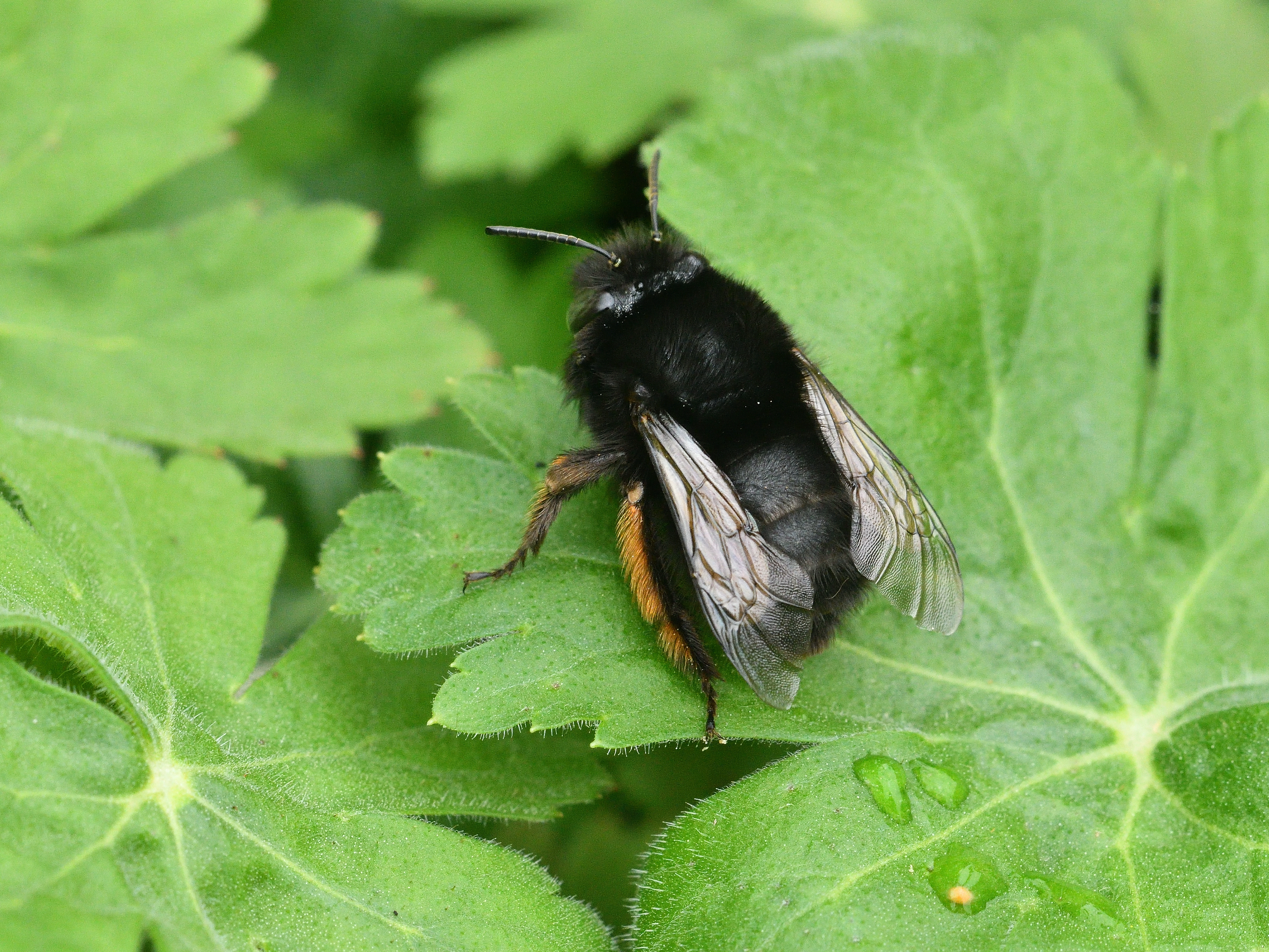
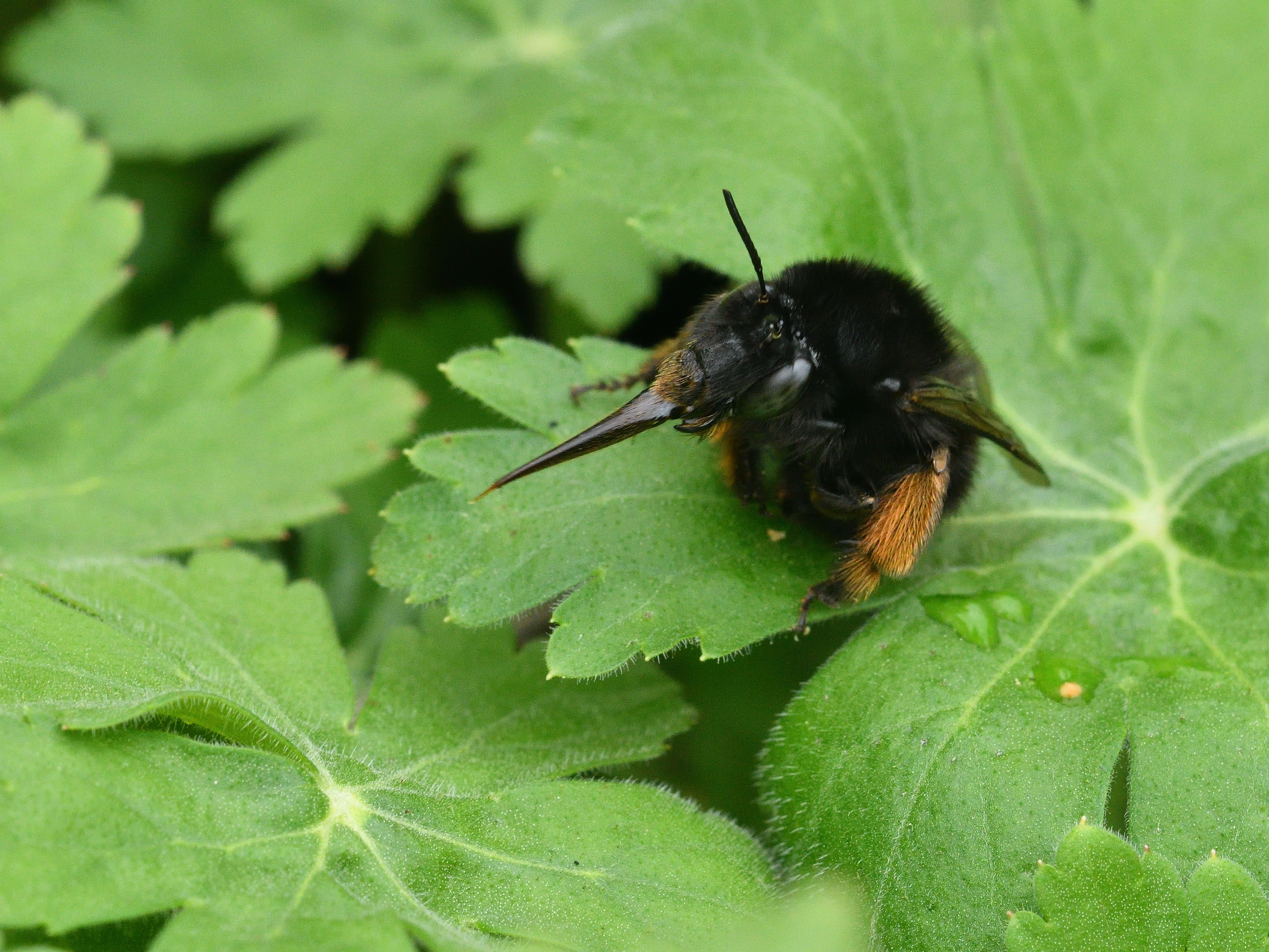
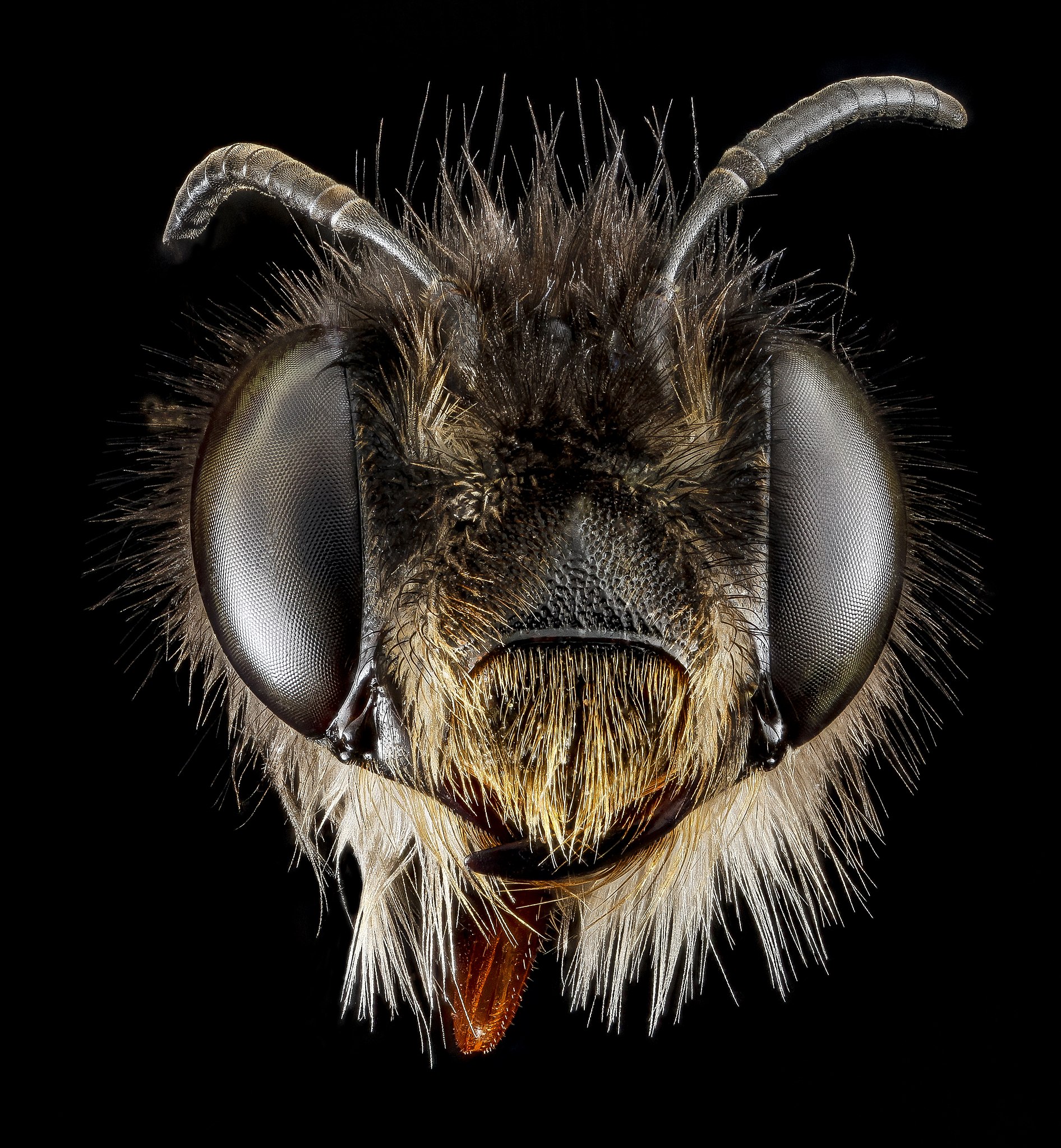
Female Hairy-footed bees are usually the larger sex, averaging 14-17 mm in length, with jet-black fur and prominent orange pollen brushes on their hind-legs (see below).
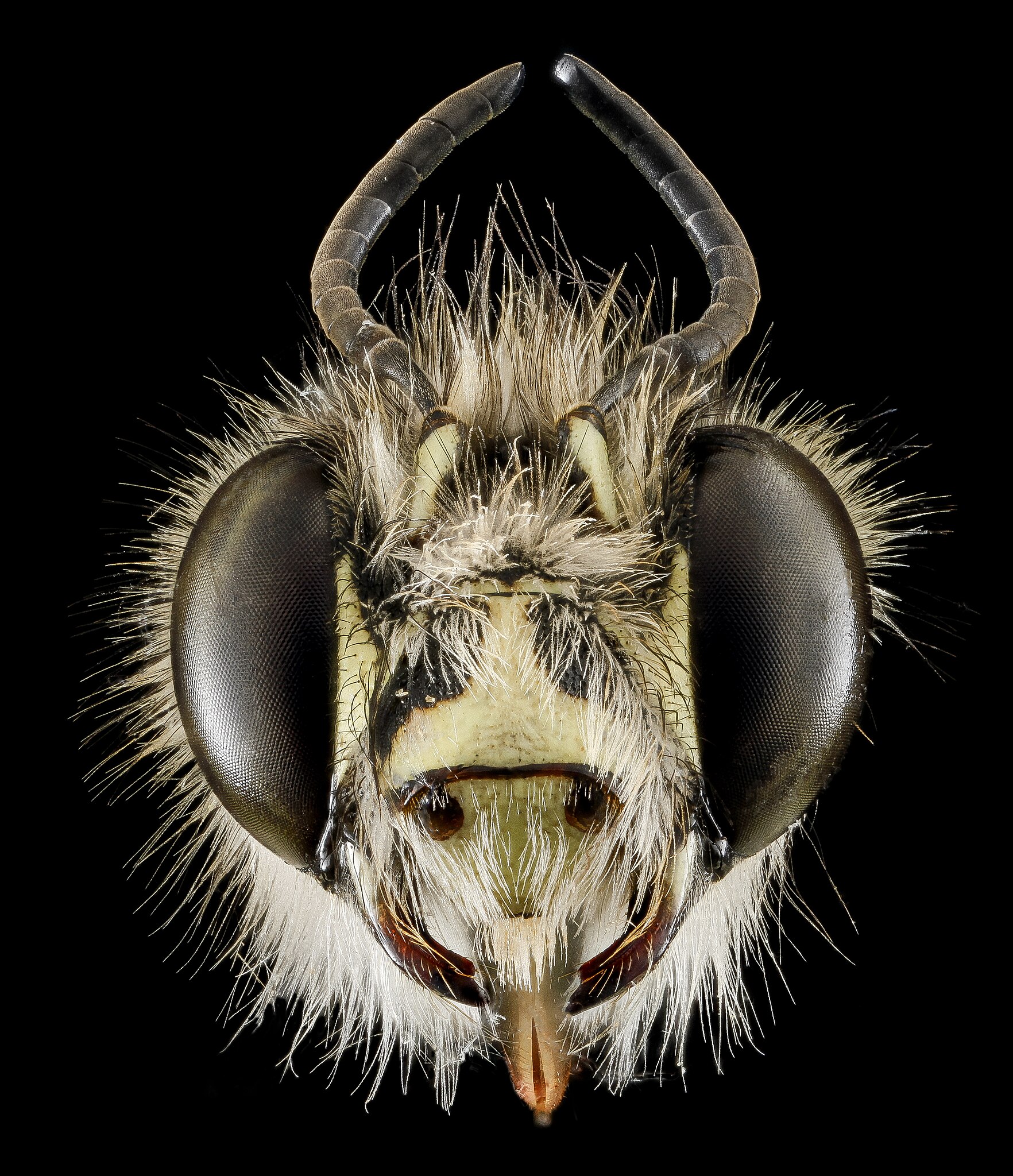
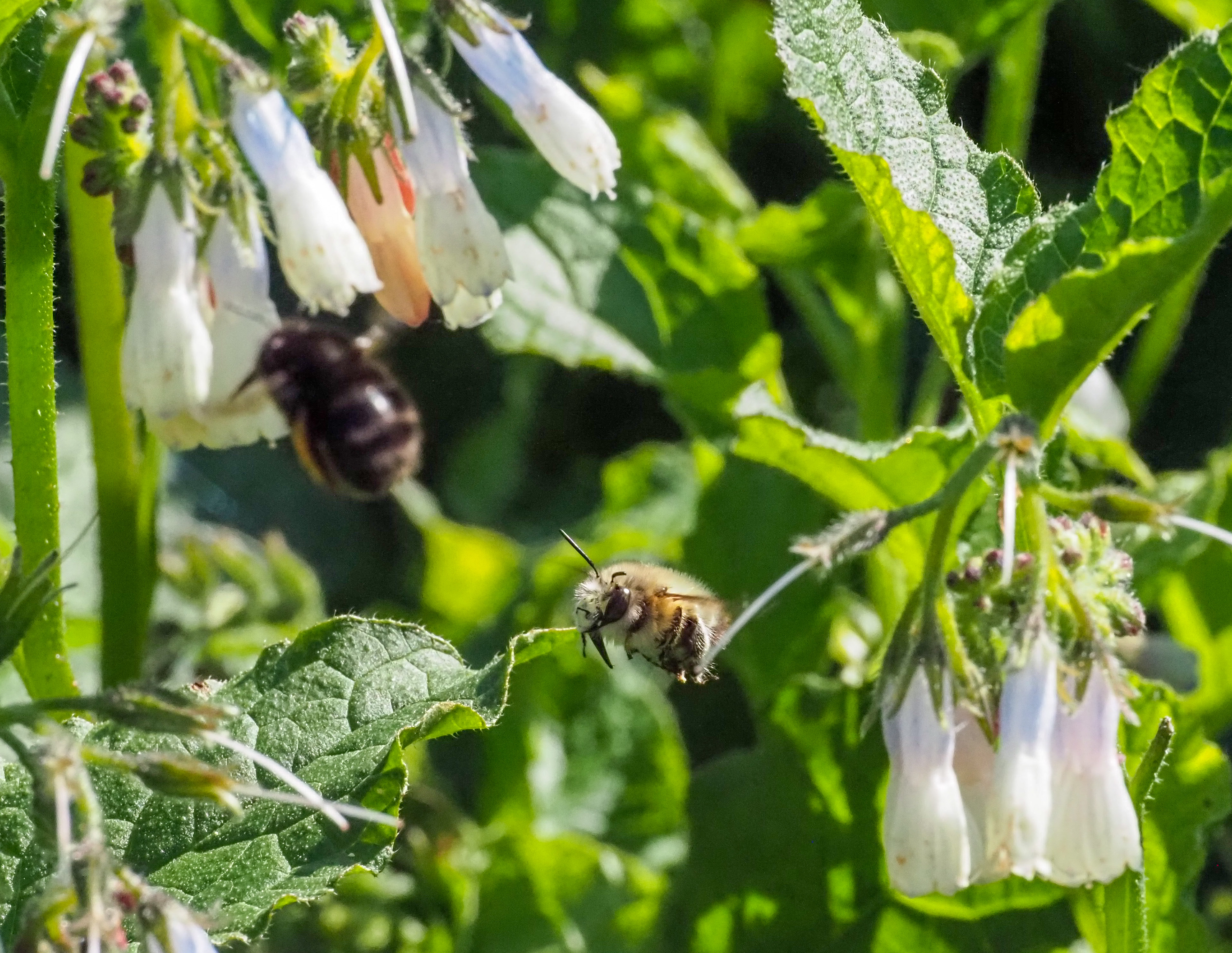
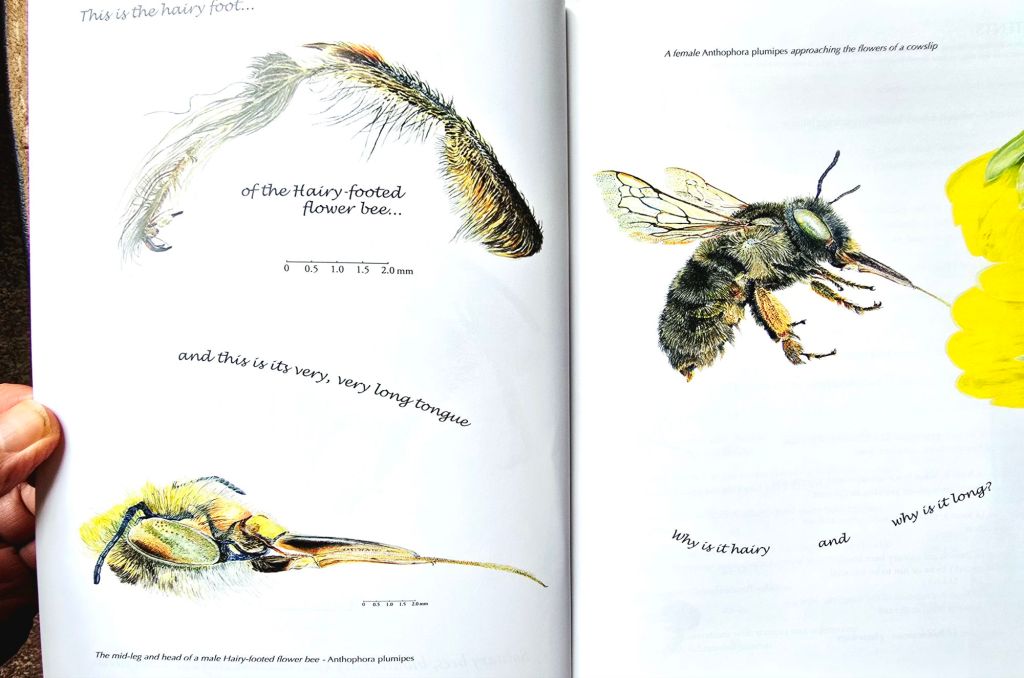
Male Hairy-footed bees are smaller than the females on average, approx. 11-14 mm in length, with ginger-brown fur and a pale/yellow face. The mid-legs, which are used in courtship, are about 16.5 mm long, on average; about a third longer than the front legs.
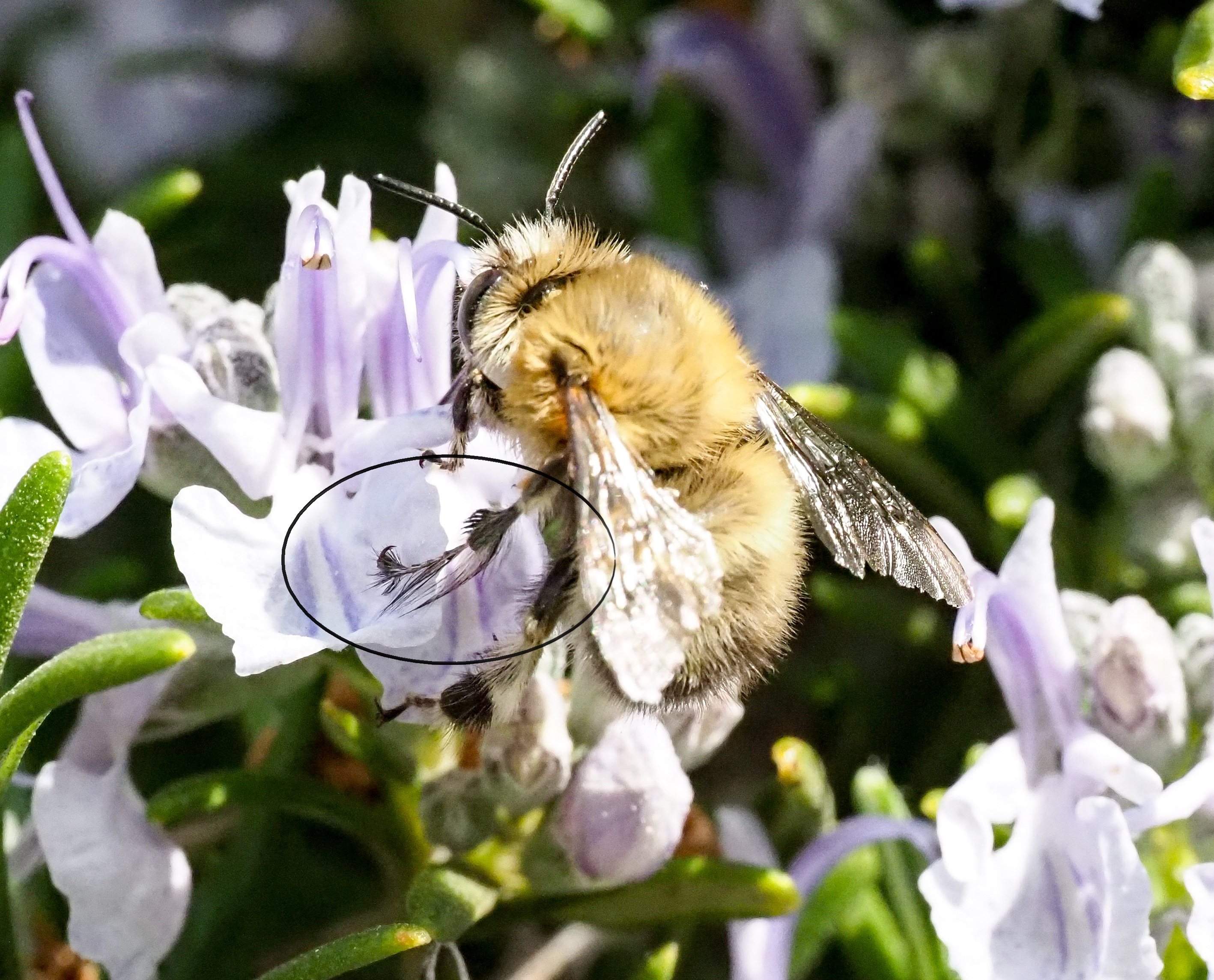
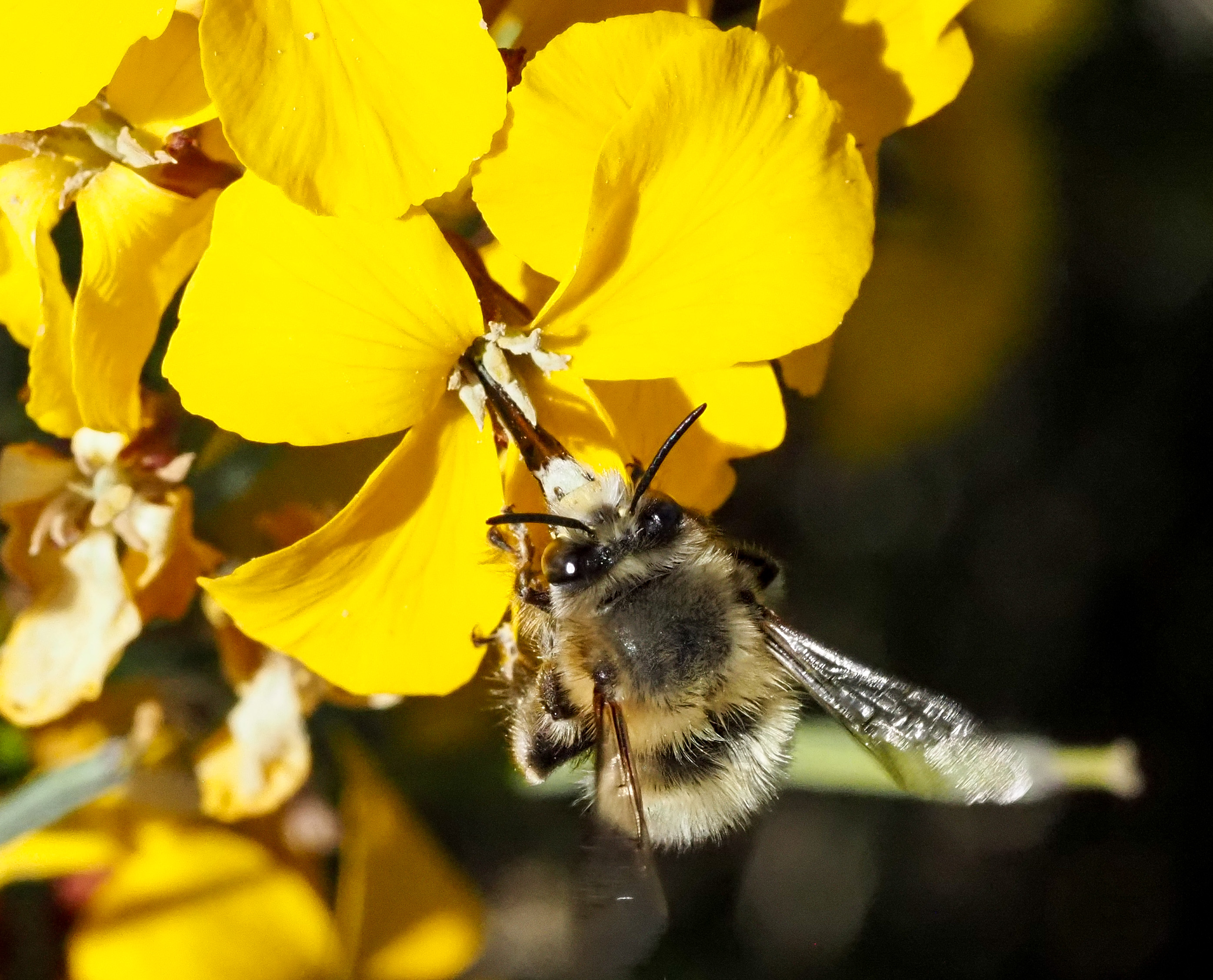
Male Hairy-footed bees (Anthophora plumipes) typically emerge a week or two before the females, in early spring: a strategy called protandry which has evolved to maximise their chances of mating. The early emergence of males enables them to fuel up on nectar, establish territories and be ready to pounce on the females; and pounce they do in this species (!), often as soon as they emerge from their overwintering cocoons. Here is a male I photographed nectaring on wall flower in the Spring.
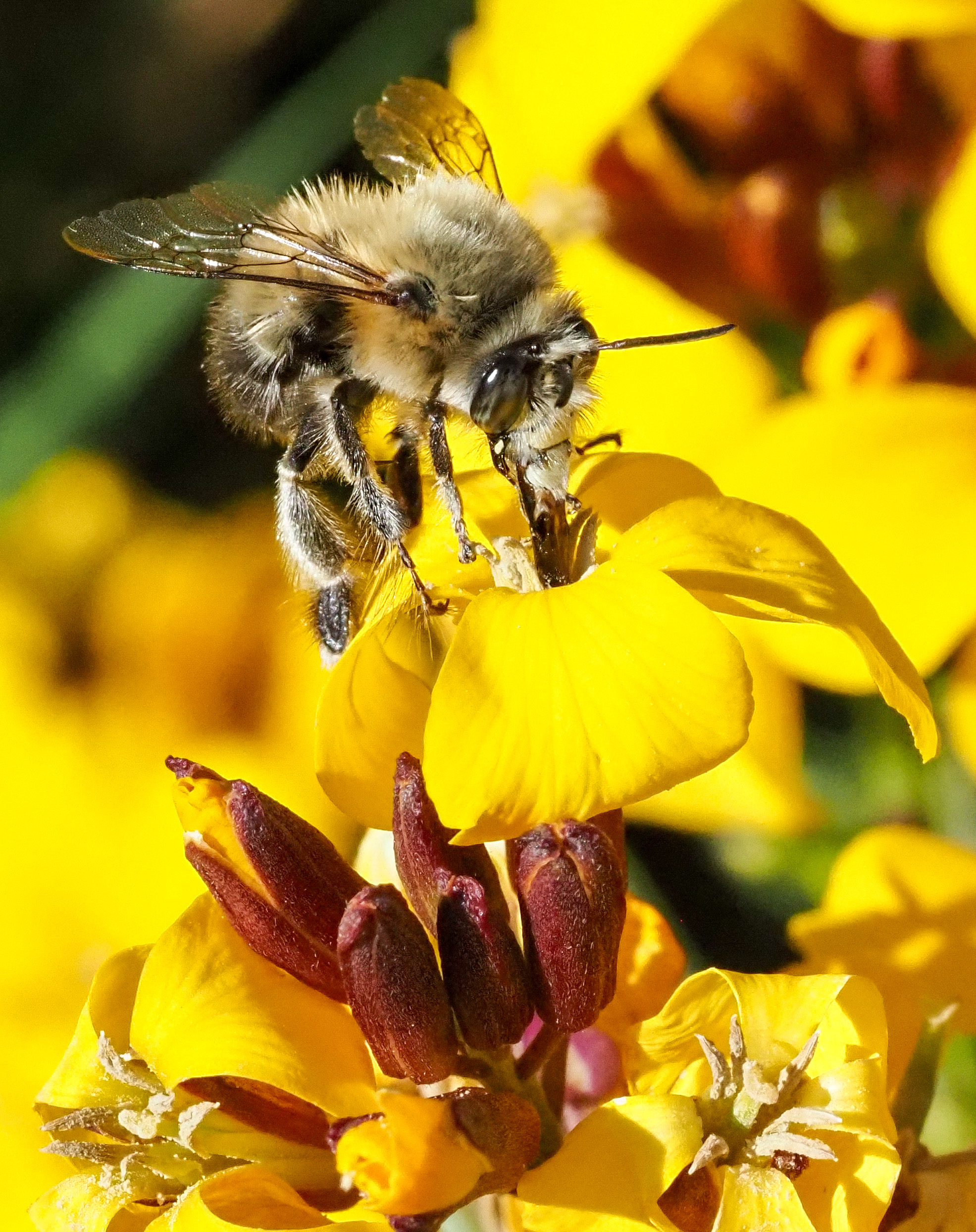
Males and females
Both males and females need to obtain nectar, but there is a huge difference in terms of what each sex requires from foraging. Both species need nectar to fuel their flight activity, but females also need the protein contained in pollen to invest in their eggs. Males only need nectar in order to fuel their courtship and mating activities. Females, on the other hand contribute more to the production of offspring, so they need to obtain resources to stock up brood cells in which the offspring develop. Not surprising perhaps, males usually carry much smaller volumes of nectar than do females.
The courtship behaviour of male Hairy-footed bees, involves the performance of aerial displays and the release of pheromones. There is often intense competition for females with loud buzzing and the aggressive chasing of rivals. During mating, the males use their specialised leg hairs to caress or distract females by stroking their antennae (shown in two videos at the end of this blog).
The transfer of secretions from odour glands – no matter in which body part they are located – during courtship and mating, to the antennae of the female, is a feature which occurs (and has evolved independently) in a wide range of solitary bees – including megachilid bees, carpenter bees, anthophorine bees, and Nomada bees, – and also in sphecid wasps (Wittmann and Blochtein, 1994; 1995).
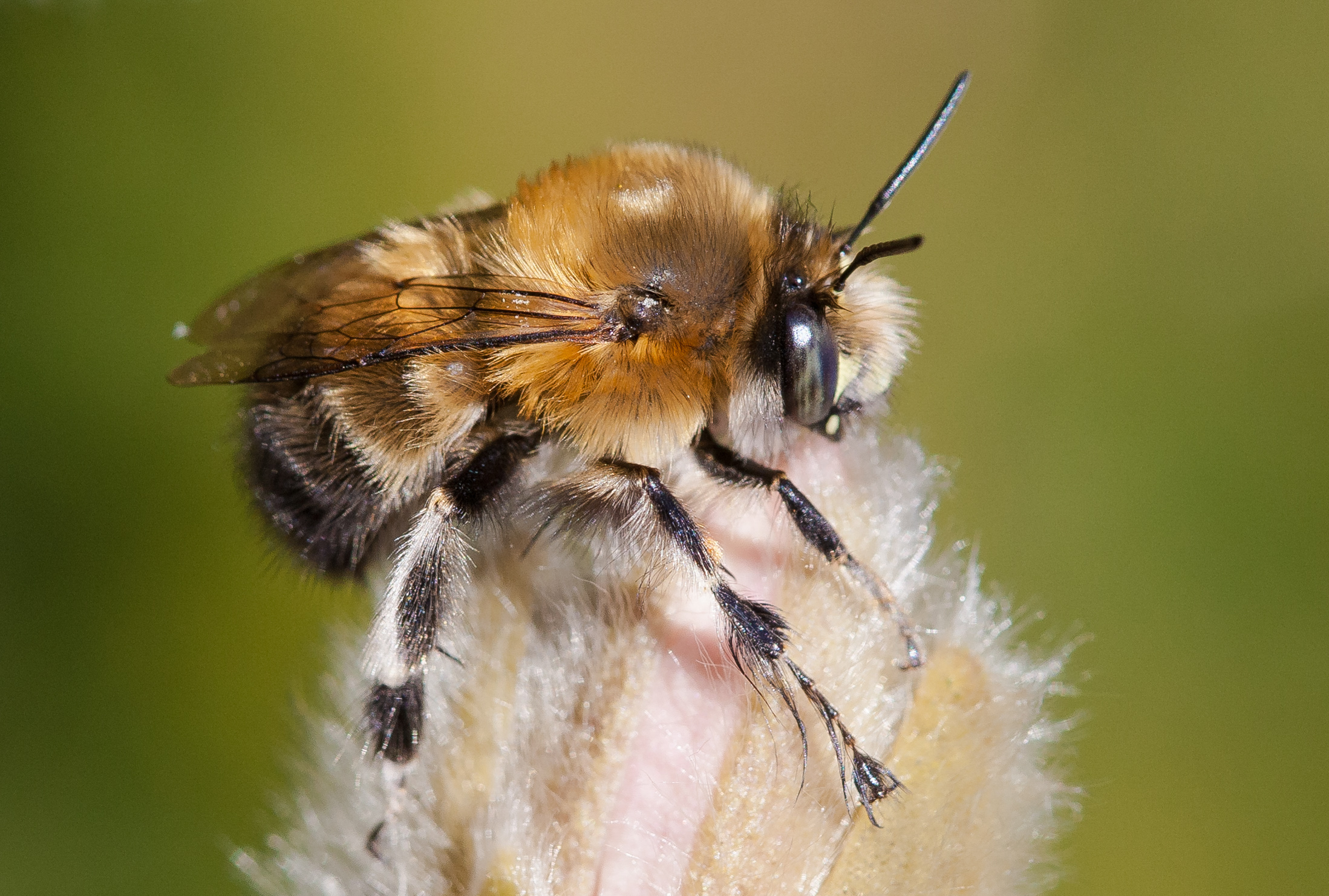
Courtship amongst the comfrey
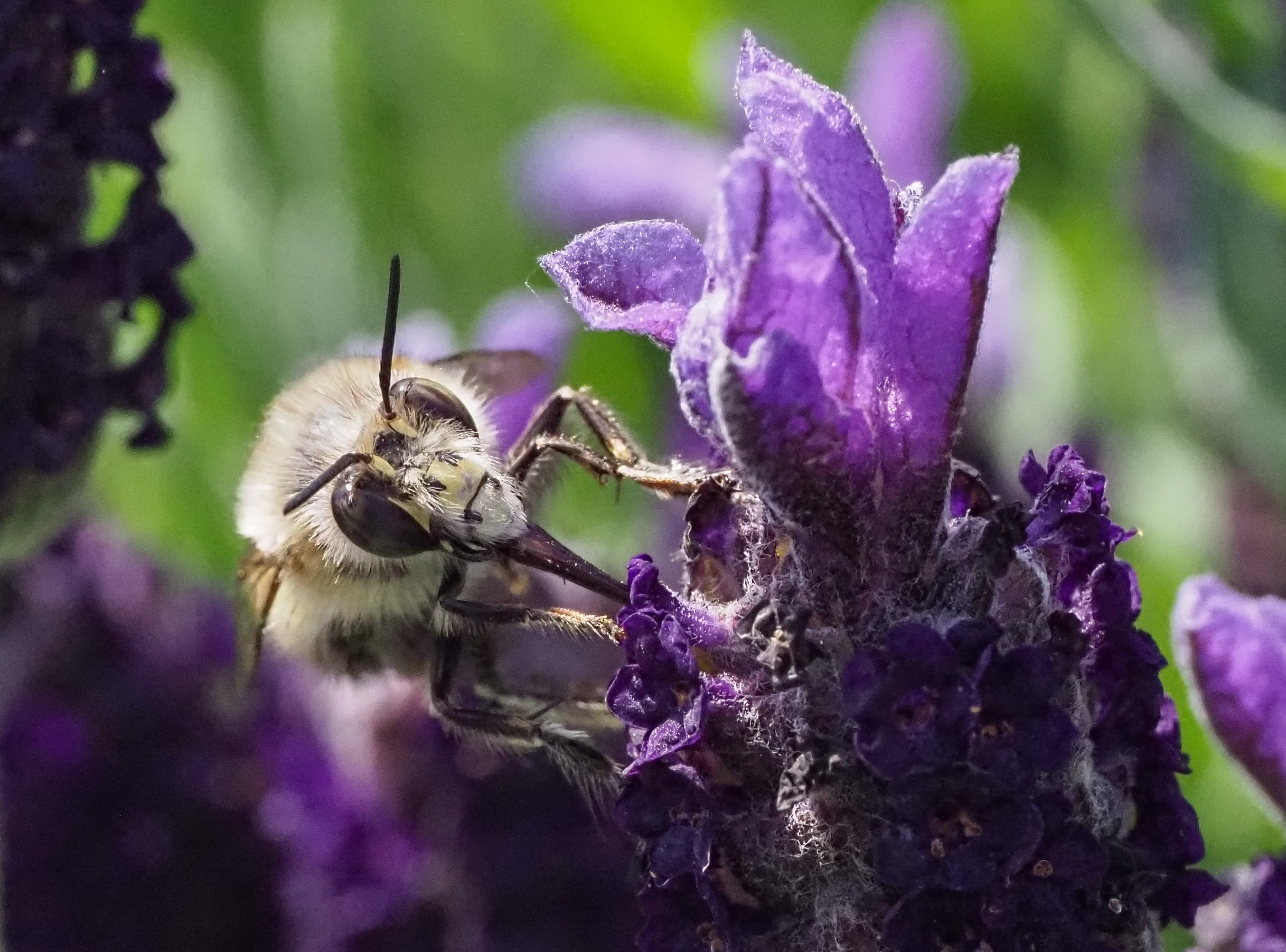
Graham N Stone – now a Professor at the University of Edinburgh – studied the courtship behaviour of this species in a number of fascinating papers (Stone, 1995; Stone et al., 1995). He investigated attempts by male Anthophora plumipes to mate with foraging females at flowers of comfrey, Symphytum orientale, one of the plants most favoured by Hairy-footed bees. They are commonly seen nectaring on different types of comfrey (Symphytum) – Common (pink/purple), Russian (blue/purple), and Tuberous (yellow/white) – and it is a good place to try and get photographs. I say ‘try’ because these are not the easiest of bees to photograph; they are particularly fast-flying in my experience. The females are like little black, jet-propelled, oval-shaped, balls of fluff! Rather endearingly, they will fly up and look at you for a split second, before zooming away again. Here is a collection of photographs I took of the females nectaring on comfrey flowers. I’m looking forward to trying again this year.
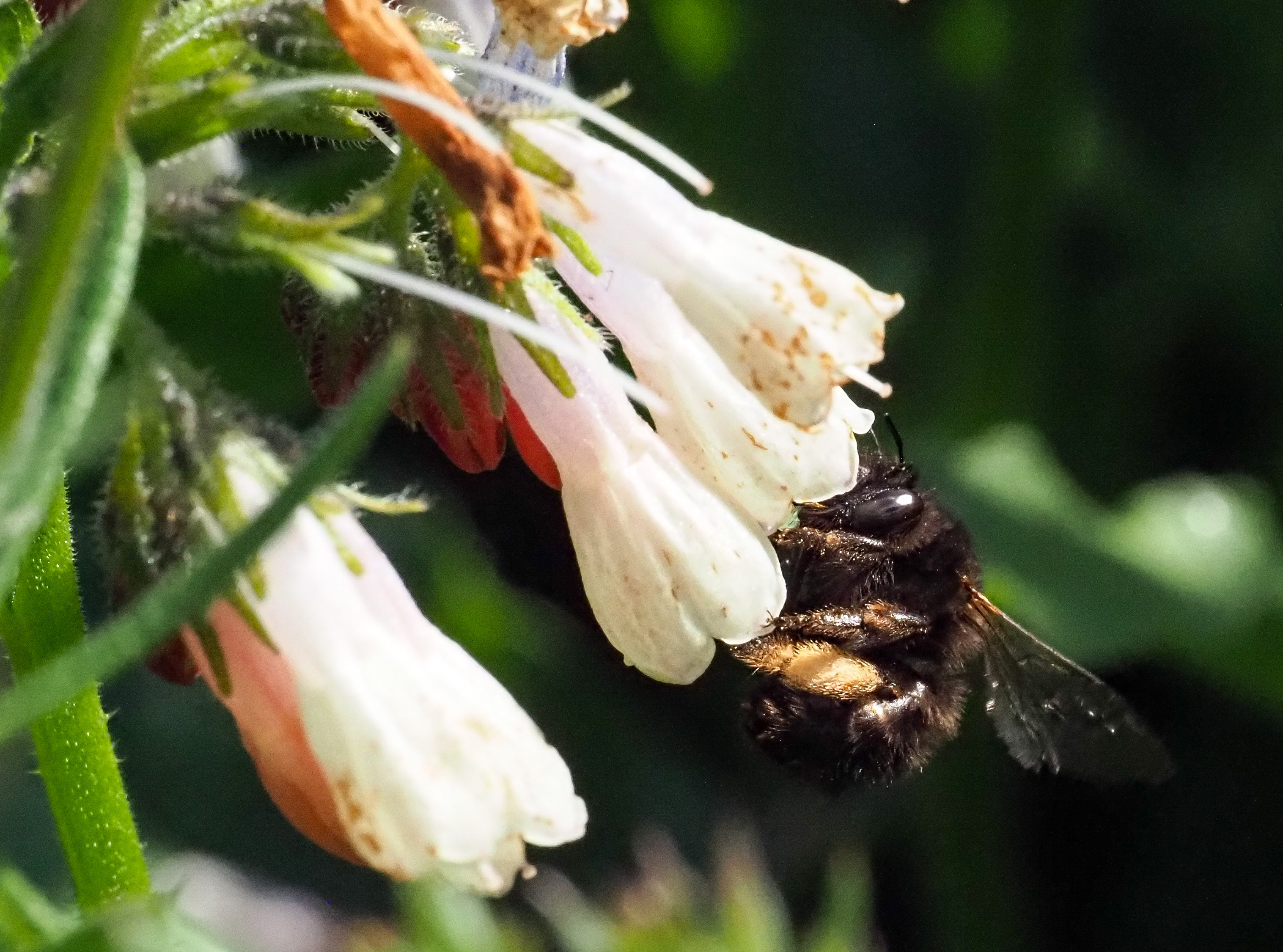
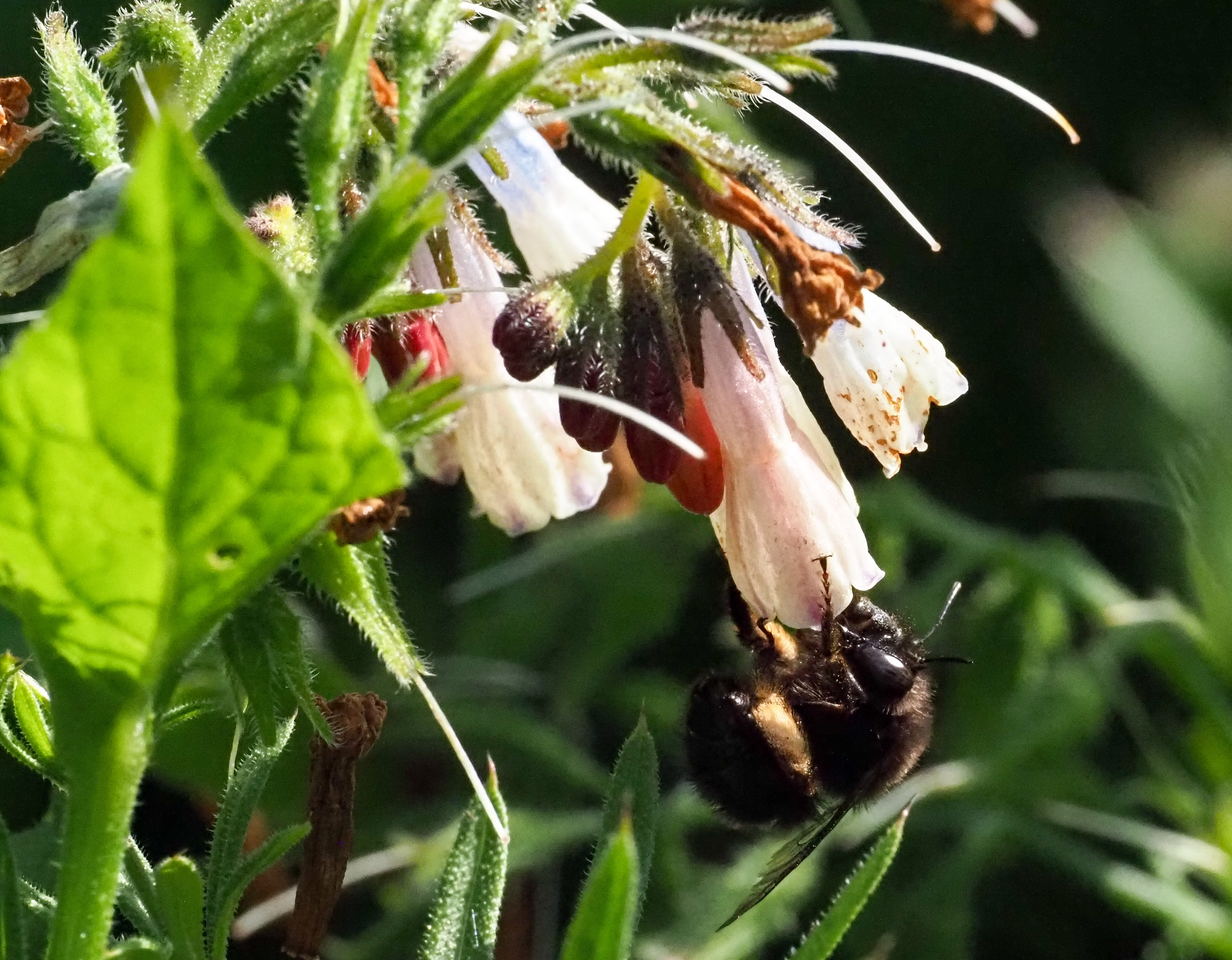
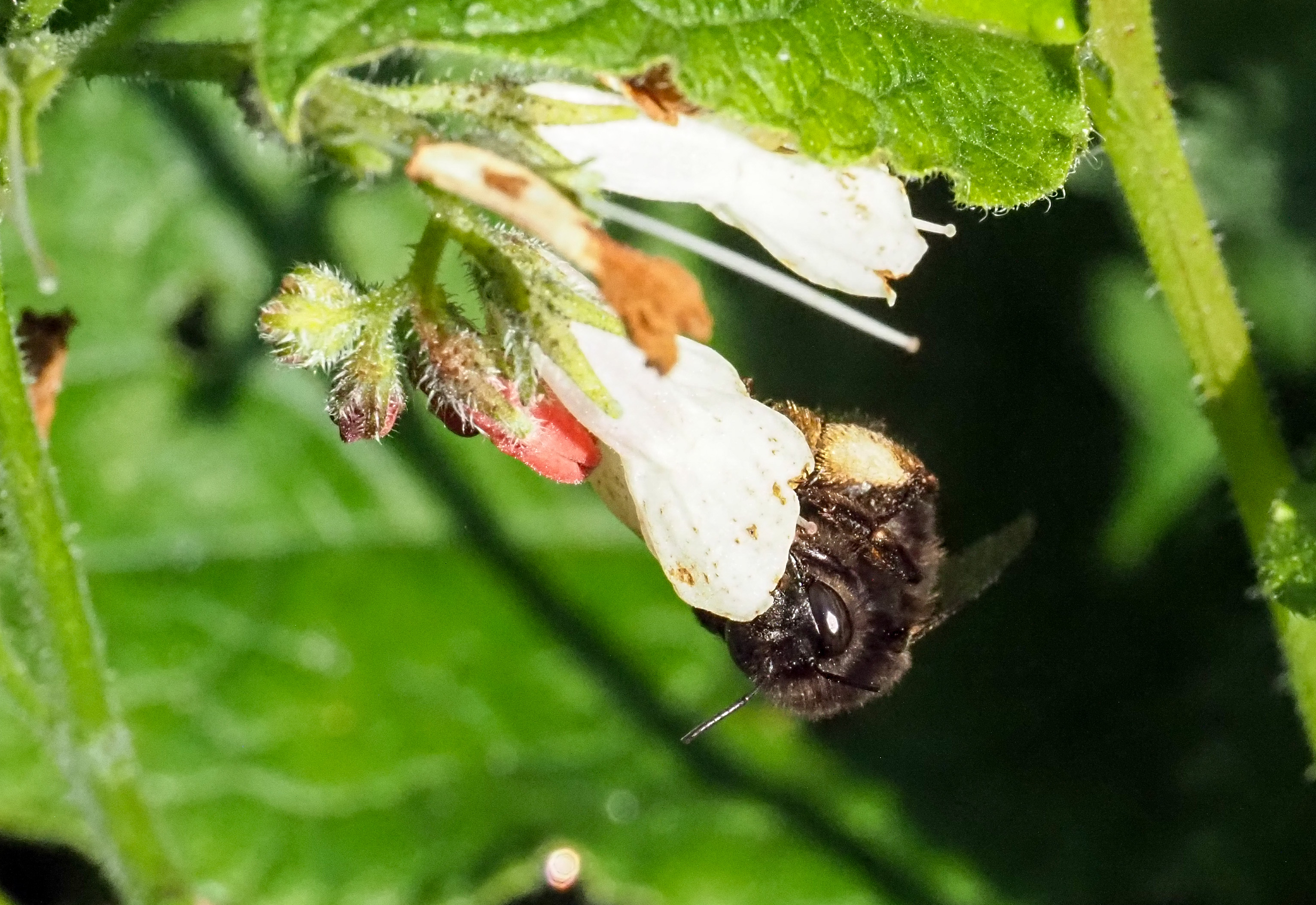
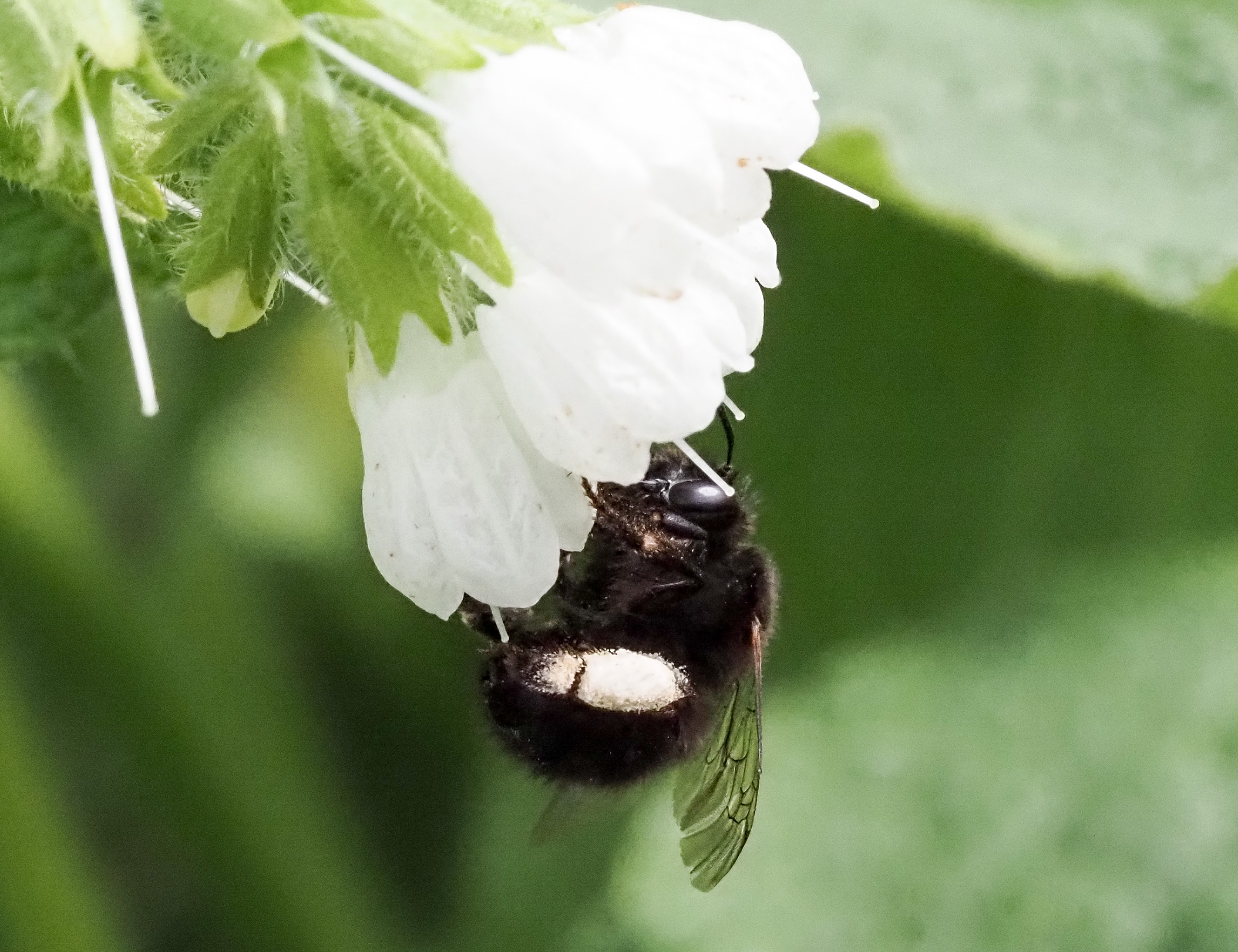
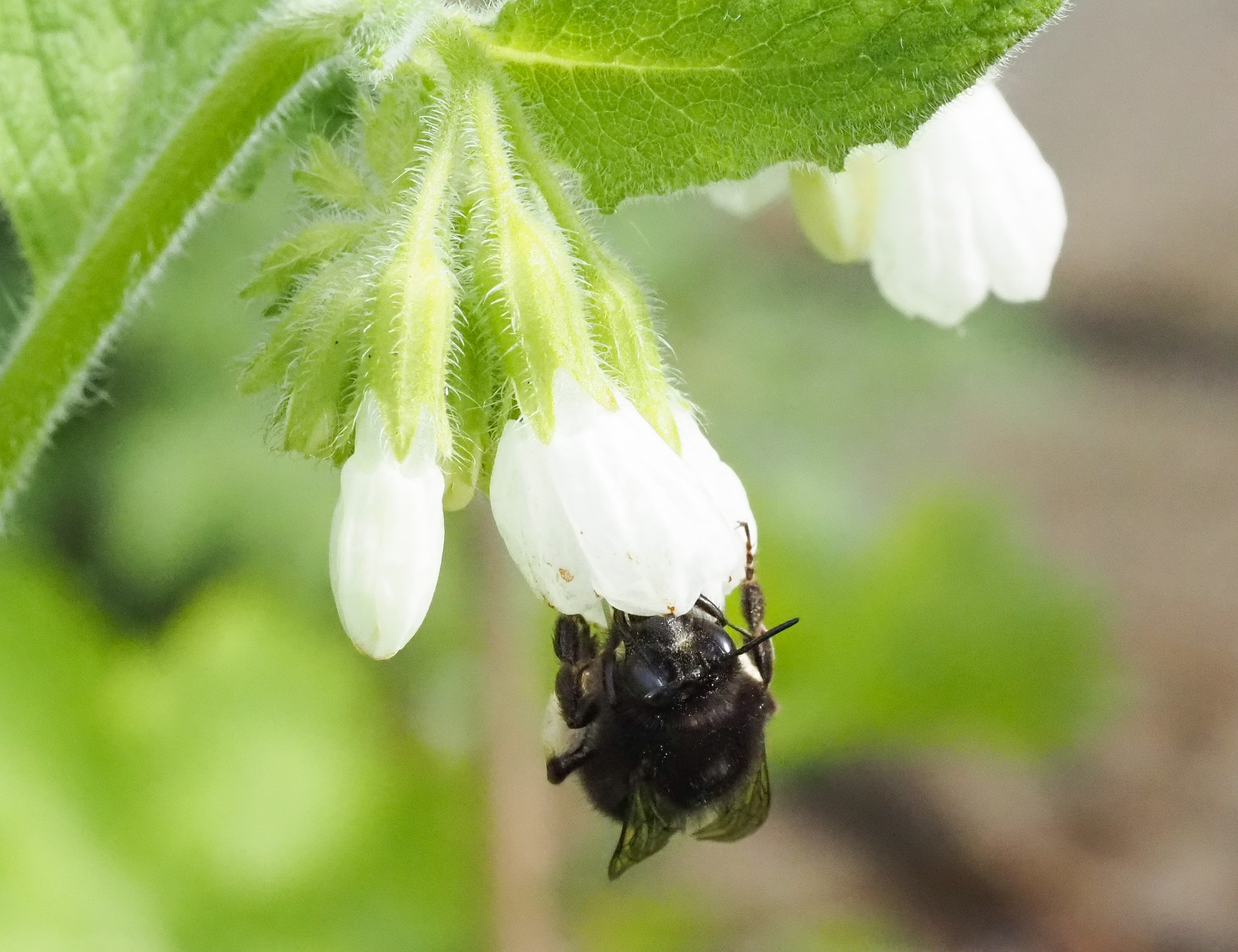
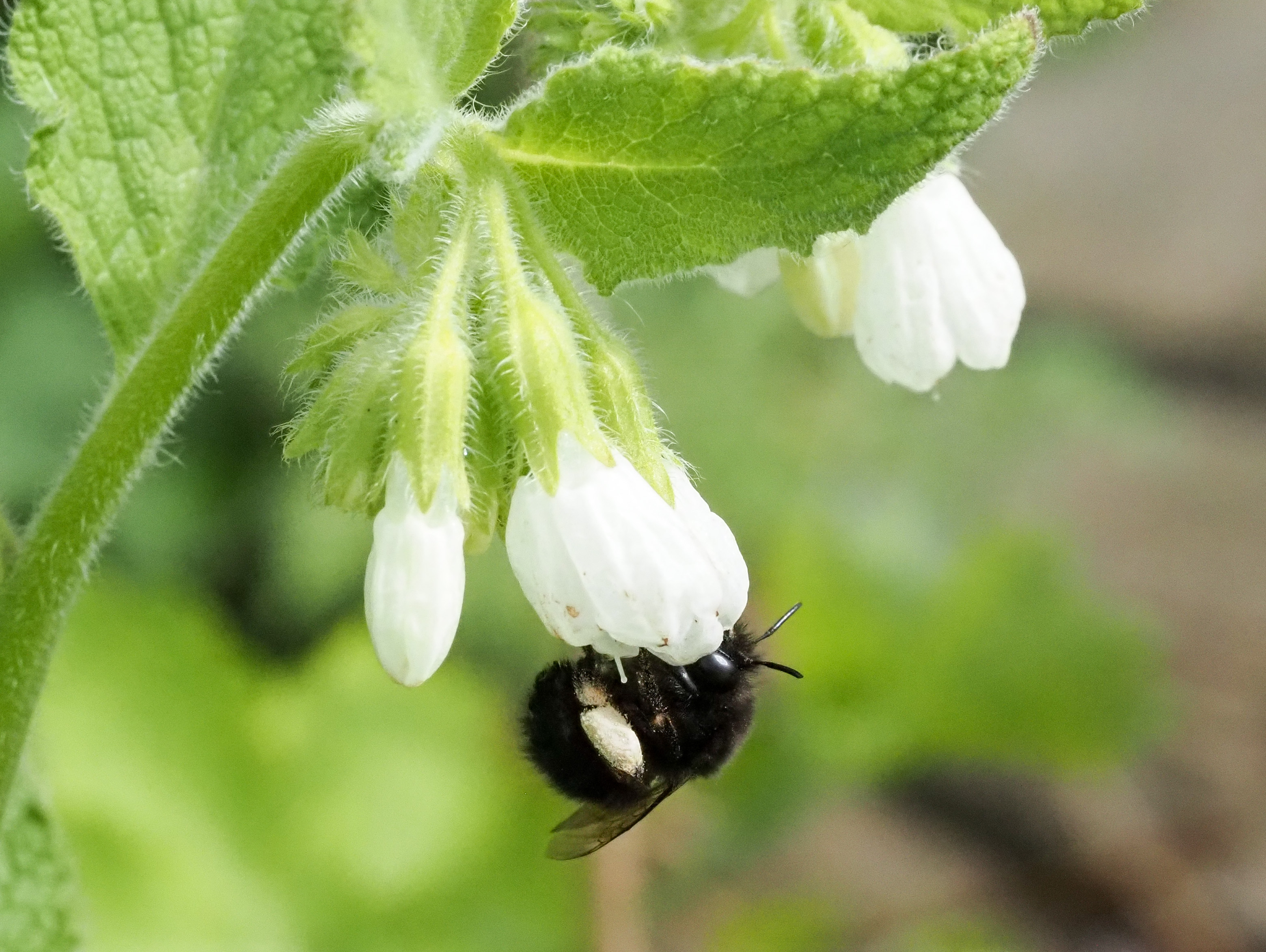
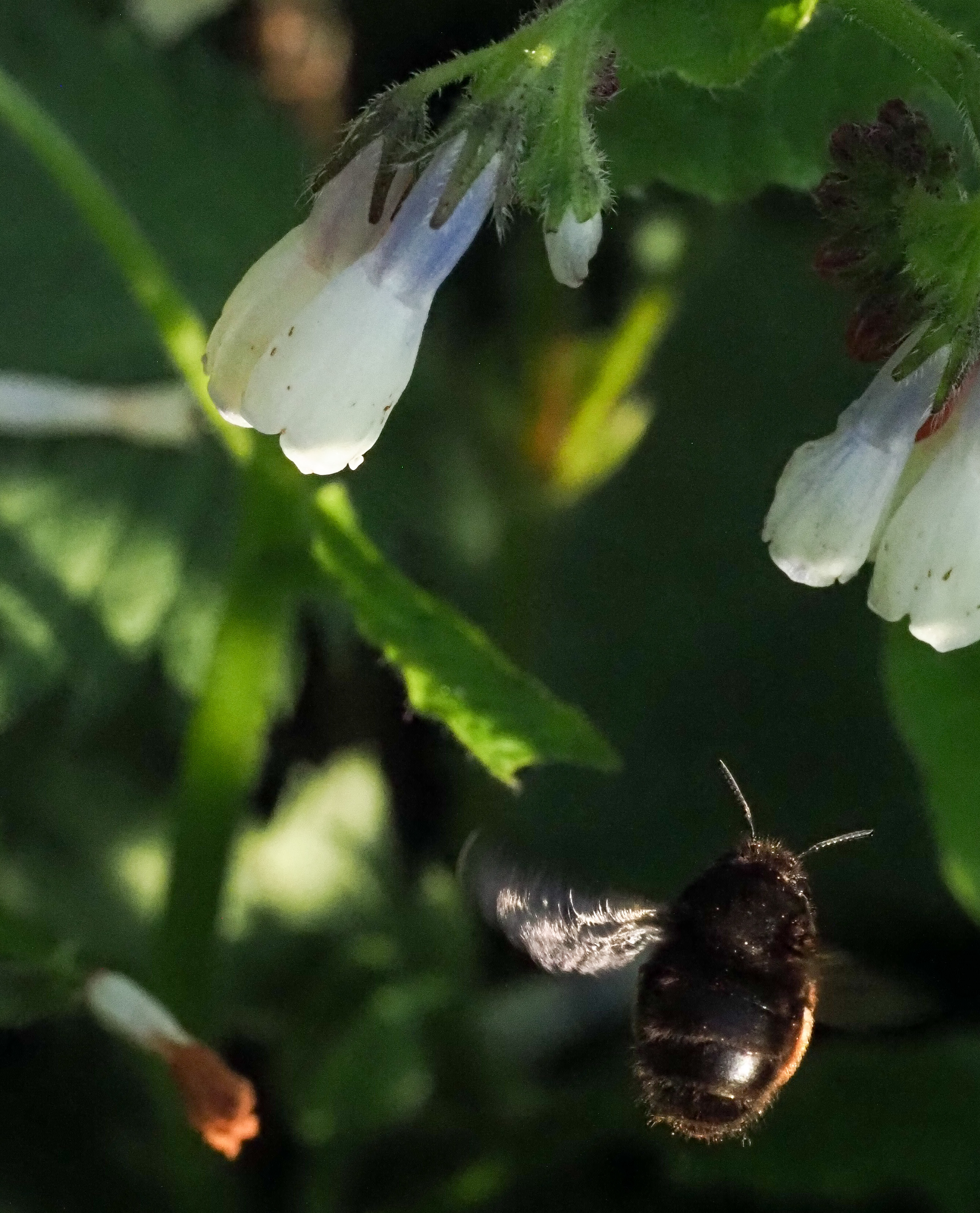
Here’s a picture of a male (front) and female (black bee out of focus) in a comfrey patch, which illustrates there size difference, I think (see below).
Pouncing and chasing
The males are busy little bees, particularly when they are looking for a mate. Graham Stone described them as follows:
When a male encountered a female, he hovered 5–10 cm behind her and followed her in flight. He then pounced on her, often knocking her down into vegetation (Stone, 1995).
Pouncing is always preceded by at least one to two seconds of hovering behind the female. Males that are able to dominate the space behind the female effectively prevent other males, further back in the queue, from pouncing first! This is very reminiscent of mating activities of queens and drones in the honey bee (Apis mellifera), where the males chase the queen in a high-speed “comet” formation. Only the fastest and strongest drones succeed in catching the queen, mounting her, and mating. It is probably a ‘test’ by the female to select the fittest males. Incidentally, female humpback whales (Megaptera novaeangliae) also lead courting males in a high-speed mating chase, with the males following and fighting for position.
Photograph by Raymond JC Cannon
Jostling for position behind the female
Stone et al. (1995) described the characteristic flight patterns of the males: jostling for their positions in a line behind the female! Their actions involved a gamut of behaviours, including: hovering face-to-face, clasping each other in flight, falling to the ground, and making rapid spiraling flights. Typical male-male competition.
The majority of females are unreceptive, mostly because they have already mated, and can easily reject males by “raising their metathoracic legs over their backs, curving the abdomen forward beneath the body and flying away.” (Stone, 1985). The ability of females to reject the unwanted advances of males is the norm in most insects, and very few species engage in forced copulations; but it does happen, most notably in the Monarch butterfly (Danaus plexippus); and also in bed-bugs! (see Cannon, 2023).
Females suffer harassment
Nevertheless, despite being able to deter or deflect eager males, female Hairy-footed bees do suffer from the relentless attentions of the males. Females are often courted by more than one male at a time – sometimes “pursued by a tail of three or four males” (Stone et al., 1995) – and this constant rate of attention amounts to harassment! Despite taking evasive action and attempting to repel the pouncing males, the rate at which females can visit flowers, is significantly reduced by all this attention. And, the nectar rewards they are able to obtain, is effectively halved as a result of male harassment (Stone, 1995).
Knocking off the competition!
Males also try to dislodge other males which have been successful in courtship and are attempting to mate with a female. They fly in from the side and try to knock the other male off the back of the female, prior to, or whilst mating! (Stone et al., 1995).
Studies in the laboratory
Some German researchers studied the courtship and mating of Anthophora plumipes in the laboratory (Blochtein et al., 2004; Wittmann et al., 2004). They found that males which attempted to mount a female were rejected in 25% cases. In the successful matings however, the male mounted the female and held on to the bases of her wings with his front legs, while also holding the female’s abdomen with his hind legs. They showed how, during courtship, the male stretches one of his prolonged mid-legs over the head of the female and vibrates the tarsal segments 3–4 times, up and down along the female’s upright flagellum (i.e. antenna). At the same time, the male holds his other mid-leg stretched out laterally and upwards. Then he carries out the same movements with the other middle legs.
While shaking his middle legs, the male pulls the female’s abdomen upwards with his hind legs and bends his abdomen ventrally to assume the copula position. If at this late stage, the female wants to avoid copulation – she has presumably been assessing the male and his pheromone during his mating attempt – she can simply bend her abdomen downwards and push the male away with her hind legs. Indeed, females were found to have rejected males during 66% of the, initially successful, mountings. In the other 34% of mountings however, the male was accepted and the pair remained in contact without any movement of the legs or wings (Blochtein, et al. 2004).
Incidentally, I wrote a whole chapter (#18) on Female Rejection Behaviour in my book (Courtship and mate-finding in insects): soon to be in a cheaper paperback version!
Finally..
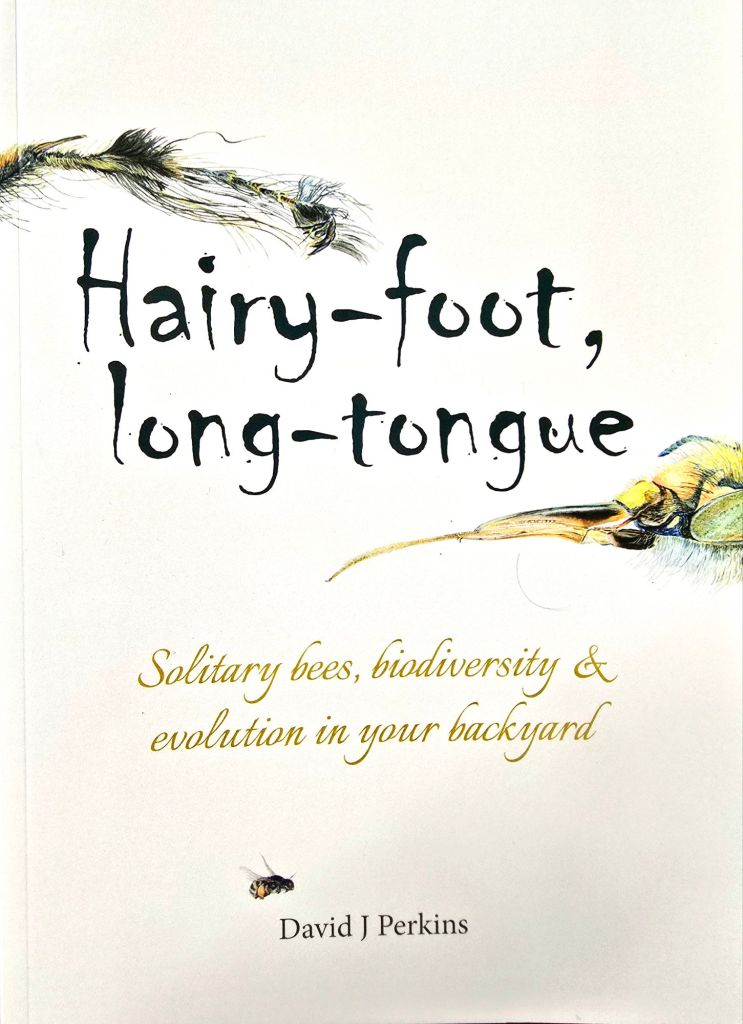
The Hairy-footed bee has inspired a number of naturalists, including the wildlife artist David J Perkins, who produced a beautifully illustrated book called Hairy-foot, Long-tongue: Solitary Bees, Biodiversity & Evolution in your Backyard.
Mining bees
I should have mentioned that Hairy-footed bees are, of course, mining bees and “usually nests gregariously in vertical soil profiles, such as coastal cliffs and, inland, in sand pits, soft mortar joints and cob walls” (BWARS). Here is a female I photographed disappearing into a hole in the wall!
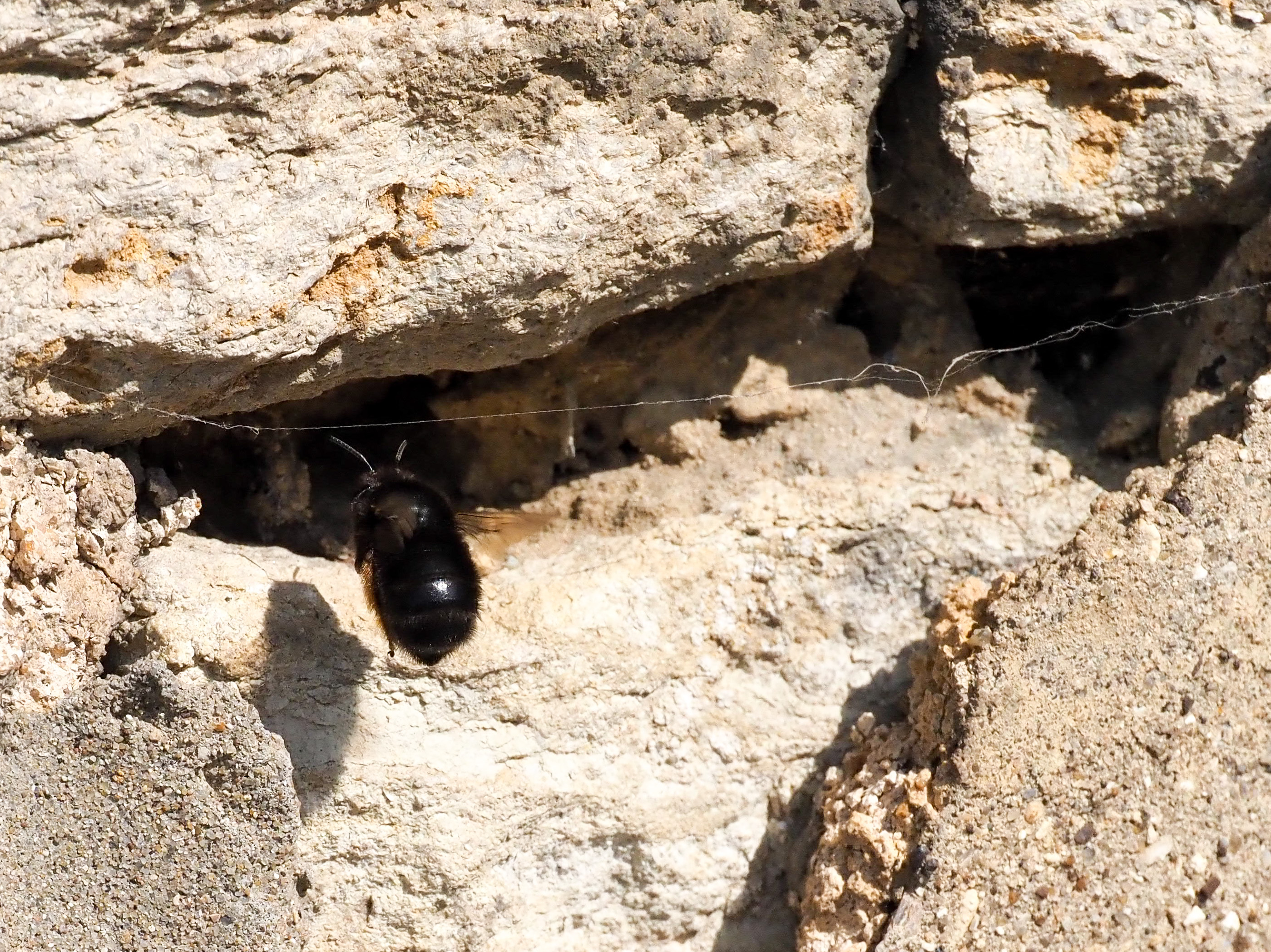
Photograph by Raymond JC Cannon
Videos of Hairy-footed bees
There is an incredible video made by filmmaker Martin Dohrn, who captured what he called the Mating Ritual of the Hairy-footed bee. It really is a beautiful video (below), and the male can clearly be seen brushing, or tapping, the antenna of the female, three times with each hairy mid-leg, and repeating the actions as he persuades her to mate.
https://www.facebook.com/share/v/18F77fW8Ay
Another video by ‘jwentomologist’ (sorry, I don’t know the name) shows “Male Anthophora chasing females in garden”. This video illustrates how males waft a pheromone on to the females antennae to induce her to mate. There are several males patrolling patches of flowers in the garden and much rivalry between them.” One male bee seems to be displaced by another in this video! See:
See also, the beautiful collection of photographs of male and female Hairy-footed bees by Steven Falk, on Flickr: here.
References
Blochtein, B., Wittmann, D., Schindler, M., & Barouz, D. (2004). Mating in Bees: How Males Hug Their Mates. In Proceedings of the 8th international Conference on Tropical Bees and VI Encontro sobre Abelhas, 2004, Brasil.
Cannon, R. J. (2023). Courtship and mate-finding in insects: A comparative approach. CABI. https://www.google.co.uk/books/edition/Courtship_and_Mate_finding_in_Insects/7UrNEAAAQBAJ?hl=en&gbpv=1&pg=PR5&printsec=frontcover
Stone, G. (1990). Endothermy and thermoregulation in solitary bees (Doctoral dissertation, University of Oxford).
Stone, G. N. (1993). Endothermy in the solitary bee Anthophora plumipes: independent measures of thermoregulatory ability, costs of warm-up and the role of body size. Journal of Experimental Biology, 174(1), 299-320.
Stone, G. N. (1995). Female foraging responses to sexual harassment in the solitary bee Anthophora plumipes. Animal Behaviour, 50(2), 405-412.
Stone, G. N., Loder, P. M., & Blackburn, T. M. (1995). Foraging and courtship behaviour in males of the solitary bee Anthophora plumipes (Hymenoptera: Anthophoridae): thermal physiology and the roles of body size. Ecological Entomology, 20(2), 169-183.
Wittmann, D., Schindler, M., Blochtein, B., & Barouz, D. (2004). Mating in bees: how males hug their mates. In: Proceedings of the 8th IBRA International Conference on Tropical Bees and VI Encontro sobre Abelhas, Ribeirão Preto, Brasil, 6–10 September, 2004, pp. 374–380
 Ray Cannon's nature notes
Dear Dr Ray Cannon,
Thank you very much for describing such a unique courtship behaviour of hairy-footed mining bees. I shall notify my best friend and entomologist Dr Craig Eisemann about your new post here when we next communicate over the phone. Needless to say, you are still as busy as a bee. I particularly enjoyed those high-resolution photos as well as the excellent video made by filmmaker Martin Dohrn.
May you be younger than springtime, and may your blogging thrive to your great satisfaction in 2026 and beyond!
Wishing you a very happy March and an exhilarating springtime doing or enjoying whatever that satisfies you the most, whether aesthetically, physically, intellectually or spiritually!
And I do hope that in your spare time you will pop over to my website to peruse and comment on some of its multidisciplinary contents delivered with academic rigour and presentational vigour.
Yours sincerely,
SoundEagle🦅
Very interesting, by the way it is John Walters who did the video