The flowers of many different plant species change colour at some point during their lives. In some species this change coincides with the availability of nectar, in others it occurs later on, as a signal to discourage pollinator visitation. In other words, a change in colour signals to pollinators that the flower has already been visited and pollinated.
In most species, the colour change is localised, occurring in only a small part of the flower. For example, at the base of the petals, in nectar guides, or in certain patches on the flower as in the case of horse chestnut flowers (discussed below). A change on colour in the whole corolla is rather rare.
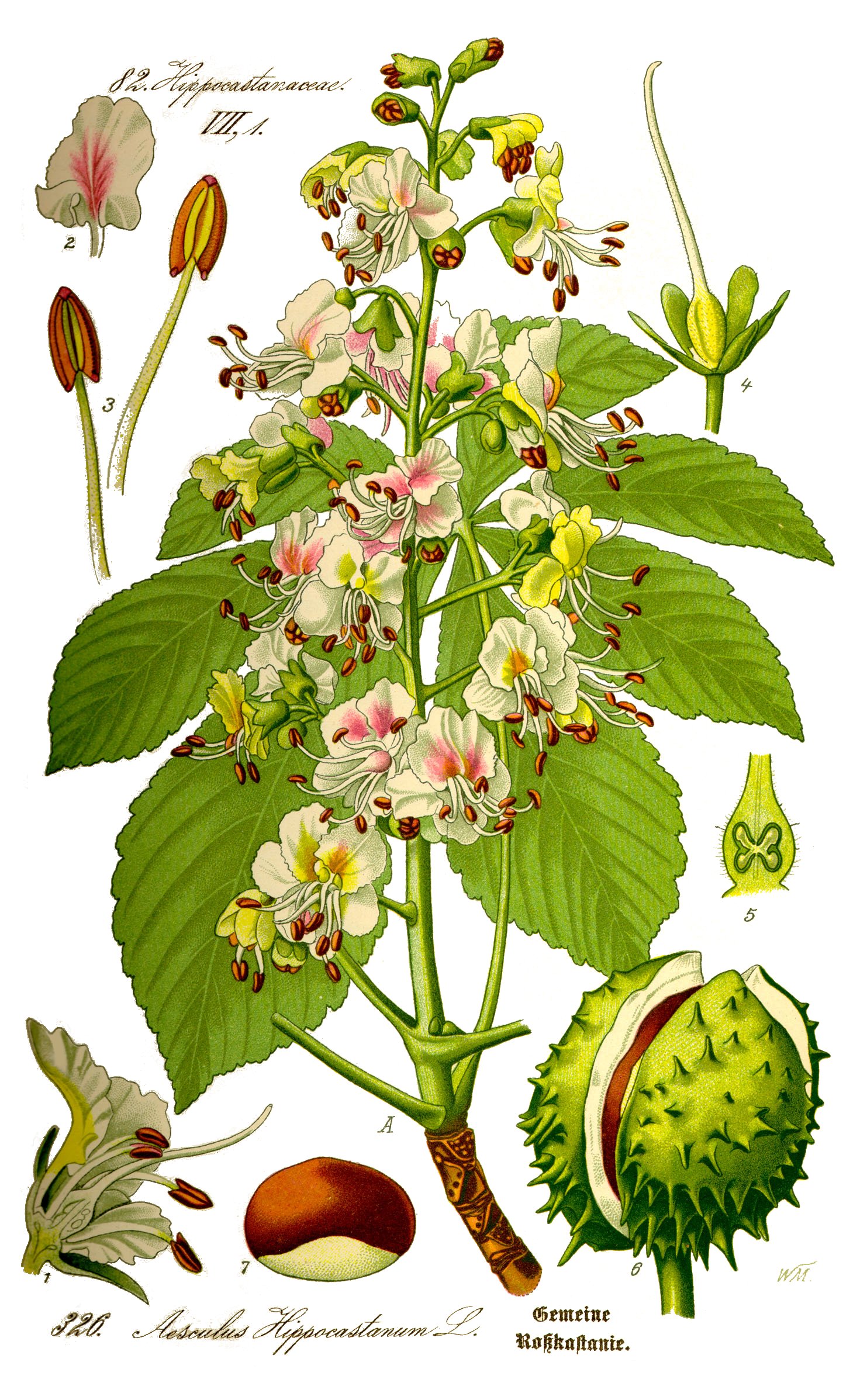
On the flower clusters or inflorescences of Aesculus hippocastanum L. (shown above), the individual flowers mature from the bottom upwards. There can be as many as 150 or more flowers in an inflorescence, and each perianth consists of 4–5 sepals and 4–5 petals. In the inflorescences there are typically about half and half (roughly) of four-petalled and five-petalled flowers.
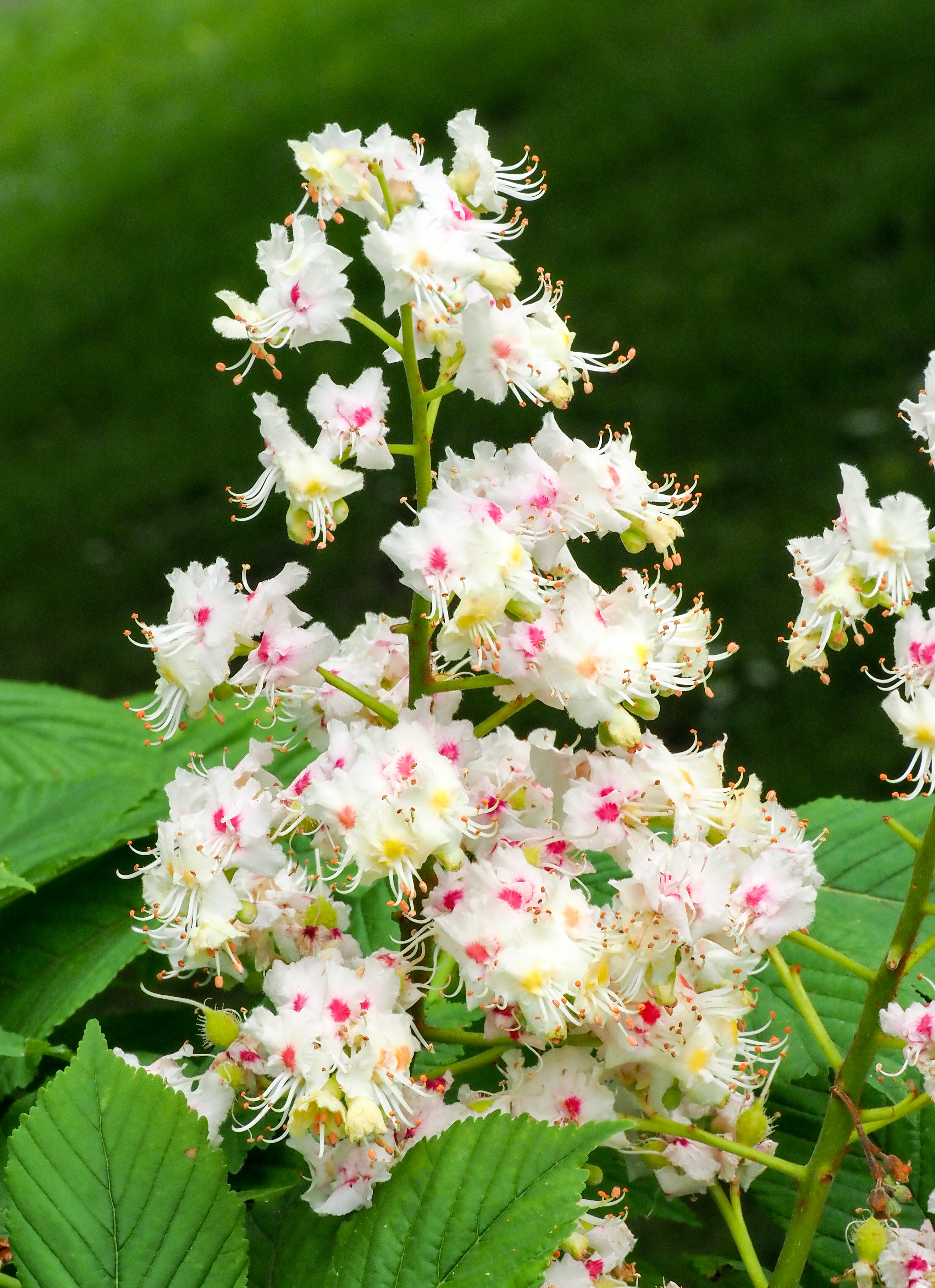
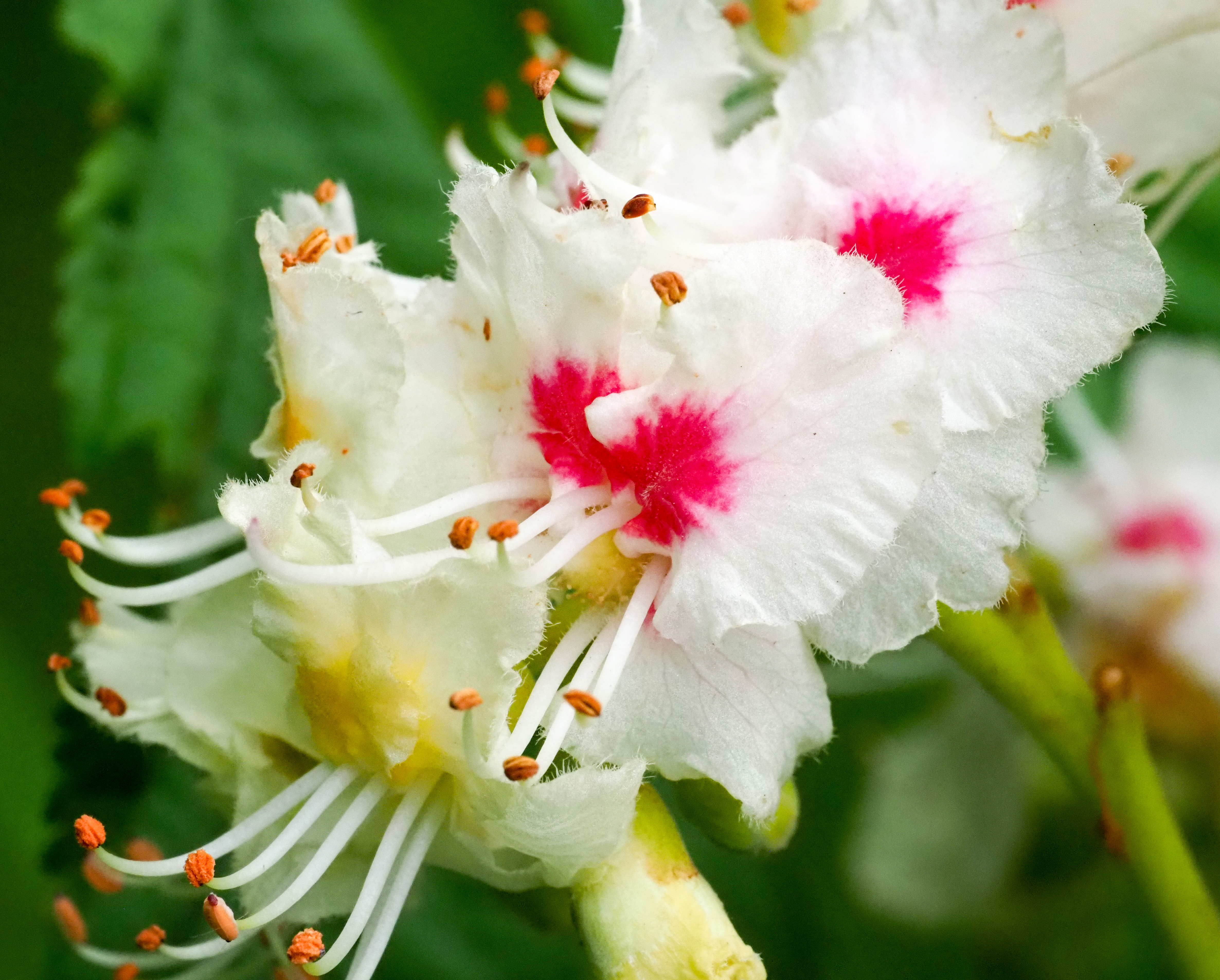
The coloured patches which attract pollinators are large spots, located on the white petals, which are yellow coloured in younger flowers, and pink, or red coloured, in older (pollinated) flowers. In each flower, there are 7–8 stamens of differing lengths, which bend upwards and become erect as they start to shed pollen. It has been suggested that the red appendages at both ends of the anthers may function as nectar guides for pollinators.
These colour changes are therefore, signals to the plant’s pollinators. So the colour changes are probably even more striking and apparent to insects, than to us humans. They have evolved to optimise and to some extent, control the foraging behavior of pollinators, in the interests of the plant. After all the plant is providing rewards (nectar and pollen), but after the job is done, the plant closes shop!
In some plants, a change in flower colour indicates that nectar is no longer available, whereas, in other species, the colour change is induced by the visit of a pollinator. Some people have called the colour signals a “do not disturb” sign, but I rather think it is a sign that there are no more free meals to be had from this particular flower!
The retention of older flowers, i.e. once they have been pollinated, is very common across many families of flowering plants, and may be a way of creating large, attractive floral displays visible to pollinators over longer distances. In other words, the plant hangs on to all of its flowers to create ‘oversized floral guides’ (Brito et al., 2015). The inflorescences on horse chestnut trees might be such floral guides, and they are certainly visible at a distance, even if you are a shortsighted individual (insect!) with a pair of compound eyes!
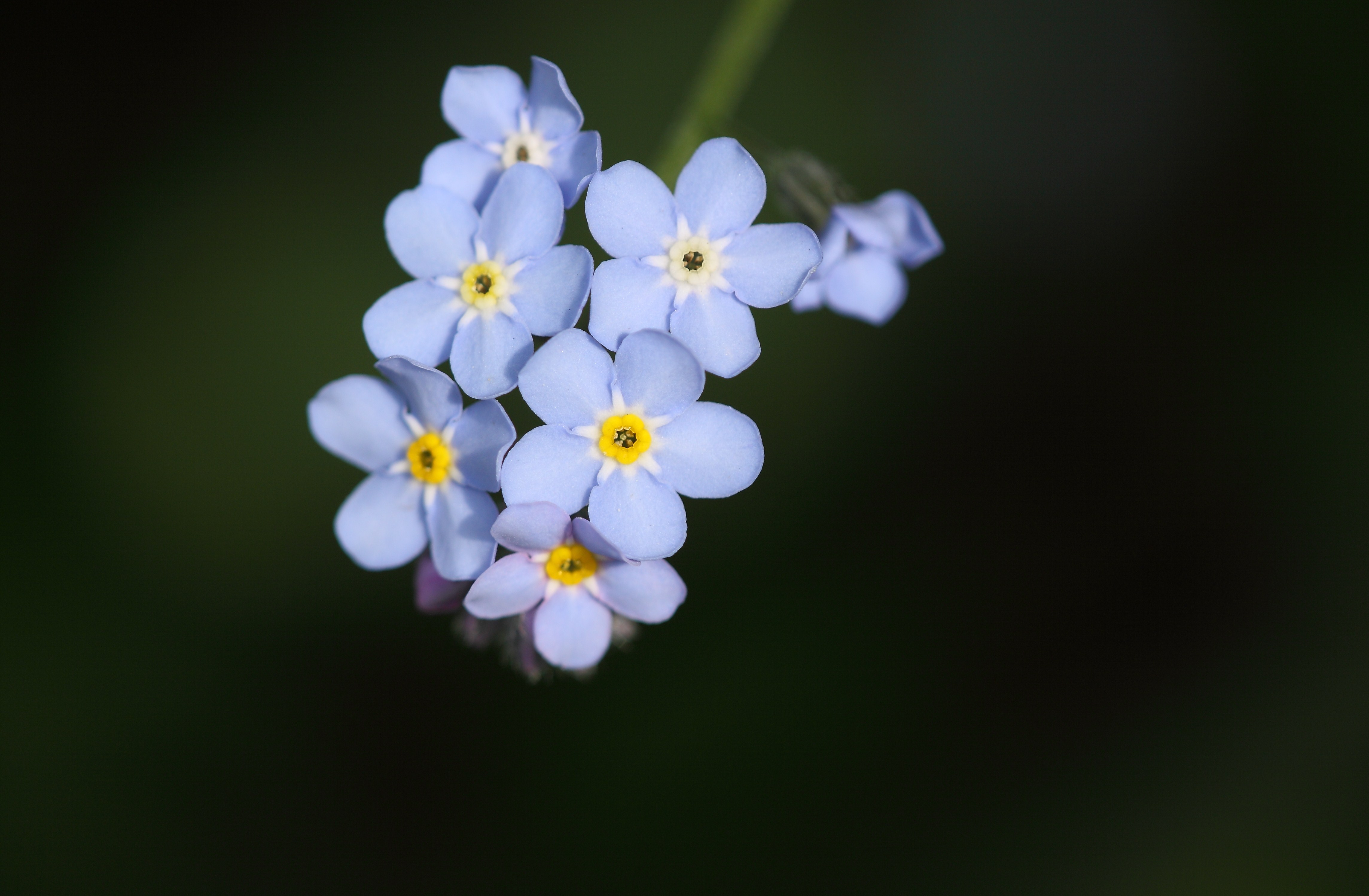
The German naturalist, Christian Konrad Sprengel (1750 – 1816) first described the colour changes that take place in horse chestnut flowers, back in 1793. He was a remarkable pioneer who, in his 1793 work Das entdeckte Geheimniss der Natur im Bau und in der Befruchtung der Blumen (The Secret of Nature Discovered in the Structure and Fertilization of Flowers), observed that the central part of forget-me-not (Myosotis) flowers change from yellow to white after pollination. Importantly, he recognized that such colour changes function as a signal to insect pollinators.
Forget-me-not flowers (below) change color after being pollinated to signal to insects that they no longer have nectar. The bright yellow center ring of the flower fades to a pale yellow or white once the flower has been visited by pollinators.
The tendencies of different flowers to change colour was also documented by the American Botanist John Harvey Lovell (1860–1939). Few people read such old papers now, but they can be packed full of interesting observations. For example, Lovell (1902) noted the following floral colour changes in different species:
“Green changes to white (Cornus), to yellow (Thlaspi, Cardamine), to red (Hydrangea), to purple (Clematis), to violet (Cobmea) ; white changes to green (sepals of Helleborus), to yellow (Lantana), to red (Dianthus, Hibiscus mutabilis), to blue (many large blue flowers remain white until nearly ready to expand); yellow changes to white (Draba), to red (Esculus), to blue (Myosotis) ; red changes to blue (Venetus and many Boraginacea); violet and blue may turn purple, green, or white in fading.” (Lovell, 1902).
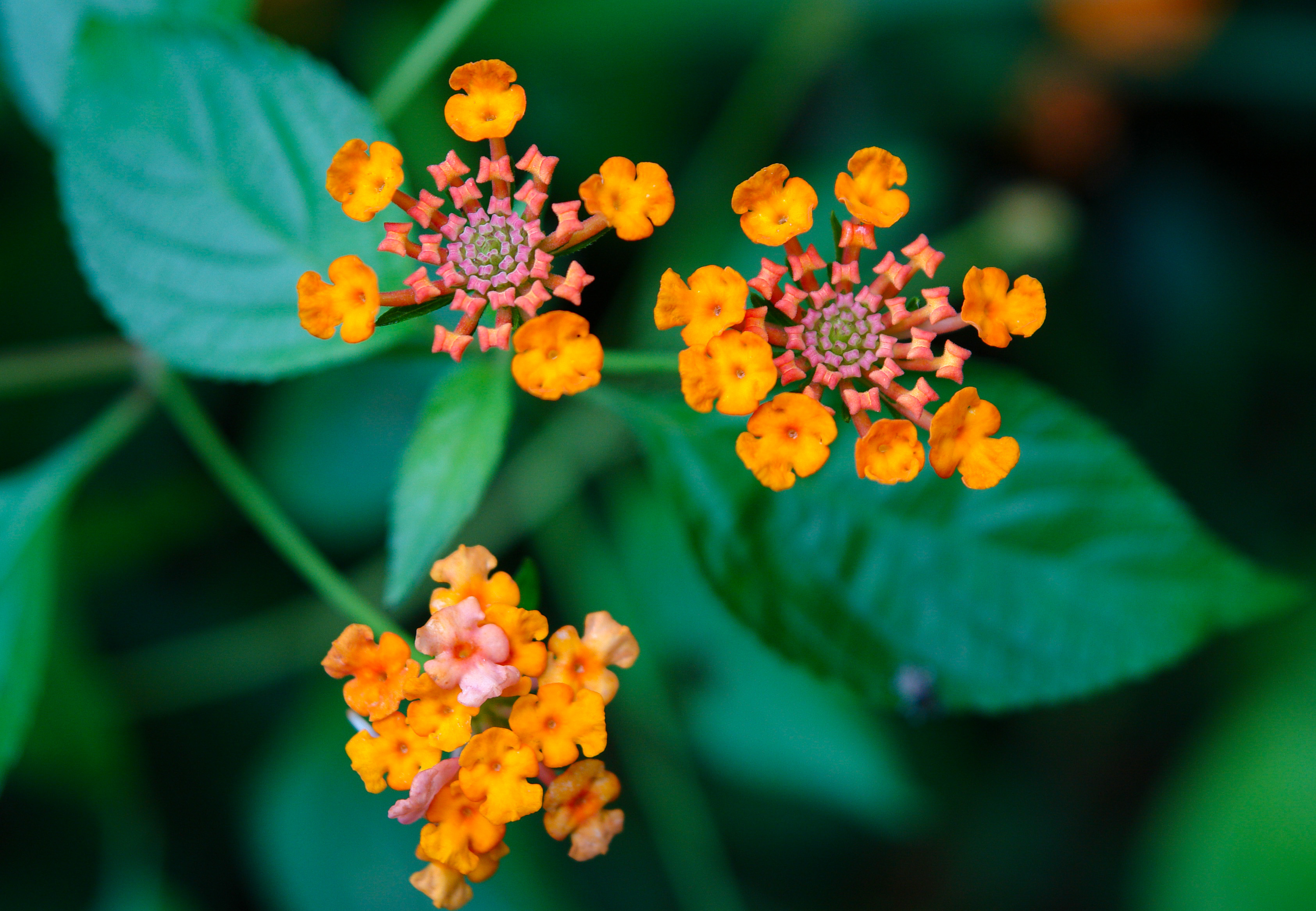
As Lovell noted, Lantana flowers change color as they age, often displaying multiple colors within a single cluster (see below). They typically start as yellow and change to orange, red, or pink as they mature. This change is triggered by pollination, which signals to insects to focus on the newer, nectar-rich flowers. Interestingly, Lovell concluded that the tendency of green, white, and yellow flowers to change to red or blue is much stronger than the reverse.
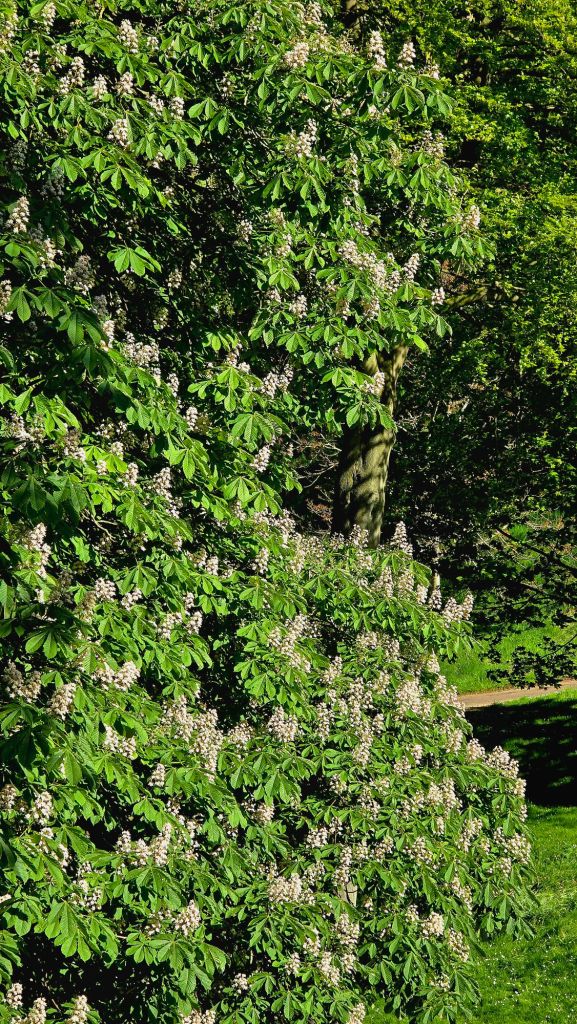
There are therefore, many flowers which turn colour in this way, but one of the most common in Europe, and flowering now, in May, is the Horse chestnut tree (Aesculus hippocastanum L.).
As described above, pollinators are attracted to horse chestnut flowers by yellow floral guide spots on the petals, and these turn red once the flower is pollinated. Coincident with this, both nectar and scent production are greatly reduced. The plant no longer needs to reward the pollinators on these flowers. The job has been done!
The red spots are also unattractive to insects and are therefore, a mechanism for not wasting the bee’s efforts on flowers that are already pollinated.
The main pollinators of horse chestnut flowers are honeybees and bumblebees, but the flowers are also visited by hoverflies, solitary bees, and some mining bees. Large bees such as Bombus spp. (Hymenoptera, Apidae) tend to work their way upwards on a panicle, or inflorescence.
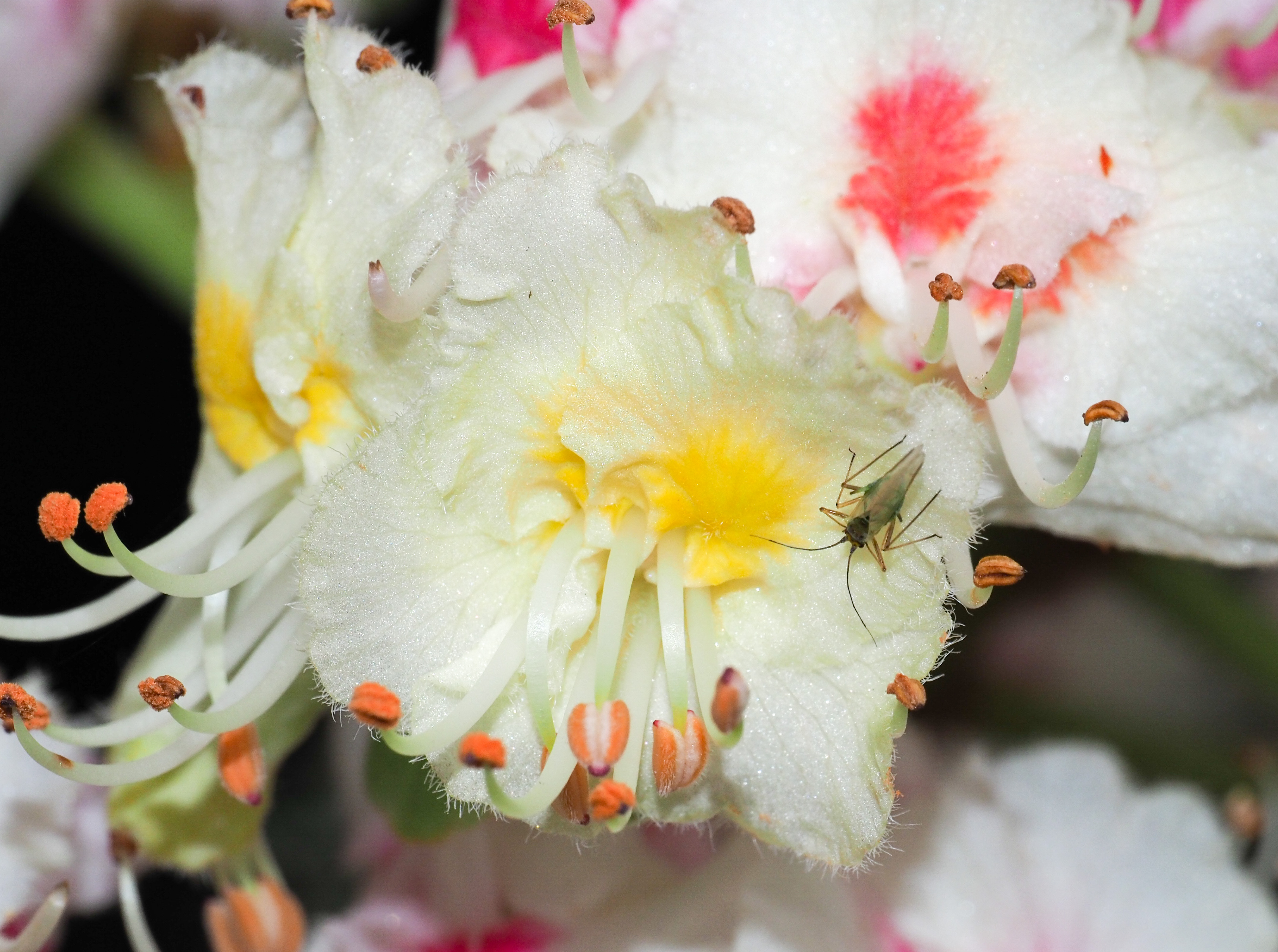
The colour changes are caused by shifts in the concentration of pigments—primarily anthocyanins and carotenoids—which accumulate or degrade as the flower ages after pollination.
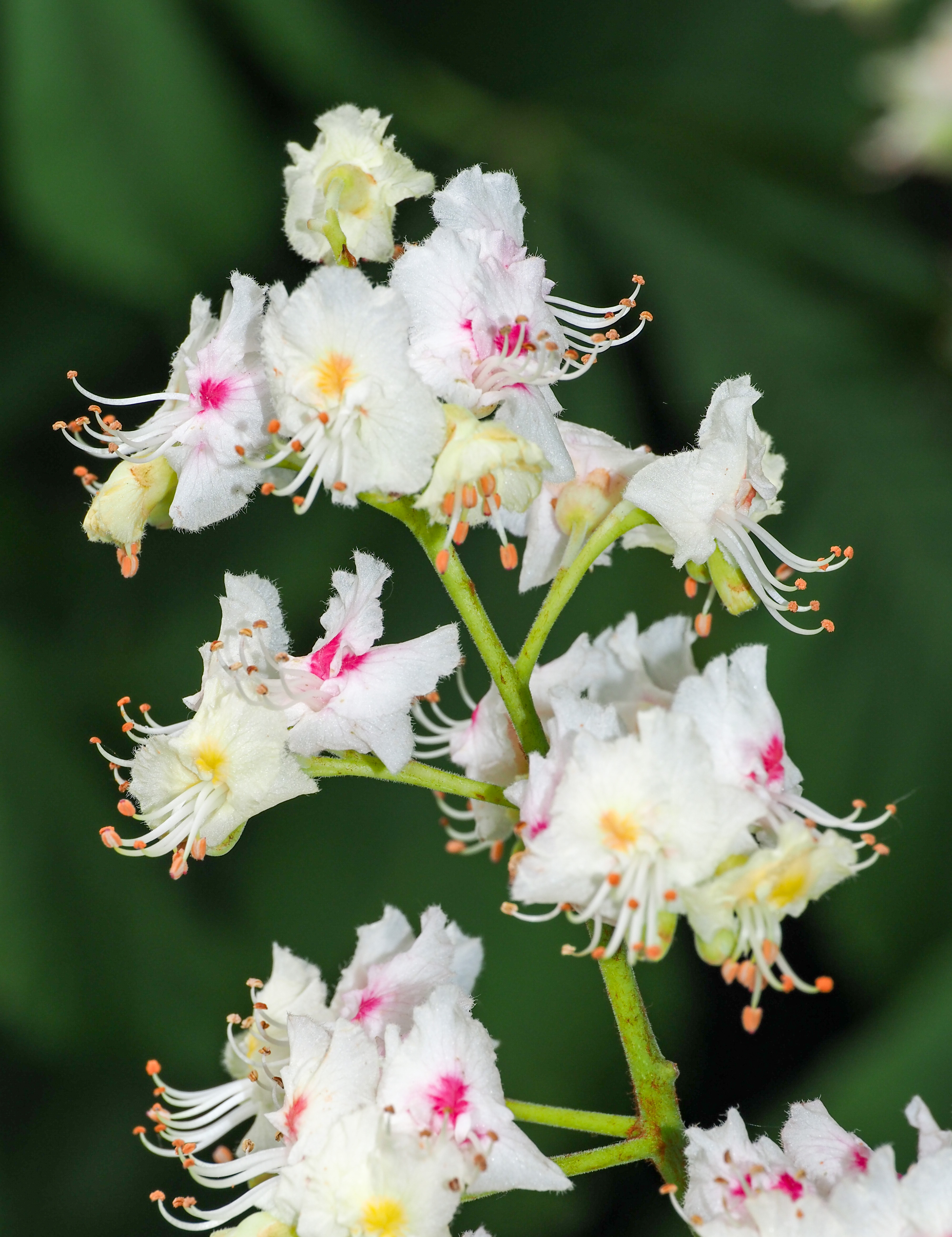
The flowers of Red Horse-chestnut trees (Aesculus x carnea) – which are an artificial hybrid between Ae. hippocastanum (European horse-chestnut) and Ae. pavia (red buckeye) – also change colour after pollination. Over a period of a day or so, the floral spots turn from yellow to orange, pink, and eventually deep red (below). However, you have to look carefully to discern the pink/red spots in these flowers as they blend in with the pink background colour of the flowers in Aesculus × carnea.
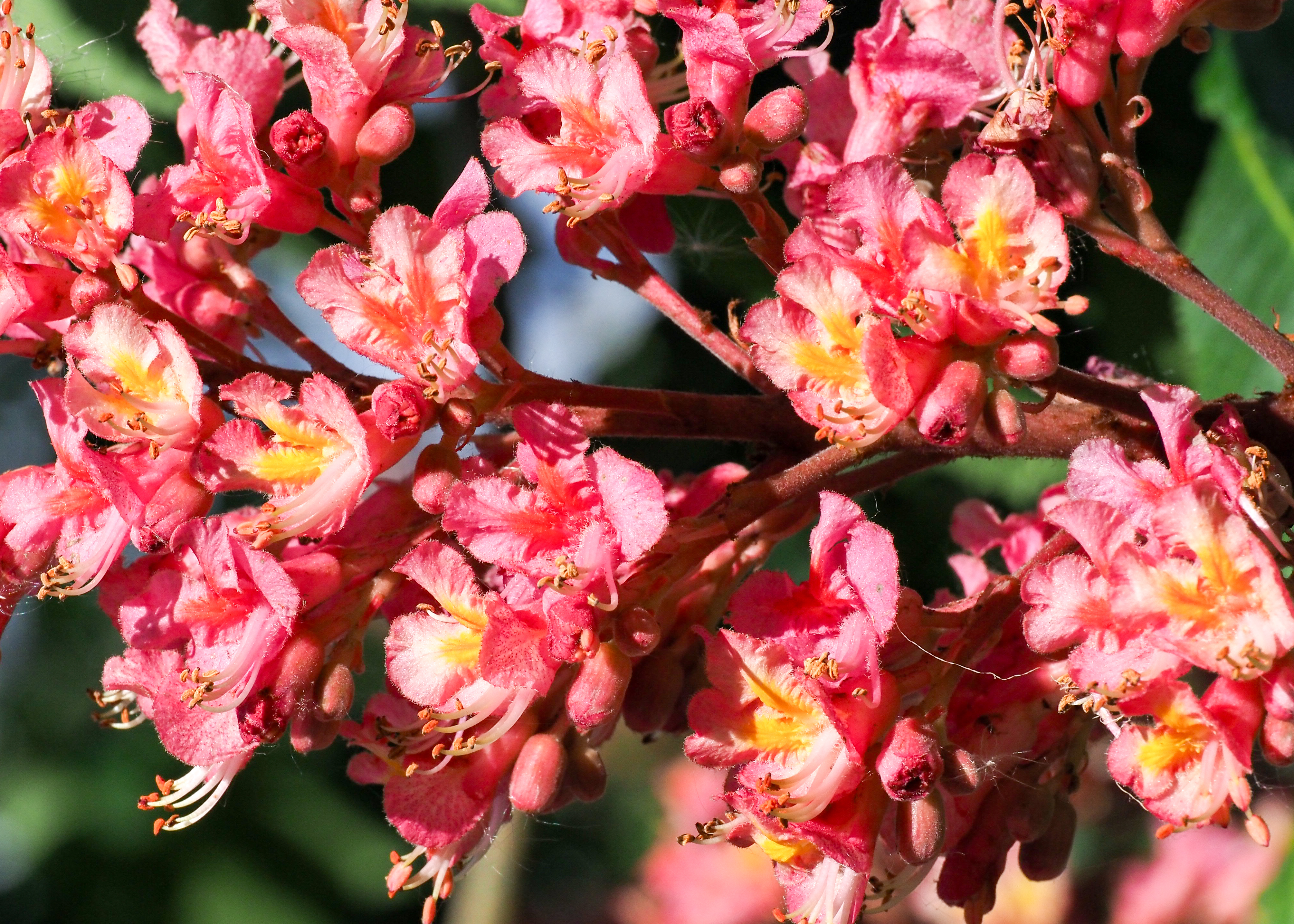
Some people have referred to this colour change as a ‘traffic light effect’, which is a good analogy, I think. Bees are strongly attracted to yellow but rather poor at seeing shades of red (good job they don’t drive!). The plant effectively switches off the attraction signal by turning the floral spots red, and presumably it matters not, whether the background colour is white (as in Aesculus hippocastanum) or pink (as in Aesculus x carnea).
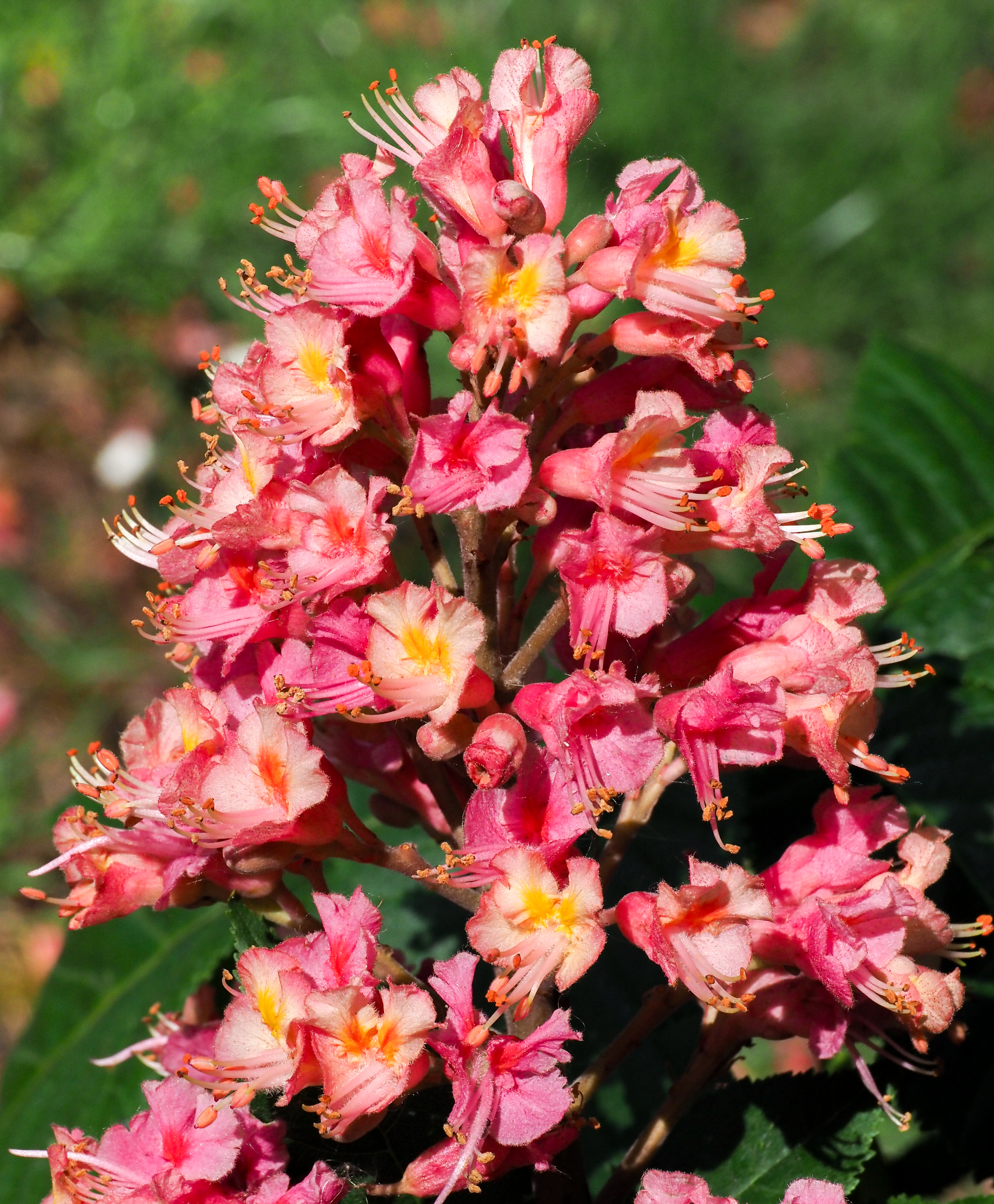
Many flowering plants have evolved similar systems, where floral changes in colour and scent production communicate shifts in nectar secretion, and effectively manipulate pollinator visitation over the period of flowering.
References
Larue, C., & Petit, R. J. (2023, June). Insect pollination in chestnut: an organized mess?. In VII International Chestnut Symposium 1400 (pp. 331-340).
Lovell, J. H. (1902). The colors of northern polypetalous flowers. The American Naturalist, 36(423), 203-242.
Thomas, P. A., Alhamd, O., Iszkuło, G., Dering, M., & Mukassabi, T. A. (2019). Biological flora of the British Isles: Aesculus hippocastanum. Journal of Ecology, 107(2), 992-1030.
Weiss, M. R. (1991a). Floral colour changes as cues for pollinators. Nature 354, 227–229.
Weiss, M. R. (1991b). Floral color changes as cues for pollinators. Acta Hortic. 288, 294–298.
Weiss, M. R., & Lamont, B. B. (1997). Floral color change and insect pollination: a dynamic relationship. Israel Journal of Plant Sciences, 45(2-3), 185-199.
Willmer, P., Stanley, D. A., Steijven, K., Matthews, I. M., & Nuttman, C. V. (2009). Bidirectional flower color and shape changes allow a second opportunity for pollination. Current Biology, 19(11), 919-923.
Weryszko-Chmielewska, E., Tietze, M., & Michonska, M. (2012). Ecological features of the flowers of Aesculus hippocastanum L. and characteristics of Aesculus L. pollen seasons under the conditions of central-eastern Poland. Acta agrobotanica, 65(4).


Colour change is a very interesting strategy I wasn’t aware of before reading your post. By the way, we came across many horse chestnuts today, and all their flowers had red spots so they were already pollinated. 🌰
I’ll be danged, I had absolutely no idea. Mother Nature is a certifiable genius, isn’t she?!
As ever, Ray, a very interesting and stimulating blog. One wonders if anyone has done any work to show that flowers also change patterns or colour in UV wavelengths, visible to insects but not to the human eye?
Excellent question! Yes, flowers do change the UV reflectivity as well as the visible part of the spectrum to communicate with their UV sensitive pollinators. But I need to research it more.😁
[…] idea of changing the advertised colours to indicate that the flower has already been pollinated (Ray Cannon; Jason Chan)**, and encouraging the would-be pollinator to try another […]