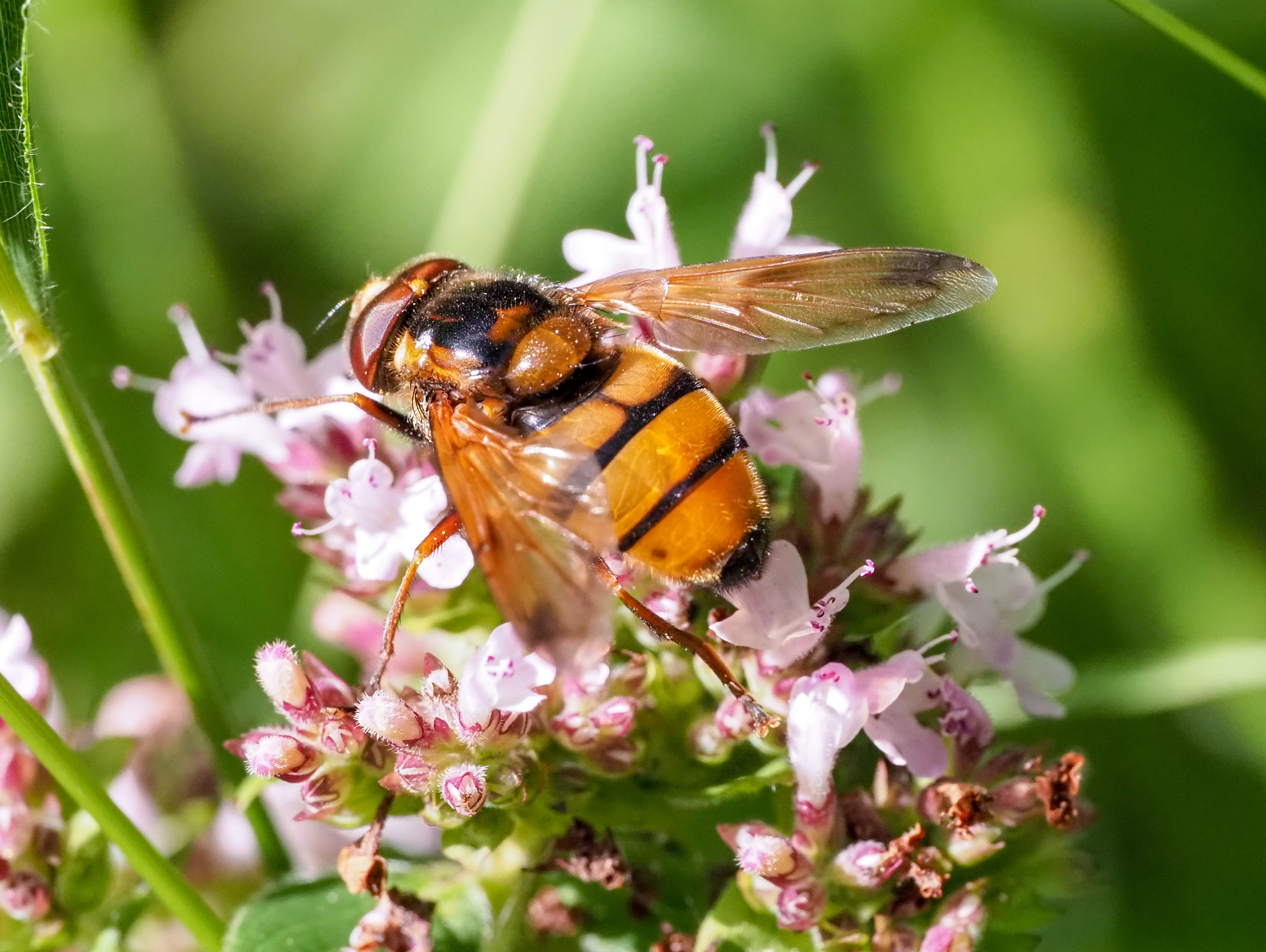
Volucella inanis (above), commonly known as the Lesser hornet hoverfly, or the Wasp Plumehorn, is a relatively large hoverfly (Diptera, Syrphidae), about 25mm long, or an inch in old money! It is slightly smaller than the congeneric species, Volucella zonaria (below), another suspected wasp mimic.
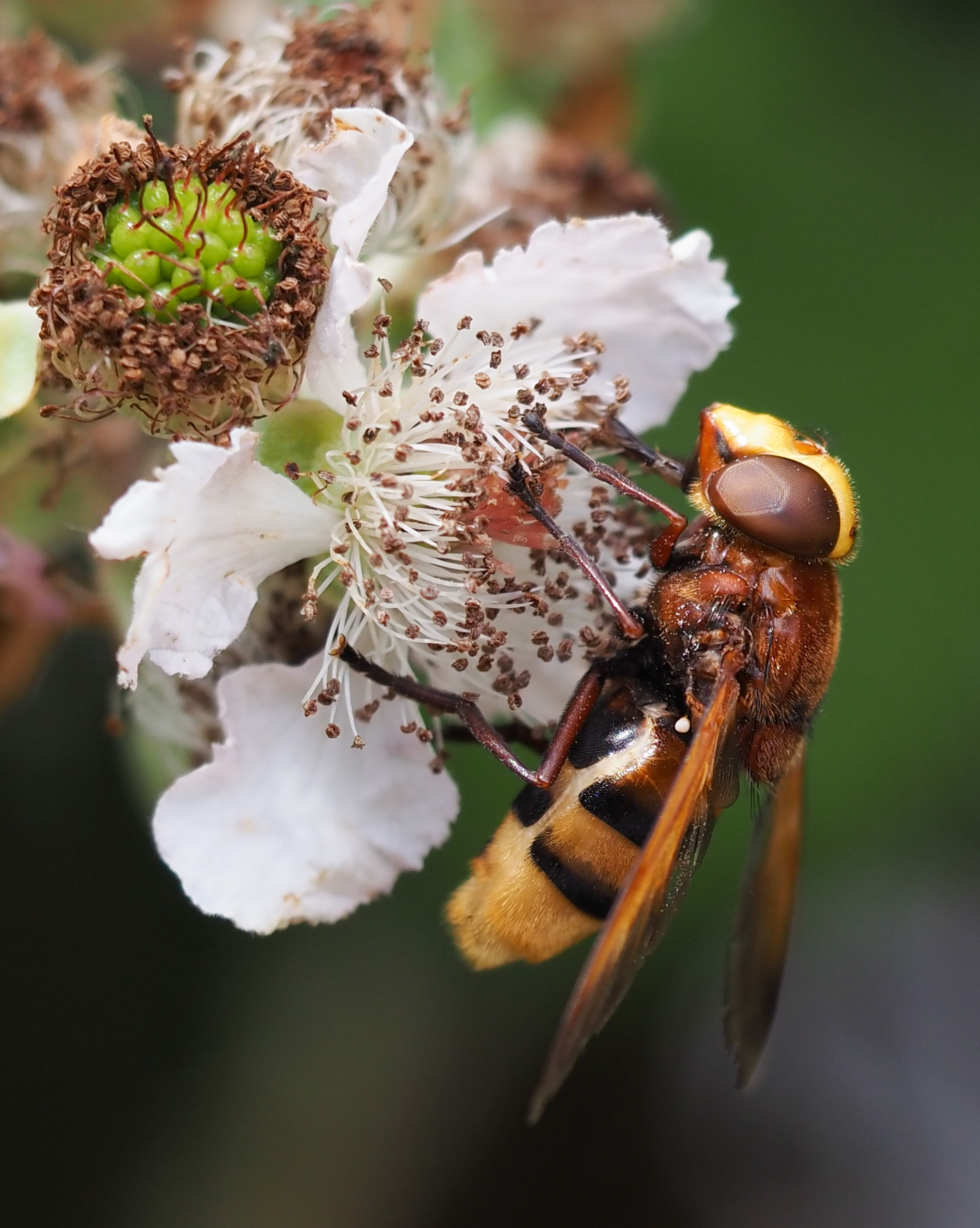
I say suspected wasp mimic, because the Batesian mimicry has of course, not evolved for our eyes, but for those of their would-be predators; the flies are presumably trying to fool birds that might fancy a tasty dipteran morsel! They, the birds (and frogs lizards in some situations), are the ‘target of the deceit‘ to quote Cuthill (2014). Lovely phrase!
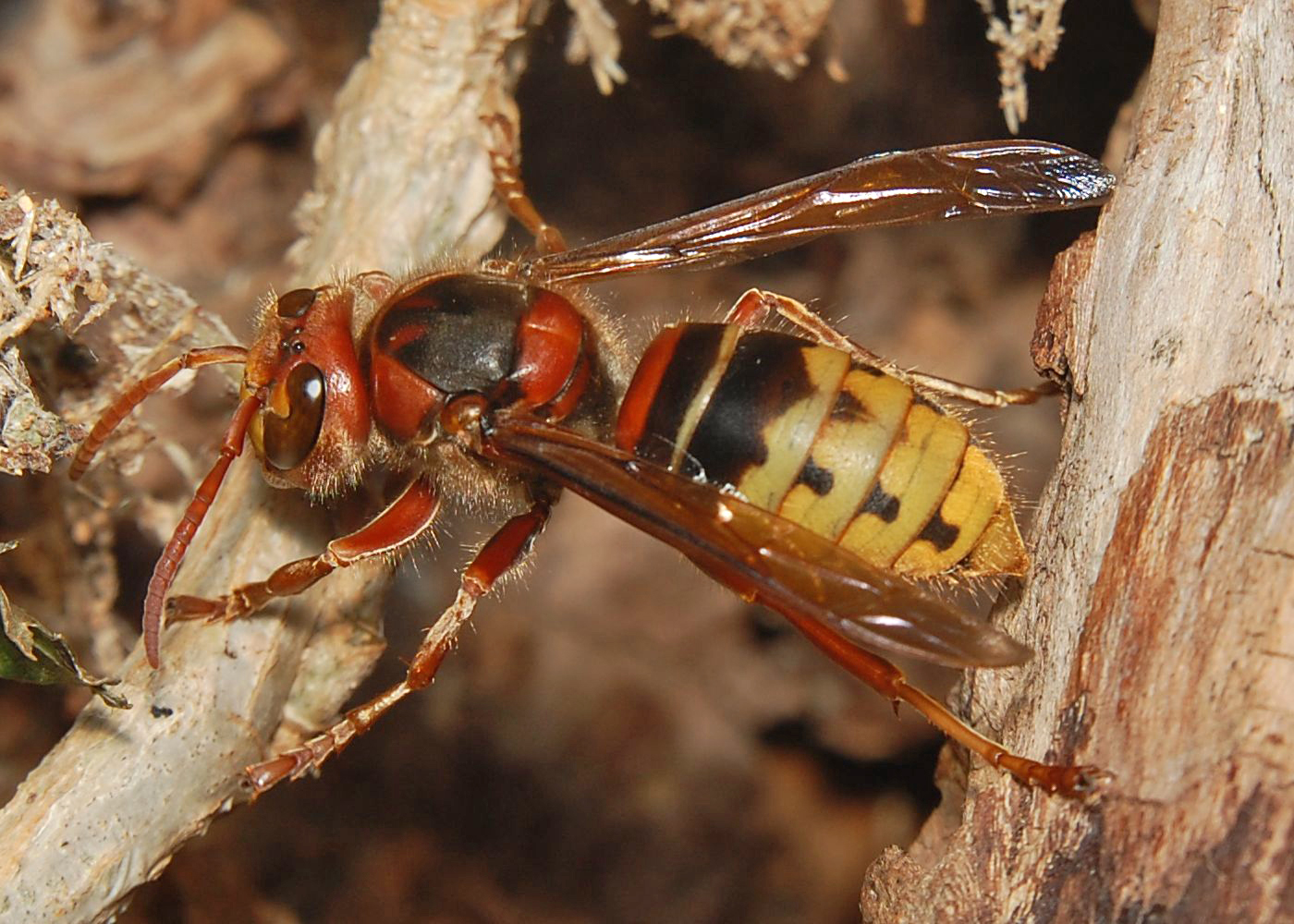
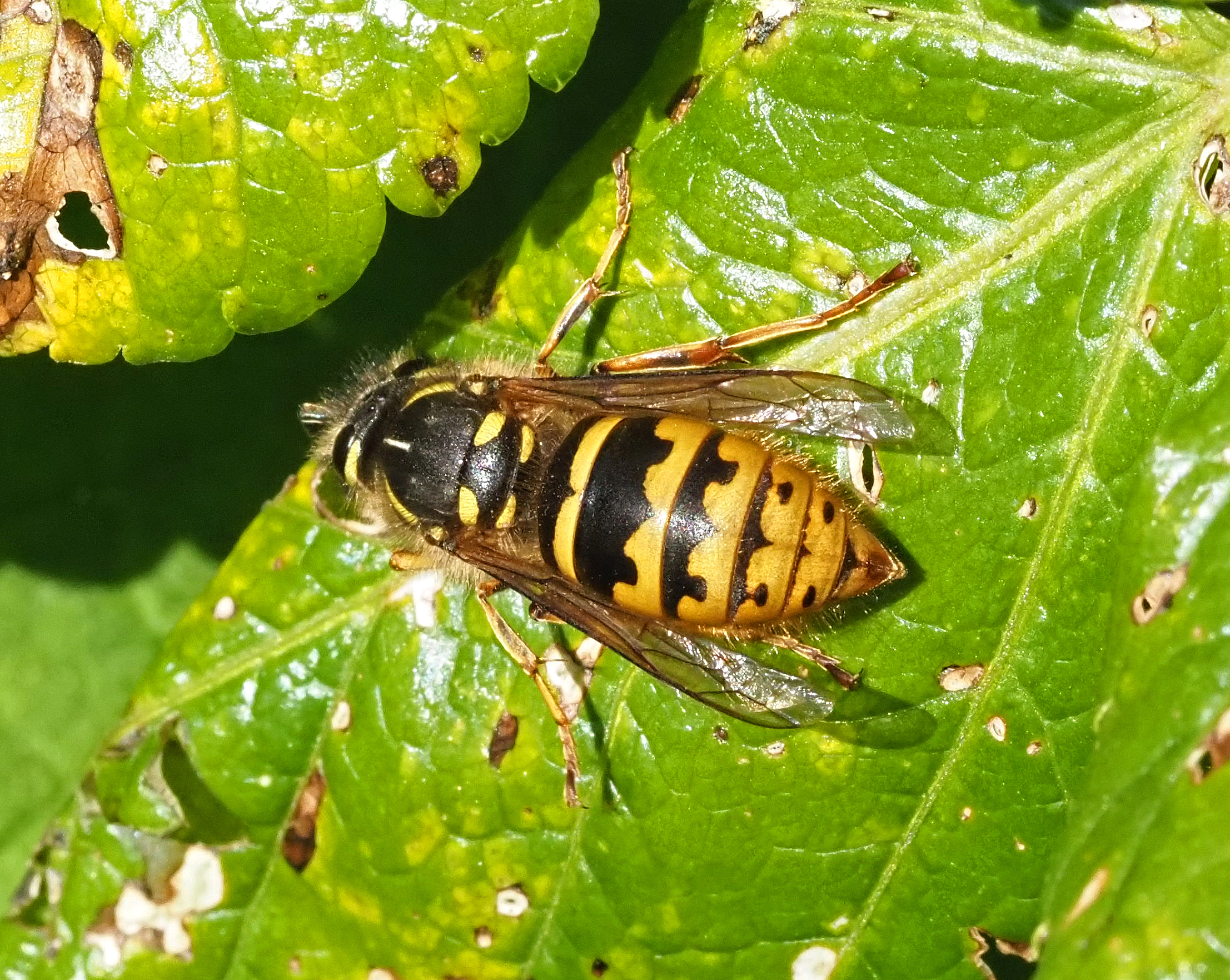
These harmless hoverflies have evolved the approximate appearance of wasps, i.e. they are imitating the warning signals of genuinely harmful species which have powerful stings. Volucella inanis is thought to be a Batesian mimic of both the European hornet (Vespa crabro) and the Common wasp (Vespula vulgaris), shown below. But, they don’t look very much like them, do they!
However, it’s the birds (and other predators) who are the right animals to ask, whether a given hoverfly looks like a wasp! Clearly, they don’t want a mouthful of angry wasp! Ouch! In one experiment (Dittrigh et al., 1993), pigeons were ‘asked’ to rank a number of hoverfly mimics according to their similarity to wasps (Vespa vulgaris). Remarkably, their perception of the degree of pattern similarity between the model (wasp) and its mimic (hoverfly) was roughly similar to our own ‘intuitive’ ranking of the mimics. However, two of the commonest species found in the British countryside – Syrphus ribesii and Episyrphus balteatus (see below) – were ranked by the pigeons as being very similar to wasps; despite our own perception that they are rather poor mimics. What do these birds know that we don’t? Or rather, why do we reach different conclusions about the degree of mimicry? One possible reason is that birds and humans see the world in different ways: birds have tetrachromatic vision, compared to us trichromats, and they can detect ultraviolet (UV) wavelength light. However, this may not be the real reason, it might be something more simple; i.e. how the birds learn to discriminate dangerous insects. What is the most salient cue they chose to learn about wasps: their colour, their size or their shape? Any one might suffice.
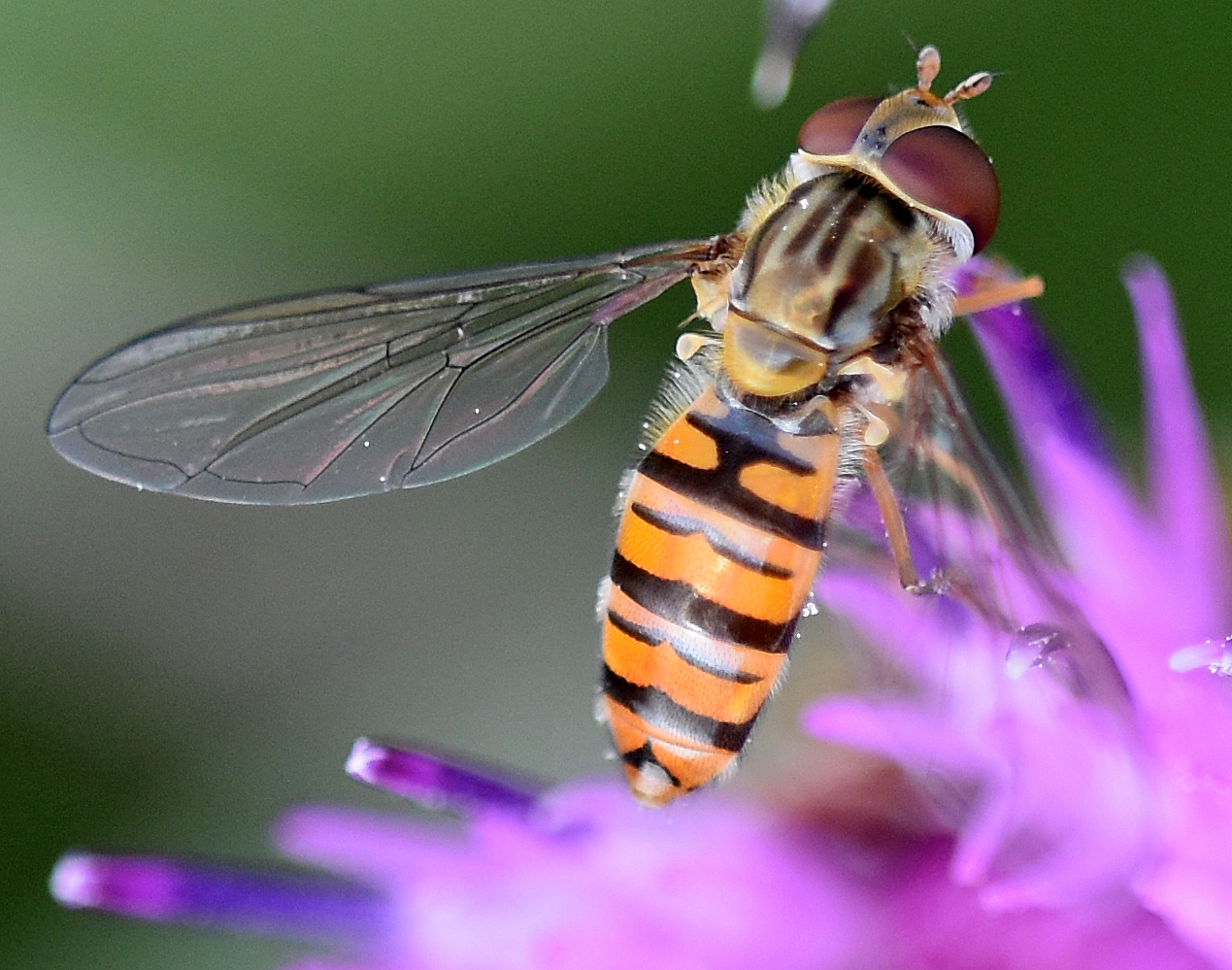
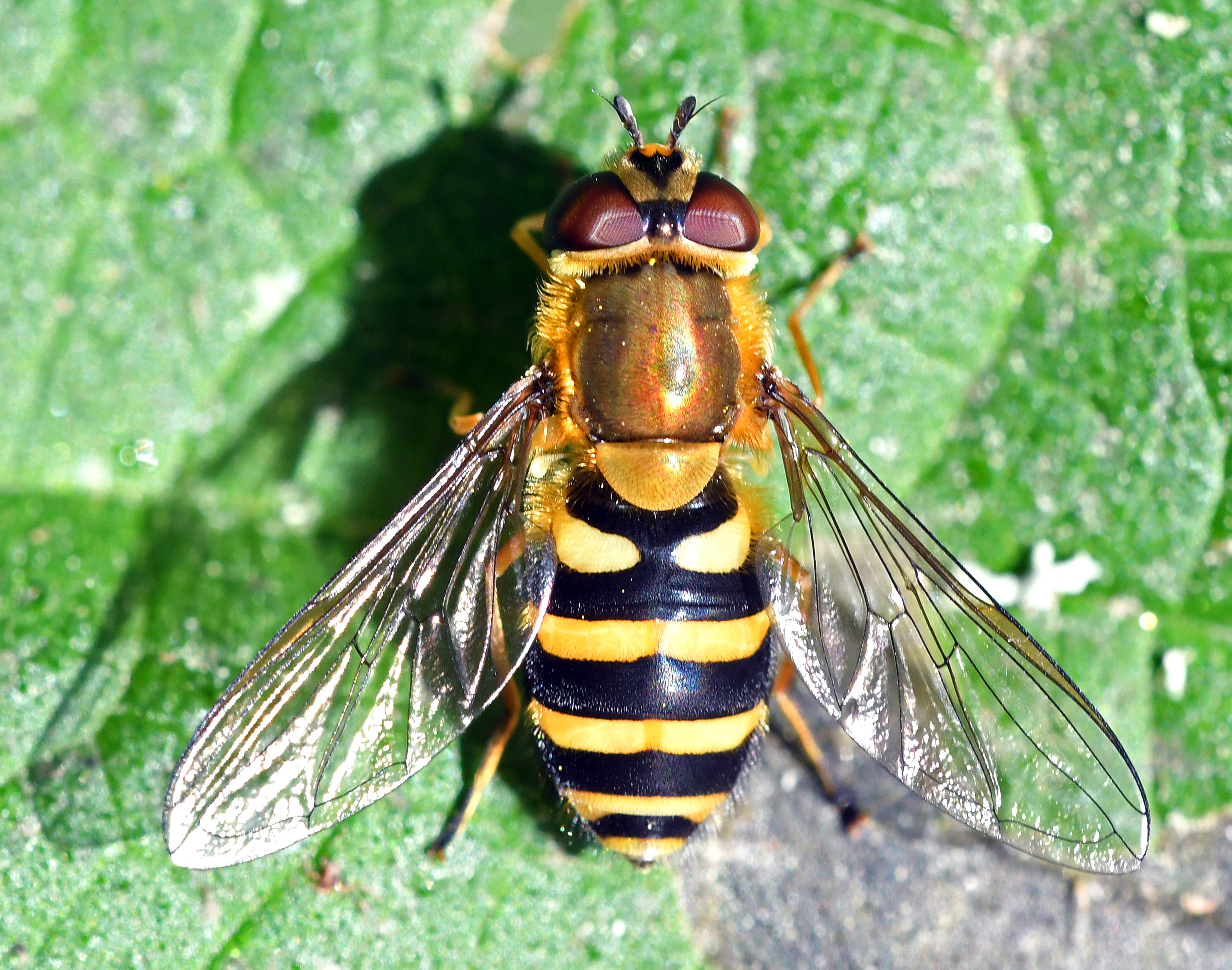
It’s worth emphasising that in most of these cases, the similarity between wasp and hoverfly is relatively poor. I.e. the mimicry is ‘imperfect‘, or not very good in everyday language! Strangely enough, mimics that closely resemble their models are usually rarer than their models, whereas mimics with a less precise resemblance – like Syrphus ribesii and Episyrphus balteatus (above) – are often much more abundant than their supposed models (Howarth and Edmunds, 2000).
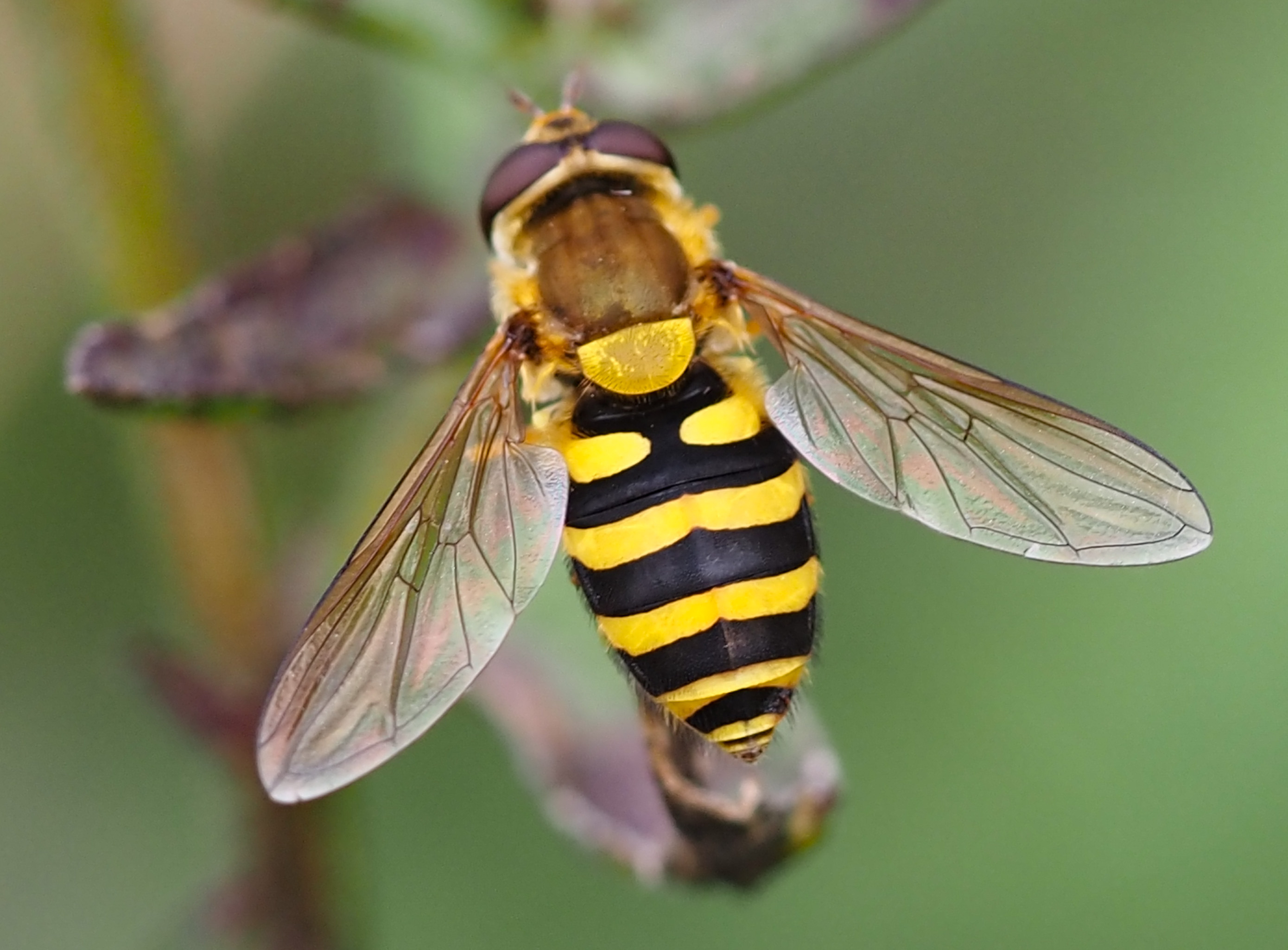
Returning to our subject, the Lesser hornet hoverfly, Volucella inanis, when you look closely at the yellow patches on its abdomen, it is possible to see what look like tubes, or vessels of some kind. I am fairly sure that these are Malpighian tubules (see below) – part of the excretory system of the fly, rather than tracheoles, or respiratory tubes. The Malpighian tubules are located in the insect hind-gut and excrete nitrogenous waste products. The tubules can vary markedly in number and extend throughout the insect’s body. Quite why they are so prominent in this species, I don’t know.
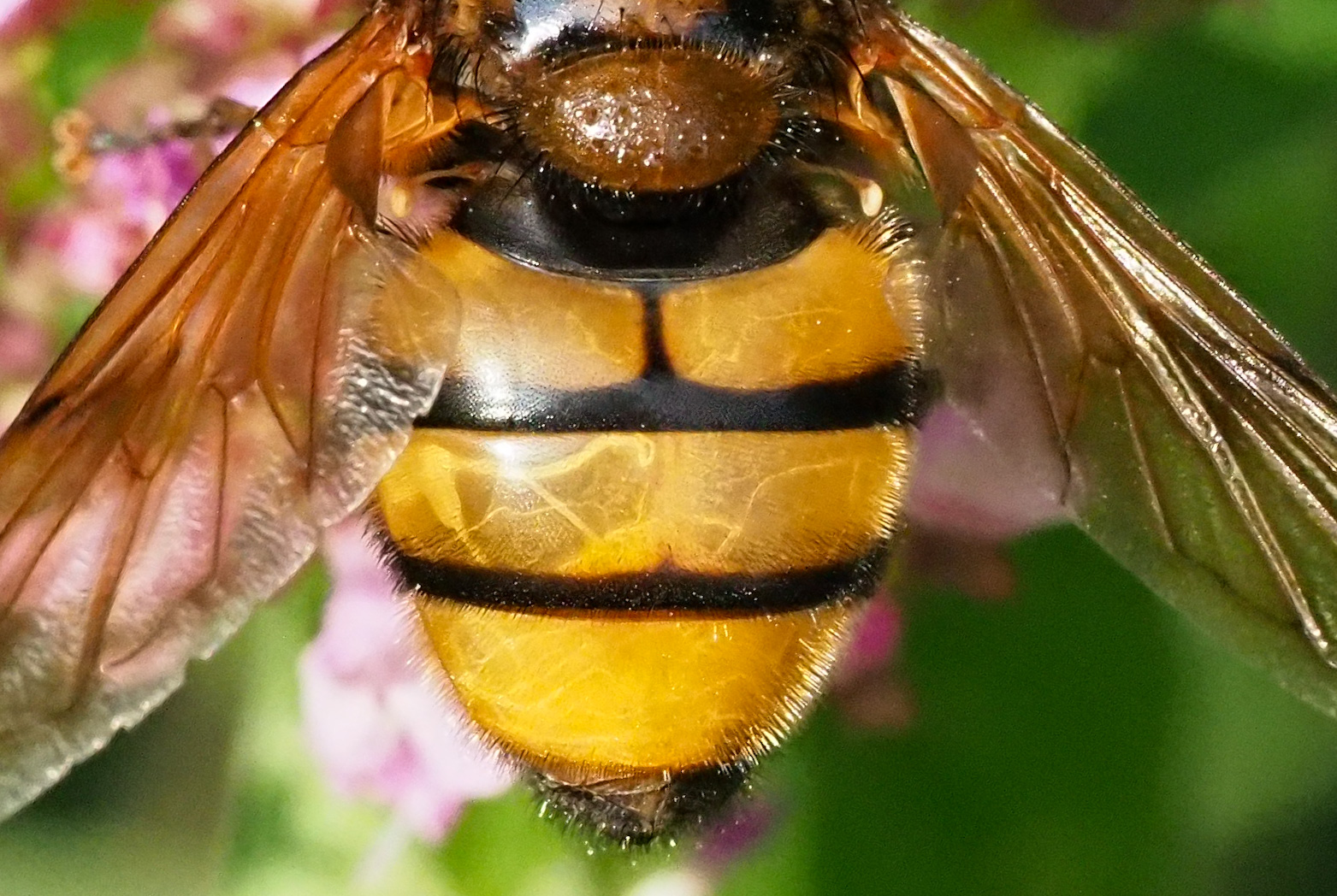
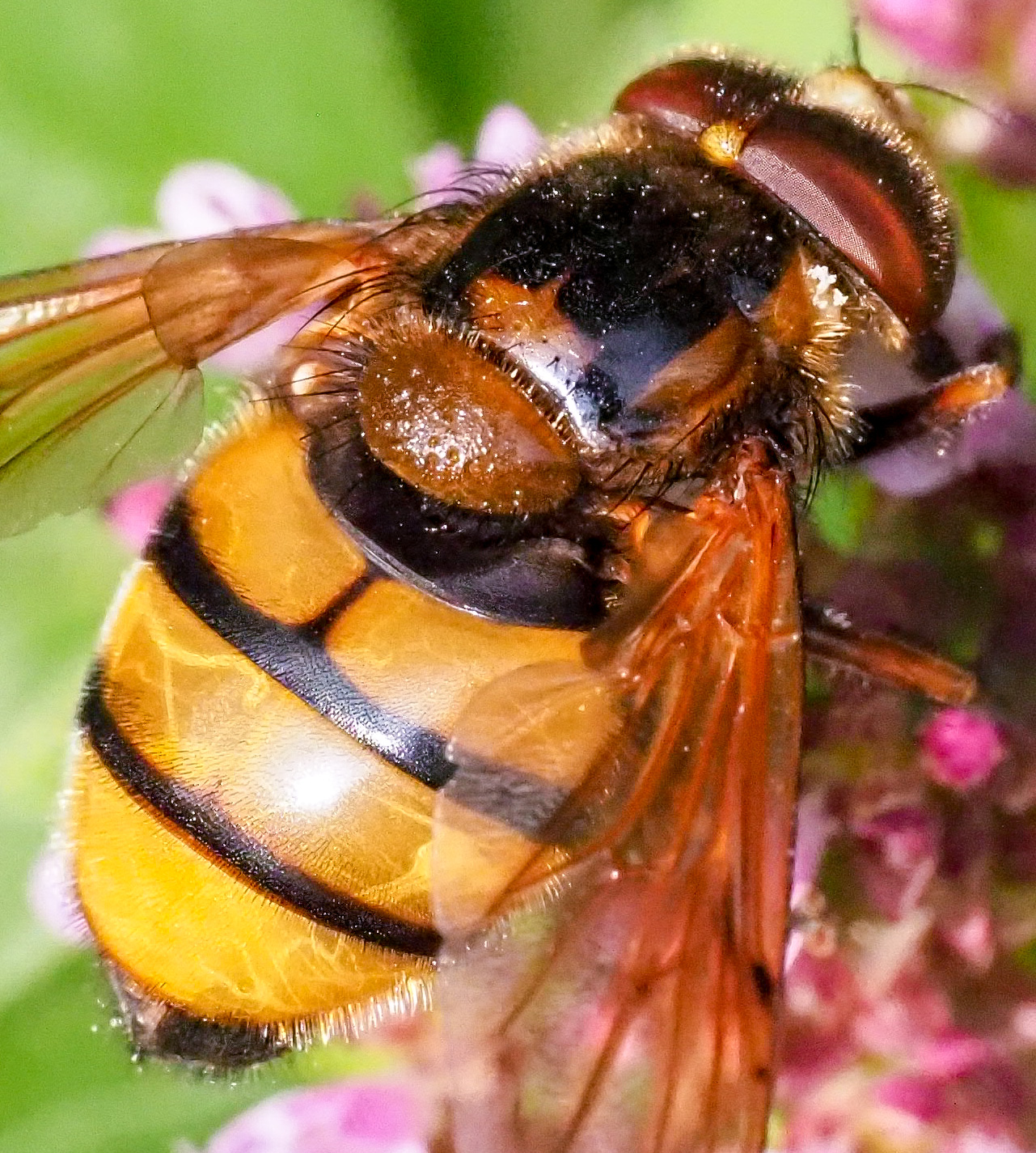
I don’t suppose any birds would take note of such fine detail on the body of a fly! They have to quickly decide – very quickly indeed as hoverflies move fast! – whether the potential prey item is safe to eat or not. They have probably learned to recognise hazardous insects, i.e. wasps, using only one general feature, such as its colour, shape or surface pattern. They do not carefully evaluate all aspects of the insects, but rapidly reject it, or otherwise, based on the one thing that they have learnt, e.g. the colour. So, if the colour of the mimic matches that of the prey, which it clearly does, then that’s a good enough ‘rule of thumb’ for the bird to leave it alone! Which may explain why imperfect mimicry works!
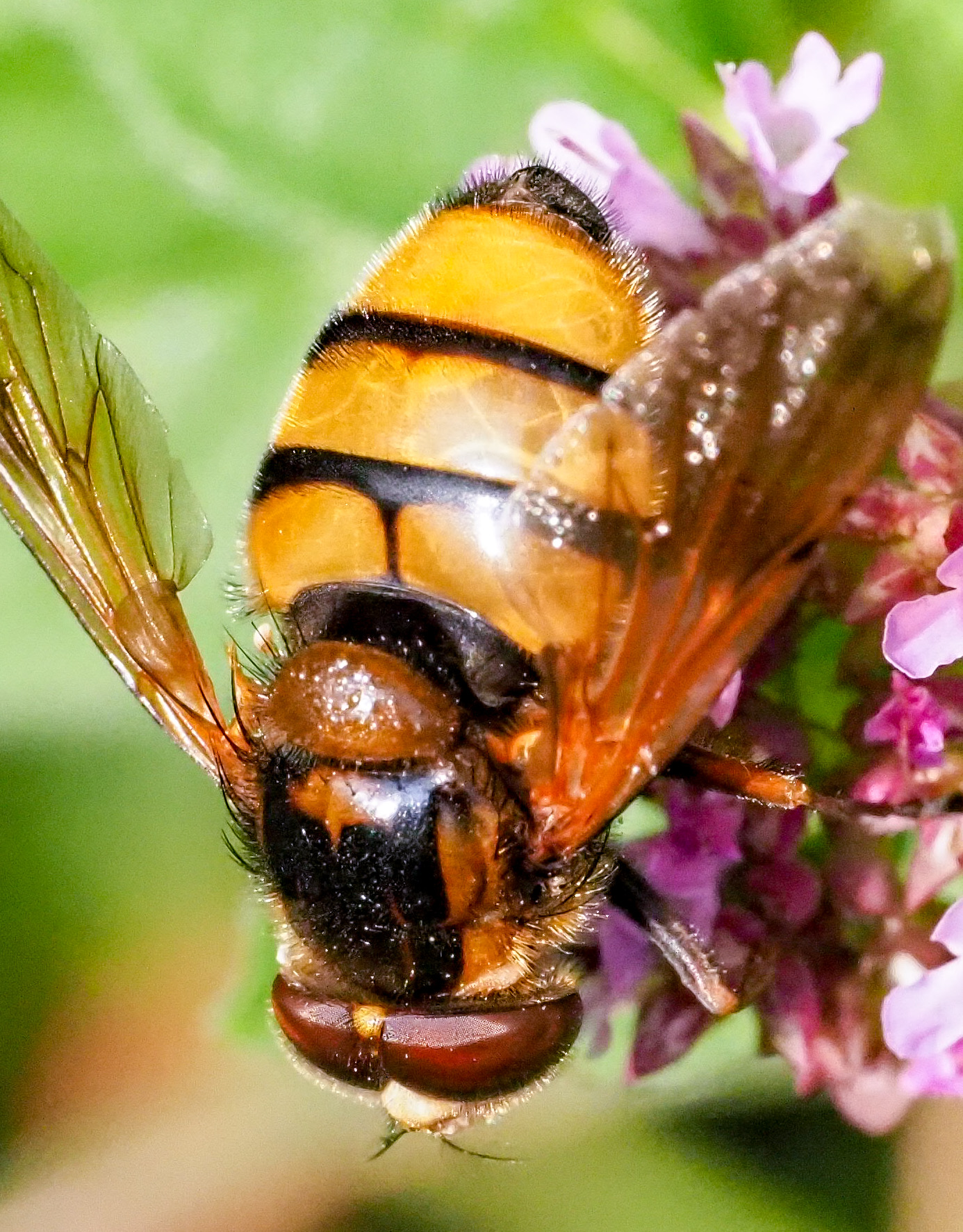
Another way of looking at it, is that social wasps (Vespula spp.) have such powerful defenses – I know this having been chased by a swarm of angry German wasps – that anything resembling these insects will be avoided by would-be predators (Holloway et al., 2002).
I.e it’s better to be safe than sorry!
References
Cuthill, I. C. (2014). Evolution: the mystery of imperfect mimicry. Current Biology, 24(9), R364-R366. https://www.cell.com/current-biology/fulltext/S0960-9822(14)00406-0
Dittrigh, W., Gilbert, F., Green, P., McGregor, P., & Grewcock, D. (1993). Imperfect mimicry: a pigeon’s perspective. Proceedings of the Royal Society of London. Series B: Biological Sciences, 251(1332), 195-200.
Hlaváček, A., Daňková, K., Benda, D., Bogusch, P., & Hadrava, J. (2022). Batesian-Müllerian mimicry ring around the Oriental hornet (Vespa orientalis). Journal of Hymenoptera Research, 92, 211-228.
Holloway, G., Gilbert, F., & Brandt, A. (2002). The relationship between mimetic imperfection and phenotypic variation in insect colour patterns. Proceedings of the Royal Society of London. Series B: Biological Sciences, 269(1489), 411-416.
Howarth, B., & Edmunds, M. (2000). The phenology of Syrphidae (Diptera): are they Batesian mimics of Hymenoptera?. Biological Journal of the Linnean Society, 71(3), 437-457.
Taylor, C. H., Reader, T., & Gilbert, F. (2016). Hoverflies are imperfect mimics of wasp colouration. Evolutionary ecology, 30, 567-581.
 Ray Cannon's nature notes
Mimicry—always a fascinating topic. Like you, I was once chased by a swarm of angry wasps (disturbed them when cutting grass with a brush cutter) so I couldn’t agree more: it’s better to be safe than sorry!