Common or English Ivy (Hedera helix) is a very common climbing vine that flowers from September to November and is vitally important as a source of pollen and nectar for a wide range of insects.
Solitary bees, bumblebees, hoverflies, blowflies, green bottles, wasps, butterflies, and many, many other insects aggregate on this sweetly smelling plant in Autumn.
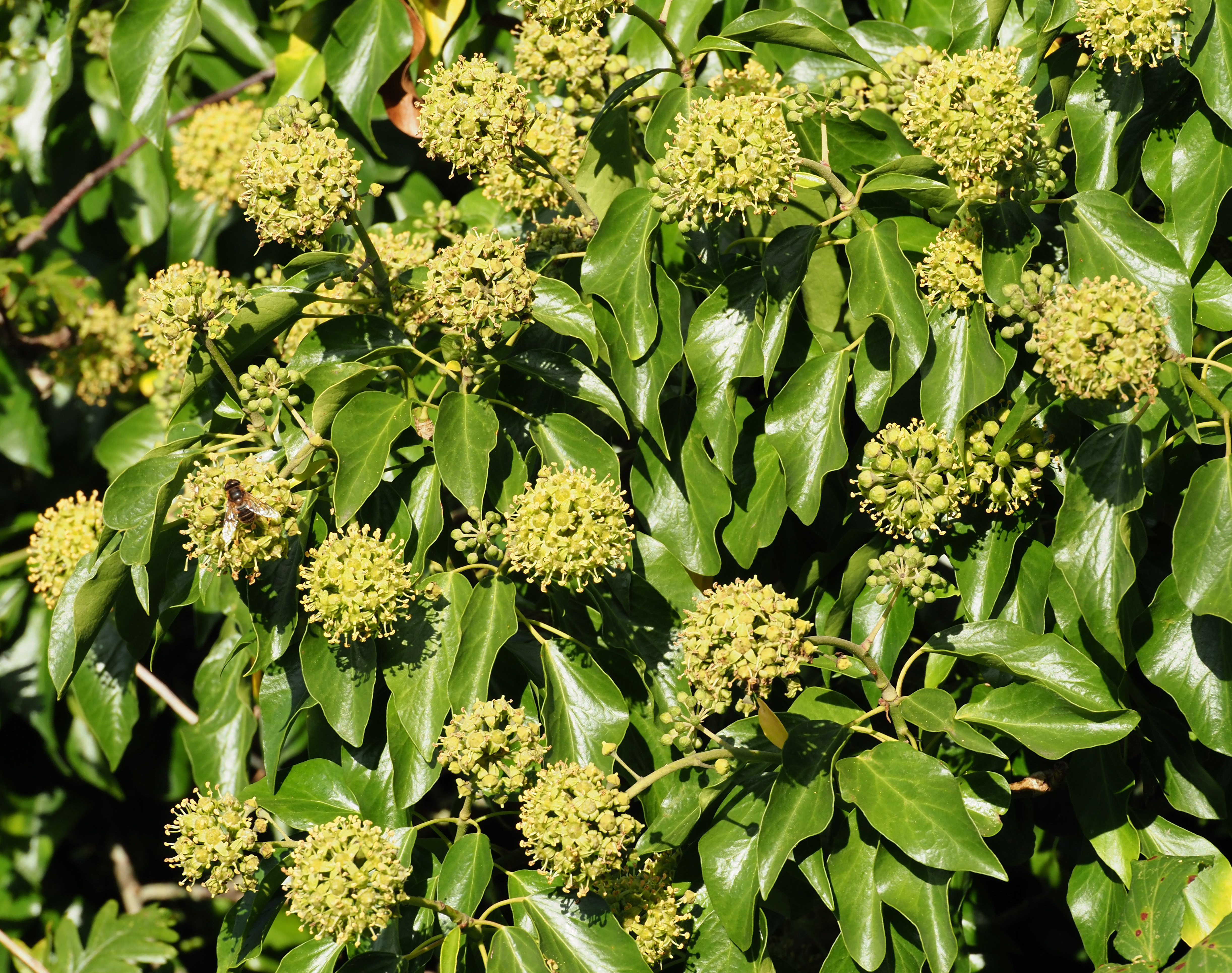
The dome-shaped clusters of flowers are known as umbels.
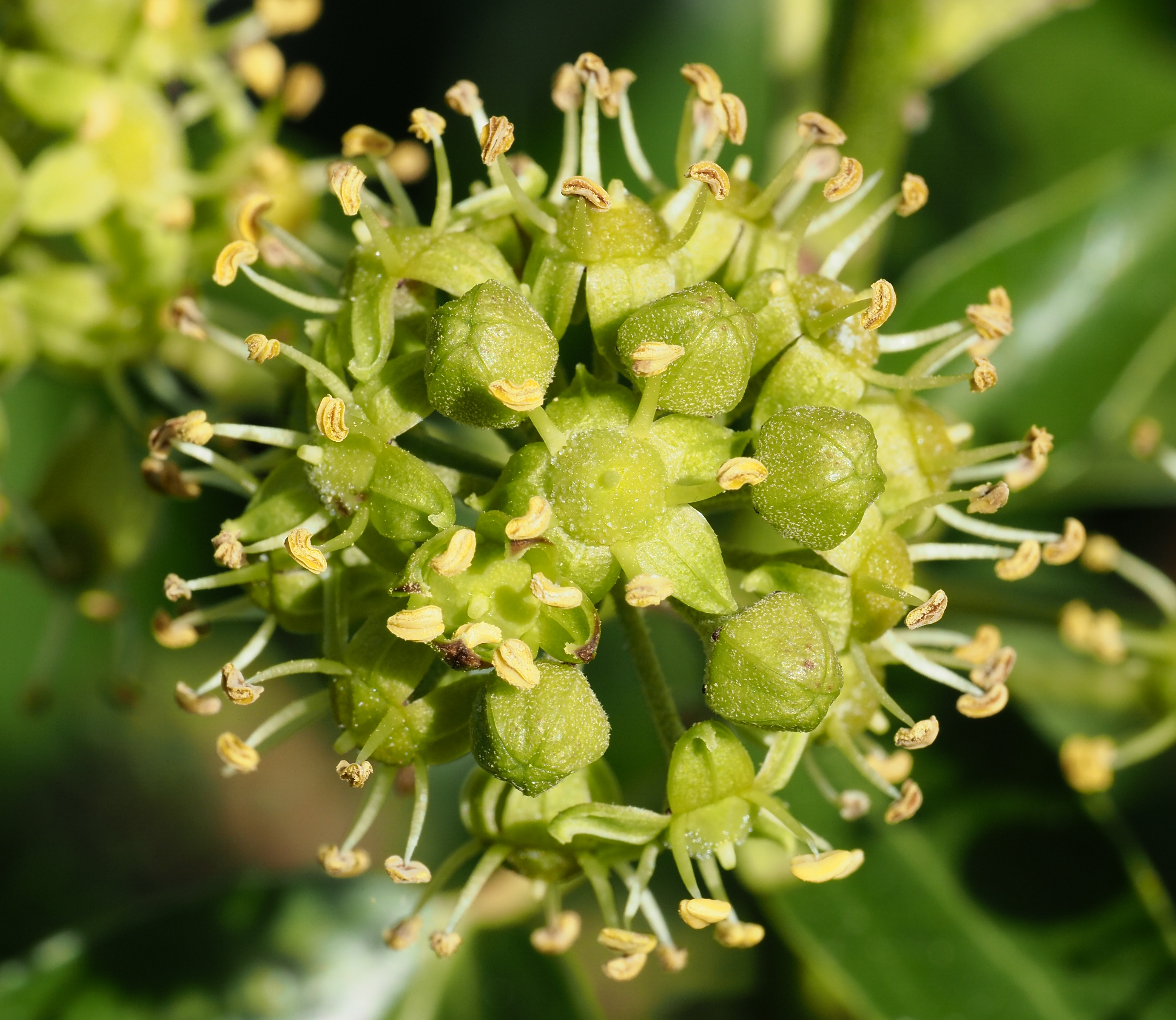
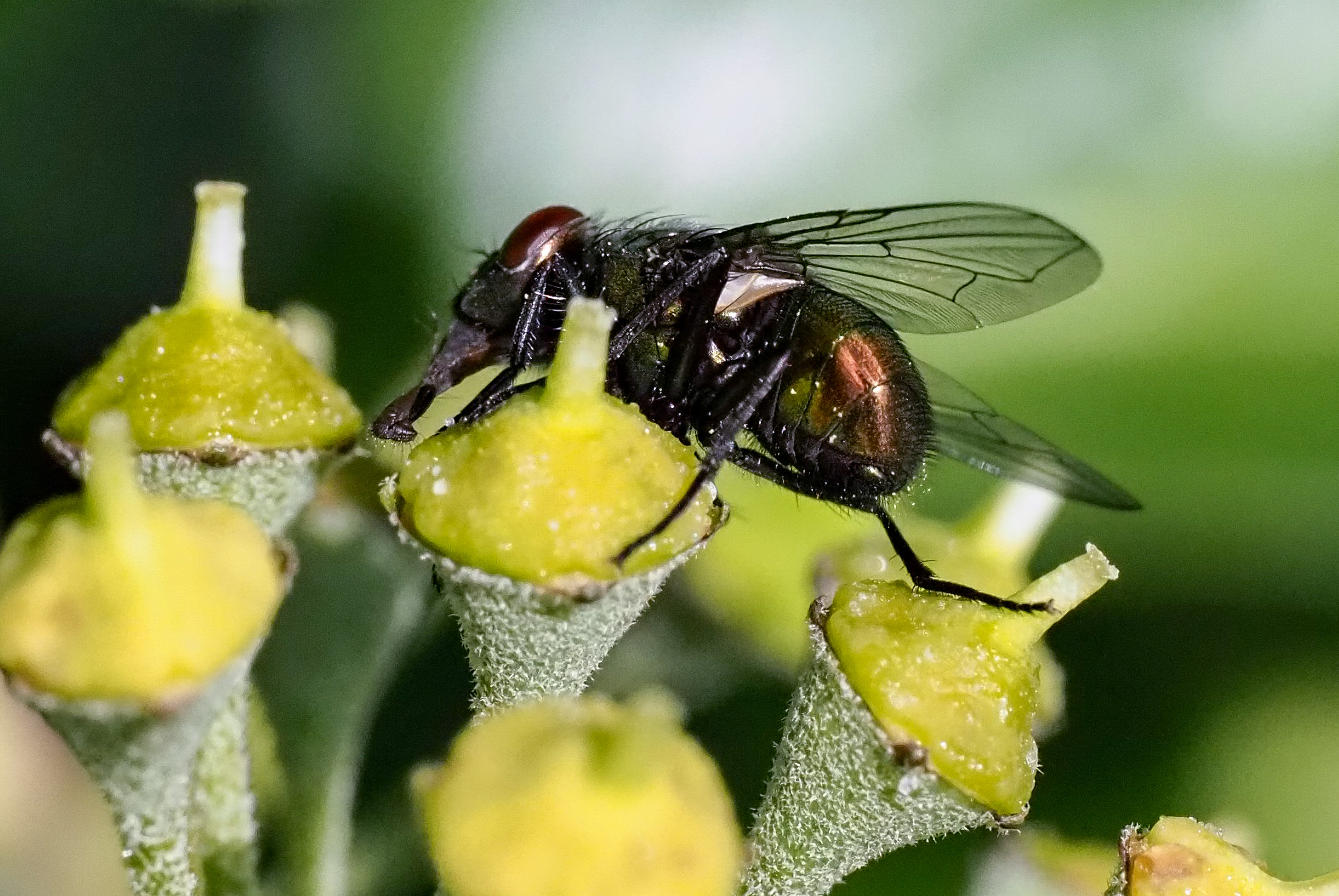
Each ivy flower has five green petals and five stamens, surrounding a centrally placed stigma, or style (see below). The flower sits in a cup-shaped sepal which is shaped like a golf-tee, or little green tea cake!; it is this which appears to exude the nectar (see below).
There are five, yellow-coloured anthers and a short paler-green style in the centre of each flower. The small green petals are reflexed backwards (see below).
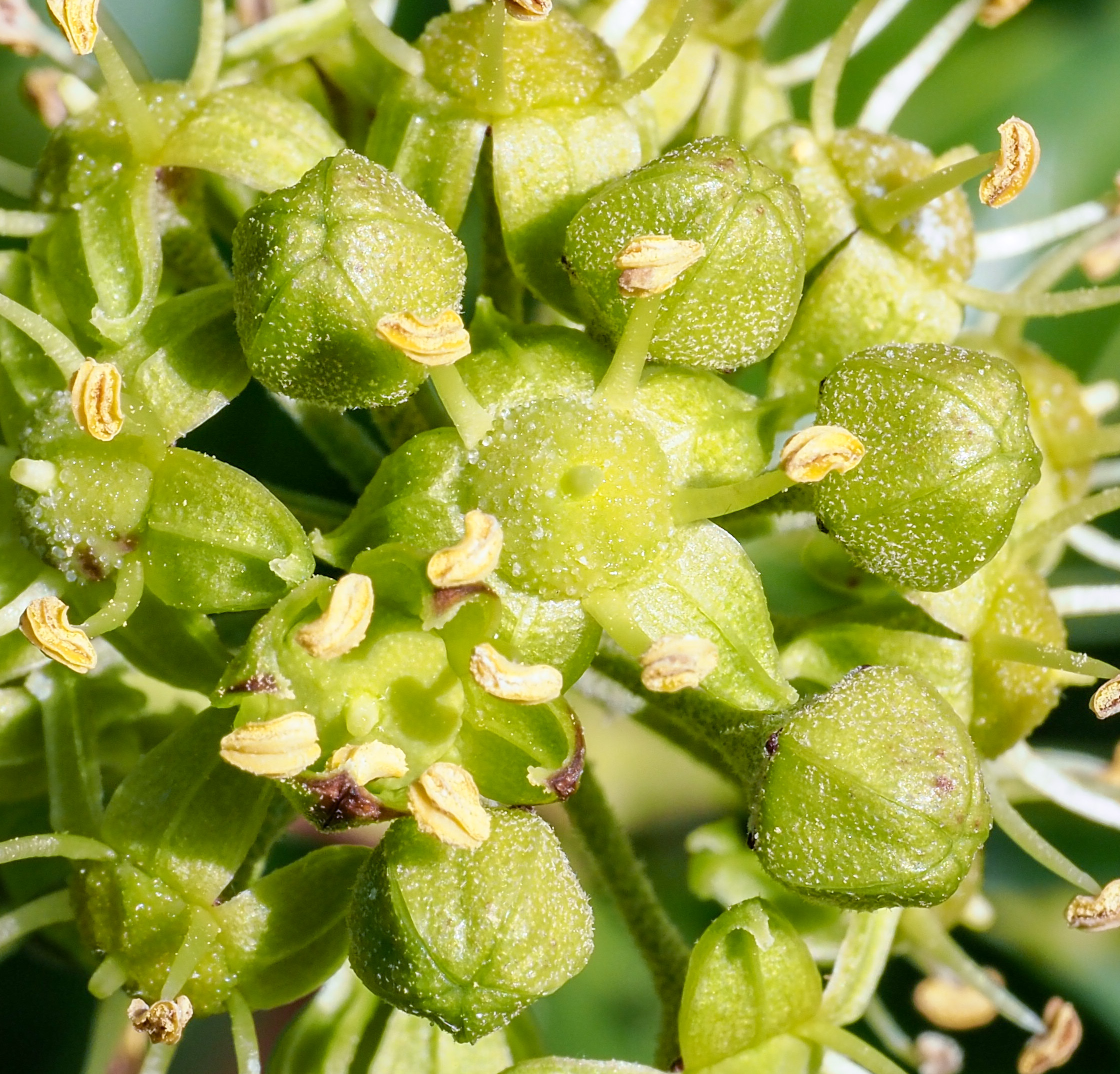
The flowers get fertilised and gradually turn into dark fruits the following spring. The anthers turn brown and fall off; the petals also turn brown and the cups swell into fruits. At some point the umbel head stops producing nectar.
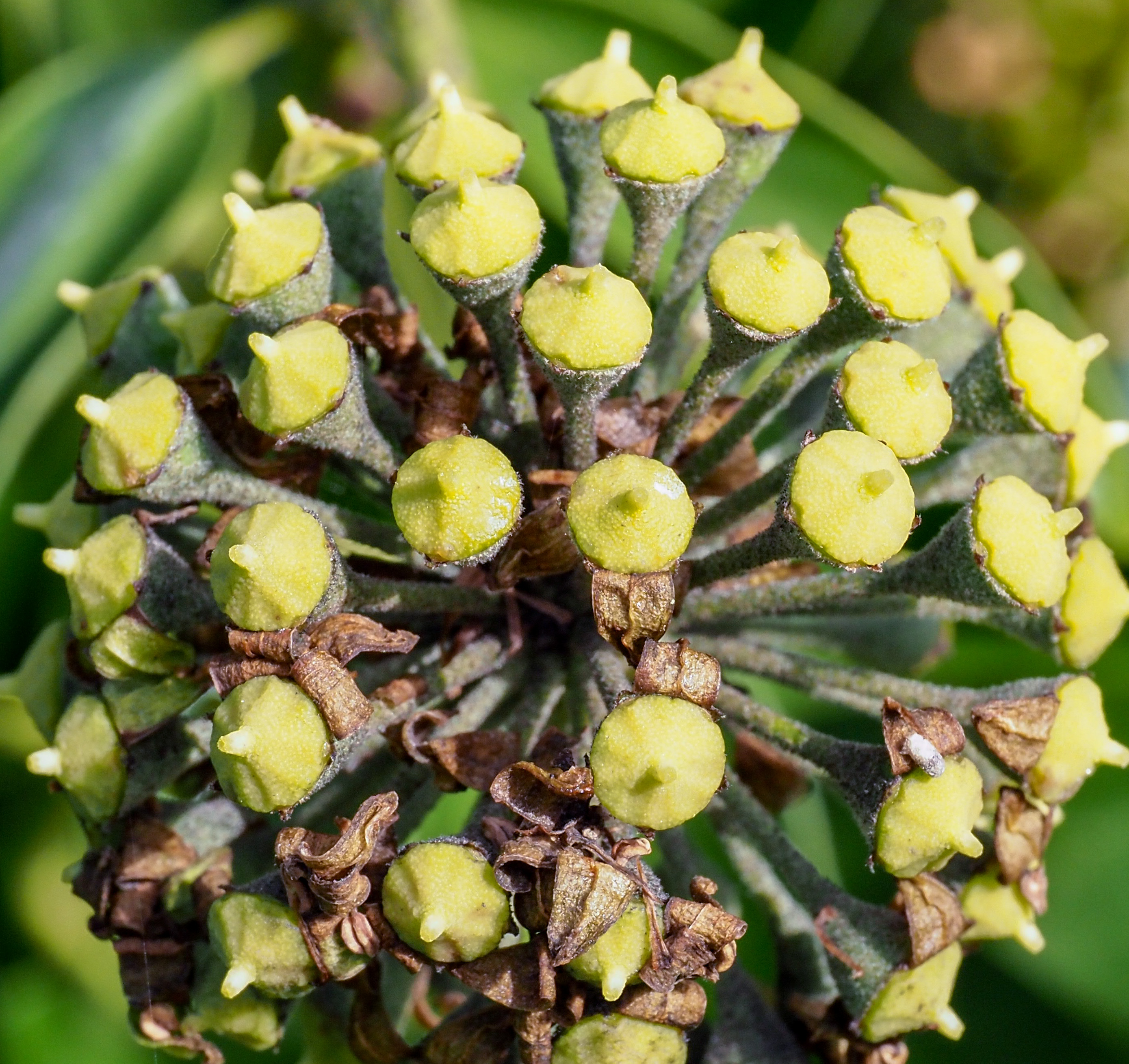
However, there is a sequence of developing umbel heads which means that there is a cascade of opening flowers for insects to feed on.
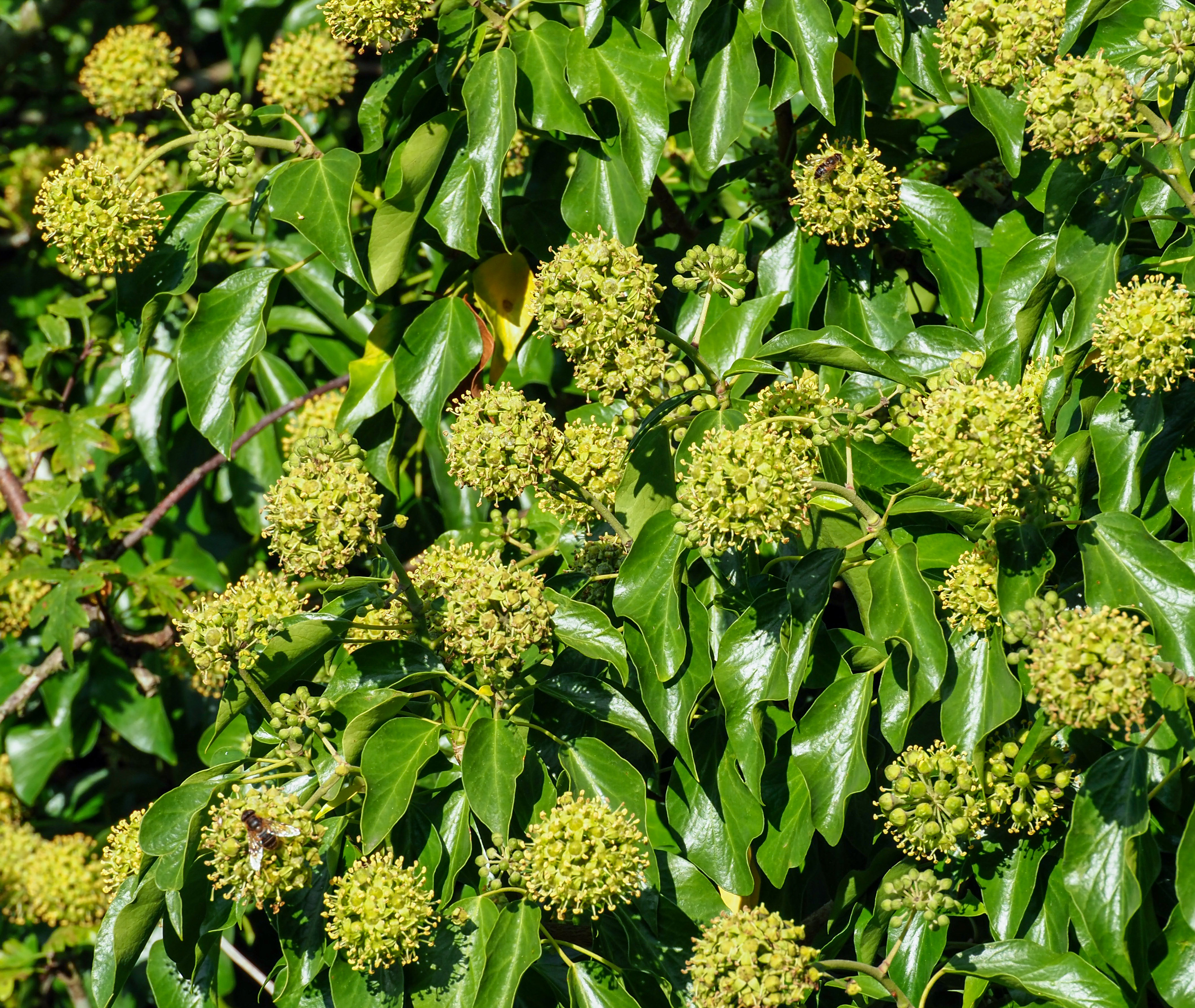
The following photographs are a sample of the insects I came across over the course of a few days in late September and early October, this year (2024).
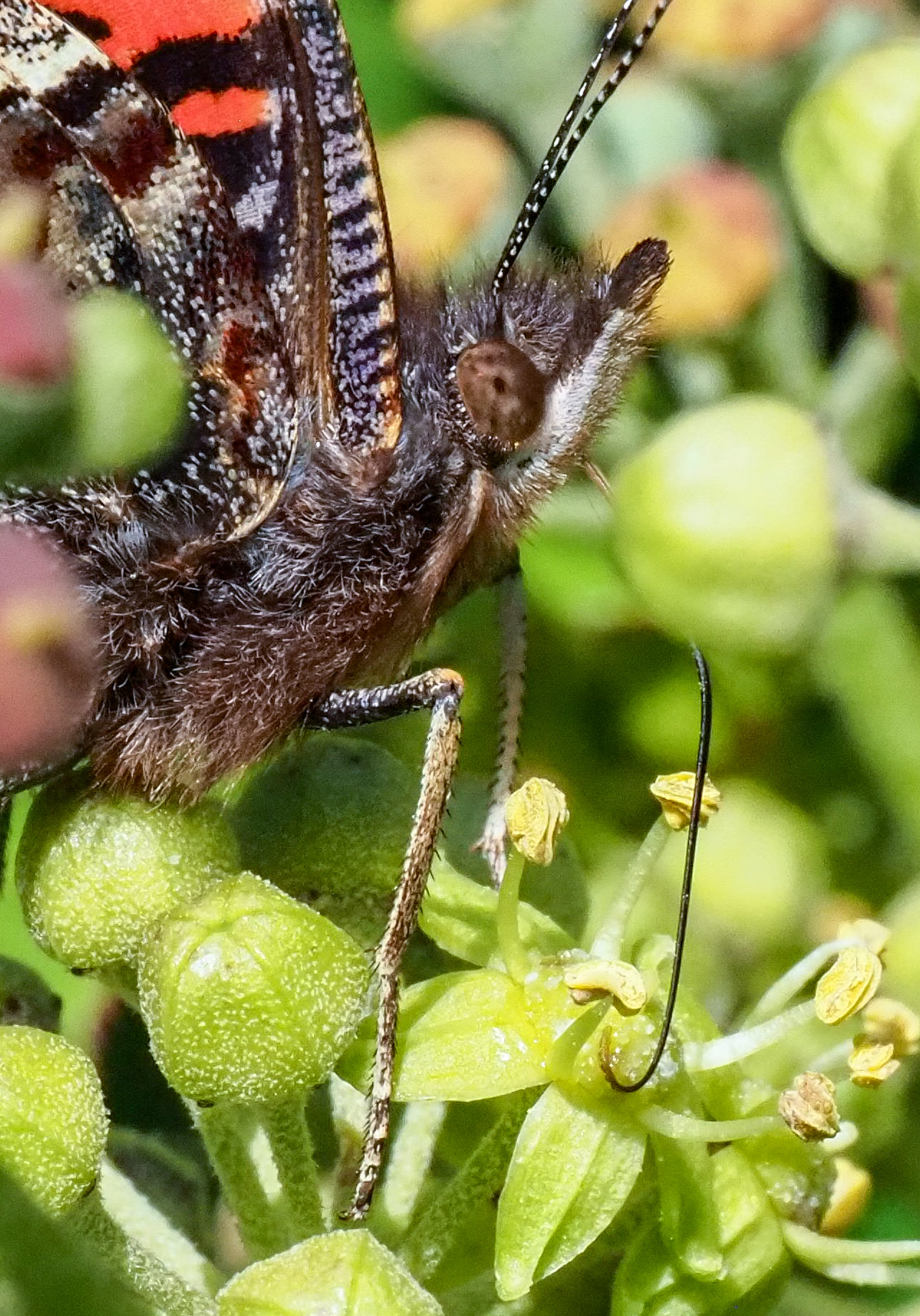
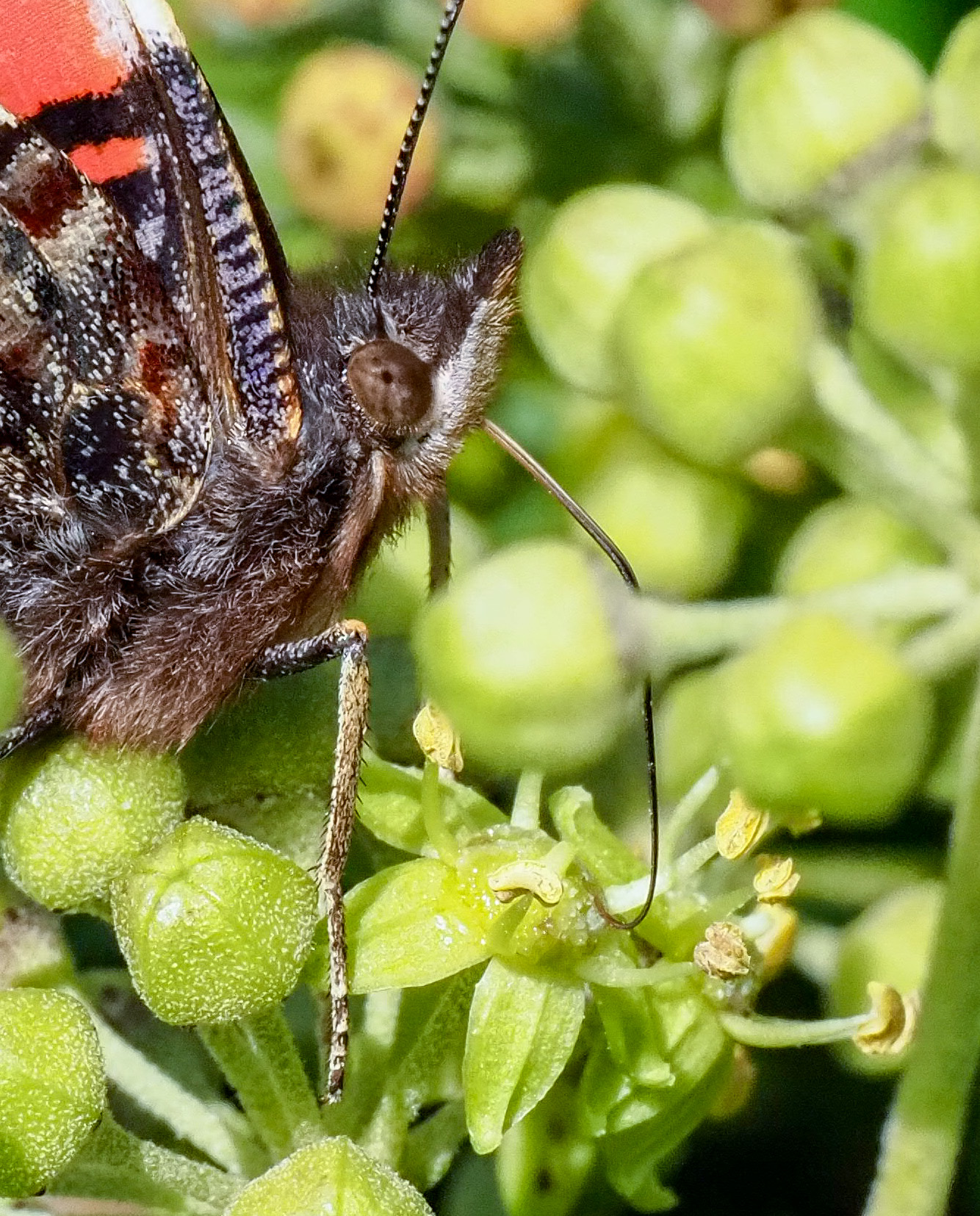
Lots of Red Admirals are to be seen on ivy at the end of the summer (even in a poor butterfly year such as 2024).
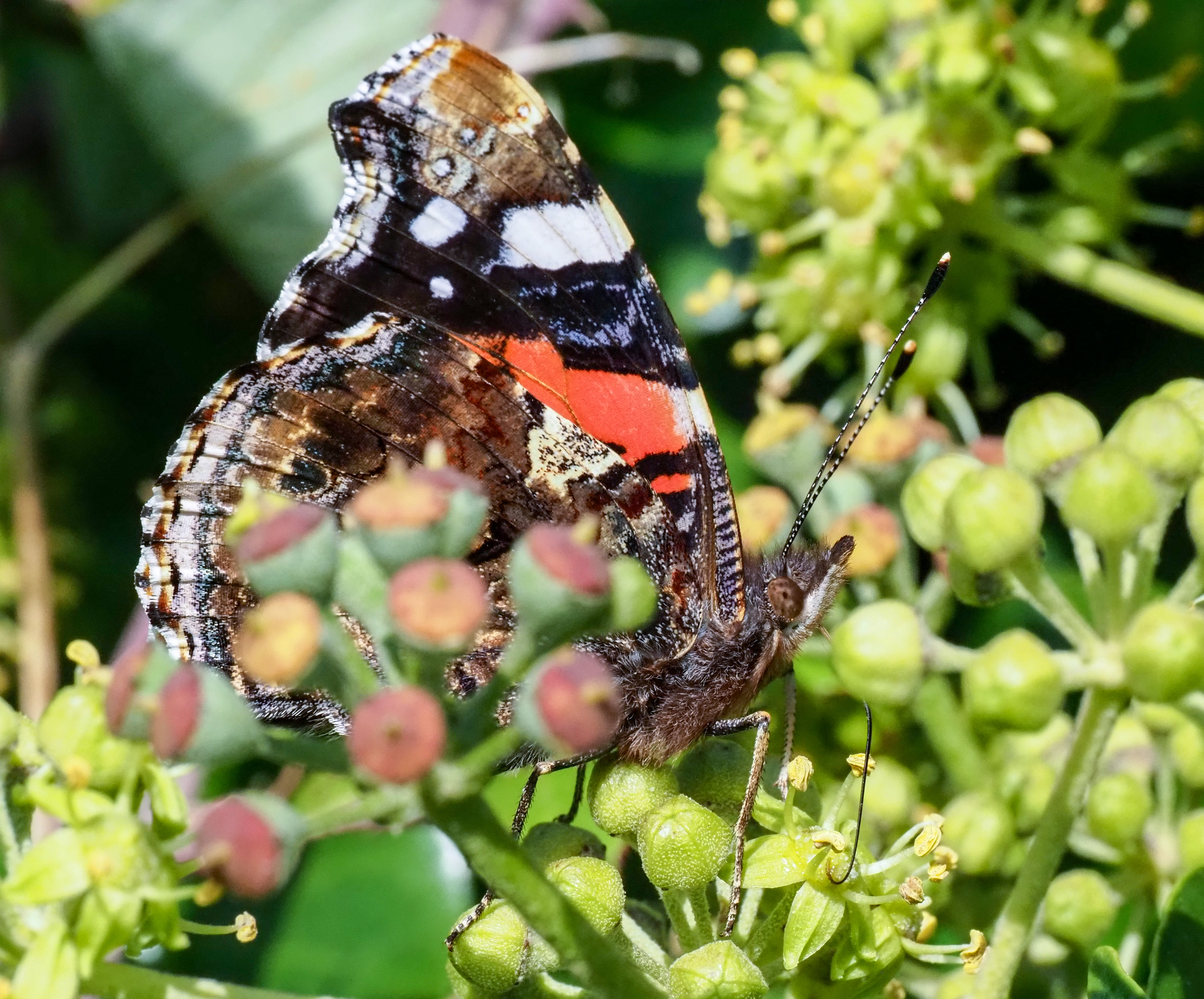
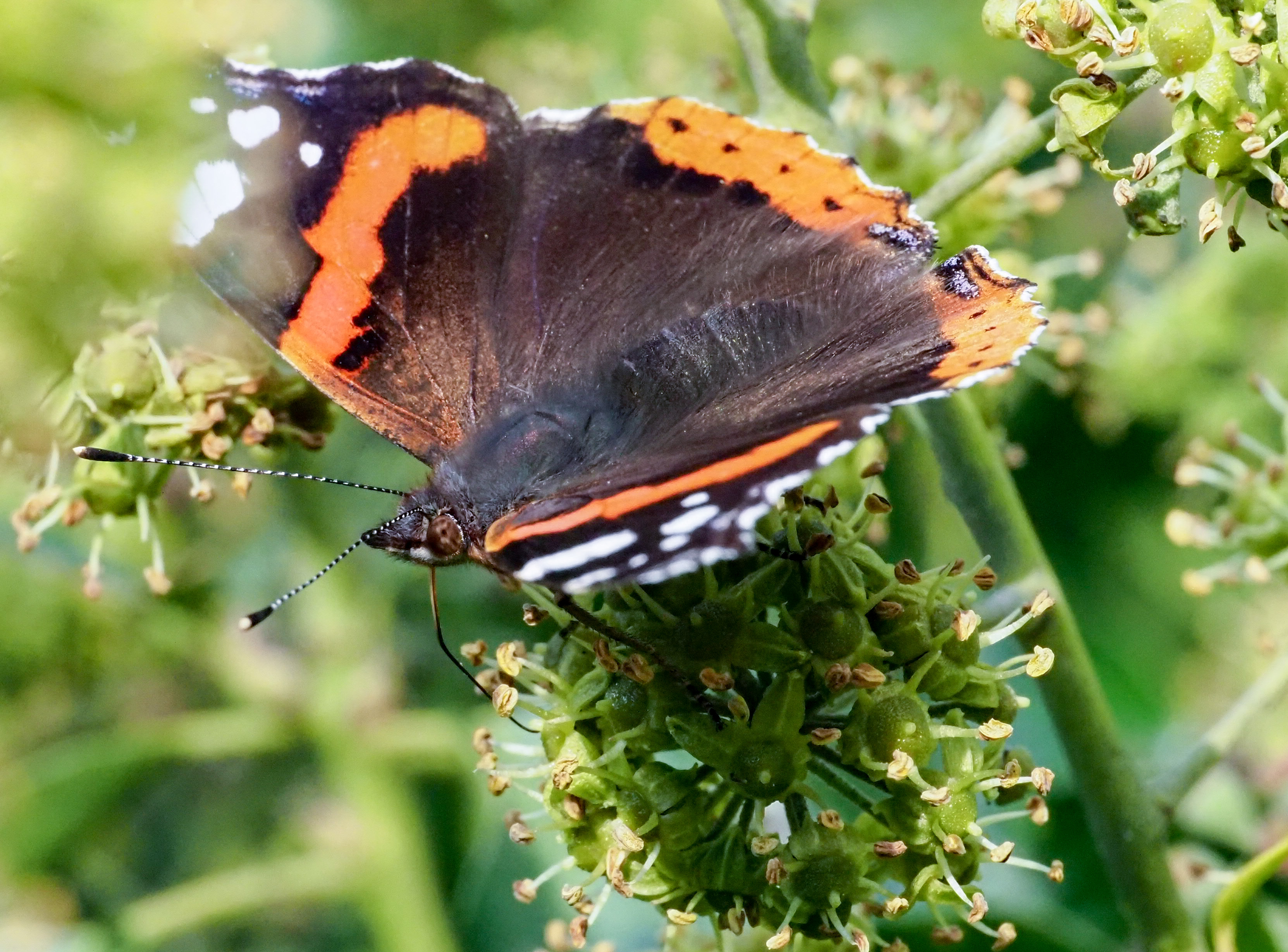
Notice how the butterflies use the end of their proboscis like a sponge (described here) to literally mop up the nectar; rather than sucking it up like a straw (below).
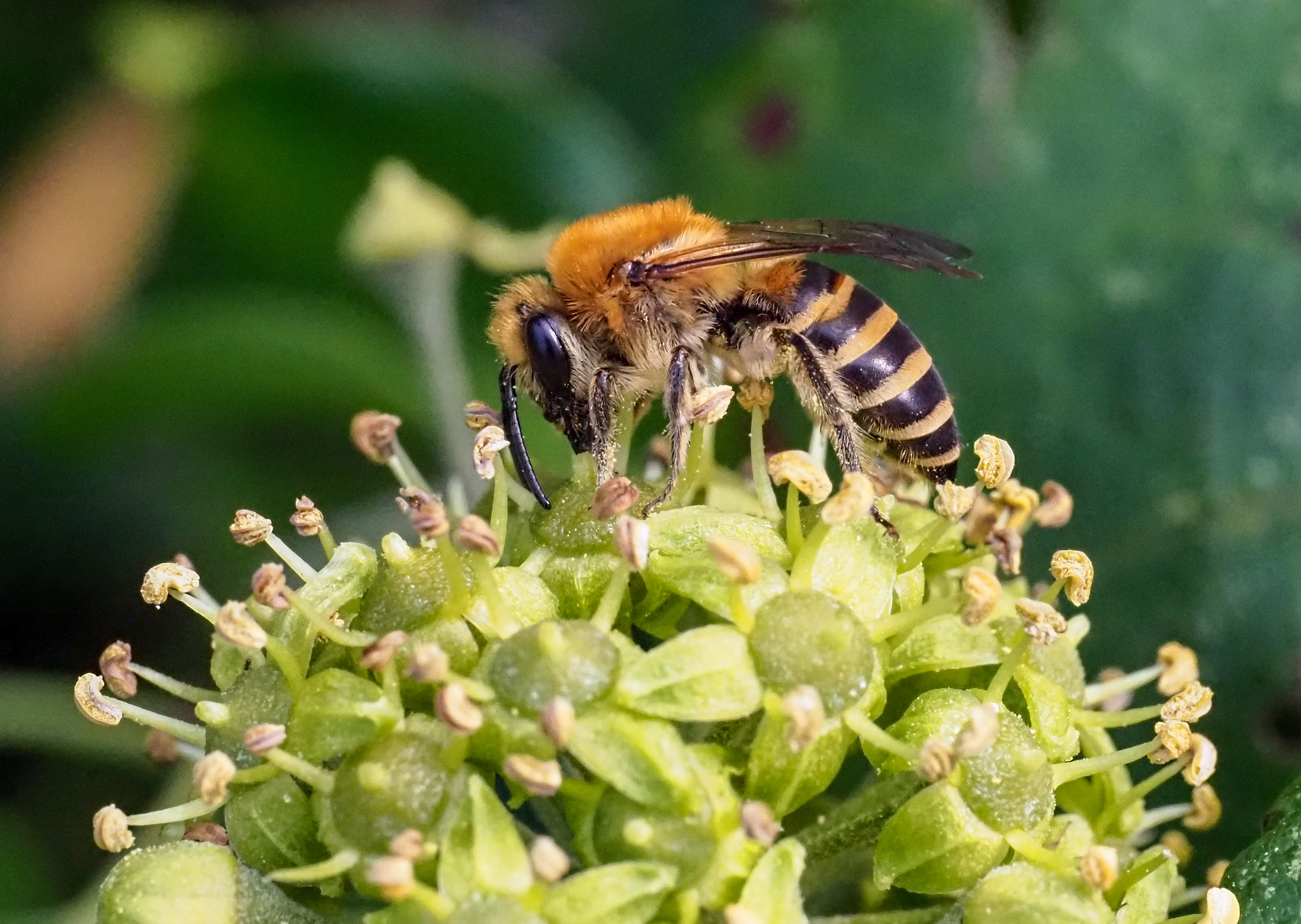
Ivy bees (Colletes hederae) are the stars of the show in my opinion! I will do a separate blog on these pretty bees as there is much to say about their biology and migration.
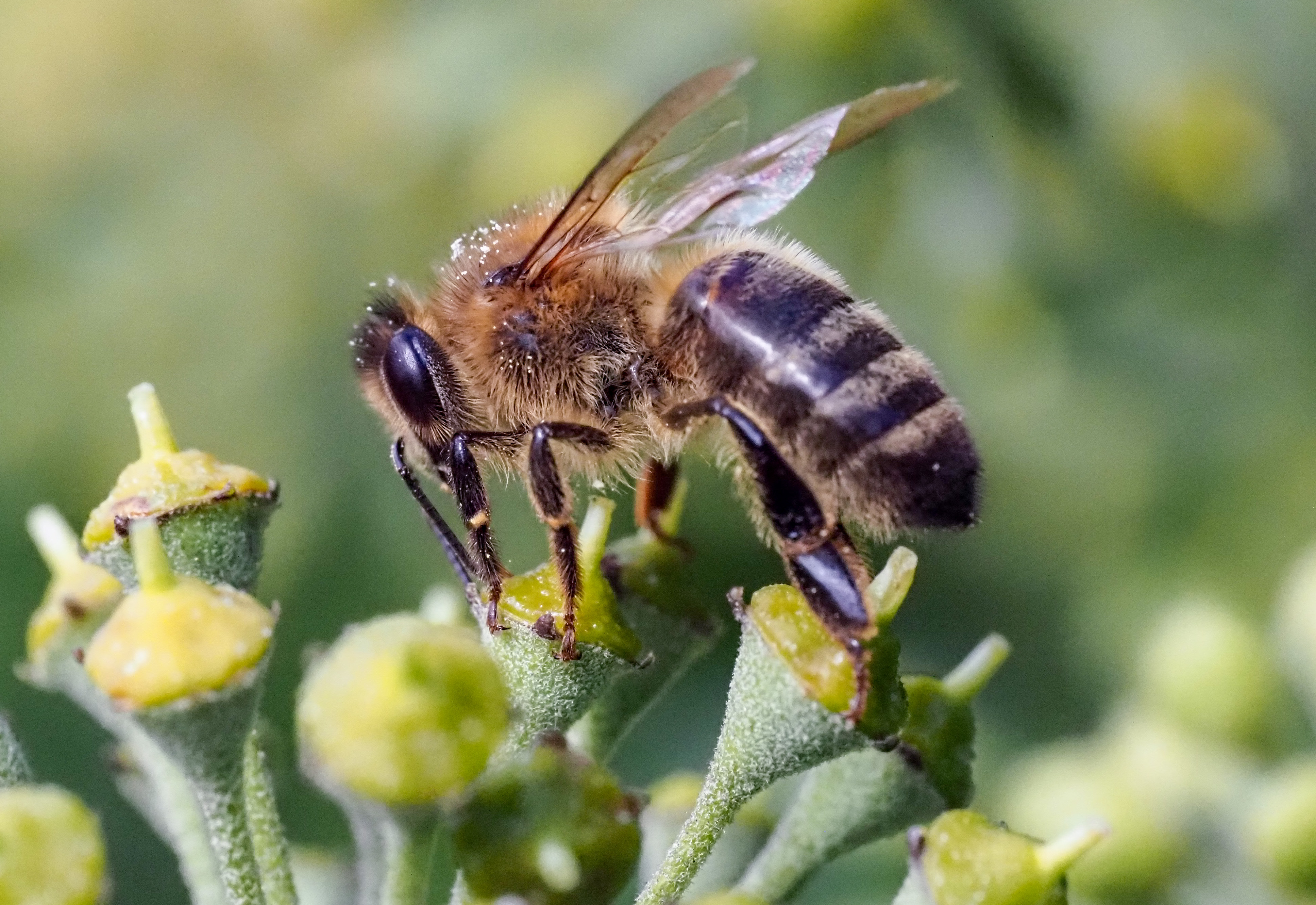
Honey bees (Apis mellifera) are frequently encountered on ivy flowers. The nectar must give their honey a citrusy flavour (if it is anything like the bouquet?).
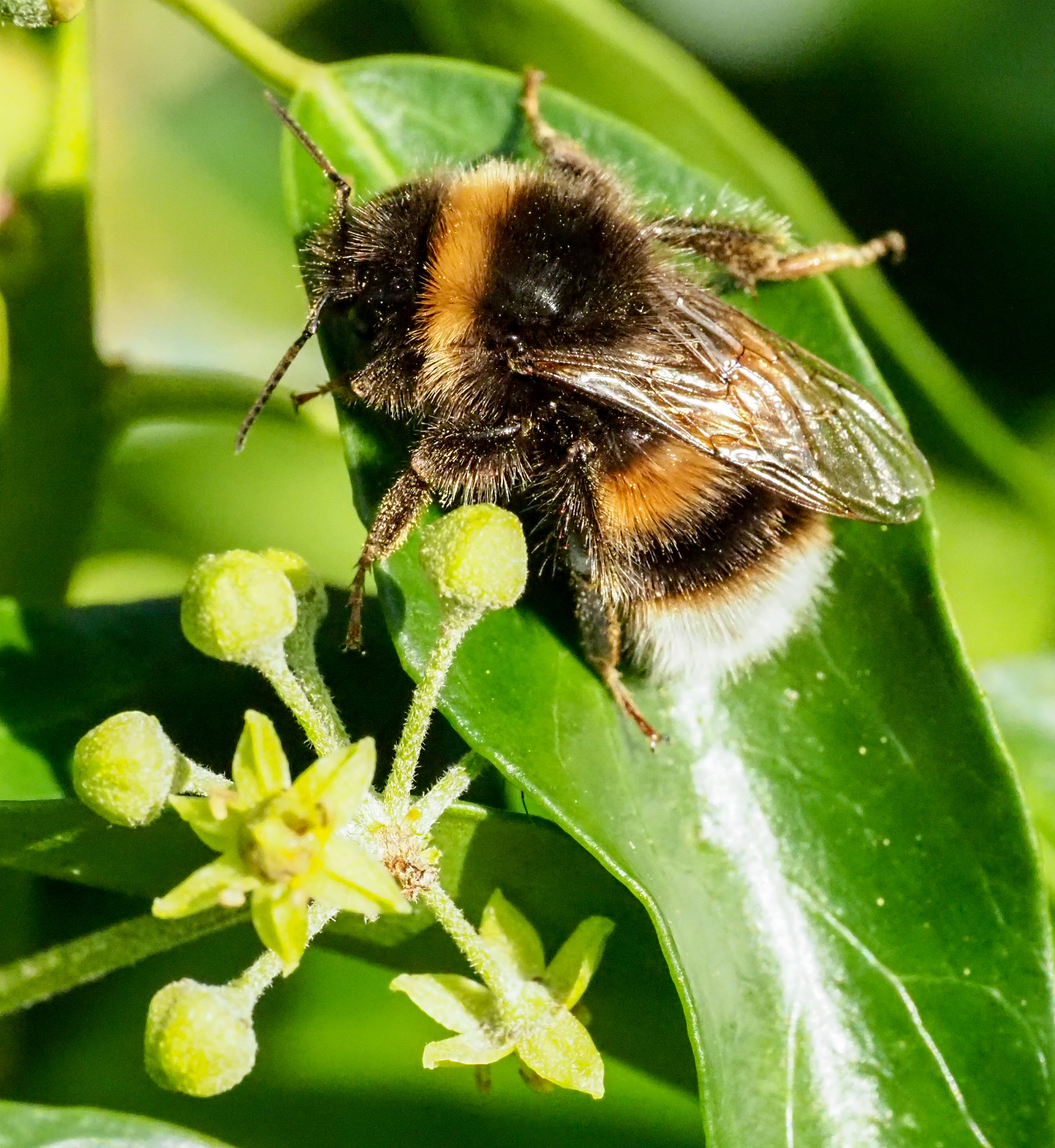
A number of different bumblebees nectar on ivy, depending on the location. Here’s a buff-tailed bumblebee having a rest, or soaking up the sunshine on an ivy leaf!
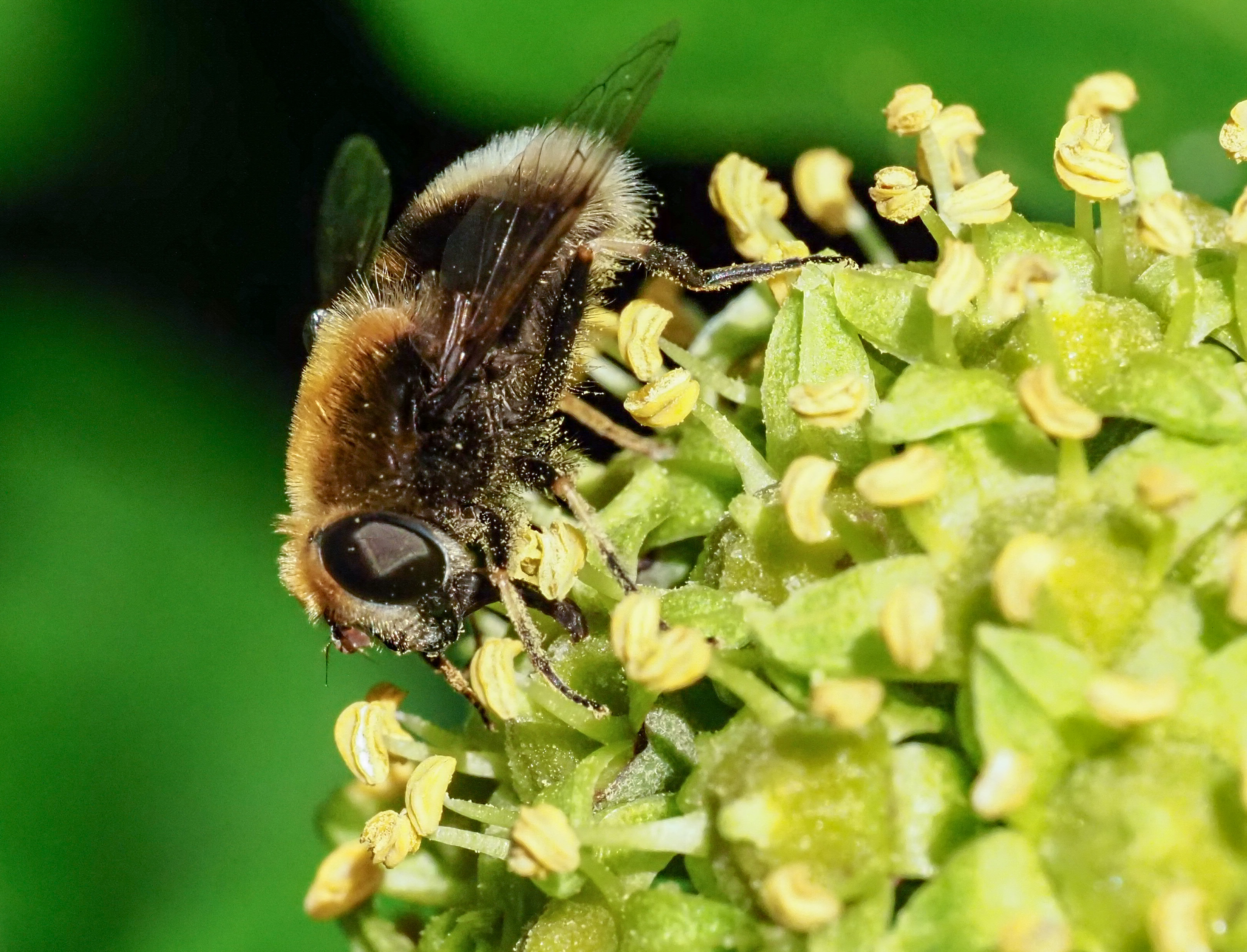
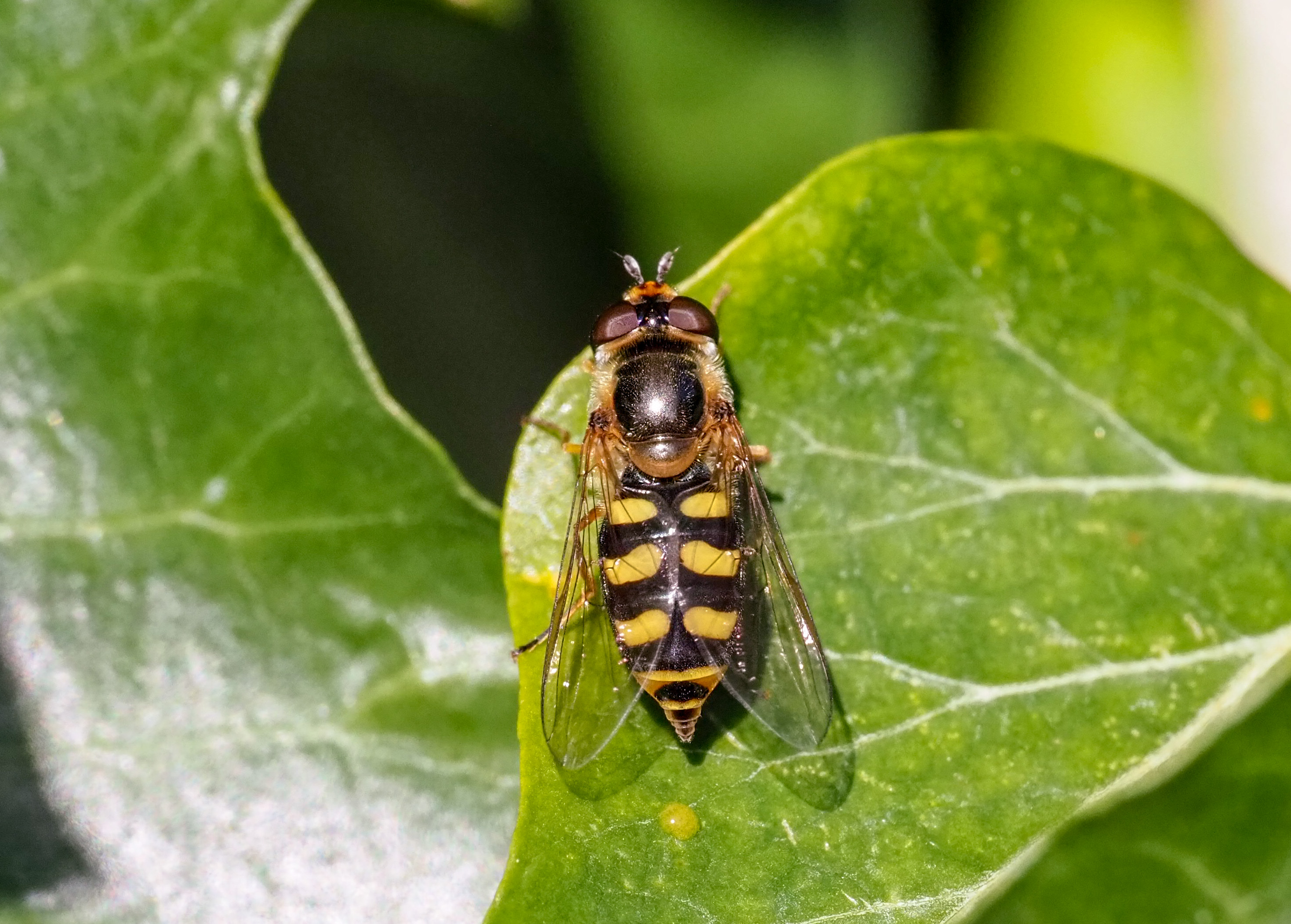
Eristalis spp. hoverflies are probably one of the commonest flies to be found nectaring on ivy. The different species can be a little bit tricky to tell apart, depending on what parts of the insect are captured in a given photograph. I.e. can you see whether the hind legs are dark and curved (E. tenax); or whether the front and mid legs (mid-tarsi) are pale yellow (E. pertinax); is the face dusted yellow (E. arbustorum); and so on. Fortunately, we have such good insect guide books now.
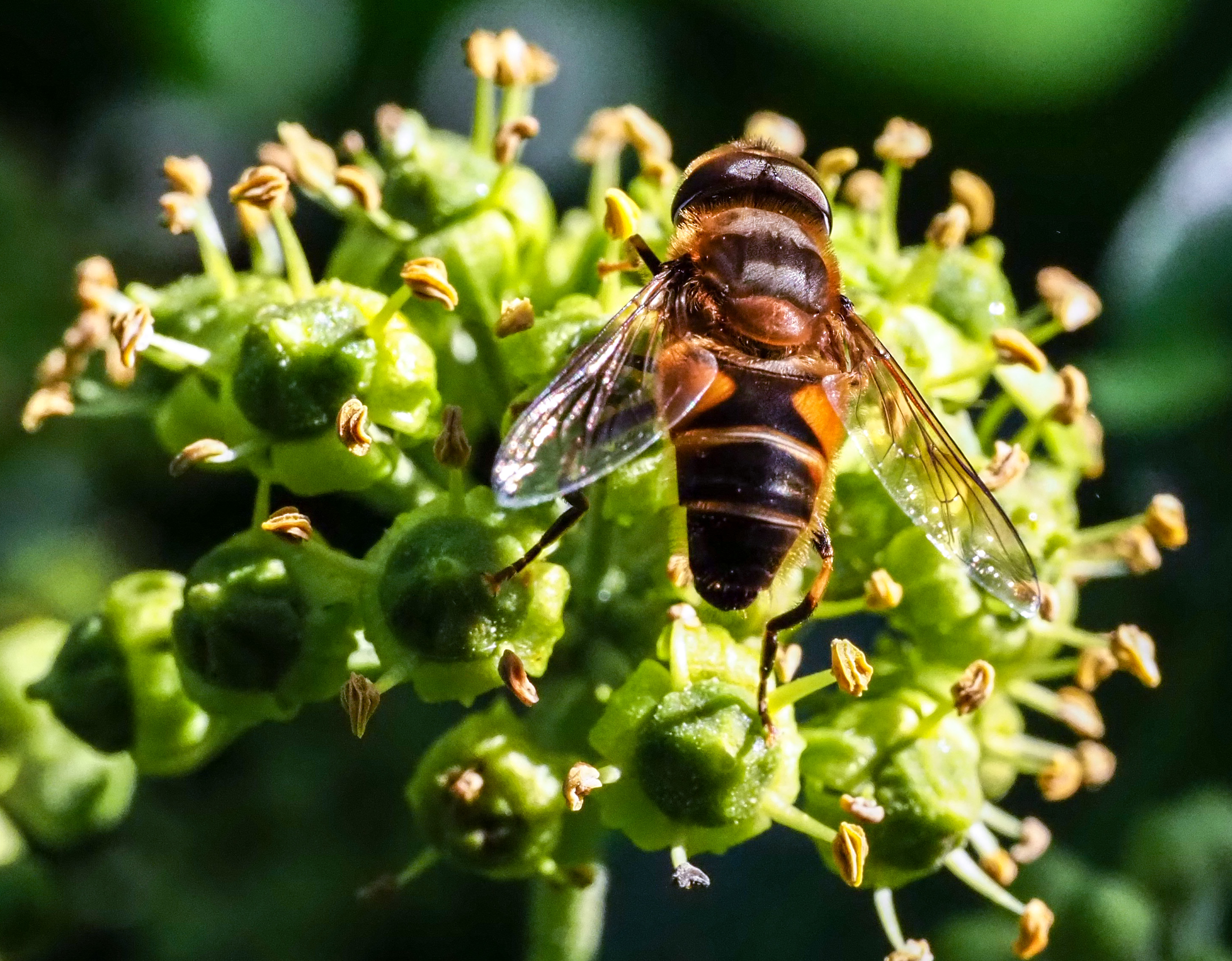
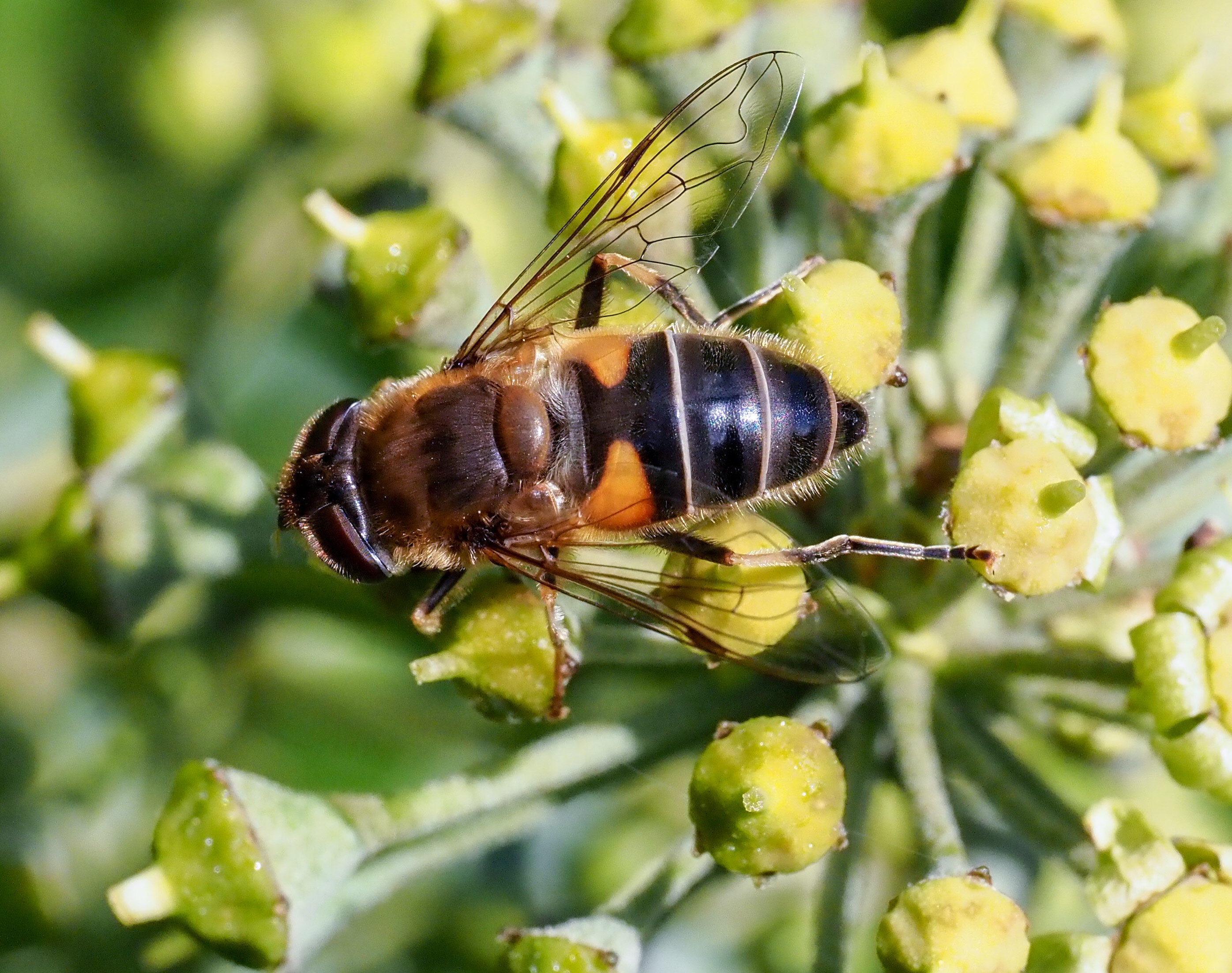
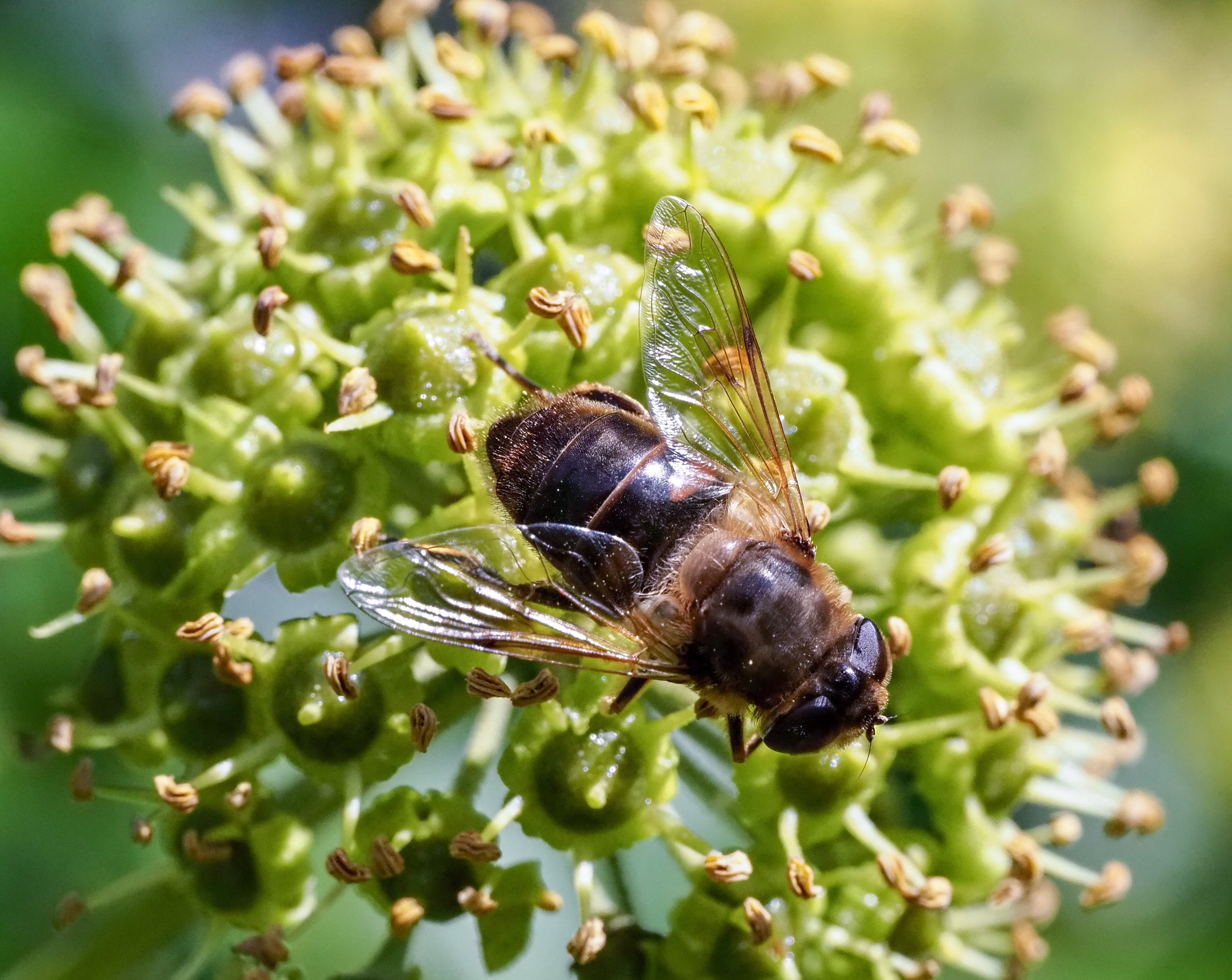
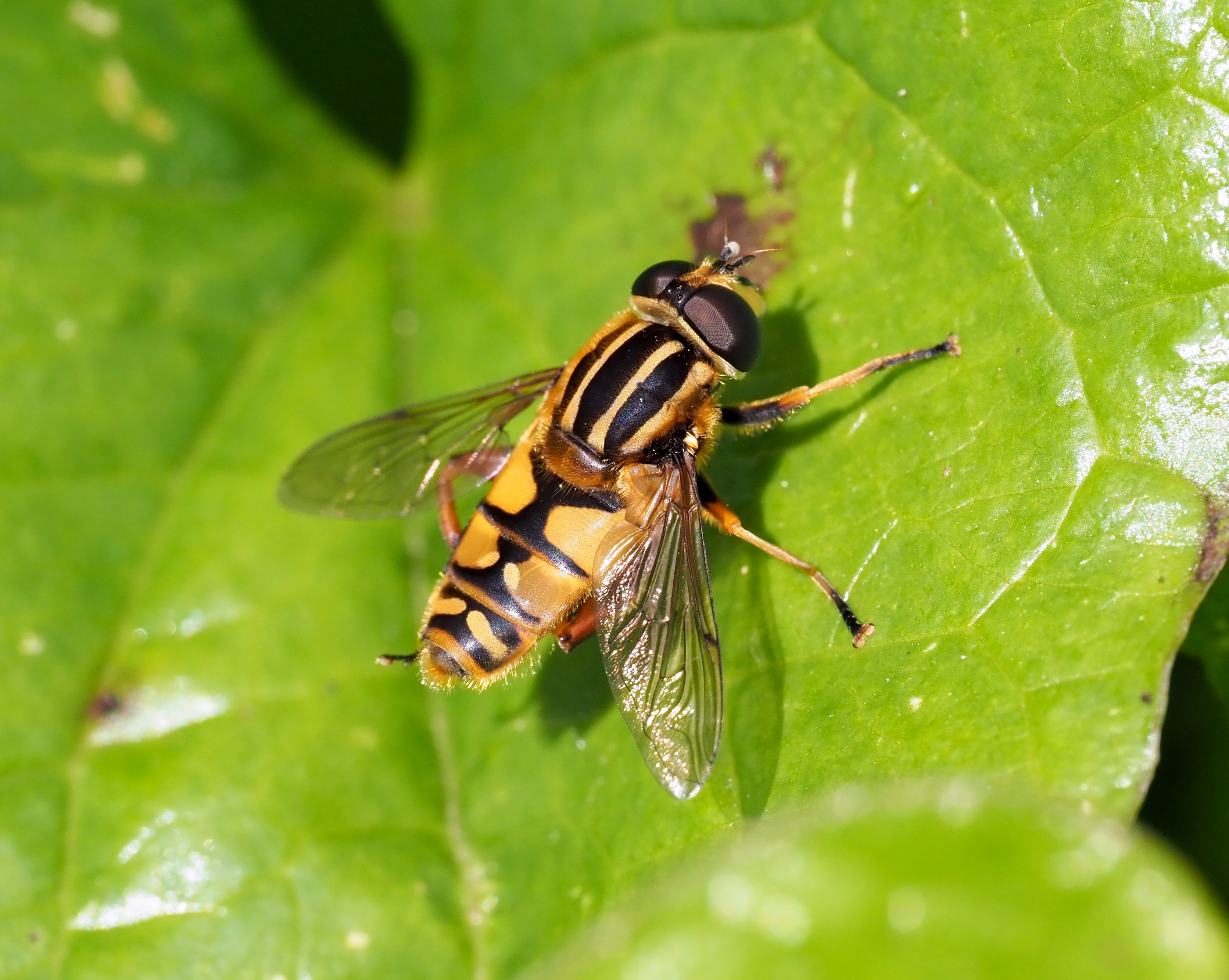
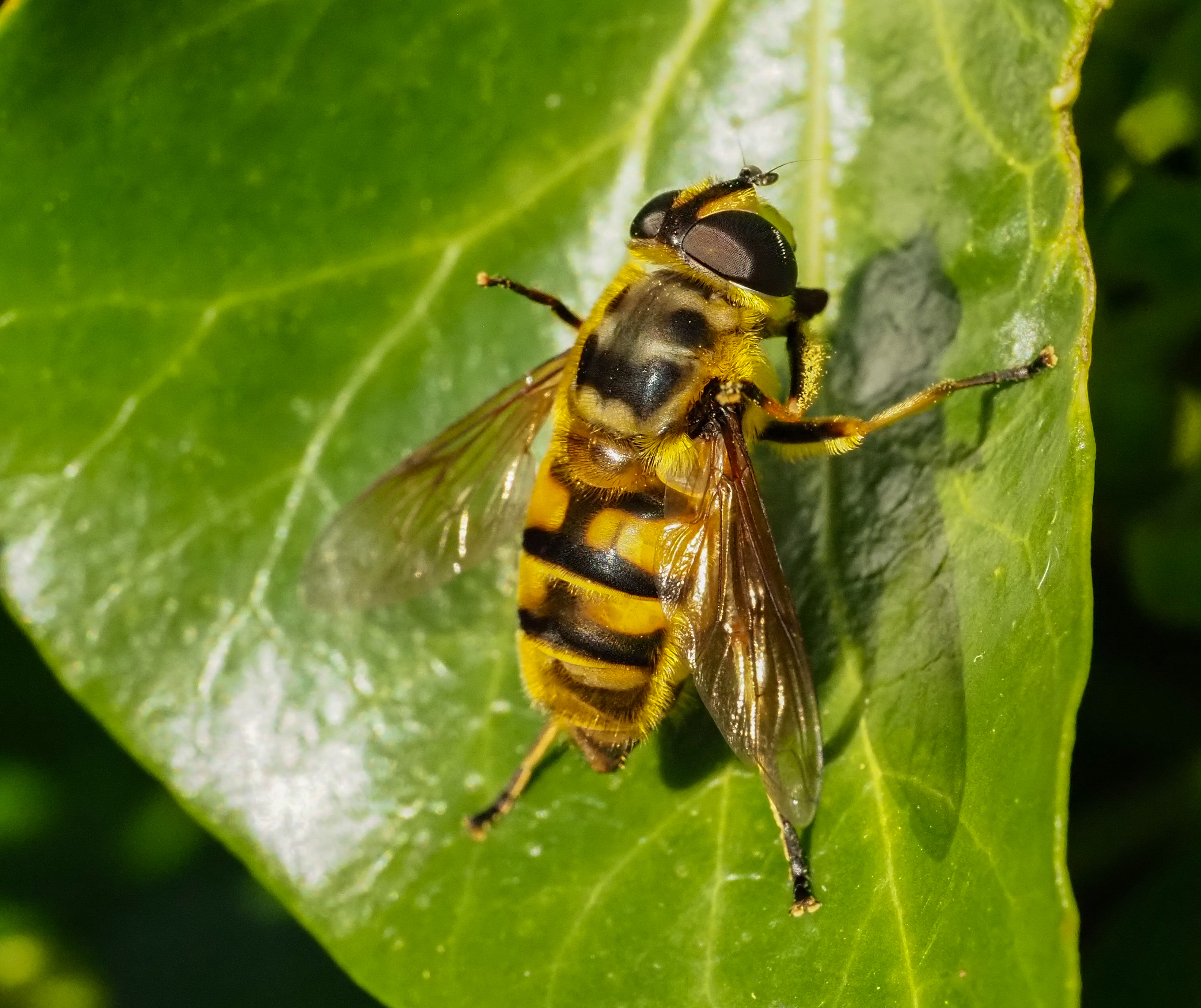
There are many hoverflies to be seen on ivy, and photographing then them is a great way to learn about some of the 270 different species we get in the UK. A wonderful hobby, with new species to be found in different locations and every autumn. Here are a few more I came across this year.
And the wonderfully named Batman hoverfly! Because of the markings on the thorax (see below).
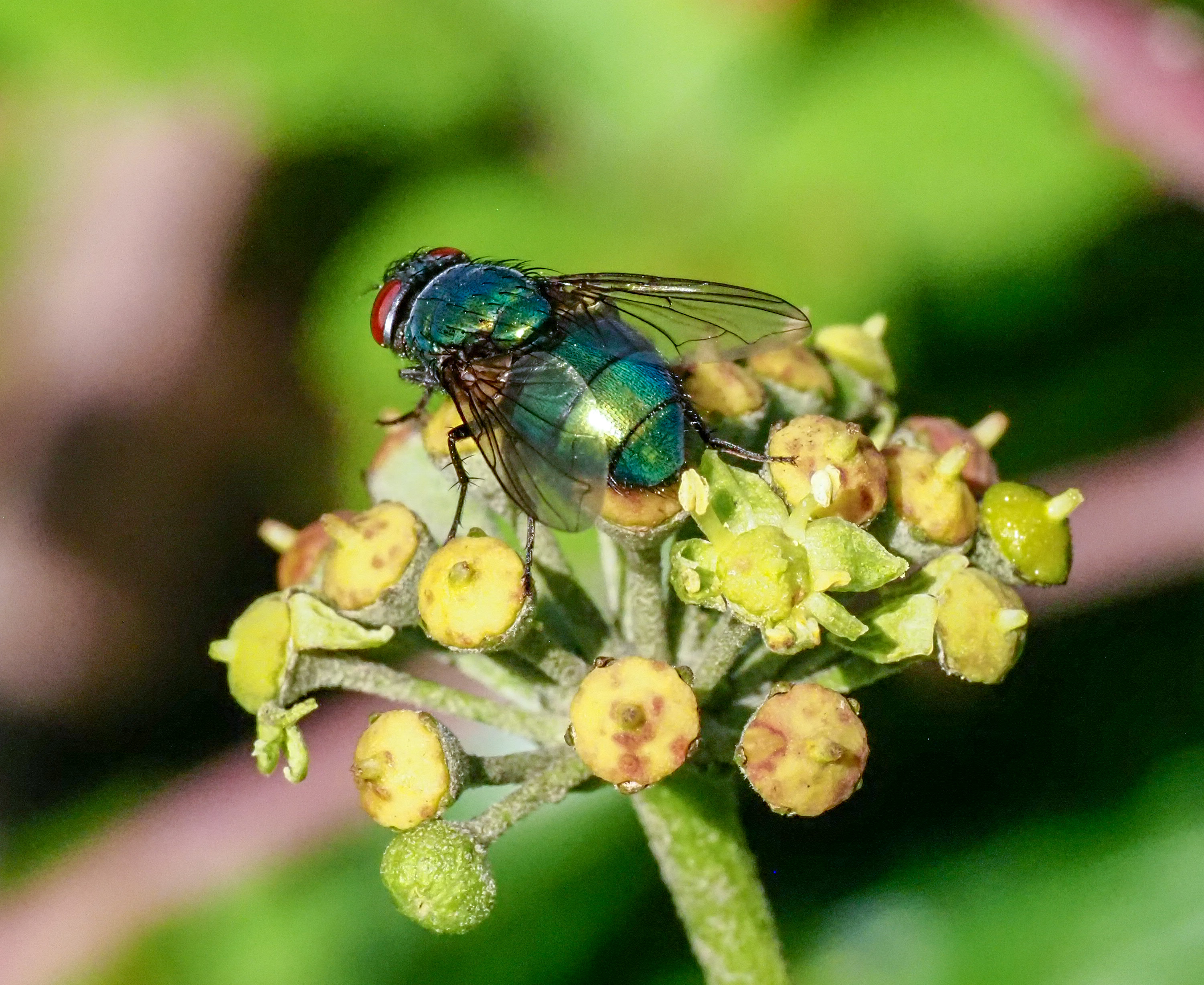
Greenbottles (Lucilia sp.) also get in on the show!
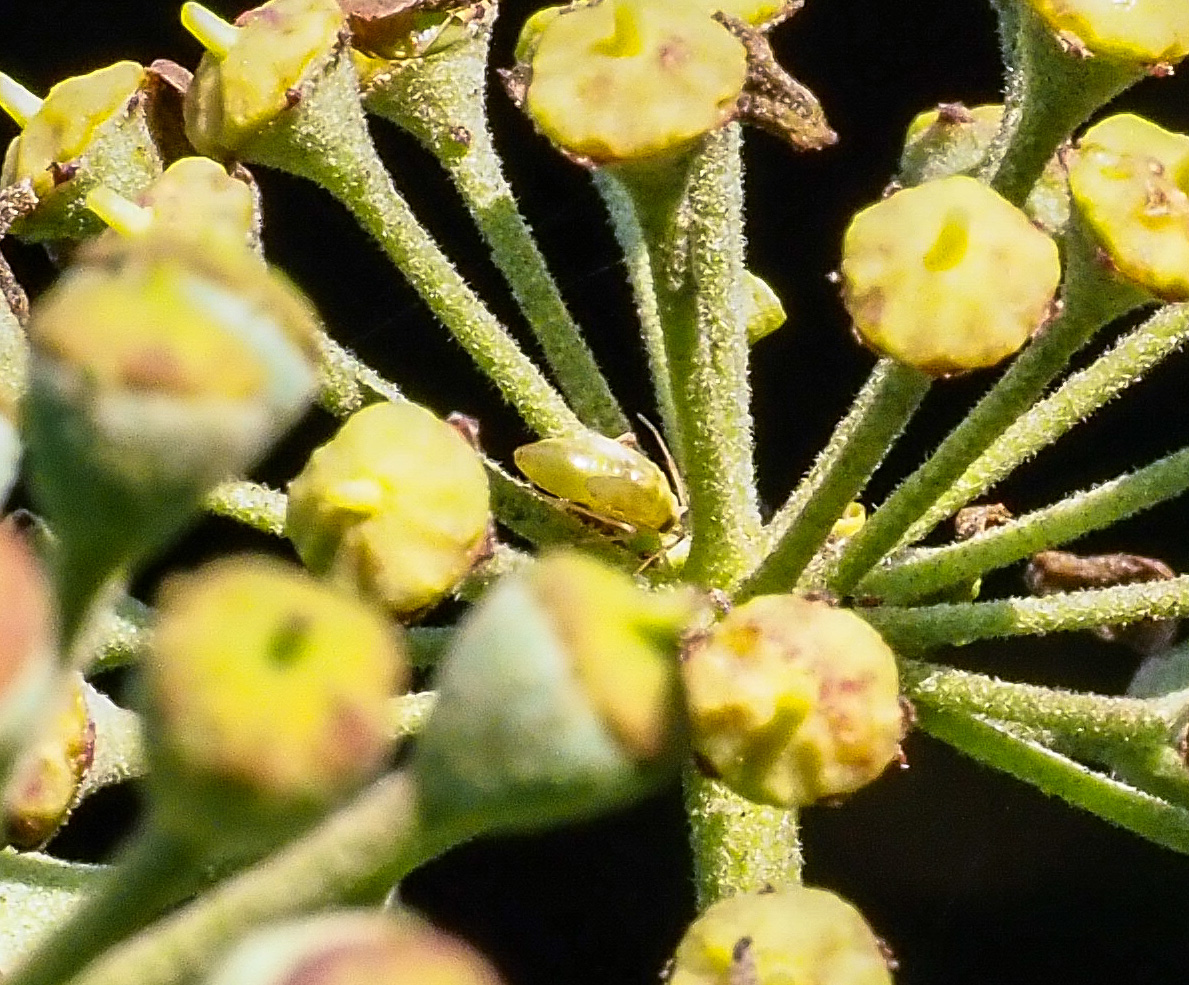
And last, but not least, I found a tiny immature capsid bug (Miridae) lurking around the base of an umbel!
There is always something new to find on ivy flowers!


We use common ivy as landscaping element in our garden. Started 20 years ago with only two small plants which have grown to a 250-square-yard autumnal paradise for insects. 🌿🐝🌿👨🏻🌾
great stuff Ray. One small suggestion is your bumblebee hoverfly is furry dronefly Eristalis intricarius. Thought you wd like to check
Many thanks indeed Mark! And well spotted.😁
[…] Other species nectaring on Ivy were featured in a previous blog: The ivy league! Insects nectaring on Hedera helix. […]
[…] Common ivy (Hedera helix L.) is a very common resource and the flowers provide late season pollen and nectar for a host of other insects, including honey bees, bumblebees, wasps, hoverflies, other flies, and butterflies. See previous blog: The ivy league! Insects nectaring on Hedera helix. […]