Bee flies (Bombyliidae) are amongst the first insects to appear in the spring and can be seen hovering above flowers or resting in the sunshine in their beautiful furry coats! This dense body hair keeps them warm when they emerge, especially in March and April, and is also a very good material for transport pollen.
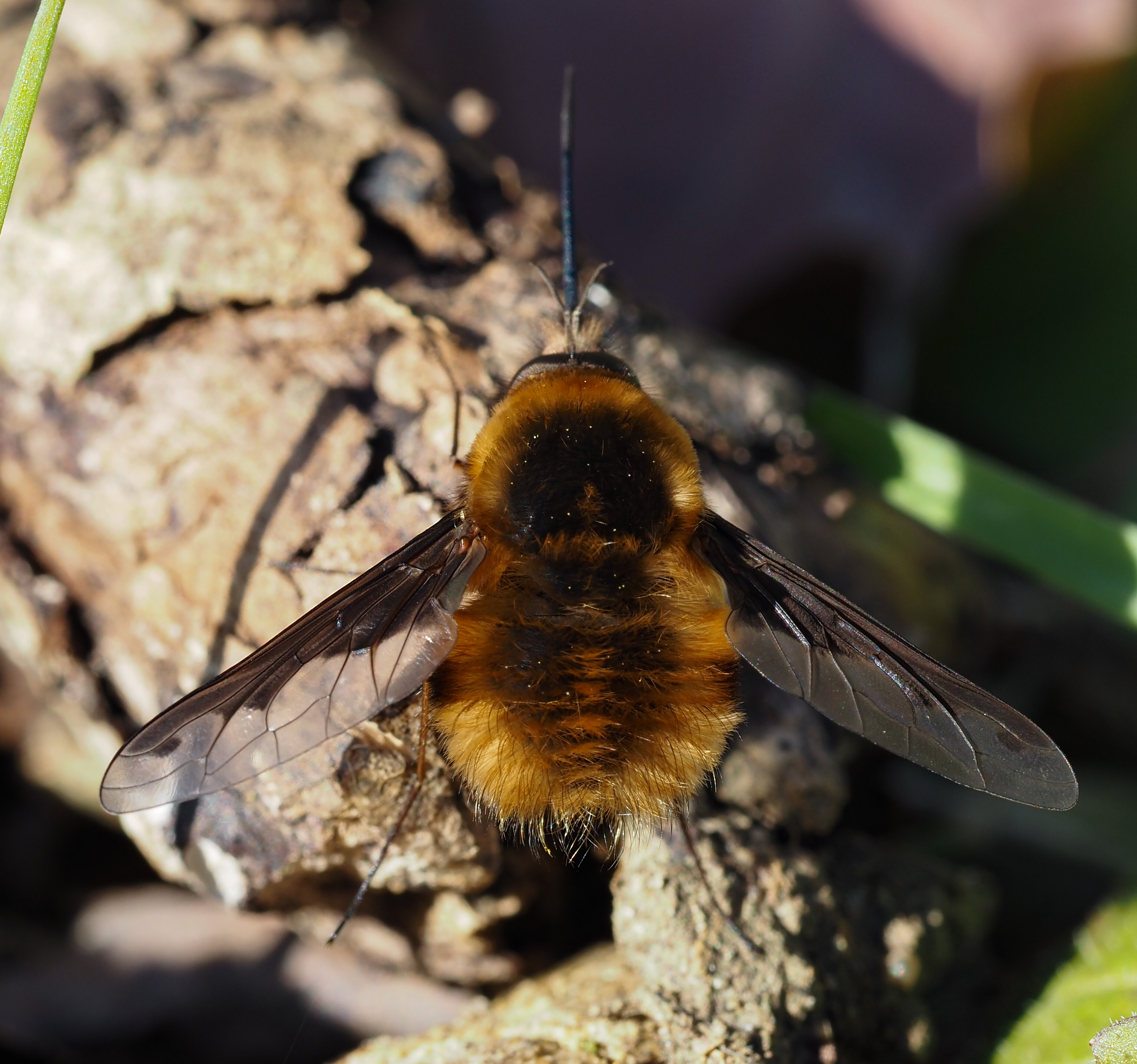
Bee flies of the sort we get in the UK for example, do not actively consume pollen, and whilst pollen grains have been found in the intestines of bee flies, they probably do not intentionally consume pollen (Kastinger and Weber, 2000).
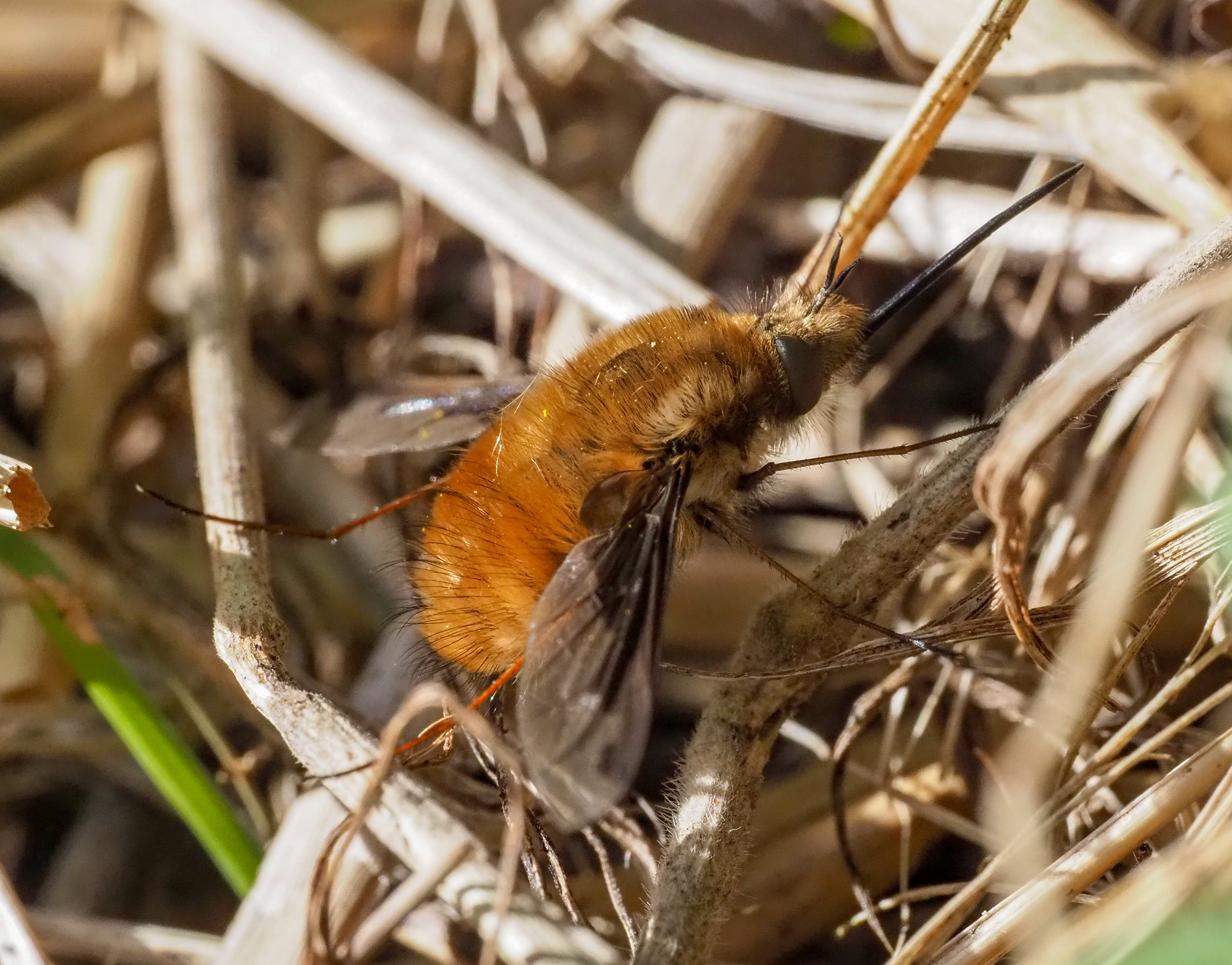
Flies (dipterans) are frequent flower visitors and are considered to be the second most important group of plant pollinators worldwide, behind bees and other hymenopterans. Bee flies are just one family in this major order of perhaps, unsung pollinators.
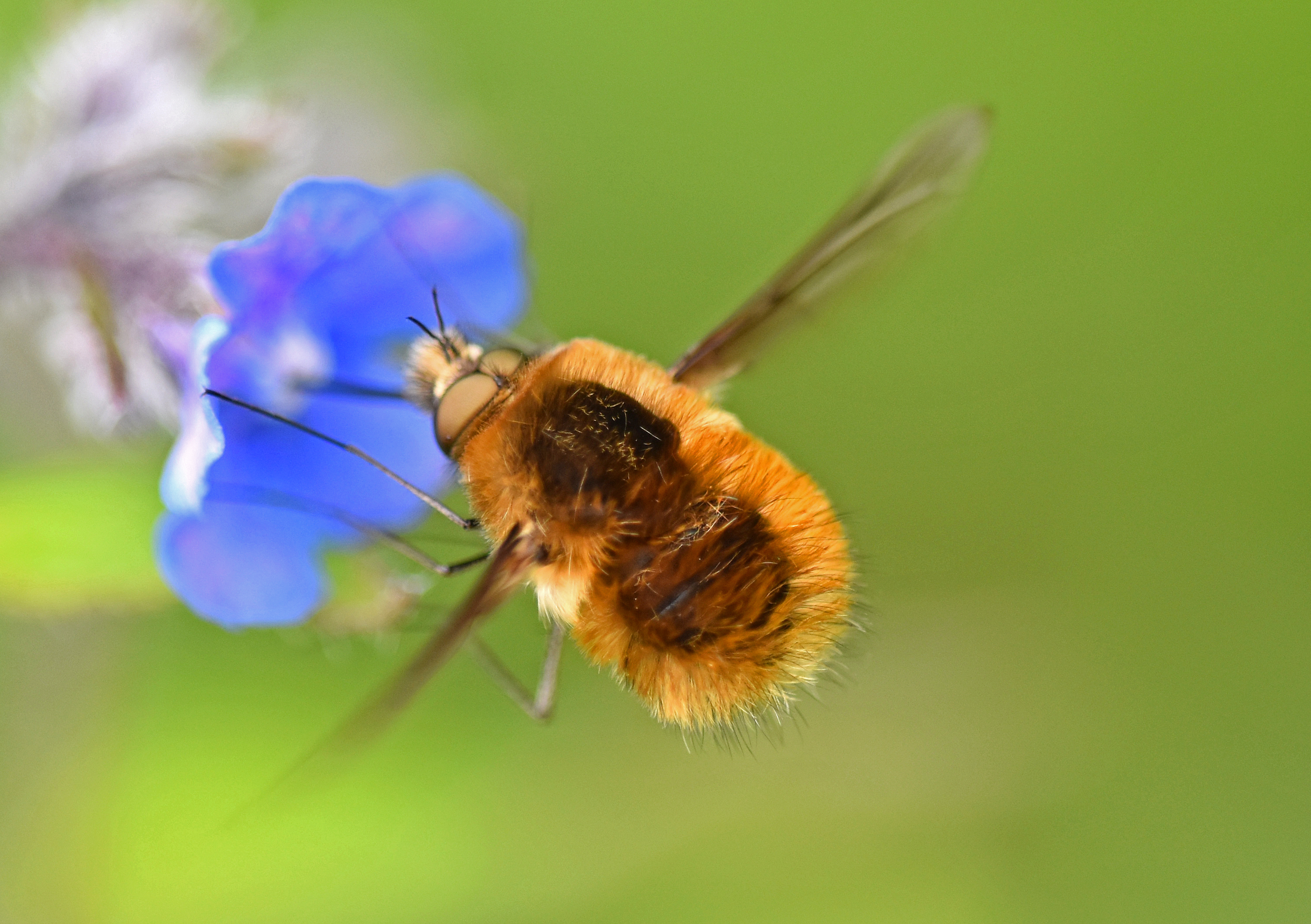
The long proboscis of the bee fly is not retractable or foldable and so it sticks out in front, a bit like a narwal’s tusk! Nevertheless, the length of the proboscis can be difficult to determine, according to Kastinger and Weber (2000), as it’s extension differs when it is used for sucking nectar, compared to the normal carriage position. When the membranous parts of the proboscis are extended during flower visits, they can extend it’s length by 50 to 100% according to Grimaldi (1988). I must admit I’ve never looked that closely, for example when photographing them nectaring on a flower, but there is scope to capture this extension in a series of photographs; if anyone is looking for a challenge!
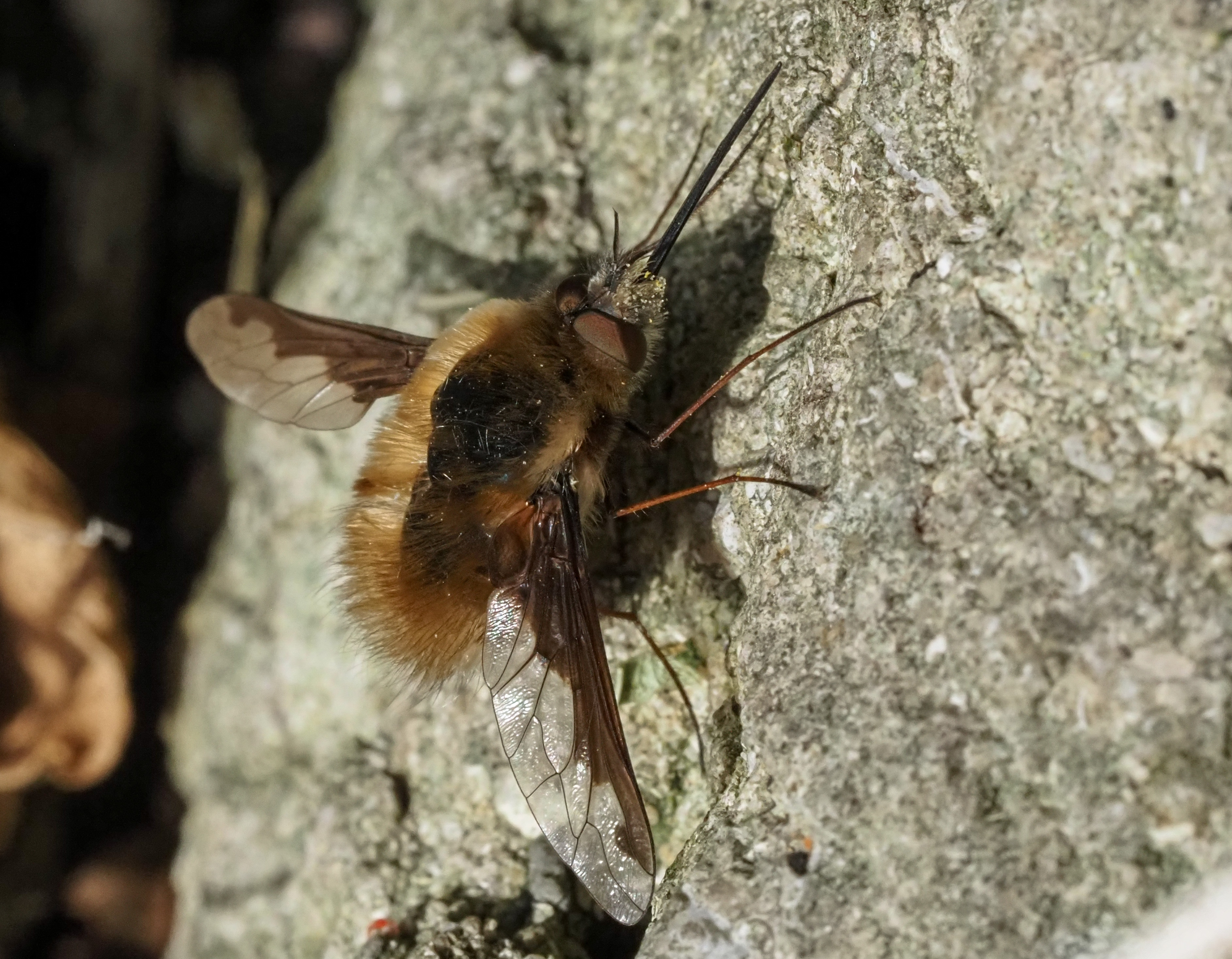
The length of the proboscis, extended or otherwise, will determine which particular flowers a bee fly can utilise, i.e. obtain nectar. Proboscis lengths differ between individuals and between species. For example, for Bombylius major, the length can vary from 5.5-7.5 mm (or 10mm when extended) compared to a body length of 8.0-12.0 mm (Kastinger & Weber, 2001).
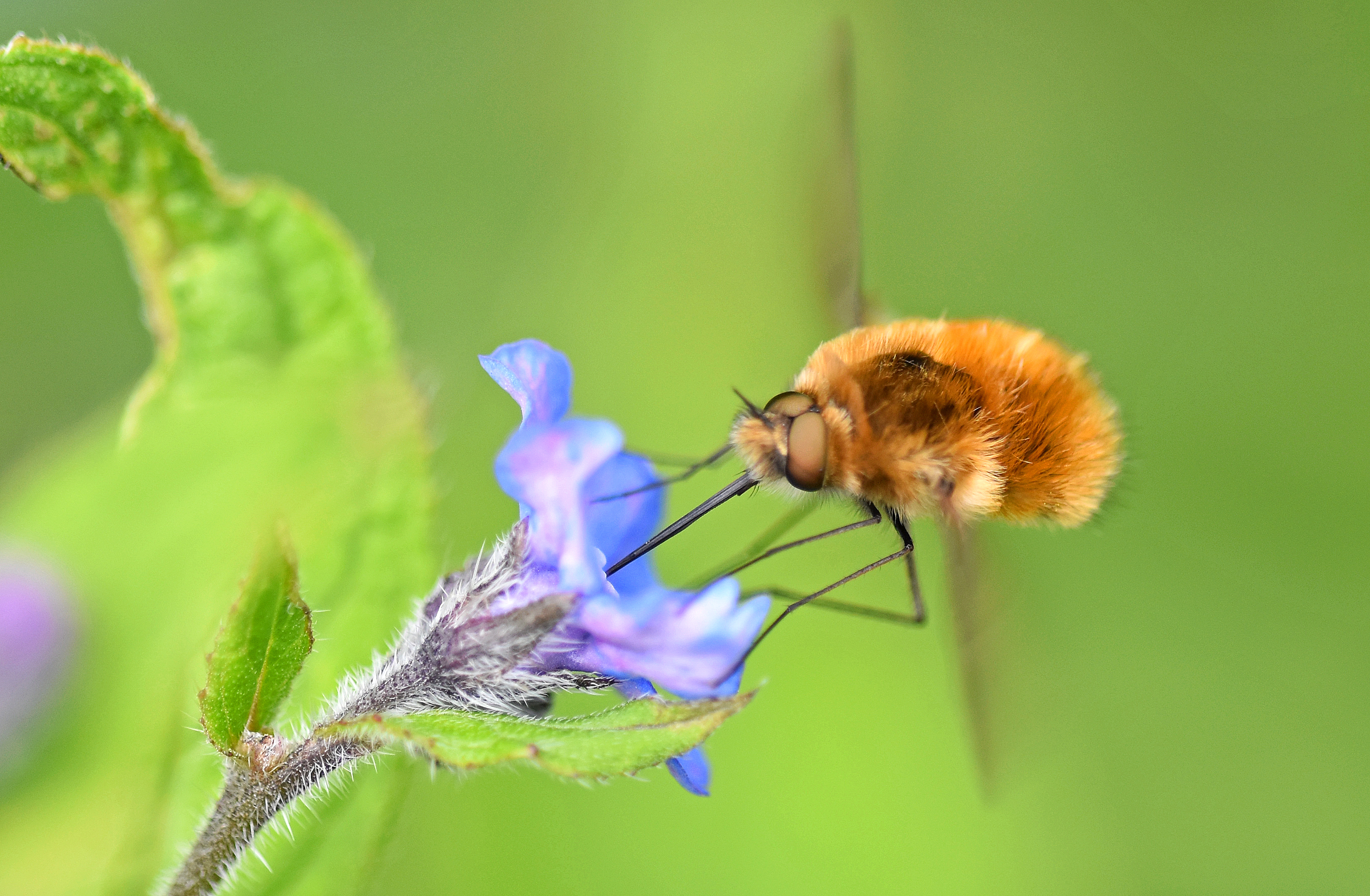
These proboscis lengths probably vary from region to region. Predictably perhaps, Bombylius major bee flies from America (California) had slightly longer proboscides: between 4.35 and 11.69 mm, with body sizes ranging from 5.80 to 11.80 mm (Carneiro et al., 2024).
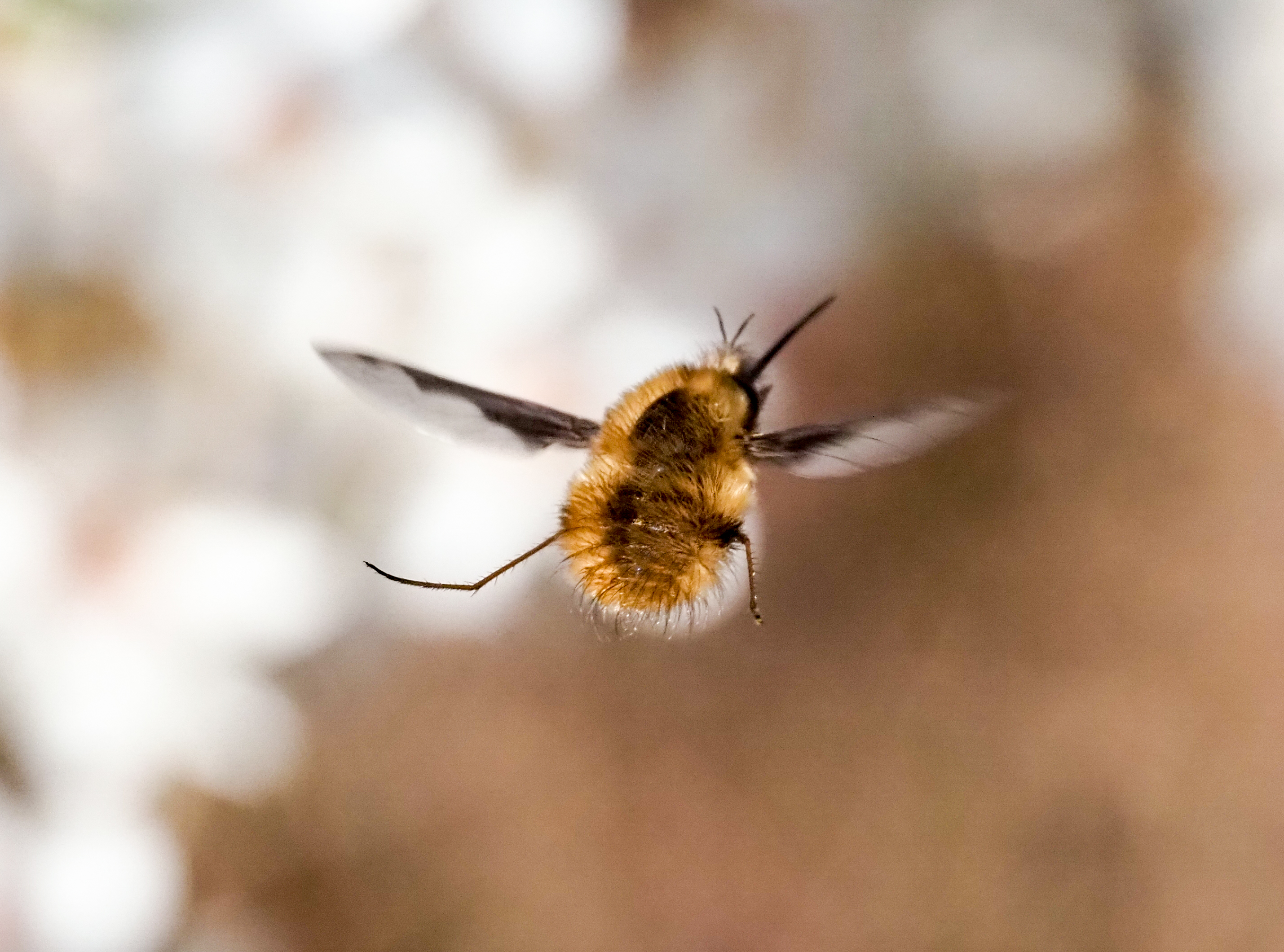
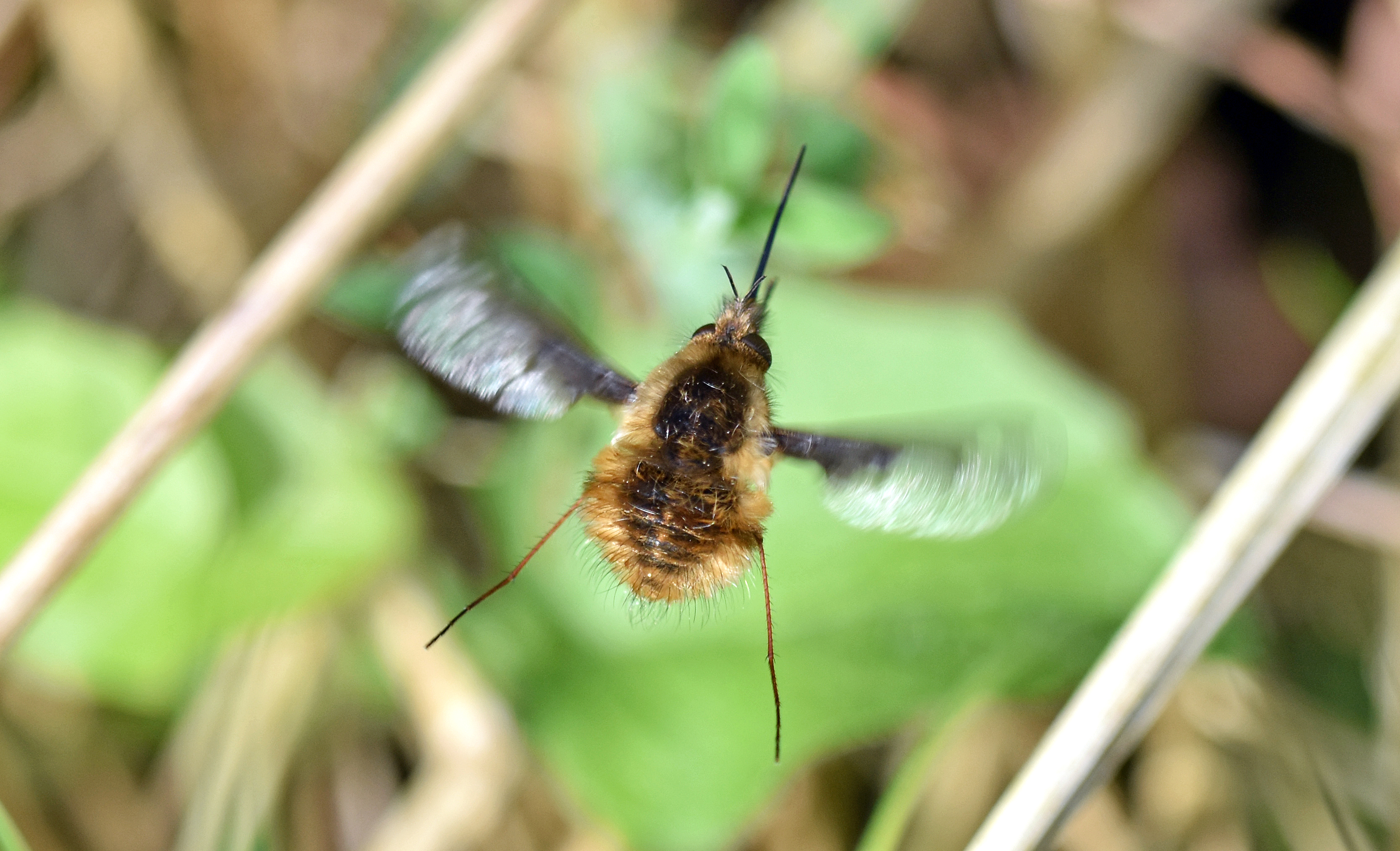
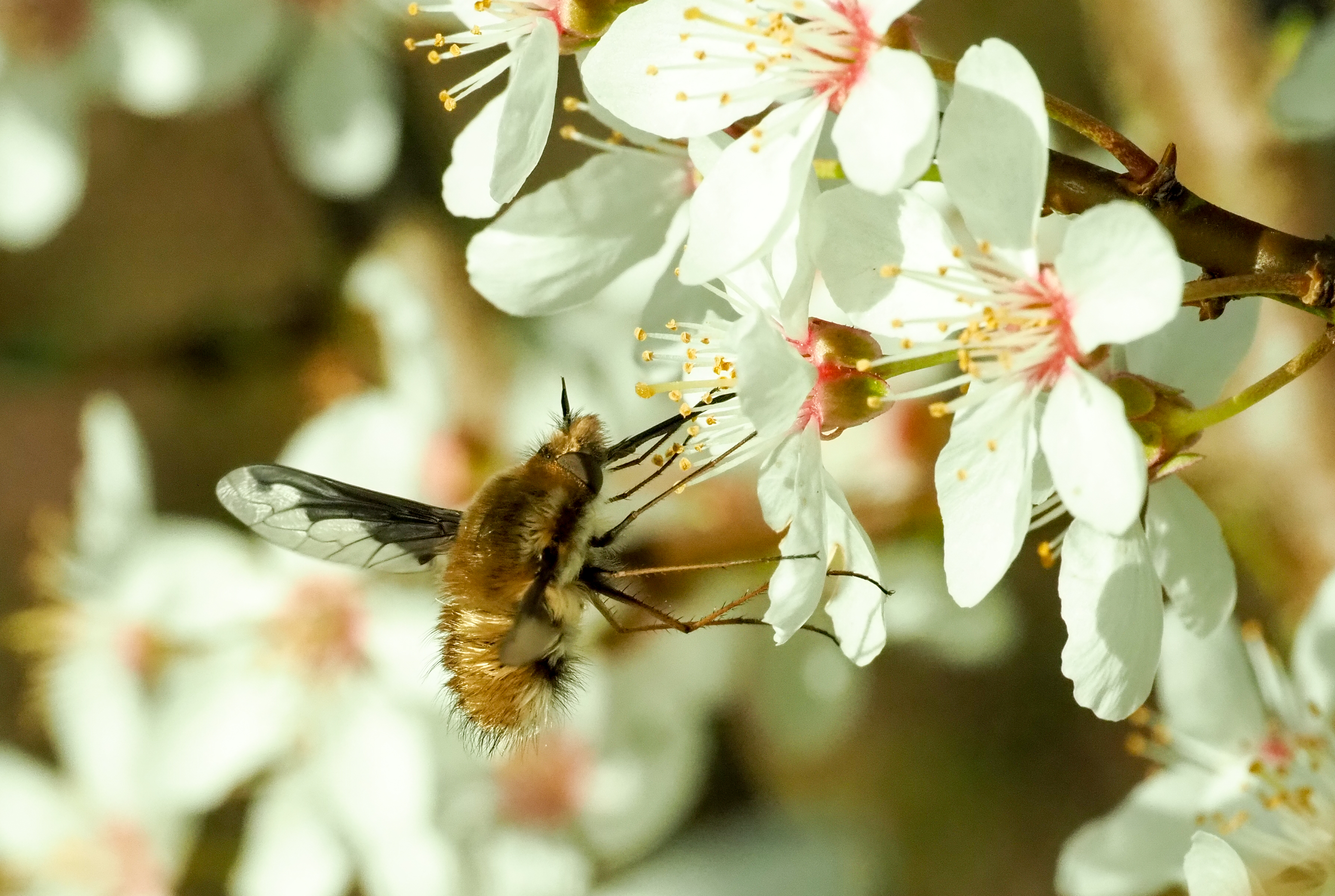
That’s an impressive appendage! And it means that bee flies can pollinate flowers possessing long-tube corollas. Furthermore, an increase in proboscis length can help broaden the individual foraging niche – making them less specialised – probably because the individuals with longer proboscides find it easier to access flowers with different floral tube sizes (Carneiro et al., 2024).
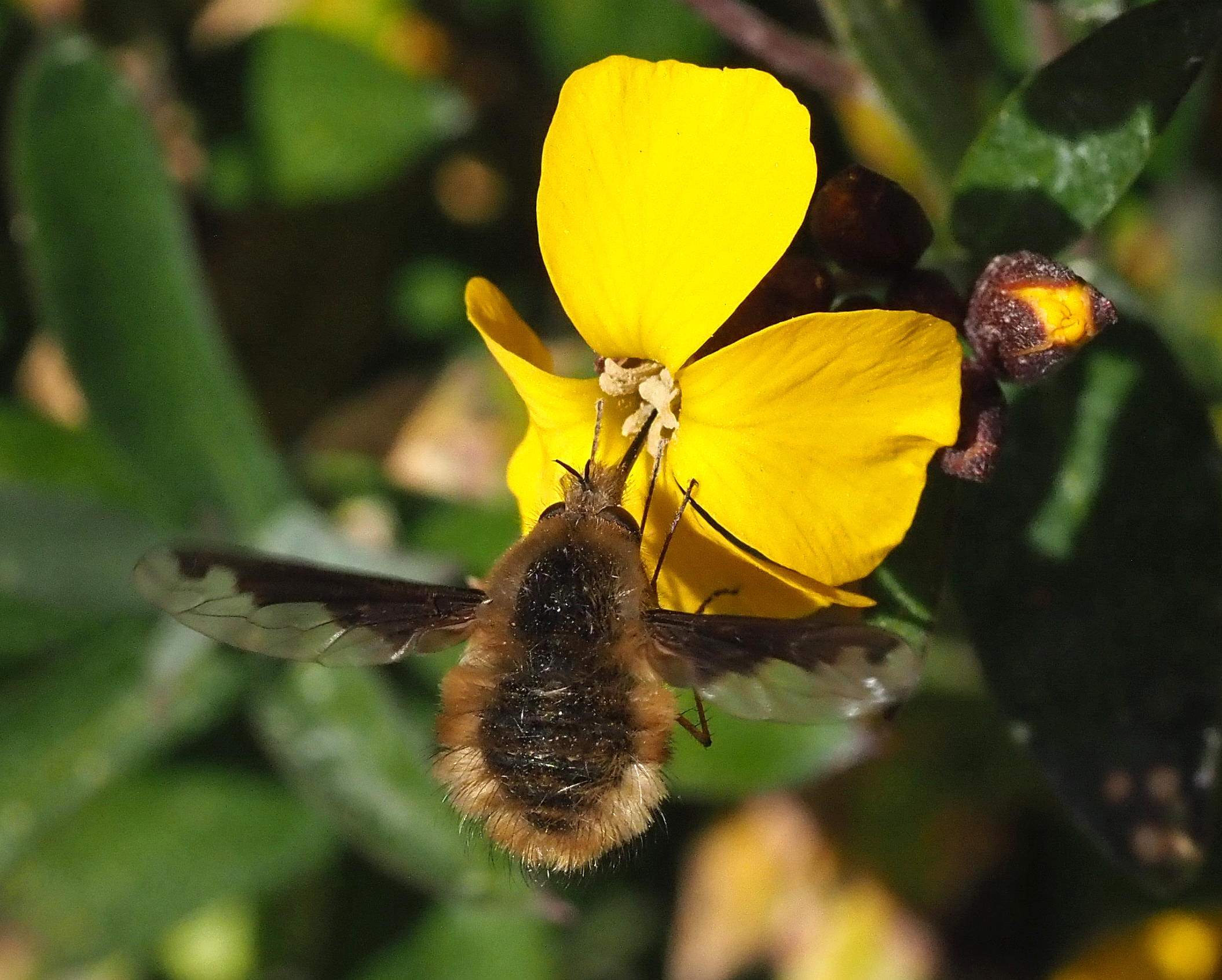
Nectar is an essential component of the bee fly’s diet and in obtaining this they carry out an important pollination role, especially for flowers in the family Boraginaceae (at least in temperate climes). Favoured species include: lungwort (Pulmonaria officinalis); common alkanet (Anchusa officinalis); viper’s bugloss (Echium vulgare); purple gromwell (Aegonychon purpurocaeruleum); on so on.
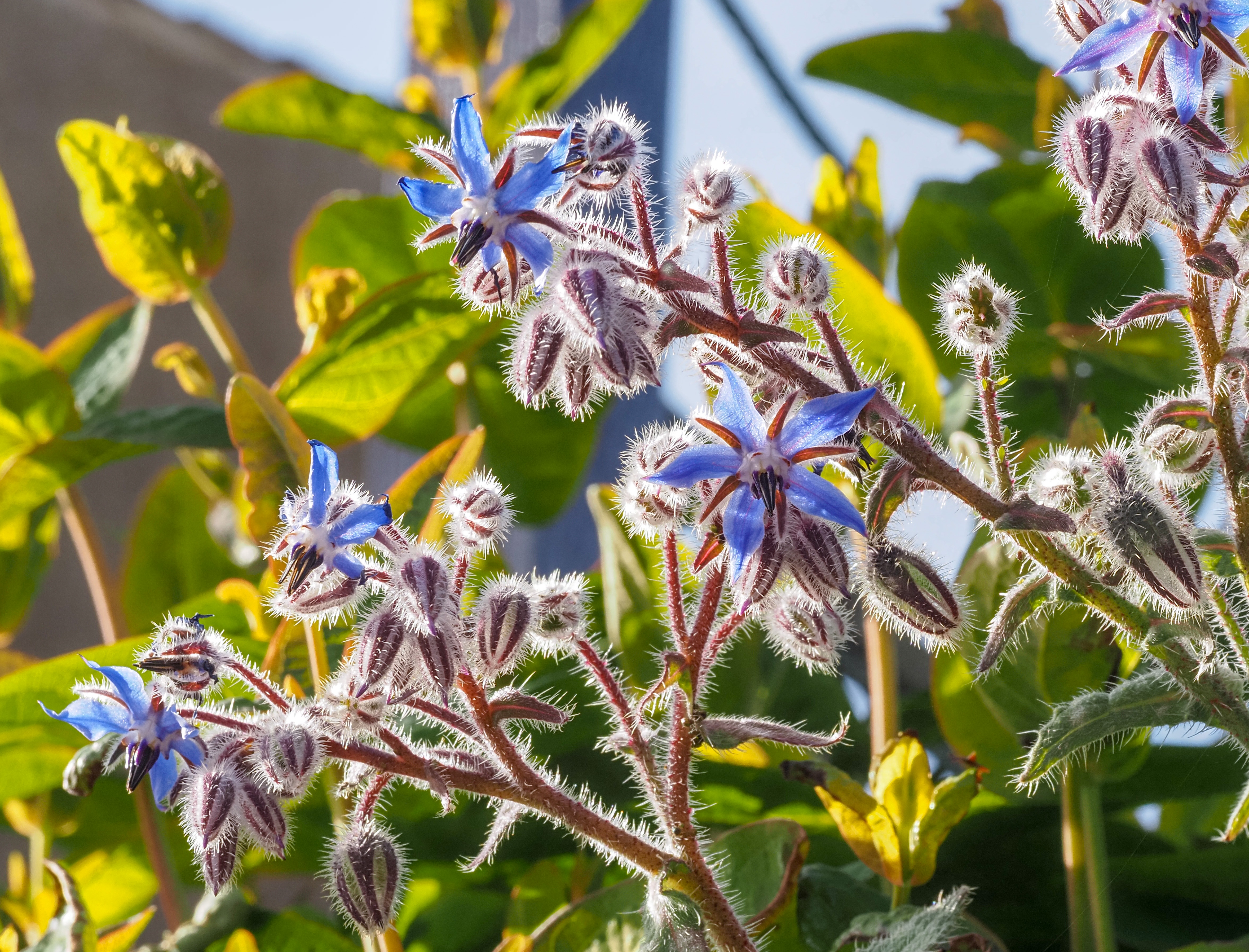
Borage (Borago officinalis) flowers are visited and pollinated by bee flies, although they are primarily pollinated by bees.
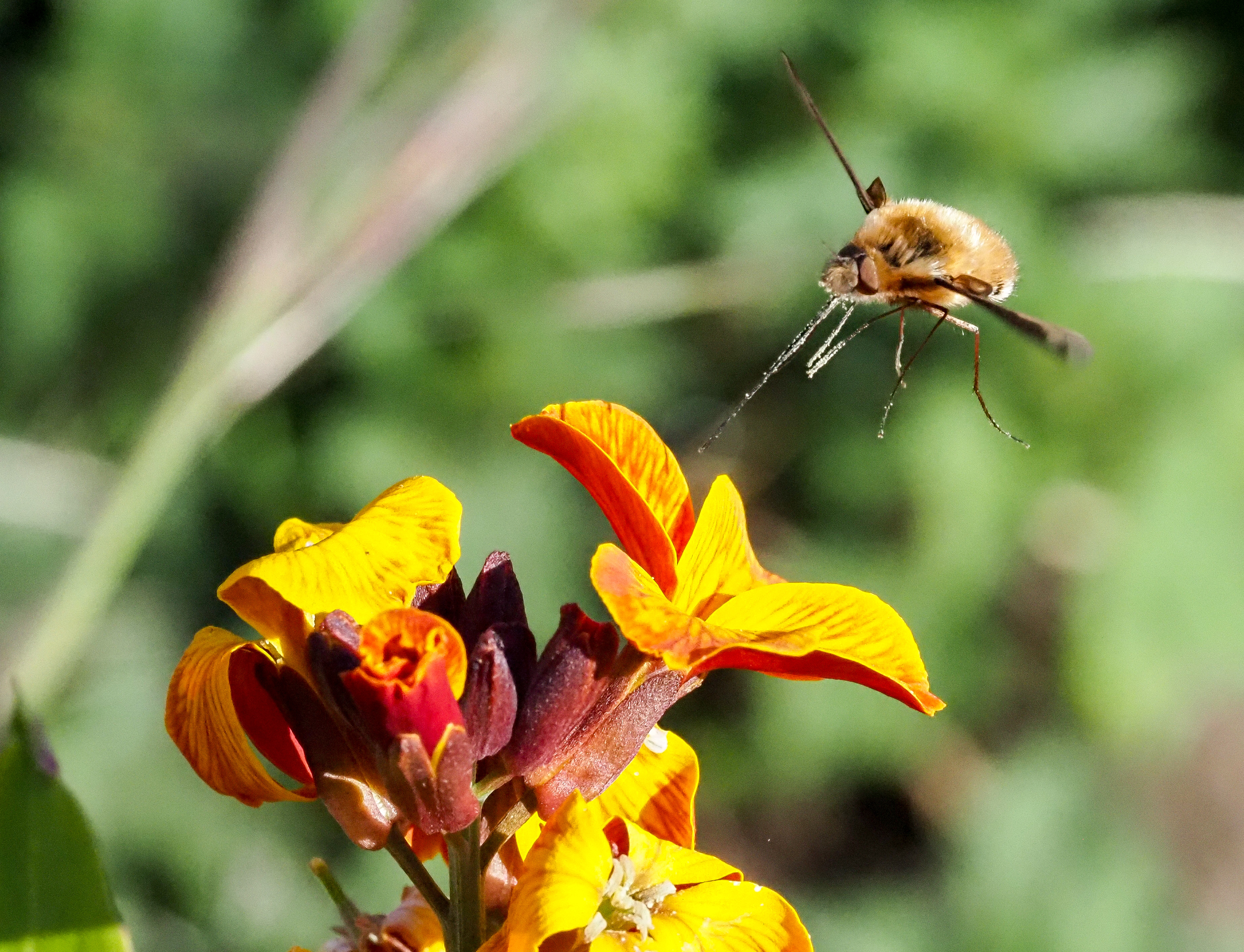
However, bee flies can obtain nectar from a much wider group of flowers and can stick their heads in, or even climb into a flower to get at the nectar if they need to! As shown here on wall flowers (below).
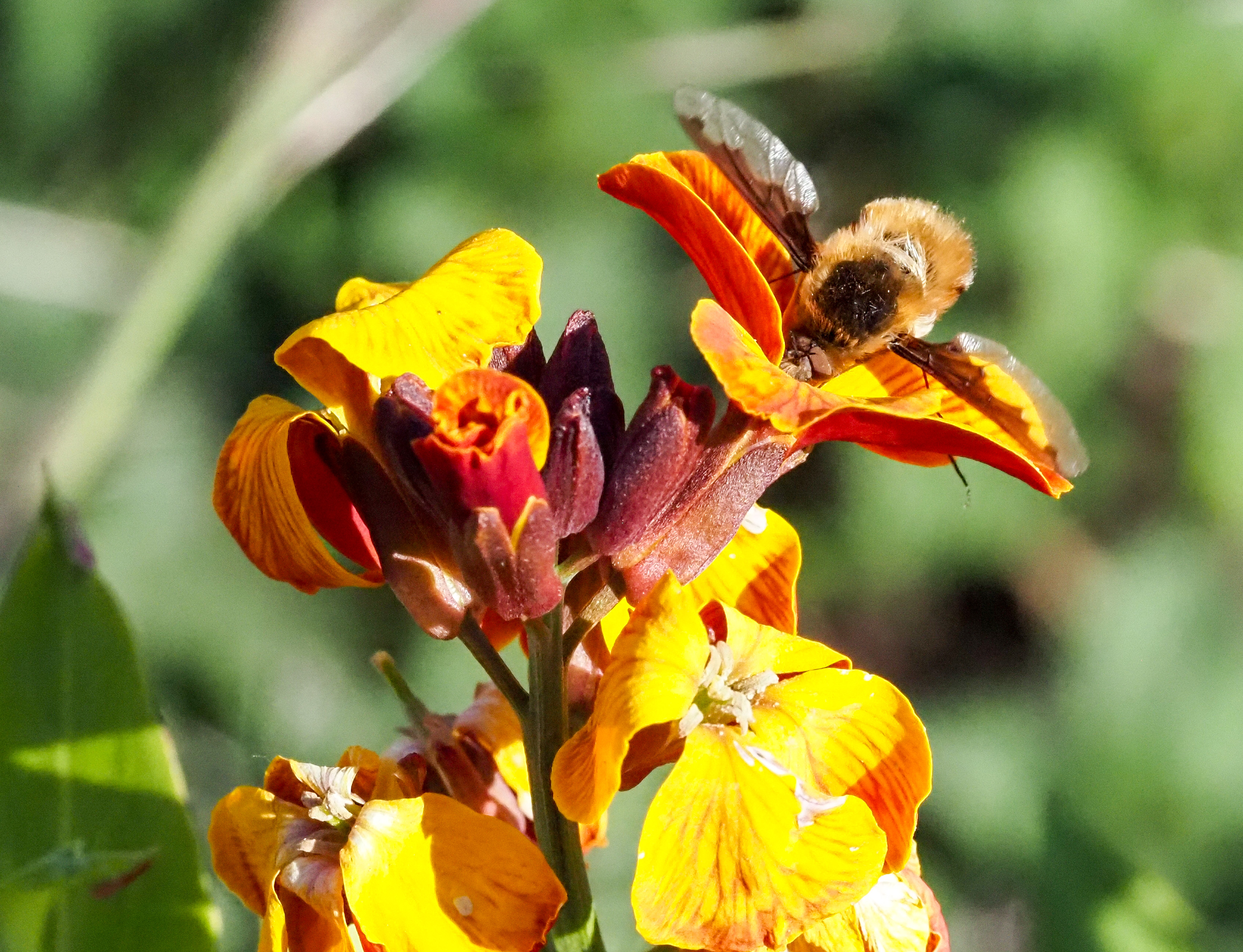
They typically hold on to the flower with their long thin legs, probing with their proboscis and buzzing with their wings, probably to keep themselves nicely balanced.
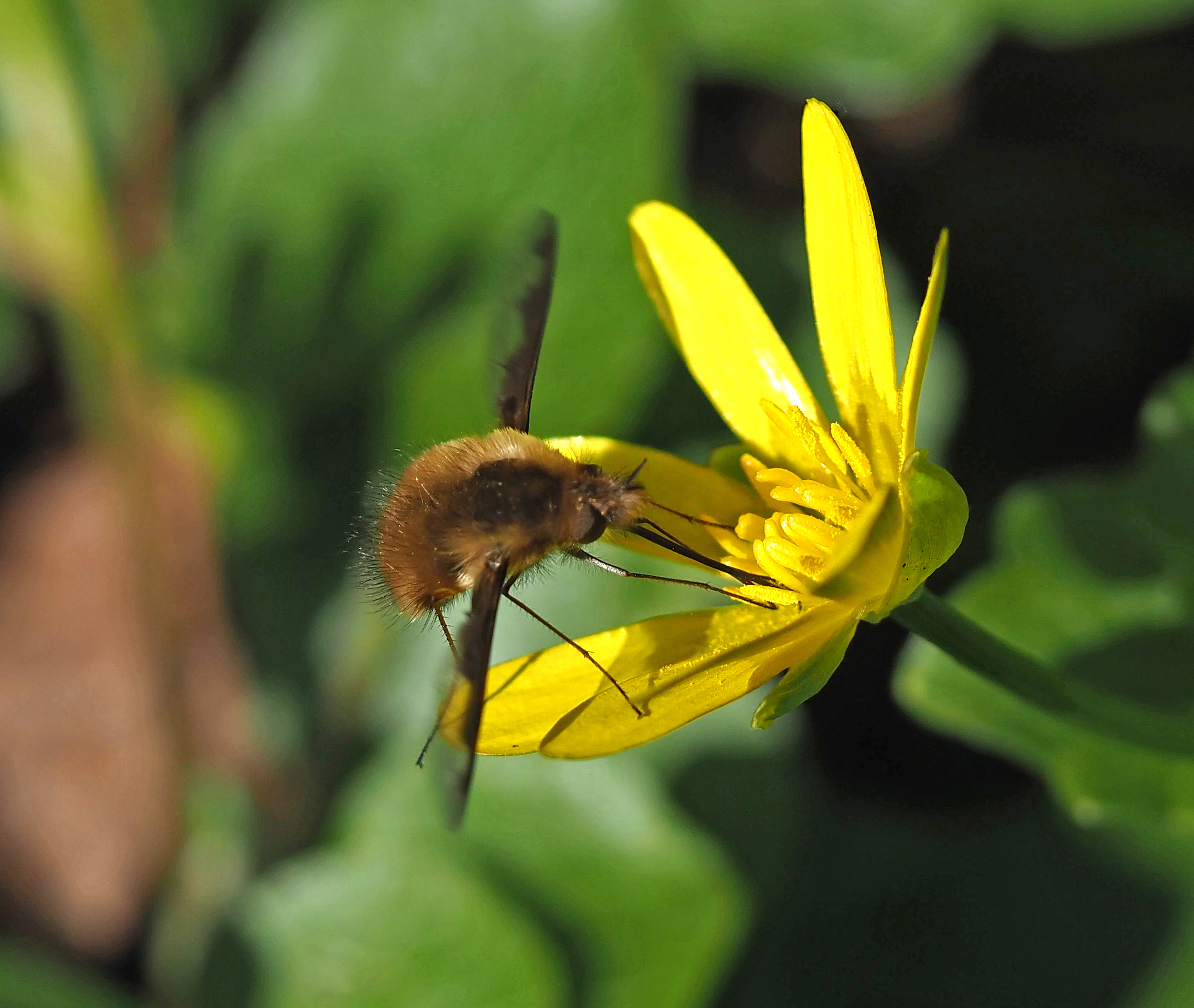
Photo by Raymond JC Cannon
Although bee flies are generalist pollinators – foraging on up to 20 different plant species in one study carried out in northern California (Carneiro et al., 2024) – individuals often concentrate their attentions on a much smaller subset, e.g. two to four species of flowers. This floral constancy is probably good for both flies and flowers. It produces more concentrated pollen transfer – and cross-pollination – between conspecific plant species, and concentrating on just a few flowers, enables insects to work more efficiently, compared to having to deal with many different flower types.Charles Darwin was the first to point out the advantages for an insect of specialising on one or two flowers:
“insects being thus enabled to work quicker; they have just learned how to stand in the best position on the flower, and how far and in what direction to insert their proboscides”. (Darwin, 1876; quoted in Waser, 1986)
The answer to the question ‘whether bee flies are useful pollinators’ is a resounding yes! Insects in this family (Bombyliidae) are highly effective, generalist pollinators, and play a crucial role in pollinating plants which emerge early in the season.
References
Carneiro, L. T., Williams, J. N., Barker, D. A., & Arceo‐Gomez, G. (2025). Individual‐based networks reveal the importance of bee fly (Bombyliidae) pollination in a diverse co‐flowering community. Journal of Applied Entomology, 149(6), 845-854.
Darwin. C. 1876. On the effects of cross and self fertilisation in the vegetable kingdom. John Murray,
London
Grimaldi, D. (1988). Bee flies and bluets: Bombylius (Diptera: Bombyliidae) flower-constant on the distylous species, Hedyotis caerulea (Rubiaceae), and the manner of foraging. Journal of Natural History, 22(1), 1-10.
Kastinger, C., & Weber, A. (2001). Bee-flies (Bombylius spp., Bombyliidae, Diptera) and the pollination of flowers. Flora, 196(1), 3-25.
Orford, K. A., Vaughan, I. P., & Memmott, J. (2015). The forgotten flies: the importance of non-syrphid Diptera as pollinators. Proceedings of the royal society B: biological sciences, 282(1805), 20142934.
Waser, N. M. (1986). Flower constancy: definition, cause, and measurement. The American Naturalist, 127(5), 593-603.


Fascinating. I had no idea of bee-flies and will be on the lookout for them.