There are a number of Devil’s Dykes in the UK, both natural and man-made. One of the most intriguing is a long (11km) earthen barrier in eastern Cambridgeshire and Suffolk, which is thought to be of Anglo-Saxon origin, dating from the 6th and 7th Centuries. It’s hard to imagine how much effort it must have taken to construct this 10-metre-high (33 ft) barrier, with a deep ditch – Devil’s Ditch – on one side, using the tools they had some 1,500 years ago.

The chalk grassland ecosystem on the Devil’s Dyke earth-bank is both a Site of Special Scientific Interest (SSSI) and a Scheduled Ancient Monument. Unlike the surrounding areas, it has never been farmed and is home to many wildlife species, including the rare lizard orchid flower, the Chalkhill blue butterfly, Adonis Blue butterfly, and Marbled White butterfly.
Butterflies
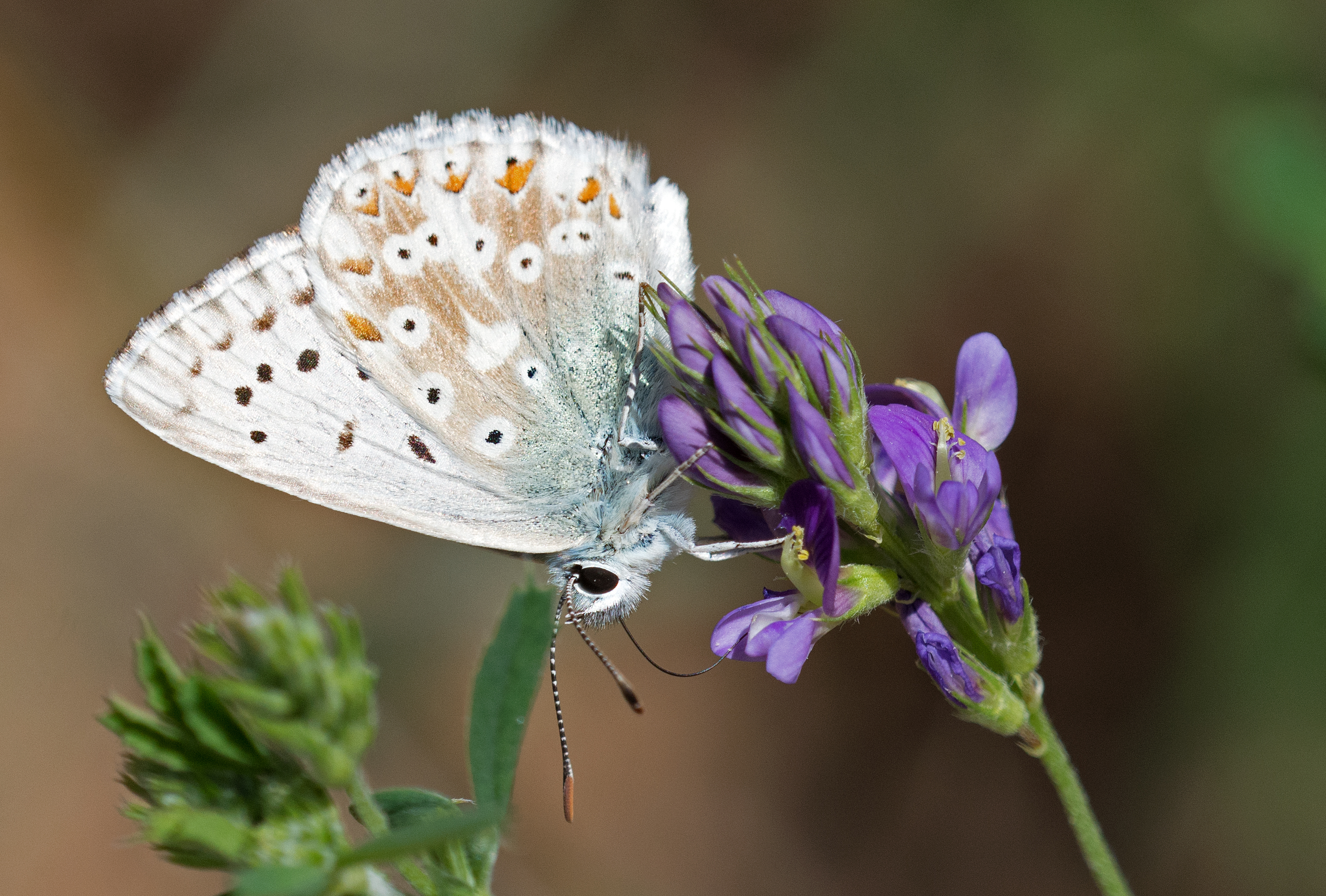
On this visit, on 14 June 2026, we were a bit too early for the Chalkhill blues, but we were luckily enough to have seen them on a previous visit. The timing of their emergence varies somewhat from year to year. They were however, very ‘flighty’, so I’m cheating by posting a photo of a Chalkhill blue I took in Spain!
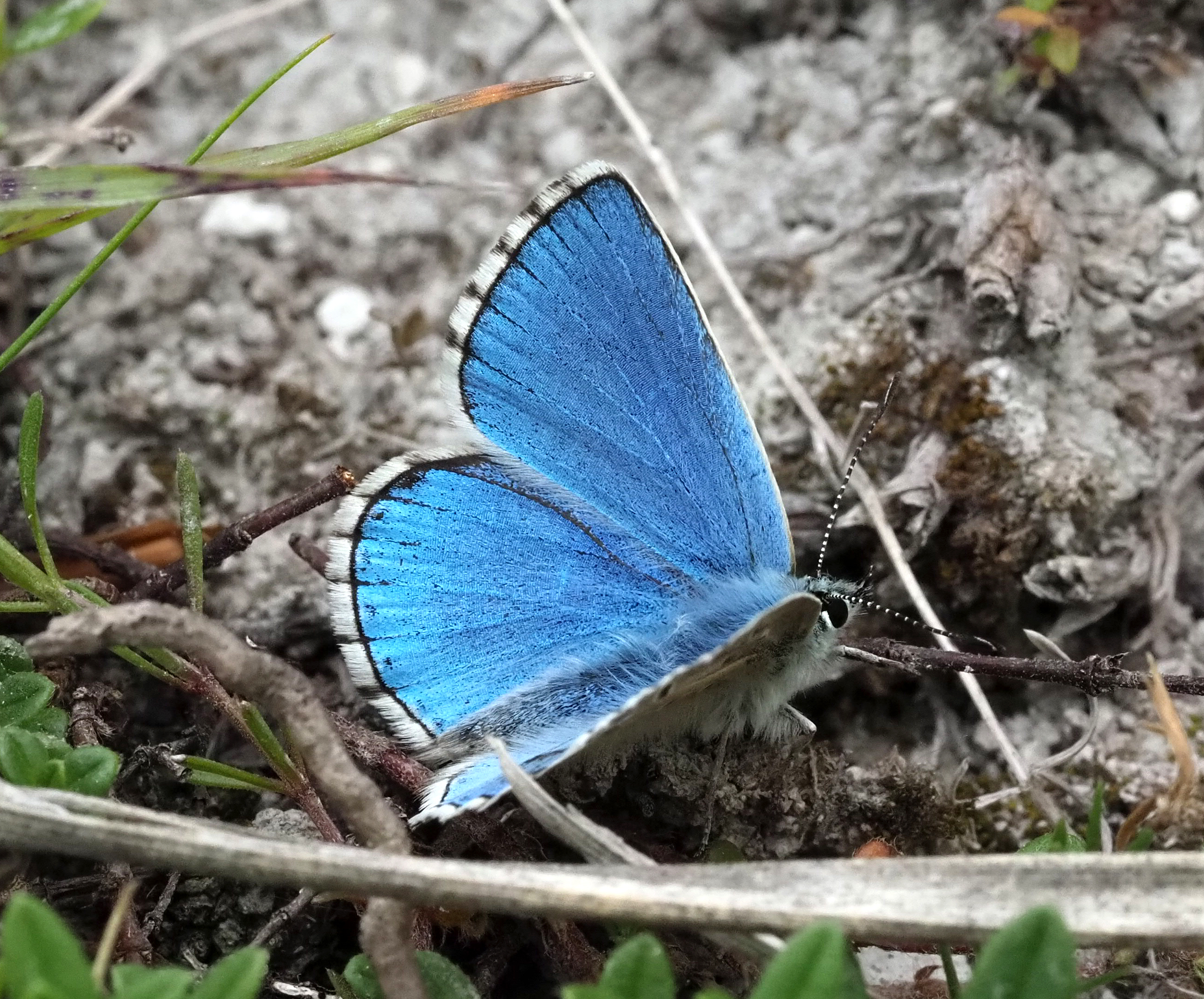
However, this photo of an Adonis blue butterfly was taken on the Dyke!
On this year’s visit (2026), we were blest with a bumper crop of Marbled white butterflies. As the clouds parted and the sun came out, they were flying around in reassuringly good numbers (see below).
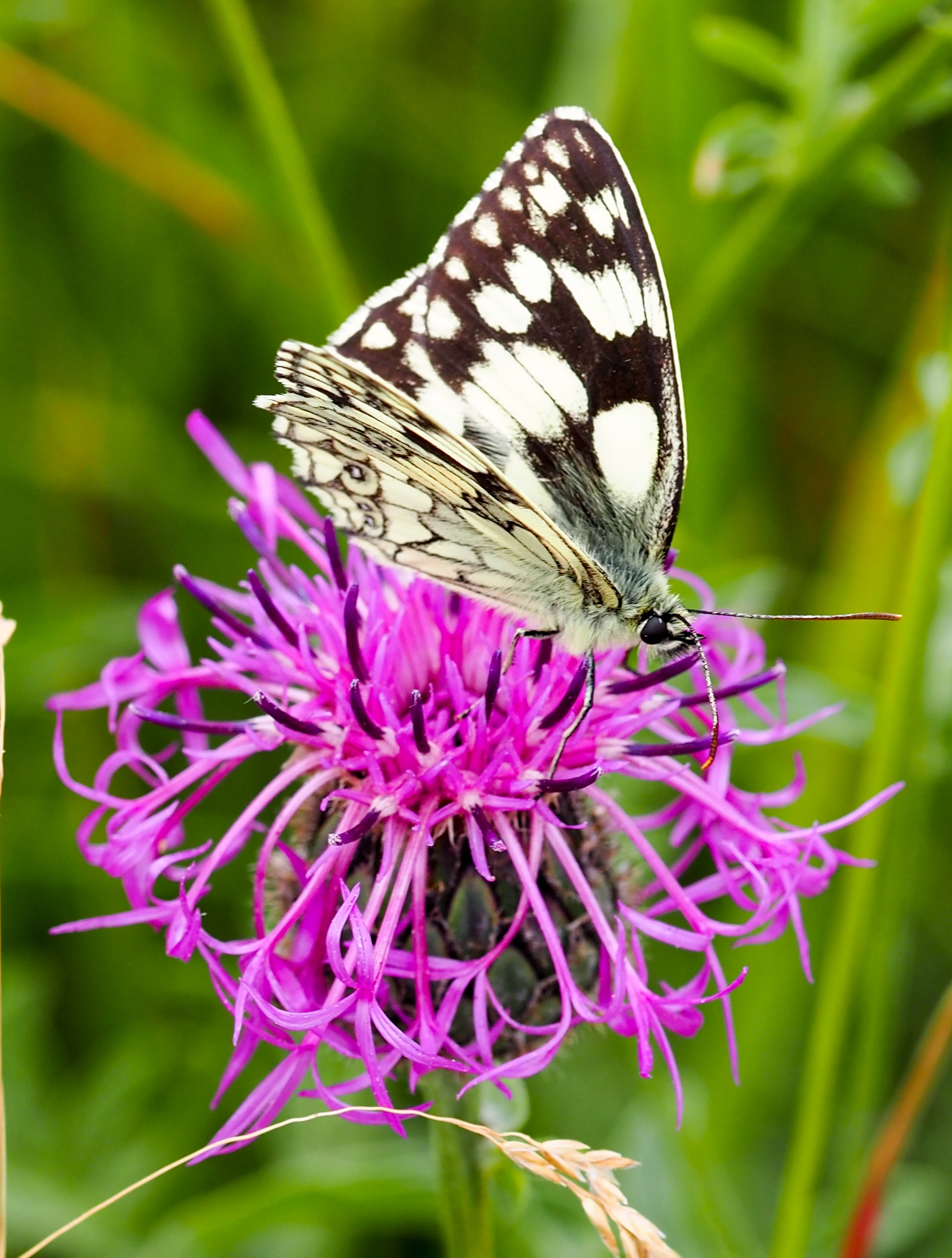
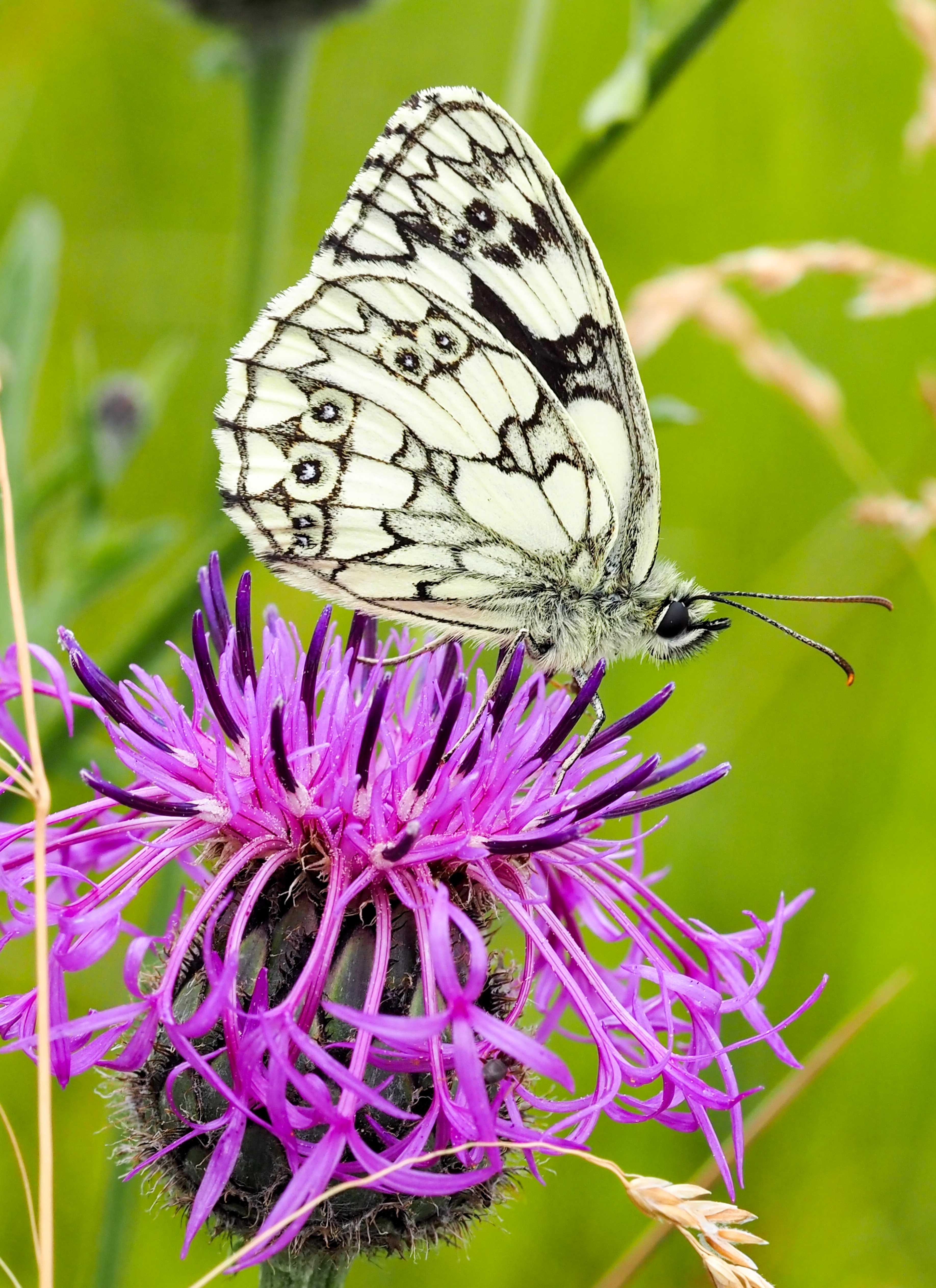
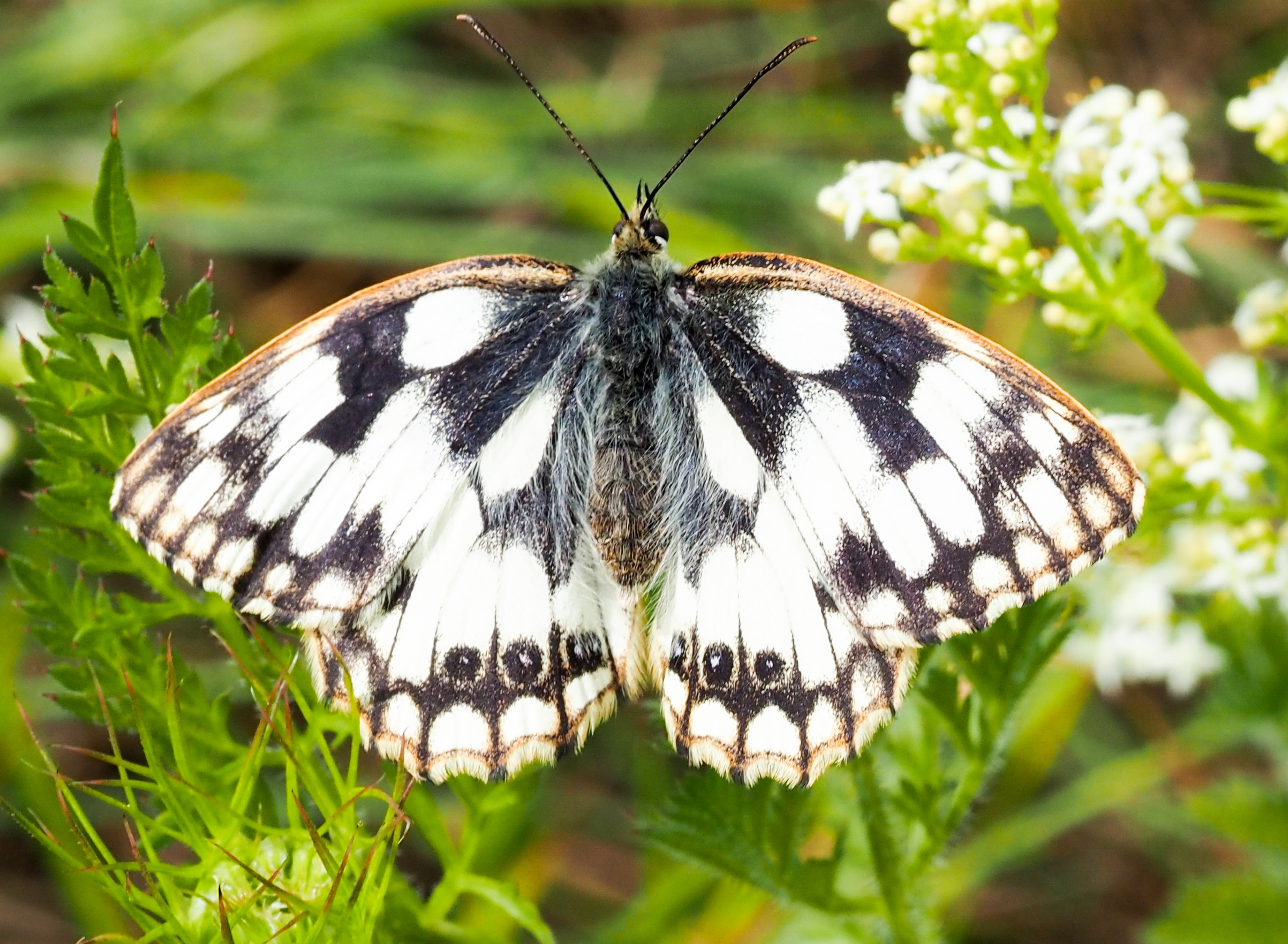
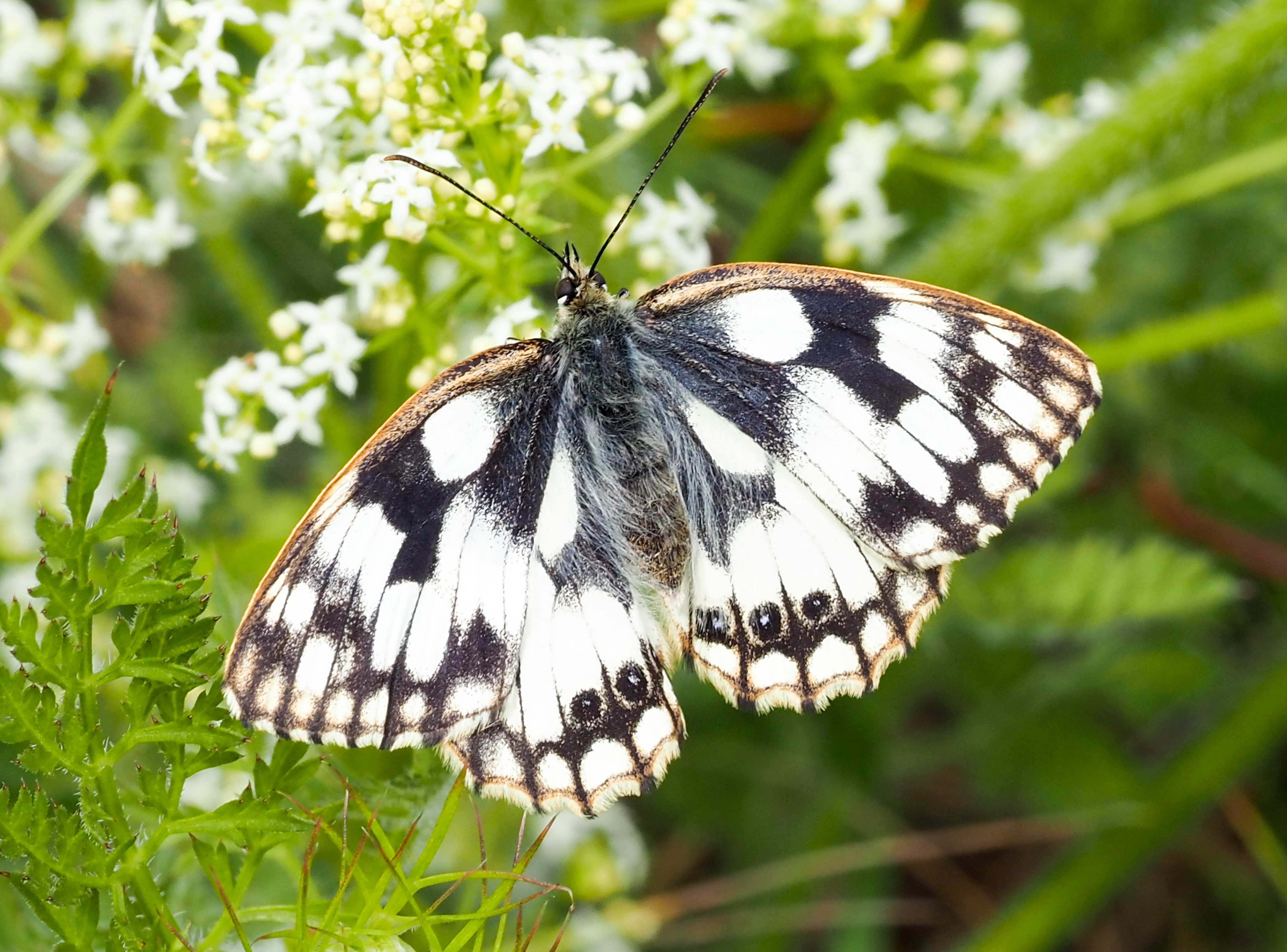
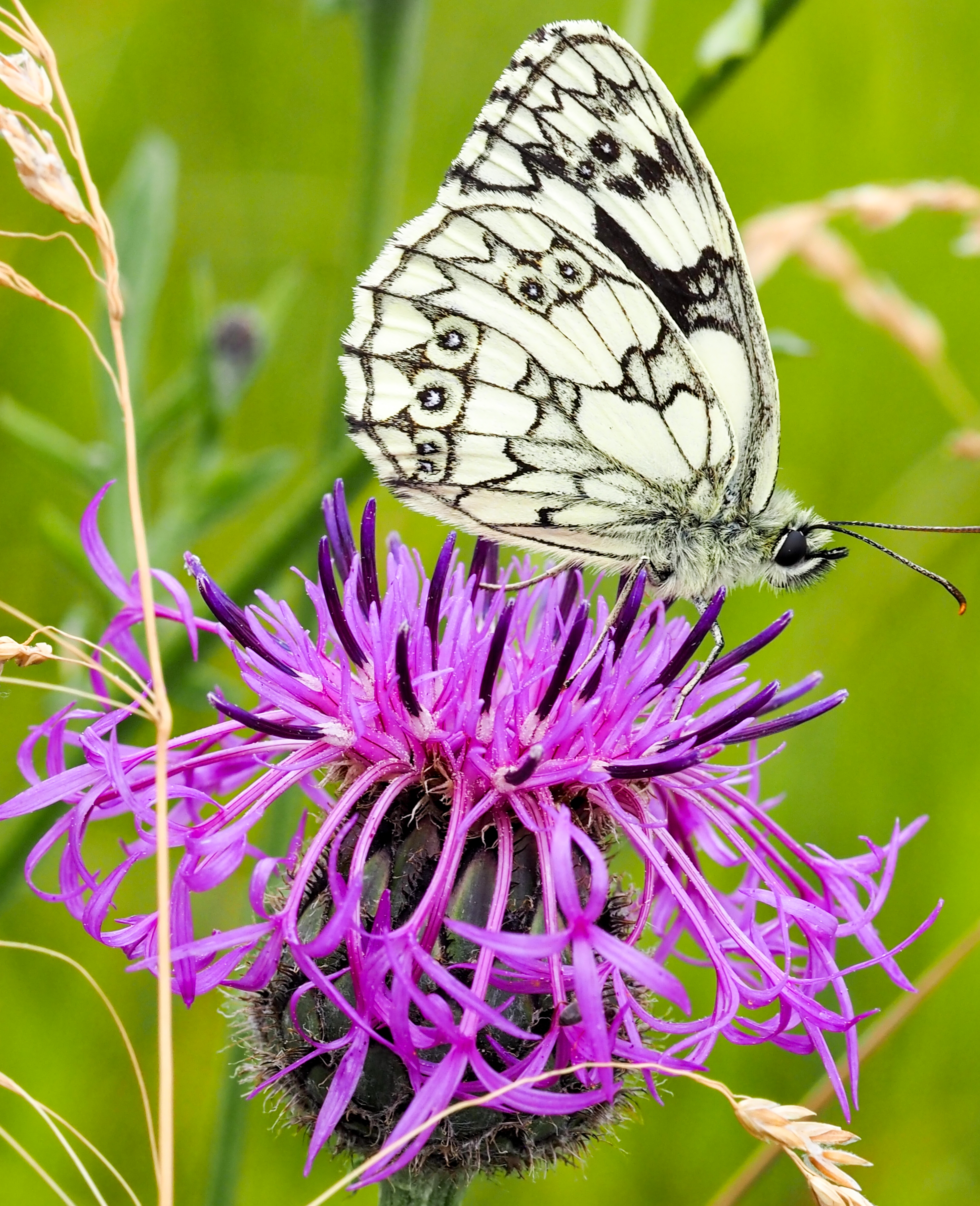
The undersides of the wings of the Marbled white, are, I think, a work of art! And the Greater Knapweed flower is also pretty stunning!
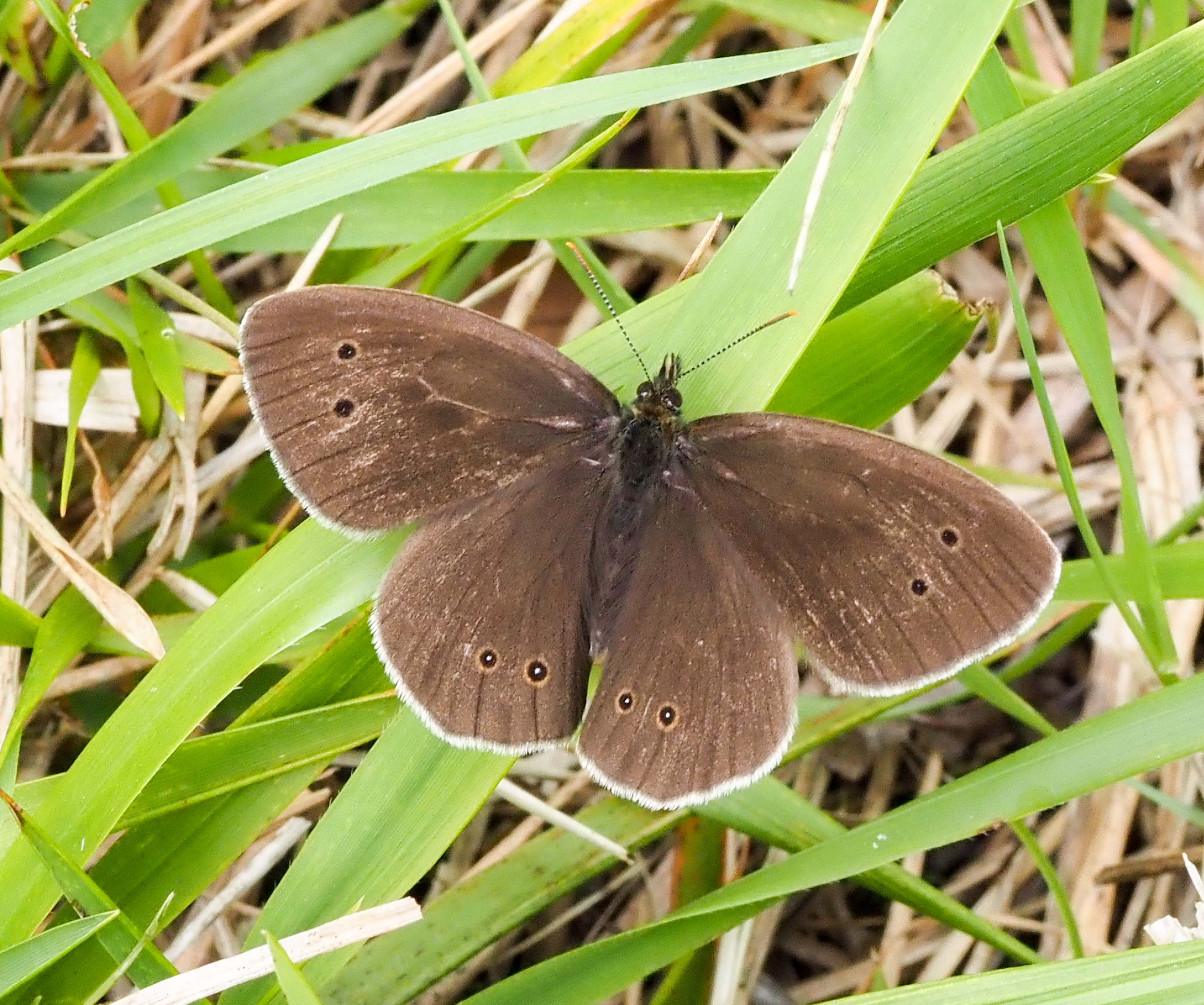
There were also a few ringlet butterflies flying around and resting in the grass (below).
Lizard orchids
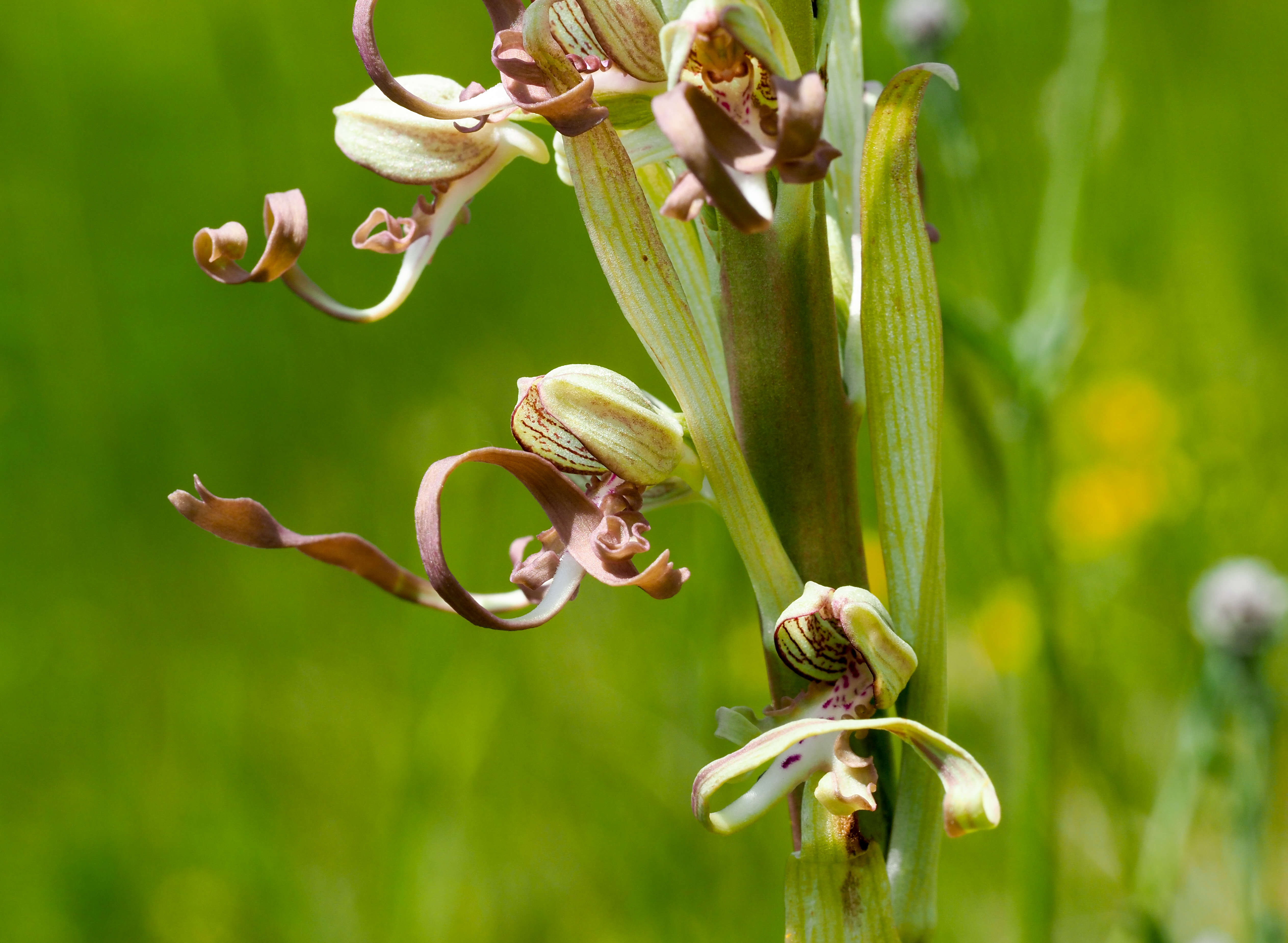
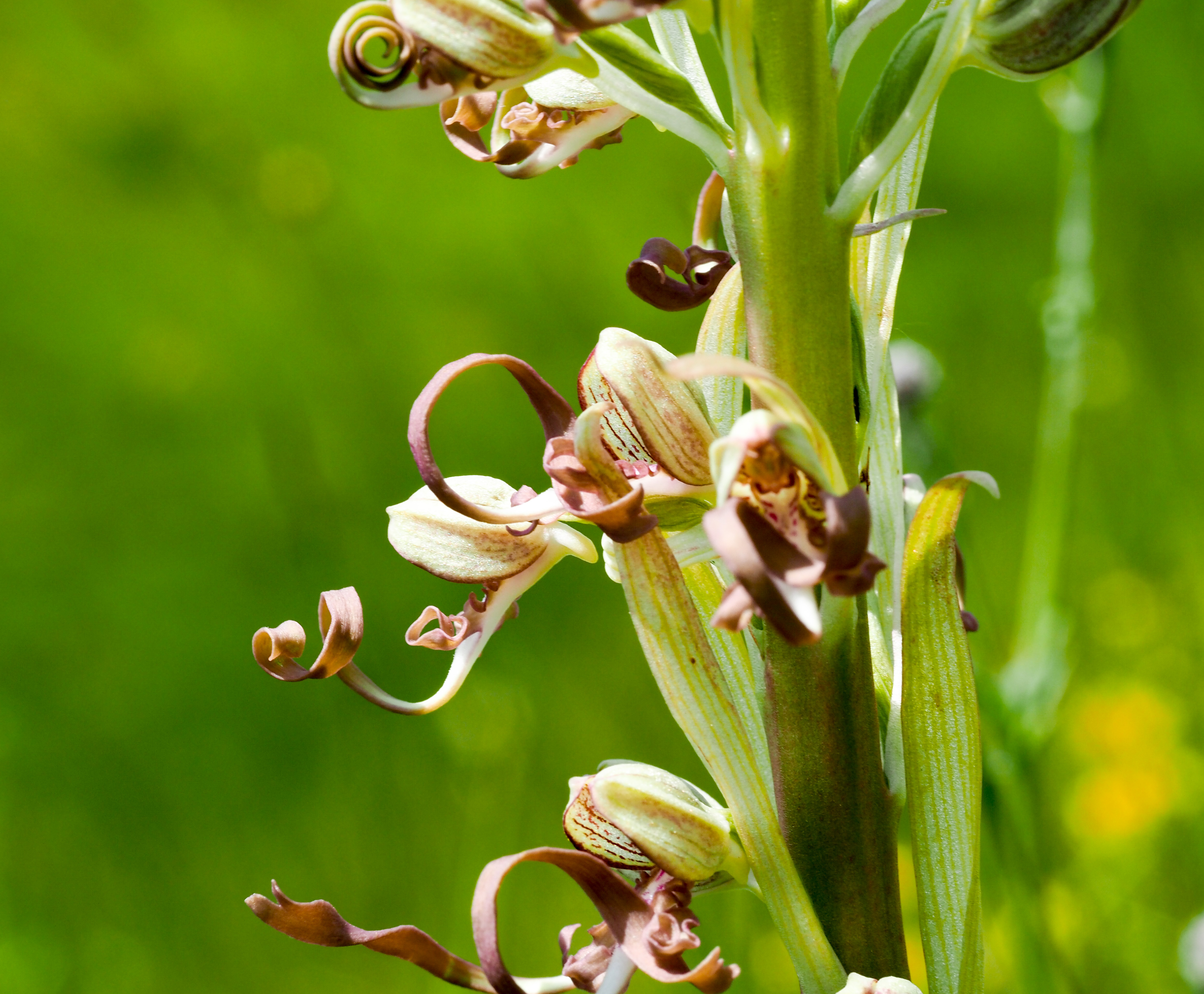
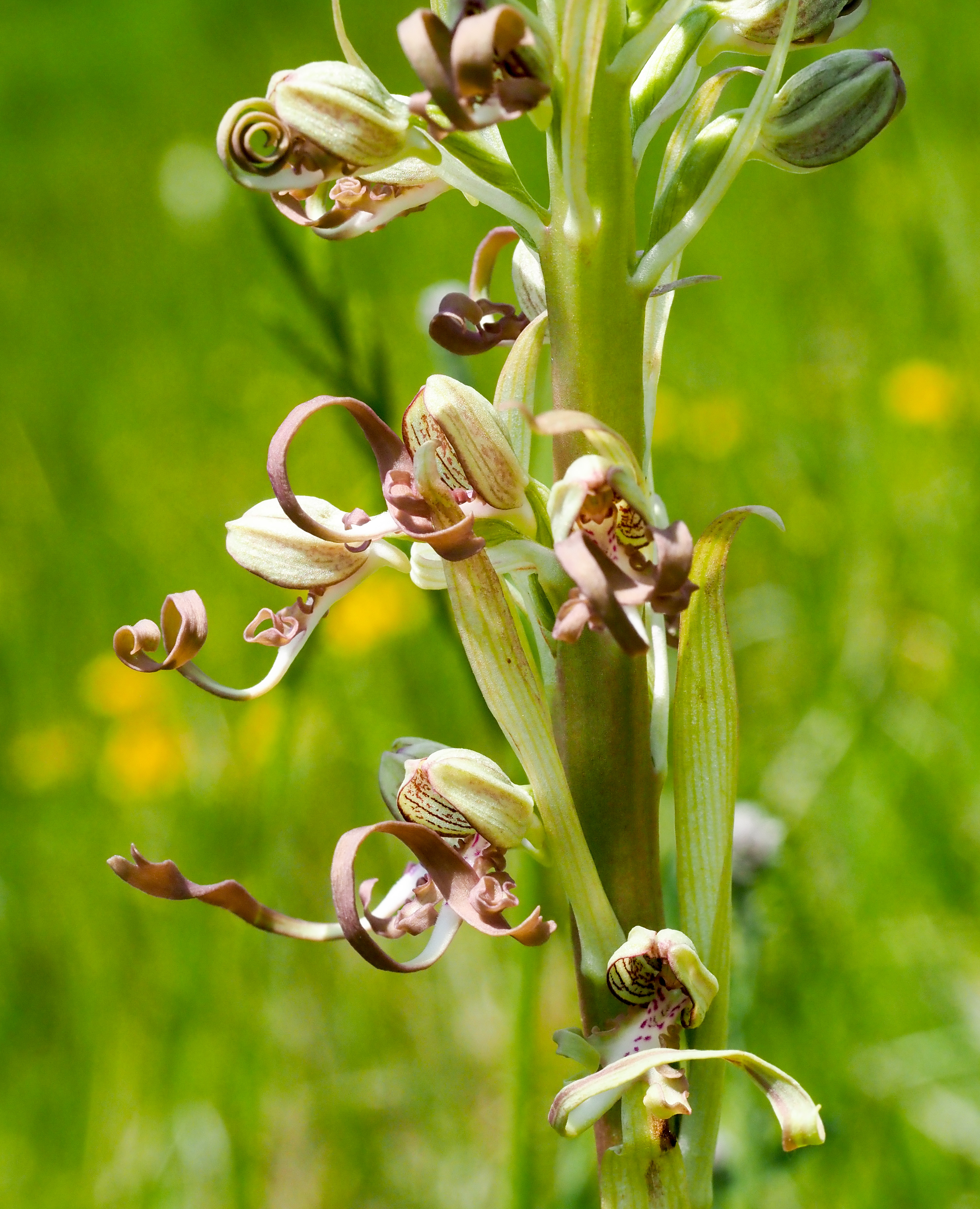
On both visits (12 June 21 and 14 June 2026) we saw Lizard orchids. It’s worth saying that they are relatively rare in the UK. The two main sites where they occur in good abundance are: Sandwich Bay, Kent, and the Devil’s Dyke, along the stretch of the Dyke that runs through Newmarket Racecourse. This is where I took these photographs.
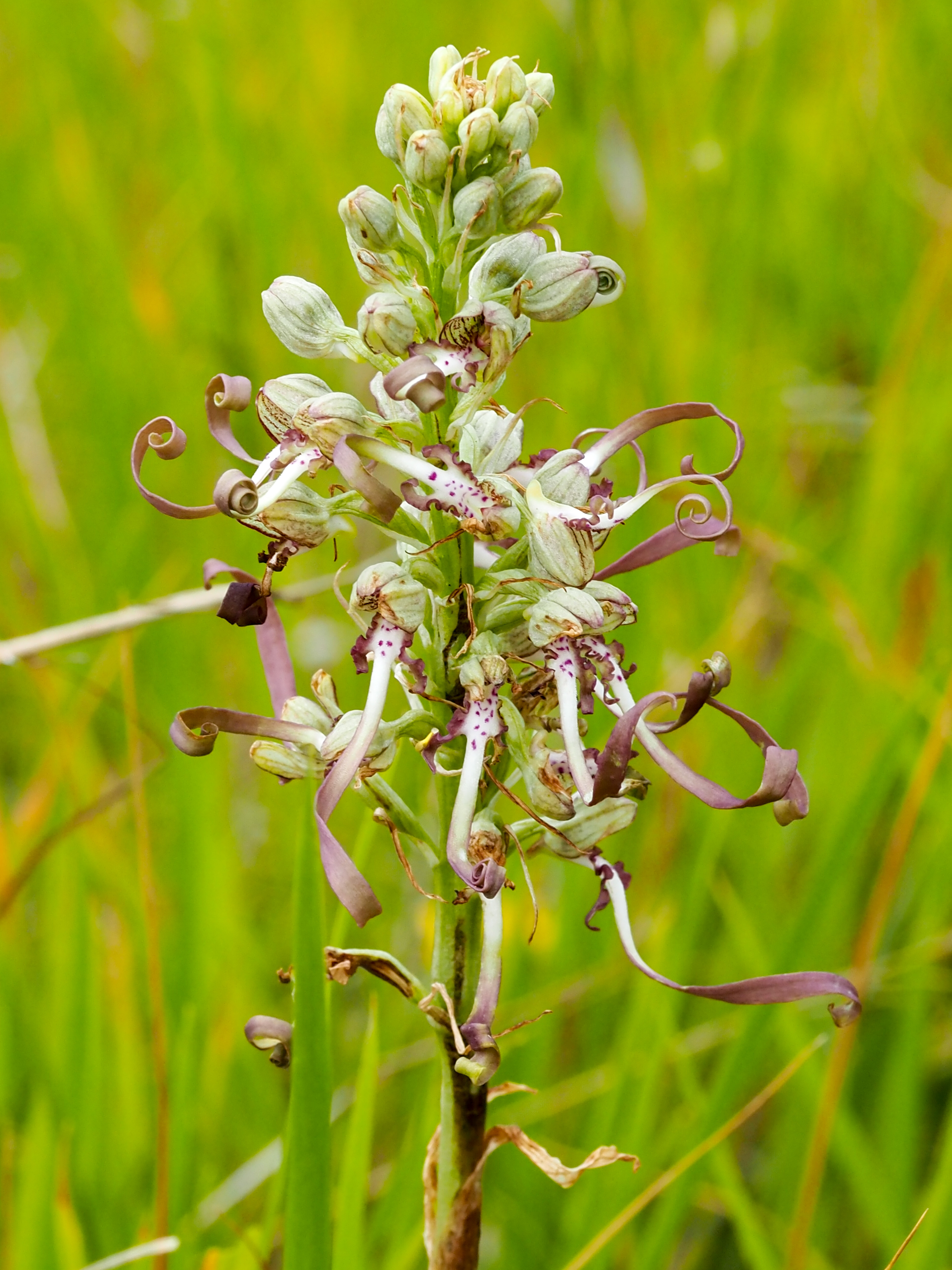
The Lizard Orchid (Himantoglossum hircinum) can reach up to a meter in height, and is said to get its name from its distinctive, twisting, lizard-like flowers. The Lizard orchid’s flowers are said to form the head, legs and long tail of a lizard. I can’t see the lizards myself, but resemblances are strange things. One person’s lizard is another person’s something else!
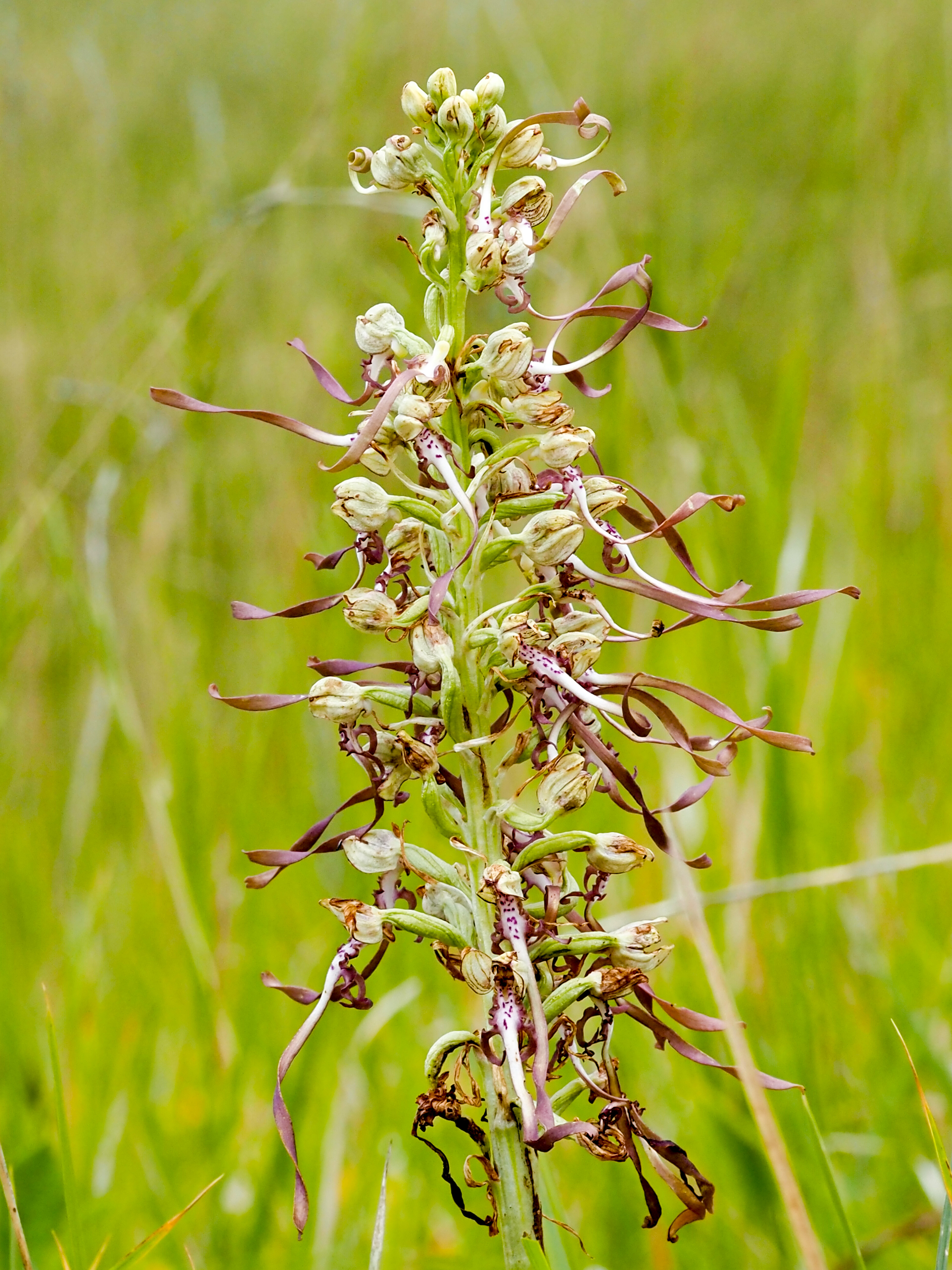
It was easy to spot the few orchids that were flowering because other people had slid down the bank, flattening the grass, to have a peek at the emerging orchid! It’s worth mentioning that it is protected in the UK, under the Wildlife and Countryside Act, so it is illegal to pick, uproot, or damage the plants.
The long, tail-like lip of the orchid is spiralled and dotted with pink or purple in the centre. Spot the lizard shape!
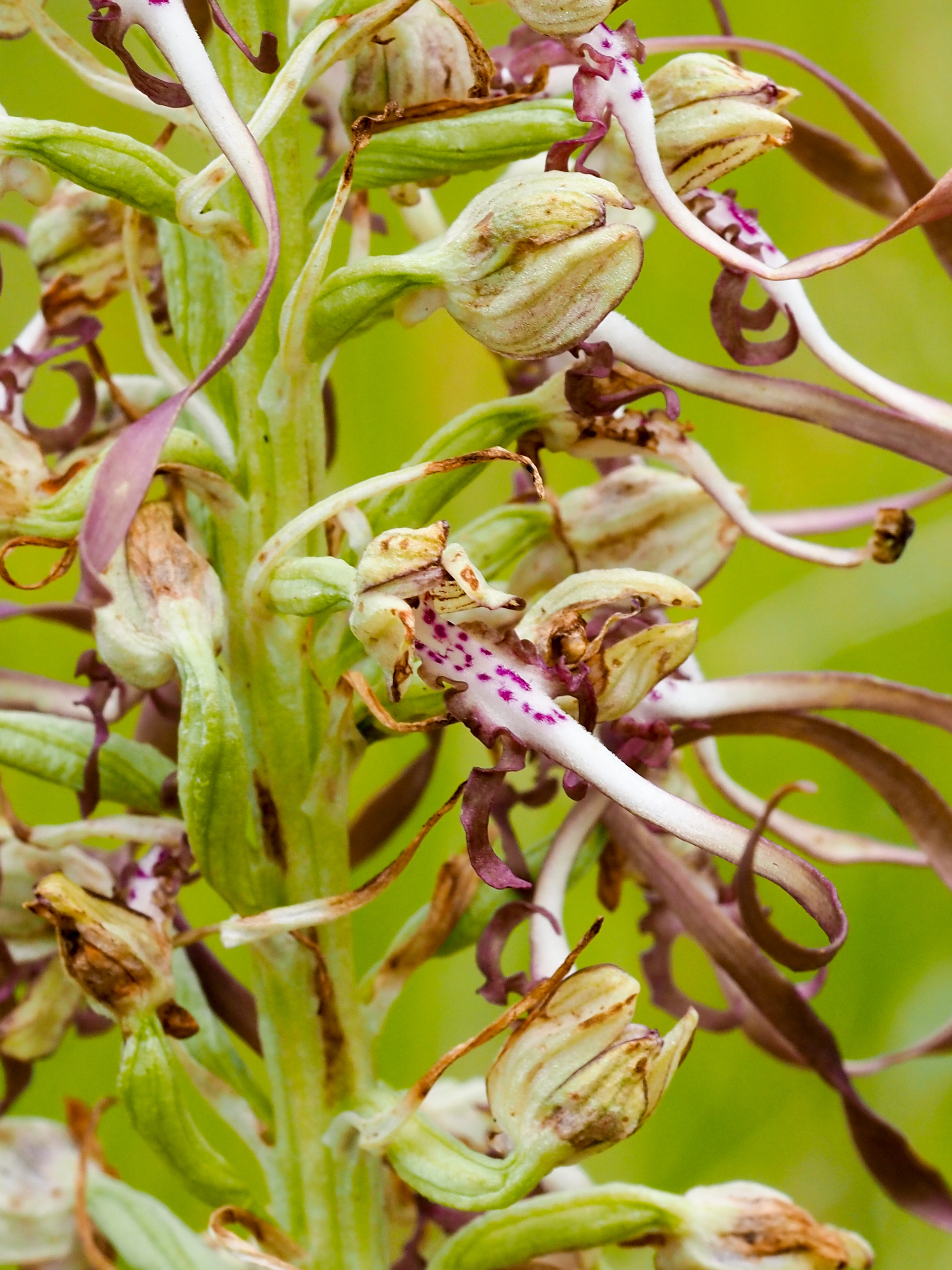
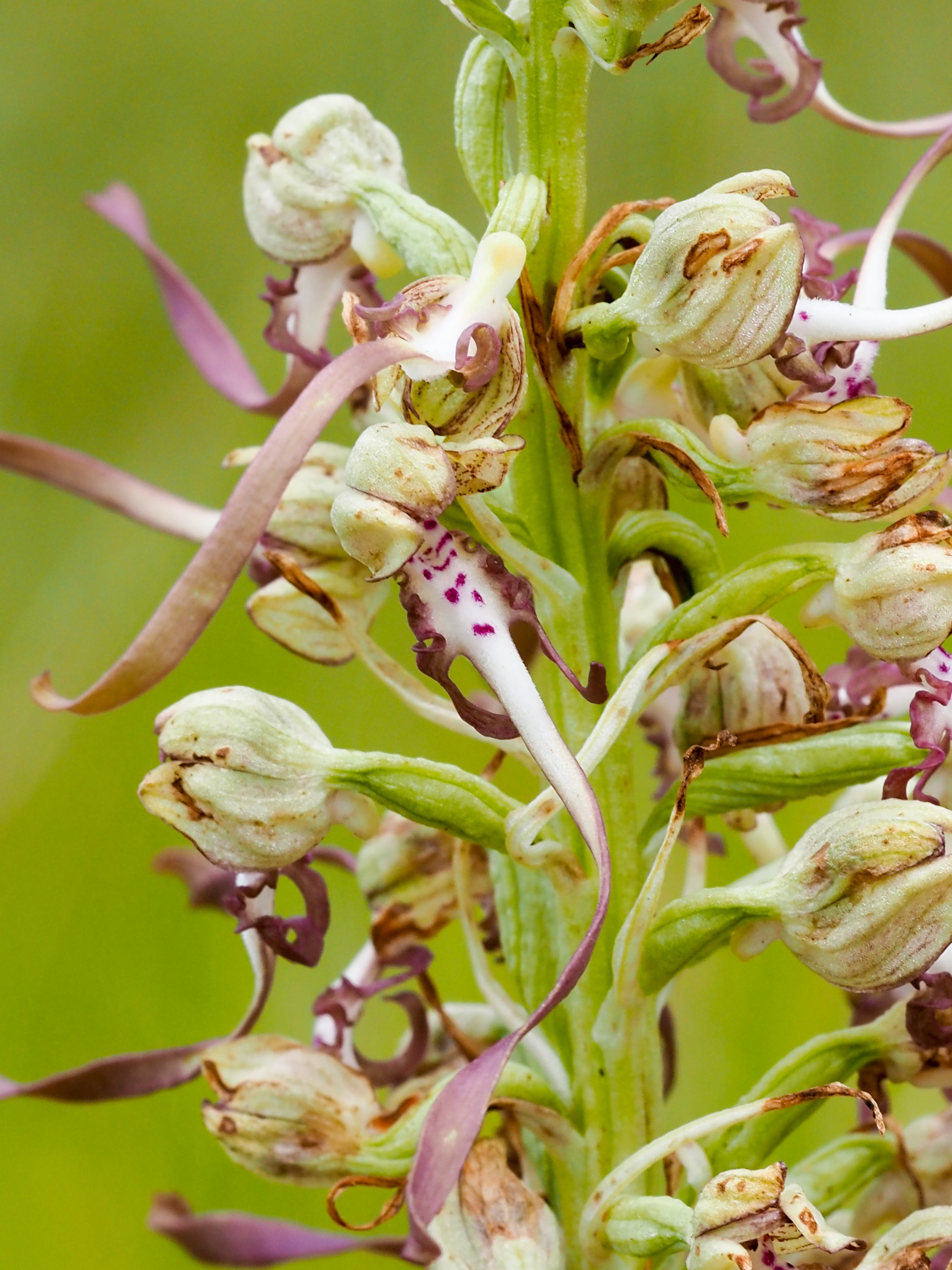
The scientific genus name (Himantoglossum) is derived from the Greek for ‘strap-tongue’; and the species name, hircinum, is Latin for ‘goat-like’, and refers to the strong, goat-like smell of the flowers. Unfortunately, I could not smell anything! Perhaps the Covid infection I had a few years ago has wiped out my sense of smell?
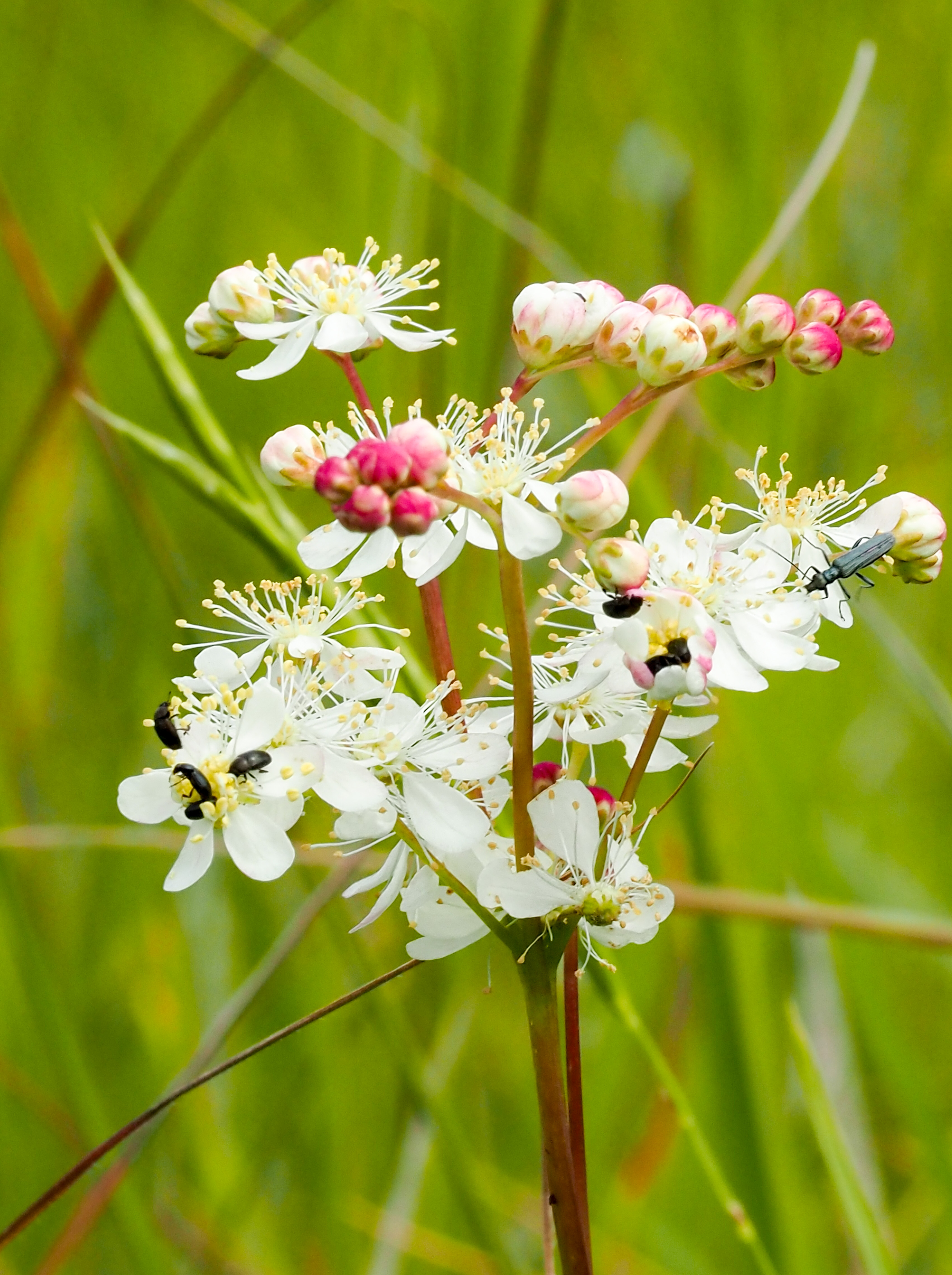
Another common flower on the Dyke, is Dropwort. The tuberous roots and young leaves can be cooked as a vegetable or eaten raw as a salad.
All photographs by Raymond JC Cannon.😁


Worth pointing out that the Adonis Blue and I believe Marbled White were ‘introduced’ here, the Adonis quite recently. There’s a lot of it going on in Suffolk!
Fascinating orchid!
Yes indeed!😄