The plant called Bear’s Breeches (Acanthus mollis) gets this rather odd name because someone thought that the large, deeply lobed, hairy leaves look like wide, rustic trousers or a bear’s rump. I can’t quite see the resemblance myself, but there are number of other names, including sea dock, bear’s foot plant, sea holly, gator plant and oyster plant.
During a recent visit to a lovely garden in the middle of Madrid – Real Jardín Botánico de Madrid – I noticed that the flowers of this perennial plant were being visited by large black Carpenter bees. It was quite hot (about 33 deg C) even though I was there about 7pm and many insects were active in the warm weather, feeding on the wide variety of flowers.
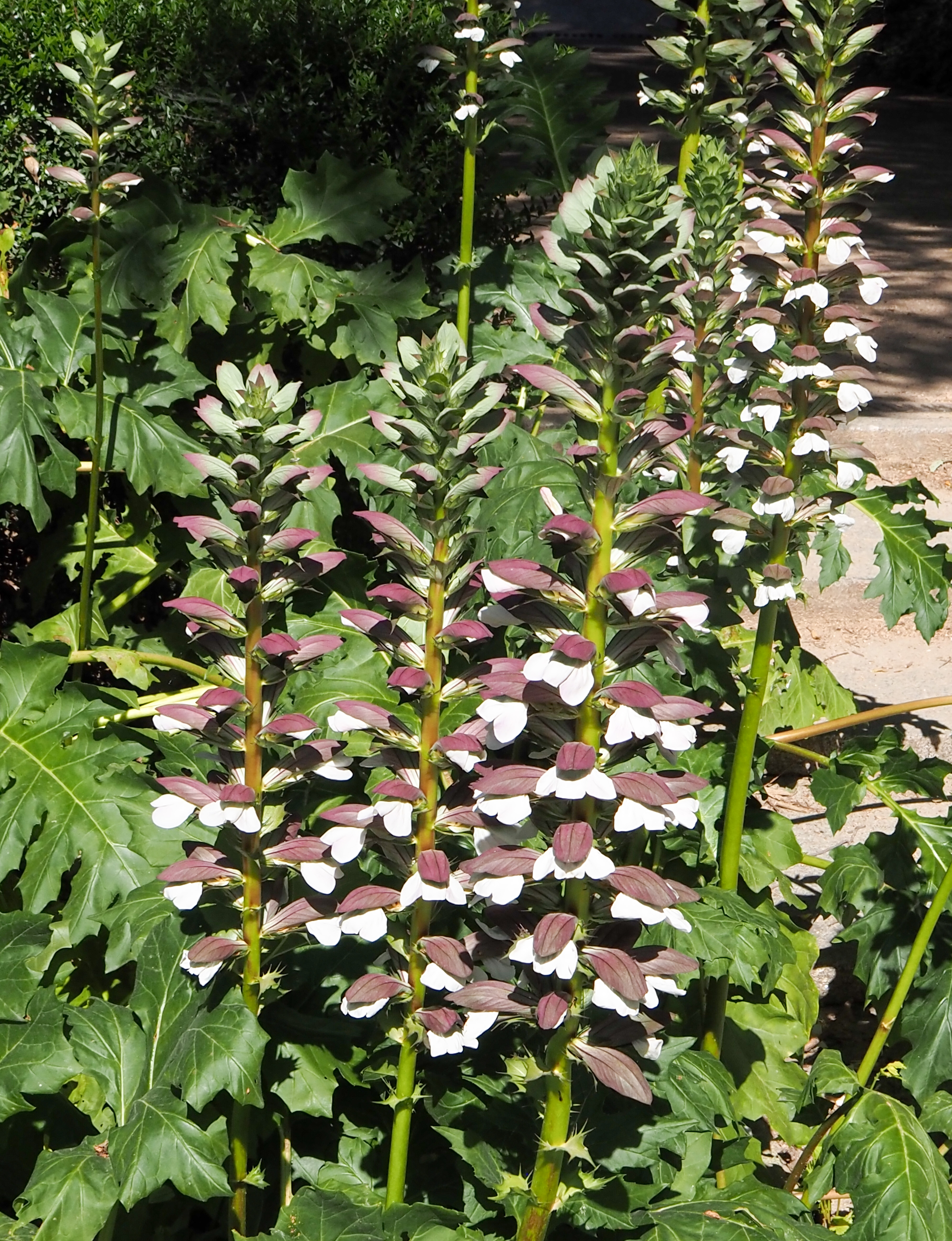
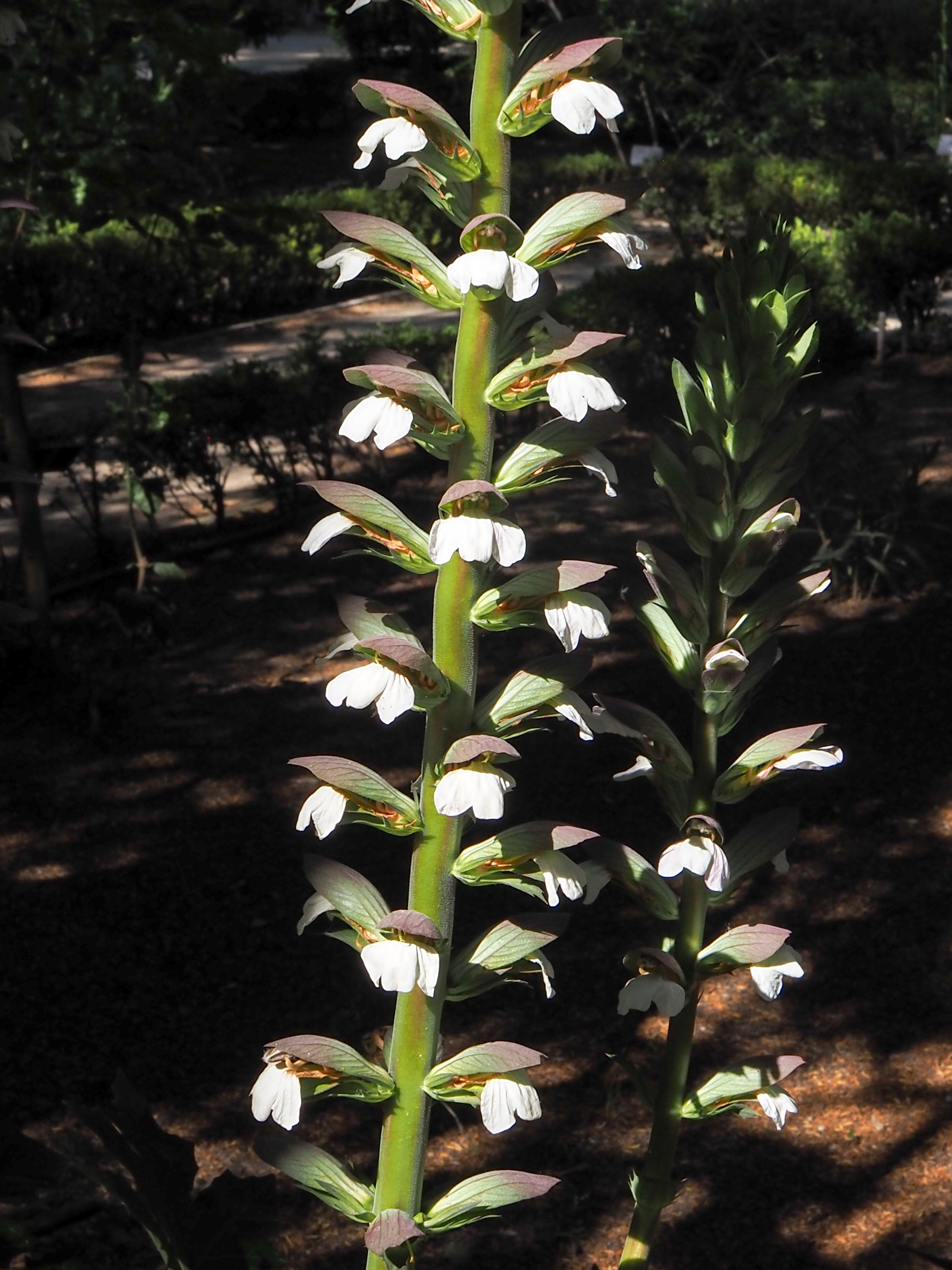
The flower spikes of Bear’s Breeches are rich in nectar and highly attractive to bees, but only large bumblebees and Carpenter bees are strong enough to force their way into the rigid, hood-like sepals of the flowers of Acanthus species.
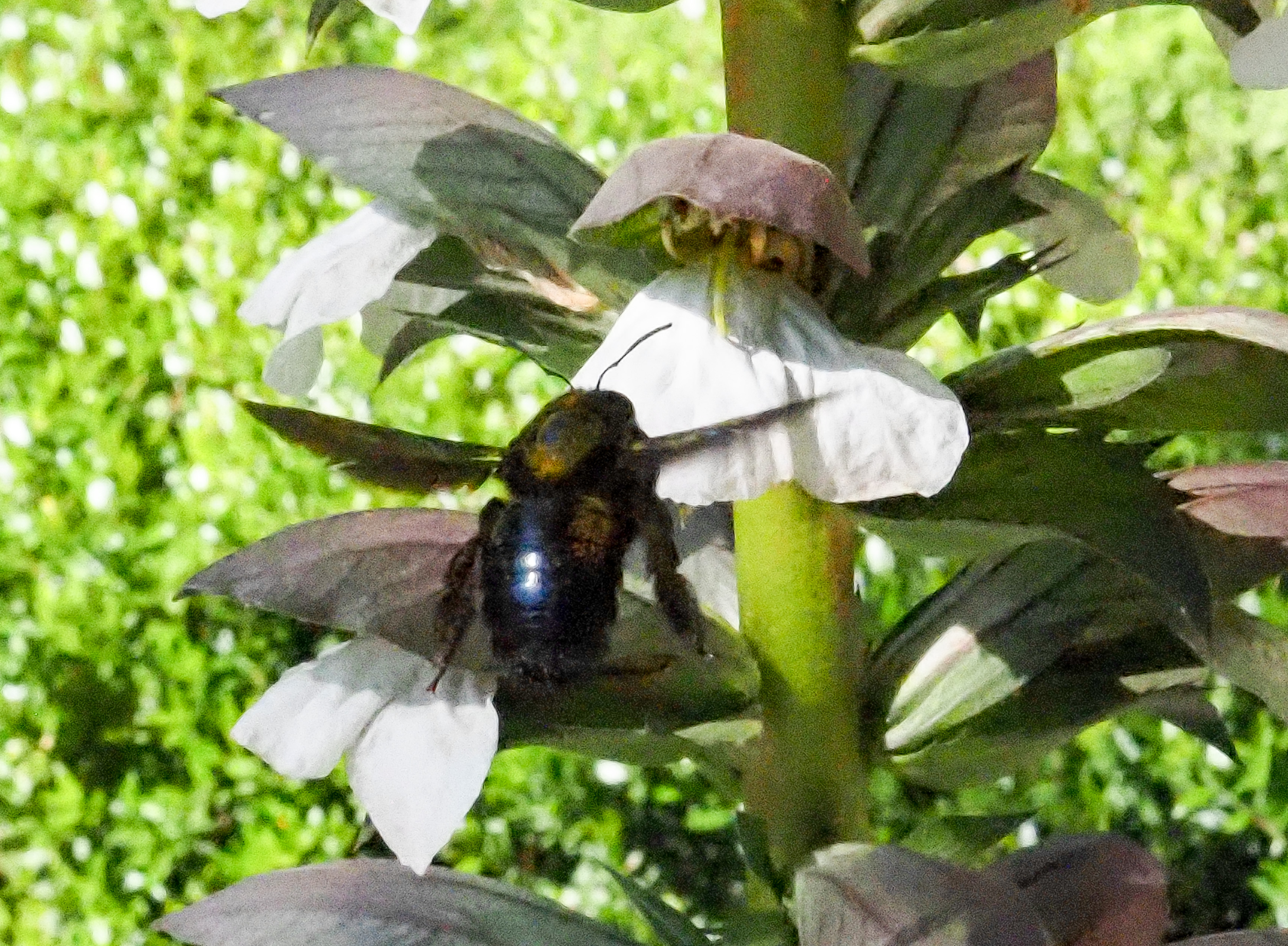
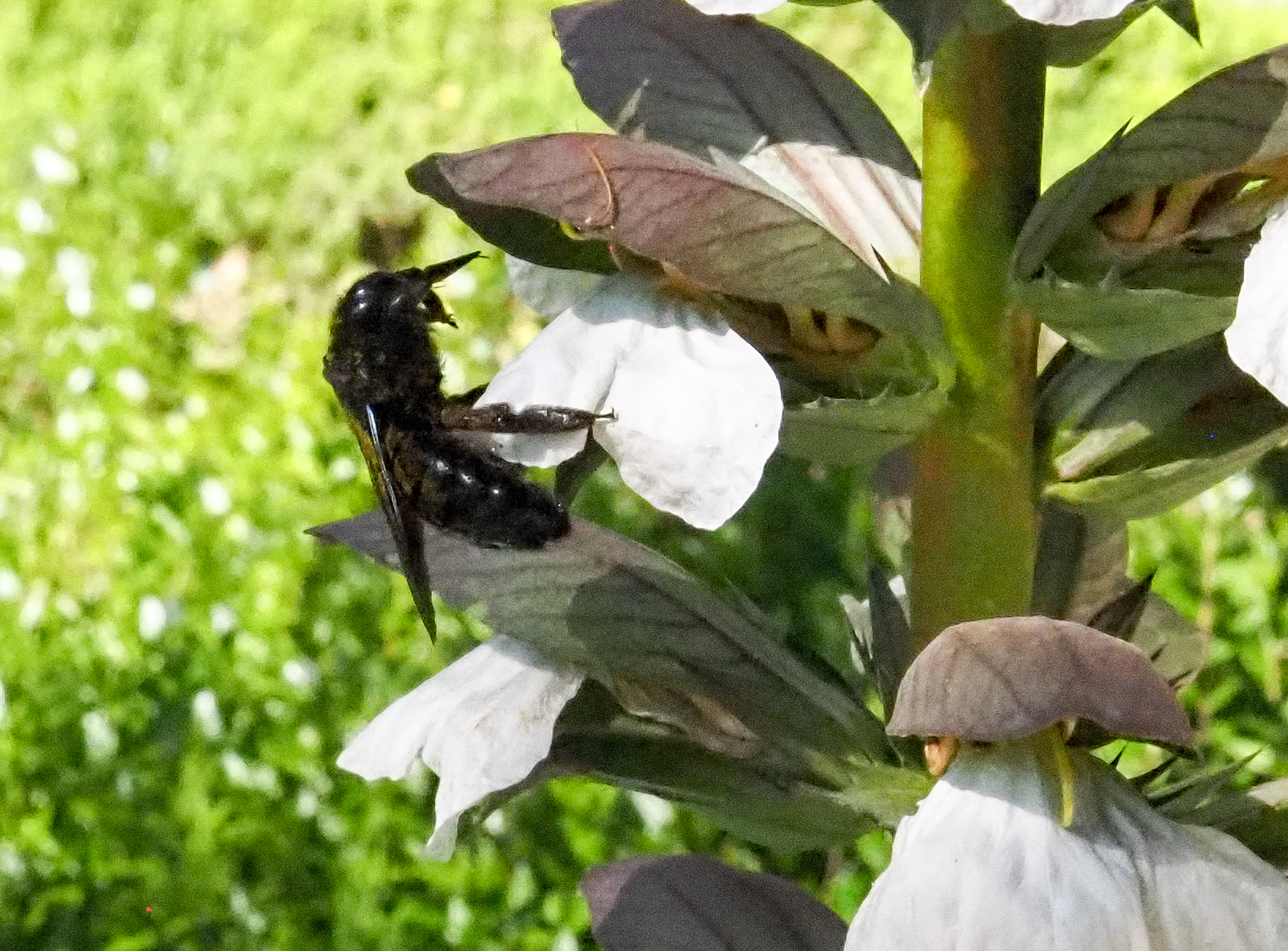
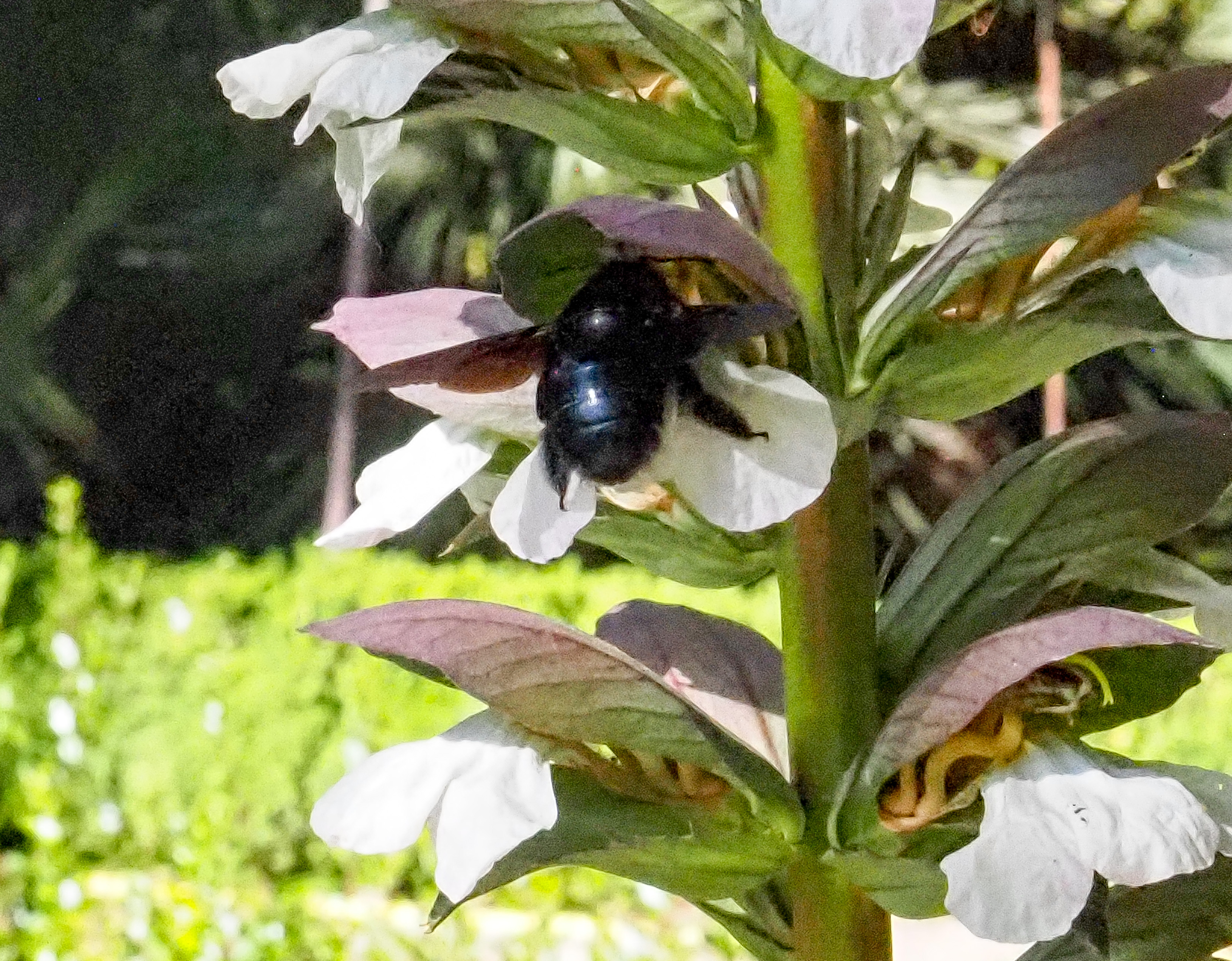
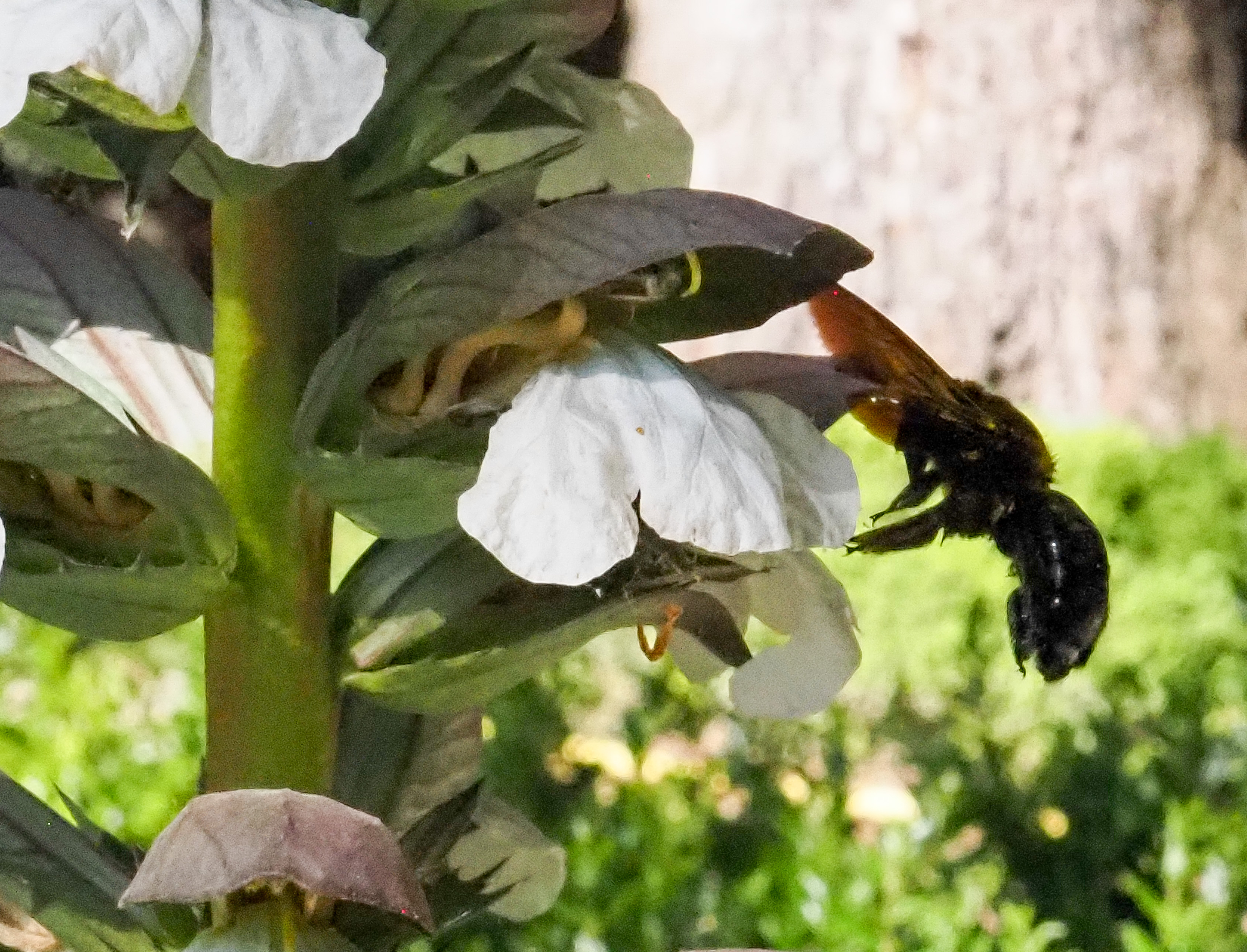
The bees nectaring on the flowers were violet carpenter bees, Xylocopa violacea (see below).

As they force their way into the flowers, the bees get dusted with the golden coloured pollen, which they then carry on to pollinate the stigma of the next flower that they visit.
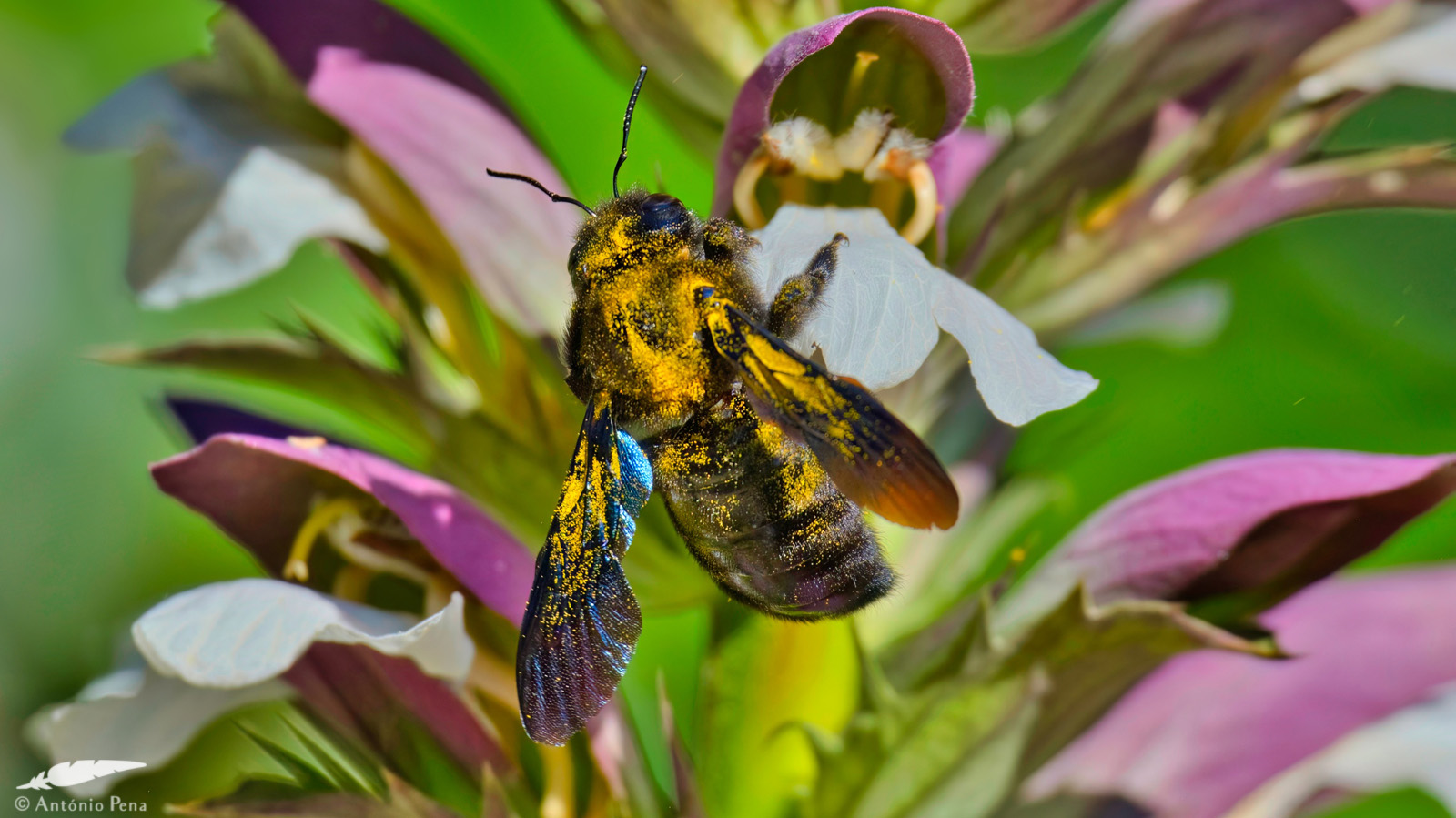
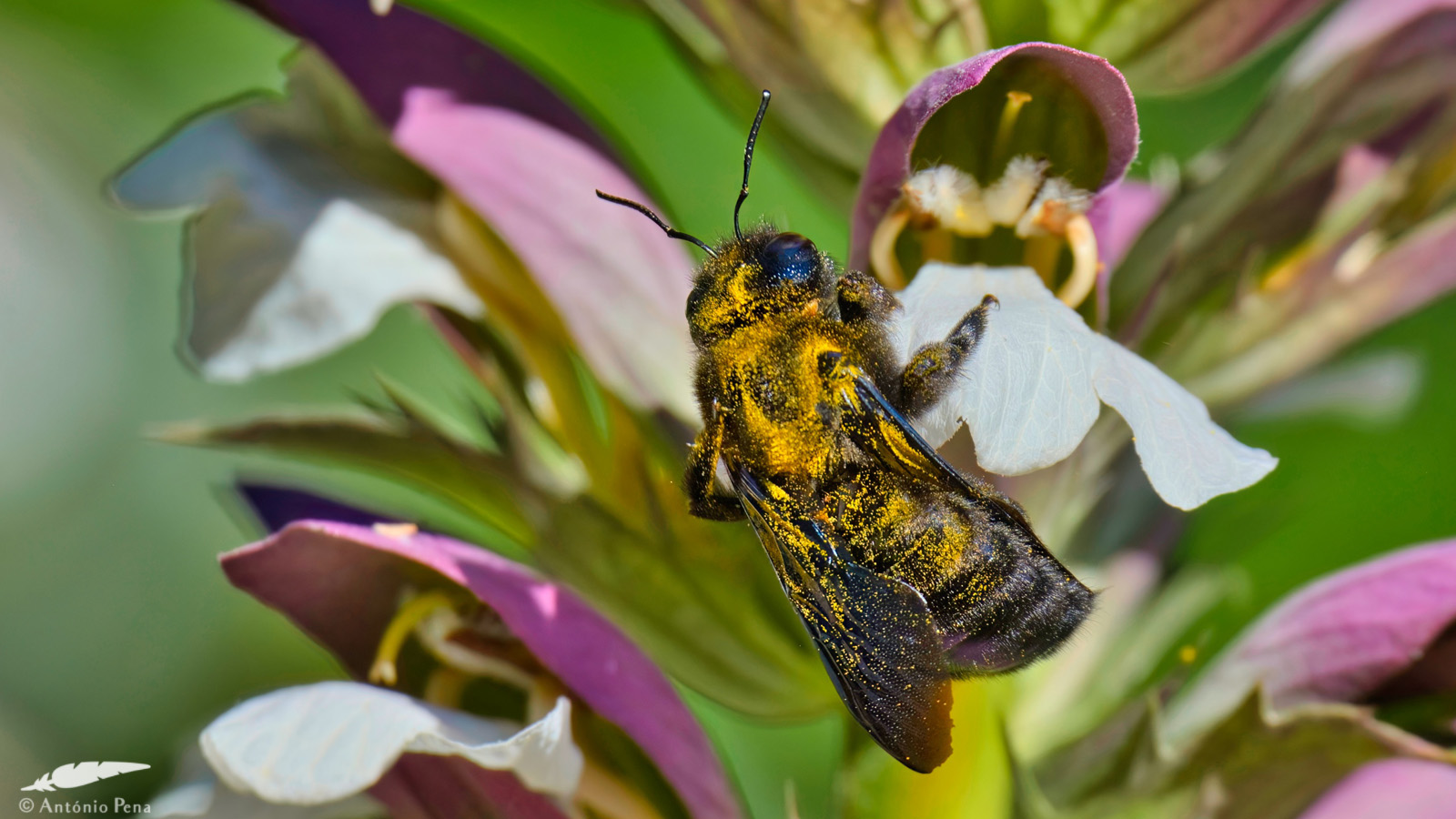
Carpenter bees are strong enough to force their way between the upper and lower sepals, so that they can reach the nectar at the bottom of the tube of Acanthus mollis flowers. Female carpenter bees collect pollen and nectar to produce offspring, as well as their own maintenance; whereas male bees collect only nectar.
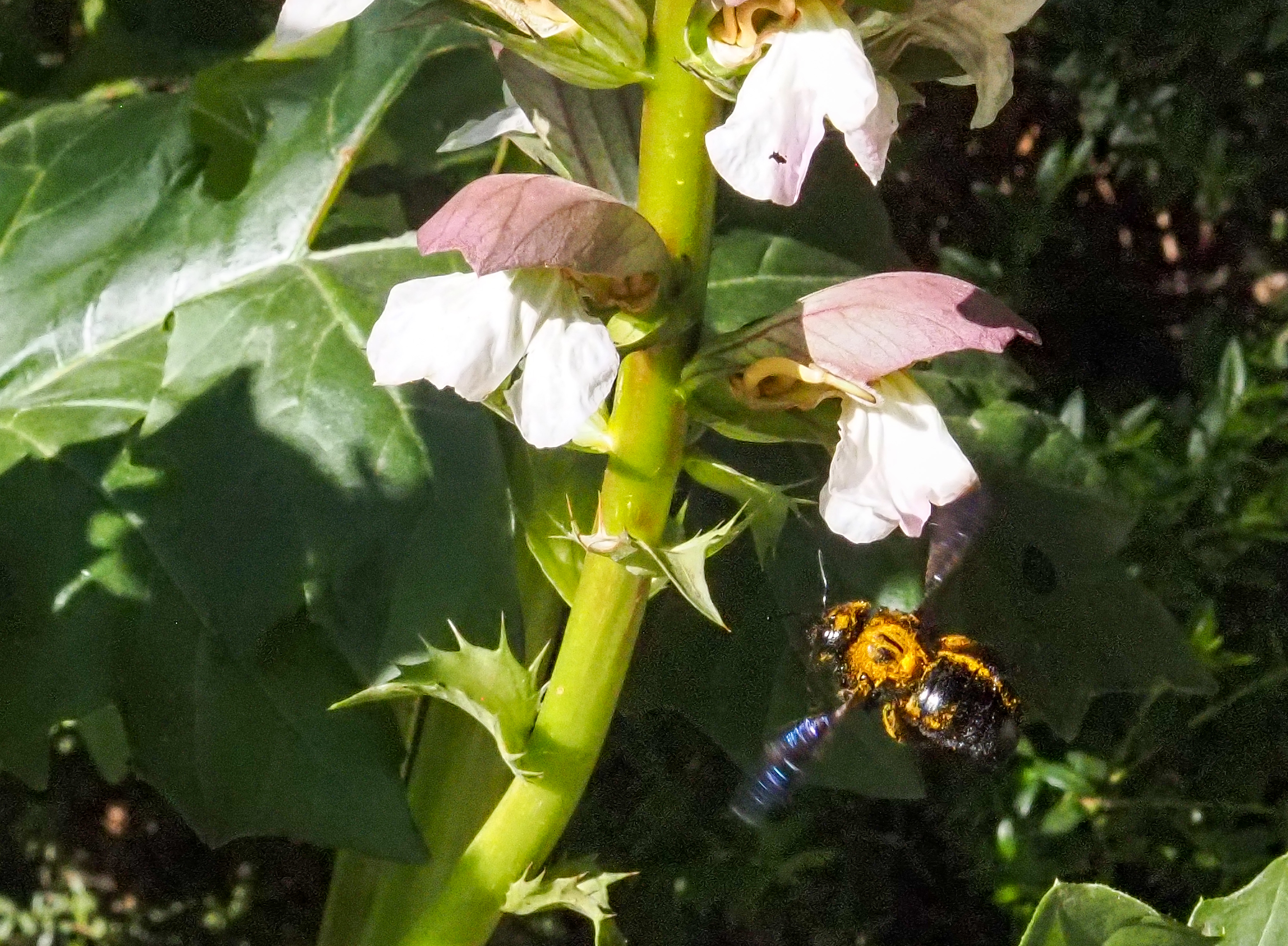
The pollen receptacle consists of anthers, which are firmly interlocked between the sepals (see below). The separation of the sepals and the liberation of the pollen can only be facilitated by large-bodied pollinators.
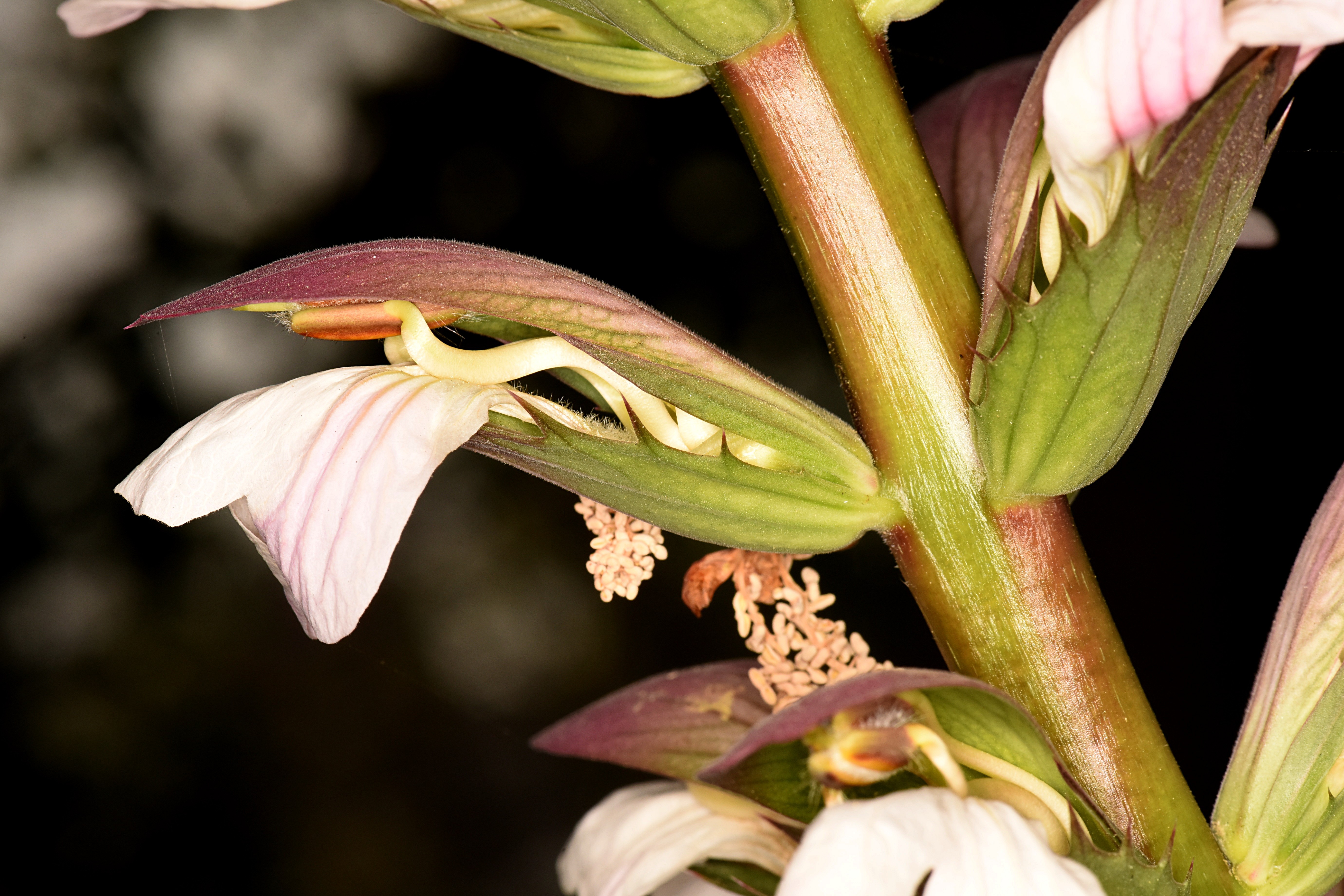
If bees are not large enough they can get trapped inside Acanthus flowers! Smaller bees may be able to squeeze their way into the flowers, but they then get trapped because they are not strong enough to push their way back out! As a result, they get trapped inside the flowers and perish.
I did not have my trusty macro lens (Olympus 90mm) with me when I visited the garden, so I had to do the best I could using a rather wide angle (40mm equivalent) lens. By poking the lens up against the bees I managed to get a few usable shots (shown below).
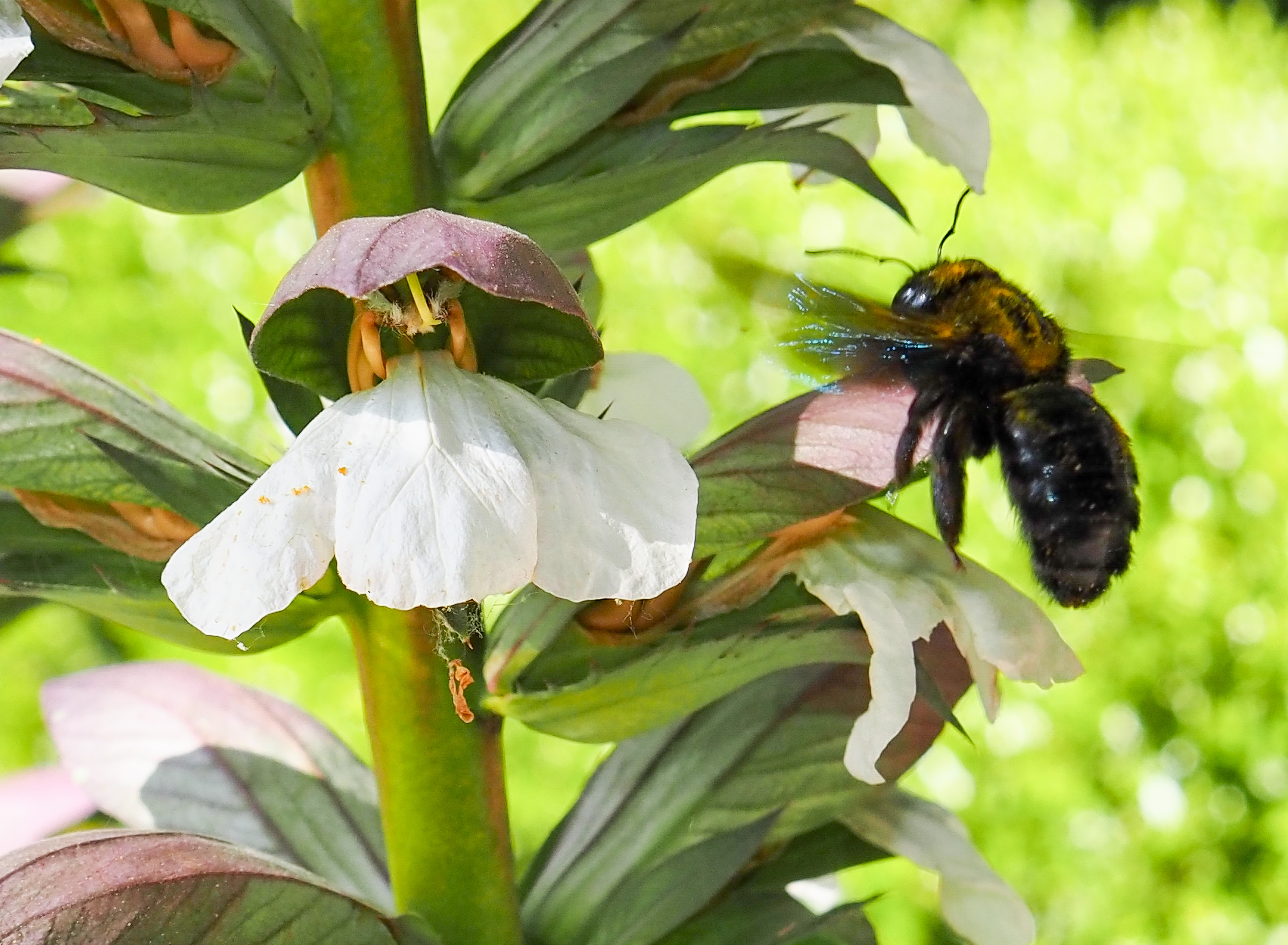
The broad lower lip of the Acanthus flowers is thick and strong enough to provide a landing base for the foraging carpenter bees (below).
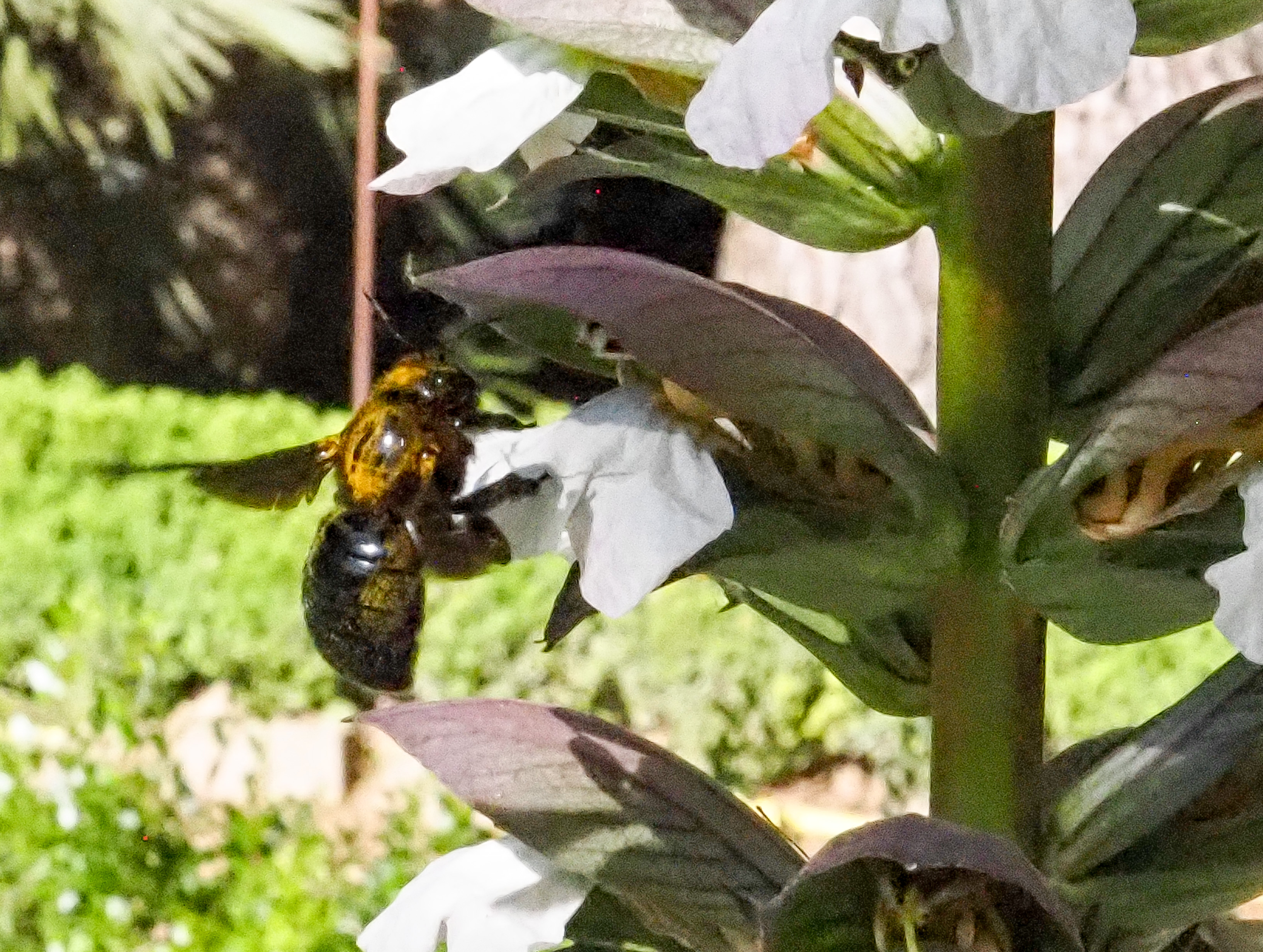
Whilst probing the flower, the carpenter bee inserts its proboscis through the pollen receptacle to get at the nectar.
The carpenter bees were living in the trunk of an old field elm (Ulmus minor), shown below, into which they had drilled holes with their mandibles.
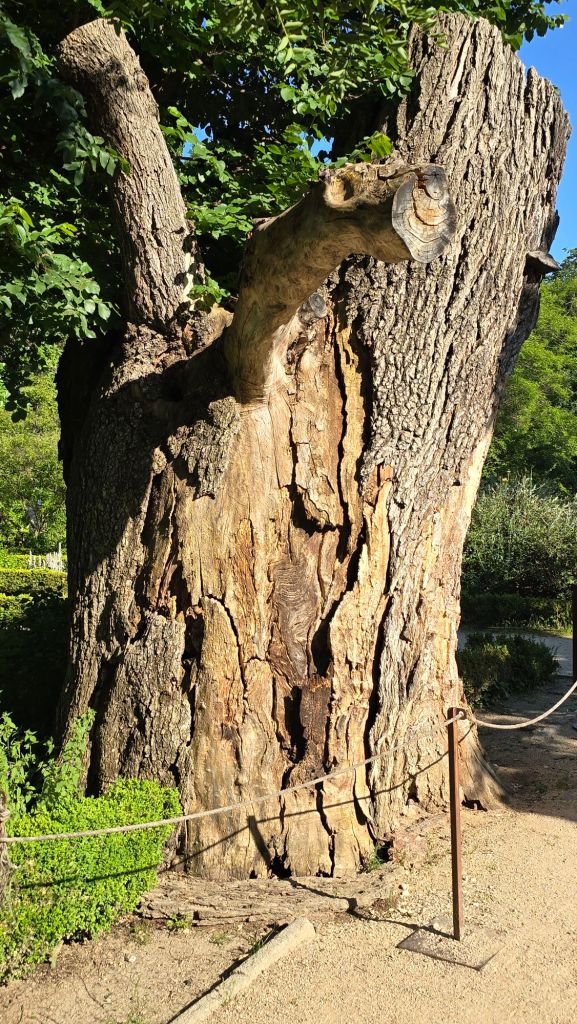
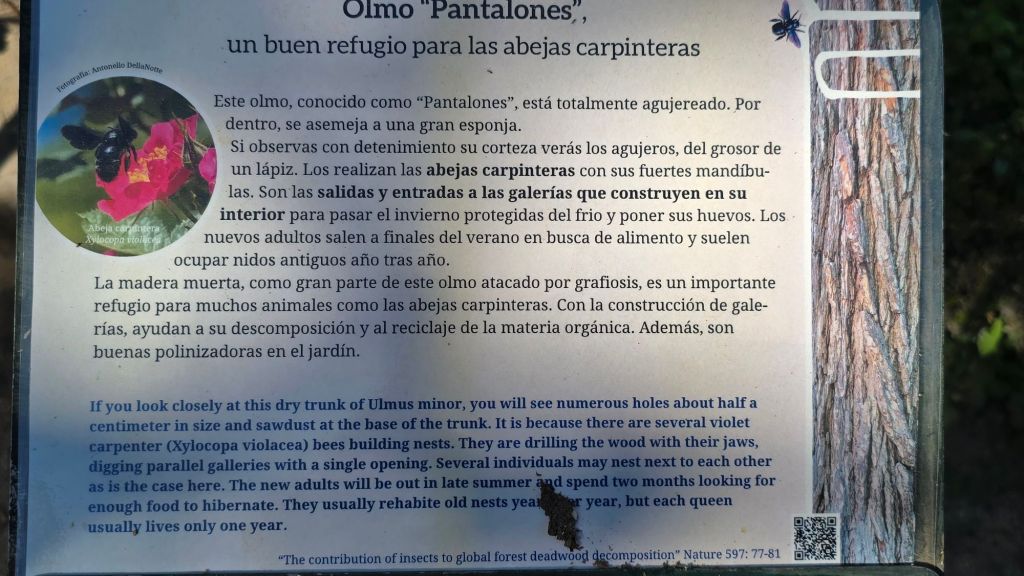
Having briefly surveyed the literature, there is, I think, scope for a lot more research on this particular insect-plant interaction. In particular, a detailed study of how the carpenter bees handle the flowers so efficiently. Perhaps someone has studied this somewhere?
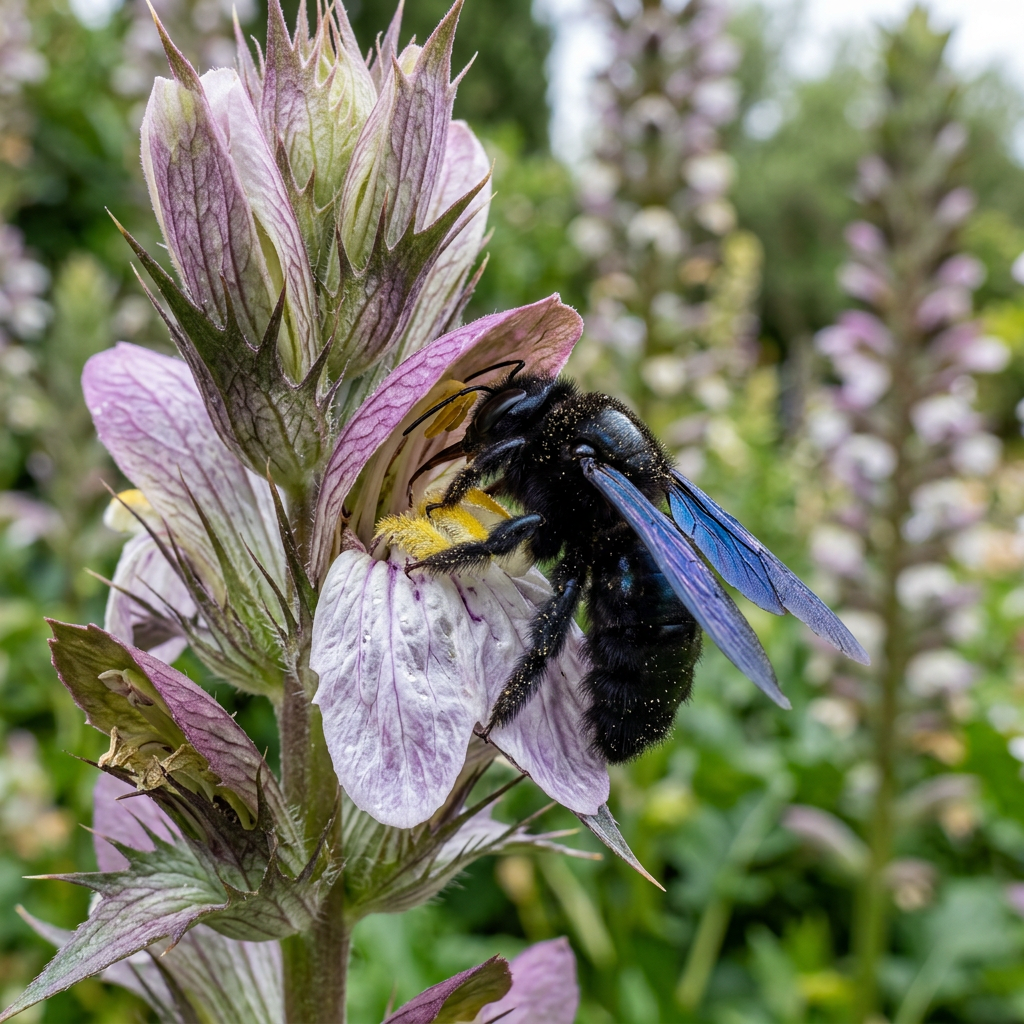
An AI flower and bee!
Finally, here is the image which the WordPress AI tool created! Not bad, but not anatomically correct as the flower is very open and easy to access. Any bee could get at the nectar and pollen on this virtual flower. But since we have the tools now, its fun to try them out and see what they offer!
Some references
Raju, A. S., & Rao, S. P. (2006). Nesting habits, floral resources and foraging ecology of large carpenter bees (Xylocopa latipes and Xylocopa pubescens) in India. Current science, 1210-1217.
Somanathan, H., Saryan, P., & Balamurali, G. S. (2019). Foraging strategies and physiological adaptations in large carpenter bees. Journal of Comparative Physiology A, 205(3), 387-398.


I remember seeing these bees in Valence in southern France, they looked like small birds!
[…] There were many clumps of Bear’s breeches (Acanthus mollis) which were being visited and pollinated by large Violet Carpenter bees (see separate blog: https://rcannon992.com/2026/05/31/carpenter-bees-big-enough-to-get-into-bears-breeches/). […]
Amazing. 😲 Hmm, I can’t quite see the resemblance myself either. Anyway, the German name for Acanthus mollis is bear’s foot plant. By the way, I definitely prefer your photos to AI-generated ones. 😉