A couple of recent wildlife encounters have reminded me that insects use flowers for a wide variety of reasons, not just to gather pollen and nectar. Flowers are a resource, and many insects have evolved ways of exploiting them: for example as shelters and refuges from predators and inclement weather; as meeting places; as sleeping places; as eating places; and as tiny arenas in which to warm up.
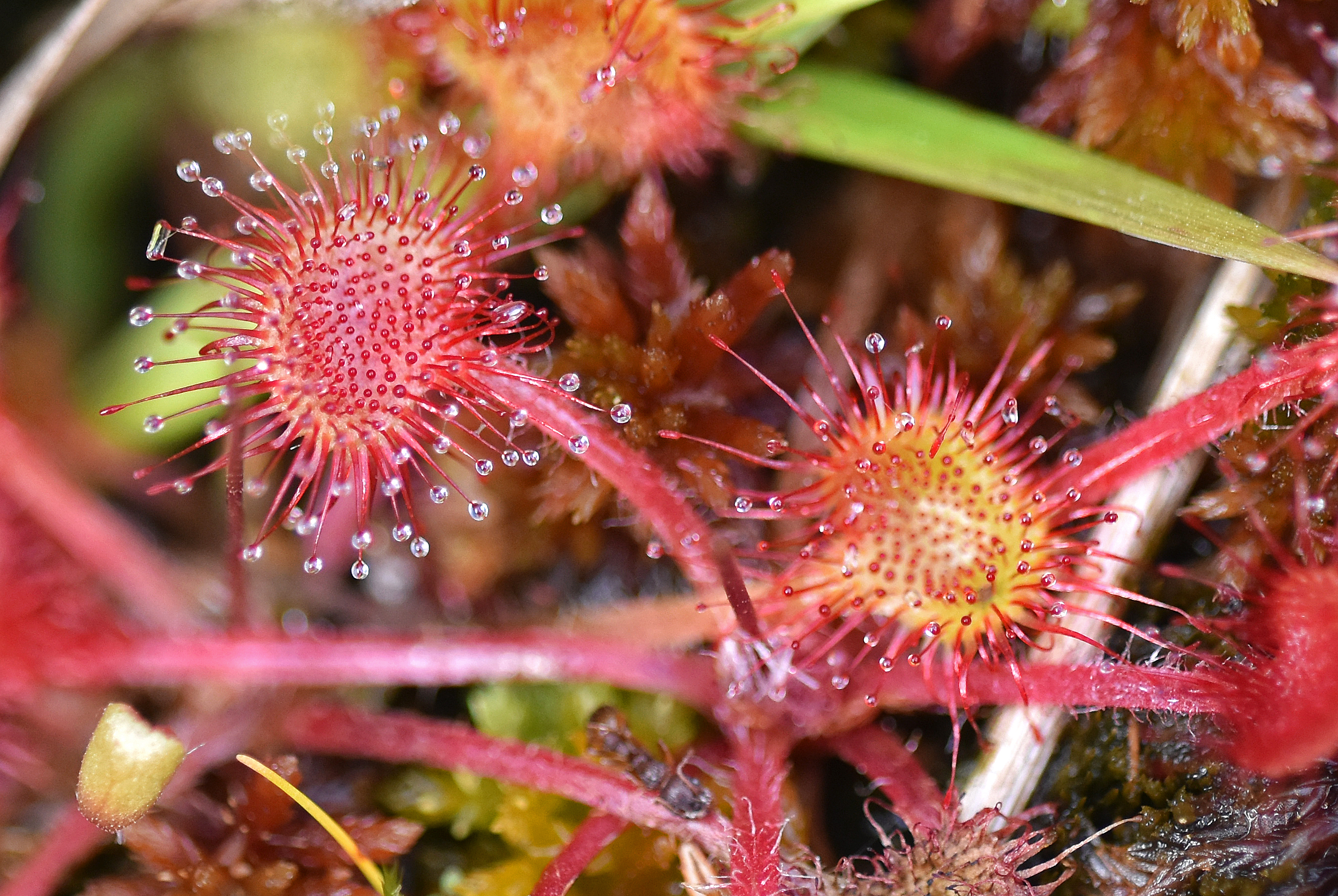
We are used to thinking of insects pollinators as being involved in a mutualistic relationship with flowers. A win:win situation in which both parties benefit. But sometimes, the scales shift markedly in either direction. Some plants prey upon and consume insect visitors, e.g. carnivorous plants such as Drosera. And some herbivorous insects consume flowers.
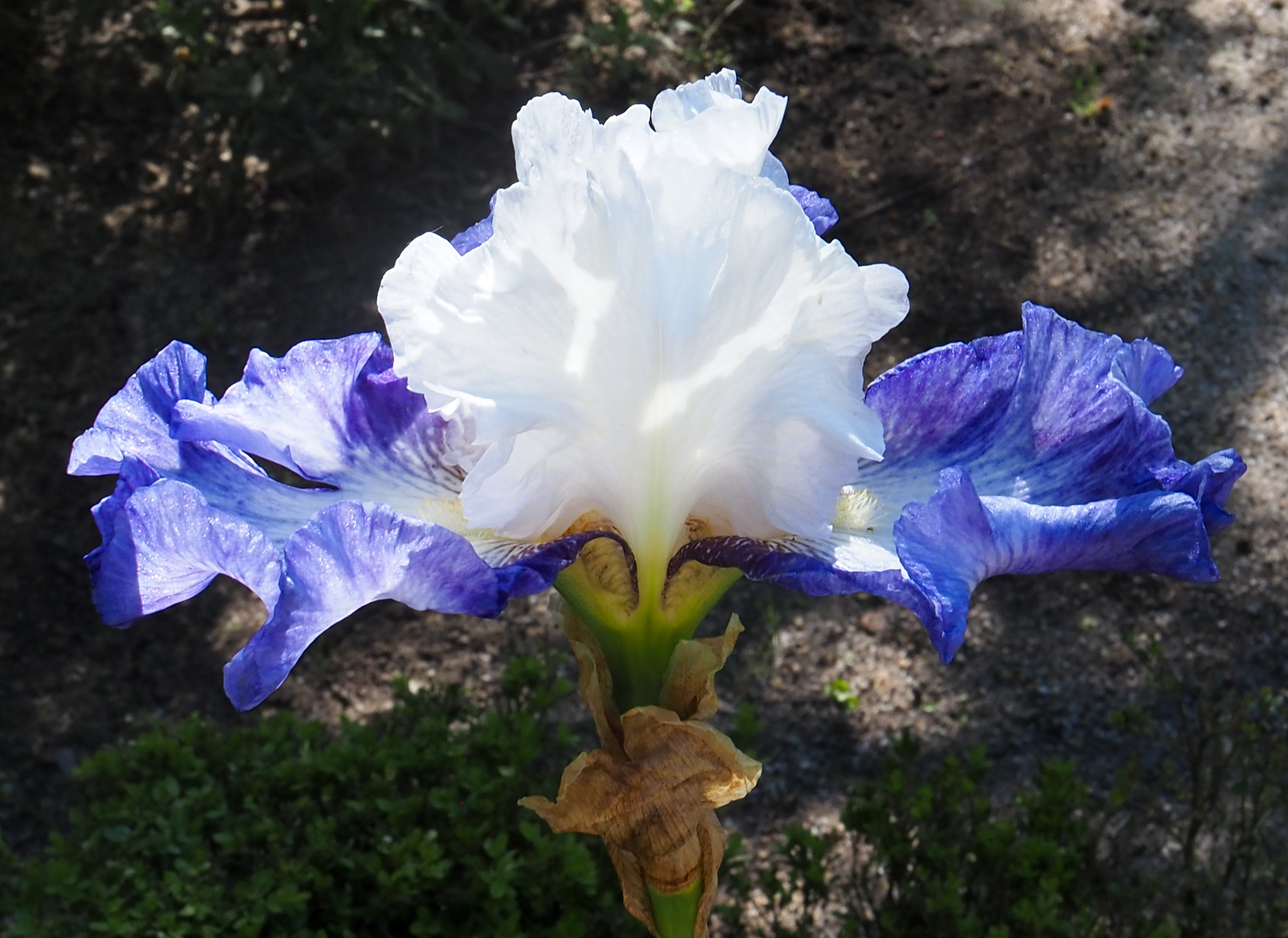
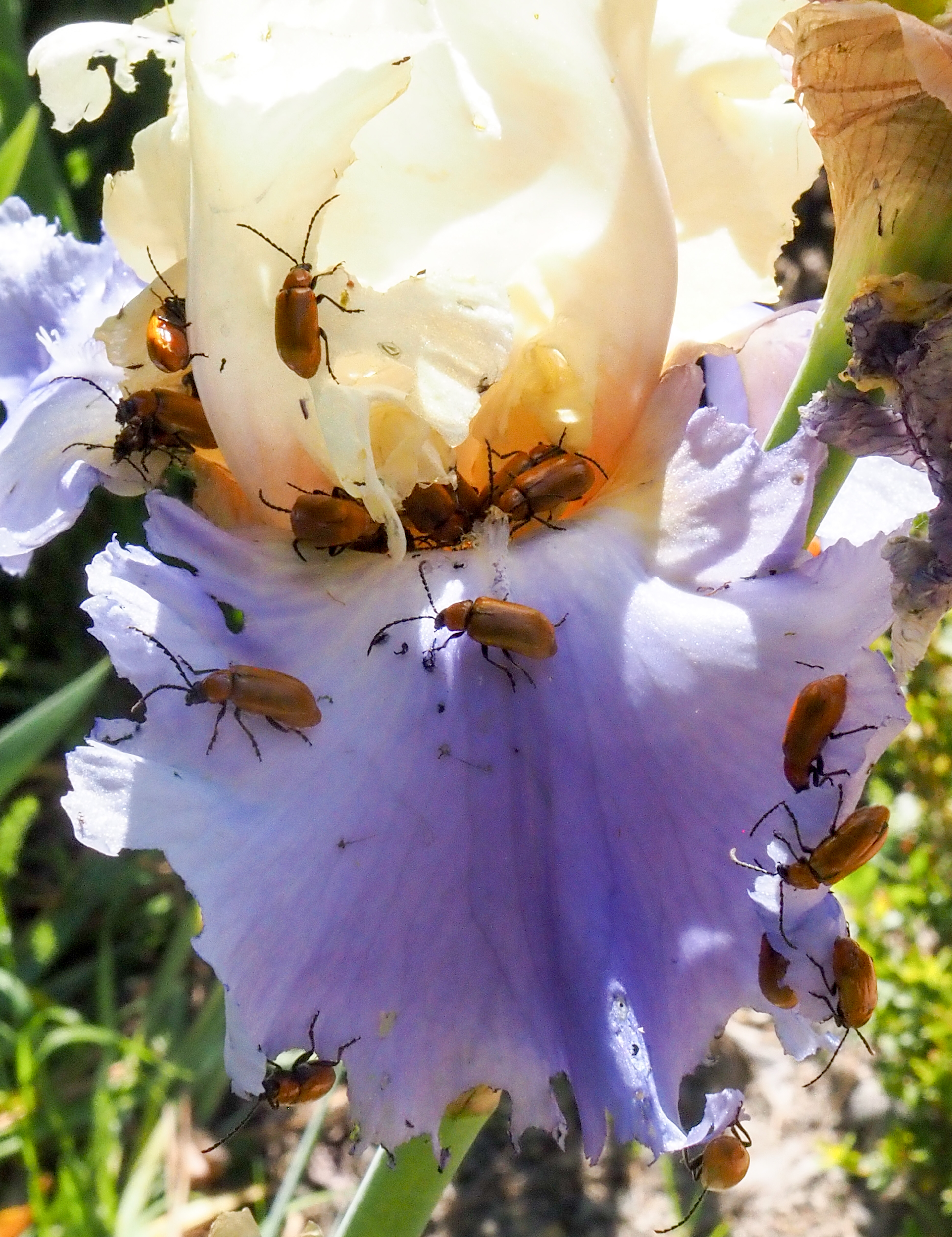
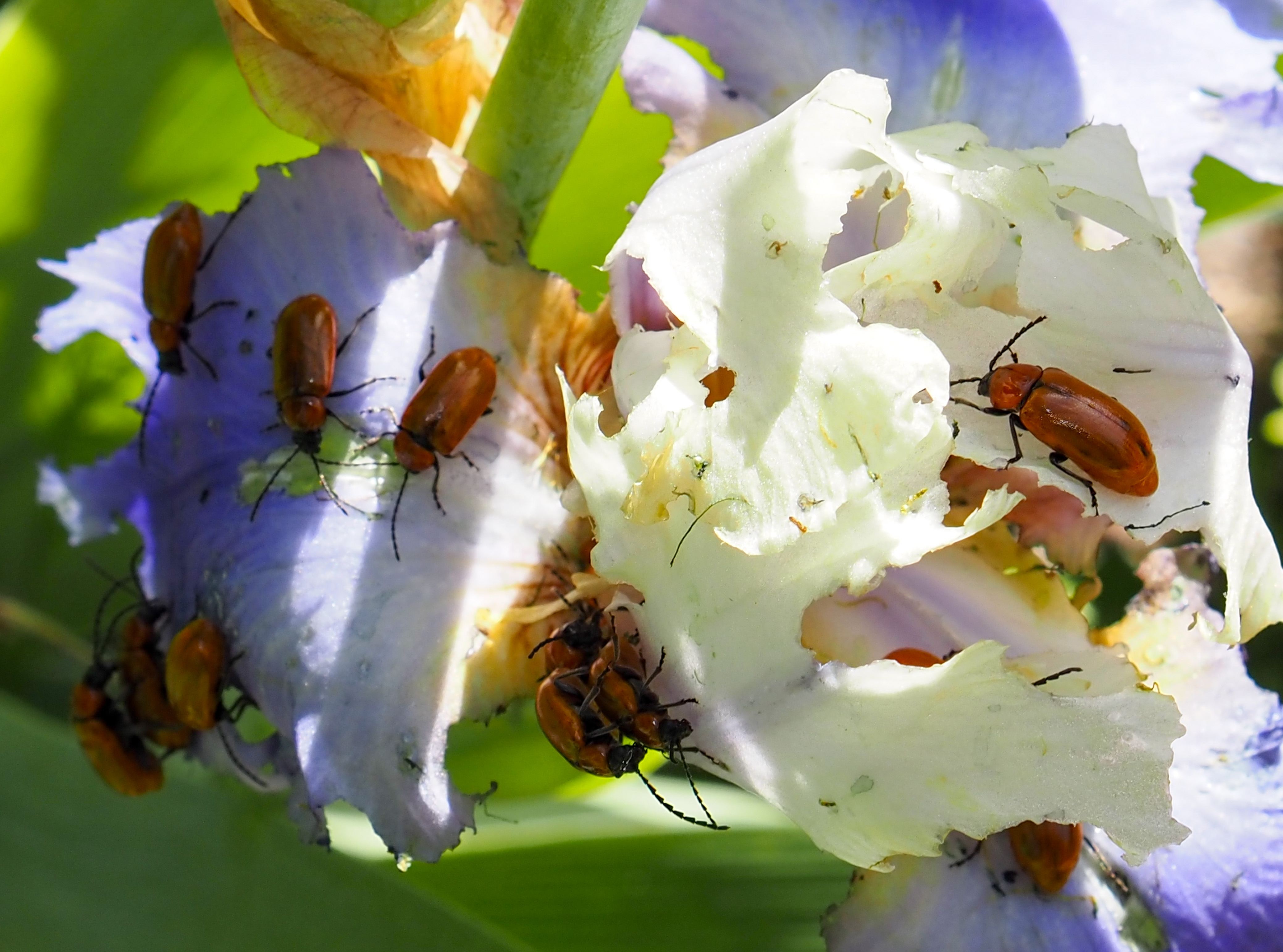
I can across one such case whilst exploring the Royal Botanical Gardens of Madrid. There were some beautiful, pristine iris flowers (see below) but the majority of the irises were heavily infested with daffodil leaf beetles (Exosoma lusitanicum).
Chrysomelid leaf beetles meeting and mating in Iris flowers
Daffodil leaf beetle larvae feed on, and develop within, the bulbs of Amaryllidaceae (e.g. Narcissus bulbs) and Liliaceae species, while adults feed on the flowers of several species, including Asteraceae and Iridaceae.
The flowers, on which the daffodil leaf beetles were both feeding and mating (see images below), were, I think, bearded irises (Iris × germanica). Although, in some cases there was not much left of them!
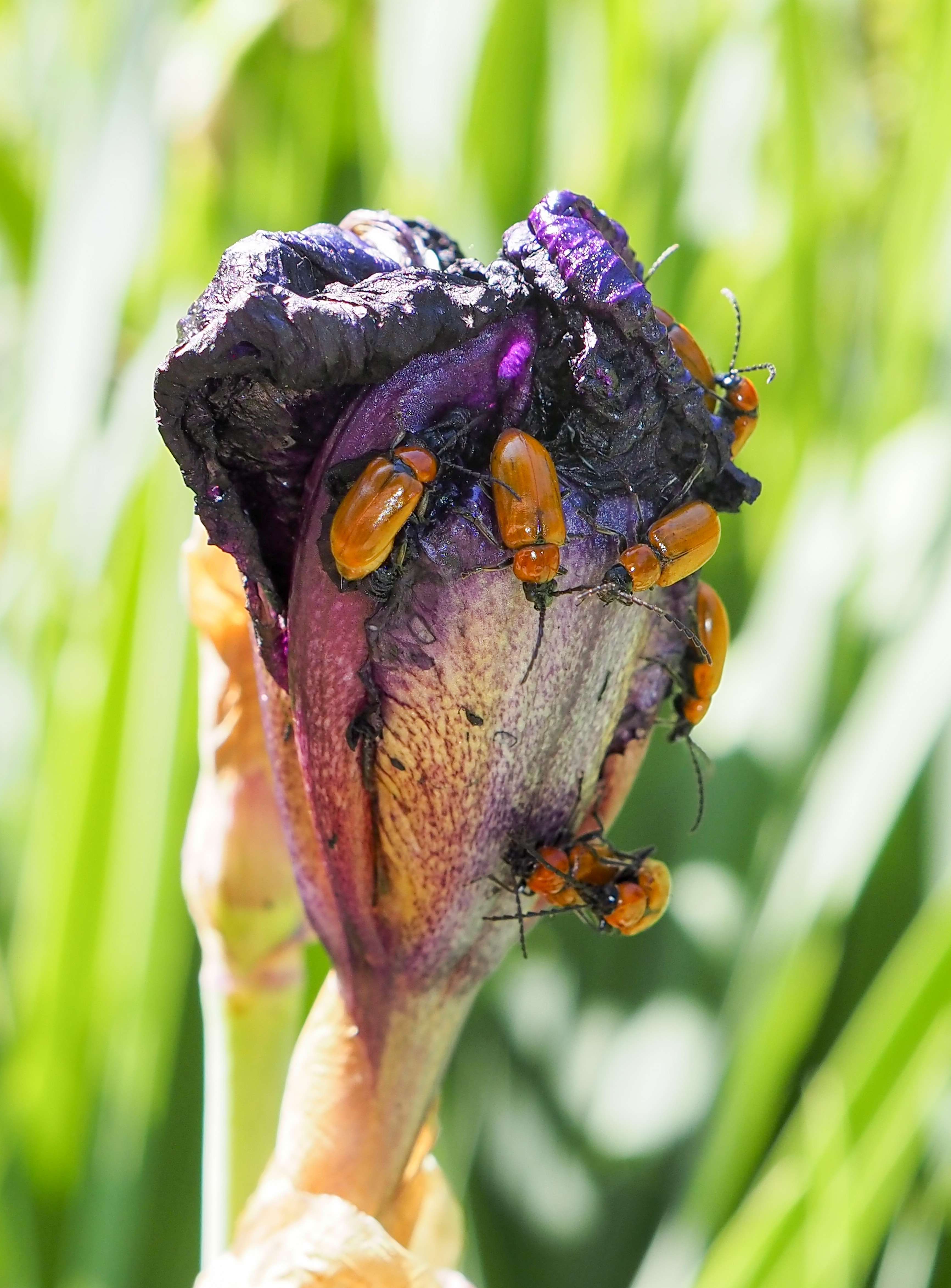
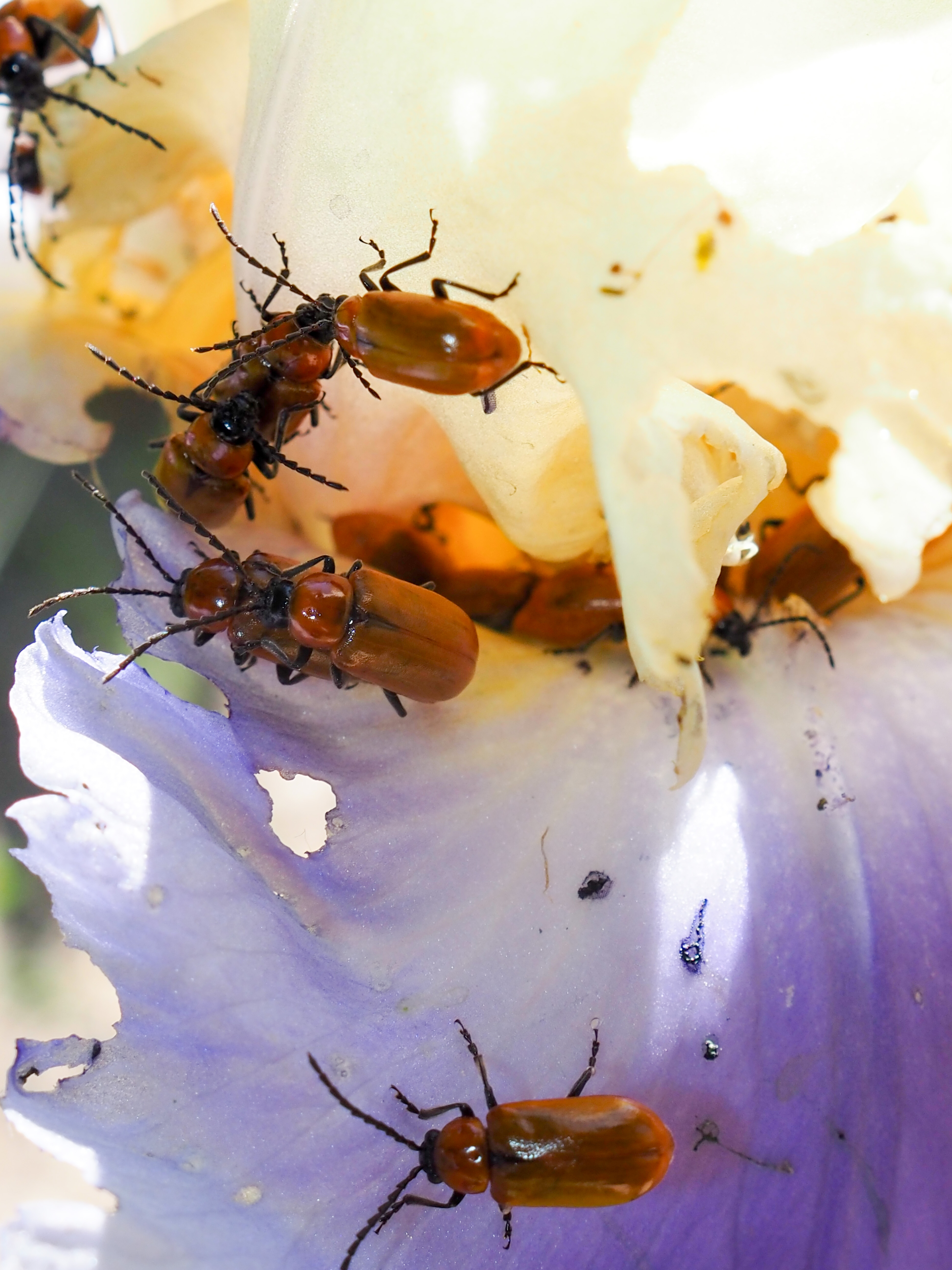
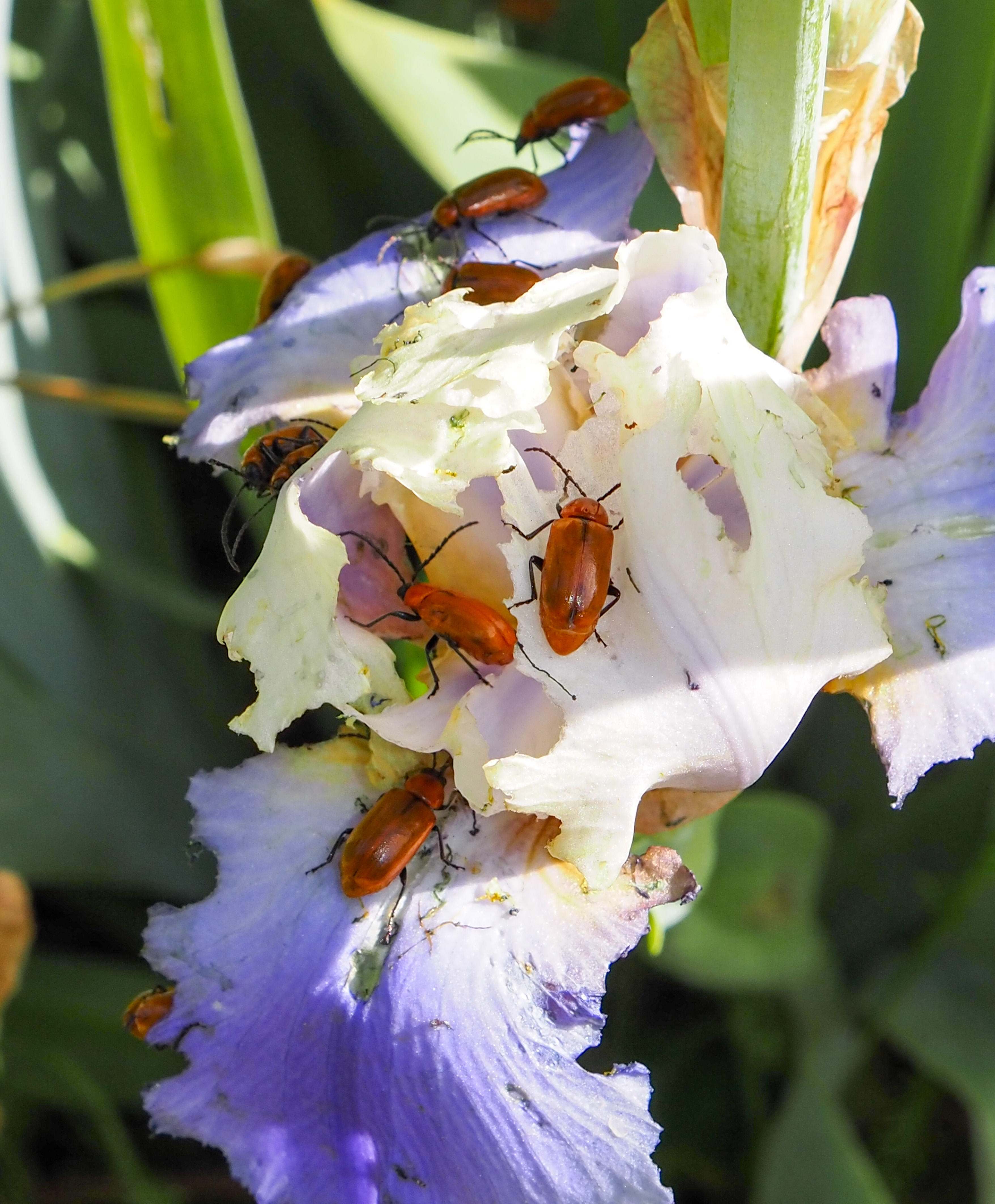
Look closely at these images of daffodil leaf beetles, and there is clearly a lot of mating going on! The flowers have become ‘nightclubs’, somewhere “to gnaw on floral tissues and find mates” (Raguso, 2023).
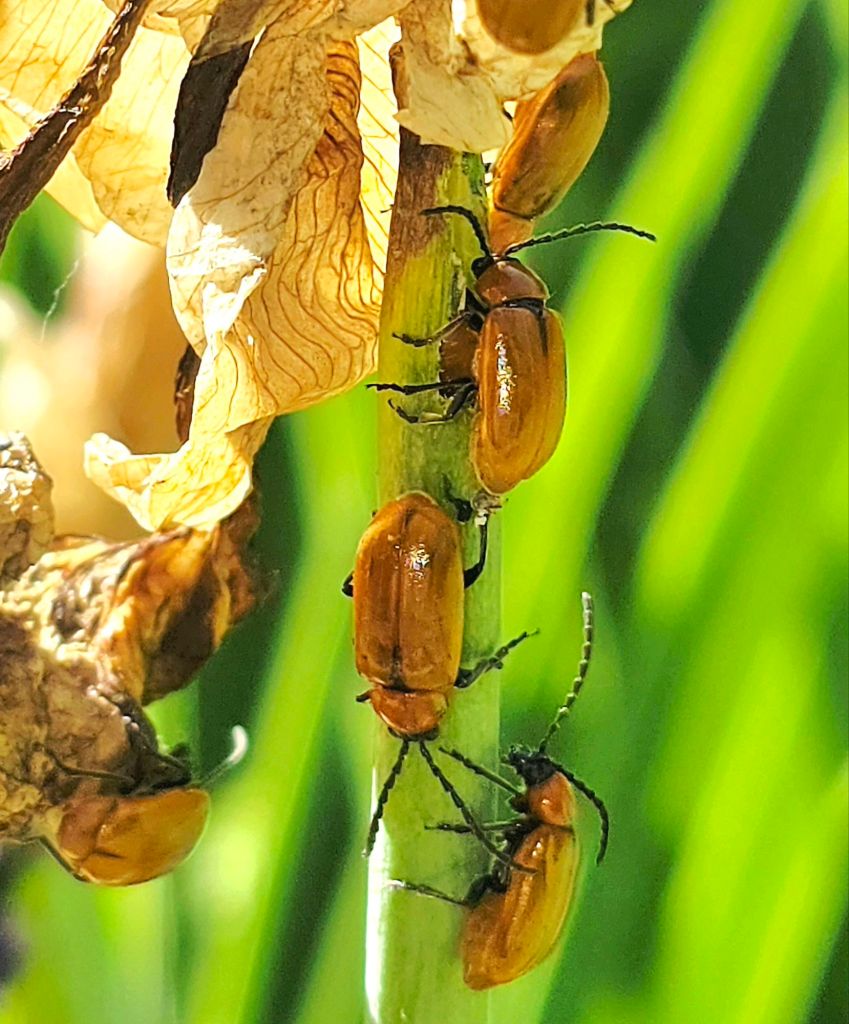
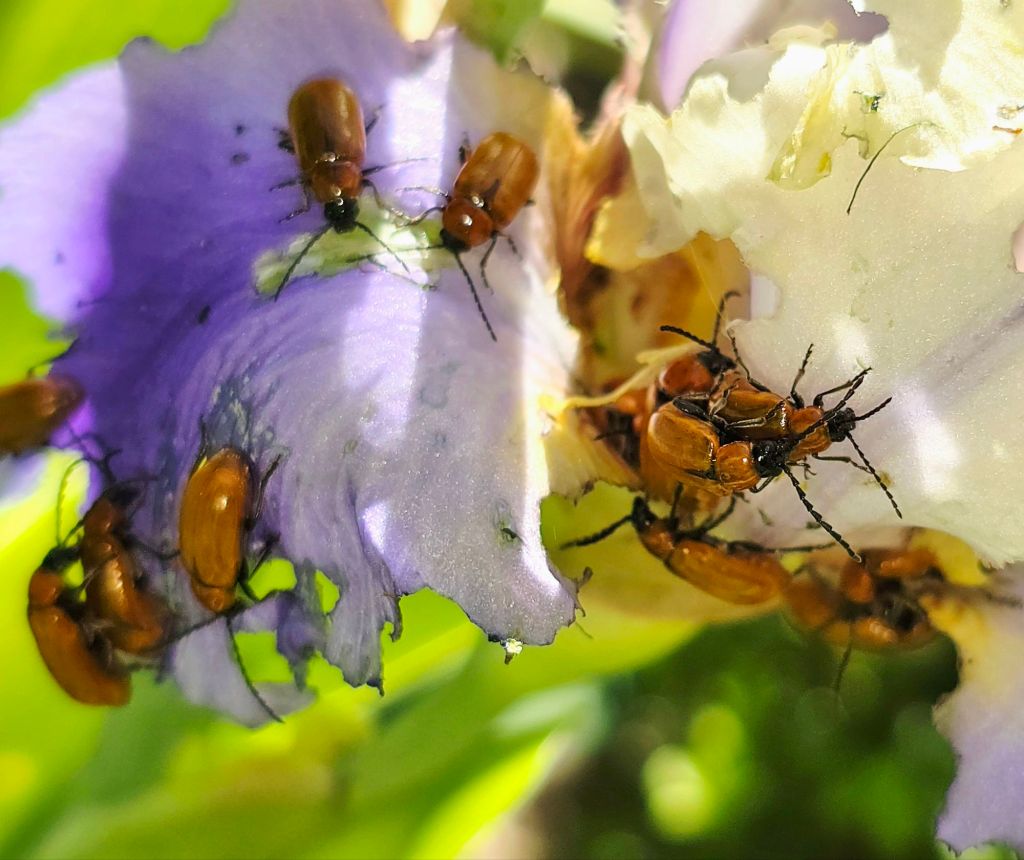
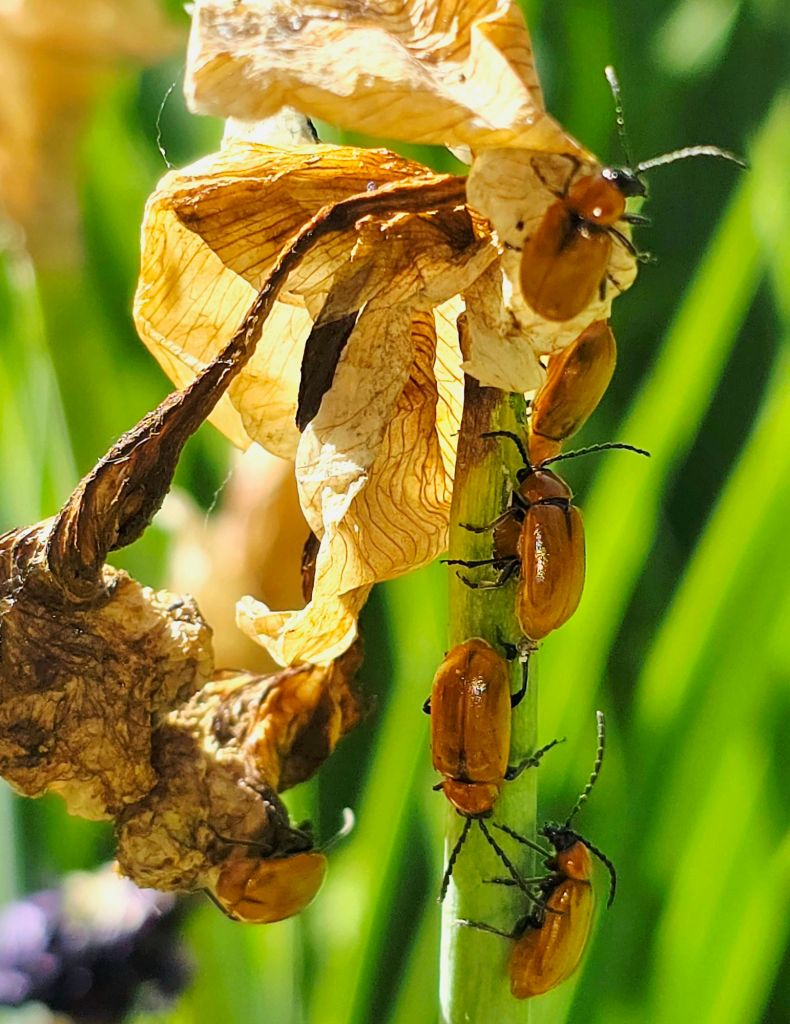
I guess the beetles developed on the bulbs and simple crawled up the flowers for a “Bacchanalian feast”!
Flowers can also be a great place to sleep, warm and protected, but only if you are the right size! I wrote about insect sleep in a previous blog: Leave sleeping bees be! The take-home-message, was that insects need sleep just as much as we do. Whether to ‘recharge their batteries’, consolidate things they have just learnt – like where to find flowers – or simply to stay out of harm’s way. They use flowers as places of refuge and relaxation.
Greek orchids providing sheltering holes for solitary bees
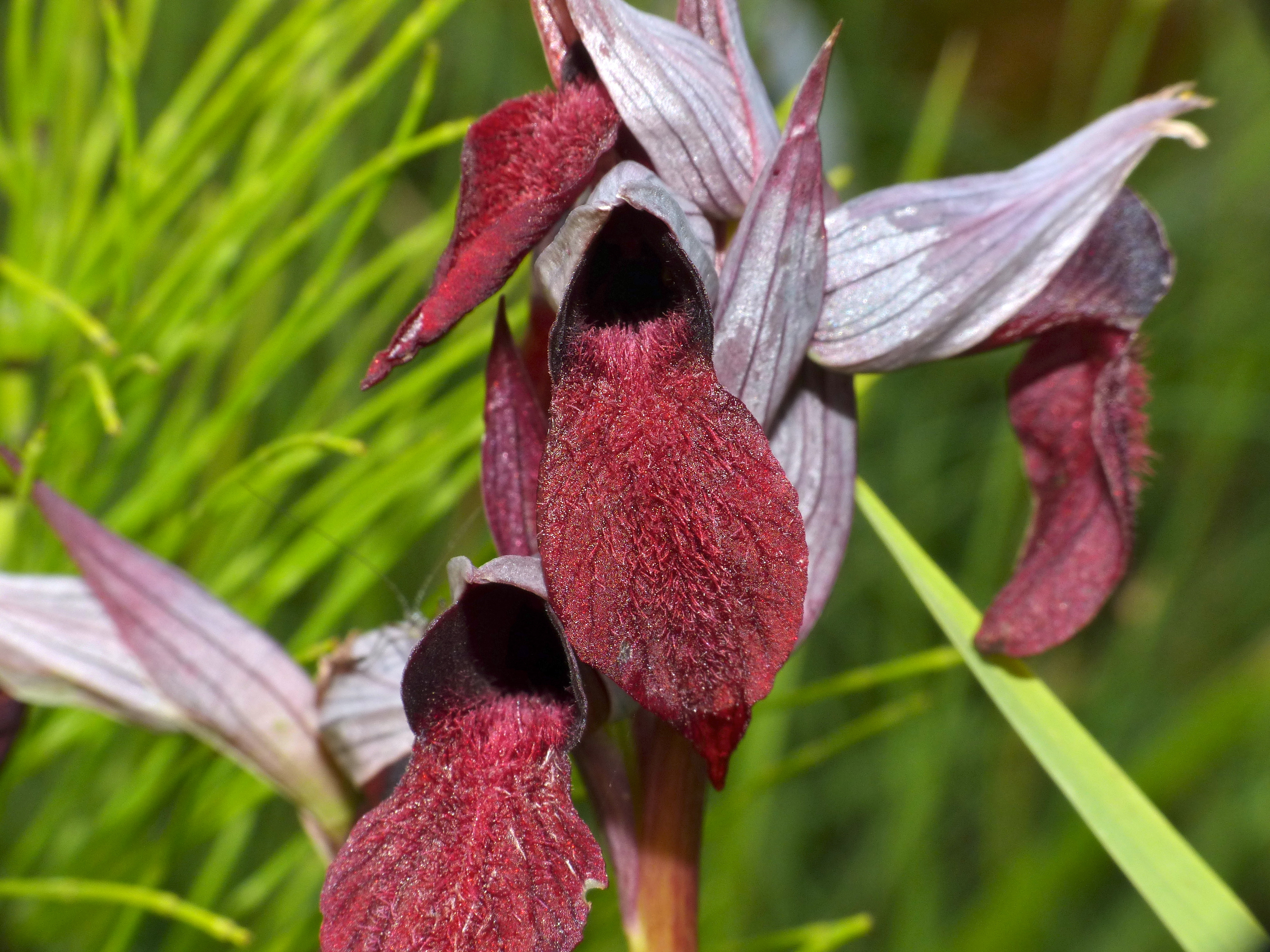
The second example I came across, was the use of flowers as shelters. Flowers in the genus Serapias, are commonly known as Tongue Orchids, because they have a long lower lip (the labellum) which hangs down, resembling a heart, or a tongue. These deep-purple to reddish-brown coloured orchids do not offer any nectar and emit a light scent (Dafni et al., 1981).
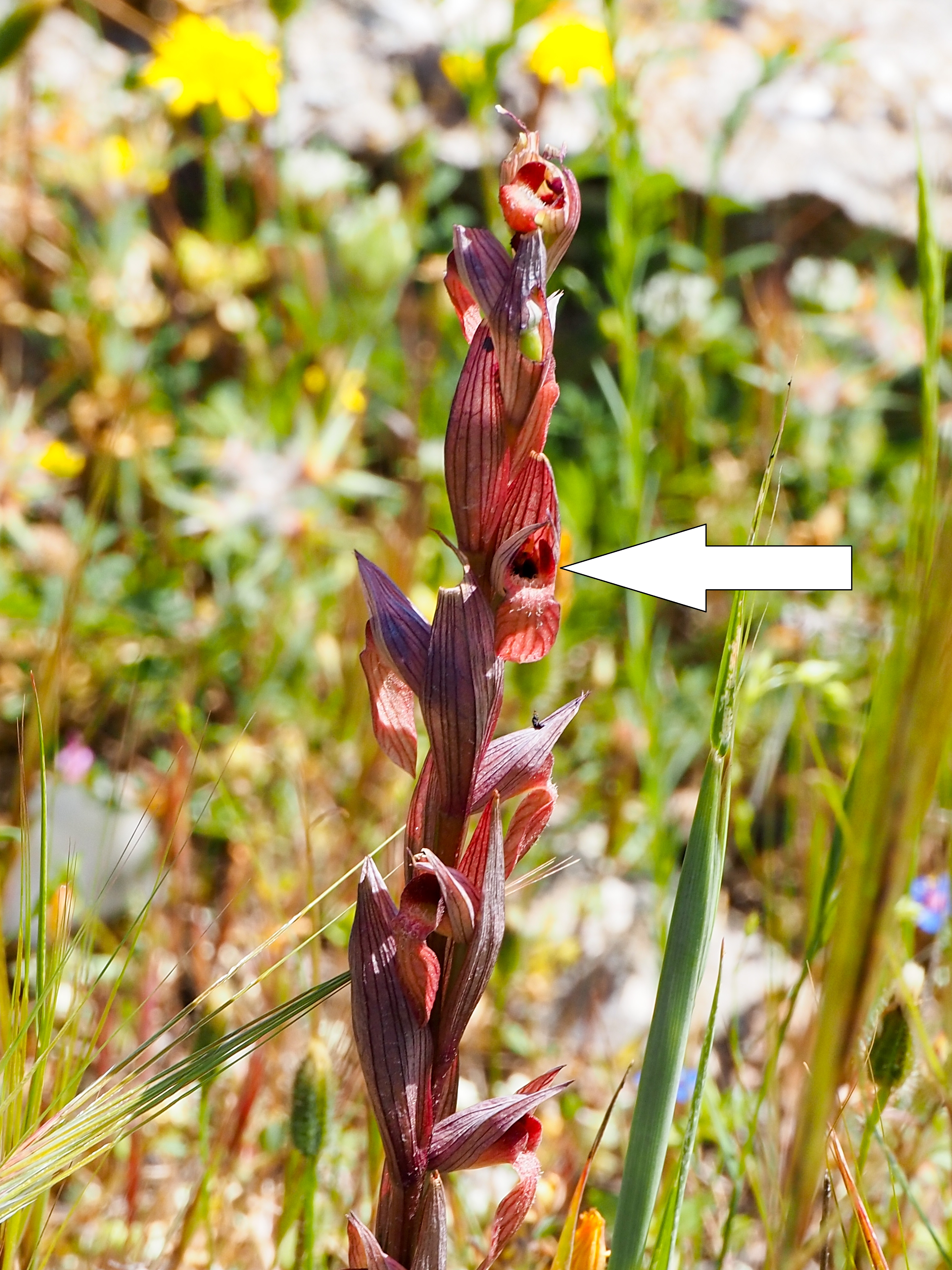
I took these pictures of the so-called Greek Plowshare orchid (Serapias bergonii) in Greece this year.
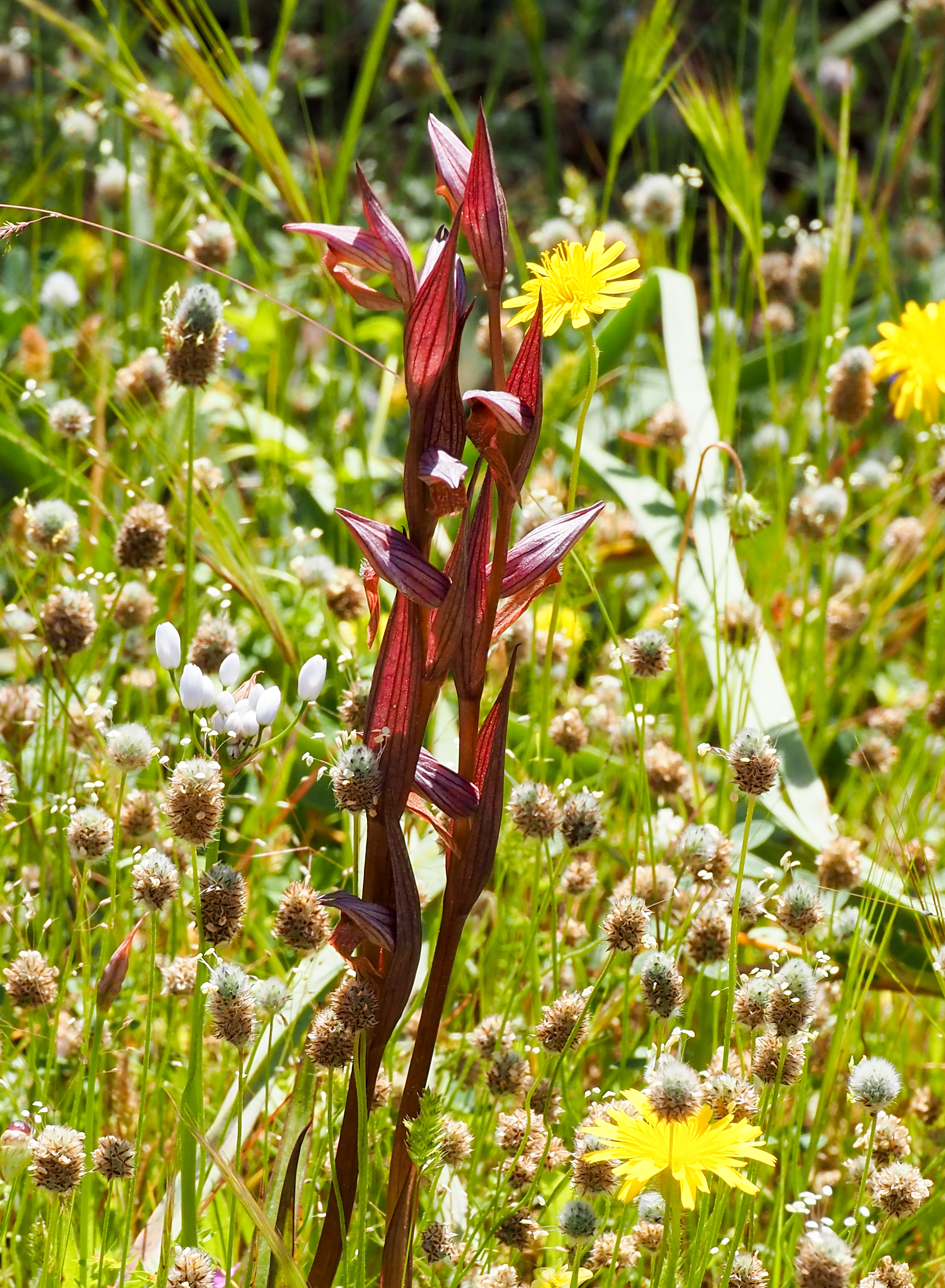
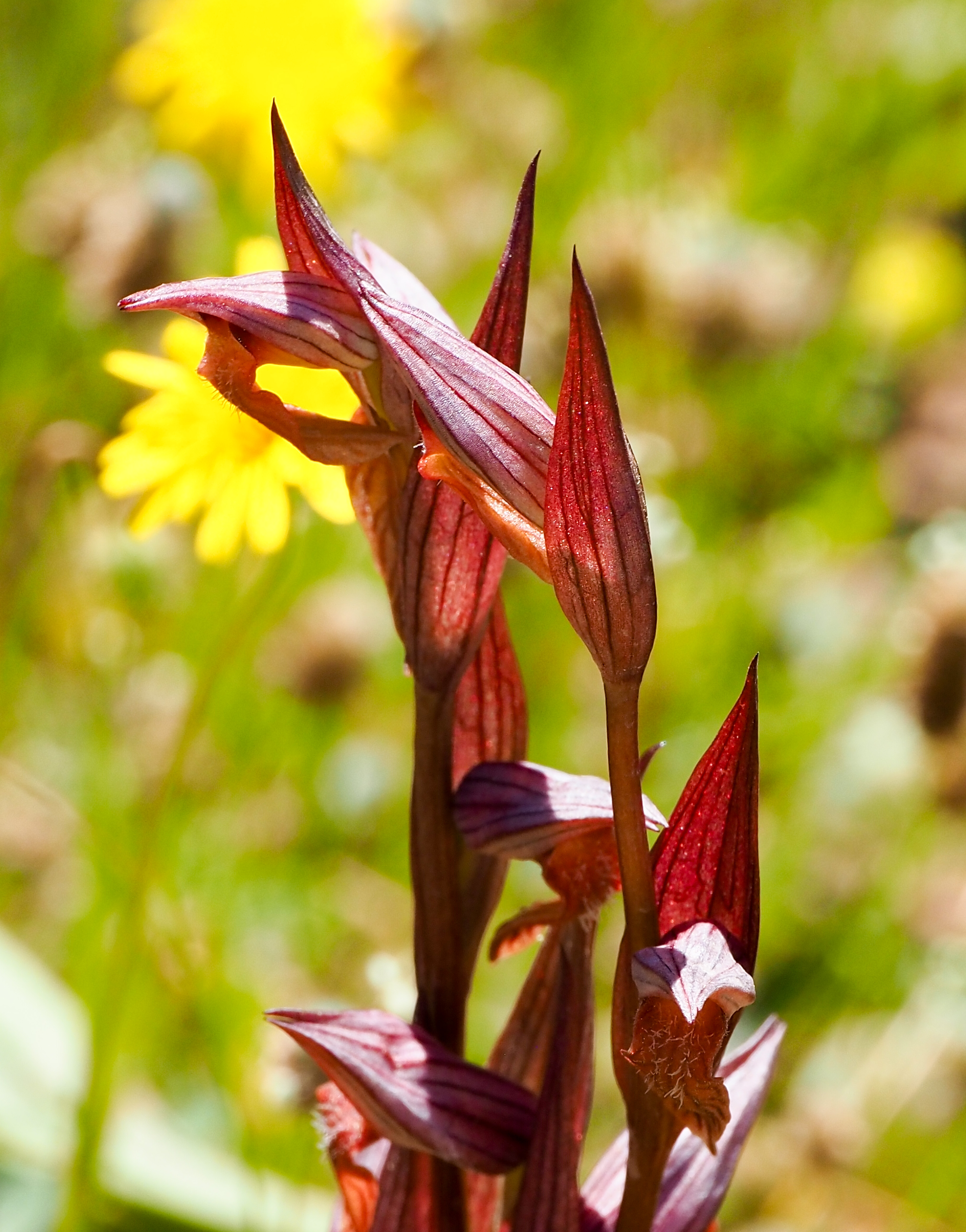
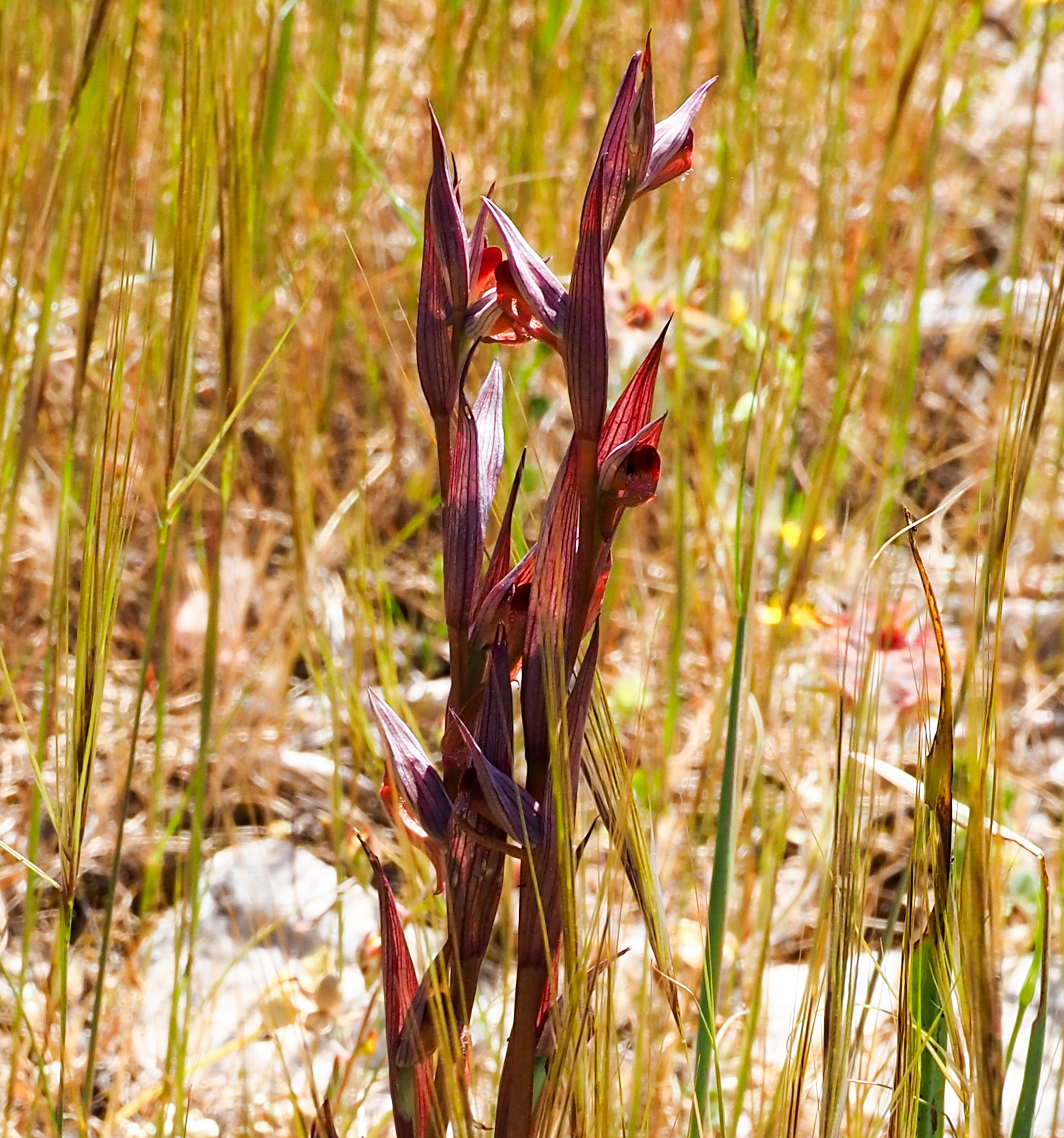
Serapias orchids form holes which mimic nests or places of shelter for insects. The sepals, petals, and lateral lobes form a hood-shaped, floral tube which some insects – mostly male solitary bees, but sometimes also beetles and spiders – use to rest, sleep or shelter in.
Unfortunately, there were no bees resting inside these particular orchids when I took the photos; they were all out foraging in the sunshine! But, they include solitary bees like Osmia mason bees (below).
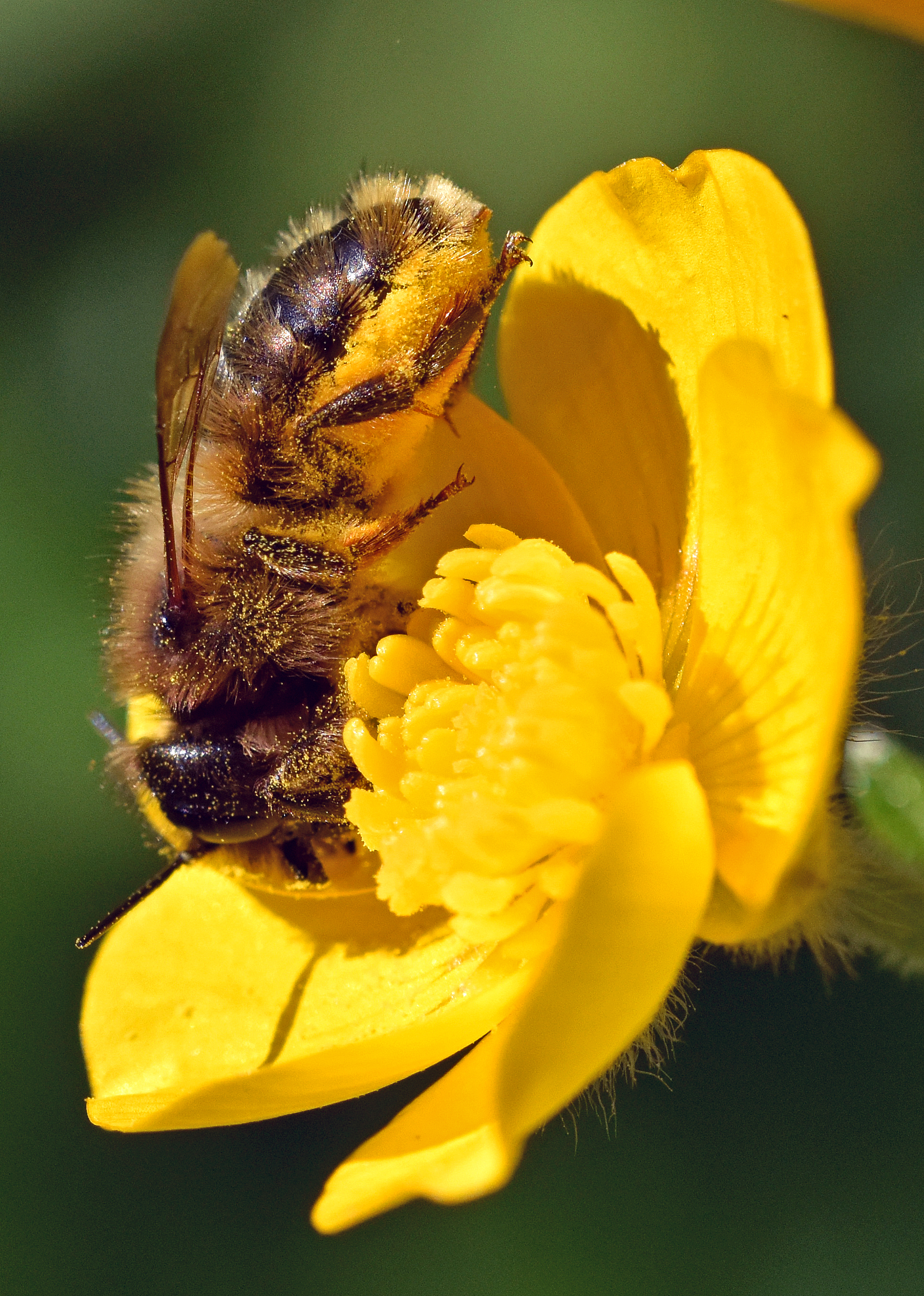
This practice of forming tempting nesting/resting holes for insects, is a sort of deceptive strategy. The Serapias orchids are, in effect, imitating the type of hole which solitary bees normally sleep in; exploiting their tendency to enter such holes (see below).
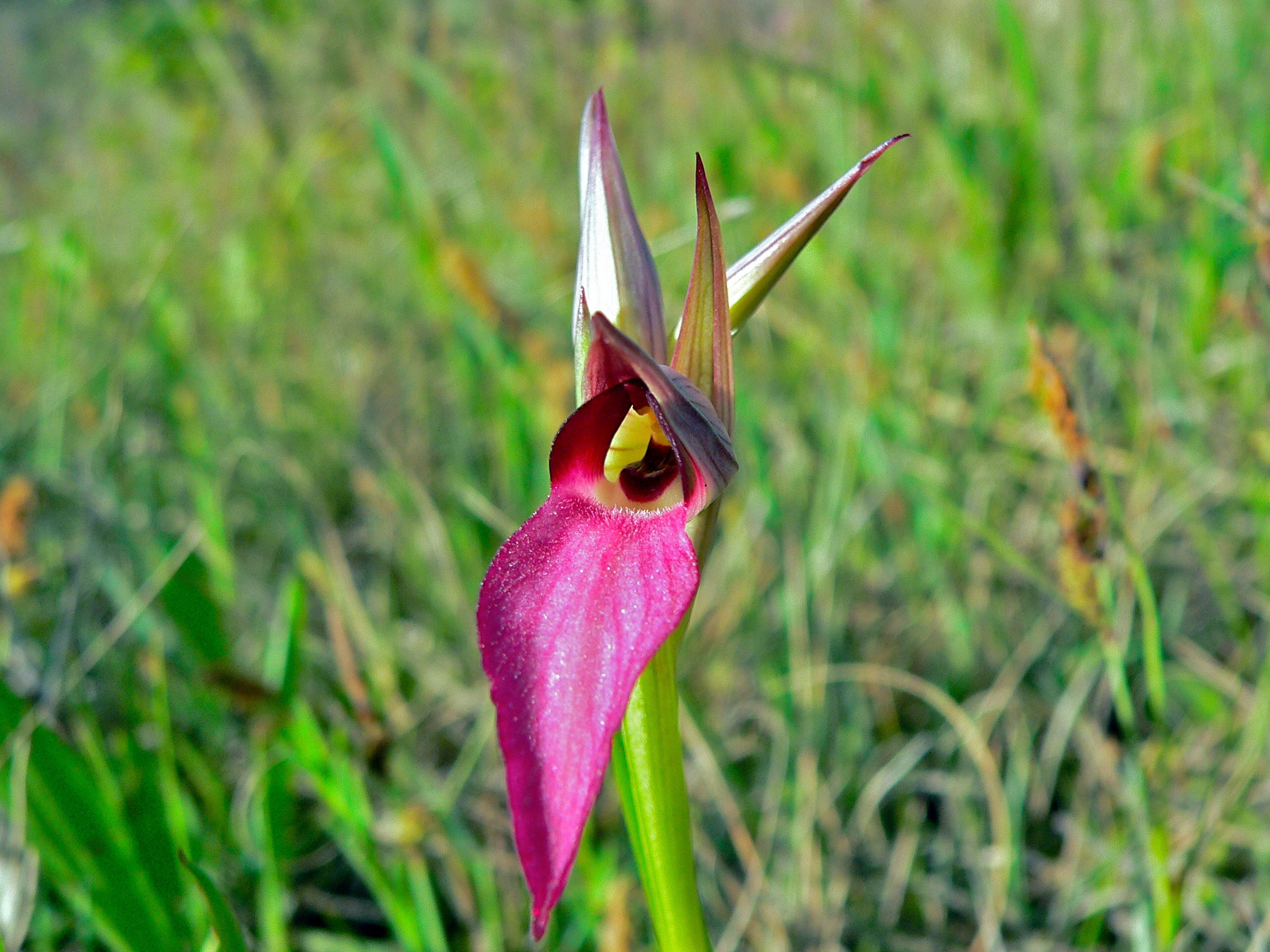
The Serapias orchids have therefore, evolved a way of deceiving the bees into entering the holes created by their flowers, and the bees take advantage of the shelter they provide, remaining immobile during the early morning and late evening.
The pollination of the flower is facilitated by the action of the bees, which after entering the flower and finding their way blocked by the shortness of the flower tube, push against it.
After some pushing – which might help to deposit the pollinia the bee is carrying – the bee gives up and moves on to another flower. Then, at some stage, it stops moving from flower to flower and settles down for the night.
In the morning, the dark-coloured Serapias flowers absorb solar radiation and warm up quickly, providing the sleeping pollinators with a dose of heat which gives them a head start over other foraging bees residing elsewhere at lower ambient temperatures (Vereecken et al., 2010).
The microclimates formed by these flowers act as a floral attractant and are particularly attractive as a refuge during inclement weather, as temperatures within the flowers can be three degrees C higher than ambient air during the day (Dafni et al., 1981).
Summing up
There’s much more that could be written about the ‘not so obvious’ functions of flowers. In the words of biologist Robert Raguso, the microhabitats within flowers “contain the full range of mutualists, antagonists and apparent commensals, whose complex interactions impact how flowers look and smell, how profitable they are to foraging pollinators” (Raguso, 2023).
In other words, there are all sorts of interactions going on within flowers, with the scales tipping back and forth, sometimes favouring the plant, sometimes the insects, but in many – if not most – cases, being a partnership which brings benefits to both parties. And, as it happens, they bring benefits to us humans as well, as we smell, admire and gain wellbeing from these marvellous creations/evolutions!
References
Dafni, A., Ivri, Y., & Brantjes, N. B. M. (1981). Pollination of Serapias vomeracea Briq.(Orchidaceae) by imitation of holes for sleeping solitary male bees (Hymenoptera). Acta Botanica Neerlandica, 30(1-2), 69-73.
Raguso, R. A. (2023). Hidden worlds within flowers. Current Biology, 33(11), R506-R512.
Vereecken, N. J., Dafni, A., & Cozzolino, S. (2010). Pollination syndromes in Mediterranean orchids—implications for speciation, taxonomy and conservation. The Botanical Review, 76(2), 220-240.


Dear Ray,
What bearded beauties you have photographed in the glorious festooning of the Royal Botanical Gardens of Madrid, rendered even more entomologically exciting by the sexual orgy of Daffodil leaf beetles (Exosoma lusitanicum) on Iris flowers!
Regarding beard, it is quite noticeable that beard is back in fashion, given the increasing number of people in the media and in everyday life who grow beard. What do you think?
I have a suspicion that the beard fashion was inadvertently started by Hugh Laurie in his TV series “House”. From then on, facial hair gradually becomes more acceptable and even desirable. The franchised series American Idol and Australian Idol are also good cases.
By the way, there are women who are naturally bearded, and a very few even wear theirs proudly.
Speaking of being bearded, I also like seeing the hirsute condition on flowers, not just on male adults. I once commented as follows on someone’s blog:
Thank you very much for keeping us informed of “the ‘not so obvious’ functions of flowers”.
A few hours ago, I have just published a new multimedia post entitled “👁️ Visualizing 🎼🎹—THE—🎹—LAST—🎹—RAG—🎹🎵🎶 with SoundEagle🦅 音鷹 and Friedrich Zettl 狐胡 🎨“.
Yours sincerely,
SoundEagle🦅
Thanks for this Ray,the mutualism that you highlight between insects and plants is always subject to renegotation if one or the other side sees a way of getting someting for nothing. We often want to forget that symbiosis is a delicate balance. REally interesting stuff