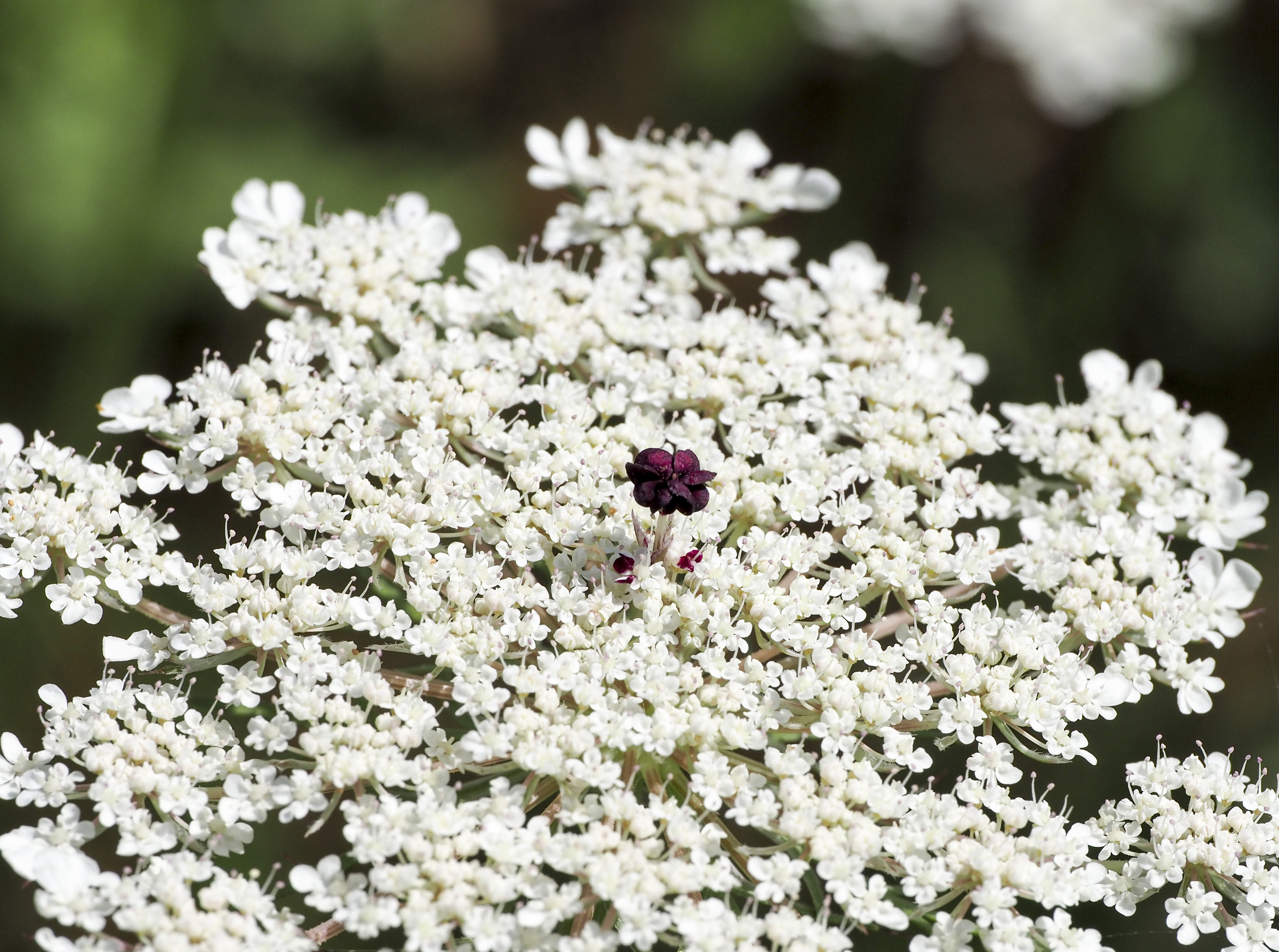
The wild carrot (Daucus carota) – also called Queen Anne’s Lace – is famous for having small dark flowers at the centre of the otherwise, white umbel. However, not all umbel heads have them! Despite being relatively tiny (a few millimetres across) these variably sized central umbellets as they are called (not omelettes but umbellets!), are quite apparent, i.e. visible, even from a distance (see below).
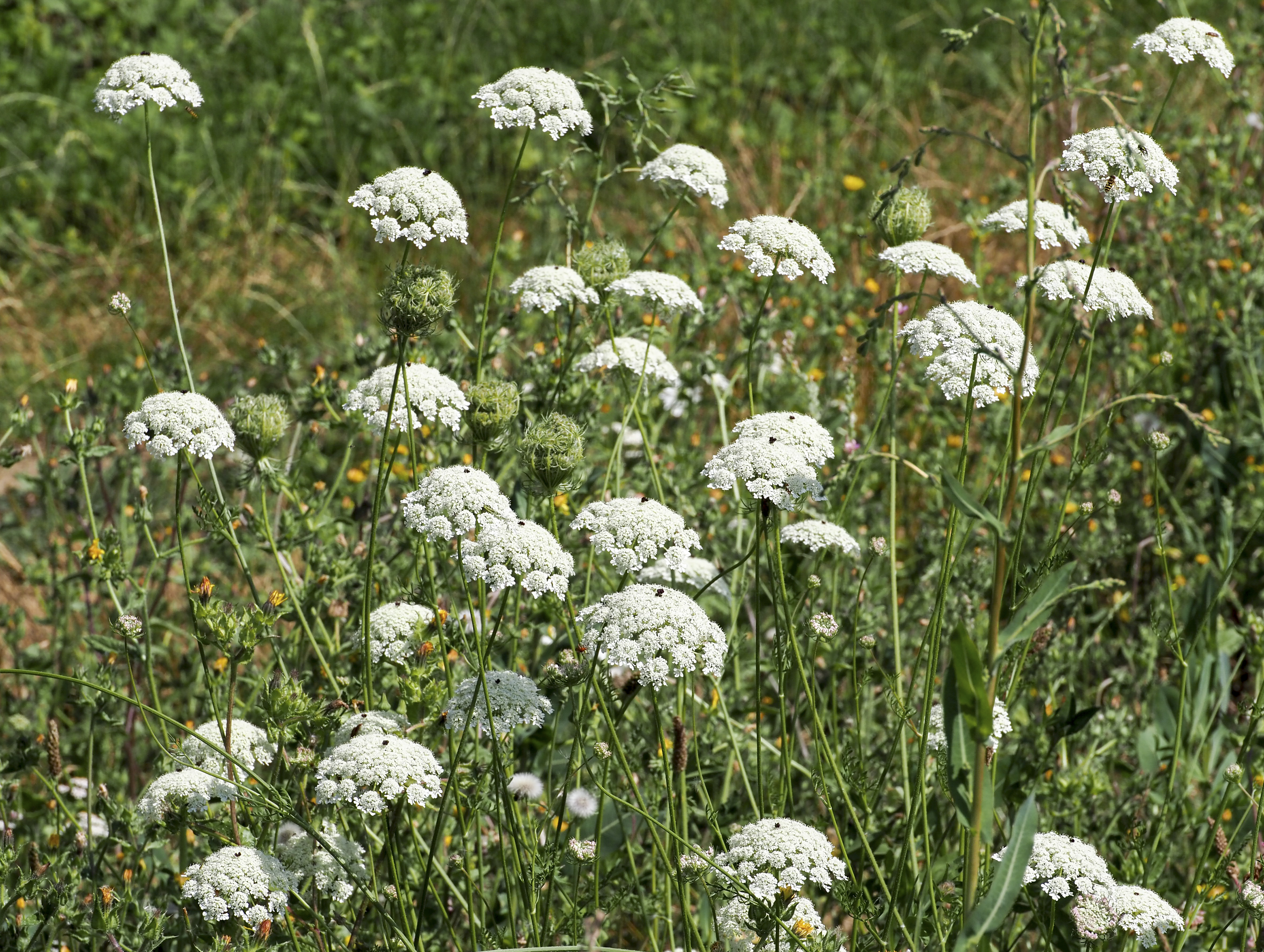
The dark central flower was noticed by the ever observant Charles Darwin (1877), who was by no means the first to notice it. Darwin assumed that it had no function, but rather represented a remnant from a former evolutionary time. In other words, an evolutionary relic, rather like the human appendix, which Charles Darwin also suggested was a vestigial remnant. However, the analogy is an interesting one because the appendix is now known to have a number of vital functions, such as cultivating beneficial gut bacteria. Could the same be true of these red florets? Do they have a function we are all failing to notice?!
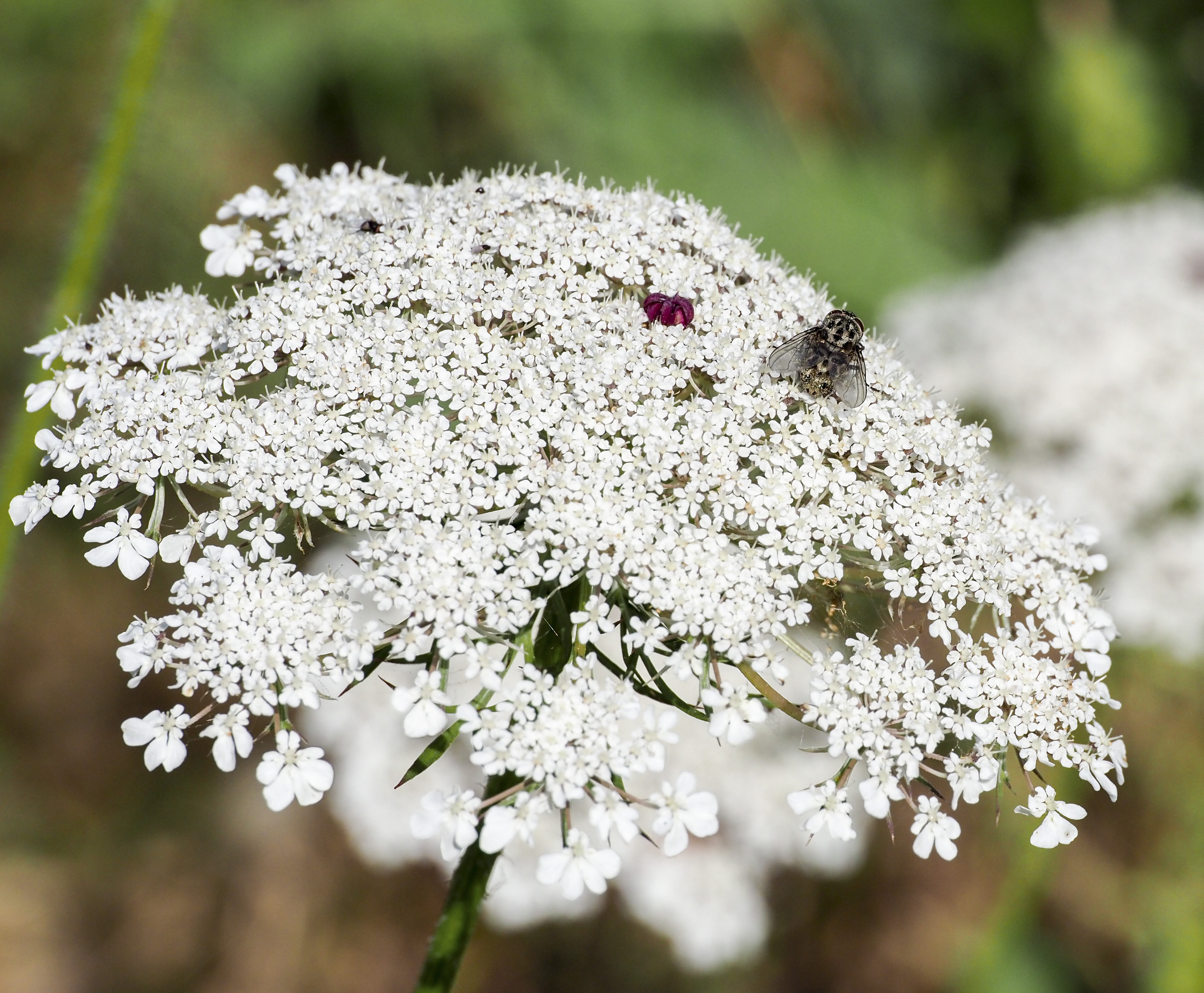
Umbels of wild carrot (Daucus carota or Queen Anne’s Lace) contain large numbers of small, bisexual (dioecious or hermaphroditic) flowers, and can self-fertilize, but because the male organs (stamens) mature before the female organs (pistils), self-fertilization does not usually occur within the exact same umbel. However, pollen from the male flowers of an older bloom can easily fertilize the female flowers of a younger bloom on the same plant; nevertheless, because of the benefits of cross-fertilisation, they rely primarily on insects for cross-pollination.
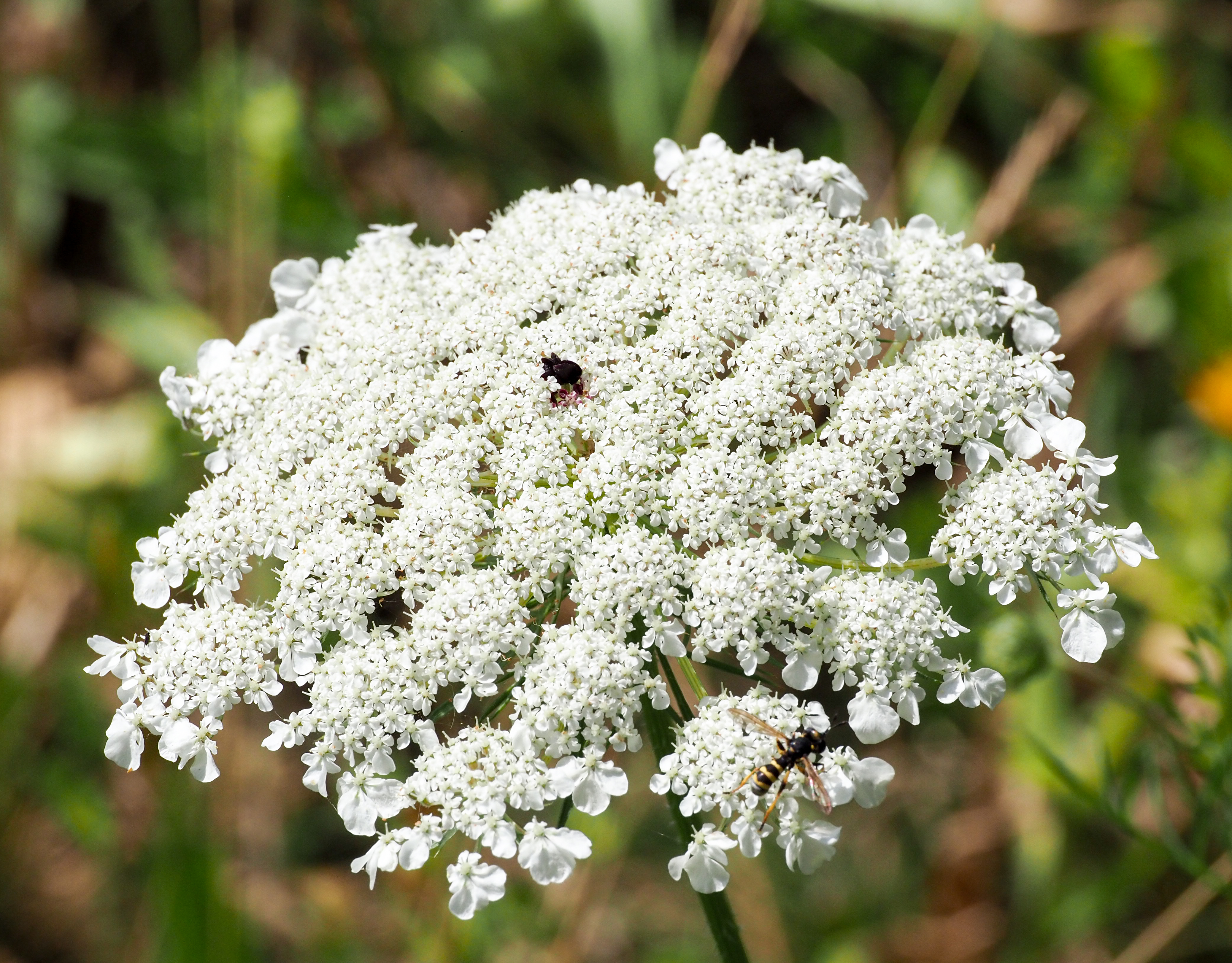
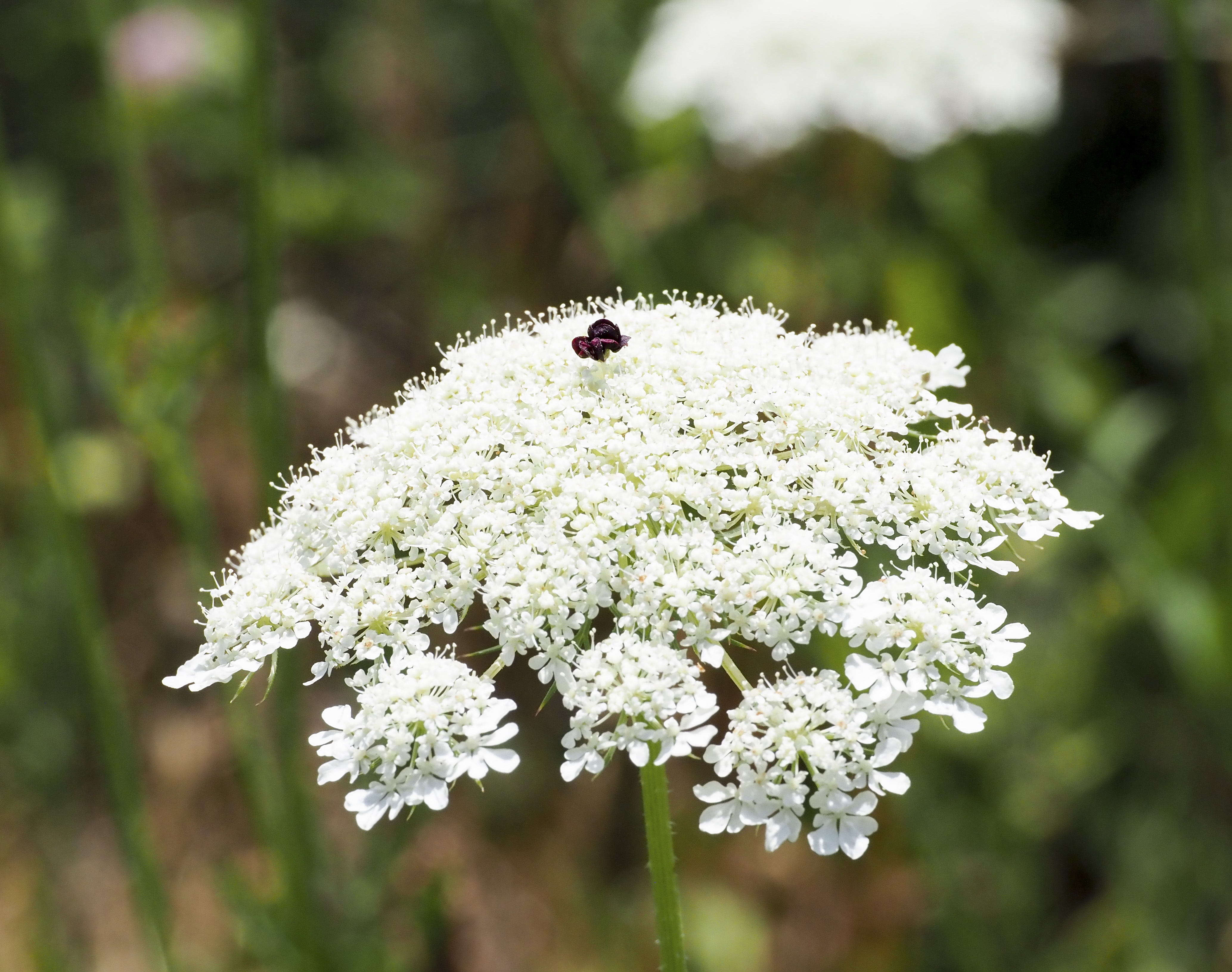
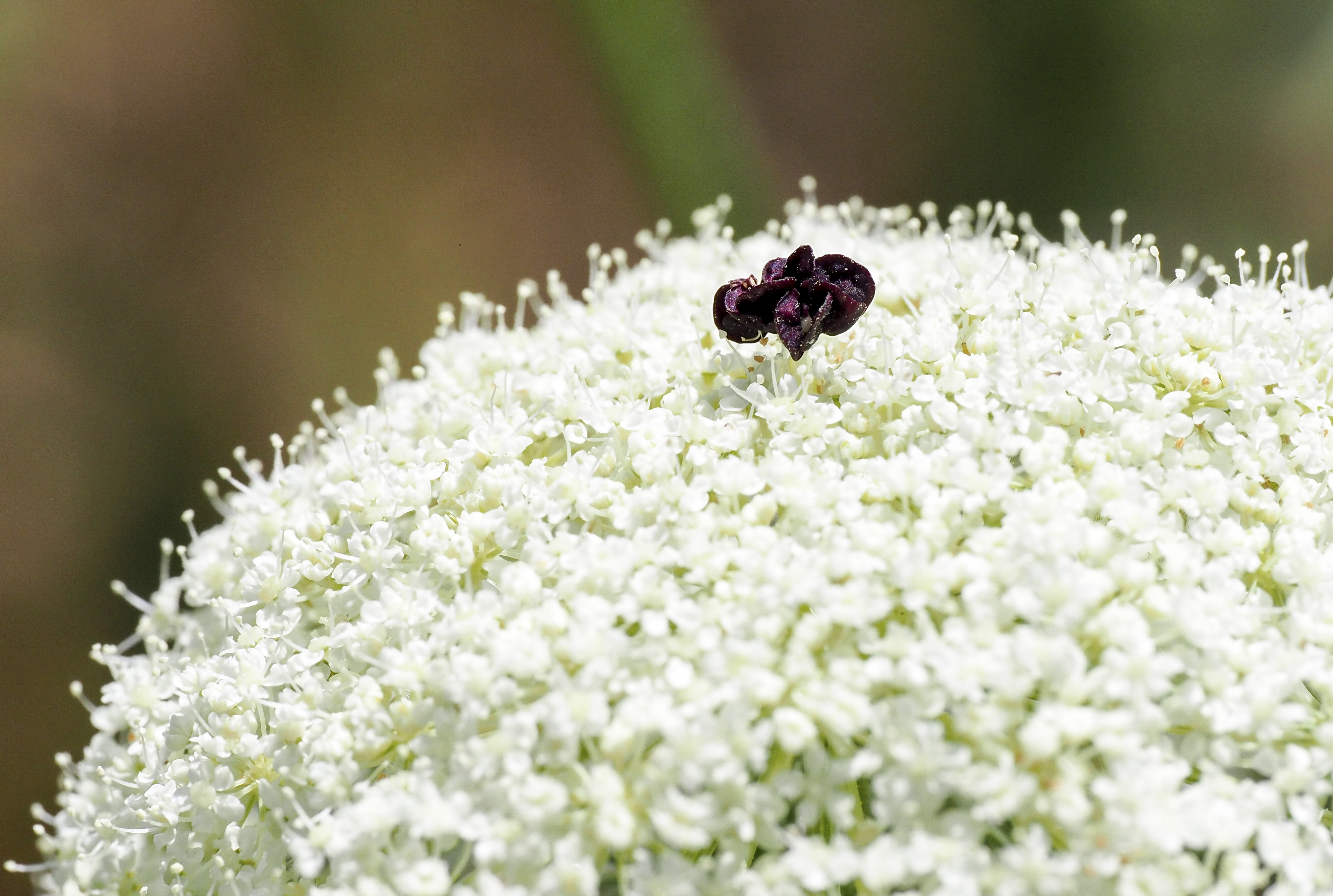
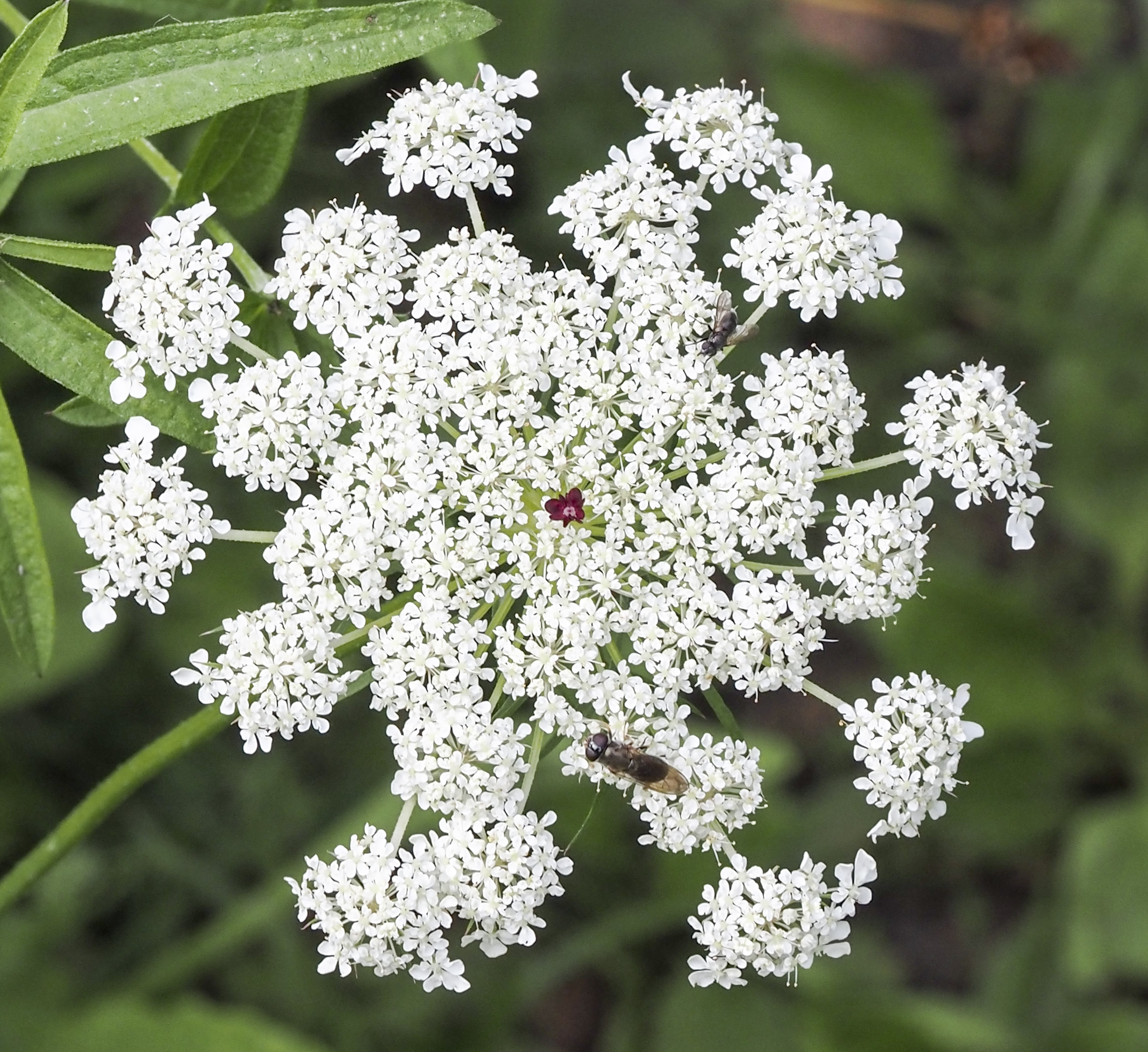
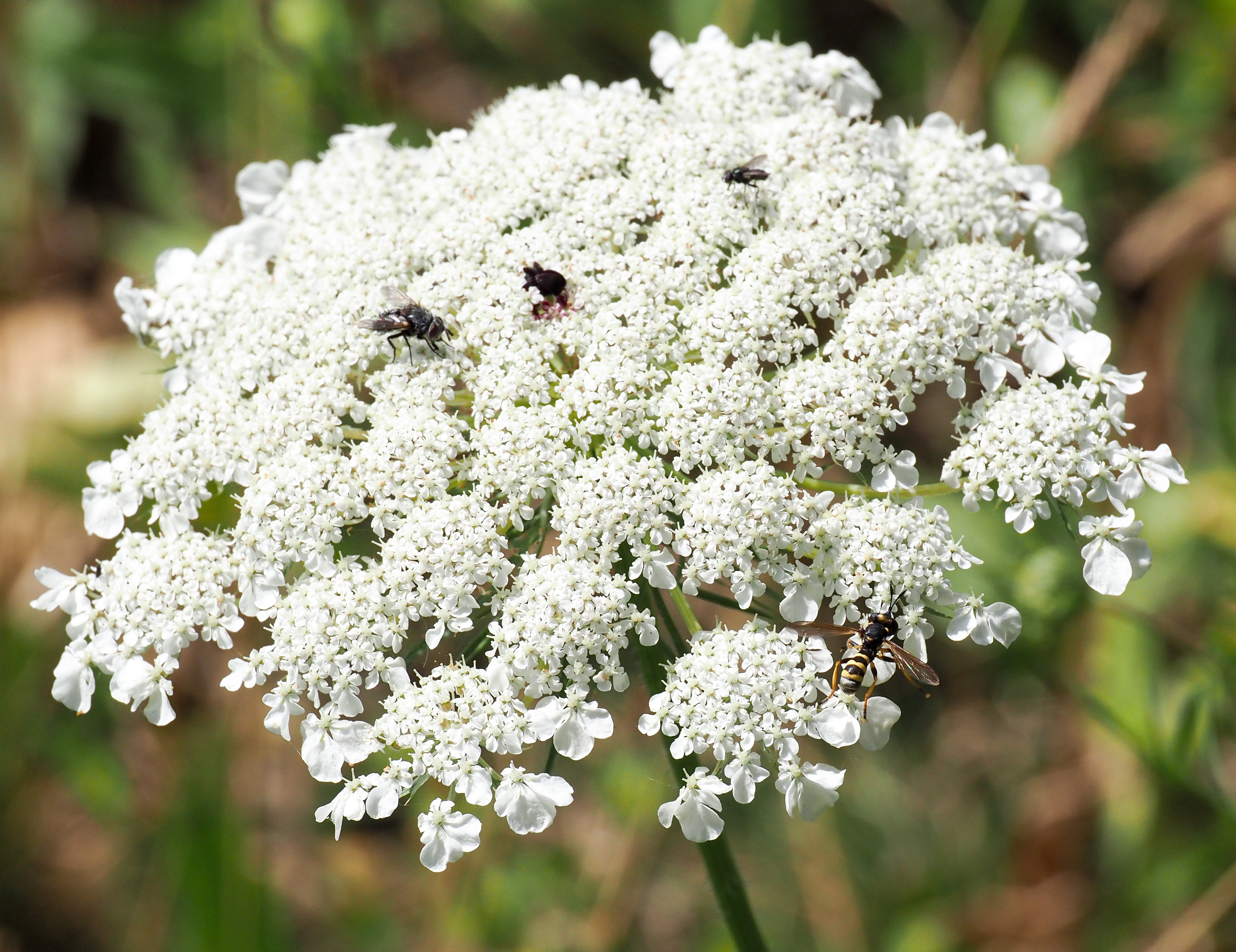
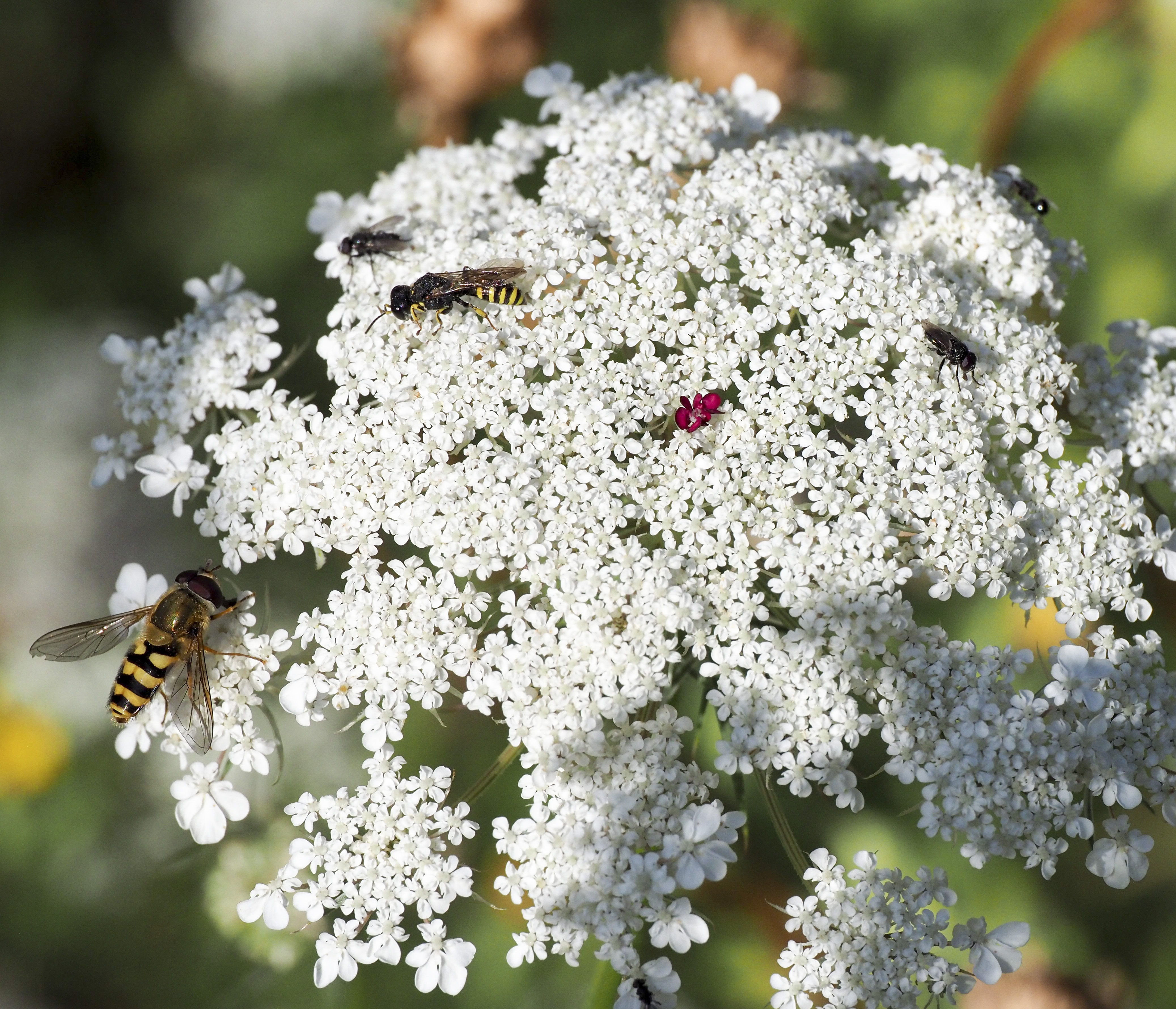
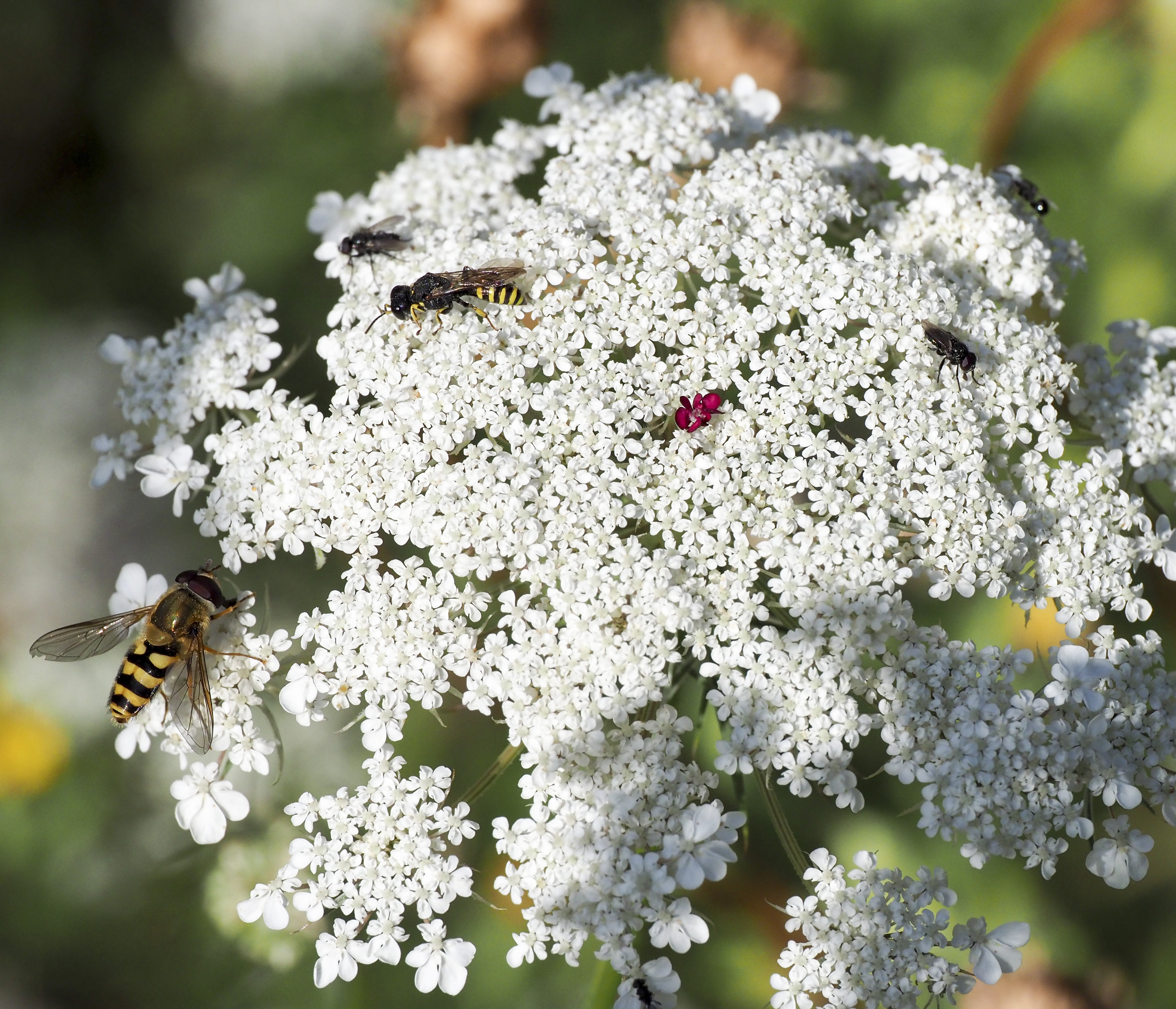
Wild carrots (Daucus carrota) are therefore, probably not obligate out-crossers, but are nonetheless pollinated by a wide range of insects, including, according to Perez-Banon et al., 2007: hoverflies, blowflies, soldier flies, other flies, sawflies, beetles, sphecid and other wasps, and parasitic Hymenoptera, as well as bees. In the three of four days I spent photographing these flowers, I came across most of these insect groups, including many different sorts of flies, including blue bottle, tachinid flies, and hoverflies (see below).
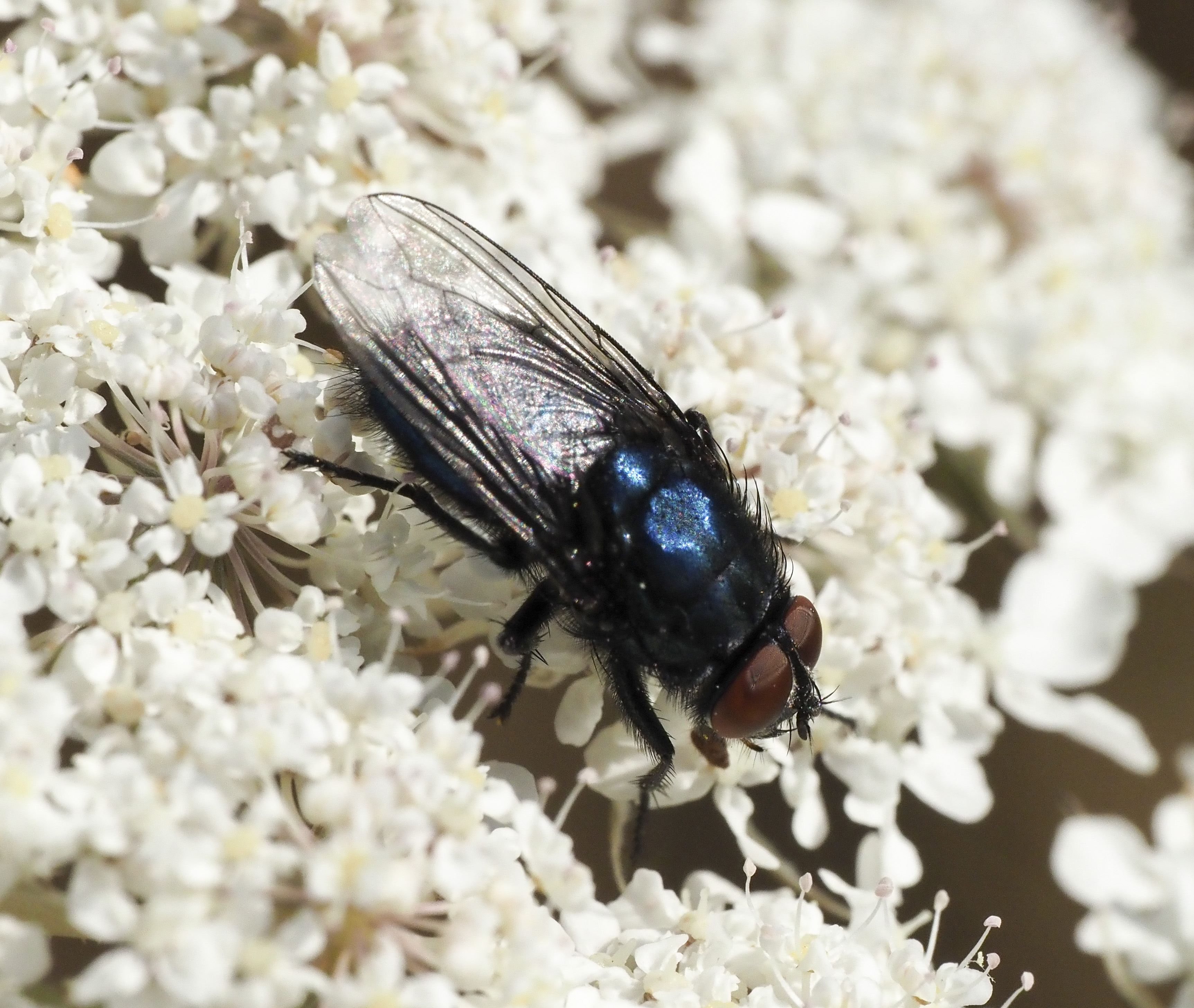
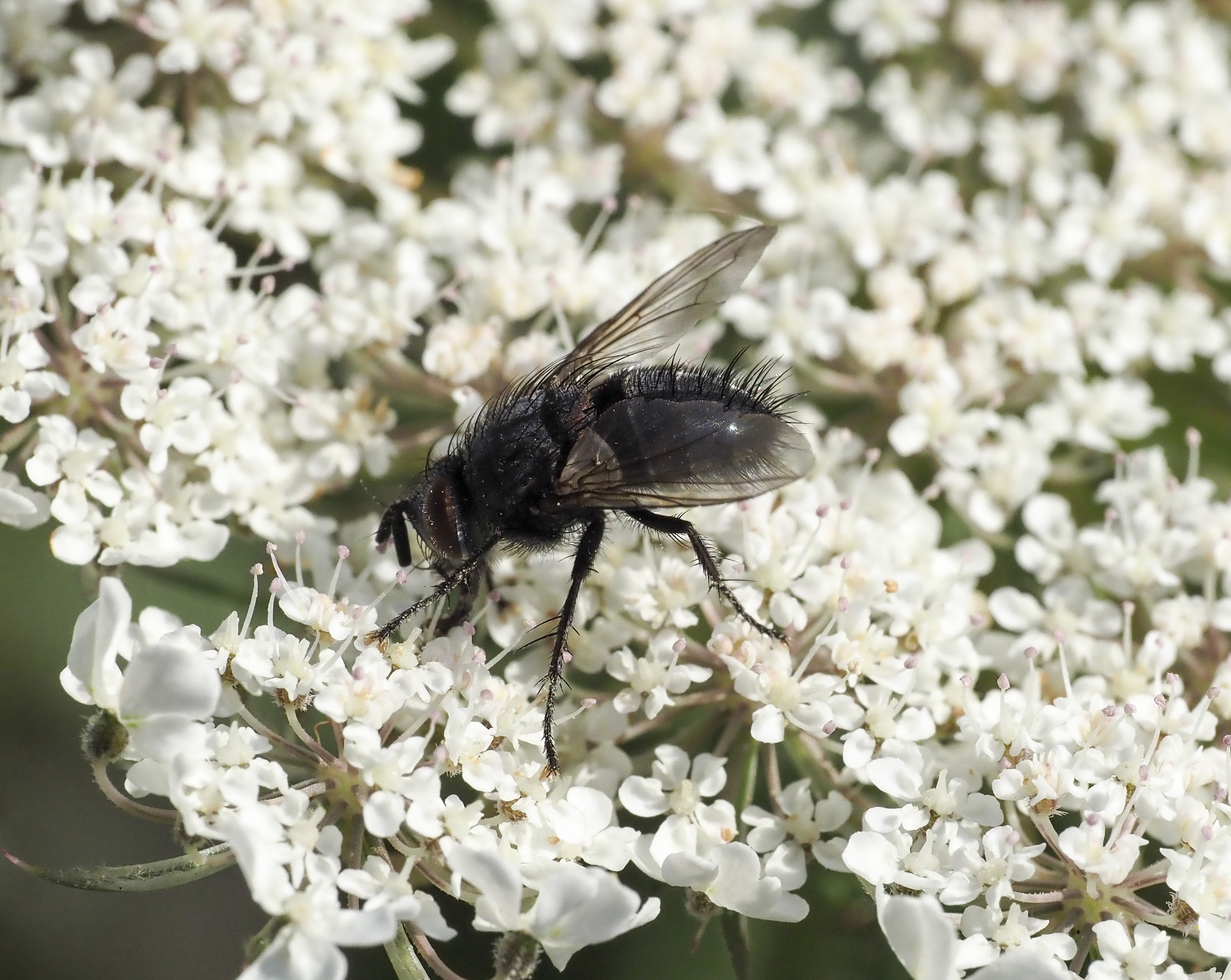
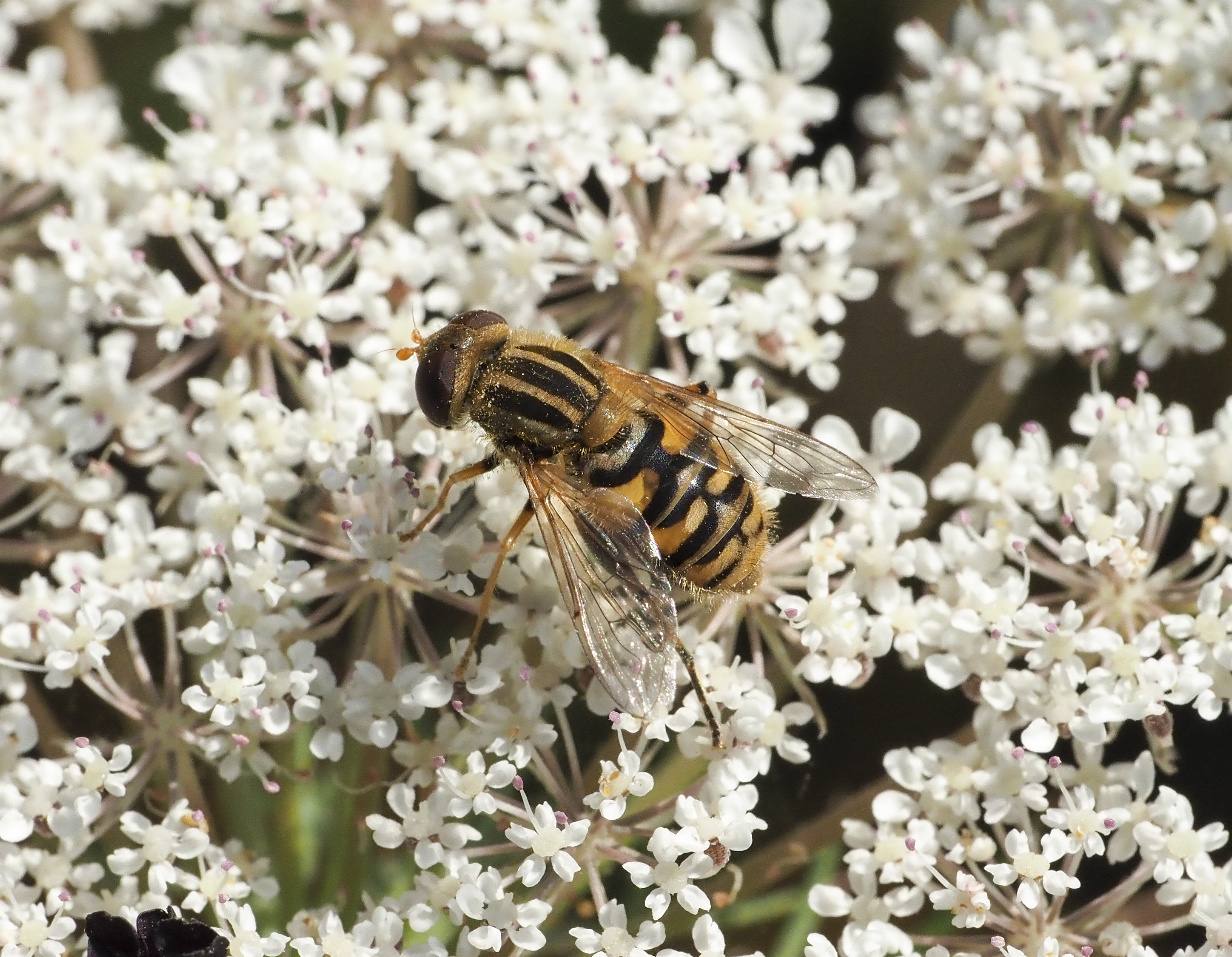
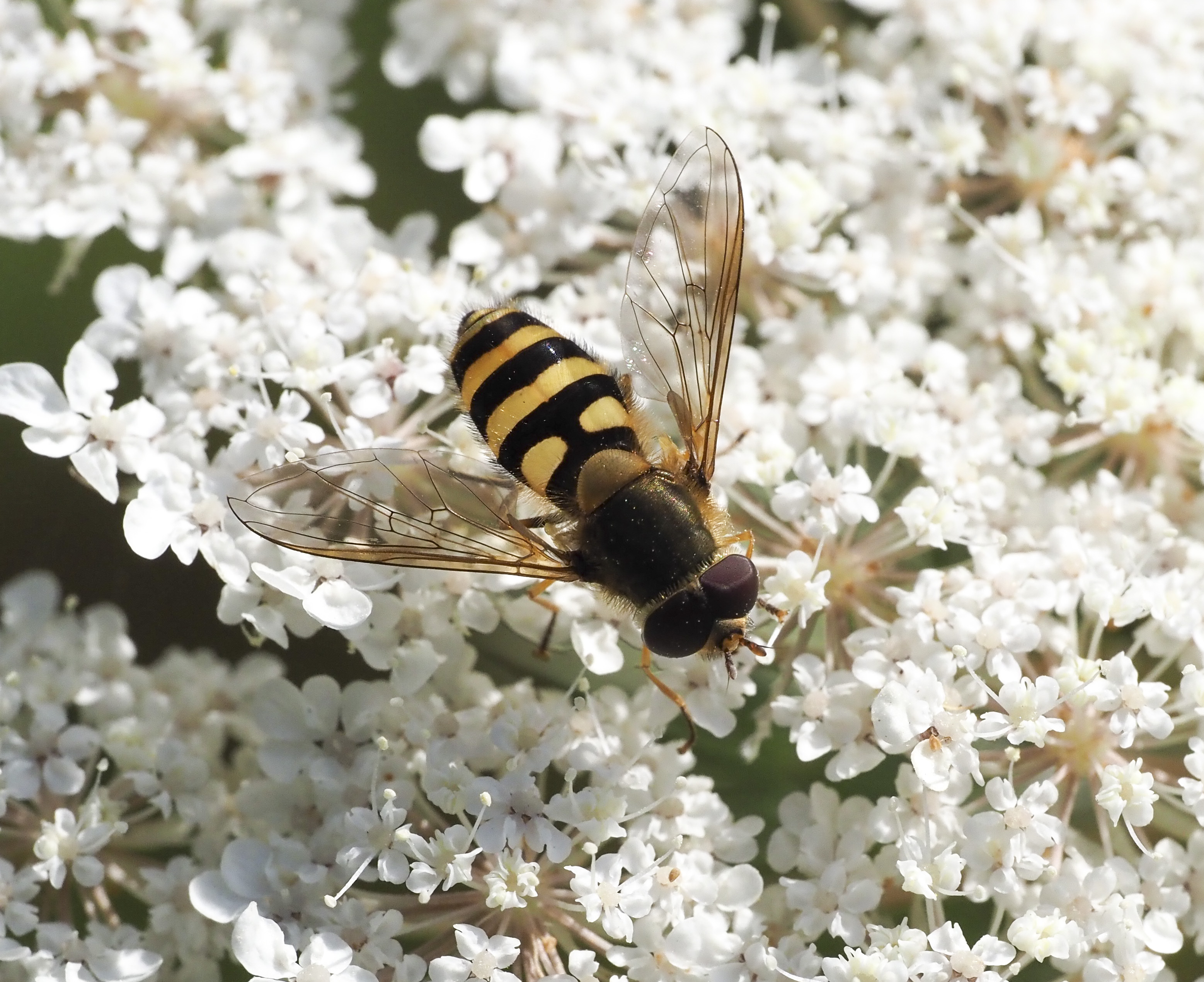
There are at least nine apioid species and/or subspecies – the apioid superclade of the plant family Apiaceae (also known as Umbelliferae) – with dark-centred umbels, mostly distributed from the Eastern Mediterranean area to central Asia (Claßen-Bockhoff et al., 2023). However, Daucus carota has near world-wide distribution.
Various researchers have addressed the question of the central red flower, and come to somewhat different conclusions regarding the purpose(s) or function of the little red dots. However, most have suggested that it has an adaptive function, i.e. that of mimicking insects, seen from afar. Insects out foraging, or looking for mates, might see the little red dots, and initially, at least, think that they are i) either other members of their species, worth meeting (!); or ii) members of another species, worth eating!
From the plant’s perspective, attracting predators might be a way of discouraging herbivory, but I don’t think this is a very likely purpose, as most visitors are probably there for the nectar. So attracting pollinators seems much more likely to me.
A study carried out in Portugal by Goulson et al. (2009), concluded that the dark florets can act as insect attractants for some insect groups, i.e. they mimic insects, and suggested that they are adaptive. They found that large inflorescences and those with more dark florets, attracted more beetles – the varied carpet beetle Anthrenus verbasci in this location – than small inflorescences and those with fewer or no dark florets.
Polte and Reinhold (2013) came up with a slightly different theory: they suggested that the dark central floret may play a role in reducing plant parasite infestations by mimicking the presence of gall midge gall. They noticed that wild carrot umbels with a dark central floret, were parasitized significantly less often by the gall midge Kiefferia pericarpiicola – a species of fly in the family Cecidomyiidae – than umbels without a dark central floret. However, the galls – see here – do not look anything like the central florets to me! But what do I know, I’m not a fly!
According to Regine Claßen-Bockhoff and colleagues (2023) – who wrote a great Open Access paper on Dark-centred umbels in Apiaceae – beetles are by far the most abundant visitor to apiod species with dark centred umbels in the area from Eastern Mediterranean to central Asia, especially hairy insect species in the families Glaphyrinidae and Scarabaeidae. They came to the conclusion that dark-centred umbels may function as ‘beetle marks’ (see also Summing Up, below). Spots that look like beetles I suppose?
Anyway, Claßen-Bockhoff et al. (2023) found many highly diverse visitors on the umbels of all species which have this feature, although the plants varied considerably in the presence and abundance of insects between localities and seasons. They came to the conclusion that the dark-centred umbels in wild carrots were stabilized by selection in areas of beetle pollination, to order to attract more individuals.
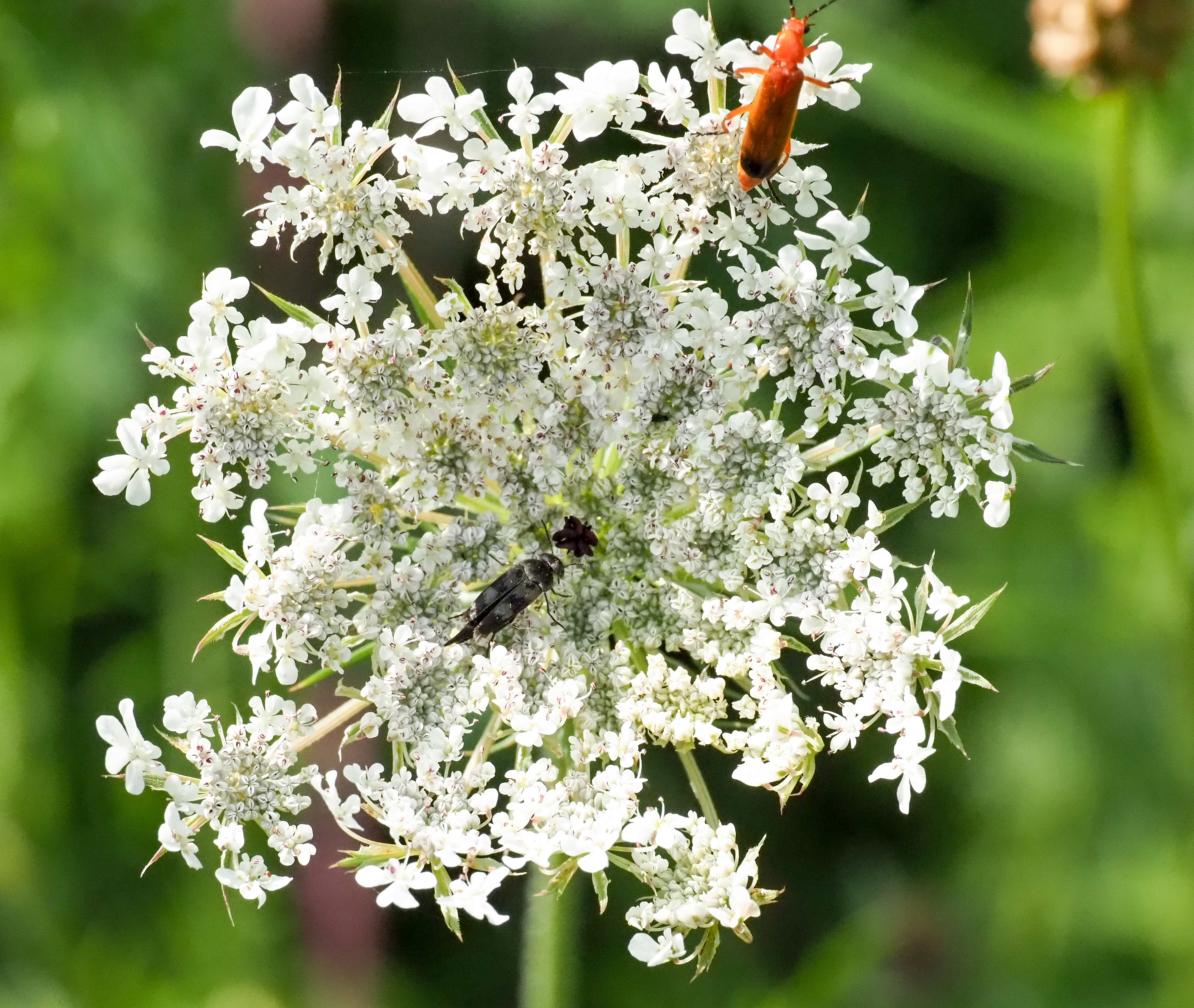
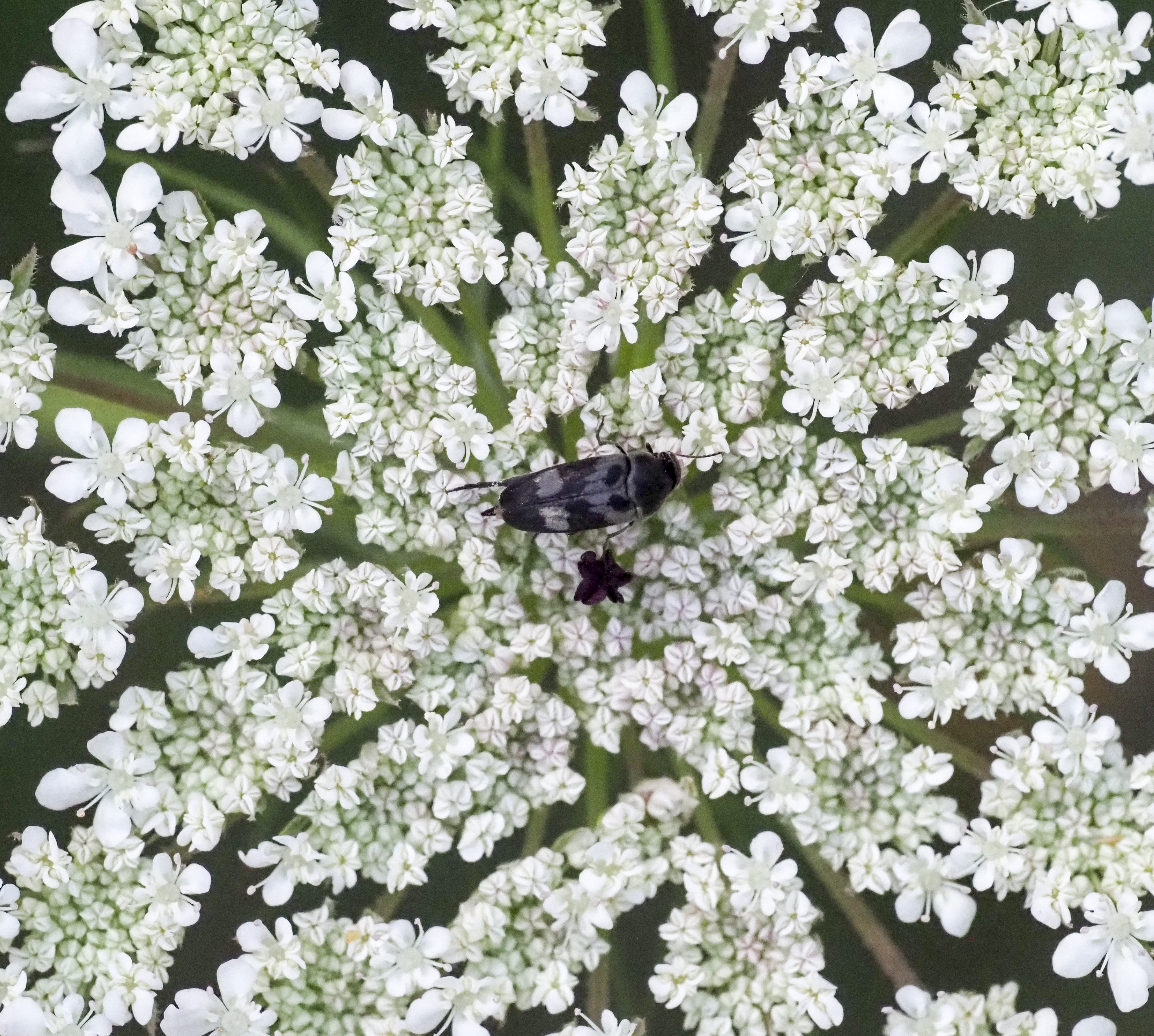
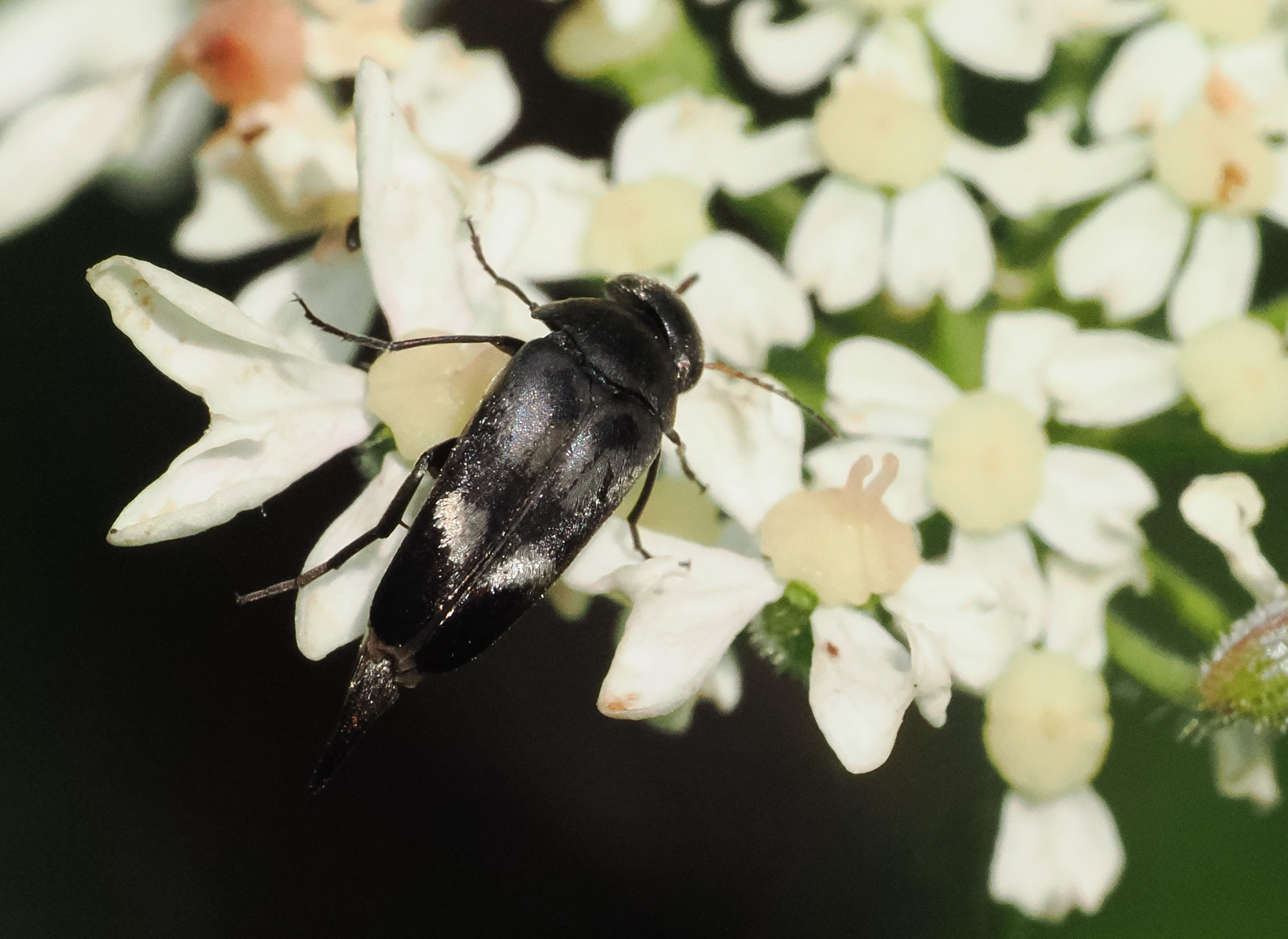
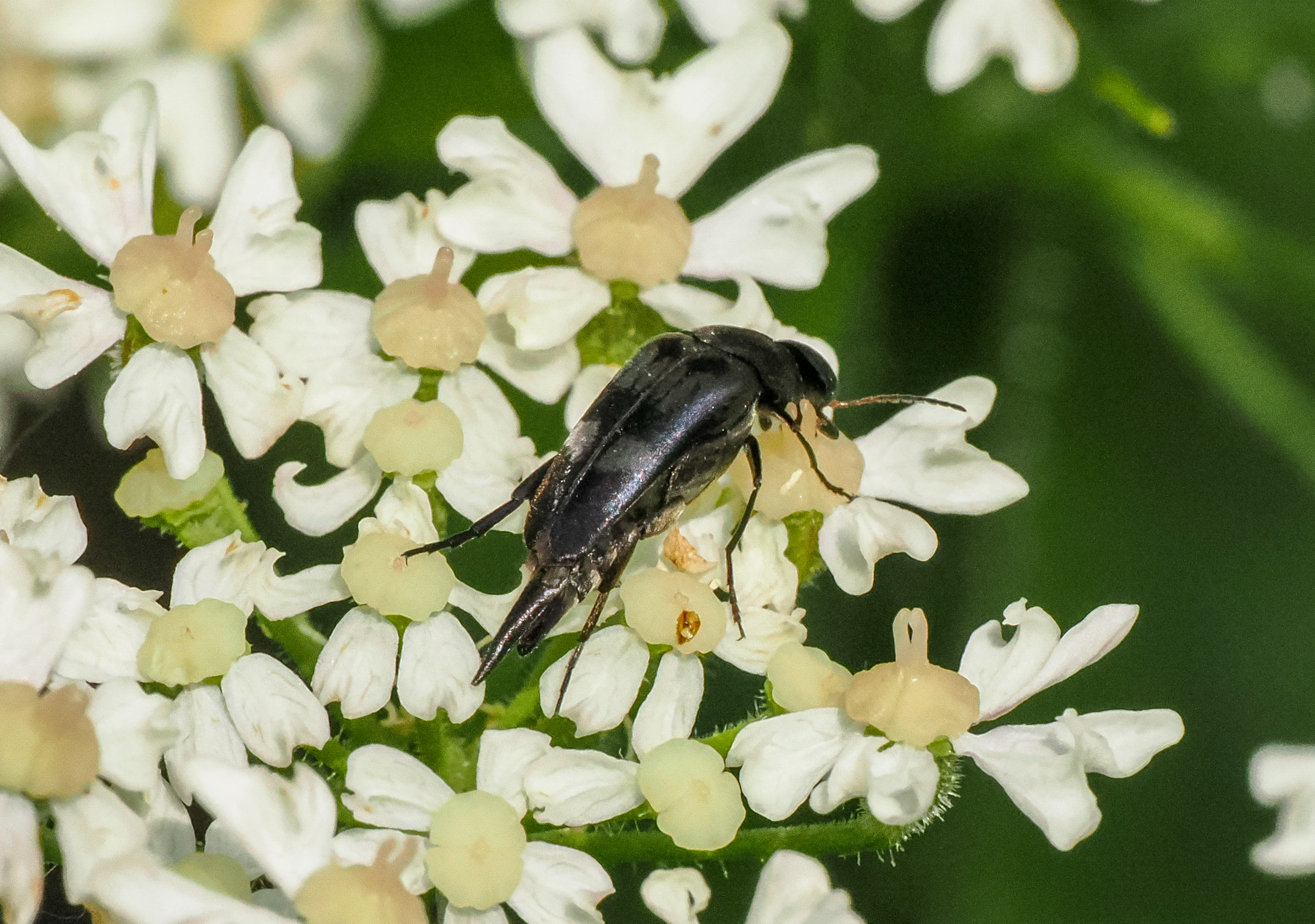
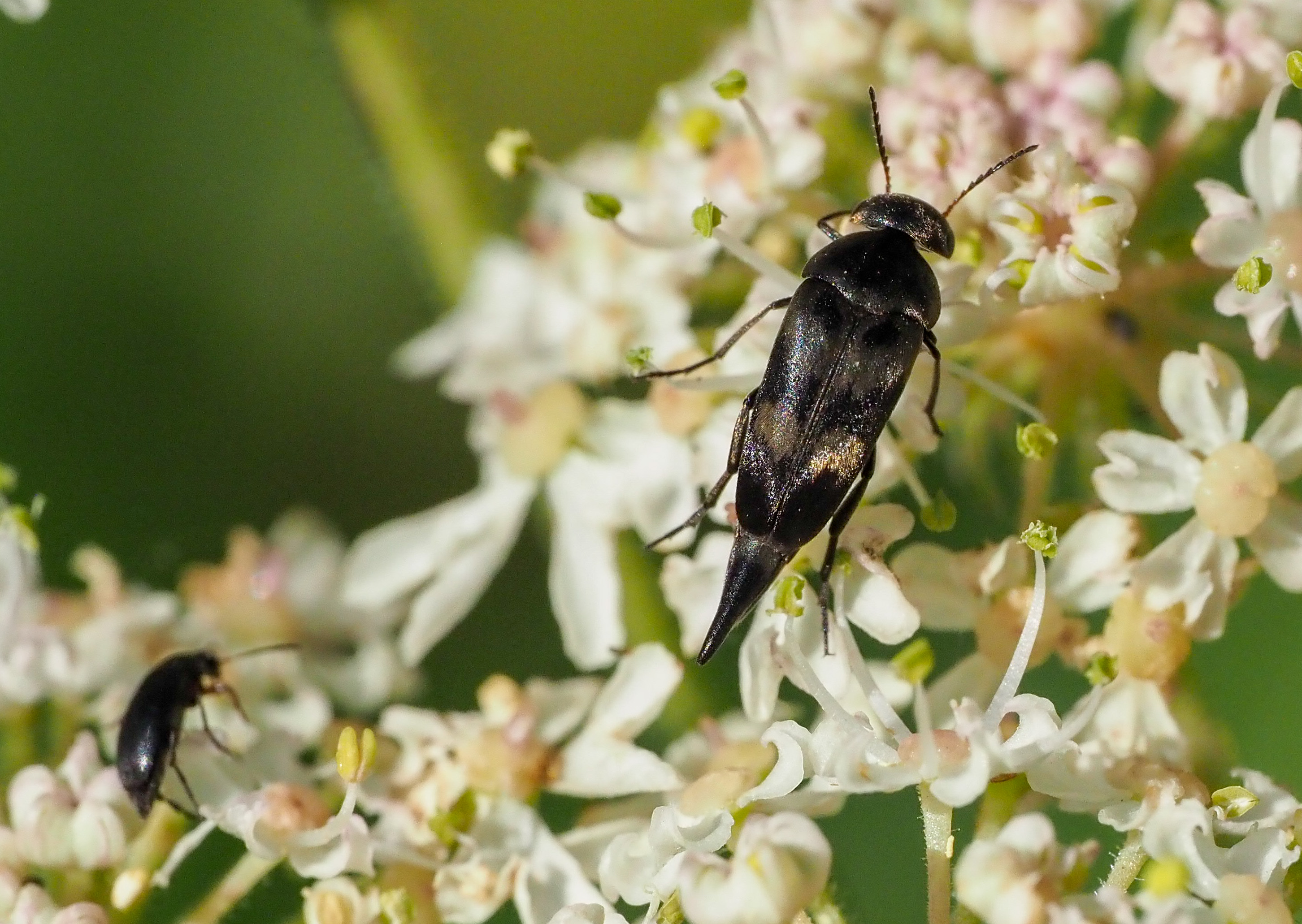
In my foray into umbel hunting I did not come across any scarab beetles, but I did come across quite a few tumbling flower beetles, Variimorda villosa (Mordellidae): see below.
In a laboratory experiment, Eisikowitch (1980) found that house flies (Musca domestica) were more attracted to umbels with a dark purple central umbellet in Daucus, than those without, and speculated that the central florets mimic a resting insect.
Another study also concluded that central florets influence the insect visitation rate (Westmoreland & Muntan, 1996). According to these researchers, insects see the central florets as red, UV-reflecting spots set against a background of UV-absorbing white florets, and thus, the central florets are a functional adaptation, but for the effect to be significant, the attracted insects must be abundant, and/or effective pollinators.
The flowers
The white flowers grow in umbrella-like clusters of variably sized diameters (8-15 cm) and may have a small cluster of about 1-5 purple or red flower (umbellets) in the centre of the umbel. The dark central flowers are highly variable in size and colour and appear to change colour: starting off pink, then turning red, and eventually becoming a deep violet red (see below).
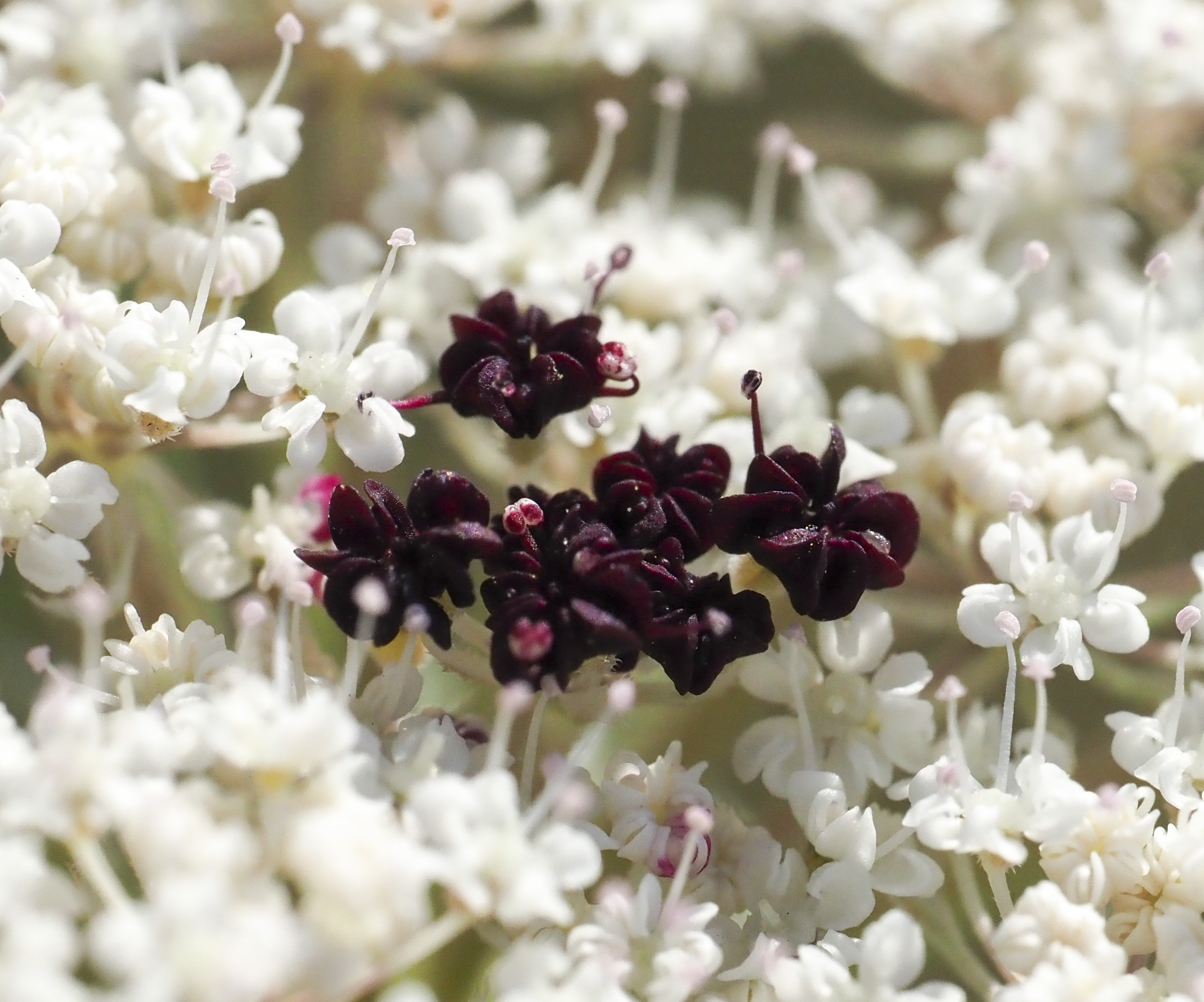
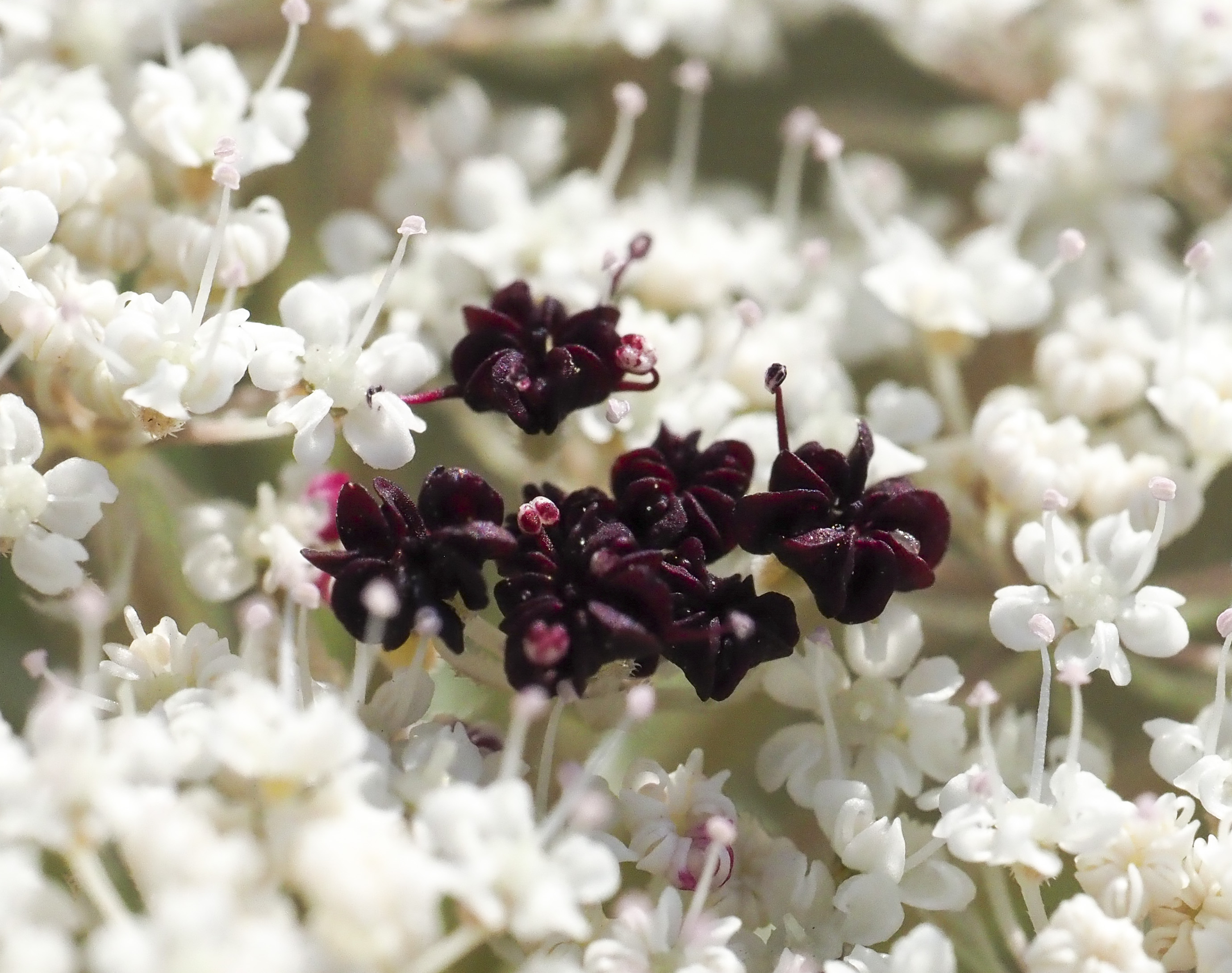
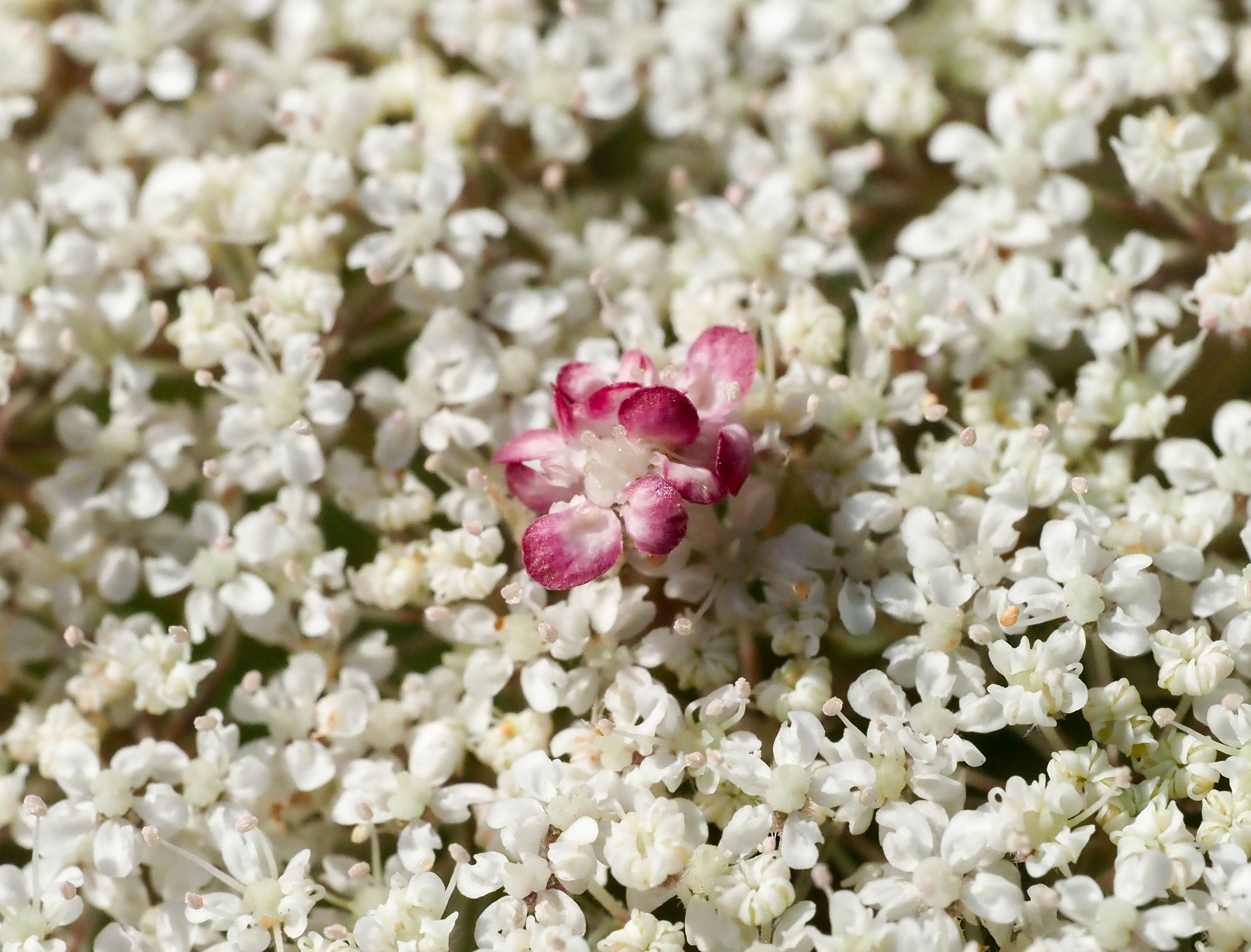
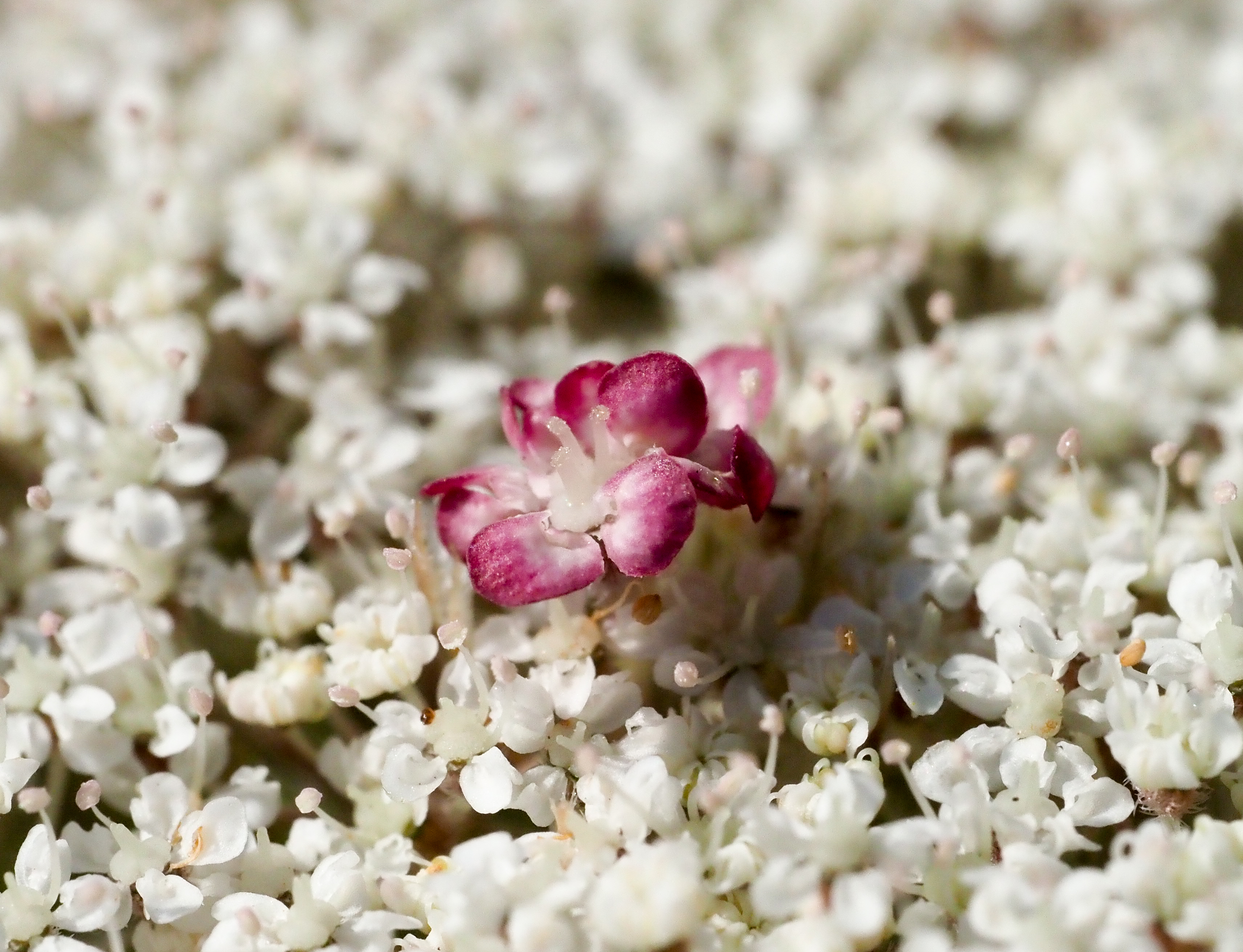
Ao-Qi Duan and colleagues (2024) identified a gene – the Purple Central Flower (DcPCF) gene – as the causal gene that triggers (only) the central flowers to express the purple phenotype in Daucus carota subsp. carota. This gene triggers anthocyanin accumulation, selectively turning tiny central flowers purple, while all the other flowers in the surrounding umbel remain white. These Chinese researchers make the interesting suggestion, if I have understood it correctly, that the purple central flower pattern may be a remnant of an ancestral condition “reflecting the original appearance of Umbelliferae (also called Apiaceae) when a single flower was present” (Duan et al., 2024).
I don’t think this means that the original flowers had purple umbels! What an interesting thought! But it is worth mentioning, at least in passing, that our cultivated carrots (Daucus carota ssp. sativus) were originally deep purple (not the band!) in colour! This simply shows that flowers in this family accumulate anthocyanins in root tissues, as well as in flowers, fruits, and petioles. The gene controlling the purple pigmentation in carrot roots appears to be a different one (DcMYB7) – see here – from the gene controlling anthocyanin accumulation in the central umbellets, but I am straying way outside my comfort zone when it comes to molecular genetics!

As the Daucus carota plants mature, and they finish flowering, the umbels turn from convex to concave and eventually contract into a nest-like shape, as the sequence shows below.
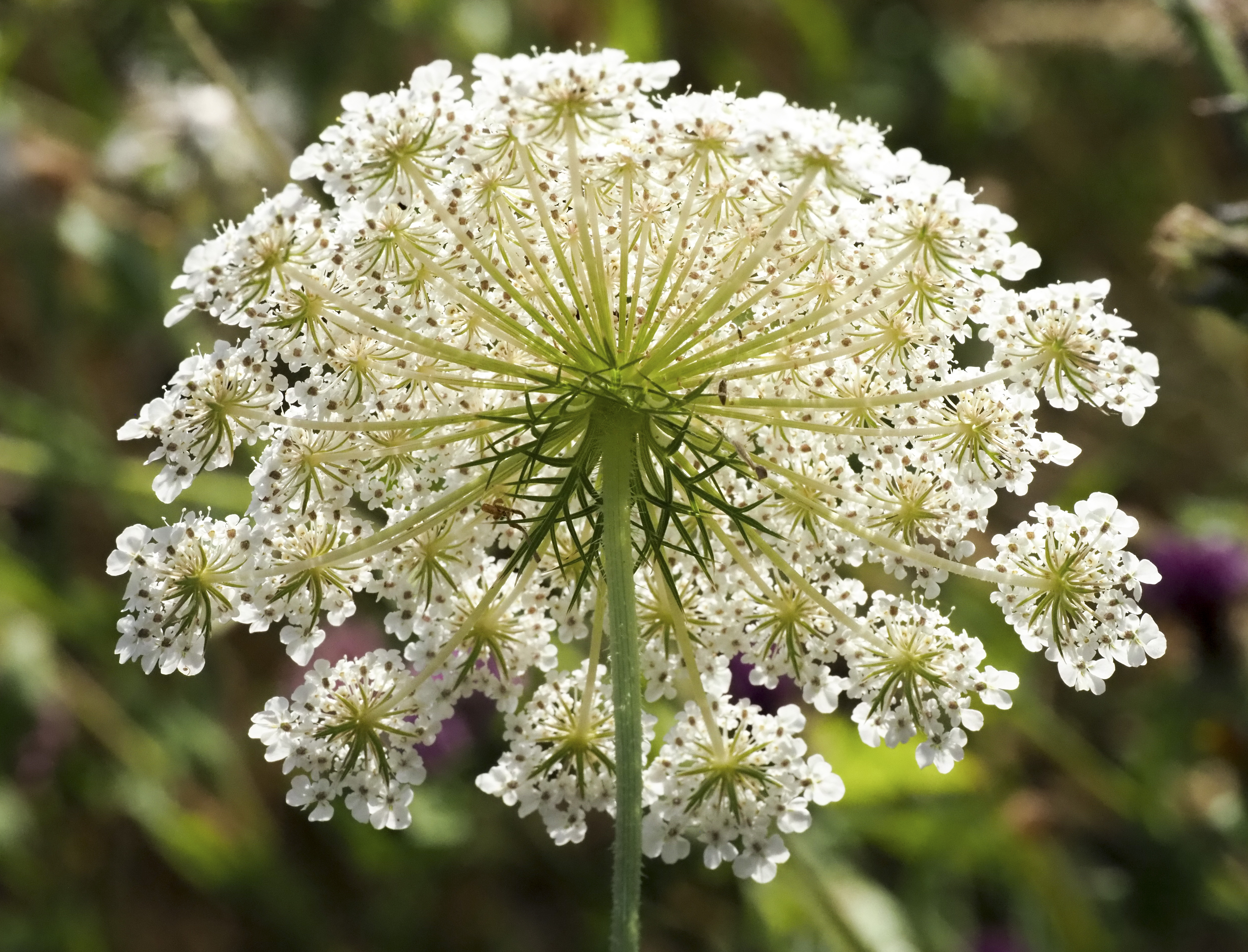
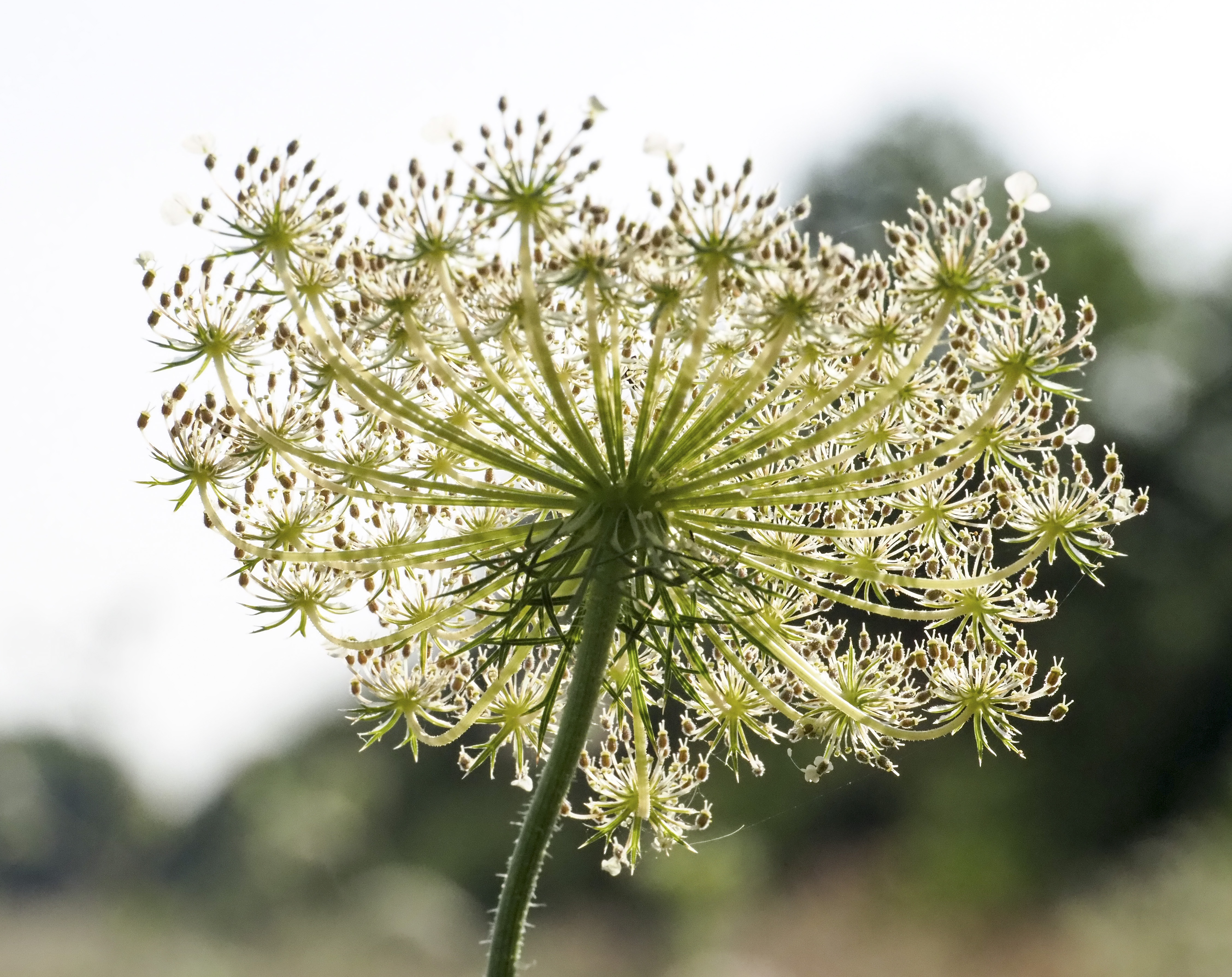
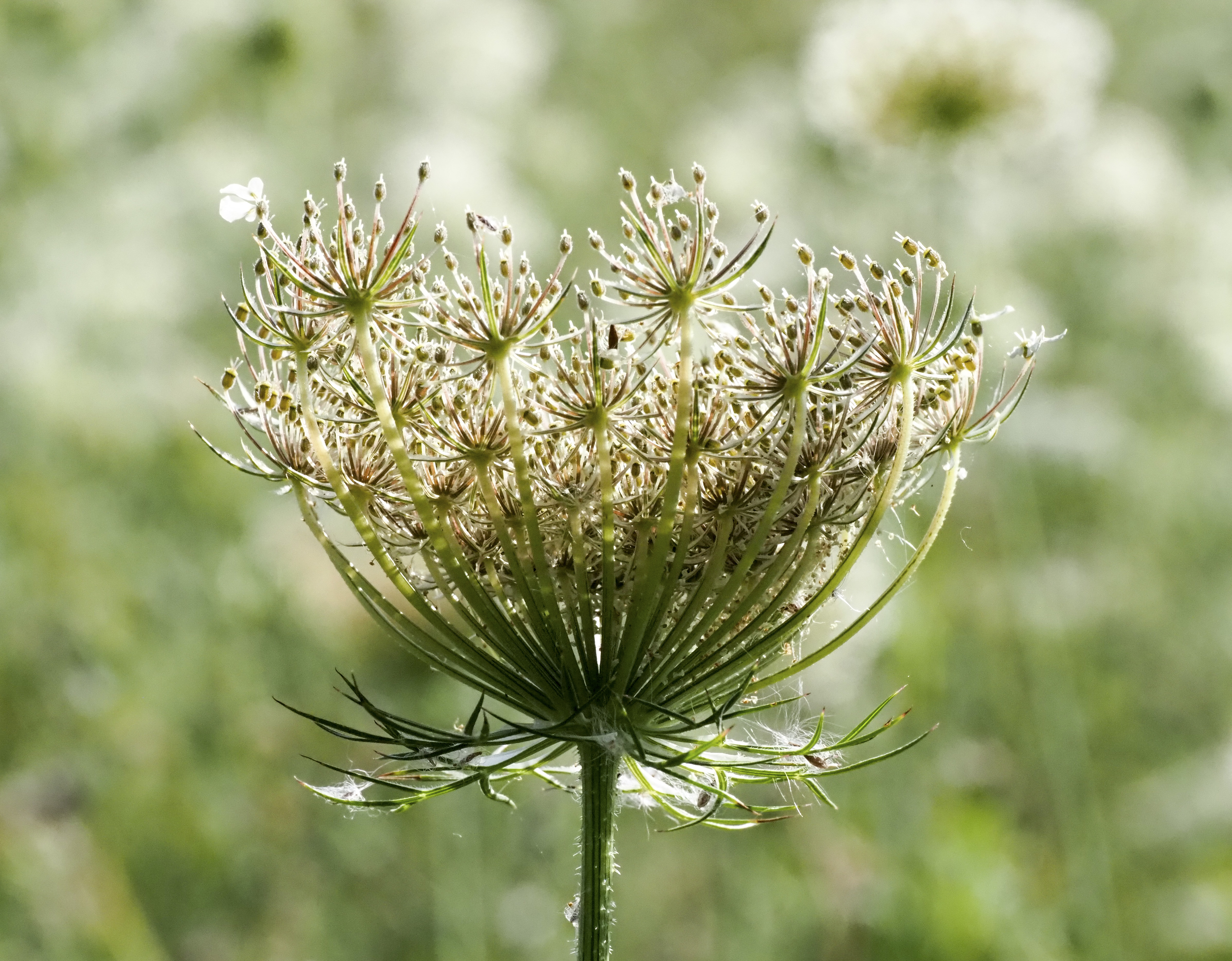
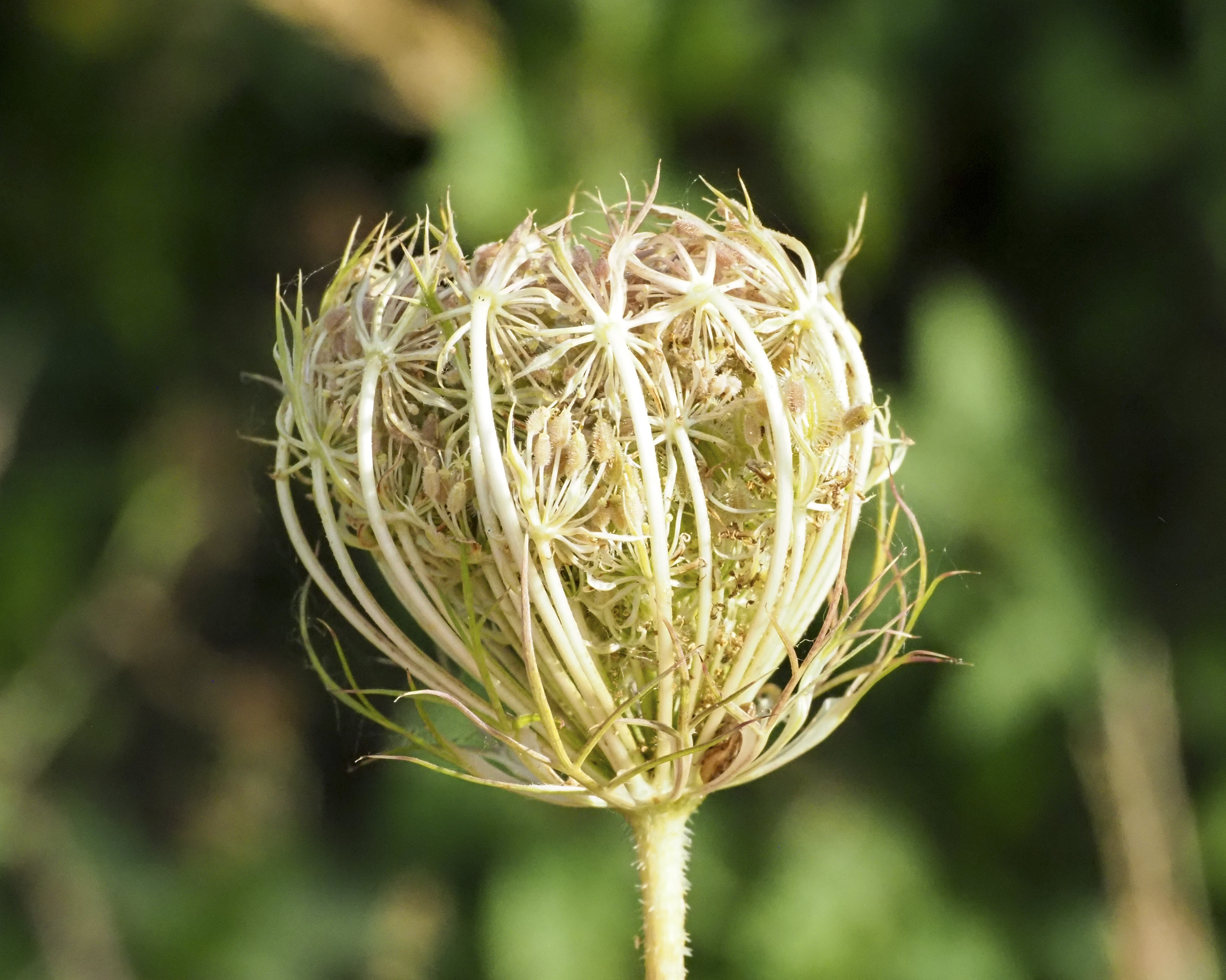
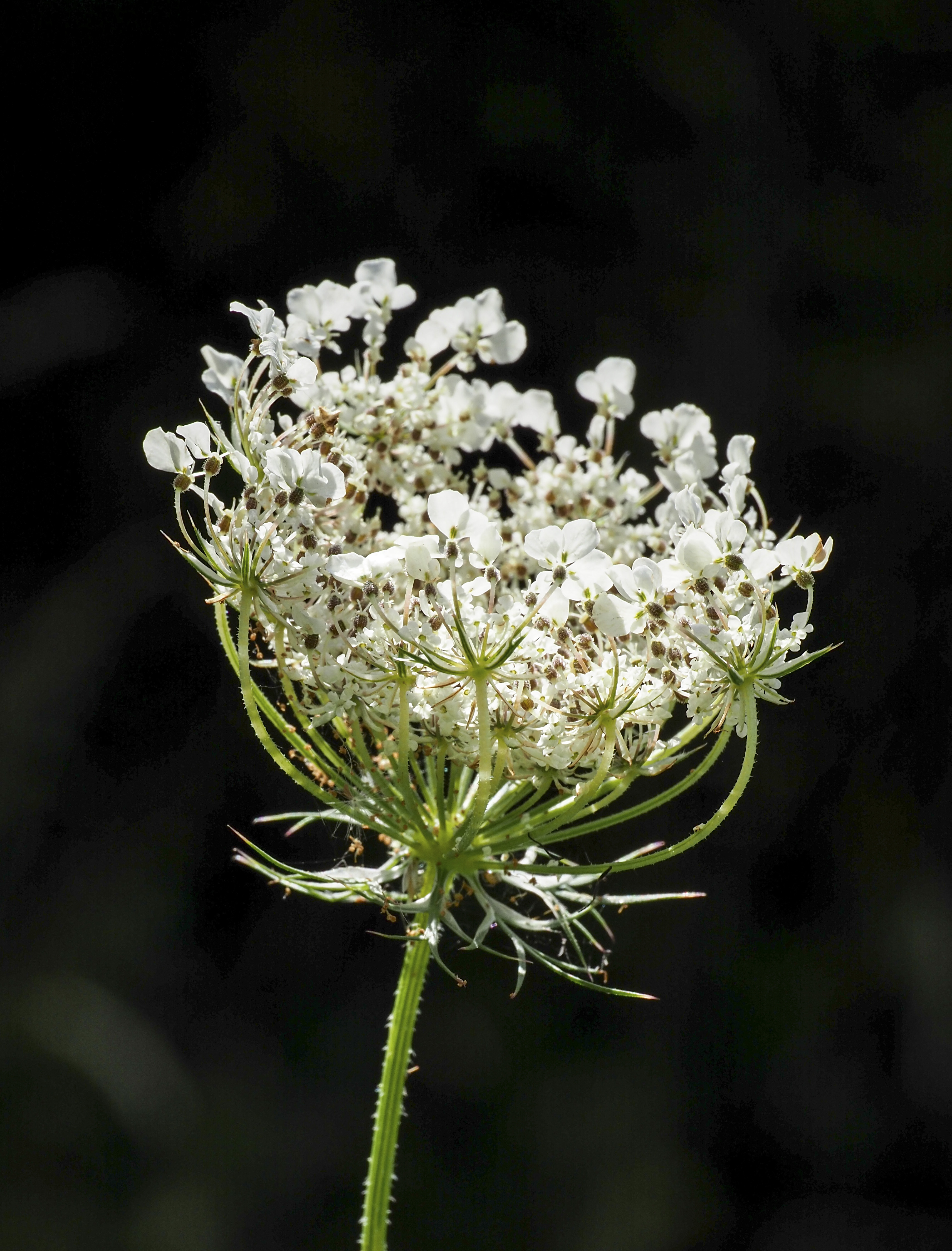
Towards the end of flowering, when the umbel head has lost a lot of the white petals, the red flowers take on a somewhat different appearance, very dark red and even more apparent, I think, in the middle of the flower.
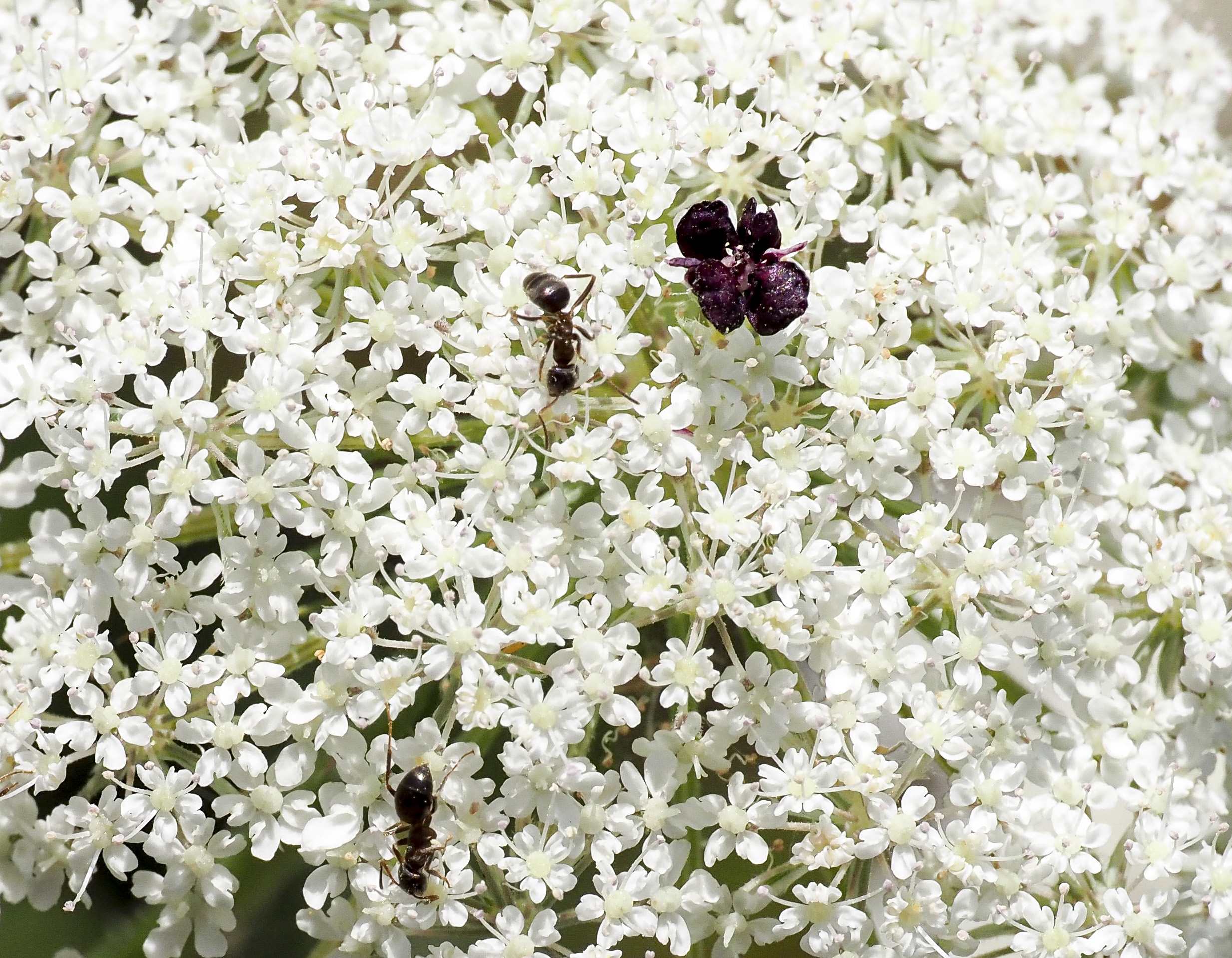
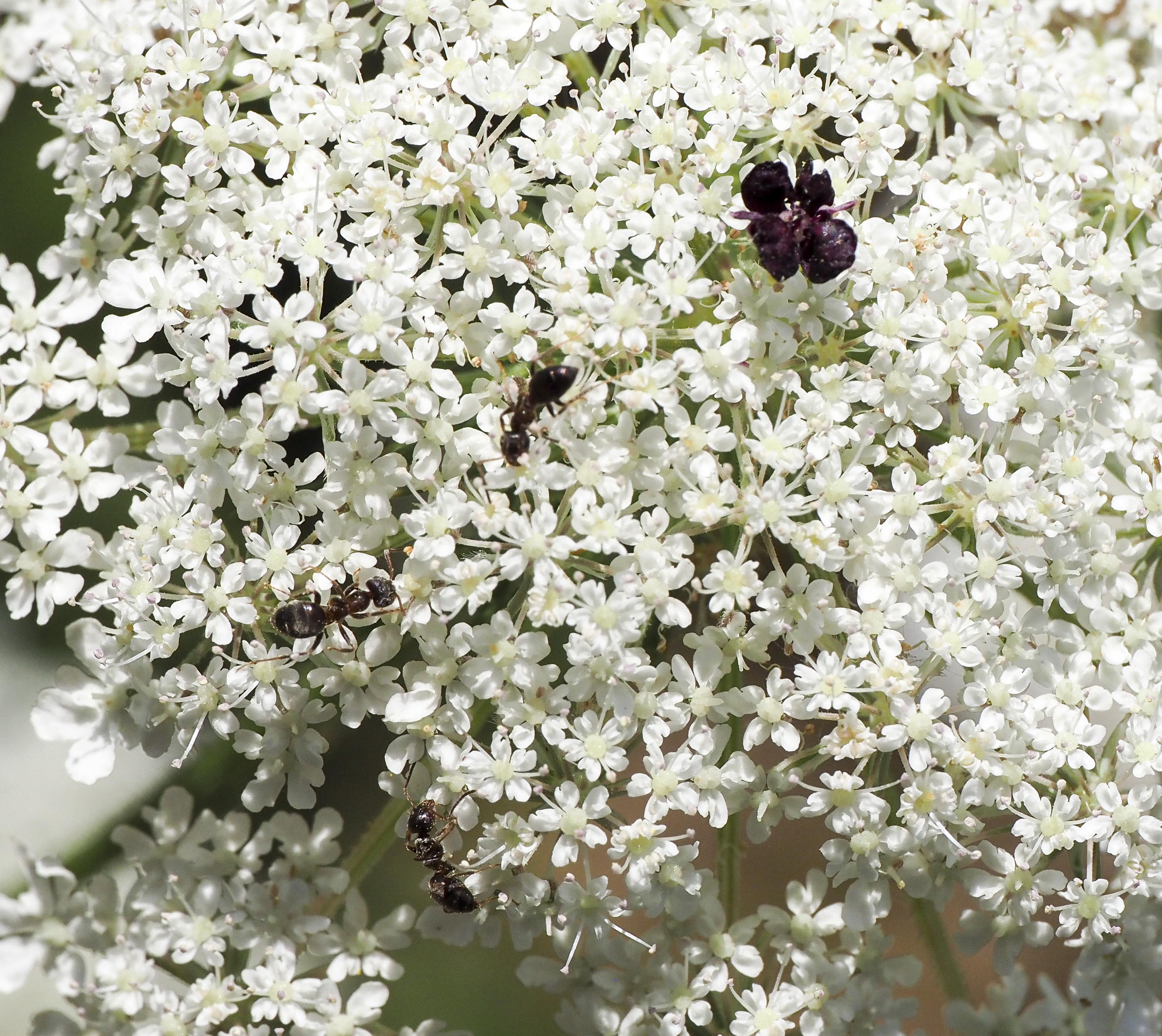
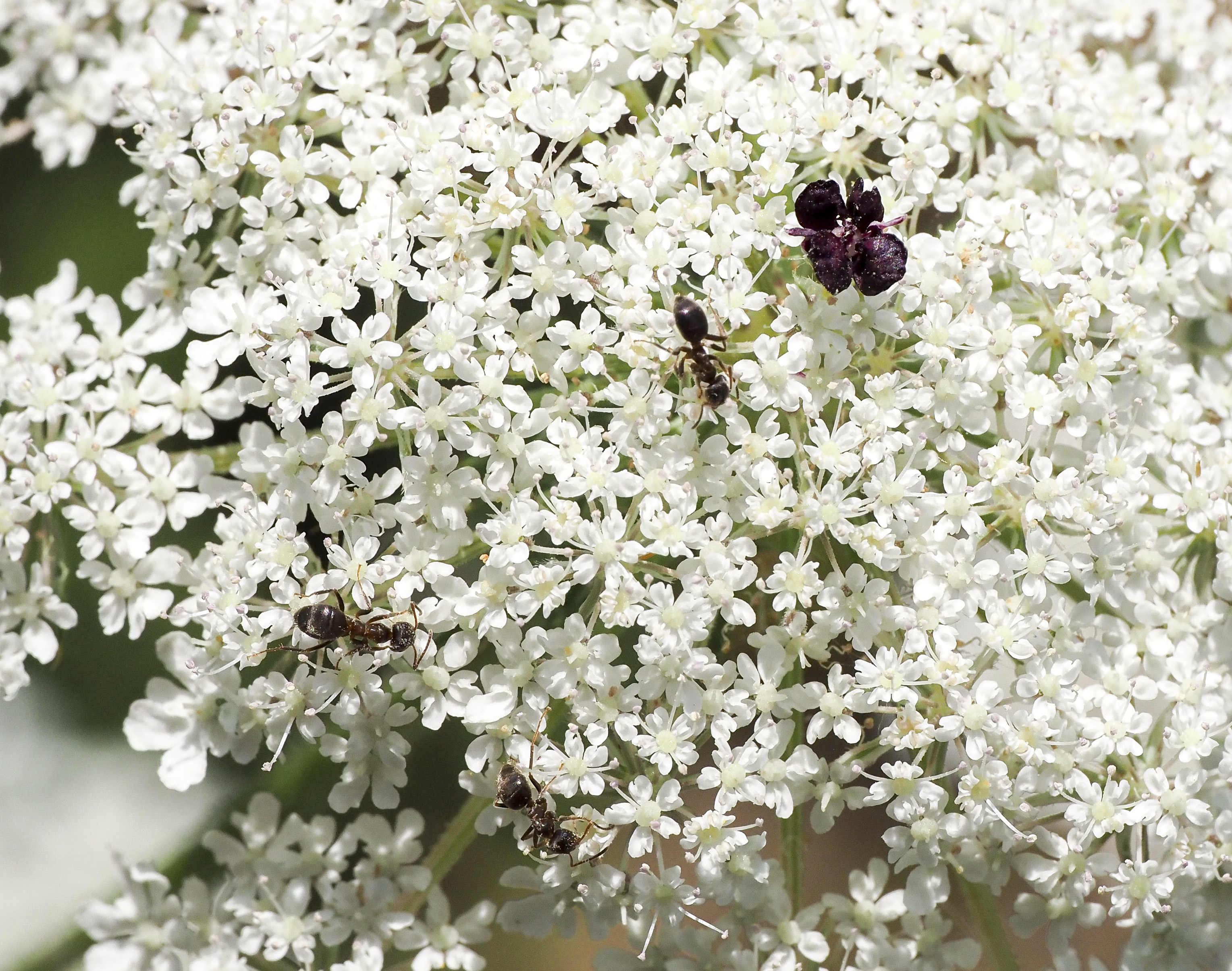
It might just be a coincidence, but I was struck by how similar some of the dark central umbellets looked to ants (see below). Perhaps they do attract insects of similar size and shape to the dark florets, as Goulson et al. (2009) also found for the the beetle Anthrenus verbasci L. (Dermestidae), but the clusters of flowers vary considerably in size, shape and colour, so the potential exists for the florets to mimic a wide variety of pollinators. Perhaps that is the idea?
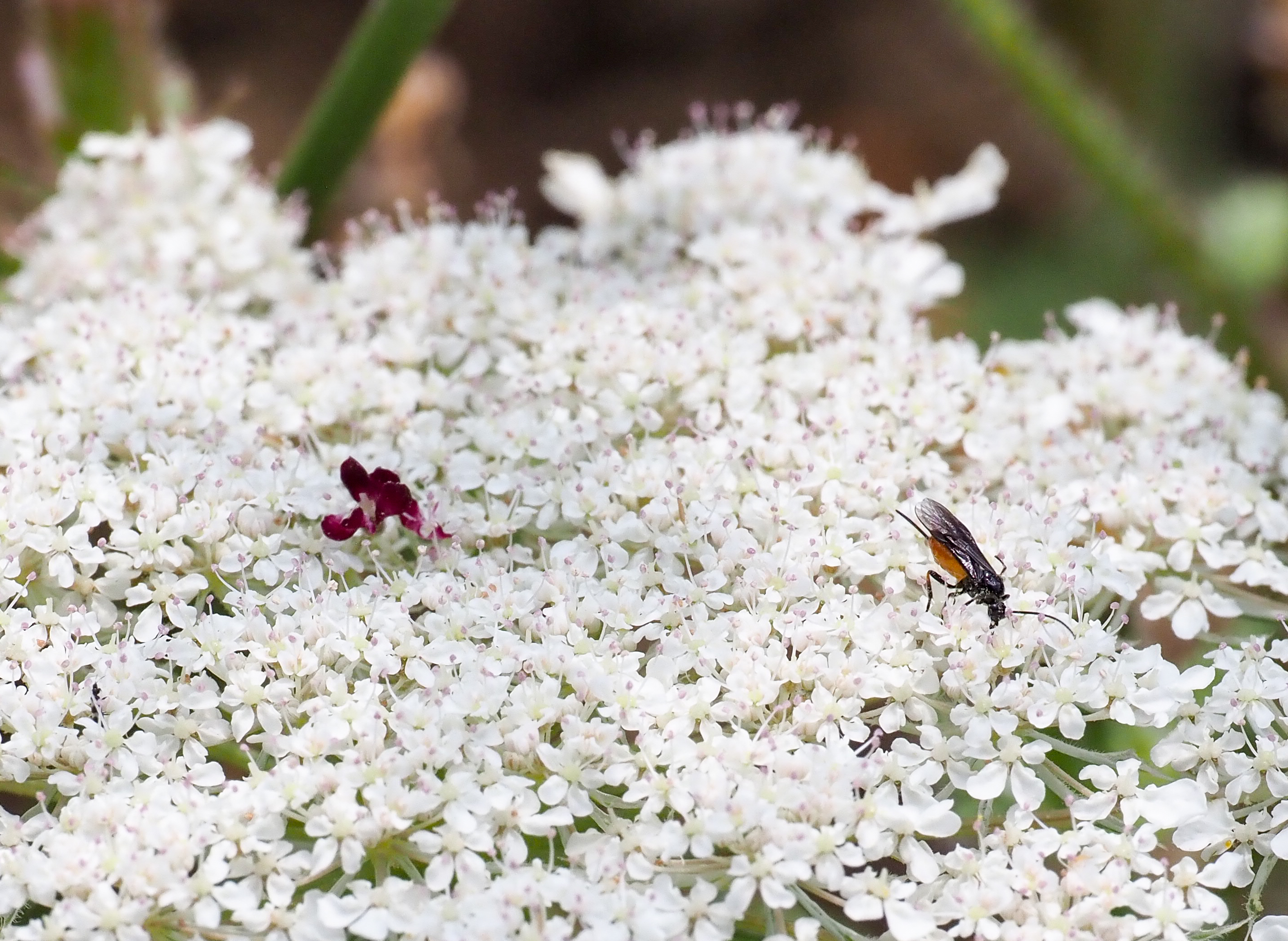
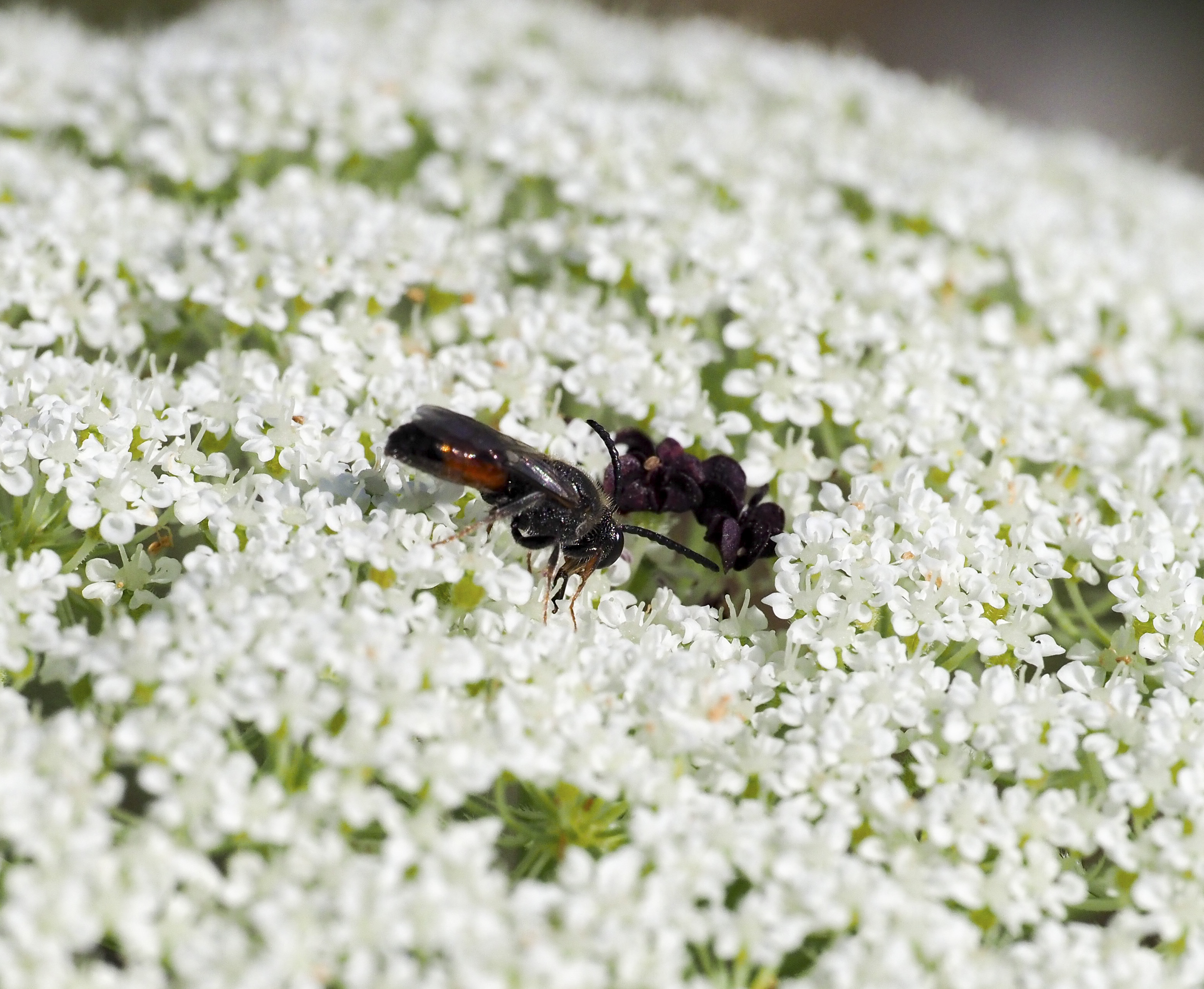
This small wasp (below) also looks rather similar in size and shape to the dark-centred florets in this photo, or am I reading too much into it? Perhaps going a bit floret crazy, or umbel mad!
Summing up
The comprehensive study by Claßen-Bockhoff et al. (2023) is the most definitive investigation of the phenomena of the dark-centred umbels. They came to the conclusion is that the dark centre is adaptive as it increases the general attractiveness of the umbels for a diverse range of insects and may have more “specific functions for some of them.”
In other words, the dark-centred flowers do not exert their attraction effects on all visitors to wild carrot umbels, but they probably do enhance pollination under certain conditions, which is why it remains a stable and useful feature for these plants down the generations. I.e. rather than simply dying out. It probably serves more than one function, and its role(s) may also vary in different locations depending on regional and seasonal conditions (Claßen-Bockhoff et al., 2023).
As always, there so much more to find out.
References
Claßen-Bockhoff, R., Celep, F., Ajani, Y., Frenken, L., Reuther, K., & Doğan, M. (2023). Dark-centred umbels in Apiaceae: diversity, development and evolution. AoB Plants, 15(5), plad065.
Daumann, E. (1973). Über die vermeintliche Bedeutung der Zentralblüte (n) in der Dolde von Daucus carota L. für die Bestäubungsökologie und als Schutz vor Weidetieren. Preslia, 45, 320-326.
Duan, A. Q., Deng, Y. J., Liu, H., Xu, Z. S., & Xiong, A. S. (2024). An anthocyanin activation gene underlies the purple central flower pigmentation in wild carrot. Plant Physiology, 196(2), 1147-1162.
Eisikowitch, D. (1980). The role of dark flowers in the pollination of certain Umbelliferae. Journal of Natural History, 14(5), 737-742.
Gonzalez, V. H., Cruz, P., Folks, N., Anderson, S. S., Travis, D., Hranitz, J., & Barthell, J. (2018). Attractiveness of the dark central floret in wild carrots: do umbel size and height matter?. Journal of Pollination Ecology, 23, 98-101.
Goulson, D., McGuire, K., Munro, E. E., Adamson, S., Colliar, L., Park, K. J., … & Gilburn, A. S. (2009). Functional significance of the dark central floret of Daucus carota (Apiaceae) L.; is it an insect mimic?. Plant Species Biology, 24(2), 77-82.
Lamborn, E., & Ollerton, J. (2000). Experimental assessment of the functional morphology of inflorescences of Daucus carota (Apiaceae): testing the ‘fly catcher effect’. Functional Ecology, 14(4), 445-454.
Ollerton, J. (2021) Pollinators & Pollination. pp. 84-87.
Pérez-Bañón, C., Petanidou, T., & Marcos-García, M. Á. (2007). Pollination in small islands by occasional visitors: the case of Daucus carota subsp. commutatus (Apiaceae) in the Columbretes archipelago, Spain. Plant Ecology, 192(1), 133-151.
Polte, S., & Reinhold, K. (2013). The function of the wild carrot’s dark central floret: attract, guide or deter?. Plant Species Biology, 28(1), 81-86.
Westmoreland, D., & Muntan, C. (1996). The influence of dark central florets on insect attraction and fruit production in Queen Anne’s Lace (Daucus carota L.). American Midland Naturalist, 122-129.


Fascinating read, thanks!! Timely too, as just yesterday I was stalking a big patch of Wild Carrot watching for insects and my eye kept being drawn to the dark centres.
Excellent article, thanks for drawing our attention to this tiny spec of color. A great reminder that almost nothing in nature happens “by accident”!