I recently came across some Humming-bird hawkmoths (Macroglossum stellatarum) feeding on a large patch of teasels in a clearing beside a wood. They were flying around doing a great job of locating the last of the teasel flowers, then hovering in front of them, extending their long tongues (proboscises) into the individual florets and extracting the nectar.
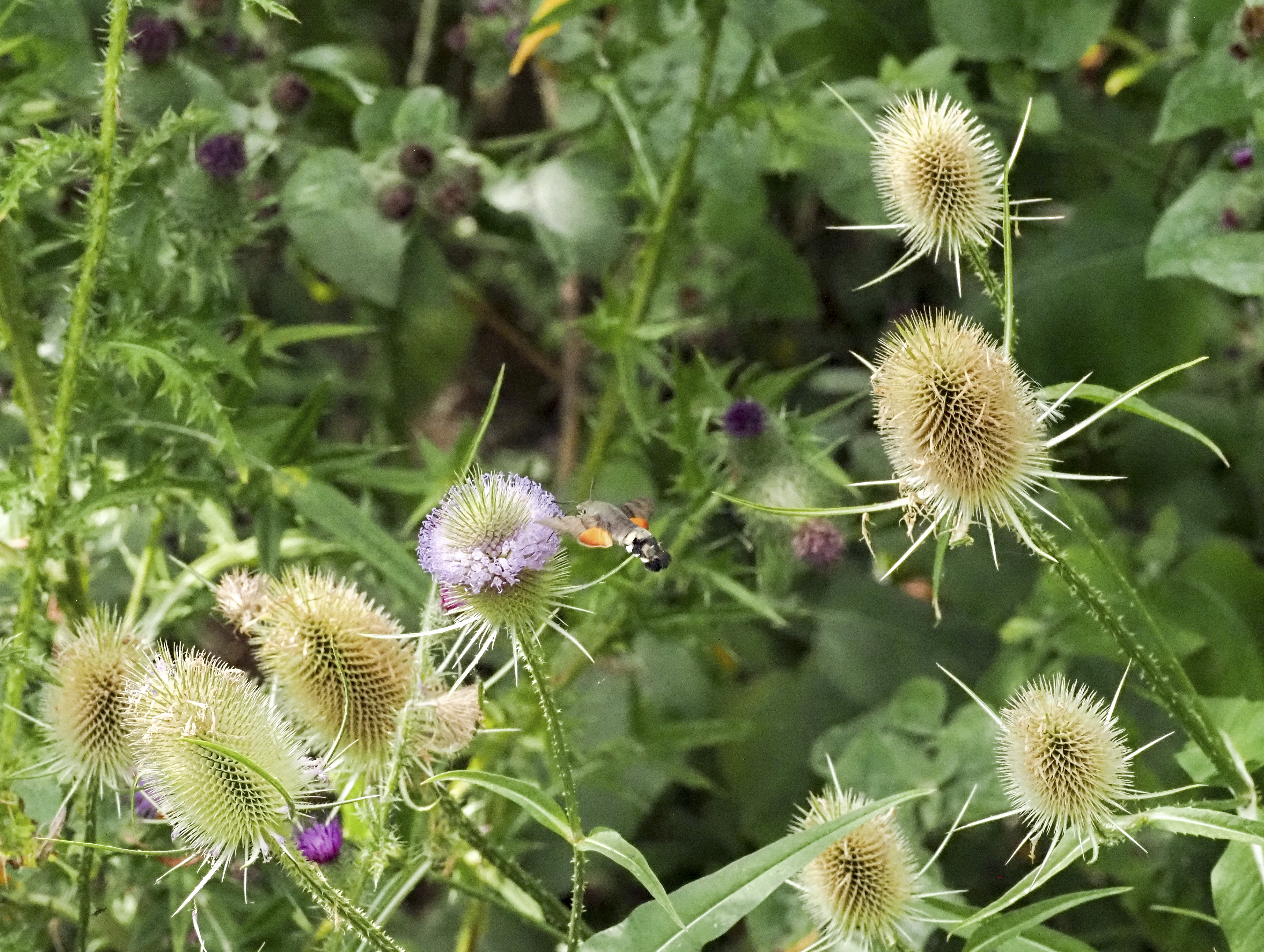
It was difficult to judge exactly how many hawkmoths there were flitting about in this patch of teasels and thistles, partly because they move so quickly, but also because I was focusing on one individual, then noticing another and switching my lens in that direction. Certainly, there was more than one, probably three or four. The teasel flowers were past their best, with perhaps just 30% of them having any pink flowers left, and only about 10% of them still having a full head of flowers.
Teasel flowers (Dipsacus): nectar resources
The wild teasel, Dipsacus fullonum L., is a perennial to biennial herb with prickly stems, egg-shaped flower-heads and spine-tipped bracts. It has a remarkable bidirectional pattern of flowering: see previous blog “Two-way teasels“. Flowering begins with the middle flowers, and then extends both upwards and downwards, producing two rings of open flowers which ‘migrate’ towards the poles of the teasel head over subsequent days.

The individual pale violet flowers on teasel heads are quite deep, with a mean corolla depth of 10 to 15 mm (Comba et al., 1999). However, that is no problem for the hummingbird hawk-moth (HBHM), which has a proboscis between 25 and 28 millimetres (i.e. over an inch) long, or for most butterflies, including this Small tortoiseshell (Aglais urticae), which was also nectaring (i.e. extracting nectar) on the teasels.

Photo by Raymond JC Cannon
Humming-bird hawkmoth nectaring behaviour
The hawkmoths I photographed here, in late July 2026, were flying rapidly between flowers, seeking those with sufficient nectar to justify them hovering for a while, whilst poking their very long, flexible proboscis into the tubular flowers. They took just a split-second to decide whether a flower was worth probing. It was difficult to see whether they made and contact with the flower, but they did touch it with their proboscis, but so fast it was almost impossible to see by eye!


High speed, slow motion photography taken of HBHMs in flight cages showed that whilst hovering and inspecting flowers, the moths make extremely fast movements: shifting 25 mm in just 100 milliseconds – one millisecond equals one-thousandth (0.001) of a second – while hovering over (model) flowers, and poking with their proboscis up to 150–200 times per second!! (Goyret & Kelber, 2012 Movie 1). No wonder this is hard for us to see!

Researchers, Goyret & Kelber (2012), used flower models with coloured patterns to investigate which visual cues were used for proboscis placement and subsequent movements by the moth. They had previously found that hawkmoths use visual input to control the placement and movement of their proboscis, using markings, known as nectar or floral guides (Goyret, 2010; Goyret & Kelber, 2011). However, once the proboscis makes contact, the moth relies on chromatic (colour) signals to guide the fine probing movements they make to reach the nectar deposits.
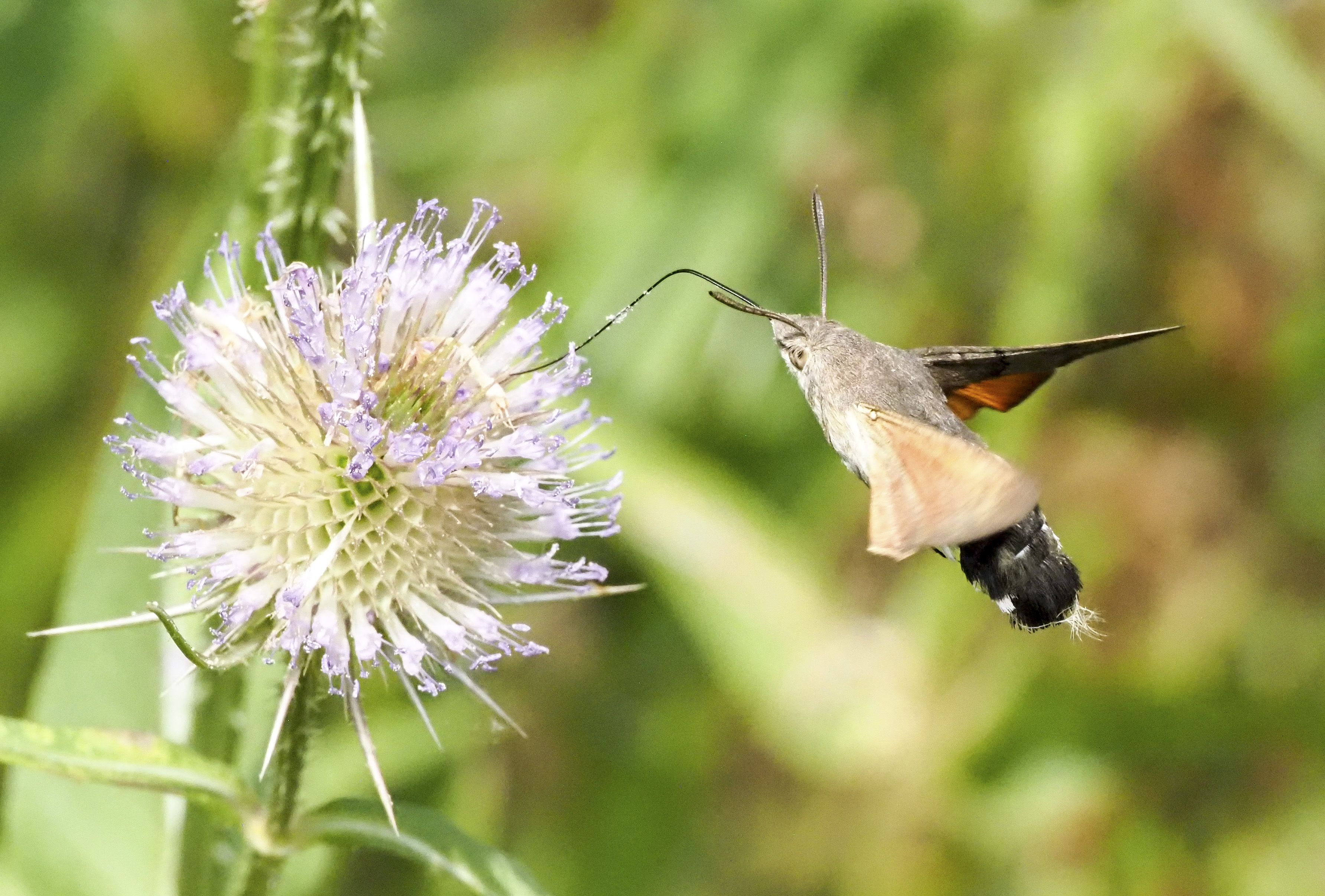
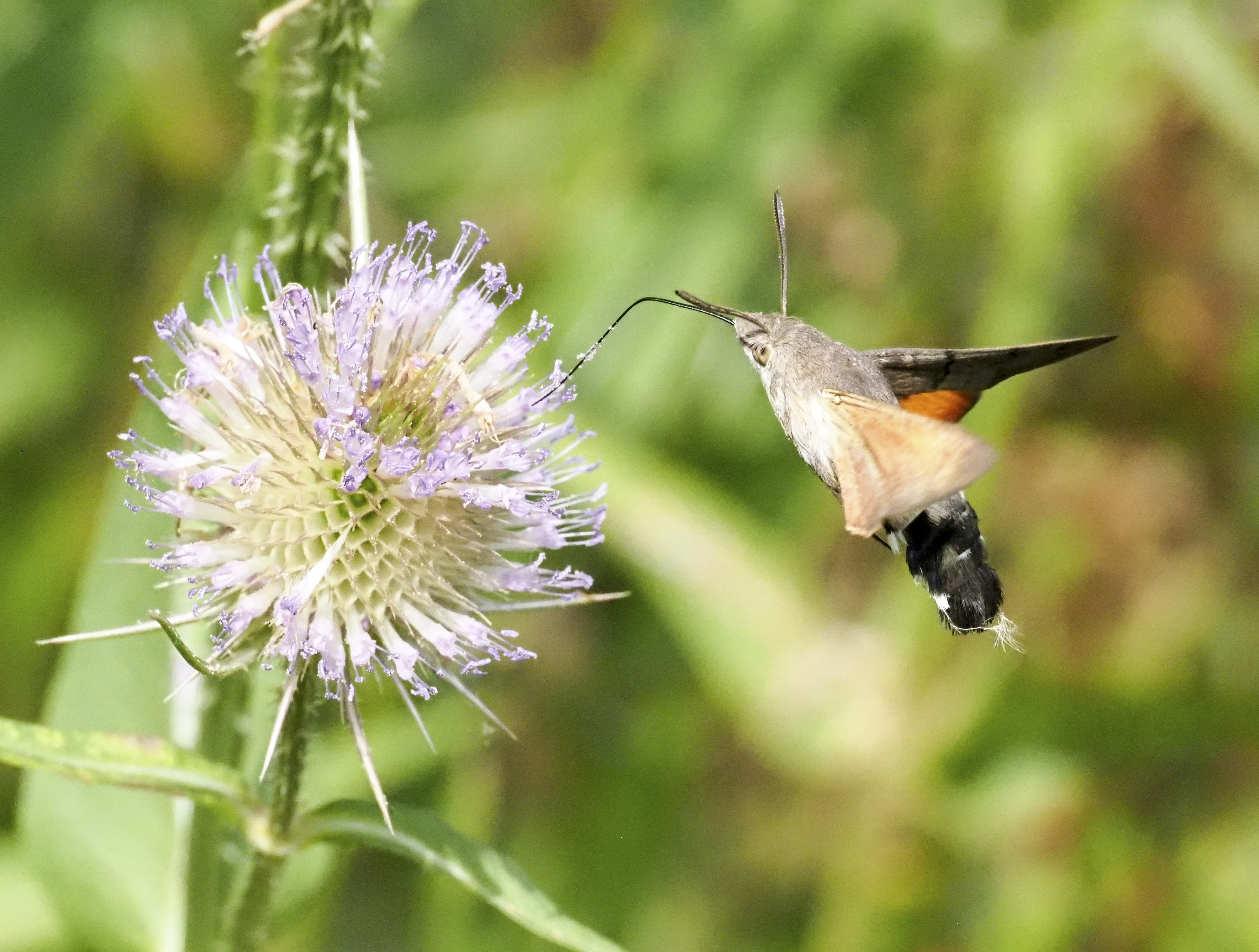
As I followed them with my camera through the teasel patch, they would spend a few minutes nectaring at different flowers, sometimes spending quite a lot of time at one, presumably profitable flower, before moving on to the next one. Whilst hovering, they flap their wings at an incredible rate of 70 to 80 times per second.
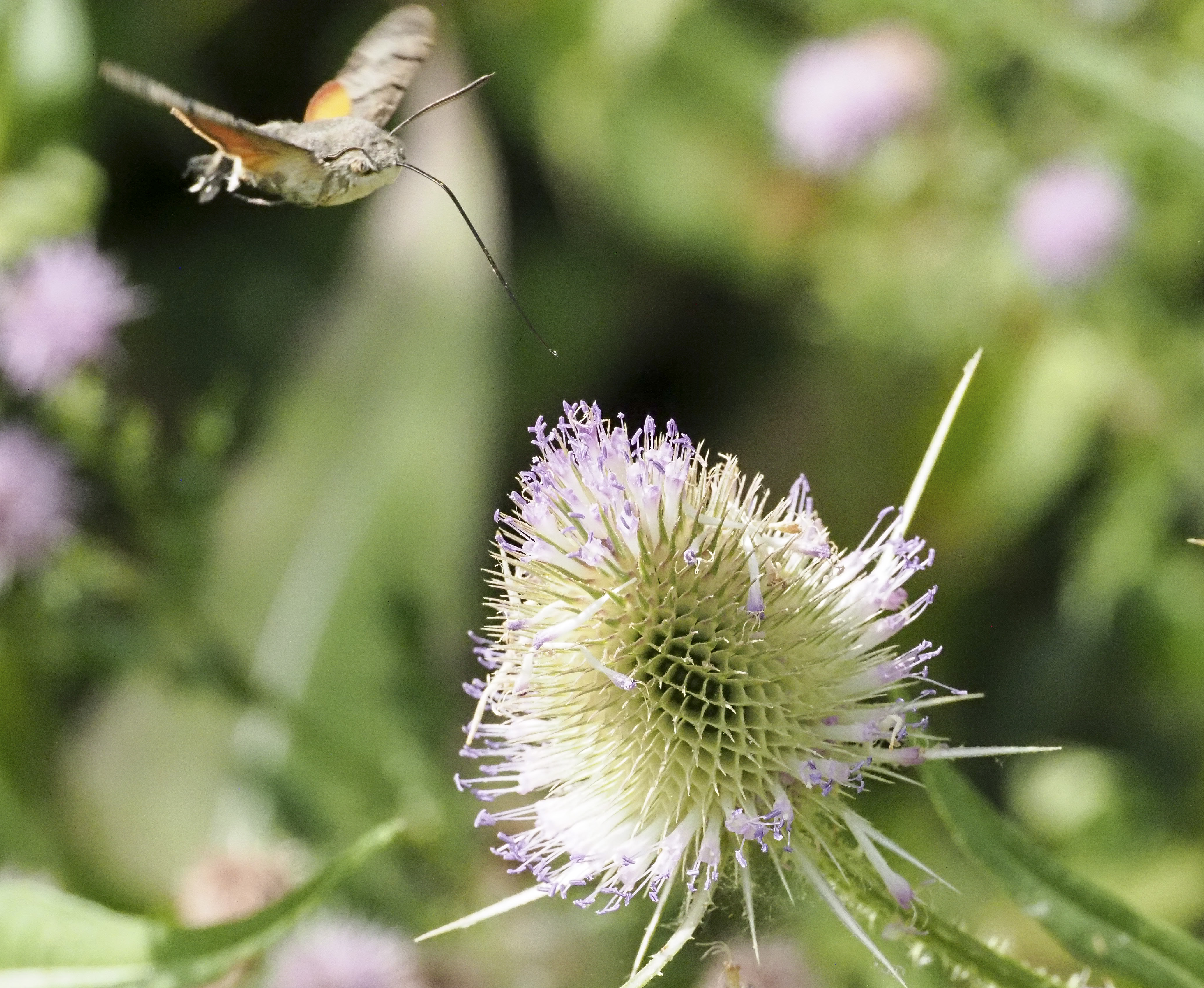
A German researcher by name of M. Pfaff, estimated during his PhD research in 1991 that HBHMs visited up to 500 flowers in a day! This seems rather a low number to me, and Gemini AI gives a figure of between 1,000 and 2,000 flowers, which seems more realistic, although the number will clearly vary from flower to flower, depending on species, season and even time of day. This AI agent also reports that a HBHM consumes up to 211 microliters (μl) of nectar in a single day. That’s about 0.2 cubic millimetres (mm³) a day; not much to ask for, is it?! N.B. if a HBHM lives for a month it will need about a teaspoon of nectar, according to my calculations (211μl x 30 = 6,330μl or 1.069 imperial teaspoons!).
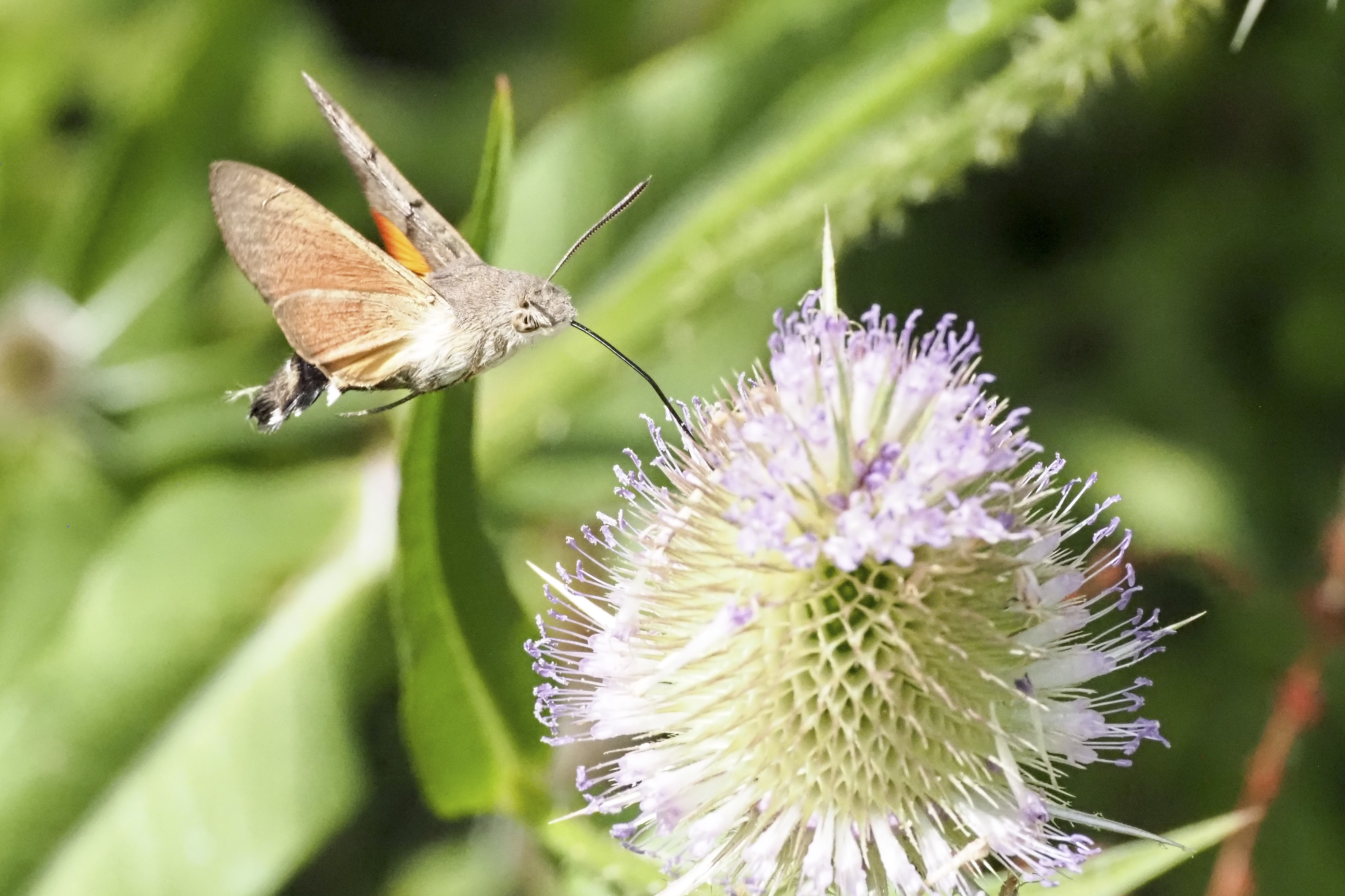
The males need this nectar to locate females and carry out brief courtship flights (rarely seen!). The females on the other hand, have to do everything a male does, as well as laying up to 200 eggs! Do they need more nectar? I don’t know, but AI thinks that they do require extra energy, to produce eggs and actively search for specific host plants like bedstraw to lay them. Many HBHMs also migrate long distances, e.g. coming to Britain from North Africa and southern Europe in May and June. This must be hugely energy sapping, although they probably make many regular stop-offs to rest and refuel.
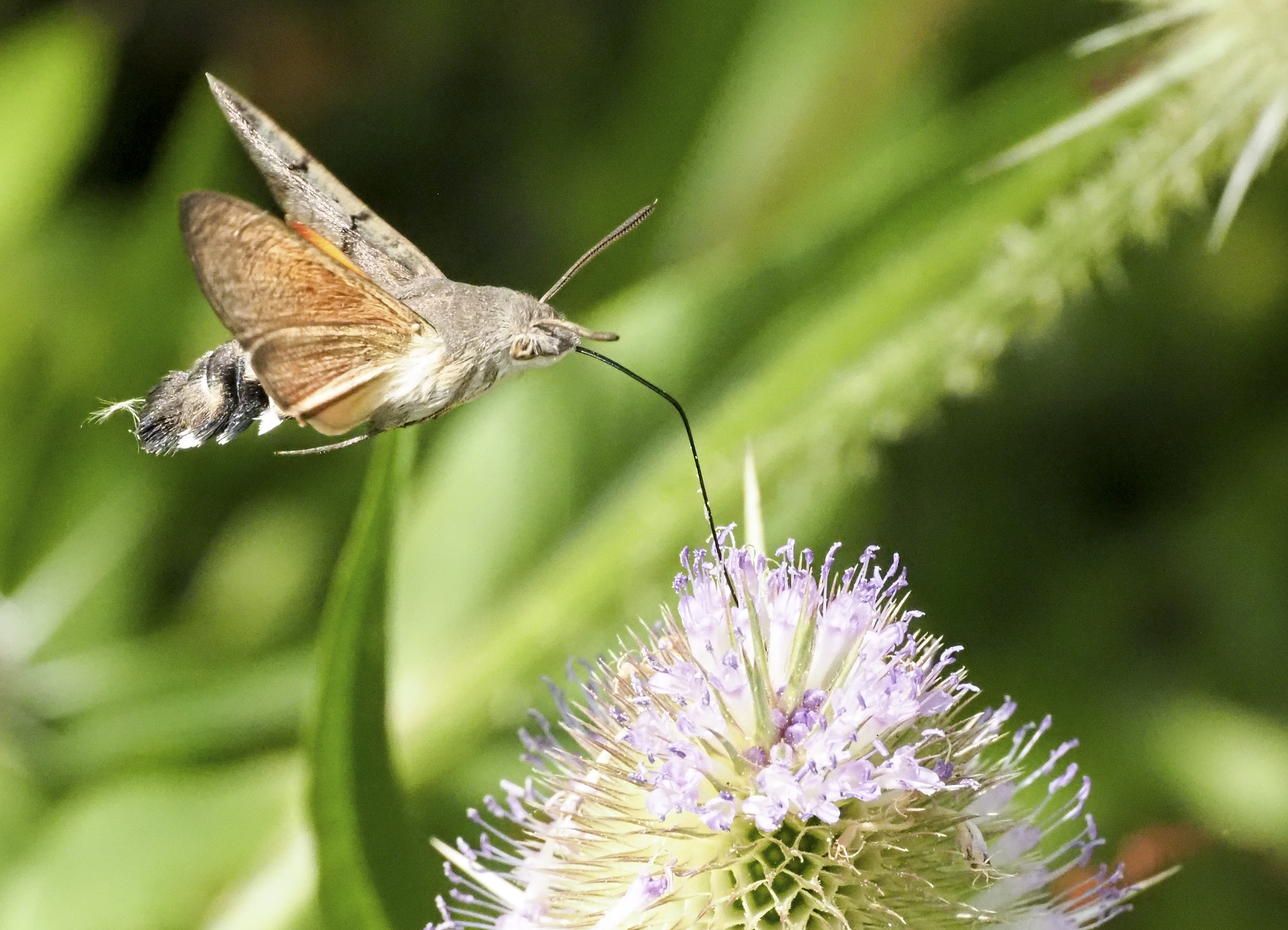
The proboscis appears to be repeatedly unfurled and then furled up again, often appearing partially unfurled in these photos, as the moths approach a flower. The speed with which it is unfurled and then inserted into individual flowers, is truly breath-taking! The moth gets itself into position using its wings and flight control system, then carefully positions it’s proboscis through visually guided movements (Kannegieser et al., 2024).

HBHMs have relatively large eyes – with a frontal zone comprised of larger facet lenses and more receptors to track flowers while hovering – containing about 6,000 ommatidia in total (Stöckl & Kelber, 2019). These researchers showed that after coming into contact with the nectary opening, the moths effectively ‘dive’ into the corolla tube, and continue to perform these dives several times whilst emptying the contents of the flower.
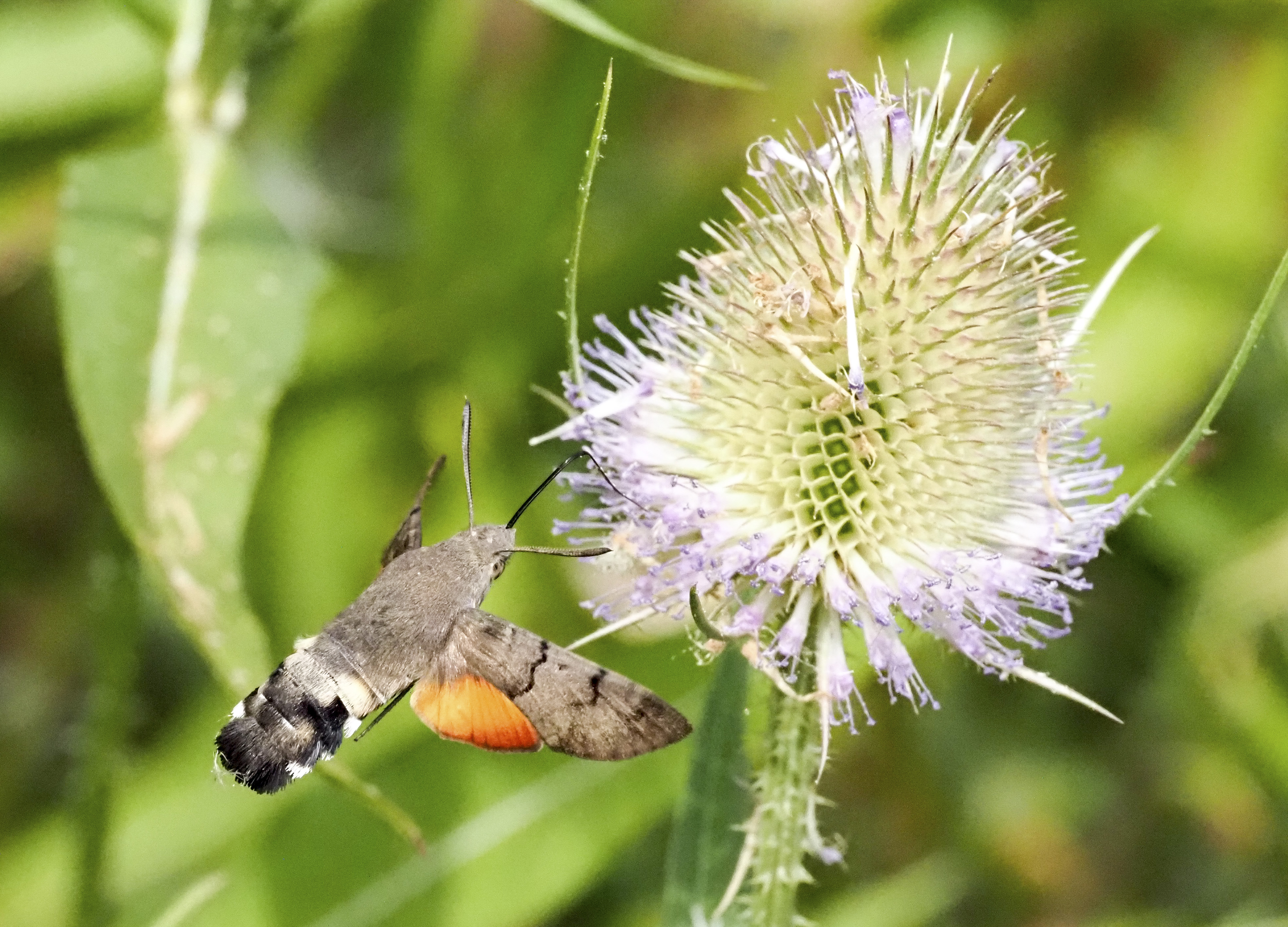
The behaviour of Macroglossum stellatarum while inspecting a flower is a 2-step sequence: firstly making exploratory movements (i.e. pokes and short sweeps) controlled by visual and mechanosensory feedback; followed by fast, forward movements, increasing in order to locate the nectar (Goyret & Kelber, 2011).
Hawkmoth biology
After a period of concentrated feeding, the hawkmoths I was trying to photograph flew off into the surrounding woodland. It was difficult to judge how natural this behaviour was though, because they were being pursued by me and my camera, and the interference may have led them to decamp the scene every now and then. However, I am inclined to think that it was a natural pattern, perhaps involving a rest, or searching for mates, as they did not seem to be much affected by the camera when actually feeding. The difficulty was keeping up with them as they flitted about the patch from flower to flower!

Humming-bird hawkmoths have at least three spectral receptor types – sensitive in the ultraviolet, blue and green parts of the spectrum – and they rely on this colour vision to locate and interact with flowers (Kelber, 1996; 1997). They have an innate preference for specific light wavelengths when first foraging for flowers, being strongly attracted to 440 nm (blue) and a weaker response to 540 nm (green/yellow-green) (Kelber, 1997).
In other words, their spontaneous foraging choices are strongly directed towards blue and yellow colours (Kelber, 1997). They are also naturally attracted to flowers of a certain size (about 32 mm diameter) with radial, rather than ring patterns, at least according to experiments using coloured paper discs (Kelber & Pfaff, 1997) .
However, it doesn’t take HBHMs very long to learn to switch to new flowers of a different colour – about 20 visits reportedly – if they are consistently rewarding (Kelber, 1996). And they can probably remember the time and place where they found new floral resources! They also have, like us, colour constancy; so once they have learnt the colour of a rewarding flower, they can identify it whatever the lighting conditions: overcast, dimly lit or bright sunshine (Kelber et al., 2003; Balkenius & Kelber, 2004).
Photography
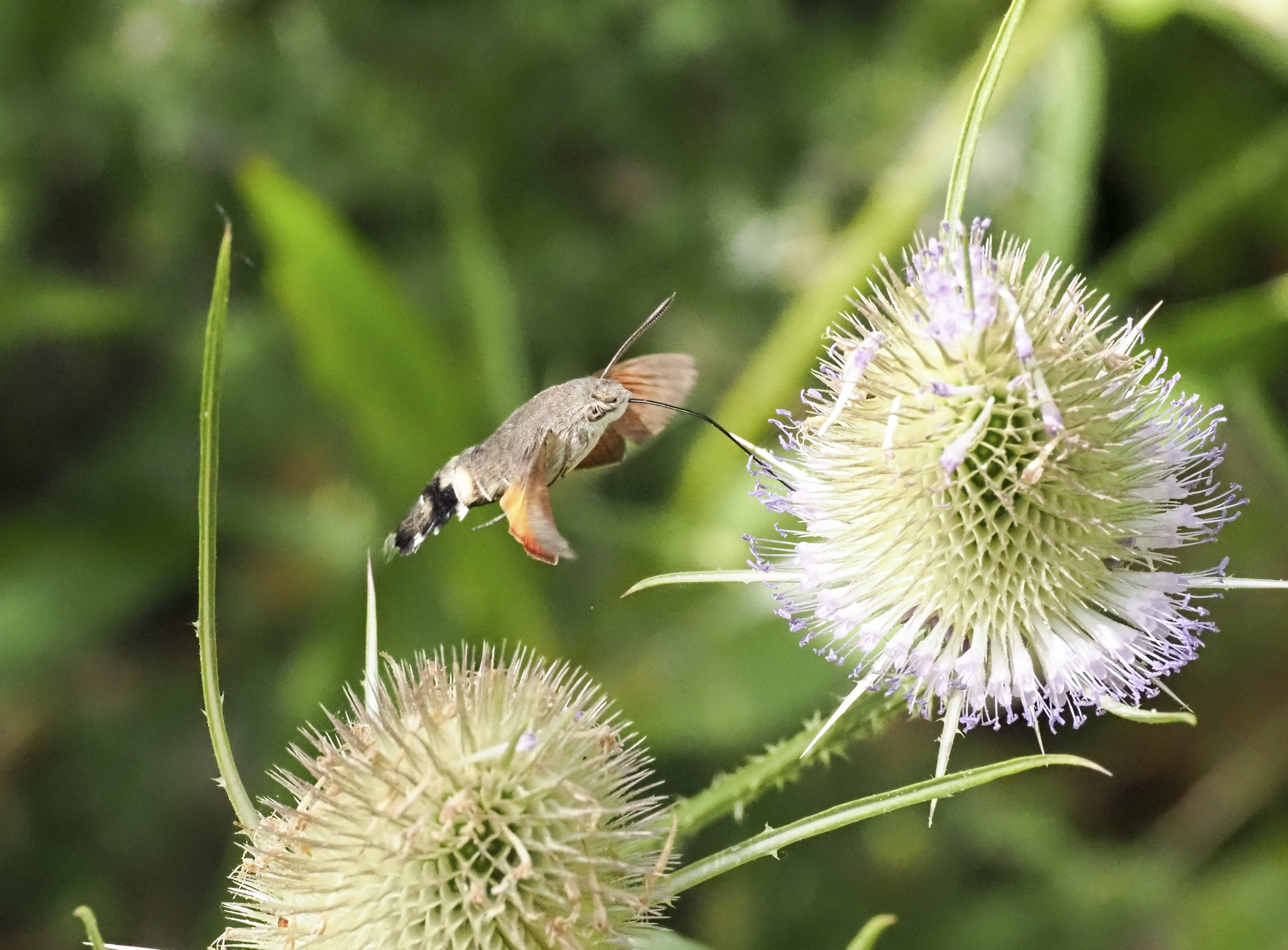
I took these phonographs with an Olympus 90mm F3.5 Macro lens on my trusty Olympus OM-D E-M1 Mark II. All images were taken handheld, without flash for the most part. I have a small flashgun, but quickly gave up on using it as it was too slow to respond! I also prefer natural lighting, even though it comes with limitations. When the sun came out, I could get away with using a shutter speed of 1/5000s of a second at f9 (typical ISO 6400). I started off at shutter speeds of 1/4000ths but quickly decided that I needed 1/5000th to try and freeze the moth in time and space! Even still, the wings are blurred on some shots.
Summing up
Humming-bird hawkmoths have become something of a model species and a lot of research has been carried out on different aspects of their ecology, morphology and behaviour. They are also a migratory species, with successive waves of migrants moving north in the spring, then after a generation or two, migrating south again at the end of summer and into autumn. Increasing numbers of adults are said to be spending the winter here in Britain, e.g. sheltering in outdoor buildings, so there is great scope for citizen science observations of overwintering.
There is always much more to find out about insects than we realise, and simple observations of behaviour can be very useful. Following them round taking pictures with a camera or smart phone is one way of gaining a privileged glimpse into their lives, but one could just as well learn much about them by simply following them with binoculars! The thing is to get out in the countryside, if you can, and enjoy observing the lives and natural habits of the tiny creatures we share the planet with.
Links
Video by Tammy Ascher https://www.instagram.com/reel/DCWuoi_qZfZ/?igsh=MWlxNzBwdW5pNDUzMA==
https://phys.org/news/2024-01-scientists-sensory-hummingbird-hawk-moths.html
https://journals.biologists.com/jeb/article/226/19/jeb246737/333441
https://www.theguardian.com/environment/2026/jul/30/hummingbird-hawk-moth-sightings-migrating-uk
References
Balkenius, A., & Kelber, A. (2004). Colour constancy in diurnal and nocturnal hawkmoths. Journal of Experimental Biology, 207(19), 3307-3316.
Comba, L., Corbet, S. A., Hunt, L., & Warren, B. E. N. (1999). Flowers, nectar and insect visits: evaluating British plant species for pollinator-friendly gardens. Annals of Botany, 83(4), 369-383.
Goyret, J. (2010). Look and touch: multimodal sensory control of flower inspection movements in the nocturnal hawkmoth Manduca sexta. Journal of Experimental Biology, 213(21), 3676-3682.
Goyret, J., & Kelber, A. (2011). How does a diurnal hawkmoth find nectar? Differences in sensory control with a nocturnal relative. Behavioral Ecology, 22(5), 976-984.
Goyret J, Kelber A (2012) Chromatic Signals Control Proboscis Movements during Hovering Flight in the Hummingbird Hawkmoth Macroglossum
stellatarum. PLoS ONE 7(4): e34629. doi:10.1371/journal.pone.0034629
Kannegieser, S., Kraft, N., Haan, A., & Stöckl, A. (2024). Visual guidance fine-tunes probing movements of an insect appendage. Proceedings of the National Academy of Sciences, 121(6), e2306937121.
Kelber, A. (1996). Colour learning in the hawkmoth Macroglossum stellatarum. Journal of Experimental Biology, 199(5), 1127-1131.
Kelber, A. (1997). Innate preferences for flower features in the hawkmoth Macroglossum stellatarum. Journal of Experimental Biology, 200(4), 827-836.
Kelber, A., Balkenius, A., & Warrant, E. J. (2003). Colour vision in diurnal and nocturnal hawkmoths. Integrative and Comparative Biology, 43(4), 571-579.
Kelber, A., & Pfaff, M. (1997). Spontaneous and learned preferences for visual flower features in a diurnal hawkmoth. Israel Journal of Plant Sciences, 45(2-3), 235-245.
Knight, Kathryn. “Sipping takes no effort for hovering hawkmoths.” (2023): jeb246737.
Manel, A. N., Foster, J. J., & Stöckl, A. (2026). Strong negative reinforcement interferes with visual learning in a solitary pollinator. Animal Behaviour, 123624.
Pfaff, M., & Varjú, D. (1991). Mechanisms of visual distance perception in the hawk moth macroglossum-stellatarum. Zoologische Jahrbucher-Abteilung Fur Allgemeine Zoologie Und Physiologie Der Tiere, 95(3-4), 315-321.
Stöckl, A. L., & Kelber, A. (2019). Fuelling on the wing: sensory ecology of hawkmoth foraging. Journal of Comparative Physiology A, 205(3), 399-413.


This is a wonderful series of photos, capturing the motion and color of the hawkmoth and the lovely color of the teasel, both of which are new to me!
It’s been a good year for the HBHM, so too Painted Ladies and Clouded Yellows all migrants to these shores.
Fascinating information, and amazing photos.
Great blog- so informative and the series of photos is fantastic
Here in Herefordshire I have found HBHMs to be most attracted to our local Valerian flowers, most of which at some time appear to have been garden escapes. These proliferate along the streets in our village and have become an colourful annual feature in red, mauve and white. The moths seem most attracted to the red variety (Valeriana rubra, or is it Centranthus ruber), especially when the sun is shining directly on it. As the plant is an introduction from southern Europe, the immigrant moth must think it’s just like home! Images are available if desired