The wheat has ripened ever so fast in this hot – scorching! – summer of ’26. The combine harvesters have rumbled in and rumbled out, the grains have been harvested, the straw has been carted off, and what’s left is lying on the ground: leftovers! For whomever wants to come and pick and peck at it. And quite a few animals do!
The wheat had already been harvested in early August this year (2026)!
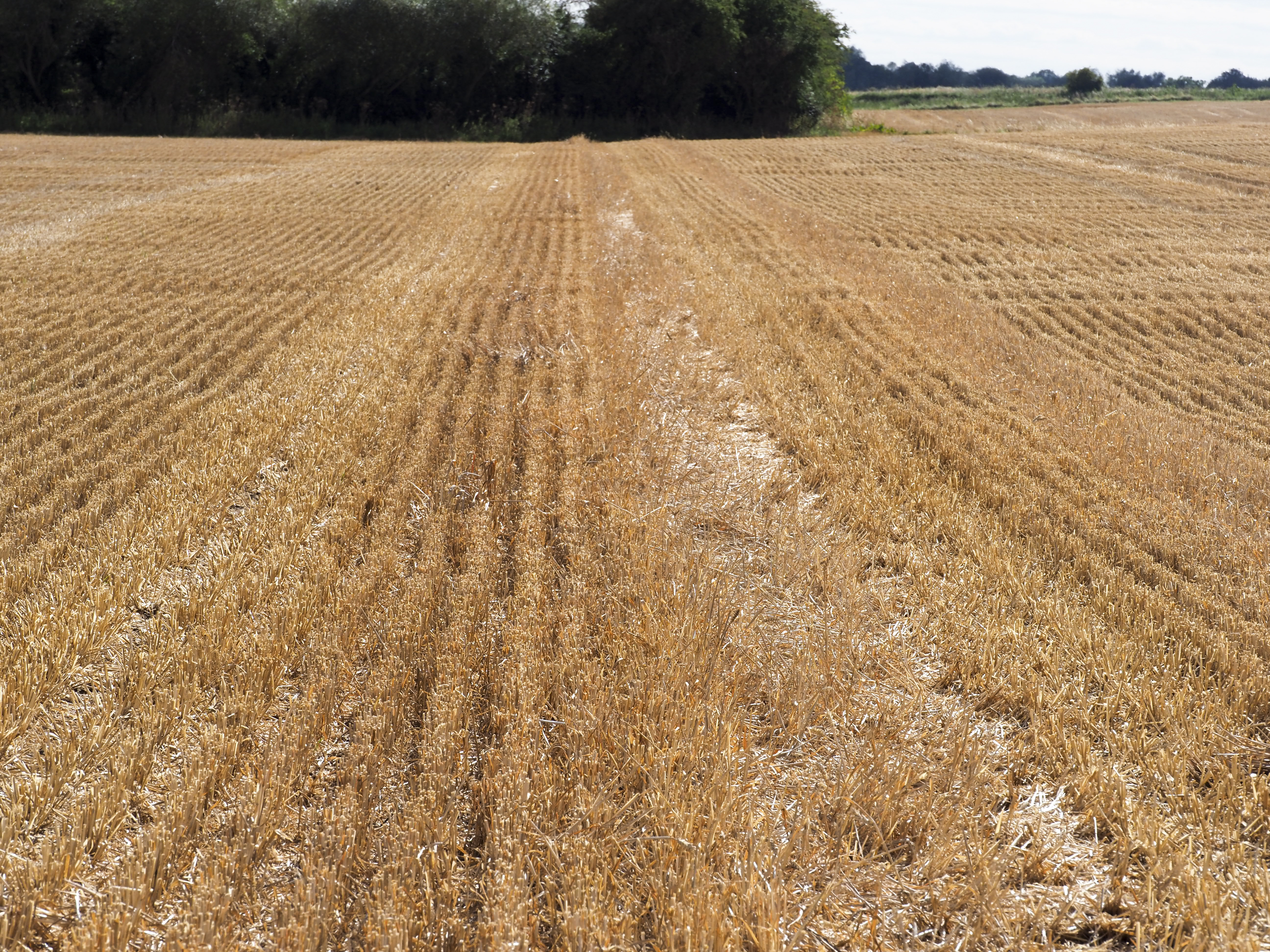
Photo by Raymond JC Cannon
Last year (2025) the wheat was ripe, but still unharvested in mid September (below), which is fairly normal for the UK.
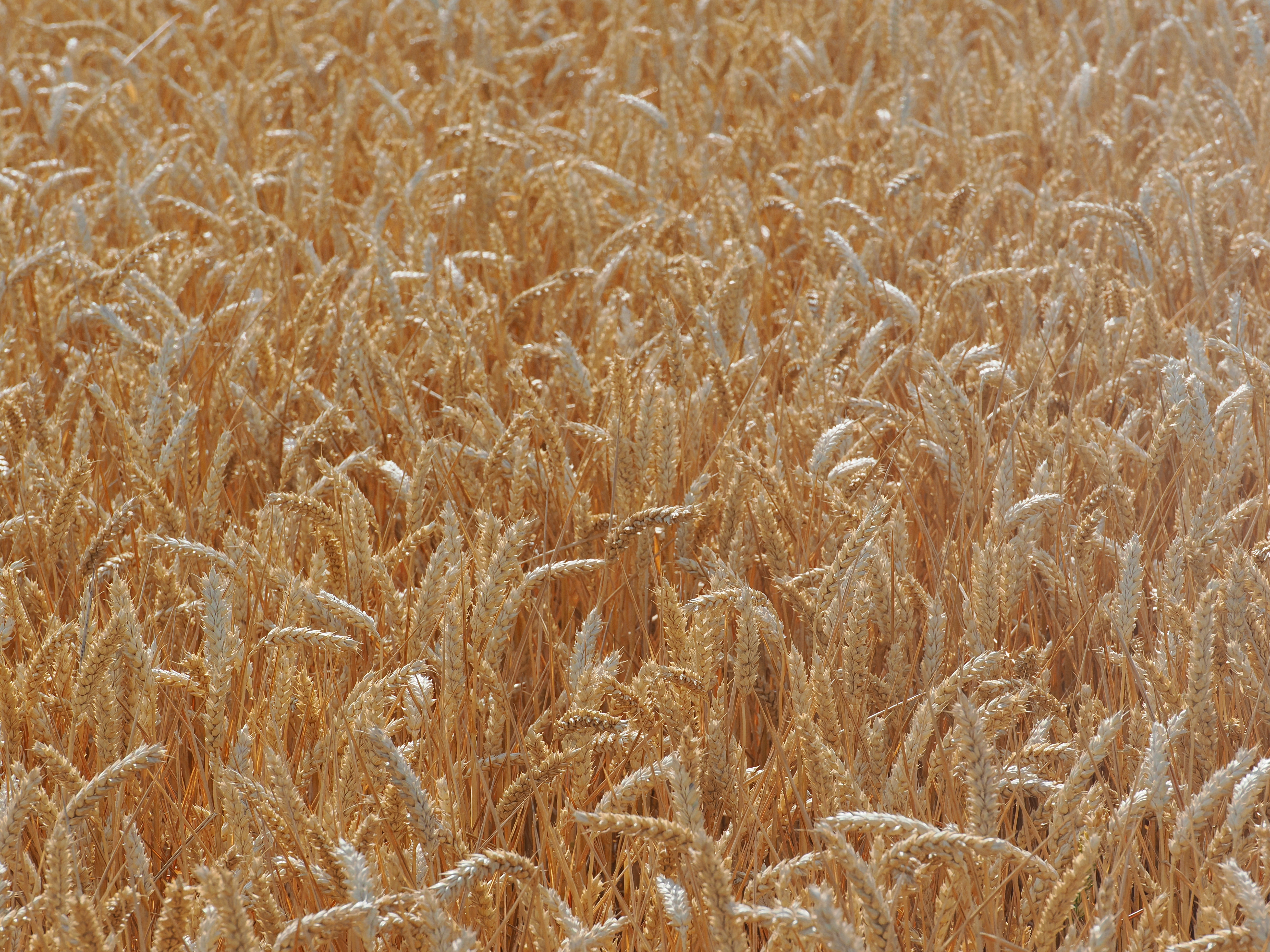
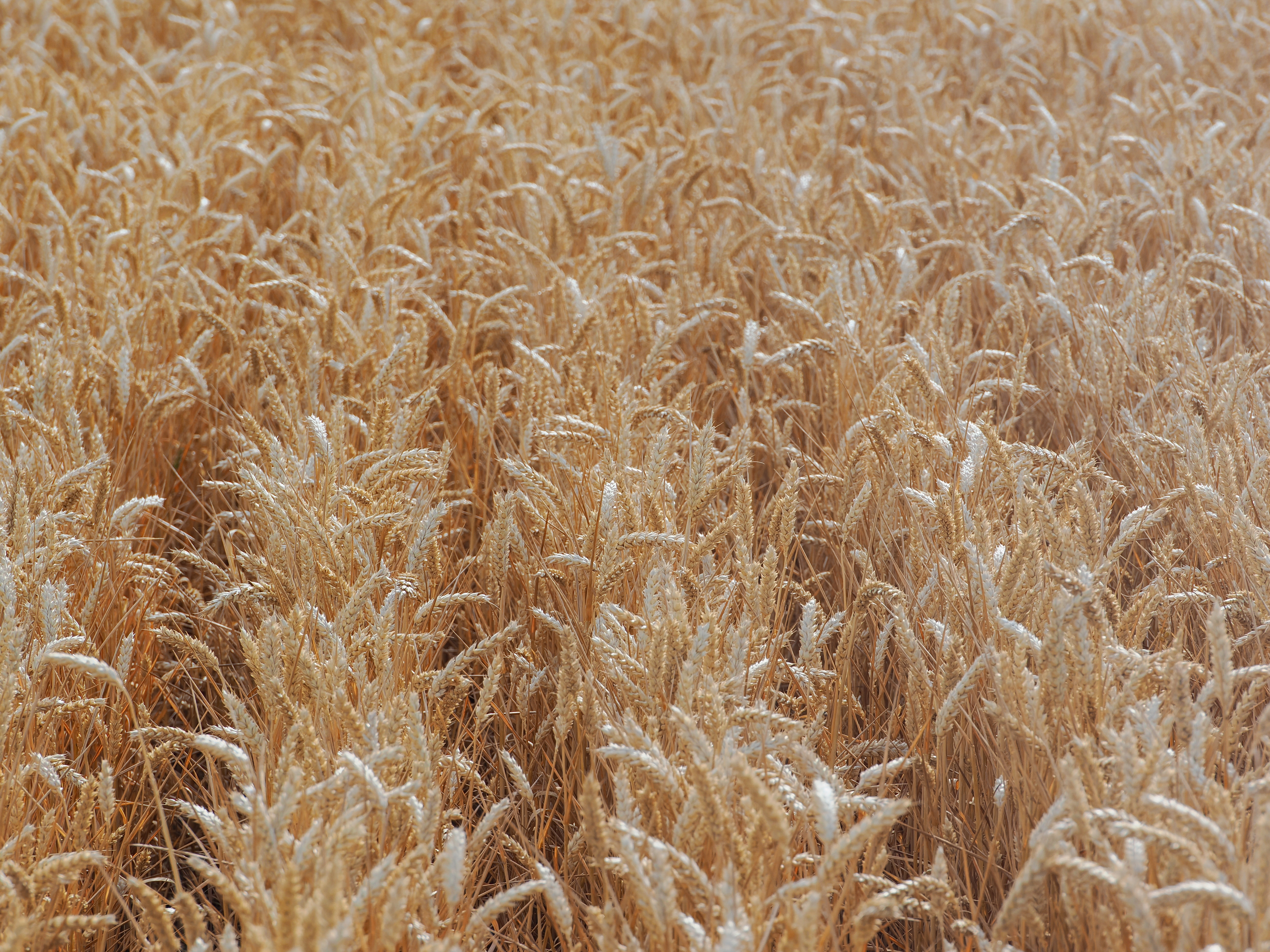
Photo by Raymond JC Cannon
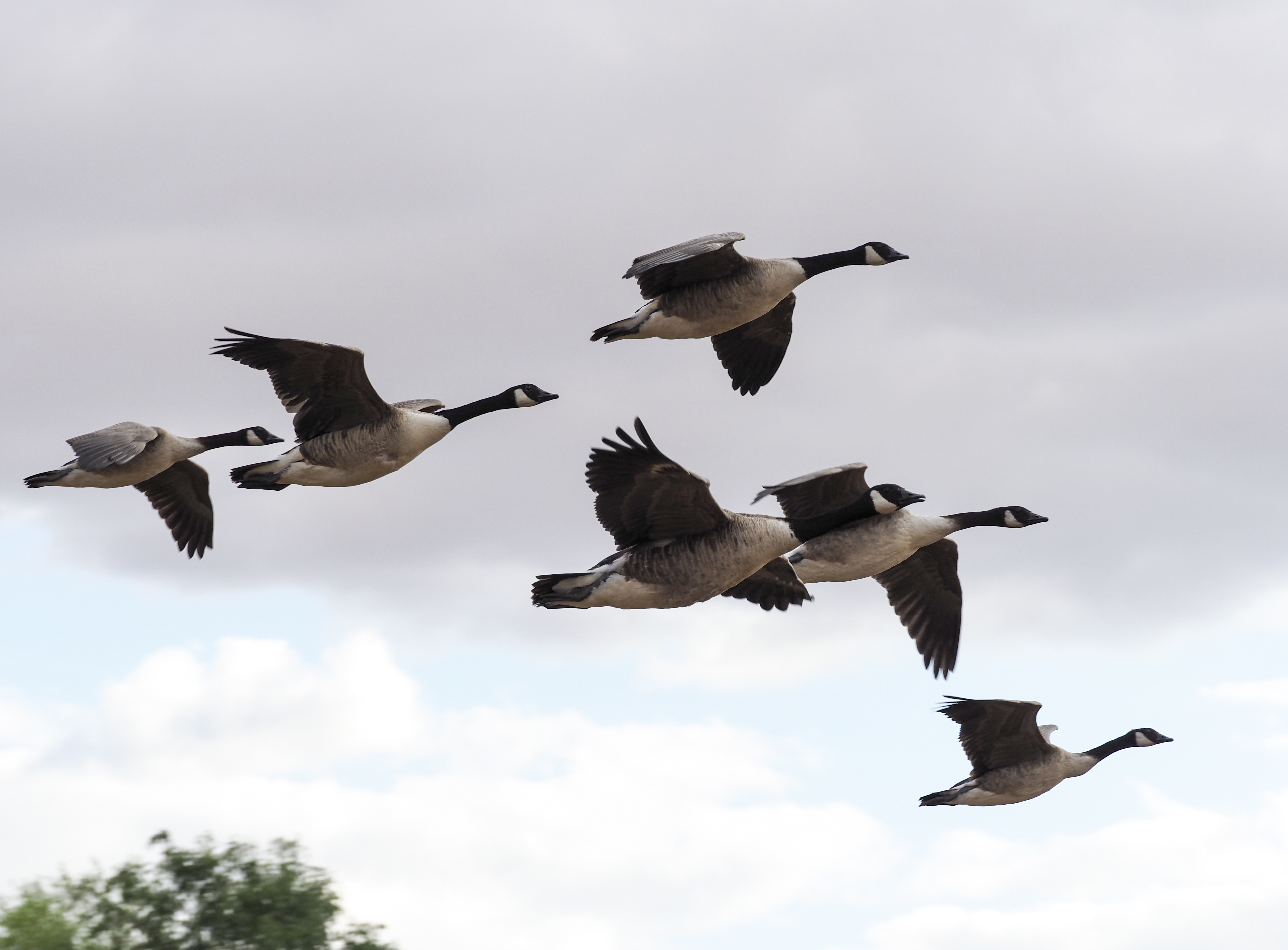
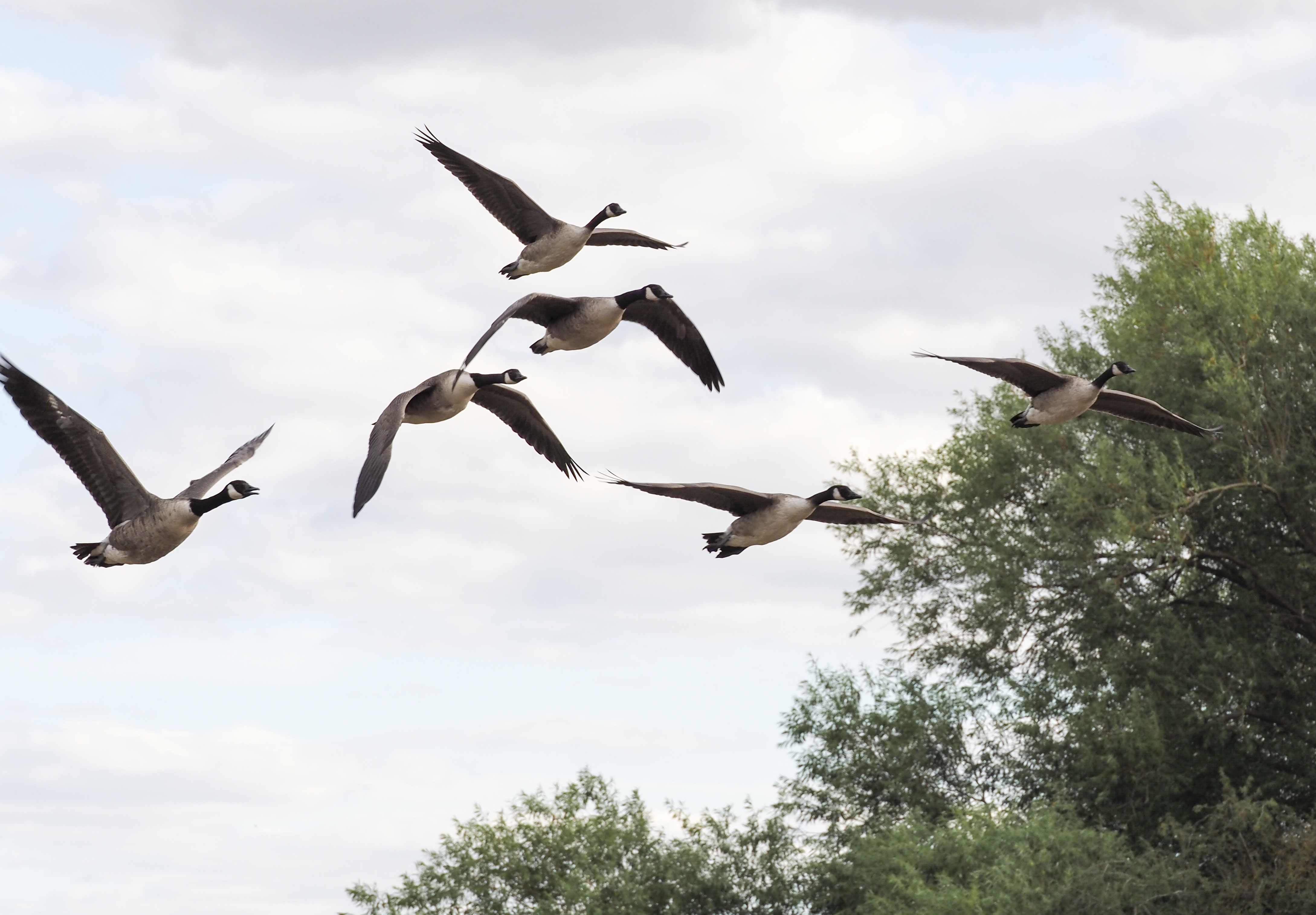
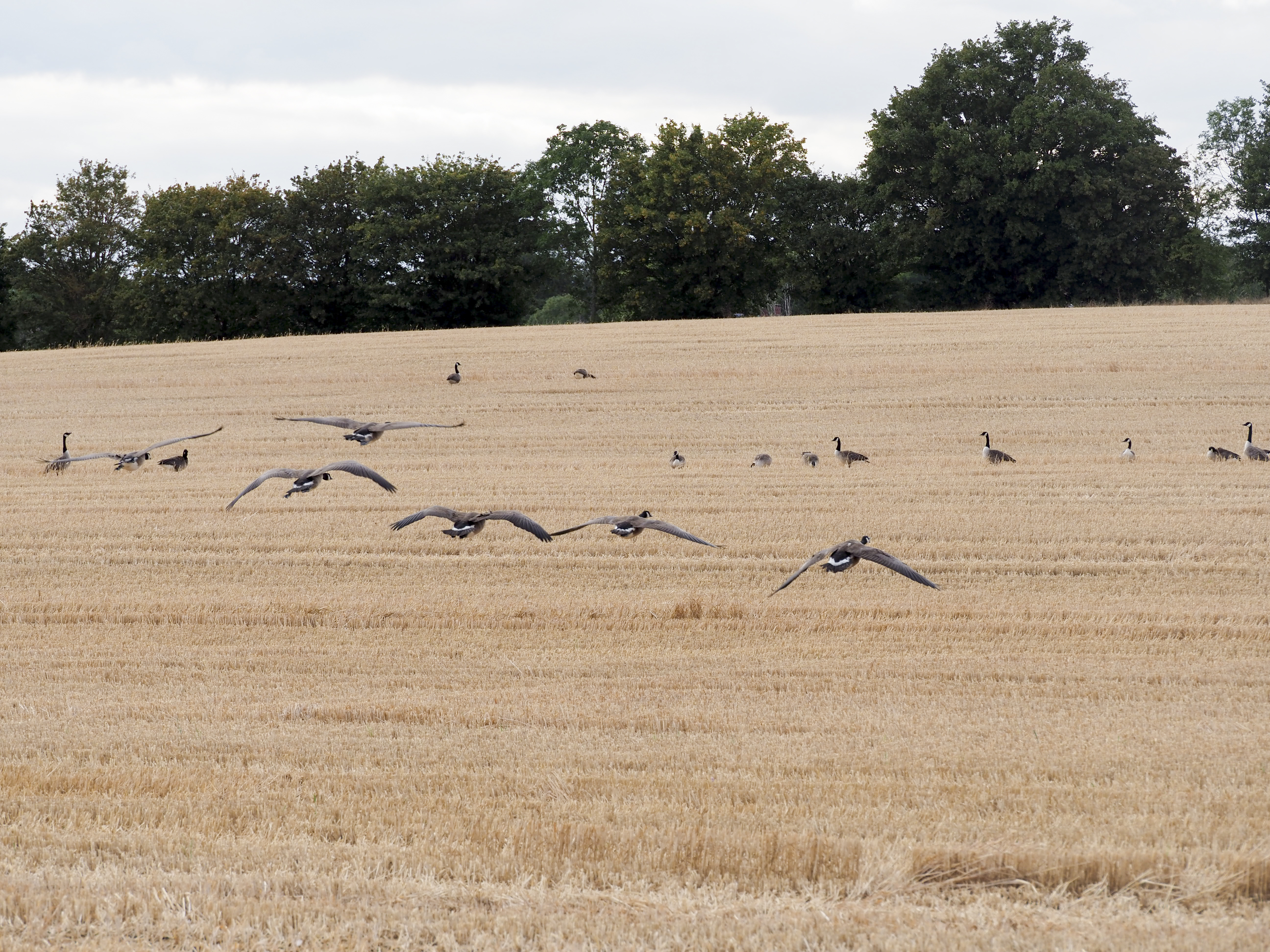
Large numbers of Canada geese had been gathering on the nearby lake (Felmersham Gravel Pits SSSI) in early August 26; I counted nearly 100. And as I was walking past one evening, they decided it was time for supper and flew up from the lake to land on the harvested wheat field. I was lucky enough to snap a few shots as the flew past to land about a hundred yards (proudly non-metric here!) or so, away.
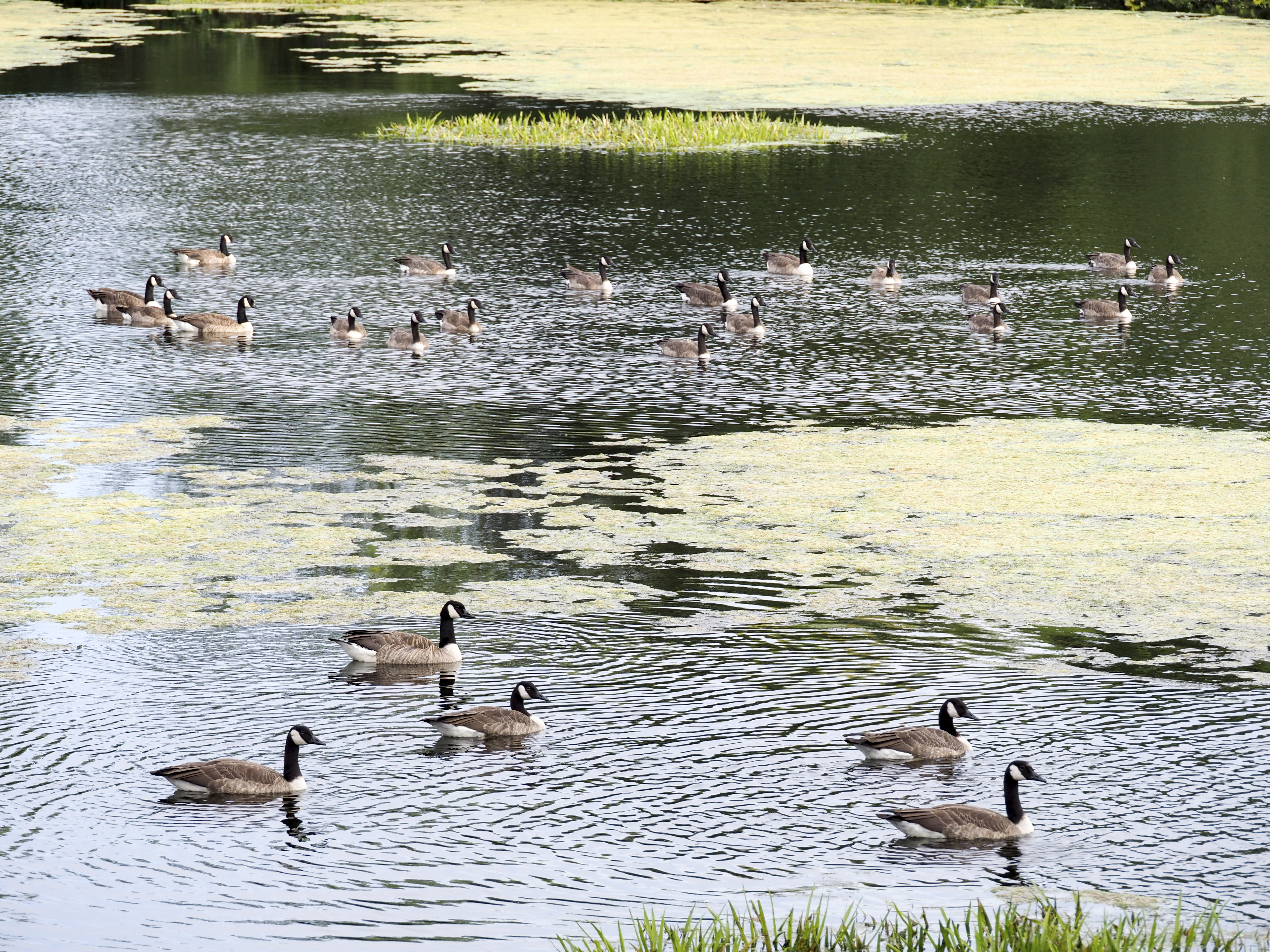
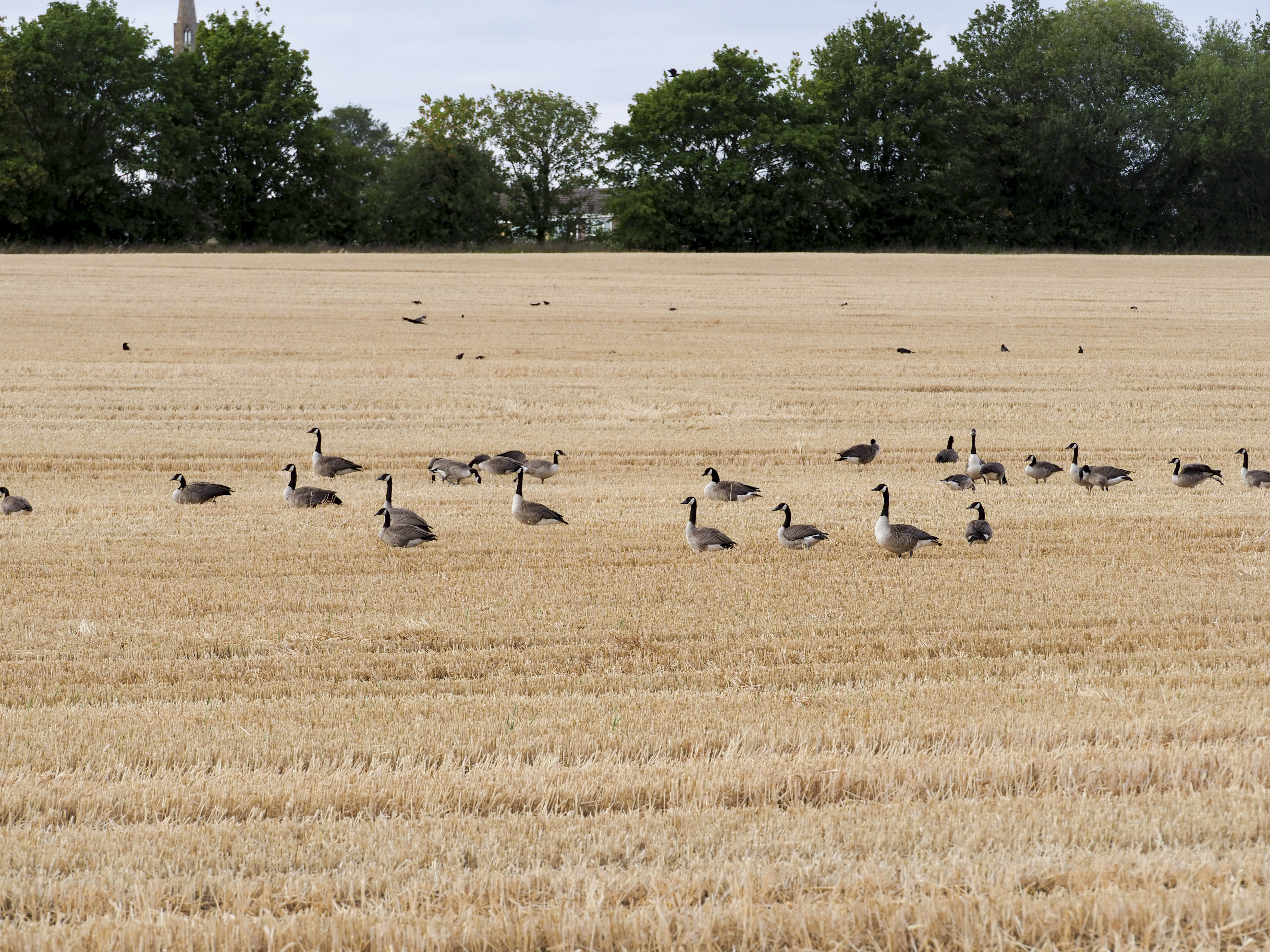
What was there for them? Well, quite a lot it seems; if you are prepared to sort through the chaff and chopped straw for leftover grains.
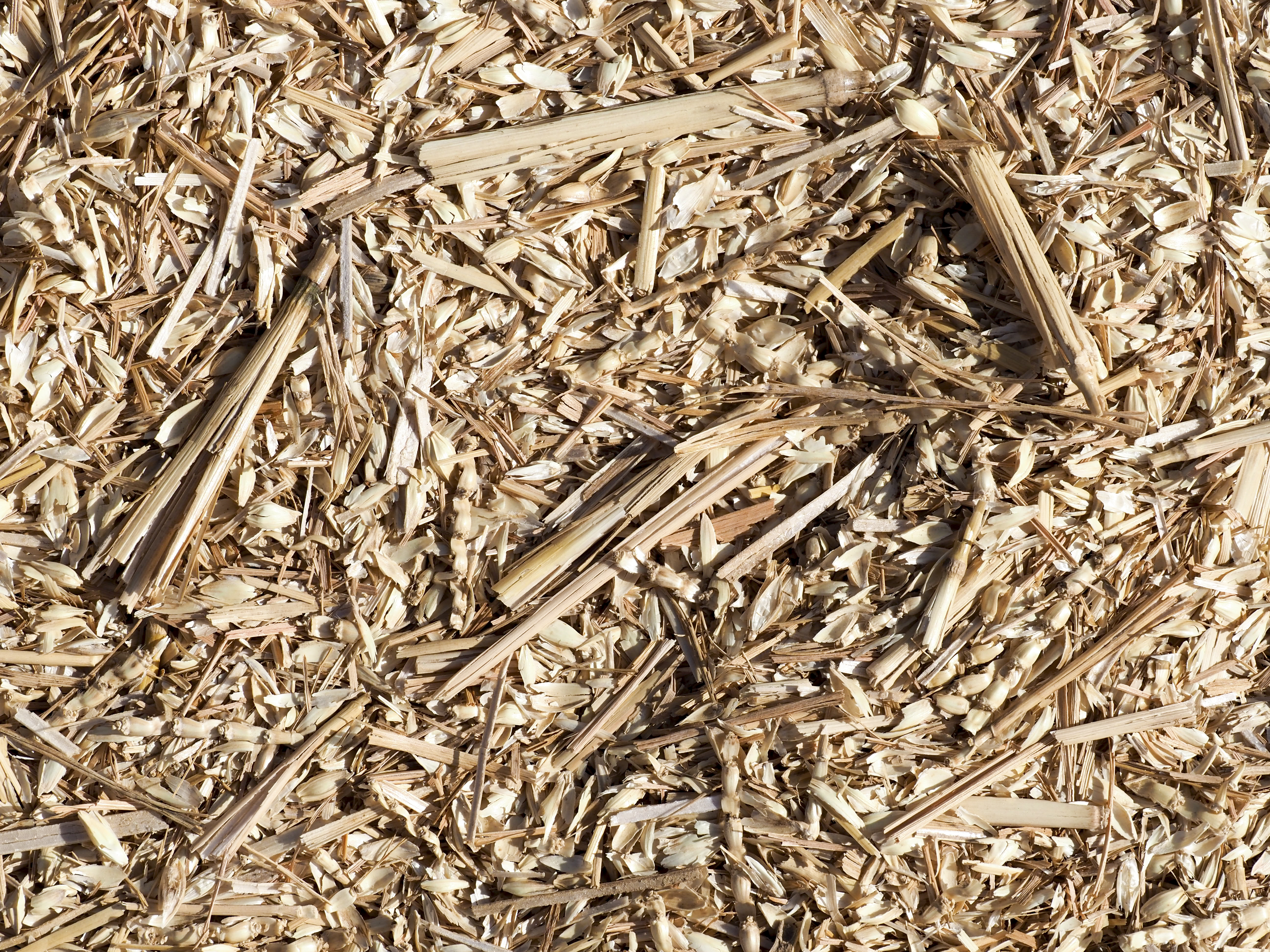
Photo by Raymond JC Cannon
Do our modern methods of harvesting leave more leftover grains? Well, no! According to Gemini AI:
No, modern combine harvesters actually leave fewer leftover grains on the field than old multi-step or manual methods. While a massive modern machine can lose a small percentage of grain due to speed or separation limits, traditional manual reaping, stacking, and carting shed significant grain before and during handling, making modern combines far more efficient overall (quoting from Bomoi et al., 2022)
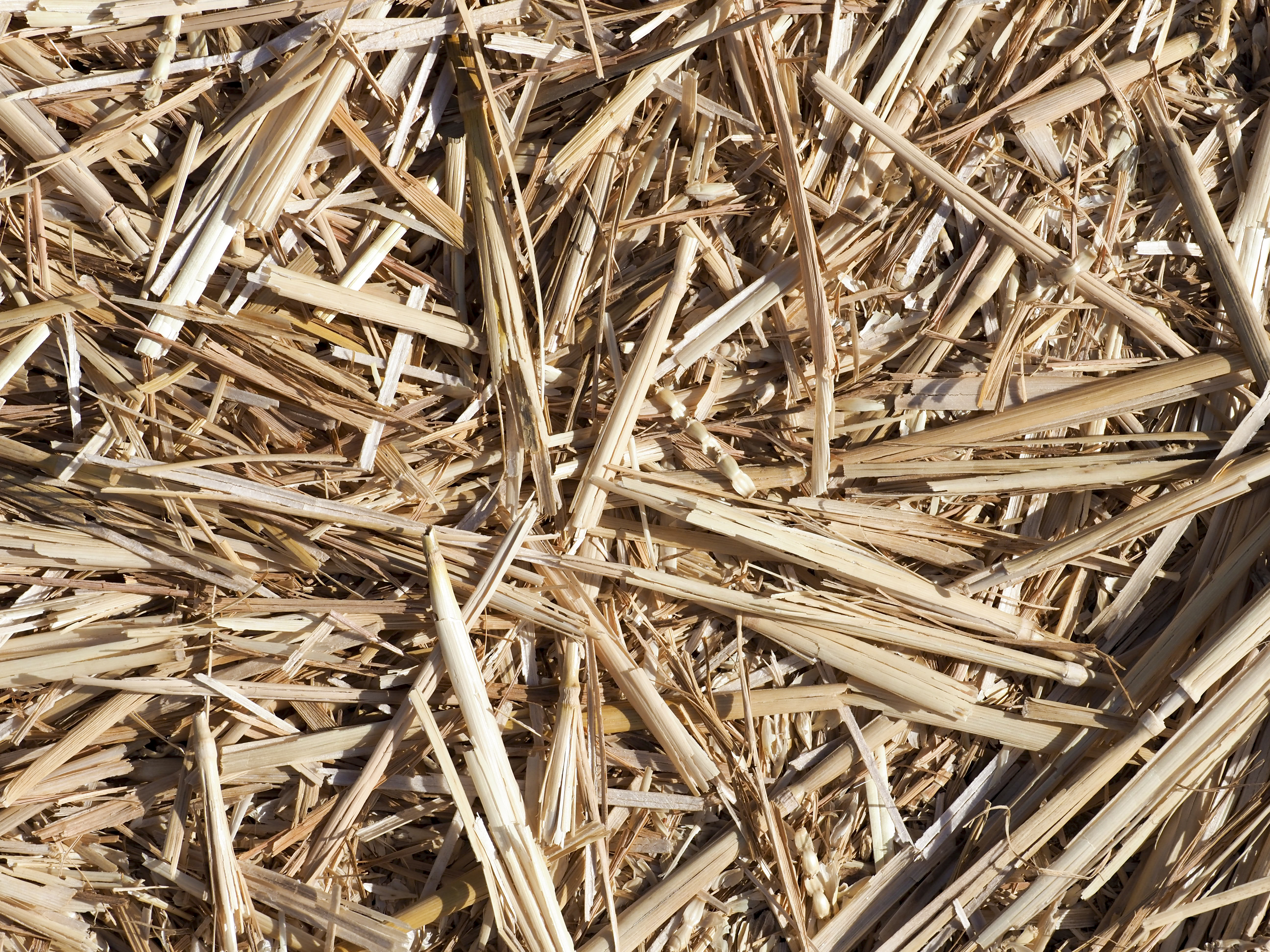
Photo by Raymond JC Cannon
However, not so fast! It seems that while our modern, brutal ways of harvesting are very efficient, they do produce a fair amount of leftovers. Here is Gemini AI again:
Modern combine harvesters leave a small amount of leftover wheat on fields—typically 1% to 3% of the total grain yield—due to natural shattering or minor separation inefficiencies. While precise, these “gleanings” still provide a valuable, accessible food source for local birds, rodents, and insects before the soil is tilled.
It seems that grains are shaken loose and dropped to the ground during harvesting, before they are pulled inside the combine. Whole wheat heads and loose kernels that fail to separate properly are sometimes ejected out the back of the combine with the chaff and straw. And finally, flattened or tangled wheat stalks are missed because the combine harvester’s header cannot pick them up properly. It seems that Chinese scientists have analysed these processes very thoroughly (Chen et al., 2022).
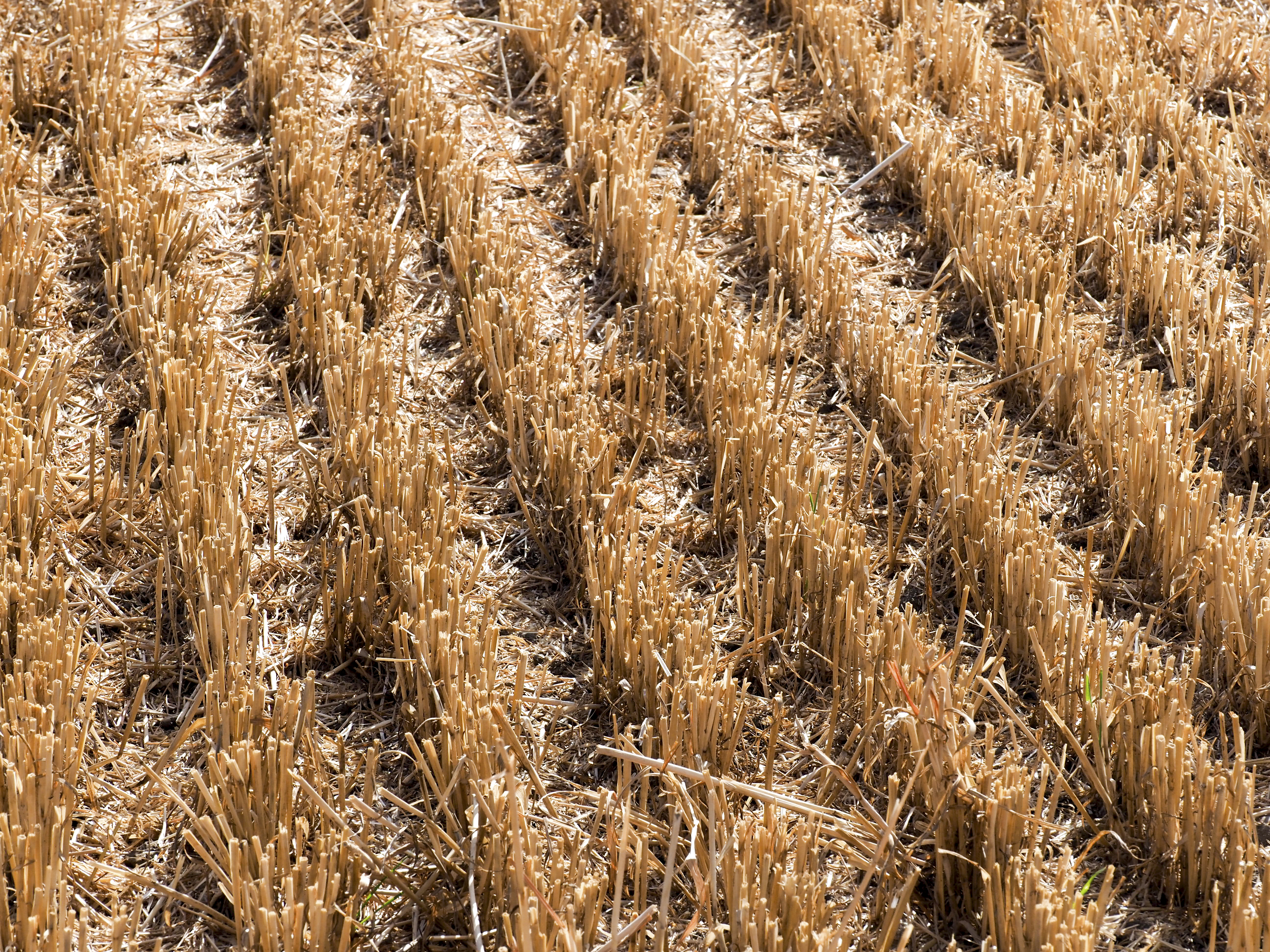
Summing up
So, to sum up, there can be as much as 3% of the total grain yield left over for whoever wants it: birds (such as gamebirds, pigeons, corvids, gulls, finches and geese) and small mammals presumably; assuming they dodged the horrors of the spinning harvester cutter bars!
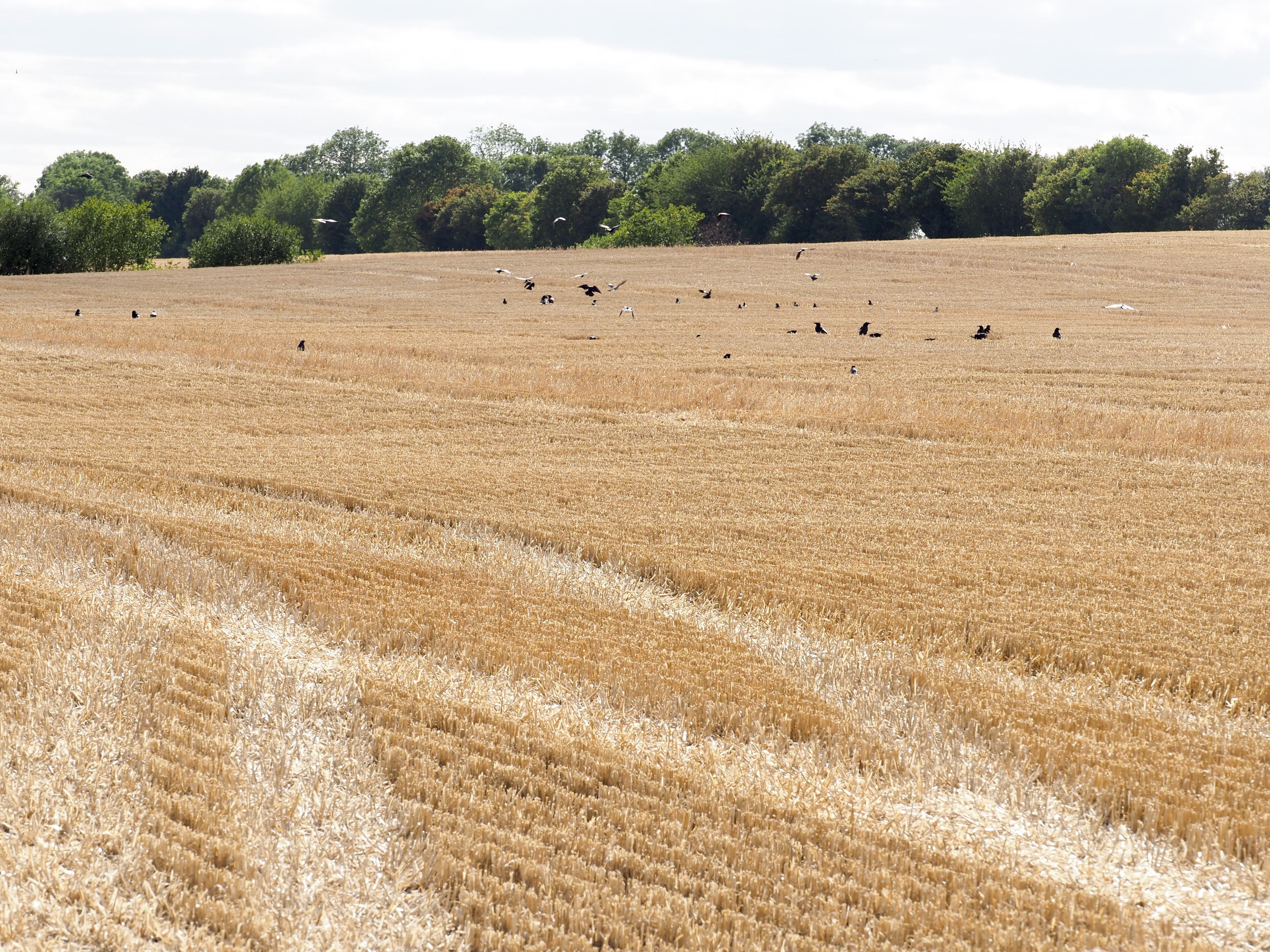
But, the window of opportunity to benefit from this food source is often fairly short, as some farmers quickly follow up by ploughing in the stubble, or cover-crop planting, which buries or removes the remaining seeds.
References
Bomoi, M. I., Nawi, N. M., Abd Aziz, S., & Mohd Kassim, M. S. (2022). Sensing Technologies for Measuring Grain Loss during Harvest in Paddy Field: A Review. AgriEngineering, 4(1), 292-310. https://doi.org/10.3390/agriengineering4010020
Chen, X., He, X., Wang, W., Qu, Z., & Liu, Y. (2022). Study on the technologies of loss reduction in wheat mechanization harvesting: a review. Agriculture, 12(11), 1935.


Those plump geese look like they are finding enough food!