I like to get close to my subjects; to try and understand a little about their lives. If I notice a species – such as these common carder bees (Bombus pascuorum) – repeatedly visiting a certain type of flower, I try to return to photograph it on subsequent days.
Back in July and August, when Marsh woundwort (Stachys palustris) was flowering, it was being visited by a variety of insects – honey bees, bumblebees and others – eager to sample some of its nectar and pollen. A very common species of damp to wet habitats, it has nice red, pink, or mauve flower spikes (inflorescences) with the flowers arranged in whorls of four to ten, each with patterned lower lips (see below).
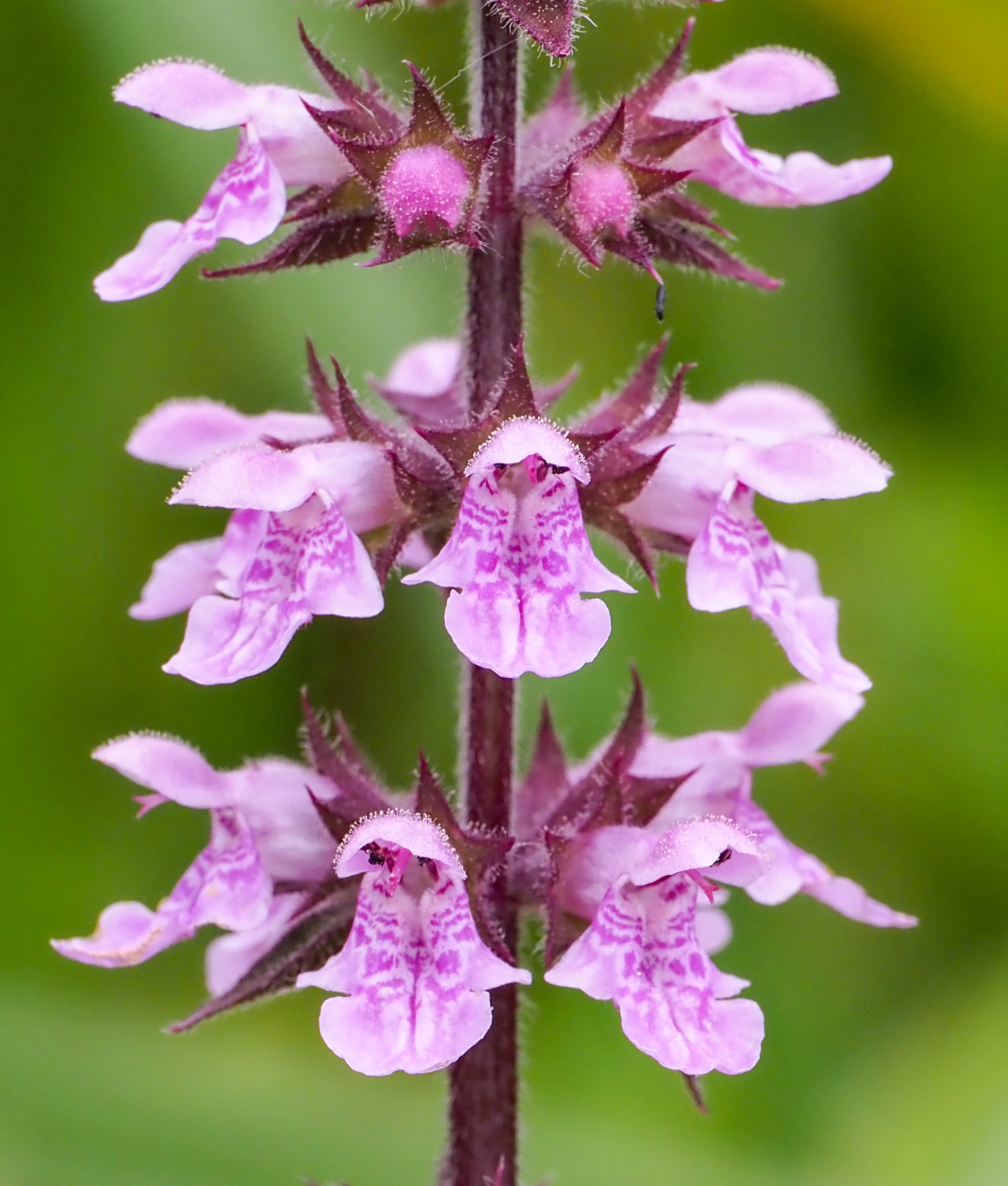
The flowers consist of five fused petals. The corolla, or flower tube, is quite deep (12-15 mm) and at the front end is two-lipped, the upper lip (above) being somewhat hooded and the lower lip (below) large, flat and three-lobed. This creates a landing platform and a nectar guide that effectively positions visiting insects in such a way that they brush against the anthers and stigma as they reach into the flower to get nectar. Here are some common carder bees doing just that (see below).
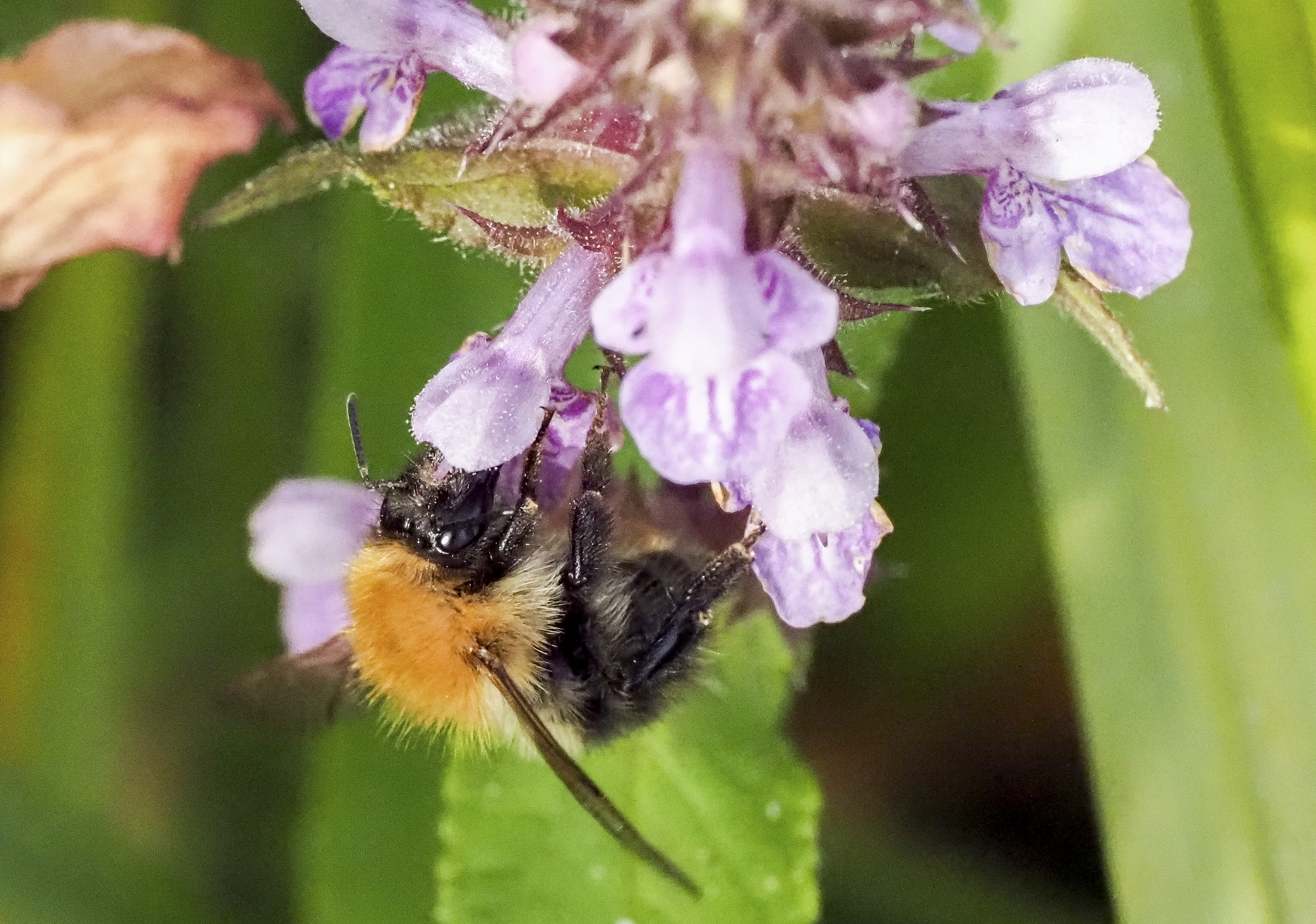
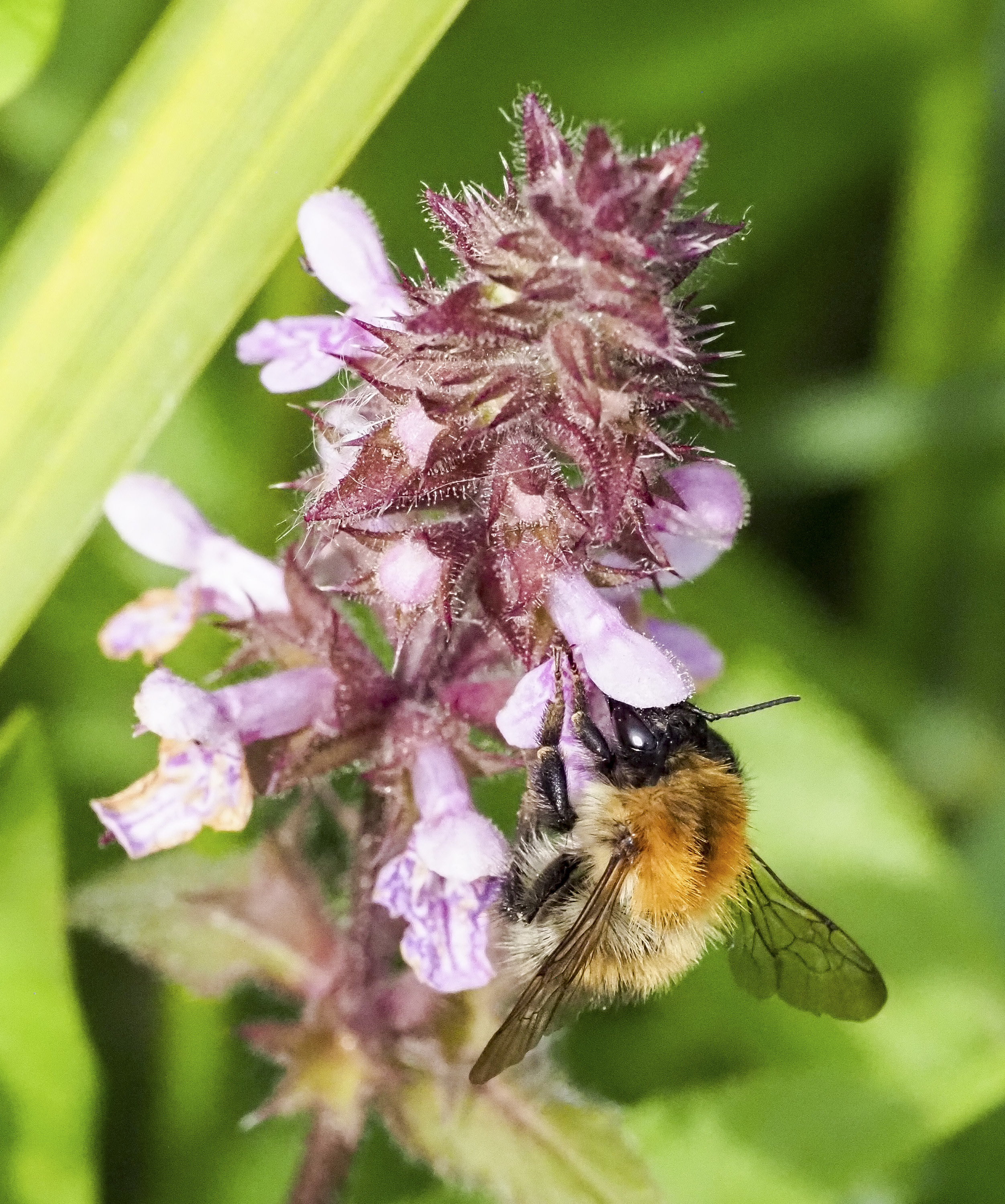
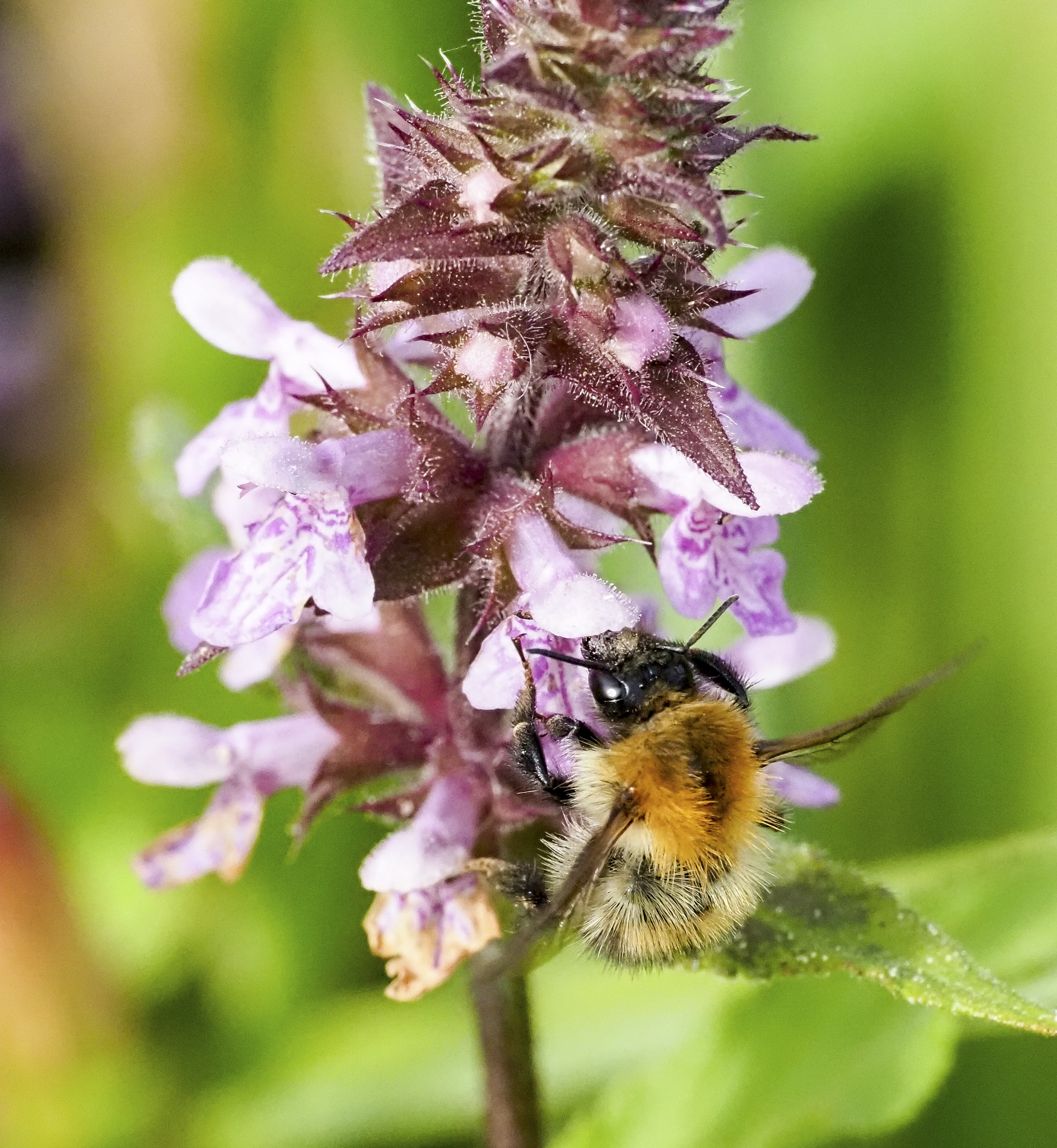
Nectar is secreted at the base of the ovary in the lowest part of the corolla tube, so the bumblebees have to reach right inside. Luckily, or rather the plant and the pollinator have evolved a mutually beneficial relationship which suits them both, common carder bees have relatively long tongues: the proboscis measures around 7.6 mm in length (see previous blog: Bees knees and tongues!).
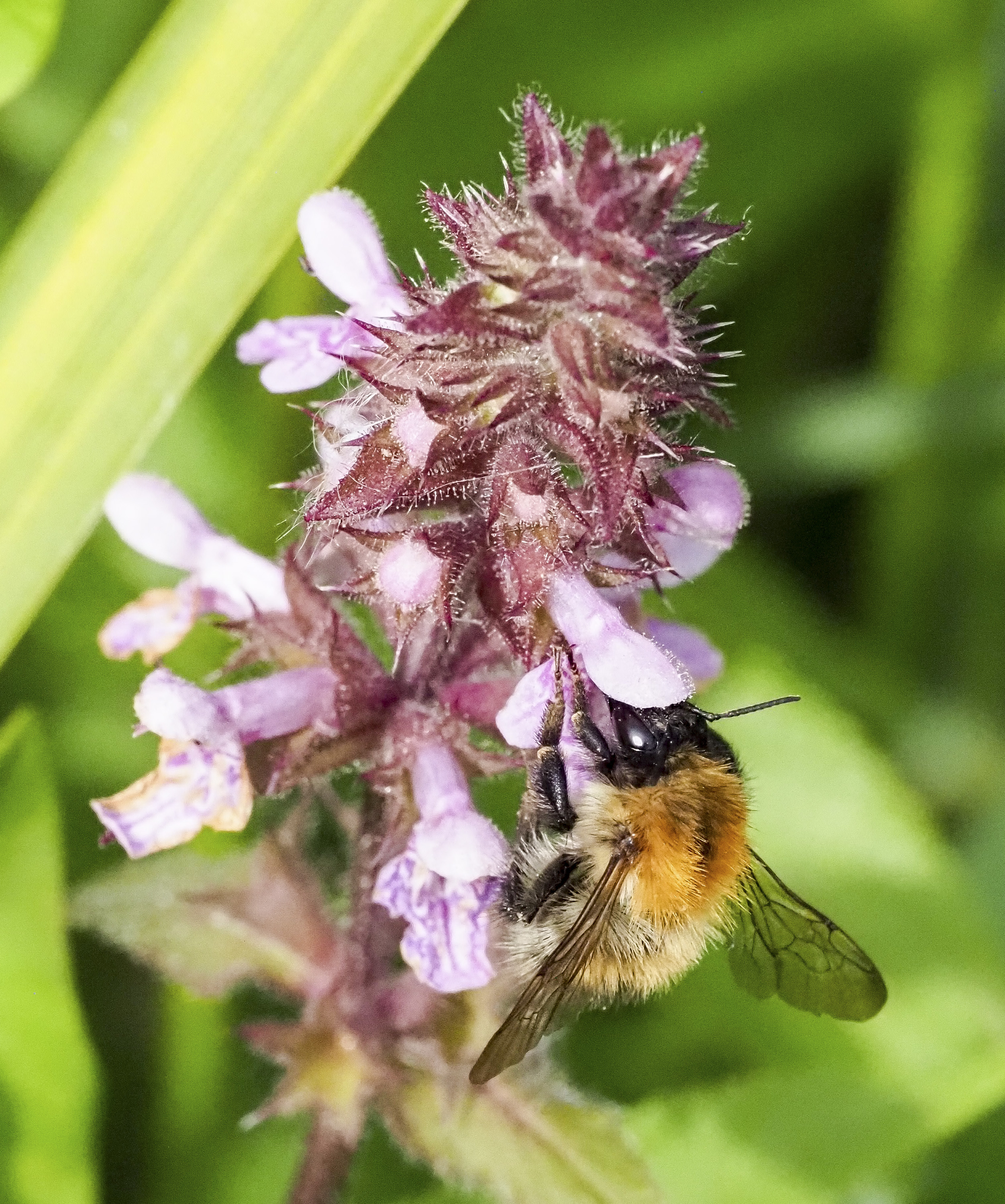
However, not all insects can reach down to get the nectar inside marsh woundwort flowers. A circlet of hairs inside the corolla tube, just above the base, protect the nectar from insects which are not going to aid the plant by pollinating it; thereby keeping out unwanted guests like flies.
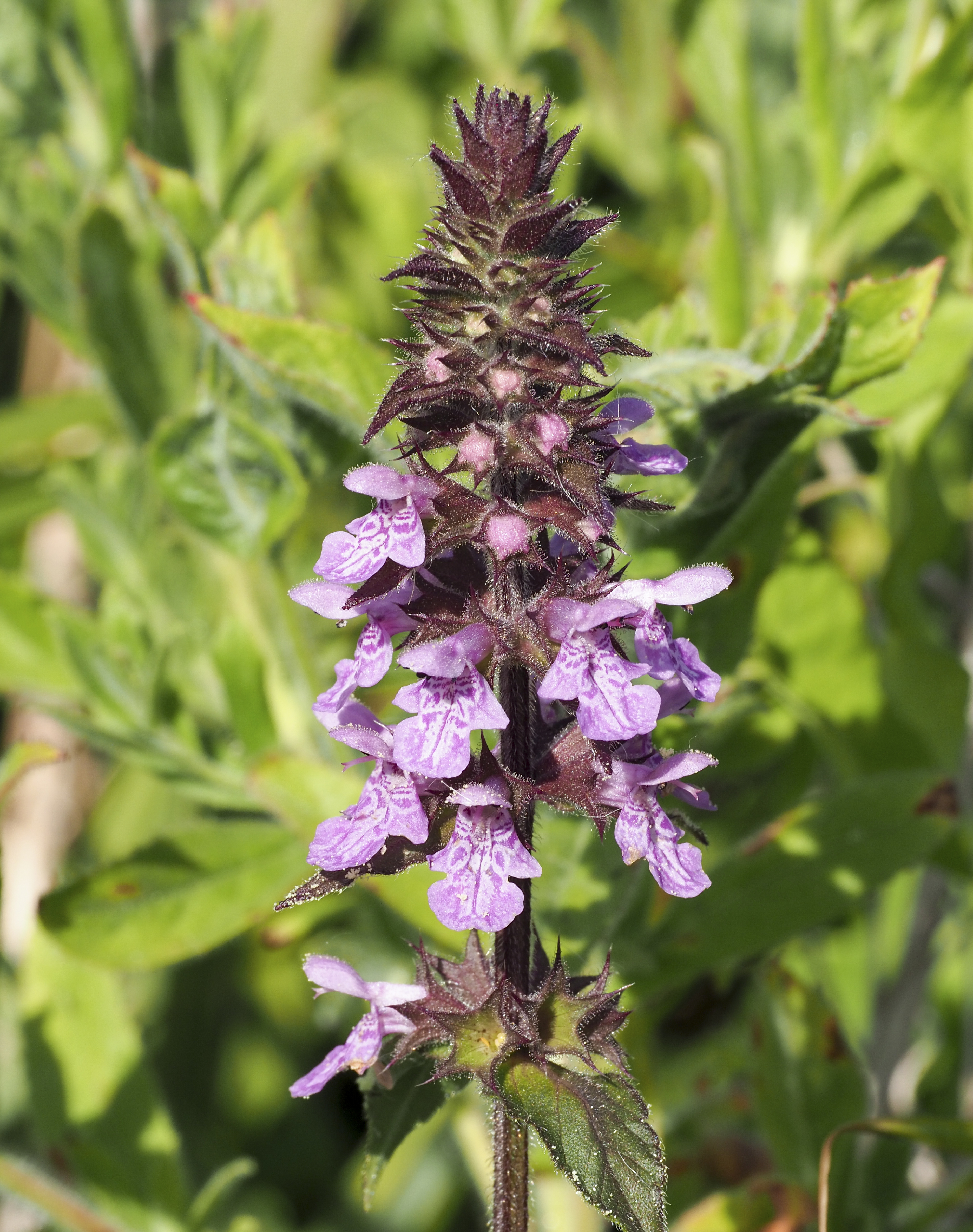
Bilabiate, two-lipped, bilaterally symmetrical flowers like marsh woundwort, with a two-lobed upper lip and a three-lobed lower lip, have evolved in order to protect their pollen from pollen-collecting bees.
The reproductive parts of the flower – i.e. the pollen and stigma – are underneath the upper lip, or ‘roof’ of the flower, and ‘legitimate’ visitors (meaning those that contribute to pollinating the plants) come into contact with them on their dorsal (upper) side as the move into the flower. In other words, the ‘floor’ and ‘roof’ of the flowers are at a certain fixed distance such that wanted visitors inevitably come into contact contact the reproductive structures.
The male organs (stamens) mature before the female organs (stigma) to avoid, or at least reduce, self-pollination. The flowers have evolved to attract pollinators which can help it achieve cross-pollination. Bumblebees with long mouthparts which can easily reach deep inside the floral tubes are the desired partners in this process.
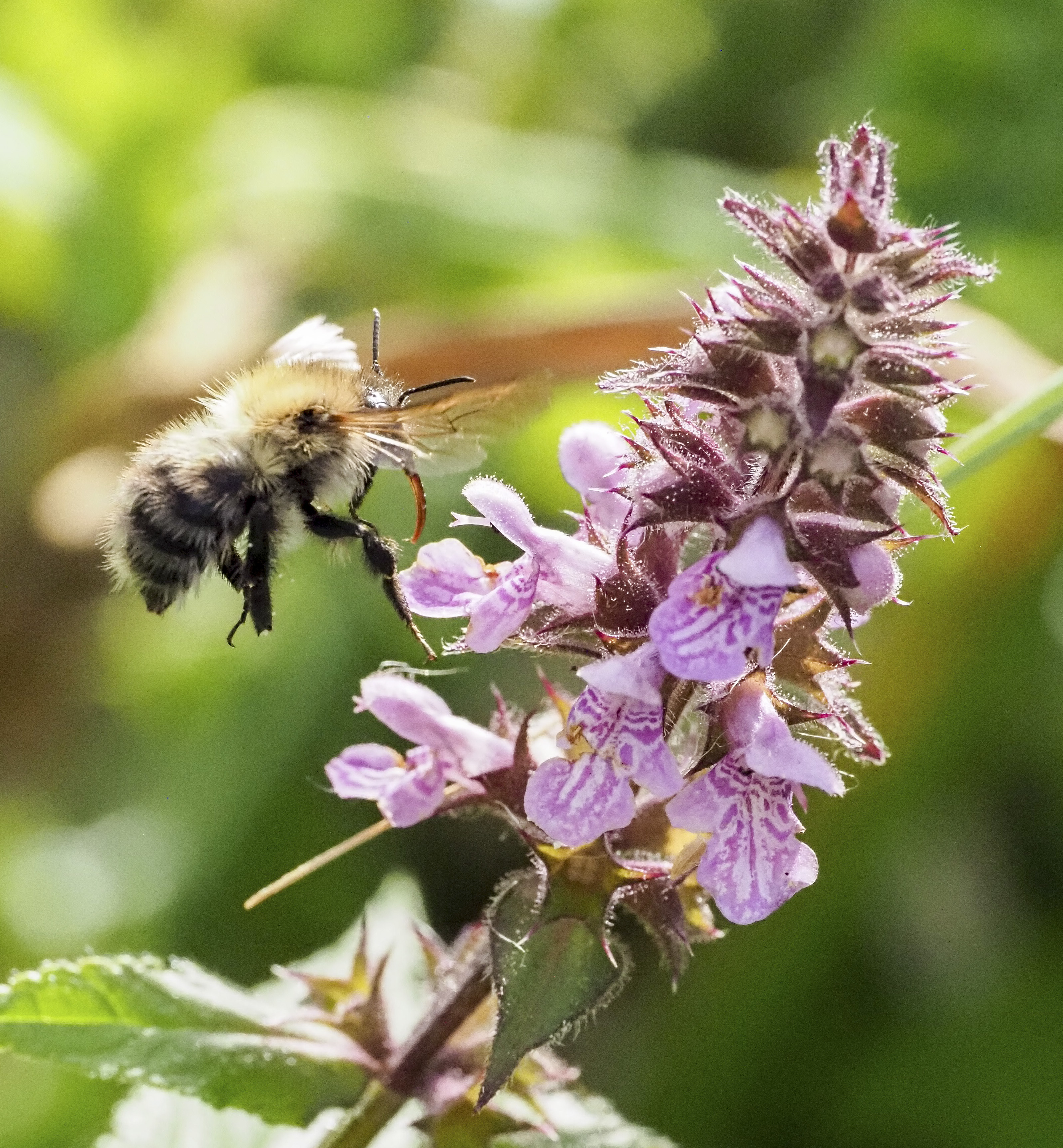
The proboscis is held at the ready as the bees move very quickly between flowers. They don’t stay for more than a second or so on each flower (!) – probably sensing (by smell) whether they have any nectar left for them, before they reach it and decide to alight.
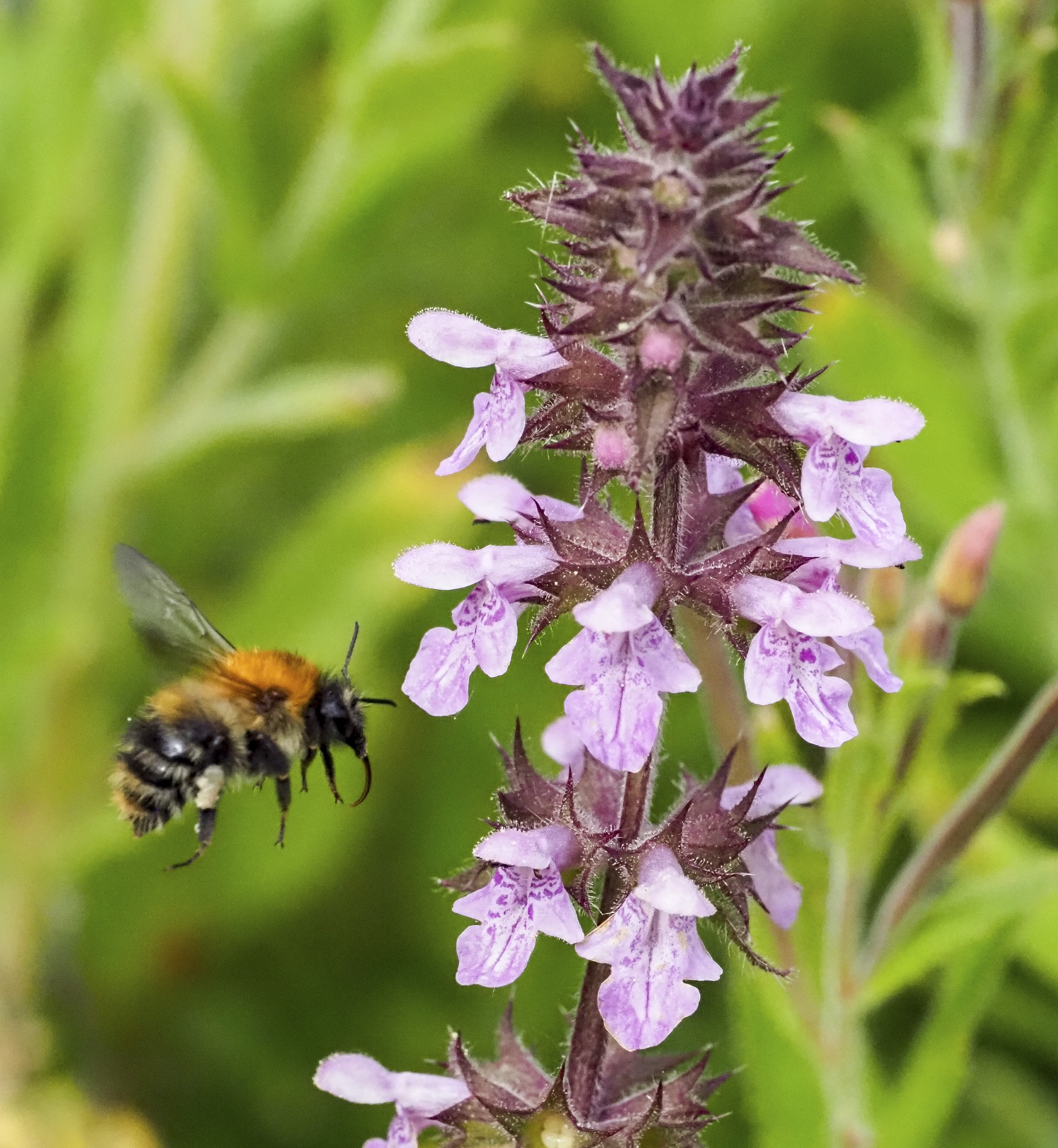
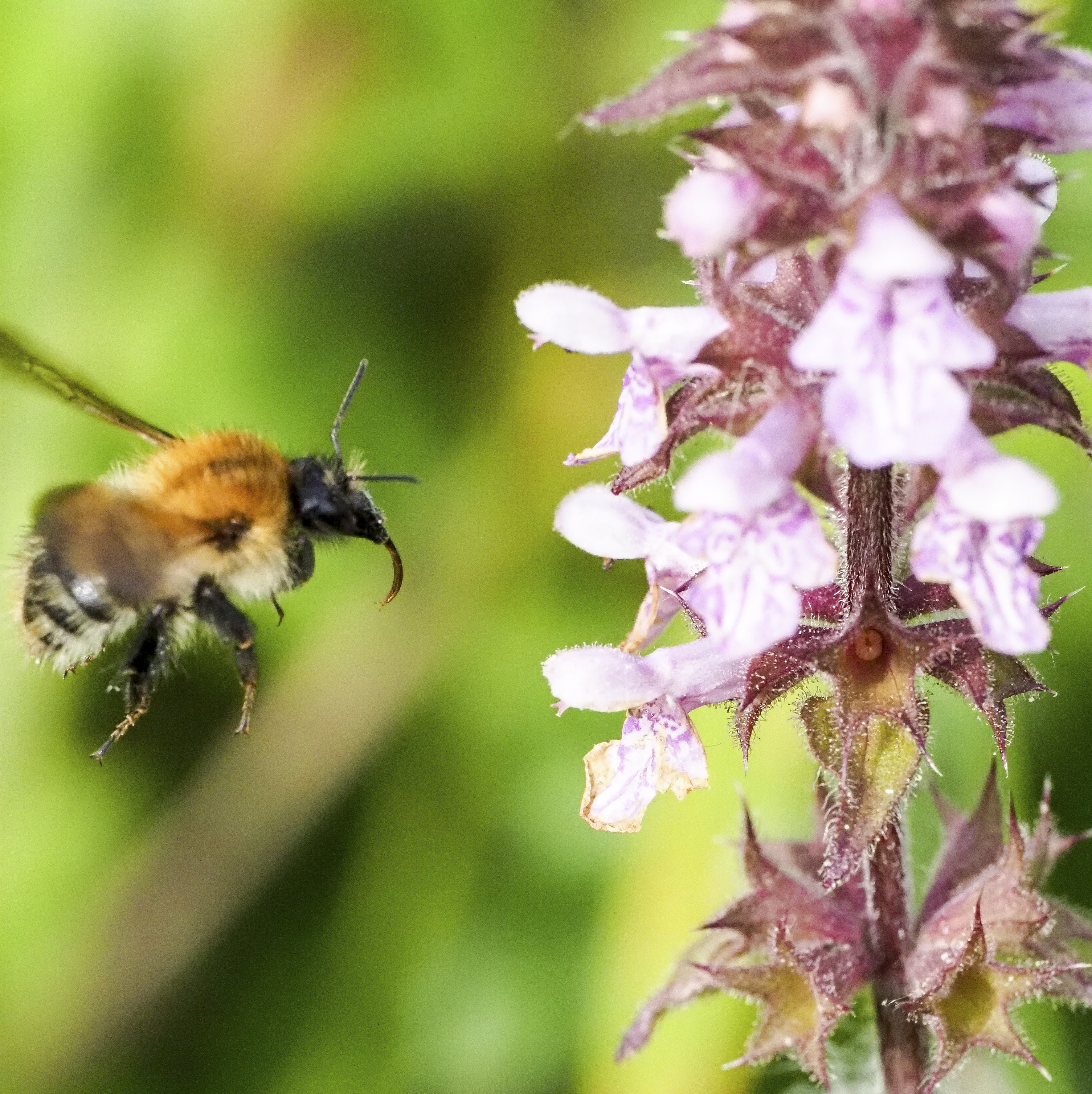
The proboscis can be extended and quickly inserted into the flower to reach the nectar (below).
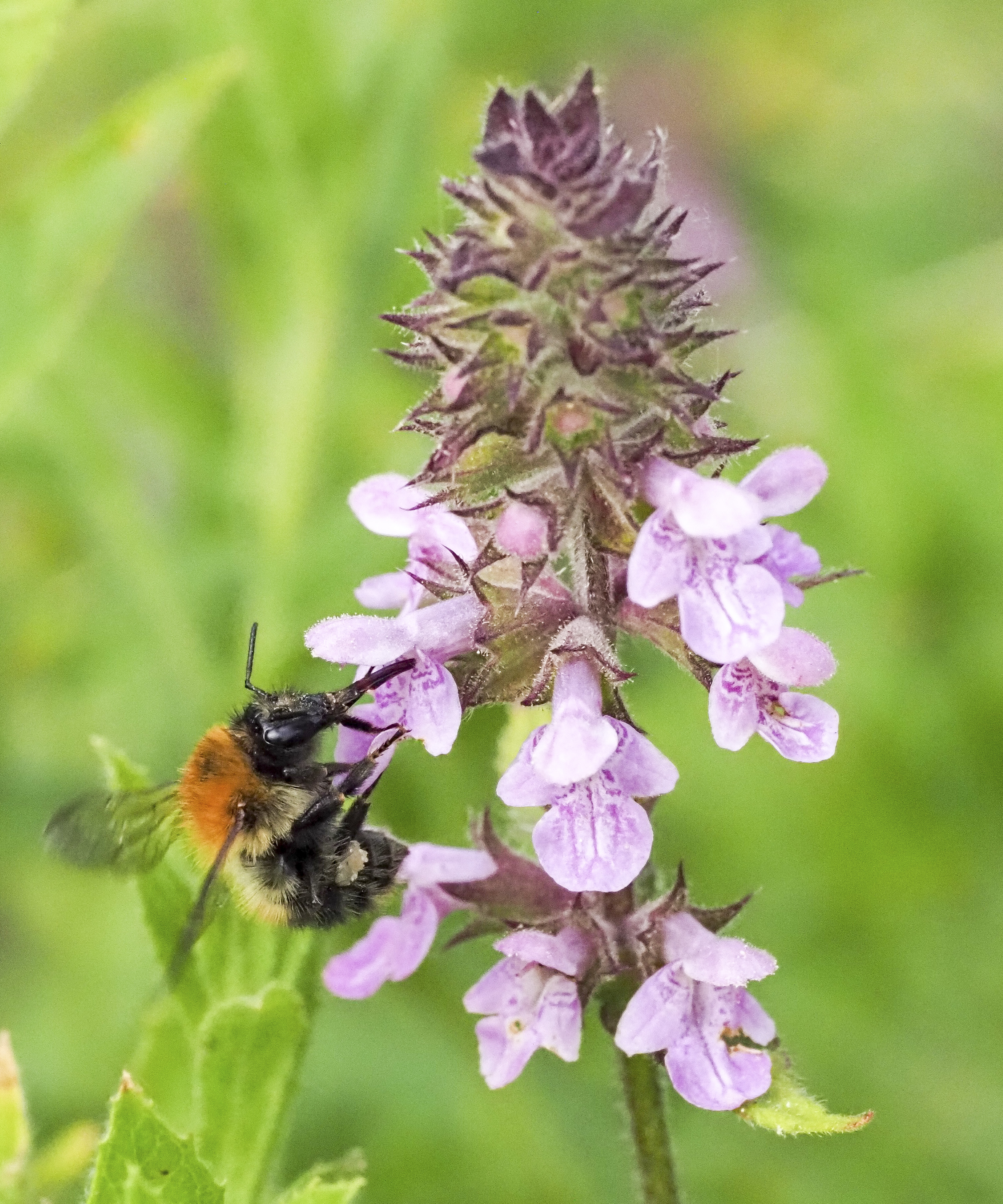
The bumblebees fly from stem to stem searching for nectar filled flowers, perhaps rejecting those that have just been visited by another bee, then delving deep into the floral tube to reach the nectar.
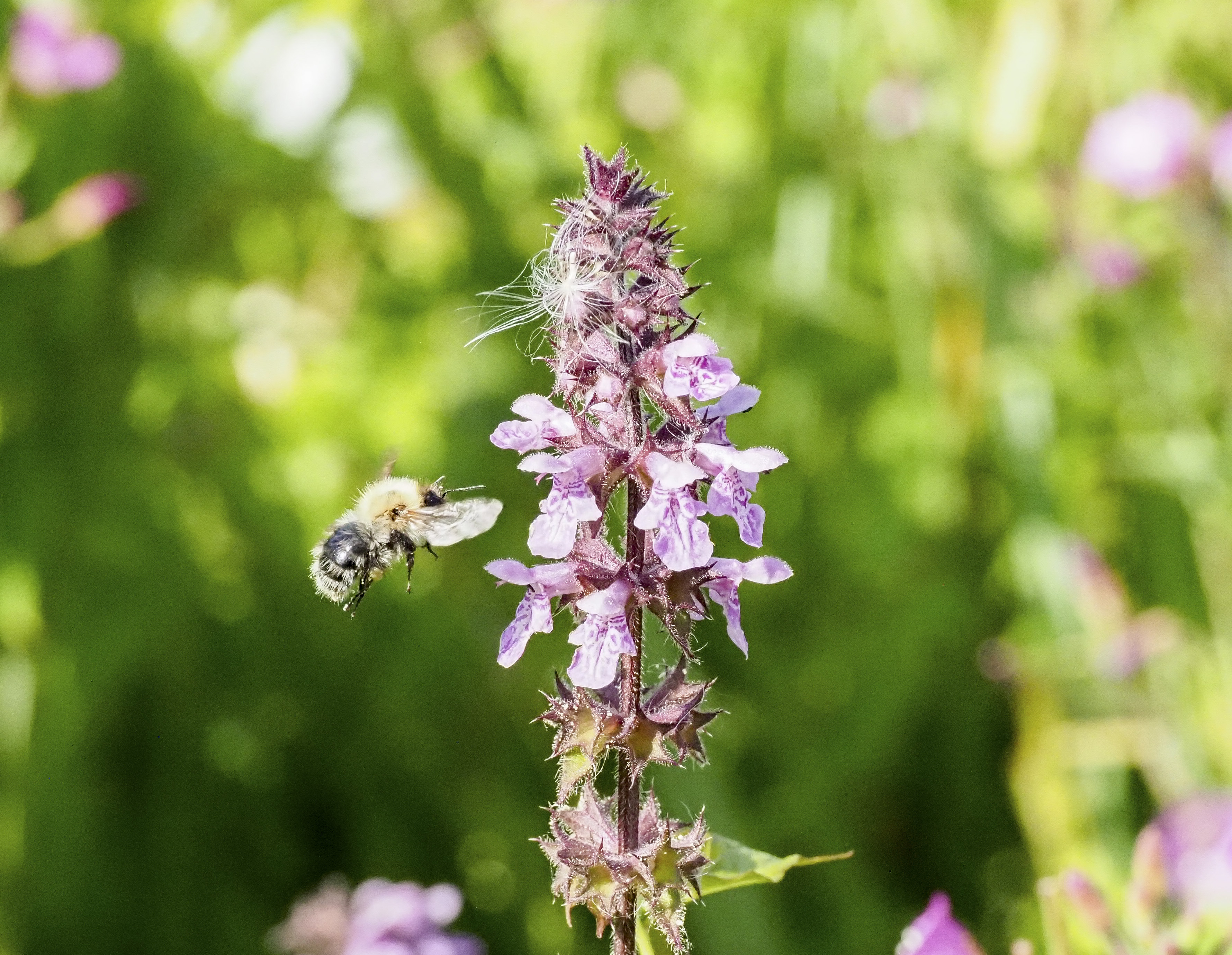
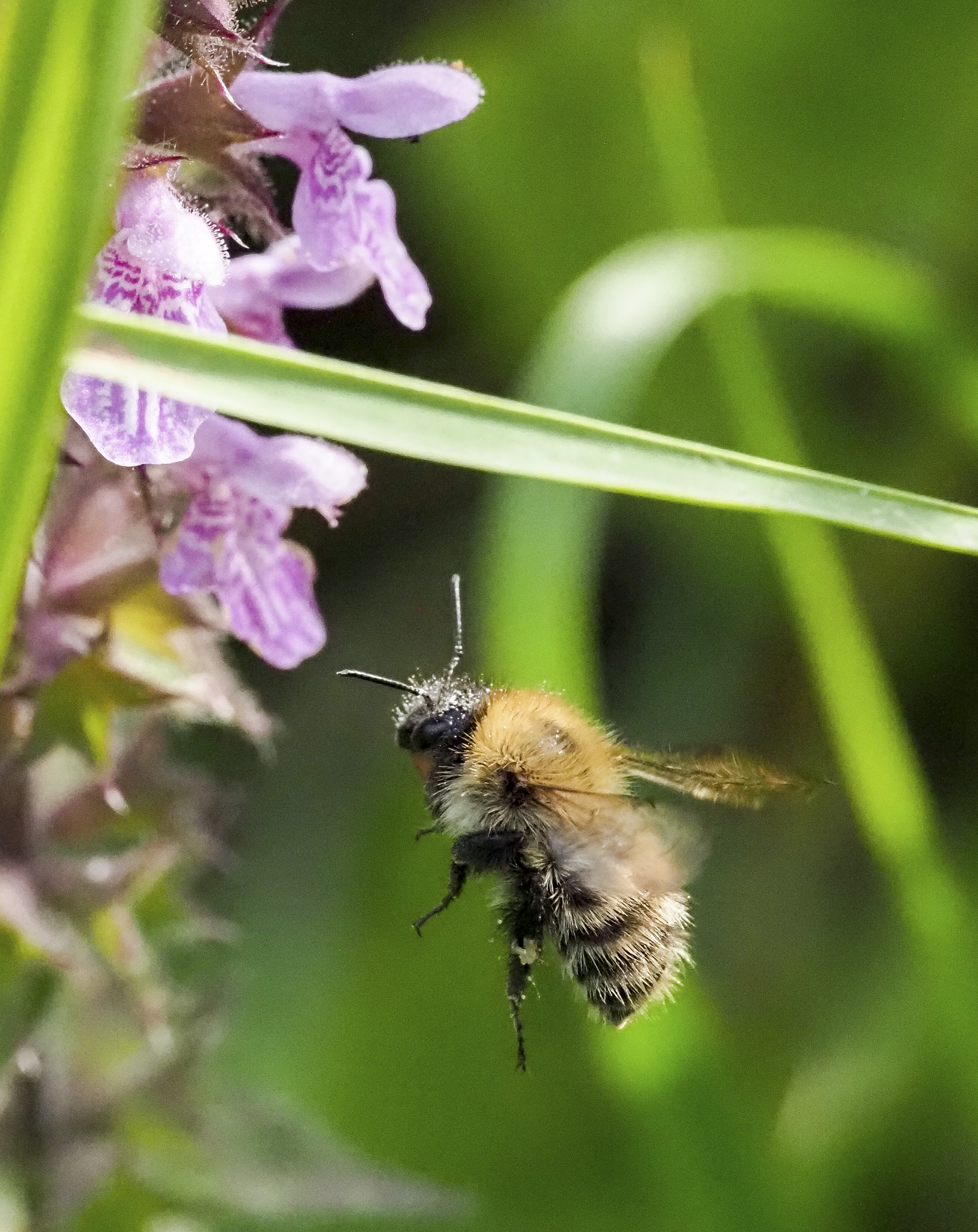
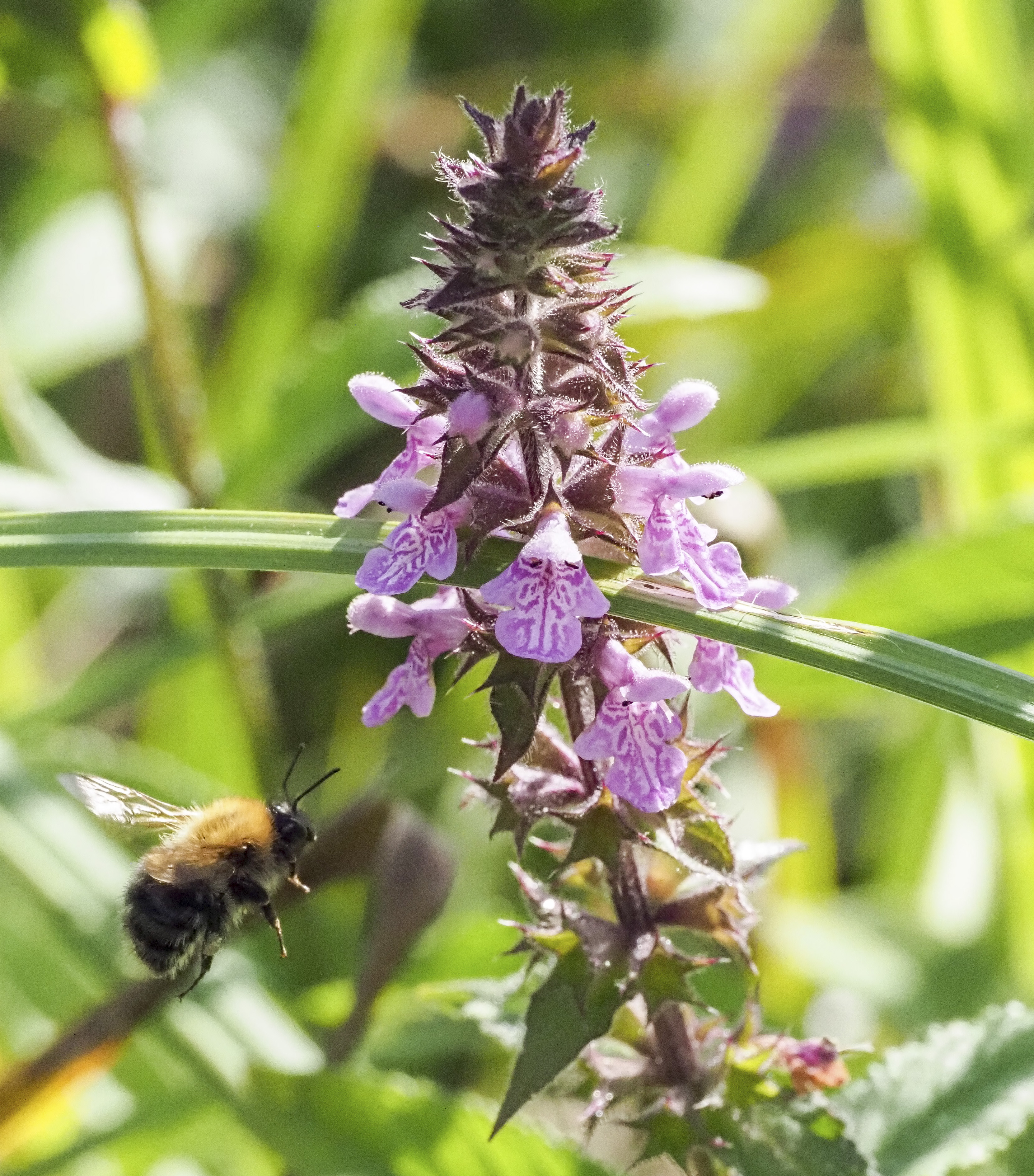
Hoverflies, butterflies, and other long-tongued bees (such as the European wool carder bee, Anthidium manicatum) can also contribute to pollination during the flowering period, which may last from June to September.
Honey bees also visit and help pollinate marsh woundwort (Stachys palustris), although as we have seen, the plant is primarily adapted for, and heavily favoured by long-tongued bees such as bumblebees. However, the honeybees were clearly visiting this plant (see below) and their proboscis – which is about 6.5 to 7 mm long – seems to do the job of reaching the nectar.
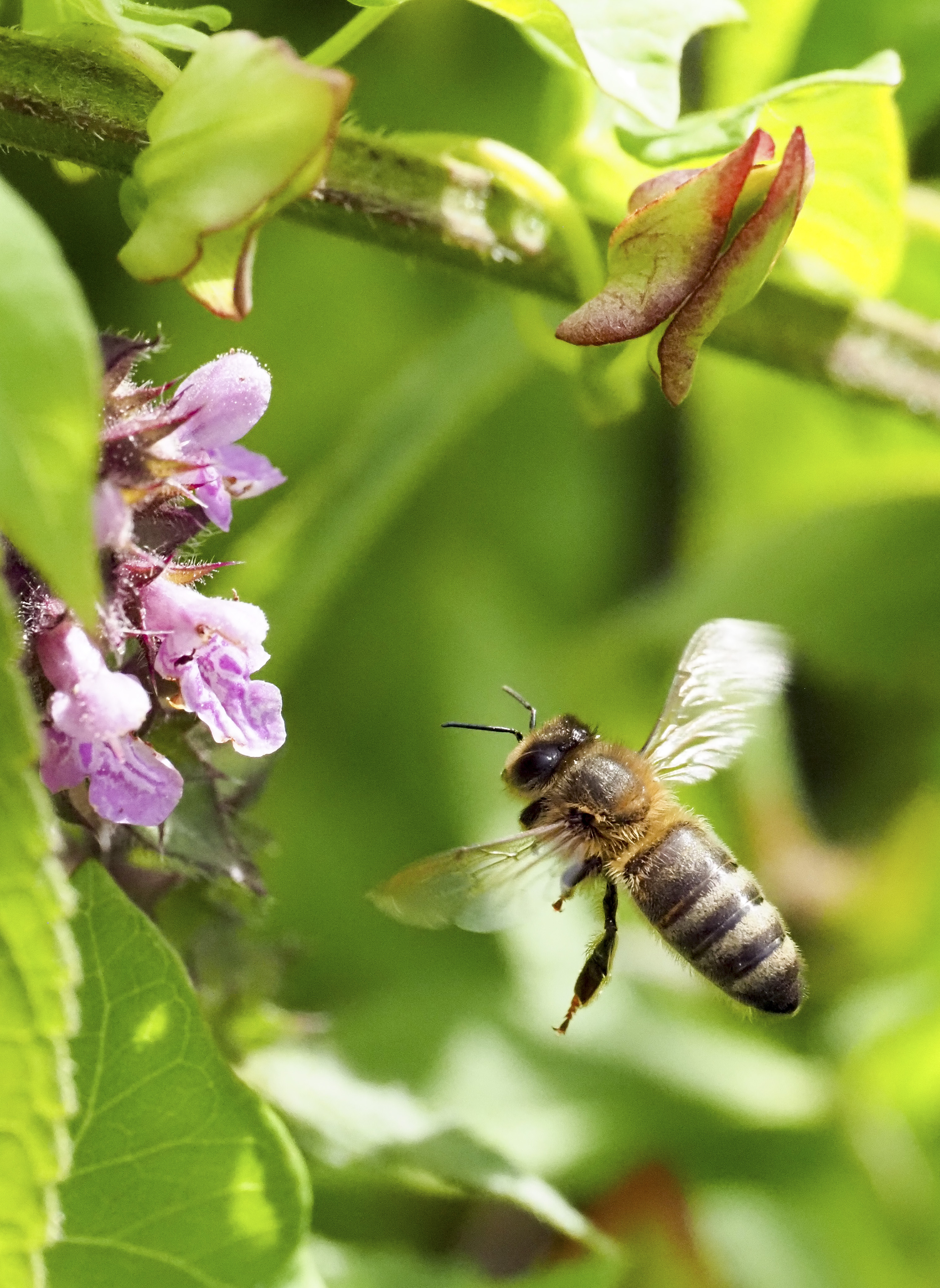
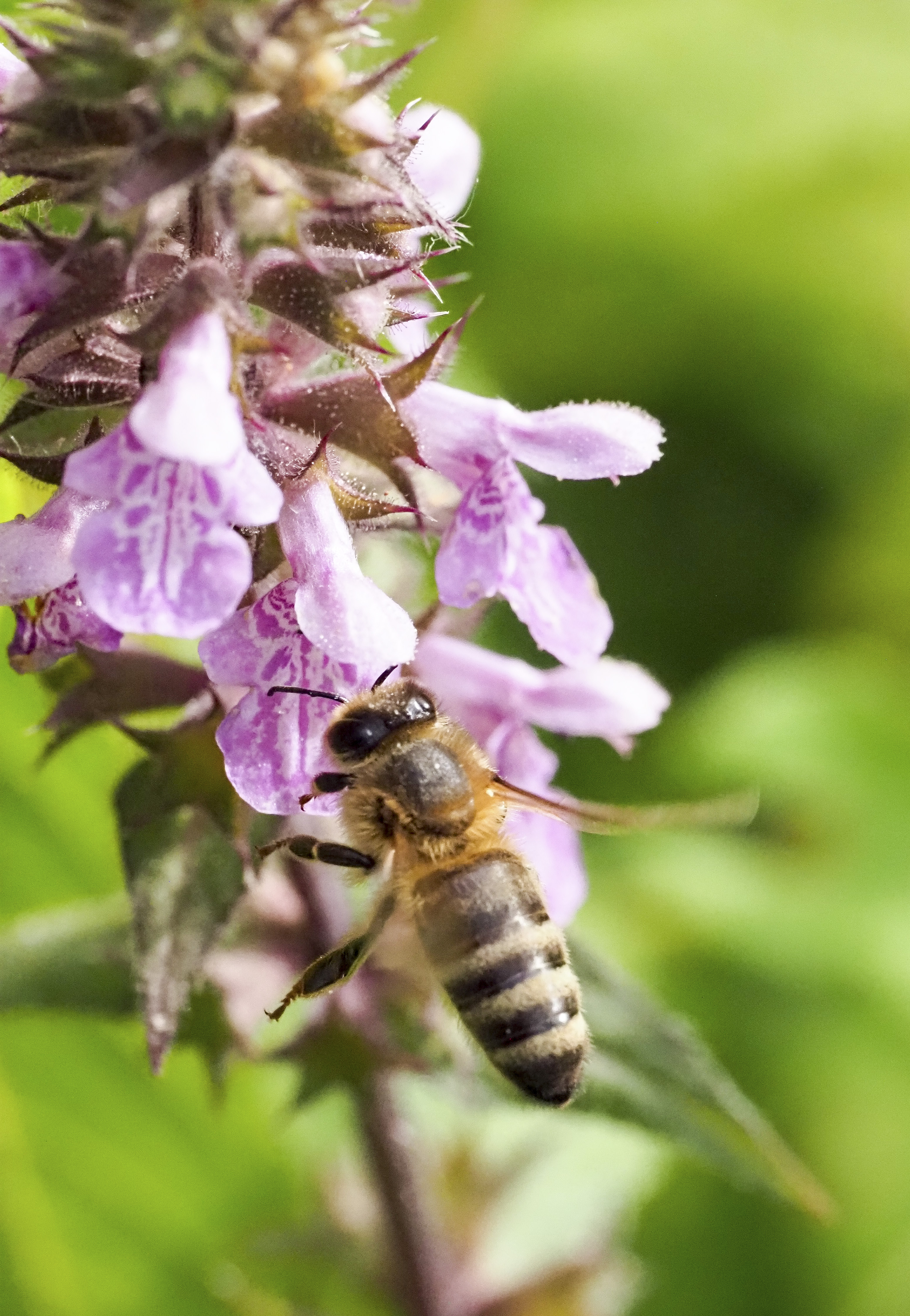
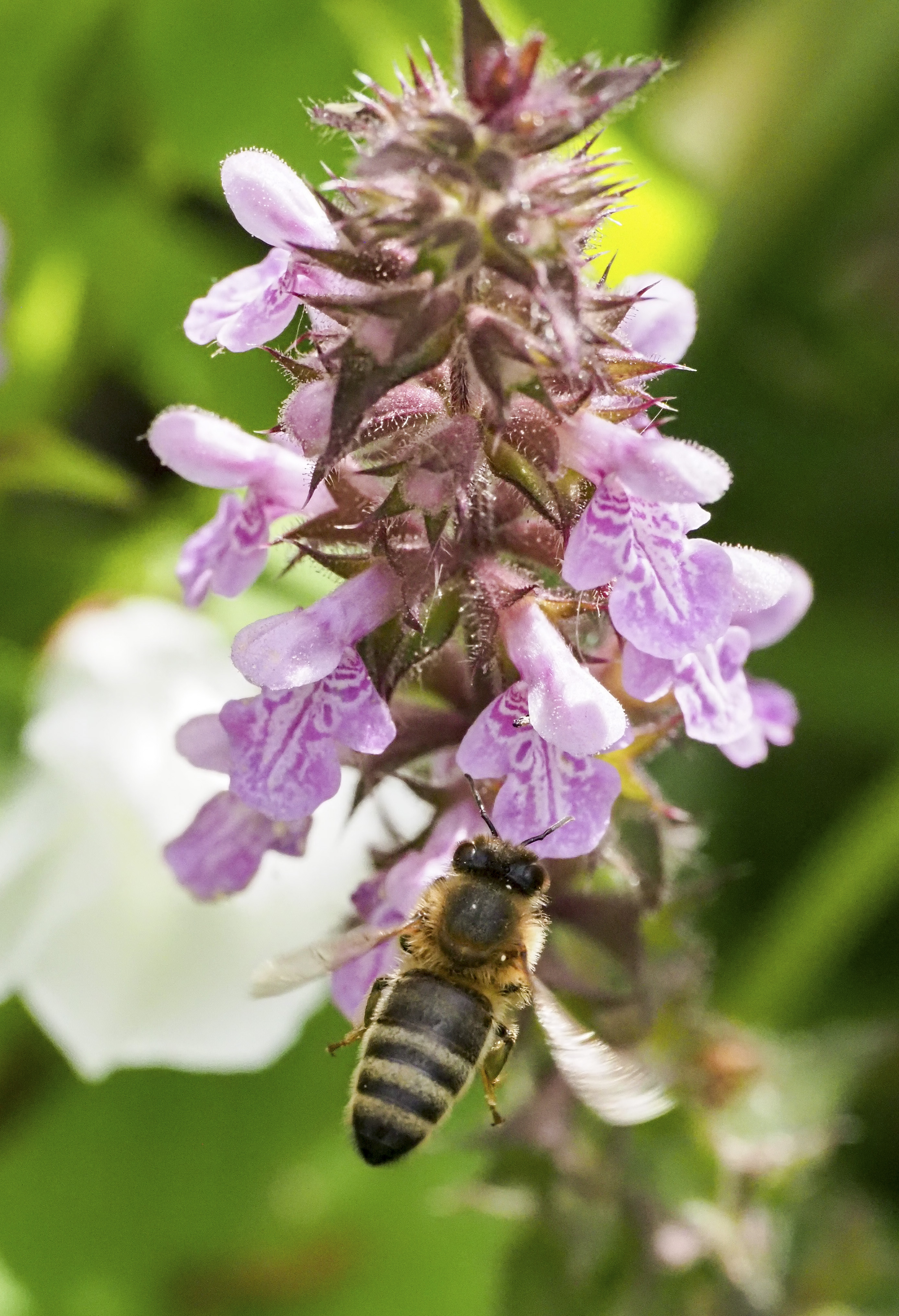
Finally, I discovered that even if the long-tongued bees and other insect visitors do not help the plant to achieve, cross-pollination, the flower’s forked stigma can bend down to self-pollinate itself! It’s clearly not as good as having another individuals pollen, thereby mixing up the genes to produce fit and versatile flowers for next year, but if in extremis it can survive! But if we want healthy flowers we need to protect, promote and provide for pollinators.😁
References..
Claßen-Bockhoff, R. (2007). Floral construction and pollination biology in the Lamiaceae.
Corbet, S. A., Bee, J., Dasmahapatra, K., Gale, S., Gorringe, E., La Ferla, B., … & Vorontsova, M. (2001). Native or exotic? Double or single? Evaluating plants for pollinator-friendly gardens. Annals of Botany, 87(2), 219-232.
Cruden RW, Hermanutz L, Shuttleworth J. The pollination biology and breeding system of Monarda fistulosa (Labiatae). Oecologia. 1984;64:104–110.
Huck RB, (1992). Overview of pollination biology in the Lamiaceae. Advances in Labiatae science, 167-181.
Meeuse, A. D. J. (1992). Anthecology of the Labiatae: an armchair approach. Advances in labiate science. Kew, London: Royal Botanic Gardens, 183-191.
Rather, A. A., Banday, A., Shabir, P. A., Nawchoo, I. A., & Ganaie, K. A. (2018). Cytology and pollination biology of Lamiaceae: a review. Research & Reviews. Bot. Sci, 7, 22-32.
Van der Pijl, L. (1972). Functional considerations and observations on the flowers of some Labiatae. Blumea: Biodiversity, Evolution and Biogeography of Plants, 20(1), 93-103.
Westerkamp, C., & Classen-Bockhoff, R. (2007). Bilabiate flowers: the ultimate response to bees?. Annals of botany, 100(2), 361-374.
Whitten WM. Pollination ecology of Monarda didyma, M. clinopodia and hybrids (Lamiaceae) in the southern Appalachian Mountains. Am J Bot. 1981;68:435–442.

