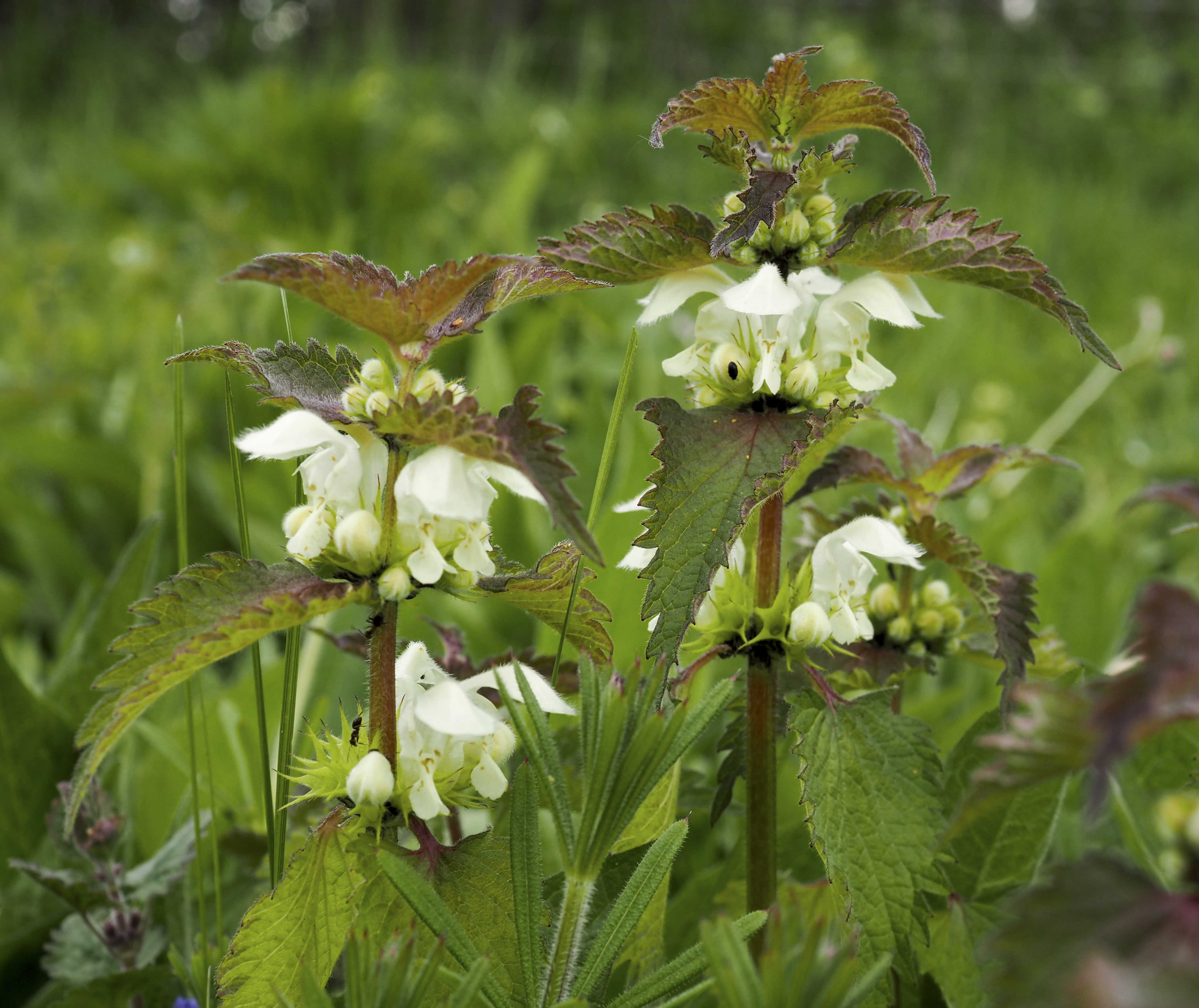
White Dead-nettle (Lamium album) is a common herbaceous perennial with white flowers, frequently visited by insect pollinators – bumblebees, honeybees and solitary bees – all attracted by the sugary nectar (43% concentration) and protein-rich pollen. The long-tubed labiate corollas, or flower tubes, are open from May to December, sometimes longer.
Bilabiate flowers
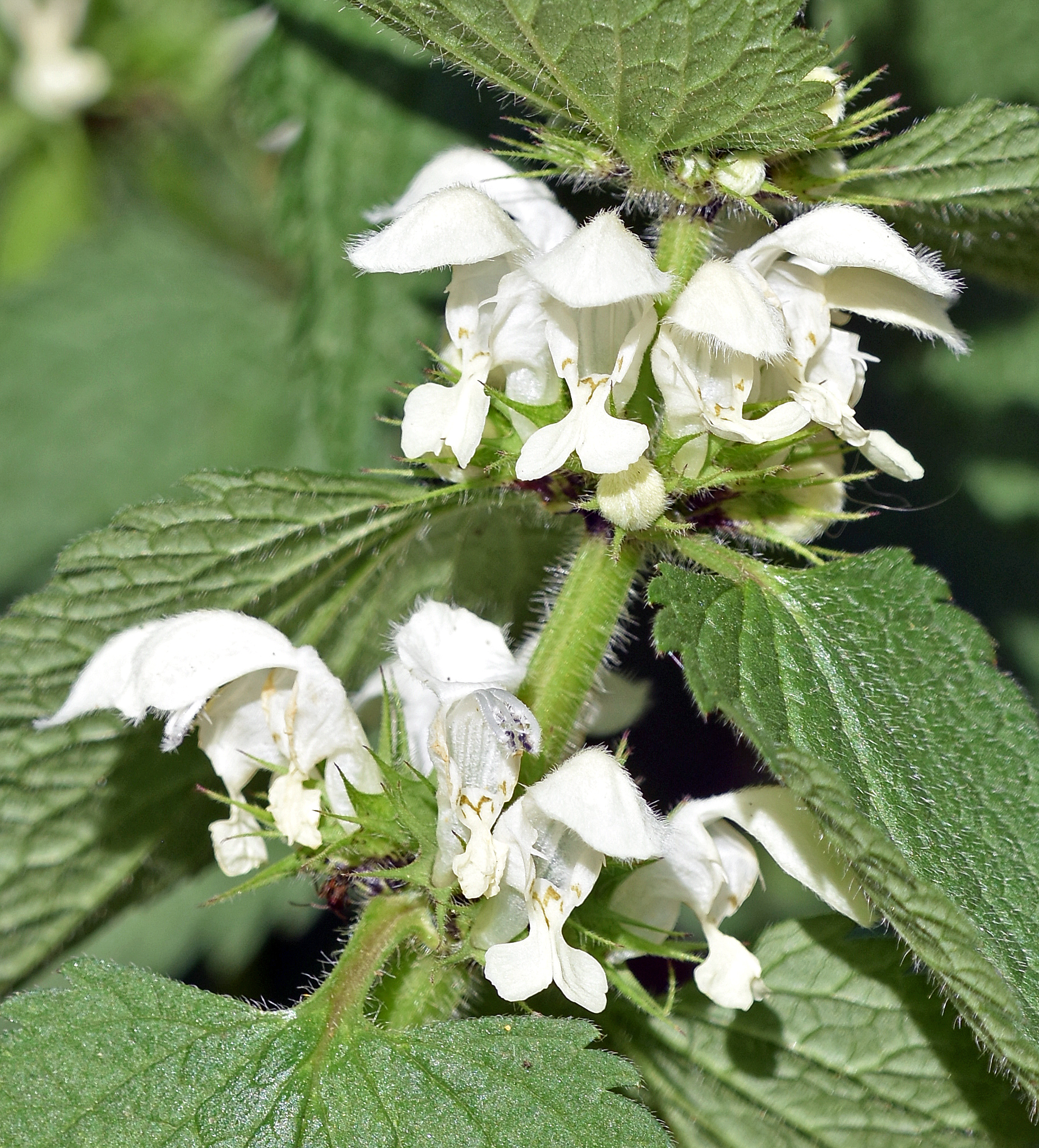
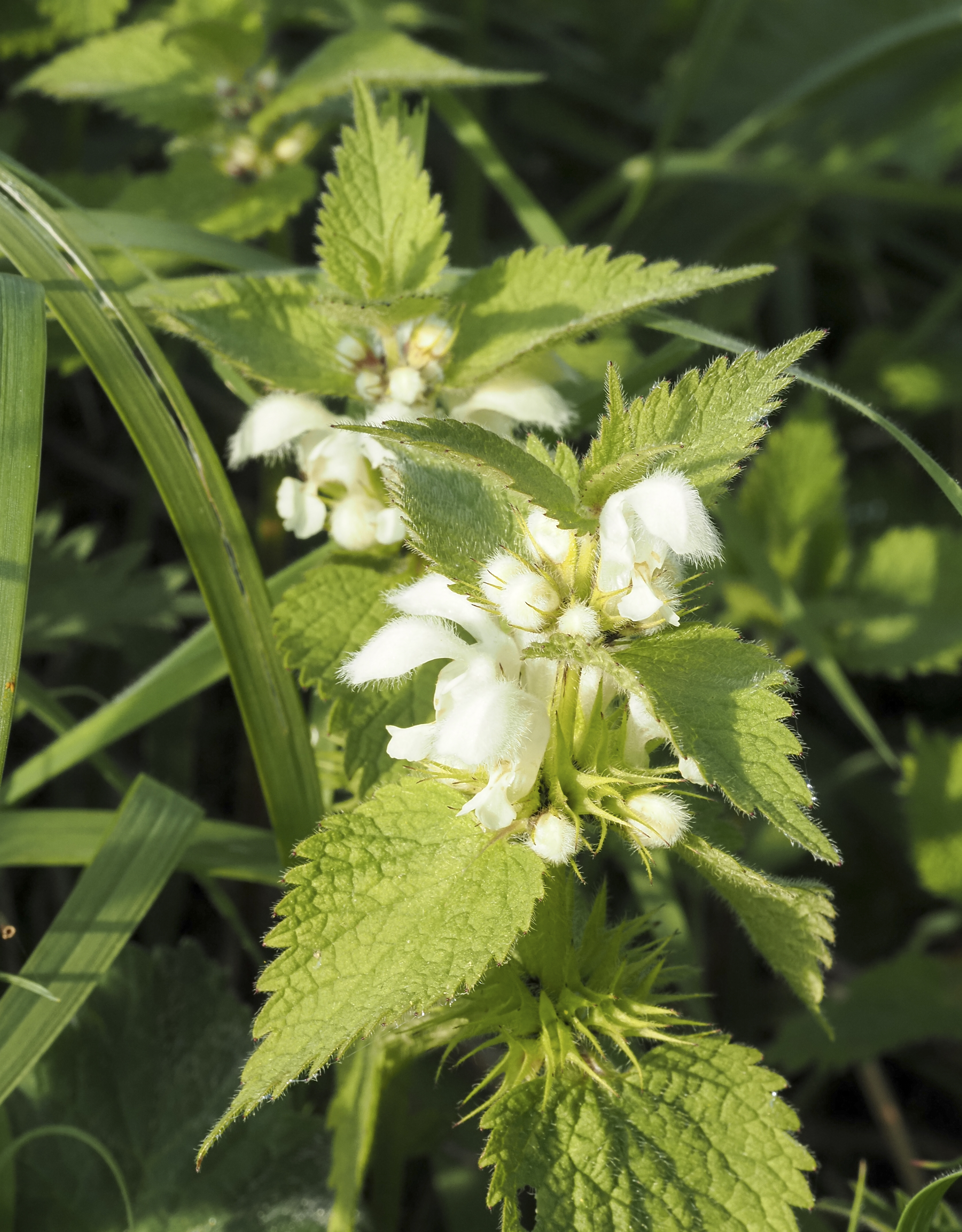
The bilabiate (two-lipped) flowers of Lamium album are adapted to attract and accommodate insect pollinators, particularly long-tongued bumblebees and mason bees. Their flower shape protects their pollen from unwanted visitors – i.e. those which do not contribute to pollination – whilst at the same time guiding and perhaps even manipulating the more desirable floral visitors to facilitate pollination.
The pollinators
The bilabiate flowers of Lamium album attract pollinators using a set of sensory signals: i) the shape and colour of the flowers themselves, ii) the coloured nectar guides, and iii), last but not least, aromatic scents emitted by the flower tube and the nectary glands (Sulborska-Różycka et al., 2023)
Long-tongued bumblebees – such as Garden Bumblebees (Bombus hortorum) and Common Carder Bees (Bombus pascuorum) – as well as some long-tongued solitary bees (such as the red Mason bee and the Hairy-Footed Flower Bee (Anthophora plumipes) – are some of the main pollinators of white dead-nettle (Lamium album).
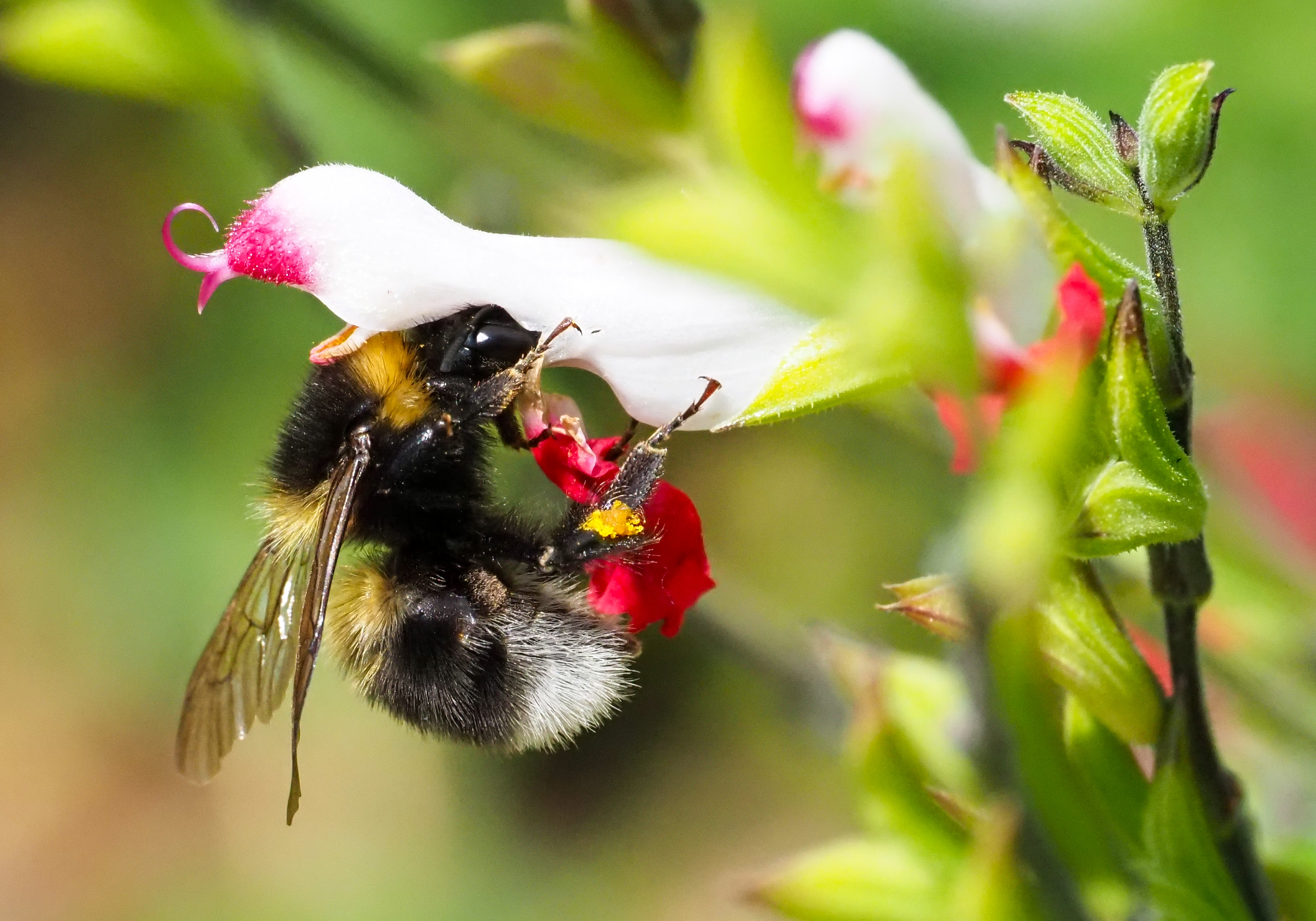
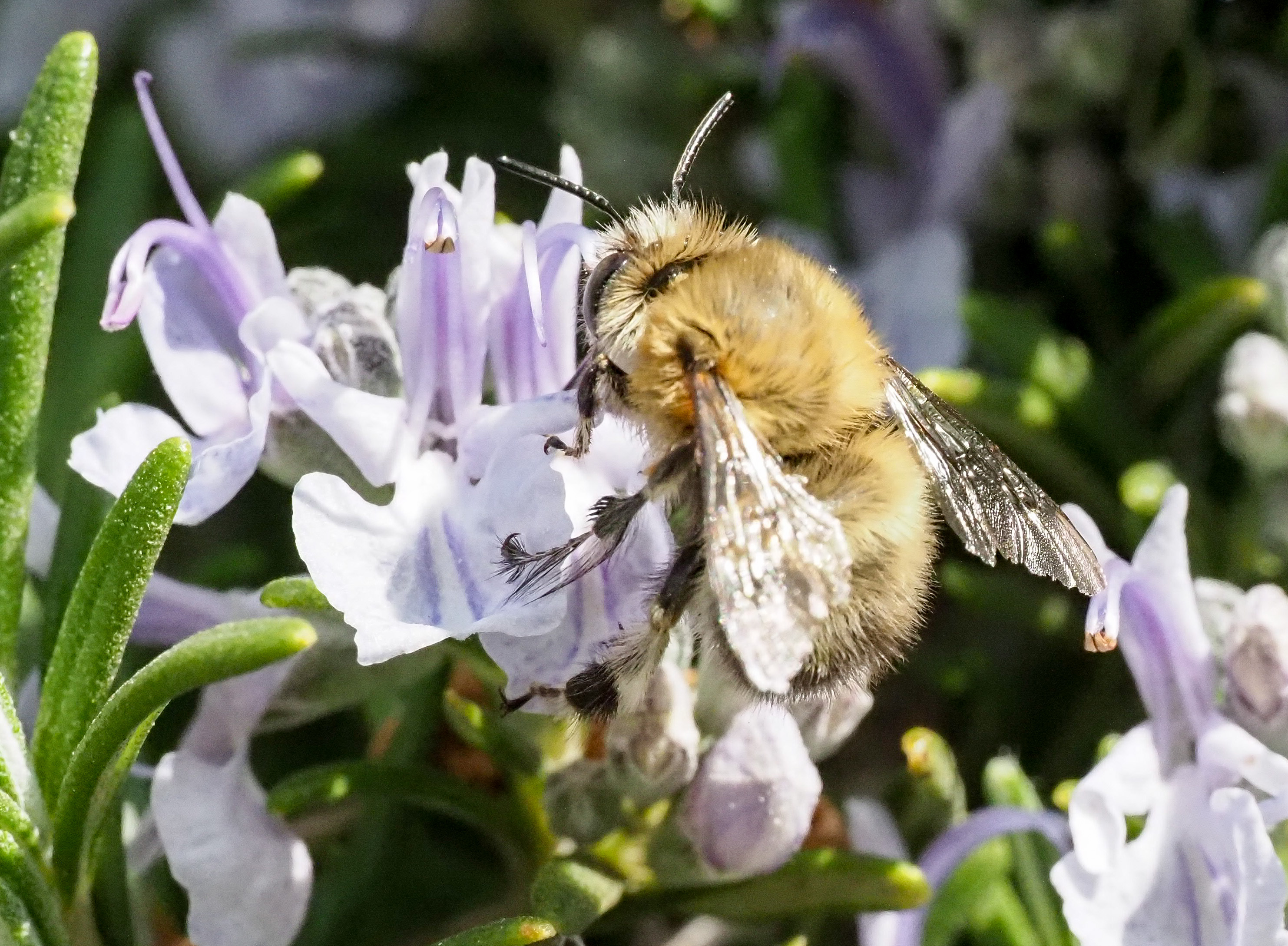
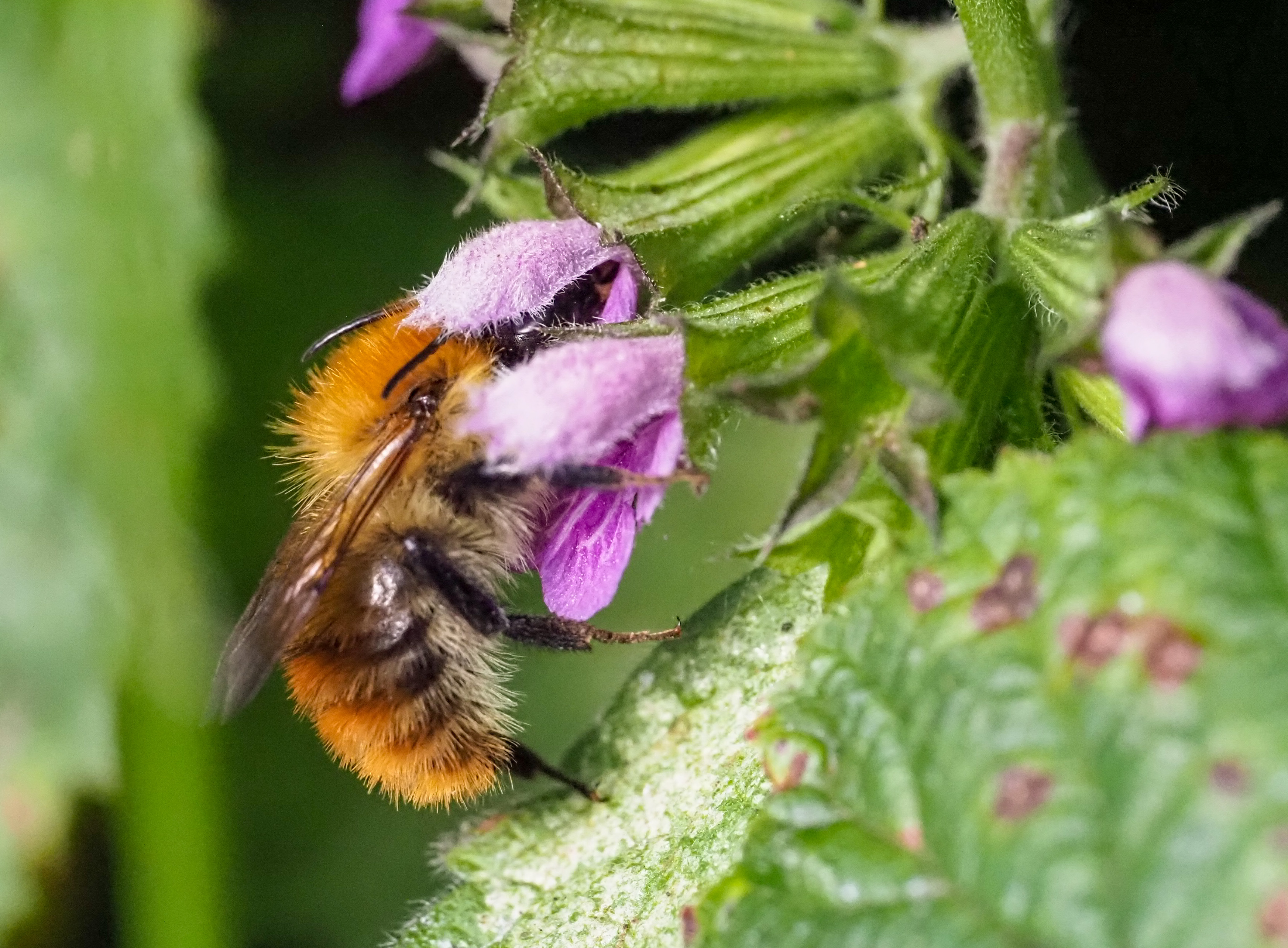
Three types of flower visitors
There are three main types of visitors to White Dead-nettle flowers.
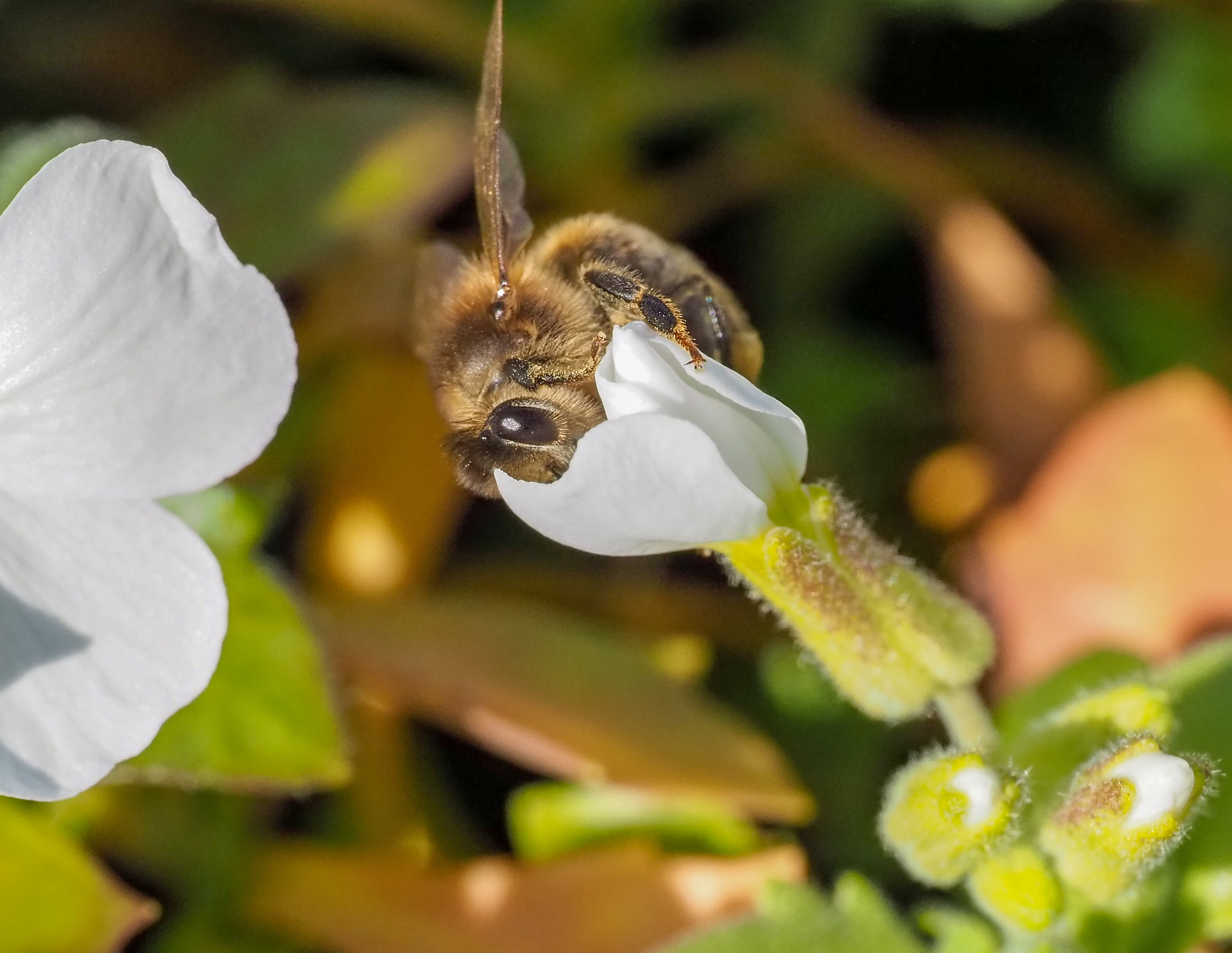
Firstly, there are the larger bees, like Garden bumblebees, which are called ‘thrust pollinators‘, because they forage for nectar by thrusting their heads directly into the flowers and extending their proboscides into the corolla in the ‘correct’ way (Toji et al., 2021). I.e. they are not ‘cheating’ by cutting a hole at the bottom of the flower tube!
Secondly, there are smaller bees, called ‘whole-body‘ pollinators, which forage for nectar by crawling into the corolla tube to trying and reach the nectar. Despite their small size, they can be successful pollinators, as pollen grains get attached to their heads and to the undersides of their abdomens.
However, not all small bees are able to reach the nectaries at the base of the flowers as there is a barrier of coarse hairs which that prevents some of them from crawling further down. See photo here.
Finally, there are nectar robbers (including honeybees, Apis mellifera, on occasions), which rob the flower of its nectar by biting a hole at the base of corolla, and sticking their proboscis into the flower in this way, or by sucking nectar from already existing holes created by other nectar thieves.
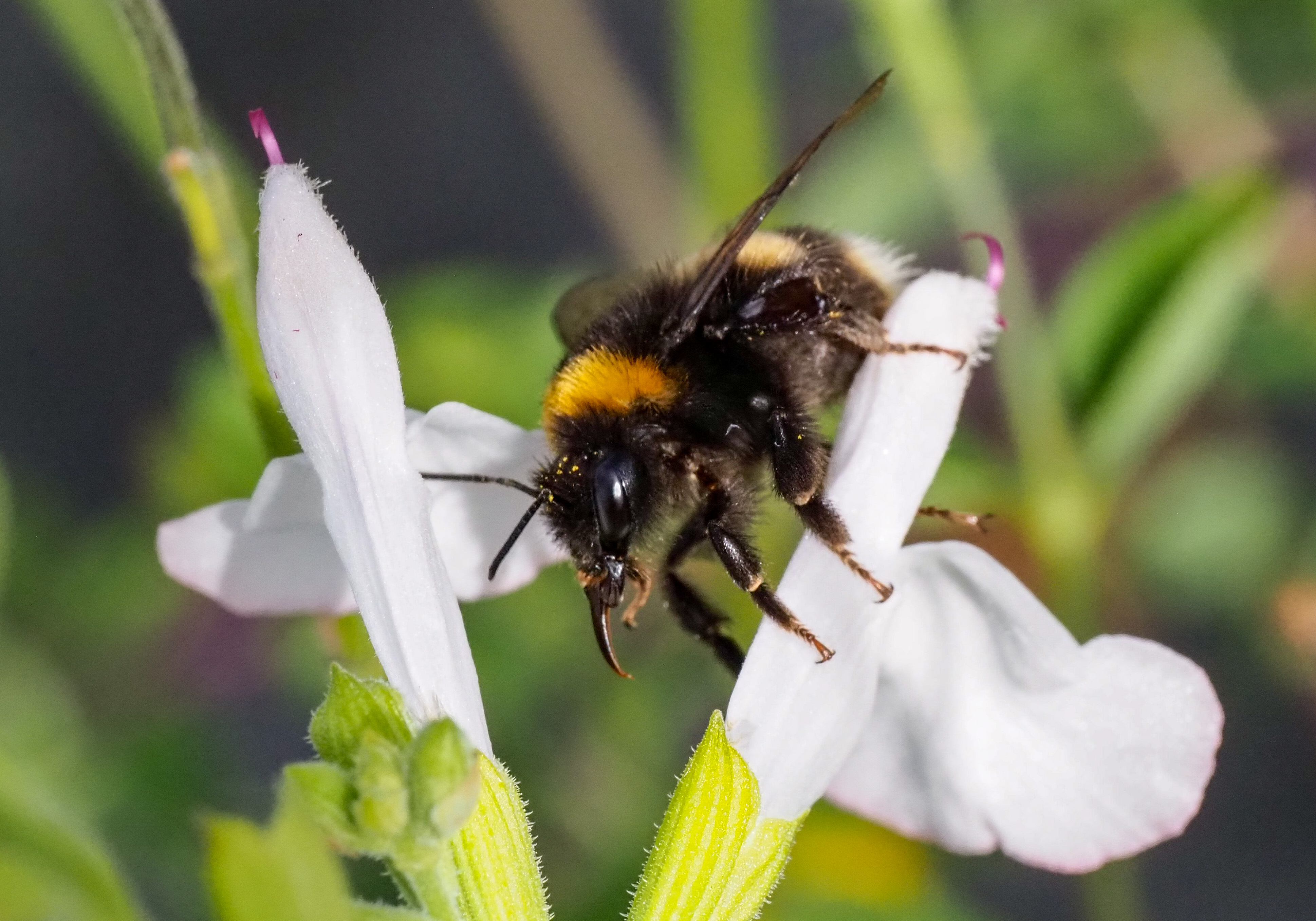
Flower structure and function
During the main flowering period, in May and June, the large white, two-lipped flowers occur in whorls (called verticillasters), each consisting of between three and ten, bisexual blossoms.
The flowers (c. 1.5–2.5 cm) are produced on the upper part of the stem, and emit a fragrance, although it is almost imperceptible to us humans. They are also equipped with ‘nectar guides’ to guide pollinators into the flower tube (described below). The petals fuse into a distinctive shape, with a two-lobed upper lip and a three-lobed lower lip.
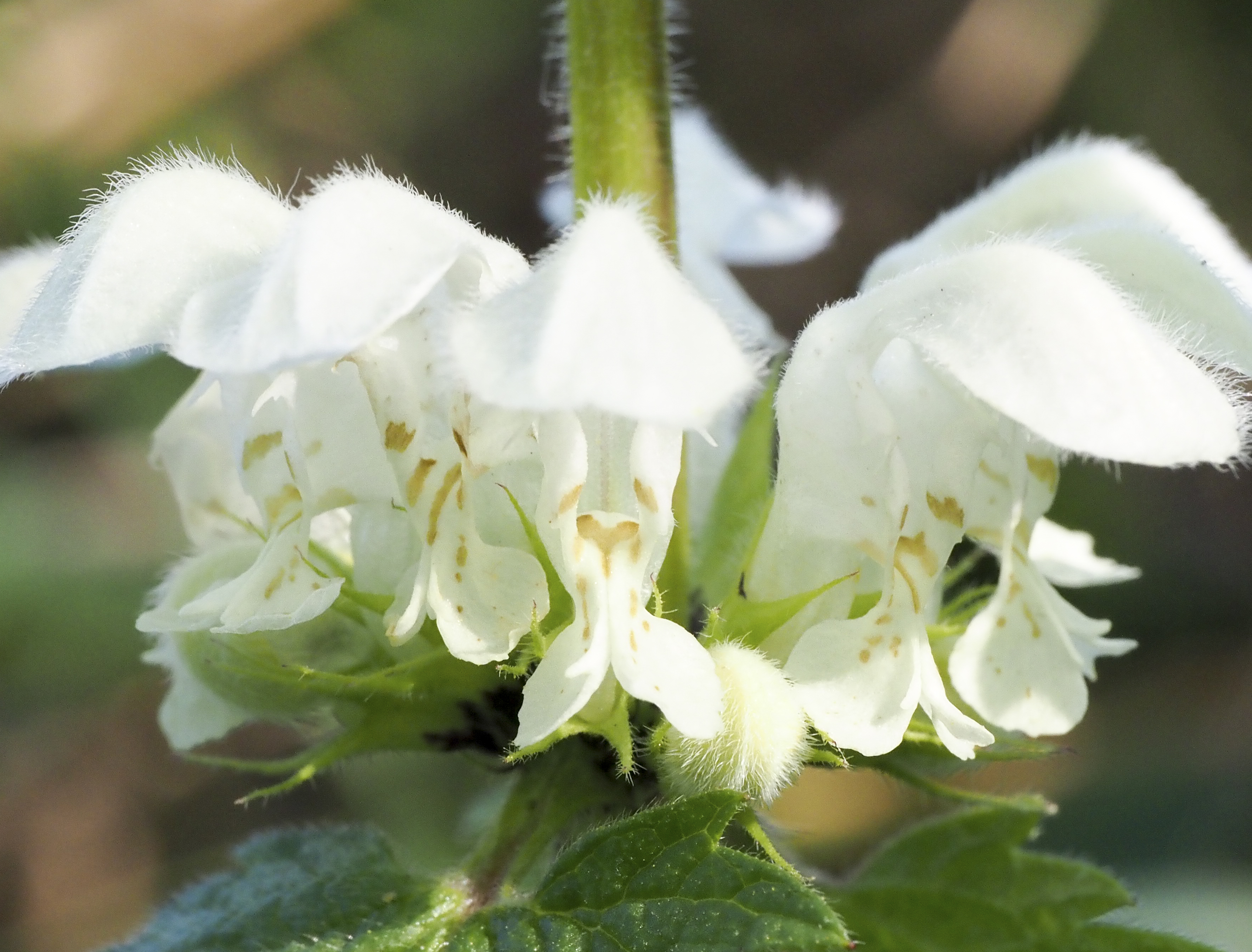
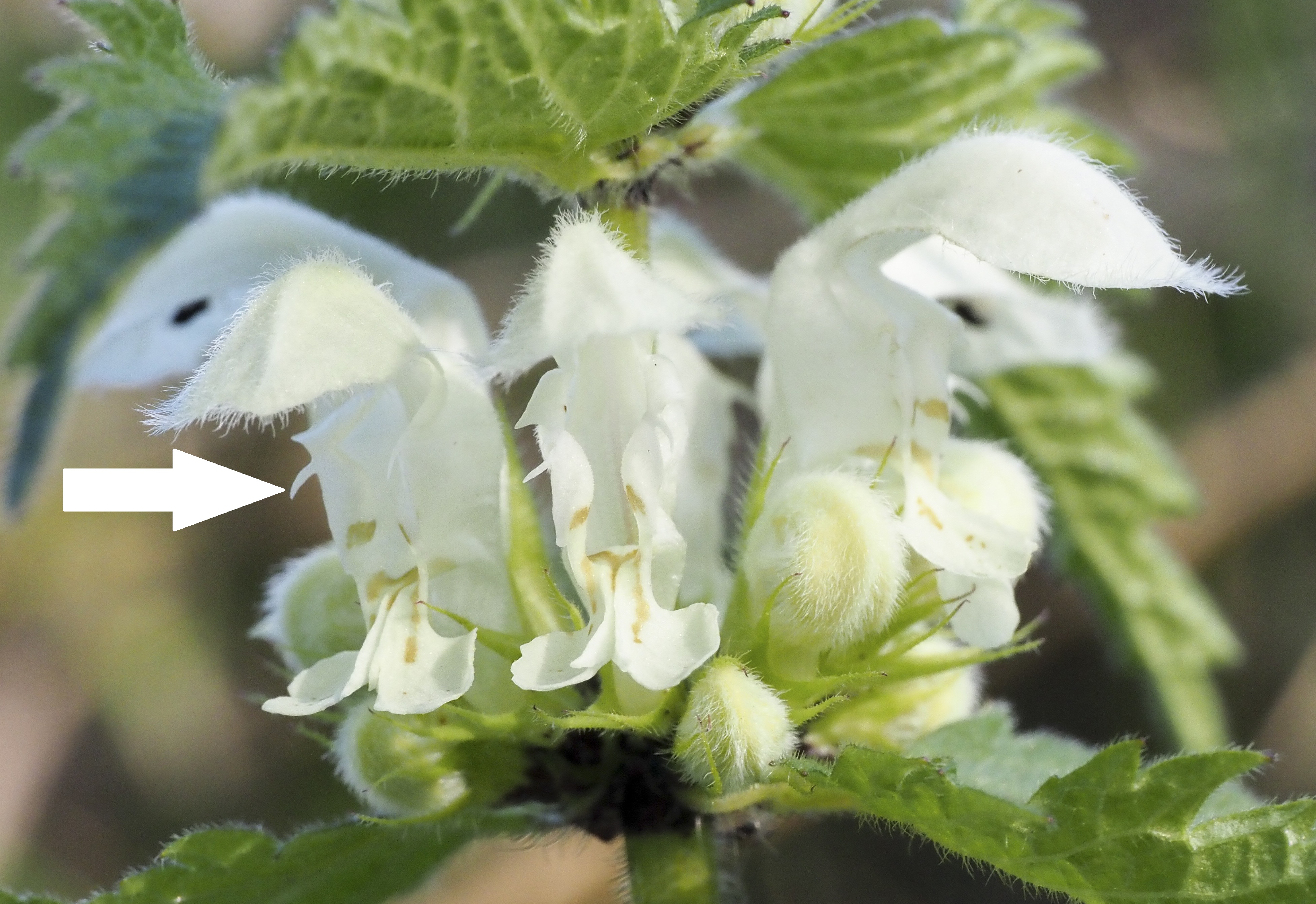
The lower lip acts as a landing platform for bees and other pollinators. I.e. a physical resting place for non-hovering insects. It also has a few – between one and three – shallow teeth on each lobe (see below, marked with arrow). These little tooth-like extensions are thought to have evolved to enable visiting insects to grasp on to the flower (Sulborska et al., 2014).
Dead-nettles, like orchids, transfer their pollen onto the upper parts – i.e. the heads or thoraxes – of pollinating insects. The hooded upper lip arches high over the style, which has a bifurcated stigma. The four stamens – of which there are two long and two short – also follow the curve of the hooded upper lip, or galea.
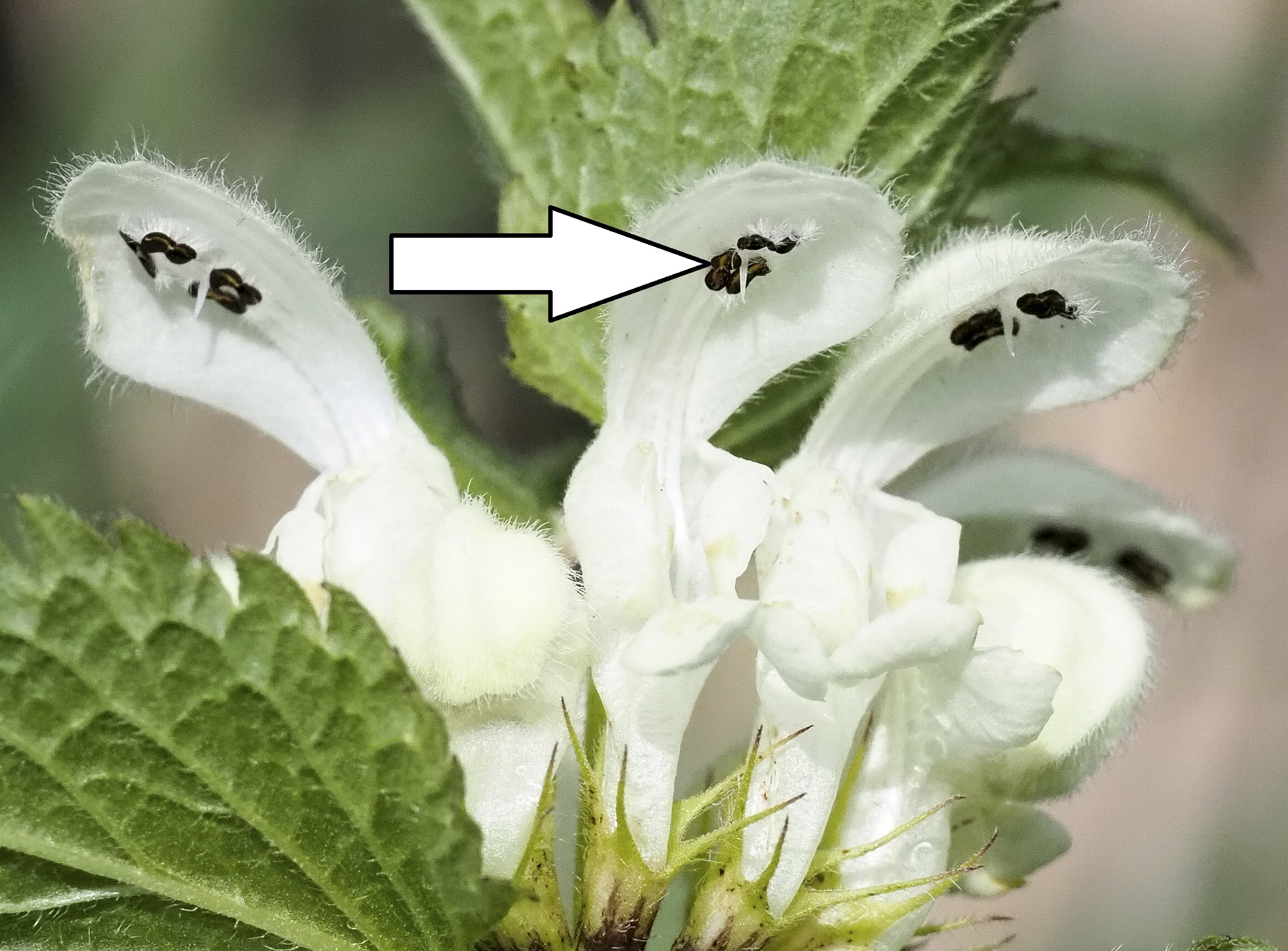
The style – with its two-lobed stigma – and the staminal filaments, lie closely parallel to each other in a flat bundle. The hood protects these reproductive organs from rain, wind, or unwelcome visitors.
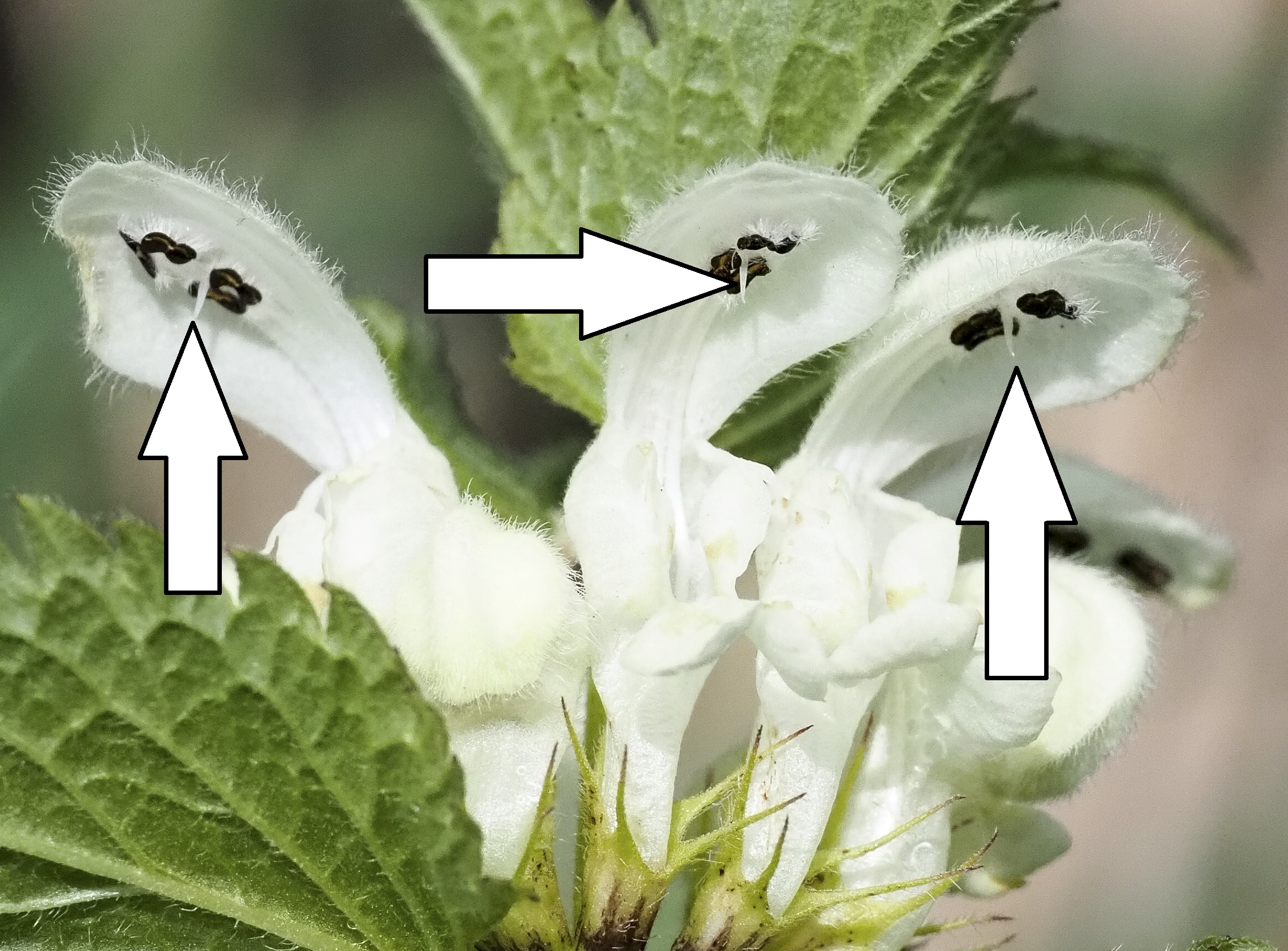
Guiding the pollinators onto the landing strip
When the Dead-nettle flower is viewed face-on, there is a dull, ochre-coloured, M-shaped marking at the top of the lower lip, where it enters the mouth of the flower: the nectar guide (see below).
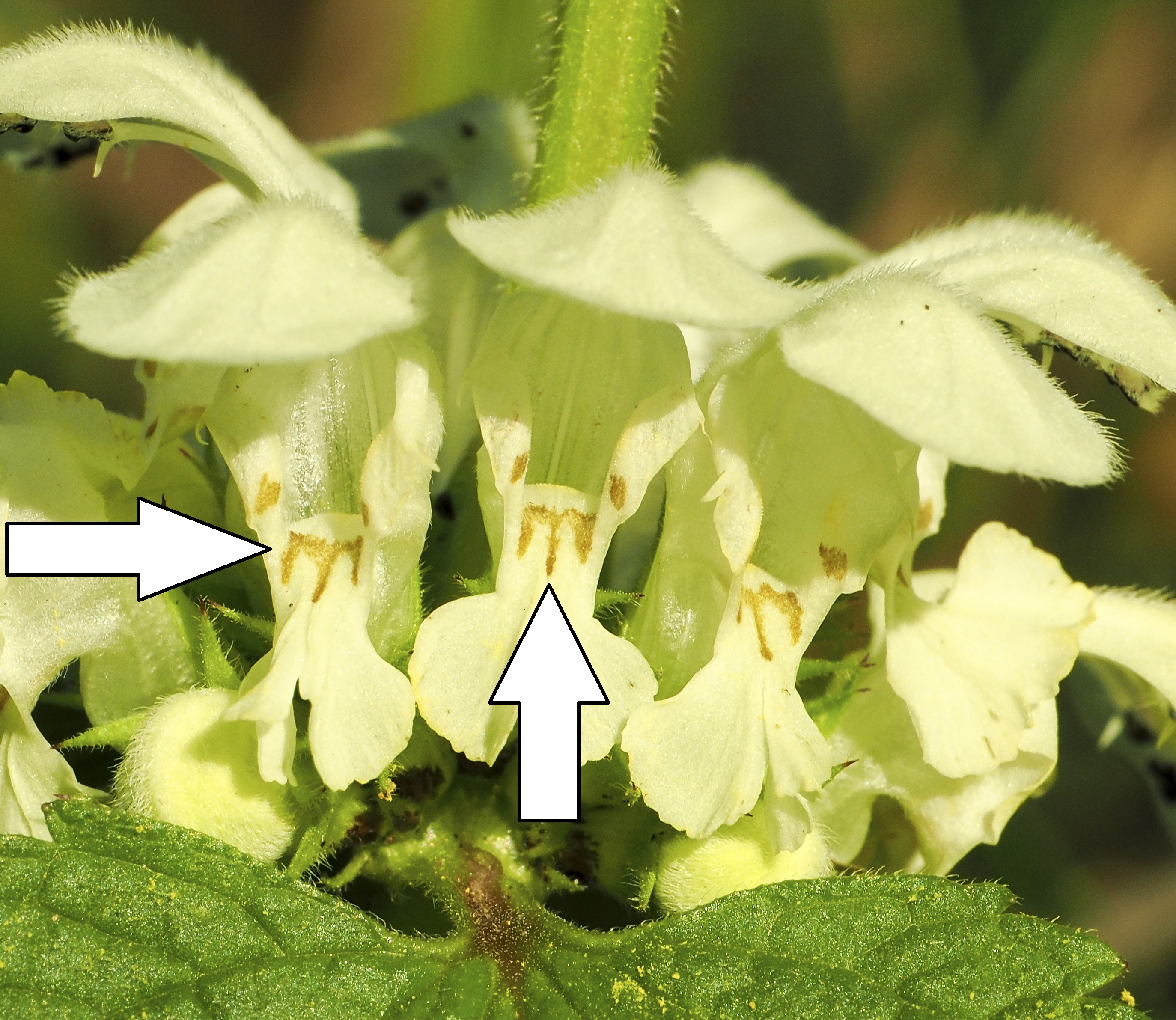
Technically speaking, the nectar guides are on the adaxial epidermis of the lower corolla lip. There are also two ochre spots on each side of the mouth of the flower tube, and a variable number of smaller spots on the central lobe. The presence, shape and arrangement of these smaller spots varies from flower to flower, forming unique patterns.
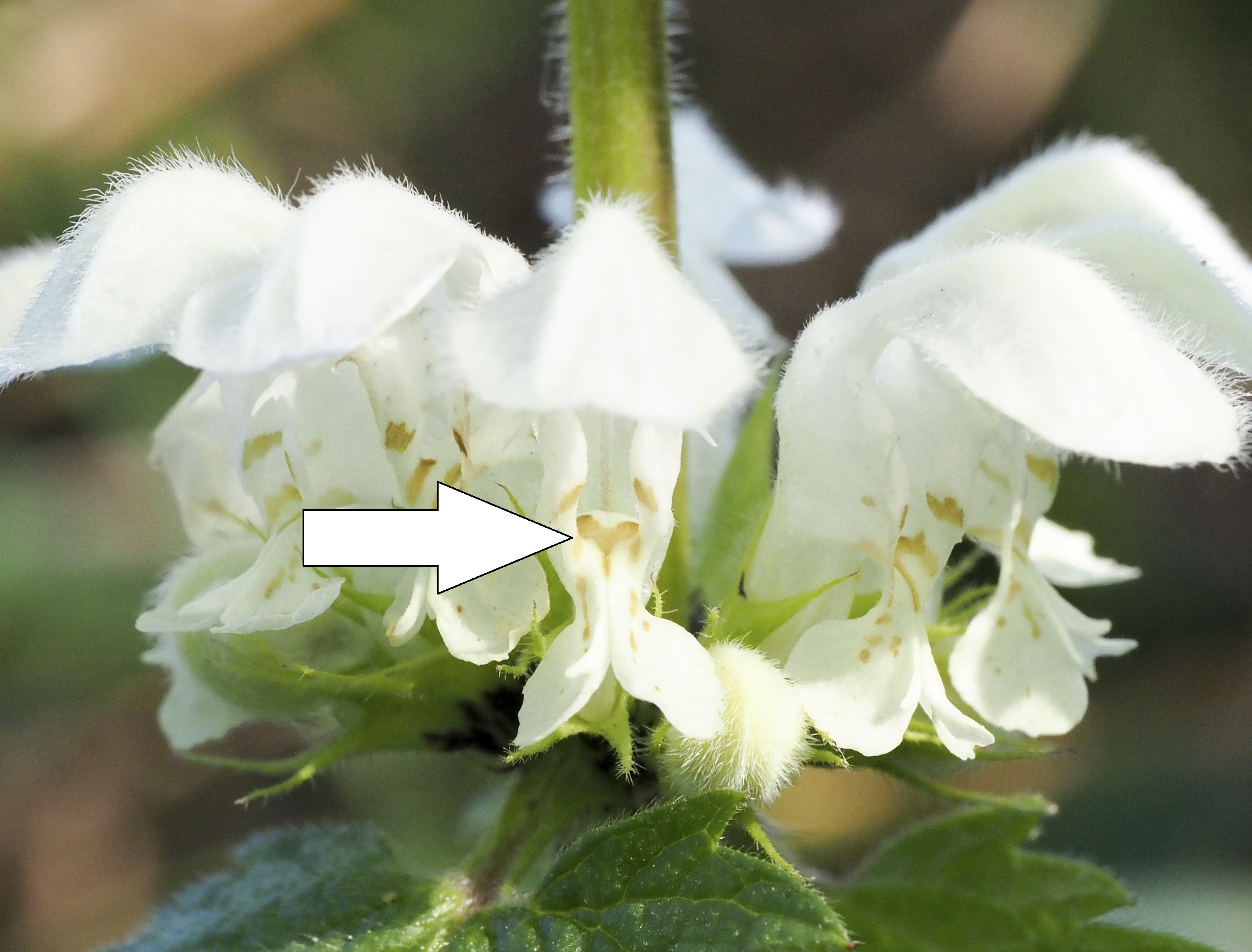
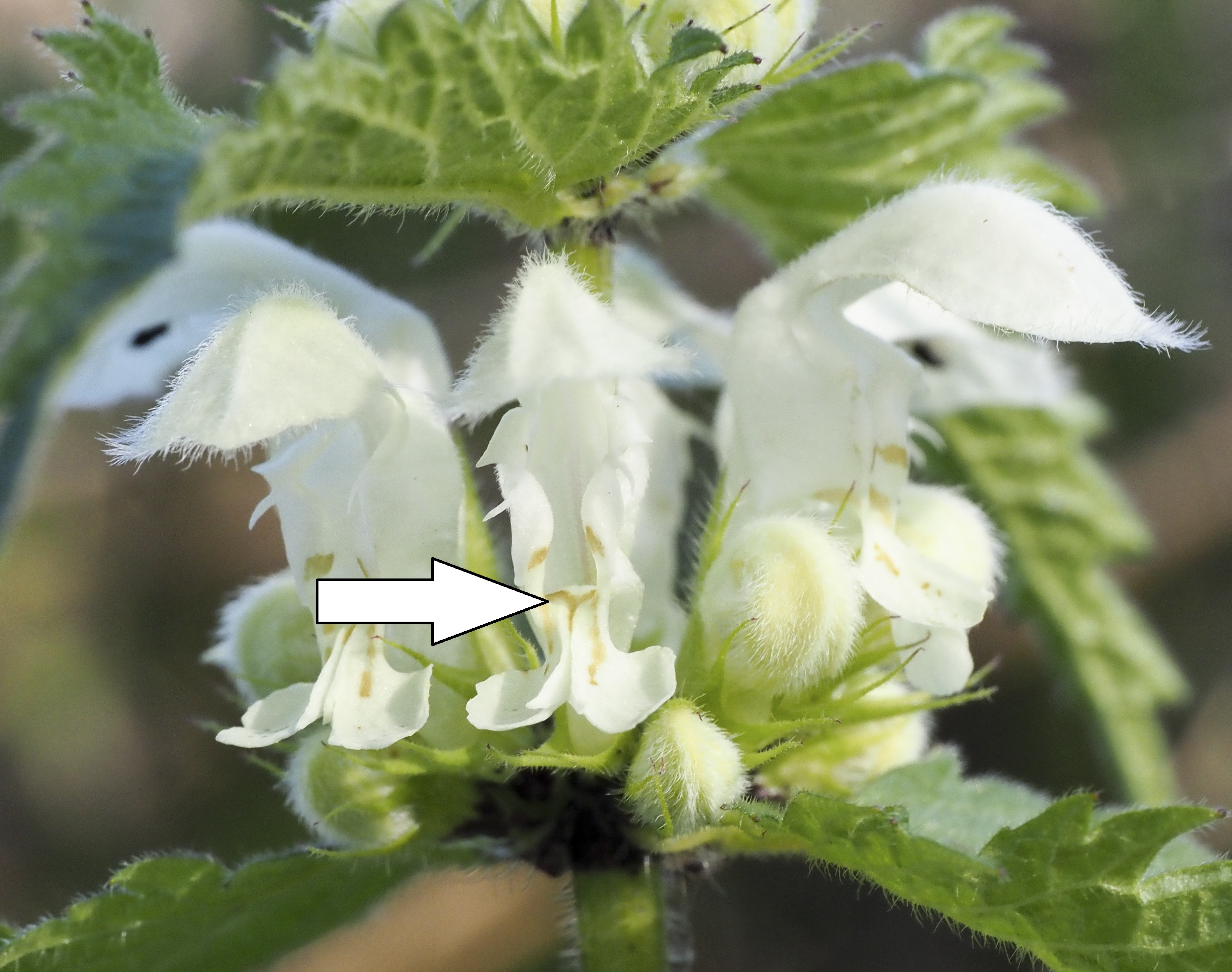
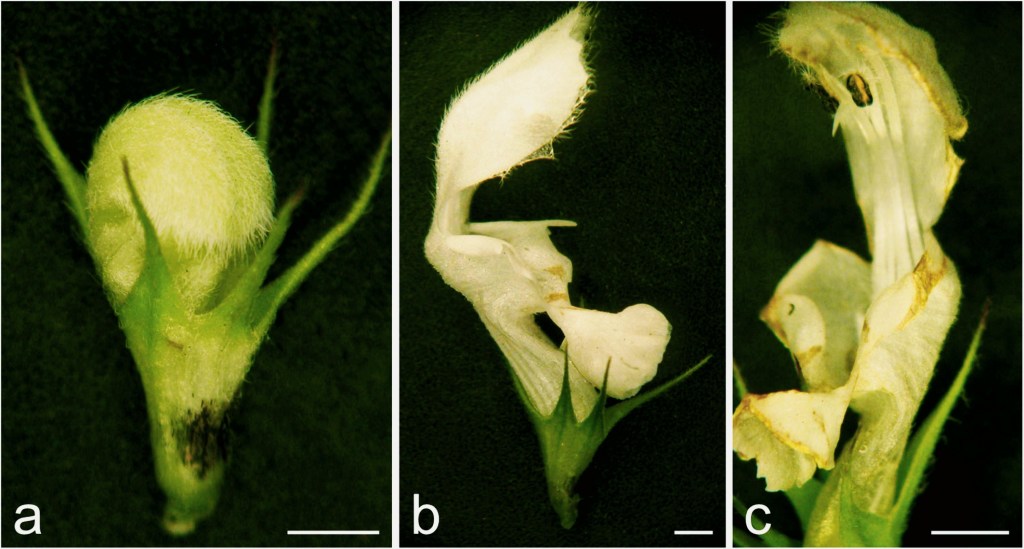
Looked at in detail, the nectar guides are composed of tiny yellow papillae (58.4 µm high on average), shown below, formed by raised epidermal cells with vacuoles, containing flavonoids (Sulborska-Różycka et al., 2023).
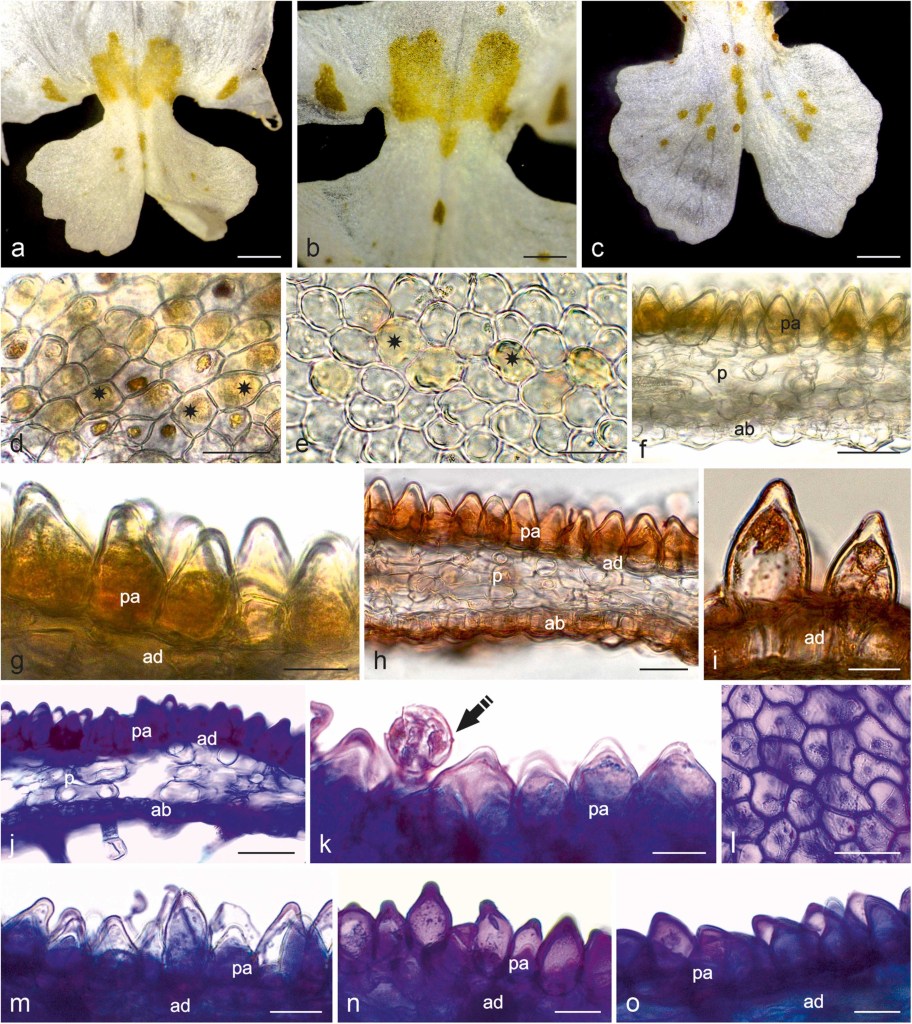
(Fig. 2 from Sulborska-Różycka et al., 2023).
The nectar guides are relatively inconspicuous, to our eyes, but they almost certainly appear much more prominently, probably darker, or nearly black, to bees (with their UV vision). They provide insects with a colourful signal which they can see from a certain distance away, indicating the location of a nectar reward, as well as providing ‘guiding lights’ to help them make a smooth landing on the correct location on the flower.
References
Hattori, M., Tamada, Y., & Itino, T. (2021). Effect of pollinator size on seed set in Lamium album var. barbatum. Plant Ecology and Evolution, 154(2), 201-206.
Hattori, M., Nagano, Y., & Itino, T. (2015). Geographic variation in flower size and flower-visitor composition of two bumblebee-pollinated, spring-flowering herbs, Lamium album L. var. barbatum (Lamiaceae) and Meehania urticifolia (Lamiaceae). American Journal of Plant Sciences, 6(5), 737.
Sulborska, A., Dmitruk, M., Konarska, A., & Weryszko-Chmielewska, E. (2014). Adaptations of Lamium album L. flowers to pollination by Apoidea. Acta Scientiarum Polonorum Hortorum Cultus, 13(6), 31-43.
Sulborska-Różycka, A., Konarska, A., Weryszko- Chmielewska, E., & Dmitruk, M. (2023). Nectar guides and floral nectary in Lamium album L. subsp. album: structure and histochemistry in light, fluorescence, and electron microscopy. Micron, 171, 103474.
Toji, T., Ishimoto, N., Egawa, S., Nakase, Y., Hattori, M., & Itino, T. (2021). Intraspecific convergence of floral size correlates with pollinator size on different mountains: a case study of a bumblebee-pollinated Lamium (Lamiaceae) flowers in Japan. BMC Ecology and Evolution, 21(1), 64.
Weryszko-Chmielewska, E., Konarska, A., Dmitruk, M., & Sulborska, A. (2014). Adaptations of Lamium album L. flowers to pollination by Apoidea. Acta Scientiarum Polonorum – Hortorum Cultus, 13(6), 31-43.

